 WAR ATLAS MILITARY HISTORY MAGAZINE · WWI — WWII
Second Sino-Japanese War
1. Lead
The Second Sino-Japanese War was the war between China and Japan from 1937 to 1945, an eight-year conflict that began two years before the Second World War in Europe and ended with the Japanese surrender in September 1945. It was one of the longest and deadliest wars of the twentieth century: Chinese deaths are estimated at between 10 and 20 million people, military and civilian, by the most commonly cited ranges, and the war devastated China’s cities, its countryside and its people.
The war began with the Marco Polo Bridge Incident of 7 July 1937, and it included the Battle of Shanghai, the Nanjing Massacre, the long stalemate in which China refused to surrender, and the final campaigns of 1944-45, in which Japan launched its largest offensive in China and China, with American help, held on until the end.
The war is remembered in China as the War of Resistance Against Japan, and it is the central event of modern Chinese history.
This article tells the story of the war as history, with the casualty figures given as ranges, because the numbers are among the most disputed of the Second World War. The Nanjing Massacre, the bombing of Chongqing, the use of chemical and biological weapons, and the conduct of the Japanese army in China are all subjects of controversy, and this article presents the facts as historians understand them, notes where Chinese, Japanese and Western historians differ, and avoids the language of propaganda on either side. The war’s memory — in China, in Japan, and in the world — is itself a part of the story, and it is examined in the later sections of this article.
2. Key Facts
| What | A full-scale war between the Republic of China and the Empire of Japan, 1937-1945 |
| Began | 7 July 1937, with the Marco Polo Bridge Incident near Beijing |
| Ended | 2 September 1945, with the Japanese surrender; the formal surrender in China was on 9 September 1945, at Nanjing |
| Chinese leader | Generalissimo Chiang Kai-shek, leader of the Nationalist government; the Communists under Mao Zedong fought as part of the United Front |
| Japanese leaders | Emperor Hirohito; successive prime ministers and generals, including Hideki Tojo |
| Major battles | Shanghai (1937), Nanjing (1937), Wuhan (1938), Changsha (1939-1942), Ichigo (1944) |
| Chinese deaths | Estimated at 10 to 20 million, military and civilian, by the most commonly cited ranges; Chinese military deaths are estimated at about 3 to 4 million |
| Japanese deaths | Japanese military deaths in China are estimated at about 400,000 to 700,000, including deaths from disease |
| War crimes | The Nanjing Massacre (1937-38), the bombing of Chongqing, the use of chemical weapons, and Unit 731’s biological warfare programme |
| Today | Remembered in China as the War of Resistance Against Japan; 3 September is observed in China as Victory Day |
3. The Origins: Manchuria and the Road to War
The Manchurian Incident
The Second Sino-Japanese War did not begin in 1937. Its origins lie in 1931, when the Japanese Kwantung Army staged the Mukden Incident — the blowing up of a section of the South Manchuria Railway, which the Japanese blamed on the Chinese — and used it as a pretext to occupy Manchuria, the north-eastern provinces of China.
By early 1932, Japan had created the puppet state of Manchukuo, under the former Chinese emperor Puyi, and Manchuria became a Japanese colony in all but name, a source of raw materials and a base for further expansion. China, which was divided by civil war between the Nationalists under Chiang Kai-shek and the Communists under Mao Zedong, appealed to the League of Nations, which condemned the Japanese action and called for a withdrawal.
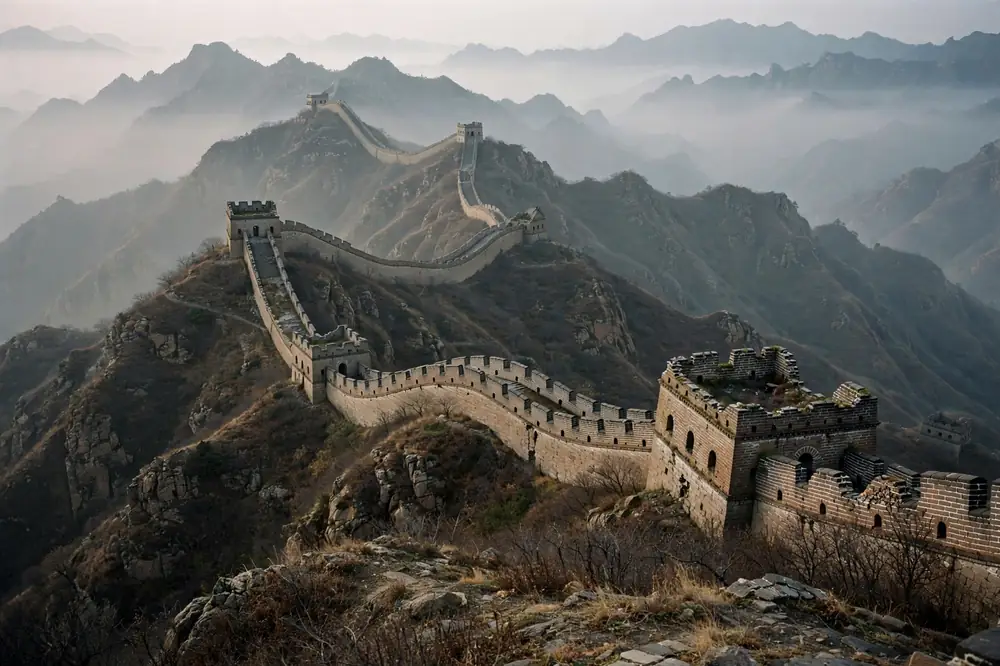
Japan responded by leaving the League in 1933, and by continuing its expansion: in 1933, Japanese forces took the province of Jehol and advanced to the Great Wall, and in 1935-36 they pressed into northern China, creating demilitarised zones and puppet governments.
The Chinese government, which was fighting the Communists and trying to build a modern state, followed a policy of “first pacification, then resistance” — of dealing with the Communists before resisting Japan — and that policy was increasingly unpopular with the Chinese people.
The Xi’an Incident
The turning point in Chinese politics came in December 1936, with the Xi’an Incident. Chiang Kai-shek, who had come to Xi’an to direct a campaign against the Communists, was arrested by his own generals, Zhang Xueliang and Yang Hucheng, who demanded that he stop fighting the Communists and form a united front against Japan.
Chiang was released after two weeks, after agreeing — under pressure, and without a formal commitment — to end the civil war and to resist Japan. The Xi’an Incident is one of the most important events in modern Chinese history: it forced the Nationalists and the Communists into the Second United Front, an alliance against Japan that lasted, in name at least, for the whole of the war, and it made resistance to Japan the policy of the Chinese government.
The United Front was always fragile — the Nationalists and the Communists distrusted each other, and they fought each other as well as the Japanese — but it was the political basis on which China fought the war, and it is the reason the war is remembered in China as a national war, not as a war of one party.
Japan’s aims
Japan’s aims in China were a mixture of strategy, economics and ideology. Strategically, Japan wanted a buffer against the Soviet Union, and it wanted to secure its position in Manchuria and northern China. Economically, Japan wanted the raw materials of China — coal, iron, cotton — and the markets of China for Japanese goods.
Ideologically, the Japanese military believed in a “Greater East Asia Co-Prosperity Sphere”, in which Japan would lead Asia against the Western powers, and in which China would be a subordinate partner. The Japanese government, which was dominated by the military by the mid-1930s, believed that China would collapse quickly if it was attacked, and that a short, sharp war would force Chiang Kai-shek to accept Japanese terms.
That belief was wrong, and it was the first of many Japanese miscalculations in the war: China did not collapse, Chiang did not surrender, and the war that Japan expected to last months lasted eight years.
4. The Marco Polo Bridge Incident
7 July 1937
The war began, as wars often do, with a small incident that neither side had planned. On the night of 7 July 1937, Japanese troops on manoeuvres near the Marco Polo Bridge, outside Beijing, reported that one of their men was missing, and demanded the right to search the Chinese town of Wanping.
The Chinese garrison refused, shots were fired, and the incident escalated into a battle for the bridge and the town. The missing soldier turned up unharmed, but by then the fighting had begun, and neither side was willing to back down.
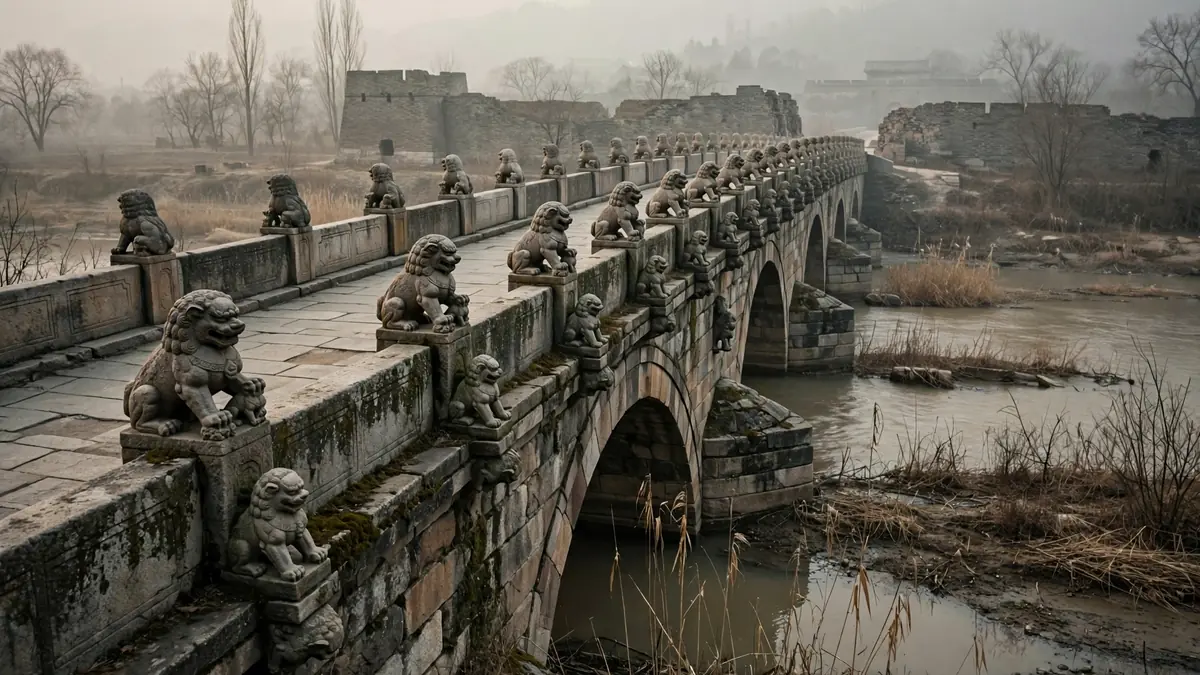
The Japanese government, which had not planned a full-scale war, sent reinforcements, and the Chinese government, which had decided after Xi’an to resist Japan, also sent reinforcements, and the incident became a war. The Marco Polo Bridge Incident is remembered in China as the beginning of the War of Resistance, and the bridge, with its stone lions, is now a memorial and a museum, visited by Chinese schoolchildren and by tourists.
The fall of Beijing and Tianjin
In the weeks after the Marco Polo Bridge Incident, Japanese forces took Beijing and Tianjin, the two great cities of northern China, and advanced south along the railways. The Chinese armies, which were poorly equipped and poorly coordinated, fell back, and the Japanese, who had expected a quick victory, found themselves in a war that was growing larger by the week.
The fall of Beijing and Tianjin was a shock to China, and it was a shock to the world: the war in China was no longer a border incident but a full-scale invasion, and the League of Nations, which had condemned Japan in 1931, was powerless to stop it.
The Chinese government moved its capital from Nanjing to Chongqing, in the far west of China, in November 1937, in a decision that showed that China would not surrender, and that the war would be a long one. The move to Chongqing — a city in the mountains, up the Yangtze River, far from the Japanese armies — was the beginning of the strategy that would sustain China for eight years: trading space for time, and refusing to be defeated.
The decision to fight on
The decision to fight on, after the loss of Beijing and Tianjin, was Chiang Kai-shek’s, and it was one of the most consequential decisions of the war. Chiang had the option of making peace with Japan, on terms that would have left him in power in a reduced China, and many in his government urged him to do so.
He refused, and his refusal was based on a calculation: that Japan could not conquer all of China, that the Chinese people would not accept Japanese rule, and that, in time, the world would come to China’s aid. The calculation was correct, but it was also costly: the decision to fight on meant eight years of war, millions of deaths, and the devastation of China.
Chiang’s decision is remembered in China as an act of patriotism, and in the West as an act of stubbornness, and both judgements contain a truth. The war that followed was a war of endurance, and it was won, in the end, not by a single battle but by the refusal to surrender.
5. The Fall of Shanghai and Nanjing
The Battle of Shanghai
Three months of fighting
The Battle of Shanghai, from August to November 1937, was the first great battle of the war, and it was one of the bloodiest. Chiang Kai-shek chose to fight at Shanghai, China’s largest city and its commercial centre, in order to show the world that China would resist, and to draw the Japanese into a battle that would cost them dearly.
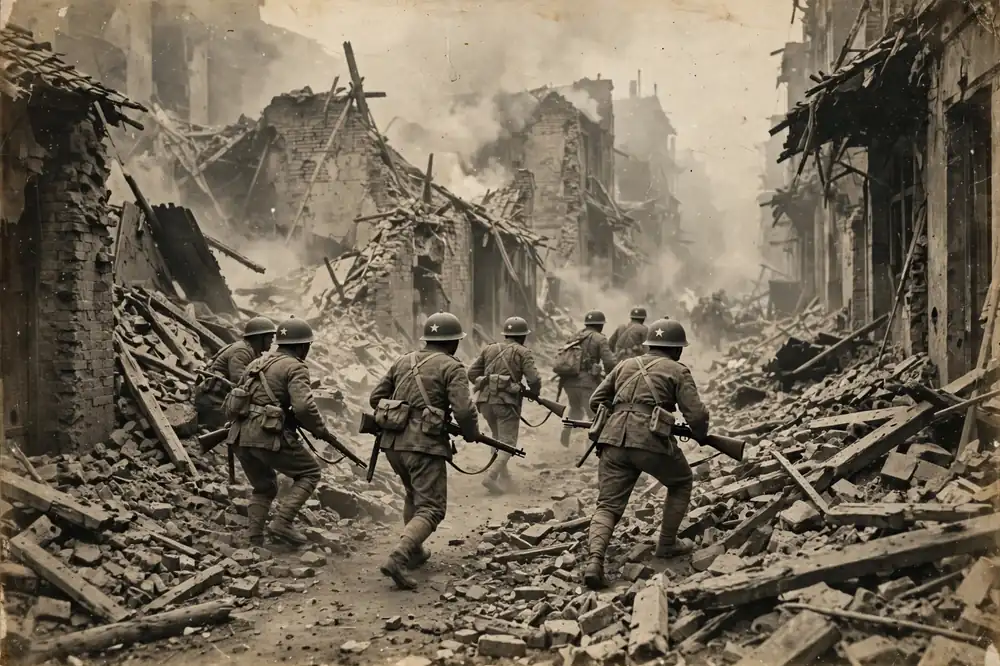
The Chinese army, which included some of Chiang’s best-trained divisions, fought the Japanese in the streets of Shanghai for three months, in house-to-house fighting that destroyed much of the city. The Chinese suffered terrible casualties — by some estimates, about 250,000 Chinese soldiers were killed or wounded in the battle, a figure that is widely cited but that should be treated as an estimate, not as a precise count — and the Japanese also suffered heavily.
The battle ended in November 1937, when the Japanese landed troops south of Shanghai and outflanked the Chinese, who withdrew. Shanghai fell, but the battle had shown that China would fight, and it had bought time for the government to move to Chongqing and for the factories of the coastal cities to be moved inland.
The cost of Shanghai
The cost of Shanghai was not only in soldiers. The battle destroyed the commercial heart of China, and it displaced hundreds of thousands of civilians, who fled the city as refugees. The Chinese army’s best divisions were shattered, and the army that fought the rest of the war was a weaker one, made up of hastily trained recruits and of provincial troops.
The Japanese, for their part, had won a victory, but it was a victory that committed them to a war in China that they had not planned, and that would absorb their army for eight years. The battle of Shanghai is remembered in China as a heroic defeat, and in Japan as a costly victory, and both memories are true.
The battle’s most enduring legacy is the decision it forced on Chiang: to move the capital to Chongqing, to trade space for time, and to fight a long war, a decision that shaped the whole of the war that followed.
The Nanjing Massacre
After Shanghai, the Japanese advanced on Nanjing, the capital of China, and the city fell on 13 December 1937. What followed, over the next six weeks, was the Nanjing Massacre, one of the worst atrocities of the Second World War.
Japanese troops murdered, raped and looted on a massive scale: the number of Chinese civilians and disarmed soldiers killed is disputed, with the most commonly cited range being 100,000 to 300,000 people. The Chinese government and Chinese historians cite a figure of 300,000, which is inscribed on the memorial in Nanjing; the International Military Tribunal for the Far East, at Tokyo, found that more than 200,000 people were murdered; and some Japanese historians argue for lower figures, in the tens of thousands.
This article gives the range of 100,000 to 300,000, with the sources, because that is the range within which most historians place the death toll, and because the exact number, which will never be known, should not obscure the fact of the massacre itself: that Japanese troops, over six weeks, murdered civilians and prisoners on a scale that shocked the world, and that the massacre is documented in the diaries of the foreigners who remained in Nanjing, in the photographs and films taken at the time, and in the testimony of the survivors.
6. The Long Stalemate
Wuhan and the move inland
After Nanjing, the Japanese advanced up the Yangtze River towards Wuhan, the great industrial city in central China, and the Chinese government, which had moved to Wuhan after the fall of Nanjing, prepared to defend it. The Battle of Wuhan, from June to October 1938, was one of the largest battles of the war, involving more than a million men on both sides, and it ended with the fall of Wuhan in October 1938.
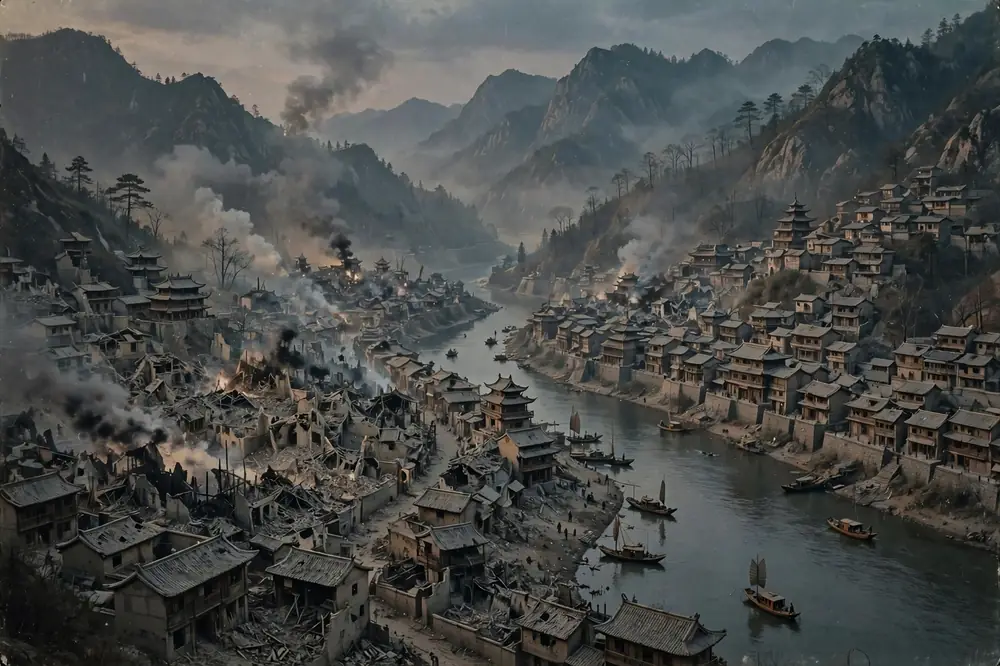
The Chinese, before withdrawing, destroyed the factories of Wuhan and moved them inland, to Chongqing and to the west, in one of the great industrial migrations of the war: thousands of factories, with their workers and their machinery, were carried up the Yangtze and rebuilt in the mountains of Sichuan.
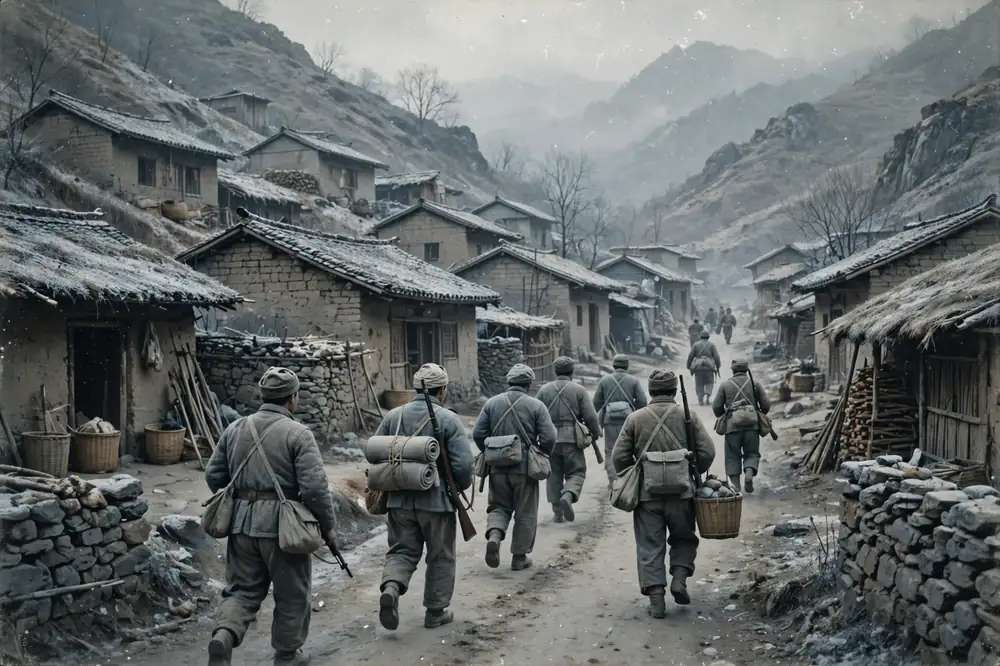
The fall of Wuhan marked the end of the first phase of the war — the phase of great battles for the cities — and the beginning of the second phase, the long stalemate, in which the Japanese held the cities and the railways of eastern China, and the Chinese held the countryside and the west, and neither side could defeat the other.
The bombing of Chongqing
Chongqing, the wartime capital, was bombed by the Japanese air force for more than five years, from 1939 to 1943, in one of the longest bombing campaigns of the war. The Japanese bombed the city in an attempt to break the will of the Chinese government and people, and to force Chiang Kai-shek to make peace.
The bombing killed tens of thousands of civilians — the exact number is disputed, with estimates ranging from about 10,000 to more than 30,000, and the article gives the range — and it destroyed much of the city, but it did not break the Chinese will to resist.
The people of Chongqing lived in caves and in air-raid shelters, and they rebuilt the city after each raid, and the bombing became a symbol of Chinese endurance, as the Blitz became a symbol of British endurance. The bombing of Chongqing is remembered in China alongside the Nanjing Massacre as one of the great crimes of the Japanese invasion, and it is commemorated in Chongqing by a museum and by an annual ceremony on 5 June, the anniversary of the worst raid, in 1941, in which thousands of people died in a shelter.
Guerrilla war and the countryside
The stalemate was not a peace: it was a war of guerrilla fighting, of raids and ambushes, of sabotage and of terror, in which the Chinese Communists, in particular, built their strength. The Communists, based in Yan’an, in the north-west, and in the countryside of northern China, waged a guerrilla war against the Japanese, attacking their supply lines, ambushing their patrols, and building base areas in which they governed the peasants and collected taxes.
The Nationalists, for their part, held the front lines, in central and southern China, and fought the great battles of the war, at Changsha and elsewhere. The two sides fought the Japanese, and they fought each other, and the war in the countryside was a war of three sides, not of two.
The guerrilla war was brutal for the peasants, who were caught between the Japanese, who burned their villages and killed their families, and the Chinese armies, who taxed them and conscripted their sons. The most notorious Japanese policy was the “Three Alls” — kill all, burn all, loot all — a policy of terror in northern China that killed hundreds of thousands of civilians, by the most commonly cited estimates.
7. The United Front and the Communists
Cooperation and conflict
The Second United Front, formed after the Xi’an Incident, was an alliance of the Nationalists and the Communists against Japan, but it was an alliance in name more than in fact. The Communists, under Mao Zedong, kept their own army — the Eighth Route Army in the north and the New Fourth Army in central China — and their own government, in Yan’an, and they used the war to build their strength, recruiting peasants, training cadres, and expanding their base areas.
The Nationalists, under Chiang Kai-shek, distrusted the Communists, and they blockaded Yan’an, restricted the Communists’ supplies, and, in January 1941, attacked the New Fourth Army in the New Fourth Army Incident, in which thousands of Communist soldiers were killed. The two sides cooperated against Japan when it suited them, and fought each other when it did not, and the United Front was, in the words of one historian, a marriage of convenience that neither side trusted.
The conflict between the Nationalists and the Communists during the war is essential to understanding what happened after the war, when the civil war resumed and the Communists won, in 1949.
The Hundred Regiments Offensive
The Communists’ most famous military action of the war was the Hundred Regiments Offensive, in the autumn of 1940, in which the Eighth Route Army attacked Japanese railways, mines and garrisons in northern China, in a campaign involving about 400,000 men, in a hundred regiments — hence the name.
The offensive was a success in the short term: it disrupted Japanese communications, destroyed railway lines and bridges, and showed that the Communists could fight a large-scale campaign. In the longer term, it brought a terrible Japanese reprisal, in the “Three Alls” campaign of 1941-42, which devastated the Communist base areas and killed hundreds of thousands of civilians.
The offensive is remembered in China as a great victory, and it is taught in Chinese schools as an example of Communist heroism, but historians have noted that its cost was high, and that it was one of the reasons the Communists fought a more cautious guerrilla war for the rest of the conflict.
The offensive’s commander, Peng Dehuai, was later criticised for it, during the Cultural Revolution, and his fate is a reminder that the memory of the war in China is itself a political matter.
Yan’an and the Communist base
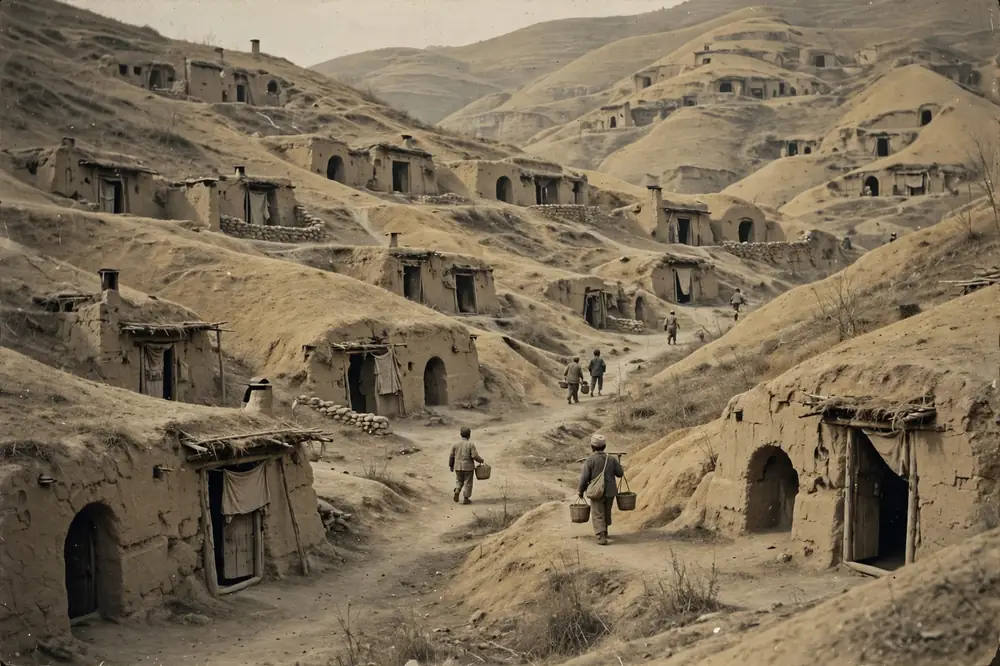
Yan’an, the Communist capital in the loess hills of north-west China, was the centre of the Communist war effort, and it has become a place of pilgrimage in China, as the birthplace of the Communist revolution. In Yan’an, Mao Zedong wrote his most important works, the Communist Party trained its cadres, and the Eighth Route Army was organised and supplied.
Yan’an was poor, isolated and under blockade, but it was also a place of idealism, where young Chinese came from across the country to join the revolution, and where the Party developed the ideas — of guerrilla war, of mass mobilisation, of the united front — that would win it the civil war.
The memory of Yan’an is central to the Communist Party’s account of the war: it is the place where the Party proved itself, where it survived the Japanese and the Nationalists, and where it prepared for victory. The Yan’an of today is a museum town, with the caves where Mao and his comrades lived, and it is visited by Chinese schoolchildren and by Party members, as a place of political education.
8. The War in the Pacific and the End
Pearl Harbor and the wider war
China becomes an Ally
The attack on Pearl Harbor on 7 December 1941 changed the war in China, because it made China an ally of the United States and Britain, and it brought American aid to China on a large scale. The United States, which had been supplying China with arms and with the volunteer airmen of the Flying Tigers, now sent a military mission under General Joseph Stilwell, and it supplied China through Lend-Lease, through the airlift over the Himalayas, and through the building of air bases in China from which American bombers attacked Japan.
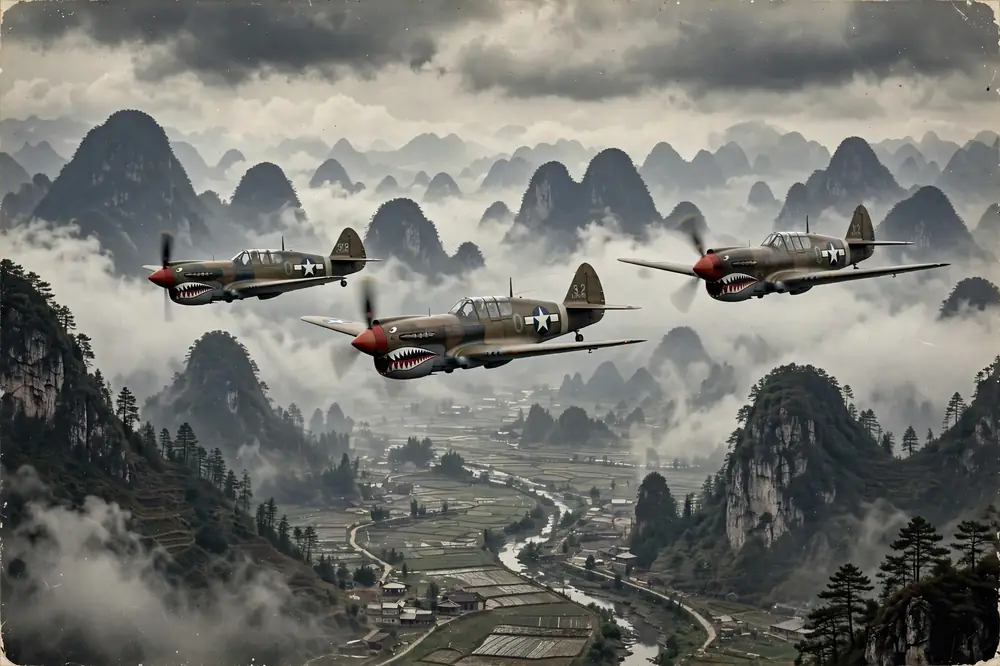
China, which had fought alone for four years, was now part of a global coalition, and Chiang Kai-shek was recognised as one of the Allied leaders, at the Cairo Conference in November 1943, where he met Roosevelt and Churchill. The alliance was not an easy one: Stilwell and Chiang quarrelled bitterly over strategy, over the command of Chinese troops, and over the corruption of the Nationalist government, and Stilwell was recalled in October 1944, after demanding that Chiang give him command of all Chinese forces.
The alliance survived, but it was strained, and the strain is a part of the story of the war in China.
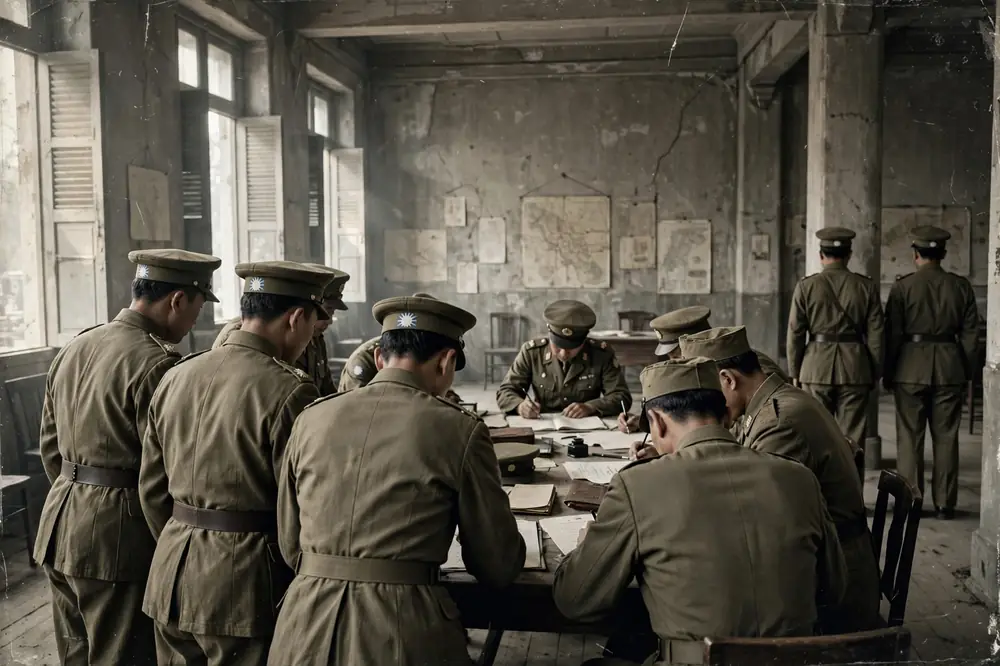
The Burma Road and the Hump
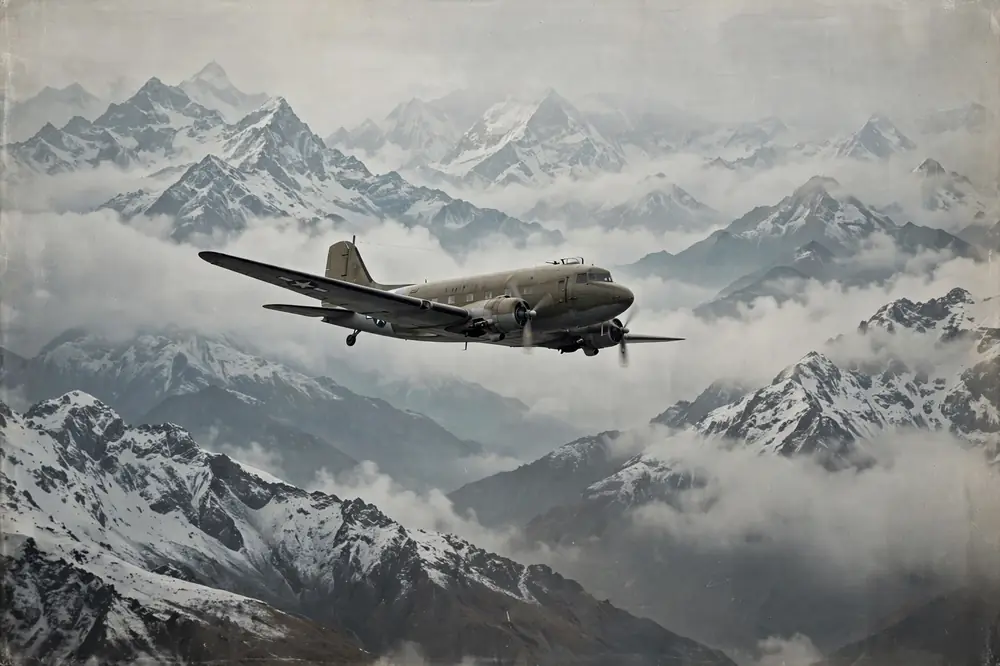
The supply of China was one of the great logistical problems of the war, and it was solved, in part, by the airlift over the Himalayas, known as the Hump, and by the Burma Road, the overland route from India to China that was reopened in 1945.
The Hump airlift, flown by American and Chinese aircrews in unpressurised transport aircraft, over mountains higher than their service ceiling, delivered about 650,000 tons of supplies to China, at a cost of more than 500 aircraft and more than 1,000 aircrew. The Burma Road, built by Chinese labourers in 1937-38, was cut by the Japanese in 1942, and it was not reopened until 1945, when the Allies retook northern Burma.
The supply routes were the lifeline of China, and they were also a symbol of the alliance: the Americans and the Chinese who flew the Hump and built the roads were fighting the same war, and their cooperation, for all its difficulties, kept China in the war until the end.
Ichigo and the last year
In 1944, Japan launched Operation Ichigo, its largest offensive in China, in an attempt to open a land route from northern China to Indochina, and to destroy the American air bases in China from which bombers were attacking Japan. The offensive was a military success: the Japanese took the air bases, captured the cities of Changsha and Guilin, and advanced across southern China, inflicting heavy casualties on the Chinese armies.
It was also a strategic failure: the offensive used up Japan’s last reserves, it did not stop the American bombing of Japan, which was now carried out from the Pacific islands, and it exposed the weakness of the Chinese Nationalist armies, whose collapse in the face of the offensive shocked the Americans and convinced many of them that Chiang’s government was corrupt and incompetent.
Ichigo is remembered in China as a disaster, and in Japan as a hollow victory, and it is the last great campaign of the war in China, before the atomic bombs and the Soviet invasion of Manchuria ended the war in August 1945.
Surrender
Japan surrendered on 15 August 1945, after the atomic bombings of Hiroshima and Nagasaki and the Soviet invasion of Manchuria, and the formal surrender was signed on 2 September 1945, aboard the battleship Missouri in Tokyo Bay. In China, the formal surrender of Japanese forces took place on 9 September 1945, at Nanjing, in a ceremony in which the Japanese commander in China surrendered to the Chinese Nationalist commander, General He Yingqin.
The surrender was a moment of triumph for China, and it was celebrated across the country, but it was also the beginning of a new conflict: the civil war between the Nationalists and the Communists, which had been suspended during the war against Japan, resumed almost at once, and it would end, in 1949, with the Communist victory and the flight of the Nationalists to Taiwan.
The war against Japan was over, but the war for China had only entered its final phase.
9. Memory and Controversy
The Nanjing Massacre Memorial
The Nanjing Massacre is remembered in China at the Memorial Hall of the Victims in the Nanjing Massacre by Japanese Invaders, opened in 1985, on the site of one of the mass graves in Nanjing. The memorial, which is visited by millions of people each year, tells the story of the massacre through photographs, documents, the names of the victims, and the mass grave itself, in which the bones of the victims are displayed.
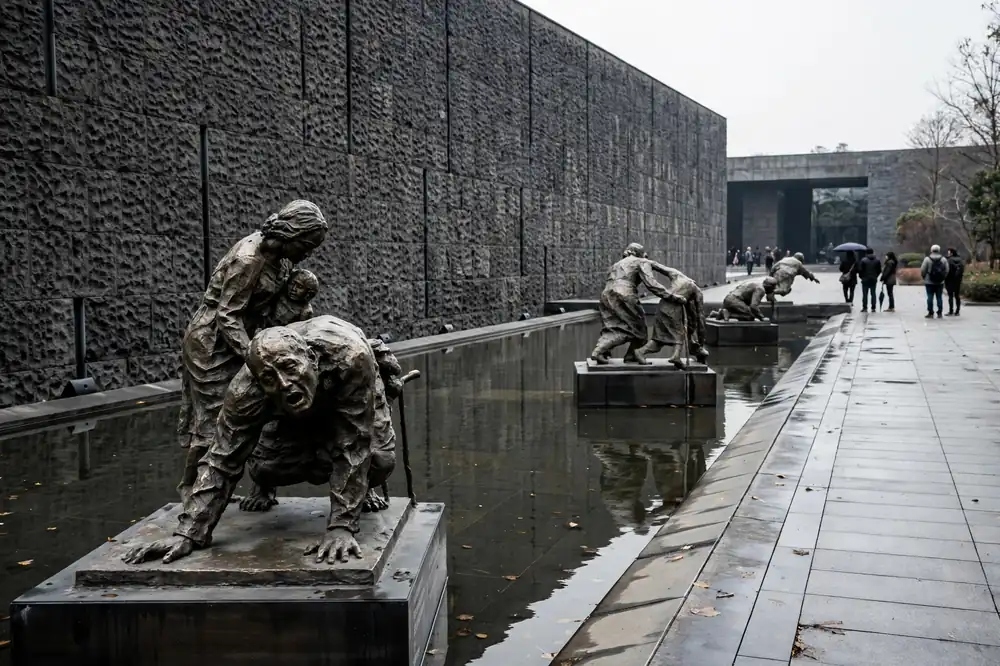
The memorial’s figure of 300,000 victims is inscribed on its walls, and it is the figure that is taught in Chinese schools and that is cited by the Chinese government. The memorial is a place of national mourning in China, and it is visited by Chinese leaders on the National Memorial Day, 13 December, which was established in 2014.
The memorial is also a source of controversy: Japanese historians and politicians have disputed the figure of 300,000, and the debate over the number has become a part of the larger debate over the history of the war, and over the relationship between China and Japan.
Unit 731
The war in China included one of the most secret and most terrible programmes of the Second World War: Unit 731, the Japanese biological and chemical warfare unit based at Harbin, in Manchuria. Unit 731, under the command of General Shirō Ishii, carried out experiments on human beings — Chinese, Korean, Russian and Allied prisoners — in which they were infected with plague, cholera, anthrax and other diseases, and in which they were subjected to vivisection and to tests of biological weapons.
The number of victims is disputed, with estimates ranging from about 3,000 people killed in the experiments themselves to much larger numbers, including the victims of the biological attacks on Chinese cities, and the article gives the range rather than a single figure.
After the war, the leaders of Unit 731 were not tried at Tokyo, in exchange for their data, which the Americans wanted for their own biological warfare programme — a decision that remains one of the most controversial of the post-war period.
Unit 731 is remembered in China at the museum in Harbin, and it is a part of the memory of the war that is still painful for both countries.
Textbooks and Yasukuni
The memory of the war is a source of tension between China and Japan, and it is most visible in the debates over Japanese school textbooks and over visits by Japanese prime ministers to the Yasukuni Shrine in Tokyo, where the war dead, including convicted war criminals, are enshrined.
Chinese governments have protested against textbooks that, in their view, minimise or deny the Nanjing Massacre and other crimes, and against visits to Yasukuni, which they see as a glorification of the war. Japanese governments have responded that the textbooks are a matter for educators, and that visits to Yasukuni are a matter of honouring the dead.
The debate is not only about history but about the present: it is about how Japan remembers its past, and about how China and Japan, the two largest economies in Asia, can live together. The debate is unlikely to be resolved soon, and it is a reminder that the Second Sino-Japanese War is not only a matter of history but a matter of the present, and that its memory shapes the politics of Asia today.
10. Legacy
The legacy of the Second Sino-Japanese War is written into the history of modern China. It is the war that made China a great power: China was one of the four great powers at the end of the war, it was given a permanent seat on the United Nations Security Council, and it was recognised, for the first time, as a country that could not be ignored.
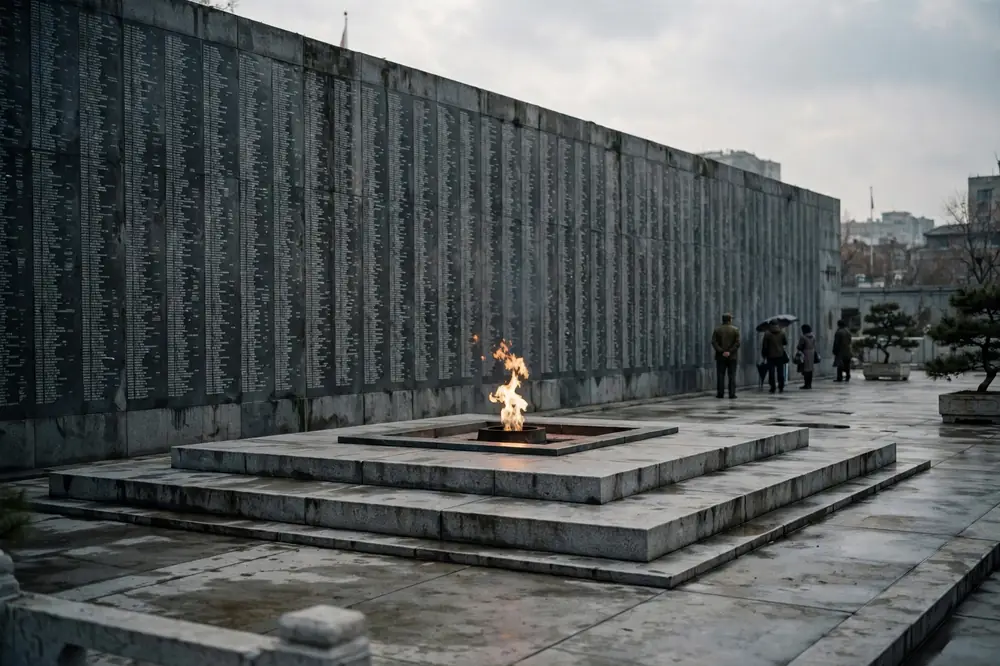
It is the war that shaped the Chinese Communist Party: the Party grew from a small force in Yan’an to an army of millions, and it won the civil war that followed, in part because of the legitimacy it had gained in the war against Japan. It is the war that devastated China: between 10 and 20 million dead, cities destroyed, the economy ruined, and a generation lost.
And it is the war that is still remembered, in China, as the central event of modern history, the war that defined what it means to be Chinese, and that is taught to every Chinese schoolchild as the War of Resistance Against Japan.
The war in world history
In world history, the Second Sino-Japanese War is often treated as a sideshow to the war in Europe and the Pacific, but that judgement is wrong. The war in China tied down more than a million Japanese soldiers for eight years, soldiers who could not be used in the Pacific, and it was the war in which Japan’s expansion was first checked, and in which the limits of Japanese power were first exposed.
The war in China was also the war in which the United States first became involved in Asia, through the Flying Tigers, through Lend-Lease, and through the alliance with Chiang Kai-shek, and it was the war that set the pattern for America’s involvement in Asia for the rest of the century.
The war’s place in world history is now being recognised, by historians who have shown that the Second World War began in China, not in Europe, and that it was a global war from the beginning, not a European war that became global. The Second Sino-Japanese War deserves that recognition, because it was one of the longest, deadliest and most consequential wars of the twentieth century.
Why the war still matters
The Second Sino-Japanese War still matters because the questions it raises have not gone away. The question of the casualty figures — how many Chinese died, and how they died — is a question that shapes the memory of the war in China and in Japan, and it is a question that historians are still trying to answer.
The question of the war crimes — Nanjing, Unit 731, the bombing of Chongqing — is a question that shapes the relationship between China and Japan, and it is a question that is still debated in the politics of Asia.
And the question of the war’s meaning — what it means to resist, what it means to endure, and what it means to win a war that costs millions of lives — is a question that every generation must answer for itself.
As long as those questions matter, the war will matter, and the memory of the War of Resistance Against Japan will continue to shape China, Japan and the world.
Frequently Asked Questions
When was the Second Sino-Japanese War?
The war lasted from 7 July 1937, the Marco Polo Bridge Incident, to the Japanese surrender in August-September 1945 — eight years.
How many Chinese died in the war?
Chinese deaths are estimated at 10 to 20 million, military and civilian, by the most commonly cited ranges. Chinese military deaths are estimated at about 3 to 4 million.
How many people were killed in the Nanjing Massacre?
The number is disputed. The most commonly cited range is 100,000 to 300,000 people. The Chinese memorial cites 300,000, and the Tokyo Tribunal found more than 200,000.
What was Unit 731?
Unit 731 was a Japanese biological and chemical warfare unit based at Harbin, in Manchuria, which carried out experiments on human beings. Its victims are estimated in the thousands, and its leaders were not tried after the war.
Why did the war last so long?
China refused to surrender, traded space for time, and moved its government and industry inland to Chongqing. Japan could hold the cities and railways but could not conquer all of China.
How is the war remembered in China?
The war is remembered as the War of Resistance Against Japan, and 3 September is observed as Victory Day. The Nanjing Massacre Memorial and the museums at Chongqing and Harbin are the principal places of remembrance.
Related articles
Sources
- Rana Mitter, China’s War with Japan, 1937-1945: The Struggle for Survival (Allen Lane, 2013) — the standard English-language history of the war.
- Frank Dorn, The Sino-Japanese War, 1937-41 (Macmillan, 1974) — the early campaigns, Shanghai, Nanjing and Wuhan.
- Wikipedia, “Second Sino-Japanese War” and “Nanjing Massacre” — the chronology, the casualty ranges and the massacre.
- United States Holocaust Memorial Museum, Holocaust Encyclopedia, “Nanjing Massacre” — the massacre and its documentation.
- Iris Chang, The Rape of Nanking (Basic Books, 1997) — the massacre and its memory, with the figure of 300,000 as cited by Chinese sources.
- Yuki Tanaka, Hidden Horrors: Japanese War Crimes in World War II (Westview Press, 1996) — Unit 731, the bombing of Chongqing and the “Three Alls” policy.
- Hans van de Ven, China at War: Triumph and Tragedy in the Emergence of the New China (Harvard University Press, 2018) — the war, the United Front and the road to 1949.