 WAR ATLAS MILITARY HISTORY MAGAZINE · WWI — WWII
PTRS-41
1. PTRS-41 — At a Glance
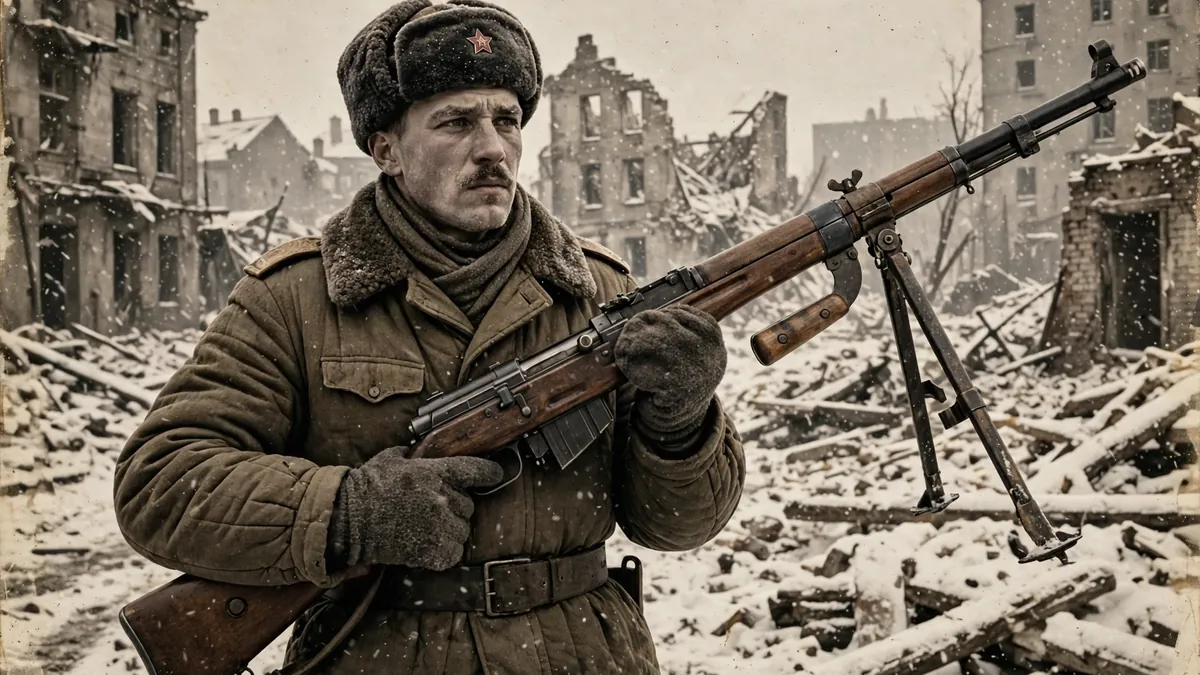
The PTRS-41 (Protivotankovoye Ruzhyo Simonova, Simonov anti-tank rifle) was the Soviet Union’s semi-automatic anti-tank rifle of the Second World War, and one of the most widely used weapons of its kind. Designed by Sergei Simonov, the PTRS-41 fired the powerful 14.5×114 mm cartridge and could penetrate the armour of German light and medium tanks at close range, and it was issued in enormous numbers — more than 190,000 were built — to Soviet infantry units that had no other weapon capable of stopping a tank. The rifle entered service in the desperate summer of 1941, when German Panzer divisions were advancing on Moscow and Leningrad, and it remained in use throughout the war, on every front from Stalingrad to Berlin. It was heavy, long and hard to fire, and by 1943 it could no longer penetrate the frontal armour of the new German Panther and Tiger tanks, but it remained effective against lighter vehicles, against armoured personnel carriers, against gun emplacements and against aircraft at low altitude, and it became a symbol of Soviet infantry resourcefulness in the Great Patriotic War.
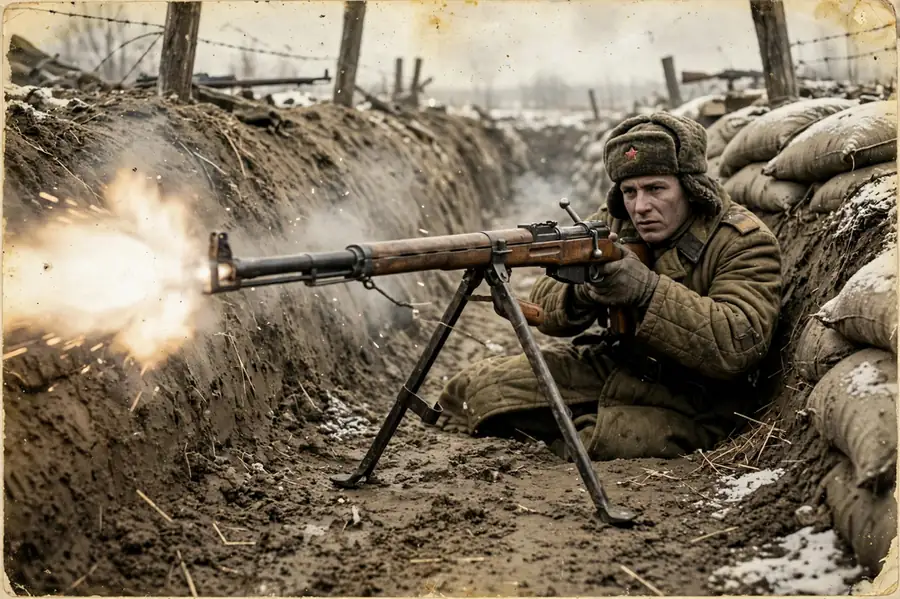
The PTRS-41 is often remembered together with its simpler rival, the PTRD-41, the single-shot anti-tank rifle designed by Vasily Degtyaryov. The two rifles were developed in parallel in the summer of 1941, under an order from Stalin himself, and they were both adopted in August 1941, after a development period of only a few weeks. The PTRD was simpler and cheaper, and it was built in larger numbers — more than 280,000 — but the PTRS was the more advanced weapon, with a five-round magazine, a semi-automatic action and a higher rate of fire, and Soviet soldiers who were issued one often preferred it, even though it was heavier and more complex to maintain. Together the two rifles gave Soviet infantry a weapon that could be carried by two men, hidden in a trench or in a ruined building, and used to ambush a tank at a range of a few hundred metres, and they played a part in the defence of Moscow, in the encirclement at Stalingrad and in the great tank battles of 1943.
2. Key Facts
| Type | Semi-automatic anti-tank rifle |
| Origin | Soviet Union |
| Designer | Sergei Simonov |
| Manufacturer | Tula Arms Plant; Izhevsk; Kovrov |
| In service | 1941–1945 (front line); later in Korea and other conflicts |
| Produced | 1941–1945; more than 190,000 built |
| Weight | About 20.9 kg (unloaded); about 22 kg loaded |
| Length | 2,108 mm |
| Barrel length | 1,219 mm |
| Cartridge | 14.5×114 mm |
| Action | Gas-operated, semi-automatic |
| Muzzle velocity | About 1,013 m/s |
| Rate of fire | About 8–10 rounds per minute (aimed) |
| Effective range | About 800 m against light armour; about 300–500 m against tanks |
| Feed system | 5-round en bloc clip, internal magazine |
| Armour penetration | About 40 mm at 100 m; about 35 mm at 300 m (with BS-41 tungsten-cored round) |
3. Background and Development
The Tank Crisis of 1941
In June 1941, when Germany invaded the Soviet Union in Operation Barbarossa, Soviet infantry had almost no weapon that could stop a tank. The Red Army had abandoned anti-tank rifles in the 1930s, believing that they were obsolete, and its anti-tank guns were too few and too heavy to be everywhere they were needed. In the first weeks of the invasion, German Panzer divisions broke through Soviet lines again and again, and Soviet riflemen watched, helpless, as German tanks overran their positions. The Soviet leadership understood the crisis at once: on 8 July 1941, Stalin ordered the development of a new anti-tank rifle, and two designers were given the task in parallel — Vasily Degtyaryov, who designed the simple single-shot PTRD-41, and Sergei Simonov, who designed the semi-automatic PTRS-41. Both men were told to have a working weapon ready within weeks, and both delivered.
Simonov and the Race to Production
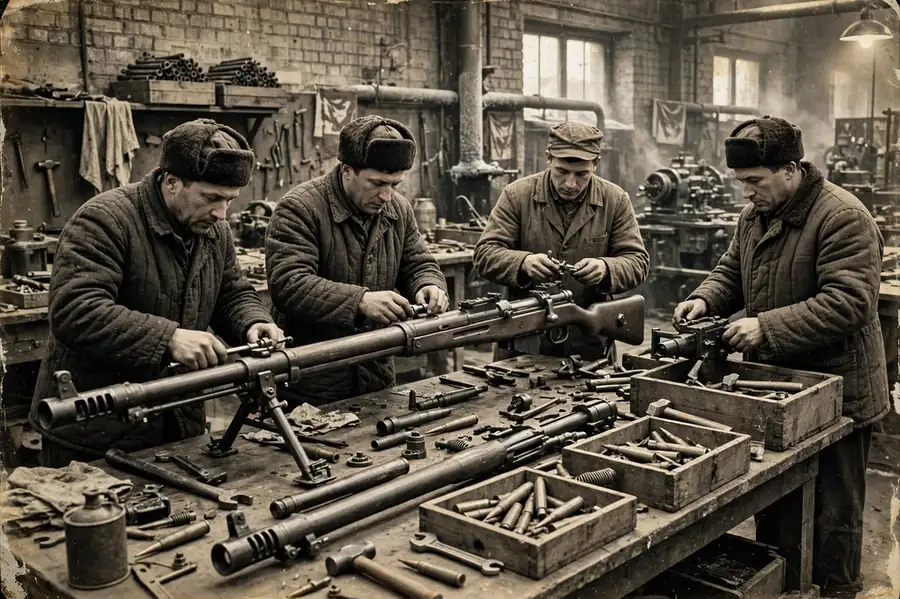
Simonov’s rifle was built in weeks, and this section explains how a design that had been years in preparation could be turned into a weapon in the hands of soldiers in less than four months. The first part describes a design built in weeks: Simonov had been working on a semi-automatic rifle since the 1930s, and he adapted his earlier designs to the new 14.5 mm cartridge, which had been developed for a heavy machine gun and which gave the rifle its power. His design used a gas-operated action, a five-round magazine loaded with an en bloc clip, and a long barrel with a muzzle brake to reduce the enormous recoil. The rifle was tested at the end of July 1941, and on 29 August 1941 both the PTRD and the PTRS were adopted by the Red Army, with production beginning at once at the Tula Arms Plant and later at Izhevsk and Kovrov, and the first rifles reaching the front in the autumn of 1941, in time for the defence of Moscow. The second part explains the 14.5 mm cartridge, the heart of the PTRS-41 and one of the most powerful rifle cartridges ever made. It fired a bullet of about 64 grams at a muzzle velocity of about 1,013 metres per second, and the standard armour-piercing round could penetrate about 40 mm of armour at 100 metres, while the BS-41 round, with a tungsten carbide core, could penetrate more and was reserved for use against the heaviest targets. The cartridge was so powerful that it was later used in the KPV heavy machine gun, which is still in use today, and the 14.5 mm round remains in service in many countries more than eighty years after it was introduced, so that for the infantryman of 1941 the cartridge meant that a rifle he could carry could, at close range, stop a tank that no other infantry weapon could touch.
A Design Built in Weeks
Simonov had been working on a semi-automatic rifle since the 1930s, and he adapted his earlier designs to the new 14.5 mm cartridge, which had been developed for a heavy machine gun and which gave the rifle its power. His design used a gas-operated action, a five-round magazine loaded with an en bloc clip, and a long barrel with a muzzle brake to reduce the enormous recoil. The rifle was tested at the end of July 1941, and on 29 August 1941 both the PTRD and the PTRS were adopted by the Red Army. Production began at once, at the Tula Arms Plant and later at Izhevsk and Kovrov, and the first rifles reached the front in the autumn of 1941, in time for the defence of Moscow. The speed of the programme was extraordinary: from Stalin’s order to the first rifles in the hands of soldiers was less than four months, and the two rifles together became the most quickly developed anti-tank weapons of the war.
The 14.5 mm Cartridge
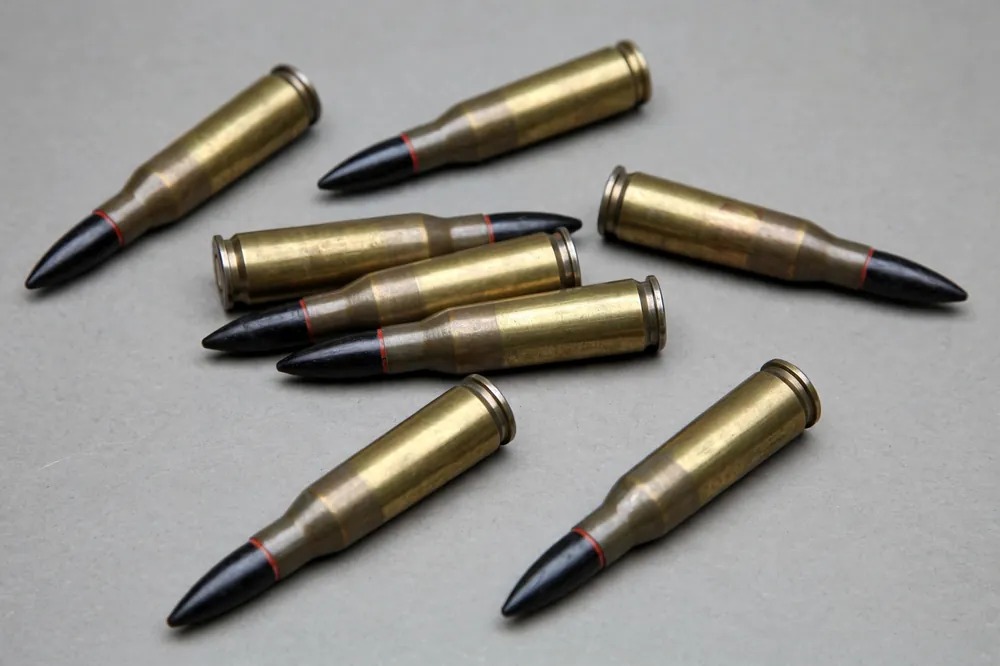
The 14.5×114 mm cartridge was the heart of the PTRS-41, and it was one of the most powerful rifle cartridges ever made. It fired a bullet of about 64 grams at a muzzle velocity of about 1,013 metres per second, and the standard armour-piercing round could penetrate about 40 mm of armour at 100 metres, while the BS-41 round, with a tungsten carbide core, could penetrate more and was reserved for use against the heaviest targets. The cartridge was so powerful that it was later used in the KPV heavy machine gun, which is still in use today, and the 14.5 mm round remains in service in many countries more than eighty years after it was introduced. For the infantryman of 1941, the cartridge meant that a rifle he could carry could, at close range, stop a tank that no other infantry weapon could touch.
First Issue to the Front
The first PTRS-41 rifles reached the front in the autumn of 1941, and they were issued to specially trained two-man teams, a gunner and a loader, who were attached to rifle companies and battalions. The teams were taught to hide, to wait for a tank to come within 300 metres, and to fire at its sides, its rear or its tracks, where the armour was thinnest, rather than at its frontal armour, which the rifle could not penetrate. The rifle’s first combat use was in the defence of Moscow, where German tanks were advancing on the capital and Soviet infantry had few other anti-tank weapons, and the PTRS-41, together with the PTRD, helped to slow the German advance and to buy time for the Soviet counter-offensive in December 1941. The rifle’s reputation was made in those weeks, and it remained a standard weapon of Soviet infantry for the rest of the war.
4. Design
Action and Magazine
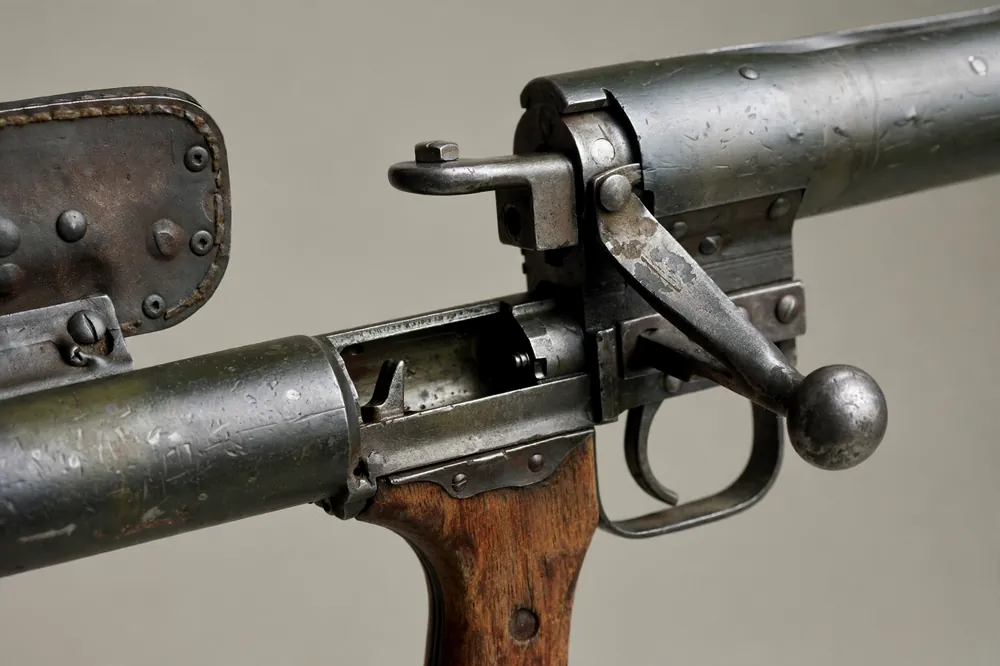
The PTRS-41 was a gas-operated, semi-automatic rifle, which meant that the gas from each shot cycled the action and loaded the next round, so that the gunner could fire five rounds in quick succession without working a bolt. The rifle was fed from a five-round en bloc clip, which was loaded into an internal magazine from above, and the clip fell out of the bottom of the rifle when the last round was fired. The semi-automatic action gave the PTRS a higher rate of fire than the single-shot PTRD, and it allowed the gunner to fire a second shot quickly if the first missed or failed to penetrate, which mattered in combat against a moving tank. The action was, however, more complex than the PTRD’s, and it was more sensitive to dirt, to cold and to poor maintenance, so that PTRS rifles in the hands of poorly trained soldiers sometimes jammed, while the simpler PTRD rarely did.
Barrel, Recoil and Sights
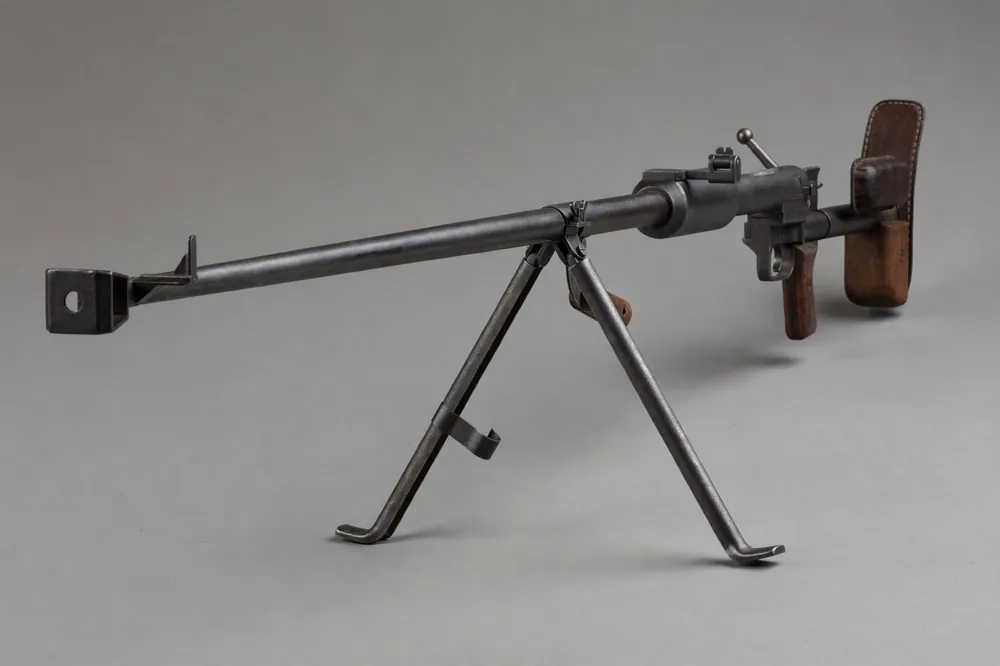
The PTRS-41 was one of the longest and heaviest infantry weapons of the war, and this section explains how its barrel, its recoil and its sights shaped the way it had to be used in the field. The first part covers the long barrel and the muzzle brake: the rifle’s barrel was 1,219 mm long, and the whole weapon was 2,108 mm long, which made it one of the longest infantry weapons of the war. The long barrel gave the 14.5 mm bullet its high velocity, and it was fitted with a large muzzle brake, which deflected the gas to the sides and reduced the recoil to a level that a man could fire from the shoulder, although the recoil was still violent and the muzzle blast was enormous. The rifle was fitted with a bipod at the front, and it was normally fired from the prone position, with the gunner lying behind it and the loader beside him, feeding clips into the magazine. The rifle had no telescopic sight as standard; it used iron sights, with a front post and a rear sight adjustable for range, and the gunner aimed by lining up the sights on the target, which required practice and a steady hand at the ranges at which the rifle was used. The second part turns to weight and handling in the field: the PTRS-41 weighed about 20.9 kilograms unloaded, and about 22 kilograms loaded, which made it far heavier than a normal rifle and meant that it was normally carried by two men, with one man carrying the rifle and the other carrying the ammunition. The weight was a burden on the march, and the rifle’s length made it awkward in a trench or in a ruined building, but Soviet soldiers accepted the weight because the rifle gave them a weapon that could stop a tank. The rifle was also difficult to fire accurately: the recoil was violent, the muzzle blast threw up dust and snow and gave away the gunner’s position, and the gunner had to fire from a stable position, which made him a target for German infantry and for the tank’s machine guns, so that the PTRS was, in short, a weapon that demanded courage and discipline from its crew, and the men who used it well were among the most respected soldiers in the Red Army.
The Long Barrel and Muzzle Brake
The rifle’s barrel was 1,219 mm long, and the whole weapon was 2,108 mm long, which made it one of the longest infantry weapons of the war. The long barrel gave the 14.5 mm bullet its high velocity, and it was fitted with a large muzzle brake, which deflected the gas to the sides and reduced the recoil to a level that a man could fire from the shoulder, although the recoil was still violent and the muzzle blast was enormous. The rifle was fitted with a bipod at the front, and it was normally fired from the prone position, with the gunner lying behind it and the loader beside him, feeding clips into the magazine. The rifle had no telescopic sight as standard; it used iron sights, with a front post and a rear sight adjustable for range, and the gunner aimed by lining up the sights on the target, which required practice and a steady hand at the ranges at which the rifle was used.
Weight and Handling in the Field
The PTRS-41 weighed about 20.9 kilograms unloaded, and about 22 kilograms loaded, which made it far heavier than a normal rifle and meant that it was normally carried by two men, with one man carrying the rifle and the other carrying the ammunition. The weight was a burden on the march, and the rifle’s length made it awkward in a trench or in a ruined building, but Soviet soldiers accepted the weight because the rifle gave them a weapon that could stop a tank. The rifle was also difficult to fire accurately: the recoil was violent, the muzzle blast threw up dust and snow and gave away the gunner’s position, and the gunner had to fire from a stable position, which made him a target for German infantry and for the tank’s machine guns. The PTRS was, in short, a weapon that demanded courage and discipline from its crew, and the men who used it well were among the most respected soldiers in the Red Army.
Strengths and Weaknesses
The PTRS-41’s strength was its firepower and its rate of fire: five rounds in quick succession, each capable of penetrating the armour of a light tank, gave a two-man team a real chance against a tank at close range, and the rifle’s long range let it engage targets that other infantry weapons could not reach. Its weaknesses were its weight, its length, its violent recoil and its sensitivity to dirt, and by 1943 its penetration was no longer enough against the frontal armour of the Panther and the Tiger. The Soviet Army kept the rifle in service because it was still useful against lighter vehicles, against armoured cars and half-tracks, against gun emplacements and against low-flying aircraft, and because it was available in large numbers when newer weapons, such as the RPG-43 grenade and the captured Panzerfaust, were still scarce. The PTRS was a weapon of its time, and its time was the desperate years of 1941 and 1942, when any weapon that could stop a tank was worth its weight.
5. Variants
The PTRS-41 and Its Rivals
| Variant | Years | Key features | Production |
|---|---|---|---|
| PTRS-41 | 1941–1945 | Semi-automatic; 5-round clip; gas-operated; standard model | More than 190,000 |
| PTRD-41 | 1941–1945 | Single-shot; simpler and cheaper; Degtyaryov design | More than 280,000 |
| PTRS-41 (late) | 1943–1945 | Minor production changes; simplified parts | Included above |
| PTRD-41 (late) | 1943–1945 | Simplified production | Included above |
The PTRS-41 was produced in a single main variant, with only minor changes during production, as Soviet factories simplified parts and changed suppliers. The rifle’s main rival was not a variant of itself, but the PTRD-41, which was developed at the same time and which was issued alongside the PTRS throughout the war. The two rifles used the same cartridge, the same sights and the same tactics, and a Soviet rifle company might have both types in its anti-tank platoon. The PTRD was simpler, cheaper and more reliable, and it was built in larger numbers; the PTRS was faster to fire, and it was preferred by soldiers who had been trained to maintain it. The Soviet Army never chose between them, and it used both until the end of the war, because both were needed and both worked.
Post-War Use and Copies
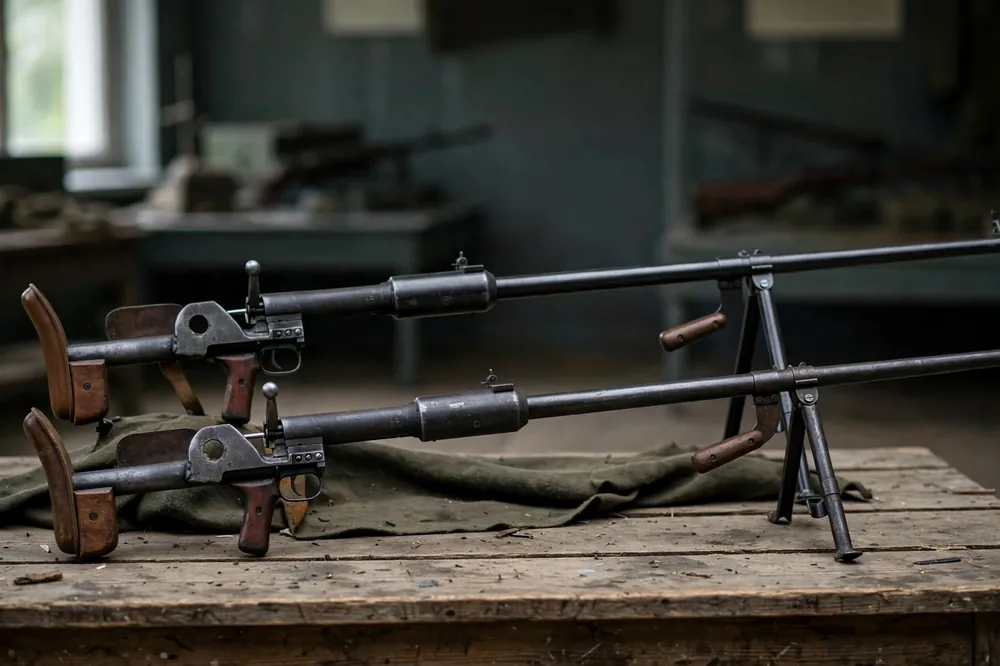
The PTRS-41 did not disappear when the Second World War ended, and this section follows the rifle into its long post-war career and into the museums and collections where it survives today. The first part covers the Korean War and beyond: after the Second World War, the PTRS-41 was used by North Korea and by China in the Korean War, where it was used against American and United Nations light vehicles and against fortifications, and it was later used in Vietnam and in other conflicts in Asia and Africa. The rifle’s 14.5 mm cartridge was so successful that it was adopted for the KPV heavy machine gun, which is still in use today on armoured vehicles and on anti-aircraft mounts, and the PTRS-41 itself remained in the arsenals of many countries long after the war. The rifle was never produced in large numbers outside the Soviet Union, but captured examples were used by many armies, and the design influenced the development of later anti-materiel rifles, which use large cartridges to engage light armour and equipment at long range. The second part looks at surviving PTRS rifles as collectors’ items: today the PTRS-41 is a sought-after collectors’ item, and surviving examples are held in museums and in private collections in Russia, in Europe and in the United States. The rifle’s size and weight make it difficult to display, but museums that hold one usually display it with its bipod extended and with a clip of 14.5 mm ammunition beside it, so that visitors can appreciate how large and how heavy a weapon it was. The PTRS-41 is also used by historical re-enactors, who fire blank rounds from it at events commemorating the Eastern Front, and it appears in films about the Great Patriotic War, where it is shown in the hands of Soviet soldiers defending Moscow and Stalingrad, and its survival in museums and in collections is a reminder of the desperate summer of 1941, when a weapon built in weeks became a symbol of Soviet resistance.
The Korean War and Beyond
After the Second World War, the PTRS-41 was used by North Korea and by China in the Korean War, where it was used against American and United Nations light vehicles and against fortifications, and it was later used in Vietnam and in other conflicts in Asia and Africa. The rifle’s 14.5 mm cartridge was so successful that it was adopted for the KPV heavy machine gun, which is still in use today on armoured vehicles and on anti-aircraft mounts, and the PTRS-41 itself remained in the arsenals of many countries long after the war. The rifle was never produced in large numbers outside the Soviet Union, but captured examples were used by many armies, and the design influenced the development of later anti-materiel rifles, which use large cartridges to engage light armour and equipment at long range.
Surviving PTRS Rifles as Collectors’ Items
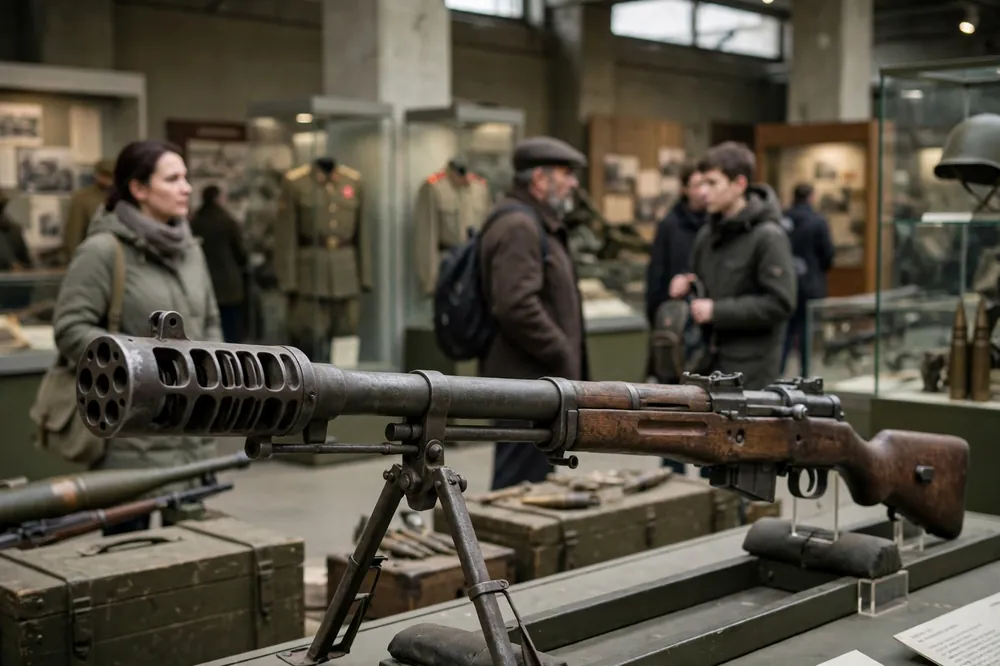
Today the PTRS-41 is a sought-after collectors’ item, and surviving examples are held in museums and in private collections in Russia, in Europe and in the United States. The rifle’s size and weight make it difficult to display, but museums that hold one usually display it with its bipod extended and with a clip of 14.5 mm ammunition beside it, so that visitors can appreciate how large and how heavy a weapon it was. The PTRS-41 is also used by historical re-enactors, who fire blank rounds from it at events commemorating the Eastern Front, and it appears in films about the Great Patriotic War, where it is shown in the hands of Soviet soldiers defending Moscow and Stalingrad. The rifle’s survival in museums and in collections is a reminder of the desperate summer of 1941, when a weapon built in weeks became a symbol of Soviet resistance.
6. Operational History
The Defence of Moscow, 1941
The PTRS-41 first saw combat in the defence of Moscow in the autumn of 1941, when German Panzer divisions were within a few dozen kilometres of the Soviet capital. Soviet infantry, who had few anti-tank guns, used the new rifles to ambush German tanks on the roads leading to Moscow, firing from ditches, from ruined houses and from the edge of forests, and the rifles destroyed or disabled a number of German tanks and armoured vehicles. The PTRS-41 was not a weapon that could stop a Panzer division on its own, but it slowed the German advance, it forced German tank commanders to be cautious, and it gave Soviet soldiers a weapon they could use against a tank, which mattered for morale as much as for the tanks it destroyed. The defence of Moscow was the rifle’s first test, and it passed it, even though the rifle was new, its crews were newly trained and its ammunition was in short supply.
Stalingrad and Kursk
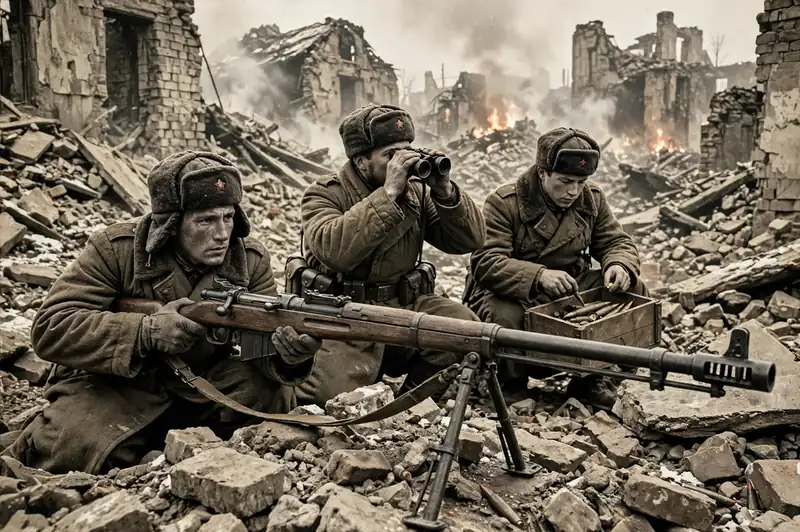
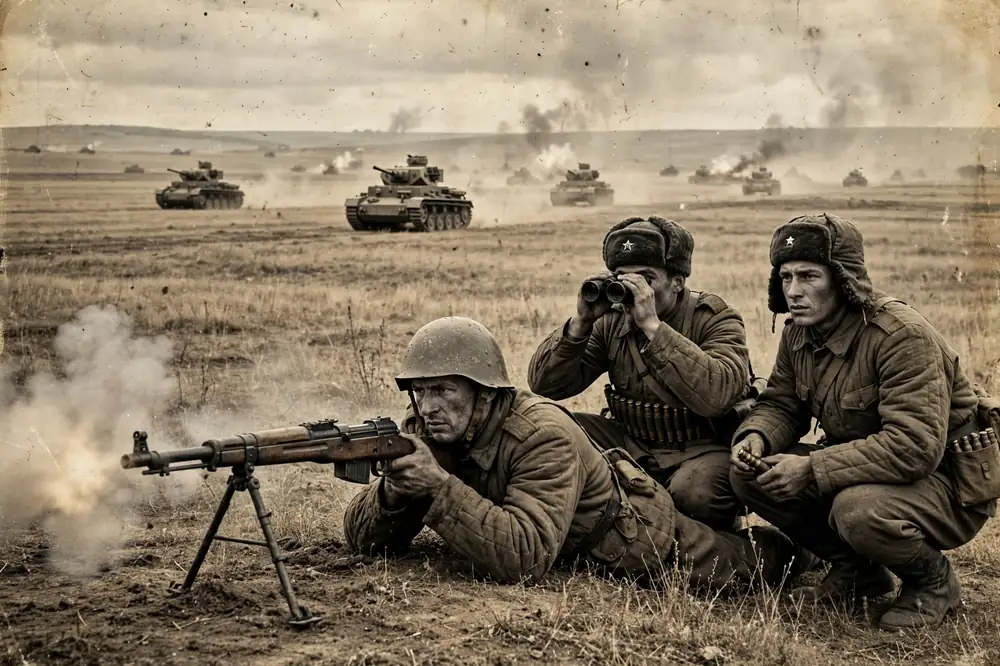
Stalingrad and Kursk were the two battles that defined the PTRS-41’s combat record, and this section explains how the rifle was used in the street fighting of one and in the great tank battle of the other. The first part covers the street fighting at Stalingrad, from August 1942 to February 1943, where the PTRS-41 was used in street fighting, and its long range and its power were useful against German tanks that advanced down narrow streets and into squares. Soviet anti-tank rifle teams hid in ruined buildings, in cellars and on upper floors, and they fired at German tanks from above and from the side, where the armour was thin, and at the tanks’ tracks and vision slits. The rifle was also used against German infantry, against machine-gun nests and against snipers, and its 14.5 mm bullet could penetrate walls and sandbags that would have stopped a normal rifle bullet. The fighting at Stalingrad was the hardest of the war for Soviet infantry, and the PTRS-41, together with the PTRD, was one of the few weapons that gave a Soviet soldier a chance against a German tank in the ruins of the city. The second part turns to the tank battle at Kursk in July 1943, where the PTRS-41 faced its hardest test, against the new German Panther and Tiger tanks, whose frontal armour it could not penetrate. Soviet anti-tank rifle teams were deployed in depth, in the defensive belts that the Red Army had built around the Kursk salient, and they were ordered to fire at the sides and rears of German tanks, at their tracks and at lighter vehicles, and to leave the Panthers and Tigers to the anti-tank guns and to the Soviet tanks. The rifles destroyed a number of German armoured cars, half-tracks and light tanks, and they forced German tank commanders to keep their infantry close to their tanks, which slowed the German advance. Kursk was the last great battle in which the anti-tank rifle was used as a primary anti-tank weapon, and after Kursk the Soviet Army began to replace it with more powerful weapons, although it remained in use for the rest of the war.
The Street Fighting at Stalingrad
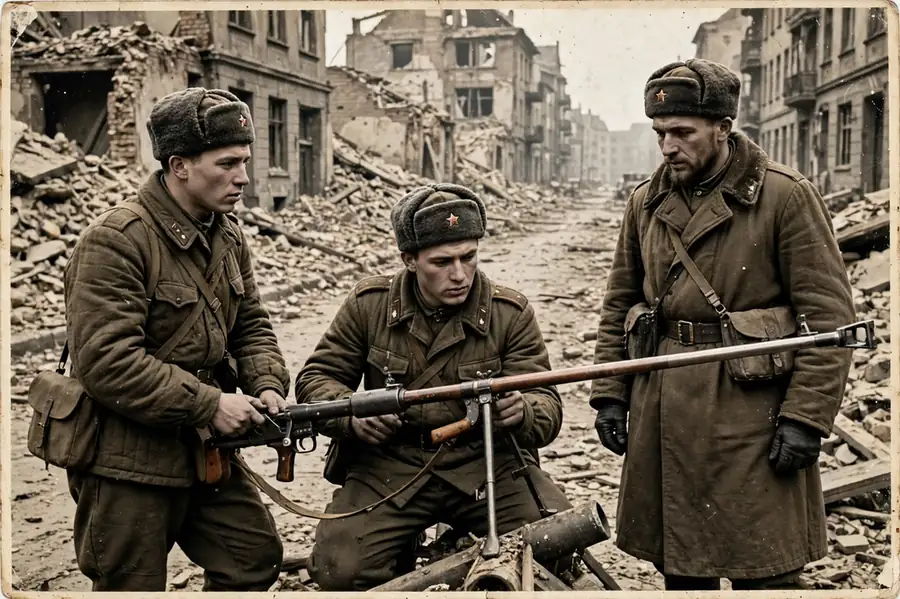
At Stalingrad, from August 1942 to February 1943, the PTRS-41 was used in street fighting, where its long range and its power were useful against German tanks that advanced down narrow streets and into squares. Soviet anti-tank rifle teams hid in ruined buildings, in cellars and on upper floors, and they fired at German tanks from above and from the side, where the armour was thin, and at the tanks’ tracks and vision slits. The rifle was also used against German infantry, against machine-gun nests and against snipers, and its 14.5 mm bullet could penetrate walls and sandbags that would have stopped a normal rifle bullet. The fighting at Stalingrad was the hardest of the war for Soviet infantry, and the PTRS-41, together with the PTRD, was one of the few weapons that gave a Soviet soldier a chance against a German tank in the ruins of the city.
The Tank Battle at Kursk
At Kursk in July 1943, the PTRS-41 faced its hardest test, against the new German Panther and Tiger tanks, whose frontal armour it could not penetrate. Soviet anti-tank rifle teams were deployed in depth, in the defensive belts that the Red Army had built around the Kursk salient, and they were ordered to fire at the sides and rears of German tanks, at their tracks and at lighter vehicles, and to leave the Panthers and Tigers to the anti-tank guns and to the Soviet tanks. The rifles destroyed a number of German armoured cars, half-tracks and light tanks, and they forced German tank commanders to keep their infantry close to their tanks, which slowed the German advance. Kursk was the last great battle in which the anti-tank rifle was used as a primary anti-tank weapon, and after Kursk the Soviet Army began to replace it with more powerful weapons, although it remained in use for the rest of the war.
The Advance to Berlin
In 1944 and 1945, as the Red Army advanced westwards, the PTRS-41 was used less against tanks and more against other targets: against German armoured personnel carriers, against gun emplacements, against snipers in ruined buildings and against low-flying aircraft. The rifle’s power made it useful in the street fighting in Budapest, in Vienna and in Berlin, where its bullet could penetrate walls and destroy a machine-gun nest that a normal rifle could not touch. The PTRS-41 was still in the hands of Soviet soldiers when they reached Berlin in April 1945, and it was one of the weapons that had been with the Red Army from the desperate summer of 1941 to the victory of 1945. The rifle’s service in the last year of the war was a reminder that a weapon does not have to be the newest or the most powerful to be useful, and that a weapon that is available in large numbers and that soldiers know how to use can still make a difference.
7. Performance and Specifications
Penetration and Range
| Specification | PTRS-41 |
|---|---|
| Cartridge | 14.5×114 mm |
| Muzzle velocity | About 1,013 m/s |
| Armour penetration (BS-41) | About 40 mm at 100 m; about 35 mm at 300 m |
| Armour penetration (B-32) | About 35 mm at 100 m; about 30 mm at 300 m |
| Effective range (anti-tank) | About 300–500 m |
| Effective range (other targets) | About 800 m |
| Rate of fire (aimed) | About 8–10 rounds per minute |
| Weight (unloaded) | About 20.9 kg |
| Length | 2,108 mm |
| Magazine | 5-round en bloc clip |
The table shows the PTRS-41’s real capability and its real limits. At 100 metres, with the tungsten-cored BS-41 round, it could penetrate about 40 mm of armour, which was enough for the side armour of a Panzer III or a Panzer IV, and for the armour of almost any light tank or armoured car of 1941 and 1942. At 300 metres the penetration fell to about 35 mm, and at longer ranges it fell further, so that the rifle was most effective at close range, where its crew was most exposed to enemy fire. The figures are approximate, and they vary between sources, because penetration depends on the angle of the armour, on the type of steel and on the condition of the ammunition, and because Soviet and German tests gave different results. The reader should treat the numbers as a guide to what the rifle could do, rather than as exact measurements for a single shot.
Comparison with the PTRD-41
Compared with the PTRD-41, the PTRS-41 was heavier, more complex and more expensive, but it was faster to fire and it gave its crew a better chance against a moving target. The PTRD, which weighed about 17.3 kilograms and was 2,020 mm long, was a single-shot rifle, and its gunner had to work the bolt after each shot, which took time and which meant that a missed shot gave the tank time to fire back. The PTRS, with its semi-automatic action, could fire five rounds in quick succession, and its gunner could correct his aim after each shot without losing his position. The PTRD was more reliable in dirty conditions, and it was built in larger numbers, but the PTRS was the more effective weapon in the hands of a trained crew, and Soviet soldiers who had used both often said that they preferred the PTRS, even though it was heavier to carry and harder to maintain.
Why the Anti-Tank Rifle Became Obsolete
The anti-tank rifle became obsolete because tanks became too heavily armoured for a rifle to penetrate, and because new weapons, such as the rocket-propelled grenade and the recoilless rifle, could penetrate far more armour with a weapon that was lighter and easier to carry. By 1943 the Panther’s frontal armour was 80 mm thick and the Tiger’s was 100 mm, and no rifle could penetrate it, no matter how powerful its cartridge. The Soviet Army replaced the anti-tank rifle with the RPG-43 hand grenade, which could penetrate about 75 mm of armour, and later with the RPG-2 and the RPG-7, which could penetrate far more. The PTRS-41’s obsolescence was not a failure of the rifle, but a sign of how quickly tank armour had improved, and the rifle’s service in 1941 and 1942, when it was the only weapon Soviet infantry had against a tank, remains its lasting achievement.
Ammunition Types in Detail
The PTRS-41 fired two main types of armour-piercing ammunition: the B-32 round, with a steel core, which could penetrate about 35 millimetres of armour at 100 metres, and the BS-41 round, with a tungsten carbide core, which could penetrate about 40 millimetres at the same range, and which was reserved for use against the heaviest targets, because tungsten was in short supply. The BS-41 round was more effective, but it was also more expensive, and it was issued in smaller numbers, and Soviet anti-tank rifle teams were taught to save it for German medium tanks, and to use the B-32 round against lighter vehicles, against armoured cars and against gun emplacements. The two rounds together gave the PTRS-41 a flexibility that the PTRD-41, which used the same ammunition, also shared, and they are a reminder that a weapon’s effectiveness depends not only on the weapon, but on the ammunition that it fires.
8. Operators
The Soviet Union
The PTRS-41 was used almost exclusively by the Soviet Union during the Second World War, and it was issued to rifle companies, to anti-tank platoons and to partisan units throughout the Soviet Union. The rifle was used on every front, from the Arctic to the Black Sea, and it was used by regular infantry, by Guards units and by partisans behind German lines, who used it to ambush German patrols and convoys. The Soviet Army’s use of the rifle was central to its infantry tactics in 1941 and 1942, when anti-tank guns were scarce, and the rifle’s crews were trained in special schools, where they learned to hide, to aim and to fire at the weak points of a tank. The PTRS-41 was a Soviet weapon, built in Soviet factories, used by Soviet soldiers, and it became a symbol of the Soviet infantry’s resistance in the Great Patriotic War.
Other Users
Although the PTRS-41 was a Soviet weapon, built in Soviet factories and used by Soviet soldiers, it was also carried by other armies, and this section covers the users beyond the Soviet Union. The first part looks at North Korea, China and Vietnam: after the war, the PTRS-41 was supplied to North Korea and to China, and it was used in the Korean War against American and United Nations vehicles and fortifications. The rifle was later used in Vietnam, where it was used by North Vietnamese forces against American vehicles and against fortifications, and it was used in other conflicts in Asia and Africa, where its power and its availability made it useful long after it had become obsolete as an anti-tank weapon. The rifle’s post-war use was a reminder that a weapon built for one war can be used in another, and that a simple, powerful weapon can remain useful for decades after the war it was built for has ended, especially in the hands of soldiers who have few other weapons. The second part covers captured rifles and partisans: captured PTRS-41 rifles were used by German forces, who designated them as the Panzerbüchse 783(r), and by Finnish forces, who used them against Soviet tanks in the Continuation War. Partisan units behind German lines used the rifle to ambush German patrols, and the rifle’s power made it useful against German vehicles and against the wooden and brick buildings in which German soldiers sheltered. The PTRS-41’s use by so many different armies, in so many different wars, is a measure of its success as a weapon: it was simple enough to be used by anyone, powerful enough to be useful against many targets, and available in numbers large enough to be supplied to allies and to be captured in large numbers by the enemy.
North Korea, China and Vietnam
After the war, the PTRS-41 was supplied to North Korea and to China, and it was used in the Korean War against American and United Nations vehicles and fortifications. The rifle was later used in Vietnam, where it was used by North Vietnamese forces against American vehicles and against fortifications, and it was used in other conflicts in Asia and Africa, where its power and its availability made it useful long after it had become obsolete as an anti-tank weapon. The rifle’s post-war use was a reminder that a weapon built for one war can be used in another, and that a simple, powerful weapon can remain useful for decades after the war it was built for has ended, especially in the hands of soldiers who have few other weapons.
Captured Rifles and Partisans
Captured PTRS-41 rifles were used by German forces, who designated them as the Panzerbüchse 783(r), and by Finnish forces, who used them against Soviet tanks in the Continuation War. Partisan units behind German lines used the rifle to ambush German patrols, and the rifle’s power made it useful against German vehicles and against the wooden and brick buildings in which German soldiers sheltered. The PTRS-41’s use by so many different armies, in so many different wars, is a measure of its success as a weapon: it was simple enough to be used by anyone, powerful enough to be useful against many targets, and available in numbers large enough to be supplied to allies and to be captured in large numbers by the enemy.
9. Legacy and Influence
A Symbol of Soviet Resistance
The PTRS-41’s legacy is, above all, its place as a symbol of Soviet resistance in the desperate summer of 1941. The rifle was built in weeks, it was issued to soldiers who had no other weapon against a tank, and it helped to slow the German advance on Moscow and to buy time for the Soviet counter-offensive. The rifle’s story is told in Soviet films and books about the Great Patriotic War, and it appears in the Victory Day parades and in the museums that commemorate the war, where it is displayed as an example of Soviet ingenuity under pressure. The PTRS-41 reminds us that a weapon’s importance is not only its performance on paper, but the moment in which it appears, and the PTRS appeared at the moment when the Soviet Union needed it most.
The 14.5 mm Cartridge Lives On
The PTRS-41’s most lasting influence was its cartridge. The 14.5×114 mm round, which was developed for the anti-tank rifle, was later used in the KPV heavy machine gun, which is still in use today on armoured vehicles, on anti-aircraft mounts and on naval vessels in many countries. The cartridge’s power and its availability made it a standard round for heavy machine guns, and it remains in production more than eighty years after it was introduced. The PTRS-41’s design also influenced the development of later anti-materiel rifles, which use large cartridges to engage light armour, equipment and fortifications at long range, and the idea of a man-portable weapon that can penetrate light armour is still with us today, in rifles that are the direct descendants of the PTRS and the PTRD.
The Anti-Tank Rifle in Memory
In popular memory the PTRS-41 is remembered together with the PTRD as the weapon of the Soviet infantryman in 1941 and 1942, and it appears in films, in books and in the museums of the Great Patriotic War. The rifle’s size and weight, its long barrel and its enormous muzzle brake, make it instantly recognisable, and its story — a weapon built in weeks, used by two-man teams who risked their lives to stop a tank at close range — is one of the most human stories of the Eastern Front. The PTRS-41 is a reminder that wars are not only fought with tanks and aircraft, but with the weapons that ordinary soldiers carry, and that the courage of those soldiers matters as much as the weapons they carry.
The Anti-Tank Rifle in Soviet Art
The PTRS-41 and the PTRD-41 appear in Soviet films, in Soviet posters and in Soviet books about the Great Patriotic War, where they are shown in the hands of Soviet soldiers defending Moscow and Stalingrad, and where they are presented as symbols of Soviet infantry courage and resourcefulness. The anti-tank rifle teams, who were often young men, who had been trained in special schools, and who risked their lives to stop a tank at close range, became heroes in Soviet propaganda, and their story was told in the newspapers and on the radio, to encourage other soldiers to fight. The PTRS-41’s place in Soviet art is a measure of its importance, and it ensures that the rifle will be remembered, not only as a weapon, but as a symbol of the Soviet infantry’s resistance in the desperate summer of 1941.
10. Surviving Examples
Museums in Russia
Surviving PTRS-41 rifles are held in museums in Russia, including the Central Museum of the Great Patriotic War in Moscow, the Military Historical Museum of Artillery in St Petersburg and the Kubinka Tank Museum, where the rifle is displayed alongside the tanks it was designed to fight. The museums display the rifle with its bipod extended and with a clip of 14.5 mm ammunition, so that visitors can see how large the weapon was and can understand the task of the two-man team that carried it. The rifle is also displayed in the museums of the defence of Moscow and of Stalingrad, where it is shown in the context of the battles in which it was used, and where visitors can learn about the soldiers who used it and the tanks they fought.
Museums Abroad and Private Collections
Surviving PTRS-41 rifles are held far beyond Russia, and this section tells the reader where to find them in Europe and in the United States, and how best to see one today. The first part covers Europe and the United States: surviving PTRS-41 rifles are also held in museums in Europe and in the United States, including the Imperial War Museum in London, the Bundeswehr Military History Museum in Dresden and the National WWII Museum in New Orleans. Many of these rifles were captured by German forces during the war and were later sent to museums in the West, where they are displayed as examples of Soviet infantry weapons. Private collectors in Europe and in the United States also hold PTRS-41 rifles, and the rifle is one of the most sought-after Soviet weapons by collectors, because of its size, its history and its association with the defence of Moscow and with Stalingrad. The rifle’s survival in so many museums is a measure of its historical importance, and it ensures that the story of the Soviet anti-tank rifle teams will not be forgotten. The second part is a practical guide to seeing a PTRS-41 today: for most visitors, the easiest way to see a PTRS-41 is at the Central Museum of the Great Patriotic War in Moscow, where the rifle is displayed in the galleries devoted to the defence of Moscow, or at the Military Historical Museum of Artillery in St Petersburg, where it is displayed with other Soviet infantry weapons. Visitors who cannot travel to Russia can see a PTRS-41 at the Imperial War Museum in London or at the National WWII Museum in New Orleans, where the rifle is displayed in the context of the Eastern Front. The rifle’s size makes it easy to find in a museum gallery, and its story, which is told on the label beside it, is one of the most compelling stories of the war: a weapon built in weeks, carried by two men, used to stop a tank.
Europe and the United States
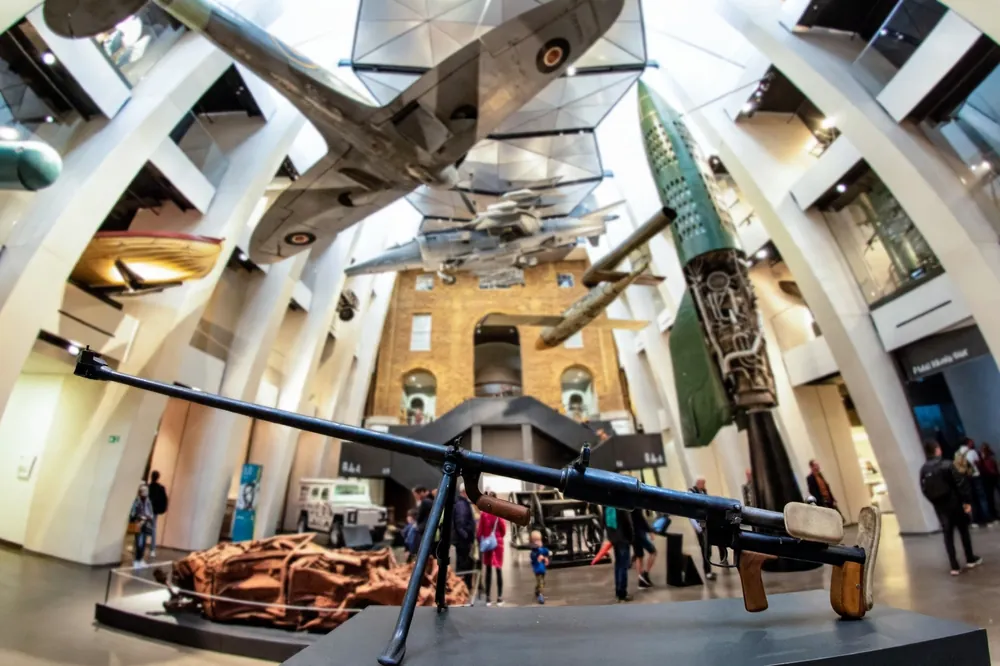
Surviving PTRS-41 rifles are also held in museums in Europe and in the United States, including the Imperial War Museum in London, the Bundeswehr Military History Museum in Dresden and the National WWII Museum in New Orleans. Many of these rifles were captured by German forces during the war and were later sent to museums in the West, where they are displayed as examples of Soviet infantry weapons. Private collectors in Europe and in the United States also hold PTRS-41 rifles, and the rifle is one of the most sought-after Soviet weapons by collectors, because of its size, its history and its association with the defence of Moscow and with Stalingrad. The rifle’s survival in so many museums is a measure of its historical importance, and it ensures that the story of the Soviet anti-tank rifle teams will not be forgotten.
Seeing a PTRS-41 Today
For most visitors, the easiest way to see a PTRS-41 is at the Central Museum of the Great Patriotic War in Moscow, where the rifle is displayed in the galleries devoted to the defence of Moscow, or at the Military Historical Museum of Artillery in St Petersburg, where it is displayed with other Soviet infantry weapons. Visitors who cannot travel to Russia can see a PTRS-41 at the Imperial War Museum in London or at the National WWII Museum in New Orleans, where the rifle is displayed in the context of the Eastern Front. The rifle’s size makes it easy to find in a museum gallery, and its story, which is told on the label beside it, is one of the most compelling stories of the war: a weapon built in weeks, carried by two men, used to stop a tank.
Frequently Asked Questions
What is the PTRS-41?
The PTRS-41 was a Soviet semi-automatic anti-tank rifle of the Second World War, designed by Sergei Simonov. It fired the 14.5×114 mm cartridge and could penetrate about 40 mm of armour at 100 metres.
How many PTRS-41 rifles were built?
More than 190,000 PTRS-41 rifles were built between 1941 and 1945, together with more than 280,000 PTRD-41 rifles.
What is the difference between the PTRS-41 and the PTRD-41?
The PTRS-41 was semi-automatic, with a five-round magazine and a higher rate of fire, while the PTRD-41 was a simpler single-shot rifle. The PTRD was cheaper and more reliable, and it was built in larger numbers.
Could the PTRS-41 penetrate a Tiger tank?
No. By 1943 the PTRS-41 could not penetrate the frontal armour of the Panther or the Tiger, which was 80–100 mm thick. It could still penetrate their sides and rear at close range, and it remained effective against lighter vehicles.
How heavy was the PTRS-41?
The PTRS-41 weighed about 20.9 kilograms unloaded and about 22 kilograms loaded, and it was normally carried by a two-man team.
Where can I see a PTRS-41 today?
Surviving PTRS-41 rifles are displayed at the Central Museum of the Great Patriotic War in Moscow, the Military Historical Museum of Artillery in St Petersburg, the Imperial War Museum in London and the National WWII Museum in New Orleans.
Sources
- Wikipedia, “PTRS-41” — production of more than 190,000, specifications, penetration figures and service history.
- Wikipedia, “PTRD-41” — production of more than 280,000 and comparison with the PTRS-41.
- David R. Higgins, The PTRS-41 and PTRD-41 Anti-Tank Rifles (Osprey Publishing, 2020) — development, design and combat use.
- Steven J. Zaloga, The Red Army of the Great Patriotic War, 1941–45 (Osprey Publishing, 2013) — Soviet infantry tactics and the anti-tank rifle teams.
- Chris Bishop, The Encyclopedia of Weapons of World War II (Sterling, 2002) — specifications for the PTRS-41 and the 14.5 mm cartridge.
- Central Museum of the Great Patriotic War, Moscow — surviving PTRS-41 rifles and the defence of Moscow.