 WAR ATLAS MILITARY HISTORY MAGAZINE · WWI — WWII
Mark Clark
1. Lead
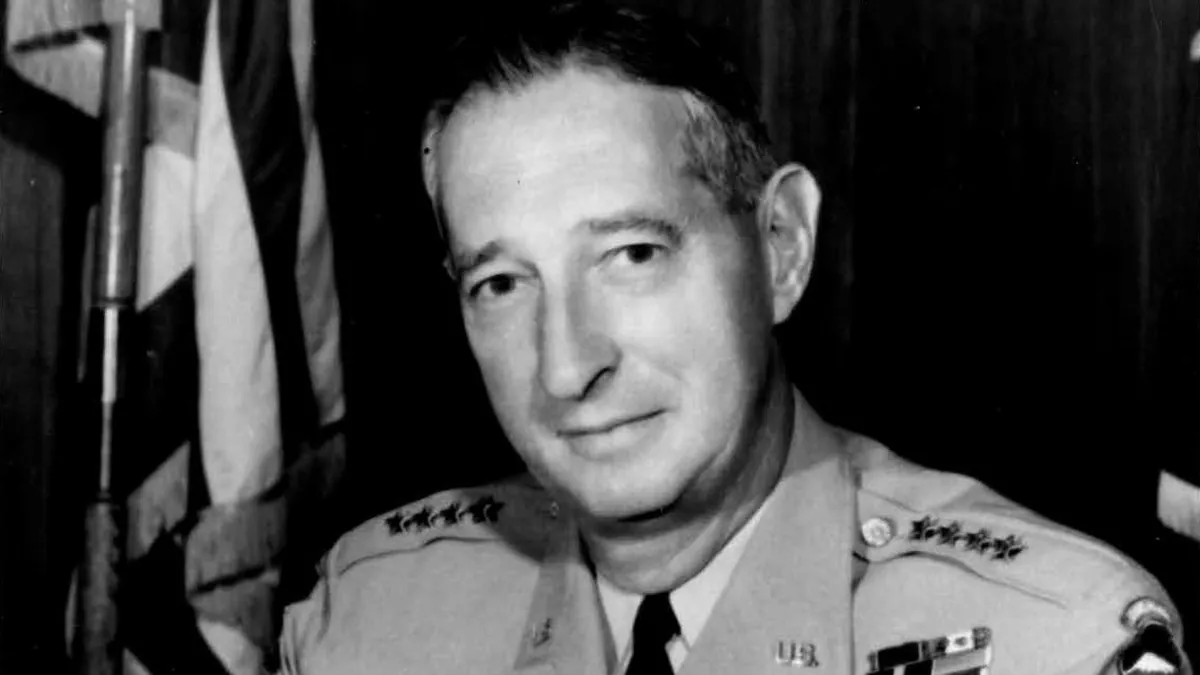
Mark Clark (1 May 1896 – 17 April 1984) was an American general who commanded the Fifth Army in the Italian campaign of the Second World War, led the Allied entry into Rome on 4 June 1944 — the first Axis capital to fall to the Allies — and later commanded the United Nations forces in Korea. Born in Madison Barracks, New York, the son of a career army officer, he graduated from West Point in 1917, served in France in the First World War, and rose through the interwar army to become, in 1942, the youngest lieutenant general in the United States Army. As chief of staff to General Dwight D. Eisenhower in North Africa, he conducted the secret negotiations with the French in Algeria that preceded the Allied landings in November 1942, and in January 1943 he was given command of the Fifth Army, the first American field army to be formed overseas in the war. He led the Fifth Army through the landings at Salerno in September 1943, the winter battles at the Gustav Line and Monte Cassino, the landing at Anzio in January 1944, and the advance on Rome, a campaign that lasted twenty months and cost the Allies more than 300,000 casualties.
Clark’s reputation has always been controversial. His admirers praise him as a bold and aggressive commander, a general who understood the importance of Rome as a political objective, and who led his army through one of the most difficult campaigns of the war, in terrain that favoured the defender and against an enemy who fought with skill and determination. His critics argue that he was vain, ambitious and careless of the lives of his men, that his decision to advance on Rome in June 1944, rather than to cut off the retreating German Tenth Army, allowed the Germans to escape and prolonged the campaign in Italy for another year, and that his handling of the battles at the Rapido River and at Anzio cost thousands of lives for little gain. The debate over Clark’s generalship, which began during the war itself and continues today, makes him one of the most contested American commanders of the Second World War, a general whose achievements were real and whose mistakes were costly.
2. Key Facts
| Born | 1 May 1896, Madison Barracks, New York, United States |
| Died | 17 April 1984 (aged 87), Charleston, South Carolina, United States |
| Nationality | American |
| Role / Office | General; commander of the Fifth Army in Italy (1943–1944); commander of the 15th Army Group in Italy (1944–1945); commander of United Nations forces in Korea (1952–1953) |
| Known for | The Fifth Army in Italy; the landings at Salerno (1943) and Anzio (1944); the capture of Rome (4 June 1944); the Rapido River crossing; the Korean War armistice (1953) |
| Spouse / Family | Maurine Doran (married 1924, died 1966); two children, Patricia Ann and William Doran Clark |
| Military rank | General (four stars) |
3. Early Life and Education
Family and Childhood
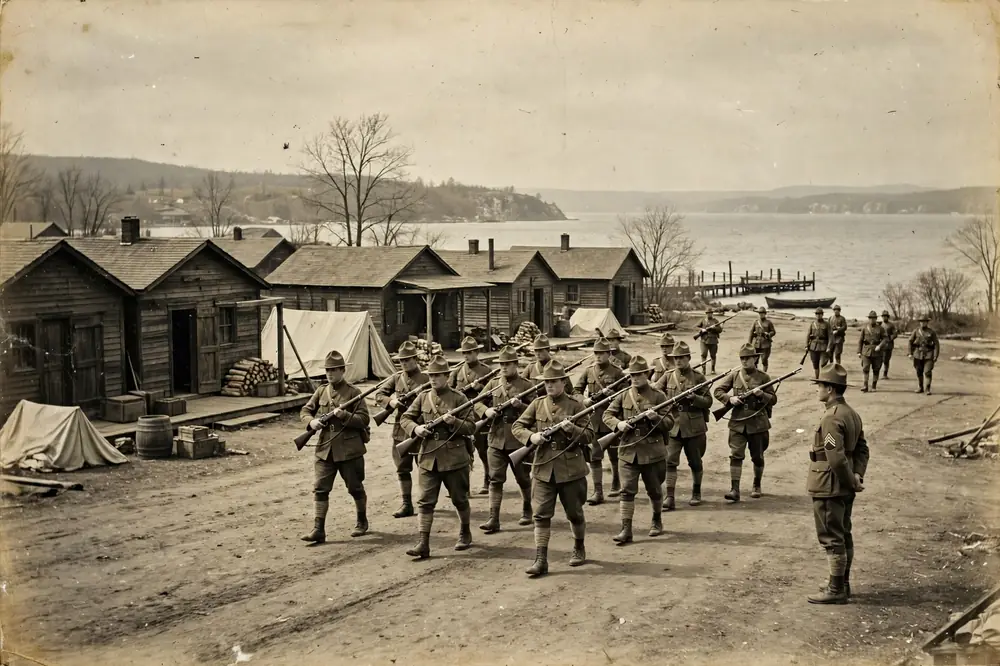
Mark Wayne Clark was born on 1 May 1896 at Madison Barracks, a military post on the shore of Lake Ontario in New York, where his father, Charles Carr Clark, was serving as a lieutenant in the United States Army. He was the son of a career officer, and he grew up in the world of the American army post, a world of barracks, parades and regimental tradition that left him with a lifelong attachment to the army as an institution. His father, who later rose to the rank of colonel, was a strict and demanding man, and Mark, who was the eldest of three children, grew up in a household in which discipline, duty and service to the country were taken for granted. He was a vigorous and athletic boy, fond of sport and of the outdoors, and he was, by his own account, a mediocre pupil, more interested in athletics than in study. The family moved with his father’s postings, and Mark spent his childhood in army posts in the United States and in the Philippines, a world in which the army was not a career among others but the natural destiny of a young man of his background.
The Army Post
The army post into which Clark was born was a small and self-contained world, and it shaped him in ways that remained visible throughout his career. The post was a community of officers and their families, living in quarters around a parade ground, with a chapel, a school and a club, and the children of the post grew up together, playing together and attending the same school. Clark’s childhood friends were the sons of other officers, and his earliest memories were of the sound of the bugle, the sight of soldiers drilling on the parade ground, and the smell of the stables. The post taught him the values of the American officer corps: loyalty, discipline, and a belief that the army was the first servant of the nation. It also taught him ambition: in a world in which rank was everything, and in which a man’s standing was measured by the stars on his shoulders, Clark learned early that he wanted to rise, and that he was willing to work hard to do so.
Education and First Service
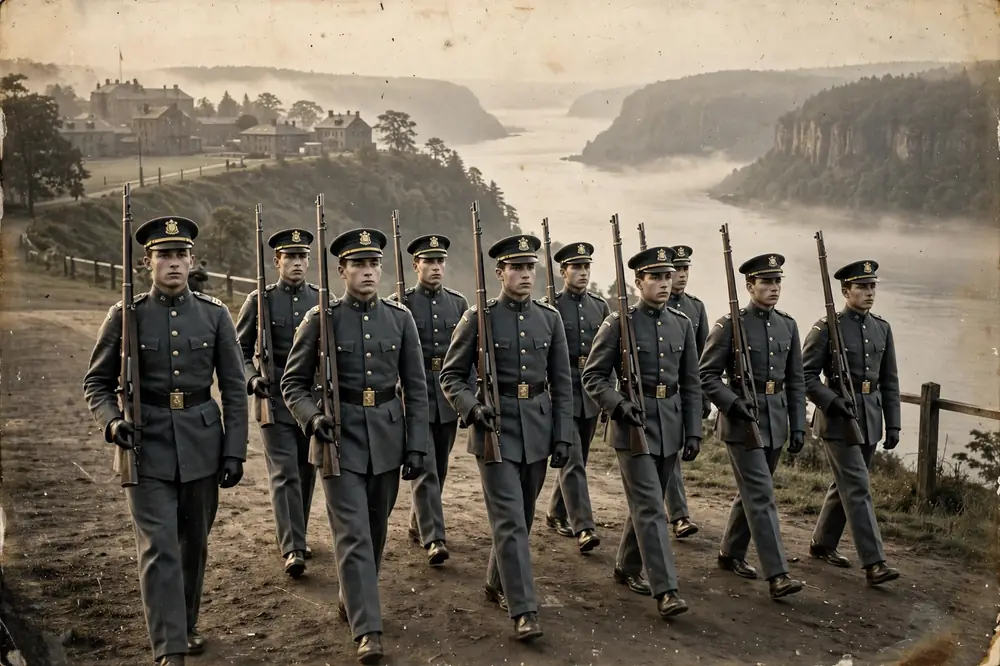
Clark entered the United States Military Academy at West Point in 1913, at the age of seventeen, and he graduated in 1917, in the class that was graduated early because of the entry of the United States into the First World War. He was commissioned as a second lieutenant in the infantry, and he was sent to France with the 11th Infantry Regiment, where he served in the battles of 1918, including the Aisne-Marne offensive and the Meuse-Argonne offensive, the largest American operation of the war. He was wounded in the shoulder by shrapnel in June 1918, an injury that left him with a permanently weakened arm, and he was awarded the Silver Star for gallantry. After the war, he remained in the army, serving in a variety of staff and regimental posts, and attending the Command and General Staff School at Fort Leavenworth and the Army War College, the two schools that prepared American officers for high command. He was a diligent student, and he was regarded by his superiors as a promising officer, a man who was ambitious, hardworking and eager for responsibility. In the 1930s he served on the staff of General Lesley McNair, and in 1940 he was appointed to the staff of General George C. Marshall, the Chief of Staff of the Army, a post that brought him to the attention of the men who would lead the American army in the Second World War.
4. Rise to Prominence
Chief of Staff in North Africa
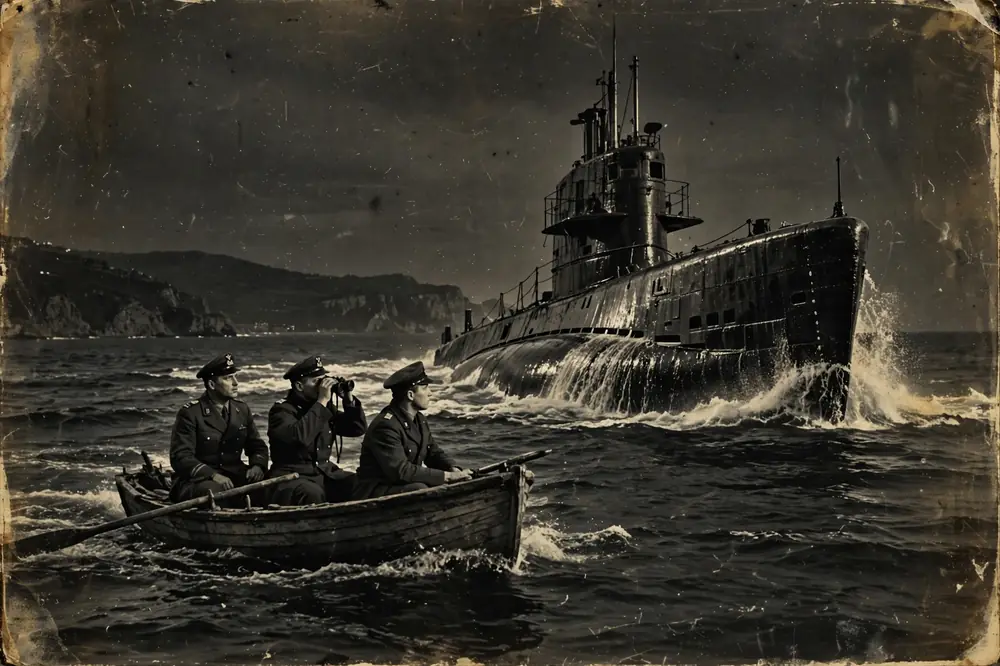
Clark’s rise to prominence began in 1942, when he was appointed chief of staff to General Dwight D. Eisenhower, the commander of the Allied forces in the invasion of North Africa, Operation Torch. In that post, he was responsible for the planning of the landings in Algeria and Morocco, and for the secret negotiations with the French authorities in North Africa, which were intended to ensure that the French would not resist the landings. In October 1942, he was landed by submarine on the coast of Algeria, in a secret mission known as Operation Flagpole, in which he met the French general Charles Mast and negotiated the terms on which the French would cooperate with the Allies. The mission was a success, and the landings of 8 November 1942 met only limited resistance, but the negotiations also involved a bargain with the French admiral François Darlan, a collaborator with the Germans, whose appointment as the political leader of French North Africa caused a scandal in the United States and in Britain. Clark, who had conducted the negotiations, was criticised for the “Darlan deal”, and the criticism would follow him for the rest of his career, but Eisenhower defended him, and in 1942 Clark was promoted to lieutenant general, the youngest in the United States Army.
Command of the Fifth Army
In January 1943, Clark was given command of the Fifth Army, the first American field army to be formed overseas in the war, and he spent the next eight months training his army in North Africa for the invasion of Italy. The Fifth Army was a multinational force, consisting of American and British corps, and Clark, who was an American commanding British troops, had to learn the art of coalition warfare, an art that required tact, patience and a willingness to listen to his subordinates. He was a demanding commander, who insisted on high standards of training and of discipline, and he was also a publicity-conscious commander, who understood the importance of the press and who cultivated the correspondents who covered his army. In September 1943, after the Allied invasion of Sicily and the armistice with Italy, the Fifth Army was given the task of landing at Salerno, on the west coast of Italy, and advancing on Naples and then on Rome, a task that Clark accepted with confidence, and that would occupy him for the next twenty months.
5. Mark Clark’s Role in World War II
Salerno and the Advance to the Gustav Line
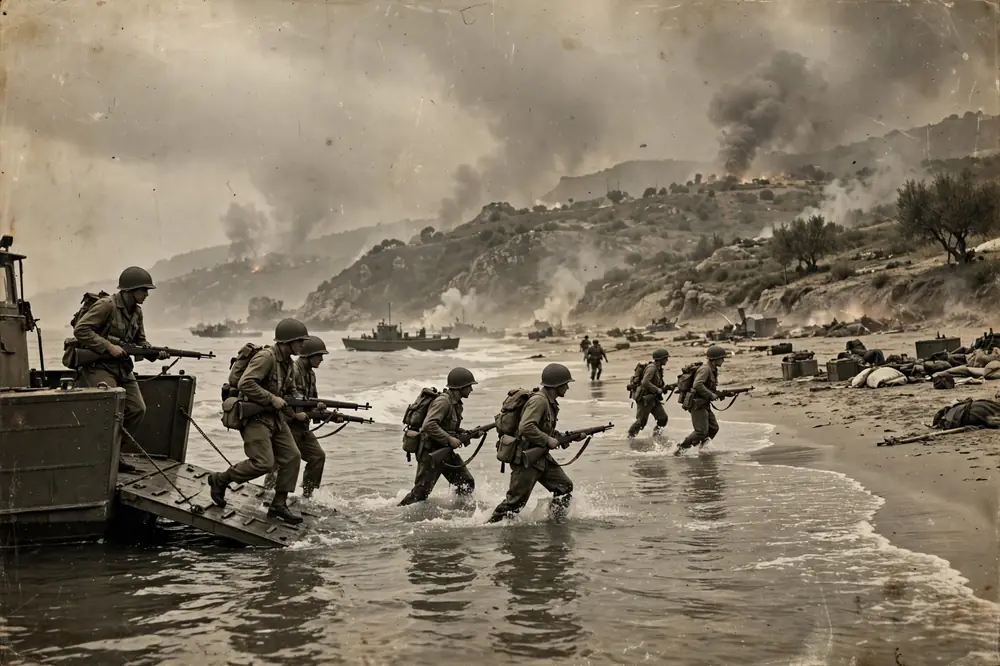
The Fifth Army landed at Salerno on 9 September 1943, the day after the announcement of the Italian armistice, and it met fierce resistance from the German Tenth Army, which had been ordered to hold the line south of Rome. The landing was almost a disaster: the Germans counter-attacked, the beachhead was in danger of being driven into the sea, and Clark, who had considered withdrawing, was saved by the arrival of reinforcements and by naval gunfire. After ten days of fighting, the Fifth Army broke out of the beachhead, captured Naples on 1 October, and advanced northwards to the Gustav Line, the German defensive line across Italy at the narrowest point of the peninsula, anchored on the town of Cassino and the monastery of Monte Cassino. The winter of 1943–1944 was spent in the mountains of central Italy, in rain, mud and snow, in a campaign that favoured the defender and that cost the Allies heavily. Clark’s army, which included the American VI Corps and the British X Corps, fought a series of battles for the hills and the river crossings that led to Cassino, and by January 1944 it had reached the Gustav Line, but it could not break through.
The Rapido River
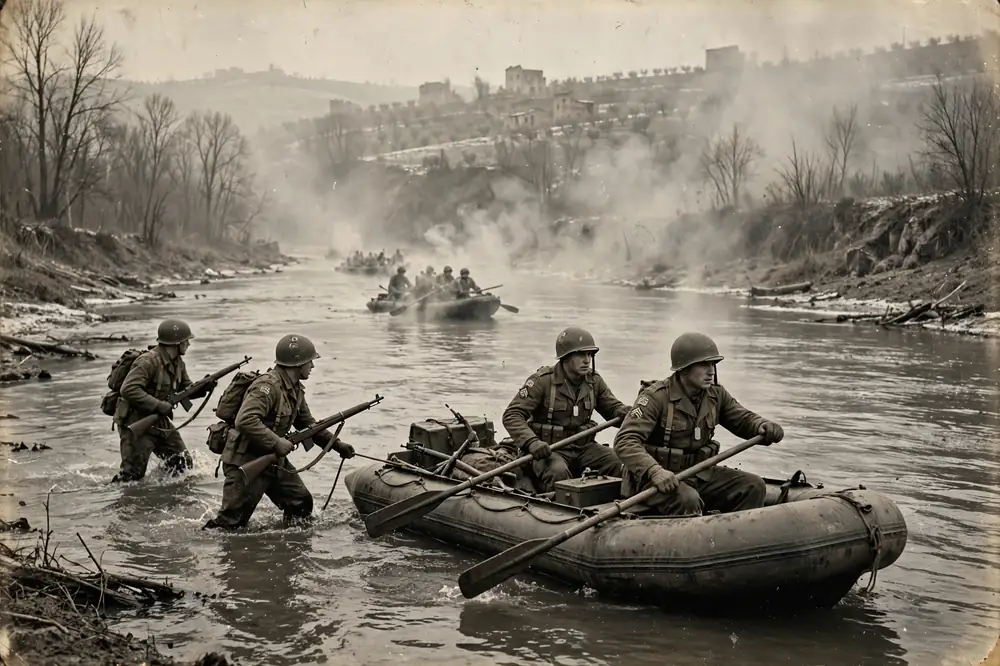
The most controversial battle of the winter was the crossing of the Rapido River on 20–22 January 1944, in which the American 36th Division, the “Texas” Division, was ordered to cross the river in the face of German defences that had been prepared for months. The attack failed, with heavy casualties — the division lost more than 1,600 men killed, wounded and missing in two days — and the survivors and their families blamed Clark, who had ordered the attack over the objections of the divisional commander, Major General Fred Walker, who had warned that the attack would fail. Clark later defended the attack as a necessary diversion for the landing at Anzio, which took place on the same day, but the controversy over the Rapido has never been resolved, and it remains the most damaging episode in Clark’s reputation. The Texas Division Association called for a congressional investigation, and the investigation, although it did not find Clark guilty of wrongdoing, left a lasting stain on his record.
Anzio and the Capture of Rome
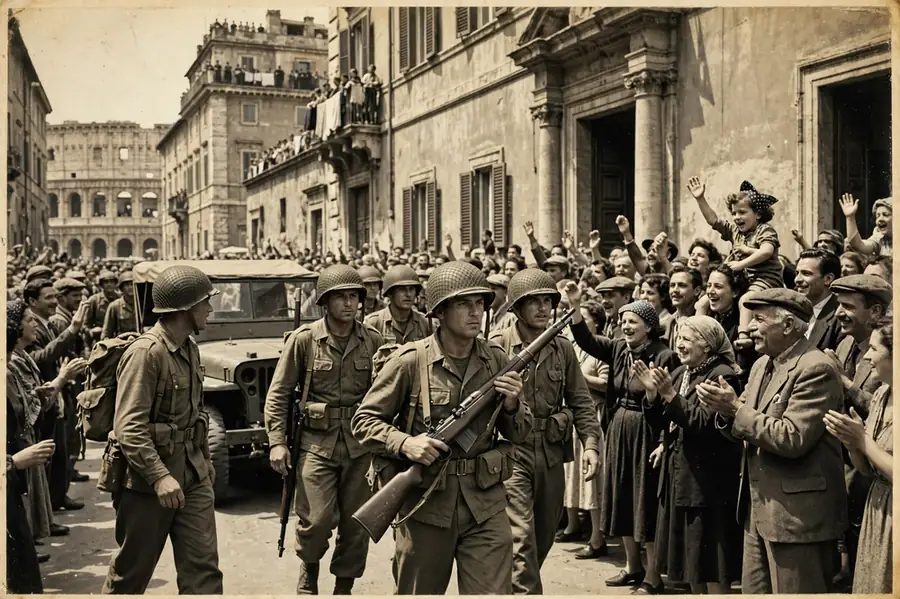
On 22 January 1944, the Fifth Army landed at Anzio, behind the German Gustav Line, in an attempt to outflank the Germans and to open the road to Rome. The landing, Operation Shingle, was initially unopposed, but the commander on the spot, Major General John Lucas, failed to advance inland, and the Germans, under Field Marshal Albert Kesselring, surrounded the beachhead and held it under siege for four months. Clark, who had planned the operation, was criticised for his choice of Lucas and for his failure to relieve him sooner, and the Anzio beachhead became a symbol of the frustrations of the Italian campaign. In May 1944, after the fourth battle of Cassino, the Allies finally broke through the Gustav Line, and Clark, who had been ordered by his superior, General Harold Alexander, to cut off the retreating German Tenth Army by advancing on Valmontone, instead ordered his army to advance directly on Rome. The decision, which Clark later defended as a response to the political importance of Rome and to the orders he had received from Washington, allowed the German Tenth Army to escape to the north, where it fought on for another year, and it has been condemned by historians as a mistake that prolonged the war in Italy. On 4 June 1944, the Fifth Army entered Rome, the first Axis capital to fall to the Allies, and Clark, who entered the city in triumph, was photographed as the liberator of Rome, a photograph that became famous around the world.
The Gothic Line and the End of the War in Italy
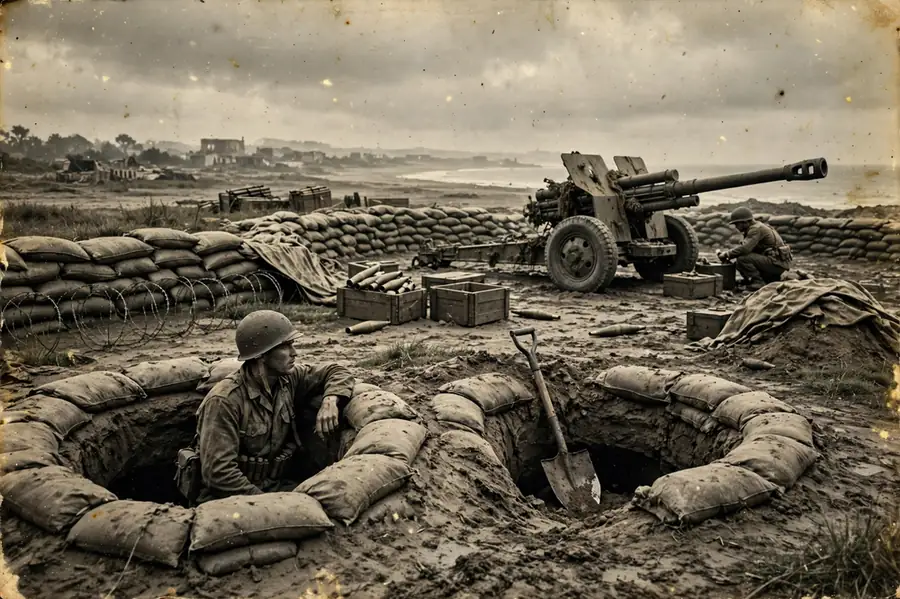
After the capture of Rome, Clark was promoted to command the 15th Army Group, the Allied force in Italy, and he led the advance northwards to the Gothic Line, the German defensive line in the Apennines, where the campaign bogged down in the autumn of 1944. The Gothic Line was a formidable position, and the Allies, who were short of men and supplies because of the demands of the campaign in France, could not break through it before the winter. Clark spent the winter of 1944–1945 in the mountains of northern Italy, in a campaign that was, in the words of one historian, “a forgotten war”, and in the spring of 1945 he launched the final offensive, Operation Grapeshot, which broke through the Gothic Line and led to the surrender of the German forces in Italy on 2 May 1945, a week before the end of the war in Europe. The Italian campaign, which had lasted twenty months and had cost the Allies more than 300,000 casualties, was over, and Clark, who had commanded it for most of its duration, was regarded by his superiors as a successful commander, although the controversy over Rome and over the Rapido would follow him for the rest of his life.
6. Key Decisions
Decisions in Italy
Landing at Salerno (September 1943). Clark’s decision to land at Salerno, rather than further north, was a decision to accept a difficult landing in the face of German resistance, in order to capture Naples and to establish a base for the advance on Rome. The landing was almost a disaster, but it succeeded, and it established the Allied presence in Italy.
Ordering the Rapido crossing (January 1944). His decision to order the 36th Division to cross the Rapido River, over the objections of its commander, was the most controversial decision of his career. The attack failed, with heavy casualties, and the controversy over the Rapido has never been resolved, although Clark defended the attack as a necessary diversion for the landing at Anzio.
Advancing on Rome (June 1944). His decision to advance directly on Rome, rather than to cut off the retreating German Tenth Army at Valmontone, was a decision that allowed the Germans to escape and prolonged the campaign in Italy for another year. Clark defended the decision as a response to the political importance of Rome, but historians have condemned it as a mistake driven by ambition and by a desire for personal glory.
Decisions After Italy
Accepting the command in Korea (1952). After the war, Clark was appointed commander of the United Nations forces in Korea in May 1952, and he signed the armistice that ended the Korean War in July 1953. The decision to sign the armistice, which left Korea divided, was a political decision, and Clark, who had wanted to win the war, accepted it as the only possible outcome.
Writing his memoirs (1950). Clark’s decision to write his memoirs, Calculated Risk, published in 1950, was a decision to defend his reputation, and the book, which is a spirited defence of his conduct in Italy, has been criticised by historians as self-serving, but it remains an important source for the history of the Italian campaign. The book was widely read in the United States, where it shaped the public image of Clark as the liberator of Rome, and it was criticised in Britain, where reviewers noted that it said little about the British troops who had fought under his command.
7. Controversies
Rome and the Escape of the German Tenth Army
The central controversy about Clark concerns his decision in June 1944 to advance on Rome rather than to cut off the retreating German Tenth Army. His superior, General Harold Alexander, had ordered him to advance on Valmontone, a town on the road from Rome to the north, where his army could have cut off the Germans and destroyed them; Clark, instead, ordered his army to advance directly on Rome, a decision that allowed the German Tenth Army to escape to the north, where it fought on for another year. Clark later defended the decision, arguing that he had received orders from Washington to capture Rome, that the political importance of Rome outweighed the military importance of destroying the German army, and that Alexander’s order was ambiguous. Historians have been divided: some, including the British historian John Ellis, have argued that Clark’s decision was a mistake driven by ambition and by a desire to be the general who captured Rome; others, including the American historian Martin Blumenson, have argued that the decision was understandable, given the political pressures on Clark and the ambiguity of Alexander’s orders. The controversy continues, and it is the most important controversy in Clark’s career, because it concerns a decision that prolonged the war in Italy and cost thousands of lives.
The Rapido River
A second controversy concerns the crossing of the Rapido River in January 1944, in which the 36th Division lost more than 1,600 men in two days. The divisional commander, Major General Fred Walker, had warned Clark that the attack would fail, and he had asked for it to be cancelled; Clark refused, and the attack went ahead, with the result that Walker had predicted. The survivors of the division, and their families, blamed Clark, and the Texas Division Association called for a congressional investigation, which was held in 1946. The investigation did not find Clark guilty of wrongdoing, but it left a lasting stain on his reputation, and the controversy over the Rapido has never been resolved. Clark’s defenders argue that the attack was a necessary diversion for the landing at Anzio, and that the casualties, although heavy, were the price of a diversion that saved the Anzio beachhead; his critics argue that the attack was unnecessary, that it was ordered over the objections of the commander on the spot, and that it was a waste of lives.
Vanity and Ambition
A third controversy concerns Clark’s character, and in particular the charge that he was vain and ambitious, and that he cared more for his own reputation than for the lives of his men. The charge was made during the war by his subordinates, by the British officers who served under him, and by the American press, which noted his love of publicity and his habit of posing for photographs. Clark’s defenders argue that the charge is unfair, and that he was a bold and aggressive commander who understood the importance of morale and of publicity in a coalition war; his critics argue that the charge is true, and that his decision to advance on Rome, his handling of the Rapido, and his choice of Lucas at Anzio were all driven by a desire for personal glory. The controversy over Clark’s character is, in the end, a controversy over the nature of generalship itself: whether a general should be judged by his results, or by his motives, and whether ambition, which is a necessary quality in a commander, becomes a vice when it is allowed to override military judgement.
8. Later Life and Death
Korea and the Armistice
After the war in Italy, Clark served as the American military commander in Austria, and in 1947 he was appointed to command the Sixth Army in the United States. In May 1952, during the Korean War, he was appointed commander of the United Nations forces in Korea, succeeding General Matthew Ridgway, and he was given the task of ending the war. The war had reached a stalemate, and the negotiations for an armistice had been going on for more than a year; Clark, who had wanted to win the war, accepted that the only possible outcome was an armistice that left Korea divided, and on 27 July 1953 he signed the armistice agreement at Panmunjom, ending the fighting. The armistice was a disappointment to many Americans, who had hoped for a victory, and Clark himself later wrote that he was the first American general to sign an armistice without a victory, a statement that has been quoted as an epitaph for the Korean War. He retired from the army in October 1953, after thirty-six years of service, and he was awarded the Distinguished Service Medal for his service in Korea.
President of The Citadel and Final Years
After his retirement, Clark was appointed president of The Citadel, the Military College of South Carolina, at Charleston, a post he held from 1954 to 1965. He was a popular and effective president, who raised the academic standards of the college and who expanded its campus, and he was regarded by the cadets as a link to the great commanders of the Second World War. He also wrote his memoirs, Calculated Risk, published in 1950, and a second book, From the Danube to the Yalu, published in 1954, in which he defended his conduct in Italy and in Korea. His health declined in the 1970s, and he died at Charleston on 17 April 1984, aged eighty-seven. He was buried at The Citadel, and his grave became a place of pilgrimage for the cadets of the college. He left behind a reputation that remains divided: to his admirers, a bold and aggressive commander who captured Rome and ended the Korean War; to his critics, a vain and ambitious general whose mistakes cost thousands of lives.
9. Legacy of Mark Clark
The Liberator of Rome
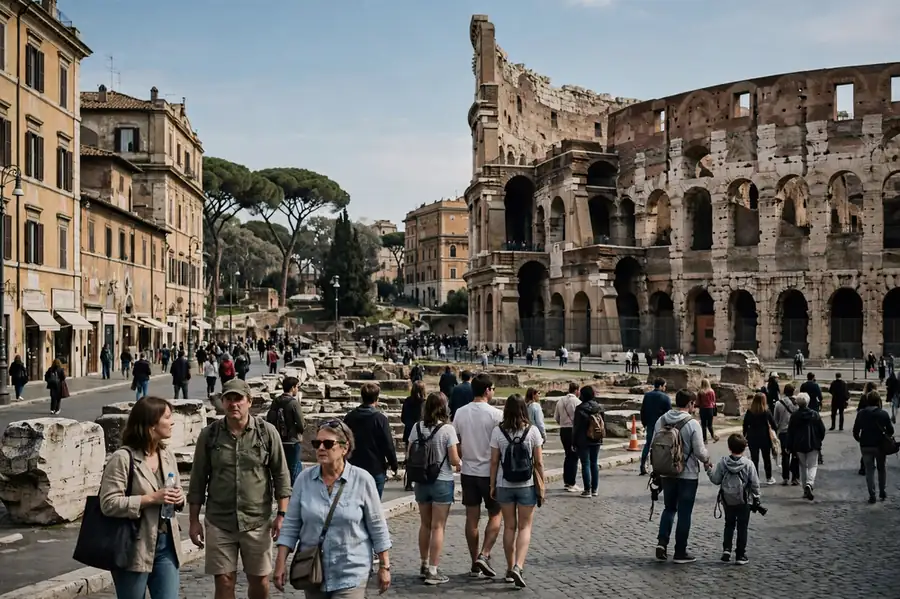
Clark’s lasting legacy is the capture of Rome, the first Axis capital to fall to the Allies, and the photograph of him entering the city on 4 June 1944, two days before the landings in Normandy, remains one of the most famous images of the war in Italy. The capture of Rome was a political victory of great importance: it showed that the Allies could take an Axis capital, it boosted the morale of the Italian people, and it demonstrated that the Italian campaign, although it was a secondary theatre, could produce results. Clark’s name is associated with Rome, and he is remembered in Italy as the general who liberated the city, a reputation that has survived the controversies over his generalship. In Rome itself, a street has been named after him, and his entry into the city is commemorated every year on 4 June, a reminder that, whatever his mistakes, he was the commander who led the Allies into the Eternal City.
The Italian Campaign in Memory
Clark’s legacy is also the Italian campaign itself, a campaign that has been overshadowed by the campaigns in France and in the Pacific, but that was, in the words of one historian, “the longest and hardest campaign of the Western Allies”. The campaign lasted twenty months, it cost the Allies more than 300,000 casualties, and it tied down more than twenty German divisions that could otherwise have been used in France or on the Eastern Front. Clark commanded the campaign for most of its duration, and his name is associated with its successes and its failures: with Salerno, with Cassino, with Anzio, and with Rome. The campaign is now remembered as a necessary but costly diversion, and Clark’s role in it is assessed as that of a commander who, although he made mistakes, led his army through one of the most difficult campaigns of the war, in terrain that favoured the defender and against an enemy who fought with skill and determination.
10. Assessment by Historians
The Military Assessment
Military historians assess Clark as a bold and aggressive commander whose strengths and weaknesses were both considerable, and the assessment rests on the balance between his achievements and his mistakes. His achievements were real: he landed at Salerno, he captured Naples, he broke through the Gustav Line, he captured Rome, and he led the final offensive that ended the war in Italy. His mistakes were also real: he ordered the Rapido crossing over the objections of his divisional commander, he failed to relieve Lucas at Anzio sooner, and he advanced on Rome rather than cutting off the German Tenth Army. Historians such as Martin Blumenson, who wrote the official history of the Fifth Army, argue that Clark’s mistakes were the mistakes of a commander who was under great political pressure, and who was fighting a difficult campaign in difficult terrain; historians such as John Ellis argue that his mistakes were the result of ambition and of a desire for personal glory. The consensus that is emerging is that Clark was a competent but not a great commander, a general who was bold and aggressive, but who lacked the judgement of the best commanders of the war, and whose reputation has suffered because his mistakes were visible and costly.
The Moral Assessment
The moral assessment of Clark is less harsh than the military assessment, and it rests on the distinction between a commander who makes mistakes and a commander who commits crimes. Clark made mistakes, and his mistakes cost lives, but he did not commit war crimes, and he did not order the murder of prisoners or civilians. His critics argue that his ambition, and his willingness to sacrifice the lives of his men for his own glory, was itself a moral failing; his defenders argue that ambition is a necessary quality in a commander, and that Clark’s ambition was no greater than that of other successful generals, including George S. Patton and Bernard Montgomery. The consensus among historians is that Clark was a flawed commander, but not a criminal one, and that his reputation should be judged by the balance of his achievements and his mistakes, rather than by the worst of his decisions. He is remembered as a general who captured Rome, and as a general whose mistakes prolonged the war in Italy, and the two memories, which are both true, will continue to be debated by historians.
Frequently Asked Questions
Who was Mark Clark?
Mark Clark (1896–1984) was an American general who commanded the Fifth Army in Italy in the Second World War, captured Rome on 4 June 1944, and later commanded the United Nations forces in Korea, signing the armistice that ended the Korean War in 1953.
When did Clark capture Rome?
The Fifth Army entered Rome on 4 June 1944, two days before the Allied landings in Normandy. Rome was the first Axis capital to fall to the Allies.
What was the Rapido River controversy?
On 20–22 January 1944, Clark ordered the American 36th Division to cross the Rapido River in the face of prepared German defences. The attack failed, with more than 1,600 casualties, and the divisional commander had warned that it would fail. The controversy has never been resolved, although Clark defended the attack as a diversion for the landing at Anzio.
Why did Clark advance on Rome instead of cutting off the Germans?
Clark was ordered by General Harold Alexander to advance on Valmontone and cut off the retreating German Tenth Army, but he instead ordered his army to advance directly on Rome. He later defended the decision as a response to the political importance of Rome and to orders from Washington, but historians have condemned it as a mistake that allowed the Germans to escape and prolonged the war in Italy.
What was Operation Shingle?
Operation Shingle was the Allied landing at Anzio on 22 January 1944, behind the German Gustav Line, intended to outflank the Germans and open the road to Rome. The landing was initially unopposed, but the beachhead was surrounded and held under siege for four months.
What did Clark do in Korea?
In May 1952 Clark was appointed commander of the United Nations forces in Korea, and on 27 July 1953 he signed the armistice agreement at Panmunjom, ending the fighting in the Korean War. He retired from the army in October 1953.
Sources
- Wikipedia, “Mark Clark” — consolidated biography: birth 1 May 1896, death 17 April 1984, Fifth Army, Salerno, Anzio, Rome 4 June 1944, Korea 1952–1953.
- Mark Clark, Calculated Risk (1950) — memoirs; the Fifth Army in Italy, Salerno, the Rapido, Anzio, the capture of Rome.
- Martin Blumenson, Salerno to Cassino (1963) and Anzio: The Gamble That Failed (1963) — the official and critical histories of the Italian campaign; the Rapido, Anzio, the decision to advance on Rome.
- John Ellis, Cassino: The Hollow Victory (1984) — the battles for Cassino and the criticism of Clark’s generalship.
- Carlo D’Este, Fatal Decision: Anzio and the Battle for Rome (1991) — Anzio, the decision to advance on Rome, and the escape of the German Tenth Army.
- James Holland, Italy’s Sorrow (2008) — the Italian campaign of 1944–1945, the Gothic Line, and the end of the war in Italy.