 WAR ATLAS MILITARY HISTORY MAGAZINE · WWI — WWII
Battle of Moscow
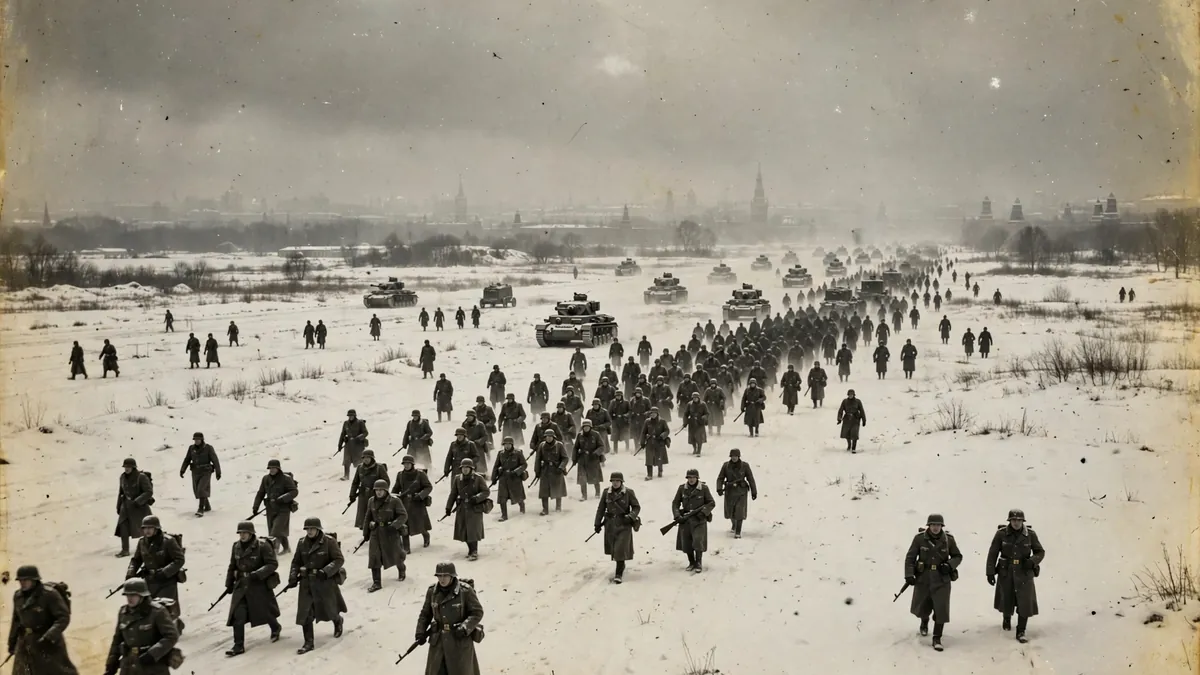
The Battle of Moscow was the first great German defeat of the Second World War, and the moment when the Blitzkrieg that had conquered Poland, France and the Balkans finally broke. Between October 1941 and January 1942, the German Army Group Centre, the strongest army Germany had ever fielded, drove to within about 20 kilometres of the Kremlin — close enough for its officers to see the towers of Moscow through their field glasses — and then stopped. It stopped because the autumn rains turned the roads to mud, because the winter that followed was the coldest in a century, because its supply lines were stretched over a thousand kilometres, and because the Soviet Union, which the Germans had expected to collapse, raised new armies and threw them into the battle. On 5 December 1941, the Red Army counter-attacked, and by January the Germans had been driven back 100 to 250 kilometres from the capital.
The battle was fought on a scale that dwarfed anything in the west. About two million German soldiers took part in the advance on Moscow, and the Soviet Union committed more than a million men to its defence, with hundreds of thousands more arriving as reinforcements. The fighting destroyed whole Soviet armies in the encirclements of Vyazma and Bryansk in October, yet the Soviet defence held, and the German advance died in the snow. The cost was appalling: Soviet losses in the battle are estimated at roughly 650,000 to more than 1,000,000 men killed, wounded and captured, while German losses ran to about 150,000 to 250,000. Moscow was the first time the German army had been stopped and thrown back, and it changed the war: after Moscow, Germany could no longer win quickly, and the war in the east became a war of attrition that Germany, with its smaller population and weaker industry, was bound to lose.
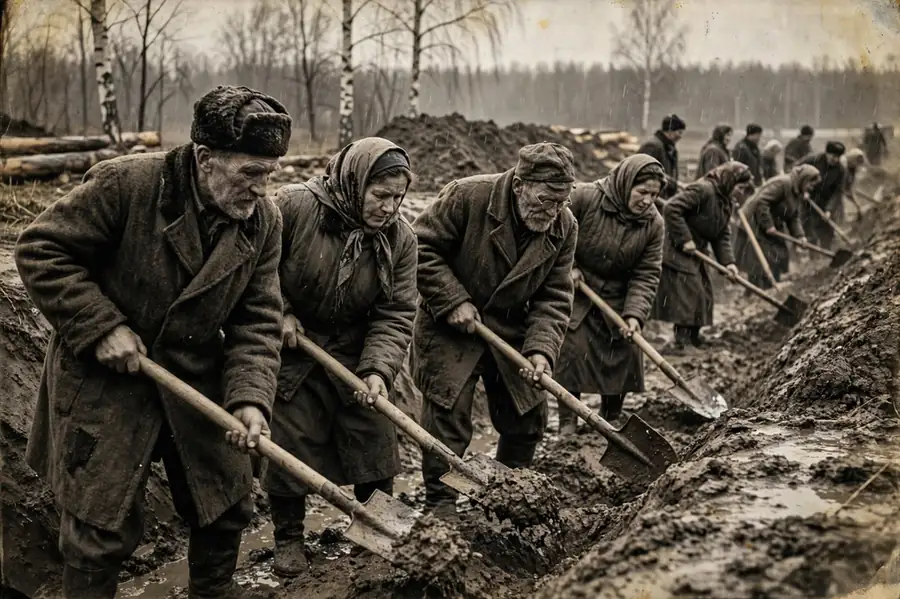
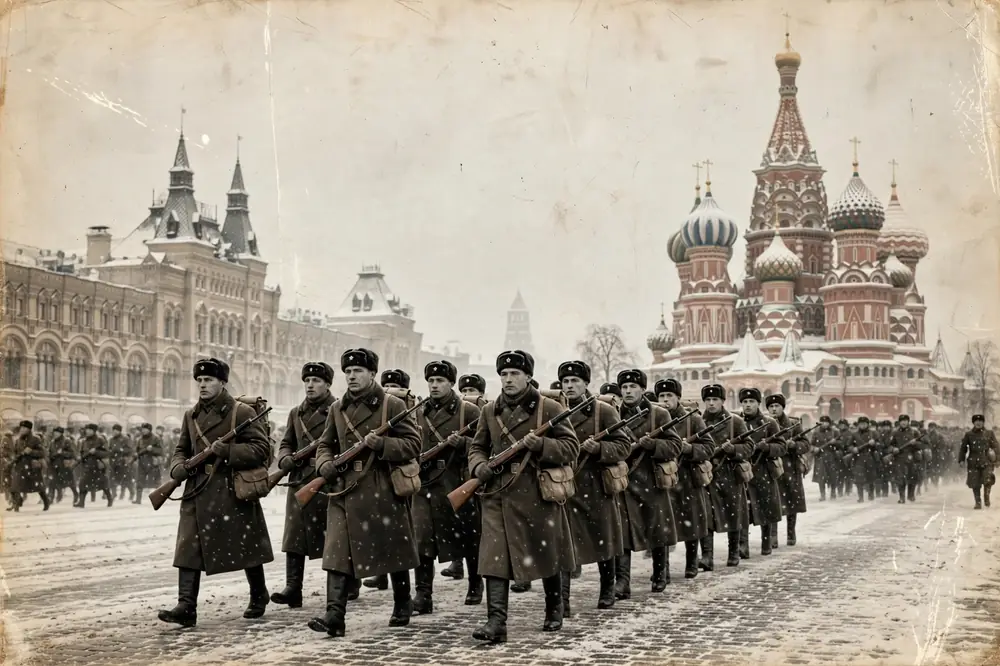
Moscow mattered for more than its military result. The Soviet capital was the centre of the Soviet Union’s government, its railways and its industry, and its fall would have cut the country in two. Stalin refused to leave the city, and his decision to stay — and to hold the traditional military parade in Red Square on 7 November 1941, while German troops were less than 100 kilometres away — became a symbol of Soviet resolve. The defence of Moscow was also a battle of ordinary people: tens of thousands of Muscovites, many of them women and old men, dug anti-tank ditches around the city, and the factories of Moscow worked day and night to arm the front. The battle is remembered in Russia as one of the great patriotic victories, and in Germany as the beginning of the end.
1. Key Facts
| Date | 2 October 1941 – 7 January 1942 (main battle; fighting continued into April 1942) |
| Location | Moscow and the approaches to the west — Vyazma, Bryansk, Mozhaisk, Tula, Kalinin |
| Result | Soviet victory; German advance halted and driven back 100–250 km |
| German commander | Field Marshal Fedor von Bock (Army Group Centre); Gen. Heinz Guderian (2nd Panzer Army) |
| Soviet commander | Gen. Georgy Zhukov (Western Front, from 10 October 1941) |
| German strength | About 1.9 million men, about 1,700 tanks, about 14,000 guns |
| Soviet strength | About 1.25 million men at the start, rising with reinforcements |
| German losses | About 150,000–250,000 killed, wounded and missing (estimates vary) |
| Soviet losses | About 650,000–1,000,000+ killed, wounded and captured, including prisoners of the October encirclements |
2. Background
Barbarossa and the Road to Moscow
The Battle of Moscow was the climax of Operation Barbarossa, the German invasion of the Soviet Union that began on 22 June 1941 with more than three million German soldiers and their allies crossing the Soviet border. In three months the Germans had advanced hundreds of kilometres, destroyed whole Soviet armies, and taken Minsk, Smolensk and Kiev, capturing hundreds of thousands of prisoners. The Soviet Union seemed to be collapsing: its air force had been destroyed on the ground, its armies were in retreat, and its government had evacuated to Kuibyshev. The German high command believed the war would be won before winter, and Hitler’s Directive No. 35, issued on 6 September 1941, ordered the destruction of the Soviet forces before Moscow and the capture of the capital itself.
The Delay That Saved Moscow
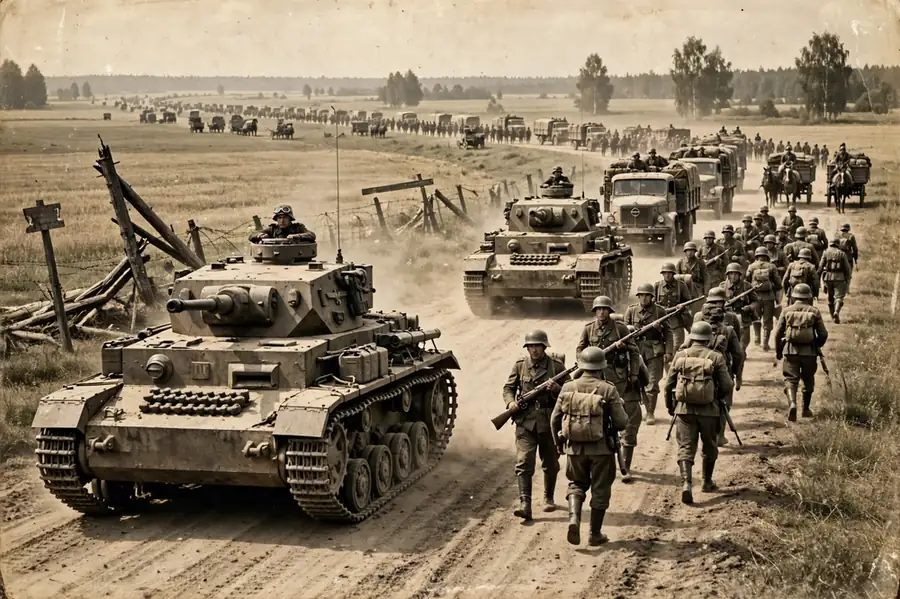
The German advance on Moscow was delayed by a decision Hitler made in August 1941: instead of driving straight for the capital, he diverted Guderian’s tanks south to help encircle the Soviet armies at Kiev, the greatest encirclement in history, in which about 600,000 Soviet soldiers were captured. The Kiev operation was a triumph, but it cost Germany five precious weeks, and when the drive on Moscow finally began in October, the autumn rains were already starting. German generals argued afterwards that the delay cost them Moscow; Soviet historians agreed. The delay also gave the Soviet Union time to bring fresh divisions from Siberia and the Far East, after the spy Richard Sorge reported that Japan would not attack the Soviet Union. Those Siberian divisions, trained and equipped for winter war, would be decisive in December, and their arrival would turn the defence of Moscow into the first great Soviet victory of the war.
The German Plan: Operation Typhoon
Operation Typhoon, the codename for the German offensive against Moscow, was launched on 30 September 1941, when Guderian’s 2nd Panzer Army attacked from the south, and on 2 October the main force of Army Group Centre struck from the west. The plan was a classic Blitzkrieg double envelopment: the panzer groups of Hoth and Hoepner would break through the Soviet lines, meet behind Vyazma and Bryansk, and trap the Soviet armies in two great pockets, just as they had done at Minsk, Smolensk and Kiev. Once the Soviet armies were destroyed, the road to Moscow would be open, and the German infantry would march into the capital. The Germans committed about 1.9 million men, about 1,700 tanks and about 14,000 guns to the operation, and their confidence was high: the Soviet armies in front of them were weakened, their commanders were inexperienced, and no one in Berlin doubted that Moscow would fall.
The Soviet Defence in Depth
The Soviet defence was built in depth, and it was built by the whole country. Behind the front-line armies stood the Mozhaisk defence line, about 100 kilometres west of Moscow, and behind that, the defences of the city itself: three rings of anti-tank ditches, barricades and gun positions. More than 100,000 Muscovites, most of them women, dug the ditches by hand in October, working in freezing rain while German bombers flew overhead. The Soviet command also brought in everything it had: cadets from the military schools, workers’ militia battalions, and the Siberian divisions arriving by train from the east. The defence was commanded from 10 October by General Georgy Zhukov, who had been recalled from Leningrad, and who imposed order on a front that had been falling apart. The Soviet plan was simple: hold the Germans at Mozhaisk, bleed them in the mud and the cold, and then counter-attack when they were exhausted.
3. Opposing Forces
Army Group Centre
Army Group Centre was the strongest of the three German army groups that invaded the Soviet Union, and for Operation Typhoon it was reinforced to a strength of about 1.9 million men. Its commander was Field Marshal Fedor von Bock, a Prussian officer of the old school who had commanded the invasion of Poland and France. Under Bock were three infantry armies — the 2nd, 4th and 9th — and three panzer groups, commanded by Hermann Hoth, Erich Hoepner and Heinz Guderian, the three most famous tank commanders in the German army. The panzer groups were the spearhead: about 1,700 tanks, supported by motorised infantry and by the Luftwaffe, whose bombers were to clear the way. The German army that marched on Moscow was the finest fighting force in the world in 1941, battle-tested in Poland, France and the Balkans, and confident that one more great encirclement would end the war.
Guderian’s Panzers and the Supply Crisis
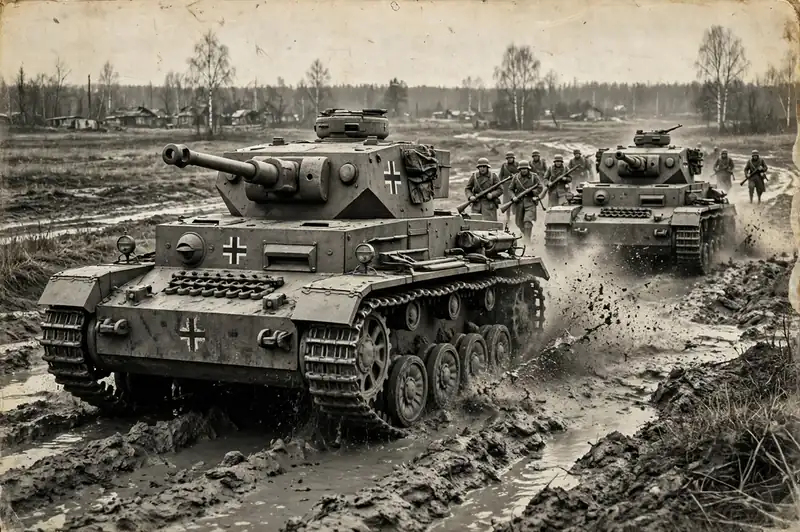
The strength of Army Group Centre hid a fatal weakness: its supply lines. The German army advanced on roads that turned to mud in the autumn rains, and its trucks — many of them captured French and Czech vehicles — broke down in their thousands. By October, the panzer divisions were operating hundreds of kilometres from their railheads, and the Soviet railways, with their wider gauge, had to be rebuilt track by track before German trains could use them. Guderian’s tanks ran short of fuel, spare parts and ammunition, and the infantry marched on foot, exhausted, through mud that swallowed their boots. The Luftwaffe, too, was stretched: its airfields were mud, its aircraft were wearing out, and by November it could no longer give the ground forces the support they had enjoyed in the summer. The German army that reached the gates of Moscow was a shadow of the force that had crossed the border in June.
The Soviet Defence
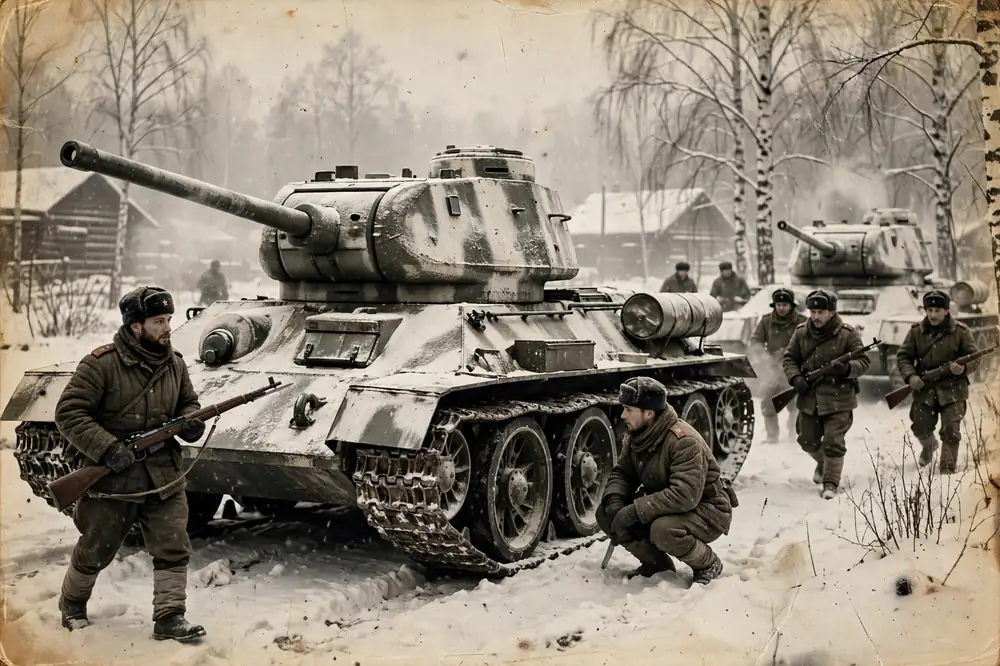
The Soviet forces facing Army Group Centre numbered about 1.25 million men at the start of October, organised in three fronts: the Western Front under Ivan Konev, the Reserve Front under Semyon Budyonny, and the Bryansk Front under Andrei Yeryomenko. They were weaker than the Germans in men, tanks and aircraft, and many of their divisions had been raised in a hurry, with inexperienced officers — the victims of Stalin’s purges of the late 1930s — and with obsolete equipment. But they had two advantages the Germans did not: they were fighting on their own ground, with short supply lines, and they were being reinforced. Behind the front, the Soviet Union was raising new armies at a rate the Germans had not believed possible: by December, fresh divisions from Siberia, Central Asia and the Far East had arrived, equipped with winter clothing, skis and the T-34 tank, which was better than anything the Germans had.
Zhukov Takes Command
The turning point in the Soviet command came on 10 October 1941, when Stalin recalled Georgy Zhukov from Leningrad and gave him the Western Front. Zhukov was the most capable Soviet general of the war: he had defeated the Japanese at Khalkhin Gol in 1939, and he had a reputation for ruthlessness and for getting results. He found a front in chaos — whole armies encircled at Vyazma, the roads to Moscow open, and panic spreading in the capital — and he imposed order by sheer force of will. He scraped together every available unit, including the cadets of the Podolsk military schools, who were thrown into the line at Mozhaisk and died almost to a man, and he organised the defence of the city with a clarity the Soviet command had lacked. Zhukov’s arrival did not save Moscow by itself, but it gave the defence a commander who would not panic, and that was what the Soviet Union needed most.
| Germany | Soviet Union | |
|---|---|---|
| Men | About 1.9 million | About 1.25 million at the start, rising with reinforcements |
| Tanks | About 1,700 | About 1,000, including T-34 and KV-1 |
| Artillery | About 14,000 guns | About 7,600 guns |
| Aircraft | About 1,400 (Luftwaffe) | About 1,000, rising with new production |
| Supply | Lines stretched 1,000+ km over mud roads | Short lines from Moscow; railways and depots close to the front |
| Winter clothing | Almost none issued | Winter clothing issued; troops prepared for the cold |
| Key commanders | Bock, Guderian, Hoth, Hoepner | Zhukov, Konev, Rokossovsky |
4. The Battle
The Vyazma and Bryansk Encirclements
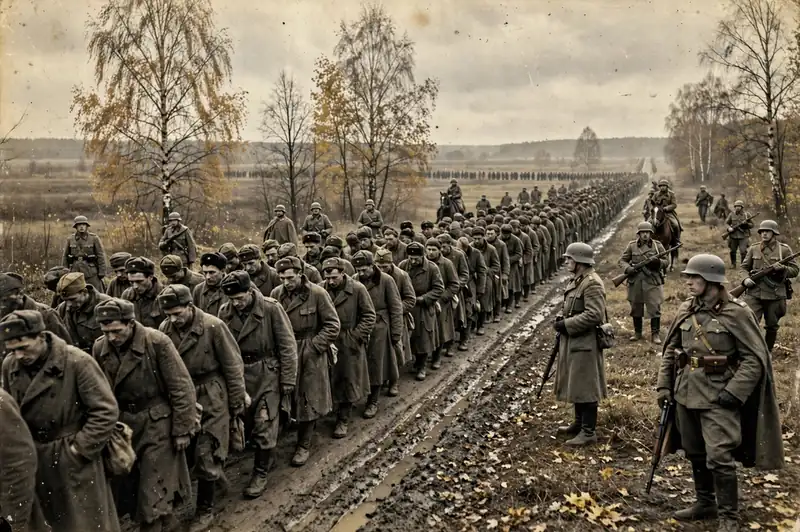
Operation Typhoon opened with a success so complete that it seemed the war was already won. On 2 October 1941, the panzer groups of Hoth and Hoepner broke through the Soviet Western and Reserve Fronts, and within days they had met behind Vyazma, trapping four Soviet armies — about 500,000 men — in the Vyazma pocket. To the south, Guderian’s tanks encircled the Bryansk Front, trapping three more armies. The German claims of prisoners were enormous: more than 600,000 Soviet soldiers captured in the two pockets, with thousands of guns and tanks taken. The Soviet front had ceased to exist, and the road to Moscow seemed open. German newspapers announced the fall of the capital, and in Moscow itself, on 16–19 October, panic spread as government offices evacuated and crowds fled east.
The Pockets That Would Not Die
The encirclements were a German triumph, but they were not the end of the battle, and the reason was the resistance of the trapped Soviet armies. The encircled troops did not surrender at once: they fought on for weeks, in the forests and swamps around Vyazma and Bryansk, tying down dozens of German divisions that were needed for the drive on Moscow. The German infantry had to reduce the pockets street by street and forest by forest, and the fighting cost them time — the one thing they could not afford — and casualties they could not replace. The pockets also bought the Soviet Union the weeks it needed to raise new armies and to dig the Mozhaisk line. By the time the last Soviet resistance in the pockets was crushed in late October, the autumn rains had begun, the roads had dissolved into mud, and the German advance had lost its momentum. The victory at Vyazma had won the battle of encirclement and lost the race for Moscow.
The Advance on Moscow
Through October and November, the German advance ground forward, slowly and at terrible cost. The Mozhaisk line held for a time, then broke: Mozhaisk itself fell on 18 October, and the Germans pushed on towards the capital, taking Kalinin in the north and threatening Tula in the south. The rasputitsa — the season of mud — stopped the tanks: roads became rivers of mud, trucks sank to their axles, and the German advance slowed to a crawl of a few kilometres a day. Then, in November, the frost came, and the ground hardened, and the Germans attacked again, in what they called the final push. By the end of November, German troops had reached Khimki, about 20 kilometres from the Kremlin, and German reconnaissance patrols could see the towers of Moscow. The German high command believed the city would fall within days.
Tula, Kalinin and the Gates of the City
The fighting on the approaches to Moscow was fought town by town, and two towns became symbols of the defence. In the south, Tula — an industrial city and arms-manufacturing centre — was attacked by Guderian’s tanks in late October, and held by the Soviet 50th Army and the workers’ militia, who fought from the factories and the streets. Guderian’s tanks could not take the city, and his advance stalled. In the north, Kalinin fell to the Germans on 14 October, but the Soviet counter-attacks around the city tied down German forces and threatened their flank. The defence of Tula and the fighting around Kalinin did what the Mozhaisk line had been built to do: they bought time, and time was the one thing the Germans did not have. By the first week of December, the German army was exhausted, frozen and at the end of its strength, and its soldiers knew that the offensive had failed even before the Soviet counterattack began.
The December Counteroffensive
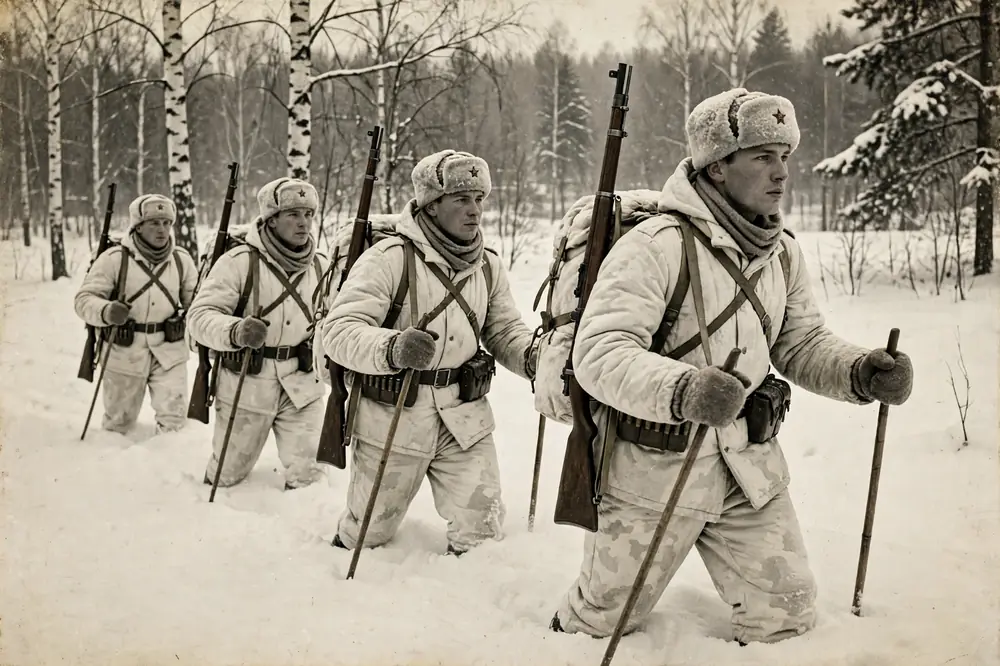
On 5 December 1941, the Red Army counter-attacked, and the battle turned. Zhukov had assembled a reserve of about a million men, including the fresh Siberian divisions, equipped with winter clothing, skis and white camouflage, and supported by the new T-34 tanks and by Katyusha rocket launchers. The attack struck the exhausted German army along the whole front, from Kalinin in the north to Tula in the south, and the Germans, who had no winter clothing, no reserves and no prepared defences, fell back. The Soviet advance drove the Germans back 100 to 250 kilometres from Moscow, liberating Kalinin, Klin, Naro-Fominsk and dozens of smaller towns, and inflicting heavy losses. Hitler refused to allow a general retreat, ordering his troops to stand fast, and the German army held — but only just, and at the cost of its offensive power.
The Siberians Arrive
The symbol of the counteroffensive was the Siberian soldier, and the symbol was earned. The divisions from Siberia and the Far East arrived by train in November, fresh, well-equipped and trained for winter war, and they went straight into the attack. Their white camouflage made them hard to see in the snow, their skis let them move where German trucks could not, and their T-34 tanks — with wide tracks that did not sink in the snow — outmatched the German Panzer III and IV. The German soldiers, in their thin summer uniforms, with their weapons freezing and their vehicles breaking down, could not match them. The Siberians did not win the battle alone — the defence of Moscow had been won by the whole Soviet people — but their arrival in December was the moment the balance tipped, and the German army, for the first time in the war, was driven back.
5. Turning Point
Winter, Mud and the Rasputitsa
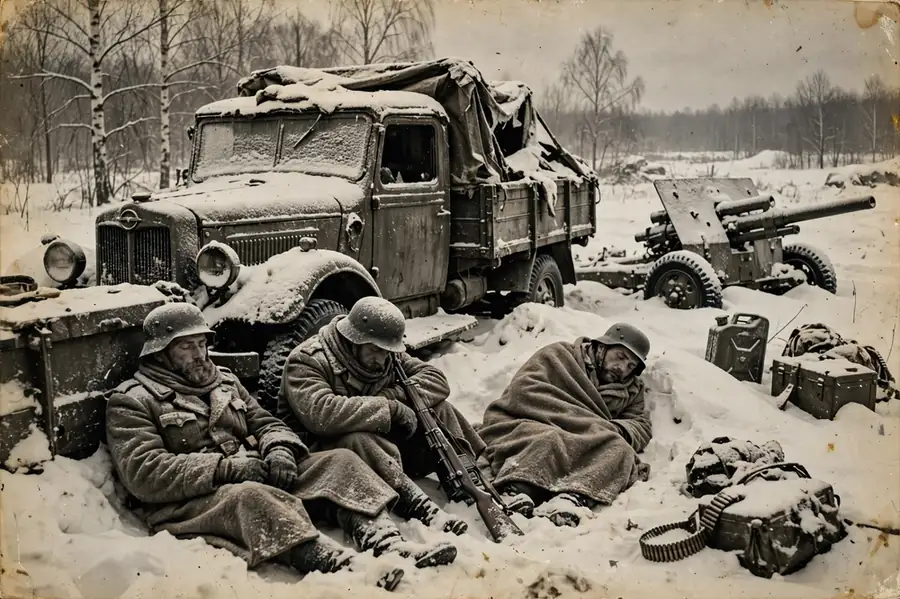
The turning point of the Battle of Moscow was not a single battle but the Russian weather, and the German army’s failure to prepare for it. The rasputitsa — the season of mud that comes with the autumn rains — began in October, and it stopped the German advance dead: the unpaved Russian roads dissolved into mud that swallowed trucks, guns and tanks, and the German supply system, which depended on those roads, collapsed. The mud was followed, in November and December, by cold of a severity the Germans had not expected: temperatures fell to minus 30 and minus 40 degrees Celsius, the coldest winter in a century, and the German army had no winter clothing, no antifreeze for its vehicles, and no lubricants that worked in the cold. Guns froze, engines would not start, and men died of exposure in their thousands.
The Cold That Killed an Army
The winter of 1941–42 was a weapon, and it fought for the Soviet Union. German soldiers wrapped themselves in newspaper, in looted blankets and in women’s clothing taken from Russian villages, and still they froze: frostbite crippled whole units, and the German medical services recorded more than 100,000 cases of frostbite in the winter of 1941–42. The cold also destroyed the German machines: tank engines cracked, artillery pieces froze solid, and the lubricating oil in the machine guns turned to glue. The Soviet army, by contrast, was equipped for winter: its soldiers had padded jackets, felt boots and fur hats, its tanks had wide tracks and cold-weather lubricants, and its ski troops moved through the snow as if it were a road. The Germans had planned a short summer war, and they had not prepared for winter at all. That failure — a failure of planning, not of courage — was the turning point of the battle.
Zhukov’s Counteroffensive
The second turning point was Zhukov’s decision to counter-attack on 5 December 1941, at the exact moment when the German army was at its weakest. The German offensive had spent itself: its tanks were worn out, its infantry was exhausted, its supply lines were broken, and its soldiers were freezing. Zhukov struck with fresh armies that had been held in reserve for this moment, and he struck along the whole front, so that the Germans could not shift their reserves to meet the attack. The counteroffensive was not a single blow but a sustained offensive that lasted into January, and it drove the Germans back from the gates of Moscow and destroyed the German plan to win the war in 1941. The battle had turned: Germany was now fighting a war it could not win quickly, and the Soviet Union had survived.
Hitler’s Halt Order
The German retreat of December 1941 threatened to become a rout, and it was stopped by Hitler’s order of 16 December: the army was to stand fast, to hold its positions at all costs, and to retreat only where it was ordered. The order was controversial — Guderian and other generals wanted a withdrawal to prepared positions — and Hitler dismissed Guderian and Bock for protesting. But the halt order worked, in the narrow sense that it prevented a collapse: the German army held a line, though a ragged one, through the winter, and it survived to fight again in 1942. The price was high: the German army lost its offensive power, its best divisions were worn down, and the initiative had passed to the Soviet Union. The halt order saved the German army from destruction in the winter of 1941–42, but it could not save Germany from the long war that followed.
6. Casualties and Losses
German Losses
German losses in the Battle of Moscow are estimated at about 150,000 to 250,000 men killed, wounded and missing between October 1941 and January 1942, with the higher figures including the sick and the frostbitten. The losses fell hardest on the infantry divisions that had marched from the border in June, and on the panzer divisions, which lost a large part of their tanks — not only to Soviet fire, but to breakdowns, to the mud and to the cold. The German army also lost something it could not measure in numbers: the belief that it was invincible. The army that had conquered Poland, France and the Balkans without a serious defeat had been stopped and thrown back, and its soldiers knew it. The winter of 1941–42 also cost Germany its best generals: Bock and Guderian were dismissed, and the army’s confidence in Hitler’s leadership began to crack.
The Wreck of the Panzer Divisions
The panzer divisions, the pride of the German army, were wrecked by the Battle of Moscow. Guderian’s 2nd Panzer Army, which had begun Operation Typhoon with hundreds of tanks, was reduced by December to a fraction of its strength: its tanks had broken down, run out of fuel, or frozen solid, and its motorised infantry was marching on foot. The German tank losses in the battle are hard to count exactly — the Germans counted tanks that could be repaired, the Soviets counted tanks left on the battlefield — but the panzer divisions that survived the winter were shadows of what they had been in June. The German army would rebuild its tank force in 1942, but it would never again have the superiority in tanks that it had enjoyed in 1941, and the T-34, which the Germans had met for the first time at Moscow, had shown them that their tanks were no longer the best in the world.
Soviet Losses
Soviet losses in the Battle of Moscow were vastly greater than the German losses, and they are the reason the battle is remembered in Russia as a victory bought with blood. Estimates run from about 650,000 to more than 1,000,000 men killed, wounded and captured, with the higher figures including the prisoners taken in the Vyazma and Bryansk encirclements, where the German claims ran to more than 600,000 men. The Soviet losses included whole armies destroyed in October, and the cadets, militiamen and workers who died holding the Mozhaisk line. The figures are disputed — Soviet records were incomplete, German claims were inflated, and historians still argue about the exact numbers — but no one disputes the scale: the Soviet Union lost more men defending Moscow in three months than the Western Allies lost in the whole war in the west.
The Price of Survival
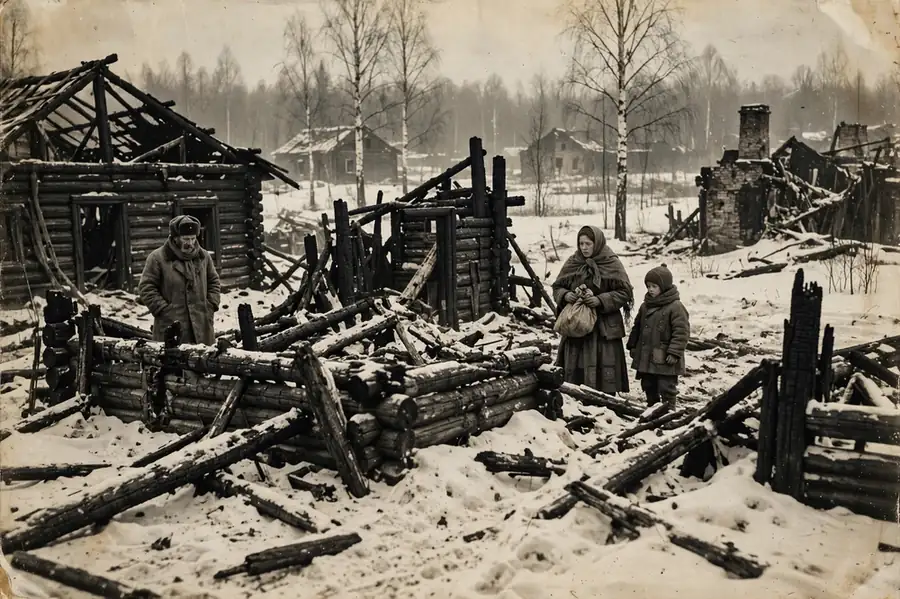
The Soviet Union paid for the victory at Moscow with the lives of its soldiers and with the suffering of its people, and the price was not only military. The prisoners taken at Vyazma and Bryansk — hundreds of thousands of men — died in their tens of thousands in German captivity, of hunger, cold and disease, because the Germans had made no provision for them and regarded them as subhuman. The civilians of the Moscow region suffered too: villages were burned, towns were destroyed, and thousands of Muscovites died in the bombing and in the digging of the defences. But the Soviet Union survived, and survival was the victory: the country that had seemed on the verge of collapse in October 1941 was, by January 1942, still standing, still fighting, and still governed from Moscow. The price was terrible, and the Soviet people paid it willingly, because the alternative was the destruction of their country.
| Germany | Soviet Union | |
|---|---|---|
| Killed, wounded and missing | About 150,000–250,000 | About 650,000–1,000,000+ (including prisoners) |
| Prisoners taken | Small numbers | More than 600,000 claimed in the October encirclements |
| Tanks lost | Hundreds, many to breakdown and cold | Hundreds, many lost in the October encirclements |
| Frostbite cases | More than 100,000 recorded | Tens of thousands |
| Generals dismissed | Bock, Guderian | Konev (replaced by Zhukov) |
7. Map and Geography
The Approaches to Moscow
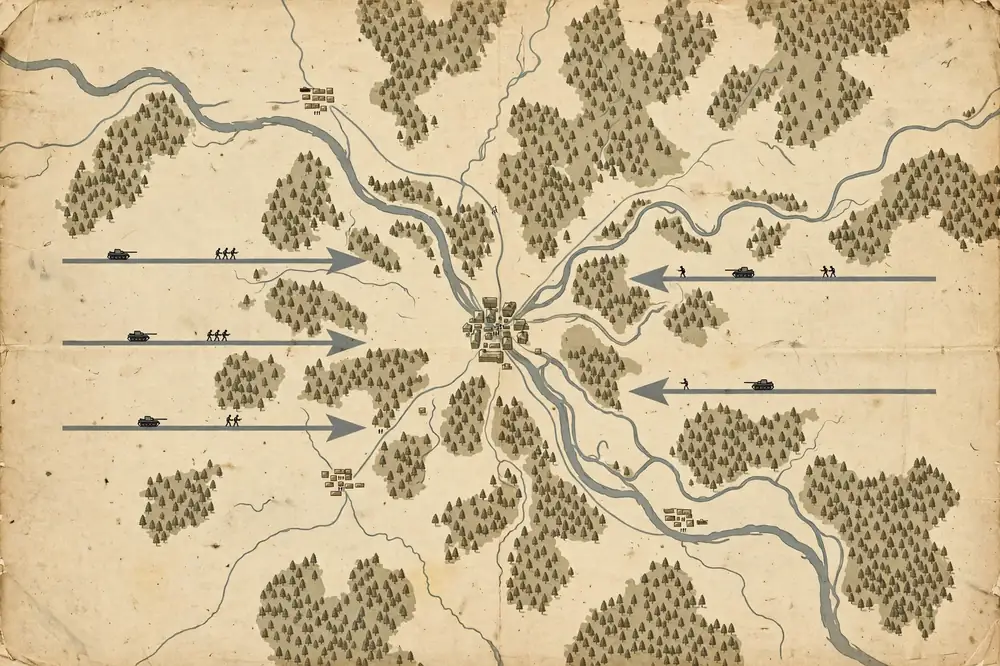
Moscow sits on a plain, and its approaches are open: there are no mountains and no great rivers to defend it, only the forests, the marshes and the small rivers that run west of the city. The German advance came along three axes: from the north-west, through Kalinin and Klin; from the west, through Vyazma and Mozhaisk, along the road that Napoleon had taken in 1812; and from the south-west, through Bryansk, Orel and Tula. The western axis was the most direct, and it was the one the Germans chose for their main effort: the road from Smolensk to Moscow runs through Vyazma and Mozhaisk, and it was the road the Soviet defence had to hold. The geography of the battle was the geography of roads: in the mud, only the roads were passable, and the armies fought for the roads, for the towns on the roads, and for the bridges over the rivers that crossed them.
The Road Napoleon Took
The comparison with 1812 was made by everyone at the time, and it was not a comfort to the Germans. Napoleon had taken the same road to Moscow in 1812, had entered the city, and had then been destroyed by the Russian winter on the retreat. The German soldiers knew the story, and their officers quoted it, and the parallel haunted the campaign: the same vast distances, the same mud, the same cold, and the same Russian refusal to surrender. The difference was that Napoleon had at least taken Moscow, while Hitler’s armies stopped 20 kilometres short. The road from Smolensk to Moscow is about 400 kilometres, and the German army took three months to cover it, at a cost that broke it. The geography of Russia — its size, its climate and its roads — was the Soviet Union’s greatest ally, and it fought for Moscow as surely as any army did.
Rivers, Forests and the Mozhaisk Line
The Mozhaisk defence line, about 100 kilometres west of Moscow, was built on the rivers and the forests. The line ran along the rivers Lama, Moskva and Nara, and through the forests west of the city, and it was strengthened with anti-tank ditches, barbed wire and gun positions. The rivers were small, but in October they were in flood, and in November they froze, and the forests gave the Soviet defenders cover and the German tanks nowhere to manoeuvre. The defence line was manned by a mixture of regular troops, cadets and militia, and it held long enough to matter: the Germans broke through it in the end, but the fighting on the line cost them two weeks, and two weeks, in October 1941, was the difference between reaching Moscow in the autumn and reaching it in the winter. The Mozhaisk line did not stop the Germans, but it slowed them, and slowing them was enough.
The Forests That Swallowed Armies
The forests west of Moscow were a battlefield in themselves, and they favoured the defender. The German tanks could not move through the forests, and the German infantry, advancing on foot, was ambushed by Soviet troops who knew the ground. The forests also hid the Soviet partisans, who attacked the German supply columns on the roads, and the Soviet ski troops, who moved silently through the trees. The German army, which had been built for war on the roads and in the open, found itself fighting in a landscape it did not understand, and the landscape fought back. The forests around Vyazma and Bryansk, where the encircled Soviet armies held out for weeks, were the first lesson: in Russia, the land itself was an enemy, and the German army, for all its skill, had not learned how to fight it — a lesson it would relearn, at far greater cost, in the winters that followed.
8. Outcome and Legacy of the Battle of Moscow
The First Great German Defeat
The Battle of Moscow ended on 7 January 1942, when the Soviet counteroffensive ran out of strength and the front settled into a line roughly 100 to 250 kilometres west of the capital. The Germans had been driven back, but they had not been destroyed: Hitler’s halt order had saved the army, and the German forces held a ragged line through the winter. The result, however, was clear: the German plan to win the war in 1941 had failed, and the Blitzkrieg that had conquered Europe had been stopped for the first time. The German army had lost its aura of invincibility, and the Soviet Union had proved that it could not only survive the German attack but throw it back. The battle was the first great German defeat of the war, and it was the turning point of the war in the east: after Moscow, Germany was fighting a war of attrition, and in a war of attrition, Germany’s smaller population and weaker industry meant that time was on the Soviet side.
The End of the Blitzkrieg
The failure at Moscow ended the Blitzkrieg as a strategy. Blitzkrieg depended on speed, on encirclement, and on the enemy’s collapse — and at Moscow, the Soviet Union did not collapse. The German army had won the battles of encirclement at Vyazma and Bryansk, but the Soviet Union had raised new armies faster than the Germans could destroy them, and the German army had run out of time, of supplies and of strength before it reached its objective. The war in the east would go on for three more years, through Stalingrad and Kursk and Berlin, and it would be a war of grinding attrition, of vast casualties and of industrial production. The Blitzkrieg had been the German army’s answer to the problem of fighting a long war, and at Moscow, the answer failed. Germany would never again have the chance to win the war quickly, and from that winter onward, every German offensive was fought against an enemy that grew stronger while Germany grew weaker.
What Moscow Meant
The legacy of the Battle of Moscow is written in the rest of the war. The Soviet victory saved the Soviet Union, and it gave the Allies the time they needed: the time for American industry to reach full production, for the British to build their armies, and for the Soviet Union to move its factories east of the Urals and to raise the armies that would win at Stalingrad. The battle also changed the German army: it lost its best generals, its confidence and its offensive power, and it never recovered them. In Russia, the defence of Moscow is remembered as one of the great patriotic victories, and the city honoured its defenders with the title of Hero City. The battle is also remembered for what it cost: the hundreds of thousands of Soviet soldiers who died, the prisoners who perished in German captivity, and the civilians who suffered. The victory at Moscow was bought with blood, and the Soviet people have never forgotten the price.
The Myth and the Reality
The Battle of Moscow has been wrapped in myth on both sides, and the truth is more complicated than the myth. The Soviet myth — of the Siberian divisions arriving like a miracle, of General Winter winning the battle alone — obscures the fact that the victory was won by the whole Soviet people: by the soldiers who died at Vyazma, by the workers who dug the ditches, and by the factories that built the tanks. The German myth — that the winter alone defeated them — obscures the fact that the German army was beaten by Soviet resistance, by its own failures of planning, and by a strategy that had no answer to a country that refused to collapse. The battle was won by the Soviet Union, and it was won by the Soviet people, and the winter was only one of the weapons they used. The truth is less simple than the myth, and more honourable to both sides.
9. Commanders
The German Commanders
Field Marshal Fedor von Bock (Germany). Commander of Army Group Centre and the architect of the drive on Moscow. Bock was a Prussian officer of the old school, a veteran of the First World War, and he had commanded the invasions of Poland and France. He led Operation Typhoon with skill, and his armies won the great encirclements of Vyazma and Bryansk, but he could not overcome the mud, the cold and the Soviet resistance. Hitler dismissed him in December 1941, after he protested against the halt order, and he was later given command of Army Group South. He was killed in an air attack in May 1945, a few days before the end of the war.
General Heinz Guderian (Germany). Commander of the 2nd Panzer Army and the most famous tank commander in the German army. Guderian was the theorist of the Blitzkrieg, and his tanks had led the advance through Poland, France and the Soviet Union. At Moscow, his tanks reached Tula and then stalled, and he argued — against Hitler — for a withdrawal to prepared positions. Hitler dismissed him in December 1941, and Guderian never again held a field command. After the war he wrote his memoirs, Panzer Leader, in which he blamed Hitler for the failure at Moscow.
Bock and Guderian: The Generals Who Lost Moscow
Bock and Guderian were the two most capable German commanders at Moscow, and their dismissal in December 1941 marked the moment when Hitler took direct control of the German army. Bock was a soldier of the old school, who believed in the autonomy of the generals, and Guderian was a revolutionary, who believed in the tank. Both of them understood, by December, that the offensive had failed, and both of them wanted to withdraw to a defensible line. Hitler refused, and he dismissed them both, and from that moment the German army was commanded not by its generals but by Hitler himself. The dismissal of Bock and Guderian was a turning point in the German command, and it was a turning point for the worse: the German army would never again be led by men who were free to tell Hitler the truth, and its operations would increasingly be decided by a leader who refused to accept the limits of his own armies.
The Soviet Commanders
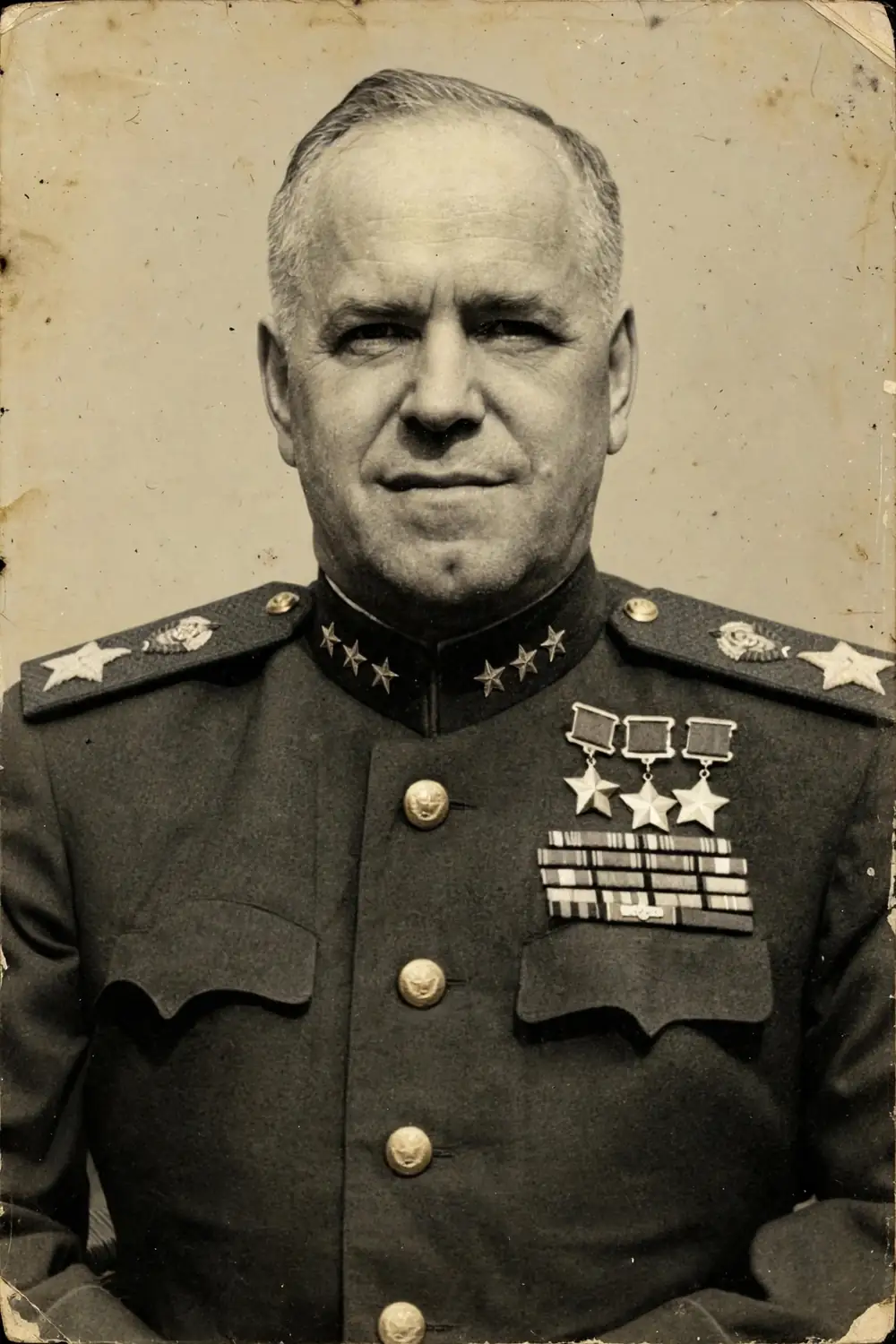
General Georgy Zhukov (Soviet Union). Commander of the Western Front from 10 October 1941 and the architect of the defence of Moscow and the December counteroffensive. Zhukov was the most capable Soviet general of the war: he had defeated the Japanese at Khalkhin Gol in 1939, and he would go on to command at Stalingrad, Kursk and Berlin. At Moscow, he imposed order on a collapsing front, organised the defence of the city, and launched the counteroffensive that drove the Germans back. He was ruthless with his subordinates and with his soldiers, and his victories cost the Soviet Union dearly, but he won, and his victories made him the most famous soldier in the Soviet Union.
General Konstantin Rokossovsky (Soviet Union). Commander of the 16th Army, which held the Volokolamsk highway west of Moscow, and one of the ablest Soviet generals of the war. Rokossovsky was a Pole by birth, a cavalry officer who had been imprisoned by Stalin in the 1930s and released to command armies. At Moscow, his army held the line against the German advance, and his defence of the Volokolamsk highway was one of the decisive actions of the battle. He would go on to command at Stalingrad, Kursk and in the liberation of Poland, and he ended the war as a Marshal of the Soviet Union.
Zhukov: The Man Who Saved Moscow
Zhukov’s role at Moscow has been debated ever since, and the debate is about more than one battle. His defenders say that he saved the Soviet Union: he took command of a collapsing front, he organised the defence, and he launched the counteroffensive that drove the Germans back. His critics say that he did it at a terrible cost, throwing away the lives of his soldiers in frontal attacks, and that his victories were bought with blood that a better general would have saved. Both judgements contain truth: Zhukov was a ruthless commander, and his methods were brutal, but in October 1941, the Soviet Union needed a commander who would not panic, who would hold the line and who would attack when the moment came. Zhukov was that commander, and the Soviet Union survived because of him — and because the soldiers, workers and civilians of Moscow, who dug the ditches and held the line beside him, refused to give up their city.
Frequently Asked Questions
When was the Battle of Moscow?
From 2 October 1941 to 7 January 1942, with fighting continuing into April 1942. The German offensive, Operation Typhoon, began on 30 September–2 October, and the Soviet counteroffensive began on 5 December 1941.
How close did the Germans get to Moscow?
German troops reached Khimki, about 20 kilometres from the Kremlin, by the end of November 1941. German reconnaissance patrols could see the towers of Moscow, but the main German forces never entered the city.
Why did the German advance on Moscow fail?
A combination of the autumn mud, the coldest winter in a century, overstretched supply lines, Soviet resistance and Zhukov’s December counteroffensive with fresh Siberian divisions. The Germans had planned a short summer war and were not prepared for winter.
How many people died in the Battle of Moscow?
Soviet losses are estimated at about 650,000 to more than 1,000,000 killed, wounded and captured, and German losses at about 150,000 to 250,000. The figures are estimates and are still disputed by historians.
What was the significance of the Battle of Moscow?
It was the first great German defeat of the Second World War, and it ended the Blitzkrieg. After Moscow, Germany could no longer win the war quickly, and the war in the east became a war of attrition that Germany was bound to lose.
Did Stalin stay in Moscow during the battle?
Yes. Stalin refused to leave the city, and on 7 November 1941 he held the traditional military parade in Red Square while German troops were less than 100 kilometres away. His decision to stay became a symbol of Soviet resolve.
Sources
- Wikipedia, “Battle of Moscow” — dates, strength, casualty figures (Soviet 650,000–1,000,000+; German 150,000–250,000), commanders and the course of the battle.
- David Stahel, Operation Barbarossa and Germany’s Defeat in the East (Cambridge University Press, 2009) — Operation Typhoon, the German supply crisis and the failure before Moscow.
- Encyclopædia Britannica, “Battle of Moscow” — background, the battle and its outcome.
- Andrew Nagorski, The Greatest Battle: Stalin, Hitler, and the Desperate Struggle for Moscow That Changed the Course of World War II (Simon & Schuster, 2007) — the defence of the city, Zhukov and the December counteroffensive.
- David M. Glantz, Barbarossa Derailed: The Battle for Smolensk, 10 July–10 September 1941 (Helion, 2010) — the road to Moscow and the Soviet defence.
- Richard Overy, Russia’s War (Penguin, 1997) — the Soviet war effort, the Siberian divisions and the winter of 1941–42.
Further reading
- David Stahel, Operation Typhoon: Hitler’s March on Moscow, October 1941 (Cambridge University Press, 2013).
- Geoffrey Jukes, The Defence of Moscow (Ballantine, 1970).