 WAR ATLAS MILITARY HISTORY MAGAZINE · WWI — WWII
Italian Front (World War I)
Lead
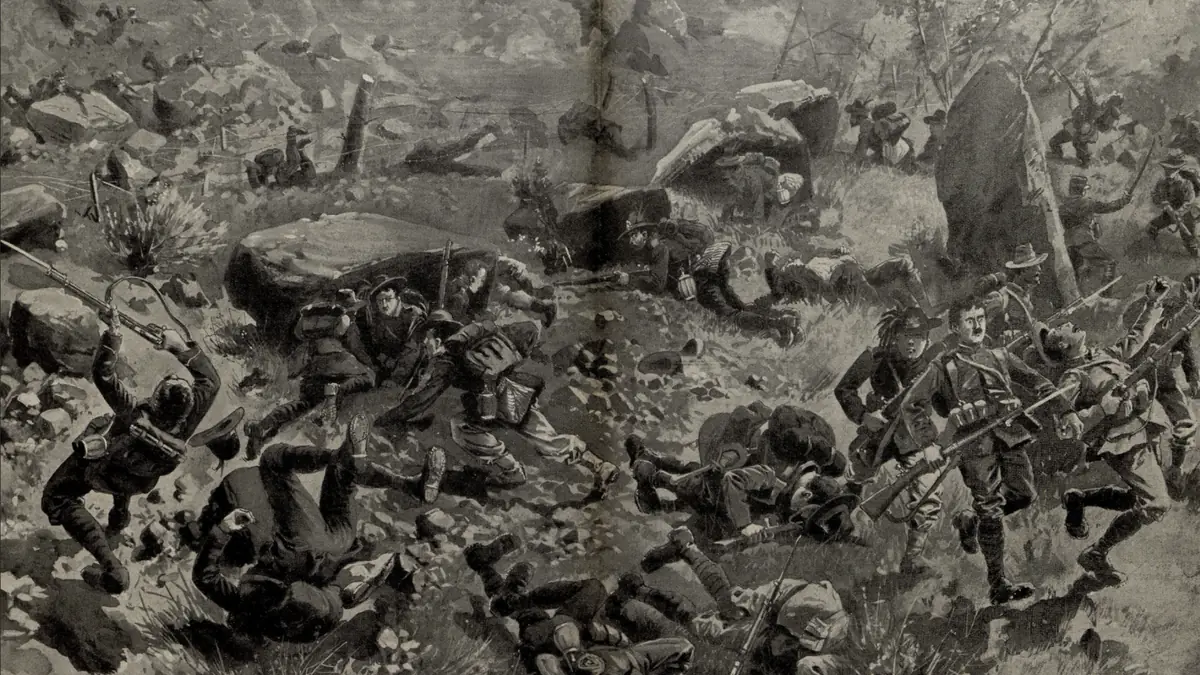
The Italian Front (World War I) was the theatre of war fought between 1915 and 1918 along the border between Italy and Austria-Hungary, where Italian armies attacked Austro-Hungarian positions in the Alps, in the Trentino, and above all along the Isonzo River.
It was a front of mountains and rivers, of high peaks and deep valleys, where men fought at altitudes of more than 3,000 metres, in snow and ice, and where a single river crossing could cost tens of thousands of lives.
The Italian Front (World War I) is remembered for the twelve Battles of the Isonzo, for the disaster of Caporetto in 1917, and for the final Italian victory at Vittorio Veneto in 1918, which helped to bring down the Austro-Hungarian Empire.
The front opened on 23 May 1915, when Italy declared war on Austria-Hungary and its armies crossed the frontier into territory that Italy claimed as its own. It closed on 4 November 1918, when the Armistice of Villa Giusti came into effect and Austro-Hungarian forces collapsed.
In the three and a half years between those dates, Italy launched eleven major offensives along the Isonzo, Austria-Hungary launched a great offensive from the Trentino in 1916, and a combined German-Austrian offensive at Caporetto in October 1917 drove the Italian army back more than 100 kilometres to the Piave River.
Italy recovered, held the Piave in June 1918, and in October 1918 launched the offensive at Vittorio Veneto that broke the Austro-Hungarian army for good.
The Italian Front (World War I) was also a war of mountains. In German, the mountain war on this front is often called the Gebirgskrieg 1915–1918, the mountain war of 1915–1918, and that name captures an essential part of the fighting. But the mountain war was only one part of the whole Italian Front (World War I). The front also included the low, marshy plain of the lower Isonzo, the karst plateau above Trieste, the Piave River, and the Venetian plain. This article covers the whole front — the Isonzo, the Trentino, the high Alps, the Piave and Vittorio Veneto — and treats the mountain war as the important part of that larger story that it was.
Key Facts
| Item | Detail |
|---|---|
| Dates | 23 May 1915 – 4 November 1918 (Armistice of Villa Giusti signed 3 November, effective 4 November 1918) |
| Theater/Location | The Italian-Austrian border: the Isonzo River and the Julian Alps, the Trentino and the Dolomites, the Carnic and Julian Alps, and the Piave River in north-eastern Italy |
| Result | Italian and Allied victory; the Austro-Hungarian army collapsed and the Austro-Hungarian Empire disintegrated in October–November 1918 |
| Commanders | Italy: Luigi Cadorna (1915–1917), Armando Diaz (1917–1918); Austria-Hungary: Franz Conrad von Hotzendorf, Archduke Eugen, Svetozar Borojevic; Germany: Otto von Below (at Caporetto, 1917) |
| Strength | Italy mobilised about 5 to 6 million men during the war; Austria-Hungary committed well over 1 million men to this front at different times, reinforced by German divisions in 1917 |
| Losses | Italian military deaths are estimated at about 650,000, with about 1 million wounded; Austro-Hungarian military deaths on this front are estimated at several hundred thousand; total military deaths on the front are estimated at about 1.5 million to 2 million, with total casualties of several million |
Background
Italy, the Triple Alliance and the Treaty of London
The Italian Front (World War I) began with a decision that surprised many in Europe. When the First World War broke out in August 1914, Italy was a member of the Triple Alliance with Germany and Austria-Hungary, but the alliance was defensive, and Italy argued that Austria-Hungary’s attack on Serbia was not defensive. Italy therefore declared itself neutral and spent nine months negotiating with both sides.
Austria-Hungary offered territorial concessions in the Trentino, but Italy wanted more: the Trentino, Trieste, the Istrian peninsula, parts of Dalmatia, and a share of the Ottoman Empire. Those demands were met, in secret, by the Allies in the Treaty of London, signed on 26 April 1915.
In return for entering the war on the Allied side, Italy was promised the territories it claimed, and on 23 May 1915 it declared war on Austria-Hungary.
The Italian decision was driven by nationalism, by the long-standing claim to the unredeemed lands — the terre irredente — that were inhabited by Italians but ruled by Austria-Hungary, and by the hope that a short, victorious war would complete the unification of Italy.
The Italian government and the army’s chief of staff, Luigi Cadorna, believed that Austria-Hungary, already hard pressed by Russia on the Eastern Front (World War I), would collapse quickly under an Italian attack. That belief proved wrong. Austria-Hungary, though weakened, was able to hold strong defensive positions in the mountains and along the Isonzo, and the war on the Italian Front (World War I) became a long, costly struggle of attrition, fought for gains measured in kilometres and paid for in hundreds of thousands of lives.
Italy entered the war with serious weaknesses. Its industry was less developed than that of France, Germany or Britain, and it depended on imports of coal, iron and food. Its army was large but poorly equipped, with a shortage of modern artillery, machine guns, transport and medical services.
Its generals, above all Cadorna, were wedded to the idea of the frontal attack, and they repeated the same offensives along the same river, year after year, with the same terrible results. Yet the Italian soldier, the fante, was tough and enduring, and he fought in conditions — high mountains, winter snow, malaria in the lowlands — that would have broken a less resilient army.
The Italian Front (World War I) was shaped as much by geography as by strategy, and no account of it can be understood without first understanding the ground.
The Ground: Isonzo, Trentino and the High Alps
The Italian-Austrian frontier in 1915 ran through some of the most difficult terrain in Europe. In the east, the Isonzo River flowed south from the Julian Alps through the towns of Tolmin, Gorizia and Gradisca, and then across the plain to the Adriatic Sea near Monfalcone.
The river was fast-flowing and difficult to cross, and the Austrians held the high ground on its eastern bank, including the karst plateau and the hills around Gorizia. An Italian attack across the Isonzo had to cross the river under fire, climb steep hills, and then fight through prepared defences.
In the north, the frontier ran through the Trentino, a salient of Austrian territory that jutted south into Italy, surrounded on three sides by Italian territory. The Trentino was a threat to Italy, because Austrian forces based there could strike south towards Verona and the Venetian plain, and it was also a target, because Italy hoped to capture it and advance into the Austrian Tyrol.
Further west, the frontier ran through the high Alps — the Dolomites, the Carnic Alps and the Ortler group — where peaks rose to more than 3,000 metres. Fighting here took place on glaciers, on narrow ridges, and in tunnels dug through rock and ice.
Soldiers lived in huts and caves at altitudes where the air was thin, the cold was intense, and avalanches killed as many men as enemy fire. The mountain war, the Gebirgskrieg 1915–1918, was fought in these peaks, and it produced some of the most extraordinary feats of endurance of the whole war.
But the decisive battles of the Italian Front (World War I) were fought not on the highest peaks but on the Isonzo and, in the end, on the Piave, where the terrain allowed large armies to manoeuvre and where the fate of Italy itself was decided.
Opposing Forces
Italy: Cadorna’s Army and the Fante
The Italian army on the Italian Front (World War I) was commanded from 1914 to 1917 by General Luigi Cadorna, a stern, remote figure who believed in discipline above all else. Cadorna’s strategy was simple: attack the Austrians along the Isonzo, break through to Trieste and Ljubljana, and force Austria-Hungary to sue for peace.
He launched offensive after offensive, each preceded by a heavy bombardment, each aimed at the same objectives, and each ending in heavy losses for small gains. Cadorna’s discipline was notoriously harsh. He ordered the execution of soldiers for cowardice and desertion, and he dismissed generals who failed to attack.
His army was brave, but it was poorly supplied, poorly led at the lower levels, and exhausted by repeated offensives that achieved little. After the disaster of Caporetto in October 1917, Cadorna was dismissed and replaced by General Armando Diaz, who rebuilt the army, improved its supply and morale, and led it to victory in 1918.
The Italian army was organised into numbered armies, each of several corps. At the start of the war, Italy fielded about 35 divisions, and by 1918 it fielded more than 60. Italian troops included infantry from all over the country, Alpini mountain troops who were specialists in high-altitude warfare, Bersaglieri light infantry, and, from 1917, the Arditi assault troops, who were trained for infiltration and close combat.
The army also included large numbers of men from the south of Italy, who had never seen mountains before and who suffered terribly in the cold. Despite its weaknesses, the Italian army held the front for three and a half years, absorbed the shock of Caporetto, and won the final victory at Vittorio Veneto.
Austria-Hungary and Germany
Austria-Hungary, the main opponent on the Italian Front (World War I), was fighting on three fronts at once: against Russia in the east, against Serbia in the Balkans, and against Italy in the south-west. Its forces on the Italian front were commanded at first by Archduke Eugen, and later by Svetozar Borojevic, a Croat general who became one of the most respected commanders of the war.
Borojevic, who commanded the Fifth Army on the Isonzo, was a master of defence. He used the terrain brilliantly, built strong positions on the high ground, and held the Isonzo line against eleven Italian offensives. His troops were a mixture of Austrians, Hungarians, Croats, Slovenes, Bosnians and other peoples of the empire, and they fought with great determination to defend their own territory.
Austria-Hungary was supported by Germany at critical moments. In 1916, German officers and artillery helped to plan the Trentino Offensive, and in 1917, German divisions under General Otto von Below played the leading role in the Caporetto offensive, using infiltration tactics that had been developed on the Western Front and in the east. German help was decisive at Caporetto, but it was limited.
Germany had its own priorities on the Western Front and on the Eastern Front (World War I), and it could spare only a few divisions for Italy. The Austro-Hungarian army, like the Italian army, was exhausted by 1918. Its soldiers were hungry, its empire was disintegrating, and its multi-national army was beginning to break apart along national lines. At Vittorio Veneto in October 1918, it finally collapsed.
The Italian Front, 1915–1918
1915: The First Battles of the Isonzo
The Italian Front (World War I) opened on 23 May 1915 with an Italian advance across the frontier. The first Italian offensive, the First Battle of the Isonzo, began on 23 June 1915. Italian troops crossed the Isonzo River and attacked the Austrian positions on the karst plateau and the hills above Gorizia. The attack failed.
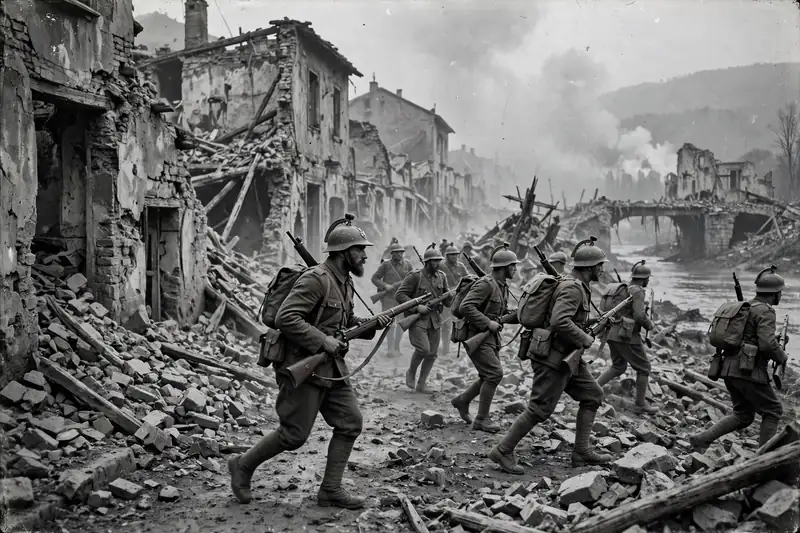
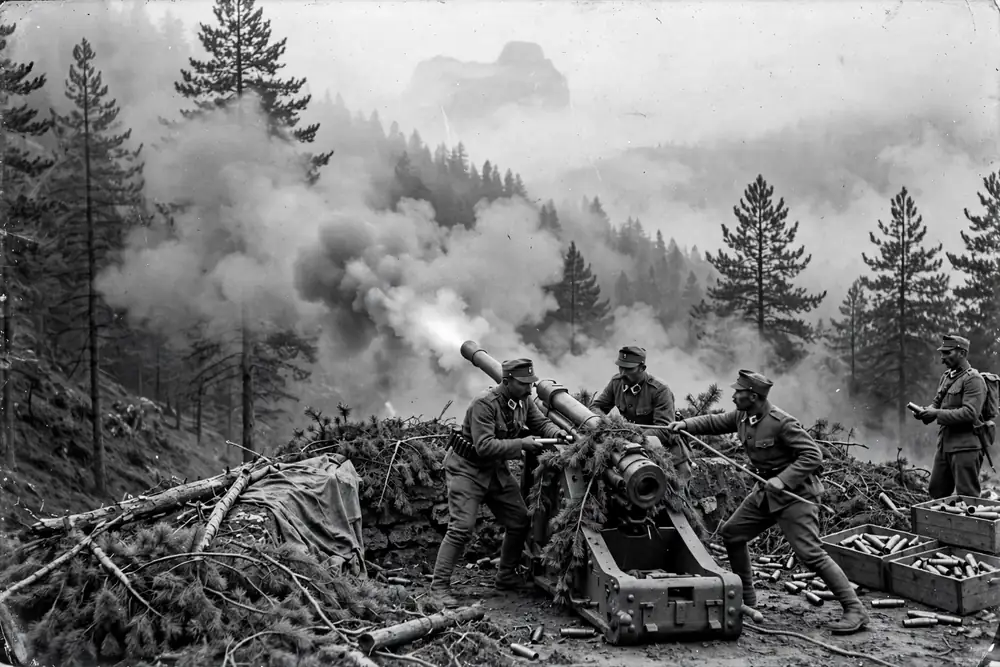
The Italians had too little heavy artillery, their bombardments were too short to destroy the Austrian defences, and their infantry attacked in dense waves across open ground. The Second Battle of the Isonzo, in July and August 1915, and the Third and Fourth Battles, in October and November 1915, followed the same pattern. Each time, the Italians attacked, gained a little ground, and were stopped with heavy losses.
By the end of 1915, Italy had lost an estimated 250,000 men, killed, wounded and missing, and had gained almost nothing. The Austrians, under Borojevic, had held their line, and the war on the Italian Front (World War I) had settled into a pattern that would last for two more years: Italian attacks, Austrian defence, and a slow, grinding attrition.
The year 1915 also saw fighting in the Trentino and the high Alps. Italian Alpini and Austrian Kaiserjager fought for mountain peaks, sometimes at altitudes of more than 3,000 metres, where the cold and the avalanches were as dangerous as the enemy. The fighting in the mountains was small in scale — often a matter of a few hundred men fighting for a single peak — but it was extraordinarily hard, and it tied down troops on both sides who might have been used elsewhere. By the winter of 1915–1916, both armies were exhausted, and the front settled into a stalemate along the Isonzo and in the mountains.
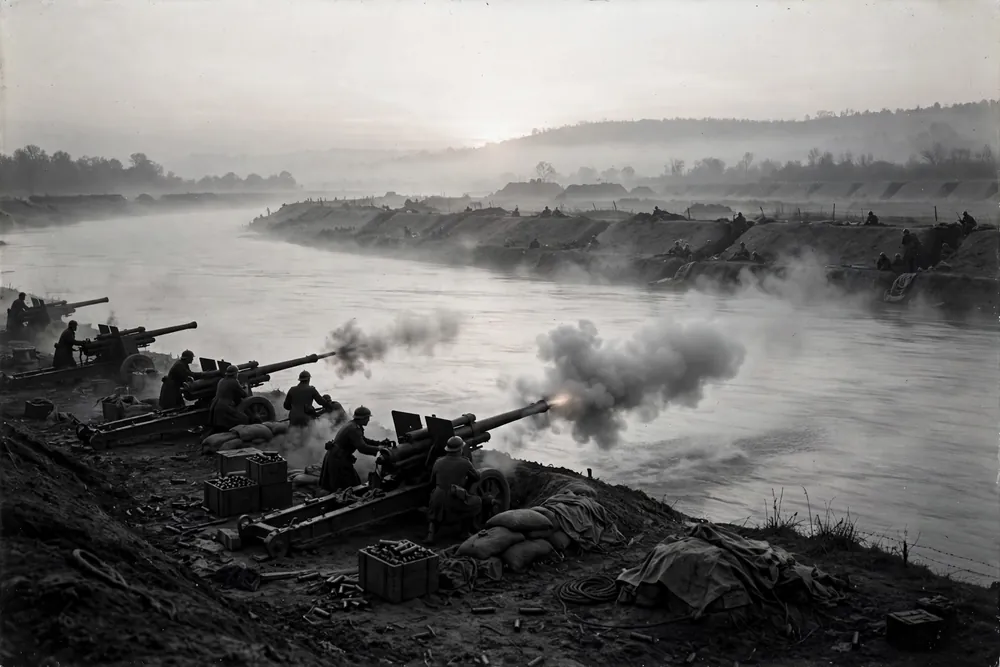
1916: The Trentino Offensive and the Capture of Gorizia
In May 1916, Austria-Hungary launched its great offensive from the Trentino, known as the Strafexpedition, the punishment expedition. The offensive, commanded by Conrad von Hotzendorf, was intended to break through the Italian lines in the Trentino, descend onto the Venetian plain, and cut off the Italian armies on the Isonzo.
The Austrians attacked with 15 divisions, supported by heavy artillery, and they advanced up to 20 kilometres in places, capturing the Asiago plateau. But the offensive ran out of momentum. The terrain was difficult, supply was hard, and the Russians launched the Brusilov Offensive on the Eastern Front (World War I) in June 1916, forcing Austria-Hungary to transfer troops east.
The Italians, under Cadorna, counterattacked, and by the end of June the Austrians had been driven back to their starting positions. The Trentino Offensive had failed, but it had shown that Italy itself was vulnerable, and it had forced Italy to keep large forces in the Trentino that might otherwise have been used on the Isonzo.
In August 1916, Italy launched the Sixth Battle of the Isonzo, which was the most successful Italian offensive of the war so far. The Italians, under Cadorna, attacked Gorizia, a town on the Isonzo that had been a major Austrian strongpoint. After a heavy bombardment, Italian troops crossed the river and captured the town on 9 August 1916, together with the heights around it.
The capture of Gorizia was a great propaganda victory for Italy, and it raised morale after a year of failure. But the advance stopped at the karst plateau beyond Gorizia, and the Seventh, Eighth and Ninth Battles of the Isonzo, fought in September, October and November 1916, gained little ground at heavy cost.
By the end of 1916, the Italian Front (World War I) was again in stalemate, and both sides were exhausted.
1917: The Tenth and Eleventh Isonzo and the Disaster of Caporetto
In 1917, Italy launched two more offensives on the Isonzo. The Tenth Battle, in May and June 1917, gained some ground on the karst plateau but failed to break through. The Eleventh Battle, in August and September 1917, was the largest Italian offensive of the war. Cadorna attacked with more than 50 divisions, supported by heavy artillery, and advanced up to 10 kilometres in places, capturing the Bainsizza plateau. But the Austrians held, and the Italians, who had lost an estimated 160,000 men, were exhausted. The Eleventh Battle had brought Italy to the edge of a breakthrough, but it had also left the Italian army weak and vulnerable.
The Austrians and Germans saw their chance. On 24 October 1917, they launched a combined offensive at Caporetto, in the upper Isonzo valley, using infiltration tactics, gas and a short, intense bombardment. The attack, commanded by Otto von Below, broke through the Italian Second Army, which collapsed in confusion. Italian units, many of them exhausted by the Eleventh Battle, fled in disorder, abandoning their guns and equipment.
The retreat became a rout. In a few weeks, the Italians fell back more than 100 kilometres to the Piave River, losing an estimated 300,000 prisoners, about 3,000 guns and enormous quantities of stores. The disaster of Caporetto was the worst defeat in Italian military history, and it shook Italy to its foundations. Cadorna was dismissed, and General Armando Diaz took command.
The French and British sent divisions to Italy to help hold the Piave line, and the Italian army, though shattered, was rebuilt over the winter of 1917–1918.
Caporetto is sometimes counted as the Twelfth Battle of the Isonzo, and the twelve battles are commonly counted as follows: the first eleven Isonzo offensives, from June 1915 to September 1917, plus Caporetto as the twelfth. Some historians count eleven Isonzo battles and treat Caporetto as a separate German-Austrian offensive, not an Isonzo battle in the same sense. The difference is a matter of counting, not of fact: there were eleven Italian offensives along the Isonzo, and then the German-Austrian offensive at Caporetto in October 1917. This article uses the common count of twelve battles, as commonly counted, and notes the alternative where it matters.
1918: The Piave and Vittorio Veneto
The year 1918 began with Italy on the defensive. The Italian army, under Diaz, held a line along the Piave River, from the Adriatic to the Alps, with French and British divisions in support. Diaz rebuilt the army, improved its supply, rotated units out of the line for rest, and created a central reserve that could be moved quickly to any threatened sector. He also improved relations with the troops, visiting the front, listening to complaints, and reducing the harsh discipline of the Cadorna years. Morale, which had collapsed after Caporetto, slowly recovered.
In June 1918, Austria-Hungary launched its last great offensive, the Battle of the Piave, also known as the Battle of the Solstice. The Austrians attacked across the Piave, hoping to break through to the Venetian plain and force Italy out of the war. The attack failed. Italian artillery, well prepared and well supplied, broke up the Austrian crossings, and Italian counterattacks drove the Austrians back across the river. Austrian losses were heavy, and the army, already short of food and supplies, never recovered. The Battle of the Piave was the turning point of the Italian Front (World War I) in 1918, and it showed that the Italian army, under Diaz, had learned the lessons of Caporetto.
The final offensive came in October 1918. On 24 October, exactly a year after Caporetto, the Italians launched the Battle of Vittorio Veneto. The attack, which involved Italian, French, British and American troops, crossed the Piave and broke through the Austro-Hungarian lines. The Austro-Hungarian army, which was already disintegrating — Czech, Slovak, Croat and Hungarian units were refusing to fight, and the empire itself was collapsing — fell apart.
Italian troops advanced rapidly, capturing Vittorio Veneto, Trento and Trieste. On 3 November 1918, Austria-Hungary signed the Armistice of Villa Giusti, which came into effect on 4 November. The Italian Front (World War I) was over, and the Austro-Hungarian Empire, which had begun the war as a great power, had ceased to exist.
The Mountain War: Gebirgskrieg 1915–1918
The mountain war, the Gebirgskrieg 1915–1918, deserves a section of its own, because it was unlike any other fighting in the First World War. In the high Alps, men fought at altitudes of 2,000 to 3,900 metres, where the temperature could fall to minus 30 degrees Celsius, where the snow was metres deep, and where the air was so thin that men could barely breathe.
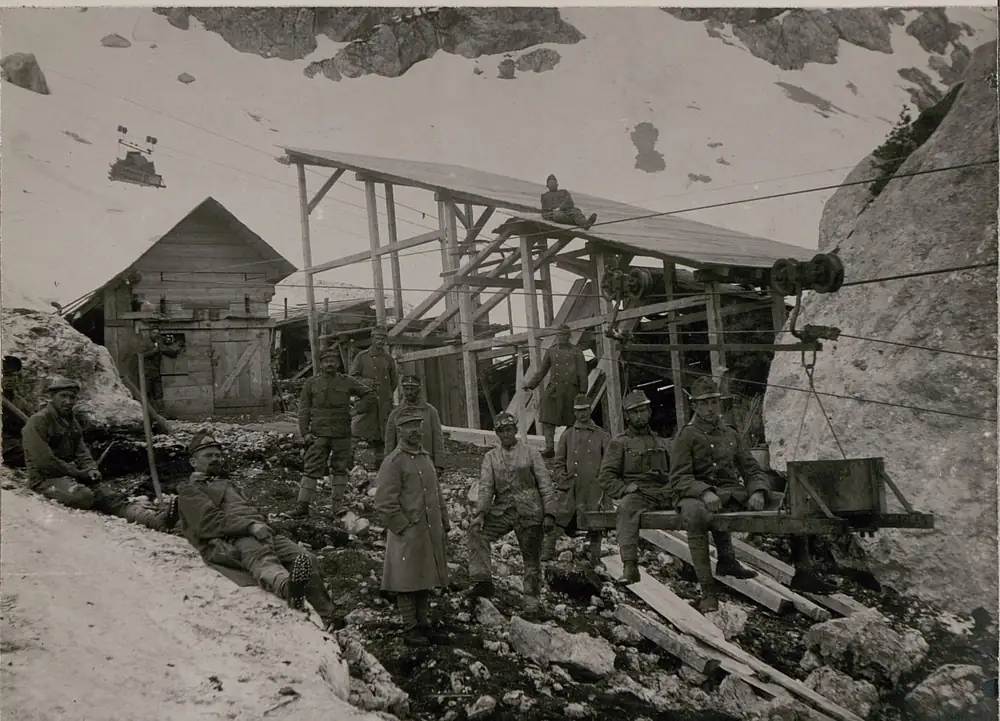
Soldiers lived in huts, caves and tunnels dug into rock and ice. They were supplied by cable cars, by mules and by men carrying loads on their backs up steep paths. Avalanches were a constant danger, and in the winter of 1916–1917, avalanches killed thousands of men on both sides, in a single week in December 1916 killing an estimated 10,000 men in the Alps.
The mountain war was a war of small units, of patrols and raids, of fighting for a single peak or a single pass, and it required specialist troops: the Italian Alpini and the Austrian Kaiserjager and Landesschutzen, men who were born in the mountains and who knew how to live and fight in them.
The most famous mountain battles were fought in the Dolomites and the Ortler group. At the Ortigara, in June 1917, Italian Alpini attacked Austrian positions on a high plateau, in a battle that cost thousands of lives for a gain of a few hundred metres.
At the Marmolada, the highest peak in the Dolomites, Austrian troops lived for months in a tunnel dug through the glacier, known as the Ice City, and fought off Italian attacks from above. At the Adamello, Italian troops captured a glacier at an altitude of more than 3,000 metres.
These battles had little strategic importance — they did not decide the war — but they showed the extraordinary endurance of the men who fought them, and they have become a central part of the memory of the Italian Front (World War I) in Italy and Austria alike.
The mountain war was only one part of the whole front, but it was the part that most clearly showed the power of geography to shape war, and the cost of fighting in terrain that was never meant for armies.
Turning Point
The turning point of the Italian Front (World War I) was the Battle of Caporetto in October–November 1917. Before Caporetto, the front had been a war of attrition, in which Italy attacked and Austria-Hungary defended, and in which neither side could achieve a decisive result. Caporetto broke that pattern.
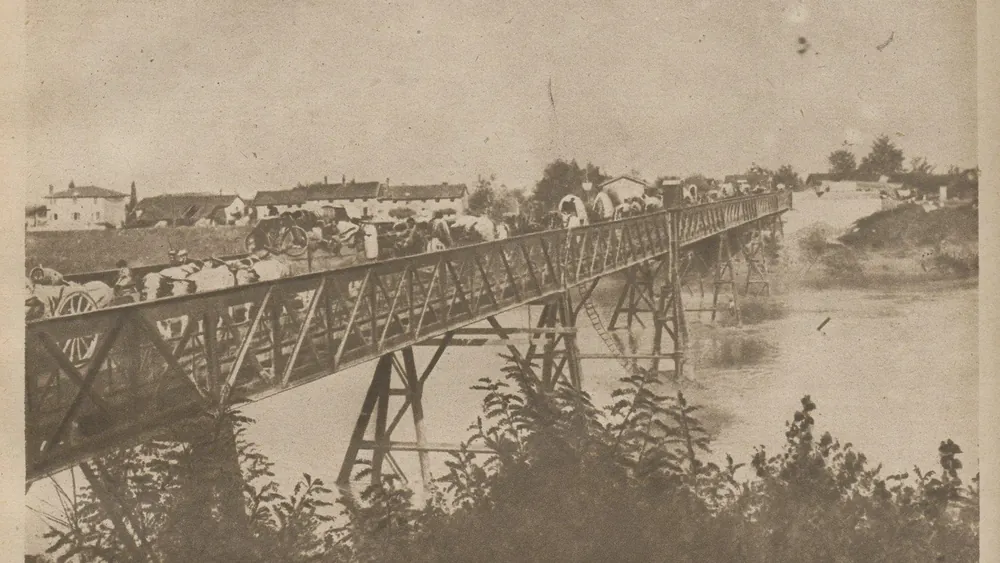
It destroyed the Italian Second Army, drove the Italian army back to the Piave, and brought Italy to the edge of defeat. But it also changed Italy. The disaster forced the dismissal of Cadorna, the rebuilding of the army under Diaz, the arrival of French and British help, and a new determination in Italy to hold the Piave and to win the war.
After Caporetto, the Italian army was a different army: better led, better supplied, and fighting for its own country, not for a distant objective in the mountains.
If a single battle must be named as the military turning point, it is the Battle of the Piave in June 1918. The Piave was the last Austrian offensive of the war, and its failure showed that Austria-Hungary could no longer attack. After the Piave, the Austro-Hungarian army was exhausted, its soldiers were hungry, and its empire was falling apart. The Italian victory at Vittorio Veneto in October 1918 was the consequence of the Piave, not its cause. The Italian Front (World War I) thus turned twice: once in disaster, at Caporetto, and once in victory, at the Piave. The first turning point nearly lost Italy the war; the second won it.
Casualties and Losses
No reliable exact total exists for the casualties of the Italian Front (World War I); historians give different figures, so what follows are ranges rather than exact counts. Italian military deaths are commonly estimated at about 650,000, with about 1 million wounded and about 600,000 prisoners taken at different times, above all at Caporetto.
Austro-Hungarian military deaths on this front are estimated at several hundred thousand, with total Austro-Hungarian casualties on the Italian front of more than 1 million. German losses on this front were smaller, since German divisions were present only in 1917–1918, but they were significant at Caporetto.
Overall, estimates range from about 1.5 million to 2 million military dead on this front, with total casualties, including wounded and prisoners, of several million.
The cost was concentrated in a few battles. At Caporetto, Italian losses included an estimated 300,000 prisoners, together with about 3,000 guns and enormous quantities of equipment. The Eleventh Battle of the Isonzo cost Italy an estimated 160,000 casualties. The mountain war, though small in scale, was extraordinarily costly in proportion to the numbers engaged, and avalanches alone killed thousands of men. The civilian cost was also high.
The war displaced hundreds of thousands of people in north-eastern Italy, destroyed towns and villages along the Isonzo and the Piave, and brought hunger and disease to the region. The Italian Front (World War I) was a war of attrition, and its cost, like that of the Western Front, was paid in lives for gains measured in kilometres.
Map and Geography
The Isonzo River and the Karst Plateau
The geography of the Italian Front (World War I) was dominated by the Isonzo River. The Isonzo rises in the Julian Alps, flows south through a narrow valley, and then crosses the plain to the Adriatic Sea. Along its upper course, the river is fast and difficult to cross, and the valley is narrow, with steep hills on both sides.
Along its lower course, the river flows across a flat, marshy plain, where the ground is low and wet, and where malaria was a constant problem. The Austrians held the high ground on the eastern bank, including the karst plateau — a limestone plateau, full of caves, sinkholes and rocky outcrops, where there was little soil, little water, and no cover.
An Italian attack across the Isonzo had to cross the river, climb the plateau, and then fight through a landscape that offered no shelter from artillery fire. The karst was one of the worst battlefields of the war, and the men who fought there remembered it as a place of stone, dust and death.
The Isonzo front was about 90 kilometres long, from the Julian Alps to the Adriatic, and it was the main sector of the Italian Front (World War I) for most of the war. The Italians attacked here eleven times, and each time they faced the same problem: the river, the plateau, and the Austrian defences on the high ground. The capture of Gorizia in August 1916 was the only major Italian success on this sector, and even that success did not break through the Austrian line. The Isonzo was a river that could be crossed, but not held, and a front that could be attacked, but not broken.
The Trentino, the Dolomites and the Piave
The Trentino, in the north, was a different kind of terrain. It was a high, mountainous salient, surrounded by Italian territory, where the Austrians held strong positions in the mountains and could strike south towards Verona. The Trentino Offensive of May 1916 showed the danger of this salient, and the Italians had to keep large forces there for the whole war. Further west, the Dolomites and the Carnic Alps formed a high, rugged frontier, where the mountain war was fought. The peaks here rose to more than 3,000 metres, and the fighting was a matter of small units, of patrols and raids, of living in huts and caves at altitudes where the air was thin and the cold was intense.
The Piave River, in the south, was the last line of defence for Italy. It flows from the Alps to the Adriatic, across the Venetian plain, and it was here, in June and October 1918, that the fate of the Italian Front (World War I) was decided.
The Piave was a wide, fast-flowing river, difficult to cross under fire, and the Italians, who held its western bank, were able to use it as a defensive line after Caporetto. When the Austrians attacked across the Piave in June 1918, they were stopped, and when the Italians attacked across it in October 1918, they broke through.
The geography of the Italian Front (World War I) thus tells the story of the war: the Isonzo, where Italy attacked and failed; the Trentino and the Dolomites, where the mountain war was fought; and the Piave, where Italy held and then won.
Outcome and Legacy of Italian Front (World War I)
The immediate outcome of the Italian Front (World War I) was an Italian victory. The Armistice of Villa Giusti, signed on 3 November 1918 and effective on 4 November, ended the fighting, and the Austro-Hungarian Empire, which had begun the war as a great power, collapsed within days.
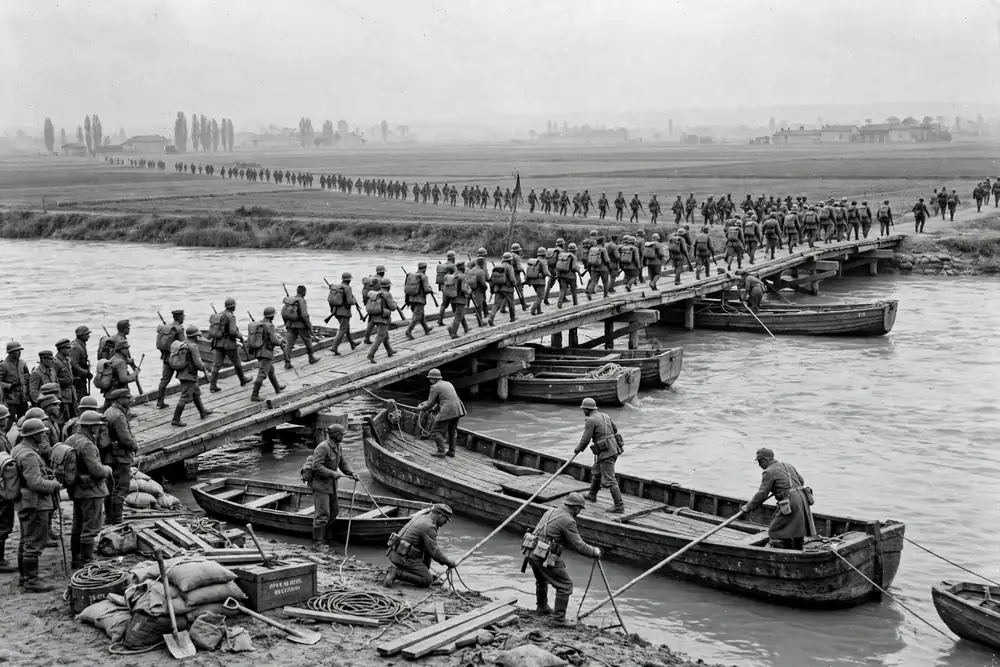
Italy gained the Trentino, South Tyrol, Trieste, Istria and parts of Dalmatia, although the exact borders were settled only by the Treaty of Saint-Germain in 1919 and the Treaty of Rapallo in 1920. The victory at Vittorio Veneto became a national myth in Italy, and 4 November is still celebrated as the Day of National Unity and the Armed Forces.
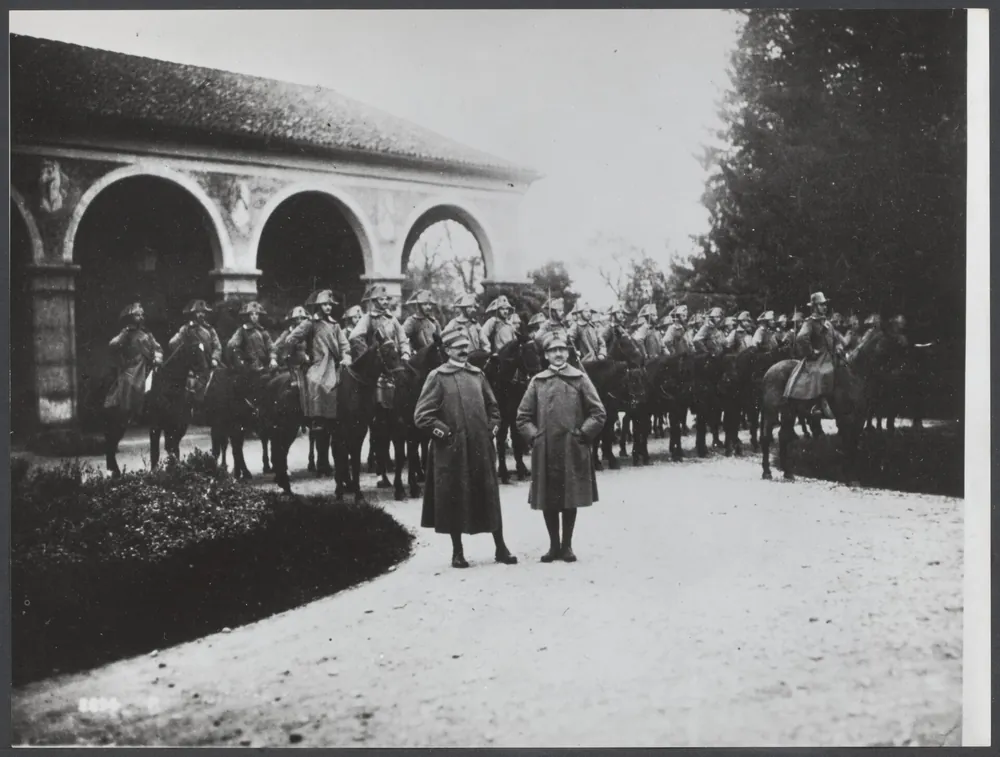
The Italian Front (World War I) had cost Italy about 650,000 dead, but it had completed the unification of the country, or so it seemed at the time.
The longer legacy of the Italian Front (World War I) was more complicated. The victory did not bring Italy the territories it had been promised in the Treaty of London, above all in Dalmatia, and the disappointment — the vittoria mutilata, the mutilated victory — fuelled nationalist resentment and helped to pave the way for Fascism.
The war also left Italy with a huge debt, with a disillusioned generation of veterans, and with a deep divide between those who had fought and those who had not. The memory of Caporetto, in particular, became a byword for defeat and betrayal in Italian culture, and the memory of the mountain war became a central part of Italian national identity.
In Austria, the collapse of the empire and the loss of the South Tyrol, which became Italian, left a legacy of resentment that lasted for decades. English-language histories often give the Italian Front (World War I) less attention than the Western Front or the Eastern Front (World War I), but in Italy and Austria it was the war that changed everything, and its consequences — new borders, new states and new resentments — shaped the history of Europe in the twentieth century.
Commanders
Luigi Cadorna
Luigi Cadorna was the Italian chief of staff from 1914 to 1917, and he commanded the Italian army on the Italian Front (World War I) for most of the war. He was a stern, remote figure, who believed in discipline, in the frontal attack, and in the moral superiority of the offensive.
He launched eleven offensives on the Isonzo, each preceded by a heavy bombardment, each aimed at the same objectives, and each ending in heavy losses for small gains. His discipline was harsh, and he ordered the execution of soldiers for cowardice and desertion. After the disaster of Caporetto, he was dismissed, and he spent the rest of his life defending his record.
Cadorna remains one of the most controversial figures of the First World War: to some, he was a brave but unimaginative general who wasted his men’s lives; to others, he was a man who held the front for two years with inadequate resources and who was let down by his subordinates.
Armando Diaz
Armando Diaz replaced Cadorna after Caporetto, in November 1917, and he commanded the Italian army to victory in 1918. Diaz was a very different kind of general from Cadorna. He was calm, methodical, and attentive to the welfare of his men.
He rebuilt the army after Caporetto, improved its supply, rotated units out of the line for rest, and created a central reserve that could be moved quickly to any threatened sector. He held the Piave in June 1918, and he launched the offensive at Vittorio Veneto in October 1918 that broke the Austro-Hungarian army.
Diaz was made a Marshal of Italy after the war, and he is remembered in Italy as the victor of Vittorio Veneto, the general who saved Italy after Caporetto and who won the war on the Italian Front (World War I).
Svetozar Borojevic and Otto von Below
Svetozar Borojevic was the Austro-Hungarian general who commanded the defence of the Isonzo for most of the war. A Croat by birth, he was one of the most respected commanders of the war, a master of defence who used the terrain brilliantly and who held the Isonzo line against eleven Italian offensives. His troops were loyal to him, and he was promoted to field marshal in 1918.
Otto von Below was the German general who commanded the Caporetto offensive in October 1917. He was a veteran of the Eastern Front (World War I), where he had fought in East Prussia and Poland, and he brought to Italy the infiltration tactics that had been developed in the east and on the Western Front.
His attack at Caporetto was one of the most successful offensives of the war, and it showed what a well-prepared, well-led attack could achieve against an exhausted enemy.
Related articles
Frequently Asked Questions
What was the Italian Front (World War I)?
The Italian Front (World War I) was the theatre fought from 23 May 1915 to 4 November 1918 between Italy and Austria-Hungary, with German help for Austria-Hungary in 1917. It was fought along the Isonzo River, in the Trentino and the high Alps, and finally on the Piave River. Italy won, and Austria-Hungary collapsed.
How many Battles of the Isonzo were there?
There were twelve battles, as commonly counted: eleven Italian offensives along the Isonzo from June 1915 to September 1917, plus the German-Austrian offensive at Caporetto in October 1917 as the twelfth. Some historians count eleven Isonzo battles and treat Caporetto separately, so the count depends on the definition used.
What happened at Caporetto in 1917?
At Caporetto, from 24 October to 19 November 1917, a German-Austrian offensive broke through the Italian Second Army in the upper Isonzo valley. The Italian army retreated more than 100 kilometres to the Piave River, losing an estimated 300,000 prisoners and about 3,000 guns. It was Italy’s worst defeat of the war.
What was the mountain war on the Italian Front (World War I)?
The mountain war, known in German as the Gebirgskrieg 1915–1918, was the fighting in the high Alps, including the Dolomites and the Ortler group, at altitudes of more than 3,000 metres. Men fought on glaciers, in snow and ice, and avalanches killed thousands. It was an important part of the whole front, not the whole front itself.
What was the Battle of Vittorio Veneto?
Vittorio Veneto, fought from 24 October to 4 November 1918, was the final Italian offensive of the war. Italian, French, British and American troops crossed the Piave and broke the Austro-Hungarian army, which collapsed. Austria-Hungary signed the Armistice of Villa Giusti on 3 November, effective on 4 November 1918.
Why did Italy enter the First World War in 1915?
Italy entered the war on 23 May 1915 after the secret Treaty of London, signed on 26 April 1915, promised it the Trentino, Trieste, Istria and parts of Dalmatia in return for joining the Allies. Italy had been neutral since August 1914 and hoped a short war would complete its unification.