 WAR ATLAS MILITARY HISTORY MAGAZINE · WWI — WWII
Nambu Type 14: Japan’s Standard Service Pistol of the Second World War
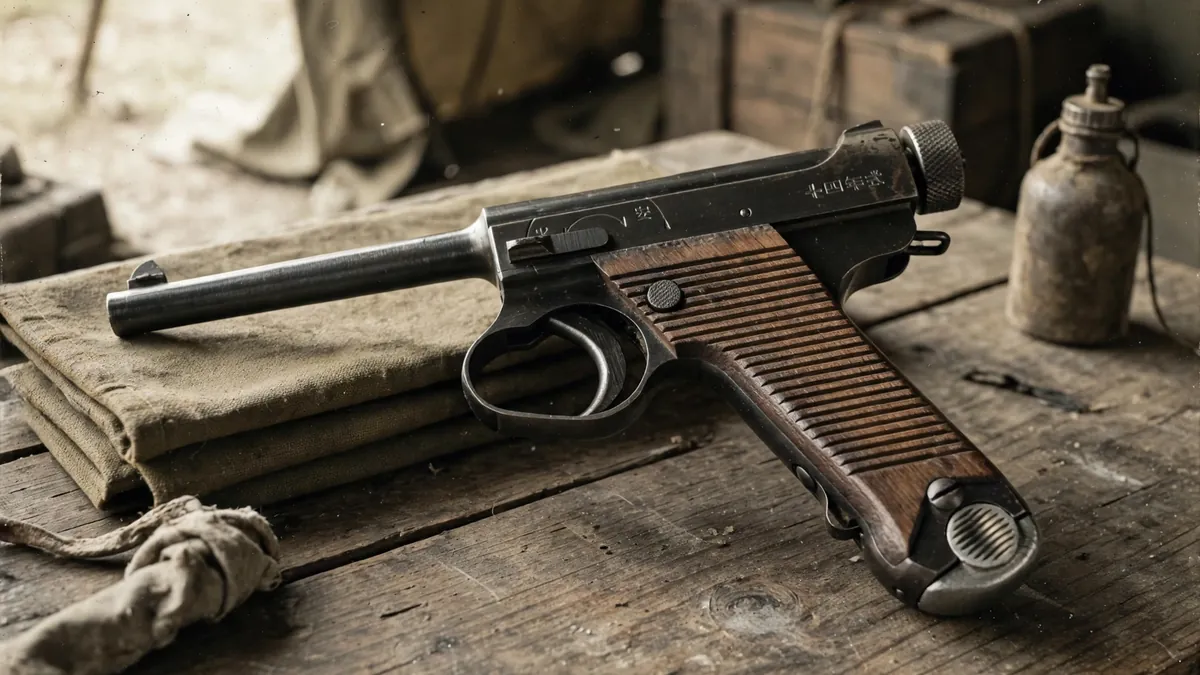
The Nambu Type 14 was the standard service pistol of the Imperial Japanese Army during the Second World War, a distinctive 8 mm semi-automatic pistol that was carried by Japanese officers from the invasion of Manchuria in 1931 to the surrender in 1945. Named for its designer, Kijiro Nambu, and for the fourteenth year of the reign of Emperor Taisho, in which it was adopted, the Type 14 was an improved version of the earlier Nambu Type A, with a larger trigger guard, a more powerful cartridge, and a simpler, more robust design. Approximately 280,000 Type 14 pistols were built between 1925 and 1945, and the type served in every theatre where Japanese troops fought, from China to the Pacific islands. The Type 14 is remembered today as a symbol of the Imperial Japanese Army, and as one of the most distinctive pistols of the Second World War.
The Type 14 was designed by Kijiro Nambu, Japan’s most famous firearms designer, who had studied European pistols and who wanted to produce a Japanese service pistol that was suited to Japanese conditions. The Type 14’s 8 mm cartridge was less powerful than the 9 mm cartridges used by European armies, but it was adequate for a sidearm, and the pistol’s design was simple and easy to maintain. The Type 14’s most distinctive feature was its large trigger guard, which was designed to allow the pistol to be fired while wearing gloves, and its exposed striker, which protruded from the rear of the slide when the pistol was cocked. The Type 14 was not a perfect pistol: it was prone to accidental discharge if it was dropped, and its safety was awkward to operate, but it was reliable and it served the Japanese Army well for twenty years.
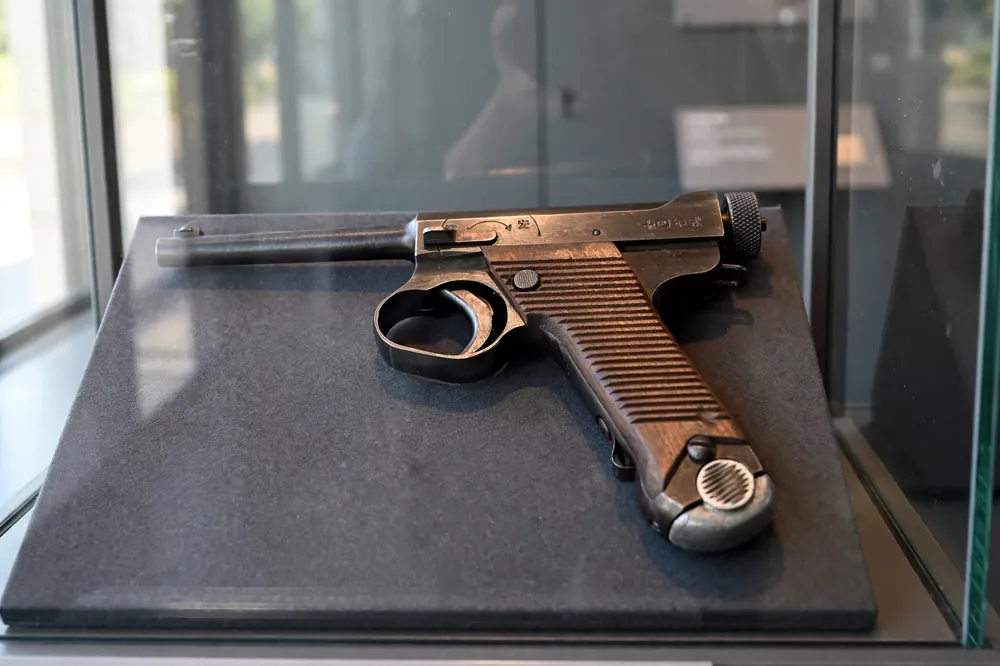
The Type 14 is remembered as one of the most famous Japanese weapons of the war, and as a prized souvenir for Allied troops who captured it. It appears in museums in Japan, the United States and Britain, and it is a popular subject for collectors and military historians. The Type 14’s distinctive shape, with its large trigger guard and its exposed striker, remains one of the most recognisable images of the Imperial Japanese Army in the Second World War.
1. Key Facts
| Field | Value |
|---|---|
| Type | Semi-automatic pistol |
| Origin | Japan |
| Designed | 1925 (Kijiro Nambu; Nambu Rifle Manufacturing Company) |
| In service | 1925-1945 (Imperial Japanese Army; later with other users) |
| Produced | Approximately 280,000 |
| Manufacturers | Nambu Rifle Manufacturing Company, Tokyo Arsenal, Nagoya Arsenal |
| Calibre | 8 mm Nambu (8×22 mm) |
| Action | Semi-automatic, recoil-operated, locked breech |
| Weight | Approximately 900 g (1.98 lb) unloaded |
| Length | Approximately 230 mm (9.1 in) |
| Barrel length | Approximately 117 mm (4.6 in) |
| Magazine capacity | 8 rounds (detachable box magazine) |
| Muzzle velocity | Approximately 315 m/s (1,033 ft/s) |
| Effective range | Approximately 50 m (55 yd) |
| Notable variants | Type 14 (early, small trigger guard); Type 14 (late war, simplified production) |
2. Background and Development
Kijiro Nambu and the Japanese Pistol
The origins of the Type 14 lay in the work of Kijiro Nambu, Japan’s most famous firearms designer, who had founded the Nambu Rifle Manufacturing Company in 1906 and who had designed the Type A pistol, known in the West as the “Grandpa Nambu”, in 1902. Nambu had studied European pistols, notably the German Luger and the Mauser C96, and he wanted to produce a Japanese service pistol that was suited to Japanese conditions. The Type A was adopted by the Japanese Army in 1906, but it was expensive and difficult to manufacture, and the Army wanted a simpler, cheaper pistol. Nambu designed the Type 14 in 1925, as an improved version of the Type A, with a larger trigger guard, a more powerful cartridge, and a simpler design that was easier to manufacture. The Type 14 was adopted by the Japanese Army in 1925, in the fourteenth year of the reign of Emperor Taisho, and it became the standard service pistol.
The Type A and the Type 14
The Type 14 was a development of the Type A, but it was a significant improvement. The Type A had a small trigger guard and a grip safety, and it was chambered for the 8 mm Nambu cartridge. The Type 14 had a larger trigger guard, which allowed it to be fired while wearing gloves, and it had a simpler safety, which was a lever on the left side of the frame. The Type 14 also had a larger magazine release and a more robust design, which made it easier to maintain in the field. The Type 14’s production began in 1925 at the Nambu Rifle Manufacturing Company, and it was later expanded to the Tokyo and Nagoya Arsenals. The Type 14’s design was stable throughout its production run, and the only changes were minor improvements to the manufacturing process and, in the late war, simplifications to save materials and time.
A Pistol for Officers
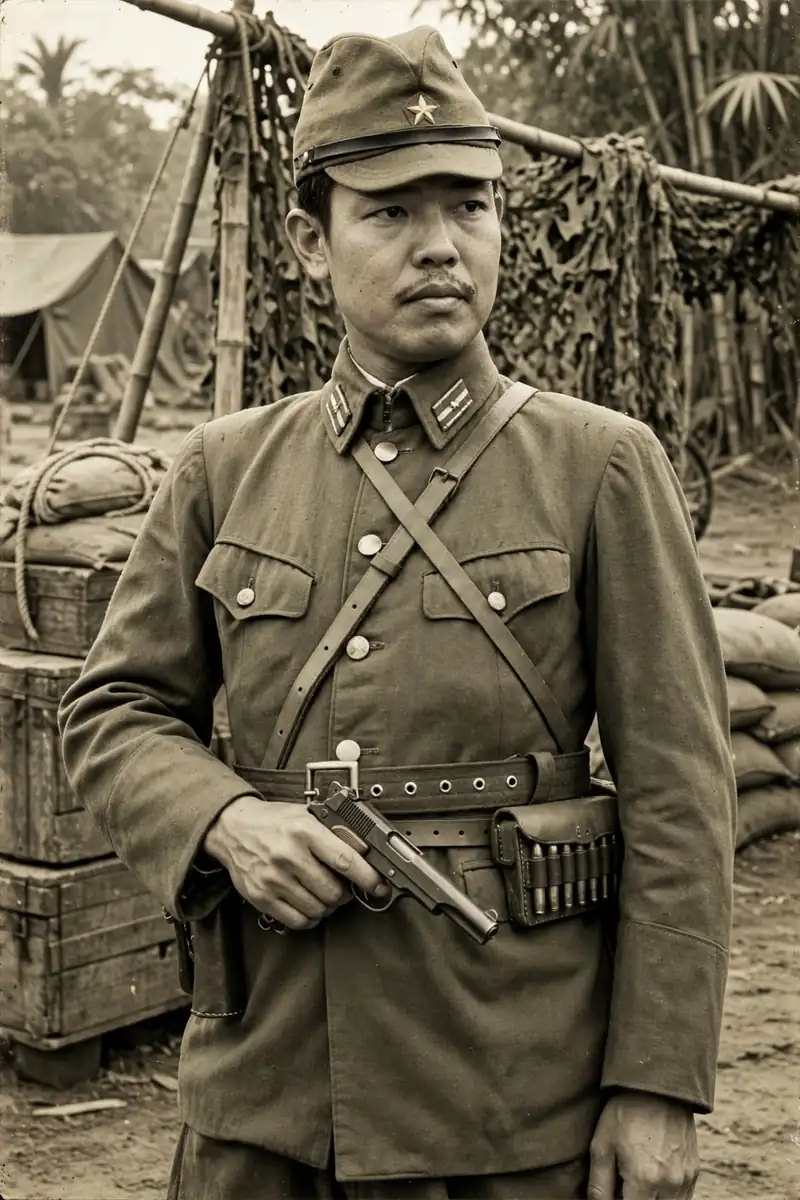
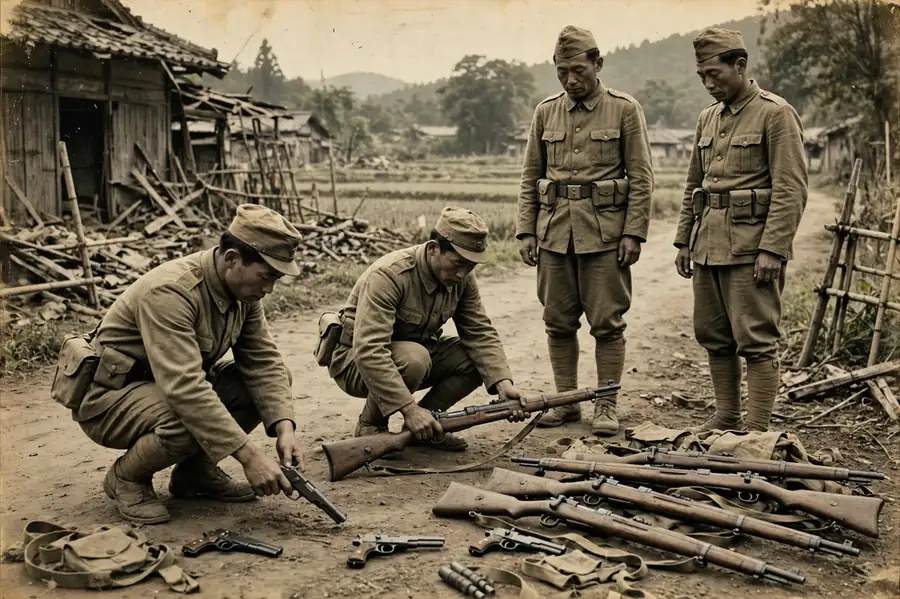
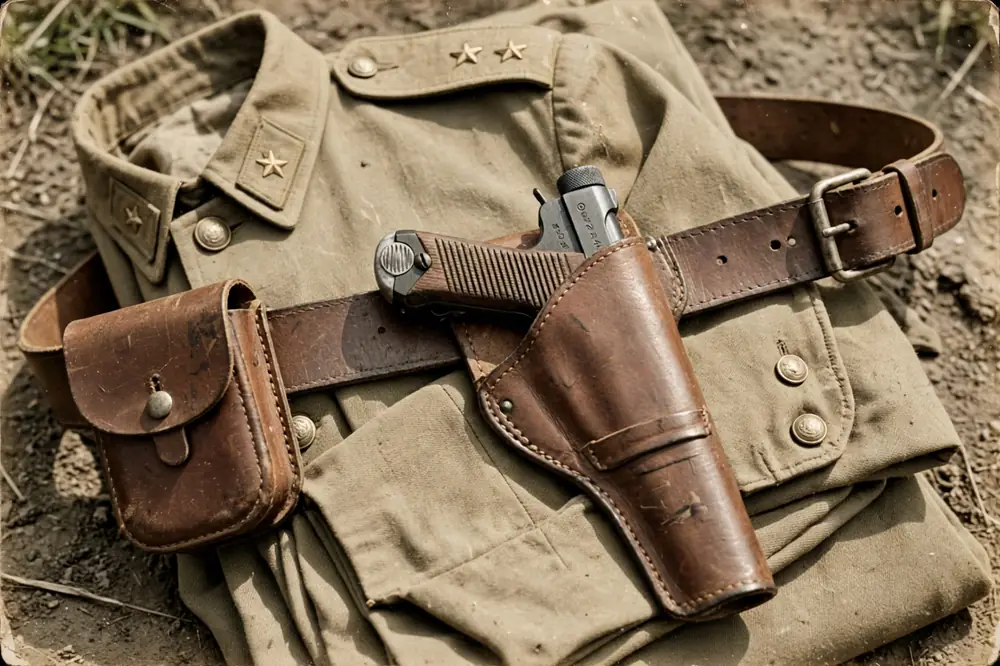
The Type 14 was issued to Japanese officers, who carried it as a symbol of their rank and as a personal defence weapon. The pistol was also issued to non-commissioned officers, to tank crews, and to other troops who needed a compact weapon. The Type 14 was not a front-line infantry weapon: Japanese infantrymen were armed with the Arisaka rifle, and the pistol was a secondary weapon for officers and specialists. The Type 14’s role as an officer’s pistol meant that it was often carried in a leather holster, with a spare magazine and a cleaning kit, and it was a prized possession for its owner. The Type 14’s status as an officer’s weapon has contributed to its fame, and it is often associated with the image of the Japanese officer in the Second World War.
3. Design
Action, Locking System and Operation
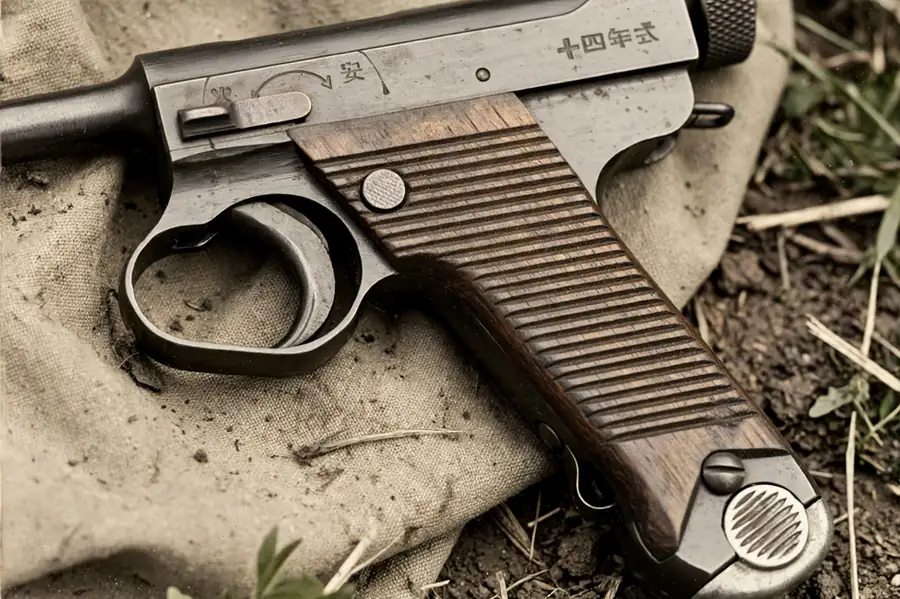
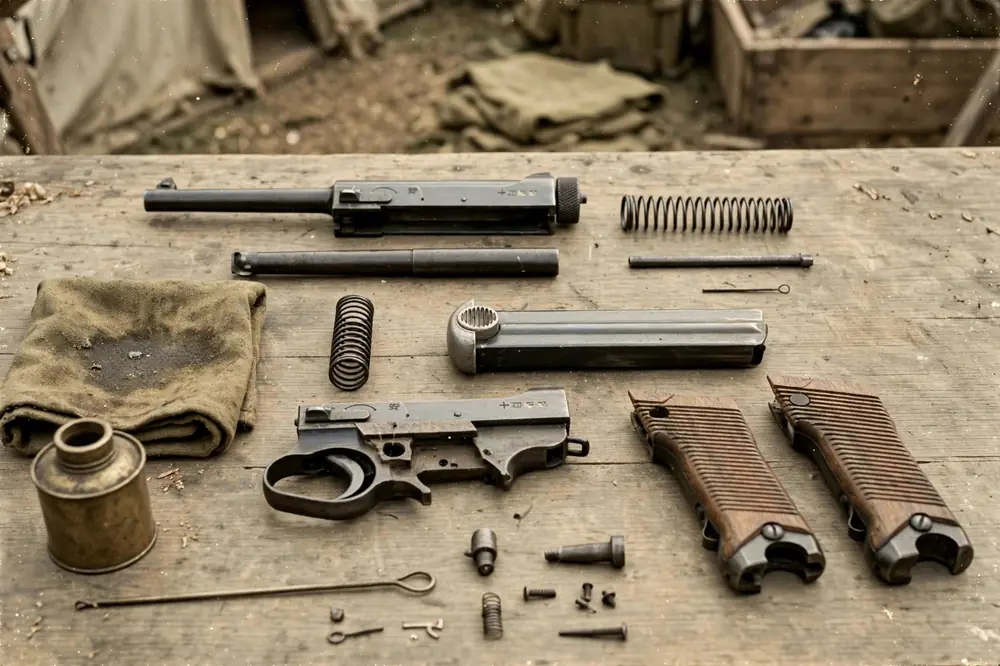
The Type 14 was a recoil-operated, locked-breech semi-automatic pistol, with a design that was influenced by the German Luger and the Mauser C96. The pistol’s barrel and slide were locked together by a rising locking block, which dropped down to unlock the action after firing, allowing the slide to recoil and to chamber a new round. The Type 14’s action was simple and reliable, and it was easy to maintain in the field. The pistol’s trigger was a single-action design, with a short, light pull, and its safety was a lever on the left side of the frame, which blocked the sear when it was engaged. The Type 14’s most distinctive feature was its exposed striker, which protruded from the rear of the slide when the pistol was cocked, giving the shooter a visual indication that the pistol was ready to fire.
The 8 mm Nambu Cartridge
The Type 14 was chambered for the 8 mm Nambu cartridge, an 8×22 mm round that fired a bullet weighing about 6.5 grams at a muzzle velocity of about 315 metres per second. The 8 mm Nambu was less powerful than the 9 mm Parabellum cartridge used by European armies, and its stopping power was limited, but it was adequate for a sidearm, and it was the standard Japanese pistol cartridge. The Type 14’s magazine held eight rounds, and the pistol’s effective range was about 50 metres. The 8 mm Nambu cartridge was also used in the Type 100 submachine gun, which meant that Japanese troops could share ammunition between their pistols and their submachine guns. The Type 14’s cartridge was a significant limitation, but it was a deliberate choice by the Japanese Army, which valued a light, low-recoil cartridge for a sidearm.
Grip, Safety and Ergonomics
The Type 14’s grip was angled, with a distinctive shape that was influenced by the Luger, and it was fitted with wooden grip panels. The pistol’s large trigger guard, which was its most distinctive feature, was designed to allow the pistol to be fired while wearing gloves, and it gave the Type 14 its characteristic appearance. The Type 14’s safety was a lever on the left side of the frame, which was awkward to operate with the thumb, and the pistol was prone to accidental discharge if it was dropped or if the exposed striker was struck. The Type 14’s ergonomics were adequate, but not excellent, and the pistol’s grip was small for Western hands. The Type 14’s design was a product of its time, and it reflected the Japanese Army’s priorities: a simple, reliable pistol that was easy to manufacture and to maintain.
4. Variants
Early and Late Production
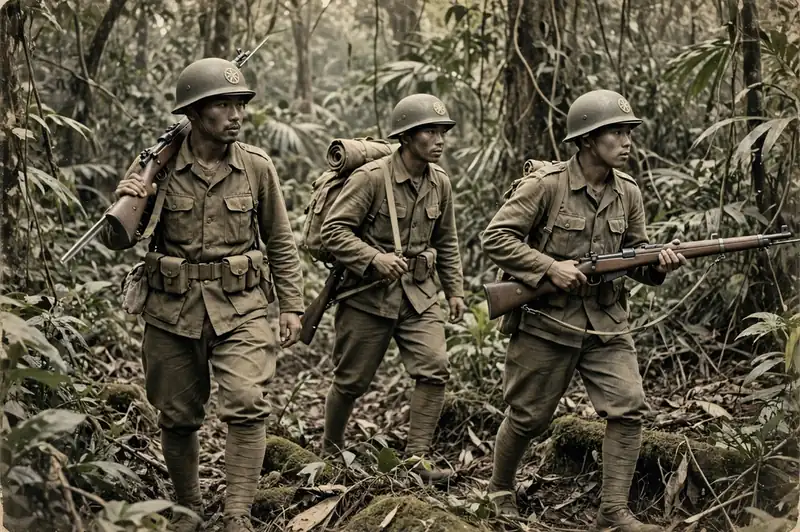
The Type 14 was built in two main production periods, the early production of 1925 to 1940 and the late-war production of 1941 to 1945, and the differences between them were mainly in the quality of the finish and the materials used. The early Type 14s were well finished, with a blued steel surface and wooden grips, and they were marked with the manufacturer’s name and the date of production. The late-war Type 14s were simplified, with a rougher finish, a simpler trigger guard, and, in some cases, wooden grips replaced by simpler materials. The late-war simplifications were a response to material shortages and to the need to increase production, and they did not affect the pistol’s function. The Type 14’s production run of about 280,000 pistols was shared between the Nambu Rifle Manufacturing Company, the Tokyo Arsenal and the Nagoya Arsenal.
The Type 94 Connection
The Type 14 was closely related to the Type 94 pistol, a smaller, 8 mm pistol that was designed by Kijiro Nambu in 1934 as a cheaper, more compact sidearm for Japanese officers and for tank crews. The Type 94 used the same 8 mm Nambu cartridge as the Type 14, and it was issued alongside the Type 14 in the Second World War. The Type 94 was smaller and lighter than the Type 14, but it was also less reliable and more prone to accidental discharge, and it was not as widely used. The Type 14 and the Type 94 show the range of Japanese pistol designs in the 1930s, and they illustrate the Japanese Army’s search for a standard sidearm that was suited to Japanese conditions.
Captured and Souvenir Pistols
After the war, many Type 14 pistols were captured by Allied troops and brought home as souvenirs. The Type 14 became a popular souvenir for American, British and Australian troops, and it is now one of the most commonly encountered Japanese pistols in collections. The Type 14’s status as a souvenir has contributed to its fame, and it is often associated with the image of the Japanese officer in the Second World War. The Type 14’s captured pistols are also a valuable source of information for historians, because they show the range of production dates and manufacturers, and they provide evidence of the pistol’s service in different theatres.
5. Operational History
Manchuria and China
The Type 14 entered service in 1925, and its first combat came in Manchuria in 1931, when Japanese troops invaded the region and the Type 14 was carried by officers in the Kwantung Army. The Type 14 also served in the Second Sino-Japanese War, which began in 1937, when Japanese officers carried it in the fighting in China. The Type 14’s service in China was its first major campaign, and it established the pistol’s reputation as a reliable sidearm. The Type 14’s 8 mm cartridge was adequate for the close-range fighting in China, and its large trigger guard was useful in the cold winters of Manchuria and northern China.
The Pacific War
In the Pacific War, which began in December 1941, the Type 14 was carried by Japanese officers in every theatre, from the Philippines to New Guinea, Burma and the Pacific islands. The Type 14 was used in the fighting on Guadalcanal, Tarawa, Iwo Jima and Okinawa, where Japanese officers carried it as a personal defence weapon and, in some cases, as a weapon for a final, suicidal attack. The Type 14’s service in the Pacific was its most famous, and it is often associated with the image of the Japanese officer leading a banzai charge. The Type 14’s 8 mm cartridge was less powerful than the American .45 ACP, but it was adequate for a sidearm, and the pistol’s reliability in the harsh conditions of the Pacific was valued by its users.
The Surrender and Aftermath
After the Japanese surrender in August 1945, Type 14 pistols were surrendered by Japanese officers and collected by Allied troops. Many Type 14s were brought home as souvenirs, and others were destroyed or stored by the Allied occupation forces. The Type 14 was withdrawn from service in 1945, when the Imperial Japanese Army was disbanded, and it was never used by the post-war Japanese Self-Defense Forces. The Type 14’s service ended with the war, but its legacy lived on in the pistols that were captured and preserved, and in the memories of the Allied troops who encountered it.
The Type 14 as a Souvenir
The Type 14 became one of the most sought-after souvenirs of the Pacific War, and American, British and Australian troops who captured a Type 14 often kept it as a trophy. The Type 14’s distinctive shape and its association with Japanese officers made it a prized souvenir, and many Type 14s that are in collections today were brought home by Allied veterans. The Type 14’s status as a souvenir has contributed to its fame, and it is a reminder of the personal nature of the fighting in the Pacific, where officers’ pistols were often taken from the dead.
6. Performance and Specifications
Strengths on the Battlefield
The Type 14’s greatest strength was its reliability. It was a simple, robust pistol that could be maintained in the field, and it functioned well in the harsh conditions of China and the Pacific. Its 8 mm cartridge had low recoil, which made it easy to shoot, and its large trigger guard allowed it to be fired while wearing gloves. The Type 14’s magazine capacity of eight rounds was adequate for a sidearm, and its effective range of about 50 metres was sufficient for its role. The Type 14’s design was also simple to manufacture, which meant that it could be built in large numbers, and its production run of about 280,000 pistols was a significant achievement for the Japanese arms industry.
Weaknesses and Trade-offs
The weaknesses were clear. The Type 14’s 8 mm cartridge was less powerful than the 9 mm Parabellum and the .45 ACP, and its stopping power was limited. The pistol’s safety was awkward to operate, and the exposed striker made it prone to accidental discharge if it was dropped. The Type 14’s grip was small for Western hands, and its ergonomics were not ideal. The Type 14 was also expensive to manufacture, and its production was limited by the Japanese arms industry’s capacity. The Type 14’s performance must be judged against its intended role: a sidearm for officers, not a front-line infantry weapon, where it was adequate, although not outstanding.
How the Type 14 Compared with Rivals
Compared with the German Luger P08, the Type 14 had a similar design but a less powerful cartridge and a less refined finish. Compared with the American Colt M1911, the Type 14 was smaller, lighter and less powerful, but it was easier to carry and had lower recoil. Compared with the British Webley revolver, the Type 14 had a higher magazine capacity and a faster rate of fire, but it was less powerful and less reliable in harsh conditions. The Type 14’s combination of reliability, simplicity and a low-recoil cartridge made it a adequate sidearm, but it was not the best pistol of the war, and it was outclassed by the American and German pistols in power and in ergonomics.
7. Operators
Japan: The Principal Operator
The principal operator of the Type 14 was the Imperial Japanese Army, which used it as its standard service pistol from 1925 to 1945. The Type 14 was issued to officers, non-commissioned officers, tank crews and other specialists, and it served in every theatre where Japanese troops fought. The Type 14’s service in the Japanese Army was its most important, and it is closely associated with the image of the Japanese officer in the Second World War. The Type 14 was never used by the Imperial Japanese Navy, which had its own pistols, although some naval officers carried the Type 14.
Other Users and Post-War Service
After the war, Type 14 pistols were used by other countries, including China, where captured Japanese pistols were used by the Chinese Army and by the People’s Liberation Army, and by the Soviet Union, which captured Type 14s in Manchuria. The Type 14 was also used by the Indonesian Army after the war, and by other Asian armies that had captured Japanese weapons. The Type 14’s post-war service was limited, and it was soon replaced by more modern pistols, but its use by other countries shows how widely Japanese weapons were distributed after the war.
8. Legacy and Influence
A Symbol of the Imperial Japanese Army
The Type 14’s legacy is that of a symbol of the Imperial Japanese Army. It was the standard pistol of Japanese officers for twenty years, and it is closely associated with the image of the Japanese officer in the Second World War. The Type 14’s distinctive shape, with its large trigger guard and its exposed striker, makes it instantly recognisable, and it is often used as a symbol of the Japanese war effort. The Type 14’s legacy is thus not only its own service record, but its place in the popular image of the Pacific War.
Cultural Memory and Historical Assessment
The Type 14 is one of the most famous Japanese weapons of the war, and its reputation has been enhanced by its appearance in films, books and video games about the Pacific War. Historians have assessed the Type 14 as a adequate but not outstanding pistol, well suited to its role as an officer’s sidearm, but outclassed by the American and German pistols in power and ergonomics. The Type 14’s reputation as a souvenir has also contributed to its fame, and it is a popular subject for collectors. The Type 14 is remembered as a symbol of Japanese wartime production and of the Imperial Japanese Army’s doctrine, which valued a simple, reliable pistol for its officers.
The Type 14 in Popular Culture
The Type 14 appears in many films, books and video games about the Pacific War, and it is a popular subject for military historians and collectors. Its distinctive shape makes it instantly recognisable, and it is often used as a symbol of the Japanese officer. The Type 14’s appearance in popular culture has ensured that it will be remembered long after the last surviving example has gone, and it is a reminder of the fascination that Japanese weapons hold for the public.
9. Surviving Examples
Museums in Japan and the United States
Many Type 14 pistols survive in museums and private collections around the world, reflecting the type’s large production run and its status as a souvenir. The Yushukan Museum in Tokyo holds examples, and the National Museum of the Pacific War in Fredericksburg, Texas, displays Type 14 pistols captured in the Pacific. The Imperial War Museum in London also holds Type 14 pistols, and the Australian War Memorial in Canberra has examples. The large number of surviving Type 14s ensures that the pistol remains visible to the public, and it is a popular exhibit in museums about the Pacific War.
Collectors and Private Ownership
Type 14 pistols are popular with collectors, and they are among the most commonly encountered Japanese pistols in private collections. Many Type 14s in collections today were brought home by Allied veterans as souvenirs, and they are valued for their historical association and for their distinctive design. The Type 14’s survival in private collections ensures that the pistol will be preserved for future generations, and it is a reminder of the personal nature of the fighting in the Pacific, where a captured pistol was a tangible link to the enemy.
Frequently Asked Questions
Was the Nambu Type 14 a good pistol?
The Type 14 was an adequate pistol for its role as an officer’s sidearm. It was reliable and simple to maintain, and its 8 mm cartridge had low recoil. But it was less powerful than the American .45 ACP and the German 9 mm Parabellum, and its safety was awkward to operate. It was a serviceable pistol, but not the best of the war.
How many Type 14 pistols were built?
Approximately 280,000 Type 14 pistols were built between 1925 and 1945, by the Nambu Rifle Manufacturing Company, the Tokyo Arsenal and the Nagoya Arsenal. This was a large production run for a Japanese pistol, and it reflected the importance of the Type 14 as the standard service pistol.
What calibre was the Type 14?
The Type 14 was chambered for the 8 mm Nambu cartridge, an 8×22 mm round that fired a bullet weighing about 6.5 grams at a muzzle velocity of about 315 metres per second. The 8 mm Nambu was less powerful than the 9 mm Parabellum, but it was adequate for a sidearm.
Did the Type 14 have a safety problem?
Yes. The Type 14 was prone to accidental discharge if it was dropped or if the exposed striker was struck, because the striker protruded from the rear of the slide when the pistol was cocked. The pistol’s safety was also awkward to operate, and many users carried the Type 14 with an empty chamber to avoid an accidental discharge.
Who designed the Type 14?
The Type 14 was designed by Kijiro Nambu, Japan’s most famous firearms designer, who founded the Nambu Rifle Manufacturing Company and who designed the Type A pistol and the Type 94 pistol. Nambu is regarded as the father of Japanese firearms design, and the Type 14 is his most famous pistol.
How long did the Type 14 remain in service?
The Type 14 remained in Japanese service from 1925 to 1945, when the Imperial Japanese Army was disbanded. It was never used by the post-war Japanese Self-Defense Forces, and it was replaced by more modern pistols in the armies that captured it.
Sources
- Harry L. Derby and James D. Brown, Japanese Military Cartridge Handguns 1893-1945 (Schiffer Publishing).
- Ian Hogg, Military Small Arms of the 20th Century (Krause Publications).
- The Yushukan Museum, Tokyo, Type 14 collection records.
- The National Museum of the Pacific War, Fredericksburg, Type 14 exhibit records.
- Imperial War Museum, London, Type 14 collection records.
- Chris McNab, The World’s Greatest Small Arms (Amber Books).