 WAR ATLAS MILITARY HISTORY MAGAZINE · WWI — WWII
Model Strategy
1. Lead
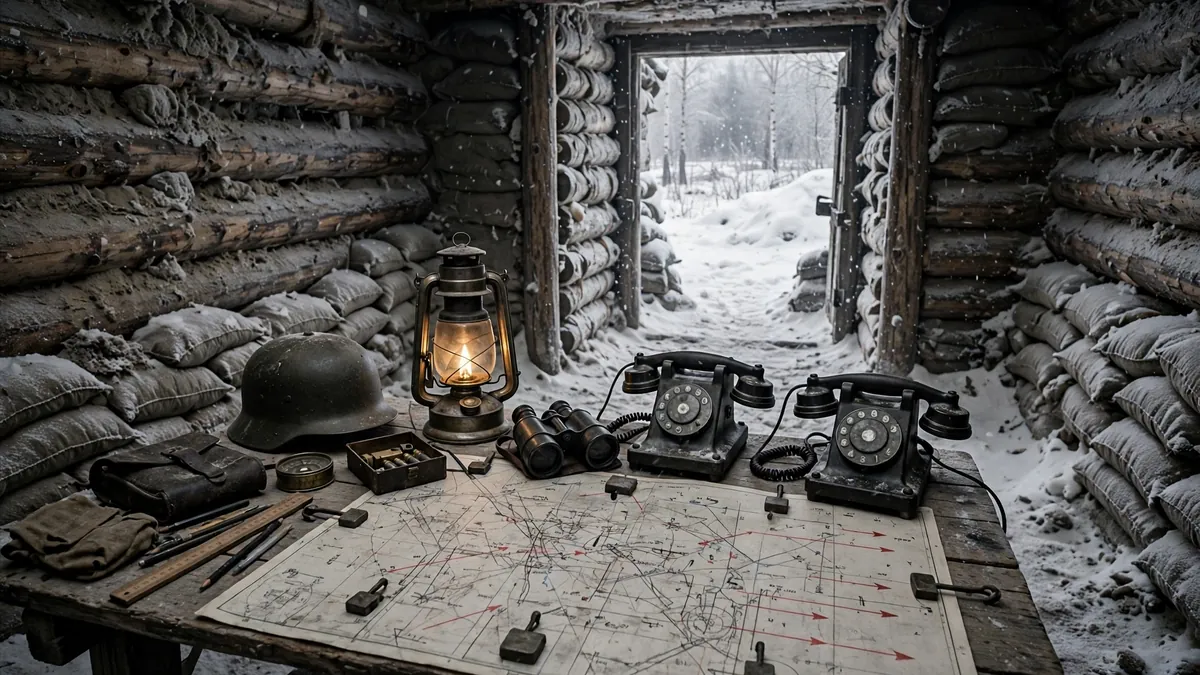
Model strategy is the name given to the method of mobile defence practised by the German field marshal Walter Model in the last two years of the Second World War. Model was not a theorist, and he wrote no book of doctrine.
He was a front-line commander, known to his troops as “the Führer’s fireman” because he was sent, again and again, to the sector where the front was collapsing, and because he usually held it. His method was simple in outline and brutal in execution: hold a thin front line, keep a strong mobile reserve behind it, let the enemy break through, and then destroy the penetration with a counter-attack.
Where other German commanders demanded that every metre of ground be held, Model was willing to give ground — but only ground, never time, and never the army itself.
This article explains Model’s method, where it came from, how it worked in practice on the Eastern Front and in the West, and what its limits were. Model’s career is also a study in the moral limits of military skill: he was one of the most capable defensive commanders of the war, and he was also a committed National Socialist who carried out Hitler’s orders, including orders that led to the deaths of civilians and prisoners. His tactics can be studied without admiration for the cause he served, and this article does so, describing his method plainly and its consequences honestly.
2. Key Facts
| Commander | Field Marshal Walter Model (1891–1945) |
| Method | Mobile defence: thin front line, strong mobile reserve, counter-attack on the penetration |
| Nickname | “The Führer’s fireman” — sent to collapsing fronts |
| Key commands | Ninth Army (1942–44); Army Group North Ukraine (1944); Army Group Centre (1944); Army Group B (1944–45) |
| Famous defences | Rzhev salient, 1942–43; Orel–Kursk, 1943; the retreat across Poland, 1944; Arnhem, September 1944 |
| Famous counter-attacks | Kharkov, February–March 1943 (with Manstein); the Mortain counter-attack, August 1944 |
| End | Encircled in the Ruhr pocket, April 1945; took his own life on 21 April 1945 |
| Assessment | One of the war’s best defensive commanders; a committed National Socialist |
3. Origins
Walter Model was born in 1891, the son of a music teacher, and he entered the German Army as a cadet in 1909. He served as a staff officer in the First World War, was wounded, and won the Iron Cross First Class.
In the interwar years he served in the Reichswehr, the small army permitted by the Treaty of Versailles, and he rose through the staff and then through command: he commanded the 3rd Panzer Division in Poland in 1939, the XVI Panzer Corps in France in 1940, and the 3rd Panzer Division again in Russia in 1941.
His reputation was made in the winter of 1941–42, when he took command of the Ninth Army in the Rzhev salient, west of Moscow, and held it against repeated Soviet offensives for more than a year.
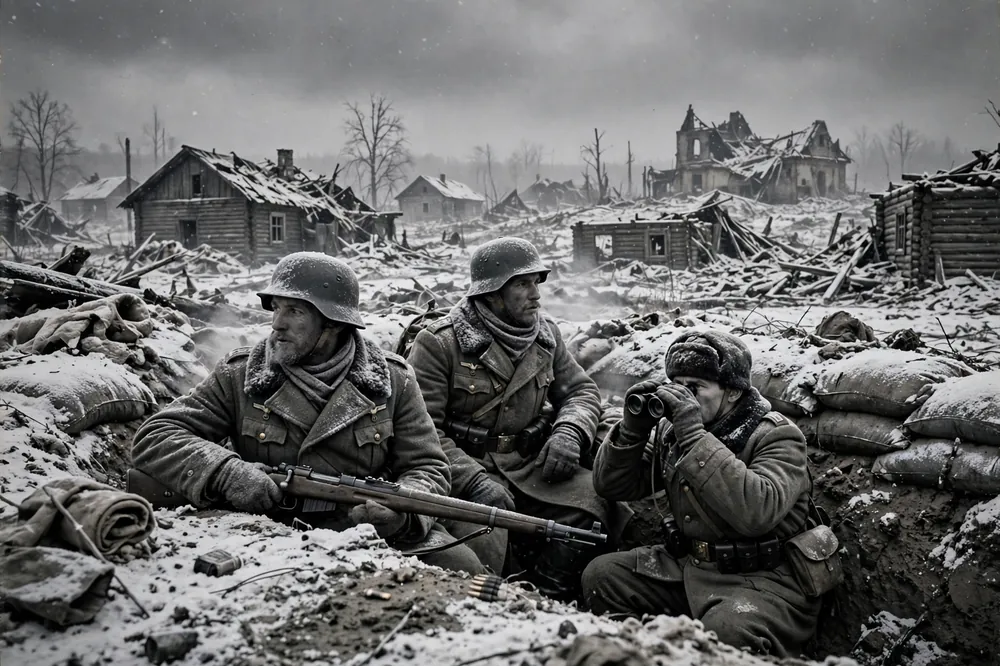
Model’s method was shaped by the conditions of the Eastern Front, and above all by scarcity. The German Army in Russia was always short of men, tanks and fuel, and it faced an enemy that could replace its losses. Model understood that the German Army could not hold a continuous, strong line everywhere, and that it could not win a war of attrition.
His answer was to hold a thin line — a line that was strong enough to slow the enemy, but not so strong that it consumed the reserves — and to keep the reserves mobile, so that they could be thrown at the point of danger.
The method was the opposite of Hitler’s standing order to hold every position: Model held positions only so long as they were useful, and he gave them up when they were not.
The Rzhev meat grinder
The Rzhev salient was the proving ground of Model’s method. The Ninth Army held a bulge in the front, west of Moscow, that the Soviets attacked again and again in 1942 — in the Rzhev–Sychyovka offensive, in Operation Mars, and in a series of smaller attacks.
Model’s defence was a model of economy: a thin forward line, strongpoints in the villages, artillery registered on the approaches, and a mobile reserve of panzer divisions held back for the counter-attack. The Soviet attacks were bloodily repulsed, and the salient held — at a terrible cost to both sides. Soviet losses at Rzhev were enormous, and the battles are still known in Russia as the “Rzhev meat grinder”.
Model’s reputation was made, and Hitler, who valued commanders who held their ground, promoted him to field marshal in March 1944.
4. Principles
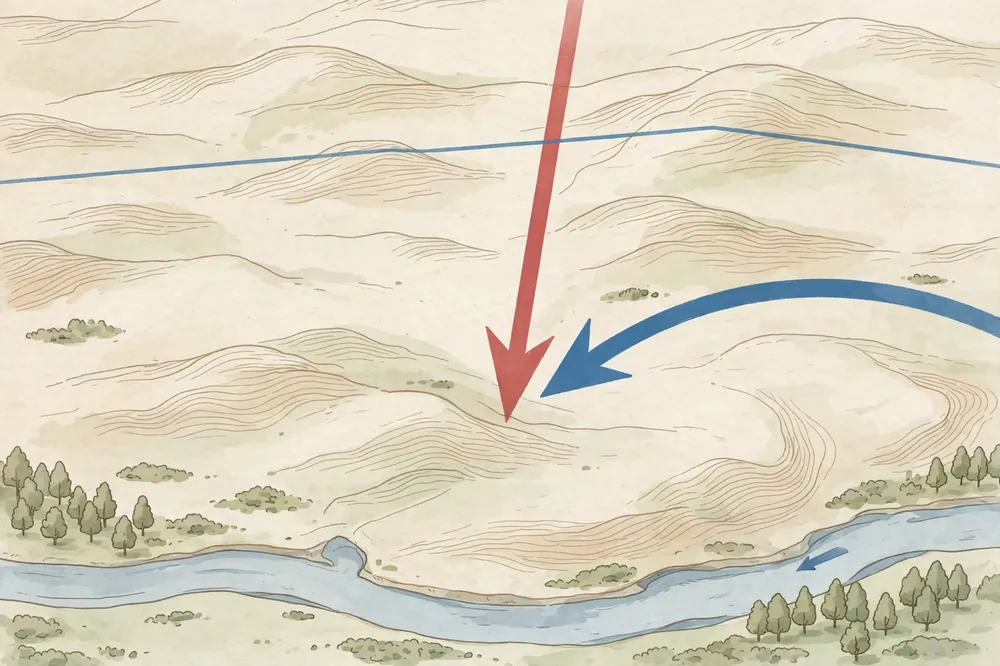
The first principle of Model’s method was the thin line. Model’s front was held by a minimum of troops, in strongpoints rather than in a continuous trench, with the gaps between the strongpoints covered by artillery and by patrols. The line’s task was not to stop the enemy, but to slow it, to force it to deploy, and to reveal the direction of its main attack. A thin line could be held with few men, and the men saved could be kept in reserve. The risk was obvious — a thin line could be broken — but Model accepted the risk, because the reserve, not the line, was the real defence.
The mobile reserve
The second principle was the mobile reserve. Model kept his best divisions — his panzer and panzergrenadier divisions — behind the front, concentrated and ready to move, and he committed them only when the enemy’s main attack had been identified. The reserve’s task was the counter-attack: to strike the flank of the penetration, to cut off the enemy’s spearhead, and to restore the line.
The counter-attack was the heart of Model’s method, and it was where his talent showed: he had a gift for reading a battle, for seeing where the enemy was overextended, and for striking at the right moment. The counter-attack at Kharkov in February–March 1943, which he fought alongside Manstein, is the classic example: the Soviet advance was allowed to run on, and then it was cut off and destroyed.
Ruthlessness and control
The third principle was ruthlessness — towards his own men as much as towards the enemy. Model was a hard commander, and he demanded the impossible from his troops: he inspected the front personally, he relieved officers who failed, and he ordered counter-attacks that cost heavy casualties.
He was also a master of control: he visited the front constantly, he used the telephone and the radio to direct the battle himself, and he did not delegate. His staff called him a “front-line field marshal”, and his men respected him and feared him in equal measure.
The method depended on this control: a mobile defence, with a thin line and a reserve committed at the decisive moment, cannot be run from a distant headquarters.
5. Application in Battle
Model’s method was tested at its hardest at Kursk in July 1943. As commander of the Ninth Army, Model was given the northern pincer of Operation Citadel, the German offensive to cut off the Kursk salient. His attack, launched on 5 July, ran into a Soviet defence in depth — minefields, anti-tank guns, and successive lines — and it stalled after a few days, having advanced only a short distance.
Model’s response was characteristic: he did not throw his reserves into a frontal assault, but held them back, and when the Soviet counter-offensive began, he used them to cover the withdrawal. The Kursk offensive failed, but Model’s army was not destroyed, and it withdrew in good order.
The battle showed both the method’s strength — its economy, its refusal to waste the reserve — and its limit: a mobile defence cannot win an offensive that has been planned badly.
The retreat across Poland
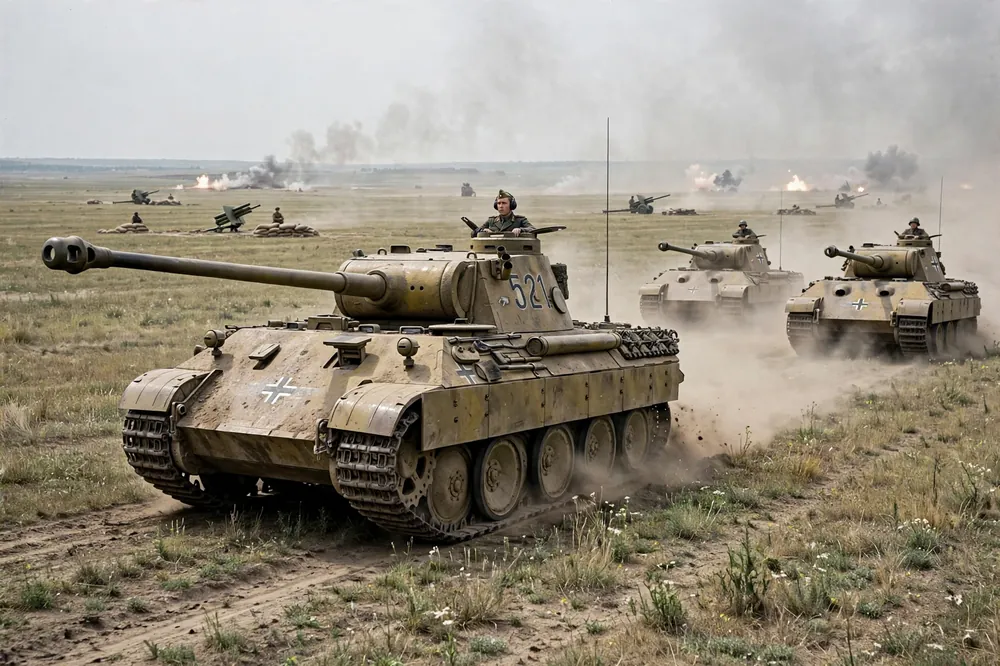
In 1944, Model was sent to the Eastern Front’s collapsing sectors again and again. As commander of Army Group North Ukraine, and then of Army Group Centre after its destruction in Operation Bagration in June–July 1944, he organised the retreat across Poland, trading space for time in a series of delaying actions that slowed the Soviet advance and bought the weeks needed to form a new line on the Vistula.
The retreat was conducted with Model’s characteristic method: thin lines, mobile reserves, counter-attacks on the Soviet spearheads, and a refusal to allow encirclements. The Soviet advance, which had covered hundreds of kilometres in weeks, was slowed, and the front stabilised on the Vistula in the autumn of 1944 — a stabilisation that owed much to Model’s work, and that gave Germany a few more months of war.
Arnhem and the West
In the West, Model commanded Army Group B during the Allied airborne operation at Arnhem in September 1944. His response was a textbook application of his method: he did not try to hold a continuous line, but used his mobile reserves — the II SS Panzer Corps, refitting near Arnhem — to counter-attack the Allied airborne forces, cut them off from their ground relief, and destroy them piecemeal.
The British 1st Airborne Division was destroyed at Arnhem, and the Allied advance into Germany was delayed by months. Model’s last campaign was the defence of the Ruhr in the spring of 1945, where his Army Group B was encircled by the Allies in the Ruhr pocket.
He refused Hitler’s order to fight to the last man, disbanded his army, and took his own life on 21 April 1945, in a wood near Duisburg, rather than surrender.
6. Strengths
Model’s method had one great strength: it worked with scarcity. In a war in which Germany was outnumbered in men, tanks and aircraft, Model’s method allowed a weaker force to hold a front against a stronger one, and to do so for months. The thin line saved men; the mobile reserve saved the front; the counter-attack destroyed the enemy’s spearheads.
The method was also flexible: it could be used on the Eastern Front, in the West, in a salient or on a river line, and it could be adapted to the ground and to the enemy. It was, in the judgement of many historians, the best defensive method the German Army possessed in the last two years of the war, and it was the reason the war lasted as long as it did.
Its second strength was Model himself. The method depended on a commander who would visit the front, who would read the battle, and who would commit the reserve at the right moment. Model did all three, and he did them under conditions — a collapsing front, a shortage of everything, an enemy that outnumbered him — that would have broken a lesser commander. His personal qualities — energy, ruthlessness, attention to detail — were inseparable from the method, and that was both its strength and its weakness.
7. Weaknesses
The method’s first weakness was that it could only delay defeat, never prevent it. A mobile defence trades space for time, and time is only useful if something is done with it — if new armies are raised, if a political settlement is reached, if the enemy makes a mistake. In 1944–45, Germany had no new armies to raise, no political settlement was possible, and the Allies did not make a mistake large enough to matter. Model’s method bought months, but the months bought nothing. The defence of the Ruhr in 1945 is the clearest example: Model’s army fought well, but it was encircled and destroyed, and the war ended weeks later.
Its second weakness was that it depended on Model. The method required a commander of exceptional energy and judgement, and it could not be taught as a system. When Model was not present, the method was not applied, or it was applied badly. Its third weakness was its cost: the counter-attacks that were the heart of the method were expensive in men and tanks, and the German Army in 1944–45 could not afford them. The method saved the front, but it consumed the army that held the front, and by the spring of 1945 there was no army left to save.
8. Evolution
After the war, Model’s method was studied by the armies of the Cold War, and it shaped the doctrine of mobile defence in NATO. The idea of a thin forward line, a strong mobile reserve, and a counter-attack on the penetration became the core of NATO’s plan for the defence of West Germany: outnumbered NATO forces would trade space for time, and the mobile reserve — above all the American and German armoured divisions — would strike the Soviet spearheads. The method was also studied in the Soviet Union, where the defence in depth and the counter-attack had been practised since 1941, and where Model’s work at Rzhev and Kursk was respected as the work of a formidable opponent.
The method’s influence survives in modern doctrine, where the “mobile defence” is a standard operation, taught in staff colleges and practised in exercises. The principles — hold thin, keep a reserve, counter-attack — are the same, even though the weapons have changed. The difference is that the modern mobile defence is practised by armies that expect to be reinforced, and that expect the time they buy to be used. Model’s tragedy was that he practised the method for a regime that had no reinforcements to send and no political future to buy time for.
9. Legacy
Model’s legacy is a double one, and it must be described as double. As a commander, he is remembered as one of the finest defensive generals of the Second World War, a man who held collapsing fronts and who bought his country months of war that it could not use.
His method — the thin line, the mobile reserve, the counter-attack — is still taught, and it is still the best answer to the problem of defending with too few men against too many. As a man, he is remembered as a committed National Socialist who carried out the regime’s orders, who was complicit in its crimes, and who chose suicide rather than surrender.
The two memories cannot be separated, and they should not be: military skill does not excuse the cause it serves, and the cause does not erase the skill.
The question of Model’s war crimes is a matter of record. As a commander on the Eastern Front, Model’s area of command saw the implementation of the regime’s policies against civilians and prisoners, including the “scorched earth” retreats that destroyed villages and the treatment of Soviet prisoners. He was not tried — he died before the end of the war — but historians have documented his role, and his reputation as a soldier has been qualified by it. The study of Model’s strategy is therefore also a study in the limits of separating the soldier from the cause: the method can be admired, but the man and the regime he served must be judged as a whole.
10. Key Figures
Walter Model (Germany). Field Marshal, commander of the Ninth Army, Army Group North Ukraine, Army Group Centre and Army Group B. The author of the mobile defence method described in this article. A committed National Socialist, he took his own life on 21 April 1945 rather than surrender in the Ruhr pocket.
Erich von Manstein (Germany). Field Marshal, the most gifted German operational commander of the war. Manstein and Model worked together at Kharkov in 1943, and Manstein’s own method — the mobile counter-attack — complemented Model’s defence. Manstein was convicted of war crimes in 1949 and released in 1953.
Georgy Zhukov (Soviet Union). Marshal of the Soviet Union, the commander who directed the Soviet offensives that Model’s method was designed to stop — at Rzhev, at Kursk, and in the great offensives of 1944. Zhukov’s ability to sustain offensives despite heavy losses was the ultimate test of Model’s method, and the test it could not pass.
Bernard Montgomery (Britain). Field Marshal, commander of the Allied 21st Army Group. Montgomery’s forces faced Model’s Army Group B in the West, at Arnhem and in the Ardennes, and it was Montgomery’s armies that encircled Model’s forces in the Ruhr in April 1945.
11. Frequently Asked Questions
What is Model strategy?
The mobile defence method of German Field Marshal Walter Model: a thin front line, a strong mobile reserve held behind it, and a counter-attack that destroys the enemy’s penetration. It trades space for time. Model was sent, again and again, to the sector where the front was collapsing — Rzhev in 1942, Orel in 1943, Poland in 1944, the West in 1944–45 — and he usually held it. His method worked with scarcity, and it was the best defensive method the German Army possessed in the last two years of the war, but it could only delay defeat, never prevent it.
Why was Model called “the Führer’s fireman”?
Because Hitler sent him, again and again, to the sector where the front was collapsing — Rzhev, Orel, Poland, the West — and he usually held it. He was the commander called on when a front was on fire. Hitler sent him to Rzhev, to Orel, to Poland and to the West, whenever a front was on fire, and Model’s reputation was made by holding those fronts. He was the commander called on when a front was collapsing, and his method — the thin line, the mobile reserve and the counter-attack — was the method of a fireman: arrive late, work fast, and hold the line with whatever is at hand.
What was Model’s most famous defence?
The defence of the Rzhev salient in 1942–43, where his Ninth Army held against repeated Soviet offensives for more than a year, in battles known in Russia as the “Rzhev meat grinder”. His Ninth Army held the salient against repeated Soviet offensives for more than a year, in battles known in Russia as the Rzhev meat grinder. Model’s defence was a model of economy: a thin forward line, strongpoints in the villages, artillery registered on the approaches, and a mobile reserve of panzer divisions held back for the counter-attack.
Did Model’s method win any battles?
It won defensive battles and counter-attacks, notably the Kharkov counter-offensive of February–March 1943 (with Manstein) and the defeat of the British 1st Airborne Division at Arnhem in September 1944. But it could only delay defeat, never prevent it. It won defensive battles and counter-attacks, and it bought Germany months of war — but the months bought nothing, because Germany had no new armies to raise and no political settlement to reach. The defence of the Ruhr in 1945 is the clearest example: Model’s army fought well, but it was encircled and destroyed, and the war ended weeks later.
How did Model die?
Enircled in the Ruhr pocket in April 1945, he refused Hitler’s order to fight to the last man, disbanded his army, and took his own life on 21 April 1945 in a wood near Duisburg, rather than surrender. He refused Hitler’s order to fight to the last man, disbanded his army, and took his own life on 21 April 1945 in a wood near Duisburg, rather than surrender. He was a committed National Socialist who had carried out the regime’s orders, and his death, like his career, is remembered as both a soldier’s end and a reminder of the cause he served.
Is mobile defence still used today?
Yes. The mobile defence — thin forward line, strong mobile reserve, counter-attack on the penetration — is a standard operation in modern doctrine, taught in staff colleges and practised in NATO exercises. The mobile defence — thin forward line, strong mobile reserve, counter-attack on the penetration — is a standard operation in modern doctrine, taught in staff colleges and practised in NATO exercises. The principles are the same, even though the weapons have changed: the helicopter has replaced the glider, and the computer has replaced the operations room’s map table.
12. Sources
- Wikipedia, “Walter Model” — his career, commands, nickname and death on 21 April 1945.
- Wikipedia, “Rzhev–Sychyovka offensive” and “Operation Mars” — the battles of the Rzhev salient, 1942.
- Wikipedia, “Battle of Kursk” — Model’s Ninth Army in Operation Citadel, July 1943.
- Wikipedia, “Operation Bagration” — the destruction of Army Group Centre, June–July 1944.
- Wikipedia, “Battle of Arnhem” — Model’s Army Group B and the defeat of the 1st Airborne Division.
- Wikipedia, “Ruhr pocket” — the encirclement of Army Group B, April 1945.
- Stephen G. Fritz, Ostkrieg: Hitler’s War of Extermination in the East (2011) — Model’s method and the Eastern Front.
- Robert Forczyk, Walter Model: The Wehrmacht’s Defensive Master (2012) — the standard English-language study of Model’s method.