 WAR ATLAS MILITARY HISTORY MAGAZINE · WWI — WWII
Glider Infantry
1. Lead
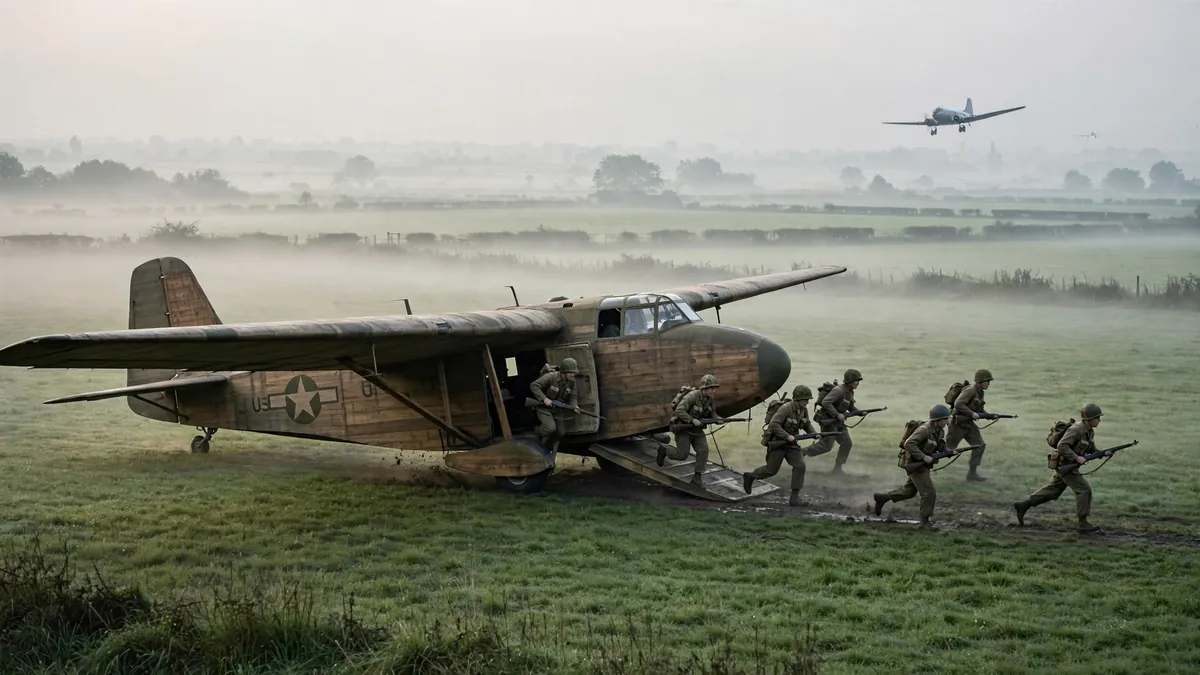
Glider infantry were soldiers who went into battle in engineless aircraft — wooden gliders, towed behind a powered tug plane and then released to land silently on a field, a meadow or a rooftop. The idea was simple and, in the conditions of the Second World War, powerful.
A parachutist jumps alone, lands alone, and may be scattered over kilometres; a glider lands a whole platoon together, with its weapons, its radios and even its jeeps and light guns, in a single aircraft. The glider was cheap to build, made of wood and fabric, and it could carry far more than a man with a parachute.
For a few years, from 1940 to 1945, it was one of the most daring instruments of war.
The glider’s story runs from the German assault on the Belgian fortress of Eben-Emael in May 1940 — the first glider operation in history — through the great Allied airborne operations of the war: Sicily in 1943, Normandy in 1944, and Arnhem in September 1944, where glider infantry played a central and tragic role. This article explains how glider infantry worked, what made the glider valuable and what made it dangerous, and why a weapon that seemed so promising in 1940 had vanished from the battlefield by 1950.
2. Key Facts
| Tactic | Glider infantry; glider-borne assault |
| First use | Eben-Emael, Belgium, 10 May 1940 (German DFS 230 gliders) |
| Main Allied glider | Airspeed Horsa (25 troops); Waco CG-4A (13 troops); Hamilcar (heavy lift) |
| Main German glider | DFS 230 (9 troops); Gotha Go 242; Messerschmitt Me 321 Gigant |
| Advantages | Lands a whole unit together; carries heavy weapons and vehicles; silent approach; cheap to build |
| Disadvantages | Fragile; landing is dangerous; needs a tug plane and a landing zone; cannot take off again |
| Major operations | Eben-Emael 1940; Crete 1941; Sicily 1943; Normandy 1944; Arnhem 1944; Rhine crossing 1945 |
| End of the glider | Replaced by the helicopter after 1945 |
3. Origins
The military glider was born from the sport of gliding, which flourished in Germany in the 1920s and 1930s. The Treaty of Versailles had forbidden Germany to build powered military aircraft, and German aviation enthusiasts turned to gliders, which were not covered by the ban. By the 1930s Germany had the best glider pilots in the world, and the Luftwaffe, when it was formed, inherited both the pilots and the idea. The first military glider, the DFS 230, was designed in the late 1930s: a high-wing wooden aircraft that could carry nine fully equipped soldiers, or a small load of equipment, and that could land on a field the size of a football pitch.
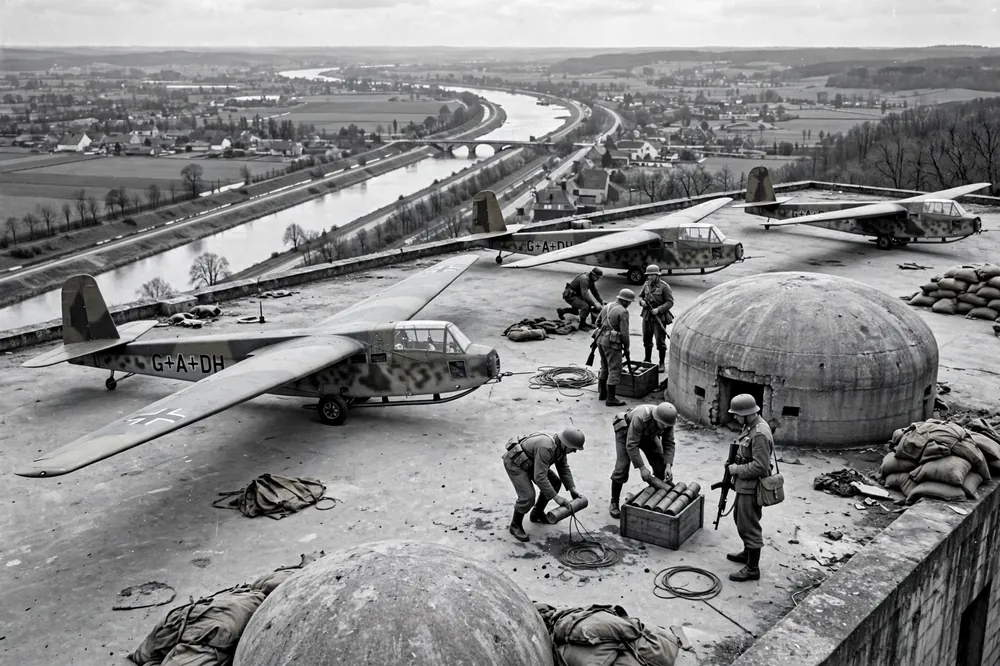
The idea of using gliders to deliver troops was tested in secret, and the first operation was a masterpiece of surprise. On 10 May 1940, as the German invasion of the west began, 41 DFS 230 gliders, each carrying about nine men of the German airborne engineers, landed silently on the roof of the Belgian fortress of Eben-Emael, the strongest fortress in Europe, whose guns commanded the bridges over the Albert Canal.
The gliders landed within metres of their targets, the engineers used shaped charges to destroy the gun cupolas, and the fortress — which the Belgians had expected to hold for days — was neutralised in hours. The operation used fewer than 400 men and changed the course of the campaign: the bridges were taken intact, and the German Army crossed into Belgium.
The Allies learn the lesson
The Allies learned the lesson quickly. Britain, which had no glider force in 1940, built one from nothing: the Airspeed Horsa, designed in 1940–41, could carry 25 troops, and the American Waco CG-4A could carry 13. By 1943 the British 6th Airborne Division and the American 82nd and 101st Airborne Divisions each had glider regiments, and the glider had become a standard part of the airborne arsenal. The Germans, meanwhile, used gliders on a smaller scale after 1941: the losses on Crete, where the glider and parachute assault had cost the Germans heavily, convinced Hitler that large airborne operations were too expensive, and the German glider force was never again used on the scale of 1940–41.
4. Principles
The glider’s first principle was concentration on landing. A parachute drop scatters men over a wide area, and the first hour after a drop is spent finding comrades and weapons. A glider lands its load in one place, together, and the men step out of the aircraft as a formed unit, with their weapons in their hands. This was the glider’s great advantage, and it shaped the way glider infantry were used: they were given the tasks that needed a formed unit on arrival — seizing a bridge, holding a landing zone, taking a battery — while the parachutists were given the wider, more dispersed tasks.
Silence and surprise
The second principle was silence. A glider makes no engine noise on its final approach, and it can land without warning. At Eben-Emael, the Belgian garrison heard nothing until the gliders were on the roof. The silence was a weapon in itself, and it allowed glider infantry to achieve a surprise that no powered aircraft could match.
The price was fragility: a glider was made of wood, fabric and plywood, and it had no armour. It could be shot down by rifle fire, and it could be destroyed by a bad landing — a ditch, a fence, a tree, or a soft field could wreck the aircraft and kill or injure its passengers.
The glider pilots, who were often also the infantry’s officers, flew an aircraft that was, in the words of one British pilot, “a coffin with wings”.
Heavy loads
The third principle was the heavy load. A glider could carry what a parachutist could not: a jeep, a 6-pounder anti-tank gun, a mortar, a radio set, or a load of ammunition. The British Hamilcar glider could carry a light tank, the Tetrarch, and the American CG-4A could carry a jeep and its trailer. This made the glider infantry the heavy element of the airborne force: where the parachutists were light infantry, the glider troops brought the guns and the vehicles that allowed the airborne force to hold its ground against tanks. The glider was therefore not a transport for men alone, but a delivery system for a complete fighting unit.
5. Application in Battle
After Eben-Emael, the glider’s next great test was Crete, in May 1941, where the German airborne assault used both parachutists and gliders to seize the island’s airfields. The glider troops landed at Maleme airfield and fought as infantry once on the ground, but the operation was costly: the Germans lost about 4,000 men killed and many more wounded, and the glider force suffered heavily from anti-aircraft fire and from bad landings. Crete was a German victory, but it convinced Hitler that airborne operations were too expensive, and the Germans never again mounted a large glider assault.
Sicily and Normandy
The Allies, by contrast, used gliders on a growing scale. In Sicily in July 1943, British and American glider forces were used to seize bridges and landing zones ahead of the seaborne invasion, but the operation was badly executed: many gliders were released too early, in the dark, over the sea, and hundreds of men drowned.
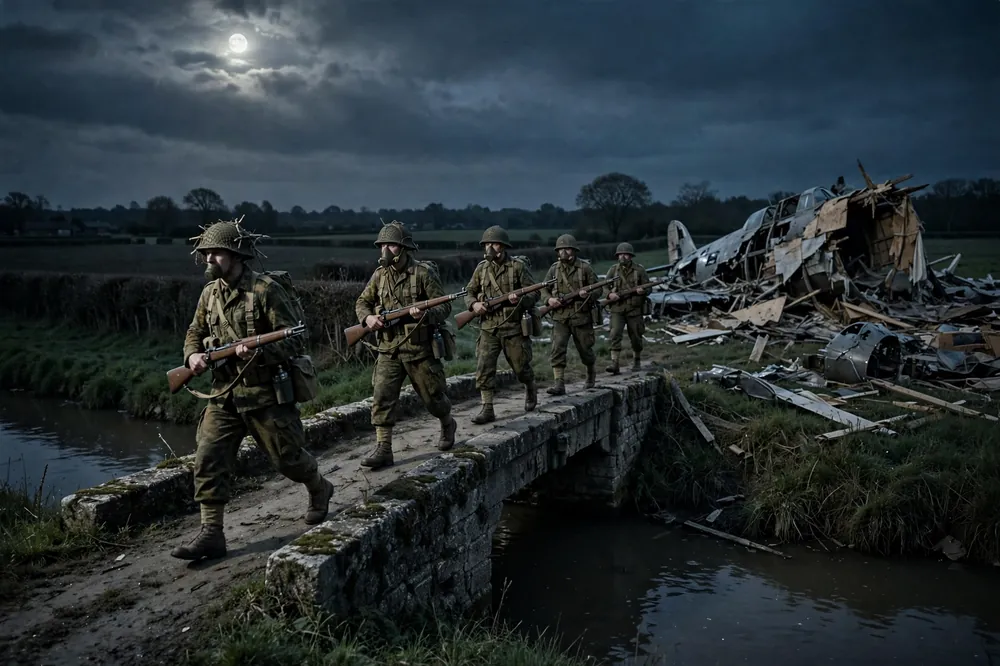
The lessons of Sicily — better training, better navigation, better release procedures — were applied in Normandy. On the night of 5–6 June 1944, British glider infantry of the 6th Airborne Division landed beside the bridges over the Caen Canal and the River Orne — the Pegasus Bridge operation — in one of the most precise glider landings of the war.
The first glider landed within metres of the bridge, the infantry seized it in minutes, and the bridge was held until the seaborne forces arrived. American glider regiments landed in Normandy on 6–7 June, bringing in artillery, jeeps and reinforcements for the 82nd and 101st Airborne Divisions.
Arnhem / Arnhem
The glider’s greatest and most tragic operation was Arnhem in September 1944, during Operation Market Garden. The British 1st Airborne Division, with its glider regiment, was landed at Arnhem to seize the bridge over the Rhine, and the gliders delivered the division’s artillery, jeeps and anti-tank guns.
But the landing zones were too far from the bridge, the German resistance was far stronger than expected, and the division was surrounded and destroyed over nine days. The glider infantry fought as ordinary infantry once on the ground, and they fought well — but the glider could not save a plan that had failed.
Arnhem showed both the glider’s value and its limits: it could deliver a division, but it could not deliver it to the right place, and it could not supply it once it was there.
The Rhine crossing
The last great glider operation of the war was Operation Varsity, the Rhine crossing of 24 March 1945, in which British and American airborne divisions — including large glider forces — were landed east of the Rhine in daylight, in a single lift. The operation was a success, and the glider infantry seized their objectives, but the cost was high: many gliders were shot down by anti-aircraft fire, and the landing zones were under fire from the start. Varsity was the glider’s last great day, and also its farewell: the war in Europe ended six weeks later, and the glider never flew in anger again.
6. Strengths
The glider’s first strength was its economy. A Horsa glider cost a fraction of a powered transport aircraft, it was built of wood and fabric by furniture makers and piano manufacturers, and it needed no engine, no fuel and no trained pilot in the ordinary sense — its pilots were often soldiers who had learned to fly in a few months. The glider was therefore a weapon that a nation at war could produce in large numbers, quickly, and it was a weapon that made airborne warfare affordable. The Allies built thousands of gliders, and the glider force was, in material terms, one of the cheapest instruments of the war.
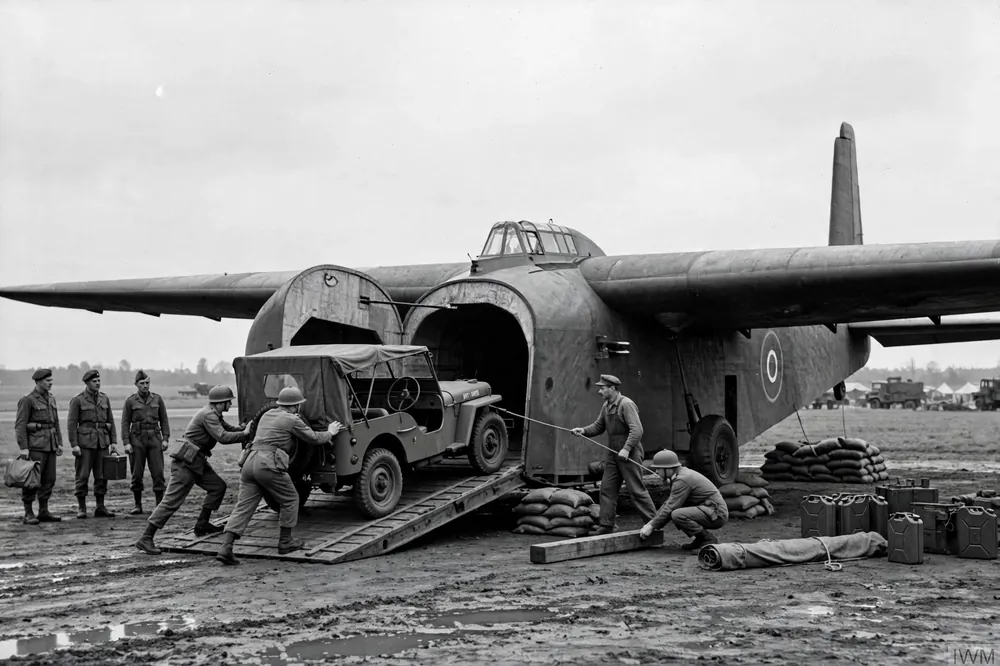
Its second strength was the formed unit on landing. The glider delivered a platoon, a gun crew or a jeep team as a single, coherent unit, ready to fight at once. This was the quality that made the glider indispensable for the seizure of bridges and landing zones, where a scattered force would have been useless. The Pegasus Bridge operation is the classic demonstration: three gliders, landing within metres of the bridge in the dark, delivered a formed force that seized the bridge in minutes. No parachute drop could have achieved that precision.
7. Weaknesses
The glider’s weaknesses were as plain as its strengths. First, the landing was dangerous. A glider has no engine, and once it is released it cannot go around again: the pilot has one chance to land, on a field he may never have seen, in the dark, under fire. The casualty rate in glider landings was high: in Normandy, many gliders were wrecked on landing, and their passengers were killed or injured by the impact, by the hedgerows, and by the poles the Germans had planted in the fields — “Rommel’s asparagus” — to wreck gliders. In Sicily, the glider force lost more men to the sea than to the enemy.
Second, the glider needed a tug plane, and the tug plane needed to fly in a straight line, at a steady speed, over enemy territory, towing a fragile aircraft behind it. The combination was slow, vulnerable and easy to shoot down, and the tug planes themselves were often lost. Third, the glider could not take off again. Once it had landed, it was scrap: the infantry walked away and left the aircraft where it lay. A glider operation was therefore a one-way trip, and the airborne force it delivered could only be supplied by air or relieved by ground forces. At Arnhem, that limitation was fatal: the division was delivered, but it could not be supplied, and it was destroyed.
8. Evolution
After the war, the glider disappeared from the battlefield with remarkable speed. The reason was the helicopter. The helicopter could do everything the glider could do — deliver a formed unit, with its weapons and vehicles, to a precise place — and it could do it again and again, and it could take the men out again. The helicopter did not need a tug plane, it did not need a landing zone the size of a field, and it was not a one-way trip. By the early 1950s, the glider regiments had been disbanded in Britain and the United States, and the glider had become a museum piece.
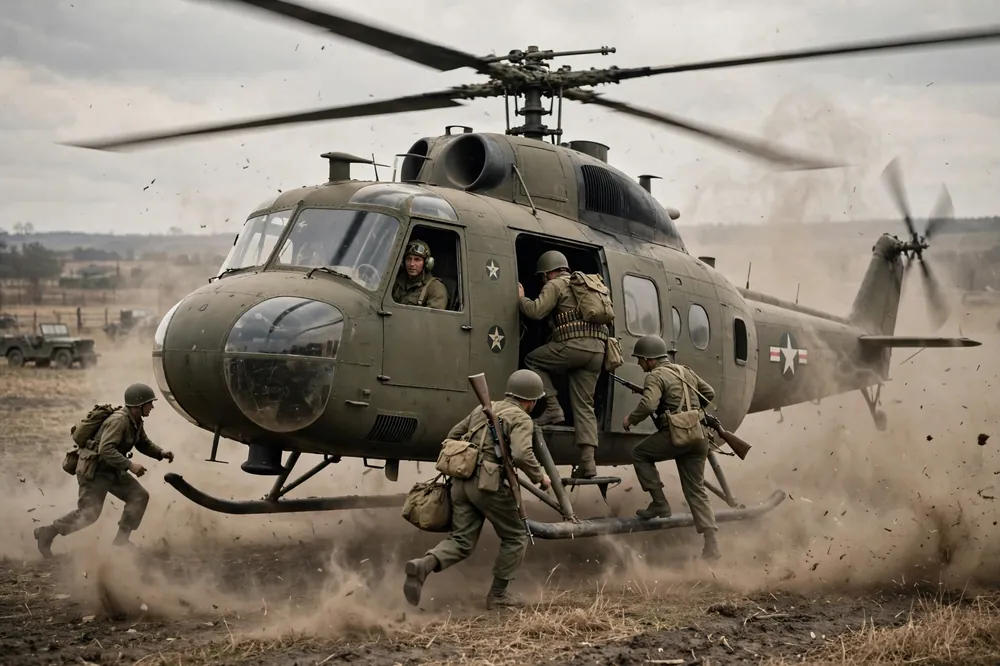
The glider’s principles, however, survived in the helicopter and in the modern air assault. The idea of delivering a formed unit, with its heavy weapons, to a precise point behind the enemy’s lines is the core of the air assault doctrine of every modern army, and the helicopter assault is, in operational terms, the glider assault with an engine. The glider infantry of the Second World War were therefore the ancestors of the modern air assault infantry, and their experience — the value of the formed unit, the danger of the landing, the need for surprise — is still taught in airborne schools.
9. Legacy
The glider’s legacy is written in the operations it made possible. Eben-Emael showed that a small, silent force could take a fortress; Pegasus Bridge showed that a glider could deliver a formed unit with a precision no other aircraft could match; Normandy showed that gliders could deliver the heavy weapons that made an airborne division a real fighting force. The glider’s legacy is also written in its losses: the men who died in wrecked gliders, in the sea off Sicily, and in the fields around Arnhem are remembered in the airborne forces of Britain and the United States, where the glider regiments are still honoured as part of the airborne tradition.
The glider is also a reminder of a particular moment in the history of war: a moment when an idea from a sport — gliding — was turned into a weapon, and when a weapon made of wood and fabric could change the course of a campaign.
The glider’s brief career, from 1940 to 1945, is a case study in how quickly a military technology can rise and fall, and in how the value of a weapon depends not on its sophistication but on the problem it solves.
The glider solved the problem of delivering a formed unit silently and cheaply, and when the helicopter solved the same problem better, the glider vanished — but the problem, and the solution, remain.
10. Key Figures
Rudolf Witzig (Germany). Commander of the glider assault group that took Eben-Emael on 10 May 1940. Witzig’s glider was delayed, and he arrived after the fortress had been taken, but his planning and training made the operation possible. He later commanded the German parachute forces on Crete and in Italy.
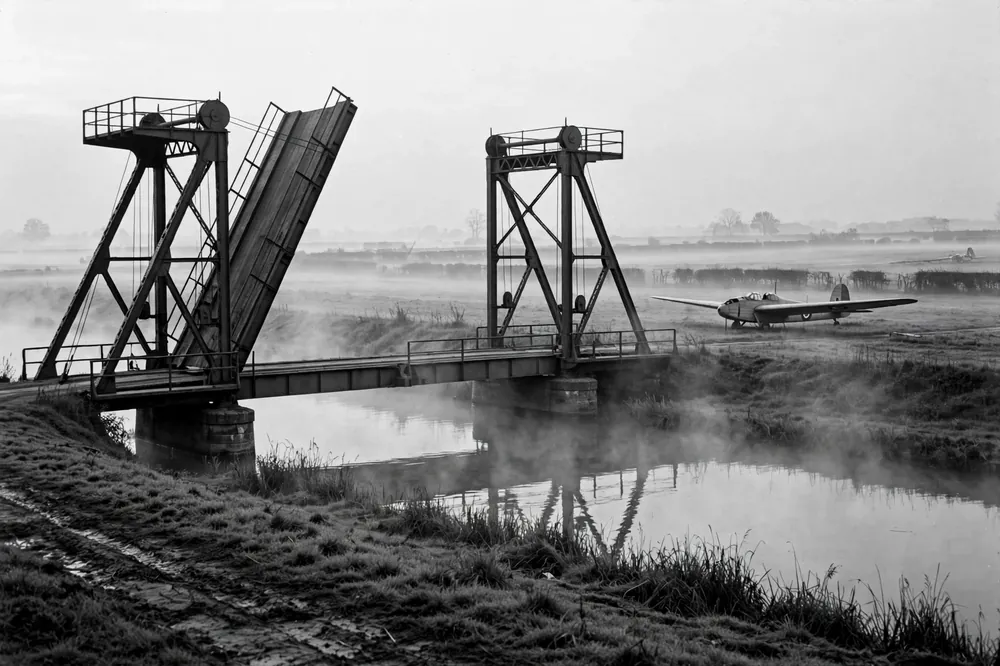
Major John Howard (Britain). Commander of D Company, 2nd Battalion, Oxfordshire and Buckinghamshire Light Infantry, the glider infantry that seized Pegasus Bridge on the night of 5–6 June 1944. Howard’s gliders landed within metres of the bridge, and his men held it until relieved. The operation is the classic example of the glider’s precision.
Major General Roy Urquhart (Britain). Commander of the 1st Airborne Division at Arnhem in September 1944. Urquhart’s division, including its glider regiment, was landed too far from the bridge and was destroyed over nine days. His leadership under impossible conditions is still studied, and his book Arnhem (1958) is a classic account.
Colonel James Gavin (United States). Commander of the 505th Parachute Infantry Regiment and later of the 82nd Airborne Division. Gavin commanded American glider and parachute forces in Sicily and Normandy, and he was one of the most influential American airborne commanders of the war.
11. Frequently Asked Questions
What is glider infantry?
Infantry delivered into battle by engineless glider, towed behind a powered aircraft and released to land silently. A glider lands a whole unit together, with its weapons and sometimes its vehicles, in a single aircraft. A glider lands its load in one place, together, and the men step out of the aircraft as a formed unit, with their weapons in their hands and sometimes with their vehicles. The glider was cheap to build, made of wood and fabric, and it could carry far more than a man with a parachute — including a jeep, a light gun or a load of ammunition.
What was the first glider operation in history?
The German assault on the Belgian fortress of Eben-Emael on 10 May 1940, when 41 DFS 230 gliders landed on the fortress roof and neutralised its guns in hours with fewer than 400 men. The gliders landed within metres of their targets, the engineers used shaped charges to destroy the gun cupolas, and the fortress — which the Belgians had expected to hold for days — was neutralised in hours. The operation changed the course of the campaign: the bridges over the Albert Canal were taken intact, and the German Army crossed into Belgium.
How many men could a glider carry?
The German DFS 230 carried 9 men. The British Horsa carried 25, and the American Waco CG-4A carried 13. The British Hamilcar could carry a light tank. The German DFS 230 carried 9 men, the British Horsa carried 25, and the American Waco CG-4A carried 13. The British Hamilcar was larger still, and it could carry a light tank, the Tetrarch. The glider’s capacity was its great advantage over the parachute: it could deliver not only men, but a complete fighting unit, with its heavy weapons and its vehicles, in a single aircraft.
Why was the glider better than a parachute?
A glider lands a whole unit together, formed and ready to fight, and it can carry heavy weapons and vehicles that a parachutist cannot. A parachute drop scatters men over a wide area. A glider also approaches silently, with no engine noise, and it can land without warning — at Eben-Emael, the Belgian garrison heard nothing until the gliders were on the roof. The price was fragility: a glider was made of wood and fabric, it had no armour, and a bad landing could wreck the aircraft and kill or injure its passengers.
Why did the glider disappear after the war?
The helicopter replaced it. A helicopter can deliver a formed unit to a precise place, and it can do so repeatedly and take the men out again. The glider was a one-way trip. A helicopter can deliver a formed unit to a precise place, and it can do so repeatedly and take the men out again. The glider was a one-way trip: once it had landed, it was scrap, and the airborne force it delivered could only be supplied by air or relieved by ground forces. By the early 1950s the glider regiments had been disbanded in Britain and the United States.
What happened to the gliders at Arnhem?
They delivered the 1st Airborne Division’s artillery, jeeps and anti-tank guns, but the landing zones were too far from the bridge, the German resistance was stronger than expected, and the division was surrounded and destroyed over nine days. The landing zones were too far from the bridge, the German resistance was far stronger than expected, and the division was surrounded and destroyed over nine days. The glider infantry fought as ordinary infantry once on the ground, and they fought well — but the glider could not save a plan that had failed, and Arnhem showed both the glider’s value and its limits.
12. Sources
- Wikipedia, “Military glider” — the glider, its types and its history.
- Wikipedia, “Battle of Fort Eben-Emael” — the first glider operation, 10 May 1940.
- Wikipedia, “Airspeed Horsa” and “Waco CG-4” — the main Allied gliders and their capacities.
- Wikipedia, “Battle of Crete” — the German airborne assault of May 1941.
- Wikipedia, “Pegasus Bridge” — the glider landing of 5–6 June 1944.
- Wikipedia, “Operation Market Garden” and “Battle of Arnhem” — the glider’s role in September 1944.
- Wikipedia, “Operation Varsity” — the Rhine crossing of 24 March 1945.
- Stephen E. Ambrose, Pegasus Bridge (1985) — Major John Howard and the glider assault on the Caen Canal bridges.
- Martin Middlebrook, Arnhem 1944: The Airborne Battle (1994) — the 1st Airborne Division and its glider regiment.