 WAR ATLAS MILITARY HISTORY MAGAZINE · WWI — WWII
Tactics
1. Lead
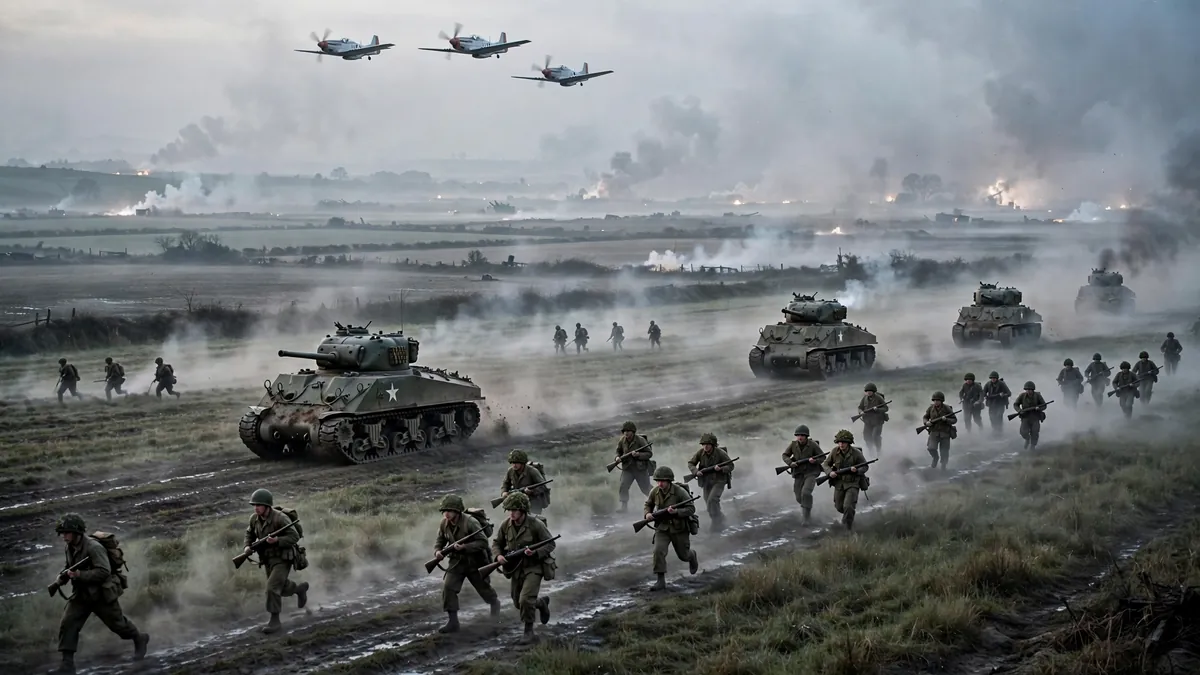
Tactics is the art of winning battles. Strategy decides where and why a war is fought; tactics decides how the battle itself is fought — where the troops are placed, when they move, how they use the ground, and how they bring their firepower to bear on the enemy.
The word comes from the Greek taktike, the art of arranging, and it has been studied for more than two thousand years, from the phalanx of ancient Greece to the armoured divisions and air forces of the Second World War.
This article is the hub of the Tactics section of War Atlas: it introduces the great tactical ideas of the war, explains how they relate to each other, and points to the detailed articles in which each one is examined in full.
The tactics of the Second World War were shaped by three revolutions: the tank, the aeroplane, and the radio. The tank gave armies a weapon that could move faster than a marching man and break through a line. The aeroplane gave them eyes over the battlefield and a weapon that could strike far behind the front. The radio gave commanders the ability to control fast-moving forces over great distances. Together, these three revolutions produced a new kind of war — a war of movement, of encirclement, of surprise — and the tactics of the war are the record of how soldiers learned to use them, and of how they learned, often at terrible cost, what their limits were.
2. Key Facts
| Subject | Tactics — the art of winning battles |
| Etymology | Greek taktike, “the art of arranging” |
| Levels of war | Strategy (where and why) — Operations (campaigns) — Tactics (battles) |
| Three revolutions | The tank, the aeroplane, the radio |
| Great tactical ideas | Encirclement, blitzkrieg, mobile defence, airborne assault, fighter tactics, delaying action |
| Classic model | Cannae, 216 BC — the double envelopment |
| Key theorists | Clausewitz, Moltke, Schlieffen, Guderian, Liddell Hart / Clausewitz, Moltke, Schlieffen, Guderian, Liddell Hart |
| This section | The Tactics hub of War Atlas — the pillar articles below |
3. Encirclement and Annihilation
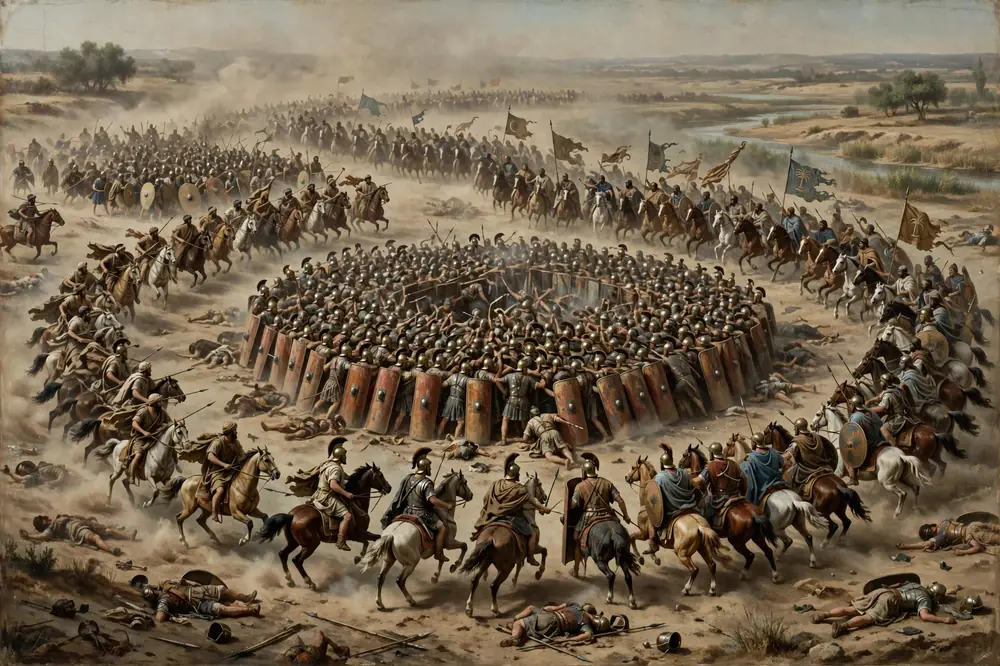
The oldest and most ambitious tactical idea in this section is encirclement: the destruction of the enemy army by surrounding it. Its model is Cannae, where Hannibal’s double envelopment destroyed a Roman army of about 70,000 men in a single day, and its modern form is the Kesselschlacht, the battle of encirclement, developed by the German General Staff in the nineteenth century.
The idea is simple: the enemy army, not territory, is the target, and the way to destroy it is to get around it, cut its lines of retreat, and destroy it in the pocket. The German campaigns of 1939–41 — Poland, France, and the great encirclements of the Eastern Front at Minsk, Smolensk and Kiev — are the classic examples, and the Kiev pocket of September 1941, with about 600,000 Soviet troops trapped, remains the largest encirclement in history.
The war of annihilation
The doctrine of encirclement is closely related to the concept of the war of annihilation — in German, Vernichtungskrieg — the idea that the aim of war is the complete destruction of the enemy’s armed forces, rather than limited political gains. The concept comes from Clausewitz, and it shaped German military thinking for a century.
It is important to draw a line that this section draws plainly: the destruction of an enemy army in the field is a lawful military aim, but the deliberate killing of prisoners, civilians or other non-combatants is a war crime, and no doctrine can justify it. On the Eastern Front the two were tragically entangled, and the history of the doctrine must be told with that entanglement in view.
Encirclement turned against its authors
By 1943 the doctrine of encirclement was being turned against its authors. At Stalingrad, the Soviet Operation Uranus encircled the German Sixth Army — about 250,000 men — in a classic double envelopment, and destroyed it. The war ended with the Red Army applying the doctrine to the German Army itself, in the great encirclements of 1944–45, and the German Army that had once encircled whole Soviet fronts was itself encircled and destroyed in turn. The lesson is that encirclement belongs to no nation: it is a method, and whichever side can execute it at scale wins.
4. Blitzkrieg and the Manstein Plan
The second great tactical idea is blitzkrieg — “lightning war” — the combination of tanks, aircraft and radios into a fast, concentrated offensive that breaks through the enemy line and drives deep into its rear. Blitzkrieg is often presented as a German invention, but it was the product of many minds: the British theorists J. F. C.
Fuller and Basil Liddell Hart wrote about mechanised warfare in the 1920s, the Soviet theorist Mikhail Tukhachevsky developed the idea of deep operations, and the German panzer generals — above all Heinz Guderian — turned the theory into practice. The campaigns of 1939–41, in Poland and France, are the classic examples, and they showed what blitzkrieg could do: France, the strongest army in Europe, was defeated in six weeks.
The sickle cut
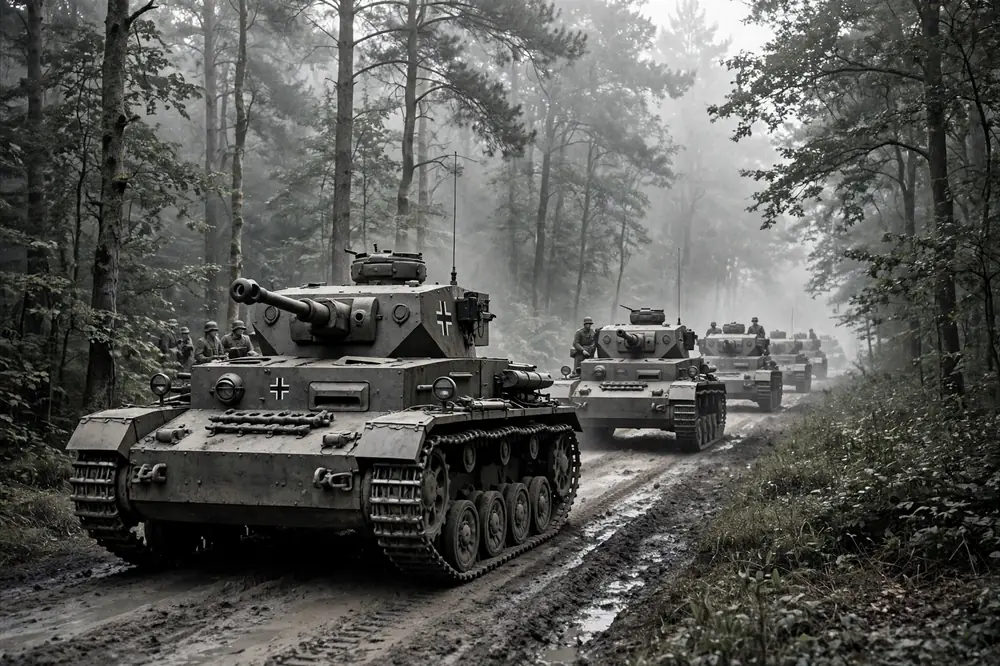
The most famous single application of the idea is the Manstein Plan of 1940: the German attack on France, in which the main thrust went not through Belgium, as the Allies expected, but through the Ardennes forest, which the French considered impassable to tanks, and then drove to the Channel coast, cutting the Allied armies in two.
The plan’s author, Erich von Manstein, understood that the Allies’ own plan — the rush into Belgium — was itself a vulnerability, and he turned it against them. The plan is the textbook example of operational art: the concentration of force at a single point, the attack on the enemy’s expectation, the use of deception, and the exploitation of speed.
It is also a reminder of the plan’s limits: it worked once, and its very fame made a second use impossible.
The limits of speed
Blitzkrieg’s limits became clear in Russia. The German advance of 1941 covered hundreds of kilometres in weeks, but it outran its supplies, and the Soviet Union — with its vast territory, its population of about 190 million, and its factories moved east of the Urals — could raise new armies faster than the Germans could destroy them. Speed, which had been blitzkrieg’s strength, became its weakness: the faster the advance, the longer the supply lines, and the more exposed the flanks. The doctrine had no answer to the question of what to do when the enemy refused to collapse, and the war in the east became the war of attrition that blitzkrieg had been designed to avoid.
5. Mobile Defence and Delay
The third group of tactics is the defence: how a weaker force holds a front against a stronger one, and how it buys time. The two great ideas here are mobile defence and the delaying action, and they are closely related — both trade space for time, and both depend on the counter-attack.
Model strategy
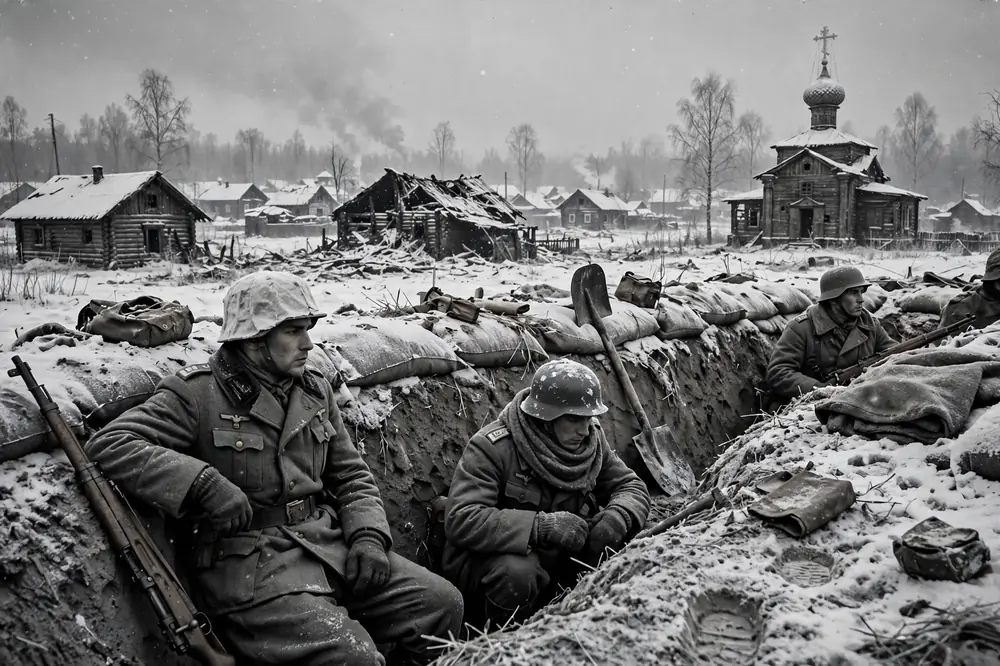
Model strategy is the mobile defence method of the German field marshal Walter Model: a thin front line, a strong mobile reserve held behind it, and a counter-attack that destroys the enemy’s penetration. Model was sent, again and again, to the sector where the front was collapsing — Rzhev in 1942, Orel in 1943, Poland in 1944, the West in 1944–45 — and he usually held it.
His method worked with scarcity, and it was the best defensive method the German Army possessed in the last two years of the war. But it could only delay defeat, never prevent it: it bought months, and the months bought nothing, because Germany had no new armies to raise and no political settlement to reach.
Delaying action
The delaying action is the rearguard’s art: a force deliberately gives ground, fighting a series of short stands, to slow a stronger enemy and buy time for the main force to withdraw. Its classic examples run from Thermopylae in 480 BC to the Dunkirk perimeter in 1940, where the rearguard held for nine days while about 338,000 men were evacuated, and to the Soviet delaying battles of 1941, which bought the time to raise new armies and defend Moscow.
The delaying action’s discipline is the discipline of restraint: to hold a position long enough to force the enemy to deploy, and then to break contact before the enemy’s attack falls. A delay that goes on too long becomes a battle of annihilation that the delaying force cannot win.
6. Airborne Assault
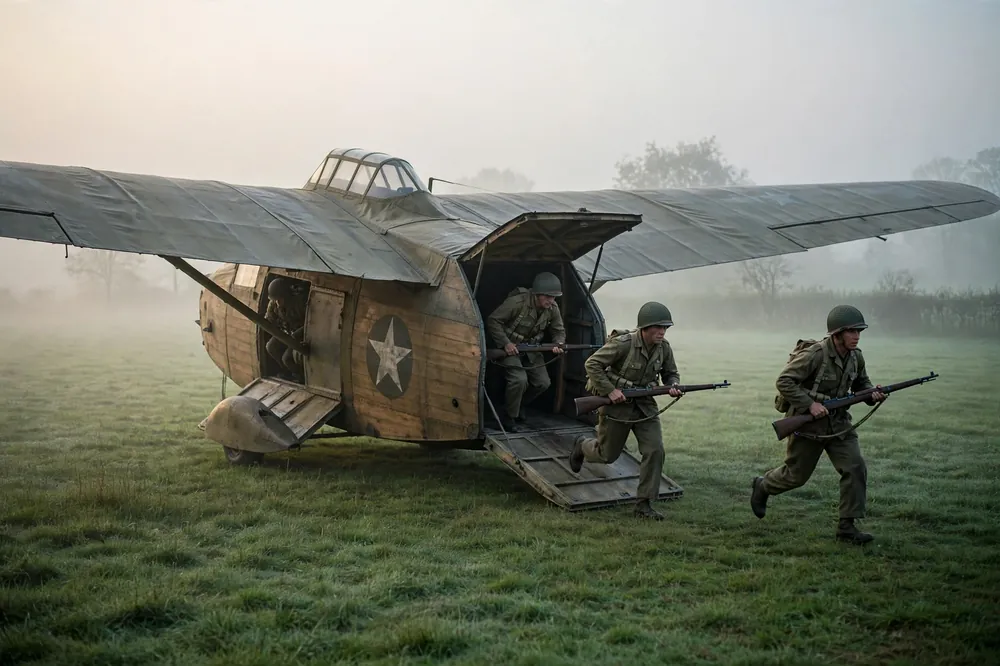
The fourth group is the airborne assault: the delivery of soldiers by parachute and by glider behind the enemy’s lines. The airborne idea was one of the most daring of the war, and one of the most costly. Parachutists jump alone and land scattered; glider infantry land as a formed unit, with their weapons and sometimes their vehicles, in a single aircraft. The glider’s story runs from the German assault on Eben-Emael in May 1940 — the first glider operation in history, in which fewer than 400 men neutralised the strongest fortress in Europe — through Sicily, Normandy and Arnhem, to the Rhine crossing of March 1945.
The glider’s value and its end
The glider’s great value was precision: at Pegasus Bridge on the night of 5–6 June 1944, British gliders landed within metres of the bridge, and the infantry seized it in minutes — a precision no parachute drop could have achieved.
Its great weakness was the landing itself: a glider has no engine, it cannot go around again, and a bad landing — a ditch, a hedgerow, a pole planted in the field — could wreck the aircraft and kill its passengers. After the war, the glider vanished with remarkable speed, replaced by the helicopter, which could do everything the glider could do and could do it again and again.
The glider infantry of the Second World War were the ancestors of the modern air assault infantry, and their experience is still taught in airborne schools.
7. Fighter Tactics
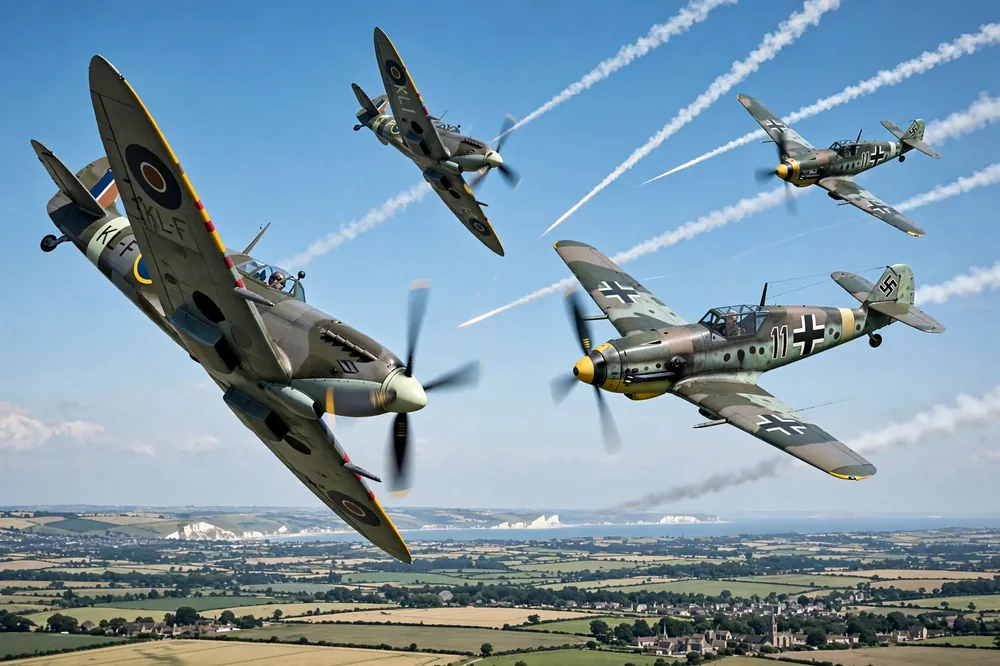
The fifth group is the air battle: how fighters fight. The comparison of RAF vs Luftwaffe fighter tactics in the Battle of Britain is the classic case study. The Luftwaffe’s formations — the Rotte (pair) and the Schwarm (four) — were, in 1940, the best fighter formations in the world: loose, flexible, and designed for the dogfight.
The RAF’s Vic — a tight V of three — was a formation for parade and for control, not for combat, and it cost lives. But the RAF’s system — the Dowding system, built on radar, the Observer Corps, operations rooms and radio direction — was better than anything the Luftwaffe possessed, and it was the decisive advantage.
The battle is remembered as the battle in which the system beat the formation.
The lesson
The lesson of the comparison is general, and it applies beyond the air war: a battle is won by the system that puts courage in the right place. The Luftwaffe’s pilots were, on average, more experienced and more successful in the dogfight, but they were put in the wrong place, at the wrong time, with too little fuel, and the battle was lost before the dogfight began. After the battle, the RAF copied the Luftwaffe’s formations — the finger-four became standard — and the Luftwaffe built its own radar and control system. By 1943 the two sides’ tactics had converged, and the finger-four and ground control became the standard of every air force in the world.
8. The Human Element
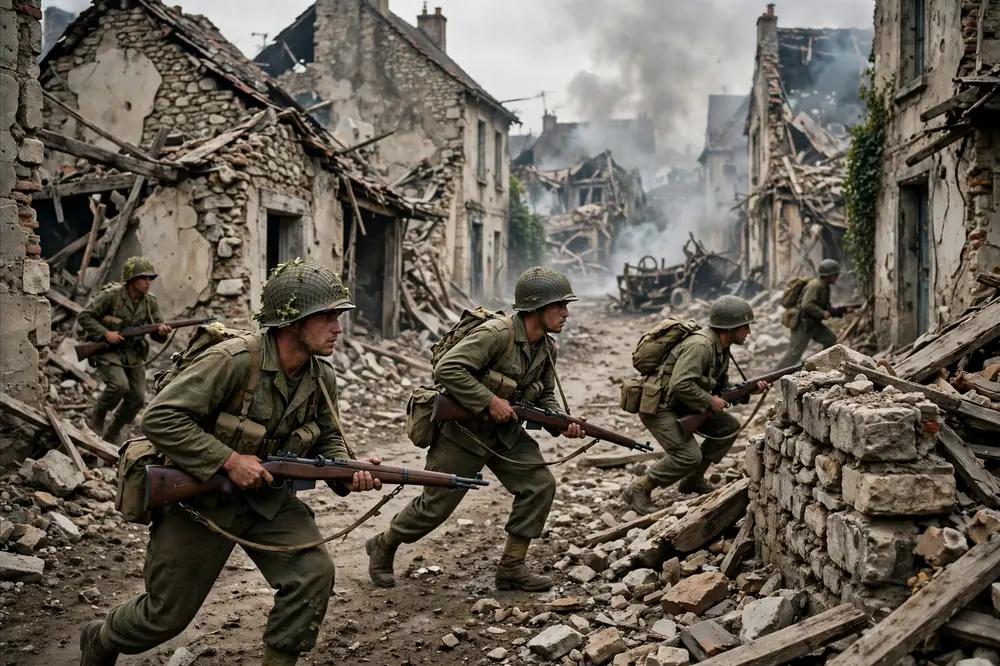
Tactics are not only a matter of formations and systems; they are a matter of people. The tactics of the Second World War were executed by soldiers, sailors and airmen who were often young, often frightened, and often asked to do the impossible.
The glider pilot who landed in the dark at Pegasus Bridge, the rearguard soldier who held the Dunkirk perimeter while the army embarked, the Soviet infantryman who fought a delaying action before Moscow, the fighter pilot who flew into a battle he could not win — all of them were practising tactics, and all of them were paying for tactics with their lives.
The study of tactics must therefore be a study of people, not only of arrows on a map.
Command and initiative
The tactics of the war also show the importance of initiative. The German tradition of Auftragstaktik — mission command, in which a commander tells his subordinates what to achieve, not how — produced the boldness of the Manstein Plan, the speed of the panzer thrusts, and the initiative of the small groups at Omaha Beach. The Soviet and Allied systems, which were more centralised, were slower to adapt, but they were also more resilient: they could absorb losses and keep fighting. The balance between control and initiative is the central problem of tactics, and it has no single answer: the right balance depends on the army, the battle, and the moment.
9. Evolution
After the Second World War, the tactics of the war were studied, codified and changed. The arrival of nuclear weapons made the idea of a war of annihilation between great powers unthinkable as a practical plan, and the wars that followed were mostly limited wars.
Yet the tactical methods survived: the encirclement, the mobile defence, the air assault, the fighter formation, the delaying action — all of them are still taught, and all of them are still practised, in the doctrine of modern armies. The helicopter replaced the glider, the missile replaced the cannon, and the computer replaced the operations room’s map table, but the problems — how to surround an enemy, how to hold a front with too few men, how to deliver a force to the right place at the right time — are the same problems, and the answers are the same answers, in new forms.
The study of tactics has also changed. The historians of the war — from Clausewitz’s readers to the staff colleges of today — have learned to study tactics not as a set of rules, but as a set of problems, and to ask, of each tactical idea, the same questions: what problem did it solve, what did it cost, and what were its limits? The tactics of the Second World War, studied in this way, are not a museum of old ideas, but a record of how soldiers solved the hardest problems of their time, and of how their solutions can still teach us.
10. How to Use This Section
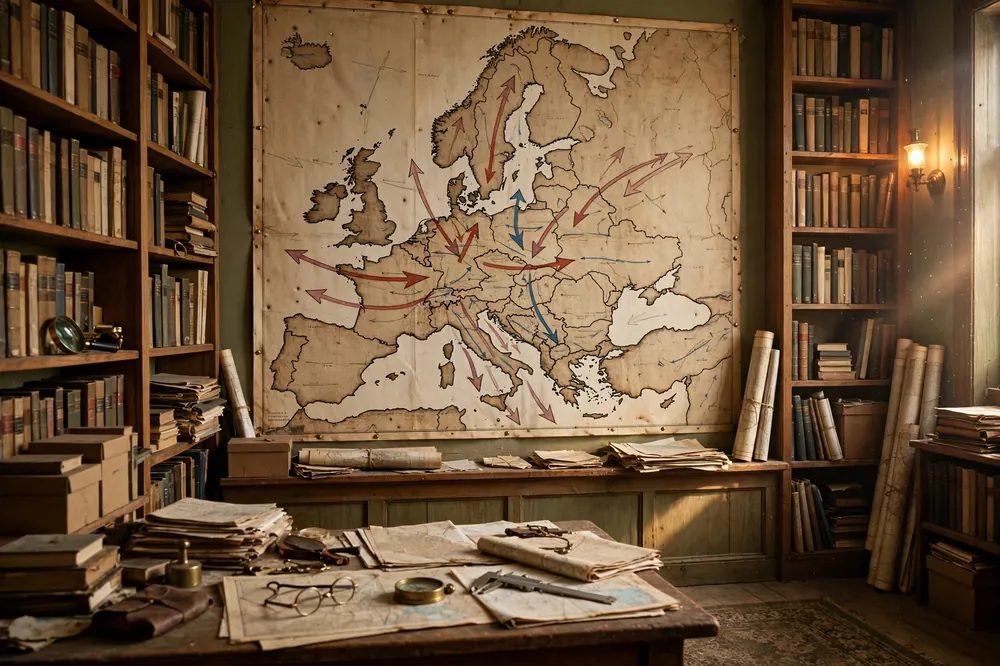
This hub is the starting point for the Tactics section. Each pillar article below examines one tactical idea in full, with its origins, its principles, its application in battle, its strengths and weaknesses, and its legacy. Readers who want the whole picture should read the hub first, and then follow the links to the pillars that interest them. Readers who want a single idea should go directly to its article: the war of annihilation for the doctrine of total destruction, the Manstein Plan for the sickle cut of 1940, the delaying action for the rearguard’s art, glider infantry for the airborne assault, Model strategy for mobile defence, and RAF vs Luftwaffe fighter tactics for the air battle.
The pillar articles
The section’s pillars are: War of Annihilation — the doctrine of total destruction, from Clausewitz to the Eastern Front; Manstein Plan — the sickle cut that won the Battle of France in six weeks; Delaying Action — the rearguard’s art of trading space for time; Glider Infantry — the silent, wooden aircraft that delivered whole units into battle; Model Strategy — the mobile defence of the German field marshal who held collapsing fronts; and RAF vs Luftwaffe Fighter Tactics — the comparison of the Vic and the Schwarm, and of the Dowding system and the free hunt.
Together, they cover the great tactical ideas of the Second World War, and together they show that tactics is not a single idea, but a family of ideas — and that the art of war is the art of choosing the right one, at the right time, in the right place.
11. Frequently Asked Questions
What is the difference between strategy, operations and tactics?
Strategy decides where and why a war is fought. Operations — campaigns — link battles together toward a strategic aim. Tactics decides how a single battle is fought: where troops are placed, when they move, and how they use firepower. This section is about tactics. Strategy is the level of the war itself: it decides the political aims, the choice of enemies and allies, and the allocation of resources. Operations link battles together toward a strategic aim, in campaigns that may last weeks or months. Tactics is the level of the single battle, and it is the subject of this section: the art of arranging troops, using ground and bringing firepower to bear on the enemy.
What was the most important tactical idea of the Second World War?
There is no single answer, but most historians would name encirclement — the destruction of the enemy army by surrounding it — and the combination of tanks, aircraft and radios that made encirclement fast enough to work. The Manstein Plan and the great encirclements of 1941 are the classic examples. The combination of tanks, aircraft and radios made encirclement fast enough to work against a modern army, and the campaigns of 1939–41 showed what it could do: France fell in six weeks, and the Soviet frontier armies were destroyed in months. The idea’s limits became clear in Russia, where the Soviet Union could raise new armies faster than the Germans could destroy them.
What is blitzkrieg? / Blitzkrieg là gì?
“Lightning war”: a fast, concentrated offensive by tanks, aircraft and radios that breaks through the enemy line and drives deep into its rear. It was not a formal German doctrine with that name — the term was popularised by journalists — but the method it describes was real, and it won the campaigns of 1939–41.
It was not a formal German doctrine with that name — the term was popularised by journalists — but the method it describes was real, and it won the campaigns of 1939–41. Its limits became clear in Russia, where the German advance outran its supplies and the Soviet Union refused to collapse, and the war became the war of attrition that blitzkrieg had been designed to avoid.
Why did the glider disappear after the war?
The helicopter replaced it. A helicopter can deliver a formed unit to a precise place, and it can do so repeatedly and take the men out again. The glider was a one-way trip, and once the helicopter solved the same problem better, the glider vanished.
The glider was a one-way trip: once it had landed, it was scrap, and the airborne force it delivered could only be supplied by air or relieved by ground forces. The helicopter did not need a tug plane, it did not need a landing zone the size of a field, and it was not a one-way trip — and when it solved the same problem better, the glider vanished, though its principles survive in modern air assault doctrine.
What was the Dowding system?
The RAF’s integrated air defence system of 1940: radar detected incoming raids, the Observer Corps tracked them, operations rooms plotted the information, and controllers directed fighters by radio to the point of interception. It was the decisive RAF advantage in the Battle of Britain. The system meant that the RAF’s fighters were rarely surprised, that they could be concentrated at the right place, and that they could be spared when there was no raid to meet. It was the first integrated air defence system in history, and it became the model for every air defence system that followed, from the Cold War’s early-warning networks to the modern integrated air defence systems of today.
Where should I start reading the Tactics section?
Start with this hub, then follow the links to the pillar that interests you — the Manstein Plan for the most famous single plan, the war of annihilation for the doctrine behind the encirclements, or RAF vs Luftwaffe fighter tactics for the air battle. This hub introduces the great tactical ideas of the war, explains how they relate to each other, and points to the detailed articles in which each one is examined in full. Readers who want the whole picture should read the hub first, and readers who want a single idea should go directly to its article — the Manstein Plan for the most famous single plan, or the war of annihilation for the doctrine behind the encirclements.
12. Sources
- Wikipedia, “Military tactics” — the definition of tactics and the levels of war.
- Carl von Clausewitz, On War (1832) — strategy, operations and tactics; the destruction of the enemy’s armed forces.
- Wikipedia, “Battle of Cannae” — the classic model of the double envelopment.
- Wikipedia, “Manstein Plan” and “Battle of France” — the sickle cut of 1940.
- Wikipedia, “Battle of Britain” and “Dowding system” — the air battle and the RAF’s control system.
- Wikipedia, “Military glider” and “Battle of Arnhem” — the glider and the airborne assault.
- Wikipedia, “Walter Model” — mobile defence on the Eastern Front and in the West.
- Stephen Bungay, The Most Dangerous Enemy (2000) — the Battle of Britain and the two fighter systems.
- Karl-Heinz Frieser, The Blitzkrieg Legend (2005) — the 1940 campaign and the origins of blitzkrieg.
- Basil Liddell Hart, Strategy (1954) — the indirect approach and the theory of mechanised warfare.