 WAR ATLAS MILITARY HISTORY MAGAZINE · WWI — WWII
Fyodor Okhlopkov
1. Lead
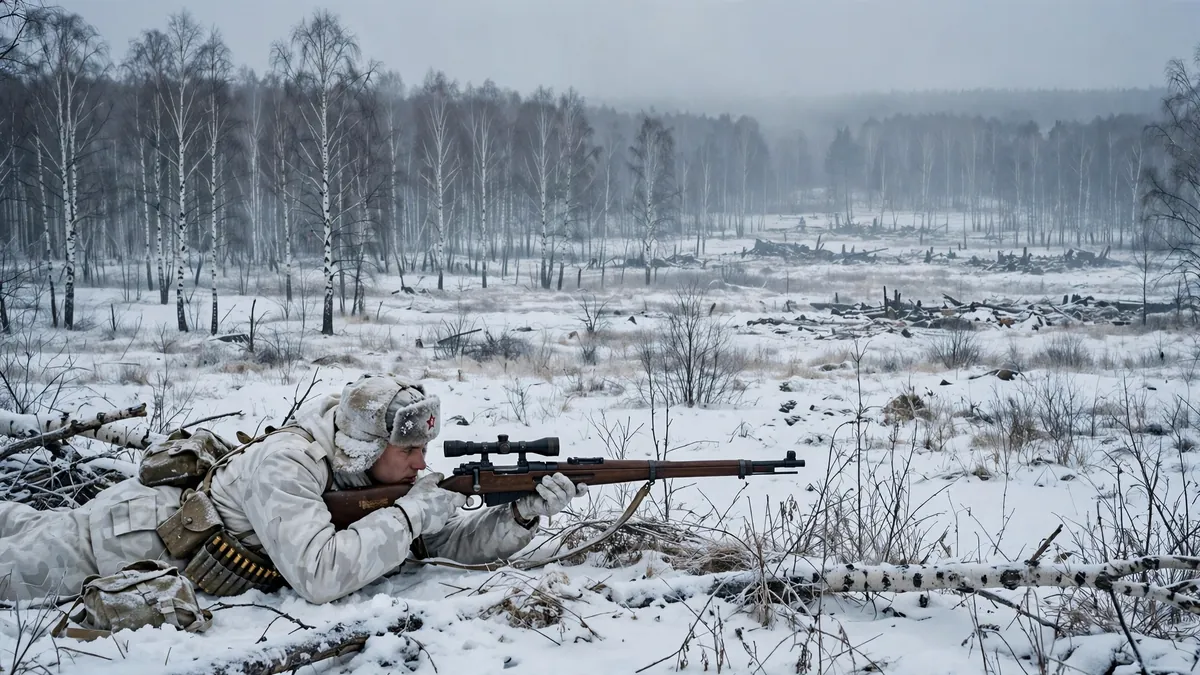
Fyodor Matveyevich Okhlopkov (1908–1968) was a Yakut sniper of the Red Army and one of the most effective snipers of the Second World War. His official sniper tally was 429 kills, plus 27 with a machine gun, which were not counted in the sniper tally; some popular sources give higher overall totals including the machine-gun kills.
He fought with the 234th Rifle Regiment on the Eastern Front from 1941 to 1945, was wounded twelve times, and was awarded the title Hero of the Soviet Union in 1965, twenty years after the war, in recognition of a record that had been overlooked for two decades.
Okhlopkov was a hunter from the Siberian taiga before he was a soldier, and he brought the hunter’s patience, eyesight and knowledge of the land to the sniper’s war, a war of waiting, watching and a single shot.
2. Key Facts
| Born | 2 March 1908, Krest-Khaldzhay, Yakutia, Russian Empire |
| Died | 28 May 1968, Krest-Khaldzhay, USSR (aged 60) |
| Service | Red Army, 1941–1945 |
| Unit | 234th Rifle Regiment, 179th Rifle Division |
| Sniper tally | 429 kills (official sniper tally; plus 27 with a machine gun, not counted in the sniper tally) |
| Wounds | Wounded 12 times |
| Highest award | Hero of the Soviet Union (1965) |
| Weapon | Mosin-Nagant M1891/30 sniper rifle |
3. Early Life
A hunter of the taiga
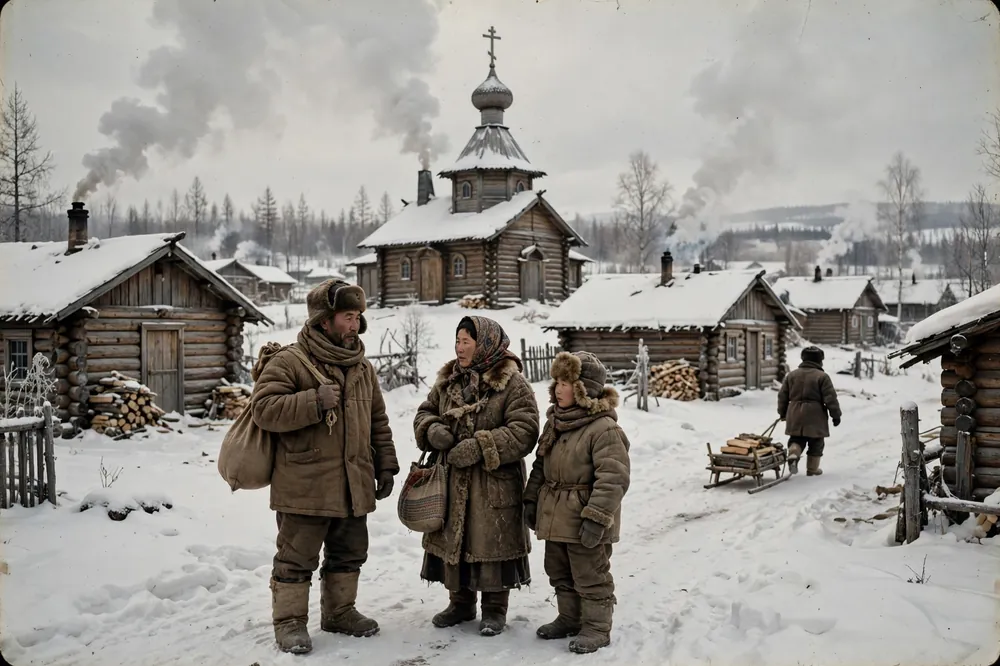
Fyodor Okhlopkov was born on 2 March 1908 in the village of Krest-Khaldzhay, in the Tomponsky district of Yakutia, in the far north-east of Siberia, into a Yakut family. The Yakuts are a Turkic people of Siberia, and Okhlopkov grew up in a world of reindeer, hunting and the great Siberian taiga, the boreal forest that stretches across northern Russia.
He learned to hunt as a boy, tracking animals through the snow, reading the signs of the forest, and shooting with a rifle from a young age. The skills of the hunter — patience, stillness, the ability to wait for hours without moving, and the ability to see what others could not see — were the skills of the sniper, and Okhlopkov brought them to the war with him.
Before the war he worked as a hunter and a trapper, and as a miner in the gold mines of the Aldan region, and he was known in his village as a fine shot.
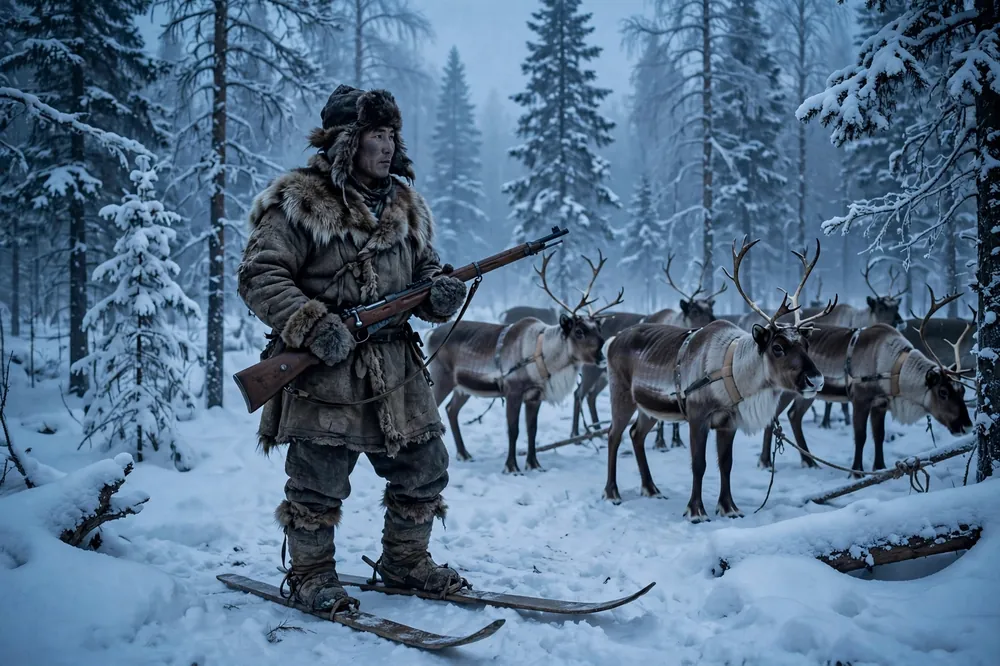
Yakutia, Okhlopkov’s home, is one of the largest and coldest regions on earth, a land of permafrost, of forests and of rivers, where the winter temperature can fall below minus fifty degrees, and where the people — the Yakuts, the Russians and the other peoples of the north — live by hunting, fishing, reindeer herding and mining.
Okhlopkov’s village, Krest-Khaldzhay, lies on the Aldan River, in the Tomponsky district, and it was, in the 1930s, a remote settlement, reached by river in summer and by sledge in winter. Okhlopkov worked in the gold mines of the Aldan region, one of the great goldfields of Siberia, and he hunted in the taiga, tracking sable, fox and elk through the snow.
The life was hard, and it made men hard, and it gave Okhlopkov the patience, the endurance and the eyesight that would make him one of the great snipers of the war.
Joining the Red Army
When Germany invaded the Soviet Union in June 1941, Okhlopkov was thirty-three years old, and he was drafted into the Red Army. He was assigned to the 234th Rifle Regiment of the 179th Rifle Division, and he was trained as a sniper, a role for which his hunting background made him ideally suited.
The Soviet Union, more than any other combatant in the Second World War, understood the value of the sniper: Soviet snipers were trained in dedicated schools, they were given the best rifles, and they were used systematically, in pairs, to dominate no-man’s-land, to kill enemy officers, machine-gunners and observers, and to wear down the enemy’s morale.
Okhlopkov, with his hunter’s skills, was a natural, and he quickly became one of the most successful snipers in his regiment.
4. The Sniper’s War
The work of a sniper
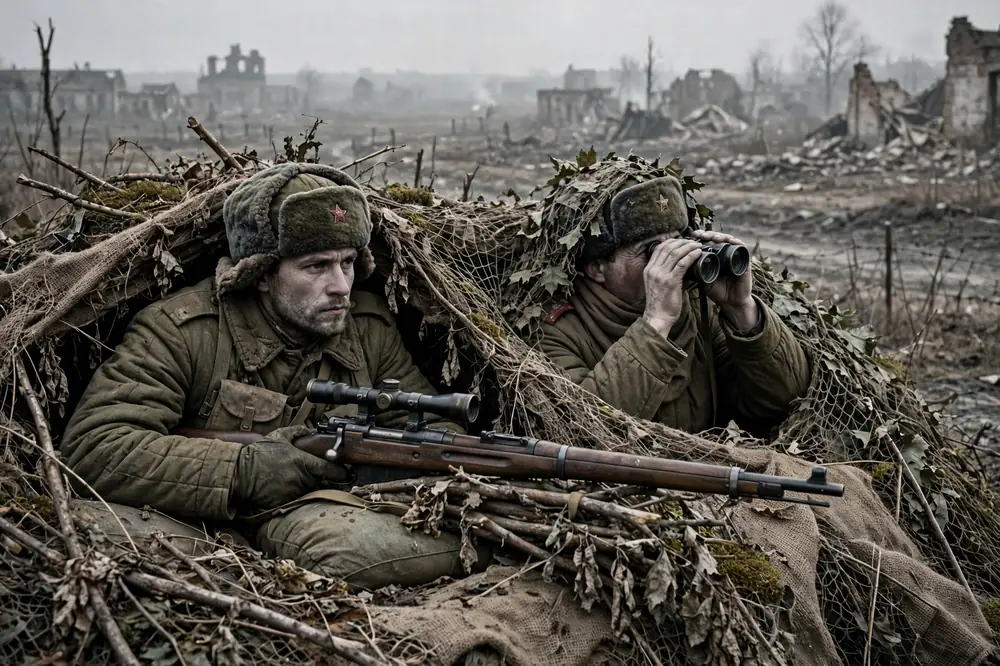
The sniper’s war was a war of patience and of nerve. A sniper and his observer — Okhlopkov usually worked with a partner — would move into no-man’s-land before dawn, find a hiding place, and wait, sometimes for hours, sometimes for a whole day, for a target to present itself.
The sniper’s targets were the enemy’s officers, its machine-gunners, its artillery observers, and its couriers: the men whose death would disrupt the enemy’s operations and damage its morale. A single shot, from a range of several hundred metres, was all that was needed, and the sniper’s skill lay in the shot itself — in the breathing, the trigger squeeze, the allowance for wind and range — and in the discipline to wait for the right moment and to remain unseen.
Okhlopkov was a master of this war, and his tally grew steadily: by the end of 1942 he had already killed more than a hundred enemy soldiers, and his reputation was spreading through his division.
429 kills
Okhlopkov’s official sniper tally was 429 kills, a figure recorded in his service record and in the citation for his Hero of the Soviet Union award. The figure does not include the 27 enemy soldiers he killed with a machine gun, which were counted separately and were not part of the sniper tally.
Some popular sources give higher overall totals, including the machine-gun kills, and these higher figures are sometimes presented as if they were the sniper tally itself. They are not: the official sniper tally is 429, and the machine-gun kills are a separate figure.
The distinction matters, because the sniper tally was a measure of a specific skill — the single, aimed shot from a concealed position — and Okhlopkov’s 429 kills place him among the most effective snipers of the war, behind only a handful of Soviet snipers, including Vasily Zaitsev, whose tally of 242 kills at Stalingrad is the most famous, and Mikhail Surkov, credited with 702 kills.
5. Wounds and Endurance
Wounded twelve times
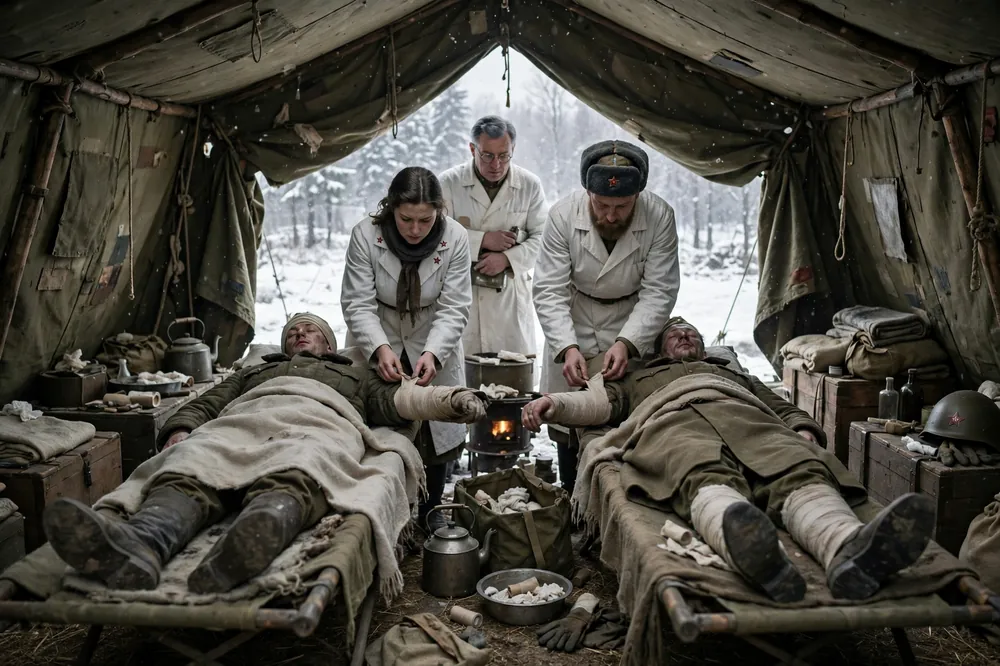
Okhlopkov was wounded twelve times during the war, a figure that testifies both to the danger of the sniper’s work and to his determination to return to the front. A sniper, once located, was a priority target for the enemy’s artillery, mortars and snipers, and Okhlopkov was hit by shell fragments, by bullets, and by the blast of explosions, again and again.
Each time, he recovered in a field hospital and returned to his regiment, and each time he resumed his work. His wounds were serious — on one occasion he was wounded so badly that he was evacuated to a hospital far behind the lines — but he always came back.
His endurance, and his refusal to leave the front, earned him the respect of his comrades, who regarded him as one of the toughest men in the regiment, and it is a large part of why his record is remembered.
The sniper’s endurance
The sniper’s war demanded a particular kind of endurance: the endurance to lie motionless in the snow or the mud for hours, to endure the cold, the hunger and the fear, and to remain alert for the single moment when a target appeared.
Okhlopkov, who had hunted in the Siberian winter, was well prepared for this: he was accustomed to the cold, to waiting, and to the discipline of the hunt. His comrades remembered him as a quiet, patient man, who spoke little and watched much, and who was at his best when the conditions were at their worst.
His twelve wounds, and his return to the front after each one, are a measure of a man who regarded the war as a duty, and who would not leave it until it was over.
6. The Sniper Schools
Training the next generation
Okhlopkov was not only a sniper himself but a teacher of snipers. Like many of the great Soviet snipers, he was used to train new snipers, passing on his skills to the young soldiers who were being trained in the sniper schools behind the lines.
The Soviet sniper schools, notably the Central Women’s Sniper Training School and the men’s schools, produced thousands of snipers during the war, and the experienced snipers who taught in them were among the most valuable men in the Soviet army. Okhlopkov’s teaching emphasised the fundamentals: patience, camouflage, fieldcraft, and the discipline to wait for the right shot.
He taught his students that the sniper’s greatest weapon was not the rifle but the eye, and that the sniper who could see the enemy first, and who could remain unseen, would win.
The sniper’s rifle
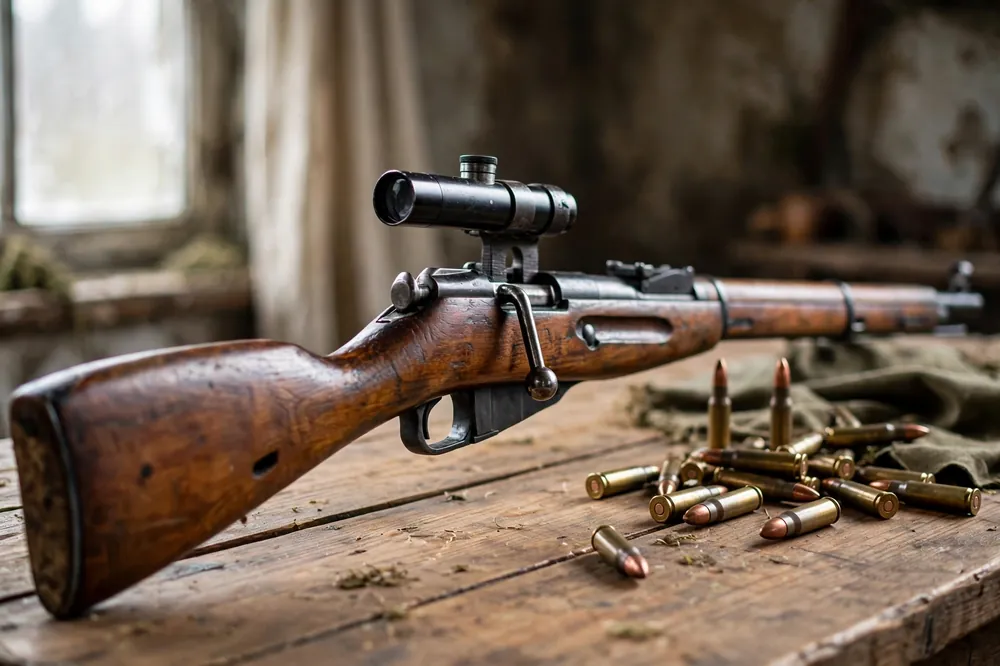
Okhlopkov’s rifle was the Mosin-Nagant M1891/30, fitted with a telescopic sight, the standard Soviet sniper rifle of the war. The Mosin-Nagant was a rugged, reliable bolt-action rifle, chambered for the powerful 7.62×54mmR cartridge, and it was accurate to several hundred metres in the hands of a skilled shooter.
The Soviet Union produced the Mosin-Nagant in enormous numbers, and it was the rifle of the ordinary Soviet infantryman as well as of the sniper. Okhlopkov, who had hunted with a rifle since boyhood, knew the weapon intimately, and he maintained it with the care of a hunter: he kept it clean, he knew its zero, and he trusted it.
The rifle, and the man who carried it, were a formidable combination, and the 429 kills that are recorded against his name are a testament to both.
The Mosin-Nagant’s cartridge, the 7.62x54mmR, was a powerful rimmed round, in service since 1891, and it gave the rifle an effective range of several hundred metres, and a killing power that was more than adequate for the sniper’s work. The rifle was fitted with the PU telescopic sight, a simple and rugged 3.5x scope, and it was, in the hands of a skilled shooter, accurate to 800 metres and beyond.
Soviet snipers worked in pairs, a shooter and an observer, and they were trained to move silently, to camouflage themselves, and to remain motionless for hours, waiting for a target. Okhlopkov, who had hunted in the Siberian winter, was well prepared for this: he was accustomed to the cold, to waiting, and to the discipline of the hunt, and he brought those skills to the sniper’s war.
7. Later Life
Return to Yakutia
After the war, Okhlopkov returned to his native Yakutia, to the village of Krest-Khaldzhay, where he had been born. He worked as a hunter and as a farm worker, and he lived quietly, as he had lived before the war. He was, by all accounts, a modest man, who spoke little about his wartime record, and who was content with the life of a Siberian villager.
His record — 429 kills, twelve wounds, and a war that had lasted four years — was known to his comrades, but it was not widely known outside the Soviet Union, and it was not, for twenty years, recognised by the Soviet state with its highest honour.
The delay in his recognition is a puzzle, and historians have suggested several explanations: that his record was overlooked in the bureaucracy of the post-war Soviet Union, that his Yakut origin counted against him in a state that privileged Russians, or simply that the sheer number of heroes produced by the war made it impossible to recognise them all promptly.
Hero of the Soviet Union
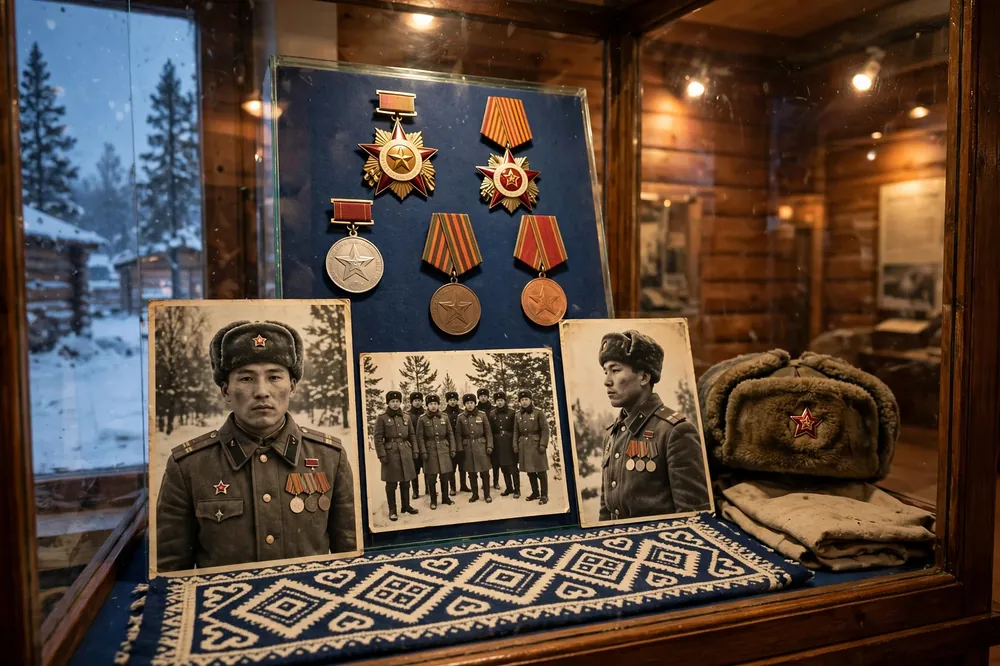
In 1965, twenty years after the end of the war, Okhlopkov was finally awarded the title Hero of the Soviet Union, with the Order of Lenin and the Gold Star medal. The award was part of a broader recognition, in the 1960s, of the Soviet Union’s war heroes, many of whom had been overlooked in the immediate post-war years.
Okhlopkov received his award in Yakutia, and he was celebrated in his home region as a hero. He died three years later, on 28 May 1968, at Krest-Khaldzhay, aged sixty, and he was buried in his native village. His Gold Star, awarded so late, was a belated recognition of a record that had been, for twenty years, one of the great unrecognised achievements of the war.
8. The Soviet Snipers
A Soviet speciality
The Soviet Union produced more snipers, and more successful snipers, than any other combatant in the Second World War, and Okhlopkov was one of the best of them. The Soviet sniper programme was systematic: snipers were trained in dedicated schools, they were organised in pairs, and they were used to dominate no-man’s-land and to wear down the enemy.
The most famous Soviet sniper was Vasily Zaitsev, whose duel with a German sniper at Stalingrad is the subject of books and films, but Zaitsev’s tally of 242 kills was lower than Okhlopkov’s 429, and lower than the tallies of several other Soviet snipers, including Mikhail Surkov, credited with 702 kills, and Vasily Kvachantiradze, credited with 517–534 kills.
Okhlopkov’s place among them is secure, and his record is a reminder that the Soviet sniper programme was a deep and systematic effort, not the work of a single famous individual.
The sniper’s effect
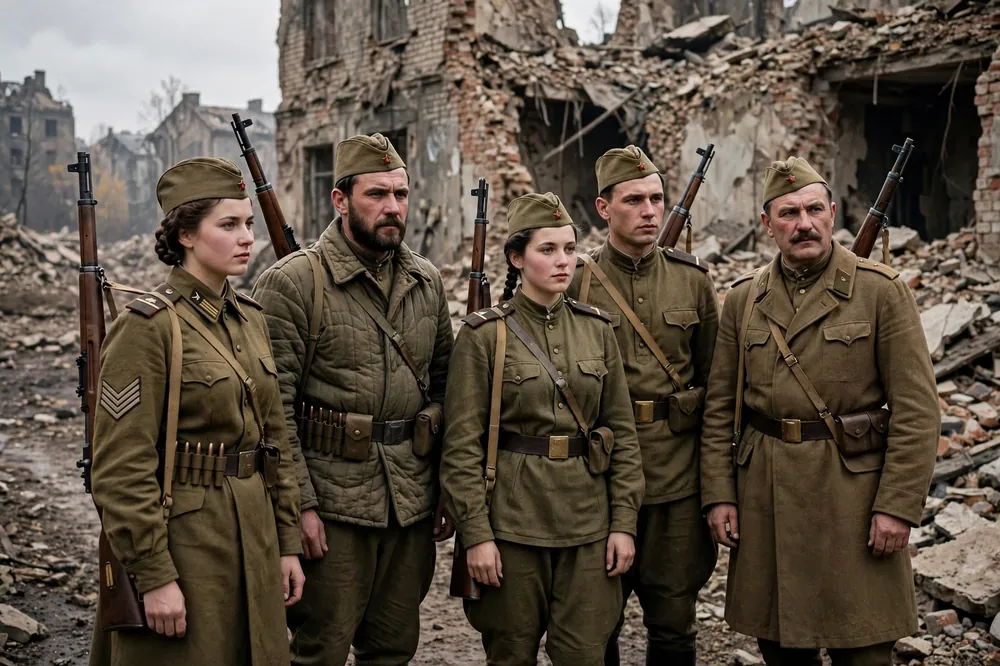
The snipers’ effect on the war went beyond their kill tallies. A sniper’s presence in no-man’s-land forced the enemy to keep its head down, to move cautiously, and to divert resources to counter-sniping, and the psychological effect of an unseen killer was considerable. German soldiers on the Eastern Front feared the Soviet snipers, and they called them by various names, in recognition of their skill.
Okhlopkov’s 429 kills, and the kills of his fellow snipers, were part of a campaign of attrition that wore down the German army, one shot at a time, and that contributed, in its small way, to the Soviet victory. The sniper’s war was a slow war, and it was a war that the Soviet Union, with its deep pool of hunters and marksmen, was well equipped to fight.
9. Legacy and Assessment
A Yakut hero
Okhlopkov’s legacy is, above all, a Yakut legacy. He is remembered in Yakutia as a national hero, and his name is given to streets, schools and a museum in his home region. His story is told in Yakutia as an example of a Yakut who served the Soviet Union with distinction, and who was, in the end, recognised for it. His Gold Star, awarded in 1965, is preserved in Yakutia, and his memory is maintained by his family and by the people of Krest-Khaldzhay. For the Yakuts, a people whose contribution to the Soviet war effort is little known outside Siberia, Okhlopkov is a symbol of their service and their sacrifice, and his 429 kills are a source of pride.
How history remembers him
Historians today remember Okhlopkov as one of the great snipers of the Second World War, and as a figure whose story illustrates the diversity of the Soviet war effort. His record — 429 kills, twelve wounds, and a Hero of the Soviet Union award that came twenty years late — is a reminder that the Soviet Union’s victory was won by men and women from every corner of its vast territory, including the far north-east of Siberia, and that the heroes of the war were not only the famous names of Moscow and Leningrad but the hunters of the taiga, the miners of the Aldan, and the soldiers of the 234th Rifle Regiment.
His name is now known to military historians around the world, and his tally of 429 is cited in every list of the great snipers of the war.
10. Sniping in the Second World War
The sniper’s war
Sniping in the Second World War was a war within the war, fought by small numbers of men, often alone or in pairs, in the spaces between the great battles. The snipers’ war was a war of patience, of fieldcraft, and of a single, well-aimed shot, and it was fought on every front, from the snows of Finland to the jungles of the Pacific.
The Soviet Union, Germany, Finland and Britain all produced great snipers, and the most famous of them — Simo Häyhä of Finland, credited with more than 500 kills in the Winter War, and Vasily Zaitsev of the Soviet Union — are household names.
Okhlopkov belongs in their company, and his 429 kills place him among the most effective snipers of the war, a hunter from the Siberian taiga who became one of the deadliest soldiers of the Second World War.
The ethics of sniping
The sniper’s war raises questions that the great battles do not. A sniper kills a single man, at long range, with a single shot, and the killing is deliberate, personal and cold-blooded in a way that the killing of the battlefield is not. Okhlopkov, like all snipers, killed men he could see, men whose faces he could sometimes make out through his telescopic sight, and he did it 429 times.
His comrades regarded him as a hero, and the Soviet state awarded him its highest honour, but the sniper’s war is, by its nature, a war that invites reflection on the nature of killing in war. Okhlopkov himself, by all accounts, regarded his work as a duty, and he spoke little about it, as he spoke little about the war itself.
His silence, and the silence of many snipers, is a part of his story, and it is a reminder that the men who fought the sniper’s war carried its weight for the rest of their lives.
11. Frequently Asked Questions
How many kills was Fyodor Okhlopkov credited with?
His official sniper tally was 429 kills. He also killed 27 enemy soldiers with a machine gun, but those were not counted in the sniper tally. Some popular sources give higher overall totals including the machine-gun kills. He also killed 27 enemy soldiers with a machine gun, but those were not counted in the sniper tally, and some popular sources give higher overall totals including the machine-gun kills. The official sniper tally is 429, and the distinction matters, because the sniper tally was a measure of a specific skill, the single, aimed shot from a concealed position.
Why is Okhlopkov’s tally sometimes given as higher than 429?
Because some sources add the 27 machine-gun kills to the 429 sniper kills, giving a combined total. The official sniper tally, as recorded in his service record and his Hero of the Soviet Union citation, is 429. The official sniper tally, as recorded in his service record and his Hero of the Soviet Union citation, is 429, and the machine-gun kills are a separate figure, counted separately. Okhlopkov’s 429 kills place him among the most effective snipers of the war, behind only a handful of Soviet snipers, including Mikhail Surkov, credited with 702 kills.
How many times was Okhlopkov wounded?
He was wounded twelve times during the war, and he returned to the front after each wound. His endurance was legendary in his regiment. Each wound was treated in a field hospital, and he returned to his regiment as soon as he could walk, because he regarded the front as his duty. His wounds were serious, and on one occasion he was wounded so badly that he was evacuated to a hospital far behind the lines, but he always came back to the front.
When was Okhlopkov awarded Hero of the Soviet Union?
In 1965, twenty years after the end of the war. The delay in his recognition has never been fully explained, but it is thought to reflect the bureaucracy of the post-war Soviet Union and the sheer number of heroes produced by the war. The award was part of a broader recognition, in the 1960s, of the Soviet Union’s war heroes, many of whom had been overlooked in the immediate post-war years. Okhlopkov received his award in Yakutia, and he was celebrated in his home region as a hero, before his death three years later, in 1968.
What rifle did Okhlopkov use?
He used the Mosin-Nagant M1891/30 sniper rifle, fitted with a telescopic sight, the standard Soviet sniper rifle of the Second World War. The rifle was fitted with a 3.5x PU telescopic sight, and Okhlopkov maintained it himself, cleaning it after every mission, as a hunter maintains his weapon. The Mosin-Nagant was a rugged, reliable bolt-action rifle, chambered for the powerful 7.62x54mmR cartridge, and it was accurate to several hundred metres in the hands of a skilled shooter. The Soviet Union produced the Mosin-Nagant in enormous numbers, and it was the rifle of the ordinary Soviet infantryman as well as of the sniper.
Where was Okhlopkov from?
He was a Yakut, from the village of Krest-Khaldzhay in Yakutia, in the far north-east of Siberia. He was a hunter and trapper before the war, and he returned to Yakutia after it. He is remembered in Yakutia as a national hero, and his name is given to streets and schools in his home region, where his Gold Star is preserved. He was a hunter and trapper before the war, and he returned to Yakutia after it, working as a hunter and as a farm worker, and living quietly in his native village of Krest-Khaldzhay.
12. Sources
- Wikipedia, “Fyodor Okhlopkov” — birth and death dates, 429 sniper kills, 27 machine-gun kills, twelve wounds, Hero of the Soviet Union (1965).
- Wikipedia, “List of snipers” — Okhlopkov’s tally and his place among the great snipers of the war.
- Encyclopædia Britannica, “Sniper” — the history and role of snipers in the Second World War.
- Martin Pegler, Out of Nowhere: A History of the Military Sniper (Osprey, 2004) — the Soviet snipers and their tactics.
- David L. Robbins, War of the Rats (Bantam, 1999) — the snipers of Stalingrad, including Zaitsev, for context.
- Russian Ministry of Defence, “Heroes of the Soviet Union” database — Okhlopkov’s award citation and service record.
- Henry Sakaida, Heroines of the Soviet Union 1941–45 (Osprey, 2003) — context on Soviet awards.
- Chris McNab, The Sniper (various) — the sniper’s war.