 WAR ATLAS MILITARY HISTORY MAGAZINE · WWI — WWII
Eileen Nearne
1. Lead
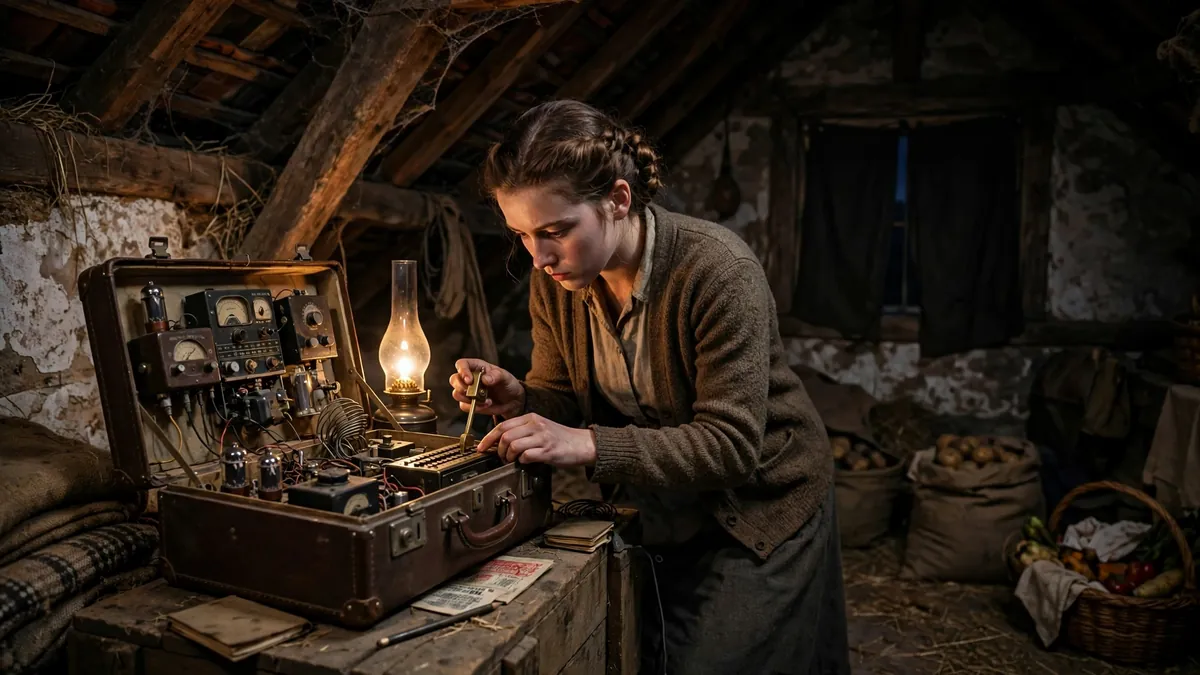
Eileen Mary Nearne (1921–2010) was one of the bravest secret agents of the Second World War, and one of the least known. A young British woman who spoke fluent French, she was parachuted into occupied France in March 1944 as a wireless operator for the Special Operations Executive (SOE), the organisation Winston Churchill had ordered to “set Europe ablaze”.
For four months she transmitted messages between the French Resistance and London from a series of hiding places, knowing that the Gestapo’s radio detection vans were hunting her and that capture meant torture and almost certain death. In July 1944 she was arrested, interrogated and tortured by the Gestapo, and sent to the Ravensbrück concentration camp.
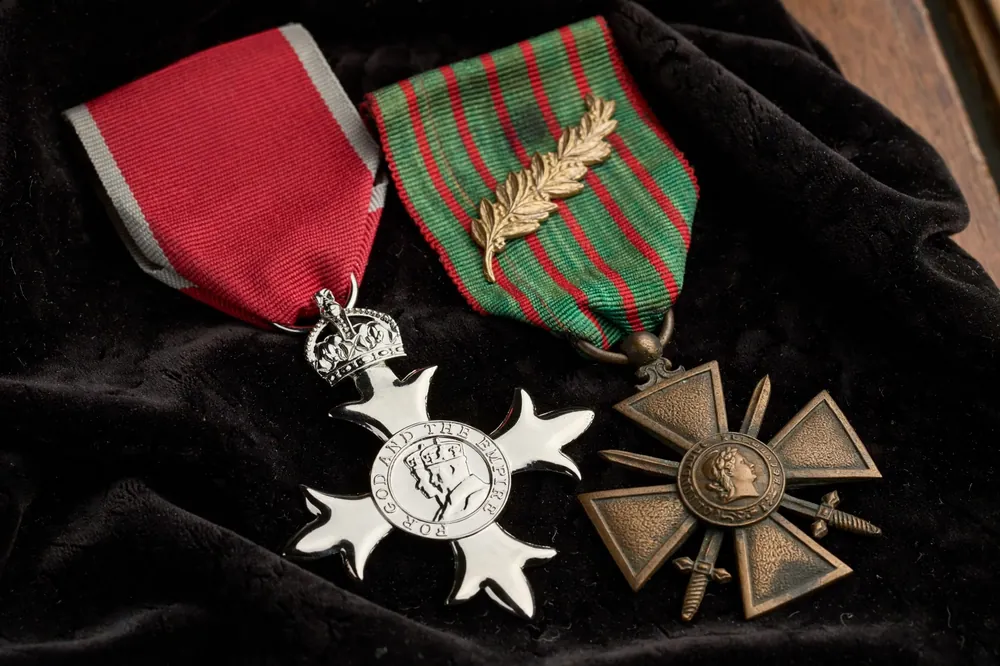
She escaped during a transfer in December 1944, made her way through Germany to the American lines, and returned to Britain. She was awarded the MBE and the French Croix de Guerre, and then she disappeared into an ordinary life, rarely speaking of what she had done, until her death in 2010 brought her story to public attention at last.
2. Key Facts
| Born | 15 March 1921, London, England |
| Died | 2 September 2010, Torquay, England (aged 89) |
| Service | Special Operations Executive (SOE), F Section, 1943–1944 |
| Codename / Bí danh | “Rose”; field name “Micheline” |
| Role | Wireless operator for the Wizard network in occupied France |
| Deployed | Parachuted into France, 2–3 March 1944 |
| Captured | July 1944 by the Gestapo; sent to Ravensbrück |
| Escaped | December 1944, during transfer; reached American lines |
| Awards | MBE; Croix de Guerre (France) |
3. Early Life
A childhood in France
Eileen Nearne was born in London on 15 March 1921, the youngest of four children of John Nearne, an Englishman, and Marie, a Frenchwoman from Grenoble. When Eileen was a small child the family moved to France, where her father worked, and she grew up speaking French as naturally as English, with a flawless accent that would later save her life and define her wartime career.
The family lived in France until the late 1930s, and Eileen was educated there, absorbing French culture, French manners and the French language so completely that native French speakers could not tell she was English. This bilingual childhood was not unusual among the families of the cross-Channel world of the early twentieth century, but it was rare enough, and valuable enough, that when war came the British secret services actively sought out young people exactly like her.

Return to Britain
The family returned to Britain as war approached, and Eileen, now a young woman of eighteen, found work in London. When war broke out in September 1939 she wanted to serve, and in 1940 she joined the Women’s Auxiliary Air Force (WAAF), working first as a clerk and then, because of her languages, in more sensitive work.
Her French was so good that she was soon noticed by the Air Ministry’s intelligence staff, and in 1943 she was approached by the Special Operations Executive. SOE, created in 1940 to support resistance movements in occupied Europe, was desperately short of wireless operators: the job was the most dangerous in the organisation, because the operator had to transmit from a fixed location, with a heavy and conspicuous set, while German detection vans triangulated the signal.
The average life expectancy of an SOE wireless operator in France in 1943–44 was measured in weeks. Nearne, who knew the risks, volunteered.
The Nearne family, between them, gave an extraordinary amount to the secret war. Eileen’s brother, Jack Nearne, served as an SOE agent in France, where he worked as a wireless operator and organiser, and her sister, Jacqueline Nearne, worked as a courier for SOE, carrying messages and documents between the Resistance networks.
The three siblings, who had grown up together in France and who spoke French as naturally as English, were all recruited by SOE, and they all served in occupied France. Their story is a reminder that the secret war was, in part, a family war, fought by brothers and sisters, husbands and wives, who shared the dangers and the secrets of their work, and who rarely spoke about it afterwards, even to each other.
4. Training with SOE
Learning the craft
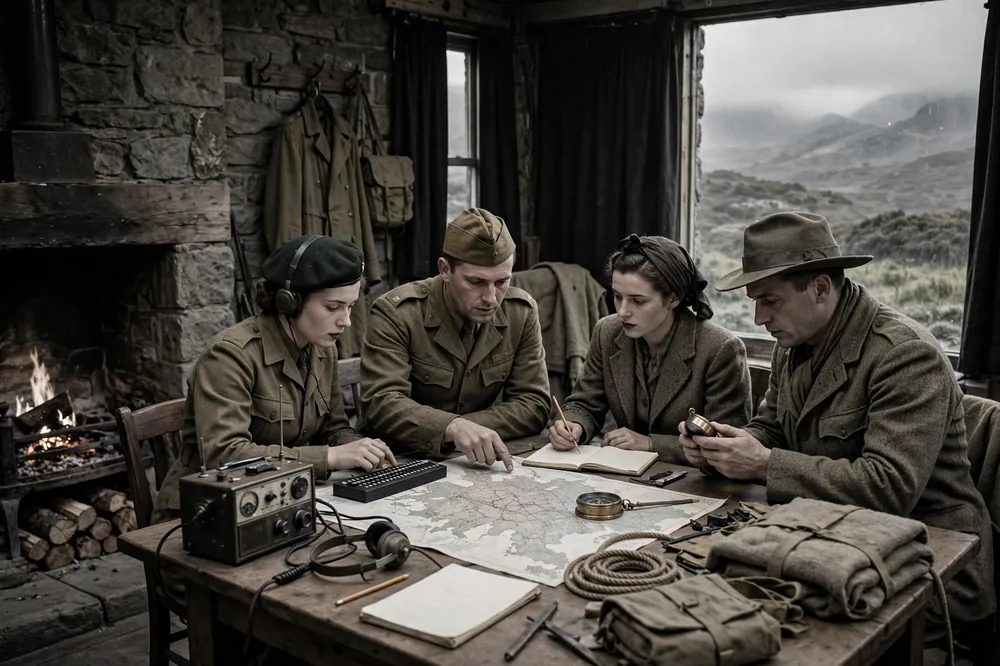
Nearne’s training took place at SOE’s schools in the Scottish Highlands and in southern England, where recruits learned the skills of the secret agent: coding and decoding messages, operating the wireless set, unarmed combat, silent killing, parachuting, and how to behave under interrogation. The training was deliberately harsh, designed to break those who could not bear the pressure, and Nearne passed it all.
Her instructors noted her calmness, her excellent French, and her aptitude for the wireless, a skill that required both technical competence and a steady nerve: the operator had to tap out Morse code at speed, in a code that changed regularly, while listening for the faint signs that the Germans were closing in.
She was given the codename “Rose” and the field name “Micheline”, and she was assigned to F Section, the SOE section that worked with the French Resistance, as the wireless operator for the Wizard network, run by the organiser Jean Suttill.
The danger of the wireless
The wireless operator’s job deserves emphasis, because it explains both Nearne’s importance and her fate. Every Resistance network depended on its link to London: without it, there were no supply drops, no arms, no orders, no coordination with the coming invasion. The operator was therefore the network’s most valuable member and its most exposed.
The set itself was a suitcase weighing some fifteen kilograms, with an aerial that had to be strung up outside, and a transmission could take twenty minutes or more, during which the German Funkabwehr detection service could triangulate the position. Operators were taught to transmit from a different location each time, to keep transmissions short, and to move immediately afterwards. Even so, the Germans caught many of them.
Nearne understood all of this, and she went anyway, in the knowledge that the invasion of France was coming and that the Resistance would need its radios more than ever.
The Germans called the wireless operators ‘pianists’, because of the way their fingers moved over the Morse key, and they hunted them with a special determination. The Funkabwehr, the German radio defence service, operated detection vans that could triangulate a transmission within minutes, and it employed direction-finding stations across occupied France.
The operators, for their part, developed countermeasures: they transmitted in short bursts, they changed their location after every transmission, and they used security checks — deliberate errors in their Morse transmission — that would tell London if they had been captured and were transmitting under German control.
The security checks saved lives, and they were one of the reasons why Nearne’s silence under torture mattered so much: had she talked, the Germans could have used her codes and her checks to deceive London.
5. In Occupied France
Arrival and the Wizard network
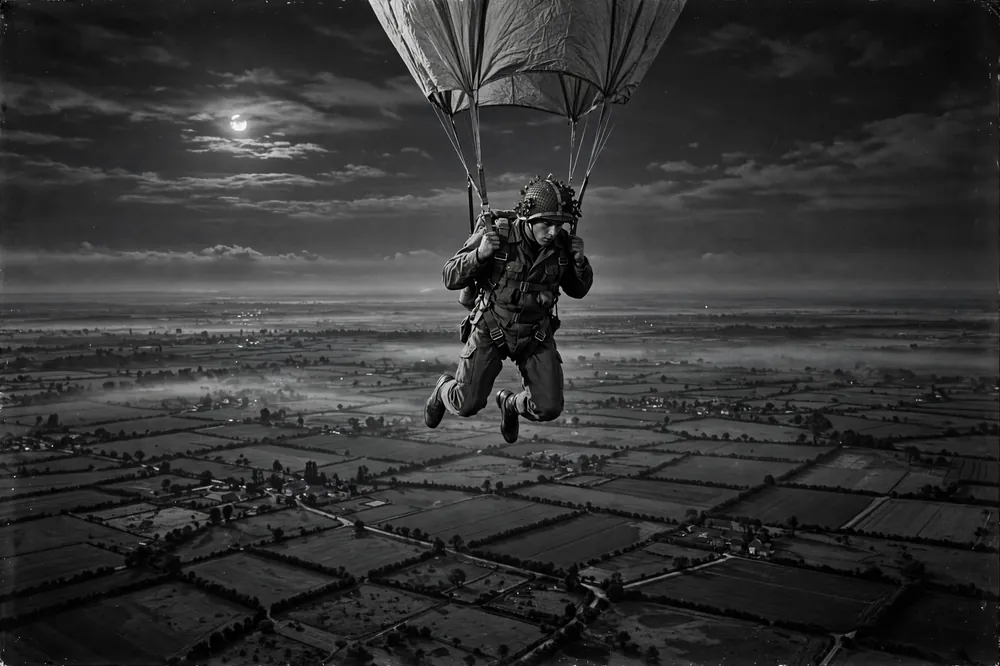
On the night of 2–3 March 1944 Nearne was parachuted into France near Les Lagnys, in the Indre department, together with another agent. She was twenty-two years old. She made contact with the Wizard network and began work as its wireless operator, transmitting from farms, houses and barns across central France, moving constantly, carrying her set in a suitcase and posing as a Frenchwoman.
Her French was so convincing that she could pass as a local, and her cover story — that she was a young Frenchwoman visiting relatives — held up under casual questioning. For four months she kept the Wizard network in contact with London, transmitting messages about German troop movements, airfields and supply lines, and arranging the parachute drops of arms and supplies that the Resistance needed for the coming uprising.
D-Day and the rising
When the Allies landed in Normandy on D-Day on 6 June 1944, Nearne’s work became more urgent and more dangerous. The Resistance rose across France, sabotaging railways and roads to slow the German reinforcements heading for Normandy, and the volume of radio traffic increased sharply.
The Germans, for their part, intensified their hunt for wireless operators, and the Wizard network was already under pressure: its organiser, Jean Suttill, had been arrested in June, and the network was being rolled up. Nearne continued to transmit, moving from place to place, until the net closed around her. In July 1944, while transmitting from a house, she was arrested by the Gestapo.
The circumstances of her arrest are not fully documented, but it is clear that the Germans had located her transmissions. She was taken to Gestapo headquarters, where she was interrogated and tortured, and she gave them nothing: she maintained her cover story, insisted she was a Frenchwoman named Micheline, and refused to betray her comrades or her codes.
6. Capture and Torture
The Gestapo’s prisoner
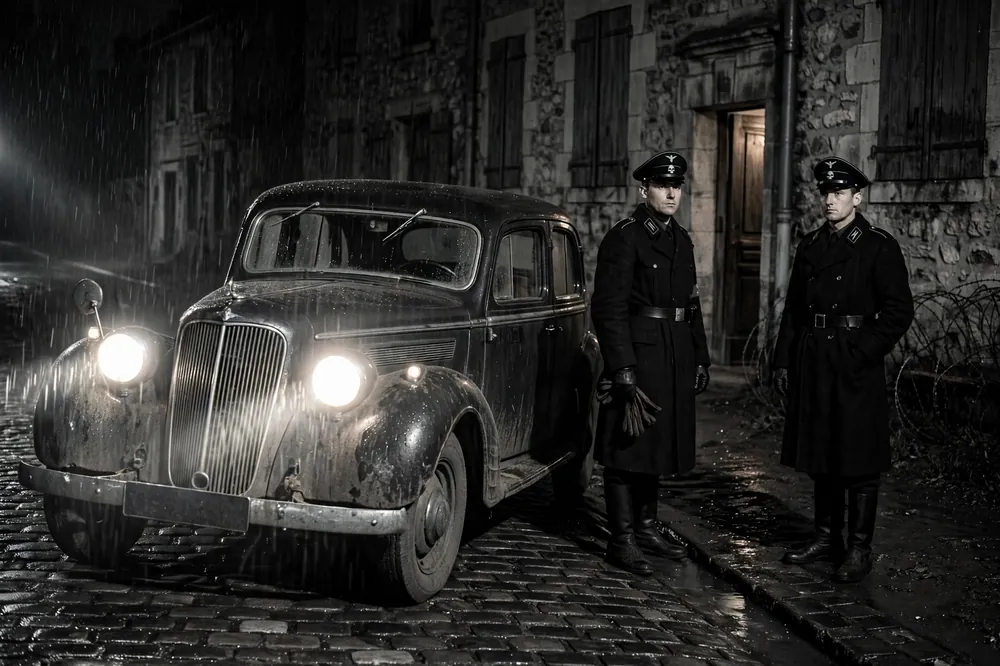
After her arrest, Nearne was taken to Gestapo headquarters and subjected to the interrogation methods the Gestapo used on captured agents: beatings, threats, and the water torture known as the “baignoire”, in which the prisoner was held underwater until near drowning. She endured it without breaking.
The Gestapo were convinced she was an agent — her wireless set was proof enough — but she refused to give them her codes, her contacts, or anything that could endanger the Resistance. Her refusal mattered: a captured wireless operator who talked could be “played back” by the Germans, who would transmit false messages to London under her call sign, luring supply drops into ambushes and betraying other agents.
Nearne’s silence prevented that. After weeks of interrogation, the Germans, unable to break her, classified her as a political prisoner and sent her to the Ravensbrück concentration camp, the camp for women, north of Berlin.
Ravensbrück / Ravensbrück
Ravensbrück was one of the cruellest camps in the Nazi system, a place of starvation, disease, forced labour and medical experiments, where tens of thousands of women died. Nearne arrived there in the late summer of 1944, weakened by torture and imprisonment, and was put to work.
The conditions were appalling: inadequate food, no medical care, bitter cold as winter approached, and the constant threat of selection for the gas chamber or for the camp’s medical experiments. She survived, as she had survived everything else, by a combination of toughness, luck and the solidarity of fellow prisoners.
She was still there when, in December 1944, the Germans began moving prisoners from Ravensbrück to other camps as the Soviet armies advanced from the east, and it was during one of these transfers that she saw her chance.
7. Escape
The flight through Germany
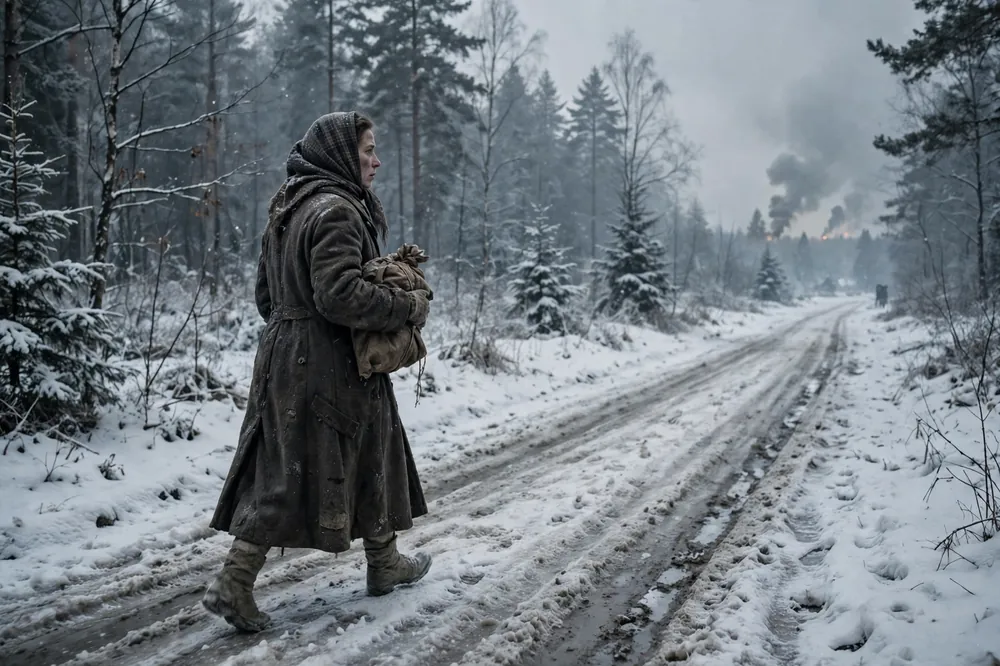
In December 1944, during a transfer from Ravensbrück, Nearne escaped. The precise details of her escape are not fully documented — she herself spoke little about it — but what is known is that she slipped away from a column of prisoners and made her way, alone, through a Germany that was collapsing under Allied bombing and the advance of the Soviet armies from the east and the Western Allies from the west.
She had no papers, no money, no food, and no knowledge of where the front lines were; she survived by hiding, by begging, and by working briefly for a German family who took her in as a labourer. Her French, her German, and her sheer determination carried her through weeks of danger, and in the spring of 1945 she reached the American lines and safety.
She was one of very few SOE agents to escape from a concentration camp and return to Britain, and her escape remains one of the most remarkable feats of the secret war.
Return to Britain
Nearne was repatriated to Britain in the spring of 1945, after the end of the war in Europe, and was debriefed by SOE. Her debriefing, and the reports of her conduct, made it clear that she had behaved with exceptional courage: she had operated for four months under constant threat, she had withstood torture without betraying anyone, and she had escaped from a concentration camp and crossed a collapsing Germany to freedom.
She was awarded the MBE in 1945, and the French government awarded her the Croix de Guerre with Palme. Her brother, Jack Nearne, had also served with SOE in France, and her sister, Jacqueline Nearne, had worked as a courier for SOE — the Nearne family, between them, had given an extraordinary amount to the secret war.
8. Later Life
An ordinary life
After the war, Nearne did what many secret agents did: she tried to forget. She worked in London, lived quietly, and almost never spoke about her wartime service, even to her friends. The secrecy that had been drilled into her during training stayed with her for the rest of her life, and she was uncomfortable with attention or praise.
She never married, and she lived alone for many years in Torquay, in Devon, where she was known to her neighbours as a quiet, private woman who liked her garden and her books. The few people who knew her wartime history found it hard to reconcile the modest, reserved woman they knew with the agent who had defied the Gestapo and escaped from Ravensbrück.
She was, by all accounts, content with her obscurity, and she resisted attempts by journalists and historians to tell her story.

Death and discovery
Eileen Nearne died in Torquay on 2 September 2010, aged eighty-nine. She died alone, and her body was not discovered for some time; her death was reported in the local press, and it was only then that a neighbour, going through her papers, realised who she had been.
The discovery of her MBE, her Croix de Guerre, and her SOE records brought her story to national attention in Britain, and she was given a funeral with full honours, attended by representatives of the British and French governments. The contrast between her quiet death and the scale of what she had done moved many people, and her story became one of the most widely told of the secret war in the years that followed.
She was, in the end, remembered not because she sought fame, but because fame found her after she was gone.
9. Legacy and Assessment
The wireless operators
Nearne’s legacy is bound up with the legacy of the SOE wireless operators, the men and women who kept the Resistance in contact with London and paid the highest price for it. Of the roughly 470 F Section agents sent to France, more than a hundred were killed, and the wireless operators died at a higher rate than any other group.
Nearne’s four months in the field, her refusal to break under torture, and her escape from Ravensbrück make her one of the most remarkable of them, and her story is now used to illustrate both the courage of the SOE agents and the cost of the secret war.
Historians also note that her story corrects a common misunderstanding: the secret war was not only the work of glamorous spies and daring saboteurs, but of quiet, technically skilled people — often young, often female — who did unglamorous, dangerous work, day after day, until they were caught or killed.
Why she matters
Nearne matters for a second reason, too: her life after the war. She asked for nothing, she told almost no one, and she lived and died in obscurity, and it was only chance — a neighbour going through her papers — that brought her story to light.
Her case has become a symbol of the many secret agents whose service was never recognised, and of the debt that Britain and France owe to people who did extraordinary things and then went home and said nothing about them.
The funeral honours she received, the memorials that followed, and the books and documentaries about her life are a belated recognition, and they are also a reminder: behind every famous name in the history of the Second World War, there were dozens of people like Eileen Nearne, whose names were never known, and whose courage was never rewarded in their lifetimes.
10. SOE and the Secret War
What SOE was / SOE là gì
The Special Operations Executive was created in July 1940, on the orders of Winston Churchill, to conduct sabotage and subversion in occupied Europe and to support resistance movements. Its French section, F Section, sent more than 400 agents into France, of whom about a quarter were women, recruited largely because women attracted less attention from German patrols and could move more freely.
SOE’s agents organised the Resistance into circuits, supplied them with arms by parachute, trained them in sabotage, and coordinated their actions with the Allied invasion. The work was extraordinarily dangerous: the Gestapo and the Abwehr hunted SOE agents relentlessly, and the German penetration of SOE’s networks — notably the “Prosper” network, which was destroyed in 1943 — cost many lives.
Nearne’s Wizard network was one of the many circuits that operated in the shadow of these disasters, and her survival for four months, in the most exposed role of all, was a considerable achievement.
The cost of the secret war
The secret war’s cost is hard to measure, because so much of it was invisible, but historians agree that SOE’s contribution to the liberation of France was substantial: the sabotage of railways and communications in the weeks before and after D-Day delayed German reinforcements to Normandy by days, and the Resistance’s intelligence, transmitted by operators like Nearne, gave the Allies a detailed picture of German dispositions.
The price was paid in lives: more than a hundred F Section agents were killed, many of them after torture in Gestapo prisons and death in concentration camps. Nearne’s story — capture, torture, Ravensbrück, escape — is, in miniature, the story of the secret war itself: extraordinary courage, terrible suffering, and, for a few, survival against the odds.
11. Frequently Asked Questions
Who was Eileen Nearne? / Eileen Nearne là ai?
Eileen Nearne was a British SOE wireless operator, codenamed “Rose”, who was parachuted into occupied France in March 1944, captured by the Gestapo in July 1944, sent to Ravensbrück concentration camp, and escaped in December 1944. She was parachuted into occupied France in March 1944 as a wireless operator for the Wizard network, and she was captured by the Gestapo in July 1944, after four months of transmitting between the Resistance and London. She escaped from Ravensbrück in December 1944 and reached the American lines in the spring of 1945.
What did a wireless operator do?
The wireless operator maintained the Resistance network’s radio link to London, transmitting messages about German movements and arranging parachute drops of arms and supplies. It was the most dangerous job in SOE, because the Germans could detect and triangulate the radio signal. The operator had to transmit from a fixed location, with a heavy and conspicuous set, while German detection vans triangulated the signal, and the average life expectancy of an SOE wireless operator in France in 1943–44 was measured in weeks.
How was Nearne captured?
She was arrested by the Gestapo in July 1944 while transmitting from a house in central France. The Germans had located her radio transmissions. She was interrogated and tortured but gave them nothing. The Germans had located her radio transmissions, and she was taken to Gestapo headquarters, where she was interrogated and tortured, but she gave them nothing, maintaining her cover story and refusing to betray her comrades or her codes. Her silence prevented the Germans from playing back her set to deceive London.
How did she escape from Ravensbrück?
She escaped in December 1944 during a transfer of prisoners from Ravensbrück, slipped away from a column, and made her way alone through Germany to the American lines in the spring of 1945. She hid in barns and forests, begged for food, and worked briefly for a German family, before reaching the American lines in the spring of 1945. She had no papers, no money and no food, and she survived by hiding, by begging, and by working briefly for a German family who took her in as a labourer.
What awards did she receive?
She was awarded the MBE in 1945 and the French Croix de Guerre with Palme. Her story only became widely known after her death in 2010, when her papers and medals were discovered. The medals were found among her papers after her death in 2010, and they are now preserved as a record of her service in the secret war. Her brother Jack had also served with SOE in France, and her sister Jacqueline had worked as a courier, so the Nearne family, between them, had given an extraordinary amount to the secret war.
Why was her story unknown for so long?
Because she almost never spoke about her wartime service, lived quietly and alone in Torquay, and asked for no recognition. Her SOE records were secret for decades, and her neighbours did not know who she had been until after her death. Her SOE records were secret for decades, and her neighbours in Torquay did not know who she had been until after her death, when a neighbour going through her papers found her medals and her records. Her funeral, with full honours, was attended by representatives of the British and French governments.
12. Sources
- Wikipedia, “Eileen Nearne” — birth and death dates, SOE service, capture, Ravensbrück, escape, MBE and Croix de Guerre.
- Wikipedia, “Special Operations Executive” — history of SOE, F Section, the role of wireless operators.
- National Archives (UK), SOE personnel files — Nearne’s service record and debriefing.
- M. R. D. Foot, SOE in France (HMSO, 1966; Routledge, 2004) — the standard history of F Section and its agents.
- Sarah Helm, A Life in Secrets: Vera Atkins and the Missing Agents of WWII (Little, Brown, 2005) — the fate of SOE agents in France, including the women.
- Encyclopædia Britannica, “Ravensbrück” — history of the women’s concentration camp.
- Marcus Binney, The Women Who Lived for Danger (Hodder & Stoughton, 2002).
- Nigel Perrin, “Eileen Nearne”, The Guardian obituary, September 2010.