 WAR ATLAS MILITARY HISTORY MAGAZINE · WWI — WWII
Erich Rudorffer
1. Erich Rudorffer — Who They Were
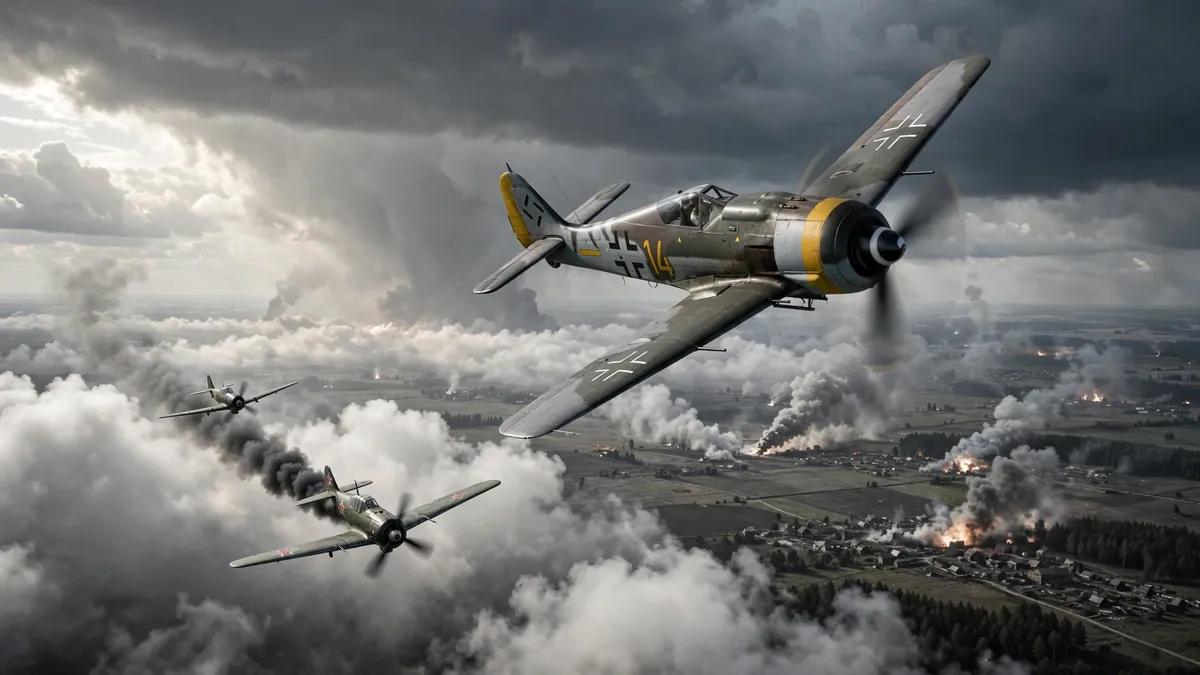
Erich Rudorffer (1917–2016) was one of the most successful fighter pilots of the Second World War. Credited with 222 aerial victories, he ranks among the highest-scoring aces in history, and he achieved his record on every front the Luftwaffe fought on: over the Channel and France with Jagdgeschwader 2, over North Africa, on the Eastern Front with Jagdgeschwader 54, and finally in the Messerschmitt Me 262 jet fighter with Jagdgeschwader 7 in the last months of the war.
His most famous feat came on 11 October 1943, when he claimed thirteen Soviet aircraft shot down in a single mission lasting seventeen minutes — a feat that has never been equalled. He was awarded the Knight’s Cross with Oak Leaves and Swords, flew more than 1,000 combat missions, was shot down sixteen times, and survived the war to live to the age of ninety-nine, one of the last of the great aces.
2. Key Facts
| Born | 1 November 1917, Zwochau, German Empire |
| Died | 8 April 2016, Bad Schwartau, Germany (aged 98) |
| Service | Luftwaffe, 1939–1945 / Luftwaffe, 1939–1945 |
| Units | JG 2 “Richthofen”; JG 54; JG 7 (Me 262) / JG 2 “Richthofen”; JG 54; JG 7 (Me 262) |
| Aerial victories | 222 credited (including 12 with the Me 262 jet) |
| Combat missions | More than 1,000 |
| Times shot down | 16 / 16 |
| Highest award | Knight’s Cross with Oak Leaves and Swords |
| Famous feat | 13 victories claimed in 17 minutes, 11 October 1943 |
3. Early Life
A Saxon childhood
Erich Rudorffer was born on 1 November 1917 at Zwochau, in Saxony, in the last year of the First World War. He grew up in the Weimar Republic, in a Germany humiliated by defeat and by the Treaty of Versailles, and like many young Germans of his generation he was drawn to aviation, which the treaty had forbidden Germany to practise.
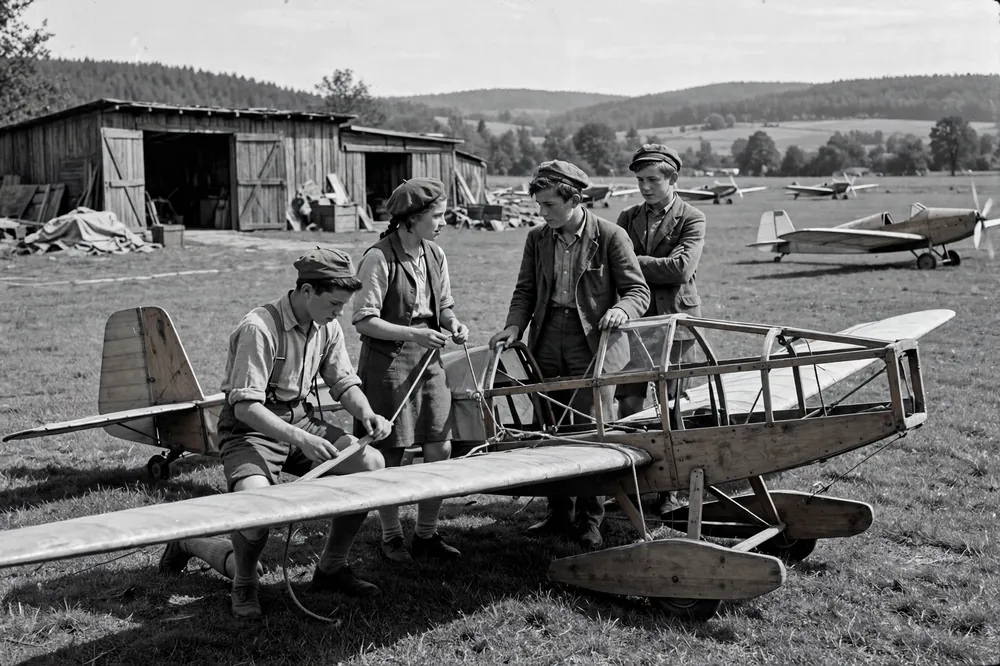
The gliding clubs that sprang up across Germany in the 1920s and 1930s, ostensibly civilian sporting organisations, were in fact the training ground for the future Luftwaffe, and Rudorffer learned to fly in them. He joined the Luftwaffe in 1939, as the new German air force was expanding rapidly in preparation for war, and he trained as a fighter pilot.
He was twenty-two when the war began, and he was posted to Jagdgeschwader 2, the “Richthofen” wing, named after the great ace of the First World War, Manfred von Richthofen.
First victories
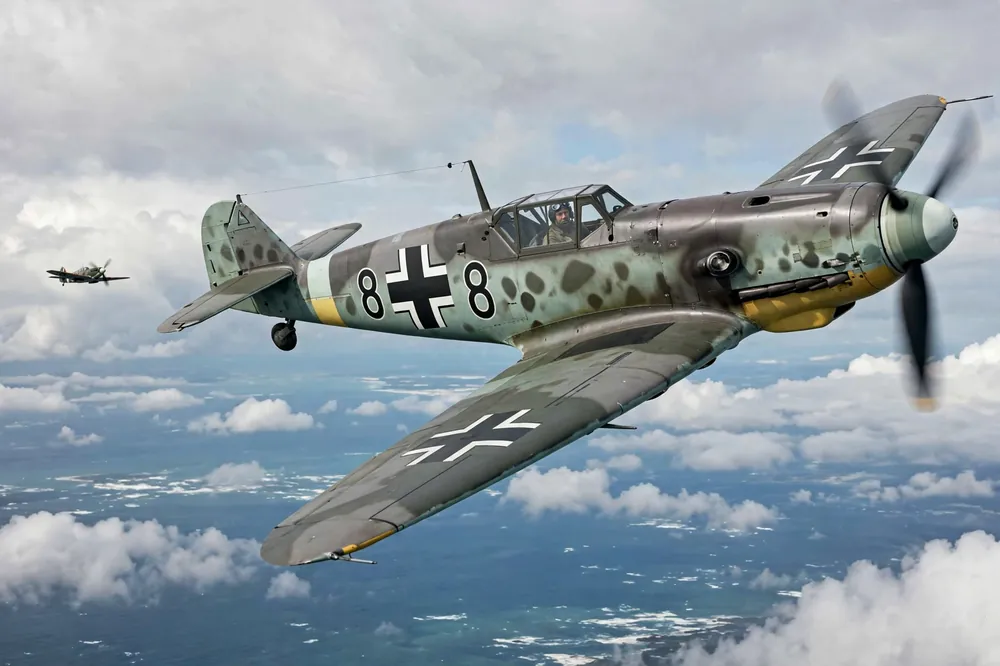
Rudorffer’s first victories came during the Battle of Britain in 1940, flying the Messerschmitt Bf 109 over the English Channel. The Battle of Britain was the Luftwaffe’s first defeat, and it was a hard school for a young pilot: the RAF’s Spitfires and Hurricanes were formidable opponents, and the Bf 109, operating at the limit of its range over England, had only minutes of fuel for combat.
Rudorffer learned his trade there, and he claimed his first victories, but his career only truly took off when his unit was transferred to the Mediterranean and North Africa, and then to the Eastern Front. He was a pilot of exceptional eyesight and aggression, and he developed a reputation for closing to very short range before firing, a tactic that made his shooting devastatingly effective but also exposed him to the debris of the aircraft he destroyed.
Jagdgeschwader 2, the ‘Richthofen’ wing, was one of the oldest and most famous fighter wings in the Luftwaffe, and its traditions reached back to the First World War, to the ‘Flying Circus’ of Manfred von Richthofen, the Red Baron. The wing’s pilots wore the Richthofen name with pride, and they were expected to live up to it, and Rudorffer, who joined the wing as a young pilot in 1939, was determined to do so.
The wing fought over the Channel and France in 1940–41, in the daily air battles that followed the Battle of Britain, and it was a hard school: the RAF’s fighters were formidable, the fighting was fast and unforgiving, and a young pilot who survived his first ten missions was already a veteran. Rudorffer survived, and he learned, and he became one of the wing’s leading pilots.
4. The Western Front and North Africa
Channel and France
Rudorffer’s early service with JG 2 took him over the Channel, over France, and on fighter sweeps and bomber escort missions in 1940 and 1941. The air war over the Channel was a war of attrition, fought in small, fast engagements, and it taught Rudorffer the importance of situational awareness — of seeing the enemy first, of attacking from above and from the sun, and of breaking off before the odds turned against him.
He claimed a growing number of victories, but the Western Front was a hard place to score: the RAF was well led, its pilots were brave and well trained, and the Luftwaffe’s fighters were increasingly outnumbered. Rudorffer’s time in the west gave him the experience that would make him deadly on the Eastern Front, where the odds, and the opportunities, were very different.
North Africa
In North Africa, Rudorffer flew with JG 2 in support of Rommel’s Afrika Korps, in the desert war of 1942–43. The desert air war was fought in clear skies, over open ground, and it was a war of movement: the front lines shifted hundreds of kilometres, and the airfields moved with them.
Rudorffer added to his score there, flying against British and American fighters and bombers, and he learned to operate in the heat and dust that wore out men and machines alike. The North African campaign ended in defeat for the Axis in May 1943, and Rudorffer, like the rest of the Luftwaffe, was withdrawn to Europe.
His next posting would be the one that made his reputation: the Eastern Front, and Jagdgeschwader 54, the “Grünherz” wing.
5. The Eastern Front
JG 54 and the air war in the East
The Eastern Front was where the great majority of German fighter aces made their scores, and the reasons are well understood by historians. The Soviet air force in 1941–43 was large but poorly trained and poorly led, its pilots often flying obsolete aircraft, and the German fighter pilots, who were among the best trained in the world, were able to score heavily.
The Eastern Front also offered its pilots an almost unlimited number of targets: the Soviet air force flew thousands of sorties, and a German pilot who flew every day could meet the enemy several times a day. Rudorffer arrived on the Eastern Front in 1943 and quickly became one of JG 54’s leading pilots, flying the Focke-Wulf Fw 190, an aircraft he preferred to the Bf 109 for its firepower and its ruggedness.
His score rose rapidly, and by the autumn of 1943 he was among the Luftwaffe’s highest-scoring pilots.
Thirteen in seventeen minutes
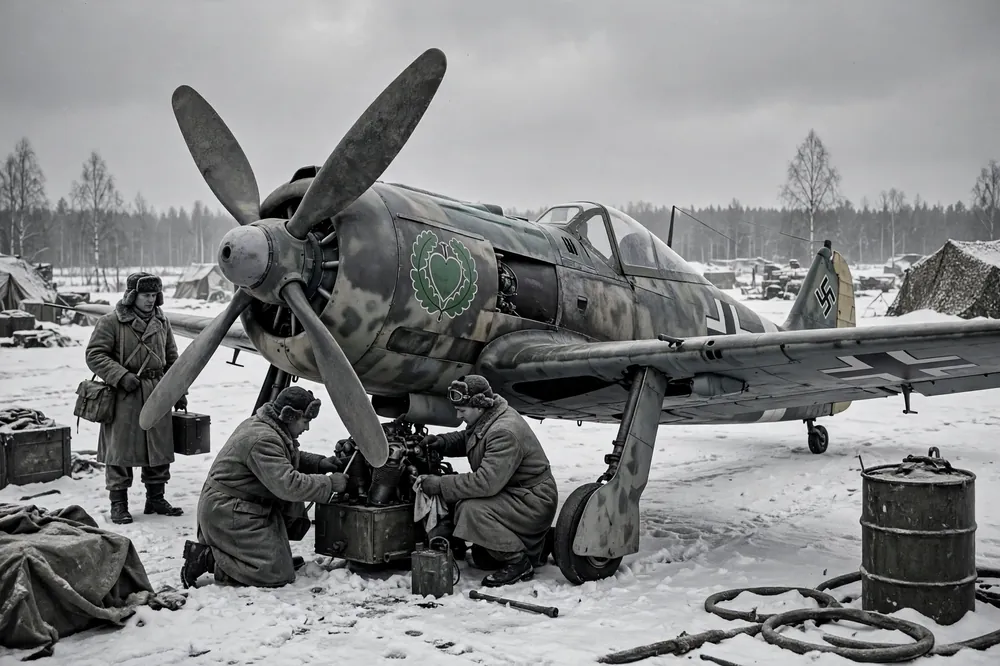
Rudorffer’s most famous feat took place on 11 October 1943, over the Leningrad front. In a single mission lasting seventeen minutes, he claimed thirteen Soviet aircraft shot down — a record that has never been equalled by any fighter pilot in any air force.
The claim, like all aerial victory claims, was a claim, not a confirmed fact: the Luftwaffe’s confirmation system was rigorous, requiring a witness or wreckage, but on the Eastern Front, where the fighting was fluid and the wreckage often fell behind Soviet lines, confirmation was sometimes based on the pilot’s report and the testimony of his wingman.
Historians treat the thirteen victories as credited to Rudorffer, and they note that even if the exact number is debated, the mission itself was extraordinary: to engage, shoot down and disengage from thirteen enemy aircraft in seventeen minutes required a combination of skill, aggression and luck that few pilots have ever possessed. The feat made Rudorffer famous in Germany, and it earned him the Oak Leaves to his Knight’s Cross.
6. The Me 262 and the Last Months
Flying the jet
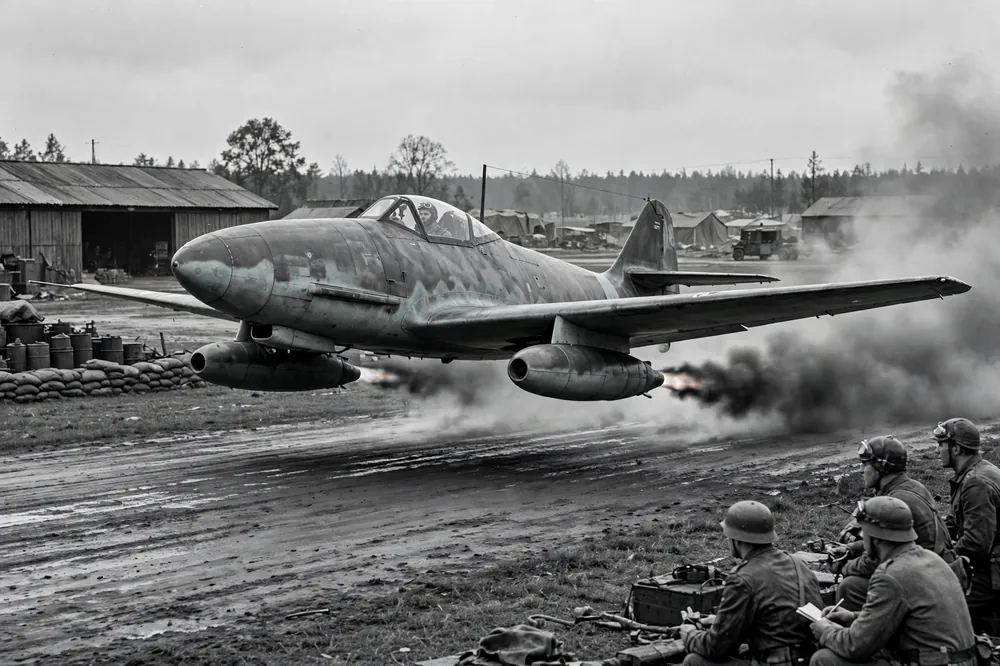
In the last months of the war, Rudorffer was transferred to Jagdgeschwader 7, the first operational jet fighter wing in the world, flying the Messerschmitt Me 262. The Me 262 was a revolutionary aircraft, faster than any Allied fighter by more than 150 kilometres per hour, and it was Germany’s last hope of regaining control of the skies.
But it was also a difficult and dangerous aircraft: its engines were unreliable, it needed long runways, and it was vulnerable during take-off and landing, when Allied fighters waited to attack it. Rudorffer claimed twelve victories in the Me 262, making him one of the most successful jet aces of the war, and he flew the jet in the defence of the Reich in the spring of 1945, when the Allied bomber fleets were destroying German cities by day and the German air force was running out of fuel, pilots and airfields.
Shot down sixteen times
Rudorffer was shot down sixteen times during the war, a figure that tells its own story about the risks he took. He flew aggressively, closing to short range, and he paid for it: his aircraft were hit, set on fire, and forced down, and he bailed out or crash-landed again and again.
That he survived sixteen shoot-downs is remarkable, and it owed much to luck, to his skill as a pilot, and to the fact that many of his shoot-downs took place over German-held territory, where he could be recovered. He was also wounded several times.
His survival, through more than 1,000 combat missions, is one of the most extraordinary records of the war, and it is a reminder that the great aces were not only skilled but also, in the end, lucky.
7. Tactics and Flying Style
Close-range shooting
Rudorffer’s flying style was defined by aggression and by a willingness to close with the enemy. He preferred to attack from above and behind, to close to a range at which he could not miss — sometimes less than fifty metres — and to fire a short, devastating burst.
This style was effective, but it was dangerous: at such short range, the pilot was exposed to the debris of the aircraft he had just destroyed, and to the defensive fire of the enemy’s formation. Rudorffer’s aircraft were frequently damaged by debris, and he was shot down, in part, because he flew so close.
His comrades admired his courage and his shooting, and his enemies, when they met him, found him a formidable opponent. His style was, in many ways, the style of the Eastern Front, where the targets were plentiful and the German pilots had the freedom to attack aggressively.
The Fw 190
Rudorffer flew both the Bf 109 and the Fw 190, and he preferred the Fw 190 for its firepower, its ruggedness and its excellent handling at low altitude. The Fw 190, with its four 20 mm cannon, could destroy a Soviet bomber or fighter with a single burst, and its radial engine could absorb damage that would have stopped the Bf 109’s liquid-cooled engine.
On the Eastern Front, where the fighting was often at low altitude, over the battlefield, the Fw 190 was the ideal aircraft, and Rudorffer used it to devastating effect. He was one of the pilots who helped to establish the Fw 190’s reputation as one of the best fighter aircraft of the war, and his record in it — the majority of his 222 credited victories — is a testament to the combination of a great pilot and a great aircraft.
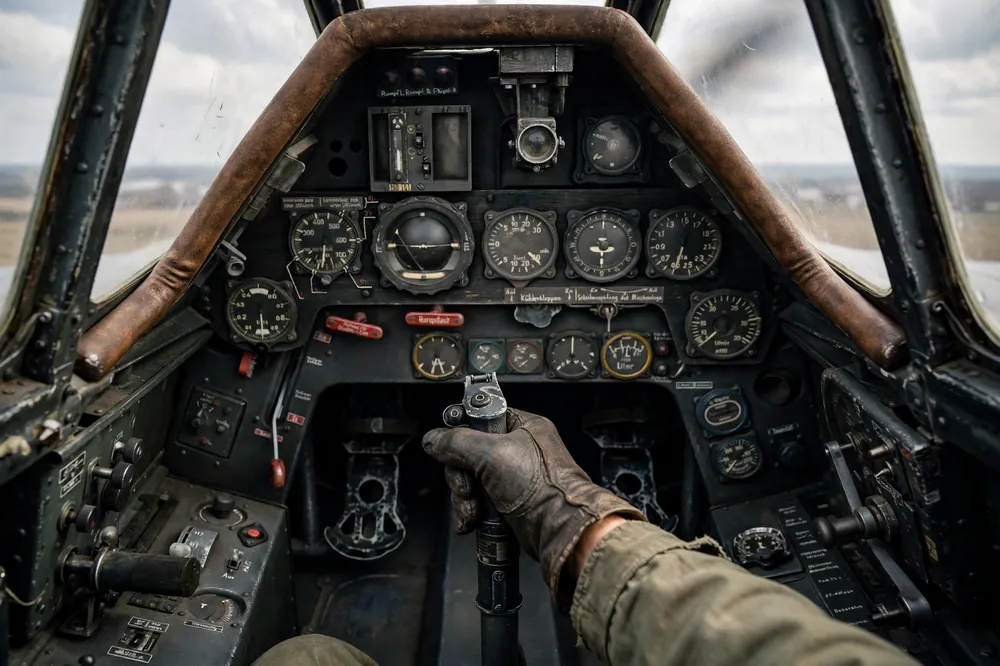
The Focke-Wulf Fw 190 was powered by the BMW 801 radial engine, a fourteen-cylinder engine that produced some 1,700 horsepower, and it was armed with four 20 mm cannon and two machine guns, a weight of fire that could destroy a Soviet bomber or fighter with a single burst.
The aircraft’s radial engine, unlike the liquid-cooled engine of the Bf 109, could absorb a great deal of battle damage and keep running, and its wide-track undercarriage made it easier to handle on the rough grass airfields of the Eastern Front.
The Fw 190 was, in the words of one German pilot, ‘a pilot’s aircraft’, and Rudorffer, who flew it for the great majority of his victories, regarded it as the best fighter he ever flew. Its combination of firepower, ruggedness and handling made it the ideal aircraft for the low-altitude fighting over the Eastern Front.
8. Later Life
A long life
After the war, Rudorffer, like many Luftwaffe veterans, found it difficult to adjust to civilian life. He worked in civil aviation, as a pilot and in airline management, and he lived quietly in northern Germany. He rarely spoke publicly about the war, and when he did, he spoke of it as a professional soldier speaks of his service: with pride in his comrades and his aircraft, and with little interest in the politics that had caused the war.
He was one of the last surviving recipients of the Knight’s Cross with Oak Leaves and Swords, and in his later years he was sought out by historians and by aviation enthusiasts, who wanted to hear the story of the thirteen victories in seventeen minutes, and of the Me 262, from the man who had lived it.
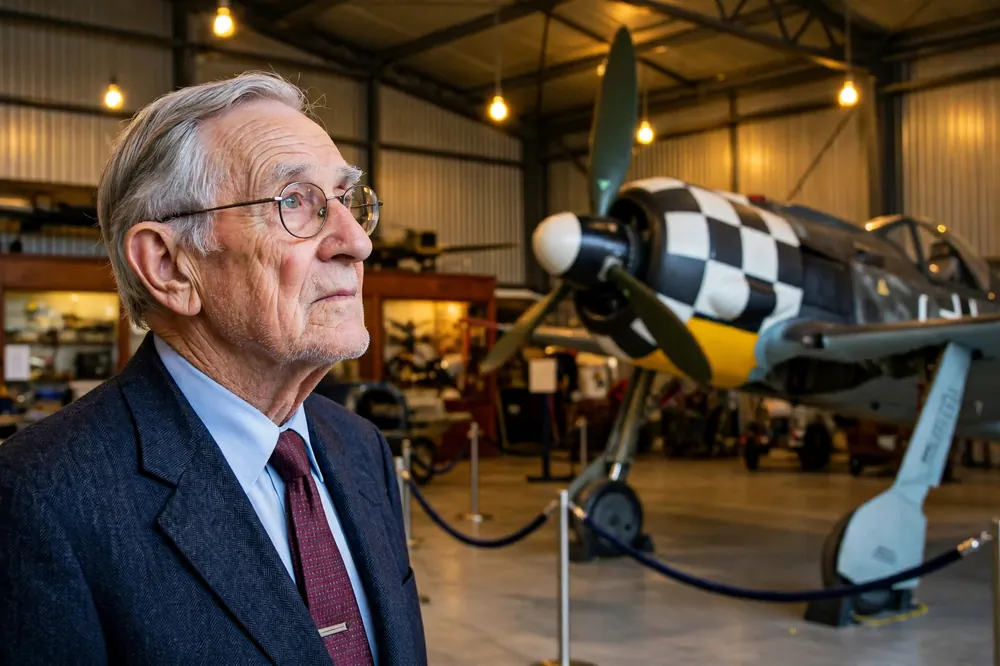
He died on 8 April 2016, at Bad Schwartau, aged ninety-eight, one of the last of the great aces of the Second World War.
Remembering the Luftwaffe aces
Rudorffer’s long life meant that he outlived almost all of his contemporaries, and his death, in 2016, was widely reported in Germany and abroad. The obituaries noted his record — 222 credited victories, the thirteen in seventeen minutes, the Me 262 — and they also noted the controversy that surrounds the Luftwaffe’s aces: their scores were achieved, in large part, on the Eastern Front, against an enemy that was, for much of the war, less well trained and less well equipped than they were, and their victories were in the service of a criminal regime.
Rudorffer himself never apologised for his service, and he never claimed to have been anything other than a soldier doing his duty. His story, like the story of all the German aces, is a reminder that military skill and moral judgement are different things, and that history must hold both in view at once.
9. Legacy and Assessment
The numbers and their meaning
Rudorffer’s 222 credited victories place him seventh among all fighter aces of the Second World War, and his record is often cited as evidence of the extraordinary skill of the Luftwaffe’s fighter pilots. But historians today are careful to put the numbers in context.
The Luftwaffe’s confirmation system was rigorous, and its pilots’ claims were checked against witnesses and wreckage, but the system was not perfect, and on the Eastern Front, where the fighting was fluid and the wreckage often fell behind enemy lines, overclaiming was common on both sides.
The Soviet air force, for its part, disputes many German claims, and modern research suggests that German victory totals, while broadly accurate in their order of magnitude, are not exact counts of aircraft destroyed. Rudorffer’s 222 victories should therefore be understood as credited victories — the number the Luftwaffe recorded for him — and not as a precise, independently verified count of Soviet aircraft destroyed.
The Eastern Front and the aces
The broader debate about the German aces is a debate about the Eastern Front itself. The Soviet pilots whom Rudorffer and his comrades fought were, in 1941–43, often inexperienced, flying obsolete aircraft, and led by officers who had been purged in the 1930s. By 1944–45, the Soviet air force had improved dramatically, and German pilots found the fighting much harder.
Rudorffer’s career spans this change: his greatest scores came in 1943, when the Soviet air force was still recovering, and his later service, in the Me 262, was fought against the Western Allies, whose pilots were among the best in the world.
His record, like the records of all the great aces, must be read with this context in mind: he was an exceptionally skilled pilot, flying in conditions that, for much of the war, favoured the attacker, and his 222 credited victories are a measure of his skill, his aggression, and the war he fought in.
10. Rudorffer and the Me 262
The jet age
Rudorffer’s service in the Me 262 makes him a figure of particular interest to historians of aviation, because he was one of the few pilots who flew in combat in both the propeller age and the jet age. The Me 262 was the first operational jet fighter in the world, and its pilots were pioneers: they had to learn to fly an aircraft that was faster than anything they had flown before, with engines that could flame out without warning, and with a landing speed so high that a mistake on the approach was fatal.
Rudorffer’s twelve credited victories in the Me 262 place him among the most successful jet pilots of the war, and his experience in the jet is a reminder that the last months of the war, for all their horror, were also a period of extraordinary technological change.
The Me 262 pointed the way to the future of air warfare, and Rudorffer, who had learned to fly in gliders in the 1930s, lived to see that future arrive.
The last battles
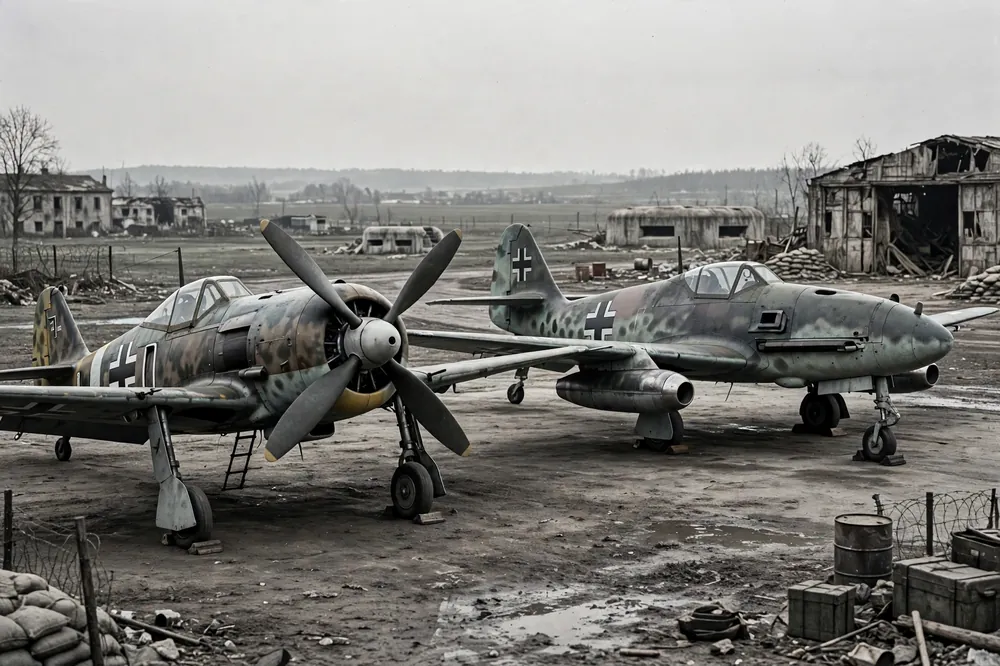
The Me 262’s combat career was brief and tragic. The aircraft entered service too late, in too few numbers, and with too little fuel, to change the outcome of the war, and its pilots, however skilled, could not stop the Allied bomber fleets.
Rudorffer’s last missions, in the spring of 1945, were flown in a Germany that was collapsing, and his unit, JG 7, was fighting a losing battle against overwhelming odds. When the war ended, Rudorffer, like the other Me 262 pilots, was left with the knowledge that he had flown the most advanced fighter in the world, and that it had not been enough.
The Me 262’s legacy, and Rudorffer’s part in it, is a story of technological brilliance and strategic futility, and it is one of the most poignant chapters of the air war.
11. Frequently Asked Questions
How many victories was Erich Rudorffer credited with?
Rudorffer was credited with 222 aerial victories, including twelve in the Messerschmitt Me 262 jet fighter. He ranks among the highest-scoring aces in history. The figure is a credited total under the Luftwaffe’s confirmation system, not an independently verified count. He ranks among the highest-scoring aces in history, and he achieved his record on every front the Luftwaffe fought on, over the Channel and France, over North Africa, on the Eastern Front, and finally in the Me 262 jet fighter.
What was the thirteen in seventeen minutes feat?
On 11 October 1943, over the Leningrad front, Rudorffer claimed thirteen Soviet aircraft shot down in a single mission lasting seventeen minutes. It is the greatest number of victories claimed by a fighter pilot in a single mission, and it has never been equalled. The mission was flown on 11 October 1943, over the Leningrad front, and it required a combination of skill, aggression and luck that few pilots have ever possessed. The feat made Rudorffer famous in Germany, and it earned him the Oak Leaves to his Knight’s Cross.
How many times was Rudorffer shot down?
He was shot down sixteen times during the war, and he survived them all. He flew more than 1,000 combat missions, a figure that reflects both his longevity and the intensity of his service. He bailed out or crash-landed after each shoot-down, and he was recovered by German troops, because most of his losses occurred over territory held by Germany. He flew more than 1,000 combat missions, and he was wounded several times, but he survived them all, through a combination of skill, luck, and the fact that many of his shoot-downs took place over German-held territory.
Which aircraft did Rudorffer fly?
He flew the Messerschmitt Bf 109 and the Focke-Wulf Fw 190 for most of the war, and the Messerschmitt Me 262 jet fighter in the last months of the war with JG 7. He preferred the Fw 190 for its firepower and ruggedness. He preferred the Fw 190 for its firepower, its ruggedness and its excellent handling at low altitude, and he flew the Me 262 jet fighter in the last months of the war with JG 7. He claimed twelve victories in the Me 262, making him one of the most successful jet aces of the war.
Did Rudorffer fight on the Eastern Front?
Yes. He served with JG 54 on the Eastern Front from 1943, where he claimed the great majority of his victories, including the thirteen on 11 October 1943. He had earlier fought over the Channel, France and North Africa with JG 2. He served with JG 54 from 1943, where he claimed the great majority of his victories, including the thirteen on 11 October 1943, and he had earlier fought over the Channel, France and North Africa with JG 2.
When did Rudorffer die?
He died on 8 April 2016 at Bad Schwartau, Germany, aged ninety-eight, one of the last surviving great aces of the Second World War. His death was widely reported in Germany, and he was remembered as one of the last of the great aces, a pilot whose career had spanned the whole war. He was one of the last surviving recipients of the Knight’s Cross with Oak Leaves and Swords, and in his later years he was sought out by historians and aviation enthusiasts who wanted to hear his story.
12. Sources
- Wikipedia, “Erich Rudorffer” — birth and death dates, 222 credited victories, JG 2, JG 54 and JG 7, thirteen victories on 11 October 1943, sixteen shoot-downs.
- Wikipedia, “List of World War II flying aces” — Rudorffer’s ranking among the highest-scoring aces.
- Encyclopædia Britannica, “Messerschmitt Me 262” — the jet fighter’s history and combat record.
- John Weal, Jagdgeschwader 54 ‘Grünherz’ (Osprey, 2001) — the history of JG 54 on the Eastern Front.
- Hugh Morgan and John Weal, German Jet Aces of World War 2 (Osprey, 1998) — the Me 262 pilots, including Rudorffer.
- Mike Spick, Luftwaffe Fighter Aces (Greenhill, 1996) — the aces and their tactics.
- Christer Bergström, The Ardennes and the Eastern Front (various) — the air war in the East.
- John Weal, Fw 190 Aces of the Eastern Front (Osprey, 1998).