 WAR ATLAS MILITARY HISTORY MAGAZINE · WWI — WWII
Virginia Hall
1. Lead
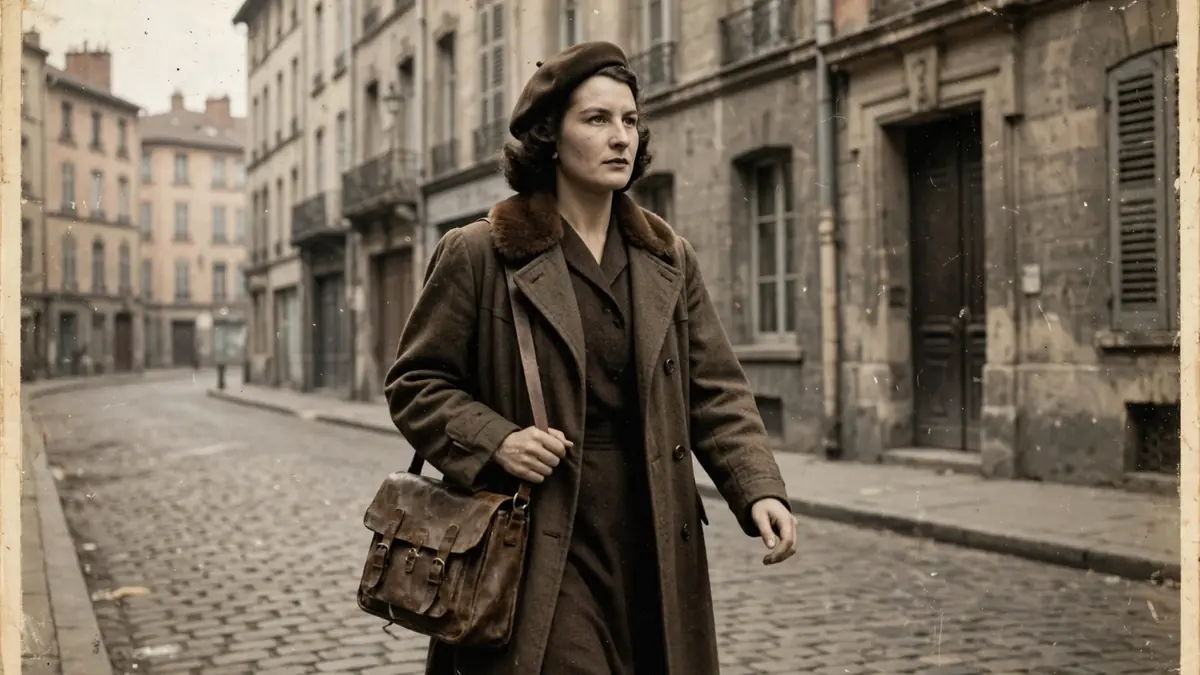
Virginia Hall (1906–1982) was the most dangerous Allied spy of the Second World War — and the Gestapo knew it. An American woman with a wooden leg, working alone in occupied France, she organised resistance networks, arranged arms drops, guided escaped prisoners to safety, and sent back the intelligence that made the Allied invasion possible.
The Gestapo called her “the limping lady” and put her at the top of its most-wanted list. Klaus Barbie, the head of the Gestapo in Lyon, is said to have described her as the most dangerous of all Allied spies, and to have ordered that she be found and killed. He never found her.
She escaped over the Pyrenees in the winter of 1942, returned to France in 1944 with the American OSS, and worked with the French resistance until the liberation. She was awarded the Distinguished Service Cross, the second-highest American decoration for valour, and she received it in secret, because she was still under cover.
Hall’s story is remarkable for what she overcame as well as for what she did. She had lost her left leg below the knee in a hunting accident in 1933, and she walked on a wooden prosthesis she called “Cuthbert”. The United States Foreign Service had rejected her application because she was a woman and because she was disabled.
The British Special Operations Executive, which took her on in 1941, cared about neither: it needed people who could survive in occupied France, and Hall could. After the war she joined the new Central Intelligence Agency, where she worked for almost twenty years, and she died in 1982, largely forgotten by the public.
Her story was told in full only decades later, in books and in a film, and it is now recognised as one of the great stories of the war. This article tells it as it happened, without exaggeration, and explains why a woman the American government had rejected became the spy the Germans feared most.
2. Key Facts
| Full name | Virginia Hall Goillot / Virginia Hall Goillot |
| Born | 6 April 1906, Baltimore, Maryland, USA |
| Died | 8 April 1982, Rockville, Maryland, USA |
| Service | Special Operations Executive (SOE), 1941–1942; Office of Strategic Services (OSS), 1943–1945; Central Intelligence Agency (CIA), 1947–1966 / SOE, 1941–1942; OSS, 1943–1945; CIA, 1947–1966 |
| Codenames / Bí danh | Germaine (SOE); Diane (OSS); “the limping lady” (Gestapo) |
| Main work | Organising resistance networks in Lyon (1941–42) and Haute-Loire (1944) |
| Disability | Left leg amputated below the knee (1933); wooden prosthesis named “Cuthbert” |
| Awards | Distinguished Service Cross (USA, 1945); Member of the Order of the British Empire (MBE); Croix de Guerre (France) |
| Married | Paul Goillot (OSS colleague), 1950 |
3. Early Life and Education
3.1. Baltimore and a Restless Mind
Virginia Hall was born on 6 April 1906 in Baltimore, Maryland, into a wealthy family. Her father, Edwin Hall, was a successful businessman, and her mother, Barbara, was a woman of strong opinions who encouraged her daughter’s independence. Virginia was educated at the best schools — Radcliffe College in Cambridge, Massachusetts, and Barnard College in New York — and she studied French, Italian and German, languages she would use for the rest of her life.
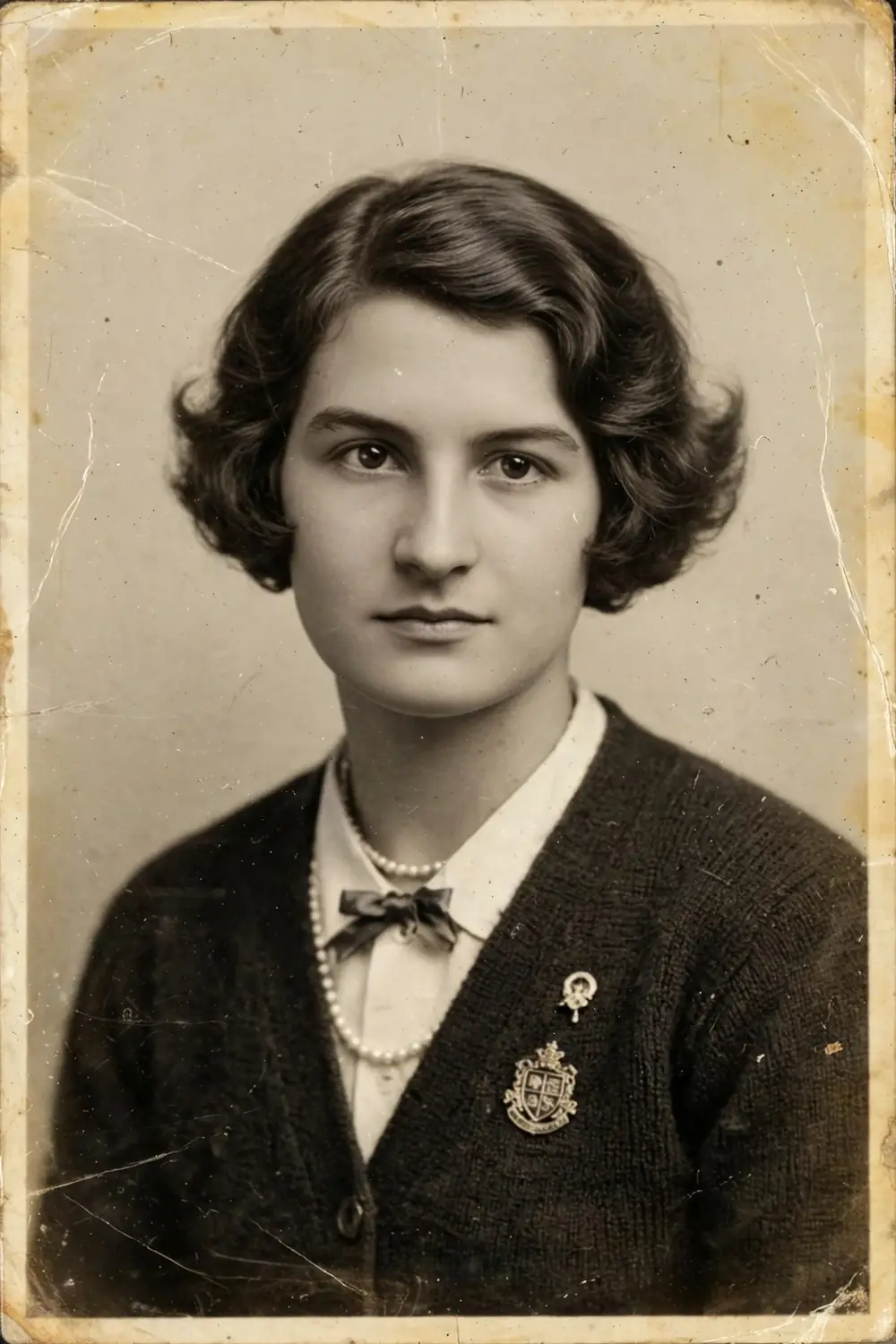
She was, by all accounts, a young woman of unusual determination: she wanted to travel, she wanted to see the world, and she wanted a career, at a time when few American women of her class expected to have one.
After college she went to Europe to study, spending time in France, Germany and Austria, and she fell in love with the continent — its languages, its politics and its people. She returned to the United States in 1931 and applied to join the Foreign Service, the diplomatic service of the United States.
She passed the examinations, but she was rejected: the Foreign Service did not, at that time, accept women as diplomats, and her application was turned down.
3.2. Europe and the Hunting Accident
Hall returned to Europe in the early 1930s, working as a clerk in the American embassy in Warsaw and then travelling in Turkey, where she went hunting with friends. In 1933, while out shooting, she tripped, her shotgun went off, and the blast shattered her left foot. Gangrene set in, and the leg had to be amputated below the knee. She was twenty-seven years old.
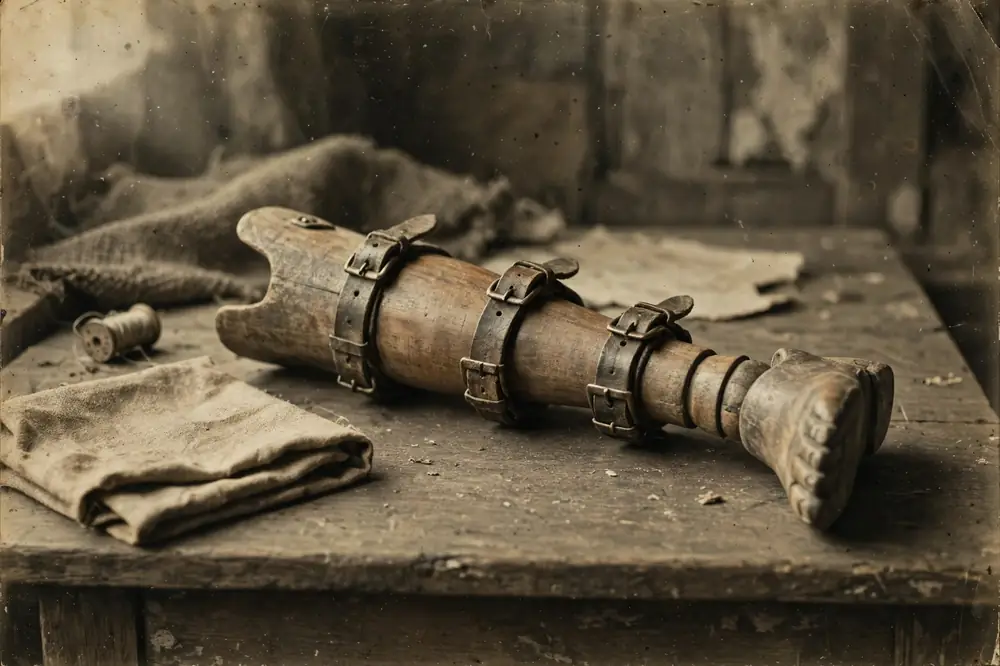
The loss of her leg would have ended most people’s ambitions; it did not end Hall’s. She was fitted with a wooden prosthesis, which she named “Cuthbert”, and she learned to walk, to ski, to ride a bicycle and to climb mountains with it.
She also learned to live with the pain and the discomfort that the prosthesis caused her, and with the knowledge that, in the eyes of the world, she was now disabled. She returned to work in Europe, serving as a clerk in the American consulates in Smyrna and Venice, and she was in France when the Second World War broke out in September 1939.
The accident had changed her life, and it had also, without her knowing it, prepared her for the war: it had taught her to endure pain, to improvise, and to refuse to be stopped by what other people thought she could not do.
3.2.1. Cuthbert: The Wooden Leg
Hall’s wooden leg, which she called “Cuthbert”, deserves a place in her story, because it was both a handicap and a part of her identity. The prosthesis was a simple wooden limb, strapped to the stump of her leg, and it was uncomfortable, heavy and prone to causing sores.
Hall learned to live with it, and she learned to use it: she could walk for miles, she could climb, and she could, when she needed to, run. But the leg also betrayed her: it made her walk with a limp that the Gestapo learned to recognise, and it was the reason they called her “the limping lady”.
In the winter of 1942, when she escaped over the Pyrenees, the leg caused her terrible pain, and she later said that the crossing was the hardest thing she ever did. The leg was a part of her, and she never tried to hide it: it was, in the end, the reason the Germans knew her, and the reason they could never catch her.
4. The Road to War
4.1. Ambulance Driver in Occupied France
When France fell in June 1940, Hall was in Paris, and she refused to leave. She joined the French Ambulance Service and drove an ambulance during the German invasion, working under fire and helping to evacuate the wounded. When France surrendered, she made her way to Britain, where she volunteered for the war effort.
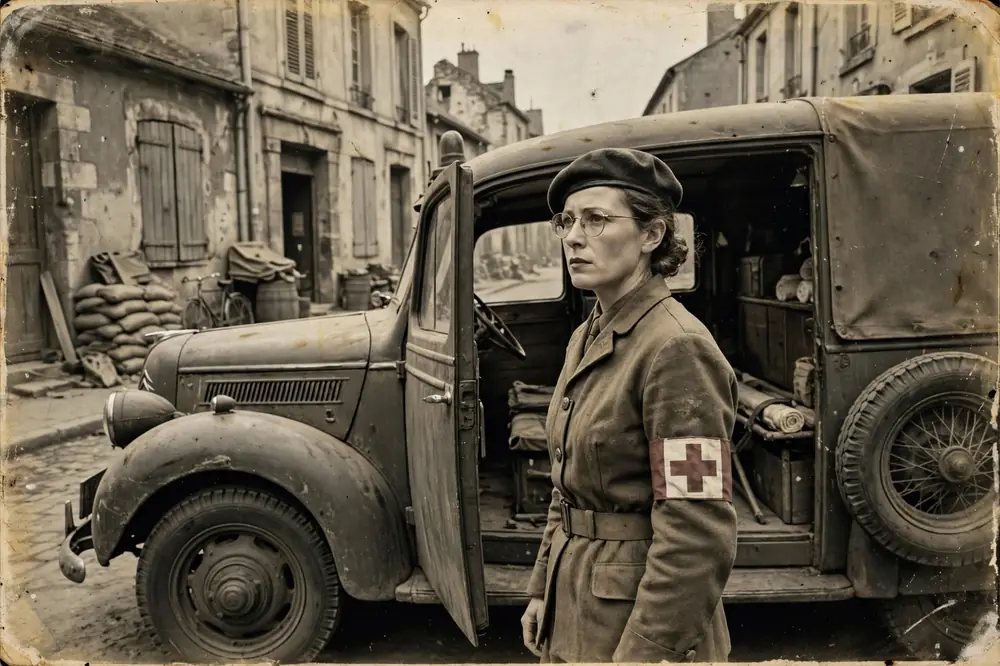
She was, by this time, a woman of thirty-four, fluent in French, experienced in Europe, and determined to fight. The British, who were building a new organisation — the Special Operations Executive, or SOE — to support resistance in occupied Europe, needed people like her: people who could pass as French, who knew the country, and who could survive on their own.
Hall applied to the SOE, and she was accepted. She was one of the first women to be sent into occupied France as a field agent, and she was, by far, the most successful of them. Her training was brief: she learned to use a radio, to fire a pistol, and to live under cover, and in August 1941 she was landed in France by boat, under the codename “Germaine”, with cover as a journalist for the New York Post.
4.2. Joining the SOE
Hall’s decision to join the SOE was, in the context of 1941, an extraordinary one. The SOE was a new and secret organisation, created by Winston Churchill with the order to “set Europe ablaze”, and its agents were sent into occupied territory with little support and with a life expectancy measured in months.
Most of the agents were men; the few women who were sent were usually couriers or radio operators, not organisers. Hall was different: she was sent to Lyon, the centre of the French resistance, with the task of organising networks, finding safe houses, and arranging the reception of agents and supplies.
She was, in effect, the SOE’s representative in the whole of unoccupied France, and she carried out the task alone, without a radio operator of her own for much of the time, and without the support that a male agent would have expected.
Her success was due, above all, to her ability to pass as French, to her courage, and to her extraordinary capacity for hard work: she travelled constantly, she met dozens of people, and she built, from nothing, a network that would become one of the most important in France.
4.2.1. The Woman the Foreign Service Rejected
The irony of Hall’s career is that the two organisations that rejected her and accepted her were, in a sense, the same government in different forms. The Foreign Service had rejected her because she was a woman and because she was disabled; the SOE had accepted her because it needed people who could do the job, and it did not care about her sex or her leg.
The contrast tells us something about the war: that it broke down barriers that peacetime had maintained, and that it gave opportunities to people whom the old order had excluded. Hall herself was aware of the irony, and she never forgot the rejection: after the war, when she joined the CIA, she found that the same prejudices persisted, and that women were still treated as second-class citizens in the intelligence world.
She fought those prejudices for the rest of her career, and she never won the recognition she deserved in her lifetime. The Foreign Service’s rejection was, in the end, the best thing that ever happened to her — and to the Allied war effort — because it sent her to the SOE, where she could do the work that mattered.
5. Agent in Lyon
5.1. The Germaine Network
In Lyon Hall built, from nothing, one of the most effective resistance networks in France. Working under the codename “Germaine” and posing as a journalist for the New York Post, she found safe houses, recruited agents, organised the reception of supplies dropped by parachute, and helped Allied airmen who had been shot down to escape to Spain.
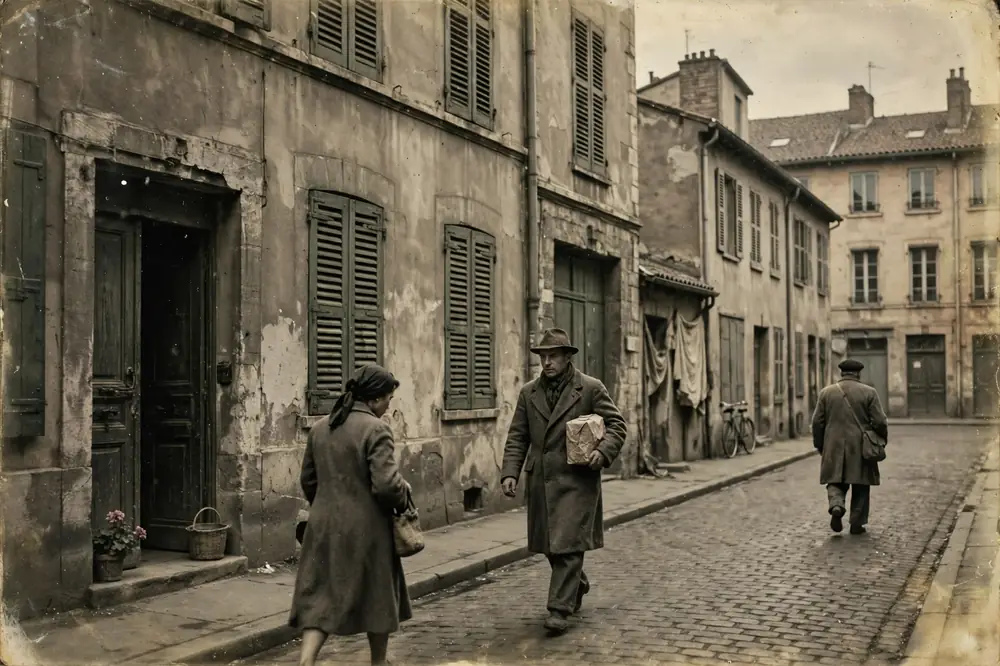
She also sent back to London a stream of intelligence about German troop movements, about the Vichy government, and about the state of French opinion. Her network was centred on Lyon, but it extended across the whole of the unoccupied zone, and it became the backbone of the SOE’s operations in southern France.
She did all of this alone, for more than a year, travelling by train and by bicycle, living in a series of flats and hotels, and never staying in one place for long. She was, by the autumn of 1942, the most important Allied agent in France, and the Germans knew it: they had identified her, they knew her limp, and they had put a price on her head.
5.2. The Gestapo Closes In
In November 1942 the Germans occupied the whole of France, including the previously unoccupied zone, and Hall’s position became untenable. The Gestapo, under Klaus Barbie in Lyon, was closing in on her network: her contacts were being arrested, her safe houses were being raided, and the Germans had circulated a description of her — a woman with a limp, an American accent, and a wooden leg — to every police station in France.
Barbie is said to have described her as the most dangerous of all Allied spies, and to have given orders that she was to be shot on sight. Hall knew that she had to leave, and she knew that she had to leave quickly. She destroyed her papers, said goodbye to her contacts, and set out, with a guide, for the Pyrenees and the Spanish border.
The escape was the most dangerous journey of her life, and it was made harder by her leg: the crossing took days, the weather was bitter, and the mountain paths were covered in snow and ice.
5.2.1. “The Limping Lady”
The Gestapo’s nickname for Hall — “the limping lady” — has become one of the most famous details of her story, and it deserves to be understood for what it was: a sign of how well the Germans knew her, and of how little that knowledge helped them.
The Germans knew her limp, they knew her face, they knew her codename, and they knew, in general terms, what she was doing. But they could not catch her, because she was always moving, because she had the support of the French people, and because she was, quite simply, better at her job than they were at theirs.
The nickname also tells us something about Hall herself: that she never tried to hide her disability, that she turned it into a part of her cover — a woman with a limp was, after all, the last person the Germans expected to be a spy — and that she used the very thing that made her conspicuous to make herself invisible.
The “limping lady” was, in the end, the spy the Gestapo feared most, and the one they never caught.
6. Escape and Return
6.1. Over the Pyrenees
The crossing of the Pyrenees in November 1942 was, by Hall’s own account, the hardest thing she ever did. She set out with a guide, on foot, and she walked for days through snow and ice, climbing mountain passes that were more than 2,000 metres high, sleeping in barns and in the open, and eating what she could carry.
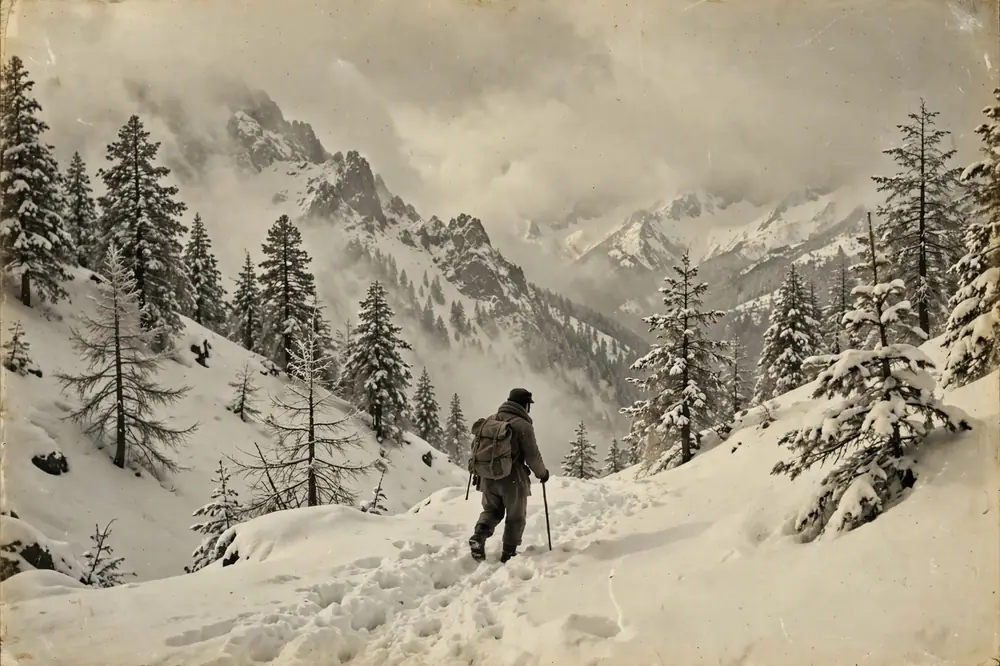
Her wooden leg caused her terrible pain, and at one point she was so exhausted that her guide had to carry her. But she kept going, and after several days she reached Spain, where she was arrested by the Spanish police — Spain was neutral, but it was sympathetic to Germany — and held for several weeks before the American embassy secured her release.
She made her way to London, where she was debriefed by the SOE, and she was told that she could not return to France: the Germans knew her too well, and a return would be suicide. Hall disagreed, and she spent the next year trying to get back.
6.2. The OSS and the Return to France
In 1943 Hall joined the American Office of Strategic Services, the OSS, the precursor of the CIA. The OSS, unlike the SOE, was willing to send her back to France, and in March 1944 she was landed by boat on the coast of Brittany, under the codename “Diane”, with cover as an elderly peasant woman.
She made her way to the Haute-Loire, in central France, where she worked with the Maquis, the rural resistance, organising them, training them, and arranging arms drops for the coming invasion. She was, once again, working alone, and she was, once again, in danger: the Gestapo was still looking for her, and the Milice, the French paramilitary police who collaborated with the Germans, were hunting the resistance.
But she survived, and she played a crucial part in the preparations for D-Day: her intelligence, her organisation and her radio work helped to ensure that the resistance in central France was ready when the invasion came.
6.2.1. The Winter Crossing
The crossing of the Pyrenees in the winter of 1942 deserves to be remembered in detail, because it shows what Hall was made of. The Pyrenees in winter are among the most dangerous mountains in Europe: the passes are high, the weather is unpredictable, and the snow can be waist-deep.
Hall crossed them on foot, with a wooden leg, in the dark, guided by a man she barely knew, and she did it without complaint. She later said that the crossing was the hardest thing she ever did, harder than anything she had done in Lyon or in the Haute-Loire, and that she had thought, more than once, that she would not survive it.
The fact that she did survive — that she reached Spain, that she reached London, and that she returned to France — is a testament to a determination that few people, able-bodied or not, have ever matched. The crossing is the central episode of her life, and it is the reason her story is still told today.
7. Haute-Loire 1944
7.1. The Maquis and the Coming Invasion
In the Haute-Loire Hall worked with the Maquis, the bands of young Frenchmen who had taken to the hills to avoid forced labour in Germany and who had become, by 1944, a genuine guerrilla army. Her task was to organise them, to train them, and to prepare them for the Allied invasion.
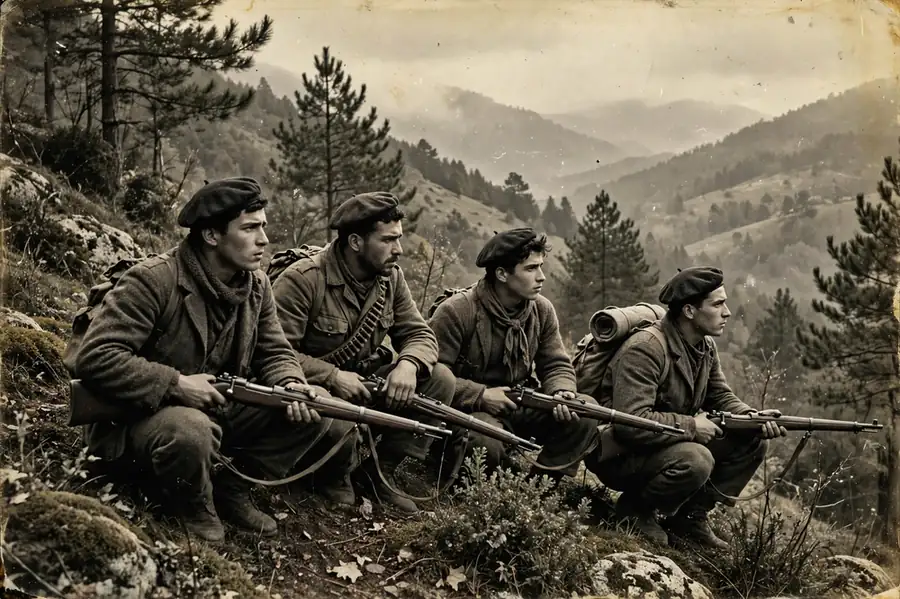
She arranged parachute drops of arms and supplies, she sent intelligence to London by radio, and she coordinated the Maquis with the Allied plans for D-Day. The work was dangerous and exhausting: she lived in the hills, she moved constantly, and she was always at risk of betrayal or of a German sweep. But she was also, by this time, an experienced agent, and she knew how to survive.
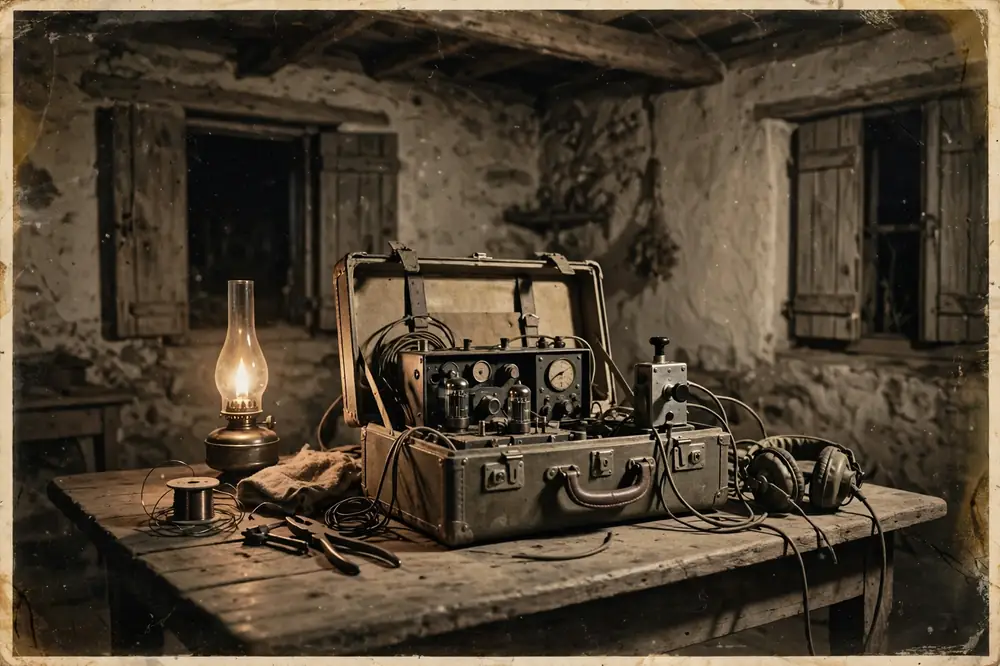
She built a network in the Haute-Loire that was as effective as the one she had built in Lyon, and she did it in a matter of weeks. When D-Day came, on 6 June 1944, the Maquis of the Haute-Loire were ready, and they played their part in the liberation of France.
7.2. D-Day and the Liberation
After D-Day Hall’s work changed: she was no longer preparing for the invasion, but helping to carry it out. She worked with the Maquis to harass the German forces retreating from southern France, she helped to liberate towns and villages, and she continued to send intelligence to London until the end of the war.
She was present at the liberation of Le Puy, the capital of the Haute-Loire, in August 1944, and she was, by all accounts, one of the heroes of the occasion. She remained in France until the end of the war, and she left, in 1945, as she had arrived: quietly, without ceremony, and without telling anyone what she had done.
The French government awarded her the Croix de Guerre, and the British awarded her the MBE, but the awards were given in private, and Hall herself said little about them. She had done her job, and she wanted, above all, to be left alone.
7.2.1. The Radio Operator
Hall’s work as a radio operator in the Haute-Loire deserves a special mention, because it was the most dangerous part of her job. The radio was the agent’s lifeline to London, and it was also the agent’s greatest vulnerability: the Germans had direction-finding vans that could locate a transmitter within minutes, and a radio operator who stayed on the air for too long was a dead operator.
Hall, who had learned to use a radio in her SOE training, sent her messages quickly and moved constantly, changing her location after every transmission. She also, famously, sent a message to London asking for a replacement for her wooden leg, because “Cuthbert is giving me trouble” — a message that the Germans, who intercepted it, are said to have found baffling.
The radio work was the least glamorous part of Hall’s career, and it was the most important: without it, London would not have known what was happening in France, and the Maquis would not have received the arms they needed.
8. The Distinguished Service Cross
8.1. The Award
In 1945 Hall was awarded the Distinguished Service Cross, the second-highest American decoration for valour, for her work in France. She was the only woman to receive the decoration in the Second World War, and she was one of the few civilians to receive it.
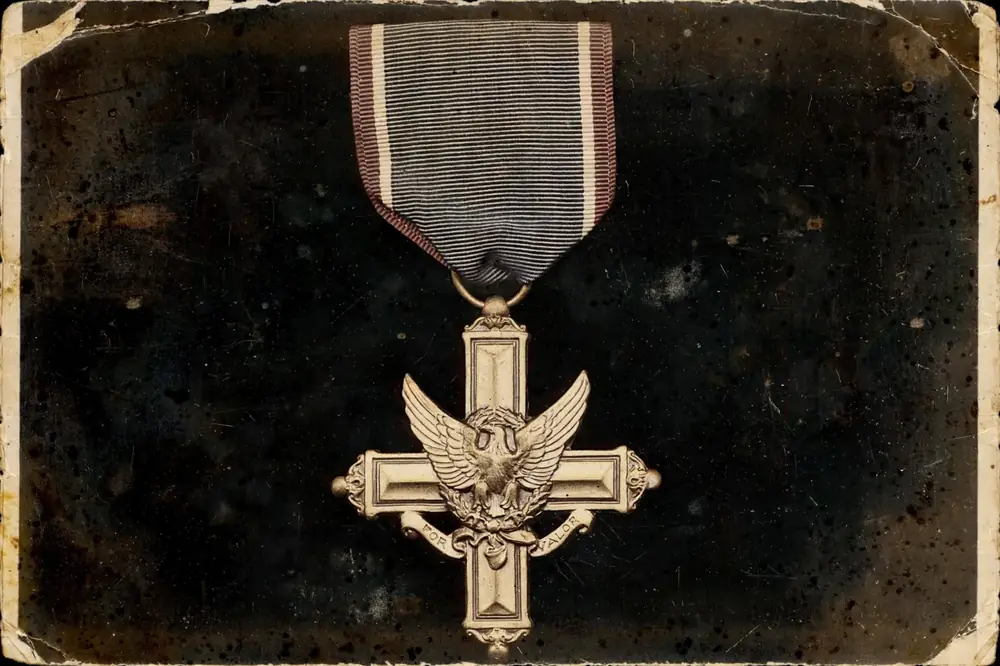
The citation praised her “extraordinary heroism” and her “courage and devotion to duty” in organising the resistance in France, and it recorded, in dry official language, what she had done: the networks she had built, the intelligence she had sent, and the risks she had taken.
The award was a recognition of what the American government had, for so long, refused to recognise: that a woman, and a disabled woman at that, could be a hero. Hall herself was ambivalent about the award: she was proud of it, and she was also embarrassed by it, because she believed that the men and women she had worked with in France deserved it as much as she did.
8.2. A Secret Heroine
Hall received the Distinguished Service Cross in secret, in a private ceremony at the office of General William Donovan, the head of the OSS. She asked for the ceremony to be private because she was still under cover, and because she did not want the publicity that a public ceremony would have brought.
The secrecy was characteristic of her: she had spent the war avoiding attention, and she spent the rest of her life doing the same. The award was not made public at the time, and it was not widely known until decades later, when her story was finally told.
The secrecy also meant that Hall never received, in her lifetime, the public recognition she deserved: she was a hero, but she was a hero whom almost no one knew about. The fact that she accepted the secrecy without complaint tells us something about her: that she cared more about the work than about the recognition, and that she was, in the end, a professional in a way that few of her contemporaries were.
8.2.1. The Quiet Ceremony
The ceremony at which Hall received the Distinguished Service Cross was, by all accounts, a quiet and private affair. General Donovan, who had recommended her for the award, presented it to her in his office, with only a few people present. Hall, who was still technically a civilian and still, in a sense, under cover, wore civilian clothes, and she said little.
The citation was read, the medal was pinned on, and the ceremony was over in a matter of minutes. There were no cameras, no reporters, and no public announcement. The contrast with the public ceremonies at which other heroes received their medals could not have been greater, and it is a measure of how the intelligence world worked: that its heroes were honoured in secret, and that their stories were not told until long after the war was over.
Hall’s quiet ceremony is, in the end, the perfect symbol of her career: a woman who did extraordinary things and asked for nothing in return, not even the recognition that was her due.
9. The CIA Years
9.1. Joining the Agency
After the war Hall joined the Central Intelligence Agency, which was created in 1947. She was one of the first women to join the new agency, and she worked there for almost twenty years, until her retirement in 1966. Her work at the CIA was, by its nature, secret, and little of it is known: she worked in the Office of Policy Coordination, the CIA’s covert-action arm (later the Directorate of Plans), she served in Europe, and she was involved in the covert operations of the early Cold War.
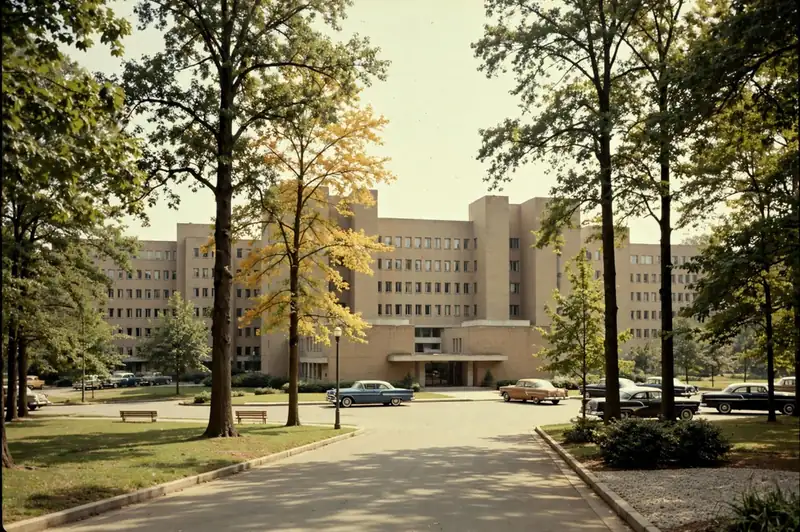
What is known is that she found the CIA a frustrating place to work: the agency, like the Foreign Service before it, was dominated by men, and women were rarely given the operational roles they deserved. Hall, who had run networks in occupied France, was given desk jobs, and she was passed over for promotion again and again.
She complained, in private, about the discrimination, but she stayed, because she believed in the work and because she had nowhere else to go. Her career at the CIA is the least known part of her life, and it is also, in some ways, the saddest: a woman who had done more than almost anyone in the war was treated, in peacetime, as a second-class citizen.
9.2. A Career in the Shadows
Hall’s career at the CIA was spent, for the most part, in the shadows, and it is difficult to assess it fairly, because so little of it has been declassified. What can be said is that she was a professional, that she was respected by her colleagues, and that she was, by the time of her retirement, one of the most experienced officers in the agency.
She also, in 1950, married Paul Goillot, a fellow OSS officer she had met during the war, and the two of them settled in Maryland, where they lived for the rest of their lives. Her marriage was, by all accounts, a happy one, and it gave her the stability that her wartime life had lacked.
She retired from the CIA in 1966, at the age of sixty, and she spent the last sixteen years of her life in quiet retirement, gardening, reading, and refusing, as always, to talk about the war. She died on 8 April 1982, two days after her seventy-sixth birthday, and she was buried in Maryland, near the home she had shared with her husband.
9.2.1. Marriage and Retirement
Hall’s marriage to Paul Goillot in 1950 was, in many ways, the happiest event of her post-war life. Goillot, who had served with the OSS in France during the war, understood what Hall had been through, and he did not ask her to talk about it. The two of them lived quietly in Maryland, in a house with a garden, and they were, by all accounts, devoted to each other.
Hall’s retirement in 1966 was not, as it turned out, the end of her connection to the intelligence world: she remained in touch with old colleagues, she was consulted, informally, about matters she had experience of, and she was, in her old age, a living link to the war that the younger generation of officers had only read about.
She never wrote her memoirs, she never gave interviews, and she never sought the publicity that came to other heroes of the war. Her retirement was, like her life, a quiet one, and it is a measure of her character that she preferred it that way.
10. Legacy
10.1. Recognition at Last
Hall’s story was not widely known until long after her death. An early biography, The Wolves at the Door by Judith L. Pearson, was published in 2005, and the bestselling book A Woman of No Importance by Sonia Purnell followed in 2019, the same year as Craig Gralley’s Hall of Mirrors (published as The Lady Is a Spy in some editions).
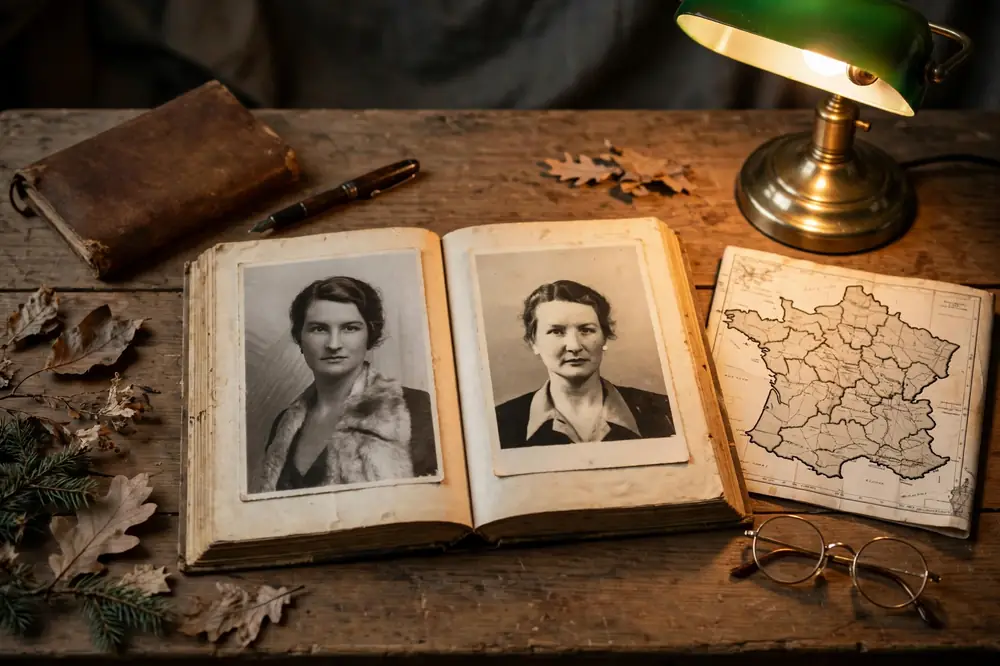
A film, A Call to Spy, was released in 2019, and a second film is in development. The CIA, which had employed her for twenty years, has honoured her in recent years: it named a training facility after her, and it has published accounts of her wartime service on its website.
The recognition is welcome, but it is also late: Hall died in 1982, and for most of her life she was unknown to the public, unrecognised by her country, and unrewarded for what she had done. The delay is a reminder of how the intelligence world works: that its heroes are honoured in secret, if at all, and that their stories are told only when the secrets are no longer secret.
Hall’s recognition, when it finally came, was full and generous, but it came too late for her to enjoy it.
10.2. The Most Dangerous Spy
Hall’s legacy is secure: she is now recognised as one of the great spies of the Second World War, and as the most successful woman agent the Allies had. The Gestapo’s description of her as the most dangerous of all Allied spies has been repeated so often that it has become a cliché, but it is, by all accounts, accurate: she ran the most important network in France, she survived when others did not, and she returned to France when the SOE said it was suicide.
Her story is also a story about disability, about sexism, and about the refusal to accept the limits that other people impose: a woman with a wooden leg, rejected by the Foreign Service, became the spy the Germans feared most. It is a story that deserves to be told, and it is a story that, for too long, was not told.
The fact that it is now told — in books, in films, and in the training of young intelligence officers — is the best memorial Hall could have, and it is one she would, characteristically, have been embarrassed by.
10.2.1. Why She Was Forgotten
Hall was forgotten for so long for three reasons, and they are all worth understanding. The first is secrecy: her work was secret, her award was secret, and she herself refused to talk about it. The second is sexism: the history of the war was written, for the most part, by men about men, and the women who served were, for decades, written out of the story.
The third is the nature of her service: she was not a general, she did not command armies, and she did not win battles in the conventional sense. She organised, she communicated, she survived — and those are the quiet virtues that history, which prefers noise, tends to overlook.
The recovery of her story in recent years is part of a larger recovery: the recovery of the women of the war, of the agents and the couriers and the radio operators, whose work was as important as the work of the generals, and whose stories are only now being told. Hall’s story is the best of those stories, and it is the reason she is, at last, remembered.
11. Frequently Asked Questions
Who was Virginia Hall?
An American spy who worked for the British SOE and the American OSS in occupied France during the Second World War. She organised resistance networks in Lyon and the Haute-Loire, and the Gestapo called her “the limping lady” and put her at the top of its most-wanted list. She was awarded the Distinguished Service Cross in 1945.
Why was she called “the limping lady”?
Because she had lost her left leg below the knee in a hunting accident in 1933 and walked on a wooden prosthesis, which gave her a distinctive limp. The Gestapo learned to recognise the limp, and they used it in the description they circulated to police stations across France. They never caught her.
How did she escape from France in 1942?
She walked over the Pyrenees into Spain in November 1942, in winter, on foot, with a wooden leg, guided by a local man. The crossing took several days through snow and ice. She was arrested in Spain and held for several weeks before the American embassy secured her release, and she then made her way to London.
What was the Distinguished Service Cross?
The second-highest American decoration for valour, awarded for extraordinary heroism in combat. Hall was the only woman to receive it in the Second World War. She received it in a private ceremony in 1945, because she was still under cover, and the award was not made public at the time.
Did she work for the CIA?
Yes. She joined the CIA when it was created in 1947 and worked there until her retirement in 1966. Her work was secret, and little of it has been declassified. She found the agency frustrating, because women were rarely given operational roles, but she stayed for almost twenty years.
Why is Virginia Hall famous now?
Because her story was finally told in full, in biographies such as Sonia Purnell’s A Woman of No Importance (2019) and in films such as A Call to Spy (2019). The CIA has also honoured her, naming a training facility after her. She is now recognised as one of the great spies of the Second World War.
12. Sources
- Wikipedia, “Virginia Hall” — dates, career, SOE and OSS service, awards and legacy.
- Encyclopædia Britannica, “Virginia Hall” — life and assessment.
- Sonia Purnell, A Woman of No Importance: The Untold Story of the American Spy Who Helped Win World War II (Viking, 2019).
- Craig Gralley, Hall of Mirrors: Virginia Hall, America’s Greatest Spy of WWII (Meridian, 2019) — published as The Lady Is a Spy in some editions.
- Judith L. Pearson, The Wolves at the Door: The True Story of America’s Greatest Female Spy (Lyons Press, 2005).
- Central Intelligence Agency, “Virginia Hall” — the CIA’s account of her service.
- M. R. D. Foot, SOE in France (Her Majesty’s Stationery Office, 1966) — the official history of the SOE in France.