 WAR ATLAS MILITARY HISTORY MAGAZINE · WWI — WWII
Enrico Fermi
1. Lead
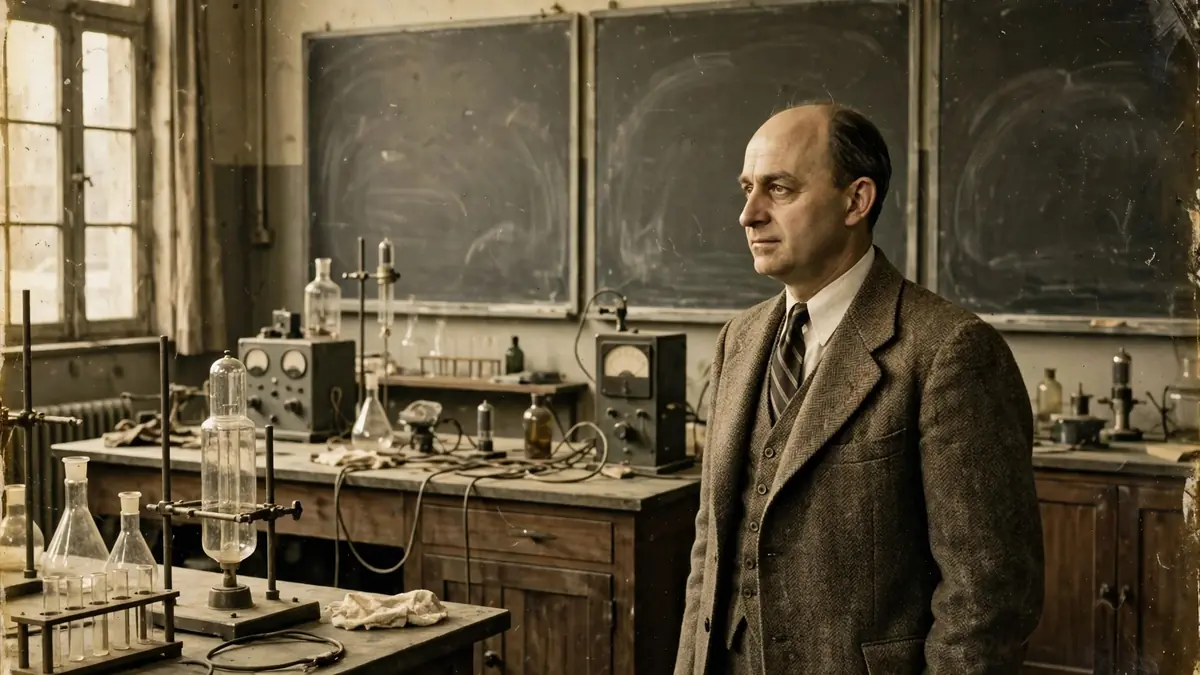
Enrico Fermi (1901–1954) was one of the greatest physicists of the twentieth century, and the only one who was equally great as a theorist and as an experimenter. In 1926 he developed the statistics that describe the behaviour of the particles that make up matter.
In the 1930s he discovered that slow neutrons could split atomic nuclei, a discovery that led, within a few years, to nuclear fission and to the atomic bomb. In 1942, in a converted squash court under the stands of the University of Chicago’s football stadium, he built Chicago Pile-1, the first nuclear reactor, and achieved the first controlled, self-sustaining nuclear chain reaction in history.
He then helped to build the atomic bomb at Los Alamos, and after the war he became one of the founders of modern particle physics.
Fermi’s life was also a story of exile and of conscience. He was an Italian who left his country in 1938, when the Fascist regime’s racial laws threatened his Jewish wife, Laura, and he never lived in Italy again. He became an American citizen, he worked on the weapon that ended the Second World War, and he spent the last years of his life worrying about what that weapon meant for the world.
He died in 1954, at the age of fifty-three, of stomach cancer, and he was mourned as a scientist, a teacher and a man of extraordinary modesty and charm. This article tells the story of his life, his discoveries, his part in the Manhattan Project, and his legacy — and it asks what it meant to be the man who, more than anyone else, opened the nuclear age.
2. Key Facts
| Full name | Enrico Fermi / Enrico Fermi |
| Born | 29 September 1901, Rome, Italy |
| Died | 28 November 1954, Chicago, Illinois, USA (stomach cancer) |
| Fields | Theoretical and experimental physics; nuclear physics; particle physics |
| Known for | Fermi–Dirac statistics; slow neutrons; Chicago Pile-1; the first nuclear chain reaction |
| Nobel Prize | Nobel Prize in Physics, 1938 |
| Main posts | University of Rome (1927–1938); Columbia University (1939–1942); University of Chicago (1942–1954); Los Alamos (1944–1945) |
| Family | Wife Laura Capon Fermi (married 1928); children Nella and Giulio |
| Named after him / Mang tên ông | Element 100, fermium; Fermi National Accelerator Laboratory; the Fermi paradox |
3. Early Life and Education
3.1. A Roman Childhood
Enrico Fermi was born on 29 September 1901 in Rome, the third child of Alberto Fermi, a civil servant in the Ministry of Railways, and Ida de Gattis, a schoolteacher. He was a quiet, serious boy, and he showed an extraordinary talent for mathematics and physics from an early age.
His older brother Giulio, to whom he was very close, died in 1915 during an operation for a throat abscess, and the loss affected Fermi deeply: he threw himself into his studies, and he became, in the words of a friend, “a boy who had decided to be a man”.
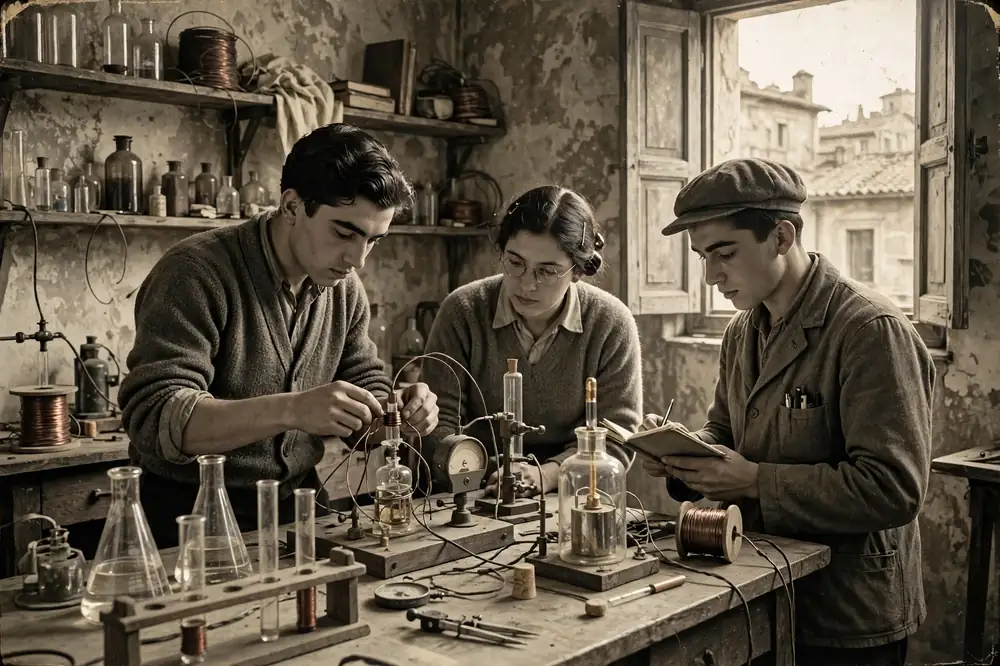
He taught himself physics from the books in his father’s library, he built electrical devices in his bedroom, and by the time he was fourteen he was reading the works of the great physicists in their original languages. He was not a child prodigy in the usual sense — he was not famous, and he was not pushed by ambitious parents — but he was a boy of unusual concentration and clarity of mind, and his teachers recognised, early on, that he was unlike any pupil they had ever had.
3.2. Pisa and the Via Panisperna Boys
In 1918 Fermi won a place at the Scuola Normale Superiore in Pisa, Italy’s most prestigious university, where he studied physics and graduated in 1922 with a thesis on X-rays. He spent a year in Germany, working with Max Born at Göttingen, and then returned to Italy, where in 1927, at the age of twenty-six, he became professor of theoretical physics at the University of Rome.
He gathered around him a group of young physicists — Edoardo Amaldi, Franco Rasetti, Emilio Segrè, Bruno Pontecorvo and others — who worked in a small laboratory on the Via Panisperna, a narrow street in the centre of Rome. The group, who called themselves the “Via Panisperna Boys”, became one of the most productive teams in the history of physics, and their work in the 1930s transformed the understanding of the atomic nucleus.
Fermi was their leader, and he was, by all accounts, a remarkable one: he combined a theorist’s clarity with an experimenter’s hands, he explained difficult ideas with a simplicity that his students never forgot, and he created an atmosphere in which young men could do great work.
3.2.1. Fermi–Dirac Statistics
Fermi’s first great contribution to physics came in 1926, when he developed the statistics that describe particles with half-integer spin — the particles, such as electrons, protons and neutrons, that make up matter. The work was done independently by the British physicist Paul Dirac, and the statistics are now known as Fermi–Dirac statistics.
The idea was simple in its statement and profound in its consequences: particles of this kind obey the Pauli exclusion principle, which says that no two of them can occupy the same quantum state, and it is this principle, more than any other, that explains why matter is stable, why atoms have their structure, and why the world is solid rather than collapsing into a point.
Fermi was twenty-five when he published the work, and it established him, overnight, as one of the leading theoretical physicists in the world. It was the first of his great discoveries, and it was made with paper and pencil, not with machines — a reminder that Fermi’s genius was as much a matter of thought as of experiment.
4. The Neutron Work
4.1. Slow Neutrons and the New Physics
In 1932 the neutron was discovered by James Chadwick in England, and Fermi immediately saw its importance. The neutron, which has no electric charge, could enter an atomic nucleus without being repelled by the positive charge of the protons, and Fermi realised that it could be used to create new, heavier elements.
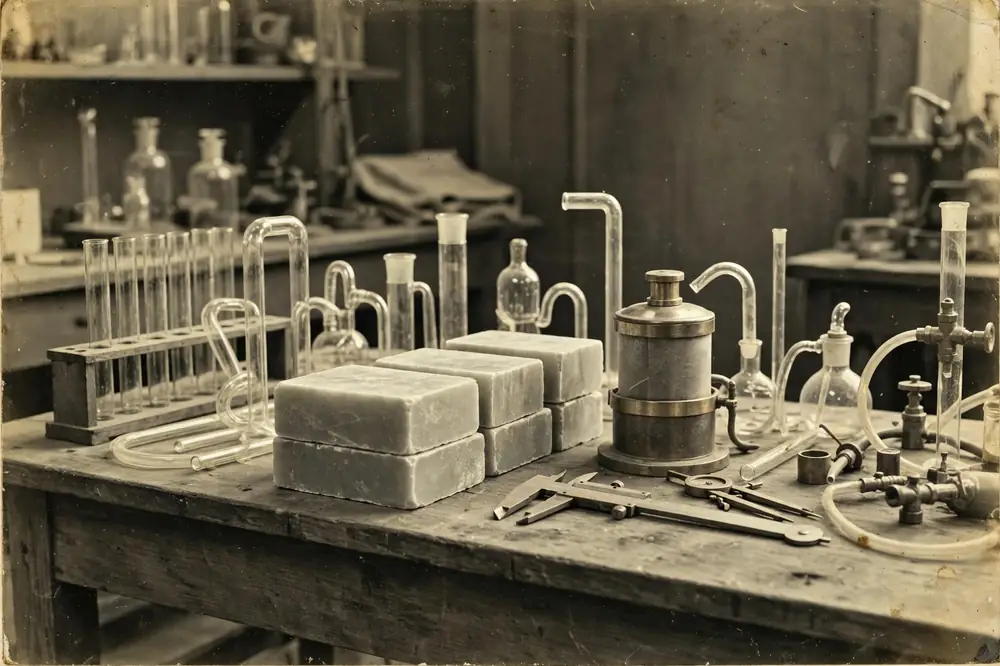
In 1934 he and his Via Panisperna group began a systematic study of neutron bombardment, irradiating almost every element in the periodic table with neutrons from a small source of radon and beryllium. The results were startling: in many cases the bombardment produced radioactive isotopes, and Fermi believed — wrongly, as it turned out — that he had created elements heavier than uranium, the so-called transuranic elements.
The work was brilliant, and it was wrong in its interpretation, but it was wrong in a way that changed the world: it led other physicists, above all Otto Hahn and Fritz Strassmann in Germany, to repeat the experiments and to discover, in December 1938, that the uranium nucleus had not absorbed the neutron but had split in two.
The discovery was nuclear fission, and Fermi’s experiments had made it possible.
4.2. The Road to Fission
Fermi’s most important discovery in the 1930s was the discovery of slow neutrons. In October 1934, while working with a neutron source, he found that neutrons that had been slowed down by passing through paraffin wax or water were far more effective at producing nuclear reactions than fast neutrons.
The discovery was made, by Fermi’s own account, almost by accident: he had intended to use a lead wedge to shield the experiment, and at the last moment he decided to use paraffin instead. The result was a dramatic increase in the induced radioactivity, and Fermi immediately understood why: slow neutrons spend more time near a nucleus, and they are therefore more likely to be captured.
The discovery of slow neutrons was the key to the nuclear reactor, because it showed that a chain reaction could be controlled: the neutrons released by fission could be slowed by a moderator — graphite or heavy water — and used to cause further fissions at a controlled rate. Without slow neutrons, there would have been no reactor, and without the reactor, there would have been no bomb.
4.2.1. The 1934 Experiments: Brilliance and Error
The experiments of 1934 are a reminder that science advances through error as well as through success. Fermi believed he had created new elements heavier than uranium, and he announced the discovery with confidence. The claim was wrong: the “new elements” were in fact the fragments of uranium nuclei that had split apart, and Fermi had, without knowing it, achieved the first nuclear fission.
The error was not a failure of method — Fermi’s experiments were careful and his measurements were accurate — but a failure of interpretation, because the idea that a nucleus could split in two was so strange that no one, not even Fermi, was prepared to believe it.
When Hahn and Strassmann published their results in 1938, Fermi immediately understood what had happened, and he accepted the correction with the grace that was characteristic of him. He never pretended that he had discovered fission, and he always gave the credit to Hahn and Strassmann.
The episode shows something important about Fermi: that he was a scientist who cared more about the truth than about his own reputation, and that he was willing to admit a mistake when the evidence demanded it.
5. The Nobel Prize and Emigration
5.1. The 1938 Nobel Prize
In 1938 Fermi was awarded the Nobel Prize in Physics for his work on neutron bombardment and the discovery of slow neutrons. The prize was the highest honour in science, and it came at a moment of crisis. In the summer of 1938 Mussolini’s Fascist government, under German pressure, had introduced the racial laws, which stripped Italian Jews of their rights and their jobs.
Fermi’s wife, Laura Capon, was Jewish, and their children were, under the laws, classified as Jewish. Fermi himself was not Jewish, but his family was now in danger, and he had to decide whether to stay in Italy or to leave.
The Nobel Prize gave him the opportunity: he travelled to Stockholm in December 1938 to receive the prize, and from Stockholm he and his family sailed directly to the United States, where he had been offered a post at Columbia University in New York. He never lived in Italy again.
The decision to leave was, by all accounts, the hardest of his life, and it was also the most important: it saved his family, and it brought to the United States the physicist who would build the first nuclear reactor.
5.2. Flight to America
The Fermis arrived in New York in January 1939, and Fermi began work at Columbia University. The timing could not have been more significant: within weeks of his arrival, the news of Hahn and Strassmann’s discovery of fission reached the United States, and Fermi was one of the first physicists in America to understand what it meant.
He also learned, in the same weeks, that the German physicists were working on fission, and that a German atomic bomb was a real possibility. In the summer of 1939 he met with the Hungarian physicist Leo Szilard, who had conceived the idea of the nuclear chain reaction in 1933, and together they began to work on the problem of achieving a chain reaction in uranium.
The work was secret, it was urgent, and it was, in Fermi’s own words, “a race against the Germans”. He became an American citizen in 1944, and he remained in the United States for the rest of his life. His emigration was one of the great losses for Italian science and one of the great gains for American science, and it was a direct consequence of the Fascist racial laws.
5.2.1. Laura and the Decision to Leave
The decision to leave Italy was, in the end, Laura’s as much as Enrico’s. Laura Capon Fermi, who had married Fermi in 1928, was a woman of intelligence and courage, and she understood, earlier than her husband, what the racial laws meant for their family.
She was the one who pressed for emigration, who organised the family’s departure, and who, in her memoir Atoms in the Family, told the story of their flight with a clarity and a humour that her husband, who rarely spoke about his feelings, never matched.
The Fermis’ departure was not a flight in the night: they left openly, with the Nobel Prize as their excuse, and they carried with them only what they could pack. They left behind their home, their friends, and the Via Panisperna group, which scattered across the world in the years that followed.
Laura’s role in the decision is a reminder that the great events of science are also events in the lives of families, and that behind every emigration there is a woman who packed the bags and made the arrangements.
6. Chicago Pile-1
6.1. The Squash Court Under the Stands
In 1942 Fermi moved to the University of Chicago, where he was given the task of building the first nuclear reactor. The work was carried out in conditions of extraordinary secrecy and improvisation. The reactor — called a “pile” because it was a pile of graphite bricks and uranium — was built in a converted squash court under the west stands of Stagg Field, the university’s football stadium.
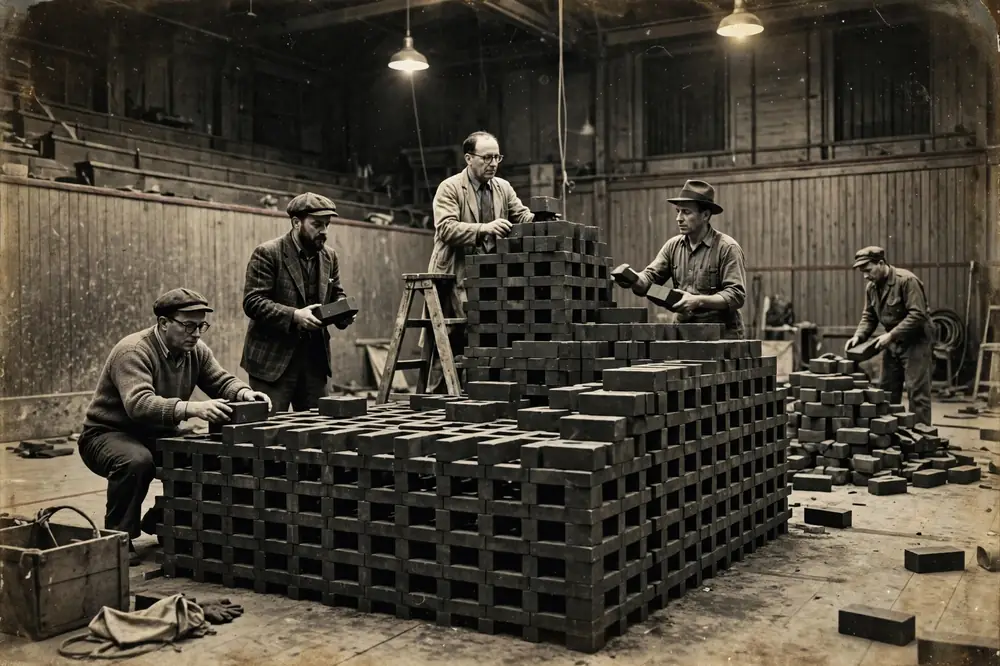
The pile was a structure of graphite bricks, some 7.5 metres across, in which lumps of uranium metal and uranium oxide were embedded in a lattice. Fermi and his team — which included Leo Szilard, Herbert Anderson and others — worked in shifts, stacking the bricks by hand, measuring the neutron flux as they went, and calculating, with slide rules, whether the pile would go critical.
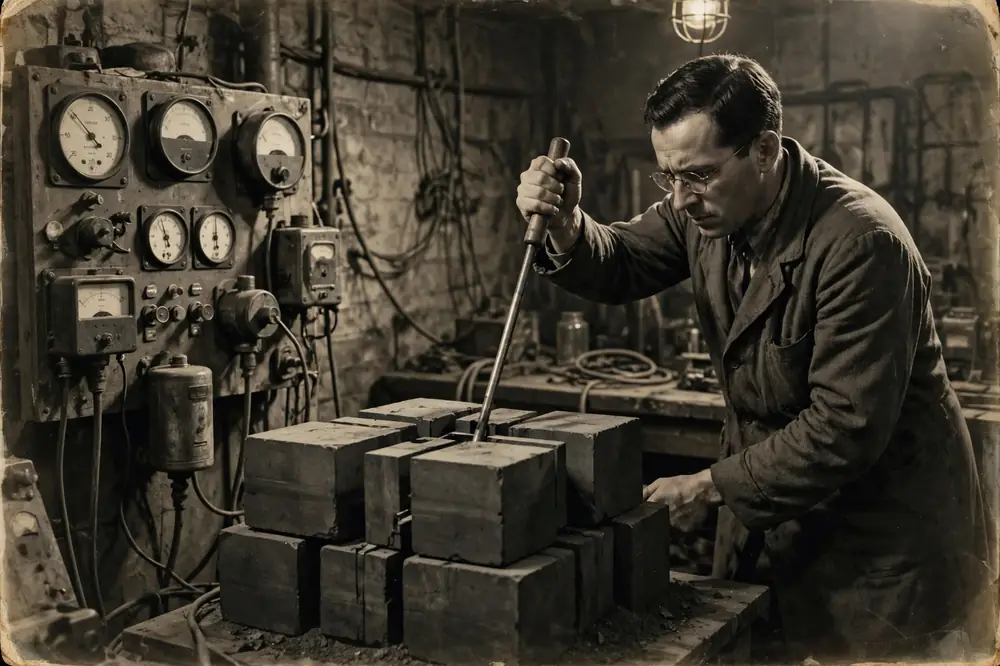
The work was dangerous: if the pile went out of control, it could have released a lethal dose of radiation. Fermi, who understood the risks better than anyone, insisted on a control system of cadmium rods that could be inserted to stop the reaction, and on a team of men standing by with buckets of cadmium solution to pour on the pile in an emergency.
6.2. The First Chain Reaction
On 2 December 1942, at 3.25 in the afternoon, Fermi ordered the last control rod to be withdrawn, and Chicago Pile-1 went critical: the nuclear chain reaction became self-sustaining, and it continued, under control, for twenty-eight minutes before Fermi ordered it shut down.
The power produced was tiny — about half a watt, enough to light a small bulb — but the event was one of the most important in the history of science. It proved that a controlled chain reaction was possible, it proved that a nuclear reactor could be built, and it opened the way to the atomic bomb and to nuclear power.
The news was communicated to Washington in a coded telephone call: “The Italian navigator has landed in the New World,” Fermi’s colleague Arthur Compton reported, meaning that the reactor had worked. The date — 2 December 1942 — is now one of the landmarks of the twentieth century, and the squash court under Stagg Field, which has long since been demolished, is remembered as the place where the nuclear age began.
6.2.1. 2 December 1942: Twenty-Eight Minutes
The twenty-eight minutes of the first chain reaction were, by all accounts, an occasion of extraordinary calm. Fermi, who had calculated everything in advance, watched the instruments, called out the readings, and gave his orders in a quiet voice. His colleagues, who had expected drama, were struck by his composure: he ate his lunch, as one of them remembered, while the pile was running, and he showed no excitement at all.
When the reaction was shut down, the men in the squash court shook hands, opened a bottle of Chianti that Eugene Wigner had brought for the occasion, and drank a toast — in paper cups, because there were no glasses.
The scene has become one of the legends of science, and it captures something essential about Fermi: that he was a man who did the most dangerous thing in the world with the calm of a man doing arithmetic. The calm was not indifference; it was the confidence of a physicist who had done his sums and who knew, to the last decimal place, what was going to happen.
7. Los Alamos and the Atomic Bomb
7.1. The Manhattan Project
After Chicago Pile-1, Fermi’s work became part of the Manhattan Project, the vast American effort to build the atomic bomb. In 1944 he moved to Los Alamos in New Mexico, where J. Robert Oppenheimer was directing the design of the weapon.
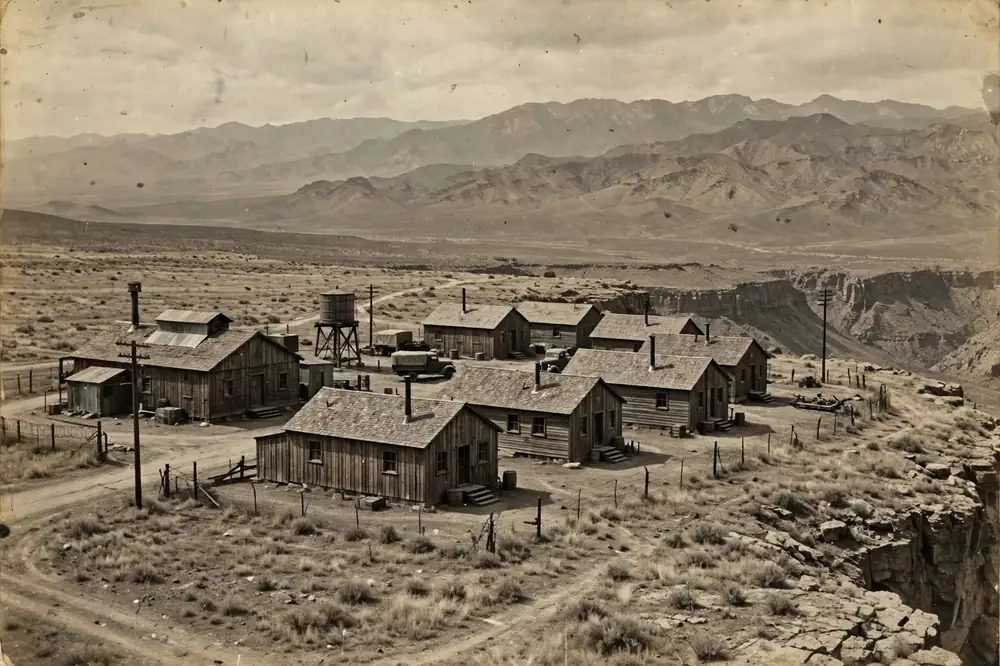
Fermi’s role at Los Alamos was that of an adviser and a troubleshooter: he was the man to whom the younger physicists turned when they were stuck, and he was the man whose judgement Oppenheimer trusted most. He worked on the physics of the bomb, on the design of the reactors that produced plutonium at Hanford, and on the calculations that predicted the yield of the explosion.
He was also, by all accounts, a calming presence in a place that was under enormous pressure: he played with his children, he went hiking in the mountains, and he maintained, even in the midst of the bomb project, the ordinary life of a family man.
His colleagues remembered him as the one man at Los Alamos who never seemed to be afraid, and who never lost his sense of humour.
7.2. Trinity: The First Atomic Explosion
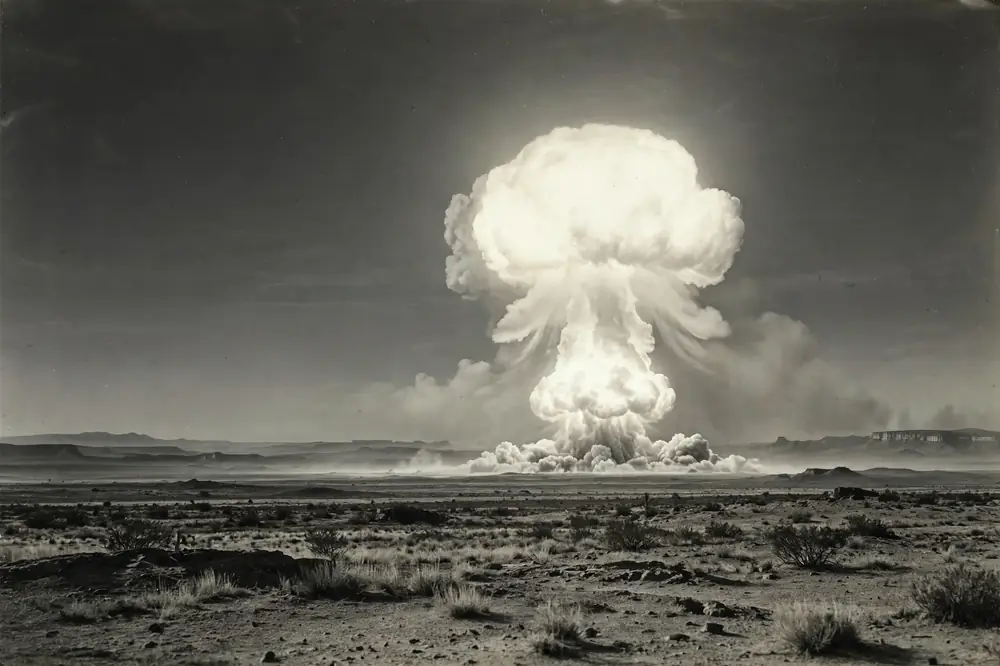
On 16 July 1945 Fermi was present at the Trinity test, the first explosion of an atomic bomb, in the desert of New Mexico. He watched the explosion from a bunker ten miles away, and he made, in the moment, one of the most famous measurements in the history of physics: as the blast wave passed, he dropped small pieces of paper from his hand and measured how far they were blown by the wind, and from that he estimated the yield of the explosion at about ten thousand tons of TNT — a figure that was remarkably close to the true yield, which was later measured at about twenty thousand tons.
The story has become a legend, and it is often told as a joke, but it shows something real about Fermi: that he could do, with a handful of paper, what an army of instruments took weeks to confirm. After Trinity, Fermi sat on the Scientific Panel — with Oppenheimer, Lawrence and Compton — which recommended that the bomb be used militarily against Japan, without a prior demonstration, and the bombs were dropped on Hiroshima and Nagasaki in August 1945.
7.2.1. The Paper Tear: Measuring the Blast
The story of Fermi’s paper measurement at Trinity deserves to be told in full, because it is often misunderstood. Fermi did not guess the yield of the bomb; he measured it, using the displacement of the pieces of paper as a crude anemometer.
The blast wave, as it passed, pushed the air sideways, and the paper, falling through the moving air, was carried a distance that depended on the strength of the wave. Fermi, who had thought about the problem in advance, knew the relationship between the displacement and the energy of the explosion, and he calculated the yield in his head, on the spot, to within a factor of two.
The measurement was not a party trick: it was an example of what physicists call a Fermi estimate — a rough calculation, made with minimal data, that gets the order of magnitude right. The term “Fermi estimate” is still used today, in physics and in business, for a back-of-the-envelope calculation that captures the essence of a problem, and it is named after the man who, at Trinity, measured the most powerful explosion in history with a handful of torn paper.
8. The Postwar Years
8.1. Chicago and the Institute for Nuclear Studies
After the war Fermi returned to the University of Chicago, where he became professor of physics and the first director of the Institute for Nuclear Studies, which was later renamed the Enrico Fermi Institute in his honour. He built a new career in particle physics, working on the properties of the pion, on cosmic rays, and on the new accelerators that were being built after the war.
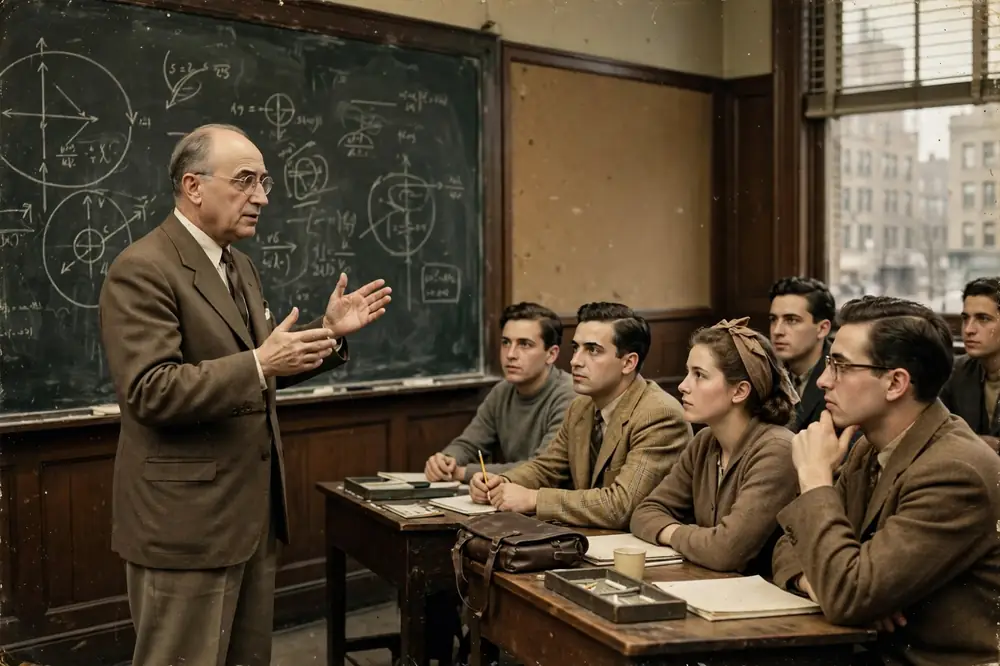
He was also a legendary teacher: his lectures at Chicago were famous for their clarity, and his students — who included some of the most important physicists of the next generation — remembered him as a man who could explain the most difficult ideas in the simplest words.
He was known among his colleagues as “the Pope”, a nickname that reflected both his authority and his infallibility: when Fermi said something about physics, it was, in the words of one colleague, “as if the Pope had spoken”. He was also, by all accounts, a man of great personal charm, who loved to hike, to sail, and to spend time with his family.
8.2. The Fermi Paradox and the Question of Life
In the summer of 1950 Fermi asked a question that has become one of the most famous in science. At lunch with colleagues at Los Alamos, discussing the possibility of extraterrestrial life, he suddenly asked: “Where is everybody?” The question, which became known as the Fermi paradox, was simple: if the universe is vast and old, and if life is common, then the galaxy should be full of civilisations, and we should have seen evidence of them.
The fact that we have not is a paradox, and it has been debated ever since. Fermi’s own answer, if he had one, is not recorded, but the question itself has become a classic of scientific reasoning: a simple observation, made in conversation, that opens a profound problem.
The paradox is still unsolved, and it is still cited, more than seventy years later, as an example of Fermi’s ability to ask the question that no one else had thought to ask.
8.2.1. The 1950 Lunch at Los Alamos
The lunch at which Fermi asked his famous question was an ordinary occasion, and that is part of its charm. He was eating with Edward Teller, Herbert York and others, and the conversation had turned to flying saucers and to a cartoon in The New Yorker about a flying saucer. Fermi, who had been listening quietly, suddenly asked his question, and the table fell silent.
The others realised, at once, that he had asked something profound: that the absence of evidence for extraterrestrial civilisations was itself a fact that needed explaining. The paradox has since been given many answers — that civilisations destroy themselves, that they hide, that interstellar travel is impossible, that we are alone — but none of them has been proved, and the question remains open.
The lunch is remembered because it shows Fermi at his best: not at a blackboard, not in a laboratory, but at a table, with a sandwich in his hand, asking the question that everyone else had missed.
9. Death and Family
9.1. Illness and the Last Months
In the autumn of 1954 Fermi fell ill. He had been working, as always, at full speed, and he attributed his tiredness and his loss of appetite to overwork. In October he underwent an exploratory operation, and the surgeons found an inoperable cancer of the stomach. He was fifty-three years old.
He faced the diagnosis with the same calm he had shown at Chicago Pile-1 and at Trinity: he put his affairs in order, he continued to work for as long as he could, and he spent his last weeks with his family. He died on 28 November 1954, at his home in Chicago, with Laura and his children beside him.
The cause of his death has been much discussed: some have suggested that his exposure to radiation during his work on the reactor and the bomb contributed to the cancer, but there is no direct evidence for this, and stomach cancer was, in the 1950s, a common disease.
What is certain is that he died too young, at the height of his powers, and that physics lost, in his death, one of its greatest practitioners.
9.2. Laura, Nella and Giulio
Fermi left behind his wife Laura, his daughter Nella and his son Giulio. Laura, who had shared his exile and his triumphs, lived for another twenty-three years, and she became, in her own right, a writer and a guardian of her husband’s memory: her memoir Atoms in the Family, published in 1954, is one of the best accounts of the life of a physicist ever written, and it remains in print today.
Nella became a writer and an editor, and Giulio became a physicist, following his father into the profession he had loved. The family settled in Chicago, and they remained, for the rest of their lives, a part of the university community that Fermi had helped to build. Fermi himself was cremated, and his ashes were scattered, at his request, in an undisclosed place.
There is no grand tomb, no monument in the usual sense: his memorial is the institute that bears his name, the laboratory that bears his name, and the element that bears his name — and the students, now old men, who still remember his lectures.
9.2.1. Atoms in the Family / Atoms in the Family
Laura Fermi’s memoir, Atoms in the Family, deserves a place in any account of her husband, because it is the book that shows Fermi as a man rather than as a scientist. She wrote about his modesty, his humour, his love of hiking and sailing, his impatience with pomposity, and his devotion to his family — and she wrote about them with a warmth and a wit that her husband, who was famously reticent about his feelings, never showed in his own writings.
The book also tells the story of the emigration, of the war years, and of the life of a family that lived, for fifteen years, at the centre of the greatest scientific enterprise in history. It is, in the end, a love story as much as a memoir, and it is the reason we know Fermi not only as the man who built the first reactor but as a husband and a father who, for all his genius, was happiest at home, with his family, in the ordinary life that his work had made extraordinary.
10. Legacy
10.1. The Architect of the Nuclear Age
Fermi’s legacy is the nuclear age itself. He did not invent nuclear fission, and he did not build the atomic bomb alone, but he did more than anyone else to make both possible: he discovered slow neutrons, he built the first reactor, and he showed that the chain reaction could be controlled.
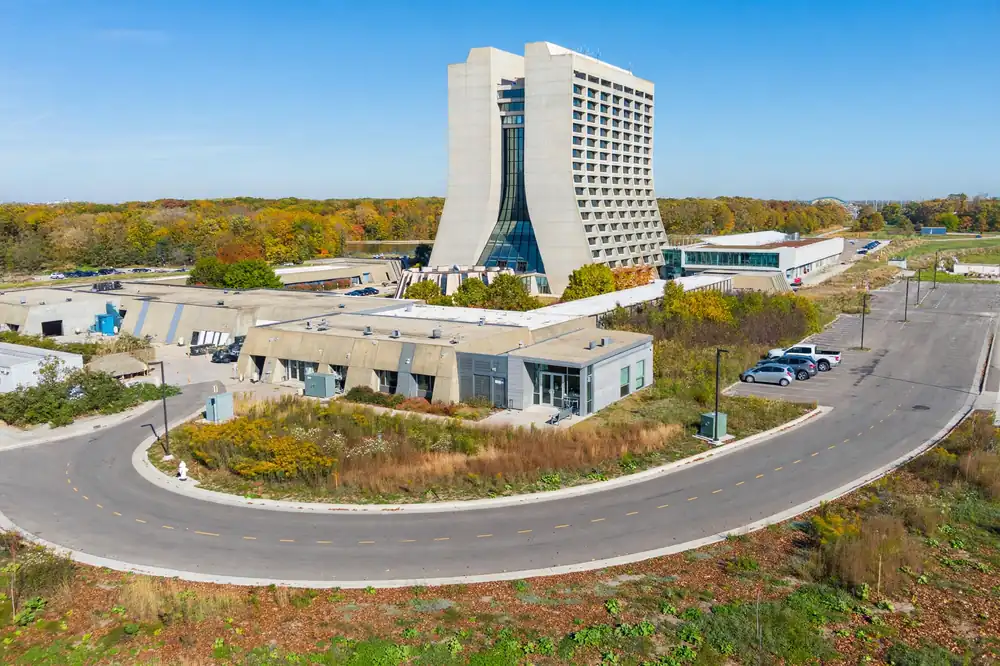
The world that resulted — a world of nuclear power and nuclear weapons, of reactors and of deterrence — is the world Fermi made, and it is a world that is still, seventy years after his death, the central fact of international politics.
He was also the founder of modern particle physics: his work on the pion, on cosmic rays and on the weak interaction laid the foundations for the physics of the second half of the twentieth century. The Fermi National Accelerator Laboratory, outside Chicago, is named after him, and the element fermium, element 100, discovered in the debris of the first hydrogen bomb test in 1952, was named in his honour in 1955.
Few scientists have had so many things named after them, and few have deserved it more.
10.2. Conscience and the Bomb
Fermi’s part in the atomic bomb has been judged in different ways, and the judgement is still open. He was not one of the physicists who agonised publicly about the bomb: he did not, like Leo Szilard, campaign against its use, and he did not, like J. Robert Oppenheimer, express public remorse after the war.
He believed that the bomb had been necessary, that a German bomb would have been worse, and that the scientists who built it had done their duty. But he also worried, in his last years, about the hydrogen bomb, and he was one of the physicists who opposed its development, arguing that it was a weapon of genocide rather than of war.
He was, in the end, a man who understood the consequences of his work better than most, and who accepted them with a calm that some have called wisdom and others have called evasion. The question of what Fermi thought about the bomb is, like the question of what he thought about anything, difficult to answer, because he rarely said what he thought.
What he did say, in his last years, was that the world would have to learn to live with the forces he had unleashed, and that the task of the physicist, having opened the nuclear age, was to help the world to survive it.
10.2.1. The Pope of Physics
The nickname “the Pope” — given to Fermi by his colleagues — captures something essential about his place in physics. It was not a joke about his authority, or not only a joke: it was a recognition that Fermi’s judgement was, more often than not, right, and that when he spoke, other physicists listened.
The nickname also captures something about his character: that he was a man of great seriousness, of great modesty, and of great kindness, who never sought power and never abused it. He was, in the words of one of his students, “the most complete physicist of the century” — a man who could do theory and experiment, who could calculate and build, who could teach and lead, and who did all of it with a simplicity that made the difficult seem easy.
That is his legacy, and it is why his name is still spoken with reverence in physics departments all over the world, seventy years after his death. The nuclear age he opened is still with us, and the questions he asked — about the nucleus, about the stars, about whether we are alone in the universe — are still the questions that physics is trying to answer.
11. Frequently Asked Questions
What did Enrico Fermi discover?
He developed Fermi–Dirac statistics (1926), discovered that slow neutrons are far more effective at causing nuclear reactions (1934), and built Chicago Pile-1, achieving the first controlled self-sustaining nuclear chain reaction on 2 December 1942. He also helped build the atomic bomb at Los Alamos.
What was Chicago Pile-1?
The first nuclear reactor, built by Fermi and his team in a converted squash court under Stagg Field at the University of Chicago. On 2 December 1942 it achieved the first controlled, self-sustaining nuclear chain reaction, producing about half a watt of power for twenty-eight minutes. It proved that reactors — and atomic bombs — were possible.
Why did Fermi leave Italy?
Because of the Fascist racial laws of 1938, which threatened his Jewish wife Laura and their children. He travelled to Stockholm to receive the Nobel Prize in December 1938 and sailed from there directly to the United States, where he had a post at Columbia University. He never lived in Italy again.
What is the Fermi paradox?
At lunch at Los Alamos in 1950, Fermi asked: “Where is everybody?” If the universe is vast and old and life is common, the galaxy should be full of civilisations — yet we see no evidence of them. The contradiction between the expectation and the absence of evidence is the Fermi paradox, and it remains unsolved.
Did Fermi regret building the atomic bomb?
He did not express public remorse like Oppenheimer, and he believed the bomb had been necessary to defeat Germany and Japan. But in his last years he opposed the hydrogen bomb, arguing it was a weapon of genocide rather than of war. He rarely spoke about his feelings, so his private views are difficult to know.
What is named after Fermi?
Element 100, fermium; the Fermi National Accelerator Laboratory near Chicago; the Enrico Fermi Institute at the University of Chicago; the Fermi Gamma-ray Space Telescope; and the “Fermi estimate”, a rough back-of-the-envelope calculation. His name is also attached to Fermi–Dirac statistics and to the Fermi paradox.
12. Sources
- Wikipedia, “Enrico Fermi” — dates, career, Chicago Pile-1, Los Alamos, death and legacy.
- Encyclopædia Britannica, “Enrico Fermi” — life and assessment.
- Laura Fermi, Atoms in the Family: My Life with Enrico Fermi (University of Chicago Press, 1954) — Fermi’s life as his wife saw it.
- Emilio Segrè, Enrico Fermi, Physicist (University of Chicago Press, 1970) — biography by a colleague and Nobel laureate.
- Richard Rhodes, The Making of the Atomic Bomb (Simon & Schuster, 1986) — Fermi, Chicago Pile-1 and Los Alamos.
- George Gamow, Thirty Years That Shook Physics (Doubleday, 1966) — the physics of Fermi’s generation.
- Enrico Fermi, Collected Papers (University of Chicago Press, 1962–65) — Fermi’s own scientific writings.