 WAR ATLAS MILITARY HISTORY MAGAZINE · WWI — WWII
East vs West Germany
1. Lead
East vs West Germany is the story of a country divided. From 1949 to 1990, Germany was split into two states: the Federal Republic of Germany (FRG), known as West Germany, a democracy with a market economy, allied to the United States and to Western Europe; and the German Democratic Republic (GDR), known as East Germany, a communist state with a planned economy, allied to the Soviet Union.
The two states were separated by the inner-German border — 1,381 kilometres of fences, minefields and watchtowers — and by the Berlin Wall, built in 1961 to stop East Germans fleeing to the West. They developed in very different ways: West Germany became one of the richest countries in the world, while East Germany became one of the most tightly controlled societies in Europe.
On 3 October 1990, a year after the fall of the Berlin Wall, the two states were reunited, and Germany became one country again.
The comparison of East and West Germany is not a simple story of good against evil, and it should not be told as one. West Germany was a democracy, but it was a democracy that, in its early years, employed former Nazis in high office and that was slow to confront its past. East Germany was a dictatorship, but it was a dictatorship that provided its citizens with jobs, housing, childcare and a sense of security, and that many East Germans, even after reunification, remember with a mixture of criticism and nostalgia. This article compares the two states as they were: their politics, their economies, their daily lives, and their ends, and it does so without taking sides.
2. Key Facts
| What | The division of Germany into two states, 1949–1990 |
| West Germany | Federal Republic of Germany (FRG), founded 23 May 1949; capital Bonn; democracy, market economy; member of NATO (from 1955) and the European Communities |
| East Germany | German Democratic Republic (GDR), founded 7 October 1949; capital East Berlin; one-party communist state, planned economy; member of the Warsaw Pact |
| Division | The inner-German border, 1,381 km; the Berlin Wall, built 13 August 1961, 155 km around West Berlin |
| Population | West Germany about 62 million (1989); East Germany about 16 million (1989) |
| Economy | West Germany: the “economic miracle” (Wirtschaftswunder); East Germany: a planned economy, with lower living standards and chronic shortages |
| End | The Berlin Wall fell on 9 November 1989; Germany was reunified on 3 October 1990 |
| Today | Germany is one country; the former border is marked by the Berlin Wall Memorial and by the “Green Belt” of nature reserves along the old border |
3. Background
From occupation to two states
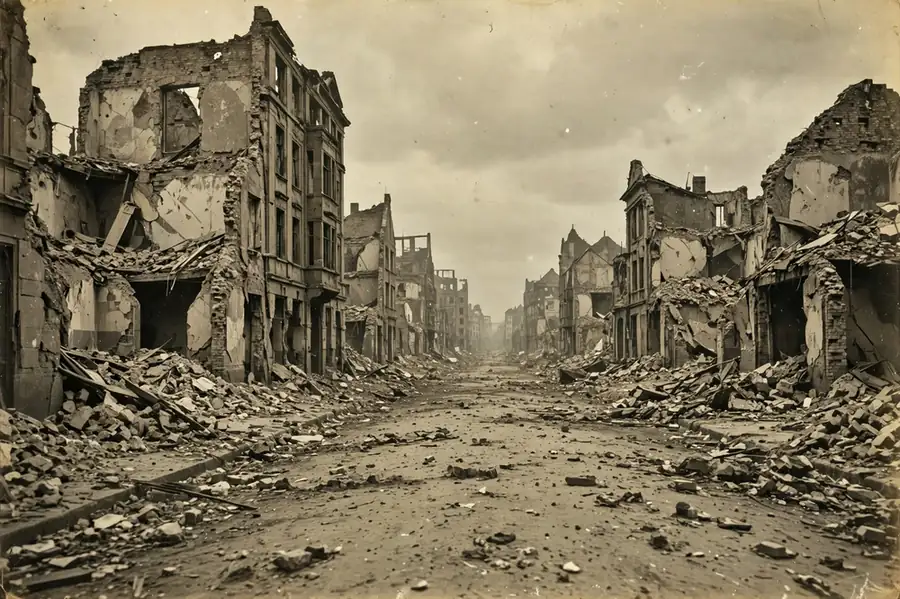
Germany was divided after the Second World War, when the victorious Allies — the United States, Britain, France and the Soviet Union — divided the country into four zones of occupation. The division was intended to be temporary, but as the Cold War developed, the Western zones and the Soviet zone grew apart.
In 1948, the Western Allies introduced a new currency, the Deutsche Mark, in their zones, and the Soviet Union responded with the Berlin Blockade, closing all road and rail access to West Berlin. The Blockade was defeated by the Berlin Airlift, in which American and British aircraft supplied West Berlin for almost a year, and in 1949 the division became permanent: the Federal Republic of Germany was founded in the West on 23 May 1949, and the German Democratic Republic was founded in the East on 7 October 1949.
Berlin, which lay inside the Soviet zone, was itself divided into East and West Berlin.
The flight to the West
Between 1949 and 1961, about 2.7 million East Germans fled to the West, most of them through Berlin, where the border was still open. The flight was a disaster for East Germany: it lost its young, its skilled workers, and its professionals, and it was, in the judgement of historians, the main reason for the building of the Berlin Wall.
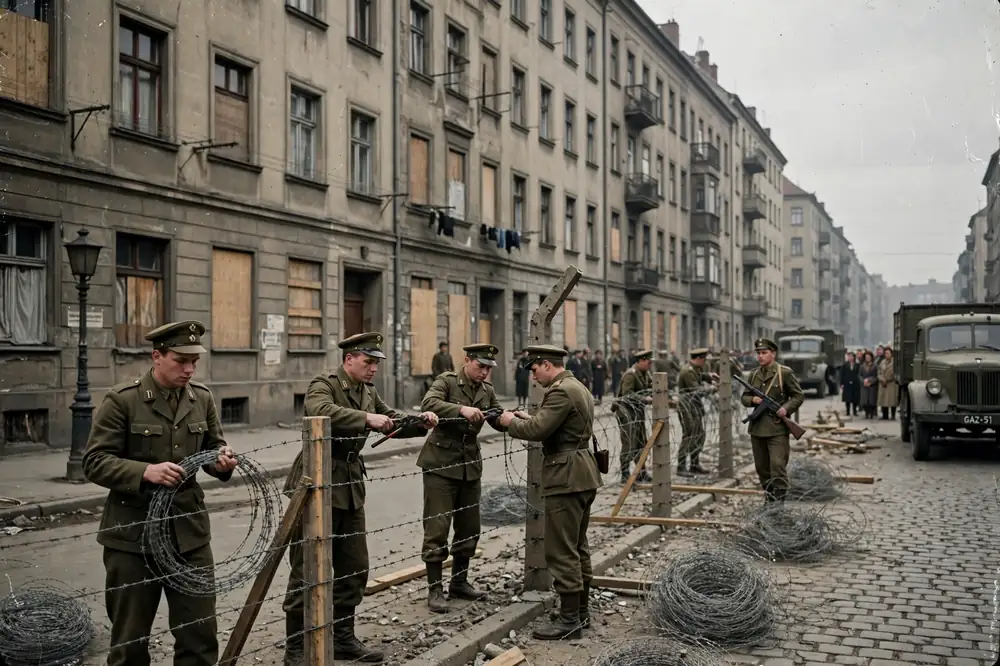
On the night of 12–13 August 1961, East German troops closed the border in Berlin, and over the following days they built a wall — at first of barbed wire, then of concrete — around West Berlin. The Wall was 155 kilometres long, and it was guarded by soldiers with orders to shoot anyone who tried to cross.
At least 140 people were killed trying to cross the Berlin Wall, and many more were killed trying to cross the inner-German border. The Wall became the symbol of the division of Germany, and of the Cold War itself.
4. What Happened
Two Germanys, 1949–1989
For forty years, the two German states developed in opposite directions. West Germany, under Chancellor Konrad Adenauer and his successors, became a parliamentary democracy, a member of NATO and of the European Communities, and the economic powerhouse of Western Europe.
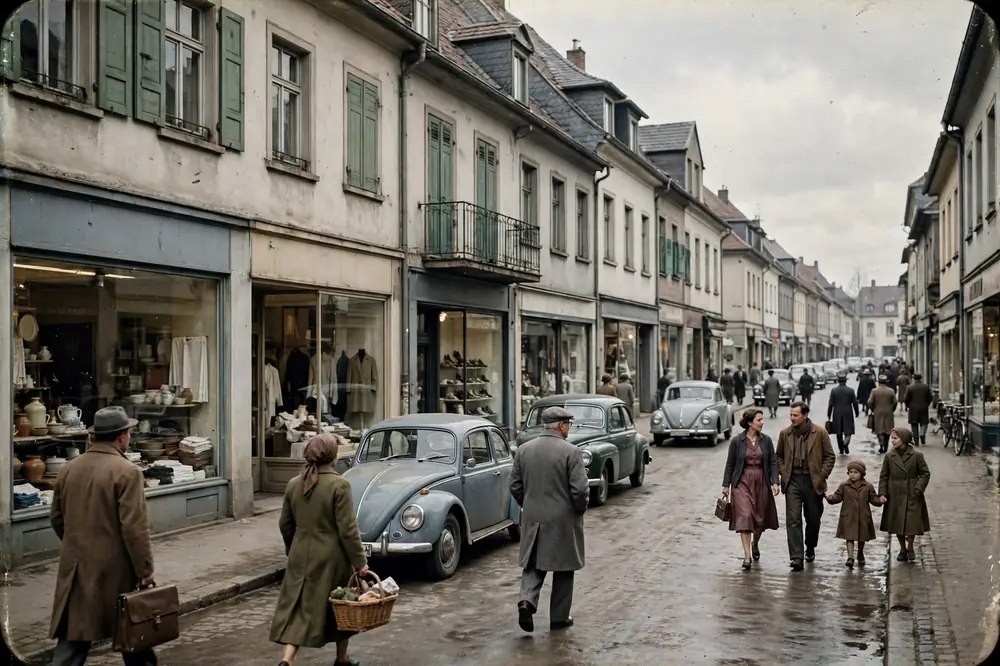
Its “economic miracle” — the Wirtschaftswunder of the 1950s and 1960s — transformed a ruined country into one of the richest in the world, and its “social market economy” combined free enterprise with a welfare state. East Germany, under the Socialist Unity Party (SED) and its leader Walter Ulbricht, and later Erich Honecker, became a one-party state, a member of the Warsaw Pact, and a planned economy in which the state owned the means of production and decided what was produced.
Its economy grew in the 1950s and 1960s, but it fell behind the West in the 1970s and 1980s, and by 1989 it was, in the judgement of historians, bankrupt.
The fall of the Wall and reunification
The end came suddenly. In 1989, as the Soviet Union under Mikhail Gorbachev loosened its control over Eastern Europe, East Germans began to flee to the West through Hungary and Czechoslovakia, and protests grew in East German cities, above all in Leipzig, where the Monday demonstrations drew tens of thousands of people.
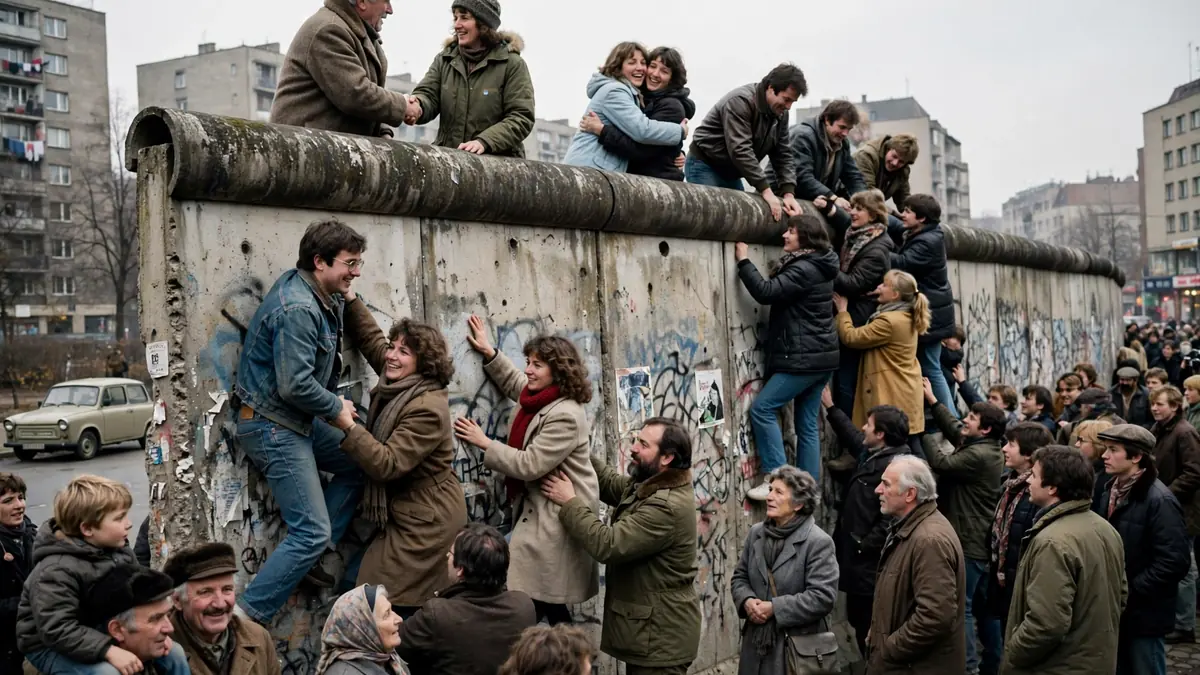
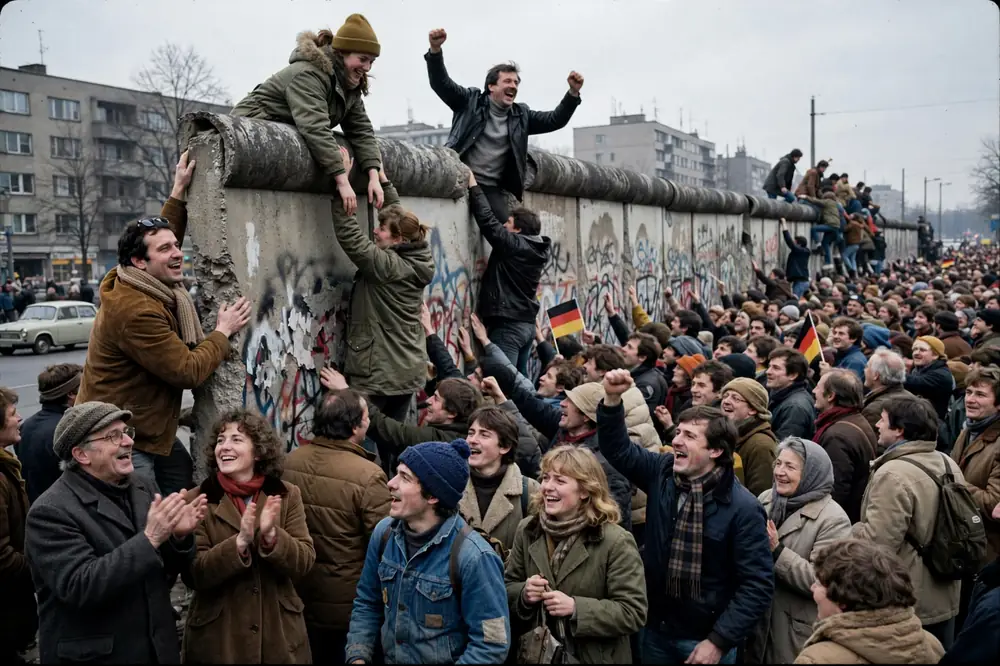
On 9 November 1989, the East German government, in confusion, announced that its citizens could travel to the West, and crowds gathered at the Berlin Wall. The border guards, who had no clear orders, opened the gates, and Berliners from East and West climbed onto the Wall and began to tear it down.
The fall of the Wall was followed, less than a year later, by reunification: on 3 October 1990, the German Democratic Republic ceased to exist, and its territory became part of the Federal Republic of Germany. Germany was one country again, for the first time since 1945.
5. How the Two States Worked
Politics: democracy and dictatorship
West Germany was a parliamentary democracy, with free elections, a free press, and a federal system in which the states (the Länder) had considerable autonomy. Its political system was dominated by two large parties, the Christian Democratic Union (CDU) and the Social Democratic Party (SPD), and by the Free Democratic Party (FDP), which often held the balance of power.
East Germany was a one-party state, in which the Socialist Unity Party (SED) controlled the government, the economy, the media and the security services. Elections were held, but they were not free: voters were presented with a single list of candidates, and the result was always more than 99 per cent in favour of the SED.
The difference between the two systems was, in the judgement of historians, the fundamental difference between the two Germanys: one was a democracy, however imperfect, and the other was a dictatorship.
Daily life: prosperity and shortage
Daily life in the two Germanys was very different. In West Germany, the economic miracle brought rising living standards: cars, televisions, washing machines and holidays abroad became common, and by the 1970s West Germans enjoyed one of the highest standards of living in the world.
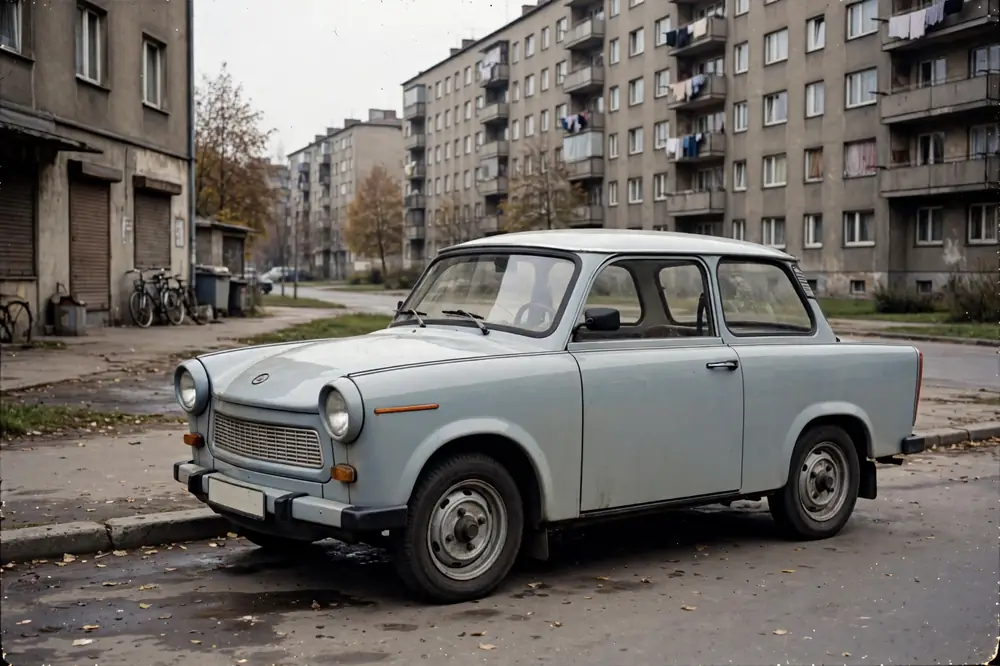
In East Germany, living standards were lower, and shortages were chronic: East Germans waited years for a car — the Trabant, the small two-stroke car that became the symbol of East Germany — and they queued for food, for clothing, and for consumer goods. But East Germany provided its citizens with things that West Germany did not: guaranteed employment, cheap housing, free childcare, and free healthcare.
The trade-off was, in the judgement of historians, the central fact of East German life: security in exchange for freedom, and a lower standard of living in exchange for a sense of equality.
6. Survivors and Testimony
Voices from both sides
The division of Germany is remembered through the testimony of those who lived it, and their accounts are, in the judgement of historians, among the most valuable sources for the history of the Cold War. West Germans remember the economic miracle, the rebuilding of their cities, and the sense of freedom that came with democracy.
East Germans remember the security of a job and a flat, the free childcare, and the sense of community — and they remember the Stasi, the secret police, the fear of being denounced, and the Wall. The testimony of those who tried to escape — and of those who succeeded, and of those who were caught — is particularly powerful: it describes the danger of crossing the border, the mines and the watchtowers, and the price of failure.
The testimony is preserved in the archives of the Berlin Wall Memorial, in the oral histories collected by German museums, and in the memoirs that have been published since reunification.
The Stasi files
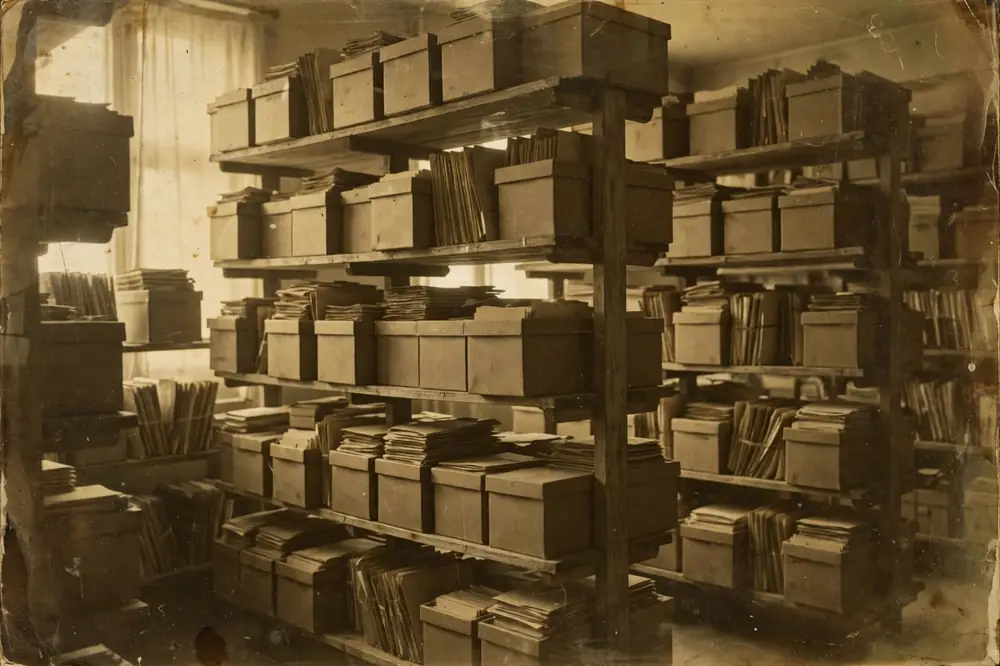
One of the most remarkable sources for the history of East Germany is the archive of the Stasi, the Ministry for State Security, which employed about 90,000 full-time officers and about 170,000 unofficial informers, and which kept files on about 6 million East Germans — more than a third of the population.
After reunification, the files were opened, and East Germans could read what the Stasi had recorded about them: who had informed on them, what had been said about them, and how their lives had been monitored. The opening of the files was, in the judgement of historians, one of the most important acts of coming to terms with the past in reunified Germany, and it revealed the scale of the surveillance state that East Germany had been.
The files are now held by the Federal Commissioner for the Stasi Records, and they are available to researchers and to the people named in them.
7. Justice and Reckoning
The trials of the border guards
After reunification, Germany faced the question of how to deal with the crimes of the East German regime, and the answer was, in general, a judicial one. The border guards who had shot people trying to cross the Wall were tried, and some of them were convicted of manslaughter.
The leaders of the regime — including Erich Honecker, the last leader of East Germany — were tried, but Honecker’s trial was abandoned on grounds of ill health, and he died in exile in Chile in 1994. The trials were controversial: some argued that the border guards had been obeying orders, and that they should not be punished; others argued that shooting unarmed civilians was a crime, whatever the orders.
The courts found, in general, that the guards were guilty, but that their sentences should be light, because they had been young and because they had been indoctrinated. The trials were, in the judgement of historians, a partial reckoning: they established that the Wall had been a crime, but they did not punish the men who had ordered it to be built.
Ostalgie / Ostalgie
The reckoning with East Germany’s past was complicated by Ostalgie — nostalgia for the East, from the German Ost (east) and Nostalgie (nostalgia) — the fondness that many East Germans felt, after reunification, for the life they had lost. Ostalgie was, in the judgement of historians, a complex phenomenon: it was, in part, a nostalgia for the security of a job and a flat, for the free childcare, and for the sense of community; and it was, in part, a protest against the way reunification had been carried out, which many East Germans felt had treated them as second-class citizens.
Ostalgie was expressed in popular culture — in the Trabant, in East German food, in the film Good Bye, Lenin! (2003) — and it remains a part of German life today. It is a reminder that the division of Germany was not only a political fact but a human one, and that its end was, for many East Germans, a loss as well as a liberation.
8. Impact
A division still felt today
The impact of the division of Germany is still felt today, more than thirty years after reunification. The economic differences between East and West have narrowed, but they have not disappeared: wages, pensions and living standards are still lower in the East, and unemployment is still higher.
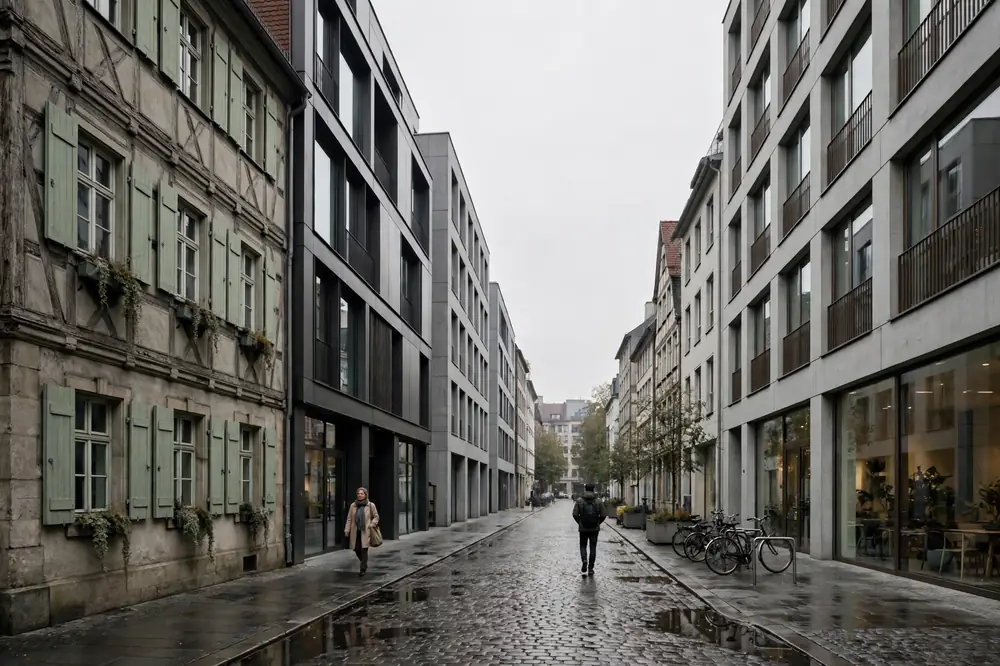
The political differences have also persisted: the far-right Alternative for Germany (AfD) is stronger in the East than in the West, and the far-left Die Linke, the successor to the SED, is also stronger in the East. The division is, in the judgement of historians, a reminder that forty years of separation cannot be undone in a generation, and that the reunification of Germany, which was a political fact in 1990, is still, in social and economic terms, a work in progress.
The economic gap today
The economic gap between East and West Germany has narrowed since reunification, but it has not disappeared, and it is, in the judgement of economists, one of the most persistent legacies of the division. Wages in the East are still about 20 per cent lower than in the West, unemployment is still higher, and the population of the East has fallen, as young people have moved west in search of work.
The German government has spent more than 2 trillion euros on the reconstruction of the East since 1990, through the Solidarity Pact and other programmes, and the investment has transformed the cities of the East, which are now, in many respects, indistinguishable from those of the West.
But the economic differences remain, and they are a reminder that forty years of separation cannot be undone by investment alone, and that the reunification of Germany, which was a political fact in 1990, is still, in economic terms, a work in progress.
9. Commemoration and Education
The Berlin Wall Memorial
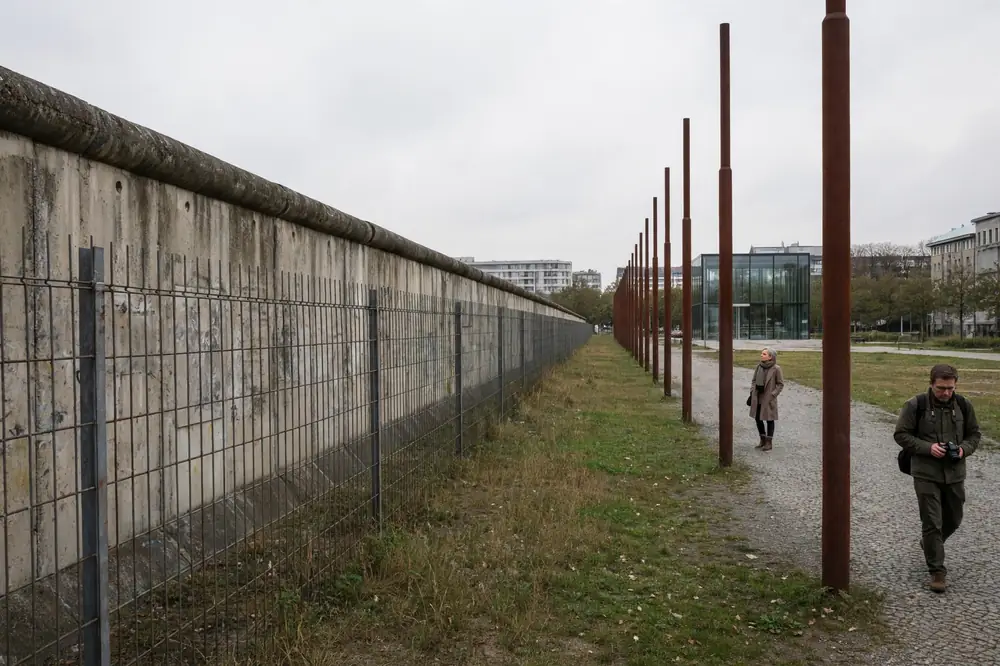
The division of Germany is commemorated at the Berlin Wall Memorial on Bernauer Strasse in Berlin, where a 1.4-kilometre stretch of the Wall is preserved, together with a documentation centre, an open-air exhibition, and the Chapel of Reconciliation. The Memorial is visited by hundreds of thousands of people every year, and it is, in the judgement of historians, one of the most important sites of memory in Germany. The Memorial tells the story of the Wall, of those who died trying to cross it, and of those who lived in its shadow. It is a place of remembrance, and it is also a place of education: school groups from across Germany visit the Memorial as part of their history education.
The Green Belt
The former inner-German border, 1,381 kilometres long, is now the “Green Belt”, a chain of nature reserves that runs along the old border from the Baltic Sea to the Czech border. The Green Belt was created because the border strip, which had been closed to the public for forty years, had become a refuge for wildlife, and it is now one of the most important nature reserves in Germany.
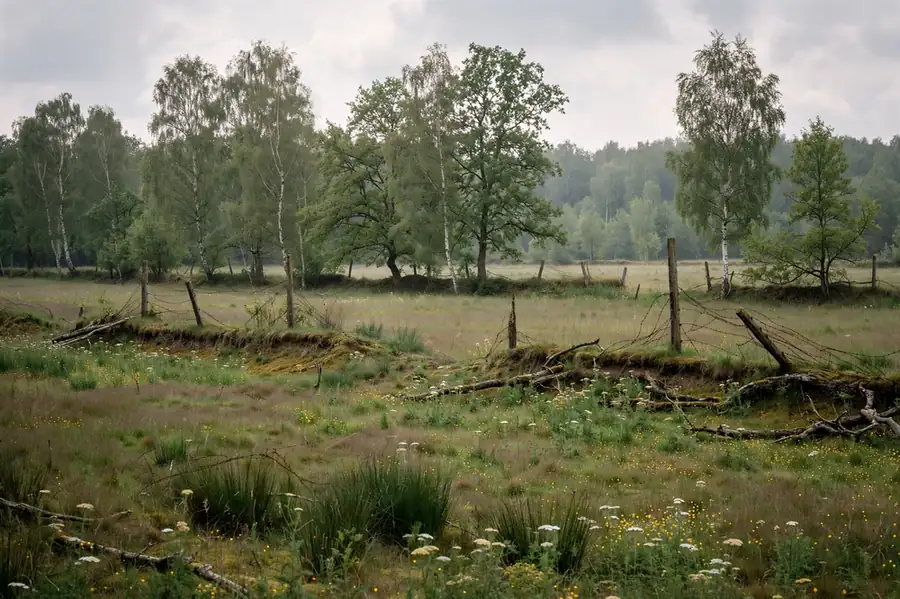
The Green Belt is, in the judgement of historians, a fitting memorial to the division: a place that was once a symbol of separation is now a symbol of nature and of reconciliation. The border is also marked by the “German Unity” hiking trail, which follows the old border and which is walked by thousands of people every year.
10. Legacy
The legacy of division
The legacy of the division of Germany is a divided memory. West Germans remember the division as a time of prosperity and freedom, and they remember reunification as a triumph. East Germans remember the division as a time of security and of community, and they remember reunification as a time of loss and of adjustment.
The two memories are, in the judgement of historians, both true, and they must be held together to understand Germany today. The division is also a legacy for Europe: it was the central fact of the Cold War, and its end, in 1989–1990, marked the end of the Cold War itself.
The reunification of Germany is remembered, in Europe and in the world, as one of the great events of the twentieth century.
Germany today
Germany today is one country, and it is, by any measure, a successful one: it is the largest economy in Europe, it is a leading member of the European Union, and it is a democracy that is, in the judgement of historians, stable and resilient. But the division is not forgotten, and it is not, in social and economic terms, over.
The differences between East and West — in wages, in pensions, in voting patterns — are a reminder that forty years of separation leave a mark that takes more than a generation to erase. The legacy of the division is therefore a double one: the triumph of reunification, and the work that remains to be done to make reunification complete.
The political differences between East and West are also a part of the legacy, and they are, in the judgement of political scientists, a reflection of the different histories of the two regions. The far-right Alternative for Germany is stronger in the East, where it has won more than 30 per cent of the vote in some state elections, and the far-left Die Linke is also stronger in the East.
The reasons are debated, but they include the economic insecurity of the East, the sense among many East Germans that they were treated as second-class citizens after reunification, and the different political cultures that developed during forty years of separation. The political differences are a reminder that reunification was not only an economic task but a political and a cultural one, and that it is not yet complete.
Frequently Asked Questions
When was Germany divided into East and West?
Germany was divided in 1949, when the Federal Republic of Germany was founded in the West on 23 May 1949 and the German Democratic Republic was founded in the East on 7 October 1949. The division lasted until reunification on 3 October 1990.
Why was the Berlin Wall built?
The Berlin Wall was built on 13 August 1961 to stop East Germans fleeing to the West through Berlin. Between 1949 and 1961, about 2.7 million East Germans had fled to the West, most of them through Berlin, and the East German government built the Wall to stop the flight.
How many people were killed trying to cross the Berlin Wall?
At least 140 people were killed trying to cross the Berlin Wall, and many more were killed trying to cross the inner-German border. The exact number is disputed, because some deaths were not recorded, but the figure of at least 140 for the Wall is the one most often cited by historians.
What was the Stasi?
The Stasi, the Ministry for State Security, was the secret police of East Germany. It employed about 90,000 full-time officers and about 170,000 unofficial informers, and it kept files on about 6 million East Germans. After reunification, the files were opened, and East Germans could read what the Stasi had recorded about them.
When did Germany reunite?
Germany was reunified on 3 October 1990, less than a year after the fall of the Berlin Wall on 9 November 1989. The German Democratic Republic ceased to exist, and its territory became part of the Federal Republic of Germany.
What is Ostalgie?
Ostalgie, from the German Ost (east) and Nostalgie (nostalgia), is the nostalgia that many East Germans felt, after reunification, for the life they had lost: the security of a job and a flat, the free childcare, and the sense of community. It is also, in part, a protest against the way reunification was carried out.
Related articles
Sources
- Wikipedia, “East Germany” and “West Germany” — the founding of the two states in 1949, the Berlin Wall, the inner-German border, reunification in 1990.
- Encyclopaedia Britannica, “Germany” (britannica.com) — the division of Germany, the Federal Republic, the German Democratic Republic, reunification.
- Mary Fulbrook, The People’s State: East German Society from Hitler to Honecker (Yale University Press, 2005) — East German society, the Stasi, daily life, Ostalgie.
- Konrad H. Jarausch, The Rush to German Unity (Oxford University Press, 1994) — the fall of the Wall, reunification, 1989–1990.
- Tony Judt, Postwar: A History of Europe Since 1945 (Penguin, 2005) — Germany after the war, the division, the Cold War, reunification.
- Frederick Taylor, The Berlin Wall: 13 August 1961 – 9 November 1989 (Bloomsbury, 2006) — the building of the Wall, the escapes, the fall of the Wall.