 WAR ATLAS MILITARY HISTORY MAGAZINE · WWI — WWII
Second Battle of the Marne
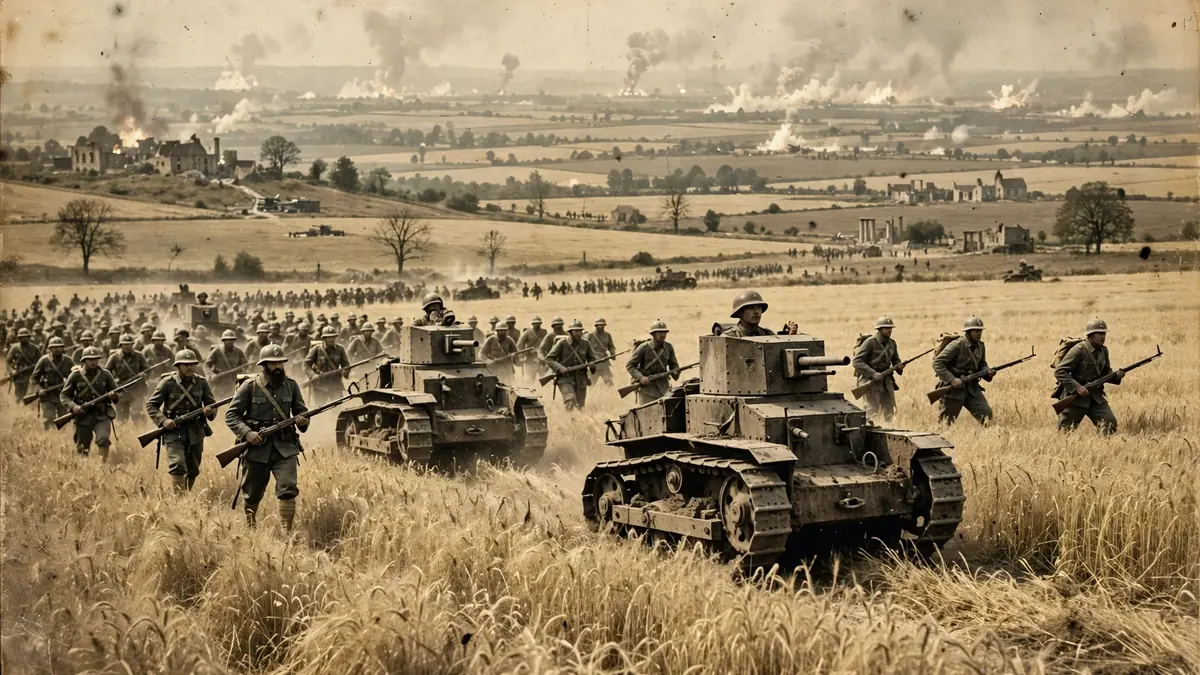
The Second Battle of the Marne, fought from 15 July to 6 August 1918, was the turning point of the First World War. In the spring of 1918, the German army under General Erich Ludendorff had launched a series of great offensives that drove the Allies back towards Paris and seemed, for a time, to promise a German victory before the Americans could arrive in force.
The last of those offensives, the Friedensturm — the “Peace Offensive” — began on 15 July with an attack across the River Marne east and west of Reims. It failed. Within three days, the Allied commander-in-chief, Marshal Ferdinand Foch, struck back with a counteroffensive west of Soissons, using French and American divisions and hundreds of tanks.
The Germans were thrown back across the Marne, then across the Vesle, and they never attacked again. From the Second Marne onwards, the Allies held the initiative, and the war moved, through the Hundred Days Offensive of the autumn, towards the Armistice of 11 November 1918.
The battle is remembered for two things above all. The first is the American contribution: divisions of the American Expeditionary Forces, fighting in large numbers for the first time, held the Marne crossings at Château-Thierry and attacked in the counteroffensive of 18 July, and their presence told the Germans that time was no longer on their side. The second is the change of fortune it marked.
In March 1918, the Germans had been advancing and the Allies had been retreating; after the Second Marne, the roles were reversed, and they stayed reversed until the end of the war. The battle cost both sides heavily — well over 100,000 casualties on each side by most estimates — but its outcome decided the war.
1. Key Facts
| Date | 15 July – 6 August 1918 (German offensive 15–17 July; Allied counteroffensive 18 July – 6 August) |
| Location | The Marne valley between Château-Thierry, Reims and Soissons, France |
| Result | Allied victory; German offensive stopped, Germans driven back across the Marne and the Vesle |
| Allied commanders | Marshal Ferdinand Foch (commander-in-chief); Gen. Philippe Pétain; Gen. Charles Mangin (Tenth Army); Gen. Jean Dégoutte (Sixth Army); Gen. Henri Gouraud (Fourth Army) |
| German commander | Gen. Erich Ludendorff (First Quartermaster-General, de facto commander); Crown Prince Wilhelm (Army Group German Crown Prince) |
| Allied strength | About 44 French divisions, 8 American divisions, British and Italian units; about 350 tanks in the counteroffensive |
| German strength | About 52 divisions in the offensive (First and Third Armies east of Reims, Seventh and Ninth Armies west) |
| Allied losses | About 130,000–160,000 casualties (French, American, British, Italian; estimates vary) |
| German losses | About 160,000–170,000 casualties (estimates vary) |
2. Background
The German Spring Offensives
The Second Battle of the Marne was the last act of a German gamble that had begun in March 1918. Russia had left the war after the Treaty of Brest-Litovsk, and Germany had been able to move nearly a million men from the Eastern Front to the west.
The German commander, General Erich Ludendorff, knew that the Americans were arriving in France in ever greater numbers — by the summer of 1918, more than a million American soldiers would be in France — and that Germany’s chance of winning the war would vanish once the American army was fully deployed.
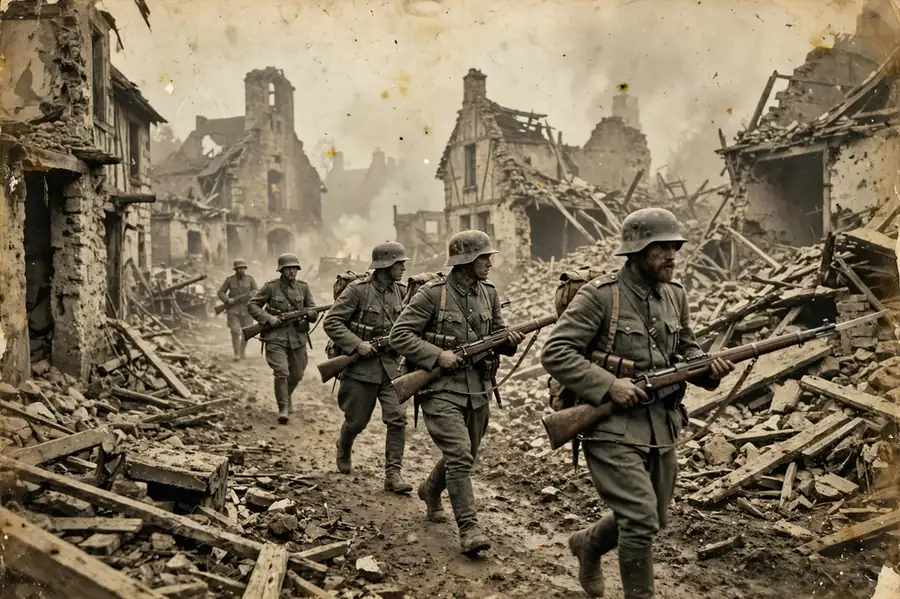
His answer was a series of great offensives, the Kaiserschlacht, designed to break the Allied armies and win the war before the Americans could tip the balance. The first offensive, Operation Michael, struck on 21 March and drove the British back across the old Somme battlefield. The second, Georgette, struck in Flanders in April.
The third, Blücher-Yorck, struck on the Chemin des Dames on 27 May and drove the Allies back to the Marne at Château-Thierry, less than 90 kilometres from Paris. Each offensive won ground, but each cost the Germans men they could not replace, and none of them broke the Allied line.
Foch and the Allied Reserve
The German offensives of the spring had a political consequence that mattered as much as any battle. On 26 March 1918, at Doullens, the Allied governments agreed to appoint a single commander-in-chief: the French general Ferdinand Foch. Until then, the French and British armies had fought side by side but under separate commanders, and cooperation had depended on negotiation.
Foch now had the authority to move reserves where they were needed, and he used it. He also had something Ludendorff did not: a growing reserve of fresh troops. The Americans were arriving at a rate of about 250,000 men a month, and Foch could afford to hold back a strong reserve behind the front while Ludendorff threw his last reserves into each offensive.
By July, Foch had assembled a powerful striking force north-west of the Marne salient, built around the French Tenth Army under General Charles Mangin, with American divisions and hundreds of Renault FT light tanks. The Germans did not know it was there.
The Marne Salient
The ground on which the battle was fought was the great salient — the bulge in the front line — that the German offensive of 27 May had driven south to the Marne. The salient ran from Soissons in the north-west, through Château-Thierry on the Marne, to Reims in the east, and its southern tip touched the river between Dormans and Château-Thierry.
It was a dangerous position for the Germans: the salient was narrow at its base, its supply lines ran through a few roads and railways that Allied artillery could reach, and its flanks were exposed. Ludendorff knew the salient was vulnerable, and his plan for July was to widen it: the German Seventh Army would attack west of Reims, cross the Marne and push south towards Épernay, while the First and Third Armies attacked east of Reims, and the two pincers would meet south of the city, cutting off Reims and straightening the front.
The attack was called the Friedensturm, the “Peace Offensive”, because Ludendorff hoped that a great victory would force the Allies to negotiate. The Germans massed about 52 divisions for the attack, with thousands of guns. But the Allies had learned the German methods by now, and they were ready.
The Plan for 15 July
East of Reims, the French Fourth Army under General Henri Gouraud was waiting for the German attack, and it had prepared a defence in depth. Instead of packing his men into the front line, where the German bombardment would destroy them, Gouraud held his main force back on a second line, let the Germans take an empty front line, and then caught them with artillery fire on ground he had registered in advance.
West of Reims, along the Marne, the French Sixth Army under General Jean Dégoutte held the river crossings, with the American 3rd Division at Château-Thierry and the American 2nd Division and French divisions further west. The German attack was set for 15 July, and the Allies knew the date: French prisoners and deserters had given it away, and Allied intelligence had confirmed it.
When the German guns opened fire at 00:10 on 15 July, the French guns were already answering. The stage was set for the last German offensive of the war — and for Foch’s reply, which was already prepared.
3. Opposing Forces
The German Armies
The German offensive was carried out by the Army Group of Crown Prince Wilhelm, with four armies in the line. East of Reims, the First Army under General Bruno von Mudra and the Third Army under General Karl von Einem were to attack the French Fourth Army and take the high ground around Reims.
West of Reims, the Seventh Army under General Max von Boehn was to cross the Marne between Château-Thierry and Dormans and drive south towards Épernay, while the Ninth Army under General Johannes von Eben guarded the western flank of the salient near Soissons. In total the Germans committed about 52 divisions to the offensive, supported by more than 6,000 guns.
Their infantry was still formidable, and their storm-troop tactics — short, intense bombardments followed by infiltration by small groups — had worked well in the spring. But the German army of July 1918 was not the army of March. Its best men had been spent in the spring offensives, its replacements were younger and less well trained, its supply system was breaking down under the Allied blockade, and many of its soldiers were suffering from hunger and from the influenza epidemic that was sweeping Europe.
The Allied Armies
The Allied defence was organised by Marshal Foch and carried out by the French Army Group Centre under General Philippe Pétain, with the French Fourth, Fifth, Sixth and Tenth Armies in the line. East of Reims, Gouraud’s Fourth Army held the front with a defence in depth.
West of Reims, Dégoutte’s Sixth Army held the Marne, with the American 3rd Division — the “Rock of the Marne” — at Château-Thierry, and American, French, British and Italian divisions in support. Behind the front, Foch held his counteroffensive force: Mangin’s Tenth Army, with the French 1st and 2nd Divisions and the American 1st and 2nd Divisions, and the Sixth Army’s reserve, with the American 4th, 26th, 28th and 42nd Divisions.
In total the Allies had about 44 French divisions and 8 American divisions in the battle, with British and Italian units in support, and about 350 tanks — mostly Renault FT light tanks — assembled for the counteroffensive. The Allied air forces, French, British and American, flew hundreds of sorties a day over the battlefield.
Tanks, Guns and Aircraft
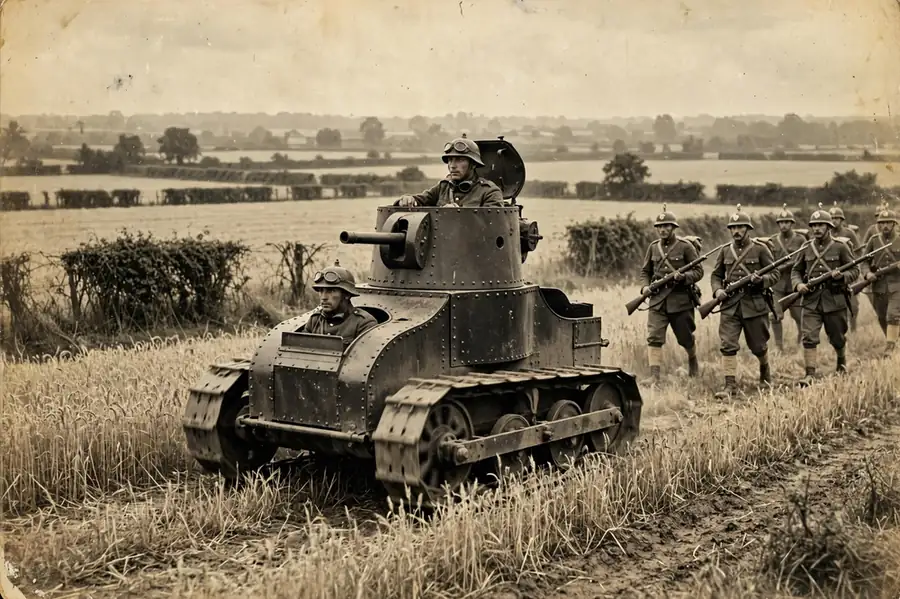
The battle showed how much the war had changed since 1914. The French Renault FT, a small two-man tank with a rotating turret, was the most important new weapon of the battle: about 350 of them were assembled for the counteroffensive of 18 July, and they led the infantry through the German lines, crushing wire and silencing machine guns.
The Germans had almost no tanks of their own — their A7V was produced in tiny numbers — and their anti-tank defence depended on artillery fired over open sights. Artillery dominated the battle on both sides: the Germans opened the offensive with a bombardment of several thousand guns, and the French replied with counter-battery fire that had been carefully prepared.
In the air, the Allies had won a clear superiority by the summer of 1918, and their aircraft ranged over the German rear areas, attacking columns, railways and airfields. The German air force fought hard, but it was outnumbered and outmatched, and it could not protect the German armies from the Allied bombing and observation that guided the Allied guns.
| Allies | Germany | |
|---|---|---|
| Infantry | About 44 French divisions; 8 American divisions; British and Italian units | About 52 divisions (First, Third, Seventh, Ninth Armies) |
| Tanks | About 350 Renault FT and other tanks in the counteroffensive | Almost no tanks; A7V in tiny numbers |
| Artillery | Thousands of guns, incl. heavy artillery and counter-battery fire | More than 6,000 guns in the opening bombardment |
| Air support | French, British and American air forces; clear Allied superiority | German air force, outnumbered |
| Command | Foch (commander-in-chief); Pétain; Mangin; Dégoutte; Gouraud | Ludendorff; Crown Prince Wilhelm |
4. The Battle
15 July: The German Attack
The German offensive began at 00:10 on 15 July with a bombardment that stretched from the Argonne to Château-Thierry. East of Reims, the attack ran into Gouraud’s defence in depth. The German infantry advanced through an empty front line and into a storm of artillery fire on ground the French had registered in advance. The German First and Third Armies gained a few kilometres and then stopped: they had taken the front line and almost nothing else, and their losses were heavy. The attack east of Reims had failed by the evening of 15 July, and it would not be renewed.
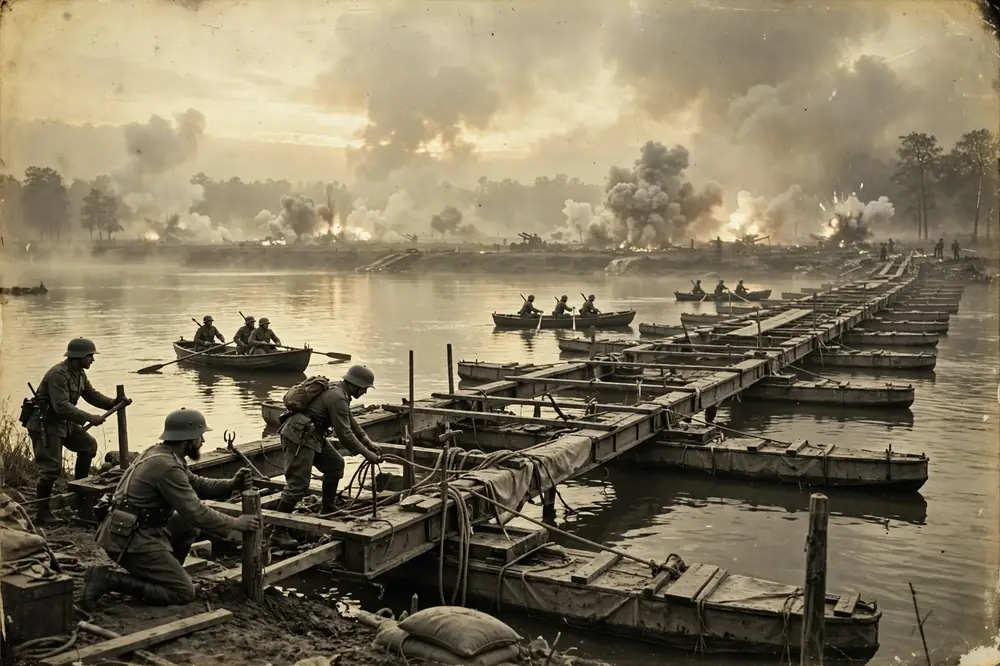
Gouraud’s defence in depth was the product of bitter experience: in 1917, at the Chemin des Dames, the French had packed their men into the front line and lost them to the German bombardment. In 1918 Gouraud did the opposite, and the empty front line that the Germans took on 15 July was a trap. His artillery, registered on the ground in advance, fired on the German infantry as it advanced, and the attack died in the open.
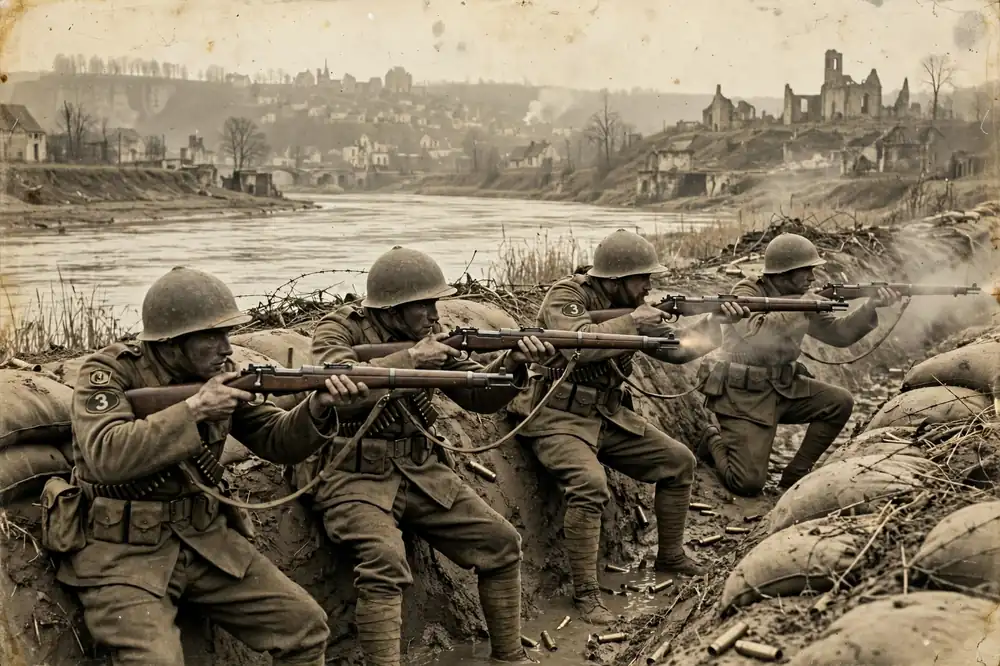
The Crossing of the Marne
West of Reims, the Seventh Army had more success. German engineers threw pontoon bridges across the Marne under fire, and by the morning of 15 July German infantry had crossed the river between Dormans and Château-Thierry and established bridgeheads on the south bank.
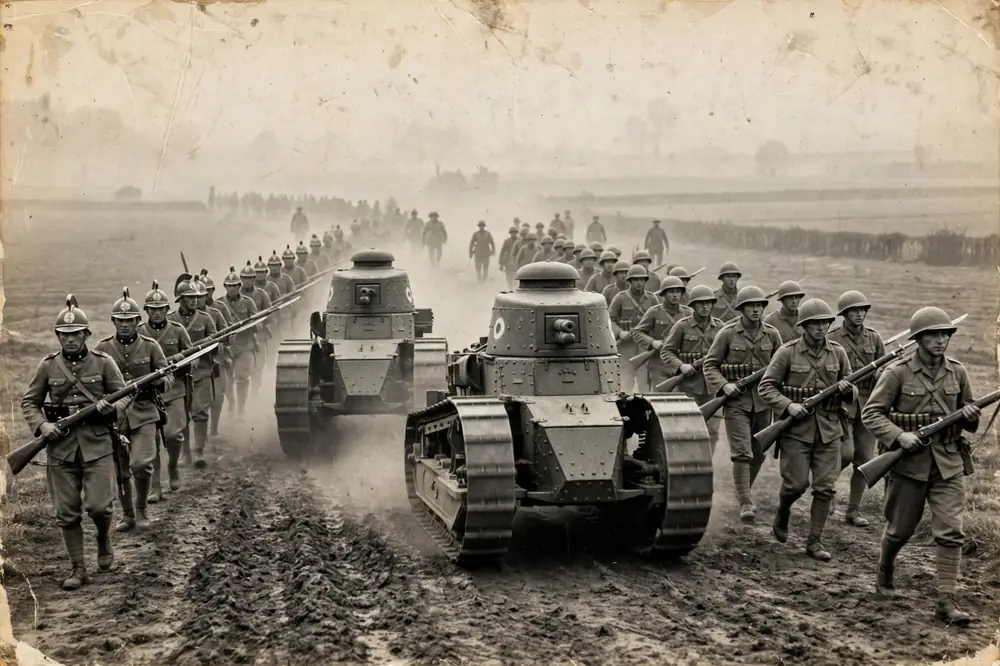
The crossing was a remarkable feat of engineering under fire, but it put the Germans in a dangerous position: they were across the river, with their backs to it, and the bridgeheads were narrow and under Allied artillery fire. The American 3rd Division, holding the Marne at Château-Thierry, fought with particular distinction.
Its 38th Infantry Regiment held its ground on both banks of the river, and the division’s stand earned it the name “Rock of the Marne”. By the evening of 16 July the Germans had pushed their bridgeheads a few kilometres south, towards Épernay, but they had not broken through, and their bridgeheads were being squeezed by French and American counterattacks.
17 July: The Offensive Stalls
On 17 July, Ludendorff called off the offensive east of Reims and ordered the Seventh Army to consolidate its bridgeheads south of the Marne. The Germans had gained a bridgehead, but they had not achieved the breakthrough the Friedensturm was meant to deliver. Their losses were heavy, their artillery was running short of ammunition, and the Allied counter-battery fire was destroying their guns. More importantly, the Germans had spent three days attacking into prepared defences while Foch’s counteroffensive force, hidden north-west of the salient, waited for its moment. On the evening of 17 July, Foch gave the order: the counteroffensive would begin at dawn on 18 July.
The three days of the German offensive had cost Ludendorff his last reserves. His divisions had attacked into prepared defences, lost heavily, and gained almost nothing east of Reims and only a narrow bridgehead west of it. The German army was exhausted, its artillery short of shells, and its men, who had been told the war would be won in July, were beginning to doubt it. Foch, by contrast, had spent nothing: his counteroffensive force was intact, rested and waiting.
18 July: Foch’s Counterstroke
The counteroffensive of 18 July was one of the best-prepared attacks of the war. At 04:35, without a preliminary bombardment — to preserve surprise — the French Tenth Army under General Mangin and the French Sixth Army under General Dégoutte attacked the western flank of the Marne salient, on a front of about 45 kilometres between Soissons and Château-Thierry.
In the centre of the attack, the American 1st and 2nd Divisions advanced alongside the French 1st Division, and behind them came the Renault FT tanks, which rolled forward through the morning mist and crushed the German wire. The attack took the Germans completely by surprise. The German Ninth Army, holding the flank, had no reserves behind it, and its divisions were overrun in the first hours.
By nightfall on 18 July, the Allies had advanced up to 8 kilometres, taken thousands of prisoners, and reached the road and railway that supplied the German armies in the salient. The counteroffensive had cut the German lifeline.
The Americans Attack
The American divisions fought with conspicuous courage on 18 July and in the days that followed. The 1st Division, the “Big Red One”, attacked towards Soissons and took the village of Berzy-le-Sec after hard fighting; the 2nd Division, which included the Marine Brigade, attacked towards Vierzy and the Soissons–Château-Thierry road.
The Americans were still learning the methods of war on the Western Front, and their tactics were sometimes costly — they attacked in dense waves, and their losses were heavy — but their energy and numbers told. The French officers who watched them attack noted both their inexperience and their determination, and the German prisoners who were taken on 18 July told their captors that they had been told the Americans would not fight.
The Americans fought, and the Germans never forgot it.
The American losses on 18 July were heavy, and they grew heavier in the days that followed, as the 1st and 2nd Divisions fought for the villages north of the Marne. But the Americans kept attacking, and their advance, slow and costly, carried the counteroffensive forward day after day.
The Retreat to the Vesle
Ludendorff now faced a choice: hold the Marne salient and risk the encirclement of the Seventh Army, or withdraw. On 20 July he ordered the Seventh Army to withdraw across the Marne, and the Germans began a fighting retreat northwards, destroying bridges behind them as they went.
The Allies pursued, but the pursuit was slow: the Germans fought rearguard actions at every river and village, and the Allied divisions were exhausted by their own advance. By 27 July the Germans had reached the Vesle, and by 6 August they had withdrawn to a line along the Vesle and the Aisne, roughly where they had started in May. The Marne salient was gone.
The battle was over, and the Germans had lost not only the ground they had won in May, but also the initiative, the reserves and the confidence that had carried them through the spring. On 6 August 1918, Foch was made a Marshal of France.
5. Turning Point
The Counteroffensive of 18 July
The turning point of the battle, and of the war, was the counteroffensive of 18 July. Until that morning, the Germans had held the initiative for four months: every battle of the spring had begun with a German attack, and the Allies had done no more than hold on.
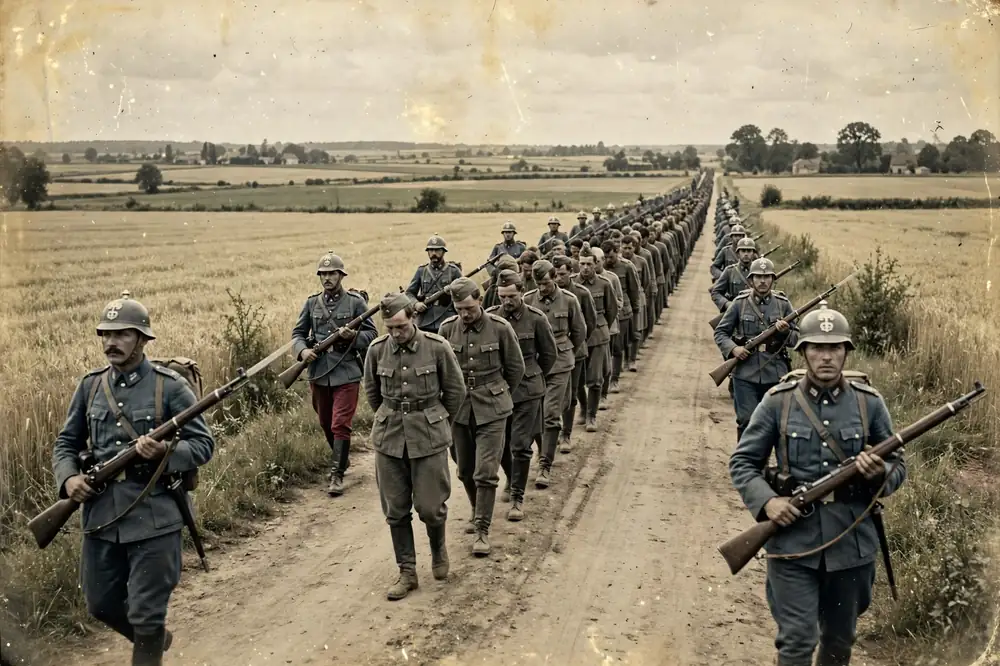
On 18 July, for the first time since March, the Allies attacked — and they attacked with surprise, with tanks, and with fresh American divisions. The attack cut the supply lines of the German armies in the Marne salient, and Ludendorff had no reserves to restore the situation. The German army, which had lived on the offensive all spring, was forced onto the defensive, and it stayed there.
The historian Basil Liddell Hart called the Second Marne the turning point of the war, and the judgement has stood: after 18 July 1918, the Germans never again launched a major offensive on the Western Front.
The End of the German Offensives
The second turning point was a matter of arithmetic. The German spring offensives had cost the army about a million men, killed, wounded and missing, and Germany had no way to replace them. The Allied blockade had strangled the German economy, the influenza epidemic was killing soldiers and civilians alike, and the German home front was near collapse.
The Americans, by contrast, were arriving at a rate of a quarter of a million men a month, and the Allied armies were growing stronger every week. The Second Marne made that arithmetic visible on the battlefield: the Germans attacked with their last reserves and failed, and the Allies counterattacked with fresh divisions and succeeded. Ludendorff understood the meaning of the battle.
On 8 August, the British attack at Amiens — the “black day of the German Army”, as Ludendorff called it — confirmed what the Marne had shown: the German army was beaten, and the only question left was how long the war would last.
6. Casualties and Losses
The Cost
The casualty figures for the Second Battle of the Marne are approximate, and sources differ, as they do for most battles of the First World War. German losses are usually put at about 160,000 to 170,000 men, killed, wounded and missing, including about 29,000 prisoners taken during the Allied counteroffensive.
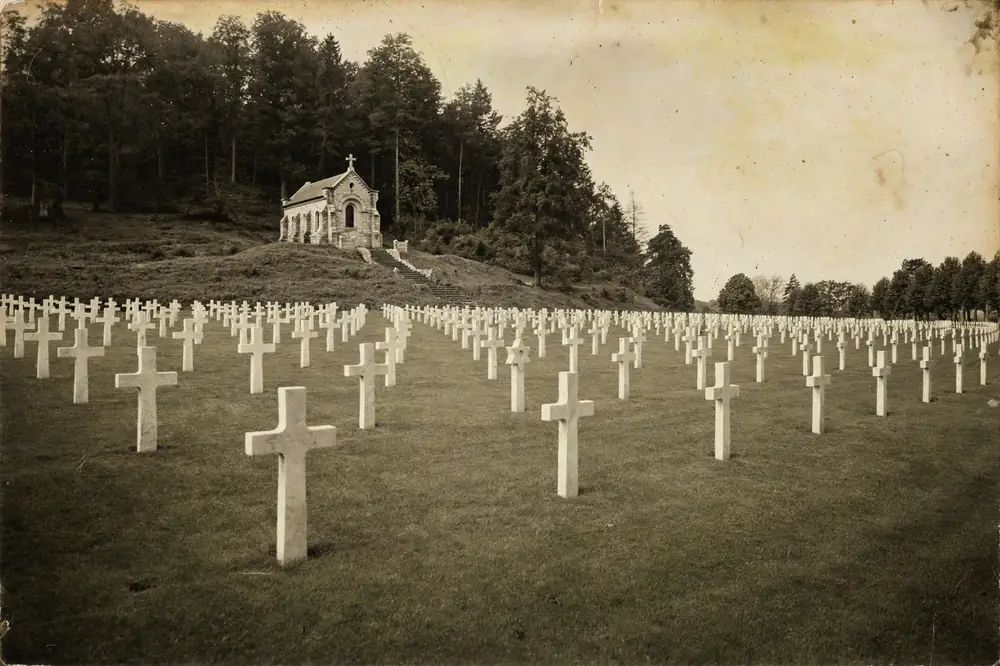
Allied losses are usually put at about 130,000 to 160,000, of which the French bore the largest share — about 95,000 casualties — and the Americans about 12,000 in the fighting of July, with British and Italian losses making up the remainder.
The American losses, though smaller than the French, were concentrated in a few terrible days: the 1st and 2nd Divisions lost thousands of men in the attacks of 18–22 July, and the 3rd Division lost heavily at Château-Thierry. The figures are uncertain because the records of both sides are incomplete, and because the battle merged into the fighting that followed it, but the scale is clear: the Second Marne cost both sides well over 100,000 men in three weeks.
Why the Figures Differ
The figures differ for several reasons, and the differences are worth understanding. First, the battle had no clean beginning or end: the German offensive of 15 July grew out of the fighting of May and June, and the Allied counteroffensive ran on into the battles of August. Different historians draw the line in different places.
Second, the German records for the summer of 1918 are incomplete, because the German army was in retreat and its administrative system was breaking down. Third, the figures for prisoners and missing men overlap: men reported missing were often later found to be prisoners, or dead.
The range of about 130,000 to 160,000 Allied casualties and about 160,000 to 170,000 German casualties is the best that can be said, and it should be read as a range, not as a precise count. What matters is not the exact figure but the proportion: the Germans, who could not replace their losses, lost more men than the Allies, who could.
| Allies | Germany | |
|---|---|---|
| Killed and wounded | About 130,000–160,000 total (French ~95,000; American ~12,000; British and Italian the remainder) | About 130,000–140,000 (estimate) |
| Prisoners and missing | Included in the total above | About 29,000 prisoners taken in the counteroffensive |
| Total | About 130,000–160,000 (estimates vary) | About 160,000–170,000 (estimates vary) |
7. Map and Geography
The Marne Salient on the Map
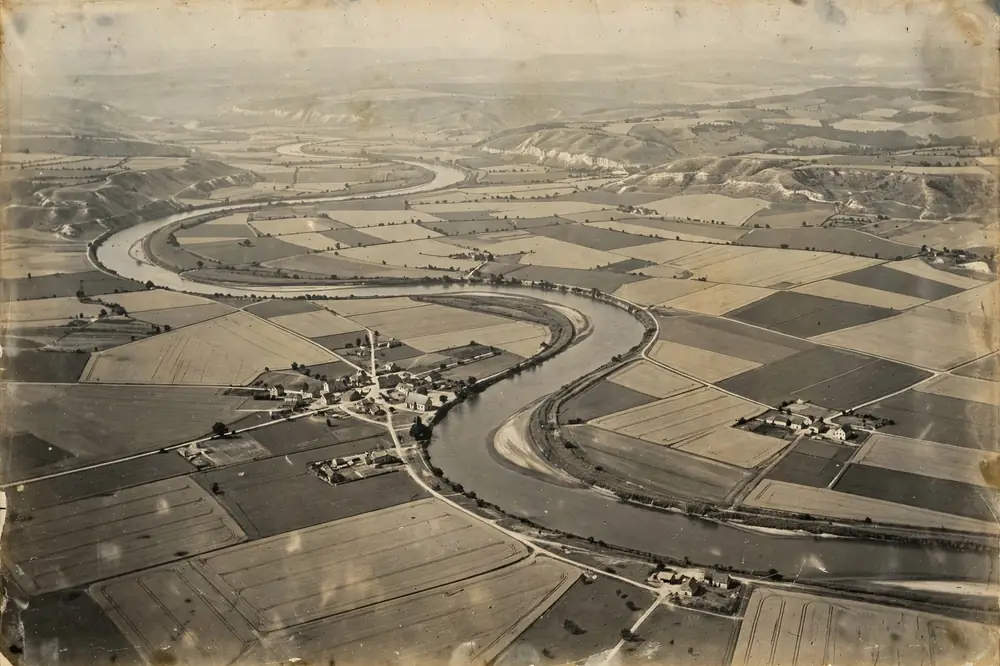
The battle was fought in the valley of the River Marne, about 90 kilometres east of Paris, in the Champagne country of north-eastern France. The Marne flows westwards through a broad valley between low chalk hills, and in July 1918 its crossings were the keys to the battle: the bridges at Château-Thierry, Dormans and Jaulgonne were the points where the Germans crossed the river, and where the Allies had to stop them.
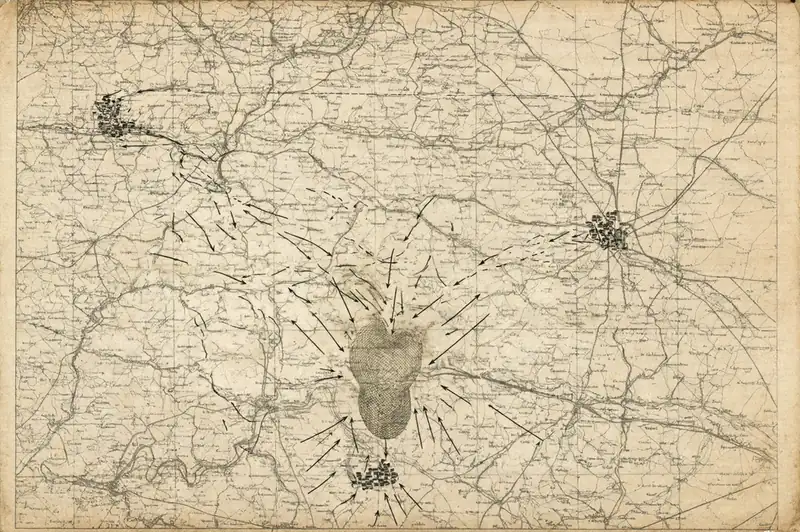
To the north of the Marne, the ground rises towards the plateau of the Chemin des Dames and the River Aisne, and the road and railway from Soissons to Château-Thierry ran along the western side of the salient, supplying the German armies inside it. To the east, the city of Reims stood on a hill at the edge of the Champagne plain, and its defence anchored the whole Allied line.
The cathedral of Reims, already badly damaged by German shelling in 1914, stood as a symbol of the war, and its survival became a matter of French national pride.
Rivers, Roads and Railways
The geography of the battle explains both the German plan and its failure. The Marne salient was a narrow bulge, and its supply depended on a single road and a single railway running from Soissons down to Château-Thierry. When Mangin’s Tenth Army attacked on 18 July, it struck directly at that road and railway, and the German armies inside the salient began to starve.
The rivers — the Marne, the Vesle and the Aisne — ran across the line of the German retreat, and each river had to be crossed under fire, with the bridges destroyed behind the retreating troops. The ground itself favoured the attacker in July 1918: the wheat was high, the woods gave cover, and the tanks could move across the open fields.
But the ground also favoured the defender in the retreat: every village and every river line could be held for a day, and the Germans used each one to slow the Allied pursuit. The battle was a battle of movement, and the movement was decided by the roads and the rivers.
8. Outcome and Legacy
The Initiative Passes to the Allies
The outcome of the Second Battle of the Marne was decisive. The German offensive of 15 July failed, the Allied counteroffensive of 18 July succeeded, and the Marne salient was eliminated. The Germans lost the initiative they had held since March, and they never regained it.
Within weeks, the Allies were attacking all along the front: the British at Amiens on 8 August, the French and Americans on the Vesle and the Aisne, and then, in September, the great offensives of the Hundred Days that drove the German army back to the borders of Germany.
The Second Marne did not end the war — the fighting of the autumn of 1918 was among the bloodiest of the whole war — but it decided the direction of the war. After the Marne, the Allies were advancing and the Germans were retreating, and the war would end with the Germans asking for an armistice.
The Road to the Armistice
The battle also marked the arrival of the Americans as a major force on the Western Front. The American divisions at Château-Thierry and in the counteroffensive of 18 July had fought well, and their presence changed the calculations of both sides. The Germans knew that the Americans would only grow stronger, and the Allies knew that they could now afford to attack.
In September 1918, the American First Army fought its first great battle at St. Mihiel, and then in the Meuse-Argonne, the largest battle in American history. The Second Marne was the battle in which the Americans proved themselves, and in which the French and British learned to trust them as partners.
The battle also made Foch a Marshal of France, on 6 August 1918, and it confirmed the system of unified Allied command that had been created in March.
The autumn offensives that followed the Marne — at Amiens, on the Vesle, at St. Mihiel and in the Meuse-Argonne — drove the German army back across France and Belgium, and on 11 November 1918 the guns fell silent. The war that the Second Marne had decided was over.
Memory
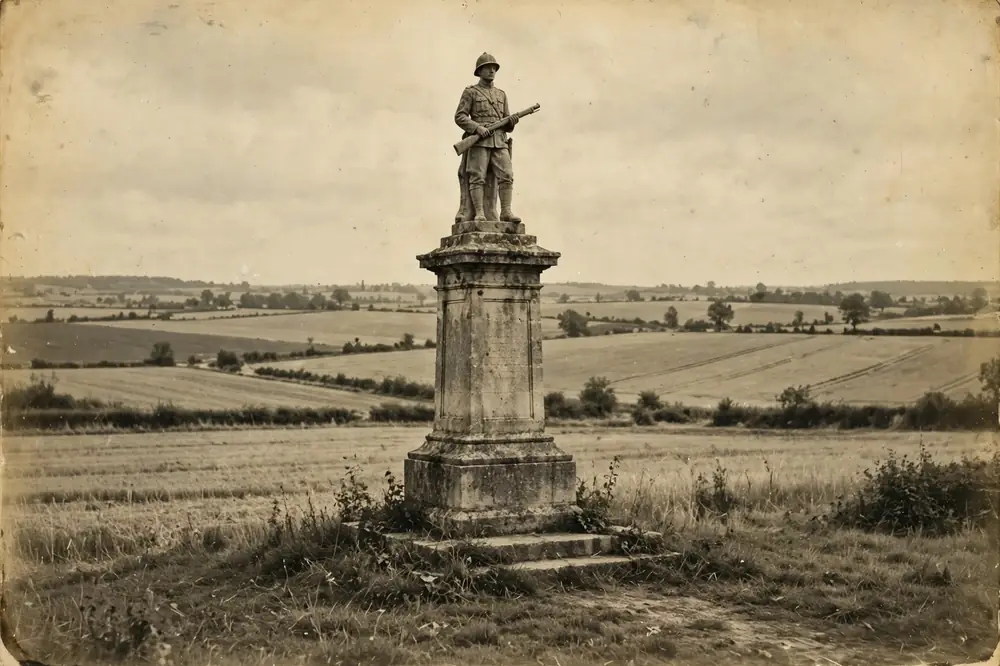
The Second Battle of the Marne is remembered in France as the battle that saved Paris for the second time — the first Marne, in September 1914, had saved the city at the beginning of the war, and the second saved it at the end. Monuments stand at Château-Thierry, where the American 3rd Division held the river, and at Belleau Wood nearby, where the Marines had fought in June.
The American Battle Monuments Commission maintains the Aisne-Marne American Cemetery at Belleau, with 2,289 graves, and the Chateau-Thierry American Monument on the hill above the town. In France, the battle is remembered as a French victory won with American help; in the United States, it is remembered as the battle in which the American army came of age.
Both memories are true, and both are honoured on the ground where the battle was fought.
The battlefield itself, in the valley of the Marne, is quiet farmland now, and the villages that were fought over in July 1918 have rebuilt. The cemeteries remain, French, American, British and German, and they are tended still, a century after the battle.
9. Commanders
Allied Commanders
Marshal Ferdinand Foch (France). Commander-in-chief of the Allied armies. Foch, appointed on 26 March 1918, coordinated the Allied defence against the German spring offensives and planned the counteroffensive of 18 July. He was made a Marshal of France on 6 August 1918, and in 1919 he was made a Marshal of Poland and a British field marshal. He accepted the German surrender in the railway carriage at Compiègne on 11 November 1918.
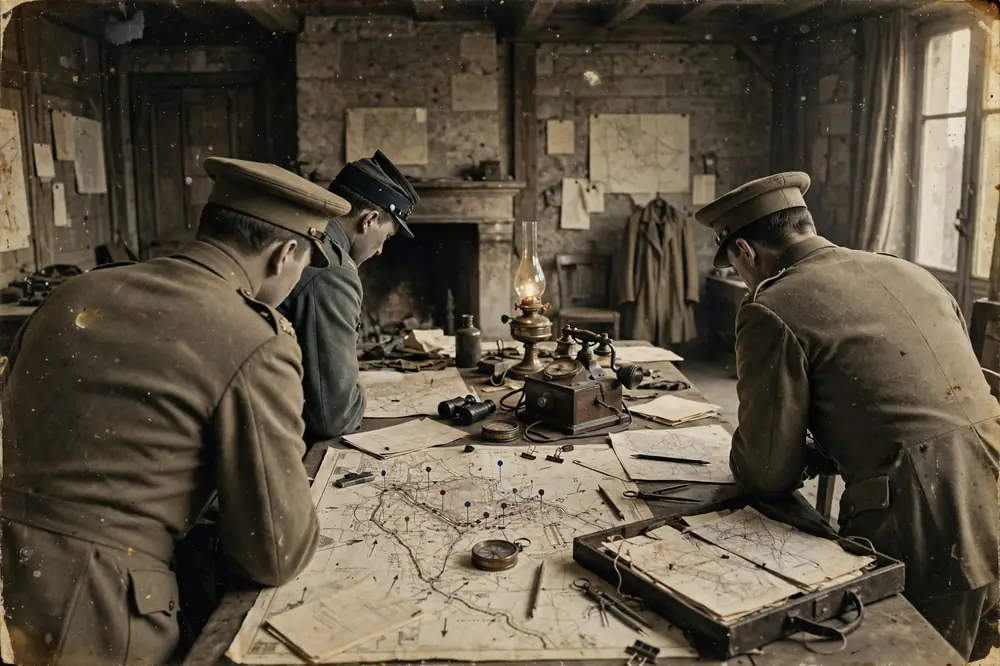
General Charles Mangin (France). Commander of the French Tenth Army, which delivered the main blow of the counteroffensive on 18 July. Mangin, known as “the Butcher” for his willingness to accept heavy losses, had commanded French colonial troops before the war and had fought at Verdun. His Tenth Army’s attack on the flank of the Marne salient was the decisive stroke of the battle.
General Henri Gouraud (France). Commander of the French Fourth Army east of Reims. Gouraud had lost an arm at Gallipoli and had served in Morocco before the war. His defence in depth east of Reims stopped the German attack of 15 July almost without loss of ground, and his methods became a model for the Allied defence.
General Jean Dégoutte (France). Commander of the French Sixth Army, which held the Marne west of Reims and delivered part of the counteroffensive of 18 July. Dégoutte’s army included the American divisions that fought at Château-Thierry and in the counterattack towards Soissons.
General John J. Pershing (United States). Commander of the American Expeditionary Forces. Pershing insisted that the American divisions fight as an independent army rather than being dispersed among the French and British, and at the Marne his divisions fought under French army command but as American formations. His leadership shaped the American contribution to the battle and to the war.
German Commanders
General Erich Ludendorff (Germany). First Quartermaster-General and de facto commander of the German army. Ludendorff planned the spring offensives of 1918, including the Friedensturm of 15 July, and his failure at the Marne broke his nerve. After the defeat at Amiens on 8 August, he suffered a collapse and pressed for an armistice. He resigned in October 1918 and fled to Sweden.
Crown Prince Wilhelm (Germany). Commander of the Army Group German Crown Prince, which carried out the offensive of 15 July. The Crown Prince was the heir to the German throne and the nominal commander of the army group, though the real direction of the battle lay with Ludendorff. He went into exile in the Netherlands after the war.
General Karl von Einem (Germany). Commander of the Third Army east of Reims. Einem, a veteran of the Franco-Prussian War who had come out of retirement in 1914, commanded the attack east of Reims on 15 July 1918. His army gained a few kilometres and then stopped against Gouraud’s defence in depth, and the failure of his attack ended the German offensive east of Reims on the first day. He remained in command on the Western Front until the Armistice.
Frequently Asked Questions
When was the Second Battle of the Marne?
The battle was fought from 15 July to 6 August 1918. The German offensive began on 15 July, the Allied counteroffensive began on 18 July, and the Germans had withdrawn to the Vesle by 6 August.
Why was the Second Battle of the Marne a turning point?
It was the last German offensive of the First World War, and it failed. After the Allied counteroffensive of 18 July, the Germans never attacked again on the Western Front, and the Allies held the initiative until the Armistice in November 1918.
What was the Friedensturm?
The Friedensturm, or “Peace Offensive”, was the name the Germans gave to their offensive of 15 July 1918. Ludendorff hoped that a great victory on the Marne would force the Allies to negotiate a peace. The offensive failed within three days.
What did the Americans do at the Second Marne?
American divisions held the Marne crossings at Château-Thierry — the 3rd Division earned the name “Rock of the Marne” — and attacked in the counteroffensive of 18 July alongside the French. About 12,000 Americans became casualties in the fighting of July 1918.
How is the Second Battle of the Marne different from the First?
The First Battle of the Marne, in September 1914, stopped the German advance on Paris at the beginning of the war. The Second Battle of the Marne, in July 1918, stopped the last German offensive at the end of the war and began the Allied advance that led to the Armistice.
Who was Marshal Foch?
Ferdinand Foch was the French general appointed commander-in-chief of the Allied armies on 26 March 1918. He coordinated the Allied defence in the spring and planned the counteroffensive of 18 July 1918. He was made a Marshal of France on 6 August 1918 and accepted the German surrender on 11 November 1918.
Related articles
Sources
- Wikipedia, “Second Battle of the Marne” — dates, strength, casualty figures and the course of the battle.
- US Army Center of Military History, The Marne: 15 July – 6 August 1918 — the American divisions at Château-Thierry and in the counteroffensive.
- Encyclopædia Britannica, “Second Battle of the Marne” — background, the offensive and the counteroffensive.
- Basil Liddell Hart, The Real War 1914–1918 (Faber, 1930) — the battle as the turning point of the war.
- Ferdinand Foch, Memoirs — Foch’s account of the Allied command and the counteroffensive of 18 July.
- American Battle Monuments Commission, Aisne-Marne American Cemetery and Chateau-Thierry American Monument — the American dead and the memorials.
Further reading
- Robert B. Asprey, The German High Command at War (Morrow, 1991).
- Michael S. Neiberg, The Second Battle of the Marne (Indiana University Press, 2008).