 WAR ATLAS MILITARY HISTORY MAGAZINE · WWI — WWII
De Lisle Carbine
1. De Lisle Carbine — At a Glance
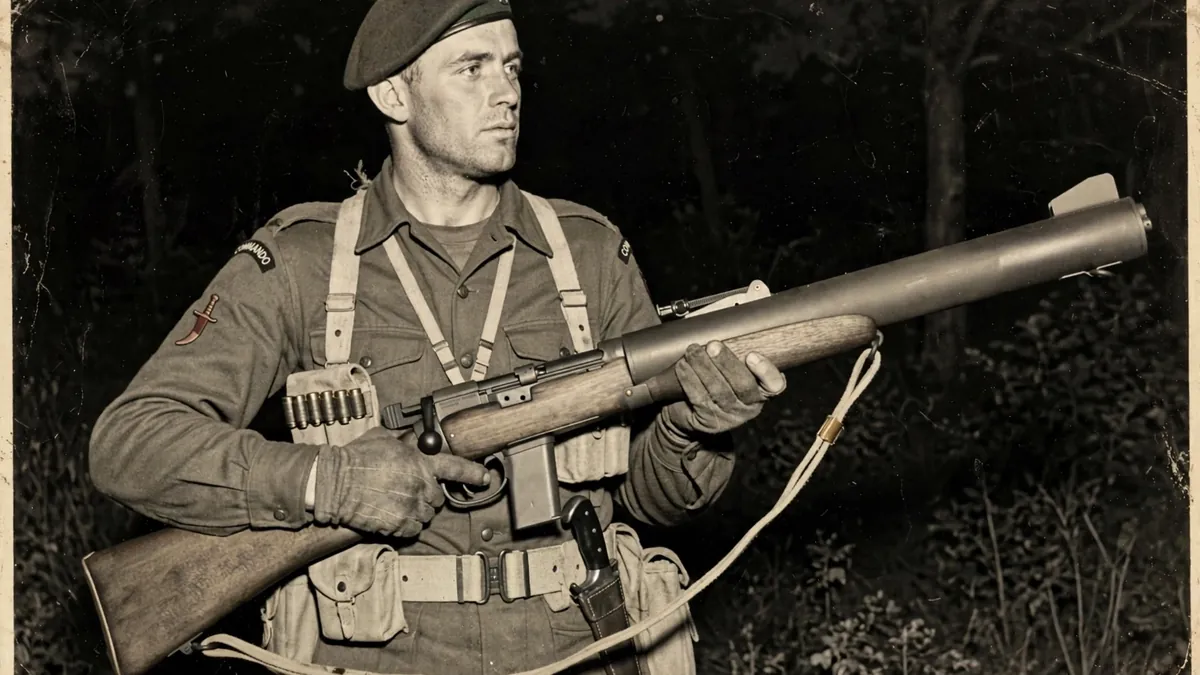
The De Lisle Carbine was a British bolt-action carbine of the Second World War, and it is famous as one of the quietest firearms ever made. Designed by William Godfray de Lisle, a British engineer working for the Air Ministry, the De Lisle combined the action of the Lee-Enfield rifle with the .45 ACP pistol cartridge and with a large, integral suppressor, which reduced the sound of a shot to a level that was said to be quieter than the working of the bolt. Only about 129 De Lisle carbines were built, in 1942 and 1943, and they were issued to British Commandos and to the Special Operations Executive (SOE), who used them for silent killing, for the elimination of sentries and for operations behind enemy lines. The carbine was never a standard weapon, and it was never used in large numbers, but it became a legend among special forces soldiers, and it remains one of the most sought-after British firearms of the Second World War, a weapon that was designed for a single purpose and that performed it better than any other firearm of its time.
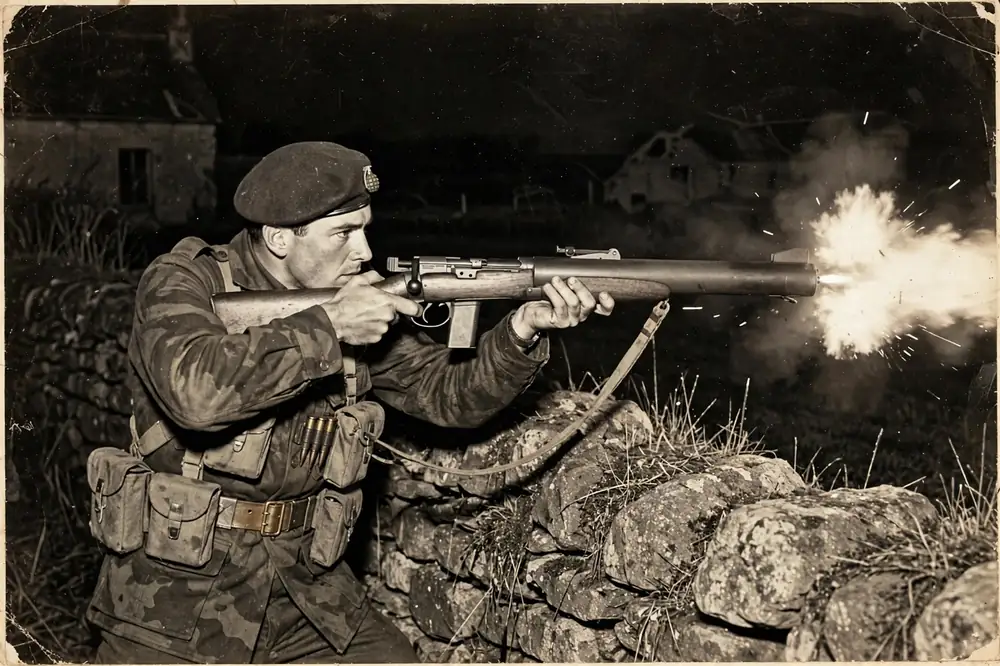
The De Lisle Carbine is a reminder that the Second World War was not only fought with tanks and aircraft, but with weapons designed for secret operations, for the men who worked in the shadows, and for the missions that were never reported in the newspapers. The carbine’s designer, William de Lisle, was not a soldier, but an engineer who understood the problem of noise: a sentry who hears a shot will raise the alarm, and a mission that depends on silence will fail if a weapon is too loud. His answer was a weapon that used a subsonic cartridge, a large suppressor and a bolt action, so that the only sound a target would hear was the click of the bolt and the thump of the bullet. The De Lisle was a weapon of its time, and its time was the war of the Commandos and the SOE, when Britain fought a secret war behind the lines of occupied Europe and the Far East.
2. Key Facts
| Type | Bolt-action carbine with integral suppressor |
| Origin | United Kingdom |
| Designer | William Godfray de Lisle |
| Manufacturer | Ford Motor Company, Dagenham; Sterling Armaments (later) |
| In service | 1942–1945 (limited issue); used into the 1960s by special forces |
| Produced | 1942–1943; about 129 built |
| Weight | About 3.7 kg |
| Length | About 1,006 mm |
| Barrel length | About 210 mm (barrel); suppressor about 420 mm |
| Cartridge | .45 ACP (11.43×23 mm) |
| Action | Bolt action (Lee-Enfield No. 4 action) |
| Muzzle velocity | About 260 m/s (subsonic) |
| Effective range | About 150–200 m |
| Feed system | 11-round detachable box magazine (modified M1911 magazine) |
| Sound level | About 85–90 decibels at the muzzle (claimed); one of the quietest firearms of the war |
3. Background and Development
The Need for a Silent Weapon
In 1940 and 1941, Britain’s Commandos and the Special Operations Executive needed a weapon that could kill silently. The Commandos, who raided the coast of occupied Europe, needed to eliminate sentries without raising the alarm, and the SOE, which sent agents into occupied France, Belgium and the Far East, needed a weapon that could be used in a street or in a building without being heard. The standard British weapons — the Lee-Enfield rifle, the Sten gun and the Colt M1911 pistol — were all too loud for the task, and the suppressed pistols that were available, such as the Welrod, were single-shot or had a very short range. The Air Ministry, which was responsible for the development of special weapons, asked William Godfray de Lisle, an engineer who had been working on silencers for aircraft, to design a silent carbine, and de Lisle, who understood the physics of sound, designed a weapon that used a subsonic cartridge, a large suppressor and a bolt action, so that the only sound was the working of the bolt.
William Godfray de Lisle
William Godfray de Lisle was the man behind the carbine that bears his name, and his story explains much about the weapon itself. He was not a soldier but an engineer employed by the Air Ministry, and his interest in silencers went back to the 1920s, when he had worked on silencers for aircraft engines and for small arms. That background mattered, because the problem the Commandos and the Special Operations Executive faced in 1940 and 1941 was not a lack of firepower but a lack of silence, and de Lisle understood the physics of sound well enough to see that a quiet weapon had to be designed as a whole, with a subsonic cartridge, a large suppressor and a bolt action working together. His first prototype, built in his own workshop in 1942, was a Lee-Enfield rifle converted to fire the .45 ACP cartridge, and it was tested in secret in the English countryside, where its sound and its accuracy were measured. The tests convinced the Commandos and the SOE, the Air Ministry ordered 129 carbines from the Ford Motor Company at Dagenham, and the weapon entered service as a specialist tool for the secret war. The two sections below look first at de Lisle himself, an engineer rather than a soldier, and then at the prototype that turned his idea into a working weapon.
An Engineer, Not a Soldier
William Godfray de Lisle was a British engineer who worked for the Air Ministry, and who had been interested in silencers since the 1920s, when he had designed silencers for aircraft engines and for small arms. De Lisle was not a soldier, and he had never served in the armed forces, but he understood the problem of noise, and he understood that a weapon that was quiet was more useful than a weapon that was powerful, if the mission depended on silence. His first prototype, which he built in 1942, was a Lee-Enfield rifle converted to fire the .45 ACP cartridge, with a large suppressor fitted to the barrel, and it was tested by the Commandos, who found that it was quieter than any weapon they had used, and that it was accurate enough for the task of eliminating a sentry at a range of 100 metres or more. The Air Ministry ordered a small number of the carbines, and they were built by the Ford Motor Company at Dagenham, which had the machinery to build the suppressor and to convert the Lee-Enfield actions.
The First Prototype
De Lisle’s first prototype was built in his own workshop, and it was tested in secret, at a range in the English countryside, where the sound of the shot was measured and where the accuracy of the weapon was tested. The prototype was a success: the sound of the shot was so quiet that it was said to be quieter than the sound of the bolt being worked, and the weapon was accurate enough to hit a man-sized target at 150 metres in trials. The prototype was shown to the Commandos, who were impressed, and to the SOE, who ordered a number of the carbines for their agents in occupied Europe. The Air Ministry, which had funded the development, ordered 129 carbines to be built, and they were built by Ford at Dagenham in 1942 and 1943, using Lee-Enfield No. 4 actions that had been supplied by the Royal Ordnance Factory, and .45 ACP magazines that had been modified from the Colt M1911 pistol.
Production at Ford, Dagenham
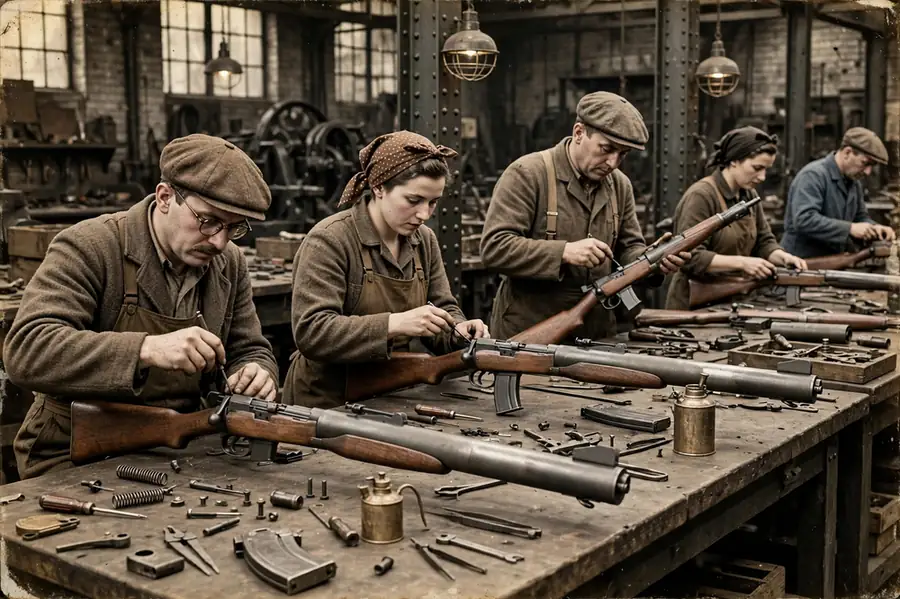
Production of the De Lisle Carbine was carried out by the Ford Motor Company at Dagenham, in Essex, which was one of the largest factories in Britain and which had been converted to war production. Ford built 129 carbines, in two batches, in 1942 and 1943, and each carbine was built by hand, with the Lee-Enfield action being modified to take the .45 ACP cartridge, the barrel being shortened and threaded to take the suppressor, and the suppressor being built from steel and fitted with baffles that slowed the gas and reduced the sound. The carbines were issued to the Commandos and to the SOE, and they were used in operations in France, in the Far East and in the Mediterranean, although the exact details of their use remain secret, because the operations in which they were used were secret, and because the men who used them were forbidden to talk about them. The De Lisle was a weapon of the secret war, and its story is still, in part, a secret.
4. Design
The Lee-Enfield Action and the .45 ACP Cartridge
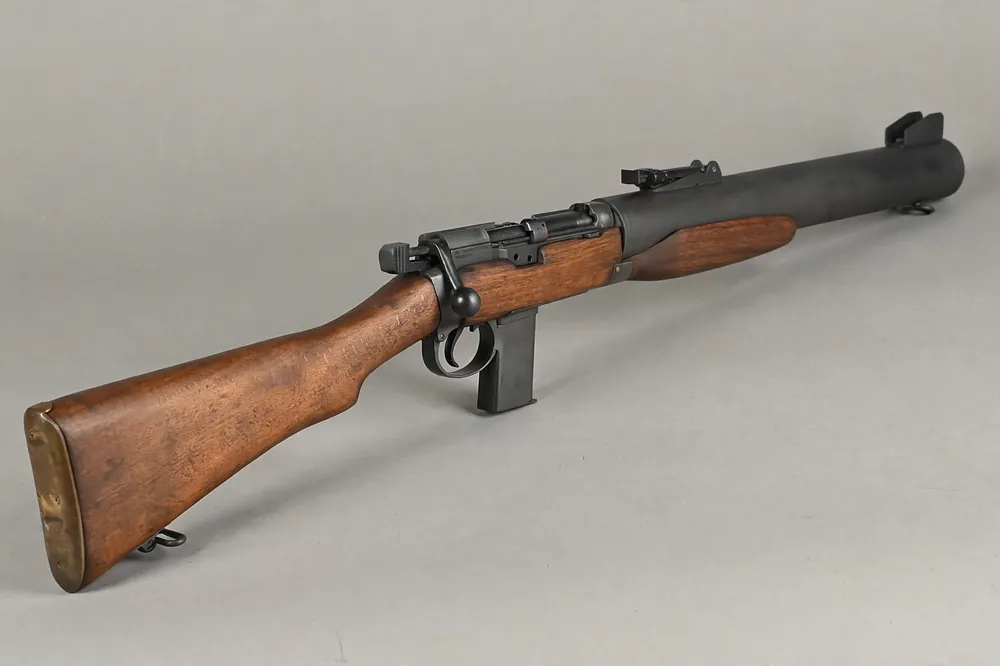
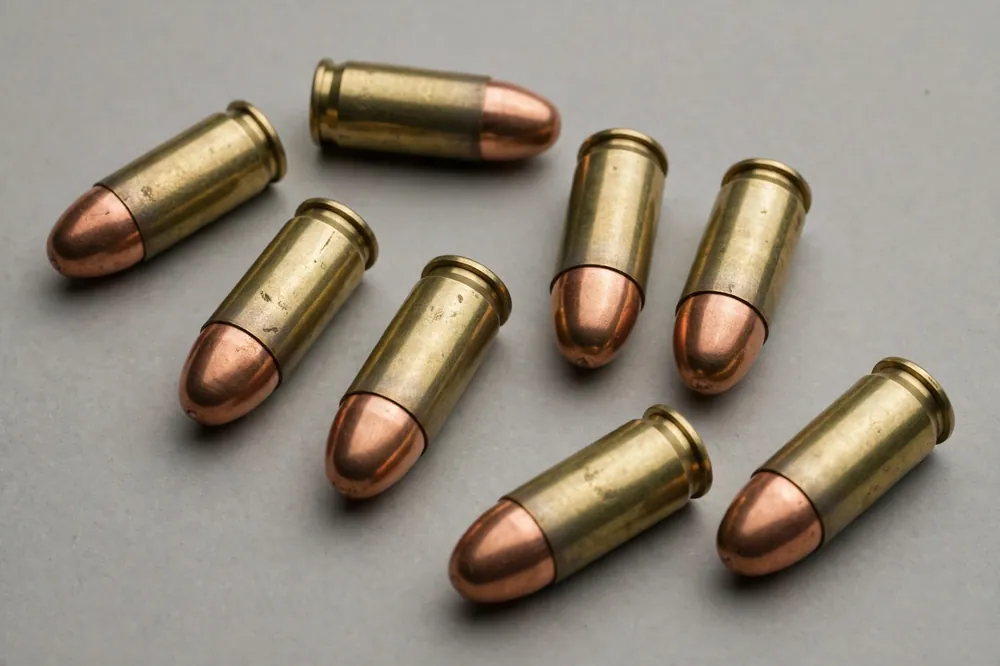
The De Lisle Carbine used the bolt action of the Lee-Enfield No. 4 rifle, which was the standard rifle of the British Army, and which was known for its smooth action and its reliability. The action was modified to take the .45 ACP cartridge, which was a pistol cartridge, and which was subsonic, with a muzzle velocity of about 260 metres per second, which meant that the bullet did not break the sound barrier and did not produce the crack that a supersonic bullet produces. The .45 ACP bullet was heavy, about 15 grams, and it had good stopping power at close range, even though it was slow, and it was available in large numbers, because the British Army used the Colt M1911 pistol and the Thompson submachine gun, both of which used the .45 ACP cartridge. The carbine was fed from an 11-round detachable box magazine, which was a modified Colt M1911 magazine, and which held 11 rounds of .45 ACP ammunition.
The Integral Suppressor
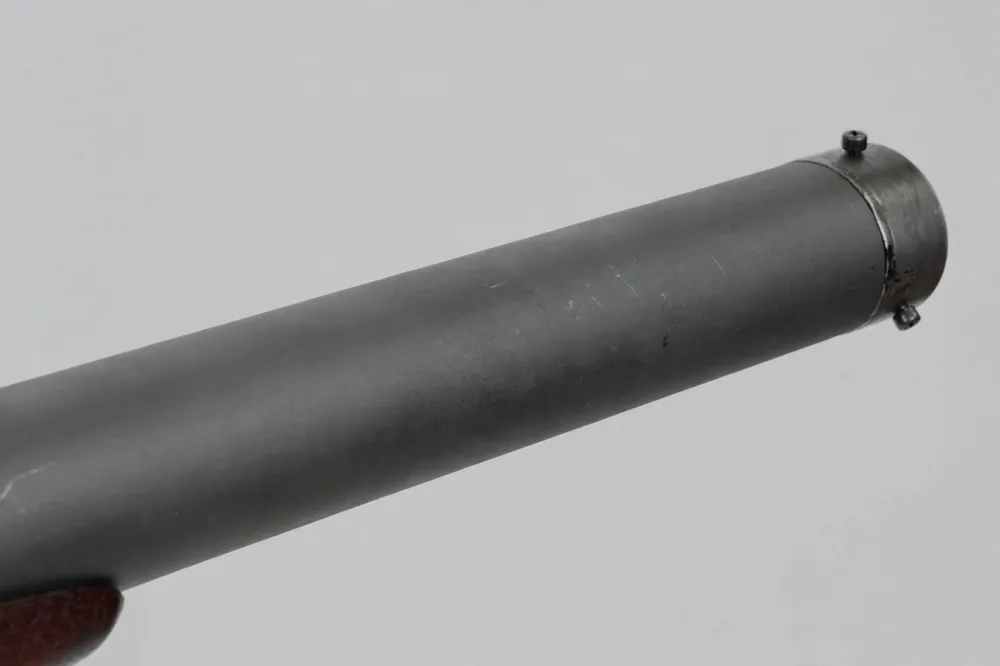
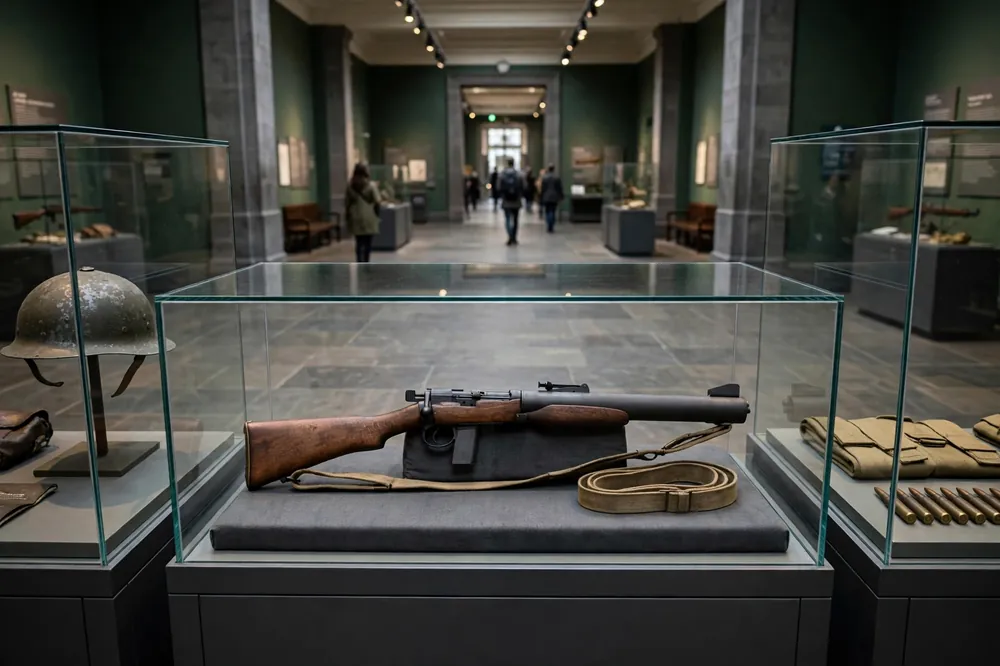
The integral suppressor was the largest part of the De Lisle Carbine and the reason for its fame, and it is impossible to understand the weapon without understanding how the suppressor worked and why it made the carbine so quiet. The suppressor was about 420 mm long and about 50 mm in diameter, fitted to a barrel only about 210 mm long, so that it was longer than the barrel itself, and it was filled with steel baffles that slowed the gas from the shot, cooled it and reduced its pressure. The result was a sound level claimed at about 85 to 90 decibels at the muzzle, more than 60 decibels quieter than a normal rifle shot, and so quiet that one tester described it as quieter than the working of the bolt. The carbine owed its silence to three things working together: a subsonic cartridge, so the bullet produced no sonic crack; a very large suppressor, which could slow and cool the gas more effectively than a small one; and a bolt action, so there was no sound of a slide or a bolt cycling automatically. The sections below describe first how the suppressor worked, and then why the combination of those three factors made the De Lisle one of the quietest firearms ever made.
How the Suppressor Worked
The De Lisle’s suppressor was the largest part of the weapon, and it was the reason for its fame. The suppressor was about 420 mm long and about 50 mm in diameter, and it was fitted to the barrel, which was only about 210 mm long, so that the suppressor was longer than the barrel itself. The suppressor was filled with baffles, which were discs of steel with holes in them, and which slowed the gas from the shot, cooled it and reduced its pressure, so that the sound of the shot was reduced to a level that was said to be about 85–90 decibels at the muzzle, which was quieter than a normal rifle shot by more than 60 decibels, and which was, in the words of one tester, “quieter than the working of the bolt”. The suppressor was integral, which meant that it was part of the weapon and could not be removed, and it was the largest suppressor ever fitted to a firearm of its size, and it was the reason why the De Lisle was one of the quietest firearms ever made.
Why It Was So Quiet
The De Lisle was quiet for three reasons: its cartridge was subsonic, so that the bullet did not produce a sonic crack; its suppressor was very large, so that it could slow and cool the gas more effectively than a small suppressor; and its action was a bolt action, so that there was no sound of a slide or a bolt cycling automatically, and the only sound after the shot was the sound of the shooter working the bolt by hand. The combination of these three factors made the De Lisle quieter than any other firearm of the Second World War, and it remains one of the quietest firearms ever made, even today, when modern suppressors are more efficient and when subsonic ammunition is more widely available. The De Lisle’s quietness was its purpose, and it was achieved by a design that sacrificed range, power and rate of fire for silence, and that was a trade-off that its users were willing to accept.
Size, Weight and Handling
The De Lisle Carbine weighed about 3.7 kilograms and was about 1,006 mm long, which made it heavier and longer than a Lee-Enfield rifle, because of the weight and length of its suppressor, but it was still a weapon that a man could carry and use, and its weight was balanced by the suppressor, which made the weapon feel heavier at the front, but which also reduced the recoil and made the weapon easy to shoot accurately. The carbine had iron sights, a front post and a rear sight, which were adequate for the short ranges at which the weapon was used, and it was normally used from the prone position or from a supported position, with the shooter taking careful aim, because the weapon was intended to kill with a single shot, and because a second shot would take time, as the shooter had to work the bolt by hand. The De Lisle was a weapon for a specialist, and it was used by men who had been trained to use it, and who understood its strengths and its limitations.
5. Variants
The Ford Production and Later Copies
| Variant | Years | Key features | Production |
|---|---|---|---|
| De Lisle (Ford) | 1942–1943 | Lee-Enfield No. 4 action; .45 ACP; integral suppressor; 11-round magazine | About 129 |
| De Lisle (prototype) | 1942 | Hand-built by de Lisle; first test weapon | 1–2 |
| Sterling De Lisle | 1950s–1960s | Post-war copies by Sterling Armaments for special forces | Small numbers |
| Modern reproductions | 2000s–present | Commercial reproductions in the US and UK | Small numbers |
The De Lisle Carbine was produced in a single main variant, the Ford production model, of which about 129 were built, and there were no official variants during the war, because the weapon was built in such small numbers and for such a specific purpose that there was no need for variants. After the war, the Sterling Armaments Company built a small number of De Lisle carbines for the British special forces, who continued to use the weapon into the 1960s, and in recent years a number of commercial companies in the United States and in the United Kingdom have built reproductions of the De Lisle, for collectors and for shooters who want to own one of the quietest firearms ever made. The reproductions are faithful to the original design, and they use the same Lee-Enfield action, the same .45 ACP cartridge and the same large suppressor, and they are a tribute to de Lisle’s design.
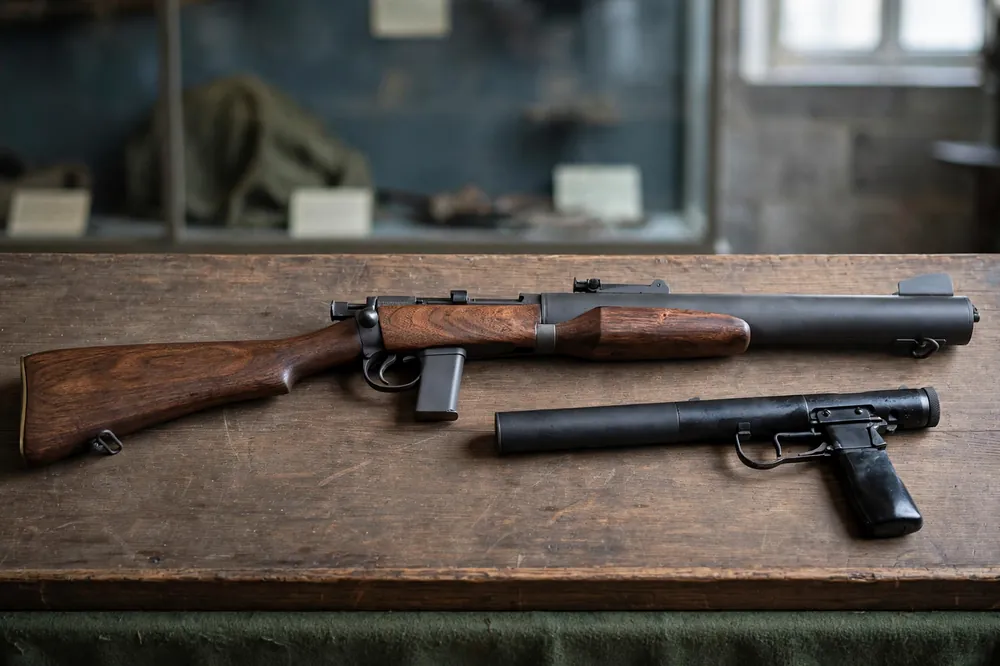
Why So Few Were Built
Only about 129 De Lisle carbines were built, and the small number is itself part of the weapon’s story, because it explains both why the carbine remained a specialist tool and why surviving examples are so sought after by collectors today. The carbine was designed for a very specific purpose, and only a small number of men needed it: the Commandos and the SOE were small organisations, the weapon was expensive to build by hand, and its large, complex suppressor added to the cost, while the British Army, which needed rifles in large numbers, had no use for a silent carbine and never ordered it. The De Lisle was also not alone, because Britain used other silent weapons alongside it, and the choice between them depended on the mission. The Welrod pistol was smaller and more concealable but single-shot and very short-ranged, the suppressed Sten gun fired faster but was louder and less accurate at long range, and the De Lisle was the most accurate and the quietest of the three, the weapon chosen when a sentry had to be killed at 100 metres or more without raising the alarm. The sections below examine first the small market for the weapon, and then the Welrod and the suppressed Sten with which it shared the secret war.
A Weapon for a Small Market
Only about 129 De Lisle carbines were built, because the weapon was designed for a very specific purpose, and because only a small number of men needed it. The Commandos and the SOE were small organisations, and they needed only a small number of silent weapons, and the De Lisle was expensive to build, because it was built by hand and because its suppressor was large and complex. The British Army, which needed rifles in large numbers, had no use for a silent carbine, and it did not order the De Lisle, and the weapon remained a specialist weapon, built in small numbers for a small number of men. The small production run is one reason why the De Lisle is so sought after by collectors today: there are only about 129 original carbines, and most of them are in museums or in private collections, and they rarely come up for sale.
The Welrod and Other Silent Weapons
The De Lisle was not the only silent weapon used by Britain in the Second World War: the Welrod pistol, which was a single-shot, bolt-action pistol with an integral suppressor, was used by the SOE, and the suppressed Sten gun, which was a submachine gun with a suppressor, was used by the Commandos. The Welrod was smaller and more concealable than the De Lisle, but it had a very short range and it was single-shot; the suppressed Sten was faster to fire than the De Lisle, but it was louder, and it was less accurate at long range. The De Lisle was the most accurate and the quietest of the three, and it was the weapon that was used when a sentry had to be killed at a range of 100 metres or more, without raising the alarm. The three weapons together gave Britain’s special forces a range of silent weapons, for different tasks and for different ranges.
6. Operational History
The Commandos and the SOE
The De Lisle Carbine was issued to the British Commandos and to the Special Operations Executive, and it was used in operations in France, in the Mediterranean and in the Far East. The exact details of its use remain secret, because the operations in which it was used were secret, and because the men who used it were forbidden to talk about them, but it is known that the carbine was used to eliminate sentries before a raid, to kill guards at a checkpoint, and to assassinate enemy officers and collaborators. The carbine was carried by men who had been trained to use it, and who understood that a single shot, fired from a hidden position, could kill a sentry without raising the alarm, and that the mission depended on that silence. The De Lisle was a weapon of the secret war, and its users were the men of the secret war, whose stories were not told until after the war, and whose missions remain, in part, a secret to this day.
Raids in France and the Mediterranean
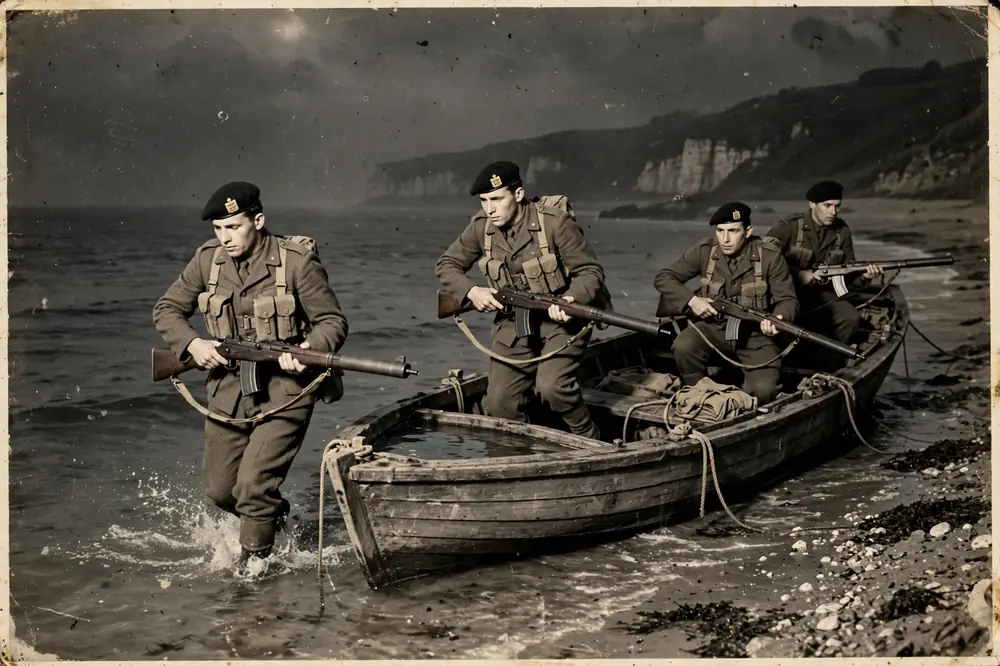
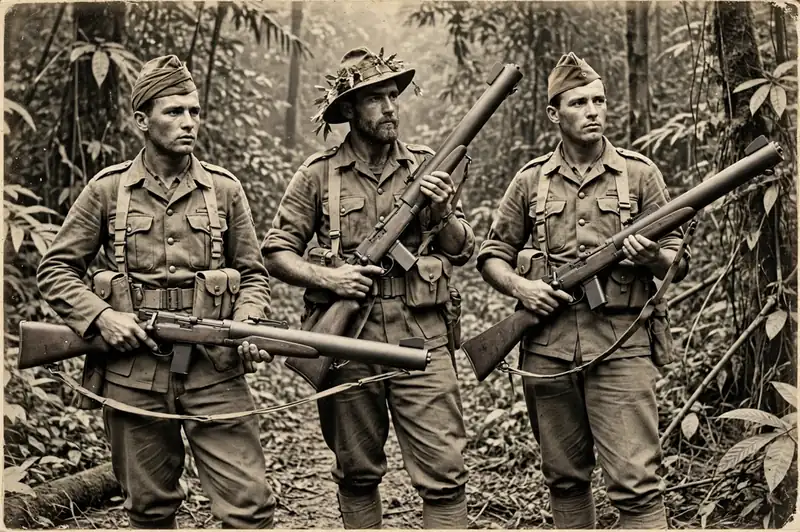
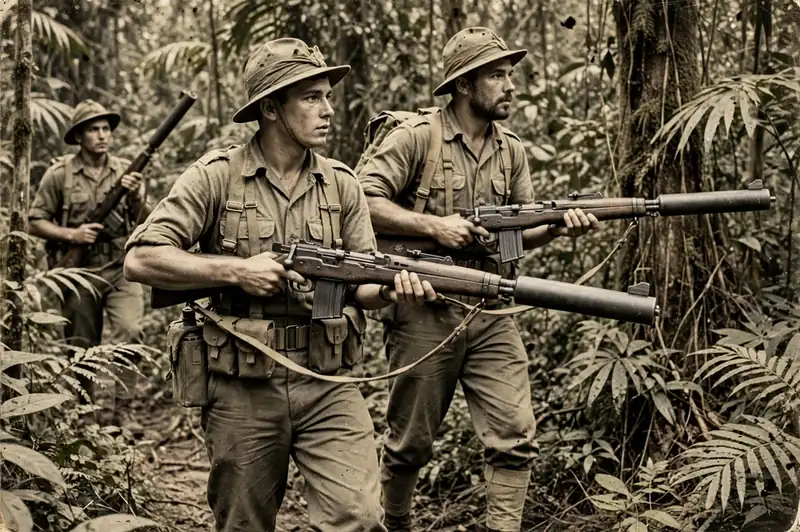
The De Lisle Carbine earned its reputation in the raids on occupied France and in the Mediterranean, where its silence was not a curiosity but the difference between a mission that succeeded and one that ended in an alarm, a firefight and dead men. In France, Commandos raiding the coast and SOE agents operating behind the lines used the carbine to eliminate sentries before a raid and to kill German soldiers and collaborators, because a sentry could be killed at a range of 100 metres while other sentries nearby heard nothing and continued their patrols. The same work was done in the Mediterranean, in the raids on the coast of Italy and in the operations in Greece and Yugoslavia, where Commandos and partisans used the carbine to eliminate sentries and to assassinate enemy officers. The weapon was also carried further east, to Burma and Malaya, where British and Commonwealth special forces, including Force 136, used it against Japanese sentries and officers in the jungle, where sound carries far and a loud shot would have given away a patrol, and where its .45 ACP cartridge was effective at the close ranges of jungle fighting. The sections below describe first the silent killing that opened a raid in France and the Mediterranean, and then the carbine’s service in the Far East.
Silent Killing Before a Raid
In France, the De Lisle was used by Commandos who raided the coast of occupied France, and by SOE agents who operated in France, to eliminate sentries before a raid and to kill German soldiers and collaborators without raising the alarm. The carbine’s quietness meant that a sentry could be killed at a range of 100 metres, and that the sound of the shot would not be heard by other sentries, who would continue their patrols, unaware that one of their number had been killed. The carbine was also used in the Mediterranean, in the raids on the coast of Italy and in the operations in Greece and Yugoslavia, where it was used by Commandos and by partisans to eliminate sentries and to assassinate enemy officers. The De Lisle’s use in France and in the Mediterranean was the weapon’s main service, and it was there that its reputation as one of the quietest firearms ever made was earned.
Operations in the Far East
In the Far East, the De Lisle was used by British and Commonwealth special forces in Burma and in Malaya, where it was used against Japanese sentries and against Japanese officers, in the jungle and in the towns of the region. The carbine’s quietness was valuable in the jungle, where sound carries far and where a loud shot would have given away the position of a patrol, and its .45 ACP cartridge was effective at close range, where most fighting in the jungle took place. The De Lisle was used by Force 136, the SOE’s organisation in the Far East, and by the Commandos who operated in Burma, and it was one of the weapons that British special forces used in the secret war against Japan. The carbine’s service in the Far East was the last of its wartime service, and it was there that the weapon was used in the conditions for which it had been designed: silence, surprise and a single, well-aimed shot.
Post-War Use by Special Forces
After the war, the De Lisle Carbine continued to be used by British special forces, who kept the weapon in service into the 1950s and 1960s, and who used it in operations in Malaya, in Borneo and in the Middle East. The Sterling Armaments Company built a small number of new De Lisle carbines for the special forces, and the original Ford-built carbines were kept in service, because they were still the quietest firearms available, and because no other weapon had been designed to replace them. The De Lisle was finally retired in the 1960s, when new suppressed weapons, such as the suppressed Sterling submachine gun, were developed, and when the British special forces adopted new weapons that were quieter and more versatile. The De Lisle’s post-war service is a measure of its success: a weapon that was built in 1942 was still in use twenty years later, because it did its job better than any other weapon.
7. Performance and Specifications
Ballistics and Sound
| Specification | De Lisle Carbine |
|---|---|
| Cartridge | .45 ACP (11.43×23 mm) |
| Bullet weight | About 15 g |
| Muzzle velocity | About 260 m/s (subsonic) |
| Muzzle energy | About 500 joules |
| Effective range | About 150–200 m |
| Magazine capacity | 11 rounds |
| Weight | About 3.7 kg |
| Length | About 1,006 mm |
| Sound level (muzzle) | About 85–90 decibels (claimed) |
| Action | Bolt action |
The table shows the De Lisle’s ballistics: a muzzle velocity of about 260 metres per second, which was subsonic, and a muzzle energy of about 500 joules, which was enough to kill a man at close range, but which was less than the energy of a Lee-Enfield rifle, which was about 3,000 joules. The figures are approximate, and they vary between sources, because different ammunition gave different velocities, and because the sound level of the weapon was measured in different ways, and because the original test reports are still classified. The reader should treat the numbers as a guide to the weapon’s performance, rather than as exact measurements, and should remember that the De Lisle’s purpose was not power or range, but silence, and that its silence was its most important performance characteristic.
Comparison with the Welrod and the Suppressed Sten
Compared with the Welrod pistol, the De Lisle was more accurate, it had a longer range and it held more rounds, but it was larger and harder to conceal, and it was less suitable for use in a building or in a street, where a pistol could be hidden in a pocket. Compared with the suppressed Sten gun, the De Lisle was quieter and more accurate, but it was slower to fire, because it was a bolt-action weapon, and it held fewer rounds, because its magazine held 11 rounds against the Sten’s 32 rounds. The three weapons were designed for different tasks, and they were used together by Britain’s special forces, who chose the weapon that was best suited to the mission: the Welrod for a close-range assassination in a building, the suppressed Sten for a raid in which a number of men had to be killed quickly, and the De Lisle for the elimination of a sentry at a range of 100 metres or more, without raising the alarm.
The Limits of Silence
The De Lisle’s silence had its limits: the weapon was quiet, but it was not silent, and the sound of the shot, although it was quiet, could still be heard at close range, and the sound of the bullet hitting its target could be heard, and the sound of the shooter working the bolt could be heard. The weapon’s range was limited, because its .45 ACP cartridge was slow and heavy, and its bullet dropped quickly at longer ranges, and its accuracy at ranges of more than 200 metres was poor. The weapon was also heavy and long, because of its suppressor, and it was difficult to carry on a long patrol, and it was difficult to use in a building or in a vehicle, where its length was a disadvantage. The De Lisle was a weapon for a specific task, and it performed that task well, but it was not a general-purpose weapon, and it was never intended to be one.
Measuring the Silence
The De Lisle’s sound level was measured, in tests, at about 85 to 90 decibels at the muzzle, which was quieter than a normal rifle shot by more than 60 decibels, and which was, in the words of one tester, quieter than the working of the bolt. The measurement, however, depended on how it was made, and on the ammunition that was used, and on the distance from the muzzle, and different tests gave different results, and the original test reports are still classified, so that the exact sound level of the De Lisle is not known with certainty. What is known is that the De Lisle was one of the quietest firearms ever made, and that its users, who were Commandos and SOE agents, found that it was quiet enough for their missions, and that it allowed them to kill a sentry without raising the alarm, which was its purpose, and which was the reason why it was built.
8. Operators
The United Kingdom
The De Lisle Carbine was used by the United Kingdom, by the British Commandos and by the Special Operations Executive, from 1942 to the 1960s, and it was the standard silent carbine of Britain’s special forces. The weapon was issued to men who had been trained to use it, and who understood its purpose, and it was used in operations in France, in the Mediterranean and in the Far East, and in the post-war operations in Malaya, in Borneo and in the Middle East. The De Lisle was a British weapon, designed by a British engineer, built by a British company, and used by British soldiers, and it became a symbol of Britain’s secret war, and of the men who fought it. The weapon’s service with the British special forces is its main story, and it is the story of a weapon that was designed for a small number of men, and that was used by them in the secret war that Britain fought behind the lines of occupied Europe and the Far East.
Other Users
Although the De Lisle Carbine was a British weapon, designed by a British engineer, built by a British company and used by British soldiers, its service did not end with Britain, and its story after the war belongs to other users as well. During the war a small number of carbines were issued to the United States and to Commonwealth forces, whose special forces valued the same silence that the Commandos and the SOE valued: the American Office of Strategic Services used them in France and in the Far East, and Australian and New Zealand special forces used them in Borneo and in Malaya. That spread of users is one measure of the weapon’s success, and it is why the De Lisle is remembered as a weapon of the Allied special forces as a whole, rather than of Britain alone. Today the carbine has a different set of users, the collectors and shooters who own original Ford-built carbines or modern reproductions, who fire them for target shooting and historical re-enactment, and who are still impressed by how quiet the weapon is even by modern standards. The sections below look first at the American and Commonwealth forces who used the carbine in the war, and then at the collectors and shooters who keep it alive today.
The United States and Commonwealth Forces
The De Lisle Carbine was also used by the United States and by Commonwealth forces, who were issued a small number of the carbines for use by their special forces, and who used them in operations in the Far East and in Europe. The American Office of Strategic Services (OSS), which was the American equivalent of the SOE, was issued a number of De Lisle carbines, and it used them in operations in France and in the Far East, where the weapon’s quietness was valued by American agents. The Australian and New Zealand special forces, who operated in the Far East, were also issued De Lisle carbines, and they used them in operations in Borneo and in Malaya. The De Lisle’s use by so many different special forces is a measure of its success, and it ensures that the weapon is remembered not only as a British weapon, but as a weapon of the Allied special forces as a whole.
Modern Collectors and Shooters
Today the De Lisle Carbine is used by collectors and by shooters, who own original Ford-built carbines or modern reproductions, and who use them for target shooting and for historical re-enactment. The weapon’s quietness, which was its purpose in the war, is still its main attraction, and modern shooters who fire a De Lisle are impressed by how quiet it is, even by modern standards. The De Lisle is one of the most sought-after British firearms by collectors, because of its rarity, its history and its association with the Commandos and the SOE, and surviving examples are held in museums and in private collections in the United Kingdom, in the United States and in other countries, where they are displayed as examples of the secret war and of the weapons that were designed for it.
9. Legacy and Influence
The Quietest Firearm of the War
The De Lisle Carbine’s legacy is its reputation as one of the quietest firearms ever made, and as a weapon that was designed for a single purpose and that performed it better than any other firearm of its time. The carbine’s design — a subsonic cartridge, a large integral suppressor and a bolt action — became a model for later suppressed weapons, and it influenced the design of modern suppressed rifles and carbines, which use the same principles, even though they use more modern materials and more efficient suppressors. The De Lisle showed that a weapon could be made quiet by design, rather than by adding a suppressor to a weapon that was not designed for it, and that a weapon that was designed from the start to be quiet could be quieter than a weapon that had a suppressor added to it. The De Lisle’s legacy is therefore a lesson in design, as well as a weapon in its own right.
A Legend Among Special Forces
The De Lisle Carbine became a legend among special forces soldiers, and it remains a legend today, even though it was built in small numbers and used by a small number of men. The carbine’s story — a weapon designed by an engineer, built by a car company, and used by Commandos and by SOE agents to kill silently behind enemy lines — is one of the most romantic stories of the Second World War, and it has been told in books, in films and in television programmes about the secret war. The De Lisle is remembered by special forces soldiers as the weapon that set the standard for silent weapons, and by historians as an example of how a weapon can be designed for a specific mission, and how that weapon can become a symbol of the men who used it and of the war they fought.
The De Lisle in Popular Culture
In popular culture the De Lisle Carbine appears in films and in books about the Commandos and the SOE, where it is shown as the silent weapon of the secret war, and it is one of the most recognisable British firearms of the Second World War, because of its large suppressor and its distinctive appearance. The carbine’s appearance in the film The Guns of Navarone and in other films about the war has made it familiar to audiences who have never seen a real De Lisle, and its story has been told in the books of the SOE and of the Commandos, where it is described as the quietest firearm of the war. The De Lisle’s place in popular culture is a measure of its fame, and it ensures that the weapon will be remembered, even though it was built in small numbers and used by a small number of men, as one of the most remarkable firearms of the Second World War.
The De Lisle in Modern Special Forces
The De Lisle’s design — a subsonic cartridge, a large integral suppressor and a bolt action — has influenced the design of modern suppressed weapons, which use the same principles, even though they use more modern materials and more efficient suppressors. Modern special forces, who use suppressed rifles and carbines, for silent killing and for the elimination of sentries, owe a debt to de Lisle, who showed that a weapon could be made quiet by design, rather than by adding a suppressor to a weapon that was not designed for it, and that a weapon designed from the start to be quiet could be quieter than a weapon that had a suppressor added to it. The De Lisle’s influence is still felt today, in the suppressed weapons that special forces use, and in the training that they receive, in silent killing and in the elimination of sentries.
10. Surviving Examples
Museums in the United Kingdom
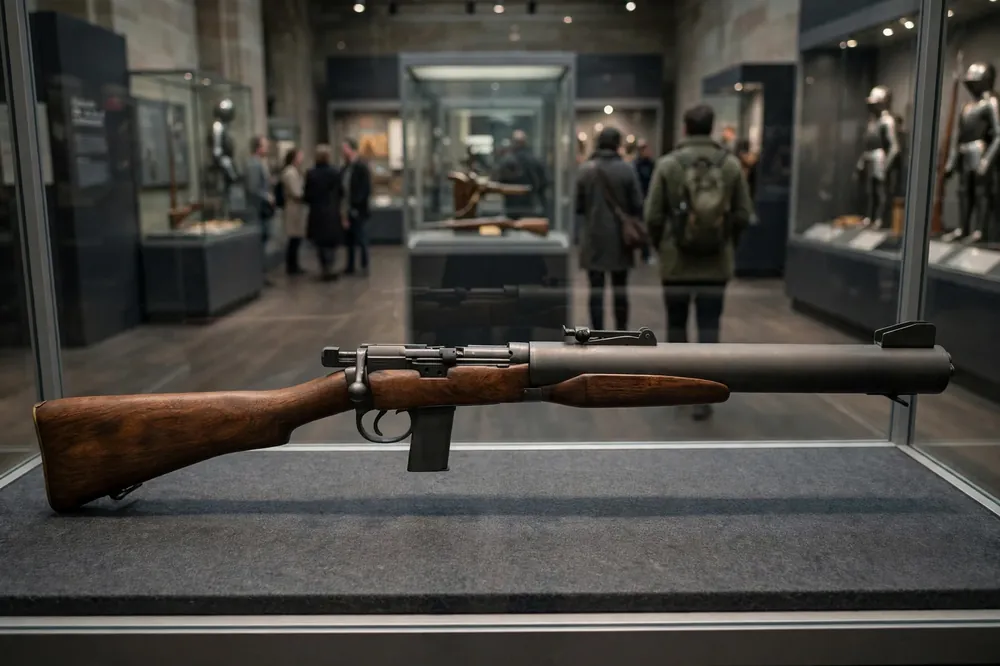
Surviving De Lisle carbines are held in museums in the United Kingdom, including the Imperial War Museum in London, the National Army Museum in London and the Royal Armouries in Leeds, where the carbine is displayed as an example of Britain’s secret weapons. The museums display the carbine with its large suppressor, so that visitors can see how large the suppressor was and can understand why the weapon was so quiet, and they tell the story of de Lisle’s design and of the weapon’s use by the Commandos and the SOE. The Imperial War Museum’s De Lisle is one of the most visited exhibits in the museum’s Second World War galleries, and it is a reminder that the war was not only fought with tanks and aircraft, but with weapons designed for secret operations.
Museums Abroad and Private Collections
Most of the original De Lisle carbines have survived in museums and in private collections, and the examples held outside Britain are as important as those in London and Leeds, because they show how widely the weapon travelled and how highly it is valued. In the United States, surviving carbines are displayed at the National WWII Museum in New Orleans and the National Firearms Museum in Virginia, where they are shown alongside the Welrod pistol and the suppressed Sten gun as examples of the silent weapons of the secret war, and many of them were used by American special forces during the war before they were sent to museums. Private collectors in the United Kingdom and in the United States also hold De Lisle carbines, and the weapon is one of the most sought-after British firearms by collectors, because only about 129 originals were built and they rarely come up for sale. The sections below describe first the museums in the United States and other countries where the carbine can be seen, and then the easiest places for a visitor to see a De Lisle today, in London, in Leeds and in New Orleans.
The United States and Other Countries
Surviving De Lisle carbines are also held in museums in the United States and in other countries, including the National WWII Museum in New Orleans and the National Firearms Museum in Virginia, where the carbine is displayed as an example of Allied special forces weapons. Many of these carbines were used by American special forces during the war and were later sent to museums, where they are displayed with the Welrod pistol and the suppressed Sten gun, as examples of the silent weapons that Britain and the United States used in the secret war. Private collectors in the United Kingdom and in the United States also hold De Lisle carbines, and the weapon is one of the most sought-after British firearms by collectors, because of its rarity, its history and its association with the Commandos and the SOE.
Seeing a De Lisle Today
For most visitors, the easiest way to see a De Lisle Carbine is at the Imperial War Museum in London, where the carbine is displayed in the Second World War galleries, or at the Royal Armouries in Leeds, where it is displayed with other British firearms of the war. Visitors who cannot travel to London or to Leeds can see a De Lisle at the National WWII Museum in New Orleans, where the carbine is displayed in the context of the Allied special forces. The carbine’s large suppressor makes it easy to find in a museum gallery, and its story, which is told on the label beside it, is one of the most interesting stories of the secret war: a weapon designed by an engineer, built by a car company, and used to kill silently behind enemy lines.
Frequently Asked Questions
What is the De Lisle Carbine?
The De Lisle Carbine was a British bolt-action carbine of the Second World War, designed by William Godfray de Lisle. It used the .45 ACP cartridge and a large integral suppressor, and it was one of the quietest firearms ever made.
How many De Lisle carbines were built?
About 129 De Lisle carbines were built by the Ford Motor Company at Dagenham in 1942 and 1943.
How quiet was the De Lisle Carbine?
The De Lisle was claimed to be about 85–90 decibels at the muzzle, and it was said to be quieter than the working of the bolt. It was one of the quietest firearms of the Second World War.
Who used the De Lisle Carbine?
The De Lisle was used by the British Commandos and by the Special Operations Executive, and by American and Commonwealth special forces, for silent killing and for the elimination of sentries.
What cartridge did the De Lisle use?
The De Lisle used the .45 ACP cartridge, which was subsonic, with a muzzle velocity of about 260 metres per second, and it was fed from an 11-round magazine.
Where can I see a De Lisle Carbine today?
Surviving De Lisle carbines are displayed at the Imperial War Museum in London, the Royal Armouries in Leeds and the National WWII Museum in New Orleans.
Sources
- Wikipedia, “De Lisle carbine” — production of about 129, specifications, design by William Godfray de Lisle and use by Commandos and SOE.
- Imperial War Museum, London — surviving De Lisle carbines and the history of Britain’s secret weapons.
- Ian Skennerton, The Lee-Enfield (Arms & Militaria Press, 2007) — the Lee-Enfield action used in the De Lisle.
- Peter Laidler, The De Lisle Carbine (Historical Breechloading Smallarms Association, 2004) — development, production at Ford and service history.
- Chris Bishop, The Encyclopedia of Weapons of World War II (Sterling, 2002) — specifications and comparison with the Welrod and suppressed Sten.
- National WWII Museum, New Orleans — Allied special forces weapons and the secret war.