 WAR ATLAS MILITARY HISTORY MAGAZINE · WWI — WWII
USS Enterprise CV-6
1. Lead
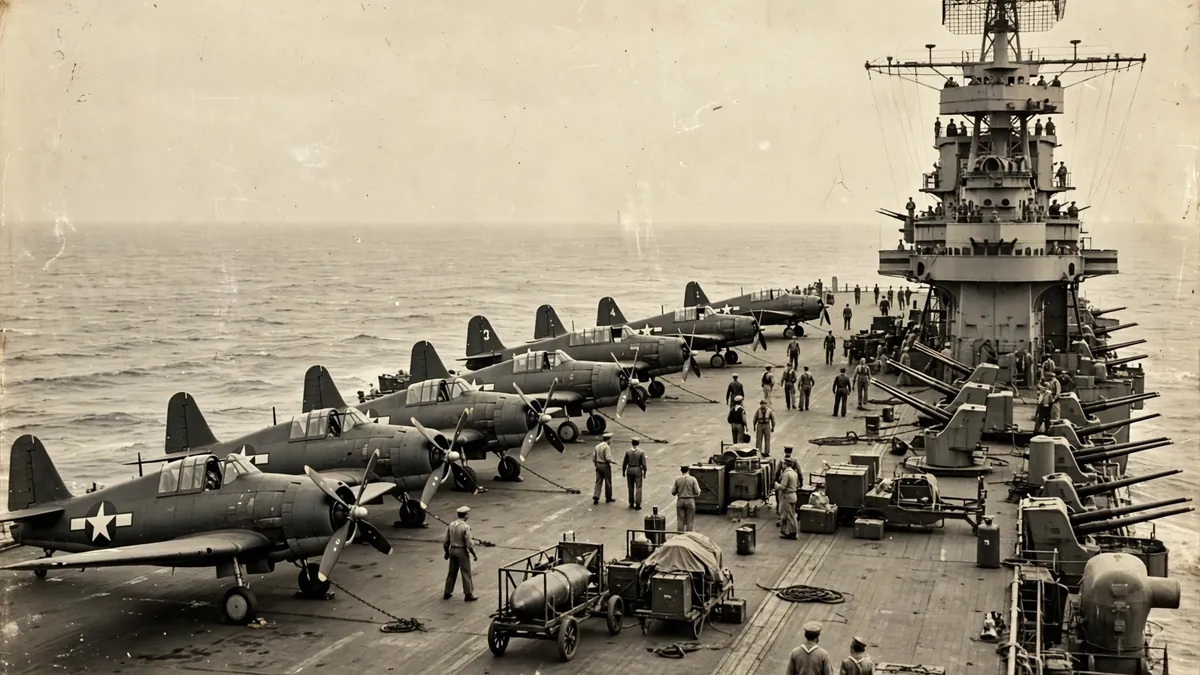
The USS Enterprise (CV-6) was the most decorated warship in the history of the United States Navy, and the aircraft carrier that did more than any other ship to win the Pacific War. A Yorktown-class carrier commissioned in 1938, she was the only American carrier to fight in every major carrier battle of the Pacific War, from Midway in June 1942 to Okinawa in 1945, and she earned twenty battle stars, a Presidential Unit Citation and a Navy Unit Commendation, more honours than any other American warship of the war. Her aircraft sank Japanese carriers at Midway, they fought the long campaign for Guadalcanal when she was the only American carrier left in the Pacific, and they took part in the great battles of the Philippine Sea and Leyte Gulf that destroyed Japanese naval air power. The Japanese called her the “Grey Ghost”, because they reported her sunk three times and she kept coming back, and the Americans called her the “Big E” and the “Lucky E”, because she survived bombs, torpedoes and kamikazes that would have sunk a lesser ship. She was scrapped in 1958, in spite of a campaign to preserve her as a museum, and her loss is still mourned by the American Navy, which gave her name to the world’s first nuclear-powered aircraft carrier and to the carrier that serves today.
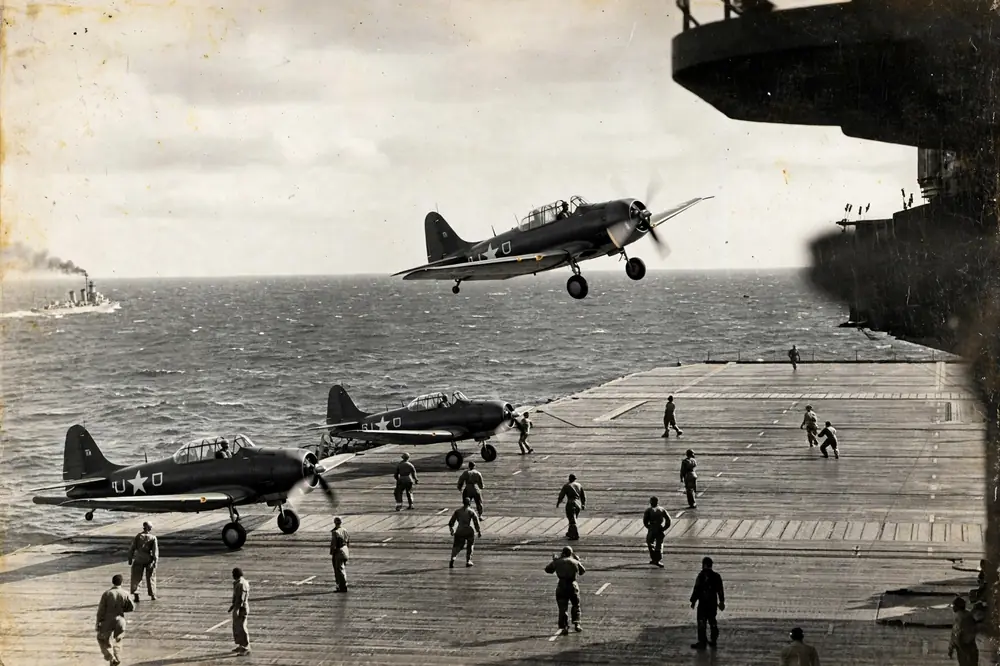
The Enterprise was at Pearl Harbor’s doorstep when Japan attacked, and she was at sea on 7 December 1941, returning from Wake Island with a squadron of Marine fighters, and her aircraft flew into the attack and were shot down by American anti-aircraft fire in the confusion of the morning. She was the first American carrier to strike back, when her aircraft attacked Japanese submarines and raided the Marshall Islands in February 1942, and she was the carrier that escorted the Hornet on the Doolittle Raid and that fought at Midway, where her dive bombers sank the Japanese carriers Akagi and Kaga in a single morning. In the autumn of 1942, when the Hornet was sunk and the Saratoga and the Wasp were damaged, the Enterprise was the only American carrier in the Pacific, and she held the line at Guadalcanal alone, and her survival in those months was the survival of the American carrier force itself. The Enterprise’s story is therefore the story of the Pacific War, from the first day to the last, and it is the story of a ship and of the men who served in her, who made her the most famous carrier in the world.
2. Key Facts
| Type | Aircraft carrier (Yorktown class) |
| Origin | United States |
| Builder | Newport News Shipbuilding, Virginia |
| Laid down | 16 July 1934 |
| Launched | 3 October 1936 |
| Commissioned | 12 May 1938 |
| Displacement | 19,800 tons standard; about 25,500 tons full load |
| Length | 251.4 m (824 ft 9 in) |
| Beam | 33 m (109 ft 6 in) |
| Draught | 7.9 m (25 ft 11 in) |
| Propulsion | Four shafts; geared steam turbines; 120,000 shp |
| Top speed | 32.5 knots (60 km/h) |
| Range | About 12,500 nautical miles at 15 knots |
| Complement | About 2,217 officers and men (including air group) |
| Aircraft carried | About 90 |
| Armament | Eight 5-inch guns; later 40 mm Bofors and 20 mm Oerlikon AA guns |
| Battle stars | 20 (the most of any US warship in WWII) |
| Fate | Decommissioned 1947; scrapped 1958–1960 |
3. Background and Development
The Yorktown Class and the Treaty Limits
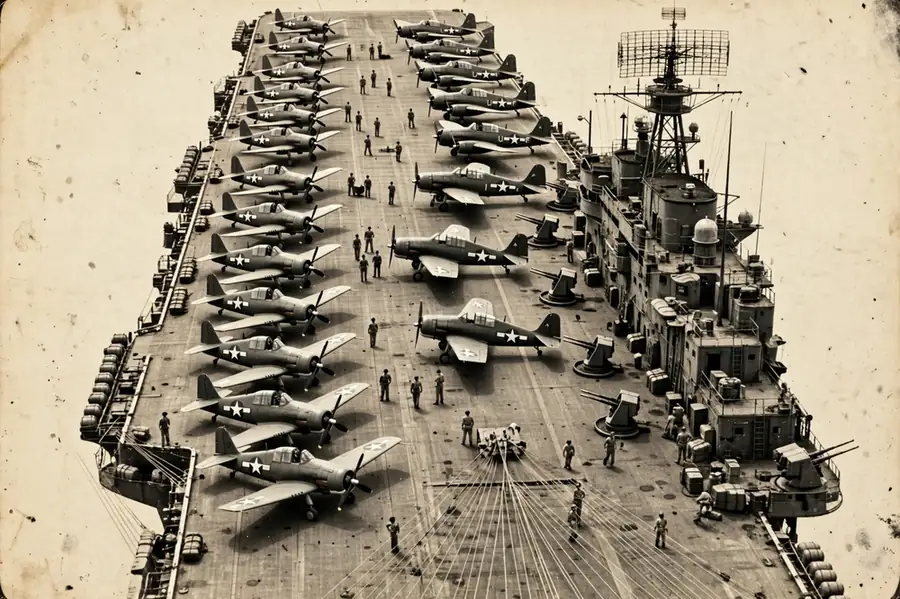
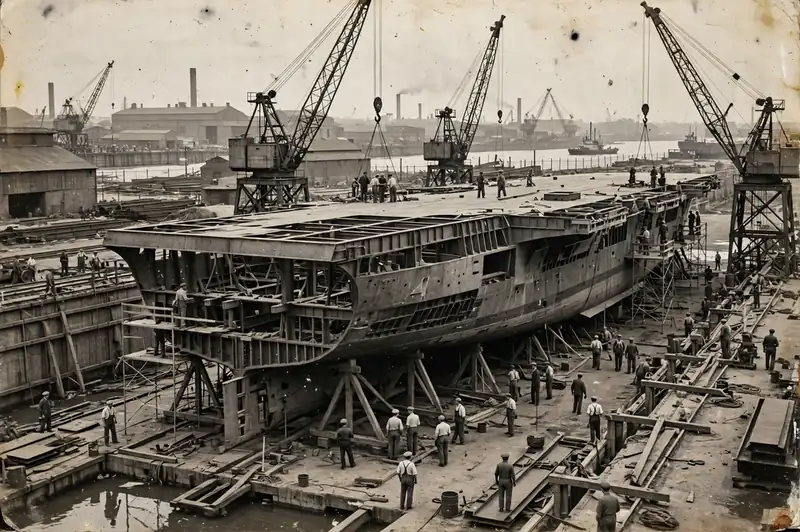
The Enterprise was the second ship of the Yorktown class, a class of three carriers — Yorktown, Enterprise and Hornet — that were built under the limits of the Washington and London Naval Treaties, which restricted the total tonnage of aircraft carriers that the United States could build. The Yorktown class was designed to be the best carrier that could be built within the treaty’s limits, and it was a great improvement over the earlier American carriers, the Lexington and the Saratoga, which were converted battlecruisers, and the Ranger, which was too small and too slow. The Yorktown class was fast, at 32.5 knots, it was well protected, with an armoured hangar deck and a torpedo defence system, and it could carry up to about 90 aircraft, more than any other carrier of its generation except the Japanese Akagi and Kaga. The Enterprise was laid down at Newport News Shipbuilding in Virginia on 16 July 1934, she was launched on 3 October 1936, and she was commissioned on 12 May 1938, under the command of Captain Newton H. White, and she joined the Pacific Fleet in 1939, where she served until the outbreak of war.
Peacetime Service and the Road to War
In peacetime, the Enterprise served with the Pacific Fleet, and she took part in the fleet exercises that taught the American Navy how to use carriers, and she was based at Pearl Harbor when the war approached. In 1941, she ferried Marine fighters to Wake Island, and she was returning from that mission on 7 December 1941, when Japan attacked Pearl Harbor, and her aircraft, which were launched to land at Pearl Harbor, flew into the attack and were shot down by American anti-aircraft fire in the confusion of the morning, and one of her pilots, Ensign Manuel Gonzalez, was killed. The Enterprise was the first American carrier to strike back: on 1 February 1942, her aircraft raided the Marshall Islands, and on 24 February they raided Wake Island, and in April 1942 she escorted the Hornet on the Doolittle Raid, when American bombers attacked Tokyo for the first time. The Enterprise’s peacetime service had made her crew one of the most experienced in the American Navy, and it was that experience that served her so well in the battles that followed.
The Carrier’s Air Group
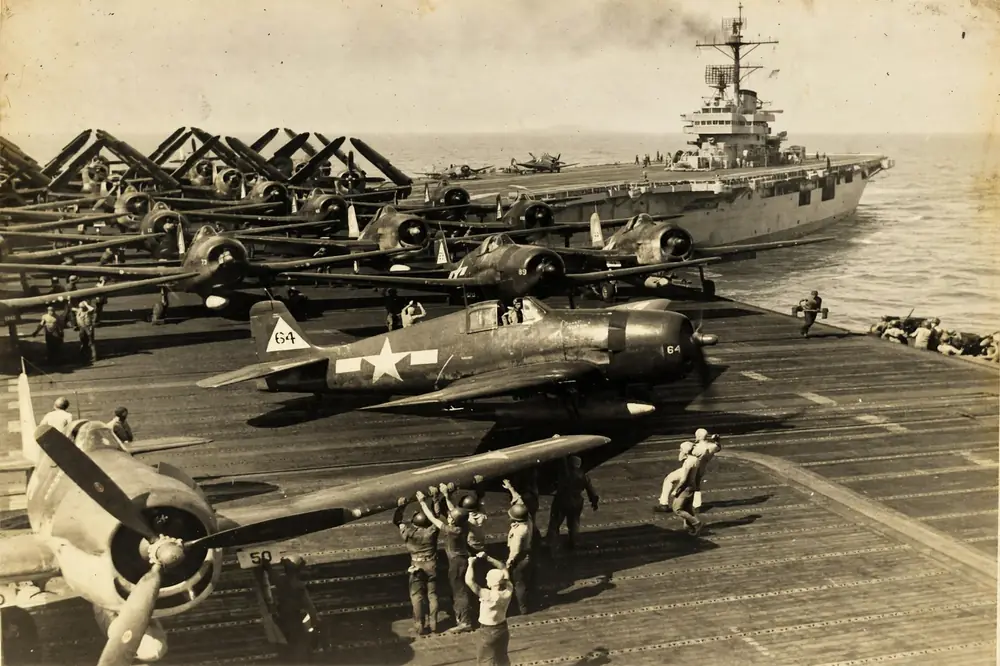
The Enterprise’s air group, which was known as Air Group Six in 1942, consisted of fighters, dive bombers and torpedo bombers, and it was one of the best trained air groups in the American Navy. In June 1942, at Midway, the air group consisted of 27 F4F Wildcat fighters, 37 SBD Dauntless dive bombers and 14 TBD Devastator torpedo bombers, a total of 78 aircraft, and it was the dive bombers, led by Lieutenant Commander C. Wade McClusky and Lieutenant Richard Best, that sank the Japanese carriers Akagi and Kaga. The air group changed through the war, as the Wildcat was replaced by the Hellcat, the Dauntless by the Helldiver and the Devastator by the Avenger, but the Enterprise’s air group remained one of the most effective in the Navy, and its pilots, who included some of the most famous naval aviators of the war, were the men who made the ship’s reputation. The Enterprise’s air group was the ship’s striking arm, and it was the air group that sank the Japanese carriers and that won the battles that the ship is remembered for.
4. Design
Hull, Propulsion and Speed
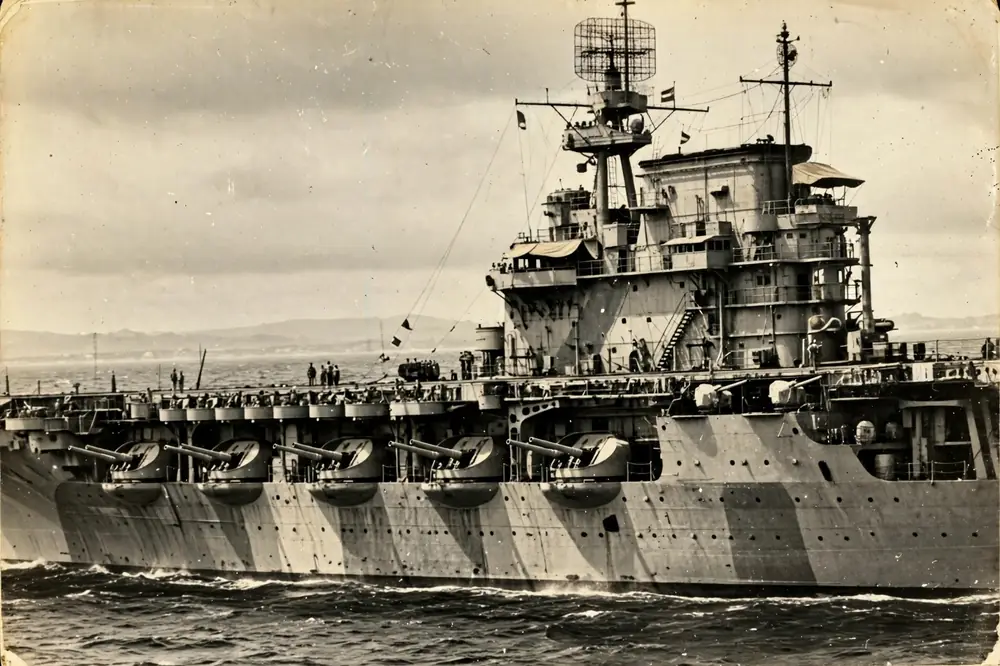
The Enterprise was a Yorktown-class carrier, 251.4 metres long, with a beam of 33 metres and a displacement of 19,800 tons standard, and she was powered by four sets of geared steam turbines driving four shafts, producing 120,000 shaft horsepower and giving her a top speed of 32.5 knots. That speed was essential for a carrier, because a carrier must turn into the wind to launch and recover aircraft, and a fast carrier can generate more wind over its deck, and the Enterprise’s speed made her one of the fastest carriers in the world. Her range was about 12,500 nautical miles at 15 knots, which let her operate across the whole Pacific without refuelling, and her crew of about 2,217 officers and men, including her air group, was a small city in itself, with its own bakeries, laundries, workshops and sick bays. The Enterprise’s design was a compromise between speed, protection and aircraft capacity, and it was a successful compromise: she was fast enough to keep up with the fleet, she was protected enough to survive the bombs that hit her, and she carried enough aircraft to strike a heavy blow.
Protection and Anti-Aircraft Armament
The Enterprise’s protection was that of a Yorktown-class carrier: she had an armoured hangar deck, a torpedo defence system and a belt of armour over her machinery spaces and magazines, and she was designed to survive a bomb hit on her flight deck, though her flight deck itself was unarmoured, and her hangar was open at the sides, which let the blast of a bomb escape and made her less vulnerable to fire than the enclosed hangars of the Japanese carriers. Her anti-aircraft armament changed through the war: as built, she had eight 5-inch guns, four quadruple 1.1-inch guns and 24 .50-calibre machine guns, but the 1.1-inch guns were unreliable and the .50-calibre guns were too light, and they were replaced by 40 mm Bofors guns and 20 mm Oerlikon guns, which were far more effective. By 1945, the Enterprise carried a formidable anti-aircraft battery, and her gunners, who had practised for years, were among the best in the Navy, and they shot down many of the kamikazes that attacked her at Okinawa.
Flight Deck, Hangars and Damage Control
The Enterprise’s flight deck was 251 metres long and 33 metres wide, and it was fitted with arresting gear and with three lifts that carried aircraft between the flight deck and the hangar deck below. Her hangar was long and high, and it could hold the whole air group, with aircraft stored with their wings folded, and her aviation fuel and bomb storage were protected by the armoured hangar deck and by a system of flooding and of inert gas that reduced the risk of fire. The Enterprise’s damage control was the best in the American Navy: her crew were trained to fight fires, to shore up damaged bulkheads and to keep the ship afloat after taking hits that would have sunk a lesser ship, and at the Eastern Solomons and at Santa Cruz, when she was hit by bombs, her damage-control parties saved her, and she was back in action within weeks. The Enterprise’s survival was not luck alone: it was the result of her design, her damage control and the skill of her crew, and it is the reason she is remembered as the “Lucky E”.
5. Variants
| Variant | Years | Key features | Notes |
|---|---|---|---|
| USS Yorktown (CV-5) | 1937–1942 | Lead ship of the class; sunk at Midway | Enterprise’s sister ship |
| USS Enterprise (CV-6) | 1938–1947 | Second ship; 20 battle stars | The “Big E” |
| USS Hornet (CV-8) | 1941–1942 | Third ship; launched the Doolittle Raid; sunk at Santa Cruz | Enterprise’s sister ship |
| Enterprise (night operations) | 1944–1945 | Fitted for night fighter operations; F6F-5N Hellcats | The first US night carrier |
| USS Enterprise (CVN-65) | 1961–2012 | Nuclear-powered carrier named for CV-6 | Successor in name |
| USS Enterprise (CVN-80) | Under construction | Gerald R. Ford-class carrier named for CV-6 | Due in the 2020s |
Yorktown and Hornet: Sister Ships
The Enterprise was the second ship of the Yorktown class, and her sister ships, the Yorktown and the Hornet, both fought alongside her and both were lost in the war. The Yorktown, the lead ship of the class, fought at the Coral Sea and at Midway, where she was damaged by Japanese bombs and torpedoes and was sunk by a Japanese submarine while she was being towed to safety, and her loss was a heavy blow to the American Navy. The Hornet, the third ship of the class, launched the Doolittle Raid in April 1942, when sixteen B-25 bombers flew from her deck to attack Tokyo, and she fought at Midway and at Santa Cruz, where she was damaged by Japanese bombs and torpedoes and was sunk by Japanese destroyers. The Enterprise was the only ship of the class to survive the war, and her survival was a matter of luck, of damage control and of the skill of her crew, and it is the reason she is remembered as the “Lucky E”. The three ships of the Yorktown class fought together at Midway, and their air groups sank four Japanese carriers in a single day, and the class is remembered as the class that won the Battle of Midway.
Refits and the Night-Fighter Enterprise
The Enterprise was refitted several times during the war, and each refit made her a more effective ship. In 1943, she was refitted at Bremerton, where her anti-aircraft armament was strengthened, her flight deck was repaired, and her radar was improved, and she returned to the Pacific with a new air group and a new captain. In 1944, she was fitted for night fighter operations, and she became the first American carrier to operate night fighters, with F6F-5N Hellcats fitted with radar, and she flew night missions over the Philippines and over Japan, and her night fighters shot down Japanese aircraft that attacked the fleet at night. The Enterprise’s night operations were an important part of her service in the last year of the war, and they showed the versatility of the carrier and of her crew, and they are a reminder that the Enterprise was not only a day carrier, but a ship that could fight at night as well. The refits kept the Enterprise in service until the end of the war, and they are a measure of the American Navy’s ability to repair and to improve its ships in the middle of a war.
The Name Lives On: CVN-65 and CVN-80
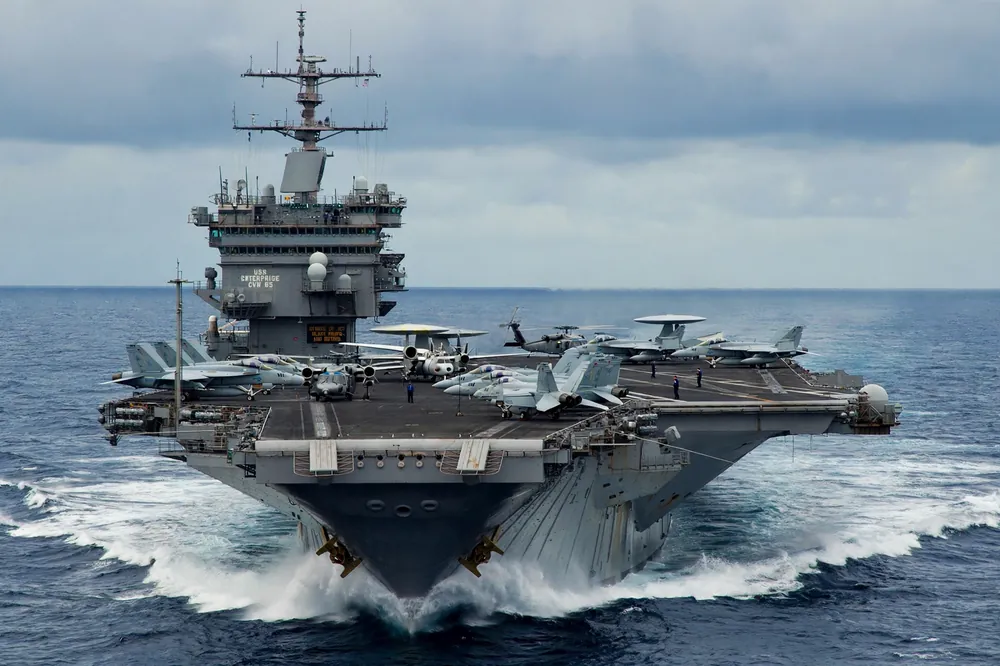
The name Enterprise has been given to two later American carriers, and it is one of the most honoured names in the American Navy. The USS Enterprise (CVN-65), commissioned in 1961, was the world’s first nuclear-powered aircraft carrier, and she served for fifty-one years, from the Cuban Missile Crisis to the wars in Iraq and Afghanistan, and she was decommissioned in 2012. The USS Enterprise (CVN-80), a Gerald R. Ford-class carrier now under construction, will be the third American carrier to bear the name, and she is due to enter service in the late 2020s. The name Enterprise is also the name of the starship in the television series Star Trek, which was named for the carrier, and it is a measure of the ship’s place in American culture: the Enterprise is not only a warship, but a symbol of American exploration and of American power, and the name is one that the American Navy will not let die.
6. Operational History
Midway, June 1942
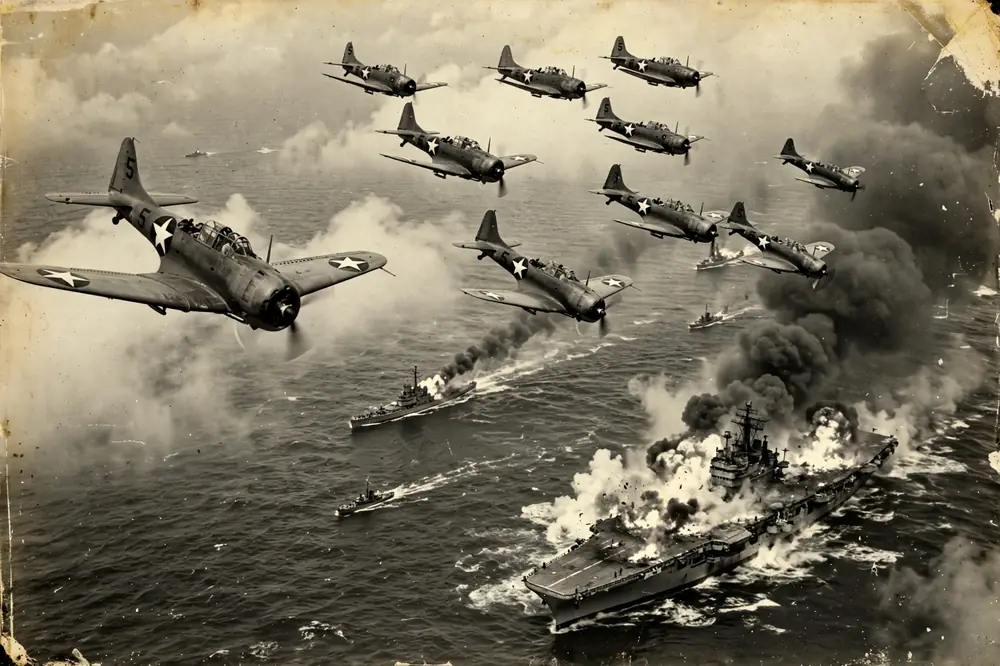
At Midway, the Enterprise was the flagship of Rear Admiral Raymond Spruance’s Task Force 16, and her dive bombers, led by Lieutenant Commander C. Wade McClusky and Lieutenant Richard Best, struck the Japanese carriers in a single morning and changed the course of the Pacific war. On the morning of 4 June 1942, McClusky’s dive bombers, which had flown beyond their planned search area, found the Japanese fleet by following a Japanese destroyer that was hurrying to rejoin it, and they attacked the carriers from out of the sun, their bombs setting the carriers on fire and destroying them. Best, who led the second division of dive bombers, attacked the Akagi and dropped the bomb that set her on fire, and his attack was the most important single act of the battle. The Enterprise’s dive bombers sank three carriers in a few minutes, and the battle of Midway became the turning point of the Pacific war. The victory was costly: the Yorktown was damaged by Japanese bombs and torpedoes, and she was sunk by a Japanese submarine while she was being towed to safety, and the Enterprise’s air group lost many of its aircraft and its pilots, including the torpedo squadron, which was almost entirely destroyed. The Enterprise returned to Pearl Harbor with her air group depleted, and she was refitted and re-equipped, and sailed again in August 1942 for the Solomons, where she fought the long campaign for Guadalcanal. The aftermath of Midway was the beginning of the American offensive in the Pacific, and the Enterprise was at the centre of it, and her survival at Midway, when the Yorktown was lost, was the first of the many times that she survived when her sister ships did not.
The Dive Bombers’ Morning
At Midway, the Enterprise was the flagship of Rear Admiral Raymond Spruance’s Task Force 16, and her dive bombers, led by Lieutenant Commander C. Wade McClusky and Lieutenant Richard Best, sank three Japanese carriers in a single morning. On the morning of 4 June 1942, McClusky’s dive bombers, which had flown beyond their planned search area, found the Japanese fleet by following a Japanese destroyer that was hurrying to rejoin it, and they attacked the carriers Akagi and Kaga from out of the sun, and their bombs set the carriers on fire and destroyed them. Best, who led the second division of dive bombers, attacked the Akagi and dropped the bomb that set her on fire, and his attack was the most important single act of the battle. The Enterprise’s dive bombers sank Akagi and Kaga in the morning and Hiryu in the afternoon, and the Yorktown’s dive bombers sank the Soryu, and the battle of Midway was won, and the Japanese carrier force was destroyed. The Enterprise’s dive bombers’ morning at Midway is one of the most famous episodes in naval history, and it is the reason the Enterprise is remembered as the carrier that won the Battle of Midway.
The Loss of Yorktown and the Aftermath
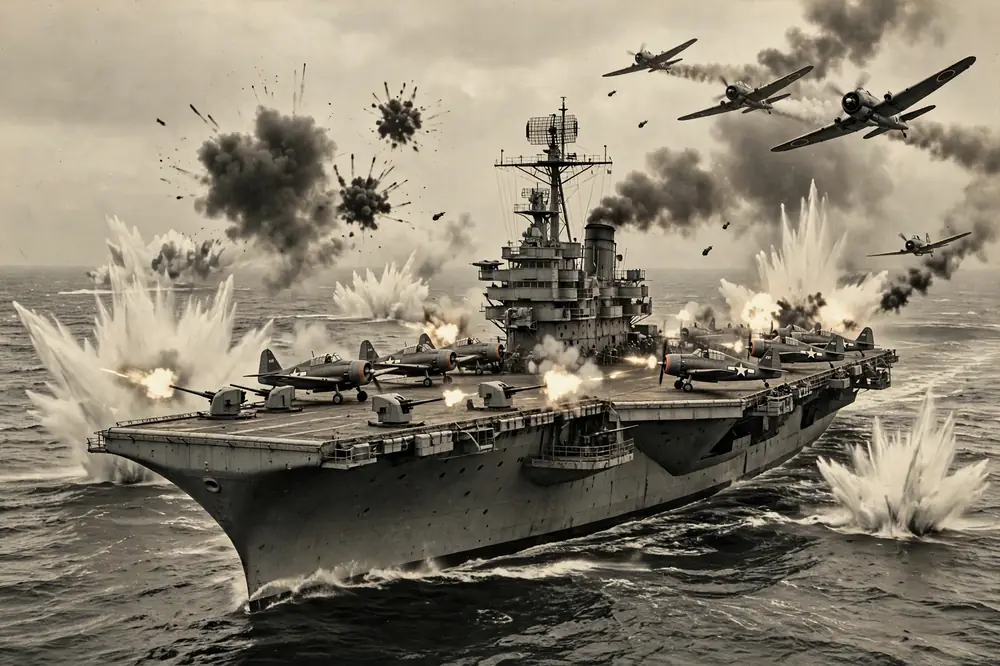
The Battle of Midway was a victory, but it was a costly one: the Yorktown was damaged by Japanese bombs and torpedoes, and she was sunk by a Japanese submarine while she was being towed to safety, and the Enterprise’s air group lost many of its aircraft and its pilots, including the torpedo squadron, which was almost entirely destroyed. The Enterprise returned to Pearl Harbor with her air group depleted, and she was refitted and re-equipped, and she sailed again in August 1942 for the Solomons, where she fought the long campaign for Guadalcanal. The aftermath of Midway was the beginning of the American offensive in the Pacific, and the Enterprise was at the centre of it, and her survival at Midway, when the Yorktown was lost, was the first of the many times that she survived when her sister ships did not. The Enterprise’s crew remembered Midway as the battle that turned the war, and they wore the battle star for Midway with pride, and they knew that the ship’s reputation had been made in a single morning in June 1942.
The Solomons: Alone in the Pacific
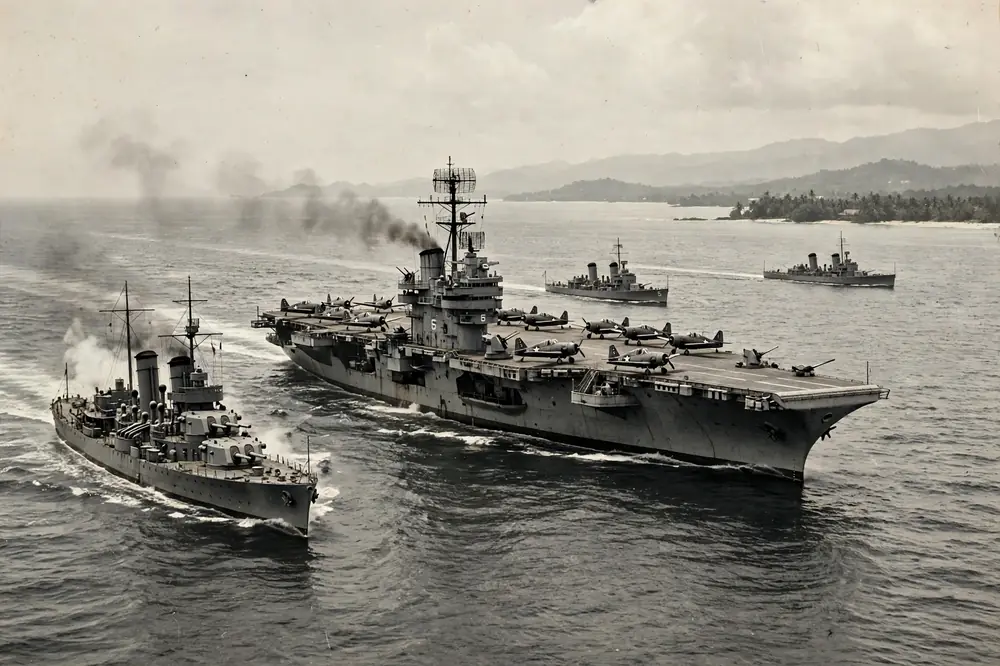
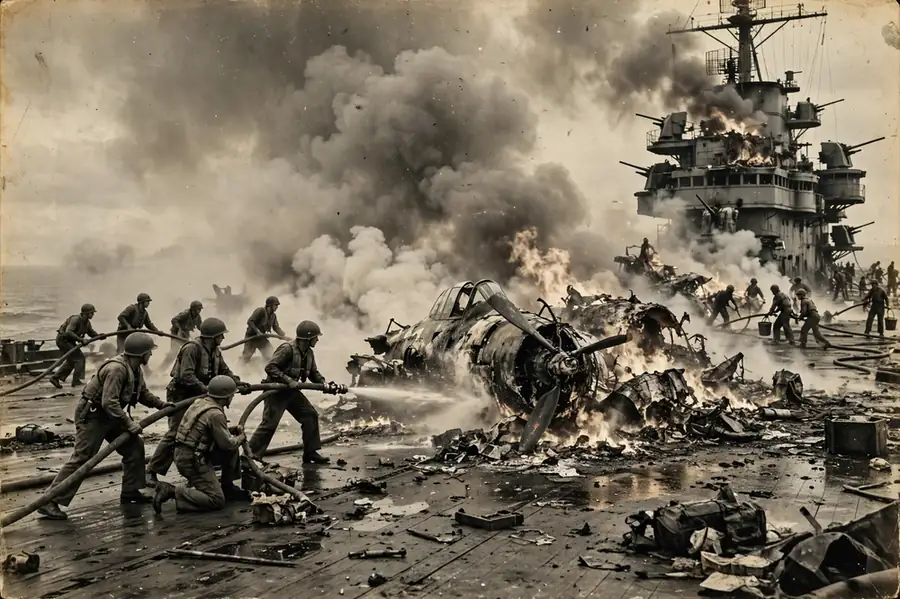
In the autumn of 1942, the Enterprise fought the campaign for Guadalcanal, and she was the only American carrier in the Pacific for much of that time. At the Battle of the Eastern Solomons in August 1942, she was hit by three bombs, which killed 74 of her crew and wounded 95 more, but her damage-control parties saved her, and she was repaired at Pearl Harbor and returned to the Solomons within weeks. At the Battle of Santa Cruz in October 1942, she was hit by two bombs, which killed 44 of her crew, and the Hornet was sunk, and the Enterprise was again the only American carrier in the Pacific. In November 1942, at the Naval Battle of Guadalcanal, her aircraft helped to sink the Japanese battleship Hiei, and her survival in those months, when she was the only carrier left, was the survival of the American carrier force itself. The Japanese reported her sunk three times, and each time she returned, and they called her the “Grey Ghost”, and the name stuck, and it is the name by which she is still remembered.
The Central Pacific Offensive, 1943–1944
In 1943 and 1944, the Enterprise took part in the Central Pacific offensive, and she raided the Japanese bases at Tarawa, at Kwajalein, at Truk and at the Marianas, and her aircraft destroyed Japanese aircraft on the ground and Japanese shipping at sea. At the Battle of the Philippine Sea in June 1944, her aircraft took part in the “Great Marianas Turkey Shoot”, in which the Japanese carrier air groups were destroyed, and her fighters shot down many of the Japanese aircraft that attacked the American fleet. The Enterprise’s service in the Central Pacific was a long campaign of raids and of battles, and it was the campaign that brought the American fleet to the gates of Japan, and the Enterprise was at the centre of it, and her air group was one of the most effective in the Navy. By the end of 1944, the Japanese carrier force was destroyed, and the Enterprise’s role had changed: she was no longer fighting the Japanese carriers, but supporting the landings and attacking the Japanese home islands, and she was a veteran ship, with a veteran crew, and she was the most famous carrier in the world.
Leyte, Iwo Jima and Okinawa
In October 1944, the Enterprise took part in the Battle of Leyte Gulf, the greatest naval battle in history, and her aircraft attacked the Japanese fleet and helped to sink the battleship Musashi and to destroy the Japanese carrier force. In February 1945, she supported the landing at Iwo Jima, and her aircraft flew close air support for the Marines who fought for the island, and in April 1945 she supported the landing at Okinawa, where she was hit by a kamikaze on 11 April and again on 14 May, when a kamikaze destroyed her forward lift and killed 14 of her crew and wounded 34 more. The damage of 14 May was the worst the Enterprise had suffered, and she was sent to the United States for repairs, and she was still under repair when the war ended in August 1945. The Enterprise’s service at Leyte, Iwo Jima and Okinawa was the end of her wartime career, and it was a fitting end: she had fought from the first day of the war to the last, and she had earned twenty battle stars, and she was the most decorated warship in American history.
7. Performance and Specifications
| Specification | USS Enterprise (CV-6) |
|---|---|
| Displacement | 19,800 tons standard; about 25,500 tons full load |
| Length | 251.4 m |
| Beam | 33 m |
| Propulsion | Geared steam turbines, four shafts, 120,000 shp |
| Top speed | 32.5 knots |
| Range | About 12,500 nautical miles at 15 knots |
| Aircraft | About 90 |
| Air group, June 1942 | 27 F4F Wildcat, 37 SBD Dauntless, 14 TBD Devastator |
| Main armament | Eight 5-inch guns; 40 mm Bofors and 20 mm Oerlikon AA guns (later) |
| Armour | Hangar deck armour; torpedo defence system |
| Complement | About 2,217 |
| Battle stars | 20 |
Air Group Performance
The Enterprise’s air group was one of the most effective in the American Navy, and its performance at Midway, where its dive bombers sank three Japanese carriers in a single morning, is one of the most famous episodes in naval history. The air group’s fighters, which were Wildcats in 1942 and Hellcats from 1943, protected the fleet and the bombers, and they shot down many Japanese aircraft, and the air group’s dive bombers and torpedo bombers attacked Japanese ships and Japanese bases, and they sank the carriers Akagi, Kaga and Hiryu at Midway, the battleship Hiei at Guadalcanal and the battleship Musashi at Leyte Gulf. The air group’s performance was the result of its training, its leadership and its aircraft, and it was the air group that made the Enterprise’s reputation, and it is the air group that is remembered when the Enterprise is remembered. The Enterprise’s air group lost many of its pilots, and the torpedo squadron was almost entirely destroyed at Midway, but the air group was rebuilt, and it fought on until the end of the war, and it earned the Presidential Unit Citation that the ship received.
Comparison with Japanese and British Carriers
Compared with the Japanese carriers, the Enterprise was similar in size and speed to the Akagi and the Kaga, but she had radar, she had better damage control, and she had an open hangar that let the blast of a bomb escape, while the Japanese carriers had enclosed hangars that trapped the blast and the fire. The Enterprise’s air group was smaller than that of the Japanese carriers, but her pilots were better trained and her aircraft were better, and her dive bombers, which sank three Japanese carriers at Midway, were the best dive bombers in the world. Compared with the British carriers, the Enterprise was larger and faster, and she carried more aircraft, but the British carriers had armoured flight decks that could resist a bomb hit, while the Enterprise’s flight deck was unarmoured, and the British carriers were better protected against air attack. The Enterprise’s strength was her air group and her crew, and her survival was the result of her damage control and her radar, and she is remembered as the carrier that won the Pacific War, not because she was the best carrier in the world, but because she was the carrier that was there, and that fought, and that survived.
8. Operators
The United States Navy
The Enterprise served only with the United States Navy, from her commissioning in 1938 until her decommissioning in 1947, and she was never exported, and no other navy operated a ship of her class. Her service was entirely with the Pacific Fleet, and for most of the war she was the most famous ship in the Navy, and her crew were the most experienced carrier men in the world. The Enterprise’s captains included officers who went on to command fleets, and her air group commanders included some of the most famous naval aviators of the war, and her crew included men who served in her for the whole of the war, from Pearl Harbor to Okinawa. The Enterprise’s service with the United States Navy ended with the war, but her name lived on in the carriers that followed her, and her battle stars and her citations are still the most of any American warship, and they are a measure of her service and of the men who served in her.
No Other Operator — and the Scrapping Controversy
No other navy operated the Enterprise, and after the war she was laid up in reserve, and in 1958, in spite of a campaign to preserve her as a museum, she was sold for scrap, and she was broken up at Kearny, New Jersey, in 1958 and 1960. The campaign to save her was led by veterans of the ship and by the American Navy, and it failed because the Navy could not afford to maintain her, and because the government would not pay for her preservation, and because the ship was too large and too expensive to preserve as a museum. The scrapping of the Enterprise is still mourned by the American Navy, and it is cited as the greatest loss of any American warship that was not sunk in battle, and it is a reminder that the preservation of a warship requires money, political will and a place to keep her. The Enterprise’s name lives on in the carriers that bear it, and her artefacts survive in museums, but the ship herself is gone, and her loss is a wound that has never healed.
9. Legacy and Influence
The Most Decorated Warship
The Enterprise’s legacy is that of the most decorated warship in American history, and it is remembered as the carrier that won the Pacific War, the ship that fought in every major carrier battle and that earned twenty battle stars, a Presidential Unit Citation and a Navy Unit Commendation. The Enterprise’s battle stars are the most of any American warship, and they are a measure of her service: she fought at Midway, at the Eastern Solomons, at Santa Cruz, at Guadalcanal, at the Philippine Sea, at Leyte Gulf, at Iwo Jima and at Okinawa, and she was the only American carrier to fight in all of these battles. The Enterprise’s legacy is also the legacy of the carrier itself: she was one of the ships that proved that the aircraft carrier, and not the battleship, was the capital ship of the twentieth century, and her operations at Midway and in the Solomons showed what a carrier could do, and her survival showed what a carrier could endure. The Enterprise’s name is inseparable from the Pacific War, and it is the name that every American schoolchild learns when they learn about the war.
The Grey Ghost in Memory
The Enterprise is remembered as the “Grey Ghost”, the ship that the Japanese reported sunk three times and that kept coming back, and the name is a measure of her reputation: she was the ship that would not die, and the ship that the Japanese could not kill. The Enterprise’s memory lives on in the books and the films that tell her story, in the museums that display her artefacts, and in the carriers that bear her name, and in the hearts of the men who served in her, who remember her as the best ship in the Navy and as the ship that brought them home. The Enterprise’s story is told in the Naval History and Heritage Command, in the National Museum of the United States Navy, and in the histories of the Pacific War, and it is a story that will be told as long as the American Navy exists. The Enterprise’s legacy is therefore not only her battle stars, but her place in the memory of the war, and in the memory of the Navy, and in the memory of the nation that she served.
10. Surviving Examples
What Survives: Artefacts and Memorials
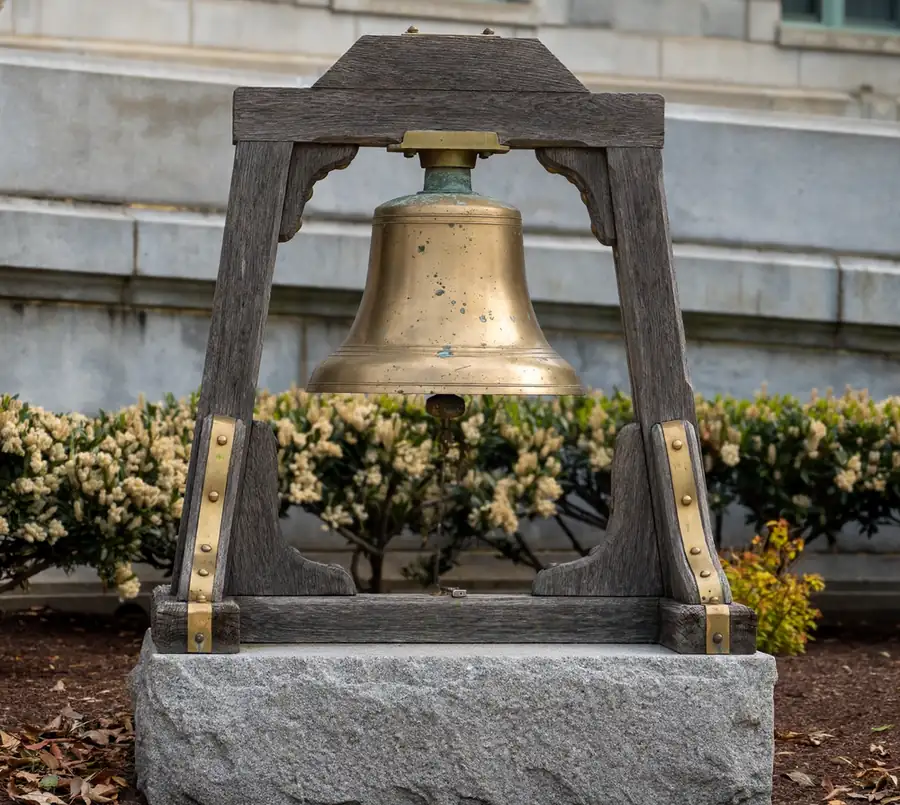
No part of the Enterprise survives as a ship, because she was scrapped in 1958 and 1960, but her artefacts survive in museums and in memorials around the United States. Her bell is displayed at the United States Naval Academy in Annapolis, Maryland, where it is rung on special occasions, and her nameplate is displayed at the National Museum of the United States Navy in Washington, D.C., and her stern plate is displayed at the River Vale, New Jersey, memorial to the ship. The Enterprise’s battle flag, which flew at Midway, is displayed at the Naval History and Heritage Command, and her ship’s wheel is displayed at the museum in Vallejo, California. The Enterprise’s artefacts are a reminder of the ship that was lost, and they are visited by veterans and by the families of the men who served in her, and they are a place of remembrance for the most decorated warship in American history.
The Museum Campaign That Failed
The campaign to preserve the Enterprise as a museum ship is one of the great what-ifs of American naval history, and its failure is still mourned. The campaign was led by veterans of the ship, who raised money and who lobbied the government, and it was supported by the Navy, which wanted to preserve the ship, but it failed because the Navy could not afford to maintain a ship of the Enterprise’s size, and because the government would not pay for her preservation, and because no city would take her and pay for her upkeep. The Enterprise was sold for scrap in 1958, and she was broken up at Kearny, New Jersey, and her steel was melted down and used for other purposes, and the ship that had won the Pacific War was gone. The failure of the campaign taught the American Navy a lesson, and it is the reason that later ships, including the battleship Missouri and the carrier Intrepid, were preserved as museums, and that the Enterprise’s successor, the nuclear carrier CVN-65, is being preserved in part. The Enterprise’s loss is a reminder that a nation must preserve its history, or it will lose it.
Frequently Asked Questions
What was the USS Enterprise CV-6?
The USS Enterprise (CV-6) was a Yorktown-class aircraft carrier of the United States Navy, commissioned in 1938. She fought in every major carrier battle of the Pacific War and earned twenty battle stars, more than any other American warship.
Why was the Enterprise called the Grey Ghost?
The Japanese called her the “Grey Ghost” because they reported her sunk three times during the war, and each time she returned to action. The Americans called her the “Big E” and the “Lucky E”.
What did the Enterprise do at Midway?
At Midway on 4 June 1942, the Enterprise’s dive bombers, led by C. Wade McClusky and Richard Best, sank the Japanese carriers Akagi and Kaga in a single morning, a blow from which the Japanese carrier force never recovered.
How many battle stars did the Enterprise earn?
The Enterprise earned twenty battle stars, the most of any American warship in the Second World War, and she also received a Presidential Unit Citation and a Navy Unit Commendation.
What happened to the Enterprise after the war?
The Enterprise was decommissioned in 1947 and laid up in reserve. In spite of a campaign by her veterans to preserve her as a museum, she was sold for scrap in 1958 and broken up at Kearny, New Jersey, in 1958–1960.
How fast was the Enterprise?
The Enterprise’s top speed was 32.5 knots, about 60 kilometres per hour, which made her one of the fastest carriers of her generation and fast enough to generate ample wind over her flight deck for launching aircraft.
Sources
- Wikipedia, “USS Enterprise (CV-6)” — the Yorktown class, Midway, the Solomons, 20 battle stars, scrapping in 1958–1960.
- Barrett Tillman, Enterprise: America’s Fightingest Ship (Simon & Schuster, 2012) — the ship’s full wartime career.
- Jonathan Parshall and Anthony Tully, Shattered Sword (Potomac Books, 2005) — Midway and the Enterprise’s dive bombers.
- Thomas B. Buell, The Quiet Warrior: A Biography of Admiral Raymond A. Spruance (Naval Institute Press, 1987) — Spruance and Task Force 16 at Midway.
- E. B. Potter, Nimitz (Naval Institute Press, 1976) — the Pacific Fleet and the Enterprise’s service.
- The Naval History and Heritage Command, “USS Enterprise (CV-6)” — the ship’s battle stars, citations and the museum campaign.