 WAR ATLAS MILITARY HISTORY MAGAZINE · WWI — WWII
de Havilland Mosquito
1. Lead
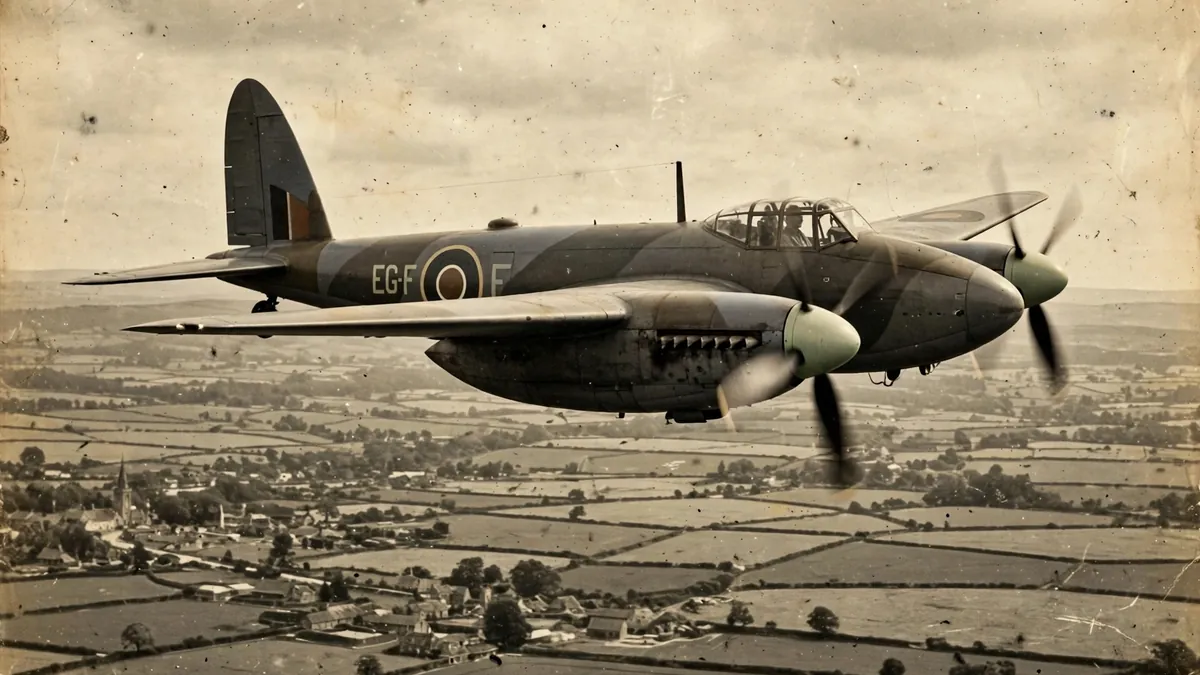
The de Havilland Mosquito was one of the most remarkable aircraft of the Second World War, and one of the fastest. Designed by Geoffrey de Havilland and his team, the Mosquito was built almost entirely of wood — plywood and balsa — and it was powered by two Rolls-Royce Merlin engines, which gave it a speed of more than 640 km/h, faster than most fighters of its time, and which allowed it to outrun German fighters and to operate without defensive armament. The Mosquito was used as a bomber, as a fighter, as a night fighter, as a reconnaissance aircraft and as a pathfinder, and it served in every theatre of the war, from Europe to the Far East, and it became known as the “Wooden Wonder”, because it was built of wood, and because it did things that no other aircraft could do. About 7,781 Mosquitos were built, between 1940 and 1950, and the type remained in service after the war, in the Royal Air Force and in other air forces, until the 1950s, and it is remembered today as one of the most versatile and most successful aircraft of the Second World War.
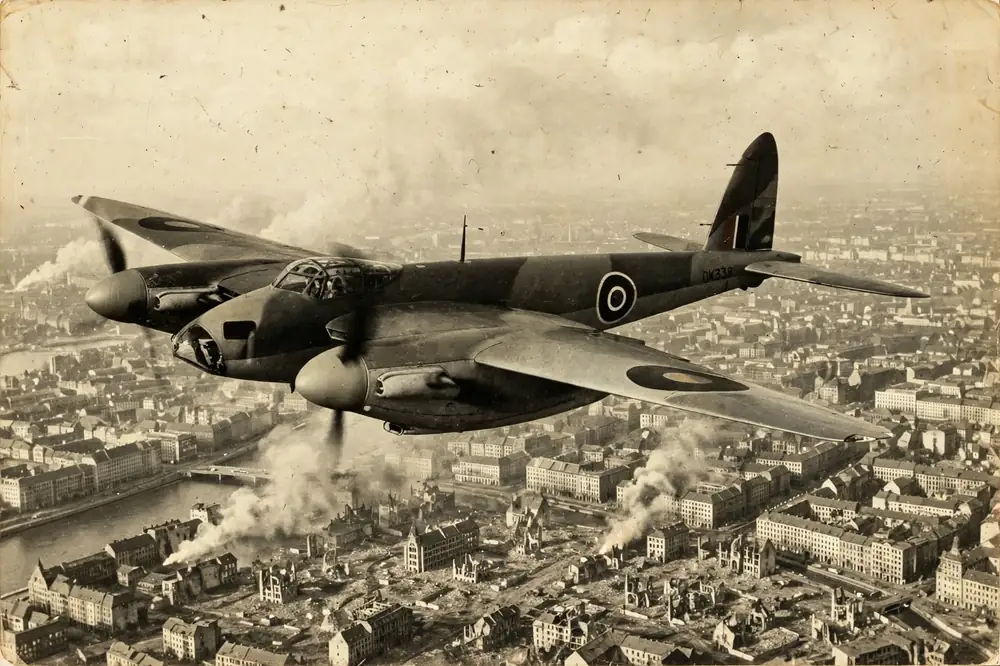
The Mosquito’s story is a story of imagination and of courage. The Air Ministry, which had asked for a bomber, did not believe that a wooden aircraft, without guns, could survive in combat, and it rejected de Havilland’s proposal, but de Havilland built the aircraft anyway, in secret, and proved that it was faster than any fighter, and that it could carry a bomb load to Berlin and back, without being intercepted. The Mosquito’s crews — two men, a pilot and a navigator, who flew without a gunner, without armour and without a parachute for the navigator in some versions — flew some of the most dangerous missions of the war, in daylight raids on Berlin, in night raids on German cities, and in precision attacks on Gestapo headquarters, on prisons and on V-weapon sites. The Mosquito was a weapon of precision, and of speed, and its story is one of the most inspiring stories of the Second World War.
2. Key Facts
| Type | Multi-role combat aircraft (bomber, fighter, reconnaissance) |
| Origin | United Kingdom |
| Designer | Geoffrey de Havilland; Ronald Bishop (chief designer) |
| Manufacturer | de Havilland Aircraft Company; Standard Motor Company; Airspeed; and others |
| First flight | 25 November 1940 |
| In service | 1941–1950s |
| Produced | 1940–1950; about 7,781 built |
| Crew | 2 (pilot and navigator/bomb aimer) |
| Length | 13.56 m |
| Wingspan | 16.51 m |
| Height | 4.65 m |
| Empty weight | About 6,490 kg |
| Maximum take-off weight | About 11,300 kg |
| Engines | 2 × Rolls-Royce Merlin 21/23/25, about 1,480 hp each (later 1,710 hp) |
| Maximum speed | About 668 km/h (B Mk XVI); about 640 km/h (typical bomber) |
| Range | About 2,400 km (bomber); about 3,000 km with drop tanks |
| Service ceiling | About 11,000 m |
| Bomb load | Up to 1,800 kg (4,000 lb) — including the 4,000 lb “Cookie” bomb |
| Armament (fighter) | 4 × 20 mm Hispano cannon; 4 × 7.7 mm machine guns |
3. Background and Development
A Wooden Bomber, Rejected and Built Anyway
In 1938, Geoffrey de Havilland proposed a bomber built of wood, powered by two Merlin engines, and fast enough to outrun fighters, so that it would not need defensive guns. The Air Ministry rejected the proposal, because it did not believe that a wooden aircraft could be a bomber, and because it wanted bombers with guns, but de Havilland, who believed in his design, built the aircraft anyway, using his own money and the resources of his company, and he proved that the Air Ministry was wrong. The first Mosquito prototype flew on 25 November 1940, and it was faster than the Spitfire, the fastest fighter in the Royal Air Force, and it could carry a bomb load of 1,000 kg to Berlin and back, without being intercepted. The Air Ministry, which had rejected the aircraft, now ordered it into production, and the Mosquito entered service in 1941, as a reconnaissance aircraft, and then as a bomber, a fighter and a night fighter.
Wood, Merlin Engines and Speed
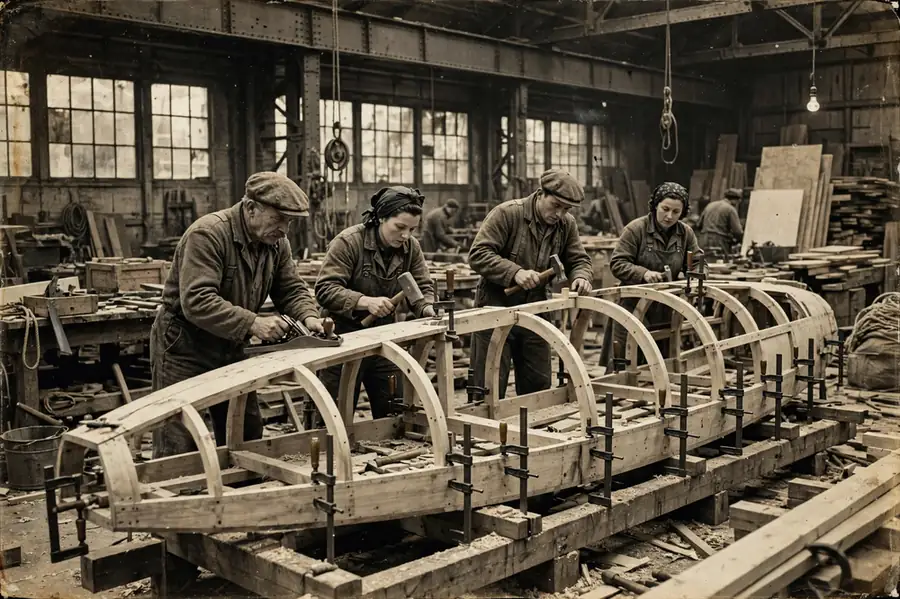
The Mosquito’s speed began with two choices that other designers had rejected: a wooden airframe and two Merlin engines, and this section explains how those choices worked together. Wood was available when aluminium was in short supply, it was light, and it could be worked by furniture makers and piano makers who had never built an aircraft, so the Mosquito could be built quickly and in large numbers by firms outside the aircraft industry. The wooden structure also made the aircraft easy to repair, because a damaged panel could be replaced by a carpenter, and wood reflected radar less readily than metal, which helped the Mosquito slip past defences. Power came from two Rolls-Royce Merlins, the engines that also powered the Spitfire and the Lancaster, mounted in nacelles under the wings, and they gave the Mosquito a speed of more than 640 km/h, faster than most fighters of its time, including the Fw 190. Together, light wood and powerful engines meant the Mosquito did not need defensive guns: it could outrun the fighters sent to intercept it, and that speed became both its protection and the foundation of every role it went on to fill.
Why Wood?
The Mosquito was built of wood for two reasons: wood was available, when aluminium was in short supply, and wood was light, which made the aircraft fast. The Mosquito’s structure was made of plywood and balsa, glued together in a mould, and it was built by furniture makers, by piano makers and by other craftsmen who knew how to work with wood, and who were not needed to build metal aircraft. The wooden construction also made the Mosquito difficult to detect by radar, because wood does not reflect radar as well as metal, and it made the aircraft easy to repair, because a damaged wooden panel could be replaced by a carpenter, without the need for a metalworker. The Mosquito’s wooden construction was its greatest strength, and it was the reason why it was called the “Wooden Wonder”, and why it could be built in large numbers, by firms that had never built an aircraft before.
The Merlin Engines
The Mosquito was powered by two Rolls-Royce Merlin engines, which were the same engines that powered the Spitfire and the Lancaster, and which gave the Mosquito a speed of more than 640 km/h, and which allowed it to outrun German fighters, including the Fw 190, which was the fastest German fighter of the time. The Merlin engines were reliable, they were powerful, and they were available in large numbers, because they were built in factories across Britain and in the United States, and they were the engines that powered the Royal Air Force’s best aircraft. The Mosquito’s two Merlins, mounted in nacelles under the wings, gave the aircraft its speed, and its speed gave it its survivability, because a Mosquito that was faster than a fighter did not need guns to defend itself, and it could outrun any fighter that tried to intercept it.
Entering Service
The Mosquito entered service in 1941, as a photo-reconnaissance aircraft, and it proved to be faster than any German fighter, and it could fly over Germany at high altitude, taking photographs of German cities, factories and airfields, without being intercepted. The Mosquito then entered service as a bomber, in 1942, and it carried out daylight raids on Berlin, on Cologne and on other German cities, and it became known as the aircraft that could bomb Berlin in daylight, when no other British bomber could. The Mosquito then entered service as a night fighter, in 1942, and it shot down German bombers over Britain, and as a fighter-bomber, in 1943, and it attacked German ships, German trains and German V-weapon sites, in precision attacks that no other aircraft could carry out. The Mosquito’s service was a success from the start, and it remained in service throughout the war, in every theatre, and in every role.
4. Design
Wooden Construction
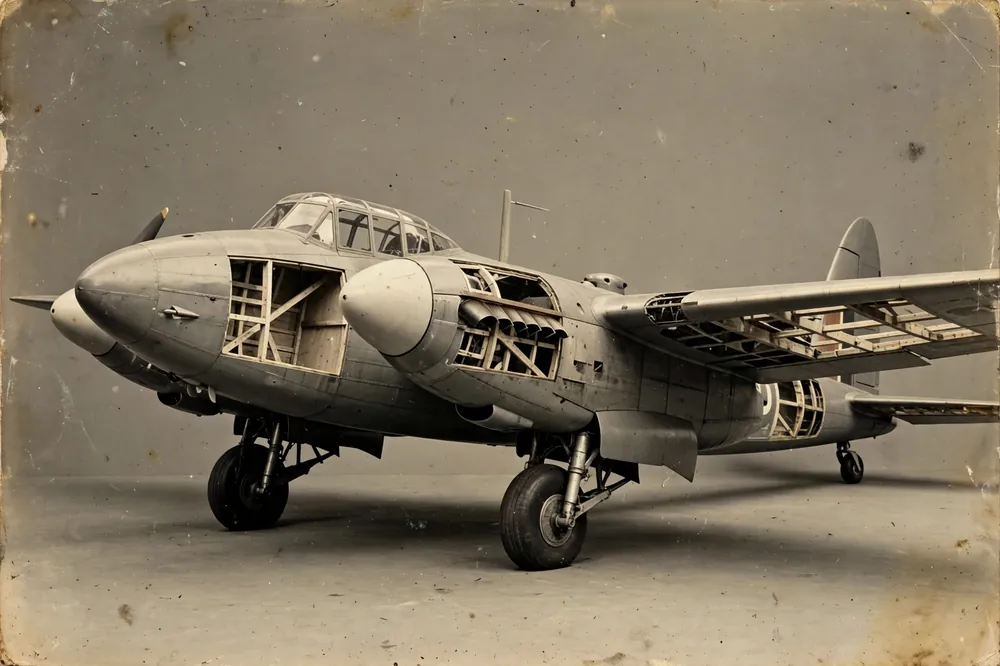
The Mosquito was built almost entirely of wood, with a fuselage made of plywood and balsa, glued together in a mould, and with wings made of wood and plywood, and with a tail made of wood. The wooden construction made the aircraft light, which made it fast, and it made it easy to build, because it could be built by firms that had never built an aircraft, and it made it easy to repair, because a damaged wooden panel could be replaced by a carpenter. The wooden construction also made the Mosquito difficult to detect by radar, and it made it resistant to damage, because a wooden structure could absorb a bullet or a shell fragment without shattering, as a metal structure would. The Mosquito’s wooden construction was its most distinctive feature, and it was the reason why it was called the “Wooden Wonder”, and why it is still remembered today as one of the most innovative aircraft of the Second World War.
Two Merlins and a Two-Man Crew
The Mosquito’s design can be understood through two facts: it was powered by two Merlins, and it was flown by two men, and this section looks at how the engines and the crew shaped the aircraft. The two Rolls-Royce Merlins gave the Mosquito a speed of about 640 to 668 km/h, depending on the version, which allowed the bomber versions to fly without defensive guns and to rely on speed alone, while the fighter versions carried four 20 mm Hispano cannon and four 7.7 mm machine guns in the nose, for shooting down bombers and attacking ground targets. The crew sat side by side in a roomy cockpit, a pilot and a navigator who flew, navigated and dropped the bombs together, with no gunner, no armour, and in some versions no parachute for the navigator, because there was no room for one. Below them, the bomb bay under the wing could carry up to 1,800 kg of bombs, including the 4,000 lb Cookie, a load comparable to that of a medium bomber in an aircraft the size of a fighter. Speed, armament, cockpit and bomb bay together explain why the Mosquito could fill so many roles, and fill them so well.
Speed Without Guns
The Mosquito was powered by two Rolls-Royce Merlin engines, which gave it a speed of about 640 to 668 km/h, depending on the version, and which allowed it to outrun German fighters, and to operate without defensive armament. The bomber versions of the Mosquito had no guns, and they relied on speed for their defence, and the fighter versions had four 20 mm Hispano cannon and four 7.7 mm machine guns, in the nose, which were used to shoot down German bombers and to attack ground targets. The Mosquito’s crew consisted of two men, a pilot and a navigator, who sat side by side in the cockpit, and who worked together to fly the aircraft, to navigate and to drop its bombs, and who had no gunner, no armour and, in some versions, no parachute for the navigator, because there was no room for one. The Mosquito’s two-man crew was a sign of its design: it was an aircraft for two men, who trusted each other and who flew together, on missions that were among the most dangerous of the war.
The Cockpit and the Bomb Bay
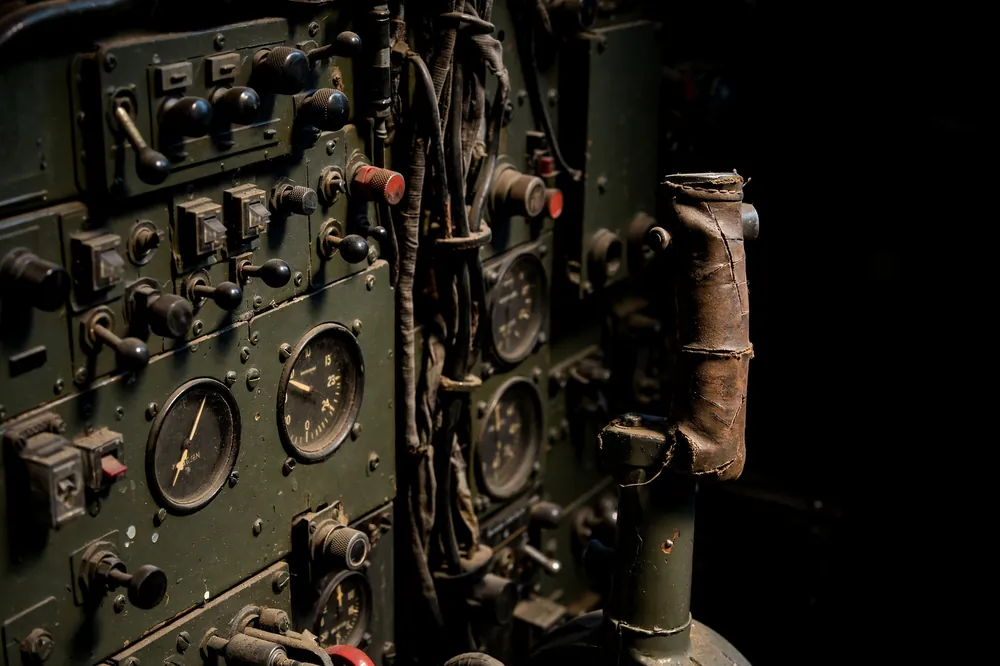
The Mosquito’s cockpit was roomy, by the standards of the time, and it gave the pilot and the navigator a good view, particularly forward and to the sides, although the view to the rear was poor. The bomb bay, which was in the fuselage, under the wing, could carry up to 1,800 kg of bombs, including the 4,000 lb “Cookie” bomb, which was a large blast bomb, and which was used to destroy buildings and to start fires in German cities. The Mosquito’s bomb bay was large for an aircraft of its size, and it was the reason why the Mosquito could carry a bomb load that was comparable to that of a heavy bomber, in an aircraft that was the size of a fighter. The Mosquito’s cockpit and bomb bay were designed for speed and for precision, and they were the heart of the aircraft, and they were the reason why it could do things that no other aircraft could do.
Versatility by Design
The Mosquito was designed to be versatile, and it was: it was used as a bomber, as a fighter, as a night fighter, as a reconnaissance aircraft and as a pathfinder, and it was used in every theatre of the war, from Europe to the Far East. The Mosquito’s versatility was a result of its design: its speed, its range, its bomb load and its two-man crew made it suitable for many roles, and its wooden construction made it easy to modify, so that new versions could be built quickly, for new roles. The Mosquito’s versatility is a reminder that an aircraft’s value is not only its performance, but its ability to be used in many roles, and the Mosquito, which was designed as a bomber, became a fighter, a night fighter, a reconnaissance aircraft and a pathfinder, and it did all of those roles well, which is a versatility that few aircraft have matched.
5. Variants
Bomber, Fighter and Reconnaissance Versions
| Variant | Years | Key features | Production |
|---|---|---|---|
| PR Mk I | 1941 | Photo-reconnaissance; first version | 10 |
| B Mk IV | 1942 | Bomber; 4 × 500 lb bombs; first bomber version | About 273 |
| NF Mk II | 1942 | Night fighter; 4 × 20 mm cannon; AI radar | About 494 |
| FB Mk VI | 1943 | Fighter-bomber; 4 × 20 mm + 4 × 7.7 mm; bombs/rockets | About 2,718 |
| B Mk XVI | 1944 | Bomber; pressurised; 4,000 lb Cookie bomb | About 1,200 |
| PR Mk XVI | 1944 | Photo-reconnaissance; pressurised; high altitude | About 435 |
| NF Mk 30 | 1944 | Night fighter; Merlin 76; high altitude | About 526 |
| T Mk III | 1943 | Trainer; dual controls | About 348 |
The Mosquito was built in many variants, for many roles, and the table above shows the most important: the photo-reconnaissance PR Mk I, the bomber B Mk IV, the night fighter NF Mk II, the fighter-bomber FB Mk VI, which was the most numerous version, with about 2,718 built, and the bomber B Mk XVI, which could carry the 4,000 lb Cookie bomb. The variants were built in parallel, and they were used together, in the same squadrons and in the same operations, and they were all based on the same wooden airframe, with different engines, different armament and different equipment, for different roles. The Mosquito’s many variants are a measure of its versatility, and they are a reminder that an aircraft that is designed to be versatile can be adapted to many roles, and that it can serve in all of them well.
The Fighter-Bomber FB Mk VI
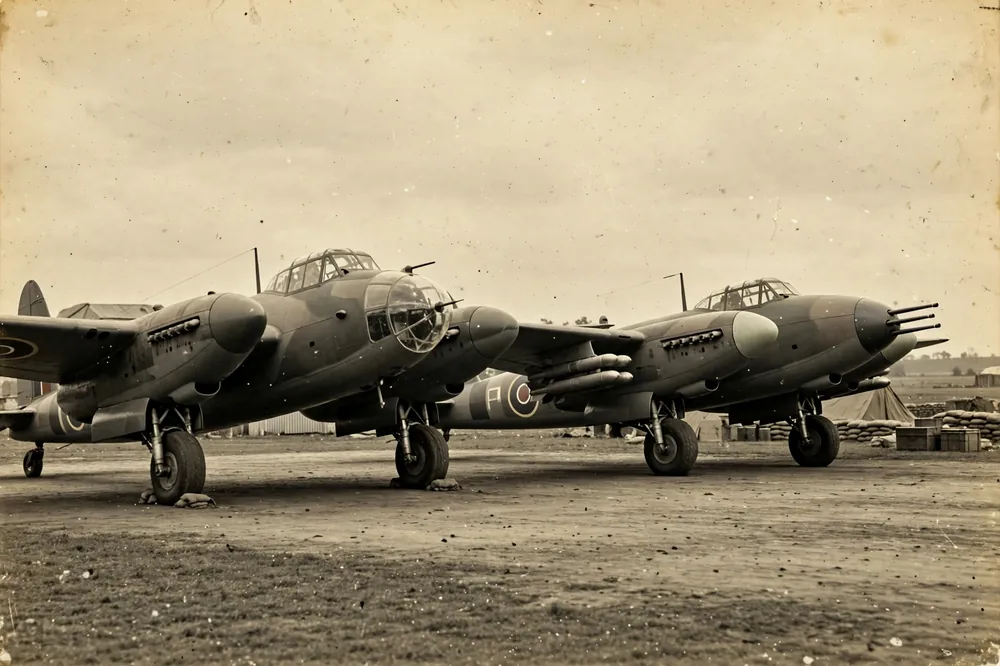
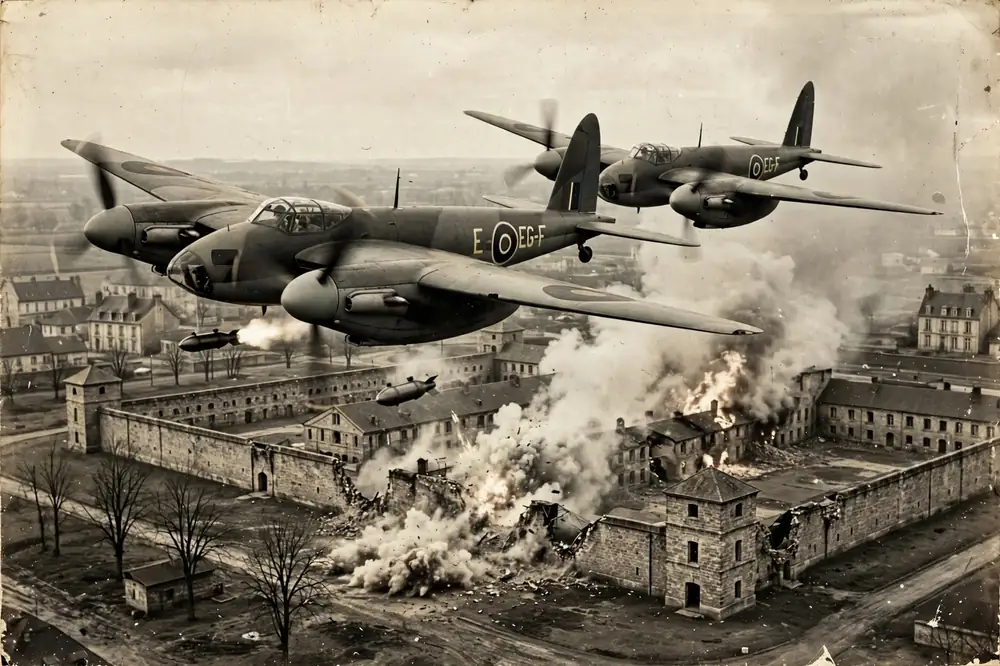
The FB Mk VI was the Mosquito that most people picture when they think of the type, and this section explains why it became the most numerous and the most famous version. About 2,718 were built, more than any other Mosquito, and the aircraft was armed with four 20 mm Hispano cannon and four 7.7 mm machine guns in the nose, with bombs and rockets under its wings, so it could fight in the air and strike targets on the ground on the same mission. It was used by the Royal Air Force, by the Royal Canadian Air Force, by the Royal Australian Air Force and by the United States Army Air Forces, in Europe, in the Mediterranean and in the Far East, against ships, trains, airfields and V-weapon sites. Its most famous work was precision attack: a small number of Mosquitos, flying at low level and at high speed, would strike one specific target, such as the Gestapo headquarters in Oslo in September 1942, the Amiens prison in February 1944, where they breached the walls so French Resistance prisoners could escape, or the Gestapo headquarters in Copenhagen in March 1945, and destroy it with bombs and cannon fire without damaging the surrounding buildings.
The Most Numerous Mosquito
The FB Mk VI, the fighter-bomber version, was the most numerous Mosquito, with about 2,718 built, and it was the version that most people think of when they think of the Mosquito. The FB Mk VI was armed with four 20 mm Hispano cannon and four 7.7 mm machine guns in the nose, and it could carry bombs and rockets under its wings, and it was used to attack German ships, German trains, German airfields and German V-weapon sites, in precision attacks that were carried out at low level, at high speed, and that were among the most dangerous missions of the war. The FB Mk VI was used by the Royal Air Force, by the Royal Canadian Air Force, by the Royal Australian Air Force and by the United States Army Air Forces, and it served in Europe, in the Mediterranean and in the Far East, and it became known as the aircraft that could do anything, and that did everything, in the Second World War.
Precision Attacks
The FB Mk VI was used for precision attacks, in which a small number of Mosquitos, flying at low level, at high speed, would attack a specific target — a Gestapo headquarters, a prison, a V-weapon site, a ship in harbour — and would destroy it with bombs and with cannon fire, without causing damage to the surrounding buildings. The most famous precision attacks were the attack on the Gestapo headquarters in Oslo in September 1942, the attack on the Amiens prison in February 1944, in which Mosquitos breached the prison walls to allow French Resistance prisoners to escape, and the attack on the Gestapo headquarters in Copenhagen in March 1945, in which Mosquitos destroyed the building, although a nearby school was accidentally hit. The precision attacks were among the most famous missions of the war, and they showed that the Mosquito could do things that no other aircraft could do, and that it could do them with a precision that was unmatched.
6. Operational History
Reconnaissance and the First Bomber Raids
The Mosquito first saw combat as a photo-reconnaissance aircraft, in 1941, flying over Germany at high altitude, taking photographs of German cities, factories and airfields, without being intercepted. The Mosquito then entered service as a bomber, in 1942, and it carried out daylight raids on Berlin, on Cologne and on other German cities, and it became known as the aircraft that could bomb Berlin in daylight, when no other British bomber could. The Mosquito’s bomber raids were a success, and they showed that a fast, unarmed bomber could survive in daylight, and that it could carry out precision attacks that heavy bombers could not, and they were a precursor to the precision bombing campaigns that the Allies would carry out later in the war, with Mosquitos and with other aircraft.
The Night Fighter and the Pathfinder
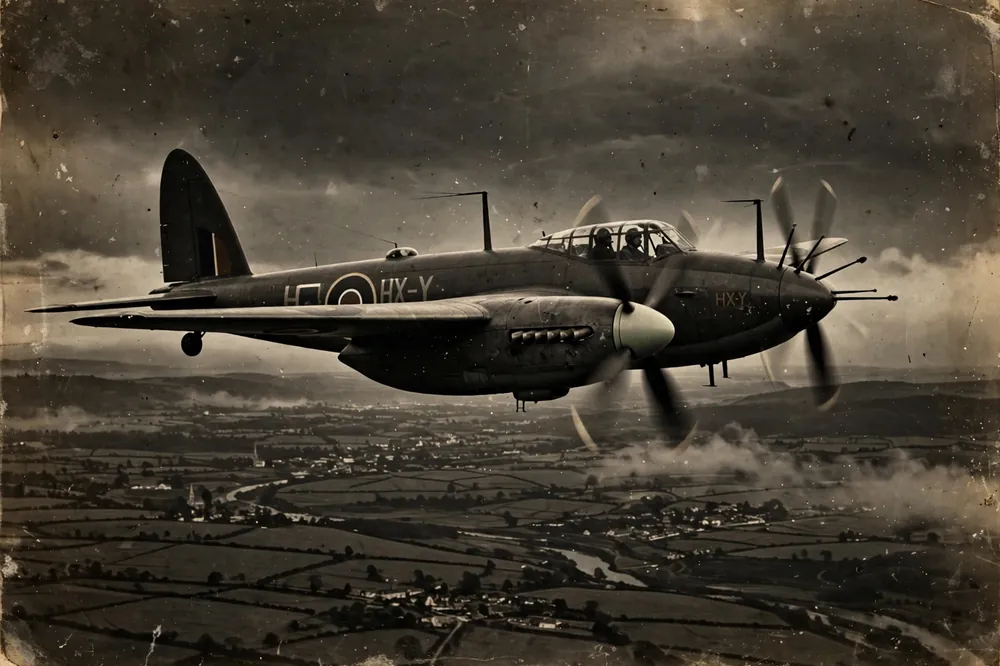
The Mosquito served in two night roles that demanded the most experienced crews, and this section covers both of them: the night fighter that defended Britain, and the pathfinder that guided Bomber Command to its targets. The night fighter entered service in 1942, armed with four 20 mm cannon and fitted with AI radar that allowed it to find German bombers in the dark, and it shot down hundreds of them over Britain during the Blitz and the later German raids on London, in conditions that were among the most difficult of the war. The pathfinder Mosquitos flew ahead of the heavy bombers and marked the target with flares, so that the bombers behind them could drop their loads accurately, and their crews were among the most experienced in Bomber Command, flying over the target in daylight and at night while German fighters and flak tried to shoot them down. Both roles depended on the same qualities, speed and high-altitude performance, and both showed that an aircraft designed as a bomber could also become an outstanding fighter.
Night Fighting over Britain
In 1942, the Mosquito entered service as a night fighter, and it shot down German bombers over Britain, in the Blitz and in the later German raids on London, and it became one of the most successful night fighters of the war. The Mosquito night fighter was armed with four 20 mm cannon, and it was fitted with AI radar, which allowed it to find German bombers at night, and it was flown by pilots who had been trained to fly at night, and who fought in the dark, in conditions that were among the most difficult of the war. The Mosquito night fighter shot down hundreds of German bombers, and it protected Britain from the German night bombing campaign, and it was a reminder that the Mosquito, which had been designed as a bomber, could also be a fighter, and that it could do both roles well.
Pathfinders for Bomber Command
The Mosquito also served as a pathfinder for Bomber Command, in which Mosquito crews flew ahead of the heavy bombers, and marked the target with flares, so that the heavy bombers could bomb accurately. The pathfinder Mosquitos were among the most experienced crews in Bomber Command, and they flew some of the most dangerous missions of the war, in which they flew over the target, in daylight and at night, and marked it, while German fighters and flak tried to shoot them down. The pathfinder Mosquitos’ work was essential to the success of Bomber Command’s night bombing campaign, and it was a reminder that the Mosquito, which was fast and which could fly at high altitude, was the ideal aircraft for the pathfinder role, and that it could do things that no other aircraft could do.
Precision Attacks and the Far East
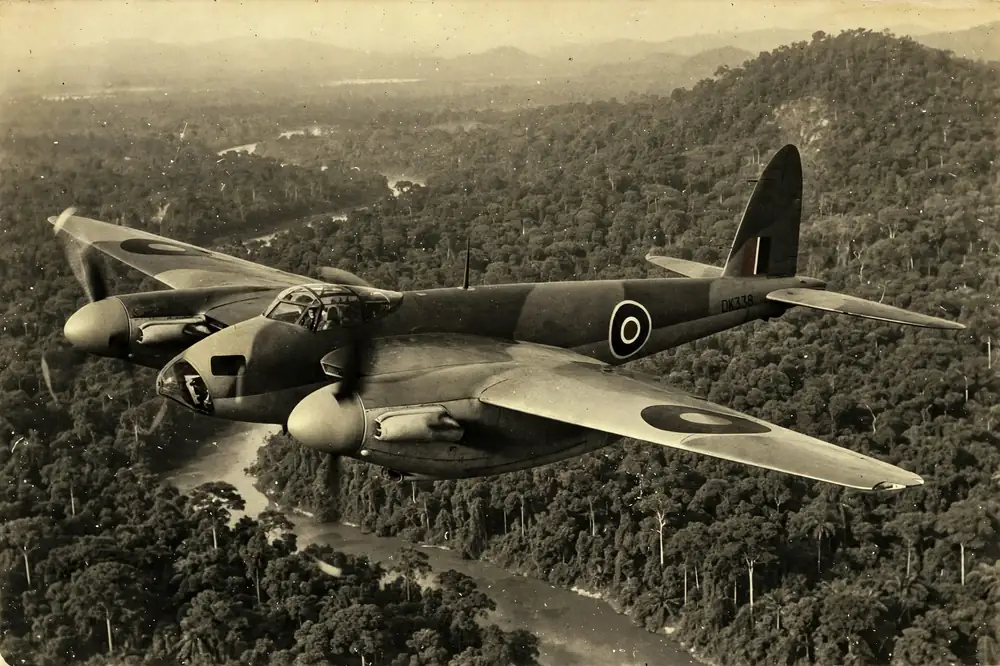
The Mosquito’s most famous missions were its precision attacks, in which a small number of Mosquitos, flying at low level, at high speed, attacked a specific target, such as the Gestapo headquarters in Oslo, the Amiens prison and the Gestapo headquarters in Copenhagen, and destroyed it with bombs and cannon fire. The Mosquito also served in the Far East, where it was used by the Royal Air Force and by the Royal Australian Air Force, in Burma and in Malaya, against Japanese ships, Japanese airfields and Japanese troops, and where it proved to be just as successful as it had been in Europe. The Mosquito’s service in the Far East was the last of its wartime service, and it was there that the aircraft’s versatility was most apparent, as it was used as a bomber, as a fighter and as a reconnaissance aircraft, in the jungle and over the sea, against an enemy that was very different from the enemy it had faced in Europe.
7. Performance and Specifications
Speed, Range and Bomb Load
| Specification | Mosquito B Mk XVI | Mosquito FB Mk VI |
|---|---|---|
| Engines | 2 × Merlin 72/73, 1,710 hp | 2 × Merlin 21/25, 1,480 hp |
| Maximum speed | About 668 km/h | About 610 km/h |
| Range | About 2,400 km | About 2,380 km |
| Service ceiling | About 11,000 m | About 10,000 m |
| Bomb load | Up to 1,800 kg | Up to 900 kg + rockets |
| Armament | None (bomber) | 4 × 20 mm + 4 × 7.7 mm |
| Crew | 2 | 2 |
| Number built | About 1,200 | About 2,718 |
The table shows the Mosquito’s performance: it was fast, it had a long range, it could carry a large bomb load, and it could be armed as a fighter, which was a combination that no other aircraft could match. The figures are the values most commonly given in the published histories, and they vary slightly between sources, because different aircraft were tested at different weights and with different equipment, and because the Mosquito was built in many variants, with different engines and different armament. The reader should treat the numbers as approximate, and as a guide to the difference between the two versions rather than as exact measurements for a single aircraft.
Comparison with Other Aircraft
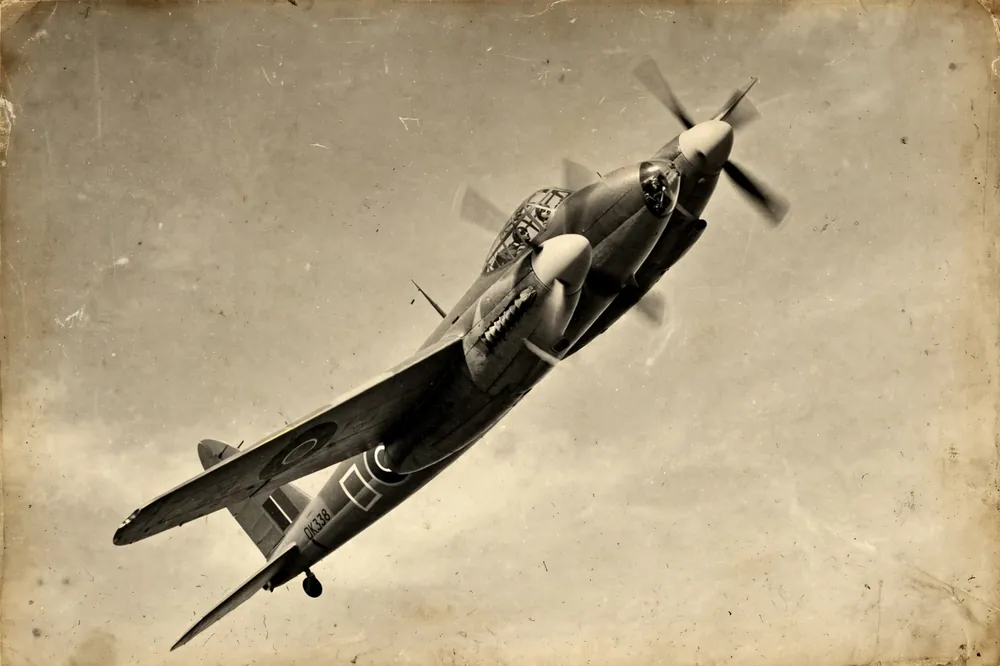
Compared with other aircraft, the Mosquito was faster than the Lancaster, which was the Royal Air Force’s main heavy bomber, and it could carry a bomb load that was comparable to that of a medium bomber, in an aircraft that was the size of a fighter. The Lancaster could carry up to 10,000 kg of bombs, but it was slow, at about 450 km/h, and it needed a crew of seven and defensive guns to survive, while the Mosquito could carry up to 1,800 kg of bombs, at a speed of more than 640 km/h, with a crew of two and no guns. The Mosquito was also faster than the German Fw 190, which was the fastest German fighter of the time, and it could outrun any German fighter that tried to intercept it, which was a capability that no other British bomber had. The Mosquito’s performance was remarkable, and it remains so today, more than eighty years after its first flight.
Why Speed Was Its Defence
The Mosquito’s speed was its defence, and it was a defence that worked: a Mosquito that was faster than a fighter did not need guns, because it could outrun any fighter that tried to intercept it, and it could bomb a target and return, without being caught. The Mosquito’s speed was a result of its design: its wooden construction made it light, its two Merlin engines made it powerful, and its clean aerodynamics made it fast, and the combination of these three factors made it the fastest aircraft in the Royal Air Force, and one of the fastest aircraft of the Second World War. The Mosquito’s speed is a reminder that an aircraft’s defence is not only its guns, but its speed, and that a fast aircraft can survive where a slow aircraft, with guns, cannot.
The 4,000 lb Cookie Bomb
The Mosquito B Mk XVI could carry the 4,000 lb Cookie bomb, which was a large blast bomb, weighing about 1,800 kilograms, and which was used to destroy buildings and to start fires in German cities, and which was the largest bomb that the Mosquito could carry. The Cookie bomb was a thin-walled bomb, filled with explosive, and it was designed to explode on impact, and to create a blast that would destroy a building, and to start fires that would spread to other buildings, and it was used by Mosquitos in raids on Berlin, on Cologne and on other German cities, where it was dropped from high altitude, at night, and where it caused widespread destruction. The Cookie bomb was one of the most destructive bombs of the war, and it was a reminder that the Mosquito, which was a small aircraft, could carry a bomb load that was comparable to that of a heavy bomber, in an aircraft that was the size of a fighter.
8. Operators
The Royal Air Force
The Mosquito was used by the Royal Air Force, from 1941 to the 1950s, and it was the most versatile aircraft in the Royal Air Force, serving as a bomber, as a fighter, as a night fighter, as a reconnaissance aircraft and as a pathfinder. The Mosquito was operated by dozens of squadrons, in Europe, in the Mediterranean and in the Far East, and it was flown by pilots and navigators who were among the best in the Royal Air Force, and who flew some of the most dangerous missions of the war. The Mosquito’s service with the Royal Air Force is its main story, and it is the story of an aircraft that was designed by a British company, built by British craftsmen, and flown by British airmen, and that became a symbol of British aviation skill and of the Royal Air Force’s versatility in the Second World War.
Other Users
The Mosquito was a British aircraft, but it was flown far beyond Britain, and this section follows it into the hands of the Commonwealth, the United States and the post-war air forces that kept it flying into the 1950s. The Royal Canadian Air Force, the Royal Australian Air Force, the Royal New Zealand Air Force and the United States Army Air Forces were all issued Mosquitos, for use as reconnaissance aircraft and as night fighters, in Europe and in the Far East, and the Canadian aircraft were built in Canada by de Havilland Canada while the Australian aircraft were built in Australia, so the type became a Commonwealth programme as well as a British one. After the war, the Mosquito was used by the air forces of France, Belgium, the Netherlands, Sweden, Turkey and Israel, as a bomber, a fighter and a reconnaissance aircraft, and it remained in service for a decade after the war because it was fast, versatile and reliable, and because no other aircraft could do the things it could do. It was finally retired in the 1950s, when jet aircraft replaced it and the wooden construction that had made it so successful became obsolete.
Commonwealth and the United States
The Mosquito was also used by the Royal Canadian Air Force, by the Royal Australian Air Force, by the Royal New Zealand Air Force and by the United States Army Air Forces, who were issued Mosquitos for use as reconnaissance aircraft and as night fighters, and who used them in Europe and in the Far East. The Canadian Mosquitos were built in Canada, by de Havilland Canada, and they were used by Canadian squadrons in Europe, where they flew as bombers and as fighters, and the Australian Mosquitos were built in Australia, and they were used by Australian squadrons in the Far East, where they flew as fighters and as bombers. The Mosquito’s use by so many different air forces is a measure of its success, and it ensures that the aircraft is remembered not only as a British aircraft, but as an aircraft of the Commonwealth and of the Allies as a whole.
Post-War Operators
After the war, the Mosquito was used by many air forces, including the air forces of France, Belgium, the Netherlands, Sweden, Turkey and Israel, who used it as a bomber, as a fighter and as a reconnaissance aircraft, into the 1950s. The Mosquito’s post-war service is a measure of its success: it was built for the Second World War, but it remained in service for a decade after the war, because it was fast, it was versatile and it was reliable, and because no other aircraft could do the things that it could do. The Mosquito was finally retired in the 1950s, when jet aircraft replaced it, and when the wooden construction that had made it so successful became obsolete, as metal and jet engines became the standard for military aircraft.
9. Legacy and Influence
The Wooden Wonder
The Mosquito’s legacy is, above all, its reputation as the “Wooden Wonder”, and as an aircraft that was built of wood, and that did things that no other aircraft could do. The Mosquito showed that an aircraft could be built of wood, and that it could be fast, and that it could be versatile, and that it could be built by firms that had never built an aircraft, and those lessons influenced the design of later aircraft, and they are still studied today, by engineers who want to build aircraft from new materials, and by historians who want to understand how Britain built aircraft in the Second World War. The Mosquito’s wooden construction is a reminder that innovation is not only about new materials, but about using old materials in new ways, and that a wooden aircraft, built by furniture makers, could be one of the best aircraft of the Second World War.
Speed as Defence
The Mosquito also showed that speed could be a defence, and that an aircraft that was faster than a fighter did not need guns to defend itself. The Mosquito’s speed, which was a result of its light wooden construction and its two Merlin engines, became a model for later aircraft, including the jet bombers that followed it, which were designed to be fast, and to rely on speed for their defence, rather than on guns. The Mosquito’s lesson — that a bomber could be fast, and that it could survive by being fast — influenced the design of the Canberra, the B-47 and other jet bombers, which were designed to be fast, and which were, like the Mosquito, unarmed or lightly armed, and which relied on speed for their survival. The Mosquito’s legacy is therefore a legacy of design, as well as a legacy of combat, and it is still studied today, by engineers and by historians.
The Mosquito in Popular Culture
In popular culture the Mosquito is remembered as the “Wooden Wonder”, and it appears in films, in books and in model kits, and it is one of the most modelled aircraft in the world, with kits in every scale and in every variant. The Mosquito’s story — a wooden aircraft, built by furniture makers, that could bomb Berlin in daylight, and that could carry out precision attacks that no other aircraft could — is one of the most inspiring stories of the Second World War, and it has been told in the film Mosquito Squadron and in other films about the war, and in the books of the Mosquito’s crews, who flew some of the most dangerous missions of the war. The Mosquito’s place in popular culture is a measure of its fame, and it ensures that the aircraft will be remembered, not only as a weapon, but as a symbol of British ingenuity and of the Royal Air Force’s versatility in the Second World War.
The Mosquito and the Pathfinder Force
The Mosquito’s service as a pathfinder, in which Mosquito crews flew ahead of the heavy bombers, and marked the target with flares, was one of its most important roles, and it was a role that required skill, courage and experience, because the pathfinder crews had to fly over the target, in daylight and at night, and mark it, while German fighters and flak tried to shoot them down. The pathfinder Mosquitos were among the most experienced crews in Bomber Command, and they were the reason why Bomber Command’s night bombing campaign was as accurate as it was, and why the heavy bombers could bomb German cities, at night, with a precision that would have been impossible without the pathfinders. The Mosquito’s pathfinder service is a reminder that an aircraft’s value is not only its own bombs, but the bombs that it helps other aircraft to drop, accurately, on a target.
10. Surviving Examples
Museums in the United Kingdom
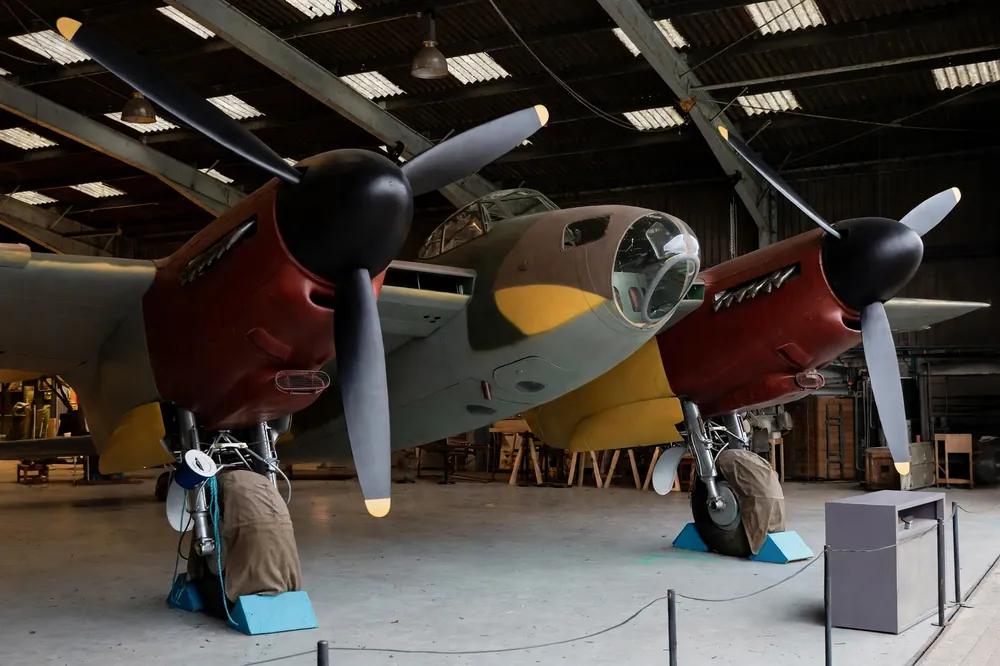
Only a handful of Mosquitos survive, because the wooden construction that made the aircraft so successful also made it difficult to preserve, as wood rots and as glue deteriorates, and most Mosquitos were scrapped after the war. Surviving Mosquitos are held in museums in the United Kingdom, including the Imperial War Museum at Duxford, where a Mosquito is displayed, and the de Havilland Aircraft Museum at Salisbury Hall, where the prototype Mosquito is displayed, and where visitors can see the aircraft that first flew on 25 November 1940, and can learn about its design and its history. The de Havilland Aircraft Museum is the best place to see a Mosquito in the United Kingdom, because it is the museum of the company that built the aircraft, and because it holds the prototype, which is the most important Mosquito in the world.
Museums Abroad and Airworthy Examples
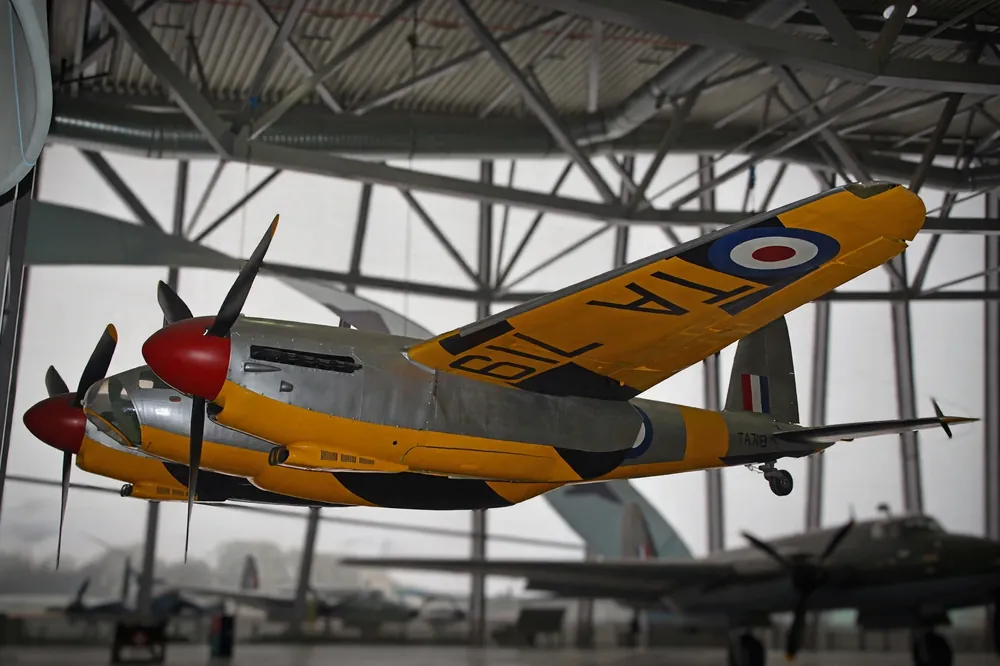
Only a handful of Mosquitos survive, because the wooden construction that made the aircraft so successful also made it difficult to preserve, as wood rots and glue deteriorates, and this section tells the reader where the survivors outside Britain can be found, and which of them still fly. Museums in the United States, Canada and Australia hold Mosquitos, including the National Air and Space Museum in Washington, D.C., the Canada Aviation and Space Museum in Ottawa, and the Australian War Memorial in Canberra, and the aircraft in these museums were built in Canada and in Australia, so they stand as examples of the Commonwealth contribution to the Mosquito programme and of its service in the Far East and in Europe. A small number of Mosquitos are airworthy, and they fly at airshows in the United Kingdom, the United States, Canada and New Zealand, restored over years of work by teams of engineers and craftsmen who rebuilt the wooden structure using the same methods as in the 1940s. For most visitors, the easiest way to see one remains the de Havilland Aircraft Museum at Salisbury Hall, which holds the prototype, or the Imperial War Museum at Duxford.
The United States, Canada and Australia
Surviving Mosquitos are also held in museums in the United States, in Canada and in Australia, including the National Air and Space Museum in Washington, D.C., the Canada Aviation and Space Museum in Ottawa, and the Australian War Memorial in Canberra, where Mosquitos are displayed as examples of the aircraft that served in the Second World War. The Mosquitos in these museums were built in Canada and in Australia, and they are displayed as examples of the Commonwealth’s contribution to the Mosquito programme, and as reminders of the aircraft’s service in the Far East and in Europe. The Mosquitos in the United States, Canada and Australia are the easiest to see for visitors in those countries, and they are displayed as examples of one of the most remarkable aircraft of the Second World War.
Airworthy Mosquitos
A small number of Mosquitos are airworthy, and they fly at airshows in the United Kingdom, in the United States, in Canada and in New Zealand, where they are flown by pilots who have been trained to fly the wooden aircraft, and where they are seen by thousands of people each year. The airworthy Mosquitos are the result of years of restoration, by teams of engineers and craftsmen who have rebuilt the wooden structure, using the same methods that were used to build the aircraft in the 1940s, and they are a tribute to the Mosquito’s design and to the men who built it and who flew it. For most visitors, the easiest way to see a Mosquito is to visit the de Havilland Aircraft Museum at Salisbury Hall, or the Imperial War Museum at Duxford, where Mosquitos are displayed, and where their stories are told in full.
Frequently Asked Questions
What is the de Havilland Mosquito?
The de Havilland Mosquito was a British multi-role combat aircraft of the Second World War, built almost entirely of wood and powered by two Rolls-Royce Merlin engines. It was used as a bomber, a fighter, a night fighter and a reconnaissance aircraft.
Why was the Mosquito called the Wooden Wonder?
The Mosquito was called the Wooden Wonder because it was built almost entirely of wood — plywood and balsa — and because it was one of the fastest and most versatile aircraft of the war.
How fast was the Mosquito?
The Mosquito had a maximum speed of about 640 to 668 km/h, depending on the version, which was faster than most fighters of its time, including the German Fw 190.
How many Mosquitos were built?
About 7,781 Mosquitos were built between 1940 and 1950, in many variants, for many roles.
What was the Mosquito used for?
The Mosquito was used as a bomber, as a fighter, as a night fighter, as a photo-reconnaissance aircraft and as a pathfinder for Bomber Command, and it served in Europe, in the Mediterranean and in the Far East.
Where can I see a Mosquito today?
Surviving Mosquitos are displayed at the de Havilland Aircraft Museum at Salisbury Hall, the Imperial War Museum at Duxford, the National Air and Space Museum in Washington, D.C., and the Canada Aviation and Space Museum in Ottawa.
Sources
- Wikipedia, “de Havilland Mosquito” — production of about 7,781, specifications, variants and service history.
- de Havilland Aircraft Museum, Salisbury Hall — the prototype Mosquito and the history of the aircraft.
- Martin W. Bowman, The Mosquito (Crowood Press, 2005) — design, development and operational history.
- C. Martin Sharp and Michael J. F. Bowyer, Mosquito (Crecy Publishing, 1997) — variants, production and surviving examples.
- Imperial War Museum, Duxford — the Mosquito at Duxford and the Wooden Wonder.
- National Air and Space Museum, Washington, D.C. — the Mosquito in the museum’s collection.