 WAR ATLAS MILITARY HISTORY MAGAZINE · WWI — WWII
Warsaw Uprising
1. Lead
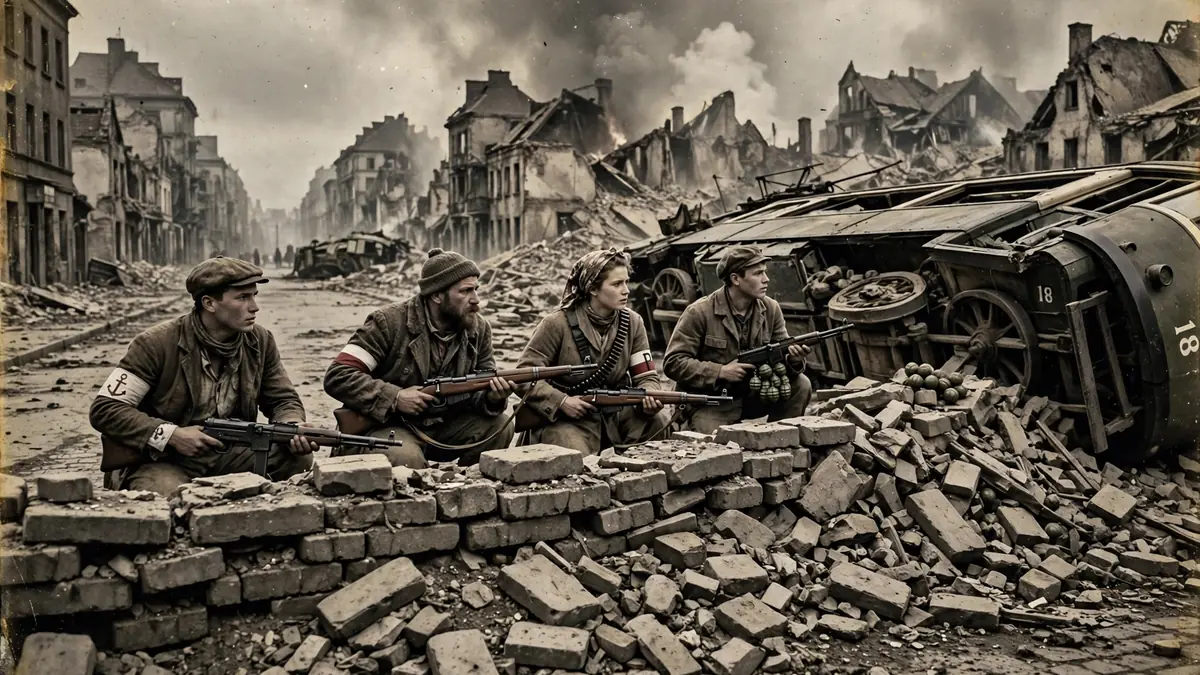
The Warsaw Uprising began at 17:00 on 1 August 1944, when the Polish Home Army rose against the German occupation of its own capital. For 63 days, tens of thousands of badly armed Polish fighters — many of them teenagers, students and office workers who had never fought a battle — held parts of a great European city against a German army that answered with tanks, artillery, air attack and mass murder. They fought for a free Poland, and they fought knowing that the Red Army was standing on the far bank of the Vistula, within sight of the city, and that the Western Allies could send them almost nothing. When the uprising ended on 2 October, the Home Army surrendered, the surviving population was expelled, and the Germans systematically destroyed what was left of Warsaw. About 150,000 to 200,000 civilians had been killed, most of them in the first weeks, and the capital of Poland was left a ruin.
The uprising was the largest armed revolt by a resistance movement anywhere in occupied Europe during the Second World War, and it remains the most contested event in modern Polish history. To its supporters it was a necessary act of national honour: the Poles, who had fought the Germans since 1939, refused to let their capital be liberated by the Soviet Union alone, and chose to free themselves. To its critics it was a tragic miscalculation: launched without enough weapons, without Allied support and without Soviet cooperation, it destroyed the Home Army and gave Stalin a Warsaw without a Polish government he did not control. Both judgements contain truth, and the argument between them has never ended. What is not in dispute is the scale of the suffering, the courage of the fighters, and the fact that the uprising failed in its military aims while succeeding in one thing only: it made the world see that Poland would not be freed as a bystander.
The battle was fought district by district, street by street, and finally sewer by sewer. The Home Army held the Old Town, the city centre and parts of the suburbs, while the Germans held the river crossings, the railway stations and the government quarter. The fighters built barricades from paving stones, trams and furniture, captured German weapons wherever they could, and moved through the sewers when the streets became impassable. The Germans, under SS General Erich von dem Bach-Zelewski, answered with the Dirlewanger Brigade — a unit of convicted criminals — and with the Kaminski Brigade of Russian collaborators, whose men murdered tens of thousands of civilians in the district of Wola in the first days of August. The uprising was not only a battle; it was a massacre, and the two cannot be separated.
2. Key Facts
| Date | 1 August – 2 October 1944 (63 days) |
| Location | Warsaw, Poland |
| Result | German victory; Home Army surrendered; Warsaw systematically destroyed |
| Polish commanders | Gen. Tadeusz Bór-Komorowski (Home Army commander); Col. Antoni Chruściel “Monter” (Warsaw district commander) |
| German commander | SS-Obergruppenführer Erich von dem Bach-Zelewski |
| Polish strength | About 40,000–50,000 Home Army fighters in Warsaw, most lightly armed |
| German strength | About 20,000–25,000 men, rising during the battle, with tanks, artillery and air support |
| Polish losses | About 16,000 Home Army fighters killed; about 150,000–200,000 civilians killed (see Casualties section) |
| German losses | About 10,000–17,000 killed, wounded and missing, by various estimates |
3. Background
Why Warsaw Rose
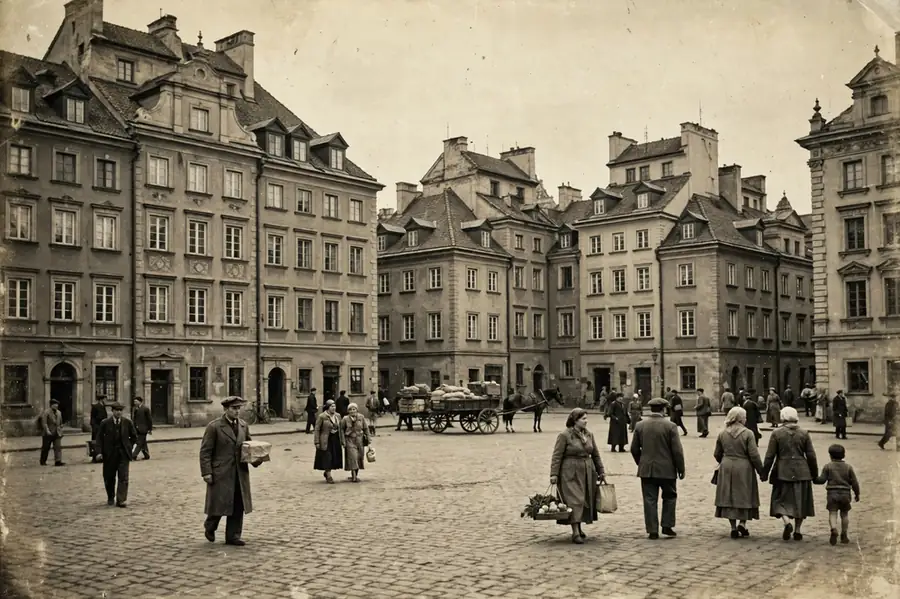
Poland was the first country to fight Germany in the Second World War, and by 1944 it had been occupied for almost five years. The German occupation of Poland was among the most brutal in Europe: millions of Polish civilians had been murdered, the Jewish population of Warsaw had been destroyed in the ghetto uprising of 1943, and the Polish state had been driven underground. The Polish government-in-exile sat in London, and its armed wing, the Home Army — Armia Krajowa — was the largest resistance movement in occupied Europe, with some 300,000 to 400,000 members across Poland. For years the Home Army had prepared for a national uprising, a moment when the Germans were retreating and the Poles would rise, free their own cities, and greet the Allies as the masters of their own country rather than as its liberators.
Operation Tempest and the Decision to Rise
The Home Army’s plan was called Operation Tempest — Burza in Polish. As the Red Army advanced westward in 1944, Home Army units were to rise in each town just before the Soviets arrived, seize control, and present the advancing Russians with a Polish administration loyal to London. The plan had already been tried in Wilno and Lwów, and in both cities the same thing had happened: the Poles fought alongside the Russians, and then the Russians arrested the Polish officers and dissolved the Home Army units. The lesson was clear, but the Home Army’s leaders drew the opposite conclusion from it: if the plan had failed in small cities, it had to succeed in the capital, where the whole world would be watching. The commander of the Home Army, General Tadeusz Bór-Komorowski, decided in late July 1944 that Warsaw would rise, even though his own officers warned him that the city had too few weapons and that the Germans were still strong. The decision was made on 31 July, and the uprising was set for the next day at 17:00 — the hour known ever since as W Hour.
The Race for Warsaw
The timing of the uprising was set by the Soviet advance. In the summer of 1944 the Red Army’s Operation Bagration had destroyed the German Army Group Centre, and by the end of July Soviet tanks had reached the eastern bank of the Vistula, opposite Warsaw. Radio Moscow was broadcasting appeals to the people of Warsaw to rise against the Germans, and the Home Army’s leaders believed — or wanted to believe — that the Russians would cross the river within days. The Germans, for their part, were preparing to defend the city: they had fortified the bridges, the railway stations and the government quarter, and they had brought in reinforcements. The Poles believed they had a window of a few days in which the Germans were weak and the Russians were near. In fact the window did not exist: the Soviet advance had outrun its supplies, the Red Army needed time to regroup, and Stalin had no interest in helping a Polish uprising loyal to London.
Stalin, London and the Politics of the Uprising
The uprising was a political act as much as a military one, and its politics were fatal to it. The Polish government in London wanted Warsaw freed by Poles, so that Poland would enter the post-war world as an independent state. Stalin wanted Poland as a Soviet satellite, governed by the Communist committee he had set up in Lublin, and a successful Home Army uprising in Warsaw was the last thing he wanted. He therefore let the uprising bleed: the Red Army stayed on the far bank of the Vistula for 63 days, and Soviet aircraft did not bomb the German positions in the city. The Western Allies, for their part, could do little: Warsaw was beyond the range of most Allied bombers, and the air drops that were attempted — from Italy, over more than 1,000 kilometres of enemy territory — lost many aircraft and delivered only a fraction of what was promised. The Poles rose to free their capital, and discovered that none of their allies wanted them to succeed on their own terms.
4. Opposing Forces
The Home Army
The Home Army in Warsaw numbered about 40,000 to 50,000 fighters on 1 August 1944, organised into eight districts under the command of Colonel Antoni Chruściel, who used the codename “Monter”. The fighters were a cross-section of Warsaw society: soldiers of the pre-war Polish army, students, workers, priests, doctors, and a large number of women and teenagers. The youngest fighters — the boy and girl couriers who ran messages through the sewers and across the rooftops — were often no more than 12 or 13 years old. The Home Army’s strength was its organisation, its knowledge of the city and its morale. Its weakness was its armament: on the first day, only about one fighter in thirty had a rifle. The rest had pistols with a handful of bullets, homemade grenades, petrol bottles, or nothing at all. The uprising’s planners had counted on capturing German weapons in the first hours, and on Allied air drops to follow. Neither happened on the scale they needed.
Weapons and the First Days
The shortage of weapons shaped the whole battle. The Home Army had stockpiled arms for years, but the stockpiles were small: perhaps 1,000 rifles, a few hundred submachine guns, a handful of machine guns and almost no anti-tank weapons or artillery. The fighters made up for it with ingenuity: they built armoured cars from captured lorries, made grenades in workshops, and turned the city’s sewers and cellars into a network of supply routes. Captured German weapons — rifles, machine guns and even a few tanks — were the most valuable prizes of the first days, and the Home Army’s workshops repaired and reused everything they could find. But ingenuity could not make up for the absence of heavy weapons: against German tanks and artillery, the Poles had almost nothing that could stop armour except petrol bottles and mines, and against German aircraft they had nothing at all. The shortage shaped the whole uprising: the Poles fought a modern army with weapons their grandfathers would have recognised, and their courage, however great, could not make up for the guns they did not have.
The German Garrison
The German forces in Warsaw on 1 August numbered about 20,000 to 25,000 men, and they grew during the battle as reinforcements arrived. The garrison was a mixture of regular army units, SS and police formations, and rear-area troops, and it held the strongest points in the city: the bridges over the Vistula, the railway stations, the airport at Okęcie, the government quarter and the Citadel. The German commander in the city was General Reiner Stahel, and overall command of the suppression was given to SS General Erich von dem Bach-Zelewski, a veteran of anti-partisan warfare in the east. Bach-Zelewski’s orders from Heinrich Himmler were explicit: the uprising was to be crushed without mercy, and Warsaw was to be destroyed. The Germans had tanks, artillery, aircraft and armoured trains; the Poles had rifles and barricades. The Germans also had something else: the willingness to murder civilians on a scale that the Poles had not expected, even after five years of occupation.
Dirlewanger, Kaminski and the SS
The worst of the German forces were the two units sent to do the killing. The Dirlewanger Brigade, commanded by SS officer Oskar Dirlewanger, was made up of convicted criminals, including poachers and men released from concentration camps, and it had a record of atrocities in Belarus. The Kaminski Brigade, also known as RONA, was made up of Russian collaborators under Bronislav Kaminski. Both units were sent into the district of Wola on 5 August with orders to kill everyone they found, and they did so for three days, murdering an estimated 40,000 to 50,000 civilians — men, women and children — in houses, hospitals and courtyards. The massacre at Wola was one of the largest single massacres of the war in Europe, and it was deliberate: the Germans believed that terror would break the uprising. It did not. It made the Poles fight harder, because surrender now looked like death anyway.
| Poland | Germany | |
|---|---|---|
| Infantry | Home Army: about 40,000–50,000 fighters in 8 districts | Garrison: about 20,000–25,000 men, rising with reinforcements |
| Armour | A few captured German tanks; improvised armoured cars | Tanks, assault guns, armoured trains |
| Artillery | Almost none; a few captured mortars | Heavy artillery, including railway guns and mortars |
| Air support | None; Allied air drops from Italy | Luftwaffe bombers and dive-bombers over the city |
| Special units | Scouts, couriers, medical services, workshops | Dirlewanger Brigade; Kaminski (RONA) Brigade; SS and police |
| Supply | Captured weapons; small Allied air drops | Full supply from outside the city |
5. The Battle
W Hour and the First Days
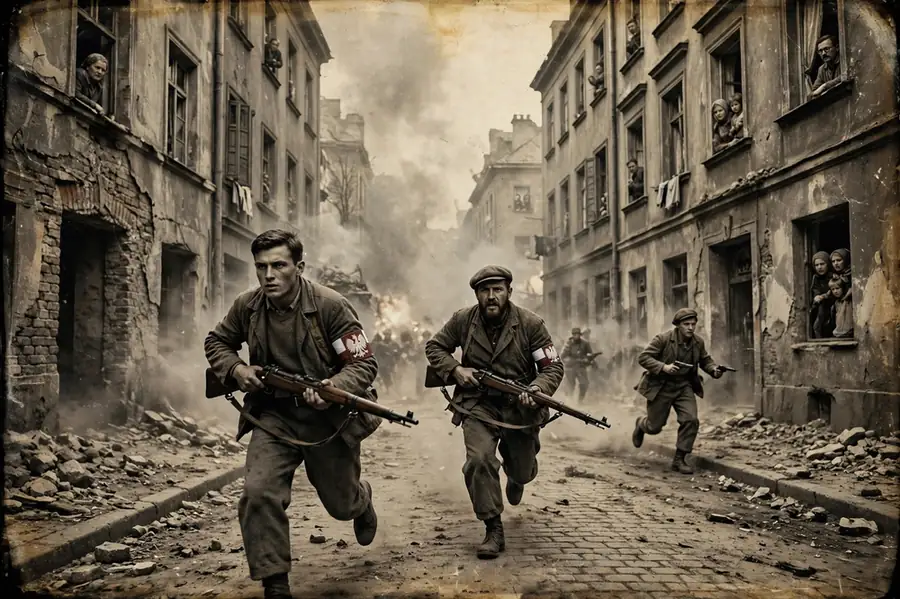
At 17:00 on 1 August 1944, the Home Army rose. The signal was the sound of gunfire across the city, and within hours the Poles had seized much of the Old Town, the city centre and the districts of Wola, Żoliborz and Mokotów. The Germans were taken by surprise: the garrison had expected trouble, but not a city-wide uprising, and several German strongpoints fell before their defenders understood what was happening. The Poles captured weapons, took prisoners and built barricades across the streets. But the first day also exposed the uprising’s weaknesses: the attacks on the bridges, the railway stations and the airport all failed, because the Germans held those points in strength and the Poles had no heavy weapons. The Vistula bridges stayed in German hands, which meant that the Red Army, even if it had wanted to cross, could not have used them, and the Poles were cut off from the east.
The Wola Massacre
The German answer came on 5 August, and it was murder on a scale Warsaw had never seen. SS units under Heinz Reinefarth, with the Dirlewanger and Kaminski Brigades in the lead, entered the district of Wola and began killing everyone they found: patients in hospitals, children in schools, whole families in their homes. The killing went on for three days, and the estimates of the dead run from 40,000 to 50,000. The Germans forced Polish civilians to clear the bodies and burn them, and they used other civilians as human shields in front of their tanks. The massacre was ordered from the top: Himmler had told Bach-Zelewski that every inhabitant of Warsaw was to be killed, and the men of Dirlewanger and Kaminski carried out the order with enthusiasm. The Wola massacre did not break the uprising, but it destroyed any hope that the Germans would treat Warsaw as a normal battle, and it set the tone for everything that followed.
The Fight for the Old Town
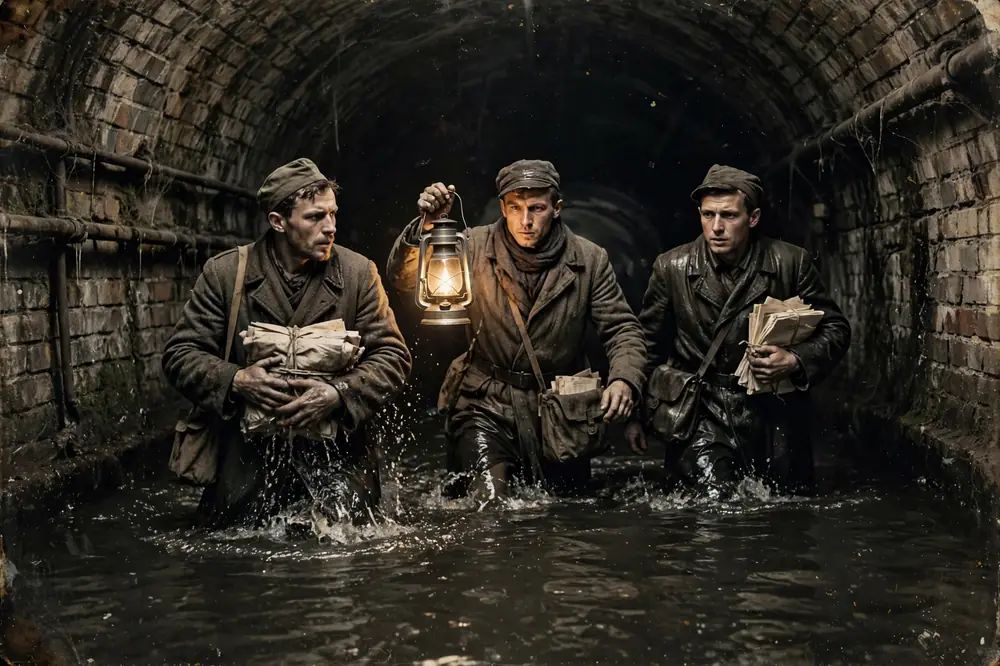
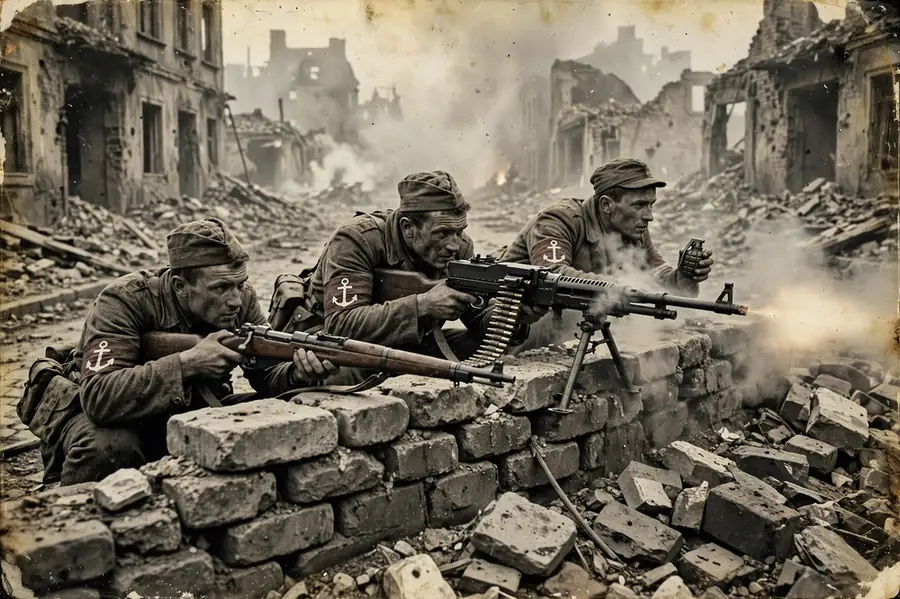
After the first week, the battle settled into a siege. The Germans, reinforced and reorganised, began to reduce the Polish-held districts one by one, using tanks, artillery and aircraft against positions the Poles could not reinforce. The Old Town, the historic heart of Warsaw, held out for a month. Its defenders fought from cellars and ruined houses, supplied through the sewers and by night, and they held the line until the end of August, when the Germans brought up heavy artillery and began to demolish the district house by house. The fighting in the Old Town was among the bitterest of the uprising: the streets were so narrow that tanks could not manoeuvre, and the battle was fought at close quarters, with grenades and bayonets, in the ruins of buildings that had stood for centuries. When the Old Town fell on 2 September, its defenders faced a choice: surrender, or escape through the sewers to the city centre.
Through the Sewers
The sewers of Warsaw became the uprising’s lifeline and its legend. When the streets were swept by German fire, the Poles moved through the city’s underground canals — waist-deep in filth, in darkness, guided by soldiers who knew the routes — carrying ammunition, food and wounded men between the districts. The evacuation of the Old Town through the sewers on 2 September was one of the great feats of the uprising: thousands of fighters and wounded men made the journey to the city centre, though many drowned or were killed when the Germans discovered the routes and dropped grenades into the manholes. The sewers were also a trap: the men who used them risked disease, drowning and death in the dark, and the Germans learned to guard the exits. But without the sewers, the uprising would have been cut into isolated pockets within days, and the fact that the Poles could move at all, in a city the Germans controlled from above, was a measure of their determination.
The Last Weeks and Surrender
September was a month of slow defeat. The districts fell one by one: Mokotów in late September, Żoliborz on 30 September, and the city centre — Śródmieście — held on alone, supplied by air drops that delivered less and less, with ammunition running out and the wounded dying for lack of medicine. The Red Army, across the river in Praga, watched and waited. In the middle of September, units of the 1st Polish Army under General Zygmunt Berling, fighting with the Russians, crossed the Vistula to help the uprising, but the crossing was made with too few men, without proper support, and most of the bridgeheads were wiped out within days. By the end of September the Home Army’s commanders knew the battle was lost: they had no ammunition, no food and no hope of relief. On 2 October, after negotiations, the Home Army signed a capitulation agreement. The Germans, unusually, granted the surviving fighters prisoner-of-war status, and the uprising was over. It had lasted 63 days.
The Berling Crossing and the End
The Berling crossing deserves its own account, because it shows what might have been. General Berling’s 1st Polish Army was a Polish force raised in the Soviet Union and loyal to the Communist government in Lublin, not to London. On the night of 15–16 September, its units crossed the Vistula into the burning districts of Warsaw, landing under German fire with little artillery support. The men fought bravely — many of them were Poles who had waited years to fight for their capital — but the operation was too small and too late: about 2,000 to 3,000 men got across, and most of them were killed or driven back within days. The crossing proved two things: that a crossing was possible, and that the Soviets had chosen not to make a serious one. The Home Army watched the Berling men die on the riverbank and understood, finally, that no help was coming from any direction.
6. Turning Point
The Soviet Halt on the Vistula
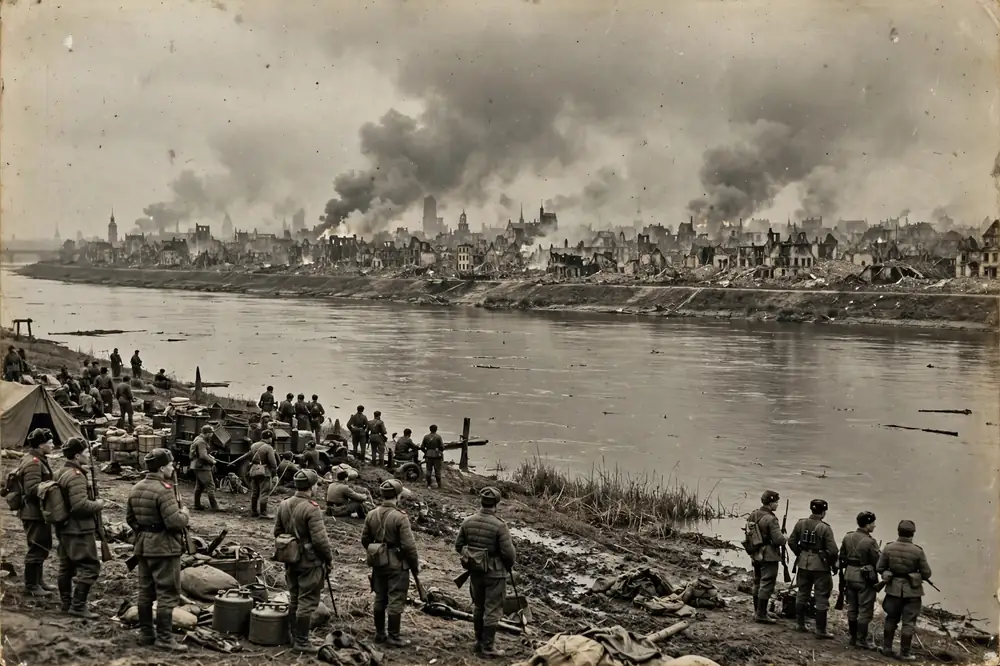
The decisive moment of the uprising was not a battle but a decision made in Moscow: the decision not to cross the Vistula. By the middle of August, the Red Army had reached the river and could see the smoke rising from Warsaw, but its advance stopped. Soviet commanders later said the halt was military necessity — the army had outrun its supplies after Operation Bagration, its tanks needed fuel and repair, and a crossing against German defences would have been costly. Western historians have generally accepted that the Red Army needed a pause, but they have also noted that the pause lasted 63 days, exactly the length of the uprising, and that Stalin had every political reason to let the Home Army destroy itself. The Soviet halt was the turning point because it removed the one thing the uprising depended on: the belief that help was coming. Once the Poles understood that the Russians would not cross, the uprising became a fight for honour rather than for victory.
Stalin’s Decision
Stalin’s motives have been argued over ever since, and the evidence supports a mixed judgement. The Red Army genuinely needed to regroup after its long advance, and a crossing of the Vistula in August 1944 would have been a difficult operation against a German army that was still fighting hard. But Stalin also had a political motive that is beyond doubt: he had already set up a Communist government for Poland in Lublin, and the Home Army — loyal to the government in London — was an obstacle to it. A successful uprising in Warsaw would have given the London Poles a capital, an army and a claim to rule Poland. Stalin therefore had no reason to help, and every reason to wait. He waited, the uprising bled to death, and when the Russians finally crossed the Vistula in January 1945, they entered a city that was empty and in ruins, and a Poland that had no independent government left to resist them.
The Loss of the Old Town
The second turning point was military, and it came on 2 September, when the Old Town fell. The Old Town had been the symbol of the uprising — the historic heart of the city, held for a month against everything the Germans could throw at it — and its loss broke the uprising in two. After 2 September, the Polish-held districts were no longer connected: the city centre was cut off from Żoliborz in the north and Mokotów in the south, and each district had to fight alone. The fall of the Old Town also cost the uprising its most experienced fighters and its best positions, and it showed the Germans that the Polish defence, however brave, could be broken by artillery and time. The sewers had saved the Old Town’s defenders, but the sewers could not save the Old Town itself.
A City Cut in Two
Once the Old Town fell, the geography of the uprising turned against the Poles. The Germans controlled the east-west axis of the city — the bridges, the railway line and the main roads — and they used it to attack each Polish district in turn, concentrating their tanks and artillery against one target at a time. The Poles, cut off from each other, could not reinforce a district under attack, and they could not move ammunition or food between districts except through the sewers, which the Germans were learning to block. The city centre held out for another month, but it held out alone, and its fall was only a matter of time. The loss of the Old Town was the moment the uprising stopped being a battle for Warsaw and became a series of separate last stands. After the Old Town fell, the uprising was no longer one battle but several, and each district fought its own war, alone, without hope of reinforcement or of relief.
7. Casualties and Losses
Military Losses
The military losses of the uprising are the best documented part of its cost, and they are terrible enough on their own. The Home Army lost about 16,000 fighters killed in the 63 days of fighting, with many thousands more wounded. The losses fell hardest on the young: the scouts and couriers, the students and the teenage soldiers who had volunteered in the first days, died in disproportionate numbers, because they were the ones who carried messages across open streets and through the sewers. The German losses are harder to establish, and estimates vary widely: German sources give lower figures, while Polish historians estimate about 10,000 to 17,000 German soldiers killed, wounded and missing. The wide range reflects the chaos of the battle and the fact that the Germans counted their losses across the whole Warsaw area, including units that were never in the city itself.
Counting the Dead
The difficulty of counting the dead is itself part of the story. The Home Army’s records were kept under fire, in cellars and in the sewers, and many of them were destroyed when the districts fell. The Germans kept records too, but their records of the Wola massacre and of the civilian killings were deliberately incomplete, and much of the evidence was burned with the bodies. Historians therefore work with ranges rather than exact figures, and the ranges are wide: the commonly cited figure of about 16,000 Home Army dead is an estimate, and the true number may be somewhat higher or lower. What is certain is that the Home Army lost a generation of its best officers and fighters, and that the Polish underground, which had taken five years to build, was destroyed in 63 days. The numbers will never be exact, and the argument over them will never end, but the scale of the loss is beyond dispute: a generation of Poland’s best was destroyed in sixty-three days.
The Civilian Catastrophe
The civilian losses dwarf the military ones, and they are the true measure of the uprising’s cost. Between 150,000 and 200,000 Polish civilians were killed during the uprising and its aftermath, most of them in the first weeks. The largest single killing was the Wola massacre of 5–7 August, with 40,000 to 50,000 dead, but the killing went on throughout the battle: civilians were murdered in hospitals, in shelters and in the streets, and many more died from hunger, disease and the bombing of the city. After the surrender, the Germans expelled the surviving population — about 500,000 people — from the city, sending them to camps and to forced labour in Germany. The civilian death toll of the Warsaw Uprising is larger than the military death toll of many whole campaigns of the war, and it is the reason the uprising is remembered in Poland as a national tragedy rather than only as a battle.
Wola and the Destruction of Warsaw
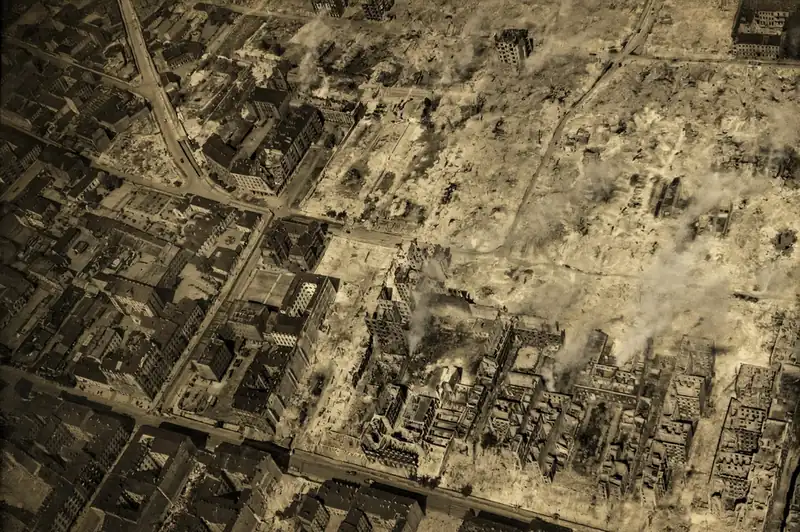
The destruction of Warsaw did not end with the surrender. After the population had been expelled, the Germans sent in special demolition units — the Brandkommando — to burn and blow up what was left of the city, street by street, building by building. By January 1945, when the Red Army finally entered Warsaw, about 85 per cent of the city had been destroyed, including the Old Town, the Royal Castle and the libraries, museums and archives that held the record of a thousand years of Polish history. The destruction was deliberate and systematic: it was not the damage of battle but the erasure of a capital. The Germans intended that Warsaw should not exist as a Polish city again, and they came close to succeeding. The ruins of Warsaw were the Germans’ answer to the uprising, and they were meant to be permanent: a capital erased, a people scattered, and a nation without a centre.
| Poland | Germany | |
|---|---|---|
| Fighters killed | About 16,000 Home Army fighters | |
| Civilians killed | About 150,000–200,000 | |
| Wounded | Many thousands; exact figures unknown | |
| Expelled | About 500,000 civilians after the surrender | |
| Total German losses | About 10,000–17,000 killed, wounded and missing (estimates vary) | |
| City destroyed | About 85% of Warsaw |
8. Map and Geography
A City Divided by a River
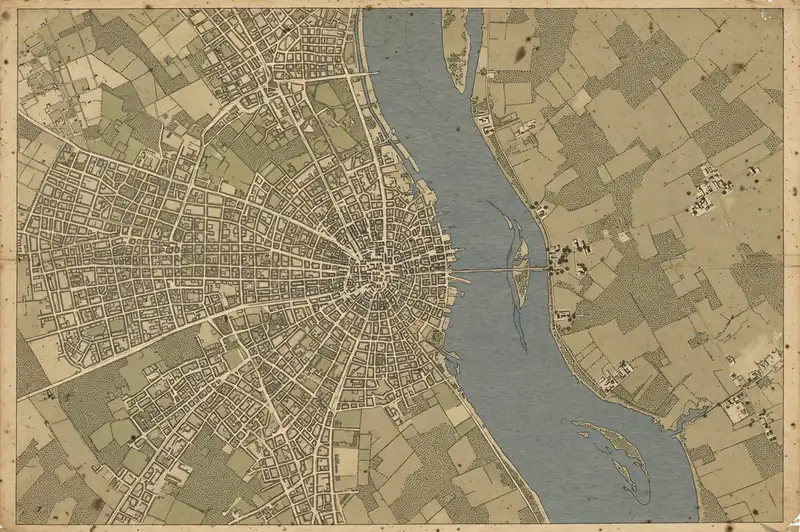
Warsaw sits on both banks of the Vistula, the great river that runs north through Poland to the Baltic Sea, and the river shaped the uprising more than any other feature of the city’s geography. The main city — the Old Town, the city centre, Wola, Mokotów and Żoliborz — lies on the western bank, while the suburb of Praga lies on the eastern bank. The two halves are joined by bridges, and whoever held the bridges controlled the city. The Germans held the bridges from the first day, which meant that the uprising was fought entirely on the western bank, and that the Red Army, on the eastern bank in Praga, could watch the fighting without being able to intervene except by crossing the river under fire. The Vistula is wide at Warsaw — several hundred metres — and a crossing in the face of German defences was a major operation, not a simple matter of wading across. The river was both the uprising’s hope and its prison.
The Districts That Fought
Each district of Warsaw fought its own battle, and the map of the uprising is a map of separate strongholds. The Old Town, in the north of the centre, was a maze of narrow streets and historic buildings, ideal for defence and impossible for tanks. The city centre — Śródmieście — was the largest Polish-held area, a grid of streets and squares around the main railway station, and it held out the longest. Wola, in the west, was an industrial district of factories and workers’ housing, and it was the first to be destroyed, in the massacre of August. Żoliborz, in the north, was a residential district that held out until 30 September. Mokotów, in the south, was a district of villas and gardens that fell in late September. The districts were separated by German-held ground — the railway line, the main roads and the government quarter — and the Poles could move between them only through the sewers.
The Sewers and the Barricades
Below the streets, Warsaw had a second map: the sewers. The city’s underground canals, built in the nineteenth century, ran beneath every district, and the Home Army used them as roads, supply lines and escape routes. The sewers were low, dark and foul, and moving through them was slow and dangerous, but they were the only way to cross German-held ground. Above ground, the map was drawn in barricades: the Poles built hundreds of them from paving stones, trams, furniture and rubble, and each barricade was a small fortress, defended by a handful of fighters with rifles and grenades. The barricades turned the streets into a maze that German tanks could not pass without infantry support, and the infantry, in turn, could not pass without exposing themselves to fire from the houses. The battle for Warsaw was a battle for the streets, and the streets belonged to whoever held the barricades.
Fighting Street by Street
The street fighting in Warsaw was among the most intense of the Second World War in Europe, and it was fought at a range of metres. German tanks advanced down streets covered by infantry, while Polish fighters fired from windows, rooftops and cellars, and threw petrol bottles onto the tanks from above. The Germans answered with artillery and aircraft, demolishing whole buildings to kill a handful of defenders, and with flamethrowers and armoured vehicles designed for street fighting. The fighting was slow and exhausting: a single street could take days to win, and the ground gained was often lost again the next day. The city’s geography — its narrow streets, its cellars, its sewers and its barricades — favoured the defender, and the Poles used every part of it. But geography could not make up for the absence of heavy weapons, and in the end the Germans ground the defence down, district by district, street by street.
9. Outcome and Legacy of the Warsaw Uprising
Surrender and the Destruction of Warsaw
The surrender of 2 October 1944 ended the fighting, but it did not end the destruction. The capitulation agreement granted the Home Army’s fighters prisoner-of-war status, and about 15,000 of them went into German captivity, including General Bór-Komorowski himself. The civilian population — about 500,000 people — was expelled from the city, and the Germans then set about destroying Warsaw systematically. Special demolition units burned and blew up the city district by district, and by the time the Red Army entered in January 1945, about 85 per cent of Warsaw was in ruins. The Germans had intended to erase the capital of Poland, and they had largely succeeded: the Old Town, the Royal Castle, the libraries and the archives were gone, and the city that the Russians entered was a landscape of rubble with almost no inhabitants.
The Expulsion of the Survivors
The expulsion of Warsaw’s population was itself a catastrophe. About 500,000 civilians were driven out of the city in the autumn of 1944, many of them on foot, carrying what they could, and sent to transit camps, to forced labour in Germany, or to concentration camps. Thousands died on the road, of hunger, cold and disease, and families were separated, many of them never to be reunited. The survivors scattered across Poland, and when the war ended, they returned to a city that no longer existed. The rebuilding of Warsaw — which began almost immediately, and which restored the Old Town brick by brick from photographs and paintings — was itself an act of defiance, and it took decades. The Warsaw that stands today is in large part a reconstruction, and its people know it. The survivors rebuilt their city from photographs, paintings and memory, and the Warsaw they built is a monument to the people who were driven out of it in 1944.
Memory and Meaning
The Warsaw Uprising is remembered in Poland as the defining event of the Second World War, and its memory is kept alive in a way few battles are. The Warsaw Rising Museum, opened in 2004 for the sixtieth anniversary, tells the story of the 63 days with photographs, film and the voices of the survivors. Every 1 August at 17:00, the city stops: sirens sound, traffic halts, and Varsovians stand in silence for the minute the uprising began. The couriers and scouts — the children who carried messages through the sewers — have their own monument, the Little Insurrectionist, a small bronze statue of a boy in an oversized helmet. The uprising is also remembered in the argument about it: in Poland, the question of whether the uprising should have been launched at all is still debated, in books, in films and in families, and the debate is a measure of how much the event still matters.
The Uprising in Polish History
The uprising’s place in history is double-edged, and honest accounts of it say so. Militarily, it failed: it did not free Warsaw, it destroyed the Home Army, and it left Poland without an independent government when the war ended. Politically, it was a defeat for the London government and a gift to Stalin, who got the Poland he wanted without having to fight the Home Army for it. But the uprising also did something that no military calculation can measure: it proved, to the Poles themselves and to the world, that Poland would fight for its freedom, even alone, even without hope. The fighters of 1944 became the moral foundation of the Poland that emerged from Communism in 1989, and the men and women who carried messages through the sewers became the symbols of a nation that refused to disappear. The uprising failed as a battle and succeeded as a statement, and that is why it is still remembered.
10. Commanders
The Polish Commanders
General Tadeusz Bór-Komorowski (Poland). Commander of the Home Army and the man who ordered the uprising. Bór-Komorowski had commanded the Polish underground since 1943, and he made the decision to rise on 31 July 1944, against the advice of officers who warned that Warsaw had too few weapons. He commanded the uprising from the city centre until the surrender, went into German captivity, and after the war lived in exile in London, where he served as prime minister of the Polish government-in-exile. He died in London in 1976, and his ashes were returned to Warsaw in 1994.
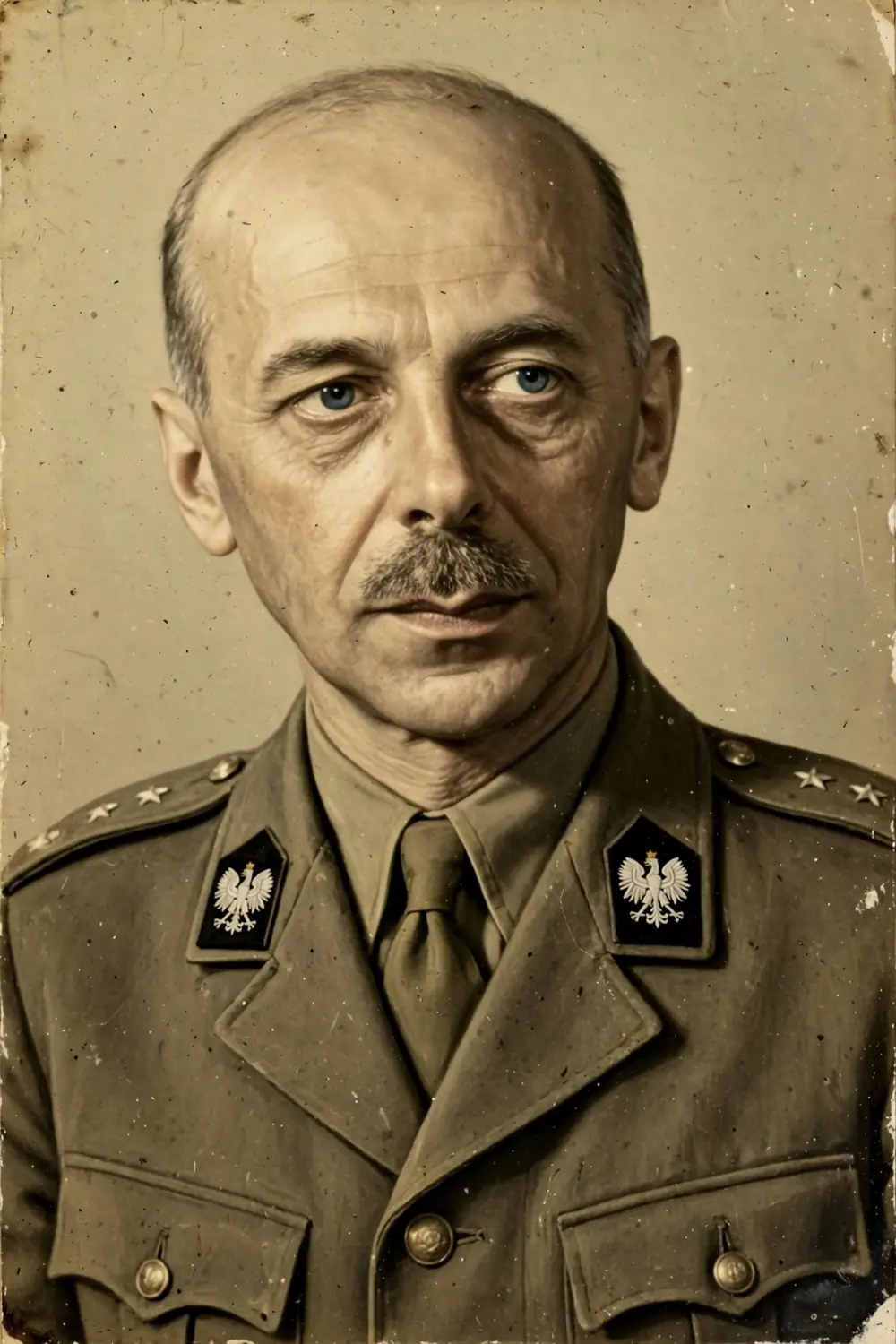
Colonel Antoni Chruściel, “Monter” (Poland). Commander of the Warsaw district of the Home Army and the operational commander of the uprising. Chruściel planned the rising in detail, organised the eight districts, and commanded the fighting from the city centre. After the surrender he went into captivity, and after the war he emigrated, first to Britain and then to the United States, where he worked as a lawyer. He died in Washington in 1960. His codename, “Monter” — “the fitter” — is still one of the best-known names of the uprising.
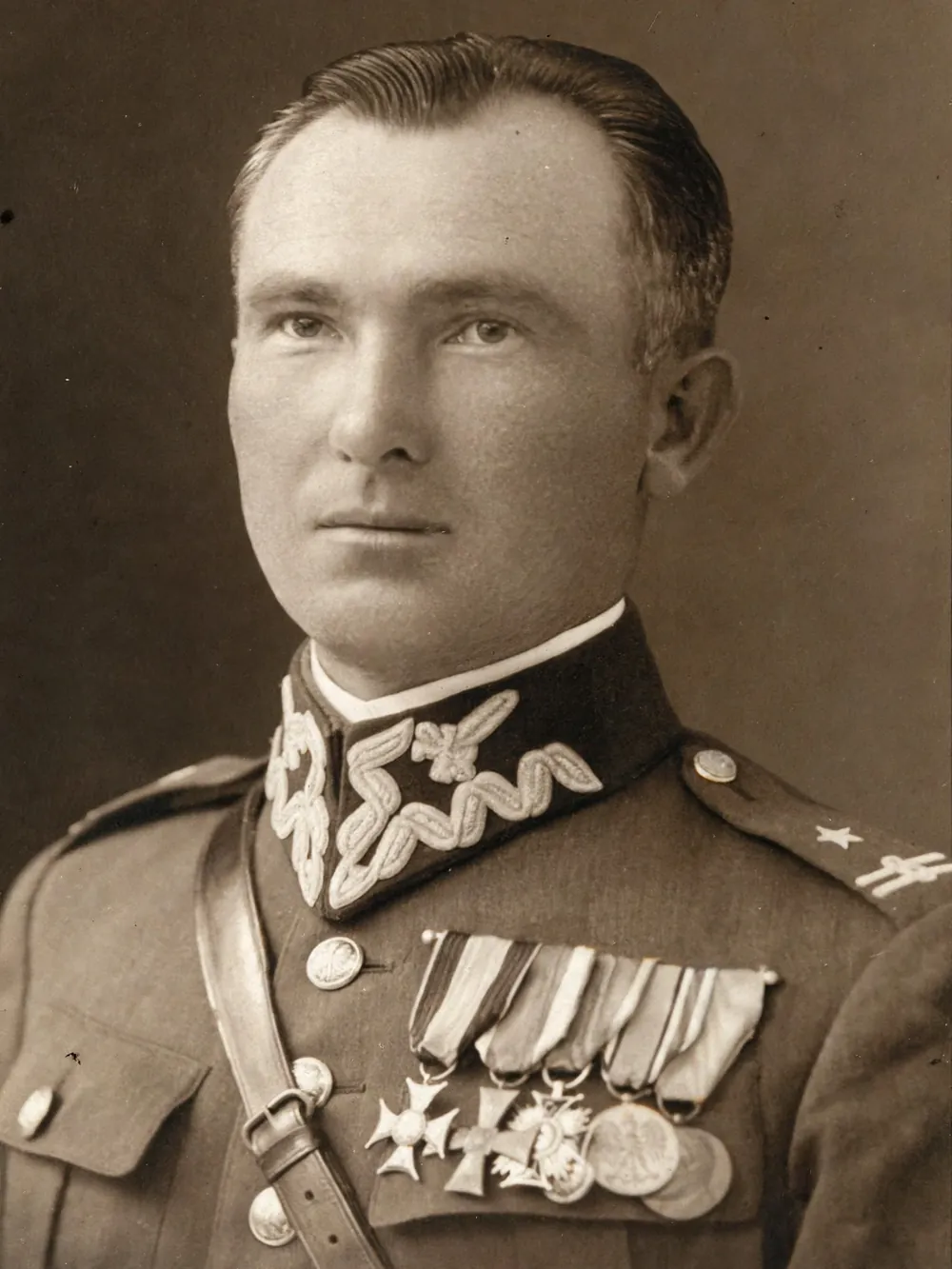
Monter: The Man Who Ran the Battle
Chruściel’s role is often overshadowed by Bór-Komorowski’s, but it was Chruściel who ran the battle day by day. He had been a professional soldier before the war, had fought in the defence of Poland in 1939, and had spent the occupation building the Home Army’s Warsaw organisation into a force that could take a city. During the uprising he moved his headquarters as the districts fell, kept the separate strongholds in contact through couriers and the sewers, and made the decisions about where to attack and where to hold. His orders were realistic where the uprising’s strategy was not: he knew from the first day that the bridges and the airport could not be taken, and he concentrated his forces on the districts they could hold. After the war, the veterans of the uprising remembered him as the commander who had been with them in the fighting, not above it.
The German and Soviet Commanders
SS-Obergruppenführer Erich von dem Bach-Zelewski (Germany). The German commander charged with suppressing the uprising. Bach-Zelewski was a veteran of anti-partisan warfare on the Eastern Front, where he had overseen the murder of civilians on a large scale. His orders from Himmler were to crush the uprising without mercy and to destroy Warsaw. After the war he was a witness at the Nuremberg trials, was later convicted in West Germany for murders committed before the war, and died in prison in Munich in 1972.
SS-Gruppenführer Heinz Reinefarth (Germany). The commander of the forces that carried out the Wola massacre. Reinefarth’s units, including the Dirlewanger and Kaminski Brigades, murdered tens of thousands of civilians in the first days of August. After the war he was never tried for the massacre: he became a successful politician in West Germany, serving as mayor of the town of Westerland and as a member of the Schleswig-Holstein state parliament. He died in 1979, a free man, and his escape from justice remains one of the scandals of the post-war period.
General Konstantin Rokossovsky (Soviet Union). Commander of the 1st Belorussian Front, the Soviet army group facing Warsaw across the Vistula. Rokossovsky’s forces had reached the river by the end of July 1944 and stayed there for the 63 days of the uprising, crossing in force only in January 1945. After the war he served as Poland’s minister of defence under the Communist government, a role that made him a symbol, for many Poles, of the Soviet domination the uprising had tried to prevent.
Rokossovsky and the Red Army
Rokossovsky’s position during the uprising has been debated as fiercely as Stalin’s, and the two cannot be separated. Rokossovsky was a capable and humane commander — a Pole by birth, who had been imprisoned by Stalin in the 1930s and released to command armies — and he later said that his forces were exhausted after Operation Bagration and could not have crossed the Vistula in August 1944. Military historians have generally agreed that a crossing in August would have been difficult and costly. But Rokossovsky’s armies did not merely rest: they took Praga, on the eastern bank, on 14 September, and then stopped, and they did not attempt a serious crossing until January. Whether the halt was imposed by Stalin or chosen by the generals, the result was the same, and Rokossovsky’s name remains tied, in Polish memory, to the army that watched Warsaw burn from across the river. In Poland, his name is still spoken with bitterness, and the army he commanded is remembered not for the battles it won, but for the battle it watched from across the river.
Frequently Asked Questions
When was the Warsaw Uprising?
From 1 August to 2 October 1944 — 63 days. It began at 17:00 on 1 August, the hour known as W Hour, and ended with the Home Army’s surrender on 2 October.
How many people died in the Warsaw Uprising?
About 16,000 Home Army fighters were killed, and about 150,000 to 200,000 civilians. The figures are estimates; the civilian toll includes the 40,000 to 50,000 murdered in the Wola massacre of 5–7 August 1944.
Why did the Soviet Union not help the Warsaw Uprising?
The Red Army halted on the far bank of the Vistula for the 63 days of the uprising. Soviet commanders cited exhaustion after Operation Bagration, but Stalin also had a political motive: the uprising was loyal to the Polish government in London, while he wanted a Communist Poland governed from Lublin.
What was the Wola massacre?
The murder of an estimated 40,000 to 50,000 Polish civilians in the Warsaw district of Wola on 5–7 August 1944, carried out by SS units including the Dirlewanger Brigade of convicted criminals and the Kaminski Brigade of Russian collaborators, under the command of Heinz Reinefarth.
Why is the Warsaw Uprising still debated in Poland?
Because it failed militarily and destroyed the Home Army, yet it proved Poland’s will to fight for its own freedom. Supporters call it a necessary act of national honour; critics call it a tragic miscalculation launched without enough weapons or Allied support.
What happened to Warsaw after the uprising?
The surviving population of about 500,000 was expelled, and German demolition units systematically destroyed about 85 per cent of the city. Warsaw was rebuilt after the war, with the Old Town restored brick by brick, and it is today the capital of Poland.
Sources
- Wikipedia, “Warsaw Uprising” — dates, strength, casualty figures (about 16,000 Home Army dead; 150,000–200,000 civilians), commanders and the course of the battle.
- Norman Davies, Rising ’44: The Battle for Warsaw (Macmillan, 2003) — the most detailed English history of the uprising, its politics and its cost.
- Encyclopædia Britannica, “Warsaw Uprising” — background, the uprising and its outcome.
- Warsaw Rising Museum, Warsaw — the Wola massacre figures (40,000–50,000), the sewers, and the destruction of the city (about 85 per cent).
- Jan M. Ciechanowski, The Warsaw Rising of 1944 (Cambridge University Press, 1974) — the Home Army, Operation Tempest and the Soviet halt.
- Alexandra Richie, Warsaw 1944: Hitler, Himmler, and the Warsaw Uprising (Farrar, Straus and Giroux, 2013) — the German side, Bach-Zelewski, Reinefarth and the destruction of the city.
Further reading
- Włodzimierz Borodziej, The Warsaw Uprising of 1944 (University of Wisconsin Press, 2006).
- Joanna K. M. Hanson, The Civilian Population and the Warsaw Uprising of 1944 (Cambridge University Press, 1982).