 WAR ATLAS MILITARY HISTORY MAGAZINE · WWI — WWII
Operation Sea Lion
1. Operation Sea Lion — What Happened
Operation Sea Lion — Unternehmen Seelöwe in German — was the German plan to invade Britain in the autumn of 1940, and it is one of the great “what ifs” of the Second World War. After the fall of France in June 1940, Britain stood alone, and Hitler ordered his generals to prepare an invasion across the English Channel. The plan called for the German army to land on the south coast of England, between Ramsgate and Lyme Regis, in September 1940, supported by the Luftwaffe and the German navy. The invasion never happened. It was postponed on 17 September 1940, and then postponed indefinitely, because the Luftwaffe had failed to win the Battle of Britain — the air battle that was the precondition for the invasion — and because the German navy, which had lost heavily in Norway, could not protect a landing force against the Royal Navy. Sea Lion was the invasion that was defeated before it began, and its defeat was the first great German failure of the war.
Sea Lion matters not because it happened but because it almost did, and because the reasons it did not happen explain the course of the war. The German army, which had conquered Poland, France and the Low Countries in a matter of weeks, was confident it could conquer Britain too. The German navy, which knew the Channel and knew the Royal Navy, was not confident at all: it had too few ships, too few landing craft, and no way to protect an invasion fleet against the British Home Fleet. The Luftwaffe, under Hermann Göring, promised that it could win the air battle and destroy the RAF, and it failed. The three services disagreed about Sea Lion from the start, and their disagreement was never resolved: the army wanted to invade, the navy said it could not be done, and the air force said it could do what it could not. Hitler, who had never been enthusiastic about invading Britain, postponed the operation and then turned east, towards Russia. Sea Lion died not with a battle but with a postponement, and the postponement became permanent.
The plan itself was a remarkable document, and it tells us much about the German war machine in 1940. The Germans assembled more than 2,000 barges, tugs and landing craft in the Channel ports, gathered the men and the equipment for the first wave, and rehearsed the landings on the French coast. The British, for their part, prepared for the invasion with a seriousness that is hard to imagine now: they built pillboxes along the coast, laid mines, prepared to flood the fields, and organised the Home Guard — the “Dad’s Army” of popular memory — to fight the invaders street by street. The invasion never came, but the preparations for it shaped Britain in 1940, and the fear of it shaped the Battle of Britain, which was fought to decide whether the invasion could happen at all.
2. Key Facts
| Date | Planned for September 1940; postponed 17 September 1940; postponed indefinitely 12 October 1940 |
| Location | English Channel; south coast of England, Ramsgate to Lyme Regis |
| Result | Never launched; cancelled because the Luftwaffe failed to win the Battle of Britain |
| German commanders | Adolf Hitler (supreme commander); Field Marshal Walther von Brauchitsch (Army); Grand Adm. Erich Raeder (Navy); Reich Marshal Hermann Göring (Luftwaffe) |
| British commanders | Winston Churchill (Prime Minister); Air Chief Marshal Hugh Dowding (Fighter Command); Adm. Charles Forbes (Home Fleet) |
| German strength | Planned first wave: about 100,000 men in 11 divisions; more than 2,000 barges and landing craft assembled |
| British strength | Home Fleet; RAF Fighter Command (about 700 fighters); Home Guard and regular army in the south |
| Losses | No invasion battle was fought. Battle of Britain losses: Luftwaffe about 1,900 aircraft; RAF about 1,700 aircraft (see Casualties section) |
3. Background
The Fall of France
Operation Sea Lion was born in the summer of 1940, in the weeks after the fall of France. The German army had defeated France in six weeks, in a campaign that shocked the world, and Britain — which had sent an expeditionary force to France and had lost most of its equipment at Dunkirk — stood alone. Hitler, who had expected Britain to make peace after the fall of France, was surprised when the British, under their new prime minister, Winston Churchill, refused to negotiate. On 16 July 1940, Hitler issued Directive No. 16, ordering the preparation of a landing operation against England, to be ready by mid-August. The operation was given the codename Sea Lion, and the date was set for September 1940. The directive was conditional: the invasion would only be launched if the Luftwaffe had first won air superiority over the Channel and southern England, and if the German navy could protect the landing force.
Directive No. 16
Directive No. 16, issued on 16 July 1940, is the founding document of Operation Sea Lion, and it is worth reading carefully, because it shows how conditional the invasion was from the start. The directive ordered the army, the navy and the air force to prepare for a landing, but it made the landing dependent on two conditions: air superiority and naval protection. The Luftwaffe was to destroy the RAF and to win control of the air over the Channel; the navy was to protect the invasion fleet and to keep the Royal Navy away. The army was to land on the south coast, between Ramsgate and Lyme Regis, and to advance on London. The directive set no firm date, and it left the final decision to Hitler, who would decide whether the conditions had been met. The conditional nature of the directive was the reason Sea Lion was never launched: the conditions were never met, and Hitler, who had never been enthusiastic about the invasion, was happy to postpone it.
The Channel and the Royal Navy
The English Channel is only 34 kilometres wide at its narrowest point, between Dover and Calais, and it is one of the busiest stretches of water in the world. In 1940, the Channel was also a barrier: the German army, which had conquered Europe on land, could not cross it without ships, and the German navy, which had lost heavily in the Norwegian campaign, did not have the ships to protect a crossing. The Royal Navy, by contrast, was the most powerful navy in the world, and it had the Home Fleet — battleships, cruisers and destroyers — based at Scapa Flow and at Portsmouth, ready to intercept any invasion fleet. The Germans knew that the Royal Navy would attack the invasion fleet, and they knew that their own navy could not stop it. The Luftwaffe was supposed to solve the problem, by sinking the British ships from the air, but the Luftwaffe had never sunk a battleship at sea, and the British did not believe it could.
The German Navy’s Doubts
The German navy, under Grand Admiral Erich Raeder, was the most sceptical of the three services about Sea Lion, and its doubts were well founded. The German navy had lost ten destroyers and three cruisers in the Norwegian campaign, in April 1940, and it had only one heavy cruiser, two light cruisers and a handful of destroyers left for the invasion. The landing craft were river barges, towed by tugs, with a speed of 3 to 4 knots, and they would take ten hours or more to cross the Channel, in the open, under attack from the Royal Navy and the RAF. Raeder told Hitler, in a meeting on 25 July 1940, that the navy could not guarantee the safety of the invasion fleet, and that the operation should not be attempted until the Luftwaffe had destroyed the RAF and the Royal Navy had been driven from the Channel. Hitler listened, and he postponed the decision. Raeder’s doubts were the reason Sea Lion was never launched, and they were the most realistic assessment of the operation made by any German commander.
4. Opposing Forces
The German Invasion Force
The German invasion force for Sea Lion was to consist of about 100,000 men in the first wave, in 11 divisions, landing on the south coast of England between Ramsgate and Lyme Regis. The first wave was to be carried in more than 2,000 barges, tugs and landing craft, assembled in the Channel ports of France, Belgium and the Netherlands. The second wave, with tanks, artillery and supplies, was to follow, and the total force was to number some 260,000 men. The army’s commander was Field Marshal Walther von Brauchitsch, and the landing was to be commanded by Field Marshal Gerd von Rundstedt, the commander of Army Group A. The Luftwaffe, under Göring, was to provide air cover and to attack the Royal Navy, and the German navy, under Raeder, was to protect the flanks of the invasion fleet with mines and with its few remaining warships. The plan was ambitious, and it was, in the judgement of the German navy, impossible.
The Barges
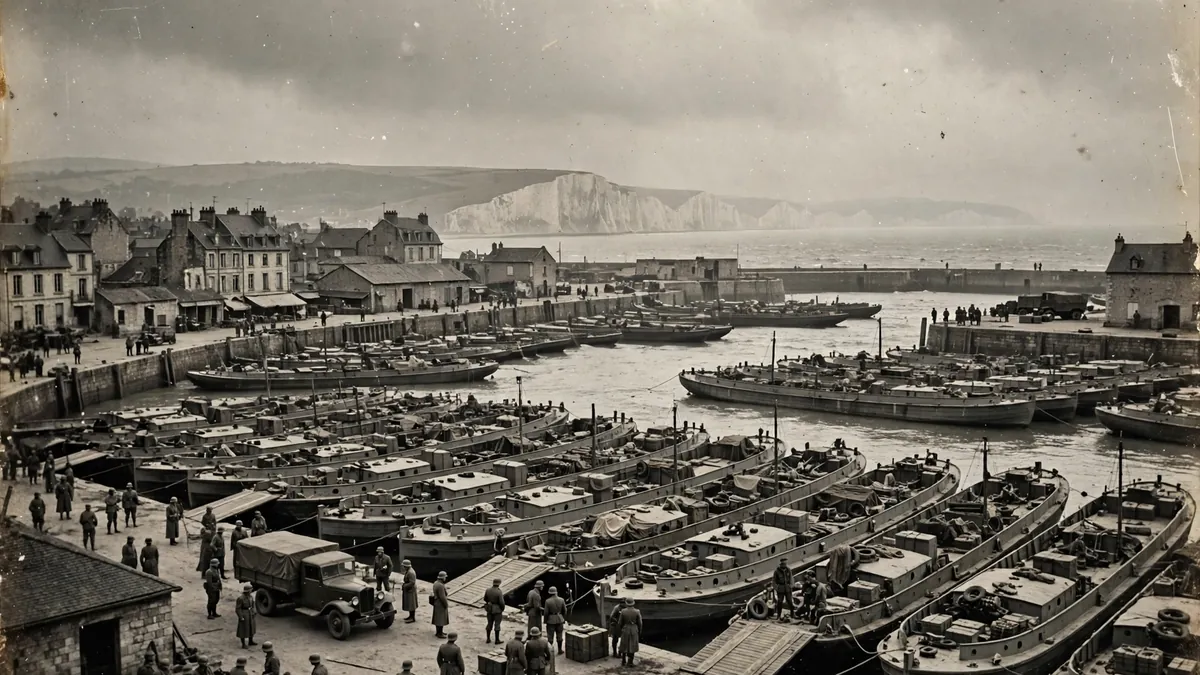
The barges that were to carry the German army across the Channel were the weakest part of the plan, and they are the symbol of Sea Lion’s impossibility. The Germans had no purpose-built landing craft, so they requisitioned river barges from the Rhine, the canals of France and the Low Countries, and fitted them with ramps for the tanks and the men. The barges were flat-bottomed, slow and unseaworthy: they could make 3 to 4 knots in calm water, they could not survive a rough sea, and they would take ten hours or more to cross the Channel. The British, who watched the barges being assembled in the Channel ports, knew that they were vulnerable, and the RAF bombed them throughout the summer of 1940, destroying many of them. The barges were the reason the German navy said the operation could not be done, and they were the reason the British, who had feared the invasion, came to believe it would fail.
The British Defenders
The British forces that would have met the invasion were a mixture of the regular army, the Home Fleet, the RAF and the Home Guard. The regular army, under General Alan Brooke, had been rebuilt after Dunkirk, and it had about 20 divisions in the south of England, though many of them were understrength and poorly equipped. The Home Fleet, under Admiral Charles Forbes, had the battleships, cruisers and destroyers that would have attacked the invasion fleet, and it was the force the Germans feared most. The RAF, under Air Chief Marshal Hugh Dowding, had Fighter Command, with about 700 fighters, and it was the force that would decide whether the invasion could happen at all. The Home Guard, formed in May 1940, numbered more than a million men by the autumn, and it was to fight the invaders in the streets and the fields, with rifles, shotguns and homemade weapons.
Fighter Command and the Home Guard
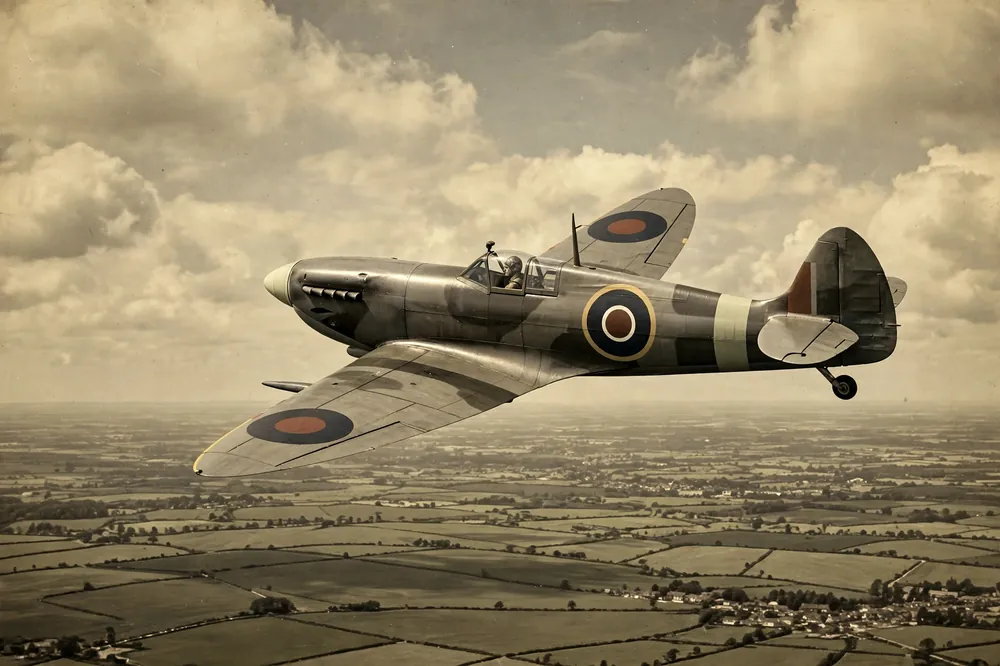
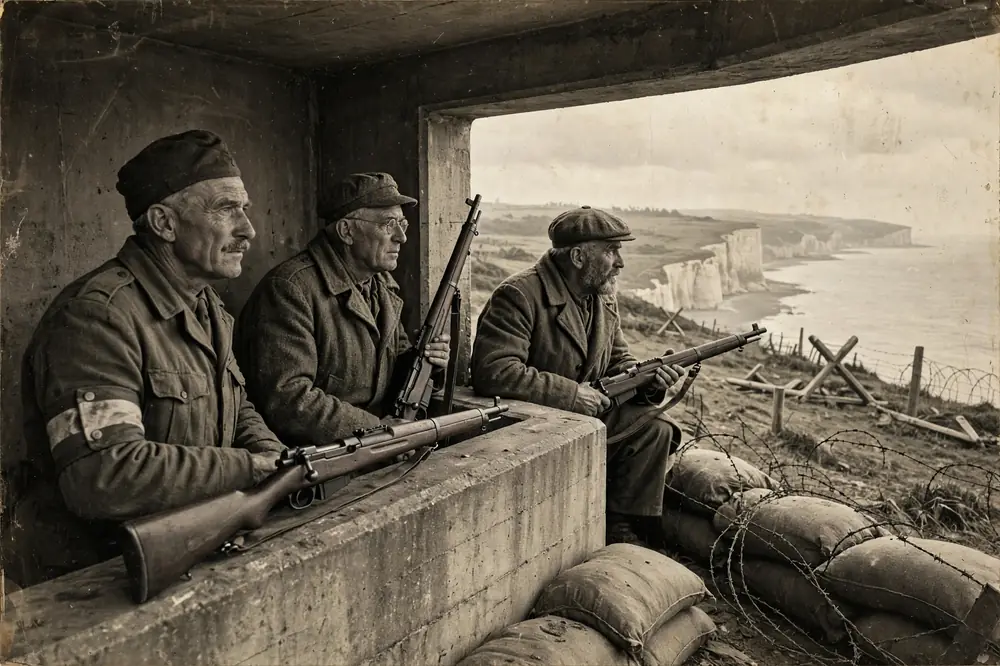
Fighter Command, under Hugh Dowding, was the key to the defence of Britain, and it was the force that won the Battle of Britain. Dowding’s fighters — the Spitfire and the Hurricane — were fewer in number than the Luftwaffe’s, but they had the advantage of fighting over their own territory, with radar to warn them of the German attacks, and with a system of control that directed them to the enemy. The Home Guard, by contrast, was a force of last resort: men too old or too young for the regular army, armed with whatever weapons could be found, and organised to fight a guerrilla war against the invaders. The Home Guard is remembered, in popular memory, as “Dad’s Army”, a comic force of old men with broomsticks, but in 1940 it was a serious organisation, and its men were prepared to die fighting the invaders in their own villages. The combination of Fighter Command in the air and the Home Guard on the ground was the defence of Britain in 1940, and it was a defence that the Germans could not break.
| Germany | Britain | |
|---|---|---|
| Army | Planned: about 100,000 men in the first wave, 11 divisions | About 20 divisions in southern England; Home Guard of more than 1 million |
| Navy | 1 heavy cruiser, 2 light cruisers, few destroyers; 2,000+ barges | Home Fleet: battleships, cruisers, destroyers |
| Air force | Luftwaffe: about 2,600 aircraft | RAF Fighter Command: about 700 fighters |
| Landing craft | River barges, 3–4 knots, unseaworthy | — |
| Command | Hitler; Brauchitsch (Army); Raeder (Navy); Göring (Luftwaffe) | Churchill; Dowding (Fighter Command); Forbes (Home Fleet); Brooke (Army) |
5. The Battle
The Battle of Britain
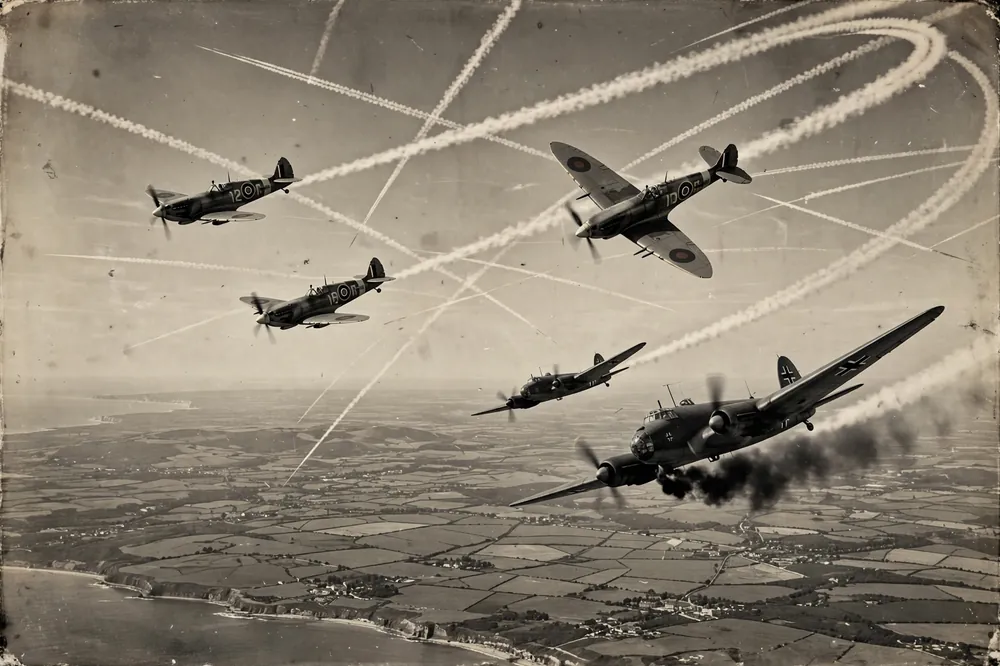
Operation Sea Lion was never fought as a land battle, because the battle that decided it was fought in the air. The Battle of Britain, from July to October 1940, was the Luftwaffe’s attempt to destroy the RAF and to win the air superiority that Sea Lion required. The battle was fought in phases: first, the Luftwaffe attacked the convoys in the Channel and the radar stations on the coast; then, in August, it attacked the RAF’s airfields in southern England; and then, in September, it turned to the bombing of London, in the Blitz. The RAF, under Dowding, fought back with a system of radar, control and interception that the Germans never understood, and the Luftwaffe, which had expected a quick victory, found itself losing aircraft at a rate it could not sustain. By September, the Luftwaffe had lost the battle, and on 17 September Hitler postponed Sea Lion. The Battle of Britain was the battle for Sea Lion, and it was won by the RAF.
The Few
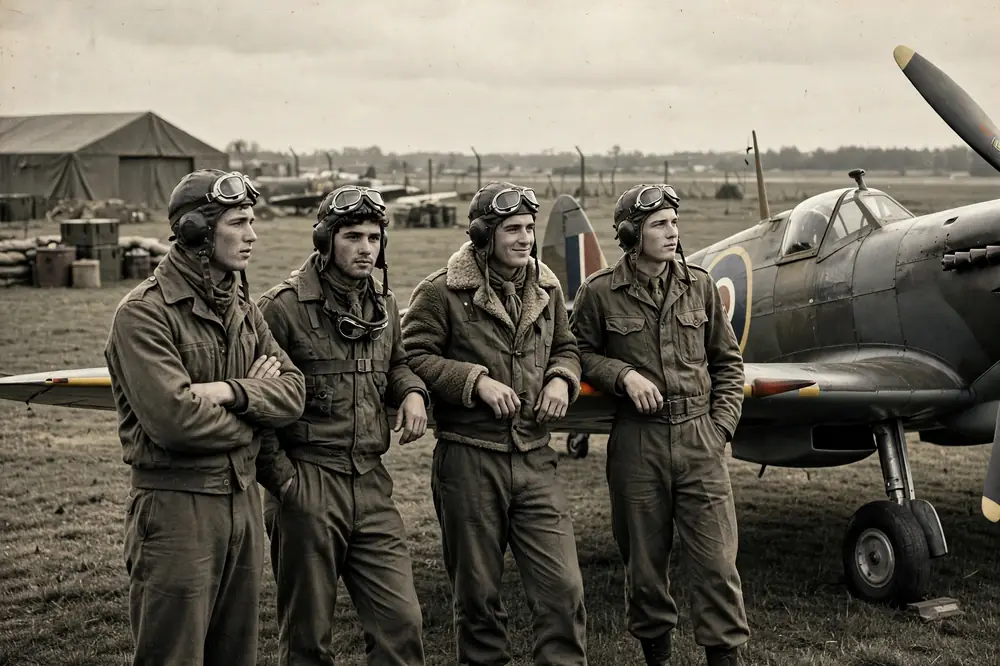
The Battle of Britain was won by “the Few” — the RAF fighter pilots, about 3,000 men, of whom about 500 were killed in the battle — and their victory is remembered in Churchill’s words: “Never in the field of human conflict was so much owed by so many to so few.” The Few flew the Spitfire and the Hurricane, and they fought the Luftwaffe’s bombers and fighters over southern England, day after day, in the summer of 1940. The battle was not only a battle of pilots but a battle of systems: the radar, the control rooms, the ground crews and the factories that built the aircraft were as important as the men in the air. The Luftwaffe, which had more aircraft, lost the battle because it could not destroy the RAF’s system, and because it changed its strategy, from attacking the airfields to bombing London, at the moment when the RAF was closest to defeat. The Few won the battle, and their victory saved Britain from invasion.
The Postponement
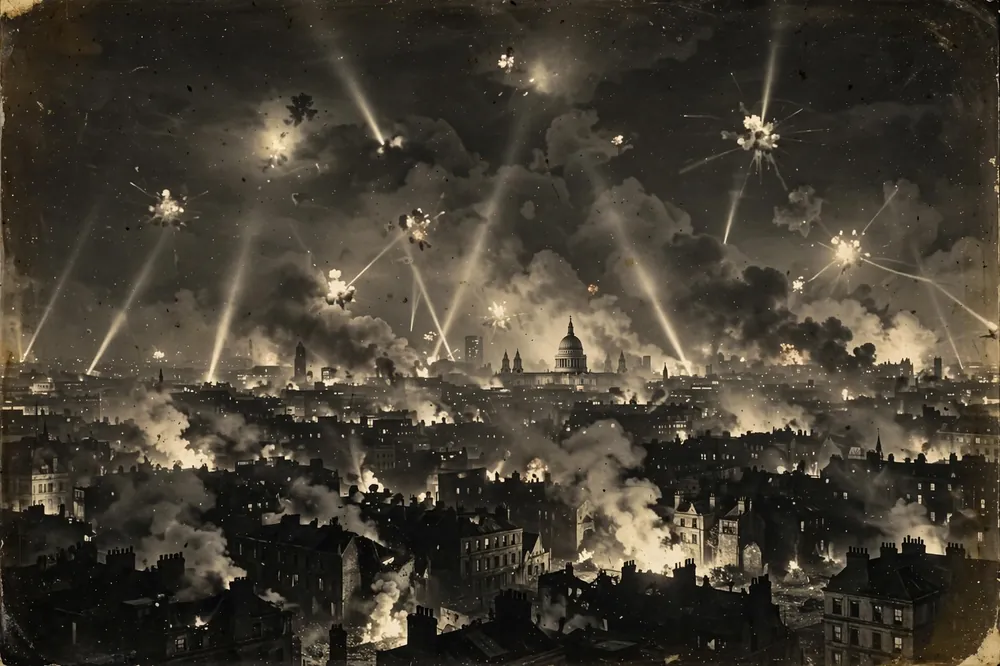
On 17 September 1940, Hitler postponed Operation Sea Lion. The decision was made after a meeting with Raeder and Göring, in which it became clear that the Luftwaffe had not won the air battle and that the navy could not protect the invasion fleet. The postponement was, at first, a delay: the operation was to be reconsidered in the spring of 1941, if the air battle had been won by then. But the air battle was never won, and on 12 October 1940, Hitler postponed the operation indefinitely, ordering the barges to be dispersed and the preparations to be scaled back. The invasion was never formally cancelled — Hitler kept the plan alive as a deception, to tie down British forces — but it was never launched, and it never would be. The postponement of 17 September was the moment Sea Lion died, and it was the moment Britain survived.
The Turn to the East
The postponement of Sea Lion was followed, within months, by Hitler’s decision to invade Russia. In December 1940, Hitler issued Directive No. 21, ordering the preparation of Operation Barbarossa, the invasion of the Soviet Union, and the forces that had been assembled for Sea Lion — the divisions, the barges, the aircraft — were dispersed and sent east. The turn to the east was the end of Sea Lion, and it was the beginning of the war that would destroy Germany. Hitler, who had never been enthusiastic about invading Britain, found the invasion of Russia more attractive: it was a land war, of the kind the German army understood, and it promised the living space and the resources that Hitler wanted. The postponement of Sea Lion was therefore not only the survival of Britain but the beginning of the German disaster in Russia, and the two are linked: the invasion that was not launched in the west made possible the invasion that was launched in the east, and the invasion in the east destroyed the army that might have invaded Britain.
The British Preparations
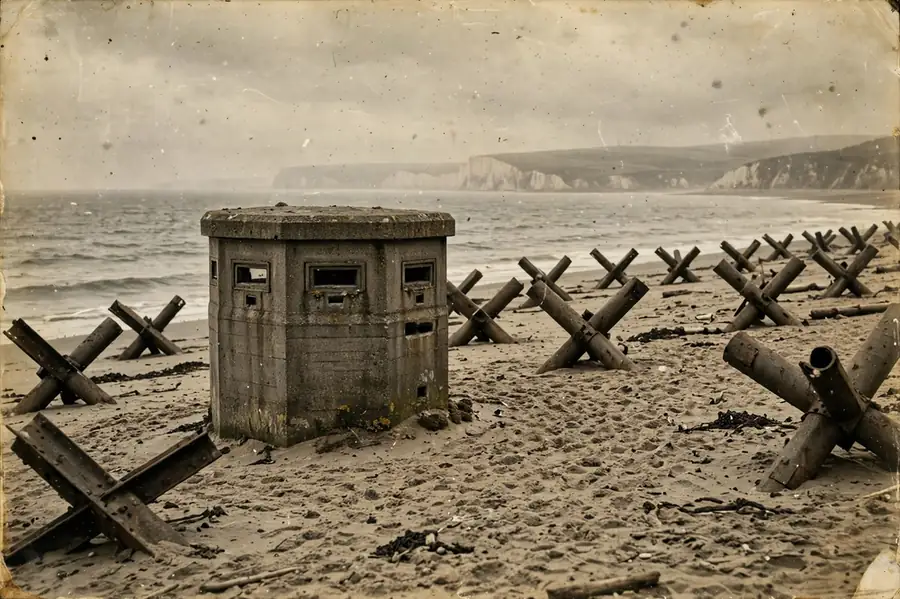
While the Germans prepared to invade, the British prepared to be invaded, and their preparations were extensive. The south coast was fortified with pillboxes, anti-tank obstacles and minefields, and the fields behind the coast were prepared for flooding. The Home Guard, formed in May 1940, was armed and trained to fight the invaders, and the regular army, under Brooke, prepared to counterattack the landing force. The British also prepared for the worst: the government made plans to evacuate the King and the Cabinet, to move the gold reserves, and to continue the war from Canada if Britain fell. The preparations were a measure of how seriously the British took the threat, and they were also a measure of how close the invasion came: the British believed, in the summer of 1940, that the invasion was imminent, and they prepared as if their lives depended on it — because they did.
Pillboxes, Mines and the Home Guard
The physical preparations for the invasion are still visible in southern England today: the pillboxes, the anti-tank obstacles and the minefields that were built in 1940 are still there, in the fields and on the beaches, and they are a reminder of the summer when Britain expected to be invaded. The pillboxes — small concrete bunkers, built to house a machine gun and a handful of men — were built by the thousand, along the coast and along the lines of defence inland. The anti-tank obstacles — concrete blocks, ditches and rails — were built to stop the German tanks, and the minefields were laid to kill the invaders on the beaches. The Home Guard manned the pillboxes and the obstacles, and its men were prepared to fight and to die in their own villages. The preparations were never tested, because the invasion never came, but they were a serious attempt to defend a country that had no other defence, and they are a testament to the determination of the British people in 1940.
6. Turning Point
The Failure of the Luftwaffe
The turning point of Sea Lion was the Luftwaffe’s failure to win the Battle of Britain, and the failure was decided in August and September 1940. The Luftwaffe, under Göring, had promised Hitler that it could destroy the RAF in a matter of weeks, and it attacked with a force of some 2,600 aircraft, against the RAF’s 700 fighters. The Luftwaffe’s attacks on the RAF’s airfields in August came close to succeeding: the airfields were damaged, the pilots were exhausted, and the RAF was losing aircraft faster than it could replace them. But the Luftwaffe changed its strategy, on 7 September, from attacking the airfields to bombing London, and the change saved the RAF: the airfields were repaired, the pilots rested, and the Luftwaffe, bombing London, lost aircraft to the RAF’s fighters and to the anti-aircraft guns. The failure was Göring’s, and it was the reason Sea Lion was postponed. The Luftwaffe had promised what it could not deliver, and the invasion died with the promise.
Göring’s Promise
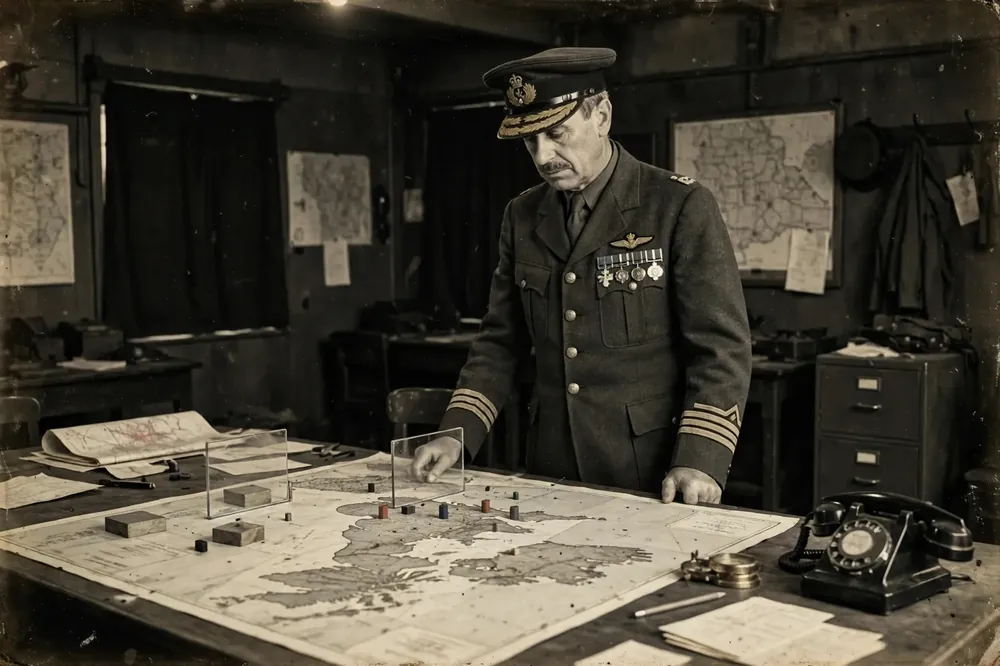
Göring’s promise — that the Luftwaffe could win the air battle alone, and that the invasion could be launched on the strength of air power — was the foundation of Sea Lion, and it was a promise built on a misunderstanding of air warfare. Göring believed that the Luftwaffe, which had defeated the air forces of Poland, France and the Low Countries, could defeat the RAF in the same way, by destroying its aircraft on the ground and in the air. He did not understand that the RAF was a system, not merely a collection of aircraft, and that the system — the radar, the control rooms, the ground crews — could not be destroyed by bombing the airfields. He also did not understand that the Luftwaffe’s bombers, which had to fly from France, had only minutes over England before they had to turn for home, and that the RAF’s fighters, fighting over their own territory, could fight for longer. Göring’s promise was the reason Hitler ordered Sea Lion, and his failure was the reason Hitler cancelled it.
The Royal Navy’s Shadow
The second turning point was the Royal Navy, and it was a turning point that never needed to be proved in battle. The German navy knew, from the start, that it could not protect the invasion fleet against the Home Fleet, and Raeder told Hitler so, repeatedly. The Home Fleet, with its battleships, cruisers and destroyers, was the force that would have destroyed the invasion fleet in the Channel, and the Germans had no answer to it. The Luftwaffe was supposed to sink the British ships from the air, but it had never done so, and the British, who had watched the Luftwaffe’s attempts to sink ships in the Channel, did not believe it could. The Royal Navy’s shadow hung over Sea Lion from the start, and it was the reason the German navy said the operation could not be done. The navy that never fought the battle was the navy that won it, by existing, and by being too strong to challenge.
A Fleet in Being
The Royal Navy’s role in Sea Lion is a classic example of a “fleet in being” — a fleet that wins a battle by existing, without fighting. The Home Fleet, based at Scapa Flow, did not need to sail into the Channel to stop the invasion: its existence was enough, because the Germans knew it was there, and they knew what it would do. The German navy, which had lost heavily in Norway, could not face the Home Fleet, and the Luftwaffe, which was supposed to sink it, could not. The Home Fleet’s power was the reason Raeder said the operation could not be done, and it was the reason Hitler, who understood sea power less well than Raeder, listened to him. The fleet in being is a concept that is often misunderstood, but Sea Lion is the clearest example of it: a fleet that never fired a shot in anger won the battle, by being too strong to fight.
7. Casualties and Losses
The Battle of Britain: The Real Cost
No invasion battle was fought, so there are no invasion casualties to count. The real cost of Sea Lion was the cost of the Battle of Britain, the air battle that decided whether the invasion could happen. The Luftwaffe lost about 1,900 aircraft in the Battle of Britain, with about 2,600 airmen killed, and the RAF lost about 1,700 aircraft, with about 500 pilots killed. The losses were heavy on both sides, but they were heavier for the Luftwaffe, which lost not only aircraft but experienced aircrew that it could not replace. The RAF, by contrast, lost aircraft but not the system that produced them: the factories kept building Spitfires and Hurricanes, and the pilots kept coming, from Britain and from the Commonwealth and from the occupied countries of Europe. The Battle of Britain was a battle of attrition, and the Luftwaffe, which had more aircraft, lost it because it could not sustain the losses.
The Few and the Many
The losses of the Battle of Britain are remembered in the contrast between the Few and the many. The RAF lost about 500 pilots, the men Churchill called “the Few”, and their loss was felt as a national bereavement. The Luftwaffe lost about 2,600 airmen, and their loss was a blow from which the German air force never recovered: the experienced pilots and crews who died over southern England in the summer of 1940 were the men who had won the air battles of Poland and France, and they could not be replaced. The Luftwaffe’s losses in the Battle of Britain were the beginning of its decline, and the decline continued through the war, until the Luftwaffe, which had once dominated the skies of Europe, could not defend Germany itself. The Battle of Britain was the first defeat of the Luftwaffe, and it was the defeat that made Sea Lion impossible.
What If the Invasion Had Happened?
The question of what would have happened if Sea Lion had been launched is one of the great counterfactuals of the Second World War, and it has been studied by historians and by war gamers ever since. The consensus is that the invasion would have failed, and failed badly. The German army, landing on the south coast, would have faced the British army, the Home Guard and the Royal Navy, and it would have been cut off from its supplies by the Channel, which the Royal Navy controlled. The barges, slow and vulnerable, would have been sunk in large numbers, and the men who landed would have been isolated, without tanks, without artillery and without supplies. The invasion would have been a disaster for Germany, and it would have cost the German army the divisions it needed for the invasion of Russia. The “what if” of Sea Lion is therefore a “what if” with a clear answer: the invasion would have failed, and its failure would have been worse for Germany than its postponement.
The War Game of 1974
The most famous study of what would have happened if Sea Lion had been launched was a war game conducted at the Royal Military Academy Sandhurst in 1974, with British and German officers, including veterans of the war, playing the two sides. The war game concluded that the invasion would have failed: the German first wave would have landed, but it would have been cut off, its supplies would have been sunk by the Royal Navy, and the British army, counterattacking with tanks and artillery, would have destroyed it within days. The war game is not proof — a war game is not a battle — but it is the closest thing to a test of the plan, and its conclusion has been accepted by most historians. Sea Lion was a plan that could not have worked, and the Germans, who understood this better than anyone, were right not to launch it.
| Germany | Britain | |
|---|---|---|
| Aircraft lost, Battle of Britain | About 1,900 aircraft | About 1,700 aircraft |
| Airmen killed | About 2,600 | About 500 RAF pilots (“the Few”) |
| Invasion casualties | None — the invasion was never launched | None — the invasion was never launched |
| Barges assembled | More than 2,000; many destroyed by RAF bombing | — |
8. Map and Geography
The English Channel
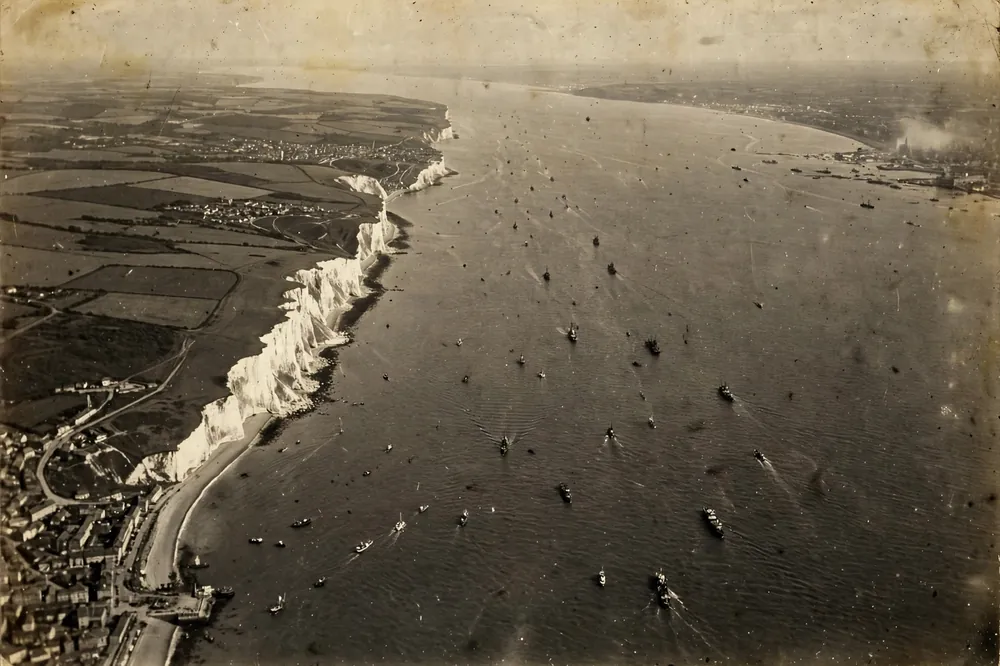
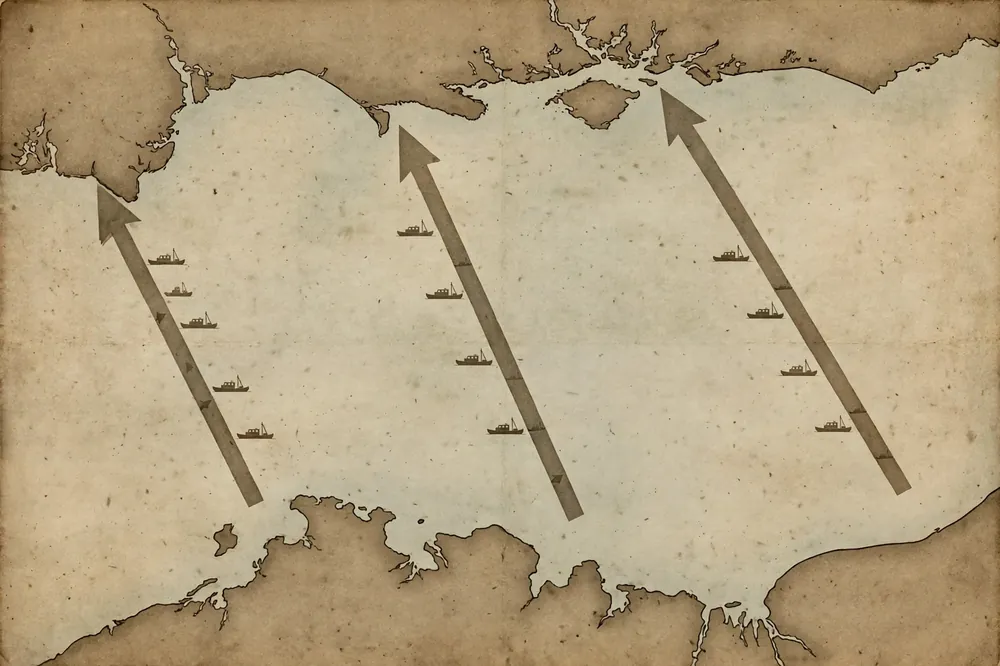
The English Channel is the geographical key to Sea Lion, and it is a narrow, treacherous stretch of water. At its narrowest, between Dover and Calais, it is only 34 kilometres wide, and it can be crossed in an hour by a fast ship. But the Channel is also a place of strong tides, of fog, of high seas and of shifting sands, and it is a difficult place to conduct an amphibious operation. The Germans, who had to cross the Channel in slow, flat-bottomed barges, would have taken ten hours or more to make the crossing, in the open, under attack from the Royal Navy and the RAF. The Channel’s narrowness was both an advantage and a disadvantage: it was narrow enough to cross, but it was also narrow enough for the British to defend, with mines, with coastal guns and with the Home Fleet. The Channel was the moat that protected Britain, and it was the moat that Sea Lion could not cross.
Dover, Calais and the Narrow Sea
The narrowest part of the Channel, between Dover and Calais, was the obvious place for the invasion, and it was the place the British defended most heavily. The white cliffs of Dover, which have symbolised Britain’s defiance for centuries, were fortified with guns, and the coast around them was mined and wired. The Germans, who had assembled their barges in the ports of Calais, Boulogne and Le Havre, would have sailed from those ports, across the narrow sea, to the beaches of Kent and Sussex. The crossing, in a fast ship, takes an hour; in a barge, towed by a tug, it takes ten. The narrow sea was the reason the invasion was possible in theory, and the reason it was impossible in practice: the Germans could see England from France, but they could not reach it, because the sea between them was controlled by the Royal Navy. The Channel is twenty-one miles wide at its narrowest, and the Germans could see the white cliffs from France, and the British could see France from Dover, and the sea between them was the moat that saved Britain.
The South Coast of England
The south coast of England, from Ramsgate in the east to Lyme Regis in the west, was the planned landing area for Sea Lion, and it is a coast of beaches, cliffs and towns. The beaches of Kent and Sussex — the flat, open shores around Hastings, Eastbourne and Brighton — were the places the Germans would have landed, and they were the places the British fortified most heavily. The coast is backed by the South Downs, a range of chalk hills that runs parallel to the sea, and the roads from the coast to London run through the gaps in the hills. The Germans, landing on the beaches, would have had to fight their way through the Downs to reach London, and the British, who had fortified the gaps, would have met them there. The south coast was the battlefield that never was, and its pillboxes and its anti-tank obstacles are still there, a reminder of the summer when Britain expected to be invaded.
The Invasion Beaches
The invasion beaches of Sea Lion — the flat shores of Kent and Sussex — were the places the Germans studied most carefully, and they were the places the British defended most heavily. The beaches are wide and flat, with a gentle slope, and they are ideal for a landing in theory. In practice, they are backed by sea walls, by towns and by the Downs, and the Germans, landing on them, would have been exposed to fire from the pillboxes and the coastal guns. The British also prepared to flood the low ground behind the beaches, to deny the Germans the use of the roads, and to lay mines on the beaches themselves. The invasion beaches were the focus of the German plan and of the British defence, and they were the places where the battle would have been fought, if it had been fought at all. The beaches are quiet now, places of holidaymakers and dog walkers, and the pillboxes above them are the only reminder of the summer of 1940.
9. Outcome and Legacy of Operation Sea Lion
Britain Survives
The postponement of Sea Lion was the survival of Britain, and it was the first great German failure of the war. Britain, which had stood alone in the summer of 1940, survived the Battle of Britain, survived the Blitz, and went on to become the base from which the liberation of Europe was launched. The survival of Britain was the precondition for everything that followed: the North African campaign, the invasion of Sicily and Italy, and the invasion of Normandy in 1944. Without Britain, there would have been no D-Day, and without D-Day, the liberation of Europe would have been impossible. Sea Lion’s failure was therefore not only a British victory but an Allied victory, and it was the victory that made the others possible. The invasion that never happened was the most important non-battle of the war.
The Base for Liberation
Britain’s survival made it the base for the liberation of Europe, and the base was used to its fullest. The American armies that landed in Normandy in 1944 had been assembled in Britain, the aircraft that bombed Germany flew from British airfields, and the ships that carried the invasion force sailed from British ports. The survival of Britain was also the survival of the British Empire and of the Commonwealth, which provided the men, the ships and the aircraft that fought the war. The invasion that never happened was the reason the invasion that did happen — D-Day — was possible, and the link between the two is direct: the RAF that won the Battle of Britain was the RAF that covered the Normandy landings, and the army that would have fought the Germans on the beaches of Kent was the army that landed on the beaches of Normandy. Sea Lion’s failure was D-Day’s precondition.
The Myth of the Invasion
Sea Lion has become a myth, and the myth is as important as the history. The invasion that never happened is remembered in Britain as the moment the country stood alone and survived, and it is remembered in Germany as the moment Hitler turned away from the west and towards Russia. The myth is told in films, in books and in the popular memory of the Battle of Britain, and it is a myth of defiance: the Few, the Home Guard, the pillboxes and the Spitfires, against the might of the German army. The myth is not false — the danger was real, and the courage was real — but it is a myth that simplifies a complex story, in which the invasion was never as close as the British feared, and the German navy knew it could not be done. The myth of Sea Lion is the myth of Britain in 1940, and it is a myth that Britain still lives by.
Sea Lion in Popular Memory
Sea Lion lives on in popular memory, in the image of the Home Guard — “Dad’s Army” — and in the image of the Spitfire, and in the phrase “the Few”. The television series Dad’s Army, which ran for nine years, made the Home Guard a national institution, and the Spitfire, which is still flown at air shows, is the symbol of the Battle of Britain. The pillboxes on the south coast are visited by schoolchildren, and the story of Sea Lion is told in the Imperial War Museum and in the Battle of Britain Memorial at Capel-le-Ferne. The invasion that never happened is remembered because it is the story of a country that prepared to fight and to die, and that did not have to, because the enemy could not come. The memory is a proud one, and it is a memory that Britain keeps alive, because it is the memory of the summer when Britain stood alone and survived.
10. Commanders
The German Commanders
Adolf Hitler (Germany). The supreme commander of the German armed forces and the man who ordered, postponed and finally abandoned Sea Lion. Hitler had never been enthusiastic about invading Britain: he admired the British Empire, he hoped for a negotiated peace, and he preferred a land war in the east. His Directive No. 16 ordered the preparation of the invasion, but it made the invasion conditional on air superiority, and when the Luftwaffe failed, he postponed it and turned to Russia. Hitler’s indecision about Sea Lion was the reason it was never launched, and his decision to invade Russia was the reason it never would be.
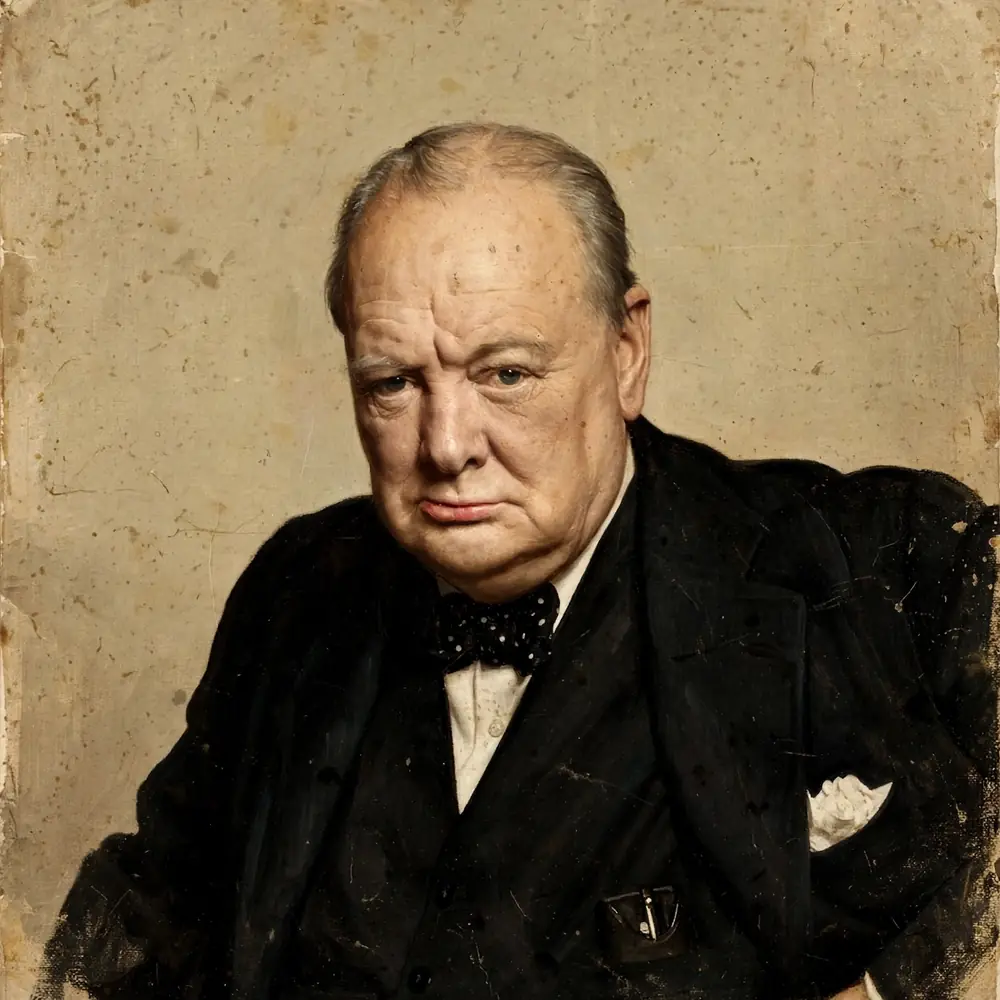
Grand Admiral Erich Raeder (Germany). Commander-in-Chief of the German navy and the most sceptical of the German commanders about Sea Lion. Raeder told Hitler, repeatedly, that the navy could not protect the invasion fleet, that the barges were unseaworthy, and that the operation should not be attempted until the RAF and the Royal Navy had been destroyed. His doubts were well founded, and they were the most realistic assessment of the operation. Raeder was sacked in 1943, after the German surface fleet had failed, and he was convicted of war crimes at Nuremberg and imprisoned until 1955. He died in 1960.
Reich Marshal Hermann Göring (Germany). Commander-in-Chief of the Luftwaffe and the man who promised Hitler that the Luftwaffe could win the air battle alone. Göring’s promise was the foundation of Sea Lion, and his failure was the reason it was postponed. Göring was a vain, corrupt and incompetent commander, and his failure in the Battle of Britain was the first of many. He was captured by the Americans in 1945, convicted at Nuremberg, and killed himself on the night before his execution.
Raeder: The Realist
Raeder’s role in Sea Lion deserves more attention than it usually receives, because he was the one German commander who understood the operation’s impossibility and said so. Raeder was not a brilliant commander, and his navy had failed in Norway, but he understood sea power, and he understood that the German navy, with its few ships and its river barges, could not challenge the Royal Navy in the Channel. His memoranda to Hitler, in July and August 1940, are models of clear, honest military advice, and they were ignored, not because they were wrong, but because Hitler wanted to believe Göring’s promise. Raeder’s realism was the reason Sea Lion was postponed, and it was the reason the German navy survived the war as an institution, even as it lost the war at sea. He was the realist in a regime of fantasists, and his story is a reminder that honest advice matters, even when it is not followed.
The British Commanders
Winston Churchill (Britain). Prime Minister of Britain from May 1940, and the man whose refusal to negotiate with Hitler made Sea Lion necessary. Churchill’s speeches in the summer of 1940 — “we shall fight on the beaches”, “never in the field of human conflict was so much owed by so many to so few” — defined the British resistance, and his leadership was the reason Britain did not make peace. Churchill understood that Britain’s survival depended on the RAF and the Royal Navy, and he supported Dowding when others wanted to send more fighters to France. He led Britain through the war, and he is remembered as the greatest British prime minister of the twentieth century.
Air Chief Marshal Hugh Dowding (Britain). Commander-in-Chief of RAF Fighter Command and the architect of the victory in the Battle of Britain. Dowding built the system — the radar, the control rooms, the squadrons — that won the battle, and he husbanded his fighters, refusing to waste them in France or in the Channel. He was sacked in November 1940, in a political dispute, but his victory was the reason Britain survived. Dowding is remembered as the quiet, unglamorous commander who saved Britain, and his statue stands outside St Clement Danes church in London.
General Alan Brooke (Britain). Commander-in-Chief of the Home Forces and the man responsible for the defence of Britain against invasion. Brooke rebuilt the army after Dunkirk, organised the defence of the south coast, and prepared the counterattack that would have met the German landings. He later became Chief of the Imperial General Staff, and he was Churchill’s principal military adviser for the rest of the war. Brooke’s diaries, published after the war, are one of the most important sources for the history of the British high command.
Dowding: The Man Who Saved Britain
Dowding’s victory in the Battle of Britain was the victory that saved Britain, and it was won by a man who was, by his own account, not a natural leader of men. Dowding was a quiet, austere, deeply religious man, who built a system and trusted it, and who refused to be hurried by politicians or by the press. His system — the Dowding System, of radar, control and interception — was the first integrated air defence system in the world, and it is the ancestor of every air defence system since. Dowding’s refusal to send more fighters to France, in May 1940, saved Fighter Command for the battle that mattered, and his husbanding of his forces in the summer of 1940 won the battle. He was sacked, unjustly, in November 1940, and he spent the rest of the war in obscurity, but history has vindicated him: he was the man who saved Britain, and the Battle of Britain was his victory.
Frequently Asked Questions
What was Operation Sea Lion?
The German plan to invade Britain in September 1940, after the fall of France. The plan called for about 100,000 men to land on the south coast of England, supported by the Luftwaffe and the German navy. The invasion was never launched.
Why was Operation Sea Lion never launched?
Because the Luftwaffe failed to win the Battle of Britain, the air battle that was the precondition for the invasion, and because the German navy could not protect the invasion fleet against the Royal Navy. Hitler postponed the operation on 17 September 1940, and postponed it indefinitely on 12 October 1940.
Could Germany have invaded Britain successfully?
Most historians believe not. A war game at Sandhurst in 1974 concluded that the invasion would have failed: the barges would have been sunk by the Royal Navy, the landing force would have been cut off, and the British army would have destroyed it within days.
What was the Battle of Britain?
The air battle fought from July to October 1940, in which the Luftwaffe tried to destroy the RAF and win the air superiority that Sea Lion required. The RAF, under Hugh Dowding, won the battle, and the Luftwaffe lost about 1,900 aircraft to the RAF’s 1,700.
Who were “the Few”?
The RAF fighter pilots who fought the Battle of Britain — about 3,000 men, of whom about 500 were killed. Churchill said of them: “Never in the field of human conflict was so much owed by so many to so few.”
What happened to the invasion barges?
More than 2,000 barges, tugs and landing craft were assembled in the Channel ports in the summer of 1940. Many were destroyed by RAF bombing, and the rest were dispersed after the operation was postponed indefinitely on 12 October 1940.
Sources
- Wikipedia, “Operation Sea Lion” — dates, the plan, the postponement, commanders and the course of events.
- Stephen Bungay, The Most Dangerous Enemy: A History of the Battle of Britain (Aurum, 2000) — the most detailed modern history of the Battle of Britain and of Sea Lion.
- Encyclopædia Britannica, “Battle of Britain” and “Operation Sea Lion” — background, the battle and its outcome.
- Richard Overy, The Battle of Britain: The Myth and the Reality (Penguin, 2001) — the Luftwaffe’s failure, Göring’s promise and the reality of the air battle.
- Egbert Kieser, Hitler on the Doorstep: Operation Sea Lion, the German Plan to Invade Britain, 1940 (Arms & Armour, 1997) — the German plan, the barges and the preparations.
- Peter Fleming, Operation Sea Lion (Simon & Schuster, 1957) — the classic account of the plan and of the British preparations.
Further reading
- Robert Forczyk, We March Against England: Operation Sea Lion, 1940–41 (Osprey, 2016).
- Leo McKinstry, Spitfire: Portrait of a Legend (John Murray, 2007).