 WAR ATLAS MILITARY HISTORY MAGAZINE · WWI — WWII
Sobibor Extermination Camp
1. Lead
The Sobibor Extermination Camp was a Nazi German killing centre in occupied Poland, built in early 1942 as part of Operation Reinhard, the plan to murder the Jews of the General Government, the German-administered part of occupied Poland. Between May 1942 and October 1943, about 170,000 to 250,000 people — almost all of them Jews deported from Poland, the Netherlands, Germany, Austria, France, Czechoslovakia and the Soviet Union — were murdered there, most of them in gas chambers within hours of arrival.
Sobibor was smaller and less well known than Auschwitz, and the Germans dismantled it after a prisoner uprising on 14 October 1943, in which about 300 prisoners escaped. It is remembered today as a place of mass murder, of the uprising that closed the camp, and of the archaeological and memorial work that has restored its victims’ names to the historical record.
2. Key Facts
| What | Nazi German extermination camp of Operation Reinhard |
| Where | Near the village of Sobibór, in eastern occupied Poland, close to the Bug River and the border with present-day Ukraine |
| When | Built March-April 1942; operated May 1942-October 1943 |
| Victims | About 170,000-250,000 people murdered, almost all Jews; the most commonly cited figures are about 170,000 (recent research) to about 250,000 (earlier estimates) |
| How | Gas chambers using carbon monoxide from a petrol engine; victims were told they were being taken for disinfection and showers |
| Commandants | Franz Stangl (April-August 1942), Franz Reichleitner (September 1942-October 1943) |
| Uprising | 14 October 1943; about 300 prisoners escaped, of whom about 50 survived the war |
| Today | Memorial site and museum; a new museum and memorial opened in 2021 |
3. Background
Sobibor was one of three killing centres built in 1942 for Operation Reinhard, the murder of the Jews of the General Government. The other two were Bełżec and Treblinka, and together with Chełmno, Majdanek and Auschwitz they formed the core of the killing system described in the Holocaust article.
The decision to build the camps followed the Wannsee Conference of 20 January 1942, at which senior German officials coordinated the deportation of Jews from across Europe, and the appointment of Odilo Globocnik, the SS and police leader in Lublin, to carry out the murder in the General Government.
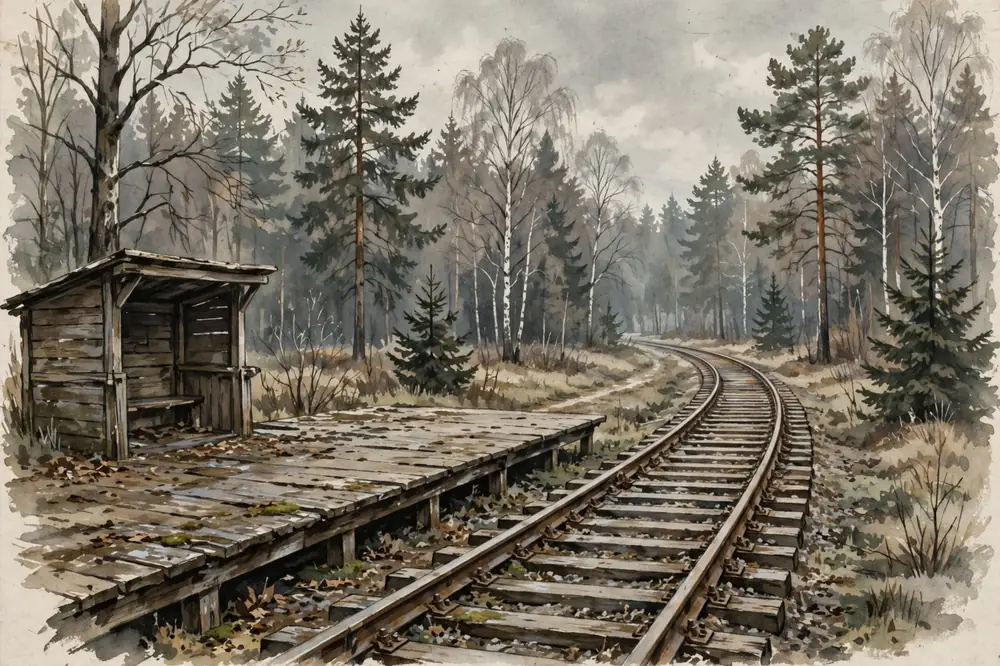
Sobibor was chosen for its remoteness: it stood in forest and marshland near the village of Sobibór, beside a railway line and close to the Bug River, far from large towns and from the eyes of the local population.
Construction began in March 1942 under SS officer Richard Thomalla, and the camp was built by Jewish forced labourers, most of whom were murdered when the work was finished. The camp was divided into three parts: Camp I, the administration area with the railway siding, workshops and the barracks of the prisoner work force; Camp II, the reception area where arrivals were undressed and their belongings sorted; and Camp III, the killing area, hidden behind a fence of pine branches, containing the gas chambers and the burial pits.
The SS garrison was small — about 20 to 30 German and Austrian SS men — supported by about 90 to 120 Ukrainian auxiliaries known as Trawniki men, trained at the Trawniki camp near Lublin. The first commandant was Franz Stangl, who had previously worked in the T4 killing programme for people with disabilities and later commanded Treblinka.
The deportations
The victims of Sobibor arrived by rail from across occupied Europe. The first transports came from the ghettos of the Lublin district in May 1942; later trains brought Jews from the Netherlands, Germany, Austria, France, Czechoslovakia and the Soviet Union.
Dutch Jews formed a large part of the transports in 1943: about 34,000 Jews were deported from the Netherlands to Sobibor in nineteen transports between March and July 1943, according to Dutch records, and almost none survived. On arrival, the trains stopped at the siding inside the camp, and the SS told the deportees that Sobibor was a transit camp and that they would be sent on to work in Ukraine after a shower and disinfection.
Those selected for the prisoner work force — usually young men with a trade, and some women — were taken aside; the rest were led to the gas chambers. Because the camp was designed for murder on arrival, only a few hundred prisoners were kept alive at any time, to sort belongings, cut hair, work in the workshops and bury the dead.
The killing process
Sobibor’s gas chambers were brick buildings in Camp III. The first chambers, three rooms in a single building, could hold about 150 to 200 people; in autumn 1942 they were replaced by a larger building with six chambers, able to hold about 1,200 to 1,300 people at once. The victims were killed with carbon monoxide piped from a petrol engine, a method already used at Bełżec and Treblinka.
After the murder, prisoner work details removed the bodies, searched them for valuables, and buried them in large pits; from late 1942, on the orders of the SS, the bodies were exhumed and burned on open-air pyres to destroy the evidence, in the operation known as Aktion 1005. The belongings of the victims — clothes, shoes, spectacles, suitcases — were sorted in Camp II and sent to Germany.
This routine, repeated transport after transport, is documented in the testimony of the few survivors, in German administrative records, and in post-war trials of the camp staff.
4. What Happened
Daily life for the prisoner work force
For the few hundred prisoners kept alive to work in the camp, daily life was a struggle for survival under constant threat. They worked in the sorting sheds, the workshops, the kitchen and the garden, and in Camp III, where the worst work was the removal of bodies from the gas chambers.
Food was poor and the working day was long; punishments were arbitrary and often lethal, and SS men and Trawniki guards beat and shot prisoners for minor offences. Prisoners lived in barracks in Camp I and were counted at roll calls. Some used their work to help others: prisoners in the sorting sheds hid valuables and food, and those in the workshops made tools and small objects.
A few prisoners were allowed to keep personal possessions, and a small number of women worked in the laundry and the kitchen. The prisoners knew what happened in Camp III — many had seen the transports arrive and the gas chambers work — and they knew that they themselves were kept alive only for as long as they were useful, and that new arrivals would replace them.
The uprising of 14 October 1943
By the summer of 1943, the prisoner work force knew that the camp would be closed once the transports ended, and that they would then be murdered. In September 1943, a group of Soviet Jewish prisoners of war, led by Lieutenant Alexander Pechersky, arrived at Sobibor, and Pechersky joined the camp’s underground committee, led by Leon Feldhendler.
The committee planned an uprising: on 14 October 1943, prisoners lured SS men one by one into the workshops and the tailor’s shop on false pretexts and killed them silently with knives and axes; they killed eleven SS men in this way, including the acting commandant, Johann Niemann.
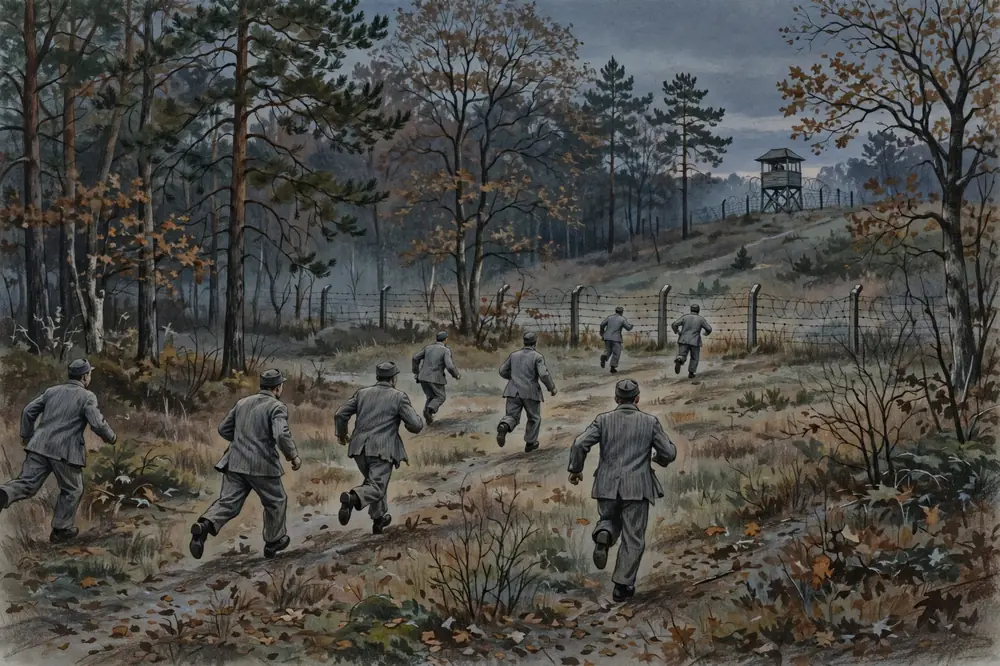
When the plan to march the prisoners out of the camp through the main gate failed, Pechersky gave the signal and hundreds of prisoners ran for the fences, across the minefield that surrounded the camp, under fire from the guards in the watchtowers.
About 300 prisoners escaped the camp; many were killed in the minefield, by the guards, or by local people and German search parties in the days that followed. About 50 of those who escaped survived the war. Pechersky himself survived, reached Soviet lines, and fought with Soviet partisans.
The closure of the camp
After the uprising, the SS decided to close Sobibor altogether. The remaining prisoners were shot, the buildings were dismantled, the gas chambers were demolished, and the ground was ploughed and planted with trees to hide the site. A small farm was built on part of the land.
The camp’s staff were transferred to other duties, and some, including Franz Stangl, were sent to northern Italy to take part in anti-partisan operations. The murder at Sobibor had lasted about seventeen months; in that time, the camp had received at least nineteen transports from the Netherlands, transports from Germany, Austria, France, Czechoslovakia and the Soviet Union, and large numbers of transports from the ghettos of the Lublin district.
The Germans’ attempt to erase the camp meant that, for decades after the war, Sobibor was the least documented of the Operation Reinhard camps, and much of what is known about it today comes from the survivors’ testimony, from the trials of the camp staff, and from archaeology.
5. The Site Today
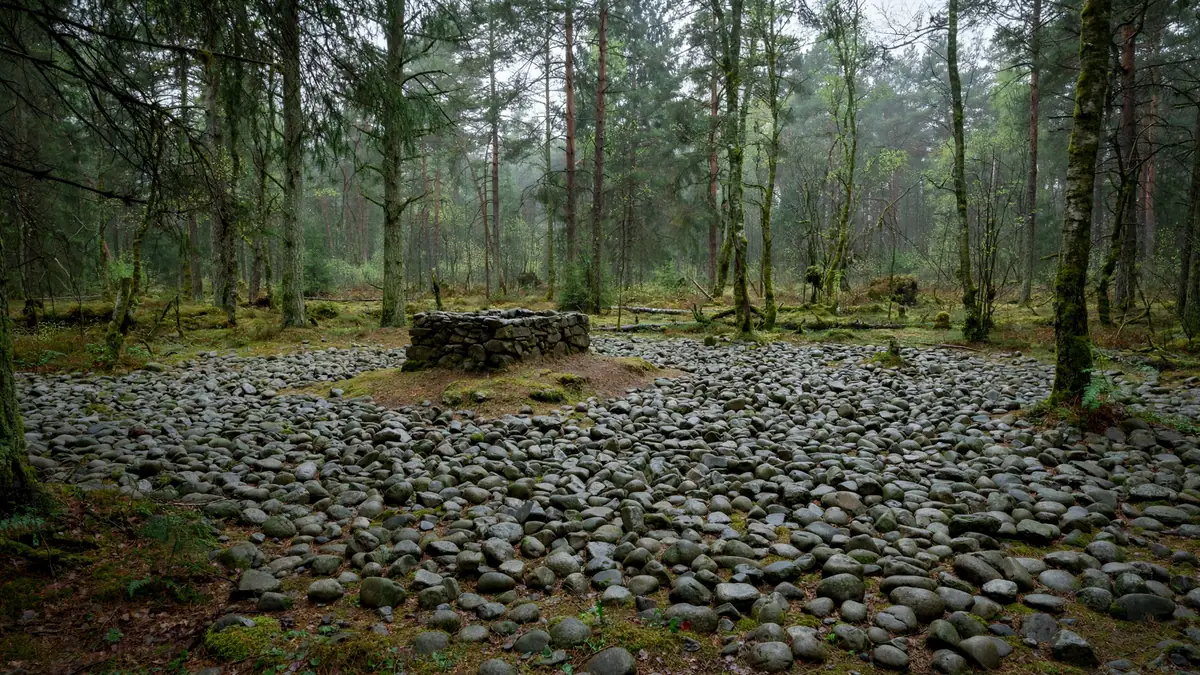
Today the site of Sobibor is a memorial and museum in the forest near the village of Sobibór, in the Lublin Voivodeship of eastern Poland. For decades after the war the site was marked only by a small monument and a mound of ashes, and the forest grew back over the camp’s foundations.
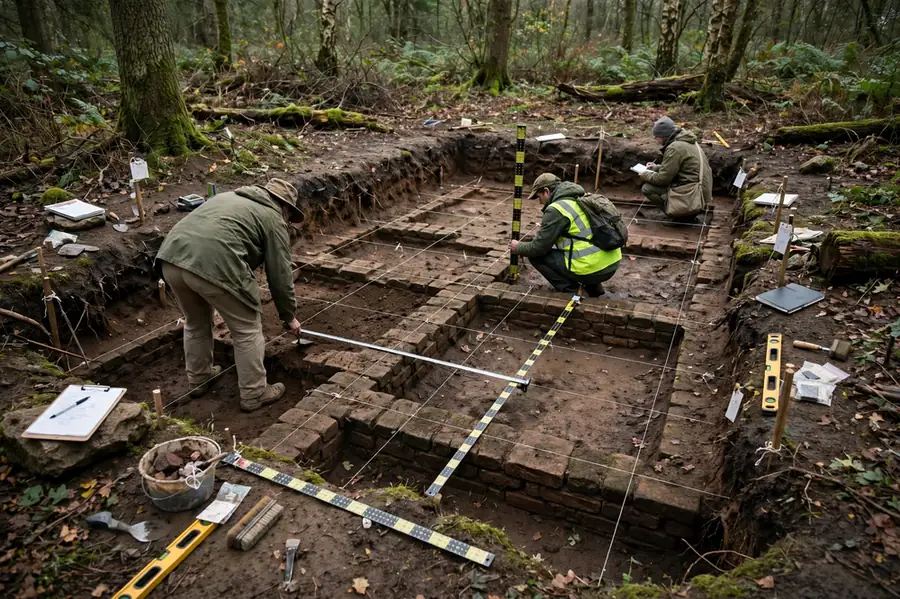
Archaeological work in the 2000s and 2010s changed that picture: excavations led by Polish archaeologist Andrzej Kola in 2000-2001 and by Yoram Haimi and Wojciech Mazurek from 2007 onwards located the gas chamber foundations, the mass graves and the camp’s layout, and recovered thousands of personal objects — rings, watches, spectacles, keys and coins — belonging to the victims.
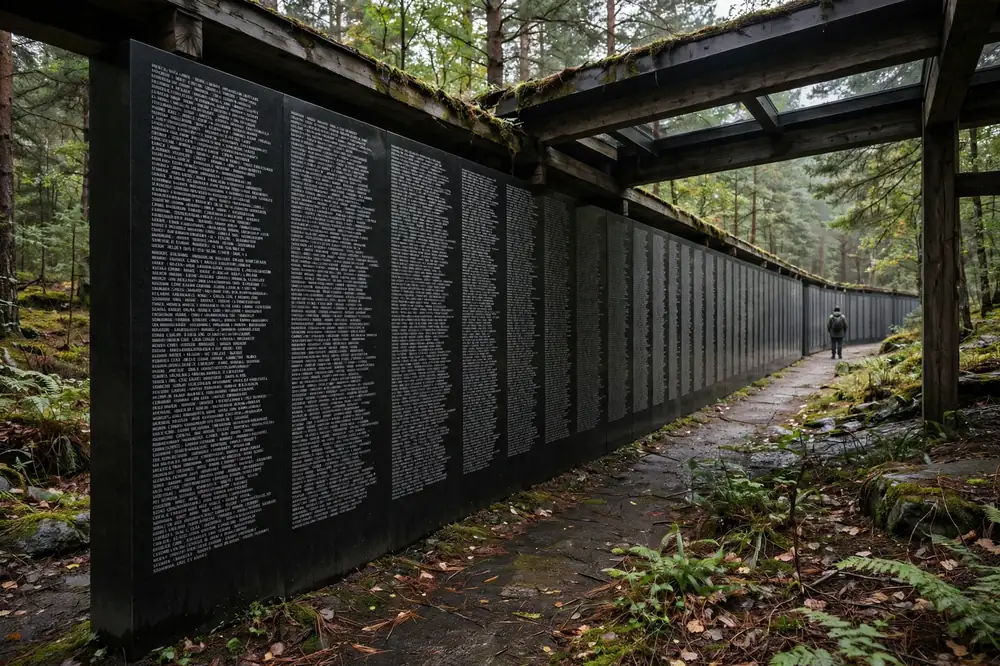
In 2014, archaeologists found the foundations of the second gas chamber building in Camp III, confirming the testimony of the survivors about its size and position. A new museum and memorial, built jointly by Poland, Israel, the Netherlands and Slovakia, opened in 2021, with an exhibition, a memorial wall bearing the names of the victims, and a field of stones marking the mass graves.
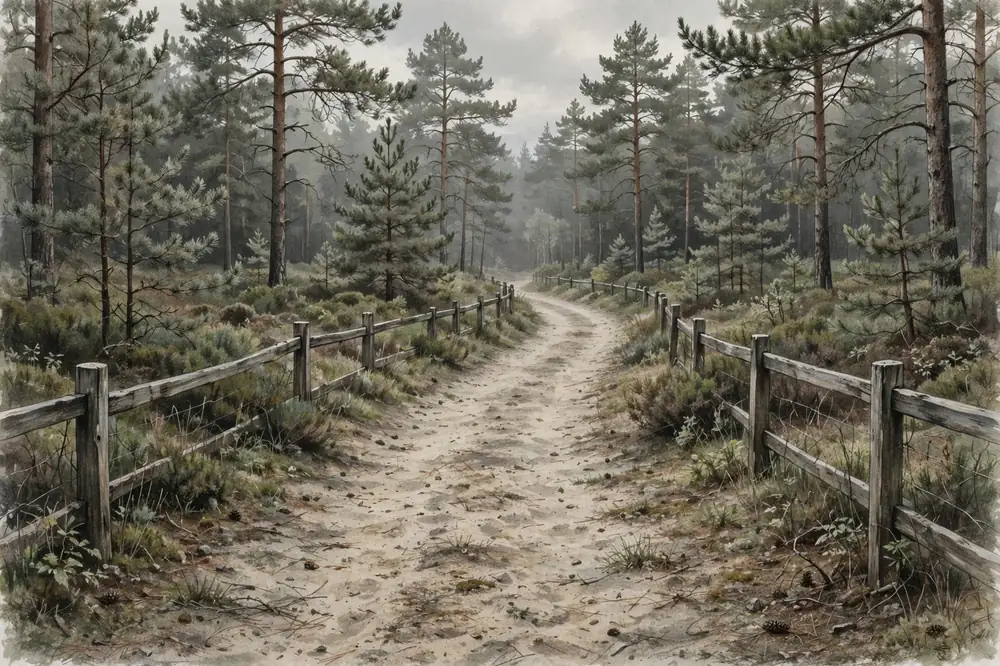
The railway siding, the ramp and the “Road to Heaven” — the fenced path along which victims were led to the gas chambers — are marked on the ground for visitors.
What visitors see
Visitors to Sobibor today walk through forest along the paths of the former camp. The museum exhibition presents the history of the camp, the deportations and the uprising, with documents, photographs and objects found in the excavations. The memorial wall lists the names of victims identified in the deportation records, and the field of stones covers the area of the mass graves.
The site is quieter and less visited than Auschwitz, and it has no surviving camp buildings — the Germans destroyed them all. That absence is itself part of the visit: the memorial explains that the camp was built to be erased, and that the archaeology and the names on the wall are the answer to that erasure.
Guided tours are available, and the site is often visited by school groups from Poland, the Netherlands and Israel.
6. Survivors and Testimony
Only a small number of people survived Sobibor, and their testimony is the main source for the camp’s history. About 50 of the roughly 300 prisoners who escaped in the uprising survived the war; a further small number survived because they had been transferred from Sobibor to other camps before the uprising, or because they had escaped earlier.
Among the best-known survivors were Alexander Pechersky, the leader of the uprising, who gave his account in the Soviet Union after the war and published a memoir; Leon Feldhendler, the head of the camp’s underground committee, who was killed in Lublin in 1945, shortly after the liberation, in circumstances that remain unclear; and Thomas Blatt, who survived the uprising, emigrated to the United States, and wrote a memoir, From the Ashes of Sobibor (1997), and gave testimony at the trial of John Demjanjuk in Munich in 2009-2011.
Other survivors, including Jules Schelvis, a Dutch Jew who survived because he was transferred from Sobibor to another camp, wrote detailed histories of the deportations from the Netherlands.
The Demjanjuk trial
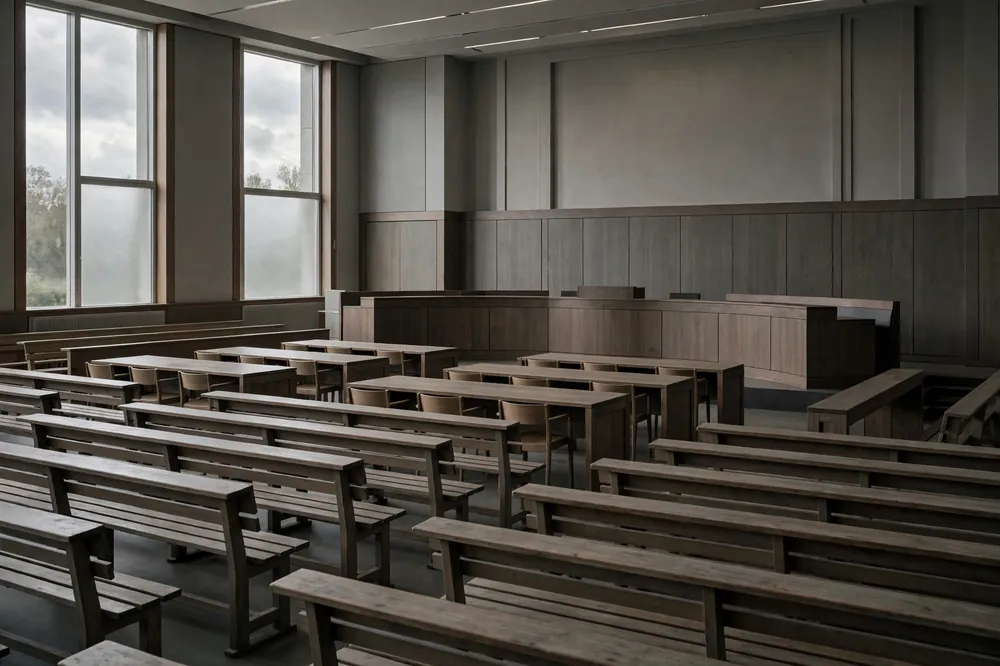
Sobibor returned to public attention in 2009, when John Demjanjuk, a Ukrainian-born former Trawniki auxiliary who had emigrated to the United States, was extradited to Germany and tried in Munich for accessory to the murder of 28,060 Jews at Sobibor — the number of Dutch Jews deported to the camp in 1943.
The prosecution argued that Demjanjuk had served as a guard at Sobibor, and that his service there made him an accessory to the murders committed there, even though no witness identified him as having killed anyone personally. The court convicted him in May 2011 and sentenced him to five years’ imprisonment. Demjanjuk died in March 2012, while his appeal was pending, so the conviction never became final under German law.
The trial was nevertheless important: it established the legal principle that service as a guard at an extermination camp could itself be a crime, and it led to further investigations of former camp guards in Germany.
Phiên tòa Demjanjuk
7. Trials and Justice
The principal trials of Sobibor’s staff were held in West Germany. Franz Stangl, the camp’s first commandant, was arrested in Brazil in 1967, extradited to West Germany, and tried in Düsseldorf in 1970; he was convicted of the murder of at least 400,000 people at Treblinka (where he had served after Sobibor) and sentenced to life imprisonment, and he died in prison in 1971.
His deputy, Gustav Wagner, was found in Brazil in 1978 but was not extradited, and he died in Brazil in 1980. In the Sobibor trial at Hagen in 1965-1966, twelve former members of the camp staff were tried; several were convicted of accessory to murder and received prison sentences, while others were acquitted.
Karl Frenzel, one of the camp’s senior SS men, was convicted in that trial and sentenced to life imprisonment; he was released in 1982 and died in 1996. The trials were limited by the passage of time, the deaths of witnesses, and the difficulty of proving individual acts of murder in a camp designed to leave no records; the sentences they produced were modest compared with the scale of the crime.
In the Netherlands, the deportations to Sobibor were investigated as part of the post-war trials of collaborators, and the Dutch railway company NS later apologised, in 2005, for its role in the deportations.
8. Visiting Information
The Sobibor memorial and museum stand in the forest near the village of Sobibór, about 12 kilometres south of the town of Włodawa, in eastern Poland, and about 230 kilometres south-east of Warsaw. The site is reached by road; there is no direct train service to the village, and visitors usually travel by car or by organised tour from Lublin or Warsaw.
Admission to the memorial grounds and the museum is free; check the museum’s official site before travelling for current opening hours, which vary by season, and for the arrangements for guided tours, which are available in Polish, English and other languages.
The site is an outdoor memorial in a forest, and visitors should wear suitable footwear and allow at least two hours for the museum and the walk around the grounds. As at all such sites, visitors are asked to behave with respect: to speak quietly, not to take photographs in a way that disturbs other visitors, and to remember that the ground covers mass graves.
9. Commemoration and Education
Sobibor is commemorated in the Netherlands, Poland and Israel, the three countries from which most of its victims and survivors came. In the Netherlands, the names of the Dutch Jews deported to Sobibor are read aloud each year at the National Holocaust Memorial in Amsterdam, and the Dutch Auschwitz Committee organises commemorations at Sobibor itself.
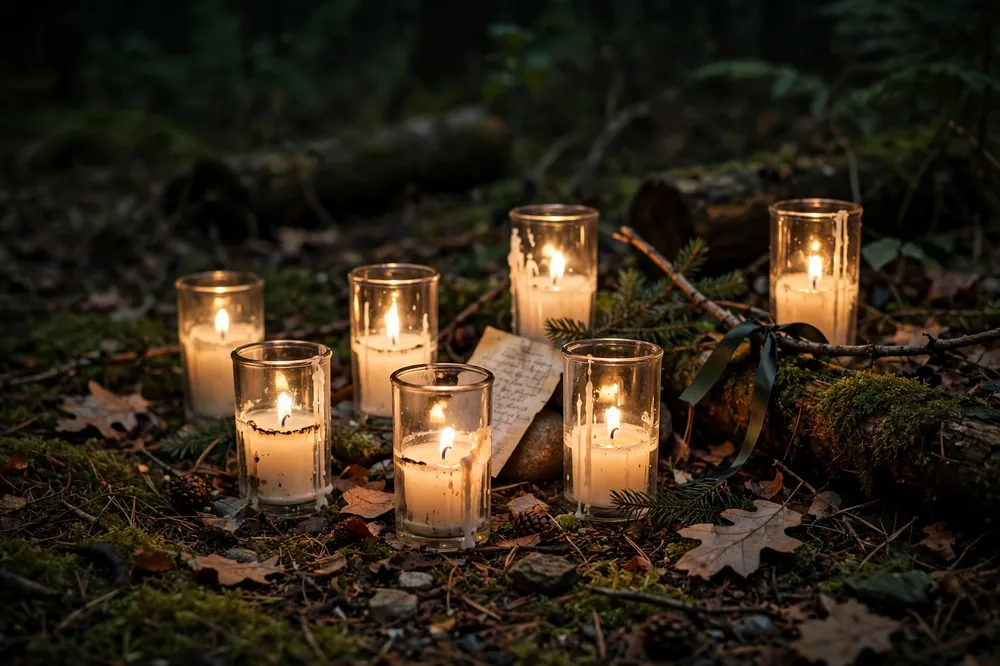
In Poland, the anniversary of the uprising, 14 October, is marked at the site, and Polish school groups visit the memorial as part of their history education. In Israel, Sobibor is remembered through the testimony of the survivors and through the work of Yad Vashem, and the uprising is taught as one of the few armed revolts in a killing centre — alongside the uprisings at Treblinka in August 1943 and at Auschwitz in October 1944.
The story of the uprising has also reached a wider public through films, including the Soviet film Sobibor (2018) and the earlier television film Escape from Sobibor (1987), based on the account of the survivors. Historians note that these dramatisations simplify the story — the uprising was planned over weeks by a committee, not improvised on the day — but they have kept Sobibor in public memory in a way that the camp’s remoteness and its destruction made difficult.
10. Legacy
The legacy of Sobibor is threefold. First, it is part of the evidence for the Holocaust: the camp’s records, the testimony of its survivors, the trials of its staff and the archaeology of its ground together document the murder of about 170,000 to 250,000 people in seventeen months, and the attempt to erase the camp documents the perpetrators’ awareness of the crime.
Second, the uprising of 14 October 1943 is a central example of Jewish resistance during the Holocaust — a planned, organised revolt by prisoners who knew they were going to die, which killed eleven SS men, allowed about 300 prisoners to escape, and forced the Germans to close the camp.
Third, Sobibor’s archaeology has become a model for the study of killing sites: the excavations of the gas chambers and mass graves, and the recovery of thousands of personal objects, showed that even a site the perpetrators tried to erase could be recovered, and that the victims could be given back their names.
The museum that opened in 2021 carries that work forward, and the list of names on its memorial wall continues to grow as researchers identify more victims from the deportation records.
Frequently Asked Questions
What was Sobibor?
Sobibor was a Nazi German extermination camp in occupied Poland, built in 1942 for Operation Reinhard. About 170,000 to 250,000 Jews were murdered there between May 1942 and October 1943.
How many people were murdered at Sobibor?
Estimates range from about 170,000 to about 250,000. Recent research based on the deportation records gives a figure of about 170,000, while earlier estimates, including those used at the post-war trials, were about 250,000.
What happened in the Sobibor uprising?
On 14 October 1943, prisoners led by Alexander Pechersky and Leon Feldhendler killed eleven SS men and about 300 prisoners escaped. About 50 of them survived the war. The Germans closed and dismantled the camp afterwards.
Where is Sobibor today?
The site is a memorial and museum in the forest near the village of Sobibór in eastern Poland. A new museum and memorial opened in 2021.
Who was Franz Stangl?
Franz Stangl was the first commandant of Sobibor (April-August 1942) and later commandant of Treblinka. He was tried in Düsseldorf in 1970 and sentenced to life imprisonment, and died in prison in 1971.
Can I visit Sobibor?
Yes. The memorial and museum are open to the public and admission is free. The site is in a forest near Włodawa in eastern Poland; check the museum’s official site for current hours and guided tours.
Related articles
Sources
- United States Holocaust Memorial Museum, Holocaust Encyclopedia, “Sobibor” (encyclopedia.ushmm.org) — camp history, victim estimates and the uprising of 14 October 1943.
- Yad Vashem, “Sobibor” and the Central Database of Shoah Victims’ Names (yadvashem.org) — deportations and victims.
- Jules Schelvis, Sobibor: A History of a Nazi Death Camp (Berg, 2007) — the standard history of the camp, the Dutch deportations and the uprising.
- Thomas Blatt, From the Ashes of Sobibor: A Story of Survival (Northwestern University Press, 1997) — survivor testimony.
- Wikipedia, “Sobibor extermination camp” — camp layout, commandants, victim estimates of 170,000-250,000, the uprising and the Demjanjuk trial.
- Sobibor Museum (Muzeum w Sobiborze), official site — the memorial, the museum opened in 2021 and visiting information.
- Yoram Haimi and Wojciech Mazurek, archaeological reports on the Sobibor excavations, 2007-2014 — the gas chamber foundations and recovered objects.