 WAR ATLAS MILITARY HISTORY MAGAZINE · WWI — WWII
Bletchley Park
1. Lead
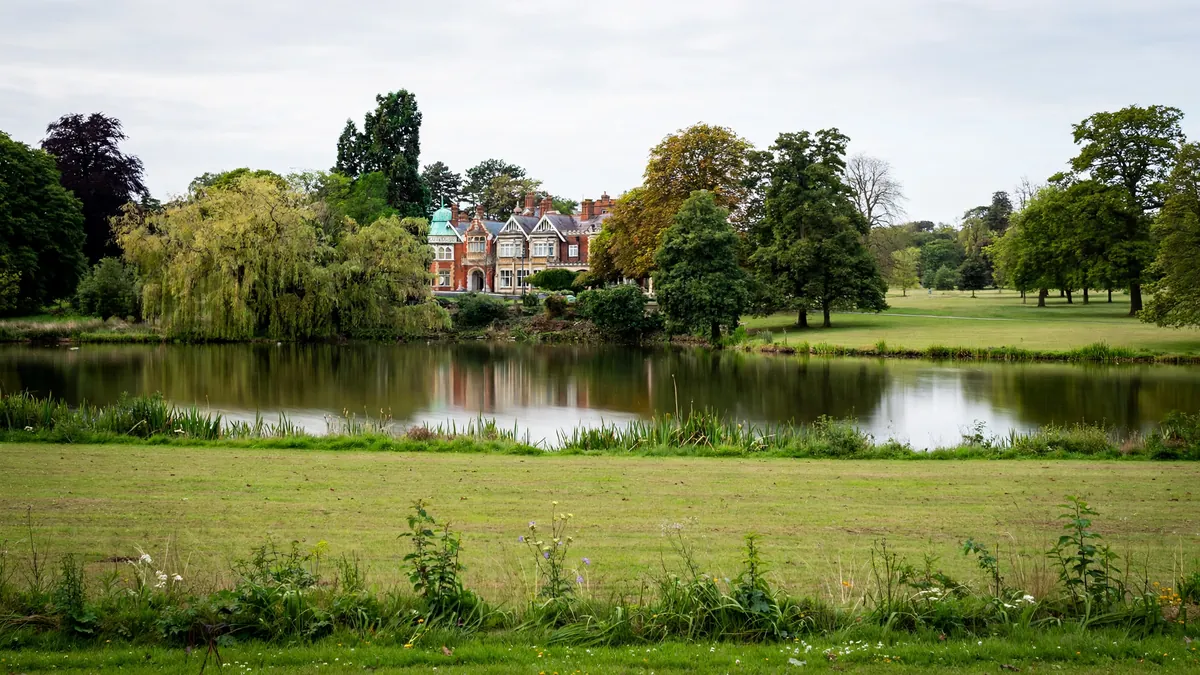
Bletchley Park was the headquarters of the British Government Code and Cypher School (GC&CS) during the Second World War, and the centre of the Allied effort to break the secret codes of Germany, Italy and Japan. From a country house and its wooden huts in Buckinghamshire, about 50 miles north-west of London, a staff that grew to about 10,000 people — three-quarters of them women — broke the German Enigma machine ciphers, built the world’s first programmable electronic computer, Colossus, to break the Lorenz cipher, and produced the intelligence known as Ultra, which informed Allied commanders from the Battle of the Atlantic to D-Day.
The work was kept secret for thirty years after the war, and Bletchley Park is now a museum, preserved as the birthplace of modern computing and of signals intelligence.
2. Key Facts
| What | Headquarters of the Government Code and Cypher School (GC&CS), Britain’s codebreaking centre |
| Where | Bletchley Park, near Milton Keynes, Buckinghamshire, England |
| When | GC&CS moved to Bletchley Park in August 1939; operated through the war until 1946 |
| Staff | About 10,000 at its peak in 1945, including about 7,500 women |
| Key figures | Alan Turing, Gordon Welchman, Dilly Knox, Hugh Alexander, Stuart Milner-Barry, Tommy Flowers, Bill Tutte, Mavis Batey, Joan Clarke |
| Key machines | The Bombe (Turing and Welchman, 1940), Colossus (Tommy Flowers, 1943-1944) |
| Key ciphers | Enigma (German Army, Navy and Air Force), Lorenz (German High Command), Japanese codes |
| Intelligence | “Ultra” — the decrypted Enigma material, distributed to Allied commanders |
| Today | Bletchley Park museum, opened to the public in 1994; The National Museum of Computing on the same site |
3. Background
The story of Bletchley Park begins before the war, in the 1920s and 1930s, when the British Government Code and Cypher School, based in London, worked on the codes of foreign governments. The German armed forces used the Enigma machine, an electromechanical cipher machine invented in the 1920s, in which a set of rotating rotors scrambled each letter of a message.
The machine’s settings were changed daily, and the number of possible settings was so large that the cipher was thought to be unbreakable. Polish mathematicians — Marian Rejewski, Jerzy Różycki and Henryk Zygalski — proved otherwise: in the 1930s they reconstructed the Enigma machine and built a machine, the bomba, to find its daily settings.
In July 1939, weeks before the war, the Poles shared their work with British and French intelligence at a meeting near Warsaw, and the British took up the Polish method at Bletchley Park.
In August 1939, GC&CS moved from London to Bletchley Park, a Victorian country house with 58 acres of grounds, chosen because it was close to London, on a railway junction, and away from the expected bombing. The move was made in secret: the staff arrived in small groups, and the house was described, for cover, as the headquarters of a rifle-shooting school.
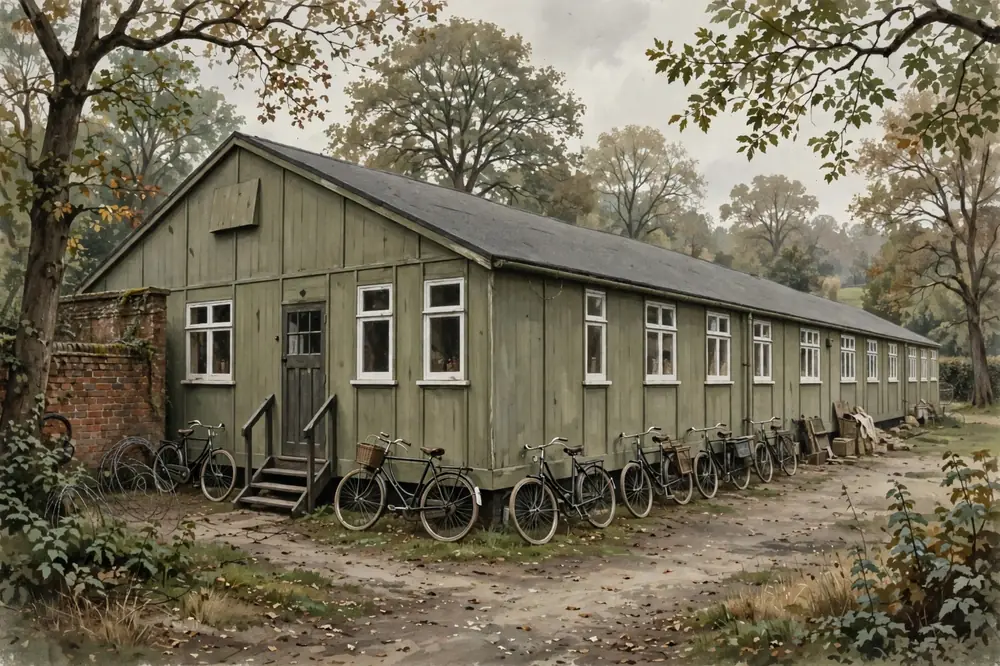
At first the staff numbered about 150 people; the huts that gave the site its character — Hut 3, Hut 4, Hut 6, Hut 8 — were wooden buildings put up in the grounds, and later brick blocks were added. By 1945 the site held about 10,000 people, working in shifts around the clock, and it had its own railway station, canteen, and housing in the town of Bletchley.
The Polish contribution
The Polish contribution to Bletchley Park is now recognised as essential. Without the Polish mathematicians’ reconstruction of the Enigma machine and their bomba, the British would have had to start from nothing in 1939, and the breaking of Enigma would have been delayed by months or years.
The Poles continued their work in France after the fall of Poland, and after the fall of France in 1940 they worked in unoccupied France and then in Britain, where they contributed to the work on Enigma and on other ciphers.
Their role was not publicly acknowledged until the 1970s, when the secrecy around Bletchley Park began to lift, and it is now commemorated at Bletchley Park and at the Enigma Cipher Centre in Poznań, Poland.
4. The Enigma Breakthrough
The breaking of Enigma was the work of Hut 6 and Hut 8. Hut 6 worked on the Enigma of the German Army and Air Force, and Hut 8, under the mathematician Alan Turing, worked on the Naval Enigma, which was the hardest to break because the German Navy used more rotors and changed its procedures more often.
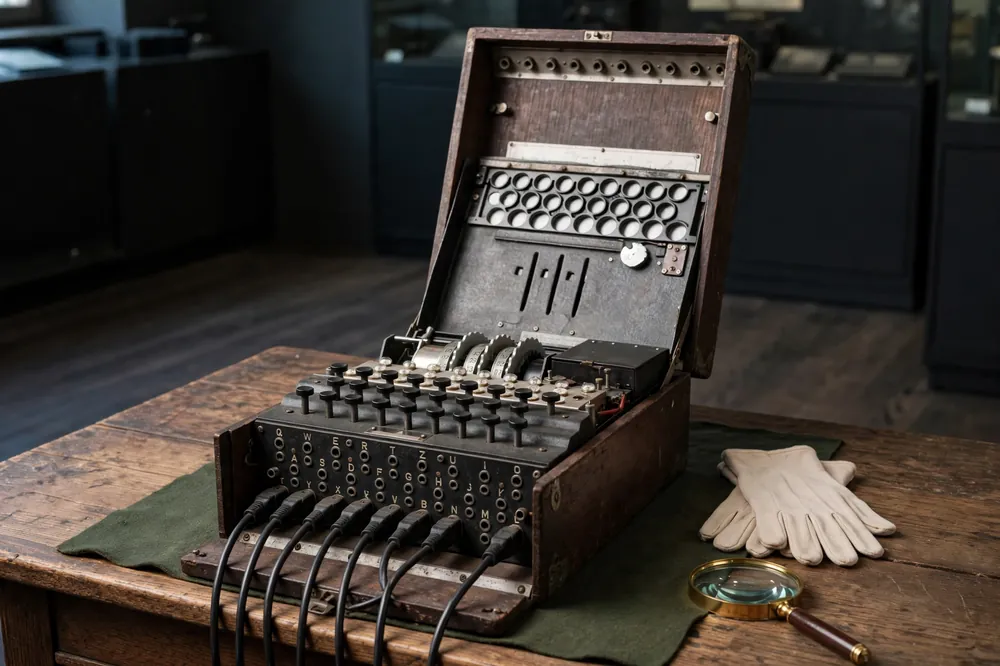
Turing’s contribution was the Bombe, an electromechanical machine that tested possible Enigma settings at high speed, using a guessed piece of plaintext — a “crib” — to find the day’s key. Gordon Welchman improved the Bombe with a “diagonal board”, which made it far faster, and by 1942 there were dozens of Bombes in operation, run largely by women of the Women’s Royal Naval Service (Wrens).
The decrypted messages were translated in Hut 3 and passed to the armed forces as Ultra intelligence.
The Naval Enigma was the most important, and the most difficult. In 1940, the German Navy’s U-boats were sinking Allied shipping faster than it could be replaced, and the breaking of the Naval Enigma in 1941 — helped by the capture of Enigma machines and codebooks from German U-boats, including U-110 in May 1941 — allowed the Allies to route convoys around the U-boats.
In February 1942, the German Navy added a fourth rotor to its Enigma, and the code went unreadable for ten months, during which U-boat sinkings rose sharply; Bletchley Park broke the four-rotor Enigma in December 1942, and the U-boat threat was brought under control in 1943.
The Ultra intelligence from Enigma is credited with shortening the war: the official historian of British intelligence, Harry Hinsley, estimated that Ultra shortened the war in Europe by two to four years, though historians debate the exact figure.
Alan Turing
Alan Turing (1912-1954) was the most famous of the Bletchley Park codebreakers. A mathematician at Cambridge, he had published in 1936 the paper that laid the foundations of the modern computer, describing the “universal machine” now known as the Turing machine. At Bletchley Park he designed the Bombe and worked on the Naval Enigma, and later on speech-scrambling machines and on the first electronic computers.
After the war he worked on the ACE computer at the National Physical Laboratory and on the early computers at Manchester University, and he published the paper that founded the field of artificial intelligence. In 1952 he was prosecuted for homosexuality, then a crime in Britain, and was subjected to chemical castration; he died in 1954, at the age of 41, in circumstances that the coroner recorded as suicide.
In 2013 he received a royal pardon, and in 2017 the British government introduced the “Alan Turing law”, pardoning men convicted under the historical laws against homosexuality. His statue and his portrait are now among the best-known images of Bletchley Park.
Alan Turing
5. Colossus and Lorenz
While Hut 8 worked on Enigma, a second and more difficult problem was the Lorenz cipher, used by the German High Command for its most secret messages. Lorenz was a teleprinter cipher machine, far more complex than Enigma, and its messages were intercepted by British listening stations.
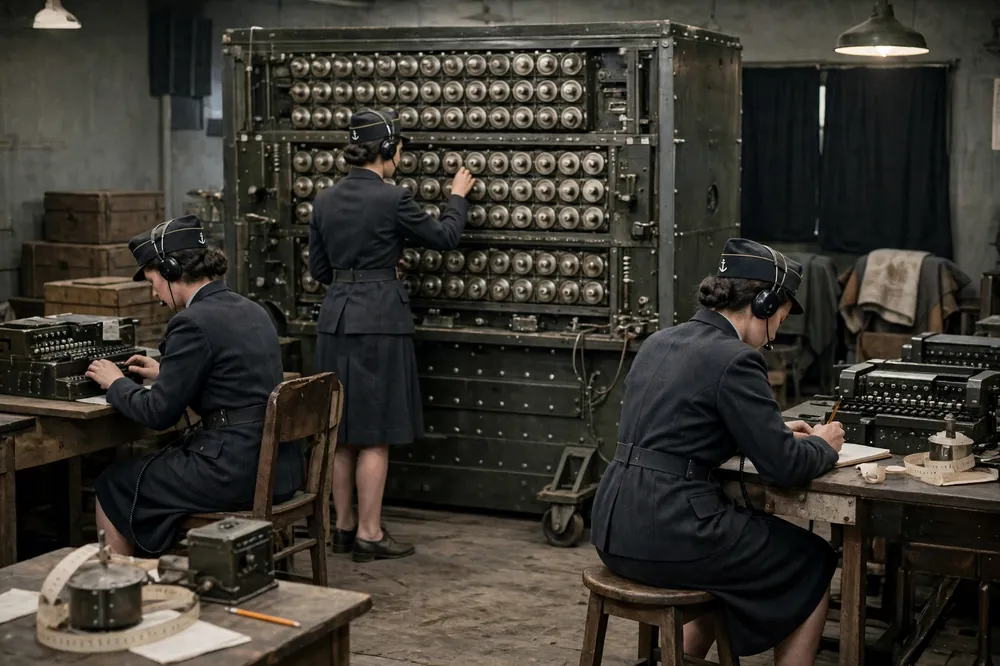
In 1941, the mathematician Bill Tutte, working at Bletchley Park, deduced the structure of the Lorenz machine from intercepted messages alone, without ever seeing the machine — a feat described as one of the greatest intellectual achievements of the war.
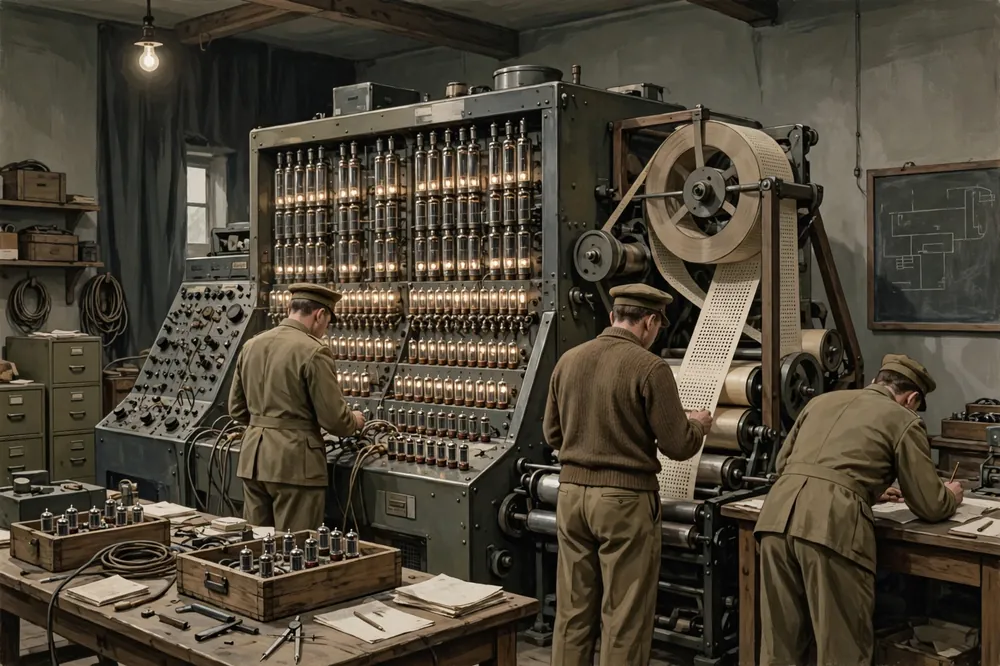
To break Lorenz at the speed the messages required, the Post Office engineer Tommy Flowers designed and built Colossus, an electronic machine using about 1,500 vacuum tubes, which was installed at Bletchley Park in December 1943 and began work in February 1944. Colossus was the world’s first programmable electronic computer, and a second, faster Colossus, the Mark 2, followed in 1944.
Ten Colossus machines were in use by the end of the war, and they read the German High Command’s messages throughout the D-Day campaign and the final year of the war.
The secrecy of Colossus
Colossus was kept secret after the war: the machines were dismantled, the plans were destroyed, and the staff were ordered not to speak of them. The secrecy was so complete that the history of computing was written for decades without Colossus in it, and the American ENIAC computer, built in 1945, was long credited as the first electronic computer.
It was only in the 1970s, when the secrecy around Bletchley Park began to lift, that Colossus became known, and in the 2000s a working reconstruction of Colossus was built at Bletchley Park by a team led by Tony Sale, using the surviving photographs and the memories of the engineers who had built it. The reconstruction now runs at The National Museum of Computing, on the Bletchley Park site.
6. The People of Bletchley Park
Bletchley Park’s staff were, by design, an unusual group. The codebreakers were recruited from the universities — mathematicians, classicists, linguists, chess players and crossword enthusiasts — and the operating staff were drawn from the armed services, above all the Women’s Royal Naval Service (Wrens), who operated the Bombes and the Colossus machines, and the Women’s Auxiliary Air Force and the Auxiliary Territorial Service.
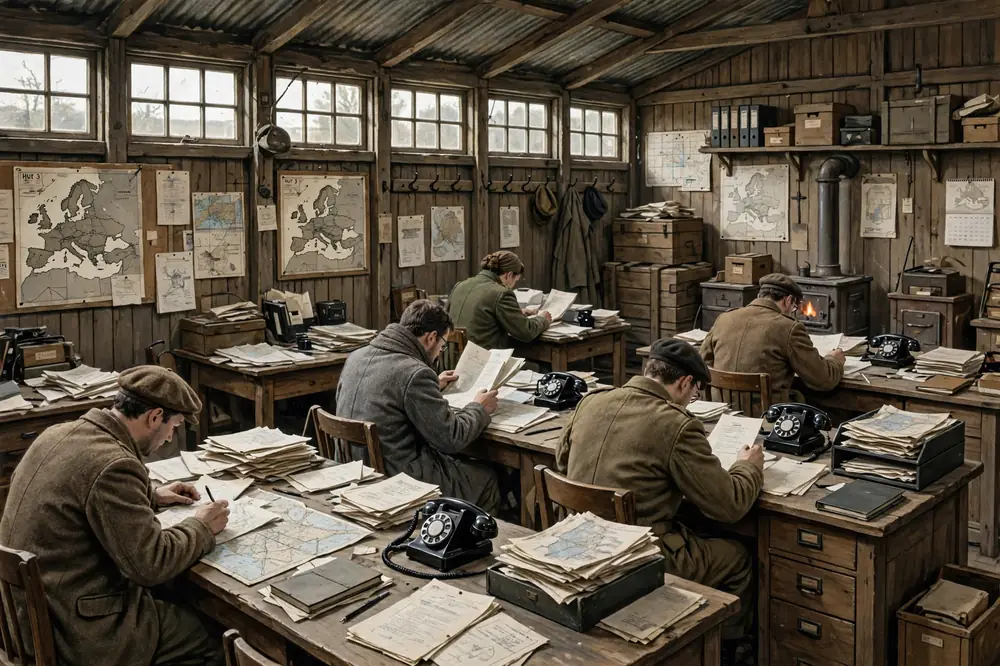
About three-quarters of the staff were women, and they did work that was, by the standards of the time, highly technical: operating the Bombes, working the Colossus machines, translating and analysing the decrypted messages. The staff worked in shifts around the clock, lived in billets in Bletchley and the surrounding villages, and were bound by the Official Secrets Act not to speak of their work — a silence that many kept for thirty years, even from their families.
The women of Bletchley Park
Among the women of Bletchley Park, Joan Clarke (later Joan Murray) was one of the best known: a mathematician who worked with Turing in Hut 8 on the Naval Enigma, and who was one of the few women to be paid at the same rate as the men.
Mavis Batey (née Lever) worked in the section that broke the Italian naval Enigma and the Abwehr Enigma, and her work contributed to the Allied victories in the Mediterranean. The Wrens who operated the Bombes worked in shifts in noisy machine rooms, and their work — which required concentration, accuracy and the ability to work under pressure — was essential to the breaking of Enigma: without the operators, the Bombes would not have run.
The contribution of the women of Bletchley Park was not fully recognised until the 2000s and 2010s, when their stories were told in books, exhibitions and films, including the film The Imitation Game (2014), about Turing, and the television series The Bletchley Circle.
7. Ultra and the War
The intelligence produced at Bletchley Park was known as Ultra, and it was distributed to Allied commanders under strict security: the recipients were told only that the information came from “a most secret source”, and they were forbidden to act on it in a way that would reveal that the Enigma had been broken.
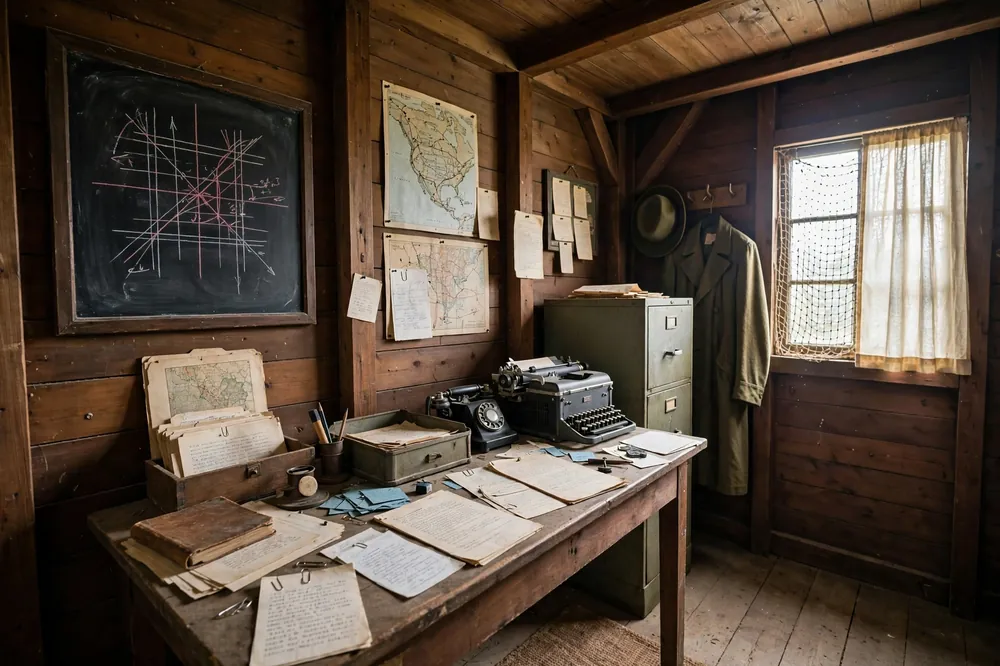
Ultra informed the Battle of the Atlantic, where it allowed convoys to avoid U-boats; the North African campaign, where it revealed the supply situation of Rommel’s forces; the invasion of Sicily and Italy; and the D-Day landings, where Ultra confirmed that the Germans believed the main invasion would come at the Pas-de-Calais, and that they were holding their reserves there.
Ultra also revealed the German order of battle, the movement of divisions, and the state of German fuel and ammunition. The security around Ultra was maintained throughout the war: the Germans never learned that Enigma had been broken, and they attributed their losses to other causes.
8. The Site Today
After the war, Bletchley Park was used by the government for training and then fell into disrepair; by the 1980s it was threatened with demolition for housing. A campaign by former staff, historians and enthusiasts saved it, and in 1994 it opened to the public as a museum.
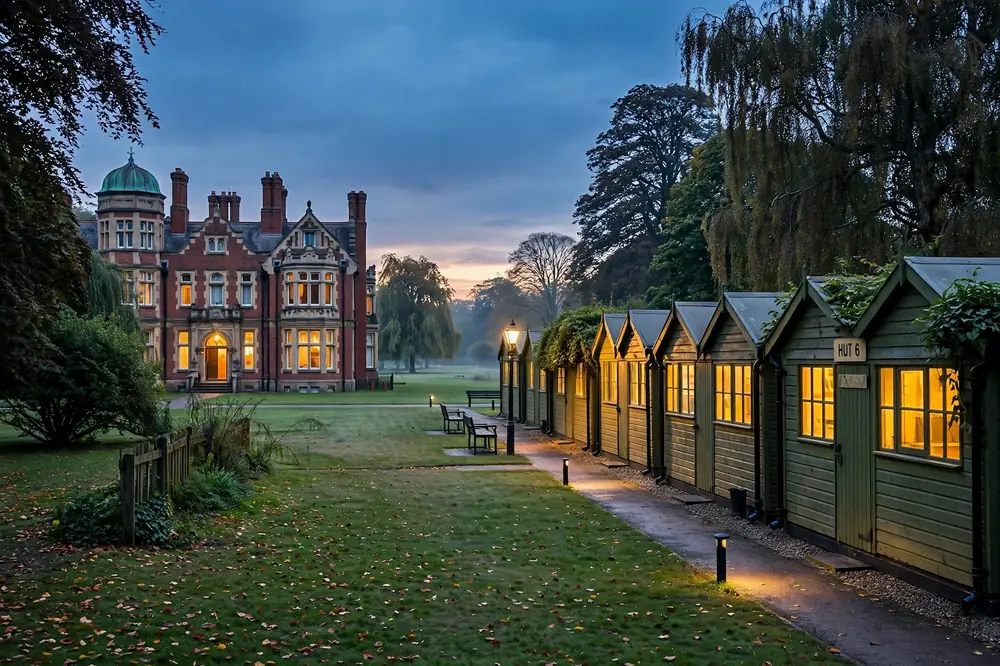
Today, visitors can see the Victorian mansion, the huts — Hut 8, Turing’s office, has been restored, and Hut 11 houses a working Bombe reconstruction — and the blocks that housed the Colossus machines. The National Museum of Computing, on the same site, houses the reconstructed Colossus and a collection of historic computers.
The site also holds exhibitions on the Polish contribution, on the women of Bletchley Park, and on the history of computing. In 2014, the site was visited by the Duke and Duchess of Cambridge, and the museum’s restoration, funded by the Heritage Lottery Fund and by private donations, has preserved the huts and the mansion for future visitors.
9. Visiting Information
Bletchley Park is in the town of Bletchley, near Milton Keynes, Buckinghamshire, about 50 miles north-west of London, and is reached by train from London Euston to Bletchley station, a short walk from the museum. The museum is open daily; admission is charged, and tickets can be booked in advance through the museum’s official site (bletchleypark.org.uk).
The National Museum of Computing, on the same site, has separate admission and opening hours; check its official site before visiting. Allow at least half a day for a visit: the mansion, the huts, the Bombe reconstruction and the Colossus reconstruction are spread across the grounds, and guided tours and audio guides are available. The site is largely accessible, and there is a café and a shop.
10. Legacy
The legacy of Bletchley Park is the modern world of computing and signals intelligence. Colossus was the first programmable electronic computer, and the work of Turing, Flowers, Tutte and their colleagues laid the foundations of the computer age. The Government Communications Headquarters (GCHQ), the successor to GC&CS, continues the work of signals intelligence in Britain, and the National Security Agency (NSA) in the United States descends from the wartime cooperation between Bletchley Park and its American counterpart, Arlington Hall.
The breaking of Enigma also shaped the history of the war: Ultra is credited with shortening the war in Europe, and the secrecy that surrounded it for thirty years meant that the history of the war was written, for a generation, without its most important secret.
The recognition of the Polish contribution, of the women of Bletchley Park, and of Turing himself — pardoned in 2013 — has completed the picture, and Bletchley Park is now recognised, with the award of the UNESCO Memory of the World register to its archives, as a site of world importance.
Frequently Asked Questions
What was Bletchley Park?
Bletchley Park was the headquarters of the British Government Code and Cypher School during the Second World War, where about 10,000 people worked to break the German Enigma and Lorenz ciphers.
Who was Alan Turing?
Alan Turing was a British mathematician who designed the Bombe machine that broke Enigma, and who laid the foundations of the modern computer. He worked at Bletchley Park from 1939 to 1945.
What was the Bombe?
The Bombe was an electromechanical machine designed by Alan Turing and improved by Gordon Welchman that tested possible Enigma settings at high speed, allowing the daily Enigma key to be found.
What was Colossus?
Colossus was the world’s first programmable electronic computer, built by Tommy Flowers at Bletchley Park in 1943-1944 to break the German Lorenz cipher.
What was Ultra?
Ultra was the name given to the intelligence produced from decrypted Enigma messages, distributed to Allied commanders under strict security.
Can I visit Bletchley Park?
Yes. Bletchley Park is a museum open daily, near Milton Keynes, about 50 miles north-west of London, reached by train from London Euston to Bletchley station.
Related articles
Sources
- Bletchley Park Trust, official site (bletchleypark.org.uk) — history of the site, the huts and the museum.
- F. H. Hinsley and Alan Stripp (eds.), Codebreakers: The Inside Story of Bletchley Park (Oxford University Press, 1993) — the official history of the codebreaking work.
- Andrew Hodges, Alan Turing: The Enigma (Burnett Books, 1983) — Turing’s life and work at Bletchley Park.
- Wikipedia, “Bletchley Park” — staff of about 10,000, the Bombe, Colossus, Ultra, the museum opened in 1994.
- The National Museum of Computing, official site — the reconstructed Colossus.
- Dermot Turing, X, Y and Z: The Real Story of How Enigma Was Broken (The History Press, 2018) — the Polish contribution.
- Sinclair McKay, The Secret Life of Bletchley Park (Aurum Press, 2010) — the people and daily life of the site.