 WAR ATLAS MILITARY HISTORY MAGAZINE · WWI — WWII
Hiroshima decision
1. Lead
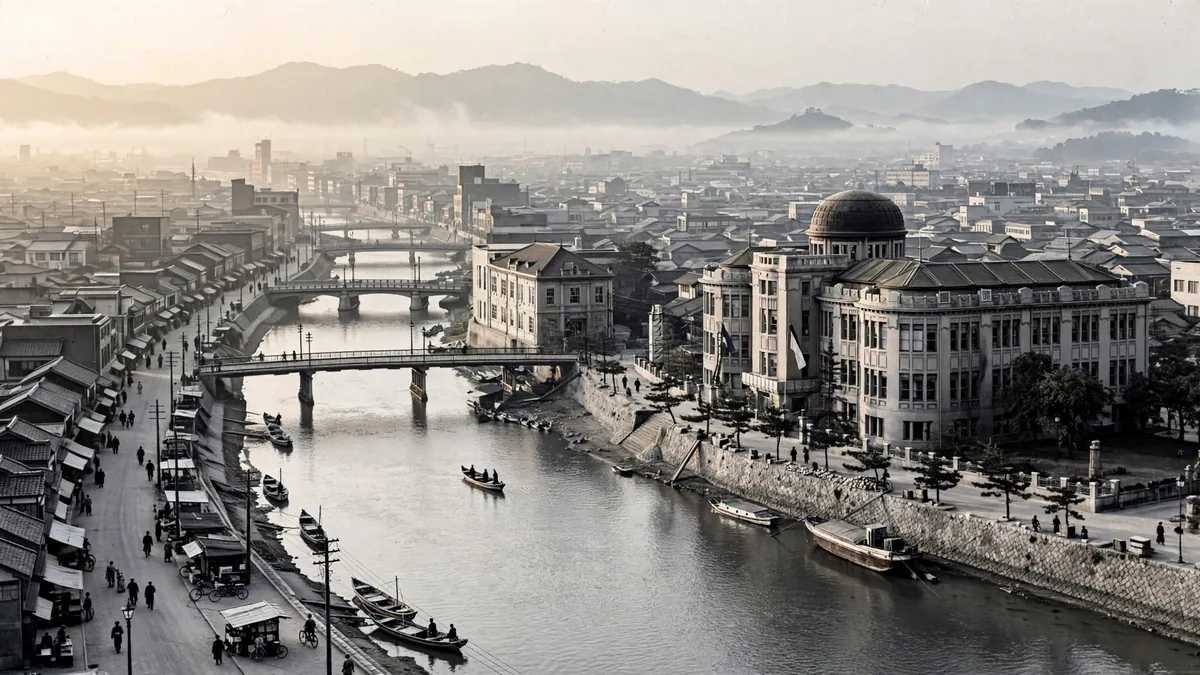
The Hiroshima decision was the decision by the United States government, in the summer of 1945, to use the atomic bomb against Japan. On 6 August 1945, the bomber Enola Gay dropped a uranium bomb, codenamed Little Boy, on the city of Hiroshima, killing about 70,000 to 80,000 people at once and about 140,000 by the end of 1945, according to commonly cited estimates.
Three days later, on 9 August, a second bomb, Fat Man, was dropped on Nagasaki, killing about 40,000 at once and about 70,000 by the end of 1945. On 15 August, Japan announced its surrender, and on 2 September it signed the surrender. The decision to use the bomb was made by President Harry S.
Truman, on the advice of his Secretary of War, Henry Stimson, and the Interim Committee, and it has been debated ever since. Those who defend it argue that it ended the war quickly and saved lives that would have been lost in an invasion of Japan. Those who criticise it argue that Japan was already defeated, that the bomb was unnecessary, and that its use was a moral wrong.
This article presents both sides, gives the figures as ranges with their sources, and does not take the side of either.
2. Key Facts
| Date | 6 August 1945 (Hiroshima); 9 August 1945 (Nagasaki); surrender announced 15 August, signed 2 September |
| Location | Hiroshima and Nagasaki, Japan |
| Decision maker | President Harry S. Truman, on the advice of Secretary of War Henry Stimson and the Interim Committee |
| The bombs | Little Boy (uranium, Hiroshima); Fat Man (plutonium, Nagasaki) / Little Boy (uranium, Hiroshima); Fat Man (plutonium, Nagasaki) |
| Hiroshima deaths | About 70,000–80,000 at once; about 140,000 by the end of 1945 (commonly cited estimates) |
| Nagasaki deaths | About 40,000 at once; about 70,000 by the end of 1945 (commonly cited estimates) |
| Invasion estimates | US estimates of American casualties for an invasion of Japan ranged from tens of thousands to over a million (disputed) |
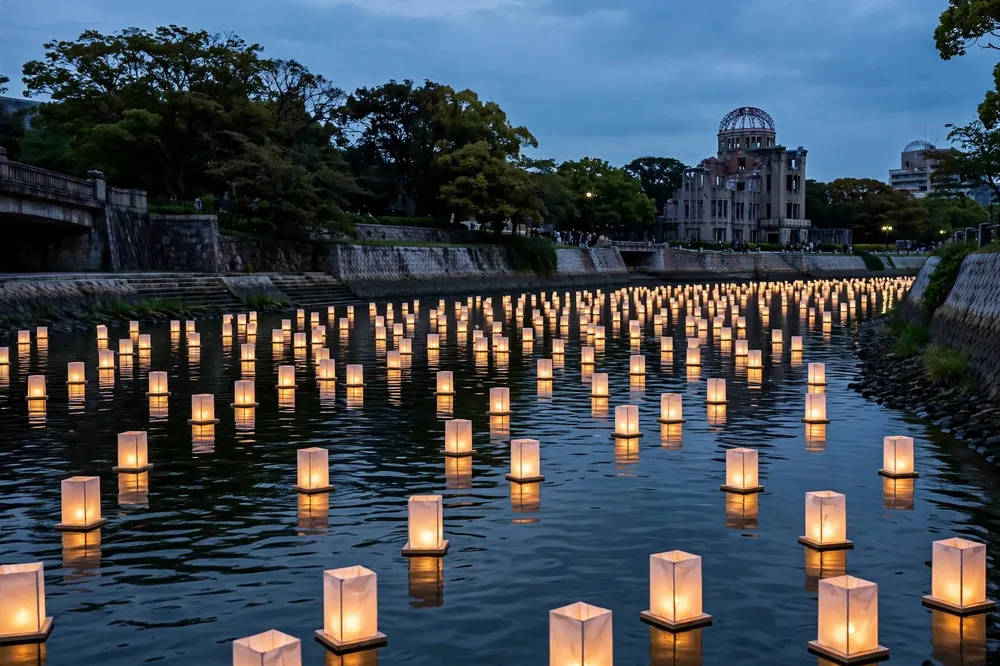
| Commemoration | Hiroshima Peace Memorial (Genbaku Dome), UNESCO World Heritage; Peace Memorial Ceremony, 6 August |
3. Background
The war in the Pacific in 1945
By the summer of 1945, Japan was defeated, but it had not surrendered. The United States had taken Iwo Jima in March and Okinawa in June, at a cost of tens of thousands of American and Japanese lives, and it had destroyed the Japanese Navy and the Japanese Air Force.
American bombers were firebombing Japanese cities, killing hundreds of thousands of civilians, and the American submarine blockade had cut Japan off from food and fuel. The Soviet Union, which had promised at Yalta to enter the war against Japan, was preparing to invade Manchuria.
The Japanese government, divided between those who wanted to surrender and those who wanted to fight on, had not accepted the Allied demand for unconditional surrender, and the Japanese Army, which had fought to the death on every island, was preparing to defend the home islands.
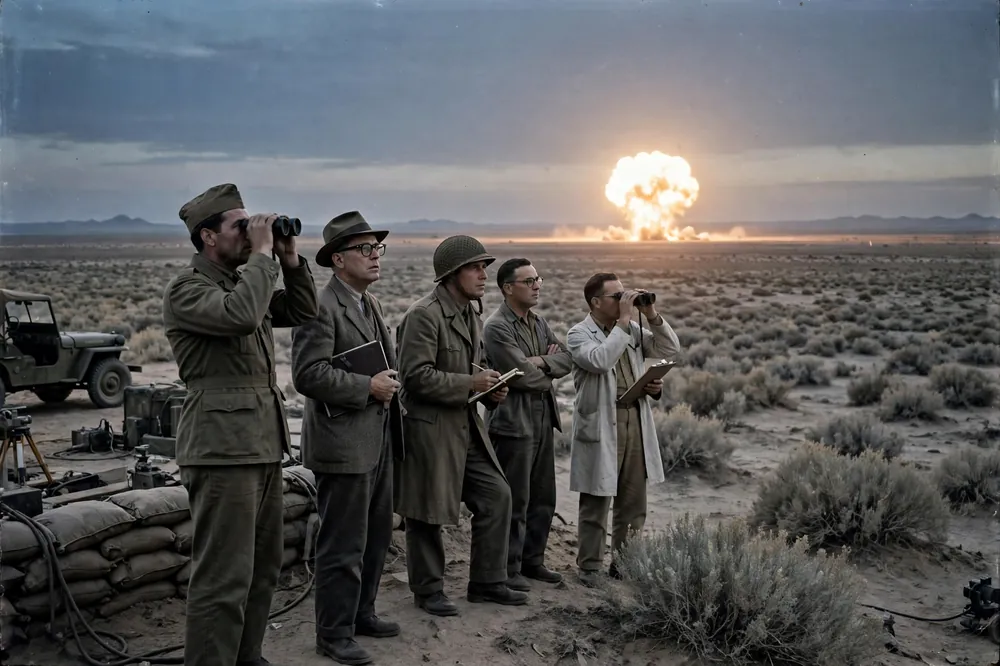
The United States faced a choice: to invade Japan, to blockade it and bomb it until it surrendered, or to use a new weapon, the atomic bomb, which had been tested for the first time on 16 July 1945, at Trinity in New Mexico.
The Manhattan Project
The atomic bomb was the product of the Manhattan Project, the American programme, begun in 1942, to build a nuclear weapon before Germany did. The project, under the direction of Major General Leslie Groves and the scientific leadership of J.
Robert Oppenheimer, employed more than 100,000 people and cost about 2 billion dollars, and it produced two kinds of bomb: a uranium bomb, Little Boy, and a plutonium bomb, Fat Man. The first test, Trinity, on 16 July 1945, was a success, and it told the American government that the bomb worked.
The question was no longer whether the bomb could be used, but whether it should be used, and on what target. The scientists who had built the bomb were divided: some, including Oppenheimer, believed it should be used, while others, including Leo Szilard, believed it should be demonstrated, not used on a city, and that its use would begin an arms race that would endanger the world.
Truman and the Interim Committee
Harry S. Truman had become President on 12 April 1945, on the death of Franklin D. Roosevelt, and he had not known about the atomic bomb until he took office. In May 1945, he appointed the Interim Committee, under Secretary of War Henry Stimson, to advise him on the use of the bomb.
The committee, which included scientists, soldiers and politicians, recommended, in June 1945, that the bomb be used against Japan, without warning, on a target that was a military and industrial centre, and that it be used as soon as possible, to end the war. Truman accepted the recommendation, and on 24 July, at the Potsdam Conference, he approved the order to use the bomb.
The Potsdam Declaration, issued on 26 July by the United States, Britain and China, demanded Japan’s unconditional surrender and warned of “prompt and utter destruction” if it refused. Japan did not accept the declaration, and on 6 August the bomb was dropped on Hiroshima.
4. What Happened
6 August: Hiroshima
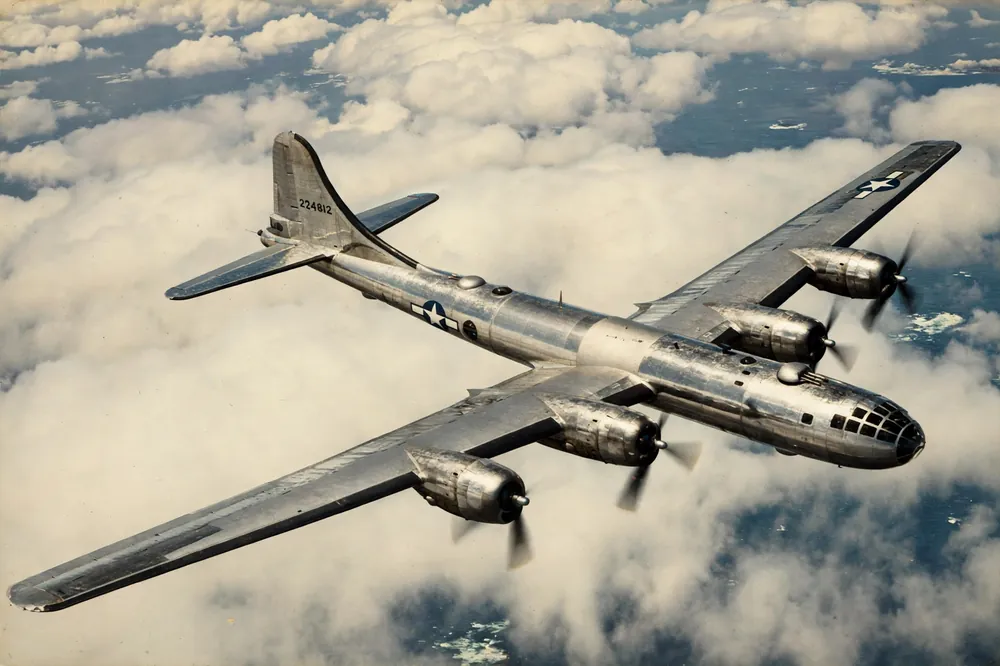
At 08:15 on 6 August 1945, the B-29 bomber Enola Gay, under Colonel Paul Tibbets, dropped the uranium bomb Little Boy on Hiroshima, a city of about 340,000 people, a port and an industrial centre, and the headquarters of the Japanese Second General Army. The bomb exploded about 600 metres above the city, with a force of about 15 kilotons, and it destroyed about 12 square kilometres of the city.
About 70,000 to 80,000 people were killed at once, and about 70,000 more were injured, many of them dying in the weeks and months that followed, from burns, from injuries and from radiation sickness. By the end of 1945, the number of dead in Hiroshima was about 140,000, according to the commonly cited estimate of the city of Hiroshima, though the exact figure is not known, and estimates range from about 90,000 to 166,000.
The city was, in the words of one survivor, “a sea of fire”, and the survivors — the hibakusha — carried the effects of the bomb for the rest of their lives.
9 August: Nagasaki
Three days later, on 9 August 1945, the B-29 Bockscar, under Major Charles Sweeney, dropped the plutonium bomb Fat Man on Nagasaki, a city of about 240,000 people, a port and an industrial centre, and the second target after Kokura, the primary target, was obscured by cloud.
The bomb exploded with a force of about 21 kilotons, and it killed about 40,000 people at once and about 70,000 by the end of 1945, according to commonly cited estimates, though the exact figure is not known, and estimates range from about 60,000 to 80,000.
Nagasaki was, like Hiroshima, a city of civilians, and its dead included many Korean forced labourers and many Christians, for Nagasaki had been the centre of Christianity in Japan since the sixteenth century. On the same day, 9 August, the Soviet Union declared war on Japan and invaded Manchuria, as it had promised at Yalta.
15 August: surrender
On 15 August 1945, the Emperor Hirohito announced Japan’s surrender in a radio broadcast, the first time the Japanese people had heard his voice, and on 2 September 1945, the surrender was signed on the battleship USS Missouri in Tokyo Bay. The surrender ended the Second World War.
The reasons for the surrender are debated: the atomic bombs, the Soviet invasion of Manchuria, and the American blockade and bombing had all brought Japan to the point of collapse, and historians disagree about which of them was decisive. What is certain is that the surrender came quickly after the bombs, and that the bombs were, in the words of Stimson, “the decisive factor” in the American view, and that the Soviet invasion was, in the view of many historians, at least as important.
The debate over the causes of the surrender is a part of the larger debate over the decision to use the bomb.
5. Aftermath
The hibakusha / Hibakusha
The survivors of Hiroshima and Nagasaki — the hibakusha, “the explosion-affected people” — numbered about 650,000 in total, including those who were in the cities at the time and those who entered them afterwards, and they carried the effects of the bombs for the rest of their lives.
Many of them suffered from radiation sickness, from burns and from injuries, and many of them developed cancer and other diseases in the years that followed. The hibakusha were, in the years after the war, stigmatised in Japanese society, and many of them hid their status, for fear of discrimination in marriage and in employment.
In the 1950s, the hibakusha began to organise, and they campaigned for medical care and for recognition, and for the abolition of nuclear weapons. Their testimony — the stories of the survivors, recorded in the Hiroshima Peace Memorial Museum and in the Nagasaki Atomic Bomb Museum — is the most important source for understanding what the bombs did, and it is the reason the memory of Hiroshima is a memory of the victims, not only of the decision.
The nuclear age
The use of the atomic bomb on Hiroshima and Nagasaki began the nuclear age. Within a few years, the Soviet Union had built its own atomic bomb, and the United States and the Soviet Union began an arms race that produced thousands of nuclear weapons, and that brought the world to the brink of nuclear war in the Cuban Missile Crisis of 1962.
The decision to use the bomb in 1945 has been debated, in part, because of what it began: the scientists who had built the bomb, and the politicians who had ordered its use, had not foreseen the arms race that followed, and the world has lived with the consequences ever since.
The Treaty on the Non-Proliferation of Nuclear Weapons, signed in 1968, and the Treaty on the Prohibition of Nuclear Weapons, adopted in 2017, are, in part, a response to Hiroshima, and the hibakusha have been at the forefront of the campaign for nuclear disarmament.
The occupation of Japan
After the surrender, Japan was occupied by the United States, under General Douglas MacArthur, until 1952. The occupation brought democracy, land reform and the renunciation of war in the Japanese constitution, and it brought the war crimes trials in Tokyo, in which Japanese leaders were tried for the crimes of the war.
The occupation also brought a new relationship between the United States and Japan, which became, in the years that followed, one of the closest alliances in the world. The memory of Hiroshima, in Japan, is a memory of the victims, and it is a memory that has shaped Japan’s identity as a pacifist nation.
In the United States, the memory of Hiroshima is a memory of the decision, and it is a memory that has shaped the debate over the use of force, and over the morality of war, ever since.
6. The Human Cost
The numbers and their meaning
The number of dead at Hiroshima and Nagasaki is the most important fact about the decision, and it is important to give the numbers as ranges, with their sources, because the exact figures are not known. For Hiroshima, the commonly cited estimate is about 140,000 dead by the end of 1945, of whom about 70,000 to 80,000 were killed at once, but estimates range from about 90,000 to 166,000, depending on the source and on the method of counting.
For Nagasaki, the commonly cited estimate is about 70,000 dead by the end of 1945, of whom about 40,000 were killed at once, but estimates range from about 60,000 to 80,000. The figures include those who died of burns, of injuries and of radiation sickness, and they do not include those who died in the years that followed, of cancer and of other diseases caused by the radiation.
The total number of dead from the two bombs, by the end of 1945, is about 210,000, and the total number of hibakusha, the survivors, is about 650,000. These are the numbers that must be remembered, and they are the numbers that the debate over the decision must be judged against.
The invasion estimates
The numbers that are used to defend the decision are the estimates of the casualties that an invasion of Japan would have cost. The American plan for the invasion, Operation Downfall, called for a landing on Kyushu in November 1945 (Operation Olympic) and a landing on Honshu in March 1946 (Operation Coronet), and the estimates of American casualties ranged widely.
Some estimates, made at the time, put American casualties at about 50,000 to 100,000, while others, made after the war, put them at over a million. The figure of a million, which was used by Stimson in his defence of the decision in 1947, is disputed: historians have shown that it was not based on a formal estimate, but on a worst-case scenario, and that the estimates made at the time were far lower.
The Japanese casualties in an invasion would have been far higher, in the millions, because the Japanese Army was preparing to fight to the death, and because the Japanese civilians were being trained to resist. The invasion estimates are, therefore, a matter of debate, and they are the reason the defence of the decision is contested.
7. Memory and Commemoration
Hiroshima Peace Memorial
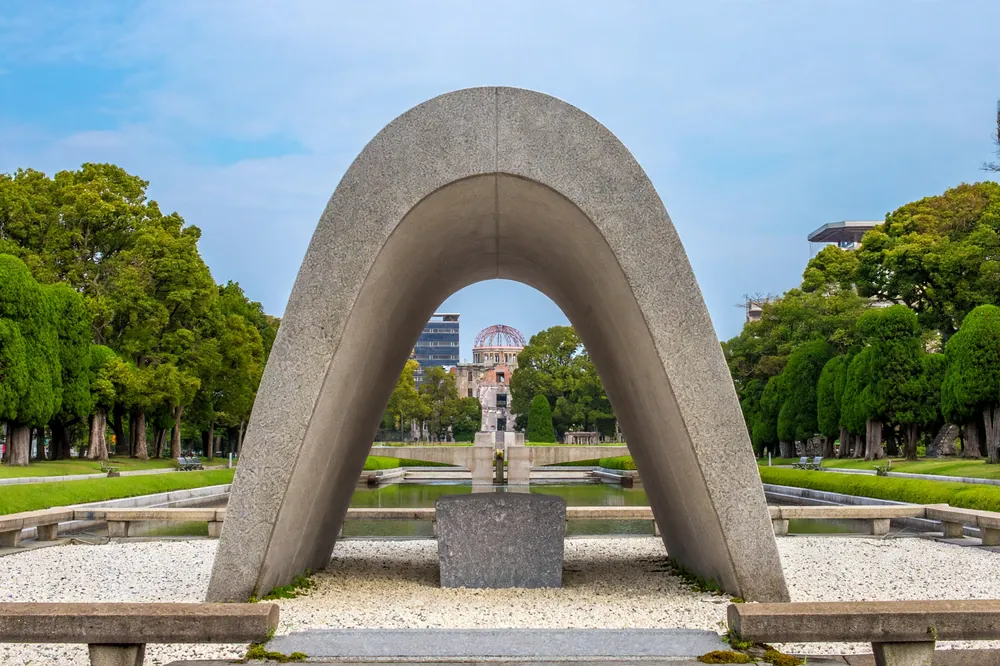
The central memorial of Hiroshima is the Hiroshima Peace Memorial, the Genbaku Dome, the ruin of a building that stood near the hypocentre of the explosion, and that was preserved as a memorial. The Dome, which was declared a UNESCO World Heritage Site in 1996, stands in the Hiroshima Peace Memorial Park, alongside the Children’s Peace Monument, the Cenotaph, and the Peace Memorial Museum, which tells the story of the bomb and of its victims.
Every year, on 6 August, the Peace Memorial Ceremony is held in the park, and the Mayor of Hiroshima reads the Peace Declaration, calling for the abolition of nuclear weapons. The park is visited by millions of people every year, including the leaders of the world, and it is the place where the memory of Hiroshima is most visible.
Memory in Japan and in the United States
In Japan, the memory of Hiroshima is a memory of the victims, and it is a memory that has shaped Japan’s identity as a pacifist nation. The hibakusha, the survivors, have campaigned for the abolition of nuclear weapons, and their testimony has been heard around the world.
In the United States, the memory of Hiroshima is a memory of the decision, and it is a memory that has been debated ever since. In 1995, the fiftieth anniversary of the bomb, the Smithsonian Institution planned an exhibition on the Enola Gay that presented the decision as a subject of debate, and the exhibition was cancelled after protests from veterans’ groups, who argued that it presented the United States as the aggressor.
The controversy over the Smithsonian exhibition showed that the memory of Hiroshima, in the United States, is still contested, and that the decision to use the bomb is still a subject of political debate, fifty years after it was made.
The hibakusha and the Nobel Prize
In 2024, the Nobel Peace Prize was awarded to Nihon Hidankyo, the Japan Confederation of A- and H-Bomb Sufferers Organizations, the organisation of the hibakusha, for its work in campaigning for the abolition of nuclear weapons and for its testimony about the effects of the bombs. The award was a recognition, by the world, of the hibakusha’s testimony, and of the importance of remembering Hiroshima and Nagasaki.
The hibakusha, who are now in their eighties and nineties, have spent their lives telling their stories, and the Nobel Prize was, in the words of the Nobel Committee, a recognition of their “efforts to achieve a world free of nuclear weapons”.
The memory of Hiroshima, in the end, is kept alive by the survivors, and by the museums and the memorials they have created, and by the annual ceremony on 6 August, which is attended by people from around the world.
8. Controversy and Debate
The case for the bomb
Those who defend the decision argue that it ended the war quickly and saved lives. The argument, as made by Stimson in 1947 and by Truman in his memoirs, is that an invasion of Japan would have cost hundreds of thousands of American lives and millions of Japanese lives, and that the bomb, by ending the war in days, saved those lives.
The defenders also argue that the bomb was not a new kind of war, but a continuation of the bombing that had already killed hundreds of thousands of Japanese civilians in the firebombing of Tokyo and other cities, and that the Japanese government, which had refused to surrender, had brought the bomb on itself.
The defenders point to the speed of the surrender — within days of the second bomb — as evidence that the bomb worked, and they argue that the decision was made in good faith, on the basis of the information available at the time, and that it was the right decision.
The case against the bomb
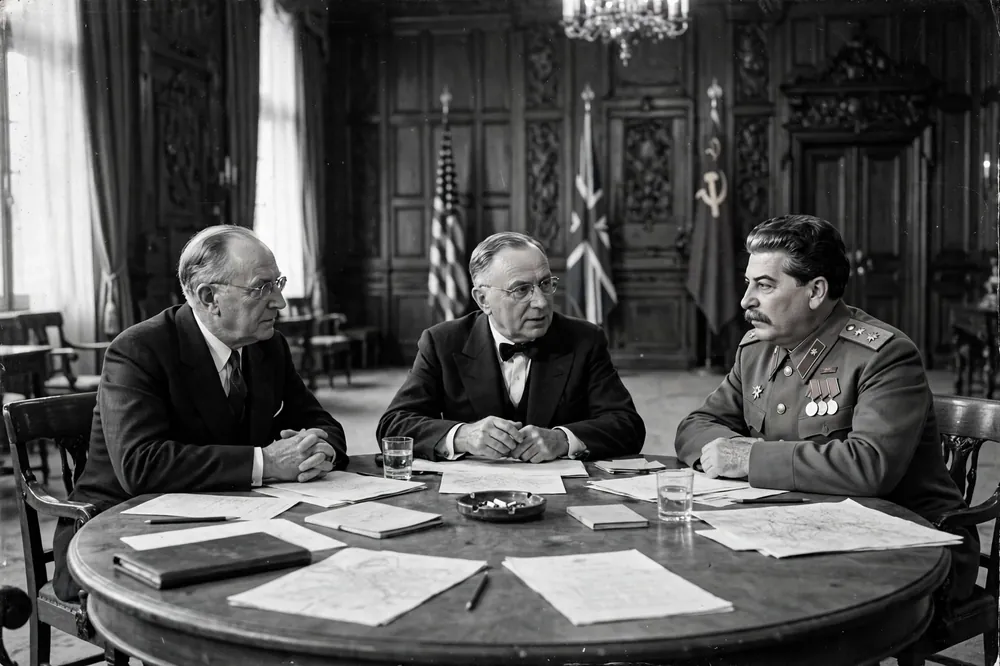
Those who criticise the decision argue that Japan was already defeated, that the bomb was unnecessary, and that its use was a moral wrong. The argument, as made by the historian Gar Alperovitz in Atomic Diplomacy (1965) and by others since, is that Japan was ready to surrender, that the Soviet invasion of Manchuria was the decisive factor, and that the bomb was used, in part, to intimidate the Soviet Union, not to end the war.
The critics also argue that the bomb was a new kind of weapon, one that killed civilians indiscriminately, and that its use on a city, without warning, was a violation of the rules of war. They point to the fact that the United States had not warned Hiroshima, and that the target was a city, not a military base, and they argue that the decision was made for political reasons, not for military ones.
The critics do not deny that the war had to be ended, but they argue that it could have been ended without the bomb, by a blockade, by a demonstration, or by a negotiated surrender.
The role of the Soviet Union
The third debate is over the role of the Soviet Union. The Soviet Union declared war on Japan on 9 August 1945, the same day as the Nagasaki bomb, and invaded Manchuria, destroying the Japanese Kwantung Army in a week.
Some historians, notably Tsuyoshi Hasegawa, have argued that the Soviet invasion was the decisive factor in Japan’s surrender, and that the Japanese government, which had hoped the Soviet Union would mediate a negotiated peace, surrendered when the Soviets entered the war. Others argue that the atomic bombs were decisive, and that the Soviet invasion, though important, came too late to be the cause of the surrender.
The debate is, in part, a debate over the sources: the Japanese records, which have become more accessible in recent decades, show that the Japanese government was more concerned about the Soviet invasion than about the bombs, and that the Emperor’s decision to surrender was made after the Soviet entry into the war.
This article presents both views, and it does not choose between them, because the evidence does not support a single, simple answer.
9. Historiography and Sources
How historians study the decision
The decision to use the atomic bomb has been studied by historians in the United States, Japan and elsewhere, and their work has, in recent decades, brought the debate closer to a shared understanding, even if it has not settled it. The traditional view, as presented by Stimson in 1947 and by the official histories, is that the bomb ended the war and saved lives.
The revisionist view, as presented by Gar Alperovitz in Atomic Diplomacy (1965), is that the bomb was unnecessary and was used to intimidate the Soviet Union. The post-revisionist view, as presented by historians such as Tsuyoshi Hasegawa in Racing the Enemy (2005) and Richard Frank in Downfall (1999), is that the decision was made for military reasons, that the Soviet invasion was at least as important as the bombs, and that the Japanese government was divided and would not have surrendered without both.
The work of these historians has not ended the debate, but it has made it possible to discuss the decision without the polemics that dominated it in the 1960s and 1990s, and it has shown that the history of the decision can be written from the archives, not only from memory.
The archives and the testimony
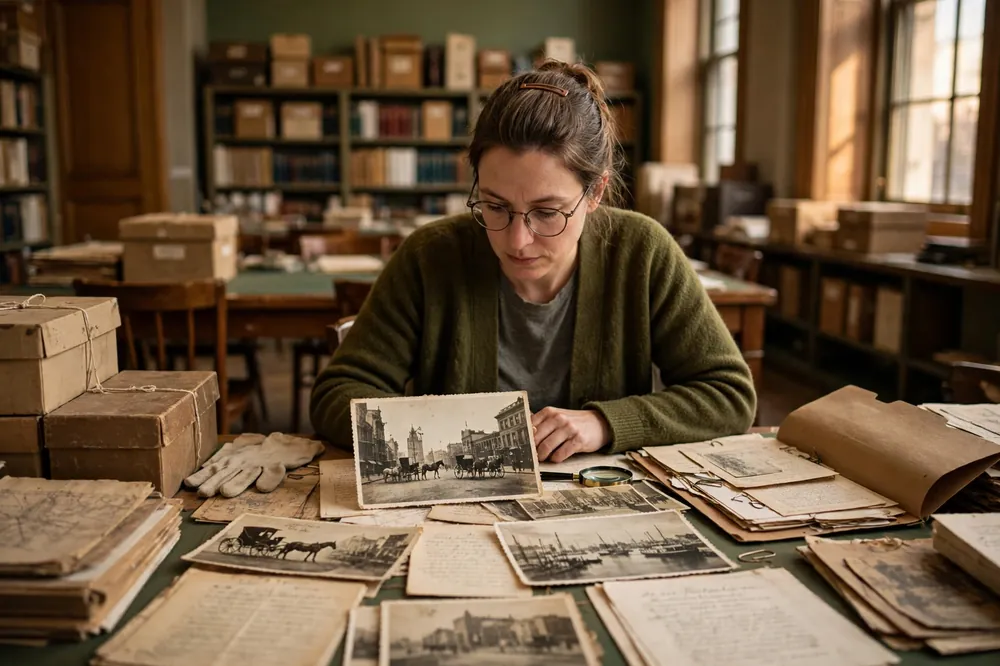
The study of the decision depends on two kinds of evidence: the archives and the testimony. The archives — the documents of the Truman administration, of the Interim Committee, and of the Japanese government — have, in recent decades, become more accessible, and they have allowed historians to reconstruct the decision in detail.
The testimony — the stories of the hibakusha, the survivors of Hiroshima and Nagasaki, recorded in the Hiroshima Peace Memorial Museum and in the Nagasaki Atomic Bomb Museum — is the most important source for understanding what the bombs did, and it is the reason the memory of Hiroshima is a memory of the victims, not only of the decision.
The archives tell the story of the decision, and the testimony tells the story of its consequences, and both are necessary to understand the history of Hiroshima.
10. Key Figures
President Harry S. Truman (United States). President of the United States from April 1945, who made the decision to use the atomic bomb. Truman, who had not known about the bomb until he took office, accepted the recommendation of the Interim Committee and approved the order to use it. He defended the decision for the rest of his life.
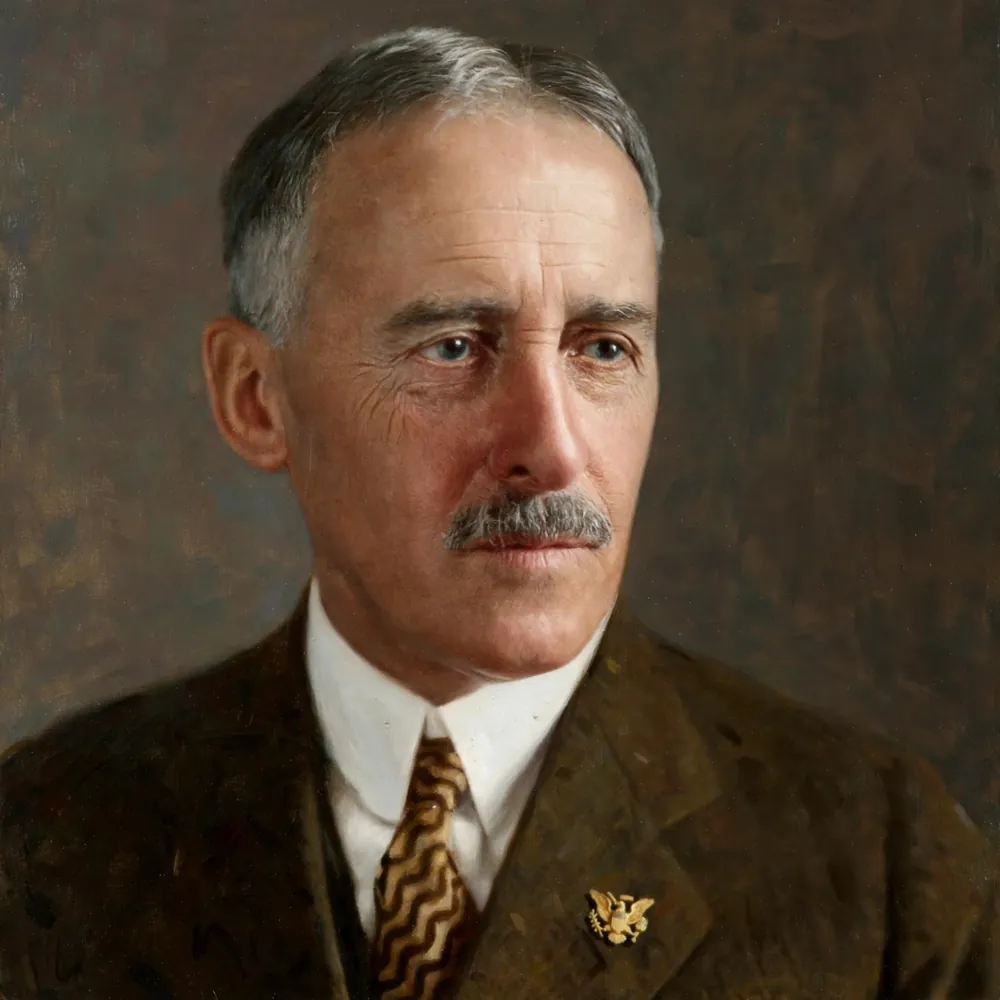
Secretary of War Henry Stimson (United States). Secretary of War from 1940 to 1945, who chaired the Interim Committee and advised Truman to use the bomb. Stimson, in his article “The Decision to Use the Atomic Bomb” (1947), defended the decision as the best way to end the war and save lives.
J. Robert Oppenheimer (United States). Scientific director of the Manhattan Project, who led the building of the bomb at Los Alamos. Oppenheimer, who had believed the bomb should be used, later became a critic of the arms race it began, and he is remembered for his words after the Trinity test: “Now I am become Death, the destroyer of worlds.”
Colonel Paul Tibbets (United States). Commander of the 509th Composite Group and pilot of the Enola Gay, which dropped the bomb on Hiroshima. Tibbets, who named the plane after his mother, defended the mission for the rest of his life.
Emperor Hirohito (Japan). Emperor of Japan, who announced the surrender on 15 August 1945, in a radio broadcast, the first time the Japanese people had heard his voice. Hirohito’s decision to surrender, made after the bombs and the Soviet invasion, ended the war.
Gar Alperovitz (United States). Historian and author of Atomic Diplomacy (1965), the first revisionist account of the decision, which argued that the bomb was unnecessary and was used to intimidate the Soviet Union. Alperovitz’s work began the debate that continues today.
11. Frequently Asked Questions
When were the atomic bombs dropped on Hiroshima and Nagasaki?
Hiroshima on 6 August 1945, and Nagasaki on 9 August 1945, three days later. The bomb on Hiroshima, Little Boy, killed about 70,000 to 80,000 people at once, and the bomb on Nagasaki, Fat Man, killed about 40,000 at once. Japan announced its surrender on 15 August, and signed the surrender on 2 September 1945, on the battleship USS Missouri in Tokyo Bay, ending the Second World War. The dates are close together because the second bomb followed only three days after the first, before Japan had time to assess the new weapon and respond.
How many people died at Hiroshima and Nagasaki?
At Hiroshima, about 70,000 to 80,000 people were killed at once, and about 140,000 by the end of 1945, according to commonly cited estimates, though estimates range from about 90,000 to 166,000. At Nagasaki, about 40,000 were killed at once, and about 70,000 by the end of 1945, with estimates ranging from about 60,000 to 80,000. The figures are given as ranges because the deaths were counted in different ways: those killed at once, and those who died by the end of 1945. The cited figures count the deaths in the months after the bombings, not only on the day itself.
Who decided to use the atomic bomb?
President Harry S. Truman, on the advice of Secretary of War Henry Stimson and the Interim Committee, which recommended in June 1945 that the bomb be used against Japan, without warning, on a military and industrial target. Truman approved the order on 24 July 1945, at the Potsdam Conference. The decision was Truman’s, but it was made on advice: Stimson and the Interim Committee had urged in June 1945 that the weapon be dropped on Japan with no warning, against a target chosen for its military and industrial value. Truman approved the order at Potsdam on 24 July, and the decision has been debated ever since.
Would an invasion of Japan have cost more lives?
That is the central question in the debate, and it is disputed. American estimates of casualties for an invasion ranged from tens of thousands to over a million, and the figure of a million, used by Stimson in 1947, is disputed by historians, who have shown that the estimates made at the time were far lower. Japanese casualties in an invasion would have been far higher, in the millions, but the exact figures are not known. The question is central because the defenders of the decision rest their case on it: if an invasion would have cost more lives than the bombs, the bombs saved lives.
Did the Soviet invasion of Manchuria cause Japan’s surrender?
Some historians, notably Tsuyoshi Hasegawa, argue that the Soviet invasion, on 9 August 1945, was the decisive factor, and that the Japanese government surrendered when the Soviets entered the war. Others argue that the atomic bombs were decisive. The Japanese records show that the government was concerned about both, and the debate has not been settled. The debate is unresolved because both events happened at once: the bombs fell on 6 and 9 August, and the Soviet invasion began on 9 August. The Japanese government was concerned about both, and historians still argue about which of the two weighed more heavily in the decision to surrender.
What is the Hiroshima Peace Memorial?
The Hiroshima Peace Memorial, the Genbaku Dome, is the ruin of a building near the hypocentre of the explosion, preserved as a memorial and declared a UNESCO World Heritage Site in 1996. It stands in the Hiroshima Peace Memorial Park, alongside the Peace Memorial Museum, and every year, on 6 August, the Peace Memorial Ceremony is held there. The memorial matters because it preserves the destruction itself: the ruined building stands as it was left by the explosion, and it is the centre of the Peace Memorial Park, where the ceremony is held every year on 6 August.
12. Sources
- Wikipedia, “Atomic bombings of Hiroshima and Nagasaki” — dates, casualty estimates and the course of the events.
- Encyclopædia Britannica, “Atomic Bombings of Hiroshima and Nagasaki” — background and the decision.
- Henry Stimson, “The Decision to Use the Atomic Bomb”, Harper’s Magazine, February 1947 — the defence of the decision.
- Gar Alperovitz, Atomic Diplomacy: Hiroshima and Potsdam (Simon & Schuster, 1965) — the revisionist account.
- Richard Frank, Downfall: The End of the Imperial Japanese Empire (Random House, 1999) — the invasion estimates and the decision.
- Tsuyoshi Hasegawa, Racing the Enemy: Stalin, Truman, and the Surrender of Japan (Harvard University Press, 2005) — the Soviet invasion and the surrender.
- John Hersey, Hiroshima (Alfred A. Knopf, 1946).
- Hiroshima Peace Memorial Museum, The Outline of the Atomic Bomb Damage in Hiroshima.