 WAR ATLAS MILITARY HISTORY MAGAZINE · WWI — WWII
Hiroshima Peace Memorial Museum
1. Lead
The Hiroshima Peace Memorial Museum stands at the heart of the Peace Memorial Park in Hiroshima, on the ground where, on 6 August 1945, the first atomic bomb used in war exploded above the city. The museum tells the story of that morning — of the bomb, of the destruction, and of the people who died and the people who survived — and it makes, in the plainest possible terms, a case for a world without nuclear weapons.
It is, by any measure, one of the most important museums in the world: it is visited by more than a million people every year, it is the centre of the annual Peace Memorial Ceremony on 6 August, and it is, for the survivors of the bombing — the hibakusha — the place where their testimony is kept and where their story is told to the generations that come after them.
The museum is not, in the usual sense, a war museum. It does not celebrate a victory, and it does not display weapons. It shows, instead, what a nuclear weapon does to a city and to the people who live in it: the photographs of the ruined city, the objects that survived the blast — a watch stopped at 8:15, a child’s tricycle, a lunch box — and the testimonies of the survivors, in their own words.
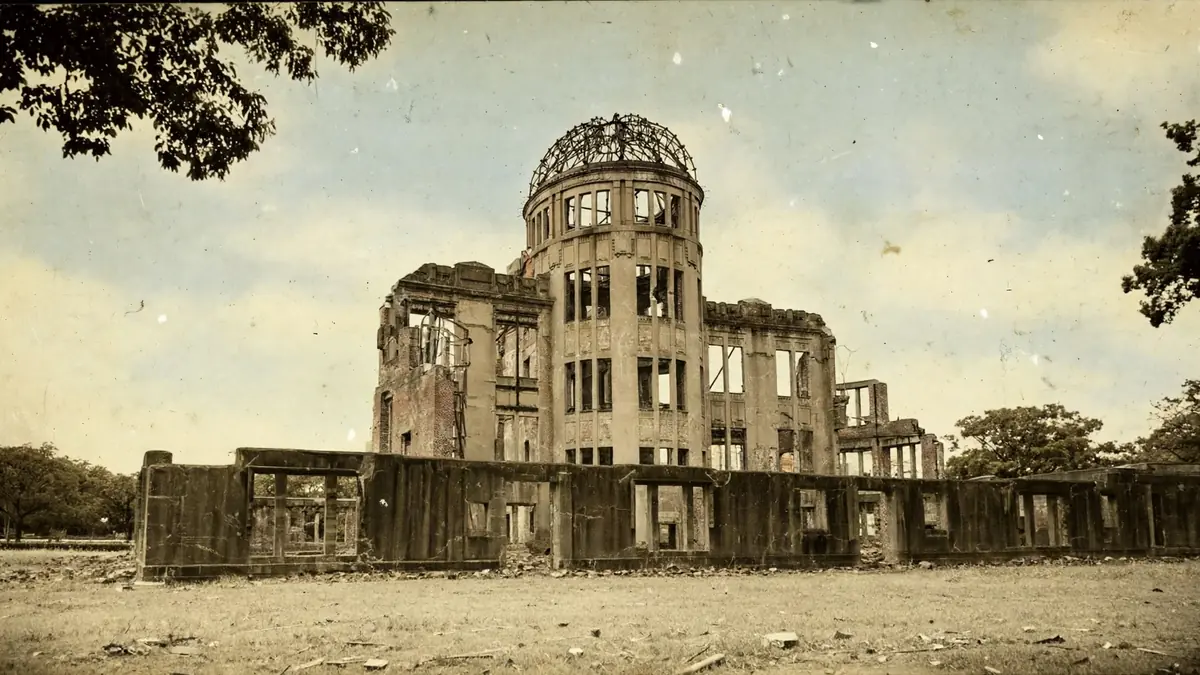
The museum was opened in 1955, ten years after the bombing, and it has been renewed and enlarged several times since, most recently in 2019. It stands beside the Atomic Bomb Dome — the skeletal ruin of the Hiroshima Prefectural Industrial Promotion Hall, the only building near the hypocentre to remain standing — and together the museum and the Dome form the Hiroshima Peace Memorial, inscribed on the UNESCO World Heritage List in 1996.
2. Key Facts
| Name / Tên | Hiroshima Peace Memorial Museum |
| Location | Peace Memorial Park, Naka Ward, Hiroshima, Japan |
| Opened | 24 August 1955 |
| Bombing | 6 August 1945, 8:15 a.m., “Little Boy” uranium bomb |
| Deaths by end of 1945 | About 140,000 (commonly cited range 90,000–166,000) |
| The Dome / Mái vòm | Atomic Bomb Dome (Genbaku Dome), former Industrial Promotion Hall |
| World Heritage | UNESCO, 1996 / UNESCO, 1996 |
| Designer of the park | Kenzō Tange / Kenzō Tange |
| Visitors / Du khách | More than 1 million a year |
| Annual ceremony | Peace Memorial Ceremony, 6 August |
| Key exhibit | A watch stopped at 8:15; a child’s tricycle; the Children’s Peace Monument |
3. Background: Hiroshima Before the Bomb
3.1. A City at War
Hiroshima, in the summer of 1945, was a city of some 340,000 people, a port and an industrial centre on the Inland Sea, and the headquarters of the Japanese Second General Army, the command responsible for the defence of western Japan.
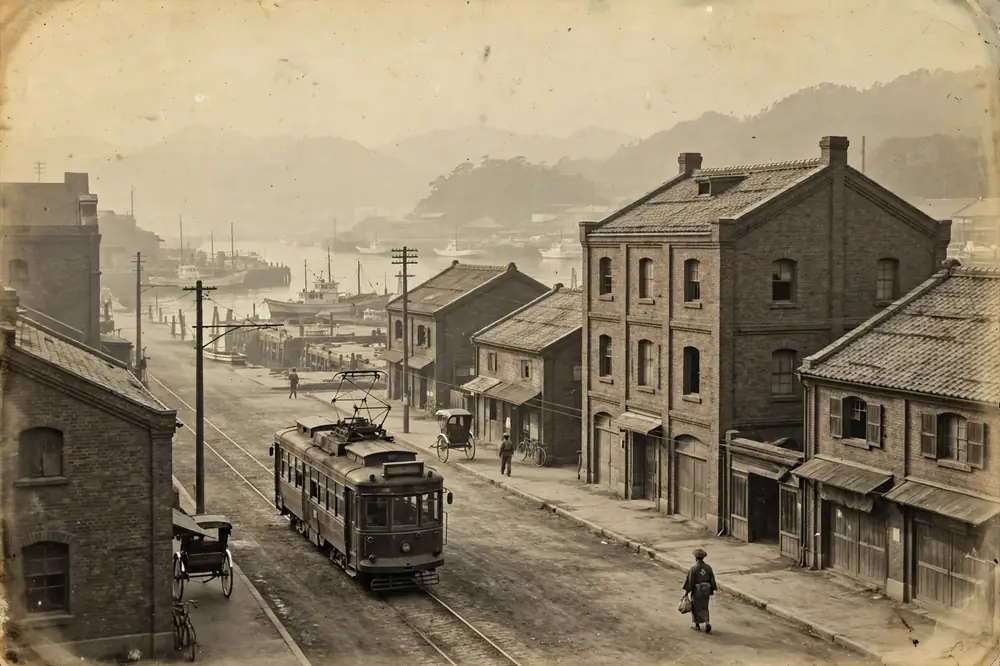
It was, in the eyes of the American planners, a legitimate military target: it was a major military headquarters, it had war industries, and it had not yet been bombed, which meant that the effect of a single atomic bomb could be measured clearly.
The city had been spared the firebombing that had destroyed Tokyo and Osaka, and its people, although they lived under the rationing and the air-raid drills of a country at war, did not expect to be attacked. On the morning of 6 August 1945 the city was, by all accounts, a normal city on a normal summer morning: the trams were running, the children were going to school, and the workers were going to their factories.
At 8:15 a.m. that normality ended, in a single flash of light.
3.2. The Decision to Preserve the Dome
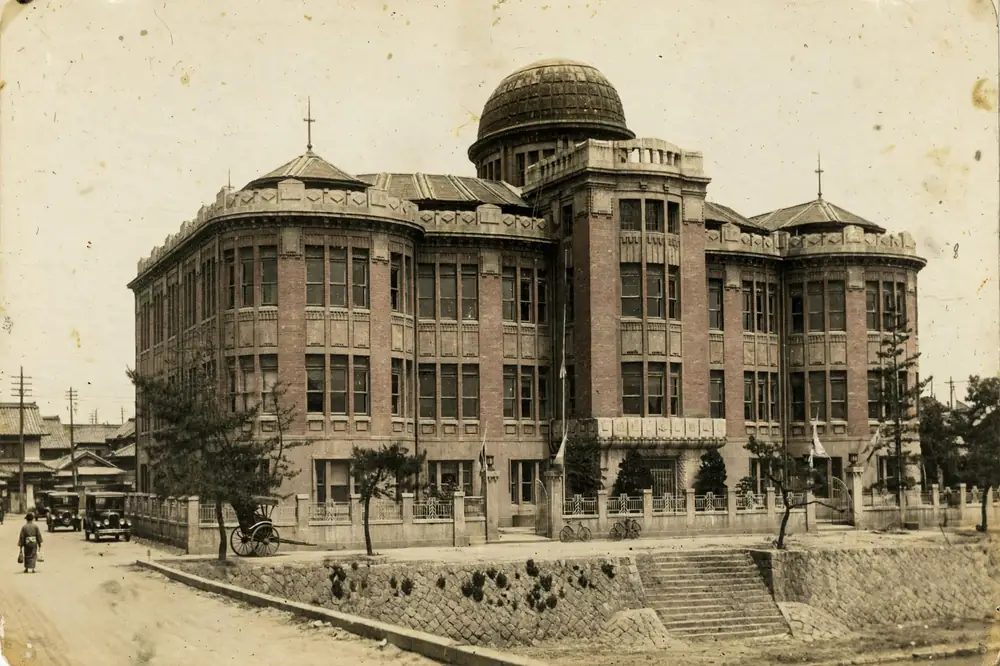
The Hiroshima Prefectural Industrial Promotion Hall, a handsome brick building designed by the Czech architect Jan Letzel and completed in 1915, stood about 160 metres from the hypocentre of the explosion, and it was the only building in the immediate vicinity to remain standing.
Its dome — a steel skeleton, stripped of its covering — became, in the years after the war, the symbol of Hiroshima, and the question of what to do with it was argued for years. Some wanted it demolished, as a reminder of a past best forgotten; others wanted it preserved, as a warning.
In the end the preservationists won, and the building — now known as the Atomic Bomb Dome, or Genbaku Dome — was preserved, first by the city and then, in 1996, by UNESCO, which inscribed it on the World Heritage List as a monument to the destructive power of nuclear weapons and to the hope for lasting peace.
The Dome is the reason the museum exists where it does, and it is the reason the Peace Memorial Park was built around it.
3.2.1. The Genbaku Dome / Mái vòm Genbaku
The Genbaku Dome deserves a closer look, because it is the most powerful object in Hiroshima, and because it is the reason the Peace Memorial exists. The Dome was, before the war, a building of some elegance: a three-storey brick hall with a copper dome, used for exhibitions and for the promotion of Hiroshima’s industries.
The bomb stripped it of everything but its skeleton: the brick walls were shattered, the roof was torn away, and the dome was left as a bare steel frame, open to the sky. The ruin was, in the years after the war, a source of argument: the city council debated, more than once, whether to demolish it, and the decision to preserve it was, in the end, a close one.
The Dome was preserved, and it was, in 1996, inscribed by UNESCO as a World Heritage site, the first site to be inscribed for a negative reason — as a monument to destruction and to the hope that it will never happen again. The Dome is, today, the most photographed object in Hiroshima, and it is the image that the world associates with the atomic bombing.
4. What Happened: 6 August 1945
4.1. The Bombing
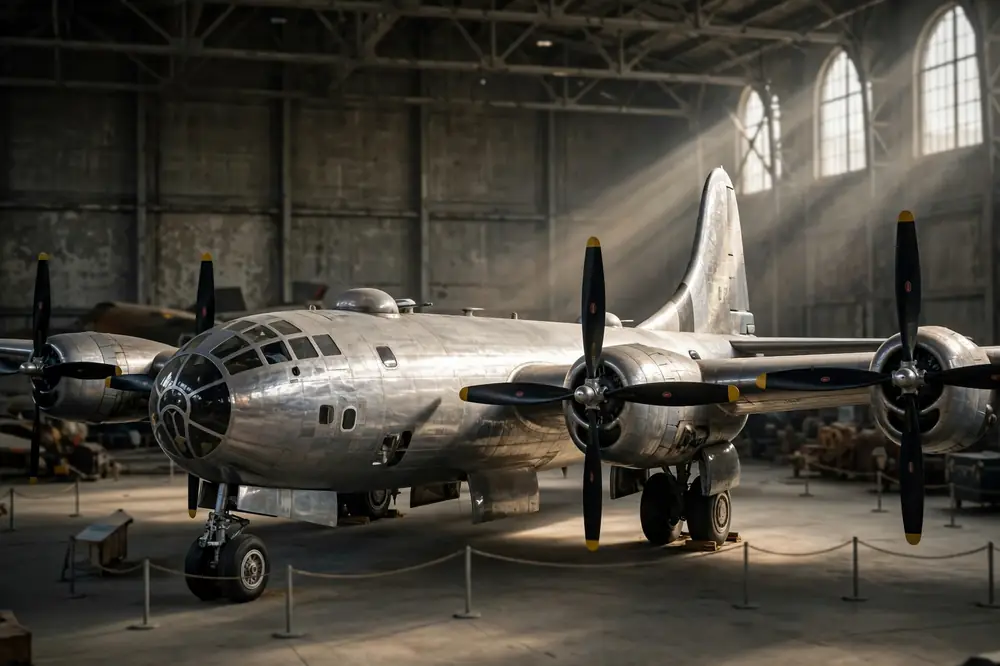
At 8:15 a.m. on 6 August 1945 the American B-29 bomber Enola Gay, piloted by Colonel Paul Tibbets, dropped a single uranium bomb, codenamed “Little Boy”, over Hiroshima. The bomb exploded about 600 metres above the city, with a force equivalent to about 15,000 tons of TNT, and it destroyed, in a single instant, some 70,000 buildings — about 70 per cent of the city — and killed, by the end of the day, tens of thousands of people.
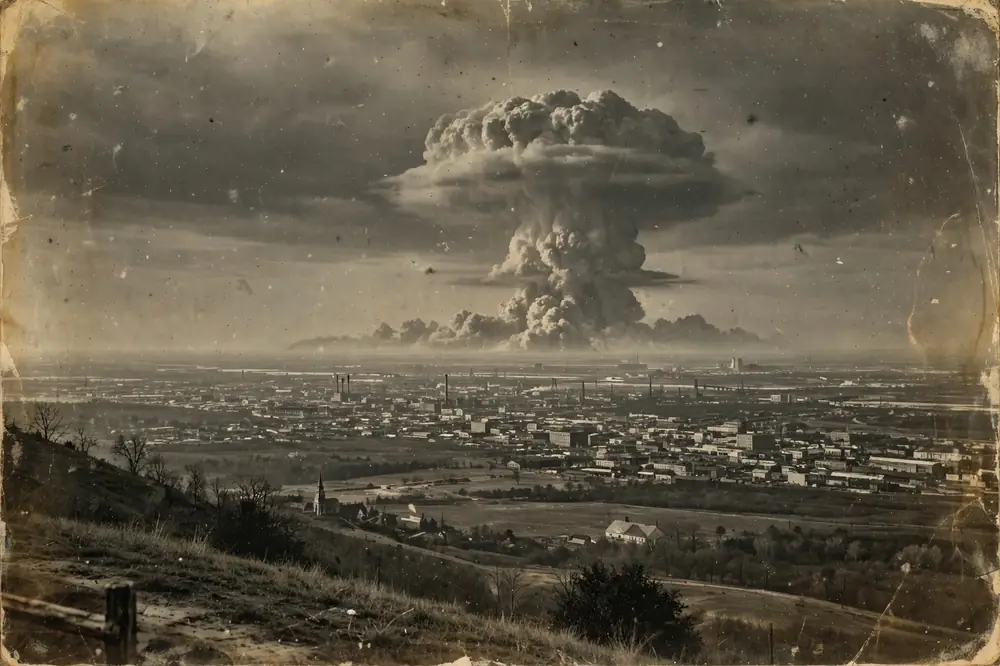
The dead by the end of 1945 are commonly estimated at about 140,000, within a range, in the scholarly literature, of roughly 90,000 to 166,000, the difference depending on how the dead are counted and on how many of the injured died in the months that followed.
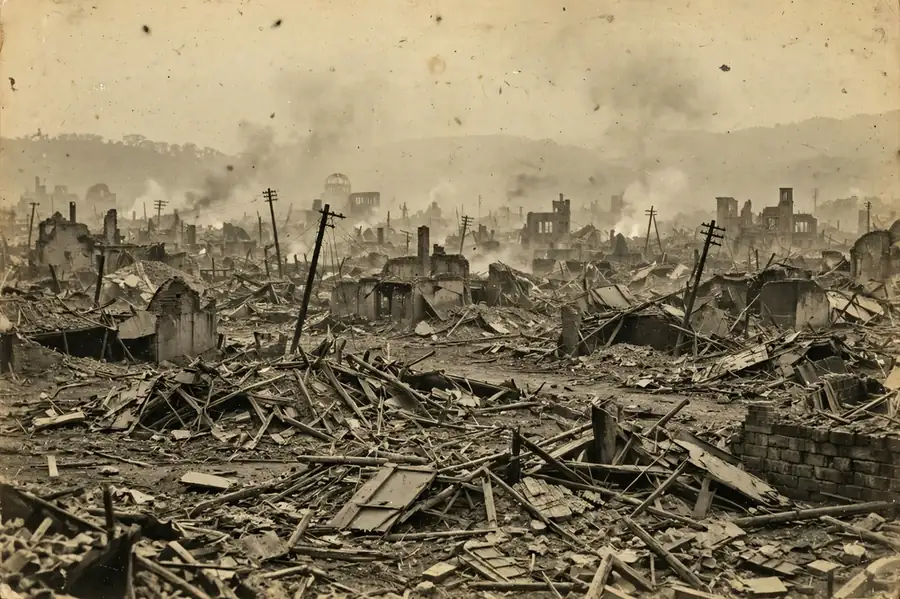
The bomb was the first atomic weapon used in war, and it was followed, three days later, by a second bomb, dropped on Nagasaki. Japan surrendered on 15 August, and the war ended. The bombing of Hiroshima remains, to this day, one of the most argued-over decisions in the history of war, and the museum presents it, as this article does, with the facts and with the controversy, and without taking a side.
4.2. The Aftermath
The aftermath of the bombing was, in the words of the survivors, a scene from hell. The city was burning, the injured were walking through the streets with their skin hanging from their bodies, and the dead were lying where they had fallen.
The survivors — the hibakusha, the “bomb-affected people” — faced, in the months and years that followed, not only the loss of their families and their homes, but the effects of radiation, which caused leukaemia and other cancers, and which, for many, did not appear until years later.
The survivors also faced discrimination: they were, for many years, treated as if they were contagious, and they found it difficult to marry and to find work. The museum tells this story in the words of the survivors themselves, and it does so without sentimentality: the testimonies are plain, they are factual, and they are, for that reason, all the more powerful.
The aftermath is, in the end, the heart of the museum, and it is the reason the museum exists: to show what a nuclear weapon does, not to a city in the abstract, but to the people who live in it.
4.2.1. The Black Rain
The “black rain” that fell on Hiroshima in the hours after the bombing deserves a mention, because it is one of the most haunting details of the story, and because it is one of the least understood. The rain was black because it was mixed with the soot and the ash of the burning city, and it fell, in the afternoon of 6 August, over the western part of the city and over the countryside beyond it.
The people who were caught in it did not know what it was, and they did not know that it was radioactive. The black rain is, in the testimonies of the survivors, one of the most vivid memories of the day, and it has become, in the literature of Hiroshima, a symbol of the bombing itself: a rain that was not water, but ash, and that fell on a city that had, in a single morning, ceased to exist.
The black rain was, for many years, a subject of dispute — whether it had caused radiation sickness, and whether the people who had been exposed to it should be recognised as hibakusha — and the dispute was, in the end, settled in favour of the survivors, who were, in 2021, recognised by the Japanese courts as victims of the bombing.
5. The Site Today: The Peace Memorial Park
5.1. The Park and the Dome
The Peace Memorial Park, designed by the architect Kenzō Tange and completed in the 1950s, is a long, green space on the river, at the centre of which stands the Atomic Bomb Dome. The park is, in the words of its designer, a place of peace and of prayer, and it contains, in addition to the Dome, the Cenotaph, the Flame of Peace, the Peace Bell, the Children’s Peace Monument and the museum itself.
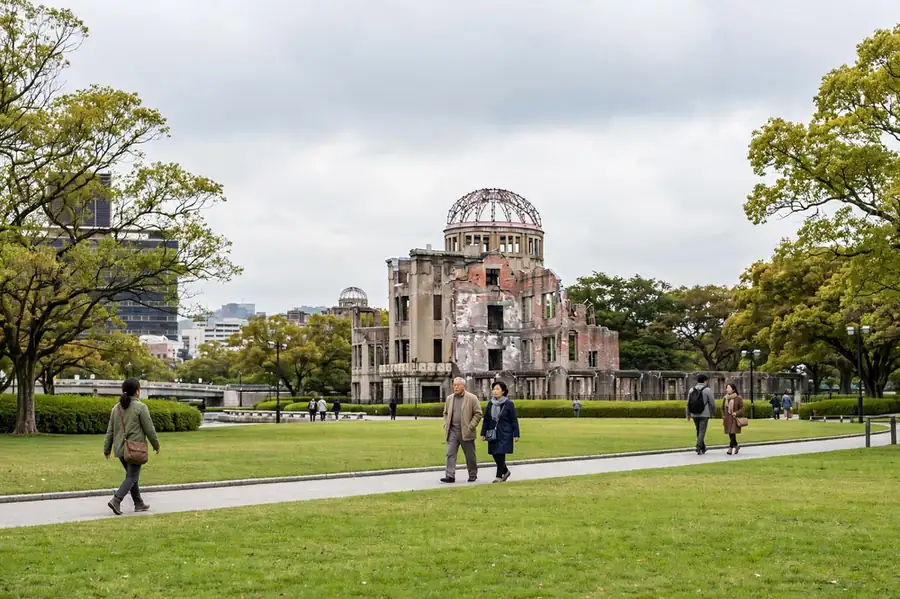
The park is visited, every year, by more than a million people, and it is the place where the city of Hiroshima, every 6 August, holds its Peace Memorial Ceremony, at which the mayor reads the Peace Declaration and the names of the dead are added to the register kept in the Cenotaph.
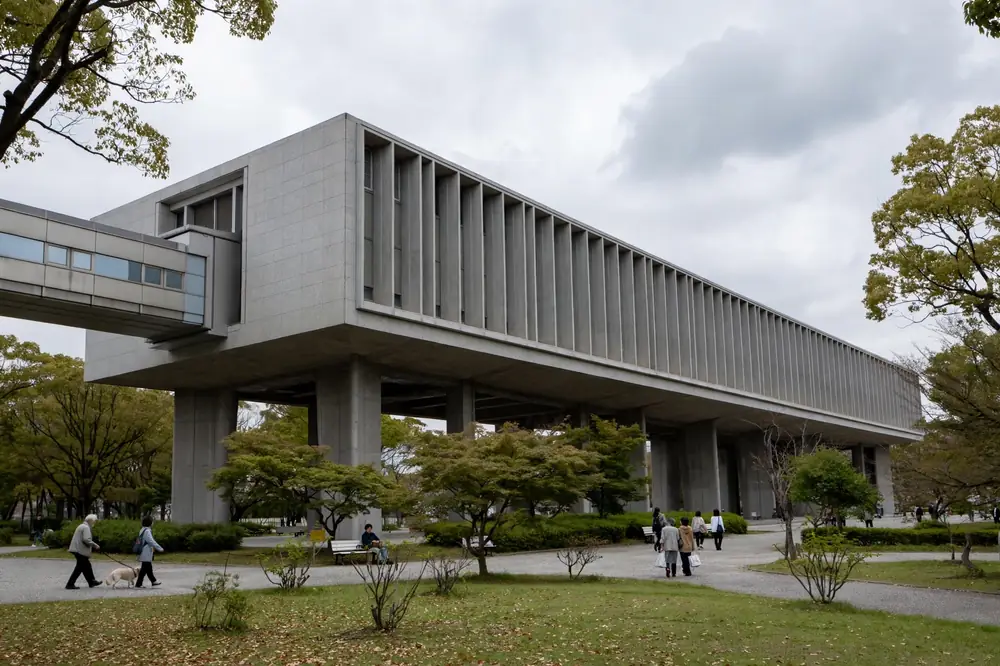
The park is, in the end, the most visited place in Hiroshima, and it is the place where the city’s identity — as a city of peace — is most clearly expressed. It is also, for the visitor, a place of quiet: the park is, in spite of the crowds, a place where people walk slowly, speak quietly, and think about what happened there.
5.2. The Museum Building
The museum itself is a long, low building, also designed by Kenzō Tange, which stands at the southern end of the park. It was opened on 24 August 1955, ten years after the bombing, and it has been renewed and enlarged several times since, most recently in a major renovation completed in 2019, which reorganised the exhibition and added new material, including the testimonies of survivors recorded on video.
The museum’s exhibition is arranged in two parts: the first, in the main building, tells the story of the bombing and of its aftermath, through photographs, objects and testimonies; the second, in the east building, tells the story of Hiroshima before the bombing, of the war, and of the movement for nuclear disarmament.
The museum is, in the words of its director, “a place where the visitor is asked to think”, and it is, for that reason, a museum that is unlike any other: it does not tell the visitor what to think, it shows the visitor what happened, and it leaves the visitor to draw their own conclusions.
5.2.1. The Main Hall
The main hall of the museum deserves a closer look, because it is the heart of the exhibition, and because it contains the objects that have become the symbols of Hiroshima. The hall is a large, quiet space, in which the visitor walks past the photographs of the ruined city, the models of the city before and after the bombing, and the objects that survived the blast: a watch stopped at 8:15, a child’s tricycle, scorched and twisted, a lunch box, a school uniform.
The objects are displayed without drama, in plain cases, with plain labels, and it is their plainness that makes them powerful: they are the ordinary things of ordinary lives, and they are, in the words of one visitor, “the things that make the bombing real”.
The main hall is, in the end, the reason people come to the museum, and it is the reason they remember it: the objects are small, they are ordinary, and they are, for that reason, unforgettable.
6. Survivors and Testimony
6.1. The Hibakusha / Hibakusha
The hibakusha — the “bomb-affected people” — are the survivors of the atomic bombings of Hiroshima and Nagasaki, and they are, in the words of the museum, “the living witnesses” of what happened. There were, at the end of 1945, some 200,000 hibakusha in Hiroshima and Nagasaki, and their numbers have, with the passage of time, declined: by the 2020s only a few tens of thousands remained, and their average age was over eighty.
The hibakusha have, for seventy years, told their stories, in schools, in parliaments and in the United Nations, and they have done so, in the words of one of them, “so that it will never happen again”. Their organisation, Nihon Hidankyō — the Japan Confederation of A- and H-Bomb Sufferers Organizations — was awarded the Nobel Peace Prize in 2024, in recognition of its work in keeping the memory of the bombings alive and in campaigning for a world without nuclear weapons.
The prize was, in the words of the Nobel committee, a recognition of “the extraordinary efforts” of the hibakusha “to achieve a world free of nuclear weapons”.
6.2. Testimonies in the Museum
The museum’s exhibition is built, in large part, around the testimonies of the hibakusha, and it is the testimonies that make the museum what it is. The testimonies are presented in the survivors’ own words, in writing and on video, and they are, in the words of the museum’s curators, “the most important exhibits in the museum”.
The testimonies tell, in plain language, what happened on the morning of 6 August, what the survivors saw, what they lost, and how they lived afterwards. They are not, in the usual sense, dramatic: they are quiet, they are factual, and they are, for that reason, all the more moving.
The museum has, in recent years, recorded the testimonies of the surviving hibakusha on video, so that their stories will survive them, and it has made the testimonies available, in translation, to visitors from around the world. The testimonies are, in the end, the museum’s greatest treasure, and they are the reason the museum is, in the words of one visitor, “a place that changes you”.
6.2.1. The Children’s Peace Monument
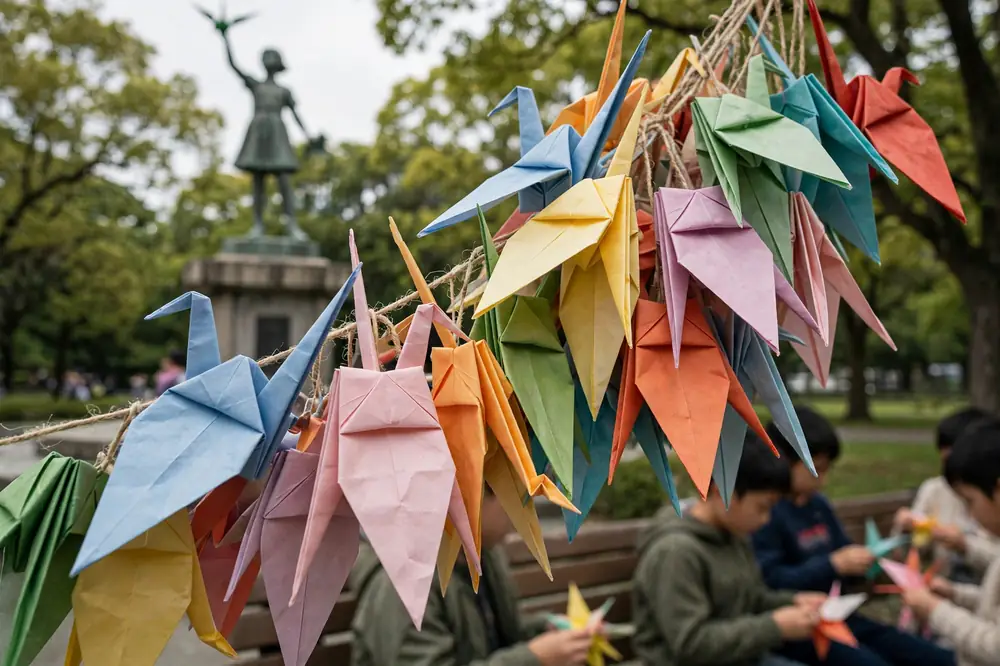
The Children’s Peace Monument, which stands in the Peace Memorial Park, deserves a mention, because it is the most loved monument in the park, and because it tells the story of Sadako Sasaki, a girl who was two years old when the bomb fell, and who died of leukaemia in 1955, at the age of twelve.
Sadako, while she was in hospital, folded paper cranes — hundreds of them, in the Japanese tradition, in the hope that her wish, to live, would be granted, if she reached a thousand. She died before she had finished, and her classmates finished the cranes for her, folding the rest so that the thousand was complete.
The monument, which was built by her classmates and by children from all over Japan, shows Sadako holding a crane above her head, and it is covered, every day, with paper cranes sent by children from around the world. The monument is, in the end, the most powerful symbol of the Peace Memorial Park: a child’s wish, made in paper, that the bombing should never happen again.
7. Debate and Controversy
7.1. The American Debate
The decision to drop the atomic bomb on Hiroshima has been argued over in the United States ever since 1945, and the argument is, in essence, about whether the bombing was necessary. The defenders of the decision — among them the men who made it, President Harry Truman and his advisers — have argued that the bomb saved lives, by ending the war quickly and by making unnecessary an invasion of Japan, which would, in their view, have cost the lives of hundreds of thousands of American soldiers and of many more Japanese.
The critics have argued that Japan was already defeated, that it was seeking a way to surrender, and that the bomb was unnecessary, and that it was dropped, in part, as a warning to the Soviet Union. The argument has never been settled, and it probably never will be: the documents are incomplete, the motives were mixed, and the question — whether the bombing was necessary — is, in the end, a question about values as much as about facts.
The museum presents the debate, as this article does, with the arguments on both sides, and without taking a side.
7.2. The Japanese Debate
The bombing is also argued over in Japan, and the argument there is, in essence, about how the bombing should be remembered. Some in Japan have argued that the museum, and the Peace Memorial Park, present the Japanese as victims and ignore the crimes of the Japanese Empire — the invasion of China, the attack on Pearl Harbor, the treatment of prisoners of war — and that the memory of Hiroshima should be set in the context of the war that Japan started.
Others have argued that the museum’s purpose is not to tell the history of the war, but to tell the story of what a nuclear weapon does, and that the story is, in itself, a sufficient reason for the museum to exist. The argument is, in the end, an argument about memory: about what should be remembered, and about how it should be remembered.
The museum has, in recent years, added material about the war and about Japan’s role in it, and it has done so, in the words of its director, “so that the visitor can understand the whole story”. The debate continues, and it is, in the view of many, a healthy one.
7.2.1. The Smithsonian Controversy
The controversy over the Smithsonian Institution’s planned exhibition of the Enola Gay in 1995 deserves a mention, because it shows how difficult it is, even fifty years after the event, to exhibit the atomic bombing. The Smithsonian had planned an exhibition that would present the bombing in its historical context, including the Japanese aggression that preceded it and the debate about whether the bomb was necessary.
Veterans’ groups in the United States protested, and the exhibition was, in the end, cancelled and replaced by a much smaller display, of the aircraft alone, without the historical context. The controversy was, in the view of many historians, a sign of how sensitive the subject remains, and of how difficult it is to present a balanced account of the bombing.
The Hiroshima Peace Memorial Museum, by contrast, has, in the words of its director, “tried to present the facts, and to let the visitor decide”, and it is, for that reason, a model of how a museum can deal with a difficult subject.
8. Visiting Information
8.1. Practical Information
The Hiroshima Peace Memorial Museum is open every day except 30–31 December, from 8:30 a.m. to 6:00 p.m. (to 7:00 p.m. in August), and admission is 200 yen for adults, with discounts for students and for groups. The museum is in the Peace Memorial Park, in the centre of Hiroshima, a short walk from the Hiroshima station by tram, and it is, in the words of the city’s tourist office, “the first place that every visitor to Hiroshima should see”.
The museum provides audio guides in many languages, including English, and its exhibition labels are in Japanese and in English. The museum is, in the view of its staff, a place for everyone: for schoolchildren, for tourists, for the families of the hibakusha, and for the heads of state who visit Hiroshima — among them, in 2016, President Barack Obama, the first sitting American president to visit the city.
The museum asks its visitors, in the words of its guidebook, “to look, to listen, and to think”.
8.2. What to See
The visitor to the museum should, in the view of its curators, allow at least two hours, and should see, in particular, four things: the main hall, with its photographs and its objects; the testimonies of the hibakusha, on video; the model of the city before and after the bombing; and the Children’s Peace Monument, in the park outside.
The visitor should also see the Atomic Bomb Dome, which stands at the northern end of the park, and the Cenotaph, which stands at its centre, and which contains the register of the names of the dead — a register that is, every year, added to, as the names of those who have died from the effects of the bombing are recorded.
The visitor should, in the end, walk through the park slowly, and should, in the words of the museum’s guidebook, “take the time to think about what you have seen”. The museum is, in the view of its staff, not a place to be hurried through, but a place to be experienced, and it is, for that reason, a place that rewards the visitor who takes their time.
8.2.1. The Cenotaph
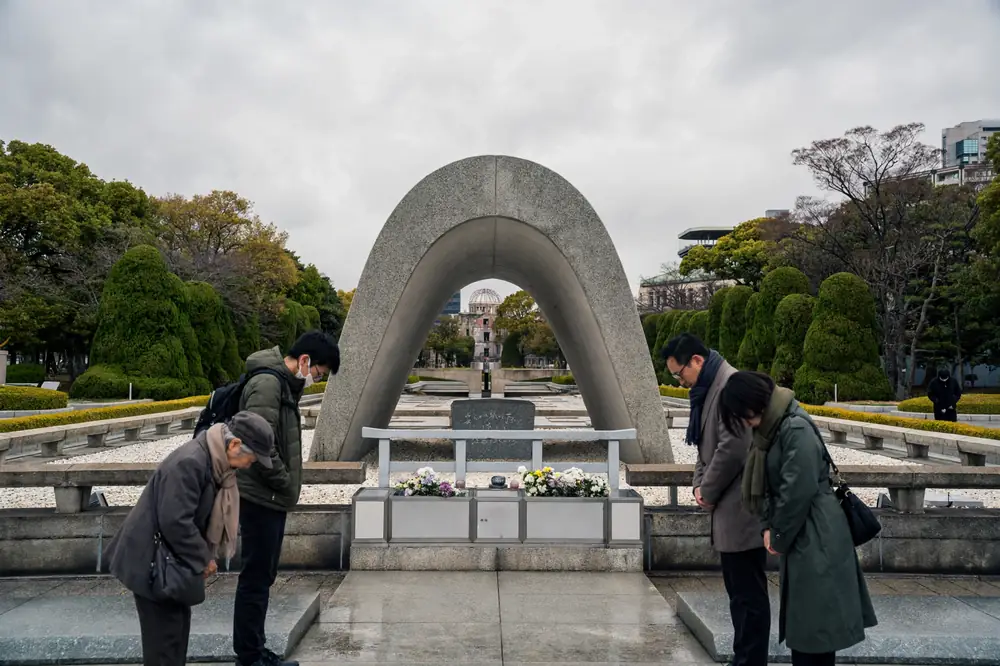
The Cenotaph, which stands at the centre of the Peace Memorial Park, deserves a mention, because it is the most solemn place in the park, and because it is the place where the dead are remembered. The Cenotaph is a simple, saddle-shaped arch, designed by Kenzō Tange, and beneath it, in a stone chest, is kept the register of the names of the dead — the names of all those who died as a result of the bombing, a register that is, every year, added to, as the names of those who have died from the effects of radiation are recorded.
The inscription on the Cenotaph reads: “Let all the souls here rest in peace; for we shall not repeat the evil.” The words are, in the view of many, the most important words in Hiroshima, and they are the reason the Cenotaph is, for the visitor, the place where the visit to the Peace Memorial Park ends, and where the visitor pauses, in silence, before leaving.
The Cenotaph is, in the end, the heart of the Peace Memorial Park, and it is the place where the city’s promise — that it will never happen again — is kept.
9. Commemoration and Education
9.1. The Peace Memorial Ceremony
Every year, on 6 August, the city of Hiroshima holds its Peace Memorial Ceremony in the Peace Memorial Park, at 8:15 a.m., the time the bomb exploded. The ceremony is attended by the families of the dead, by the hibakusha, by the mayor and by representatives of the Japanese government, and by diplomats and by visitors from around the world.
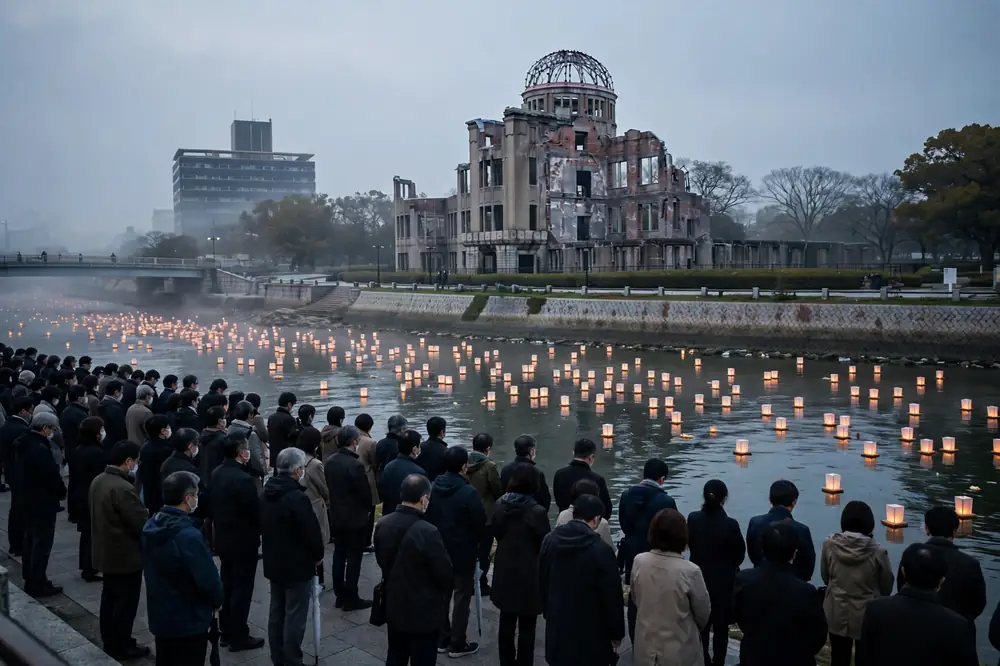
At 8:15 a moment of silence is observed, the Peace Bell is rung, and the mayor reads the Peace Declaration, in which the city calls, each year, for the abolition of nuclear weapons. The ceremony is, in the words of the city’s mayor, “the most important day in Hiroshima”, and it is broadcast, every year, throughout Japan and around the world.
The ceremony is, in the end, the reason the Peace Memorial Park exists: it is the place where the city remembers, and where it renews, each year, its promise that the bombing will never be forgotten and will never be repeated.
9.2. Education and Peace Studies
The museum is, in addition to being a museum, a centre for education and for peace studies, and it runs, every year, programmes for schoolchildren, for teachers and for students from around the world. Schoolchildren from all over Japan visit the museum, as part of their education, and they listen to the testimonies of the hibakusha and they learn, in the words of the museum’s education department, “what a nuclear weapon does, and why it must never be used again”.
The museum also runs, in co-operation with the city of Hiroshima and with the United Nations, programmes for the training of peace educators, and it hosts, every year, conferences and seminars on nuclear disarmament. The museum’s educational work is, in the view of its director, “the most important work that the museum does”, because it is the work that ensures that the memory of the bombing will survive the hibakusha themselves, and that it will be carried, by the generations that come after them, into the future.
9.2.1. The Flame of Peace
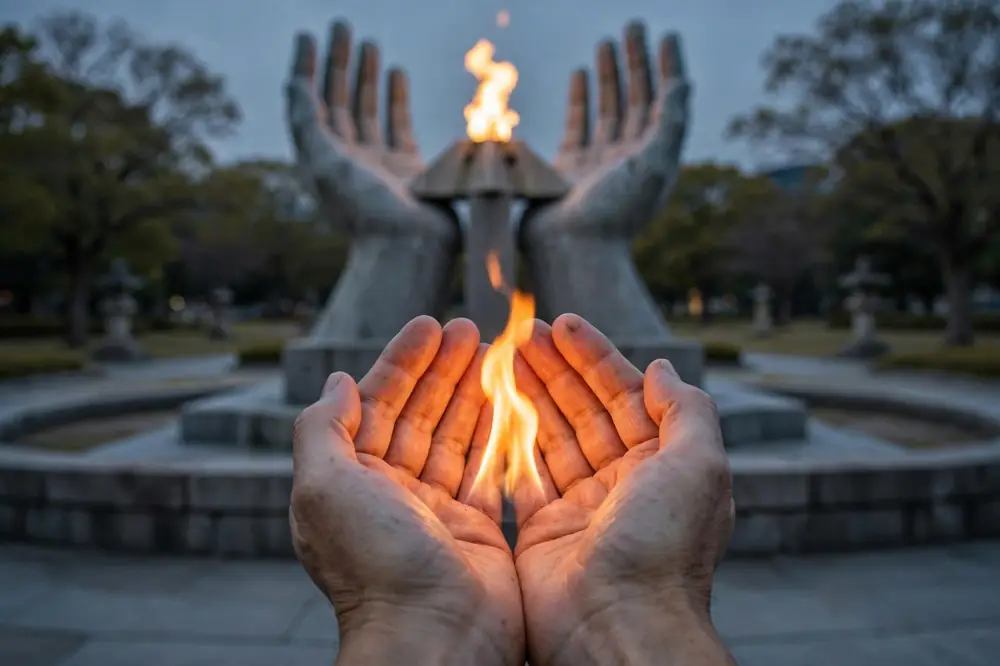
The Flame of Peace, which burns in the Peace Memorial Park, deserves a mention, because it is the most visible symbol of the city’s promise, and because it is the flame that will, in the words of the city, “burn until all nuclear weapons have been abolished”.
The flame was lit in 1964, and it has burned ever since, in a monument designed by Kenzō Tange, in which the flame is held in a pair of hands, cupped together, as if in prayer. The flame is, in the words of the city’s mayor, “a promise and a prayer”, and it is the place where the visitor to the Peace Memorial Park, having seen the museum and the Dome, pauses to think about what they have seen.
The flame is, in the end, the most hopeful object in the park: it is a flame that will go out, and its going out will be, in the words of the city, “the day when the world is free of nuclear weapons”.
10. Legacy
10.1. The Dome as World Heritage
The inscription of the Hiroshima Peace Memorial — the Atomic Bomb Dome — on the UNESCO World Heritage List in 1996 was, in the words of the UNESCO committee, a recognition of the Dome as “a stark and powerful symbol of the most destructive force ever created by humankind”, and as a monument to “the hope for world peace and the ultimate elimination of all nuclear weapons”.
The inscription was, at the time, controversial: the United States and China opposed it, on the grounds that the Dome was a monument to a single event and that it ignored the context of the war. The inscription went ahead, and the Dome became the first World Heritage site to be inscribed for a negative reason — as a monument to destruction.
The inscription has, in the years since, brought the Dome and the museum to the attention of the world, and it has made the Peace Memorial Park one of the most visited World Heritage sites in Asia. The Dome is, in the end, the reason the museum is known around the world, and it is the reason the Peace Memorial Park is, in the words of UNESCO, “a place of universal significance”.
10.2. The Message of Hiroshima
The message of Hiroshima is, in the words of the museum, a simple one: that nuclear weapons must never be used again, and that the world must be rid of them. The message is carried, by the hibakusha, by the museum, and by the city of Hiroshima, to the world, and it is, in the words of the mayor’s Peace Declaration, “a message from the only city to have suffered an atomic bombing, to the world”.
The message has been heard: the hibakusha were awarded the Nobel Peace Prize in 2024, and the Treaty on the Prohibition of Nuclear Weapons, which entered into force in 2021, was, in the words of its supporters, “the fruit of the hibakusha‘s work”.
The message has not, however, been fully answered: the world still has, in the 2020s, some 12,000 nuclear weapons, and the risk of their use, in the words of the Nobel committee, “has never been higher”. The museum exists, in the end, because the message has not yet been answered, and because, in the words of the museum’s director, “as long as nuclear weapons exist, the museum must exist”.
10.2.1. Hibakusha and the Nobel Prize 2024
The award of the Nobel Peace Prize to Nihon Hidankyō in 2024 deserves a closer look, because it was, in the words of the Nobel committee, a recognition of “the extraordinary efforts” of the hibakusha “to achieve a world free of nuclear weapons”, and because it was, in the words of the organisation’s leaders, “a prize for all the hibakusha, living and dead”.
The prize was awarded at a moment when the hibakusha were, in their own words, “dying out”, and when the youngest of them were in their eighties, and it was, in the view of many, a recognition that came just in time.
The prize was also, in the view of the Nobel committee, a warning: the committee said, in its citation, that the taboo against the use of nuclear weapons was “under pressure”, and that the hibakusha‘s testimony was “more important than ever”.
The prize brought the hibakusha and the museum to the attention of the world, and it reminded the world, in the words of one newspaper, “that the people who saw the bomb are still with us, and that their message is still urgent”.
11. Frequently Asked Questions
What is the Hiroshima Peace Memorial Museum?
A museum in the Peace Memorial Park in Hiroshima, opened in 1955, which tells the story of the atomic bombing of 6 August 1945, through photographs, objects and the testimonies of the survivors, the hibakusha. It stands beside the Atomic Bomb Dome, a UNESCO World Heritage site.
When was Hiroshima bombed?
On 6 August 1945, at 8:15 a.m., when the American B-29 Enola Gay dropped a single uranium bomb, “Little Boy”, over the city. About 140,000 people had died by the end of 1945, within a commonly cited range of 90,000–166,000.
What is the Atomic Bomb Dome?
The skeletal ruin of the Hiroshima Prefectural Industrial Promotion Hall, the only building near the hypocentre to remain standing after the bombing. It was preserved as a monument, and inscribed on the UNESCO World Heritage List in 1996.
Who are the hibakusha?
The survivors of the atomic bombings of Hiroshima and Nagasaki. Their organisation, Nihon Hidankyō, was awarded the Nobel Peace Prize in 2024 for its work in keeping the memory of the bombings alive and in campaigning for a world without nuclear weapons.
Can I visit the museum?
Yes. The museum is open every day except 30–31 December, from 8:30 a.m. to 6:00 p.m. (to 7:00 p.m. in August). Admission is 200 yen for adults. Audio guides are available in many languages, including English. Allow at least two hours.
What is the Peace Memorial Ceremony?
An annual ceremony held in the Peace Memorial Park on 6 August, at 8:15 a.m., the time the bomb exploded. A moment of silence is observed, the Peace Bell is rung, and the mayor reads the Peace Declaration, calling for the abolition of nuclear weapons.
12. Sources
- Wikipedia, “Hiroshima Peace Memorial Museum” and “Atomic Bomb Dome” — dates, the bombing, the Dome and the UNESCO inscription.
- Encyclopædia Britannica, “Hiroshima” — the bombing and its aftermath.
- Hiroshima Peace Memorial Museum, official website (hpmmuseum.jp) — the exhibition, visiting information and the Peace Memorial Ceremony.
- UNESCO World Heritage Centre, “Hiroshima Peace Memorial (Genbaku Dome)” — the 1996 inscription.
- John Hersey, Hiroshima (1946) — the classic account of six survivors.
- Richard B. Frank, Downfall: The End of the Imperial Japanese Empire (Random House, 1999) — the debate about the decision to use the bomb.
- The Nobel Prize, “The Nobel Peace Prize 2024” — the award to Nihon Hidankyō.