 WAR ATLAS MILITARY HISTORY MAGAZINE · WWI — WWII
Foibe massacres
1. Lead
The foibe massacres were killings carried out in 1943 and 1945 in Istria, Dalmatia and the Julian March, the borderlands between Italy and Yugoslavia, in which Yugoslav partisans and the Yugoslav secret police killed Italians and others — fascists, soldiers, officials and civilians — and threw many of their bodies into foibe, the deep natural sinkholes of the karst landscape.
The number of victims is disputed: estimates range from about 3,000 to 5,000 in the work of some historians to 10,000 to 20,000 in some Italian accounts, with a commonly cited Italian figure of about 5,000 to 11,000. The killings took place in two waves: the first in the autumn of 1943, after the Italian armistice, when partisans took control of Istria, and the second in the spring of 1945, after the Yugoslav Army took Trieste, Gorizia and Istria.
The foibe have become a symbol in Italy of the suffering of the Italians of Istria and Dalmatia, and of the exodus of some 250,000 to 350,000 Italians who left Yugoslavia after the war. In Slovenia and Croatia, the killings are remembered differently, as part of a war in which all sides committed crimes, and the numbers and the motives are contested.
This article presents the events as historians describe them, gives the range of estimates, and does not take the side of any party.
2. Key Facts
| Date | September–October 1943; May–June 1945 |
| Location | Istria, Dalmatia and the Julian March (present-day Italy, Slovenia and Croatia) |
| Perpetrators | Yugoslav partisans and OZNA (Yugoslav secret police) |
| Victims | Italians (fascists, soldiers, officials and civilians); also Croats, Slovenes and others |
| Number of victims | Estimates range from about 3,000–5,000 to 10,000–20,000; commonly cited Italian figure about 5,000–11,000 |
| Context | Italian armistice (1943); Yugoslav occupation of the Julian March (1945); Istrian exodus |
| Commemoration | Giorno del Ricordo (Day of Remembrance), 10 February, in Italy since 2004; Basovizza memorial |
| Related | Istrian–Dalmatian exodus: about 250,000–350,000 Italians left Yugoslavia after the war |
3. Background
Istria and the Julian March
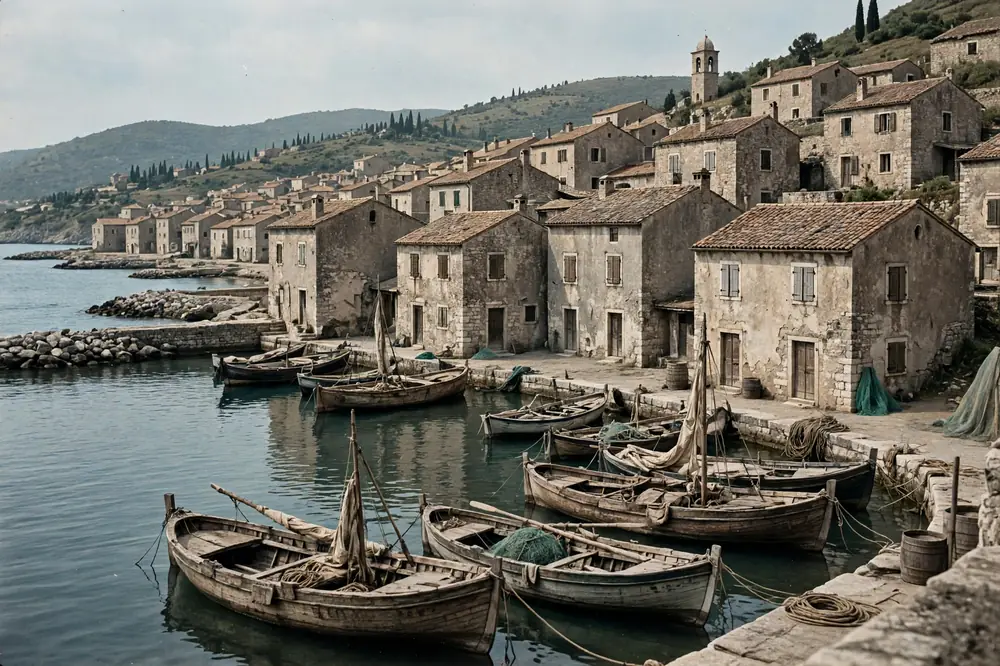
Istria, Dalmatia and the Julian March were, for centuries, a borderland between the Italian and the Slav worlds. The coast of Istria and Dalmatia had been Venetian for centuries, and its towns — Trieste, Pola, Fiume, Zara — were Italian in language and culture, while the countryside was Slav — Croat and Slovene.
After the First World War, Italy annexed Istria, the Julian March and Zara, and the region became a part of Italy. The Italian government, first liberal and then fascist, pursued a policy of Italianisation: Slav schools were closed, Slav names were Italianised, and Slavs were excluded from public life.
The policy created resentment, and it created a resistance: in the 1920s and 1930s, Slav partisans — the TIGR movement — fought the Italian state, and the Italian state answered with repression, imprisonment and, in some cases, execution.
Fascist Italy and the war
In 1941, Italy, together with Germany, invaded Yugoslavia, and the Julian March became a front line in a war of occupation and resistance. The Italian Army in Yugoslavia committed crimes against the Slav population — reprisals, deportations, the burning of villages and the internment of civilians in camps, in which thousands died — and the Yugoslav partisans, under Josip Broz Tito, fought a guerrilla war against the Italians and the Germans.
The war in Yugoslavia was, from the start, a war of great brutality, in which all sides committed crimes, and in which the civilian population suffered most. The foibe killings of 1943 and 1945 must be understood in this context: they were not an isolated event, but a part of a war in which Italians and Slavs had been killing each other for years, and in which the end of the war brought revenge as well as liberation.
What is a foiba? / Foiba là gì?
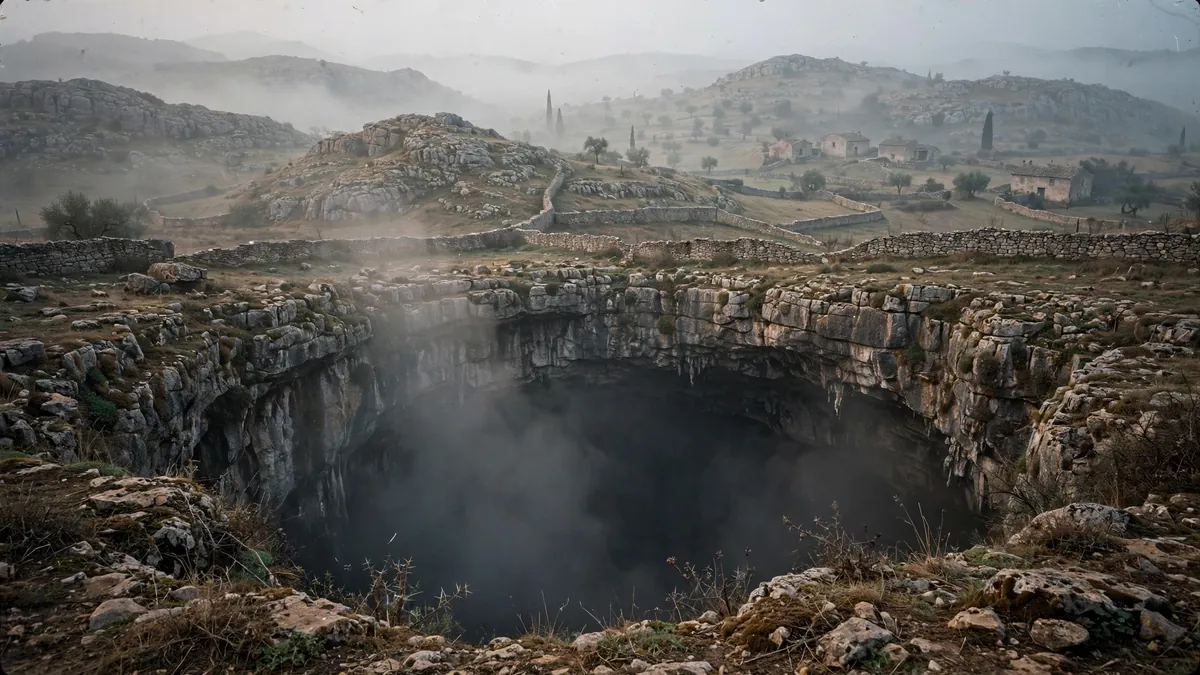
A foiba — the plural is foibe — is a deep natural sinkhole in the karst landscape of Istria and the Julian March, a vertical shaft in the limestone, sometimes tens of metres deep, formed by water dissolving the rock.
The karst of the region is full of such sinkholes, and they were, in the war, used as places to dispose of bodies: a body thrown into a foiba would fall out of sight, and it would be difficult, and in many cases impossible, to recover it.
The use of the foibe as killing sites is the reason the killings are remembered by that name, and it is the reason the number of victims is so hard to establish: many of the bodies were never recovered, and many of the foibe were never explored. The most famous of the foibe is the Basovizza foiba, near Trieste, which is now a national memorial in Italy.
4. What Happened
The first wave: autumn 1943
On 8 September 1943, Italy signed an armistice with the Allies, and the Italian Army in Yugoslavia collapsed. In Istria, the Yugoslav partisans took control of much of the peninsula, and in the weeks that followed, they arrested Italians — fascist officials, soldiers, policemen and civilians who were seen as collaborators or as enemies of the new order — and killed many of them, throwing their bodies into the foibe.
The killings were, in part, revenge for the Italian occupation, and in part a political act: the partisans were establishing a new Yugoslav authority in Istria, and they were removing those who might oppose it. The number of victims in 1943 is estimated at about 500 to 1,000, though the figures are disputed, and the killings were stopped when the Germans reoccupied Istria in October 1943, driving the partisans into the hills.
The second wave: spring 1945
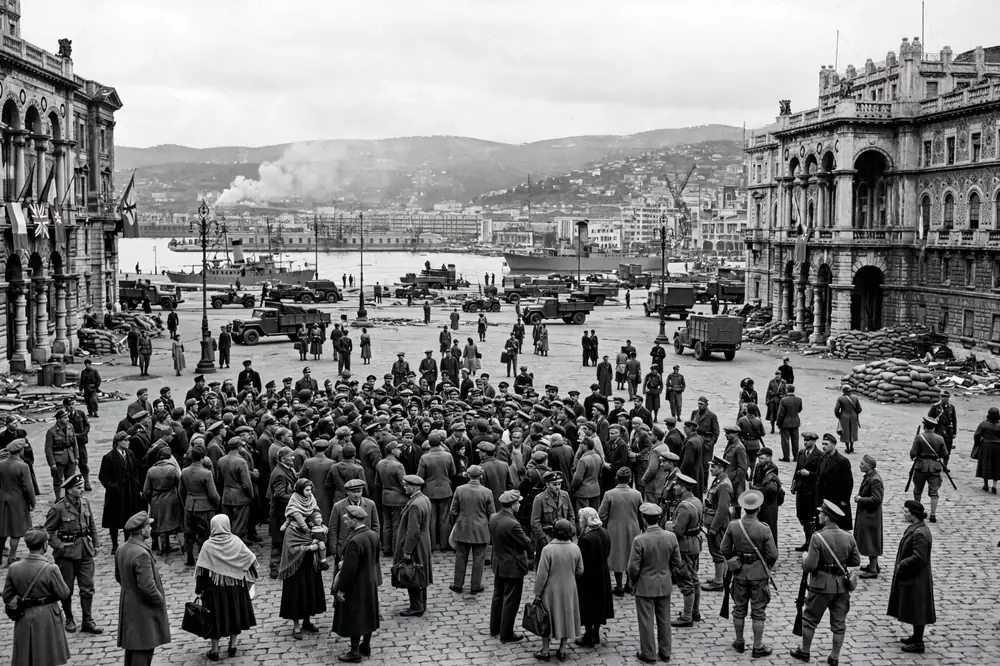
The second and larger wave of killings took place in May and June 1945, after the Yugoslav Army, the 4th Army under General Petar Drapšin, took Trieste, Gorizia and Istria. In the weeks after the liberation, the Yugoslav secret police, OZNA, arrested thousands of Italians — fascists, soldiers, officials, and civilians, including many who had nothing to do with fascism — and killed many of them, in the foibe and in other places, and deported others to camps in Yugoslavia, where many died.
The killings were, in part, revenge for the Italian occupation and for the crimes the Italians had committed in Yugoslavia, and in part a political act: the Yugoslav government, which claimed Istria and the Julian March, was removing the Italian population that might oppose its claim.
The number of victims in 1945 is the subject of the greatest dispute: Italian sources give figures of 5,000 to 10,000 or more, while some historians, working from Yugoslav and Italian archives, give figures of 3,000 to 5,000 for the two waves combined.
Who were the victims?
The victims were, in the main, Italians, but they were not only Italians. The partisans and OZNA also killed Croats and Slovenes who were seen as collaborators or as enemies of the new order — members of the Croatian Ustasha, Slovenian Home Guards, and others — and they killed some Germans and some members of other groups.
The victims included fascist officials and soldiers, who had been part of the Italian occupation, but they also included civilians — teachers, priests, shopkeepers and farmers — who had nothing to do with fascism, and who were killed because they were Italian, or because they were seen as a threat to the new Yugoslav state.
The killings were not, in the main, a battle: they were arrests, followed by executions, and the bodies were disposed of in the foibe, in caves, and in mass graves, many of which have never been found.
5. Aftermath
The Istrian exodus
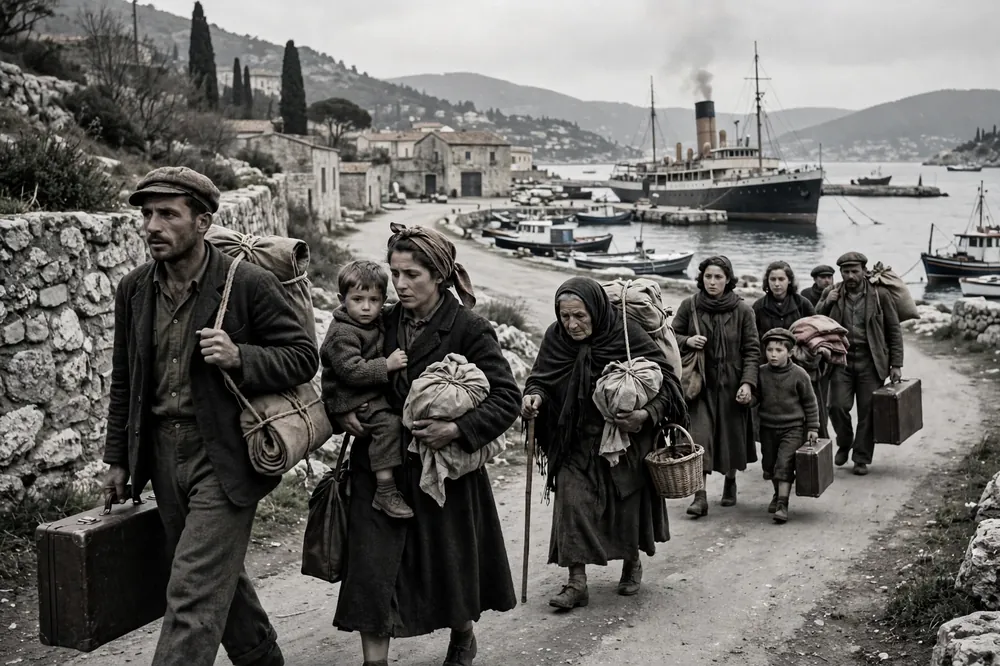
The foibe killings, and the fear they created, were one of the causes of the Istrian–Dalmatian exodus, in which some 250,000 to 350,000 Italians left Yugoslavia after the war, most of them between 1945 and 1956. The exodus was the largest population movement in the history of the region, and it changed the demography of Istria and Dalmatia forever: towns that had been Italian for centuries became Croat and Slovene, and the Italian community of the region, which had numbered hundreds of thousands, was reduced to a small minority.
The exiles — the esuli — settled in Italy, in Trieste and in other cities, and in other countries, and they carried with them the memory of the foibe and of the exodus, which became a central part of their identity. The exodus is remembered in Italy as a tragedy, and it is marked by the Giorno del Ricordo, the Day of Remembrance, on 10 February.
The border settlement
The border between Italy and Yugoslavia was settled, in stages, after the war. The Treaty of Paris of 1947 gave most of Istria and the Julian March to Yugoslavia, and Trieste became a Free Territory, divided into two zones, one administered by the British and Americans and one by the Yugoslavs.
In 1954, the London Memorandum divided the Free Territory: Trieste and its surroundings went to Italy, and the rest went to Yugoslavia. In 1975, the Treaty of Osimo confirmed the border, and Italy formally renounced its claim to Istria and Dalmatia.
The border settlement did not settle the memory: in Italy, the loss of Istria was remembered as a national humiliation, and in Yugoslavia, the acquisition of Istria was remembered as a national victory. The foibe, which had been a part of the war, became a part of the peace, and a symbol of the division between the two memories.
Justice and the absence of trials
No one was ever tried for the foibe killings. The Yugoslav government, which had carried them out, was never held to account, and the Italian government, which had lost the war and the territory, did not press for trials. The killings were, in the years after the war, largely forgotten in Italy, where the focus was on the reconstruction and on the crimes of the Germans, and they were forgotten in Yugoslavia, where the focus was on the victory over fascism.
It was not until the 1990s, after the fall of Yugoslavia and the independence of Slovenia and Croatia, that the foibe were remembered again in Italy, and that the debate over the numbers and the motives began in earnest. The absence of trials is, for the families of the victims, a source of bitterness, and it is one of the reasons the foibe remain a contested memory.
6. The Human Cost
The numbers and their meaning
The number of victims of the foibe is the most contested fact about them, and it is important to understand why the numbers differ. The Italian figures — 10,000 to 20,000 in some accounts, 5,000 to 11,000 in the most commonly cited Italian estimates — are based, in part, on the lists of the missing compiled by the Italian authorities after the war, and on the accounts of the exiles.
The historians’ figures — about 3,000 to 5,000 for the two waves combined, in the work of historians such as Raoul Pupo and Gianni Oliva — are based on the archives of the Yugoslav and Italian governments, on the exhumations that have been carried out, and on a critical reading of the sources.
The difference is not only a matter of counting: it is a matter of what counts as a victim of the foibe, and of what counts as evidence. Some of the missing were killed in the foibe, some were killed elsewhere, some died in camps, and some simply disappeared.
The range of estimates — from about 3,000 to 20,000 — reflects this uncertainty, and it is the honest way to present the numbers.
The exiles
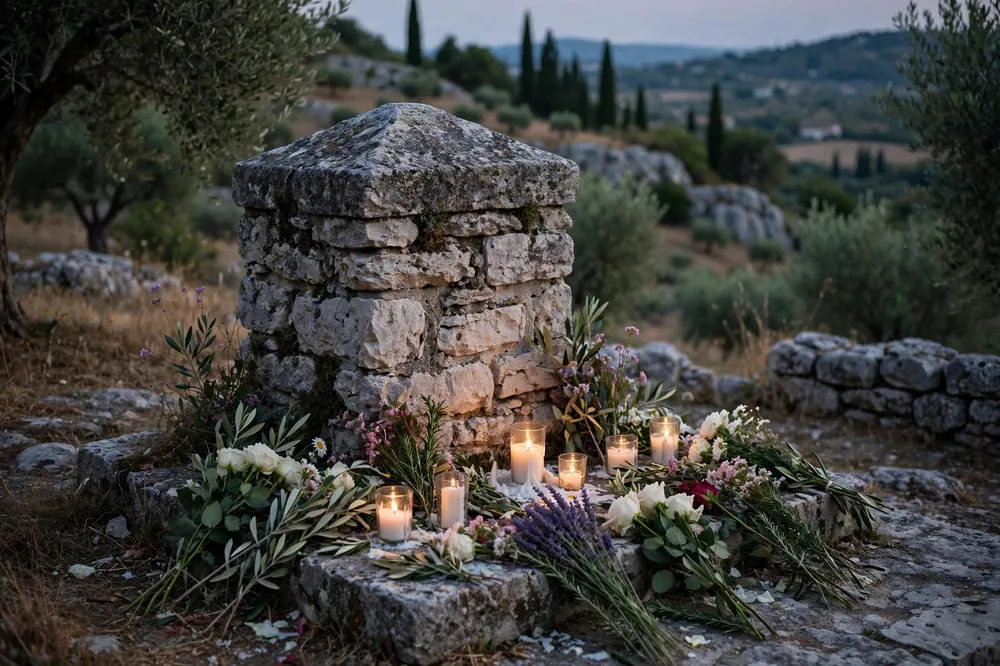
The human cost of the foibe is not only the number of the dead: it is also the number of the living who were forced to leave. The Istrian exodus, in which some 250,000 to 350,000 Italians left Yugoslavia, was one of the largest forced migrations in Europe after the Second World War, and it was a human cost that is often forgotten in the debate over the numbers of the dead.
The exiles left their homes, their businesses and their cemeteries, and they arrived in Italy as refugees, in camps and in cities that did not want them. Their story is a part of the foibe memory, and it is remembered in the associations of the exiles, in the museums of Trieste, and in the Giorno del Ricordo.
The exodus is also a reminder that the foibe were not only a crime: they were a part of a larger history of displacement, in which millions of Europeans were forced to leave their homes after the war.
7. Memory and Commemoration
Basovizza and the Giorno del Ricordo
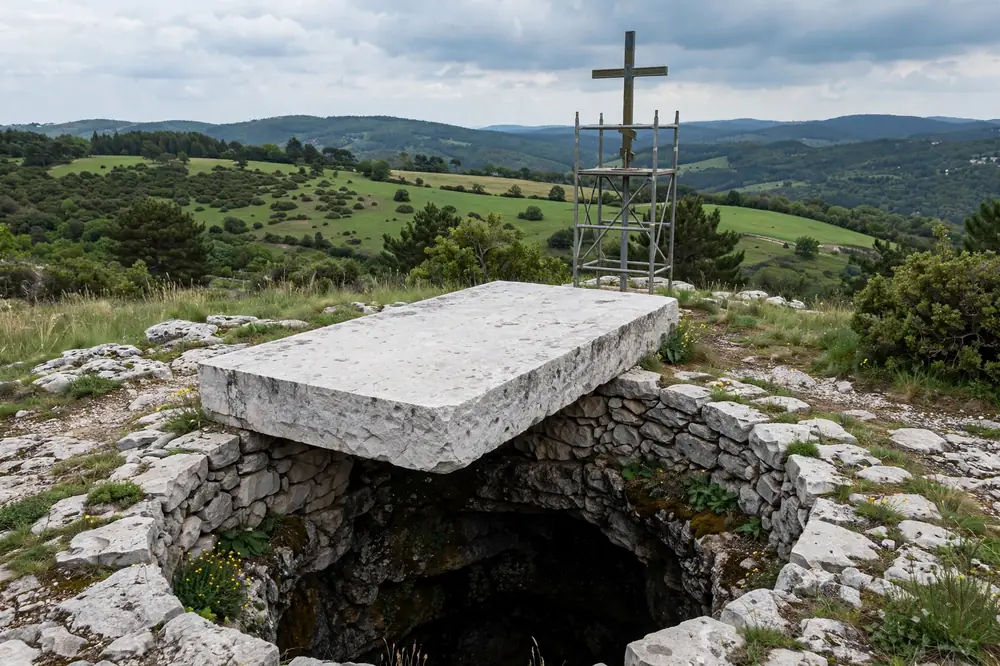
The central memorial of the foibe in Italy is the Basovizza foiba, near Trieste, a sinkhole into which bodies were thrown in 1945. In 1959, the foiba was sealed with a stone slab, and in 1992 it was declared a national monument.
In 2004, the Italian parliament created the Giorno del Ricordo, the Day of Remembrance, on 10 February, the anniversary of the Treaty of Paris of 1947, to remember the victims of the foibe and the Istrian exodus. The day is marked by ceremonies in Trieste, in Rome and in other Italian cities, and by the award of honours to the families of the victims.
The Basovizza memorial, with its stone slab and its cross, is visited by thousands of people every year, and it is the place where the Italian memory of the foibe is most visible.
Memory in Slovenia and Croatia
In Slovenia and Croatia, the foibe are remembered differently. The killings are acknowledged, but they are placed in the context of the war in Yugoslavia, in which the Italians had committed crimes against the Slav population, and in which the partisans had fought a war of liberation.
The Slovenian and Croatian historians who have studied the foibe — among them, the Slovenian historian Jože Pirjevec — argue that the numbers given in Italian accounts are exaggerated, and that the killings were, in the main, the killing of fascists and collaborators, not the killing of innocent civilians.
The Slovenian and Croatian governments have not created a day of remembrance for the foibe, and the memorials in Slovenia and Croatia are, in the main, memorials to the partisans and to the victims of fascism. The difference in memory is a part of the larger difference between the Italian and the Slav memories of the war, and it is a difference that has not been resolved.
The exiles’ memory
The memory of the foibe is kept alive, above all, by the associations of the exiles — the Federazione delle Associazioni degli Esuli Istriani, Fiumani e Dalmati — and by the museums and the archives they have created in Trieste and in other Italian cities.
The exiles’ memory is a memory of loss: of the homes they left, of the people they lost, and of the country that no longer exists. It is a memory that has been passed down through the generations, and it is a memory that has shaped the politics of the region.
The Giorno del Ricordo, which was created in 2004, was in large part the result of the exiles’ campaign, and it is a recognition, by the Italian state, of their suffering. The exiles’ memory is not the only memory of the foibe, but it is the memory that has had the most influence in Italy, and it is the memory that this article has tried to present alongside the others.
8. Controversy and Debate
The numbers
The debate over the numbers is the most heated part of the foibe controversy, and it is a debate that has not been settled. Italian sources, including the lists of the missing compiled after the war, give figures of 5,000 to 11,000, and in some accounts 10,000 to 20,000.
Historians working from the archives, including the Italian historian Raoul Pupo, who has studied the foibe for decades, give figures of about 3,000 to 5,000 for the two waves combined, with about 500 to 1,000 in 1943 and about 2,500 to 4,000 in 1945.
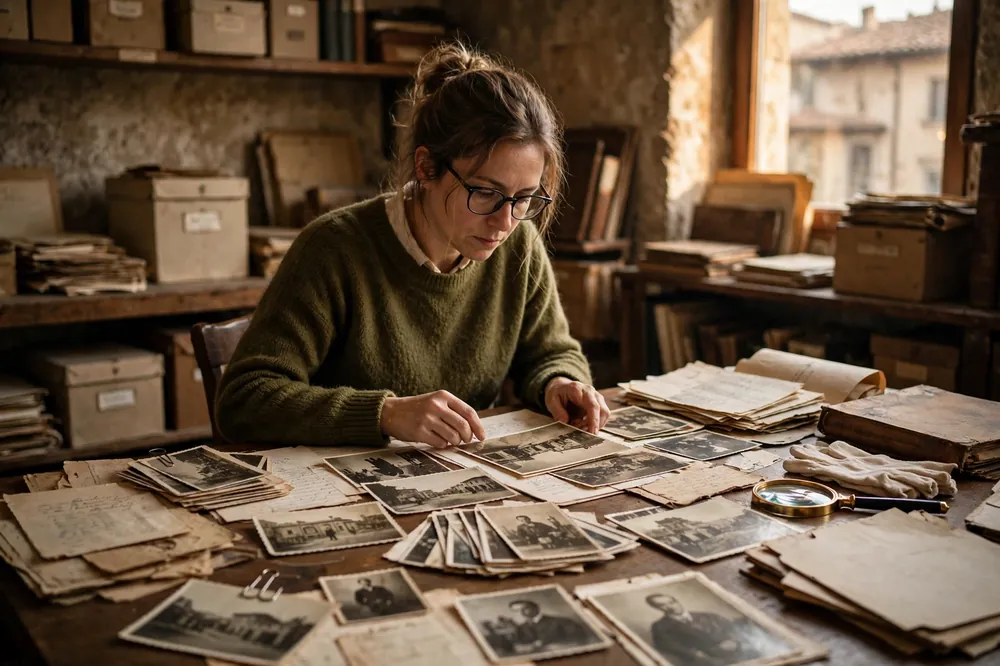
The difference is, in part, a matter of method: the Italian lists include people who disappeared for other reasons — who died in camps, who were killed elsewhere, or who simply left and were never heard from again — while the historians’ figures are based on the bodies that have been found and on the documents that have survived.
The debate is also a matter of politics: in Italy, the higher figures have been used by some to argue that the foibe were a genocide, and in Slovenia and Croatia, the lower figures have been used by some to argue that the killings were a limited revenge, not a systematic crime. This article gives the range, and it does not choose between them.
Genocide or revenge?
The second debate is over the nature of the killings: were they a genocide, a systematic attempt to destroy the Italian population of Istria, or were they a revenge, a political purge of fascists and collaborators that also killed civilians?
Italian sources, and the Italian parliament in the law that created the Giorno del Ricordo, have described the foibe as a part of a policy of ethnic cleansing, and some Italian writers have called them a genocide. Slovenian and Croatian historians, and some Italian historians, argue that the killings were not a genocide: they were not aimed at destroying the Italian population as such, but at removing the fascist administration and at establishing a new Yugoslav authority, and the civilians who were killed were killed because they were seen as a threat, not because they were Italian.
The debate is a matter of definition, and it is a debate that reflects the larger debate over the nature of the war in Yugoslavia, in which all sides committed crimes, and in which the line between revenge and genocide is hard to draw. This article does not use the word genocide, because the term is contested, and because the evidence does not support a single, simple description.
The Italian crimes in Yugoslavia
The third debate is over the context: the crimes the Italians committed in Yugoslavia before the foibe. The Italian Army in Yugoslavia, from 1941 to 1943, committed crimes against the Slav population that are well documented: the burning of villages, the deportation of civilians, the internment of tens of thousands of people in camps, in which thousands died, and the use of reprisals, in which civilians were killed for the actions of the partisans.
The Italian crimes are, in Slovenia and Croatia, remembered as the reason for the foibe: the partisans, who had seen their villages burned and their families killed, took revenge when they had the chance. In Italy, the Italian crimes are less well known, and they are sometimes forgotten in the memory of the foibe.
This article presents both: the foibe were a crime, and the Italian crimes in Yugoslavia were also a crime, and neither excuses the other. The history of the region is a history of crimes committed by all sides, and it is only by remembering all of them that the history can be understood.
9. Historiography and Sources
How historians study the foibe
The foibe have been studied by historians in Italy, Slovenia and Croatia, and their work has, in recent decades, brought the debate closer to a shared understanding, even if it has not settled it. The Italian historian Raoul Pupo, whose book Il lungo esodo (2005) is the standard work on the exodus, has argued for the lower figures, based on the archives, and has placed the killings in the context of the war in Yugoslavia.
The Slovenian historian Jože Pirjevec, whose work on the war in Yugoslavia is widely respected, has argued that the killings were a part of the Yugoslav revolution, and that they must be understood as a political act, not as an ethnic crime.
The Croatian historians who have studied the foibe have, in the main, agreed with the lower figures, and have placed the killings in the context of the Italian occupation. The work of these historians has not ended the debate, but it has made it possible to discuss the foibe without the polemics that dominated it in the 1990s, and it has shown that the history of the region can be written from the archives, not only from memory.

The archives and the exhumations
The study of the foibe depends on two kinds of evidence: the archives and the exhumations. The archives — the documents of the Yugoslav and Italian governments, of the partisans and of OZNA — have, in recent decades, become more accessible, and they have allowed historians to reconstruct the killings in detail.
The exhumations — the recovery of bodies from the foibe — have been carried out in some cases, notably at Basovizza and at other foibe, and they have provided evidence of the number of victims and of the manner of their death. But many of the foibe have never been explored, and many of the bodies have never been recovered, and the evidence is, therefore, incomplete.
The incomplete evidence is the reason the numbers are disputed, and it is the reason the debate over the foibe will continue. The historians who study the foibe are, in the main, agreed on one thing: that the numbers will never be known with certainty, and that the history must be written with that uncertainty in mind.
10. Key Figures
Josip Broz Tito (Yugoslavia). Leader of the Yugoslav partisans and, after the war, President of Yugoslavia. Tito commanded the partisan movement that took Istria in 1943 and 1945, and his government was responsible for the foibe killings and for the exodus. He is remembered in Yugoslavia as the liberator, and in Italy as the man who ordered the killings.
Raoul Pupo (Italy). Historian of the foibe and the Istrian exodus, and the author of Il lungo esodo (2005), the standard work on the subject. Pupo has argued for the lower figures, based on the archives, and has placed the killings in the context of the war in Yugoslavia.
Jože Pirjevec (Slovenia). Historian of the war in Yugoslavia and of the foibe, whose work is widely respected in Slovenia, Croatia and Italy. Pirjevec has argued that the killings must be understood as a political act, not as an ethnic crime.
Petar Drapšin (Yugoslavia). Commander of the Yugoslav 4th Army, which took Trieste, Gorizia and Istria in May 1945. Drapšin’s army was responsible for the second wave of killings, and he later became a general in the Yugoslav Army.
Carlo Azeglio Ciampi (Italy). President of Italy from 1999 to 2006, who, in 2004, signed the law that created the Giorno del Ricordo. Ciampi’s presidency marked the recognition, by the Italian state, of the suffering of the exiles and of the victims of the foibe.
The exiles (Italy). The esuli, the Italians who left Istria and Dalmatia after the war, some 250,000 to 350,000 people, who settled in Italy and in other countries, and who have kept the memory of the foibe alive through their associations, their museums and their campaign for the Giorno del Ricordo.
11. Frequently Asked Questions
What is a foiba? / Foiba là gì?
A foiba is a deep natural sinkhole in the karst landscape of Istria and the Julian March, a vertical shaft in the limestone, sometimes tens of metres deep. In 1943 and 1945, Yugoslav partisans and the secret police threw the bodies of many of their victims into the foibe, which is why the killings are remembered by that name. The name is what makes the killings distinctive: the victims were not buried, they were thrown into the shafts, and many were never recovered. That is why the word foiba, which once meant only a feature of the landscape, became the name of the crime itself.
How many people were killed in the foibe massacres?
Estimates range from about 3,000 to 5,000 in the work of some historians to 10,000 to 20,000 in some Italian accounts, with a commonly cited Italian figure of about 5,000 to 11,000. The true number is not known with certainty, because many bodies were never recovered and many foibe were never explored. The uncertainty is part of the story: the killings were carried out in secret, the bodies were hidden in shafts that were never fully explored, and the two sides counted with different purposes. That is why historians give a range rather than a single figure.
When did the foibe massacres take place?
In two waves: the first in September–October 1943, after the Italian armistice, when partisans took control of Istria, and the second in May–June 1945, after the Yugoslav Army took Trieste, Gorizia and Istria. The second wave was the larger of the two. The two waves were different in character: the first came in the chaos after the Italian armistice, when partisan control of Istria was new, while the second came after the Yugoslav Army had taken the cities, when the killings were carried out as a deliberate purge. The second wave was the larger, and it is the one most often remembered when the foibe are discussed.
What was the Istrian exodus?
The Istrian–Dalmatian exodus was the departure of some 250,000 to 350,000 Italians from Yugoslavia after the war, most of them between 1945 and 1956. The foibe killings, and the fear they created, were one of its causes, and the exodus changed the demography of Istria and Dalmatia forever. The exodus changed the region permanently: towns that had been Italian for centuries became Slav, and the Italians who left carried their language, their churches and their memories with them. The foibe killings were one of its causes, but the exodus was also driven by the fear of what the new Yugoslavia would bring.
What is the Giorno del Ricordo? / Giorno del Ricordo là gì?
The Giorno del Ricordo, the Day of Remembrance, is an Italian national day, on 10 February, created in 2004 to remember the victims of the foibe and the Istrian exodus. It is marked by ceremonies in Trieste, Rome and other Italian cities, and by the Basovizza memorial, near Trieste. The day matters because it shows how the foibe are remembered in Italy: not as a footnote to the war, but as a national wound, marked by ceremonies in Trieste and Rome and by the memorial at Basovizza. The day is observed with ceremonies, and it ties the remembrance of the killings to the remembrance of the exodus.
Were the foibe massacres a genocide?
The term is contested. Some Italian writers have called the killings a genocide, while Slovenian, Croatian and some Italian historians argue that they were a political purge and a revenge for the Italian occupation, not a systematic attempt to destroy the Italian population as such. This article gives the range of views and does not use the term, because the evidence does not support a single, simple description. The dispute matters because the word carries a legal and a moral weight: to call the killings a genocide is to say they were aimed at destroying a people, not merely at punishing an enemy.
12. Sources
- Wikipedia, “Foibe massacres” — dates, the range of estimates, and the course of the killings.
- Encyclopædia Britannica, “Foibe” — background and the Istrian exodus.
- Raoul Pupo, Il lungo esodo: Istria, le persecuzioni, le foibe, l’esilio (Rizzoli, 2005) — the standard work on the exodus and the foibe.
- Gianni Oliva, Foibe: Le stragi negate degli italiani della Venezia Giulia e dell’Istria (Mondadori, 2002) — the killings and the Italian memory.
- Jože Pirjevec, Foibe: Una storia d’Italia (Einaudi, 2009) — the Slovenian historian’s account of the foibe.
- Pamela Ballinger, History in Exile: Memory and Identity at the Borders of the Balkans (Princeton University Press, 2003) — the exiles and their memory.
- Arrigo Petacco, L’esodo: La tragedia negata degli italiani d’Istria, Dalmazia e Venezia Giulia (Mondadori, 1999).
- Glenda Sluga, The Problem of Trieste and the Italo-Yugoslav Border (State University of New York Press, 2001).