 WAR ATLAS MILITARY HISTORY MAGAZINE · WWI — WWII
Nagasaki Atomic Bomb
1. Lead
The atomic bombing of Nagasaki took place on 9 August 1945, when the United States dropped a plutonium atomic bomb, codenamed “Fat Man”, on the Japanese port city of Nagasaki. It was the second — and so far the last — atomic bomb used in war, three days after the bombing of Hiroshima.
The bomb exploded at 11:02 a.m. above the Urakami district, destroying a large part of the city and killing tens of thousands of people. By the end of 1945, about 60,000 to 80,000 people had died as a result of the bombing, according to commonly cited estimates, and many more suffered injuries and radiation sickness in the years that followed.
Japan announced its surrender on 15 August 1945, and the formal surrender was signed on 2 September, ending the Second World War. Nagasaki is remembered today through its Peace Park, its Atomic Bomb Museum, and the testimony of the survivors, known as hibakusha, who have campaigned for the abolition of nuclear weapons.
2. Key Facts
| What | Atomic bombing of Nagasaki by the United States |
| When | 9 August 1945, 11:02 a.m. local time |
| Weapon | “Fat Man”, a plutonium implosion bomb, yield about 21 kilotons of TNT |
| Aircraft | B-29 Superfortress Bockscar, pilot Major Charles Sweeney; bombardier Captain Kermit Beahan |
| Target | Kokura was the primary target; Nagasaki was the secondary target, bombed when Kokura was obscured by cloud and smoke |
| Deaths | About 60,000-80,000 by the end of 1945; about 39,000-40,000 killed immediately or in the first days, according to commonly cited estimates |
| Injured | Tens of thousands injured; many later suffered radiation sickness, leukaemia and other cancers |
| Context | Three days after Hiroshima (6 August 1945); six days before Japan announced its surrender (15 August 1945) |
| Today | Nagasaki Peace Park, Nagasaki Atomic Bomb Museum (opened 1996), Urakami Cathedral rebuilt 1959 |
3. Background
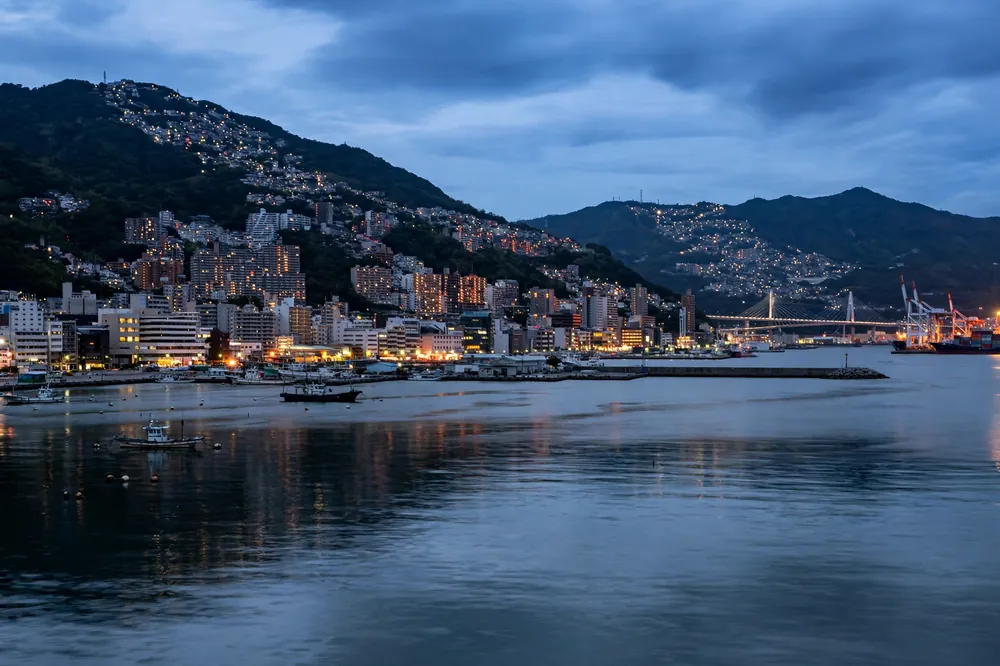
Nagasaki was one of Japan’s most important port cities, with a long history as a centre of foreign trade. It had been Japan’s principal window to the outside world during the centuries when the country restricted foreign contact, and it remained a major shipbuilding and industrial centre.
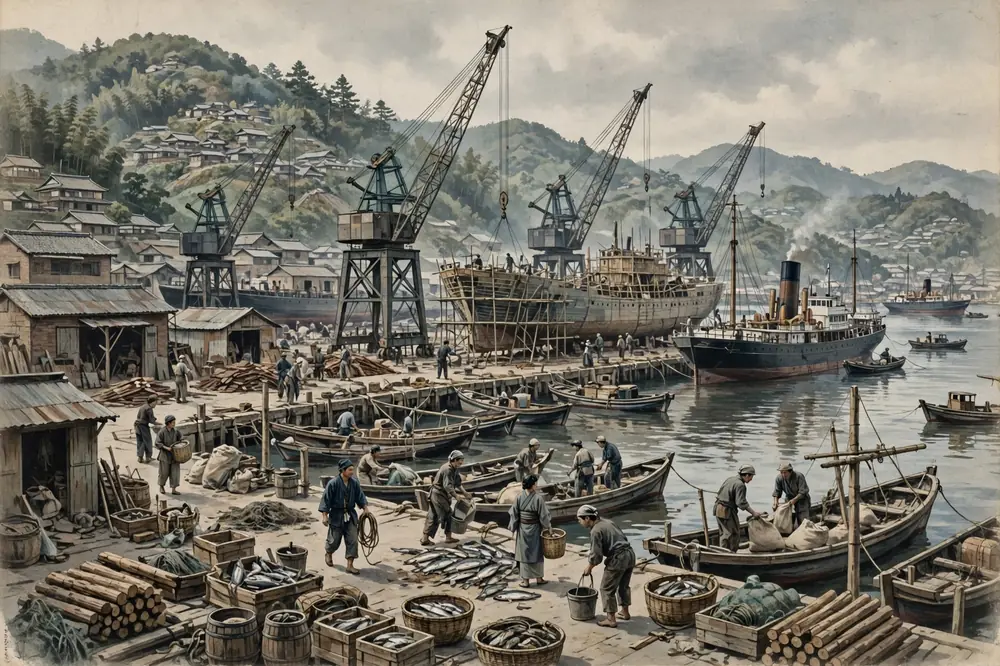
The Mitsubishi shipyards and arms factories in the Urakami valley employed tens of thousands of workers, and the city also had a large Catholic community — the descendants of the “hidden Christians” who had kept their faith during the centuries of persecution — centred on Urakami Cathedral, the largest Catholic church in East Asia when it was completed in 1925.
By the summer of 1945, Nagasaki had a population of about 240,000 people, including workers brought from Korea and China and Allied prisoners of war held in camps in and around the city.
The atomic bomb was the product of the Manhattan Project, the American programme to build an atomic weapon, directed by Major General Leslie Groves and with J. Robert Oppenheimer as scientific director at Los Alamos. The first atomic bomb was tested at Trinity in New Mexico on 16 July 1945.
Two types of bomb were built: a uranium gun-type bomb (“Little Boy”, used at Hiroshima) and a plutonium implosion bomb (“Fat Man”, used at Nagasaki). The decision to use the bombs was taken by President Harry S. Truman and his advisers in the summer of 1945, in the context of a war in which Japan had refused to accept the Allies’ demand for unconditional surrender, set out in the Potsdam Declaration of 26 July 1945, and in which an invasion of the Japanese home islands was expected to cost very large numbers of lives on both sides.
Historians continue to debate whether the bombings were necessary, whether Japan would have surrendered without them, and how far the Soviet Union’s declaration of war on Japan on 8 August 1945 contributed to the surrender.
Nagasaki as a target
Nagasaki was not on the first list of atomic targets. The original list, drawn up in the spring of 1945, named Kyoto, Hiroshima, Yokohama and Kokura. Kyoto was removed at the insistence of Secretary of War Henry Stimson, who knew the city and argued for its preservation as a cultural centre. Nagasaki was added as a replacement, largely because of its Mitsubishi shipyards and arms factories.
The city had been bombed conventionally only a few times, and its industrial areas were largely intact. On 6 August 1945, the uranium bomb “Little Boy” was dropped on Hiroshima, killing about 70,000 to 80,000 people by the end of the year, according to commonly cited estimates.
The Nagasaki mission was planned for 11 August, but was brought forward to 9 August because bad weather was forecast for the following days.
4. What Happened
The flight of Bockscar
On the morning of 9 August 1945, the B-29 Bockscar, piloted by Major Charles Sweeney, took off from Tinian in the Mariana Islands carrying the “Fat Man” bomb. The primary target was Kokura, an industrial city in northern Kyushu, where the bomb was to be dropped on the Kokura Arsenal.
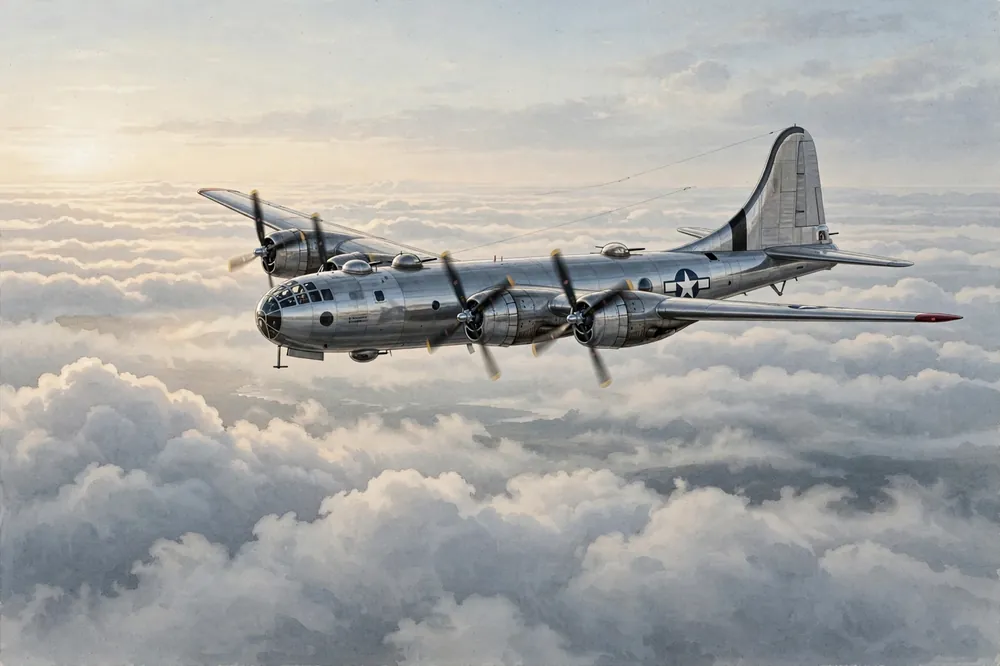
Over Kokura, cloud and smoke from a conventional bombing raid the previous day obscured the target, and after three bombing runs Sweeney, running low on fuel, turned to the secondary target, Nagasaki. The bomb was armed in flight by Navy Captain William Parsons, the weaponeer, and the bombardier, Captain Kermit Beahan, took over the final run.
At 11:02 a.m., at an altitude of about 1,650 feet (about 500 metres), the bomb exploded above the Urakami valley, about 3 kilometres north-west of the city centre, above a tennis court near the Mitsubishi arms works. The explosion was about 21 kilotons — more powerful than the Hiroshima bomb — but the hilly terrain of Nagasaki confined the worst destruction to the Urakami valley, and the city centre suffered less damage than Hiroshima’s.
The destruction
The explosion produced a fireball, a blast wave and intense heat. Within about a kilometre of the hypocentre — the point on the ground directly below the explosion — almost everything was destroyed: houses, factories and the Urakami Cathedral were flattened or burned, and the Mitsubishi arms works and shipyards were heavily damaged.
The heat set fires across the Urakami valley, and a column of smoke and dust rose thousands of metres into the sky. About 39,000 to 40,000 people were killed immediately or in the first days, according to commonly cited estimates, and about 25,000 more were injured.
Many of the dead were workers in the Mitsubishi factories, schoolchildren mobilised for war work, and residents of the Urakami district; among them were many of Nagasaki’s Catholics, including the congregation of Urakami Cathedral. Korean and Chinese forced labourers and Allied prisoners of war were also among the victims. The city’s hospitals were overwhelmed, and fires and the collapse of buildings made rescue difficult.
A photograph taken later that day by the Japanese military photographer Yosuke Yamahata — one of the few photographic records of the immediate aftermath — shows the ruined city and the survivors walking through it.
The days after
In the days after the bombing, fires burned on, and the injured died in large numbers from burns, wounds and radiation sickness — the effects of radiation were not yet understood, and doctors at first did not know why apparently uninjured people fell ill and died. The death toll continued to rise for months.
By the end of 1945, about 60,000 to 80,000 people had died as a result of the bombing, according to commonly cited estimates; the Nagasaki city government and the Atomic Bomb Museum give a figure of about 73,884 dead by the end of 1945, with about 74,909 injured.
On 10 August, the day after the bombing, the Japanese government, through the Swiss and Swedish governments, indicated that it would accept the Potsdam Declaration on condition that the Emperor’s position be preserved. After further exchanges, Japan announced its surrender on 15 August 1945, and the formal surrender was signed aboard the battleship USS Missouri in Tokyo Bay on 2 September 1945.
The Soviet Union’s declaration of war on Japan on 8 August and its invasion of Manchuria also played a part in the Japanese leadership’s decision, and historians continue to debate the relative weight of the atomic bombings and the Soviet entry into the war.
5. The Site Today
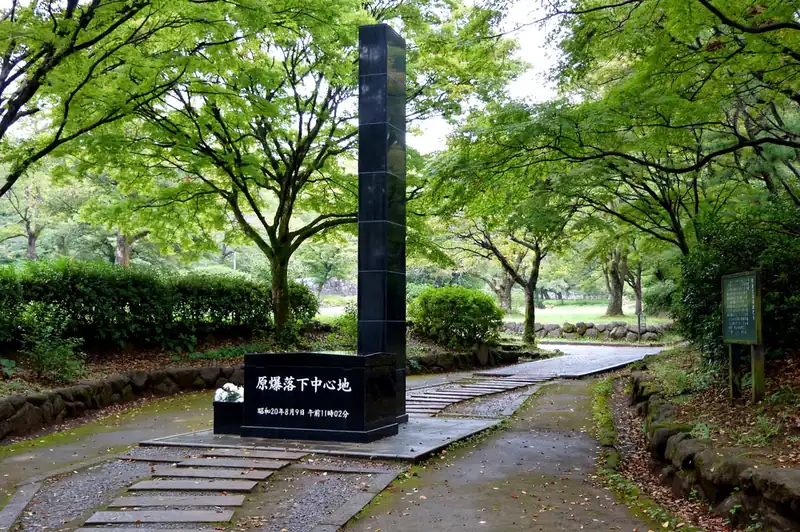
Nagasaki today is a rebuilt city of about 400,000 people, and the places associated with the bombing form its best-known sights. The Nagasaki Peace Park, built on the site of the former Urakami prison, stands near the hypocentre, which is marked by a black stone pillar.
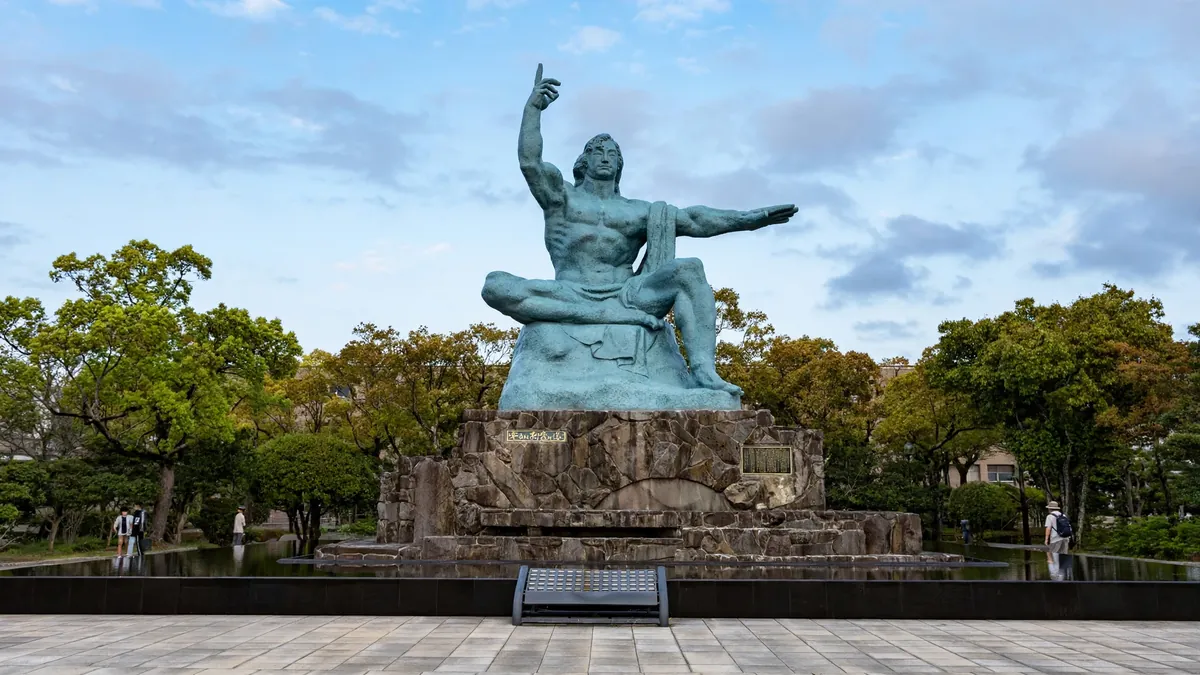
The park’s central monument is the Peace Statue, a 9.7-metre bronze figure completed in 1955, one arm pointing to the sky — towards the threat of nuclear weapons — and the other stretched out in a gesture of peace. The Nagasaki Atomic Bomb Museum, opened in 1996, stands near the park and presents the history of the bombing through photographs, documents and objects recovered from the ruins, including a clock stopped at 11:02 and the twisted remains of Urakami Cathedral’s bell tower.
The ruins of Urakami Cathedral itself, rebuilt in 1959, stand nearby, and a section of the cathedral’s damaged wall has been preserved. The one-legged torii gate of the Sanno Shinto Shrine, which survived the blast with one pillar standing, remains as a memorial in its original place.
The hypocentre and the Peace Park
The hypocentre park is a small, quiet space, marked by the black stone pillar and surrounded by trees planted after the war. The Peace Park, laid out on a hillside above it, contains the Peace Statue and the Fountain of Peace, built in 1969 in memory of those who died of thirst after the bombing, and monuments donated by countries around the world.
Each year on 9 August, the Nagasaki Peace Memorial Ceremony is held in the park, attended by survivors, the mayor, the prime minister and representatives of many countries, and at 11:02 a.m. a minute of silence is observed. The park is also the starting point for school visits: Japanese schoolchildren visit Nagasaki and Hiroshima as part of their education, and the city’s peace education programmes are among the best known in Japan.
6. Survivors and Testimony
The survivors of Nagasaki are known as hibakusha — literally, “explosion-affected people” — and their testimony is the main source for the human history of the bombing. Many survivors suffered burns, injuries and radiation sickness, and in the years after the war a higher-than-normal incidence of leukaemia and other cancers was recorded among them.
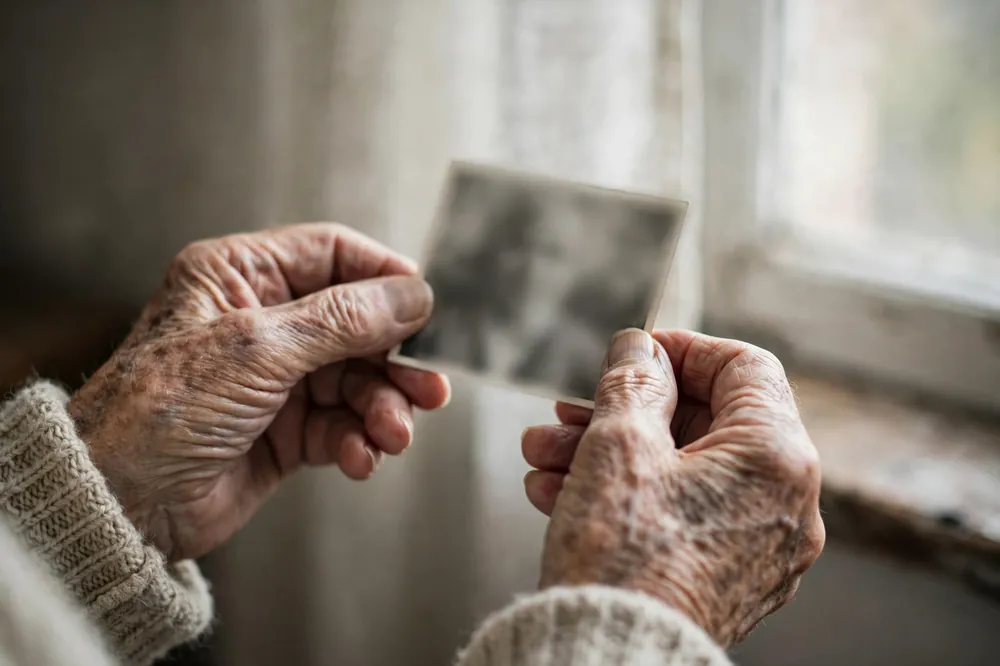
Survivors also faced discrimination: some found it difficult to marry or to find work, because of fears — unfounded — that radiation sickness was contagious or hereditary. The Japanese government recognised the hibakusha in the Atomic Bomb Survivors’ Relief Law of 1957, which provided medical care and allowances, and later laws extended the support; the official recognition of a survivor requires a certificate, and the number of certified survivors has fallen as the generation passes — from more than 300,000 in the 1980s to tens of thousands today.
Voices of the survivors
Among the best-known survivor accounts are those of Takashi Nagai, a doctor at Nagasaki Medical College who survived the bombing, lost his wife in it, and wrote The Bells of Nagasaki (1949), describing the destruction and his work treating the injured; and of Sumiteru Taniguchi, who was 16 at the time of the bombing, suffered severe burns to his back, and spent years in hospital — a photograph of his burned back became one of the best-known images of the bombing, and he campaigned for nuclear disarmament until his death in 2017.
The Nagasaki Atomic Bomb Museum and the Nagasaki National Peace Memorial Hall for the Atomic Bomb Victims, opened in 2003, hold the recorded testimonies of survivors, and the city’s peace education programmes bring survivors into schools to tell their stories while the generation remains. The survivors’ central message, repeated in the annual peace declarations of the mayors of Nagasaki and Hiroshima, is that nuclear weapons must never be used again.
7. The Debate and the Decision
The decision to drop atomic bombs on Japan remains one of the most debated decisions of the Second World War. The case made at the time by President Truman and his advisers was that the bombs would end the war quickly and save lives: an invasion of the Japanese home islands, planned for November 1945, was expected to cost hundreds of thousands of American lives and far larger numbers of Japanese lives, and the experience of the battles of Iwo Jima and Okinawa, where Japanese forces fought almost to the last man, suggested that the fighting would be long and costly.
The case against the bombings, made by historians and by some of the participants themselves, is that Japan was already defeated — its navy destroyed, its cities burned by conventional bombing, its food supplies failing — and that it would have surrendered without the atomic bombs, particularly once the Soviet Union entered the war; and that the use of a weapon of mass destruction against cities was a moral line that should not have been crossed.
The debate is not settled, and it is taught in schools and universities in the United States, Japan and elsewhere as a case study in the ethics of war.
8. Visiting Information
Nagasaki is reached by train or air from Fukuoka and other Japanese cities; the city is served by Nagasaki Airport and by the Nishi Kyushu Shinkansen line from Takeo-Onsen. The Nagasaki Atomic Bomb Museum and the Peace Park are in the Urakami district, a short tram ride from the city centre, and are open daily; admission to the museum is charged, while the Peace Park and the hypocentre park are free.
Check the museum’s official site for current hours and admission. The Nagasaki National Peace Memorial Hall for the Atomic Bomb Victims, next to the museum, is free to enter and holds the names of the victims and the recorded testimonies of survivors. The rebuilt Urakami Cathedral and the one-legged torii gate of the Sanno Shrine are a short walk from the museum.
Visitors are asked to behave with respect at the memorial sites, and photography is restricted in parts of the museum and the memorial hall.
9. Commemoration and Education
Nagasaki is commemorated each year on 9 August, when the Peace Memorial Ceremony is held in the Peace Park and a minute of silence is observed at 11:02 a.m. The mayor of Nagasaki reads a Peace Declaration, addressed to the governments of the world, calling for the abolition of nuclear weapons; the declarations have been read every year since 1947, and they are among the most widely reported statements on nuclear disarmament.
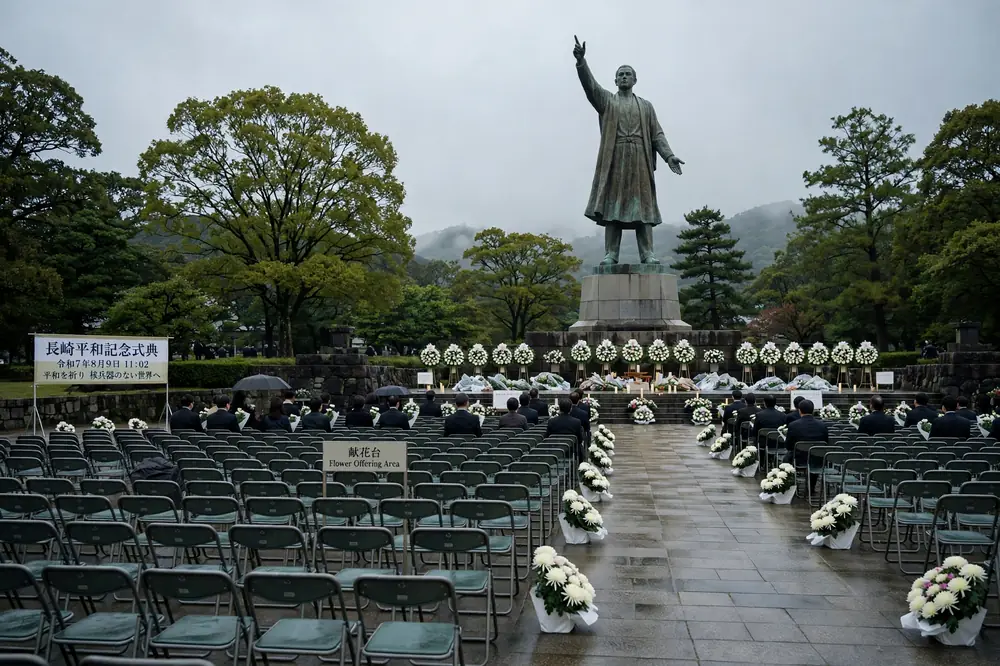
Nagasaki and Hiroshima work together through the organisation Mayors for Peace, founded in 1982, which now has thousands of member cities around the world and campaigns for a world without nuclear weapons. In Japan, the bombing is taught in schools, and the testimony of the hibakusha is a central part of peace education.
Internationally, the Nobel Peace Prize awarded in 2024 to Nihon Hidankyo, the Japanese organisation of atomic bomb survivors, brought renewed attention to the survivors’ testimony and to the campaign for nuclear disarmament.
10. Legacy
The legacy of Nagasaki is inseparable from the legacy of the atomic age. The bombing, together with Hiroshima, demonstrated the destructive power of nuclear weapons and shaped the politics of the Cold War, the arms race and the non-proliferation regime that followed.
It also shaped the law of war: the question of whether the atomic bombings were lawful, and whether nuclear weapons can ever be used lawfully, has been debated by lawyers and governments ever since, and the International Court of Justice, in an advisory opinion in 1996, held that the threat or use of nuclear weapons would generally be contrary to international humanitarian law.
For Nagasaki itself, the legacy is the city’s identity as a city of peace: the Peace Park, the museum, the annual ceremony and the testimony of the hibakusha have made Nagasaki, with Hiroshima, the world’s best-known symbol of the campaign against nuclear weapons.
The city’s other history — as a port open to the world, and as a centre of Japanese Catholicism — is also preserved in its museums and churches, and the memory of the bombing is presented alongside it, as the event that changed the city and the world.
Frequently Asked Questions
When was Nagasaki bombed?
On 9 August 1945, at 11:02 a.m. local time, three days after the atomic bombing of Hiroshima on 6 August 1945.
How many people died in the Nagasaki bombing?
About 60,000 to 80,000 people had died by the end of 1945, according to commonly cited estimates; about 39,000 to 40,000 were killed immediately or in the first days.
What was the “Fat Man” bomb?
“Fat Man” was the plutonium implosion atomic bomb dropped on Nagasaki, with a yield of about 21 kilotons of TNT. It was the second atomic bomb used in war.
Why was Nagasaki bombed instead of Kokura?
Kokura was the primary target, but cloud and smoke obscured it, and after three bombing runs the B-29 Bockscar, running low on fuel, turned to the secondary target, Nagasaki.
What is a hibakusha?
A hibakusha is a survivor of the atomic bombings of Hiroshima or Nagasaki. The term literally means “explosion-affected person”.
Can I visit Nagasaki’s atomic bomb sites?
Yes. The Nagasaki Atomic Bomb Museum, the Peace Park, the hypocentre park and the rebuilt Urakami Cathedral are open to the public in the Urakami district of the city.
Related articles
Sources
- Nagasaki Atomic Bomb Museum, official site and exhibition materials — death toll of about 73,884 by the end of 1945; the history of the bombing and the Urakami district.
- United States Department of Energy, “The Manhattan Project” and the history of the “Fat Man” bomb — yield of about 21 kilotons; the Bockscar mission.
- Wikipedia, “Atomic bombings of Hiroshima and Nagasaki” — the Kokura primary target, the 11:02 a.m. detonation, casualty estimates of 60,000-80,000 for Nagasaki.
- Richard Rhodes, The Making of the Atomic Bomb (Simon & Schuster, 1986) — the Manhattan Project, J. Robert Oppenheimer and the decision to use the bomb.
- Takashi Nagai, The Bells of Nagasaki (1949) — survivor testimony from a doctor at Nagasaki Medical College.
- John Hersey, Hiroshima (1946) — contemporary reporting on the atomic bombings, for context on the American debate.
- Nagasaki National Peace Memorial Hall for the Atomic Bomb Victims — survivor testimonies and the register of victims’ names.