 WAR ATLAS MILITARY HISTORY MAGAZINE · WWI — WWII
Vichy France
1. Lead
Vichy France was the French state that governed the unoccupied southern zone of France from 1940 to 1944, after the defeat of France by Germany in the summer of 1940. Led by Marshal Philippe Pétain, the hero of Verdun in the First World War, the regime was based in the spa town of Vichy, in the Auvergne, and it collaborated with Nazi Germany while claiming to protect France from a worse fate.
Under Vichy, France carried out its own “National Revolution”, persecuted Jews and political opponents, and supplied Germany with labour and goods; after November 1942, when Germany occupied the whole of France, Vichy became a puppet of the occupier. The regime fell with the liberation of France in 1944, and its leaders were tried after the war: Pétain was sentenced to death, commuted to life imprisonment, and Pierre Laval, the head of government, was executed.
2. Key Facts
| What | The French State (État français), commonly called Vichy France — the regime that governed unoccupied France, 1940-1944 |
| When | July 1940-August 1944 |
| Capital | Vichy, in the Auvergne |
| Head of state | Marshal Philippe Pétain |
| Head of government | Pierre Laval (1940, and 1942-1944); François Darlan (1941-1942) |
| Territory | The southern “free zone” (zone libre) until November 1942; thereafter the whole of metropolitan France under German occupation, with Vichy retaining a nominal administration |
| Key events | Armistice of 22 June 1940; Pétain granted full powers, 10 July 1940; Vel’ d’Hiv roundup, 16-17 July 1942; German occupation of the free zone, 11 November 1942; liberation, August 1944 |
| Victims | About 76,000 Jews deported from France, of whom about 72,500 were murdered, according to the historian Serge Klarsfeld; about 650,000 French workers sent to Germany under the STO |
| Aftermath | Pétain tried and sentenced to death in 1945 (commuted to life imprisonment); Laval executed in October 1945 |
3. Background
France fell in six weeks in the summer of 1940. The German invasion, which began on 10 May 1940, broke through the French defences at Sedan, drove to the Channel coast, and forced the British Expeditionary Force to evacuate from Dunkirk. Paris fell on 14 June, and on 16 June the French government, under Prime Minister Paul Reynaud, resigned.
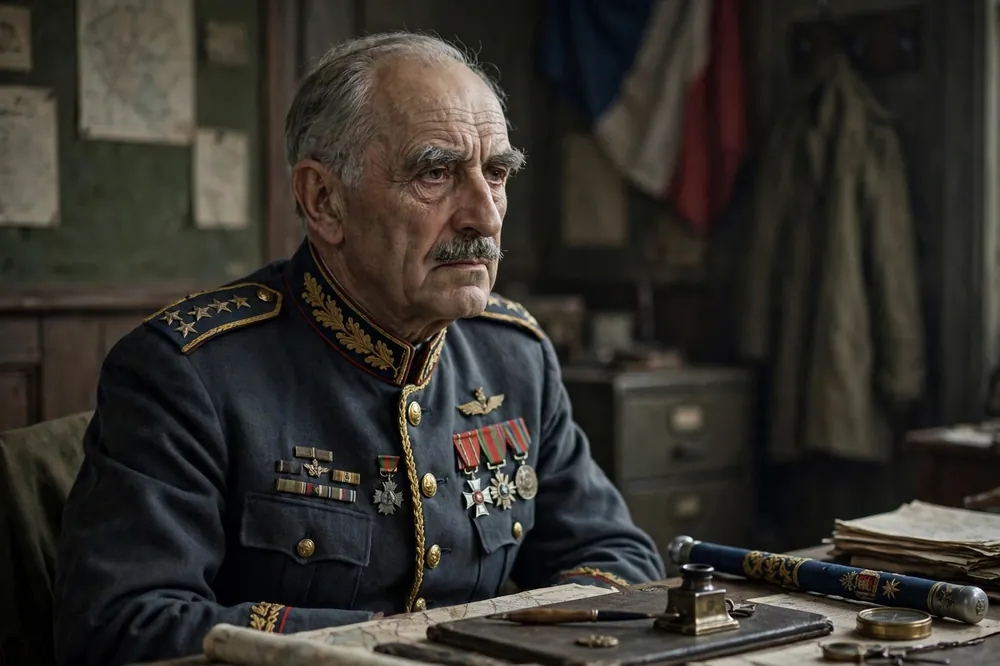
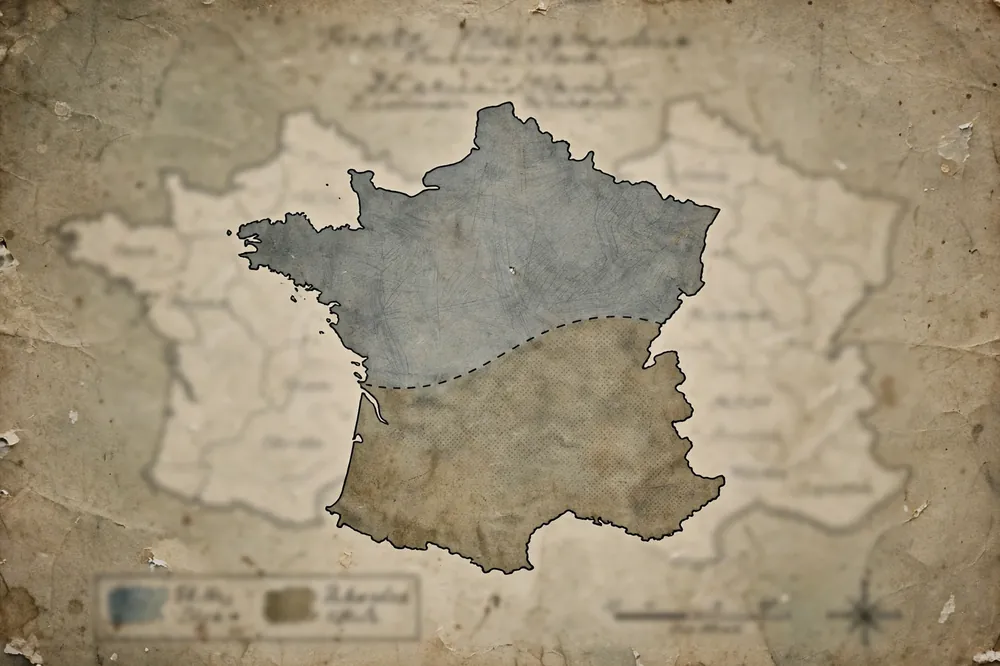
Its successor, under the 84-year-old Marshal Philippe Pétain, the hero of the Battle of Verdun in 1916, asked Germany for an armistice. The armistice, signed on 22 June 1940 at Compiègne — in the same railway carriage in which Germany had signed the armistice of 1918 — divided France into two zones: the north and the west, including Paris and the Atlantic coast, were occupied by Germany, and the south, the “free zone”, was left under French administration.
The French fleet was to be disarmed, the French Army was reduced to 100,000 men, and France was to pay the costs of the German occupation. On 10 July 1940, the National Assembly, meeting at Vichy, voted by 569 to 80 to grant Pétain full powers to draw up a new constitution, and the Third Republic — the regime that had governed France since 1870 — was ended.
Pétain and the National Revolution
Pétain presented himself as a shield: he argued that by accepting the armistice and collaborating with Germany, he was protecting France from the fate of Poland, which had been occupied in full and subjected to a far harsher regime. He also had a domestic programme, the “National Revolution”, which rejected the values of the Third Republic — liberty, equality and fraternity — and replaced them with “Work, Family, Fatherland” (Travail, Famille, Patrie).
The National Revolution was traditionalist and authoritarian: it celebrated the peasant and the family, restricted the rights of women, attacked the trade unions and the political left, and blamed the defeat of 1940 on the Republic, on the Jews, on the Freemasons and on the politicians of the 1930s.
The regime’s ideology was not simply imposed by Germany: it was, in large part, a French programme, drawn from the French far right, and it was carried out by French officials.
4. What Happened
The armistice and the two zones
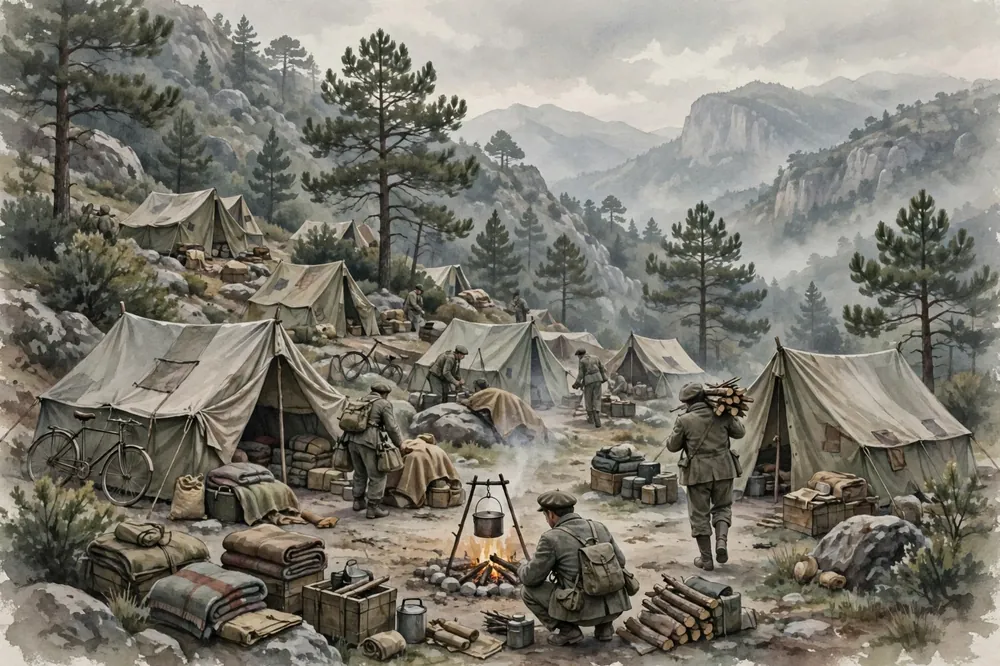
Under the armistice, France was divided, and the division shaped daily life. In the occupied zone, the Germans governed directly, through a military administration in Paris, and the French administration carried out German orders. In the free zone, Vichy governed, but its freedom was limited: Germany controlled the French economy, took French goods and labour, and held about 1.8 million French prisoners of war in Germany as hostages for French good behaviour.
Vichy retained an empire — French North Africa, French West Africa, Indochina, Madagascar and the French Pacific — and it fought to keep it: in 1940, Vichy forces fought the British and the Free French at Dakar and in Syria, and in 1942 they resisted the Allied landings in North Africa before changing sides.
The division of France ended on 11 November 1942, when Germany, in response to the Allied landings in North Africa, occupied the free zone in Operation Anton; Vichy remained in place, but as a government under occupation, with no territory of its own.
The persecution of the Jews
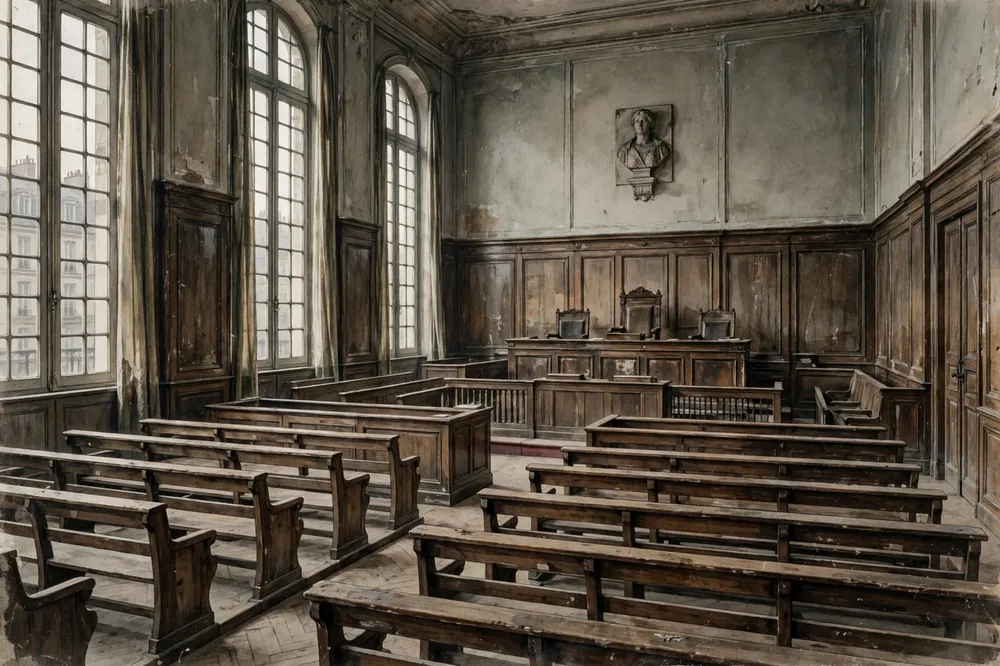
Vichy’s persecution of the Jews was, in large part, its own work. In October 1940, Vichy issued the Statut des Juifs, the Jewish Statute, which defined who was Jewish and excluded Jews from the civil service, the professions, the press and the universities — a law that went beyond what Germany had demanded, and that was drawn up by French officials.
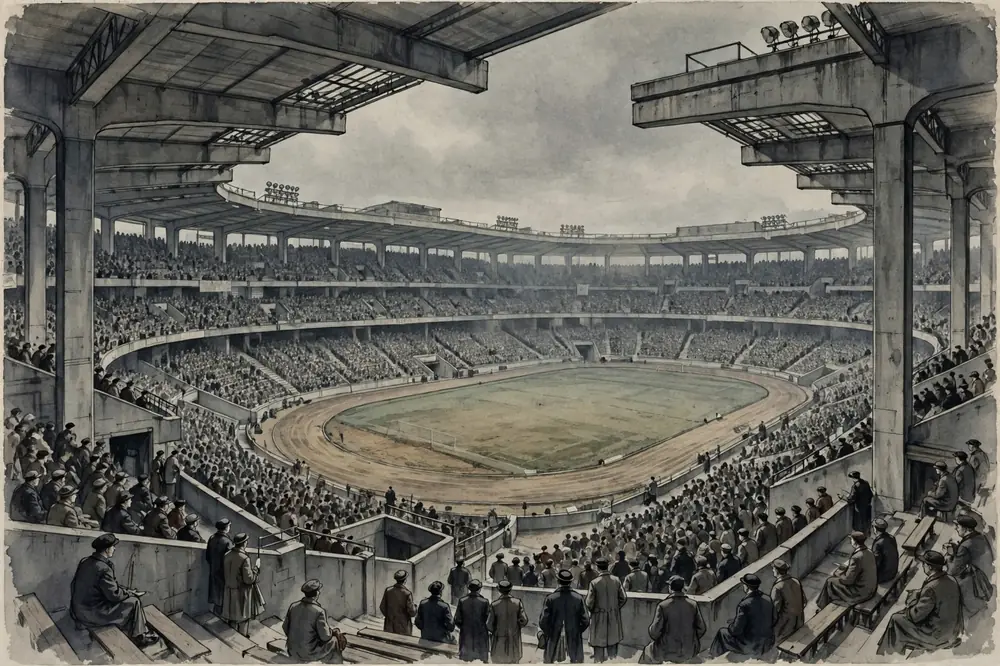
In June 1941, a second statute tightened the definitions, and in 1941 Vichy created a Commissariat-General for Jewish Questions to carry out the policy. In 1942, at Germany’s request, the French police took part in the deportation of Jews from France to Auschwitz: the Vel’ d’Hiv roundup of 16-17 July 1942, in which the Paris police arrested about 13,000 Jews, including about 4,000 children, and held them in the Vélodrome d’Hiver sports stadium before deportation, is the best-known episode.
In total, about 76,000 Jews were deported from France, of whom about 72,500 were murdered, according to the historian Serge Klarsfeld; about a quarter of the Jews of France were killed, a lower proportion than in the Netherlands or Poland, because many French Jews were protected by the French population and by the fact that the deportations were carried out by the French police, who in some cases warned their victims.
Collaboration and the STO
Vichy’s collaboration with Germany was not only political: it was economic and military. Under the armistice, France paid the costs of the occupation — about 400 million francs a day — and German requisitions took French food, raw materials and manufactured goods.
In 1942, Pierre Laval, who had returned as head of government, agreed to the relève, under which French workers were sent to Germany in exchange for the release of French prisoners of war; in 1943, the relève was replaced by the STO, the Compulsory Labour Service, under which French men born between 1920 and 1922 were required to work in Germany.
About 650,000 French workers were sent to Germany under the STO, and many of them, rather than report for work, joined the resistance, the maquis, in the hills of southern France. Vichy also created the Milice, a paramilitary force under Joseph Darnand, which fought the resistance alongside the Germans and which, in 1944, became a byword for collaboration.
5. Resistance and the Fall
The Vichy regime was opposed from the start by the Free French, led by General Charles de Gaulle, who had broadcast from London on 18 June 1940, calling on the French to continue the fight, and by the internal resistance, which grew from small groups in 1940-1941 into a mass movement in 1943-1944, as the STO drove young men into the maquis and as the SOE and the OSS supplied the resistance with arms.
The resistance carried out sabotage, gathered intelligence for the Allies, and, in 1944, rose in support of the D-Day landings and the Allied advance. The liberation of France began with the D-Day landings in Normandy on 6 June 1944 and the landings in Provence on 15 August 1944; Paris was liberated on 25 August 1944, and Vichy fell.
Pétain and Laval were taken to Germany by the retreating Germans, and a provisional government under de Gaulle took power in Paris. The Milice and other collaborators fled, were captured, or were killed in the épuration, the purge of collaborators that followed the liberation, in which thousands were executed without trial in the summer and autumn of 1944, and thousands more were tried by the courts in 1945-1946.
6. The Trials
The principal trials of the Vichy regime were held in 1945. Pierre Laval was tried in October 1945, convicted of treason and of collaboration with the enemy, and executed by firing squad on 15 October 1945. Marshal Pétain was tried in July-August 1945, convicted of treason and sentenced to death; the sentence was commuted by General de Gaulle to life imprisonment, and Pétain died in prison on the island of Yeu in 1951, at the age of 95.
Other Vichy officials were tried in the years that followed, including Joseph Darnand, the head of the Milice, who was executed in 1945, and René Bousquet, the head of the French police who had organised the Vel’ d’Hiv roundup, who was tried in 1949 and acquitted, and who was assassinated in 1993, before a second trial could be held.
The trials were controversial: Pétain’s defenders argued that he had protected France, and that his regime had been a lesser evil; the prosecution argued that he had betrayed the Republic and collaborated with the enemy. The debate over Vichy — over what the regime was, and over how far the French people were complicit in it — continues in France to this day.
7. The Sites Today
Vichy itself, the spa town in the Auvergne, retains the buildings of the regime: the Hôtel du Parc, where Pétain had his offices, and the other hotels that housed the ministries, are still standing, and the town has a museum of the period.
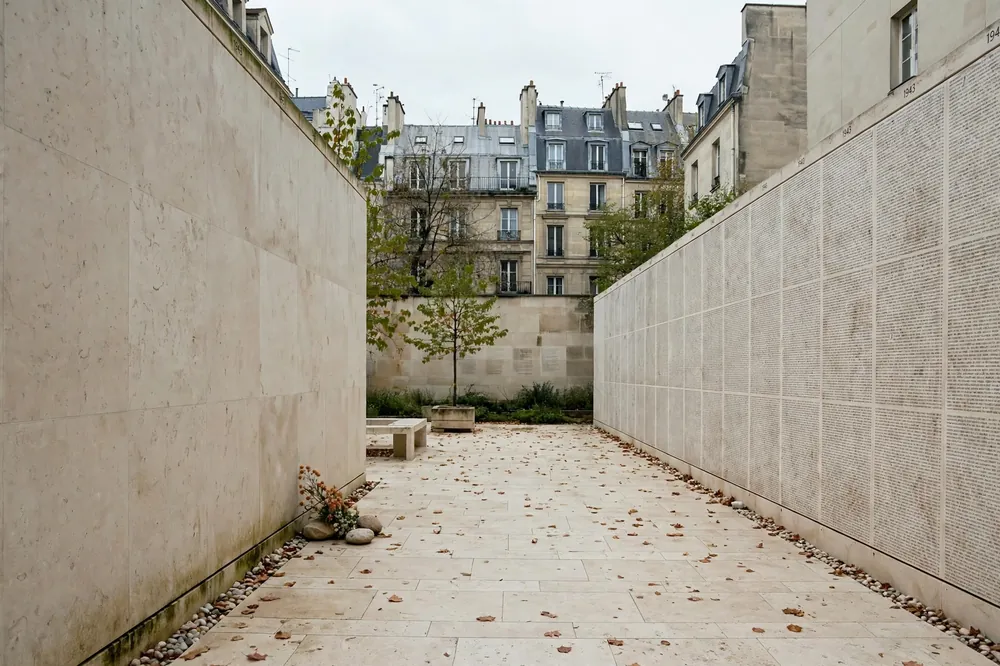
Paris retains the sites of the occupation: the Vélodrome d’Hiver, where the Jews arrested in July 1942 were held, was demolished in 1959, but a memorial stands on its site, and the names of the victims are inscribed on the Mémorial de la Shoah in the Marais, which also holds the Wall of Names, bearing the names of the 76,000 Jews deported from France.
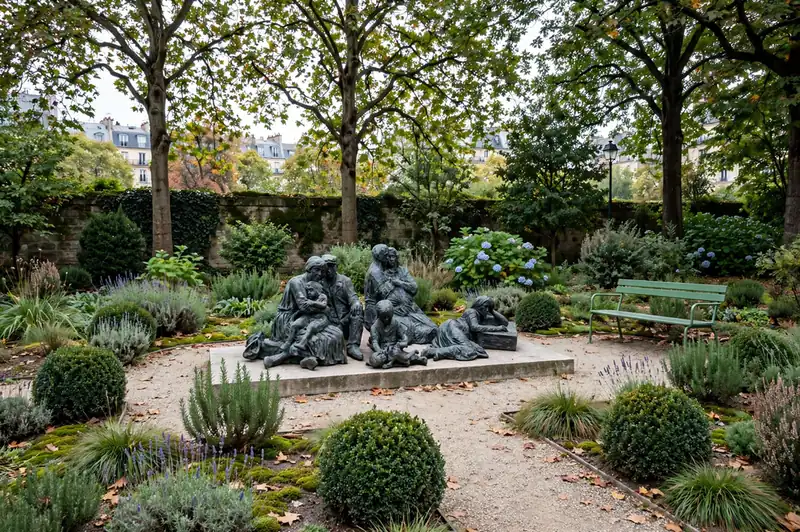
The Drancy camp, north-east of Paris, from which most of the deportations left, is preserved as a memorial, with a museum and a sculpture by Shlomo Selinger. The town of Oradour-sur-Glane, in the Limousin, where the SS massacred 642 inhabitants on 10 June 1944, is preserved as a ruined village, a memorial to the violence of the occupation.
8. Visiting Information
The Mémorial de la Shoah in Paris, in the Marais district, is free to enter and is open daily except Saturday; check its official site (memorialdelashoah.org) for hours. The Drancy memorial, north-east of Paris, is reached by train from Paris and is free to enter; check its official site for hours.
The town of Vichy is reached by train from Paris and Clermont-Ferrand, and the Hôtel du Parc and the town’s museum can be visited. Oradour-sur-Glane, near Limoges, is reached by road and is free to enter; the ruined village and the memorial centre are open daily, and visitors are asked to behave with respect, as the village is a cemetery.
As at all memorial sites, visitors are asked to speak quietly and to respect ceremonies and school groups.
9. Commemoration and Education
Vichy is commemorated in France each year on 16 July, the anniversary of the Vel’ d’Hiv roundup, when the President of the Republic lays a wreath at the memorial on the site of the Vélodrome d’Hiver. In 1995, President Jacques Chirac, in a speech at the Vel’ d’Hiv memorial, acknowledged for the first time the responsibility of the French state for the deportation of the Jews — a statement that was repeated by later presidents and that marked a turning point in the French memory of Vichy.
The history of Vichy is taught in French schools, and the Mémorial de la Shoah and the Drancy memorial run education programmes for school groups. The debate over Vichy — over Pétain’s role, over the extent of collaboration, and over the responsibility of the French state — is a central part of French public life, and it is reflected in books, films and exhibitions, including the film The Sorrow and the Pity (1969), which challenged the myth of a France united in resistance.
10. Legacy
The legacy of Vichy is the French debate about collaboration, resistance and national identity. The regime’s defenders have argued that Pétain protected France and that Vichy was a shield; its critics have argued that Vichy was a willing collaborator, that its antisemitic laws were its own work, and that its collaboration made the occupation worse.
The historical consensus, established by the work of historians such as Robert Paxton, whose Vichy France (1972) demonstrated that the regime’s collaboration was voluntary and not imposed by Germany, is that Vichy was a French regime that chose collaboration, and that its choices had consequences for the Jews of France, for the workers sent to Germany, and for the reputation of France.
The legacy of Vichy is also institutional: the Fourth Republic, founded in 1946, and the Fifth Republic, founded in 1958, were both designed, in part, to prevent a repetition of the collapse of 1940, and the French Constitution’s provisions for the powers of the President in an emergency descend from the experience of 1940.
Frequently Asked Questions
What was Vichy France?
Vichy France was the French regime that governed the unoccupied southern zone of France from 1940 to 1944, under Marshal Philippe Pétain, and that collaborated with Nazi Germany.
Who was Marshal Pétain?
Philippe Pétain was the French general who commanded at Verdun in the First World War and became head of state of Vichy France in 1940. He was tried for treason in 1945 and sentenced to death, commuted to life imprisonment.
What was the Vel’ d’Hiv roundup?
The roundup of 16-17 July 1942, in which the Paris police arrested about 13,000 Jews, including about 4,000 children, and held them in the Vélodrome d’Hiver stadium before their deportation to Auschwitz.
What was the STO?
The Service du Travail Obligatoire, the Compulsory Labour Service, under which about 650,000 French workers were sent to work in Germany in 1943-1944.
When did Vichy France end?
With the liberation of France in August 1944. Pétain and Laval were taken to Germany, and a provisional government under General de Gaulle took power in Paris.
What happened to Pierre Laval?
Pierre Laval, head of the Vichy government, was tried for treason in October 1945 and executed by firing squad on 15 October 1945.
Related articles
Sources
- Robert O. Paxton, Vichy France: Old Guard and New Order, 1940-1944 (Columbia University Press, 1972) — the standard history of the Vichy regime and its voluntary collaboration.
- Serge Klarsfeld, Memorial to the Jews Deported from France, 1942-1944 (Beate Klarsfeld Foundation, 1983) — about 76,000 Jews deported from France, of whom about 72,500 were murdered.
- Wikipedia, “Vichy France” — the armistice of 22 June 1940, the full powers of 10 July 1940, the Vel’ d’Hiv roundup, the STO, the trials of Pétain and Laval.
- Julian Jackson, France: The Dark Years, 1940-1944 (Oxford University Press, 2001) — a comprehensive history of France under occupation.
- Mémorial de la Shoah, Paris, official site (memorialdelashoah.org) — the deportations from France and the Wall of Names.
- Henry Rousso, The Vichy Syndrome: History and Memory in France since 1944 (Harvard University Press, 1991) — the memory of Vichy in France.