 WAR ATLAS MILITARY HISTORY MAGAZINE · WWI — WWII
WWII Timeline — Day by Day, 1939-1945
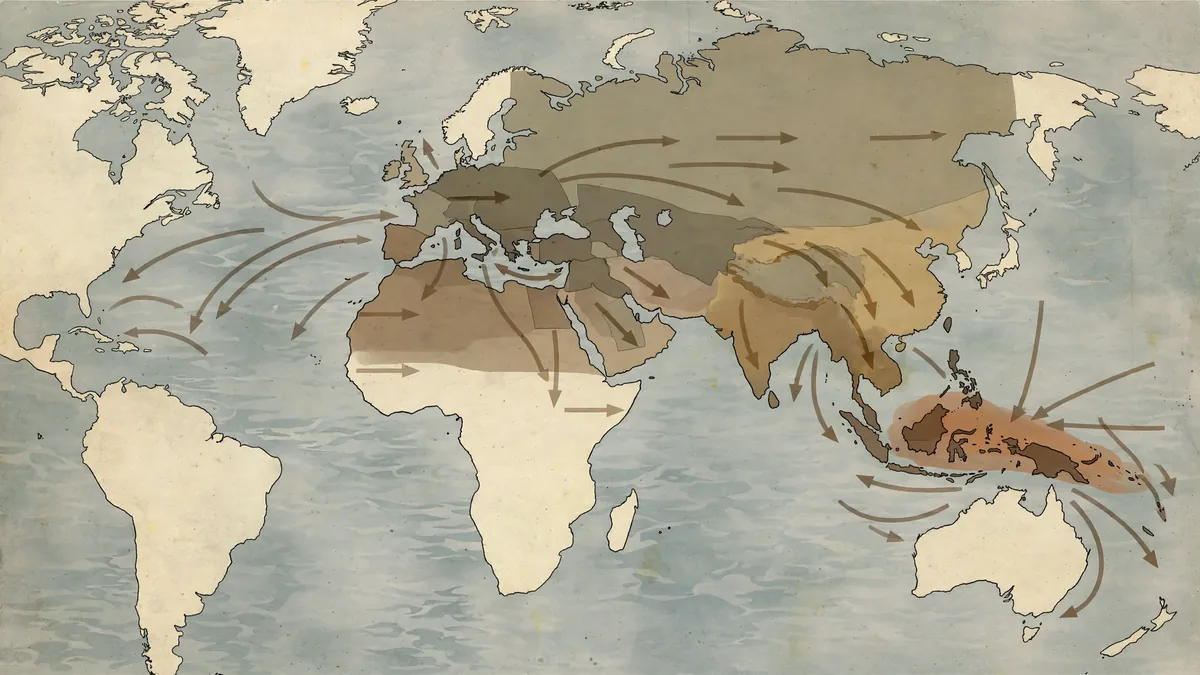
The Second World War lasted from 1 September 1939, when Germany invaded Poland, to 2 September 1945, when Japan formally surrendered aboard the battleship USS Missouri in Tokyo Bay. In six years, the war spread to every continent except Antarctica, killed an estimated 70 to 85 million people — about 3 per cent of the world’s population at the time — and ended with the atomic bombings of Hiroshima and Nagasaki and the division of Europe between the Western Allies and the Soviet Union.
This timeline presents the war day by day, year by year, from the invasion of Poland to the surrender of Japan, with the key dates, battles and turning points that shaped it. It is a guide to the war as a whole, and a starting point for the battles, figures, weapons and places covered in detail elsewhere on WarAtlas.
1. Key Facts
| Duration | 1 September 1939-2 September 1945 (six years and one day) |
| Main belligerents | Allies: Britain, France, the Soviet Union (from 1941), the United States (from 1941), China, and others. Axis: Germany, Italy, Japan |
| Deaths | An estimated 70-85 million people, including about 50-55 million civilians; estimates vary by source |
| Main theatres | Europe, North Africa, the Atlantic, the Pacific, China and South-East Asia |
| Turning points | Battle of Britain (1940), Operation Barbarossa and Pearl Harbor (1941), Midway and Stalingrad (1942-1943), D-Day (1944) |
| End in Europe | 8 May 1945 (VE Day); Germany surrendered unconditionally on 7-8 May 1945 |
| End in the Pacific | 15 August 1945 (Japan announced its surrender); 2 September 1945 (formal surrender, VJ Day) |
| Aftermath | The United Nations founded 1945; Germany and Europe divided; the Cold War begins |
2. 1939 — The War Begins
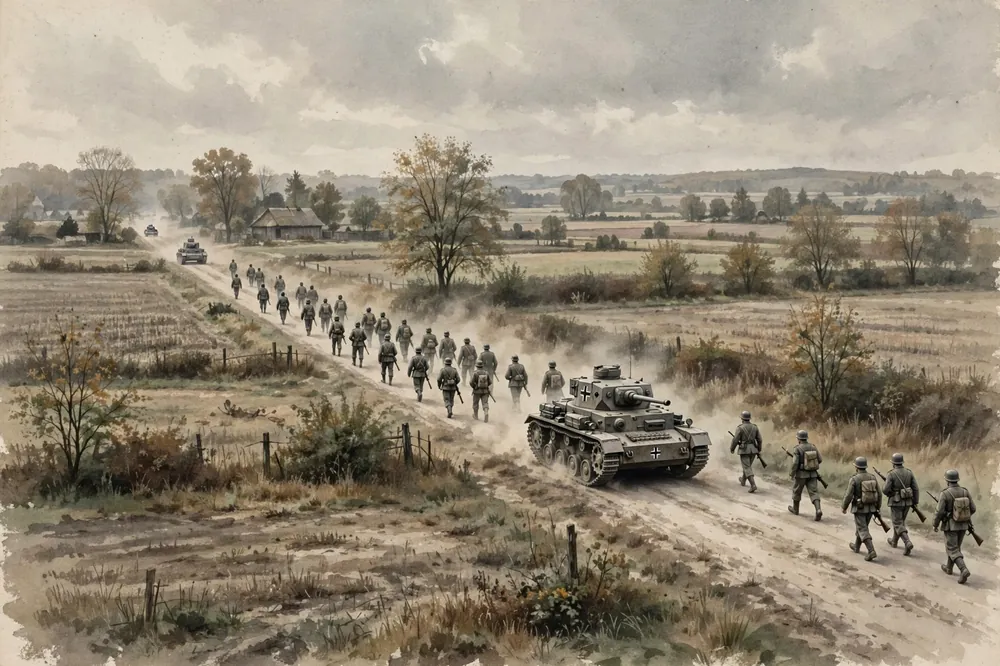
1 September 1939. Germany invades Poland from the west, using the staged “Gleiwitz incident” — a faked Polish attack on a German radio station — as its pretext. The German invasion, with its tanks, aircraft and motorised infantry, is the first campaign of the Blitzkrieg, the “lightning war”.
3 September 1939. Britain and France declare war on Germany, honouring their guarantee to Poland. The British Expeditionary Force is sent to France, and the Royal Navy begins the blockade of Germany. The war in the west, however, does not begin in earnest: the months that follow are the “Phoney War” (drôle de guerre), in which the Allies wait behind the Maginot Line and Germany prepares its next move.
17 September 1939. The Soviet Union invades Poland from the east, under the secret protocol of the Molotov-Ribbentrop Pact of August 1939, which had divided Eastern Europe between Germany and the Soviet Union. Poland is divided between the two invaders, and its government flees to London.
30 November 1939. The Soviet Union invades Finland in the Winter War. The Finns, outnumbered, hold out for three months before signing a peace in March 1940, in which they cede territory to the Soviet Union. The Winter War exposes the weaknesses of the Red Army, and it is one of the reasons Hitler decides to invade the Soviet Union.
3. 1940 — The Fall of France and the Battle of Britain
9 April 1940. Germany invades Denmark and Norway (Operation Weserübung). Denmark surrenders in a day; Norway holds out for two months, with British and French help, before falling in June.
10 May 1940. Germany invades France, Belgium, the Netherlands and Luxembourg. The German attack through the Ardennes, which the French had thought impassable for tanks, breaks the Allied line, and the German advance reaches the Channel coast in ten days. On the same day, Winston Churchill becomes Prime Minister of Britain.
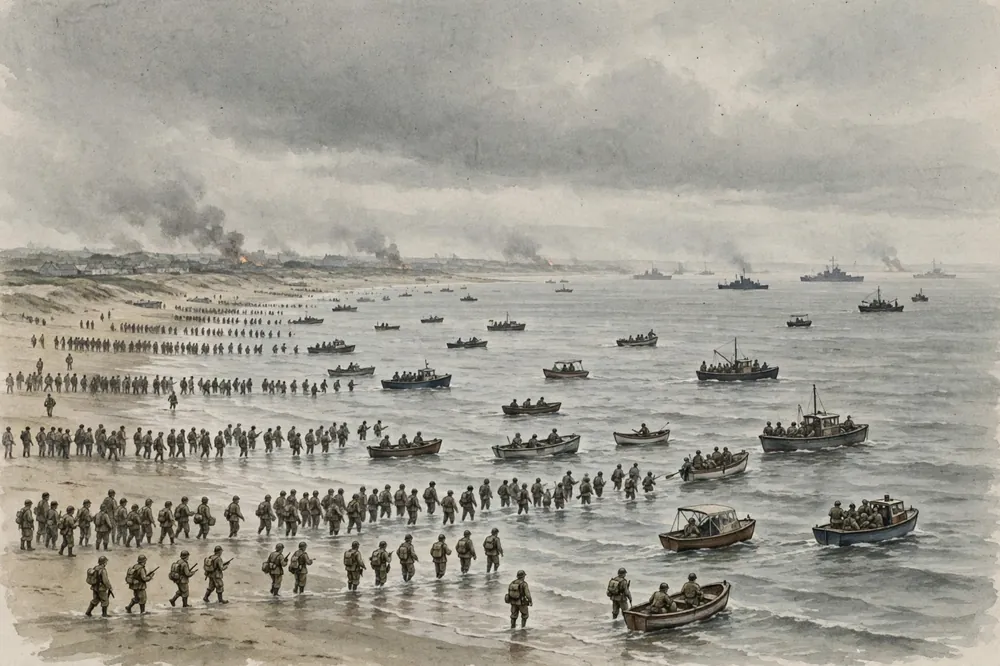
26 May-4 June 1940. The Dunkirk evacuation: about 338,000 British and French troops are evacuated from the beaches of Dunkirk to Britain, in a fleet of naval vessels and civilian boats. The British Army escapes, but it leaves its equipment behind.
14 June 1940. Paris falls. 22 June 1940. France signs an armistice with Germany at Compiègne, and the Vichy regime is established under Marshal Pétain. 18 June 1940. General Charles de Gaulle broadcasts from London, calling on the French to continue the fight.
10 July-31 October 1940. The Battle of Britain: the German Luftwaffe attempts to destroy the Royal Air Force and to prepare for an invasion of Britain. The RAF, outnumbered, wins the battle, and Hitler postpones the invasion indefinitely. 7 September 1940. The Blitz begins: German bombing of London and other British cities, which continues until May 1941.
28 October 1940. Italy invades Greece from Albania. The Greeks repel the invasion, and Germany is forced to intervene in the Balkans in the spring of 1941.
4. 1941 — Barbarossa and Pearl Harbor
6 April 1941. Germany invades Yugoslavia and Greece. Yugoslavia falls in eleven days; Greece falls by the end of April, and British forces evacuate to Crete, which Germany captures in May in the first large-scale airborne invasion in history.
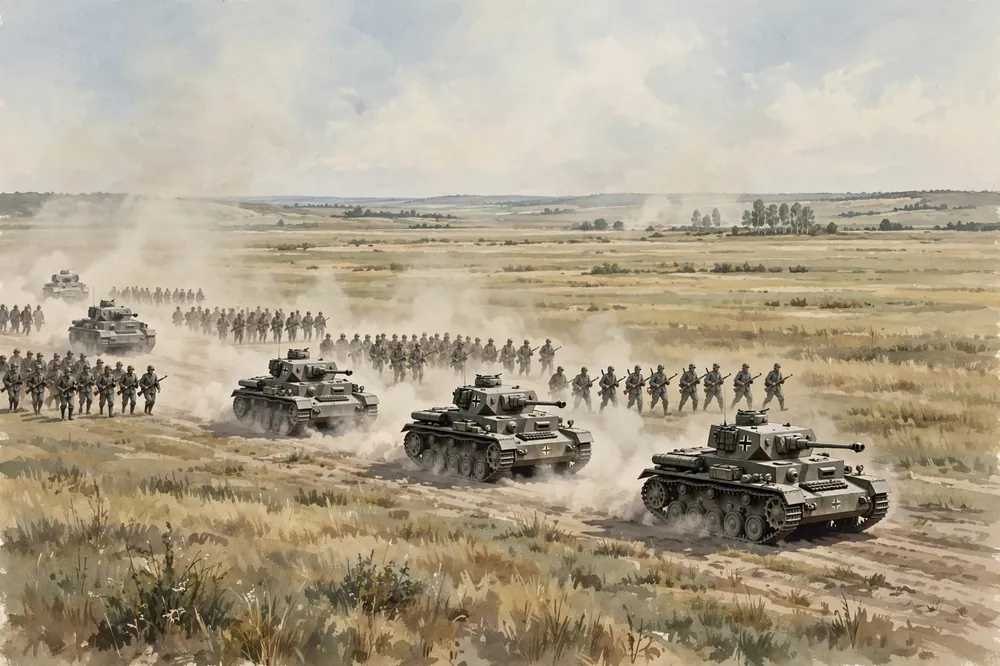
22 June 1941. Operation Barbarossa: Germany invades the Soviet Union with about three million men, the largest invasion in history. The German advance reaches the gates of Moscow by December, but the Soviet counter-offensive, with the help of the Russian winter, drives the Germans back.
7 December 1941. Japan attacks Pearl Harbor in Hawaii, sinking or damaging eight American battleships and killing about 2,400 Americans. 8 December 1941. The United States and Britain declare war on Japan. 11 December 1941. Germany and Italy declare war on the United States. The war is now a world war.
20 January 1942 is covered in the next section, but 1941 also saw the beginning of the Holocaust: in June 1941, the Einsatzgruppen, the mobile killing units of the SS, began the mass shooting of Jews in the occupied Soviet Union, and in December 1941 the first killing centre, Chełmno, began operating in occupied Poland.
5. 1942 — The Turning Point Begins
20 January 1942. The Wannsee Conference in Berlin coordinates the deportation of Jews from across Europe. In 1942, the killing centres of Bełżec, Sobibór and Treblinka are built for Operation Reinhard, the murder of the Jews of the General Government.
February-June 1942. Japan advances across South-East Asia and the Pacific: Singapore falls on 15 February, the Dutch East Indies in March, and the Philippines in May. In April 1942, the Bataan Death March takes place in the Philippines.
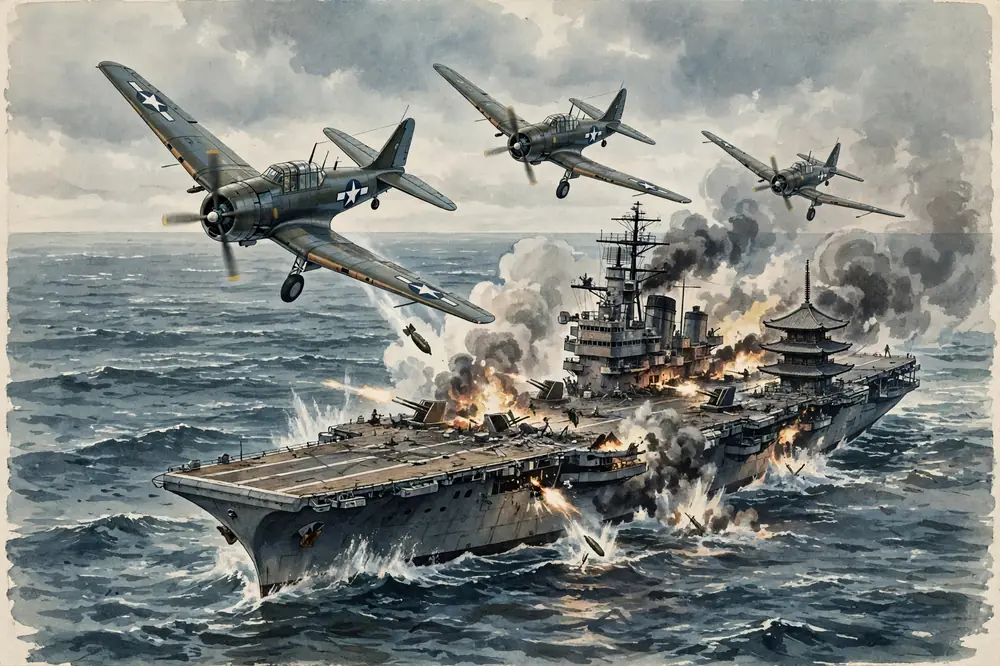
4-7 June 1942. The Battle of Midway: the United States Navy, having broken the Japanese naval code, sinks four Japanese aircraft carriers and turns the tide of the Pacific War. Japan loses the initiative, and never regains it.
August 1942-February 1943. The Battle of Stalingrad: the German 6th Army is encircled and destroyed by the Soviet Union, at a cost of about two million casualties on both sides. Stalingrad, with El Alamein in North Africa (23 October-11 November 1942), marks the turning point of the war in Europe.
8 November 1942. Operation Torch: the Allies land in French North Africa. 11 November 1942. Germany occupies the free zone of France, ending the division of the country.
6. 1943 — The Tide Turns
2 February 1943. The German 6th Army surrenders at Stalingrad. May 1943. The Allies win the Battle of the Atlantic, as the U-boat threat is brought under control with the help of Ultra intelligence from Bletchley Park.
May 1943. The Allies defeat the Axis in North Africa; the Axis forces in Tunisia surrender. 10 July 1943. The Allies invade Sicily. 25 July 1943. Mussolini is dismissed and arrested; Italy signs an armistice on 8 September, and Germany occupies northern Italy.
5 July-23 August 1943. The Battle of Kursk, the largest tank battle in history, ends in a German defeat, and the Soviet Union takes the initiative on the Eastern Front for the rest of the war.
28 November-1 December 1943. The Tehran Conference: Roosevelt, Churchill and Stalin meet for the first time, and agree on the invasion of France in 1944 and on the post-war division of Europe.
14 October 1943. The Sobibor uprising: prisoners kill eleven SS men and about 300 escape; the Germans close and dismantle the camp.
7. 1944 — D-Day and Liberation
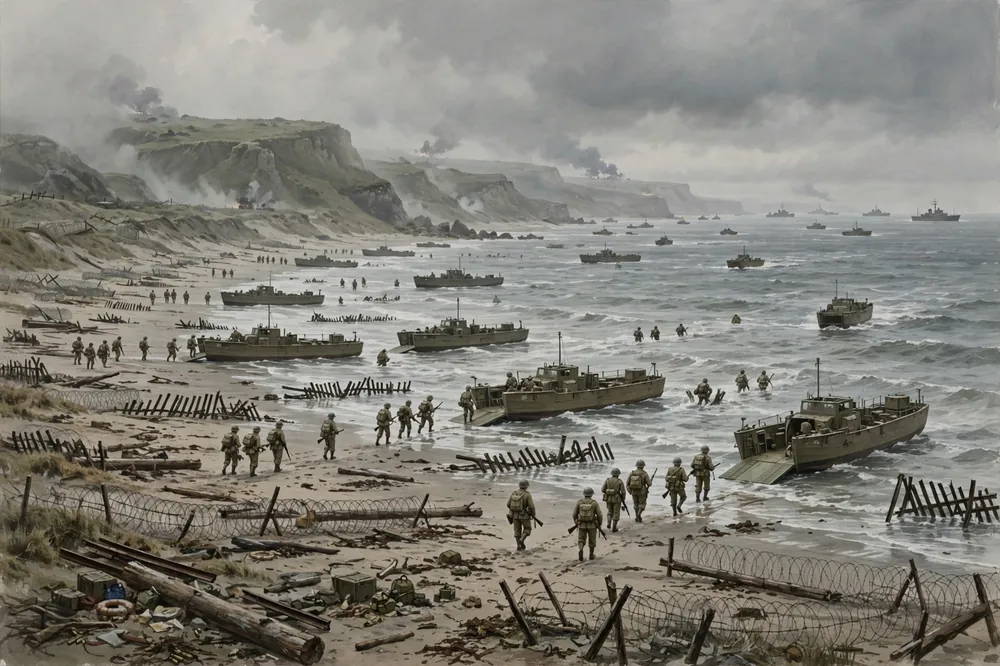
6 June 1944. D-Day: the Allies land in Normandy, in the largest seaborne invasion in history, with about 156,000 troops landing on the first day. The landings, supported by Ultra intelligence and by the French resistance, open the second front in Europe.
June-August 1944. The Allies break out of Normandy, and Paris is liberated on 25 August 1944. In the east, the Soviet Union’s Operation Bagration (22 June-19 August 1944) destroys the German Army Group Centre and advances to the borders of Poland.
1 August-2 October 1944. The Warsaw Uprising: the Polish resistance rises against the Germans as the Soviet Army approaches the city, and is crushed after 63 days; the Germans destroy Warsaw in retaliation.
September 1944. Operation Market Garden, the Allied airborne operation in the Netherlands, fails at Arnhem. October 1944. The Allies land in the Philippines at Leyte, and the Battle of Leyte Gulf (23-26 October 1944), the largest naval battle in history, destroys the Japanese fleet as an effective fighting force.
16 December 1944-25 January 1945. The Battle of the Bulge: Germany’s last offensive in the west, in the Ardennes, is defeated by the Allies.
8. 1945 — Victory and the Atomic Bomb
27 January 1945. Soviet troops liberate Auschwitz. 4-11 February 1945. The Yalta Conference: Roosevelt, Churchill and Stalin agree on the post-war order in Europe and on the founding of the United Nations.
13-15 February 1945. The bombing of Dresden. 19 February-26 March 1945. The Battle of Iwo Jima. 1 April-21 June 1945. The Battle of Okinawa, the last major battle of the Pacific War, at a cost of about 200,000 lives, including about 100,000 Okinawan civilians.
12 April 1945. President Roosevelt dies; Harry S. Truman becomes President. 30 April 1945. Adolf Hitler commits suicide in Berlin. 2 May 1945. Soviet troops capture Berlin. 7-8 May 1945. Germany surrenders unconditionally; 8 May 1945 is VE Day, Victory in Europe Day.
16 July 1945. The first atomic bomb is tested at Trinity in New Mexico. 6 August 1945. The atomic bomb “Little Boy” is dropped on Hiroshima. 8 August 1945. The Soviet Union declares war on Japan and invades Manchuria. 9 August 1945. The atomic bomb “Fat Man” is dropped on Nagasaki.
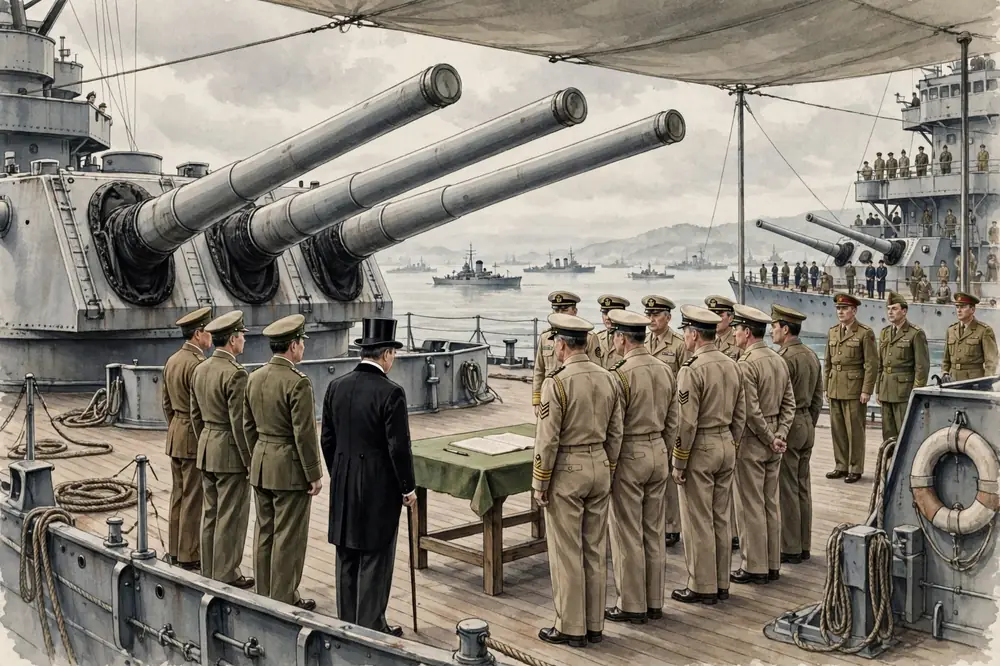
15 August 1945. Japan announces its surrender. 2 September 1945. Japan formally surrenders aboard the USS Missouri in Tokyo Bay. The Second World War is over.
9. How to Use This Timeline
This timeline is a guide, not a complete history. Each date is a starting point: the battles, the figures, the weapons and the places named here are covered in detail in their own articles on WarAtlas, and the links in this article lead to them.
The timeline is organised by year, and within each year by date, so that the war can be followed as it unfolded; but the war was fought on many fronts at once, and the dates in one theatre often coincide with dates in another.
Readers who want the war in a single narrative should read the timeline from beginning to end; readers who want a single campaign should follow the dates of that campaign through the years. The casualty figures given here are estimates, and they vary by source: the total of 70 to 85 million dead is the range most commonly cited by historians, and the figures for individual battles are given as ranges where the sources disagree.
The human cost
The figures in this timeline are estimates, and behind each of them are people. The Soviet Union suffered the largest losses of any country, with an estimated 24 to 27 million dead, including about 8.7 million soldiers and millions of civilians who died in the siege of Leningrad, in the occupation and in the camps.
China lost an estimated 15 to 20 million people, most of them civilians, in a war that had begun in 1937, two years before the war in Europe. Germany lost about 5.3 million soldiers and about 2 million civilians; Japan lost about 2.1 million soldiers and about 800,000 civilians, including the victims of the atomic bombings and of the firebombing of Tokyo and other cities.
Poland lost about 6 million people, about 17 per cent of its pre-war population — the highest proportion of any country — including about 3 million Polish Jews murdered in the Holocaust. Britain lost about 450,000 people, the United States about 420,000, and France about 600,000.
These figures are the reason the timeline matters: the dates are not only the history of armies and governments, but the history of the tens of millions of people who lived and died in the war.
Frequently Asked Questions
When did the Second World War start and end?
The war began on 1 September 1939, when Germany invaded Poland, and ended on 2 September 1945, when Japan formally surrendered aboard the USS Missouri.
What was the turning point of the Second World War?
Historians usually name the Battle of Stalingrad and the Battle of Midway, both in 1942-1943, as the turning points, with El Alamein in 1942 as the turning point in North Africa.
When was D-Day?
6 June 1944, when the Allies landed in Normandy in the largest seaborne invasion in history.
When was VE Day?
8 May 1945, the day Germany’s unconditional surrender took effect in Europe.
When was VJ Day?
Japan announced its surrender on 15 August 1945, and formally surrendered on 2 September 1945, which is observed as VJ Day.
How many people died in the Second World War?
An estimated 70 to 85 million people, including about 50 to 55 million civilians, according to commonly cited estimates. The figures vary by source.
Related articles
Sources
- Wikipedia, “Timeline of World War II” and “World War II” — dates, casualty estimates of 70-85 million, and the chronology of the war.
- Richard Overy, The Second World War: A Complete History (Penguin, 2013) — a single-volume history of the war.
- Antony Beevor, The Second World War (Weidenfeld & Nicolson, 2012) — a narrative history of the war, year by year.
- United States Holocaust Memorial Museum, Holocaust Encyclopedia — the chronology of the Holocaust, the Wannsee Conference and the killing centres.
- Imperial War Museum, London, “Timeline of the Second World War” — dates and events.
- Gerhard L. Weinberg, A World at Arms: A Global History of World War II (Cambridge University Press, 1994) — the global history of the war.