 WAR ATLAS MILITARY HISTORY MAGAZINE · WWI — WWII
Attack on Pearl Harbor
1. Lead
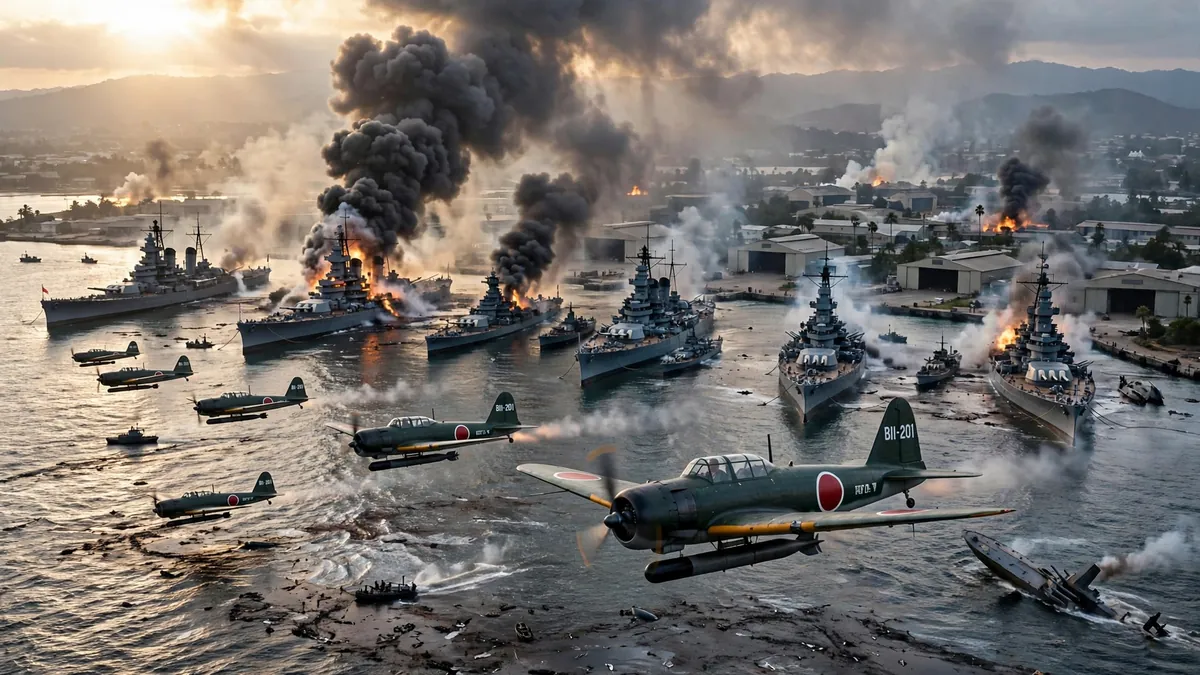
The Attack on Pearl Harbor was a surprise air raid by the Imperial Japanese Navy against the United States Pacific Fleet at Pearl Harbor, Hawaii, on the morning of Sunday, 7 December 1941. In about two hours, 353 Japanese aircraft launched from six aircraft carriers sank or damaged all eight American battleships in the harbour, destroyed 188 American aircraft, and killed 2,403 Americans.
Japan lost only 29 aircraft and five midget submarines in return, winning a sweeping tactical victory — yet the raid failed to sink a single American aircraft carrier, left the harbour’s fuel tanks and repair shops untouched, and united American public opinion behind a war Japan could not win. The next day the United States declared war on Japan, entering the Second World War.
2. Key Facts
| Date | 7 December 1941 (8 December in Japan) |
| Location | Pearl Harbor, Oahu, Territory of Hawaii, United States |
| Result | Japanese tactical victory; United States enters World War II |
| Japanese commanders | Admiral Isoroku Yamamoto (Combined Fleet); Vice Admiral Chuichi Nagumo (striking force) |
| American commanders | Admiral Husband E. Kimmel (Pacific Fleet); Lieutenant General Walter Short (Hawaiian Department) |
| Japanese strength | 6 aircraft carriers, 2 battleships, 3 cruisers, 9 destroyers, 8 tankers, 23 fleet submarines, 5 midget submarines, 414 aircraft (353 took part in the raid) |
| American strength | 8 battleships, 8 cruisers, 30 destroyers, 4 submarines, about 390 aircraft |
| American losses | 2,403 killed, 1,178 wounded; 4 battleships sunk, 4 damaged; 188 aircraft destroyed, 159 damaged |
| Japanese losses | 29 aircraft destroyed, 5 midget submarines lost, 129 killed (see Casualties section), 1 captured |
3. Background
The Attack on Pearl Harbor did not come out of nowhere. It was the end of a decade of rising tension between Japan and the United States over China, and the direct result of a Japanese gamble: that a single decisive blow against the American fleet would buy Japan the time to seize the oil and raw materials it needed to survive.
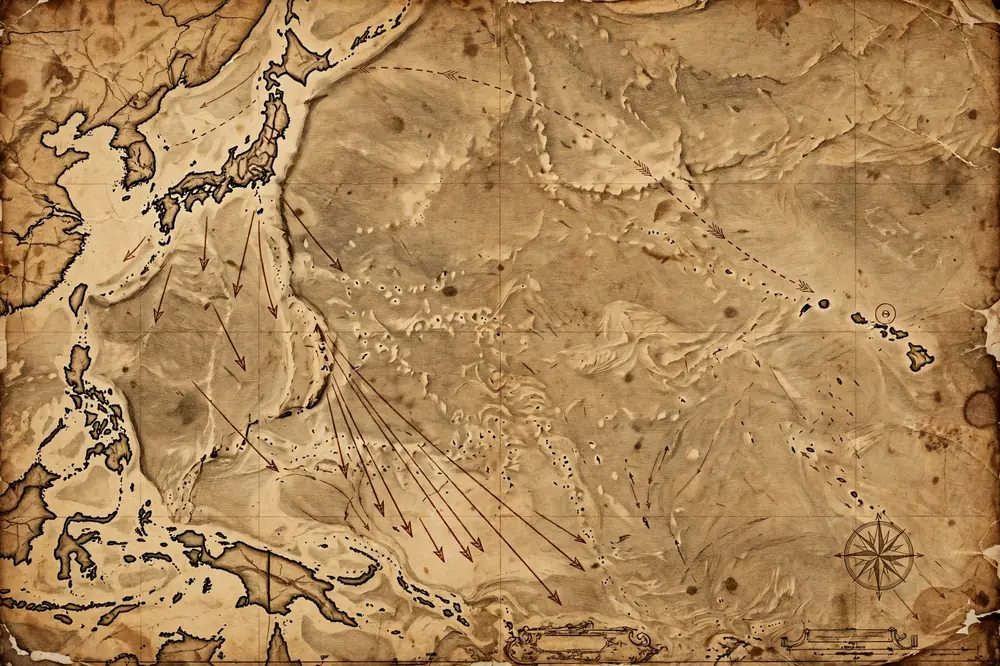
Japan had been at war in China since 1937, when the Marco Polo Bridge incident opened a full-scale invasion that the Japanese army expected to win in months. Instead the war dragged on, consuming men, money and fuel. Japan’s industry and its armed forces depended heavily on imports, above all on oil — and the United States supplied most of it. By 1940, Japan faced a stark choice: either abandon its conquests in China or find new sources of oil and raw materials in Southeast Asia.
In September 1940 Japan signed the Tripartite Pact with Germany and Italy, and in July 1941 it occupied southern French Indochina, putting its forces within striking distance of the oilfields of the Dutch East Indies and British Malaya. Washington answered with steadily harsher economic pressure. In July 1941 the United States froze Japanese assets and imposed an oil embargo, joined by Britain and the Netherlands.
The embargo cut off almost all of Japan’s oil imports. Japanese leaders calculated that their reserves would last well under two years — and that without oil, the navy would be unable to sail and the war in China would collapse. From Tokyo’s point of view, the choice was now between a retreat that would undo a decade of conquest and war.
Negotiations continued through the autumn of 1941, but the two sides were talking past each other. The United States demanded that Japan withdraw from China and Indochina; Japan would not accept terms that undid a decade of conquest. On 26 November 1941, Secretary of State Cordell Hull delivered a note restating the American demand for a complete Japanese withdrawal. In Tokyo the note was read as an ultimatum. On the same day, the Japanese striking force sailed from Hitokappu Bay in the Kuril Islands, under orders to attack Pearl Harbor if diplomacy failed.
The plan was the work of Admiral Isoroku Yamamoto, commander of the Combined Fleet. Yamamoto had studied in the United States, had served as naval attaché in Washington, and understood American industrial power better than most of his colleagues. He opposed war with the United States, but once the government decided on war, he argued that Japan’s only chance was to destroy the American Pacific Fleet at the outset — before it could interfere with the simultaneous invasions of Malaya, the Philippines and the Dutch East Indies.
His target was the battleship force at Pearl Harbor, and above all the American aircraft carriers. The operation, called the Hawaii Operation (Operation AI) by Japanese headquarters and Operation Z during planning, was designed by Commander Minoru Genda and entrusted to Vice Admiral Chuichi Nagumo and the First Air Fleet — the Kidō Butai, or Mobile Force, the most powerful carrier striking force ever assembled.
Washington, for its part, expected war — but not at Pearl Harbor. American intelligence had broken Japanese diplomatic codes (the MAGIC intercepts) and knew that relations were about to break. Warnings were sent to Hawaii in late November, but they spoke of a possible attack in the Philippines, Malaya or the Dutch East Indies, not of a carrier raid on Oahu. In Hawaii, Admiral Husband E.
Kimmel, commander of the Pacific Fleet, and Lieutenant General Walter Short, commander of the Army’s Hawaiian Department, prepared for the wrong threat: sabotage by the local Japanese population. Aircraft were parked wingtip to wingtip in the open so they could be guarded more easily — which made them perfect targets for bombers. Ammunition for anti-aircraft guns was kept locked away.
The fleet lay at anchor on a quiet Sunday morning, with many crews ashore on weekend leave, and no general alert was in effect.
In the final days, the signals of war were visible but unreadable in time. On 27 November, Washington sent a “war warning” to its Pacific commanders, stating that negotiations with Japan appeared to have ended and that “an aggressive move by Japan is expected within the next few days”.
The warning named the Philippines, Thailand and Malaya as likely targets — not Hawaii — and it left Kimmel and Short to divide the defence of Oahu between them, with the Navy responsible for the fleet and the Army for the island’s defence. Neither commander put his forces on full alert. Meanwhile, in Washington, Japanese diplomats were still negotiating.
On the morning of 7 December, Tokyo sent its embassy a long message breaking off negotiations, in fourteen parts, with instructions to deliver it at 1 p.m. Washington time — half an hour before the attack was due to begin in Hawaii. The message was delayed in decoding and typing, and Ambassador Nomura did not present it to Secretary Hull until 2:20 p.m. — after the bombs had already fallen.
The message itself declared no war; it merely ended the talks. But its late delivery fixed the attack in American memory as a blow struck in the middle of negotiations.
Pearl Harbor itself had only recently become the fleet’s permanent home. In May 1940, the United States moved the Pacific Fleet from San Diego to Hawaii and kept it there, as a deterrent to further Japanese expansion and as a forward base from which the fleet could reach the western Pacific. Admiral James O.
Richardson, the fleet commander at the time, objected that the base lacked fuel storage, repair facilities and air defences, and that the fleet was more exposed at Pearl Harbor than on the American mainland; he was relieved of command in early 1941 and replaced by Kimmel. By December 1941 the base had grown considerably, but its defences had not kept pace with its importance.
The fleet that Japan attacked was there because American strategy had placed it within striking distance of Japan — and, as events showed, within striking distance of Japan’s carriers as well.
4. Opposing Forces
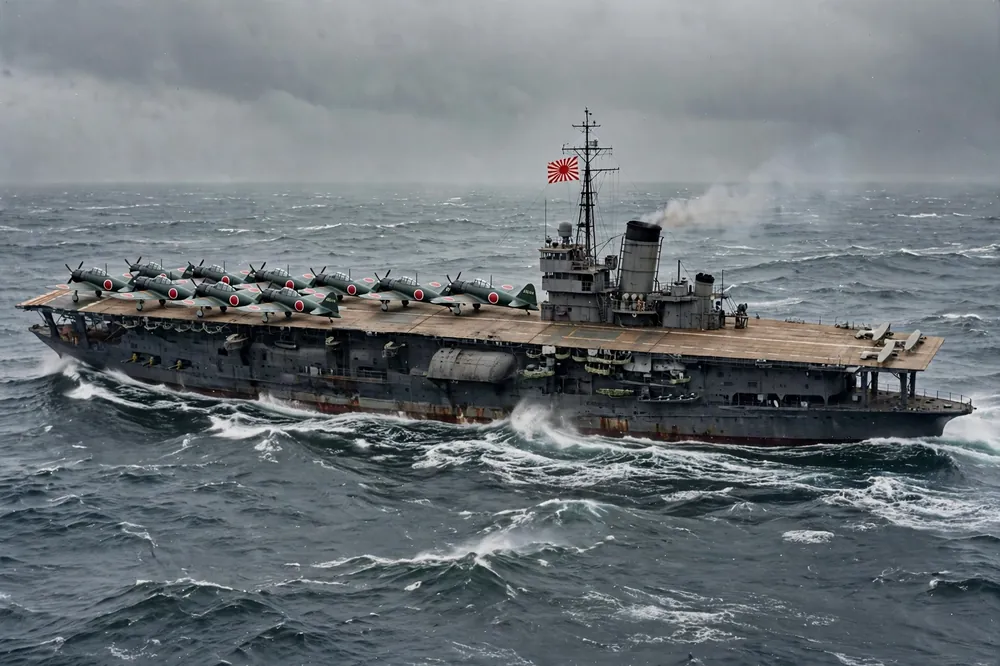
The Japanese striking force was built around six fleet carriers — the entire first-line carrier strength of the Imperial Japanese Navy, concentrated into a single fist for the first time in history. It sailed under strict radio silence along a stormy northern route, far from normal shipping lanes, refuelling at sea from eight tankers in rough weather. On 2 December, when the force was still days from Hawaii, it received the coded go-ahead: “Niitaka-yama nobore” — “Climb Mount Niitaka”. Diplomacy had failed; the attack would go ahead.
| Japan | United States | |
|---|---|---|
| Aircraft carriers | 6 fleet carriers — Akagi (flagship), Kaga, Sōryū, Hiryū, Shōkaku, Zuikaku | 3 fleet carriers in the Pacific — Enterprise, Lexington, Saratoga — all absent from Pearl Harbor on 7 December |
| Battleships | 2 — Hiei, Kirishima | 8 — Arizona, Oklahoma, West Virginia, California, Nevada, Pennsylvania, Maryland, Tennessee |
| Cruisers | 2 heavy (Tone, Chikuma), 1 light (Abukuma) | 8 |
| Destroyers | 9 | 30 |
| Submarines | 23 fleet submarines, 5 midget submarines | 4 |
| Aircraft | 414 embarked; 353 in the two attack waves | About 390, mostly parked on airfields |
| Overall commander | Adm. Isoroku Yamamoto (Combined Fleet) | Adm. Husband E. Kimmel (Pacific Fleet) |
| Tactical commander | Vice Adm. Chuichi Nagumo (First Air Fleet) | Lt. Gen. Walter Short (Army, Hawaiian Department) |
The Japanese air groups flew three types: the Mitsubishi A6M Zero fighter, the fastest and most manoeuvrable carrier fighter in the world in 1941; the Nakajima B5N “Kate” torpedo and level bomber; and the Aichi D3A “Val” dive bomber. Their torpedoes had been specially fitted with wooden fins so they would run true in the shallow water of Pearl Harbor — a technical problem the Americans believed made a torpedo attack impossible there. The Japanese had practised for months, in a bay in Japan chosen for its resemblance to Pearl Harbor, until their pilots could drop torpedoes in water barely 12 metres deep.
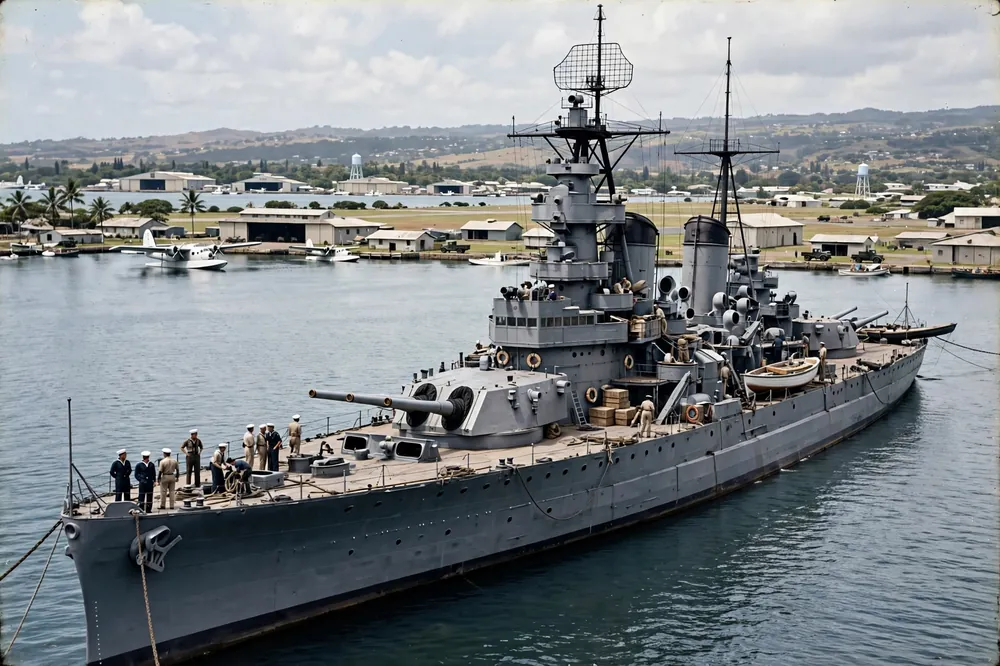
The American side looked strong on paper and was weak where it mattered. The Pacific Fleet’s eight battleships were the core of American naval power in the Pacific, but they were old ships, built mostly during and just after the First World War, and they lay at anchor in neat rows.
Seven of them were moored along the southeast side of Ford Island in the formation known as Battleship Row; the eighth, Pennsylvania, was in dry dock. The three Pacific carriers were all away: Enterprise was returning from delivering aircraft to Wake Island and was about 200 miles west of Oahu; Lexington was ferrying aircraft to Midway; Saratoga was at San Diego.
The Army’s airfields — Hickam, Wheeler, Ford Island Naval Air Station, Kaneohe, Ewa and Bellows — held about 390 aircraft, but most were parked in the open, unarmed and unfuelled, and their pilots were not on alert.
Japan’s plan was simple and direct. The first wave of 183 aircraft, led by Commander Mitsuo Fuchida, would strike the battleships with torpedoes and armour-piercing bombs, while dive bombers and fighters hit the airfields to destroy American aircraft on the ground and stop any counterattack. The second wave of 170 aircraft would finish what remained, concentrating on the airfields and any ships still afloat. The attack was timed for early on a Sunday morning, when American readiness would be at its lowest.
5. The Battle
The Japanese carriers reached their launching position about 230 miles north of Oahu before dawn on 7 December. The sea was rough and the sky overcast, but the weather over the target was clear. At about 06:00 the first wave began launching. Meanwhile, five midget submarines, each carrying two crewmen and two torpedoes, had already been released the night before to slip into the harbour and attack ships from inside.
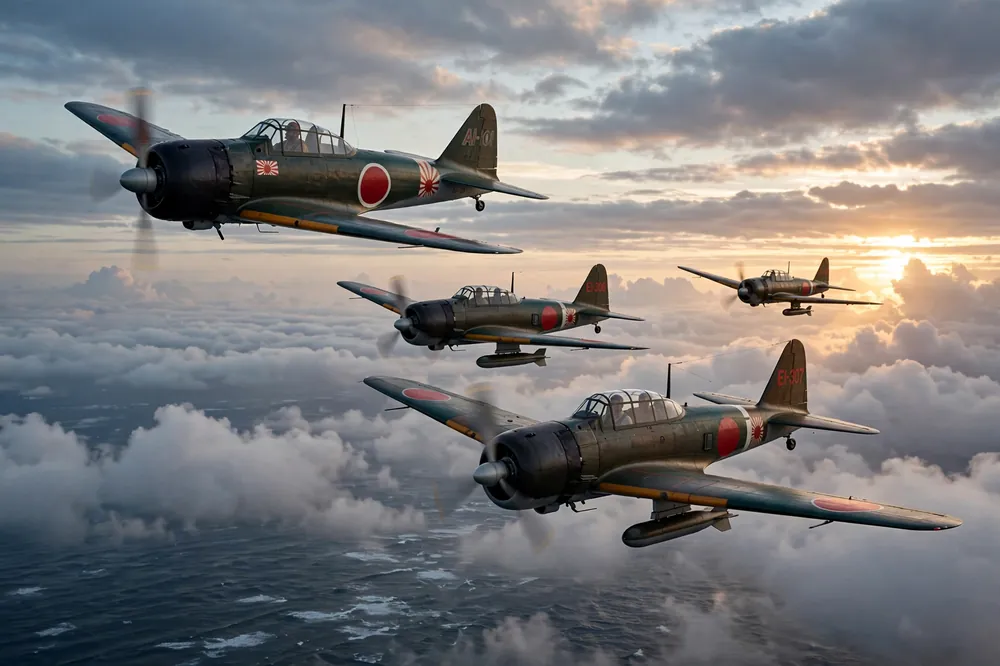
The Americans had two chances to sound the alarm before the bombs fell, and missed both. At 03:42 the minesweeper Condor reported a periscope outside the harbour entrance. At 06:37 the destroyer Ward, on patrol outside the entrance, spotted the conning tower of a midget submarine and sank it with gunfire — the first American shots of the Pacific War. Ward‘s report reached headquarters, but it was treated as unconfirmed and no general alert was sounded.
The second warning came from the sky. At 07:02, two Army privates manning an SCR-270 radar set at Opana Point, on Oahu’s northern tip, detected a large formation of aircraft about 132 miles out, approaching from the north. They telephoned the information centre at Fort Shafter. The duty officer, assuming the blips were a flight of B-17 bombers expected from the mainland that morning, told them not to worry. The radar operators stayed at their set and watched the formation close in. By the time anyone understood what it was, the first Japanese aircraft were already over Oahu.
At 07:48 the first bombs fell. Fuchida, circling above the harbour in his command aircraft, radioed the code words “Tora! Tora! Tora!” — “Tiger! Tiger! Tiger!” — the signal that complete surprise had been achieved. The first wave of 183 aircraft split into its assigned tasks with practised precision. The torpedo bombers came in low over the water, skimming the harbour entrance and turning onto Battleship Row, where the great ships lay two abreast, unable to get under way. The dive bombers fell on Hickam Field and Wheeler Field, and on the aircraft parked at Ford Island and Kaneohe. The fighters strafed anything that moved.
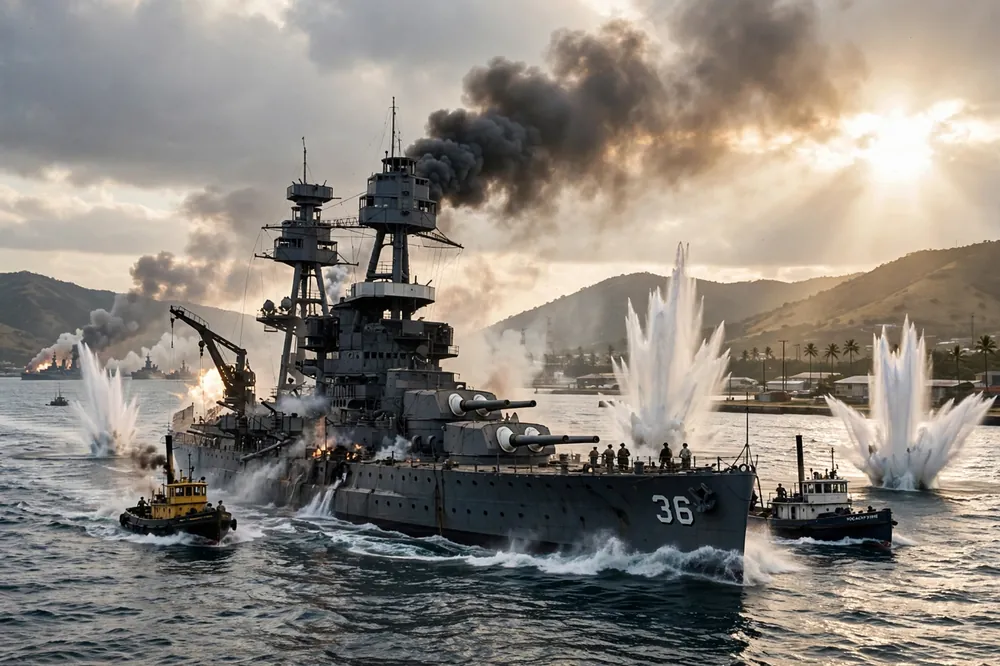
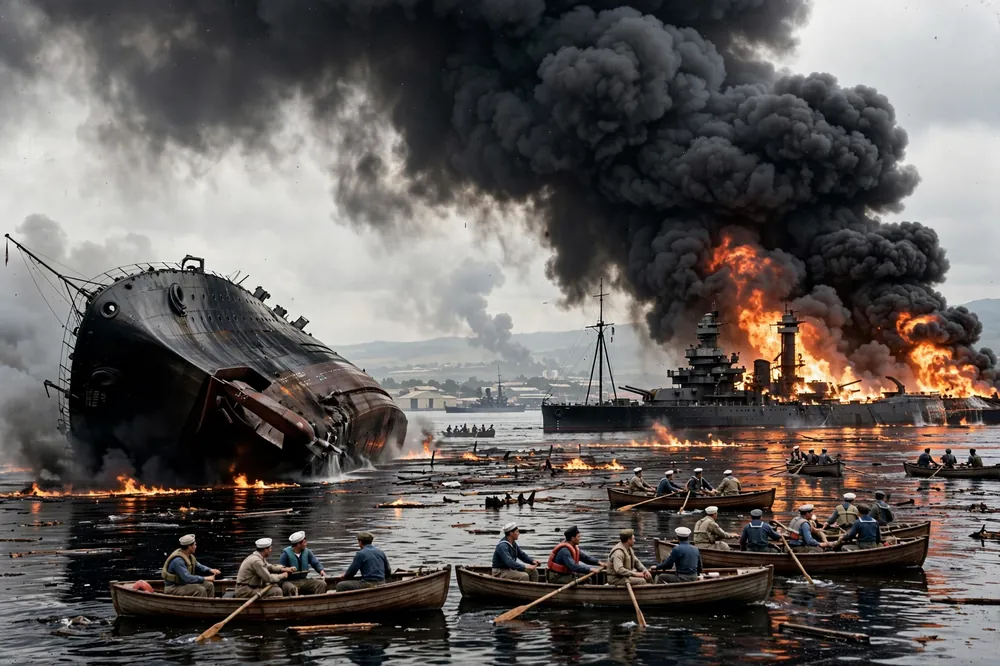
On Battleship Row the destruction was swift and extensive. Oklahoma, moored outboard alongside Maryland, took at least five torpedoes in the first minutes and rolled over, capsizing by about 08:08. Hundreds of men were trapped inside the overturned hull; rescue teams later cut through the steel to free the survivors, but 429 of her crew died. West Virginia, moored alongside Tennessee, was hit by at least six torpedoes and two bombs, and settled upright onto the harbour bottom, burning fiercely. California, at the southern end of the row, took two torpedoes and a bomb and sank slowly at her mooring. Nevada, the only battleship to get steam up during the attack, cast off and tried to make for the open sea; Japanese bombers concentrated on her, and her captain deliberately ran her aground at Hospital Point so that she would not sink in the channel and block the harbour. Arizona suffered the worst single loss of the day: at about 08:06 an armour-piercing bomb, converted from a 16-inch naval shell, pierced her deck near the forward turrets and detonated her forward magazine.
The explosion tore the ship apart in a column of fire and smoke visible across Oahu, killing 1,177 officers and men, including Rear Admiral Isaac Kidd and Captain Franklin Van Valkenburgh. Maryland and Tennessee, moored inboard and shielded by the ships alongside them, were damaged but stayed afloat. Pennsylvania, in dry dock with the destroyers Cassin and Downes, was hit by a bomb and set on fire.
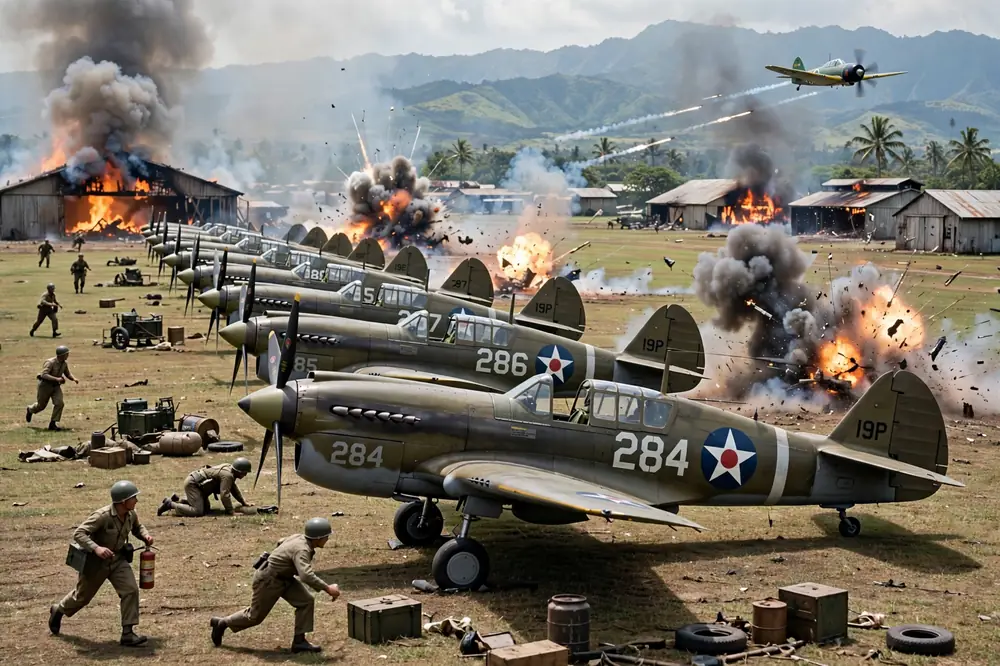
At the airfields the story was the same: aircraft destroyed where they stood. At Hickam Field, bombers caught the B-17s that had just arrived from California — unarmed, low on fuel, and parked in neat rows. At Wheeler Field, the Army’s fighter base, Japanese aircraft destroyed most of the P-40 fighters on the ground. A handful of American pilots managed to get airborne — among them Second Lieutenants George Welch and Kenneth Taylor, who took off from Haleiwa Field in P-40s and shot down several Japanese aircraft between them — but they were the exception. By the end of the first wave, American air power on Oahu had effectively ceased to exist.
The second wave of about 170 aircraft arrived at around 08:54, an hour after the first. By now the American defences were awake: anti-aircraft fire from the ships and from shore batteries was far heavier, and the second wave suffered most of the Japanese aircraft losses of the day.
Its pilots concentrated on the airfields and on ships that were still afloat, hitting Nevada again as she lay beached, and damaging the cruisers and destroyers in the harbour. The light cruiser Raleigh and the destroyer Shaw were among the ships damaged; Shaw‘s forward magazine exploded in a spectacular blast in the floating dry dock. By about 09:45 the second wave had left, and the attack was over.
In all, the raid had lasted about two hours.
Aboard the Japanese carriers, a debate began that historians still argue about. Fuchida and Genda urged Nagumo to launch a third strike — to destroy the harbour’s fuel-oil storage tanks, its dry docks and repair shops, and the submarine base, all of which had survived almost untouched. The captains of the other carriers were reported to be willing. Nagumo refused.
His reasons were practical: the American carriers were still unaccounted for and might be closing in; his own air groups had lost aircraft and were tired; American anti-aircraft fire was growing stronger; and his fuel situation, after the long voyage, left little margin. He turned the fleet for home.
The decision has been judged ever since as the raid’s great missed opportunity — but it was also the decision of a commander who had achieved his orders and did not want to risk the fleet that Japan would need for the war ahead.
Behind them, Pearl Harbor burned. Eighteen American ships had been sunk or run aground, including five battleships. Fires raged at Hickam Field and across the harbour. The midget submarine attack had failed completely: four of the five boats were sunk and one ran aground; Ensign Kazuo Sakamaki, whose boat grounded on a reef, swam ashore and became the first Japanese prisoner of war taken by the United States. The Japanese striking force sailed home without losing a single ship.
6. Turning Point
The turning point of the Attack on Pearl Harbor was not a moment of combat — it was a list of things that did not happen. At about 08:06, the bomb that destroyed Arizona gave Japan its greatest single success of the morning. But three absences, decided before a single bomb fell, decided the war.
The first was the carriers. The raid’s primary targets were the American aircraft carriers, and none of them was in the harbour. Enterprise, Lexington and Saratoga were all at sea, and all three survived to fight. Within six months, those same carriers — above all Enterprise and Yorktown — would destroy four of the six Japanese carriers that had attacked Pearl Harbor at the Battle of Midway in June 1942. Japan had built its entire Pacific strategy around a decisive battle between battleship fleets; the ships that would actually decide the war were the ones it had missed.
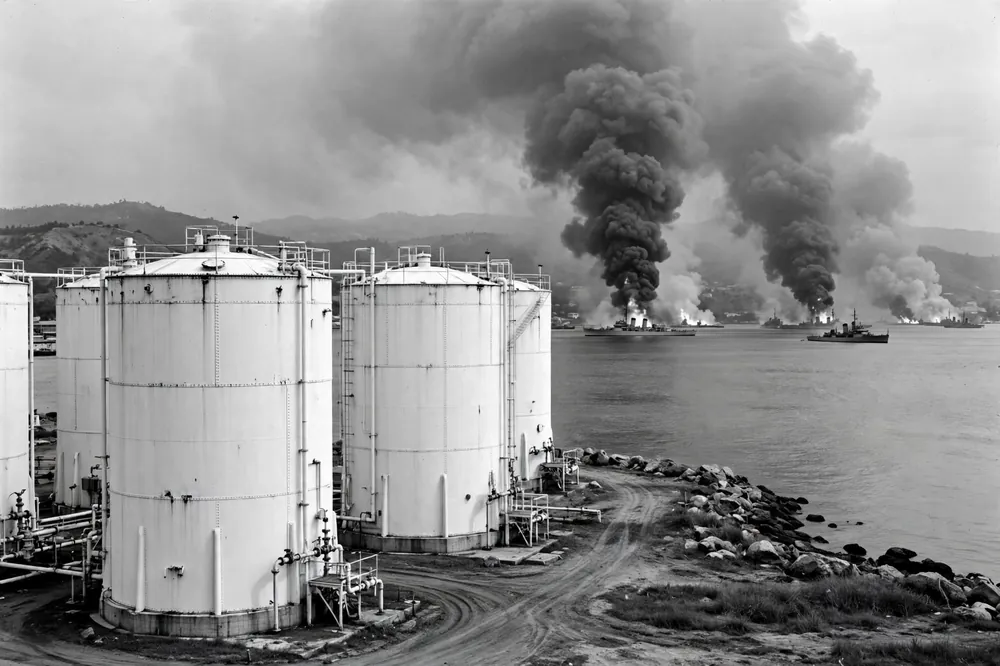
The second absence was the fuel. Pearl Harbor held vast storage tanks of fuel oil for the fleet, and the Japanese never attacked them. Had those tanks burned, the Pacific Fleet would have had to withdraw to the American West Coast, and every operation in the central Pacific would have been delayed by months. The dry docks, machine shops and repair facilities were likewise left standing — and within weeks they were raising sunken battleships and patching damaged ones. The harbour that Japan had wrecked in a morning was working again before the year was out.
The third absence was the third wave. Nagumo’s decision to withdraw rather than strike the repair shops and fuel tanks preserved his carriers for the moment, but it left the base alive. Combined with the survival of the carriers, it meant that the raid, for all its destruction, had crippled the American battleship fleet without touching the instruments of American recovery: carriers, fuel, repair yards and, above all, the submarine base from which American submarines would go on to strangle Japanese shipping.
There was a fourth turning point, invisible that morning but decisive in the long run: the American reaction. Japan’s leaders had hoped that a sharp defeat would shock the United States into negotiating. Instead, the attack — delivered while Japanese diplomats were still talking peace in Washington, and remembered ever after as a surprise attack delivered during negotiations — produced the opposite: a united American public, a Congress that declared war the next day with only one dissenting vote, and an industrial mobilisation on a scale Japan could never match. The tactical victory at Pearl Harbor made the strategic defeat of Japan a matter of time.
7. Casualties and Losses
The human cost of the Attack on Pearl Harbor fell overwhelmingly on the Americans, and overwhelmingly on the crews of two ships. Nearly half of all American dead — 1,177 of 2,403 — died aboard Arizona in a single explosion. Another 429 died aboard Oklahoma. Together the two ships account for two-thirds of the American dead.
| United States | Japan | |
|---|---|---|
| Killed | 2,403 (2,008 Navy, 109 Marines, 218 Army, 68 civilians) | 129 killed (see note below) |
| Wounded | 1,178 | Few recorded; 1 sailor captured |
| Battleships | 4 sunk (Arizona, Oklahoma, West Virginia, California), 4 damaged | — |
| Other ships | Ex-battleship Utah sunk, harbour tug Sotoyomo sunk, 3 cruisers damaged, 3 destroyers damaged, 3 other ships damaged | 5 midget submarines lost (4 sunk, 1 grounded) |
| Aircraft | 188 destroyed, 159 damaged | 29 destroyed, 74 damaged |
| Total ships sunk or damaged | 18 ships sunk or run aground | No ships lost |
The figures for Japanese dead need a note, because sources differ. The figure of 129 killed is the total given in the current Wikipedia summary of the battle. Older accounts, including the Naval History and Heritage Command, give 64 Japanese aircrew killed, plus the ten crewmen of the five midget submarines and one sailor captured — Ensign Kazuo Sakamaki. The higher figure of 129 appears to include additional personnel counted in later tallies; this article records 129 as the commonly cited total while noting that the breakdown into 64 aircrew killed is the figure supported by the detailed loss records. No Japanese surface ship was lost, and no Japanese carrier aircraft carrier was damaged.
The American dead included the first flag officers killed in the war: Rear Admiral Isaac Kidd, commander of Battleship Division One, and Captain Franklin Van Valkenburgh, both aboard Arizona. The civilian dead — 68 killed and 35 wounded — were mostly victims of American anti-aircraft shells that fell back onto Honolulu, a fact that underlines how unprepared the defences were: gunners fired at aircraft they could barely see, and their shells came down on the city.
The material losses, severe as they looked on 7 December, proved far less permanent than the human ones. Of the eight battleships, six returned to service during the war: Nevada, California and West Virginia were raised from the harbour bottom, rebuilt and modernised, and fought again — West Virginia, California, Tennessee, Maryland and Pennsylvania later formed the battle line that destroyed a Japanese battleship force at Surigao Strait in October 1944.
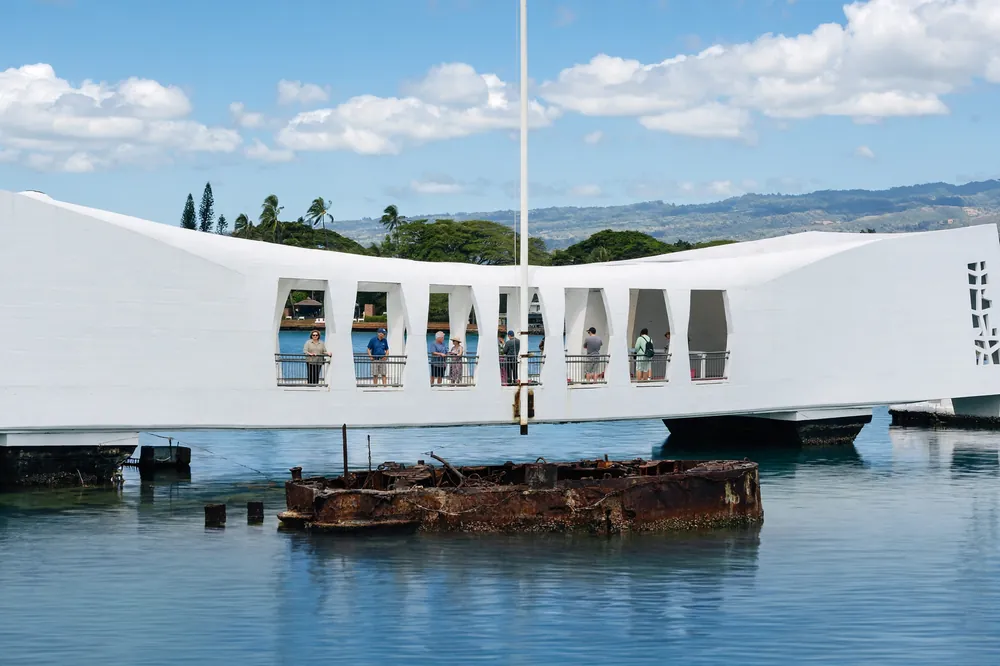
Only Arizona and Oklahoma never fought again. Arizona was judged too badly damaged to raise and remains where she sank; Oklahoma was raised in 1943 but was found too damaged to rebuild and never returned to service. The ex-battleship Utah, sunk as a target ship, also remains in the harbour. Of the 188 American aircraft destroyed, most had been caught on the ground; American factories replaced them within weeks.
8. Map and Geography
Pearl Harbor is not a natural open harbour but a drowned river valley on the southern coast of Oahu, the third-largest island of Hawaii, about 2,000 miles southwest of San Diego and 3,500 miles from Tokyo. A narrow entrance channel, barely 400 yards wide, leads from the Pacific into a broad, shallow lagoon divided by Ford Island in the middle.
The lochs — East Loch, Middle Loch and West Loch — branch off the main basin, and the naval base, the airfields and the fuel farms were crowded around their shores. The geography that made Pearl Harbor a superb sheltered anchorage also made it a trap: ships at anchor had only one way out, through that narrow channel, and aircraft attacking from the north could approach over the island’s central mountains with little warning.
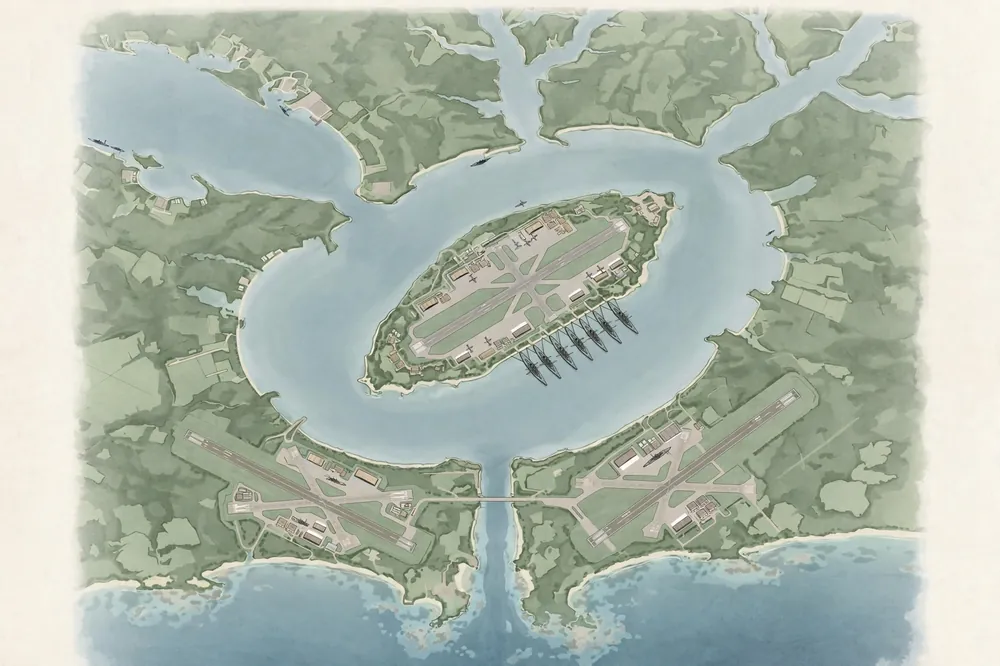
That geography shaped the attack in every detail. The Japanese approached from the north, over the island’s sparsely populated interior, so that the first warning most Americans had was the sound of bombs. The torpedo bombers needed the shallow, sheltered water of the harbour — and the Americans had counted on the water being too shallow for torpedoes at all.
Battleship Row, along the southeast shore of Ford Island, faced the open water of East Loch, giving the torpedo bombers a long, straight run at the moored battleships. The airfields were spread around the harbour — Hickam beside the naval base, Wheeler inland to the northwest, Ford Island in the middle of the lagoon, Kaneohe on the windward coast — so a single coordinated strike could hit the fleet and its air cover at the same time.
Strategically, Pearl Harbor sat at the centre of the Pacific. From Hawaii the United States could threaten Japan’s southern advance, protect the sea lanes to Australia, and stage the counteroffensive that would eventually carry the war back across the ocean. That was why the base existed, why Japan had to neutralise it, and why its survival as a working base — fuel, docks and repair shops intact — mattered more than the battleships that sank in its shallow water. The harbour’s very shallowness, which doomed Arizona and Oklahoma, saved the fleet: ships that sank in 40 feet of water could be raised again. In deep water they would have been lost forever.
9. Outcome and Legacy of the Attack on Pearl Harbor
The day after the attack, President Franklin D. Roosevelt addressed Congress and called 7 December 1941 “a date which will live in infamy”. Congress declared war on Japan the same day, with only one dissenting vote, in the House of Representatives. Three days later, on 11 December, Germany and Italy declared war on the United States, and the American war became a two-ocean war. The United States had entered the Second World War — the event the attack was meant to prevent.
Militarily, the raid achieved almost everything Yamamoto had asked of it, and none of what Japan needed. The battleship fleet that had been the pride of the Pacific Fleet was wrecked, and the simultaneous Japanese offensives in Malaya, the Philippines and the Dutch East Indies went ahead without American naval interference.
For six months Japan advanced almost unchecked, from Pearl Harbor to the fall of Singapore, the Dutch East Indies and the Philippines. But the raid’s failures compounded with every passing month. The carriers survived and became the core of the new American fleet.
The repair yards at Pearl Harbor worked around the clock, and by the spring of 1942 the base was launching the raids and the carrier operations that would culminate at Midway. American shipyards, untouched by war, began producing carriers, aircraft and ships at a rate Japan could never match: by 1943 the United States was commissioning a new fleet carrier almost every month.
The attack also transformed the American military. The Pacific Fleet’s battleship admirals lost their argument overnight; the carrier admirals — Nimitz, Halsey, Spruance — took command of the war at sea. The Army’s air forces, caught on the ground at Hickam and Wheeler, rebuilt around the lesson that aircraft must be dispersed, protected and ready. The submarine force, whose base at Pearl Harbor had survived the attack, began the campaign against Japanese merchant shipping that would eventually sink most of Japan’s merchant fleet and starve its industry of oil and raw materials. And the American public, which had been deeply divided over entering the war, was united by the attack in a way no speech could have achieved.
For Japan, Pearl Harbor was the high-water mark. The six carriers that had struck Hawaii were the finest naval striking force in the world in December 1941; within six months, four of them lay at the bottom of the Pacific at Midway, and the other two, Shōkaku and Zuikaku, would be worn down in the attritional carrier battles of 1942. Japan’s industrial base could not replace the ships, the aircraft or — above all — the trained aircrew that the war consumed. The gamble that a single blow would win Japan time had failed, because the blow had not been complete, and the time it bought was spent by an enemy growing stronger every month.
The human legacy is preserved at the harbour itself. The USS Arizona Memorial, dedicated in 1962, spans the sunken hull of the battleship without touching it; the ship remains a war grave, and oil still seeps slowly from her wreck — the “black tears” visitors see on the water.
The memorials to Oklahoma and Utah stand nearby, and the battleship Missouri, on whose deck Japan surrendered in Tokyo Bay in September 1945, is moored in the harbour facing Arizona: the beginning and the end of the American war in the Pacific, a few hundred yards apart.
Pearl Harbor remains an active naval base and one of the most visited historic sites in the United States, receiving well over a million visitors a year.
Historians still debate the attack — whether Nagumo should have launched a third wave, whether Roosevelt knew more than he admitted, whether Kimmel and Short were fairly treated. The official inquiries, beginning with the Roberts Commission in 1942, blamed both commanders in Hawaii for failing to prepare, and both were relieved of command within weeks of the attack. Later inquiries spread the blame more widely, to Washington’s vague warnings and to a system that divided responsibility between the Army and the Navy. What is not debated is the result: the Attack on Pearl Harbor destroyed a fleet in a morning and, in doing so, created the enemy that would destroy the Japanese Empire.
The recovery began faster than anyone in Tokyo expected. On 18 April 1942, sixteen American B-25 bombers launched from the carrier Hornet bombed Tokyo in the Doolittle Raid — a raid that did little physical damage but showed that Japan itself was no longer safe from attack, and that American carriers were still operating.
In May 1942, at the Battle of the Coral Sea, American and Japanese carriers fought the first naval battle in history in which the opposing ships never saw each other; the American carrier Lexington was lost, but the Japanese invasion of Port Moresby was stopped, and the carriers Shōkaku and Zuikaku were damaged or depleted enough to miss the next operation.
That next operation was Midway — where the carriers Pearl Harbor had missed destroyed the carriers Pearl Harbor had launched.
10. Commanders
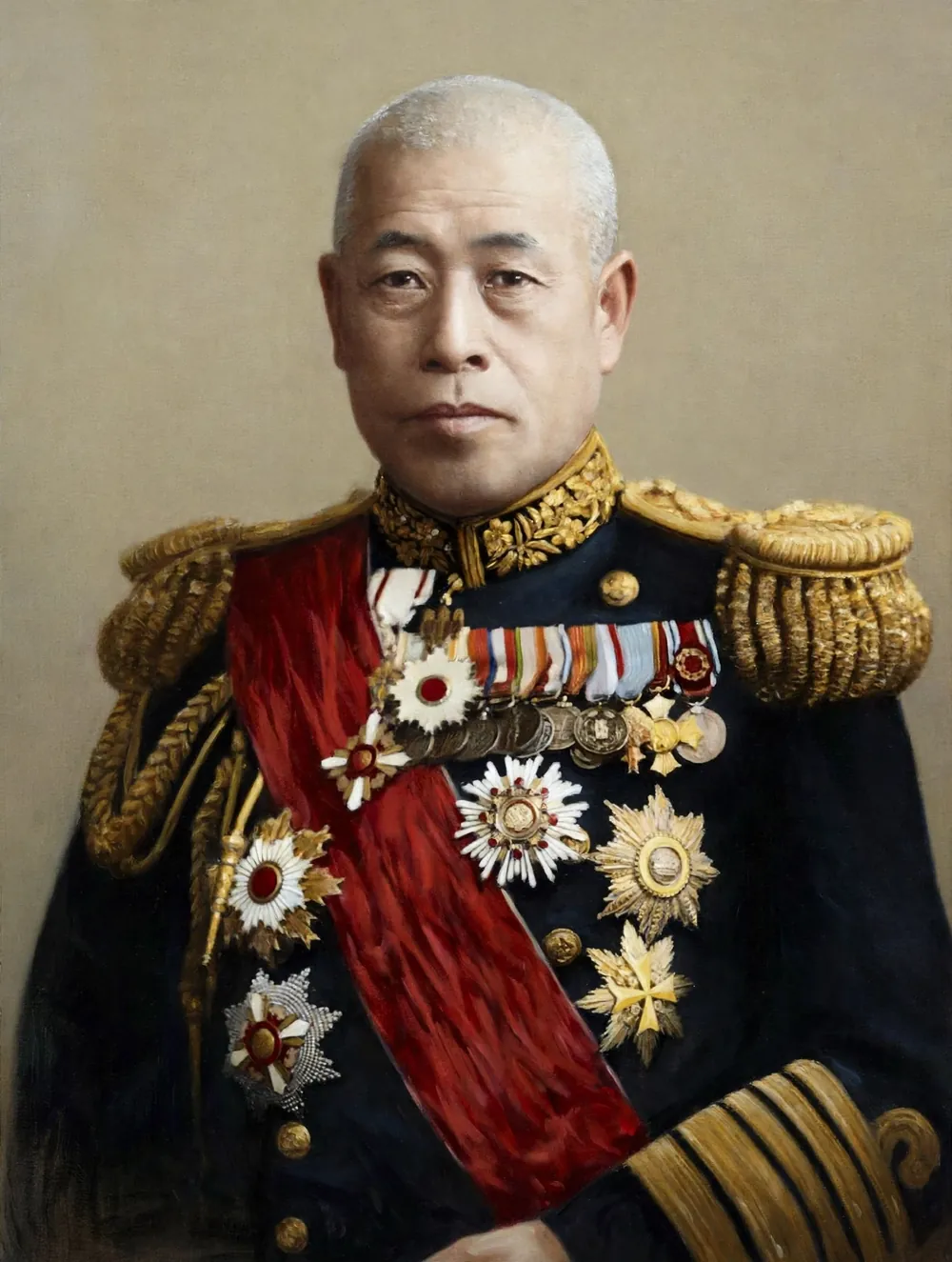
Admiral Isoroku Yamamoto (Japan). Commander in Chief of the Combined Fleet and the architect of the attack. Yamamoto had studied at Harvard, served as naval attaché in Washington, and knew the United States well enough to oppose war with it. He warned that Japan could run wild for six months, but after that he had “no expectation of success”. He got his six months — almost exactly. He was killed on 18 April 1943, when American fighters, guided by codebreaking intelligence, intercepted and shot down his aircraft over the Solomon Islands.
Vice Admiral Chuichi Nagumo (Japan). Commander of the First Air Fleet and the striking force. A torpedo specialist rather than an aviator, Nagumo carried out Yamamoto’s plan with precision, then made the cautious decision to withdraw without a third strike — the most debated call of the day. He later commanded the carriers at Midway, where he lost four of them, and died at Saipan in July 1944.
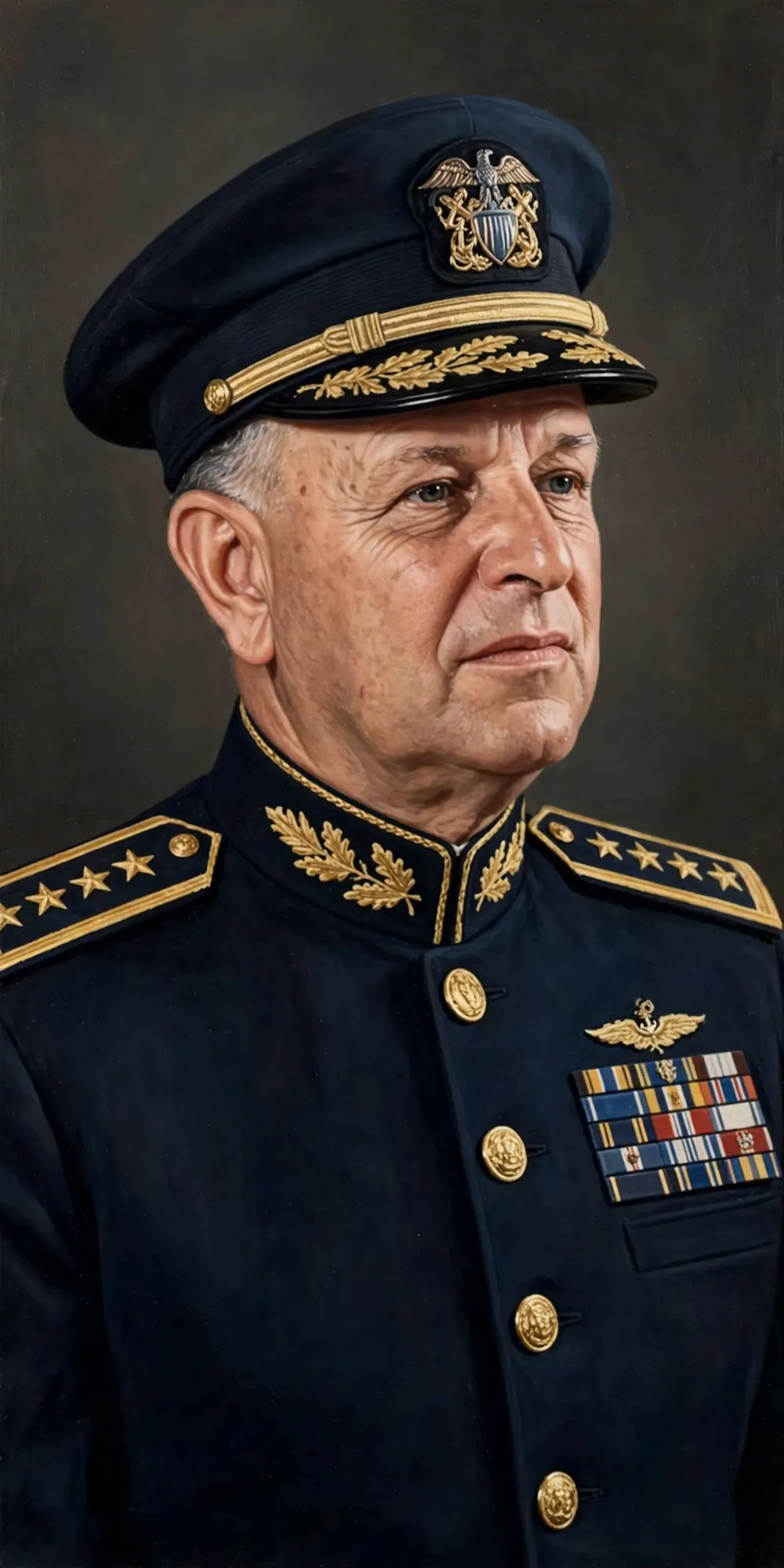
Commander Minoru Genda (Japan). The air staff officer who designed the tactical plan: the massing of six carriers, the two-wave attack, the shallow-water torpedo modifications and the targeting priorities. Genda survived the war and later served in the post-war Japanese Self-Defence Forces and in politics.
Commander Mitsuo Fuchida (Japan). Leader of the first attack wave, who signalled “Tora! Tora! Tora!” to report that surprise had been achieved. He later urged the third strike that Nagumo refused. He survived the war and became a Christian evangelist in the post-war years.
Admiral Husband E. Kimmel (United States). Commander in Chief of the Pacific Fleet. Kimmel had been in command for less than a year when the attack came. He was relieved of command on 17 December 1941 and retired in early 1942. The Roberts Commission blamed him, with General Short, for failing to prepare the fleet and the base; later inquiries judged the warnings from Washington to have been vague and the division of responsibility unclear. His family campaigned for decades to restore his rank; the debate continues.
Lieutenant General Walter Short (United States). Commander of the Army’s Hawaiian Department, responsible for the defence of Oahu. Short’s decision to park aircraft in the open against sabotage, and to keep anti-aircraft ammunition locked away, proved disastrous. Like Kimmel, he was relieved of command after the attack and retired. He died in 1949.
Rear Admiral Isaac Kidd (United States). Commander of Battleship Division One, killed aboard his flagship Arizona when her magazine exploded — the first American flag officer killed in the Second World War. He was posthumously awarded the Medal of Honor. The destroyer USS Kidd was named for him.
Frequently Asked Questions
Related articles
Sources
- Wikipedia, “Attack on Pearl Harbor” — dates, strength, casualty figures (2,403 killed, 1,178 wounded; Japanese losses 29 aircraft, 5 midget submarines, 129 killed), cross-checked against the Naval History and Heritage Command.
- Naval History and Heritage Command (history.navy.mil), “The Attack on Pearl Harbor, 7 December 1941” — official US Navy overview, ship damage and casualty breakdowns.
- Encyclopædia Britannica, “Pearl Harbor attack” — background, the oil embargo, Yamamoto’s plan and the consequences of the raid.
- National Park Service, Pearl Harbor National Memorial (nps.gov) — USS Arizona Memorial, the 1,177 dead aboard Arizona, the 429 dead aboard Oklahoma, and visitor information.
- National WWII Museum (nationalww2museum.org), “Pearl Harbor” — the road to war, the attack timeline and the American response.
- Gordon W. Prange, At Dawn We Slept: The Untold Story of Pearl Harbor (McGraw-Hill, 1981) — the standard scholarly history of the attack, based on Japanese and American sources.
- H. P. Willmott, Pearl Harbor (Cassell, 2001) — concise operational history of the raid and its strategic context.
- Craig Nelson, Pearl Harbor: From Infamy to Greatness (Avid Reader Press, 2016).
- Alan Zimm, Attack on Pearl Harbor: Strategy, Combat, Myths, Deceptions (Casemate, 2011).