 WAR ATLAS MILITARY HISTORY MAGAZINE · WWI — WWII
Neville Chamberlain
1. Lead
Neville Chamberlain (18 March 1869 – 9 November 1940) was the British prime minister who pursued the policy of appeasement towards Nazi Germany and who, when that policy failed, led Britain into the Second World War. The son of the great Victorian statesman Joseph Chamberlain and the half-brother of the Liberal leader Austen Chamberlain, he entered politics late, became a highly effective Chancellor of the Exchequer in the 1930s, and succeeded Stanley Baldwin as prime minister in May 1937.
For the next two years he sought to avoid war by negotiating with Adolf Hitler, above all at the Munich Conference of September 1938, where Britain and France agreed to Germany’s annexation of the Sudetenland, the German-speaking border region of Czechoslovakia. Returning to London, Chamberlain famously declared that the agreement meant “peace for our time”.
Within six months Hitler had occupied the rest of Czechoslovakia, and on 3 September 1939, after Germany invaded Poland, Chamberlain broadcast to the nation that Britain was at war with Germany. He remained prime minister through the first eight months of the war — the period of the “Phoney War” — and resigned in May 1940 after the failure of the Norwegian campaign, making way for Winston Churchill.
He died of cancer six months later.
Chamberlain’s name has become a byword for the failure of appeasement, and for generations he was remembered as the naive prime minister who was duped by Hitler. That judgement, though understandable, is incomplete. More recent historians have argued that Chamberlain faced a Britain that was militarily unprepared, financially strained, and deeply unwilling to fight another war after the slaughter of 1914–1918; that appeasement bought Britain time to rearm, above all to build the fighter aircraft and radar defences that won the Battle of Britain in 1940; and that Chamberlain himself was a serious and capable administrator whose tragedy was that he applied the methods of domestic politics — negotiation, compromise, the search for common ground — to a dictator who understood only force.
Whether appeasement was a necessary delay or a fatal error remains one of the great debates of twentieth-century history, and Chamberlain stands at its centre.
2. Key Facts
| Born | 18 March 1869, Edgbaston, Birmingham, England |
| Died | 9 November 1940 (aged 71), Heckfield, Hampshire, England |
| Nationality | British (English) |
| Role / Office | Prime Minister of the United Kingdom (28 May 1937 – 10 May 1940); Chancellor of the Exchequer (1931–1937); Leader of the Conservative Party (1937–1940) |
| Known for | The policy of appeasement; the Munich Agreement (September 1938); declaring war on Germany (3 September 1939) |
| Spouse / Family | Anne Cole (married 1911, died 1967); children Dorothy and Frank; father Joseph Chamberlain; half-brother Austen Chamberlain |
| Political party | Conservative Party |
3. Early Life and Education
Neville Chamberlain was born on 18 March 1869 at Southbourne, the family home in Edgbaston, Birmingham, the younger son of Joseph Chamberlain — the industrialist, mayor of Birmingham and, later, the most dynamic politician of late Victorian Britain — and his second wife, Florence Kenrick.
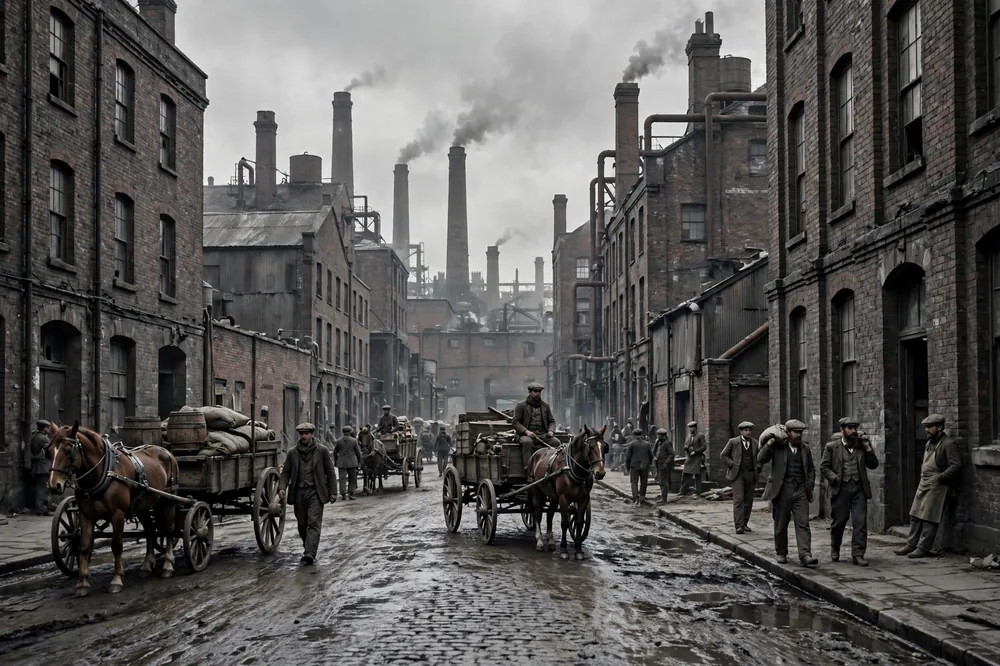
His mother died when Neville was six years old, giving birth to his younger brother, and the boy was raised largely by his elder half-sister Beatrice and by his stepmother. He was educated at Rugby School, where he was neither a brilliant scholar nor a natural sportsman, and then at Mason College in Birmingham, where he studied metallurgy and botany, intending to go into the family business.
He was a shy, serious young man, reserved in manner and lacking the charm and the rhetorical gift that his father possessed in abundance.
In 1890, at the age of twenty-one, Chamberlain was sent to the Bahamas to manage a sisal plantation that his father had bought as a business venture. The venture failed — the soil was unsuitable and the market collapsed — and after six years Chamberlain returned to Birmingham, having lost a considerable sum of his father’s money and having learned, as he later said, the value of hard work and the pain of failure.
Back in Birmingham he went into business, first in the family’s screw-manufacturing firm and then as a director of the Birmingham Small Arms Company, and he became a successful and respected businessman. He also entered municipal politics: he was elected to Birmingham City Council in 1911, became chairman of the Town Planning Committee, and in 1915, at the age of forty-six, became Lord Mayor of Birmingham.
It was an unusually late start for a man who would become prime minister, and it shaped him: Chamberlain was always a municipal politician and an administrator at heart, more comfortable with budgets and housing schemes than with the grand theatre of Westminster.
He entered Parliament in December 1918, at the age of forty-nine, as the Conservative member for Birmingham Ladywood, a seat he held until 1929 and then exchanged for Birmingham Edgbaston, which he held until his death. His rise was steady rather than spectacular: he became Postmaster-General in 1922, Minister of Health in 1923, and again Minister of Health from 1924 to 1929, where he made his reputation as a reforming administrator, above all through the Rating and Valuation Act of 1925 and the Local Government Act of 1929, which reorganised local government finance and transferred the Poor Law functions to local authorities.
He was, by general agreement, one of the most capable domestic ministers of the interwar years — a man who understood detail, worked tirelessly, and got things done. He married Anne Cole in January 1911; they had two children, Dorothy and Frank, and a happy and close marriage that lasted until his death.
4. Rise to Prominence
Chamberlain’s rise to the top came through the Treasury. In August 1931, in the depths of the Great Depression, he was appointed Chancellor of the Exchequer in Ramsay MacDonald’s National Government, and he held the post for six years — an unusually long tenure — through the worst of the depression and the slow recovery that followed.
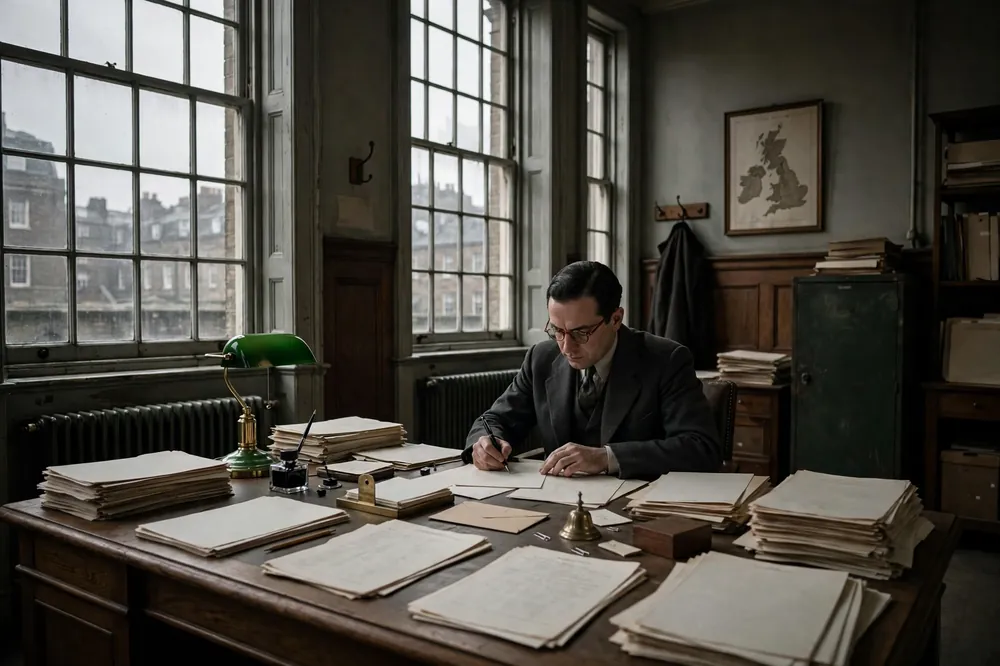
As Chancellor he was responsible for the policies that took Britain off the gold standard in 1931, for the introduction of a general tariff in 1932, and for the cheap-money policy that encouraged a housing boom and a slow revival of industry.
His budgets were cautious and orthodox: he believed in balanced budgets, low taxation and sound money, and he resisted the pressure to spend heavily on rearmament until the mid-1930s. His record as Chancellor was widely admired — even his political opponents conceded his competence — and it made him the natural successor to Stanley Baldwin as leader of the Conservative Party and prime minister.
Chamberlain became prime minister on 28 May 1937, at the age of sixty-eight. He was, by the standards of the time, an old man taking office, and he brought to the post a style very different from Baldwin’s: where Baldwin had been relaxed, indirect and inclined to let events take their course, Chamberlain was energetic, direct and determined to take personal control of policy, above all of foreign policy.
He was convinced that the problems of Europe could be solved by personal negotiation between leaders — a conviction that reflected his experience as a businessman and a municipal politician, where deals were made face to face and compromise was a virtue.
He was also convinced that Britain could not afford another great war: the country was still paying for the First World War, its armed forces had been run down by years of economy, and public opinion, haunted by the memory of the trenches, was overwhelmingly opposed to war.
In his first year as prime minister, Chamberlain pursued what he called a policy of appeasement — a word that at the time carried no pejorative meaning, but meant simply the settlement of grievances by negotiation. He believed that Germany had legitimate grievances arising from the Treaty of Versailles, and that if those grievances were met, Hitler would be satisfied and peace could be preserved.
He also believed that Britain’s real interests lay in its empire and in the Far East, where Japan threatened British possessions, and that a European war would destroy both. In November 1937 he sent his closest adviser, Lord Halifax, to meet Hitler at Berchtesgaden, and in March 1938, when Germany annexed Austria in the Anschluss, he accepted it with a protest but no action.
The test of his policy came in the autumn of 1938, over Czechoslovakia.
5. Neville Chamberlain’s Role in World War II
Munich
The crisis of 1938 arose over the Sudetenland, the border region of Czechoslovakia inhabited by some three million ethnic Germans, who were led by Konrad Henlein’s Sudeten German Party and encouraged by Berlin. Hitler demanded that the Sudetenland be transferred to Germany, and by September 1938 war seemed imminent: Czechoslovakia mobilised, France was bound by treaty to defend it, and Britain faced the prospect of a war it was not ready to fight.
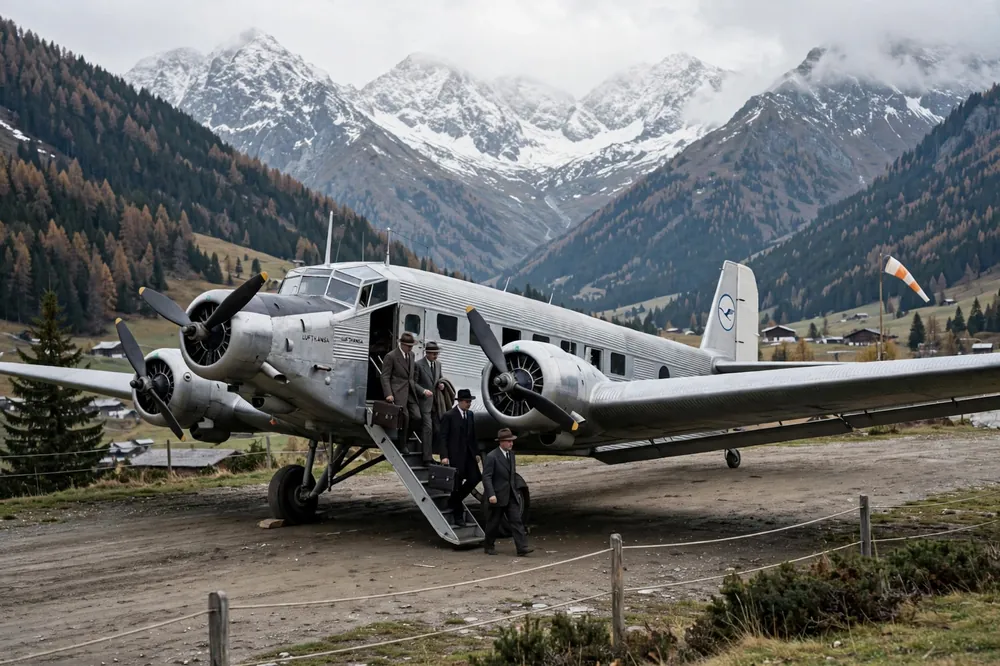
Chamberlain intervened personally. On 15 September he flew to Berchtesgaden — the first time a British prime minister had flown to a diplomatic meeting — to meet Hitler, and he agreed in principle to the transfer of the Sudetenland. On 22 September he flew to Bad Godesberg, where Hitler raised his demands, insisting on immediate military occupation; Chamberlain, to his credit, refused, and returned to London to prepare for war.
On 28 September, with war hours away, Hitler invited Chamberlain, the French premier Édouard Daladier and the Italian leader Benito Mussolini to Munich. At the conference on 29–30 September, the four leaders agreed that Germany would annex the Sudetenland in stages during October. Czechoslovakia, which was not invited to the conference, was told to accept. Its president, Edvard Beneš, resigned shortly afterwards.
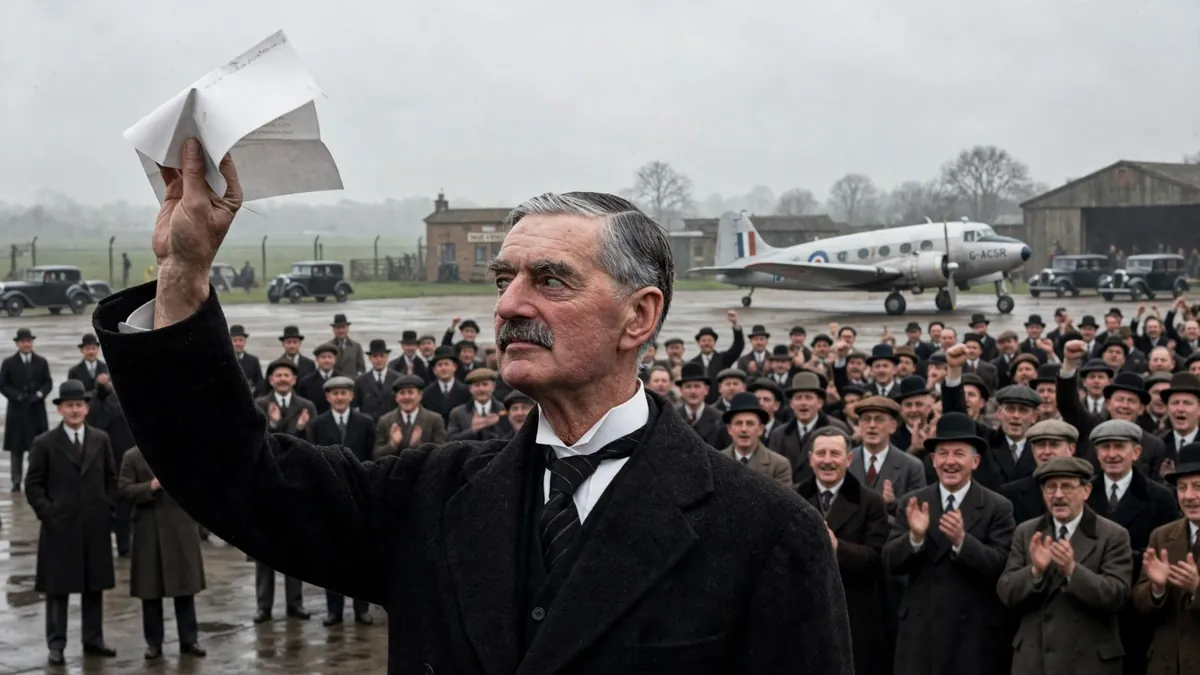
Chamberlain returned to London on 30 September to a hero’s welcome. Crowds cheered him at Heston Airport, and at the door of 10 Downing Street he held up the agreement he had signed with Hitler — a separate Anglo-German declaration that the two countries would never go to war with each other — and declared, “I believe it is peace for our time.” The phrase, borrowed from the Book of Common Prayer, was greeted with relief and gratitude across Britain and much of the world: the king appeared on the balcony of Buckingham Palace with Chamberlain, and the prime minister’s popularity soared.
Only a few voices dissented. Winston Churchill, then a backbench Conservative MP, told the House of Commons that Britain had “sustained a total and unmitigated defeat”, and that the country had chosen “between war and dishonour” and would have war. Duff Cooper, the First Lord of the Admiralty, resigned from the government in protest.
But in the autumn of 1938 they were in a small minority, and Chamberlain’s policy seemed, to most people, to have worked.
From Munich to war
The illusion did not last. In March 1939 Hitler occupied the rest of Czechoslovakia, in defiance of the Munich Agreement, and Chamberlain, at last, understood that Hitler’s aims were not limited to the redress of grievances. On 17 March 1939 he made a speech in Birmingham — his home city — in which he condemned the German action and warned that Britain would resist further aggression.
On 31 March Britain gave a guarantee to Poland: if Poland’s independence were threatened, Britain would come to its aid. The guarantee was a fateful step — it committed Britain to a country it could not directly defend — but it was also the moment when appeasement ended and deterrence began.
Through the summer of 1939 Chamberlain sought to make the guarantee credible by negotiating a military alliance with the Soviet Union, but the talks failed: the Poles refused to allow Soviet troops on their soil, and on 23 August 1939 Germany and the Soviet Union signed the Molotov–Ribbentrop Pact, the non-aggression treaty that freed Hitler to attack Poland without fear of a Soviet response.
On 1 September 1939 Germany invaded Poland. Britain and France, bound by their guarantees, issued an ultimatum demanding a German withdrawal; when it expired at 11 a.m. on Sunday 3 September, Chamberlain broadcast to the nation in a quiet, sombre voice: “This morning the British Ambassador in Berlin handed the German Government a final note stating that unless we heard from them by 11 o’clock that they were prepared at once to withdraw their troops from Poland, a state of war would exist between us.
I have to tell you now that no such undertaking has been received, and that consequently this country is at war with Germany.” It was the most important broadcast in British history, and it was delivered by the man who had done more than anyone to avoid the war.
The Phoney War and resignation
Chamberlain remained prime minister for the first eight months of the war, leading a government that included Churchill as First Lord of the Admiralty. The period from September 1939 to April 1940 — the “Phoney War” — was one of inactivity on the Western Front: Britain and France, having declared war, did not attack Germany, and Germany, having conquered Poland, turned east.
Chamberlain’s government did begin the work of mobilisation, and it was during his premiership that the Royal Air Force’s fighter defences, including the new Spitfire and Hurricane squadrons and the radar chain, were brought to readiness — the defences that would save Britain in the summer of 1940.
But the public mood was one of drift, and Chamberlain, who had built his reputation on avoiding war, seemed an unconvincing war leader.
The end came in April and May 1940. In April, Germany invaded Norway, and the British attempt to intervene — the Norwegian campaign — ended in failure, with British troops evacuated from Namsos and Åndalsnes. On 7–8 May 1940, in the House of Commons, the government faced a motion of censure over the campaign.
The debate was ferocious: Leo Amery, a Conservative MP, quoted Oliver Cromwell’s words to the Long Parliament — “You have sat too long here for any good you have been doing. Depart, I say, and let us have done with you. In the name of God, go!” — and Chamberlain, defending himself, appealed to his “friends” in the party to support him, a phrase that backfired badly.
The government won the vote, but its majority fell from more than two hundred to eighty-one, with some forty Conservatives voting against it. Chamberlain concluded that he could not continue, and on 10 May 1940 — the day Germany invaded France and the Low Countries — he resigned, and Churchill became prime minister.
Chamberlain remained in the government as Lord President of the Council, and he loyally supported Churchill until his health failed. He resigned from the government in September 1940, and he died of bowel cancer on 9 November 1940, aged seventy-one.
6. Key Decisions
Accepting the transfer of the Sudetenland (September 1938). Chamberlain’s decision at Munich was the defining act of his career. He believed he was preventing a war that Britain could not win, and he believed Hitler’s assurance that the Sudetenland was his last territorial demand in Europe. The decision bought a year of peace and time to rearm, but it destroyed Czechoslovakia’s defences, handed Germany the Skoda armaments works — one of the largest in Europe — and demonstrated to Hitler that the Western democracies would not fight.
The guarantee to Poland (31 March 1939). After the occupation of Prague, Chamberlain reversed course and gave Poland a unilateral guarantee of its independence. It was a moral and political turning point — the moment Britain drew a line — but it was also a military gamble: Britain had no way of defending Poland directly, and the guarantee depended on France and on the Soviet Union, neither of which was ready to act.
Declaring war (3 September 1939). Chamberlain’s decision to honour the Polish guarantee, even when it was clear that Poland could not be saved, was the act that redeemed his reputation in the eyes of many. He had sought peace for two years; when war came, he did not hesitate, and his broadcast that morning remains one of the most dignified moments in British political history.
Resigning in May 1940. Chamberlain’s decision to resign after the Norway debate, rather than cling to office, made possible the formation of Churchill’s coalition government. It was an act of political selflessness that his critics rarely acknowledge, and it ensured that Britain entered the decisive phase of the war under a leader who believed in fighting it to the end.
7. Controversies
The controversy over Chamberlain is the controversy over appeasement itself, and it has been argued for more than eighty years. The traditional charge, put most forcefully by Churchill in The Gathering Storm (1948), is that Chamberlain was naive, that he misunderstood Hitler, and that appeasement gave Germany the time and the resources — above all the Czech armaments industry — to become stronger, while weakening the democracies.
Munich, in this account, was a moral failure as well as a strategic one: it abandoned a democratic ally to a dictator, and it taught Hitler that aggression would be rewarded. The charge was reinforced by the discovery, after the war, that the German generals who opposed Hitler had hoped for a firm British stand in 1938, and that a British refusal at Munich might have encouraged a coup against Hitler — a claim that remains speculative, since the plotters’ resolve was never tested.
The revisionist case, developed by historians such as A. J. P. Taylor in The Origins of the Second World War (1961) and by later scholars, argues that Chamberlain had little choice. Britain in 1938 was not ready for war: the Royal Air Force had too few modern fighters, the army was small, and the public, the Dominions and France were all opposed to fighting for Czechoslovakia.
The Munich Agreement, in this view, bought Britain the year it needed to build the Spitfire squadrons and the radar chain that won the Battle of Britain in 1940, and Chamberlain’s rearmament programme — which he had begun before Munich and accelerated afterwards — was the real foundation of Britain’s survival.
The revisionists also note that Chamberlain was not alone: appeasement was the policy of the British establishment, of France, and of public opinion, and it is unfair to blame one man for a failure of a whole generation.
A third line of criticism concerns Chamberlain’s conduct of the war itself: his reluctance to form a genuine coalition government, his distrust of Churchill, and his government’s slow mobilisation during the Phoney War. His defenders reply that the machinery of total war could not be built in months, and that the achievements of his premiership — the expansion of the RAF, the beginning of the convoy system, the stabilisation of the economy — were substantial. The debate continues, and it is unlikely to be settled: Chamberlain’s tragedy is that he was judged by the outcome of a policy that, at the time, most of his countrymen supported.
8. Later Life and Death
Chamberlain’s later life was short. After resigning as prime minister on 10 May 1940, he remained in Churchill’s government as Lord President of the Council and as leader of the Conservative Party, and he supported Churchill loyally in the darkest months of the war — the fall of France, the evacuation of Dunkirk, and the Battle of Britain.
He was, in Churchill’s own words, a loyal colleague, and the two men, who had been rivals, worked together without rancour. But Chamberlain’s health was failing. He had been suffering from stomach pains for some time, and in July 1940 he underwent an operation that revealed cancer of the bowel.
He continued to work through the summer, but in September 1940, after a second operation, he resigned from the government and from the leadership of the Conservative Party. He retired to his house at Heckfield in Hampshire, where he spent his last weeks reading, writing his memoirs, and receiving visitors. He died on 9 November 1940, aged seventy-one, six months after leaving office.
His death was reported in the newspapers on the same day as the news of the war, and his funeral, at Westminster Abbey, was a quiet affair. He was cremated, and his ashes were interred in the Abbey. Churchill, who delivered a tribute to him in the House of Commons, said that Chamberlain had been “deceived and cheated” by Hitler, and that history would judge him more kindly than his contemporaries — a prediction that has, in part, come true.
9. Legacy of Neville Chamberlain
Chamberlain’s legacy is, above all, a warning. His name is still used in political debate as a synonym for naive appeasement, and “Munich” remains the shorthand for the danger of negotiating with dictators. Every British prime minister since 1940 has been measured, at some point, against the question of whether they are “another Chamberlain”, and the Munich analogy has been invoked — often loosely — in debates over crises from Suez to Ukraine. The moral force of the analogy is real: Munich taught a generation that aggression must be resisted early, and that the price of delay is higher than the price of action.
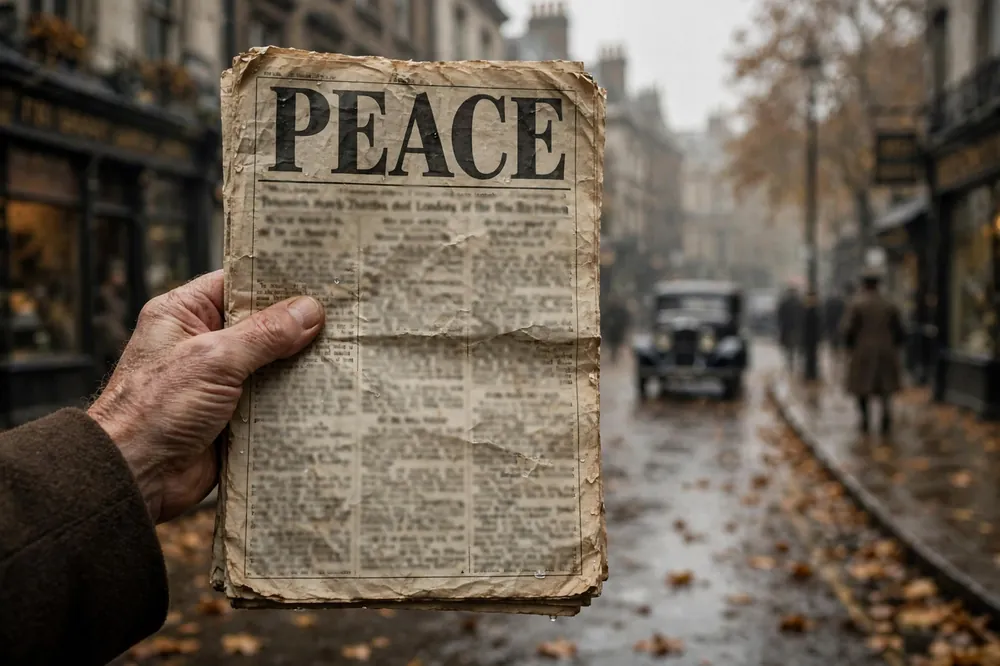
But Chamberlain’s legacy is also more practical. The rearmament programme he pursued — the expansion of the Royal Air Force, the building of the radar chain, the introduction of the Spitfire and the Hurricane — was the foundation on which Britain survived 1940, and the economic management he had practised as Chancellor helped Britain to finance the war.
His domestic record — the housing reforms, the local government reforms, the work he did as Minister of Health — is remembered by historians of British social policy as substantial, though it is overshadowed by Munich. And his final act — declaring war on 3 September 1939 and then resigning to make way for Churchill — is remembered as an act of duty: he was the prime minister who took Britain into the war, and who then stepped aside for the man who could win it.
10. Assessment by Historians
Historians’ assessment of Neville Chamberlain has changed more than that of almost any other British prime minister. For a generation after the war, the verdict was damning: Churchill’s The Gathering Storm and the popular history of the period presented Chamberlain as a well-meaning but weak and naive man who had been outwitted by Hitler, and “appeasement” became a term of abuse.
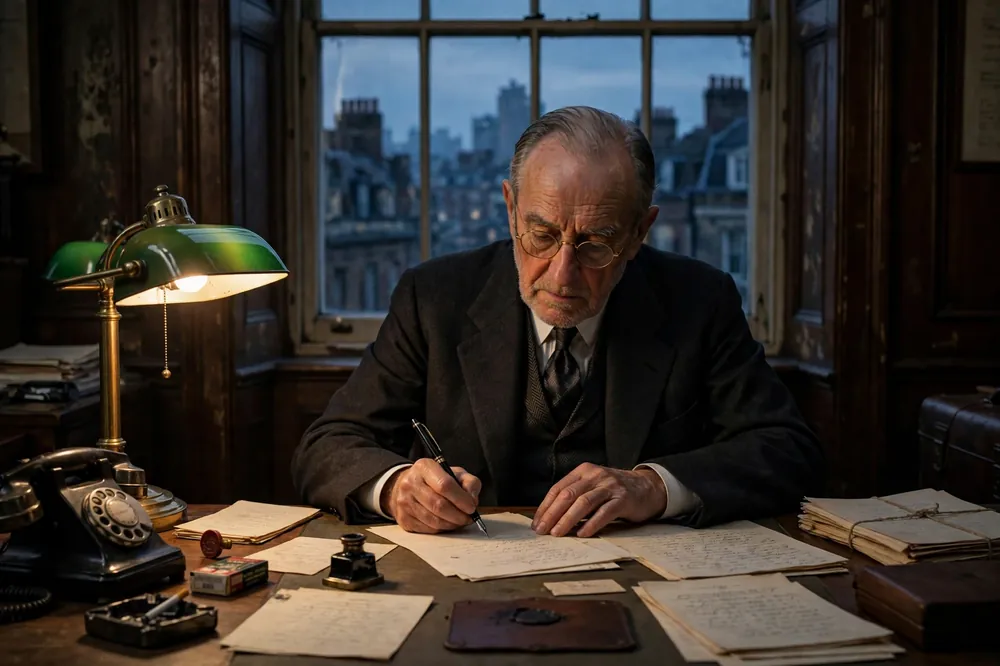
The opening of the archives in the 1960s and 1970s, and the work of historians such as A. J. P. Taylor, began a revision: Chamberlain was shown to have been a serious and intelligent statesman, operating within severe constraints — a weak military position, a divided public, an empire that could not be defended everywhere — and his policy of buying time for rearmament was shown to have had a rational basis.
More recent work, including David Dutton’s biography Neville Chamberlain (2001) and Robert Self’s Neville Chamberlain: A Biography (2006), has taken a middle position: Chamberlain was a capable administrator and a sincere man who genuinely believed that war could be avoided by negotiation, but he made a fundamental error of judgement about the nature of Hitler’s regime, and he persisted in his policy after the evidence — above all the occupation of Prague in March 1939 — had shown it to be mistaken.
The consensus today is that Chamberlain was neither a fool nor a traitor, but a man of his time and his temperament: a municipal politician and a businessman who believed in deals and in compromise, faced with a dictator who believed in neither. His tragedy was not that he wanted peace — most of his countrymen did — but that he could not see that Hitler wanted war, and that the methods that had served him well in Birmingham and in the Treasury were useless in Berchtesgaden and Munich. He is remembered, above all, as the prime minister who declared war on Germany — and as the man whose failure made Churchill’s success possible.
Frequently Asked Questions
Who was Neville Chamberlain?
Neville Chamberlain (1869–1940) was the British prime minister from May 1937 to May 1940. He is best known for the policy of appeasement towards Nazi Germany, the Munich Agreement of September 1938, and for declaring war on Germany on 3 September 1939.
What was the Munich Agreement?
At Munich on 29–30 September 1938, Britain, France, Germany and Italy agreed that Germany would annex the Sudetenland, the German-speaking border region of Czechoslovakia. Czechoslovakia was not invited to the conference. Chamberlain returned to London declaring “peace for our time”.
Did appeasement buy Britain time to rearm?
Historians debate this. Britain did expand its fighter defences substantially between Munich and the Battle of Britain in 1940, and the Spitfire squadrons and radar chain were ready in time. Critics argue that Germany also used the year to grow stronger, above all by gaining Czechoslovakia’s armaments industry.
When did Britain declare war on Germany?
On Sunday 3 September 1939, at 11 a.m., after Germany invaded Poland on 1 September and refused to withdraw. Chamberlain announced the declaration in a radio broadcast to the nation.
Why did Chamberlain resign in May 1940?
After the failure of the Norwegian campaign, the government faced a motion of censure in the House of Commons on 7–8 May 1940. Although it won the vote, its majority collapsed, and Chamberlain concluded he could not continue. He resigned on 10 May 1940, the day Germany invaded France, and was succeeded by Winston Churchill.
How did Neville Chamberlain die?
He died of bowel cancer on 9 November 1940 at Heckfield, Hampshire, aged 71, six months after leaving office.
Related articles
Sources
- Wikipedia, “Neville Chamberlain” — consolidated biography: birth 18 March 1869, death 9 November 1940, prime minister 1937–1940, Munich Agreement, declaration of war 3 September 1939.
- Encyclopaedia Britannica, “Neville Chamberlain” (britannica.com) — biography, appeasement, Munich, resignation 1940.
- David Dutton, Neville Chamberlain (Arnold, 2001) — modern biography; Chamberlain as administrator, the constraints of appeasement.
- Robert Self, Neville Chamberlain: A Biography (Ashgate, 2006) — detailed biography based on Chamberlain’s papers.
- Winston Churchill, The Second World War, Volume I: The Gathering Storm (Cassell, 1948) — the classic contemporary criticism of appeasement.
- A. J. P. Taylor, The Origins of the Second World War (Hamish Hamilton, 1961) — the revisionist case on appeasement.
- R. A. C. Parker, Chamberlain and Appeasement: British Policy and the Coming of the Second World War (Macmillan, 1993) — scholarly study of the policy and its limits.
Further reading
- John Charmley, Chamberlain and the Lost Peace (Hodder & Stoughton, 1989).
- Keith Feiling, The Life of Neville Chamberlain (Macmillan, 1946).