 WAR ATLAS MILITARY HISTORY MAGAZINE · WWI — WWII
Charles de Gaulle
1. Lead
Charles de Gaulle (22 November 1890 – 9 November 1970) was the French general and statesman who refused to accept the defeat of France in 1940, led the Free French movement from London, and returned to lead the liberation of his country and to found the Fifth Republic.
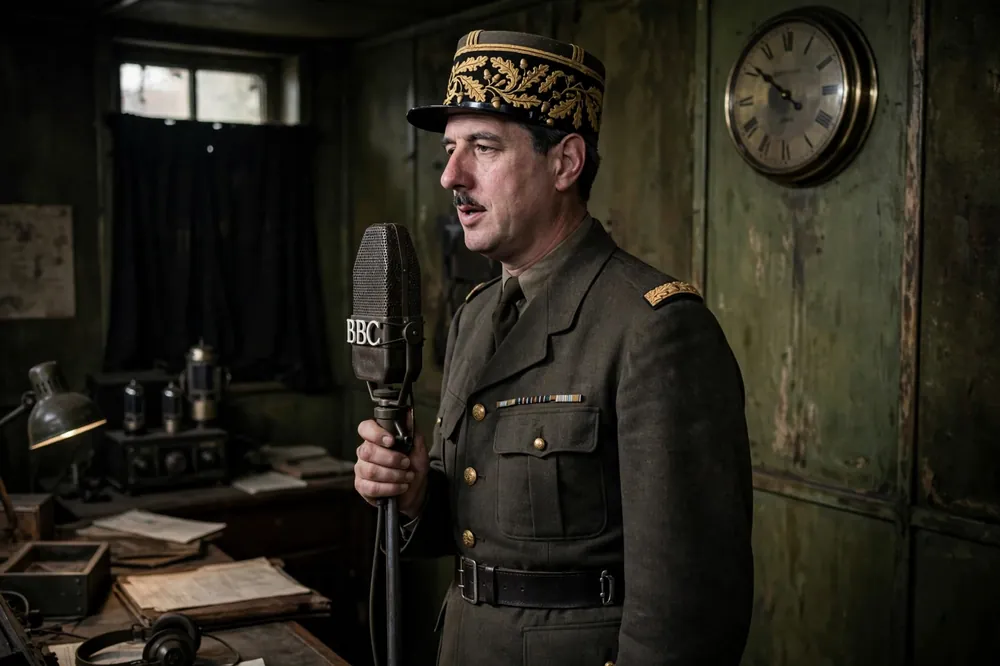
Born into a Catholic, patriotic family in Lille, he was a professional soldier who had fought in the First World War, been wounded and taken prisoner, and had written prophetically about the future of mechanised warfare in the 1930s. In May and June 1940, as France collapsed before the German invasion, he was briefly Under-Secretary of State for National Defence in the government of Paul Reynaud; when Reynaud resigned and Marshal Pétain sought an armistice, de Gaulle flew to London and, on 18 June 1940, broadcast his famous appeal over the BBC, calling on the French to continue the fight.
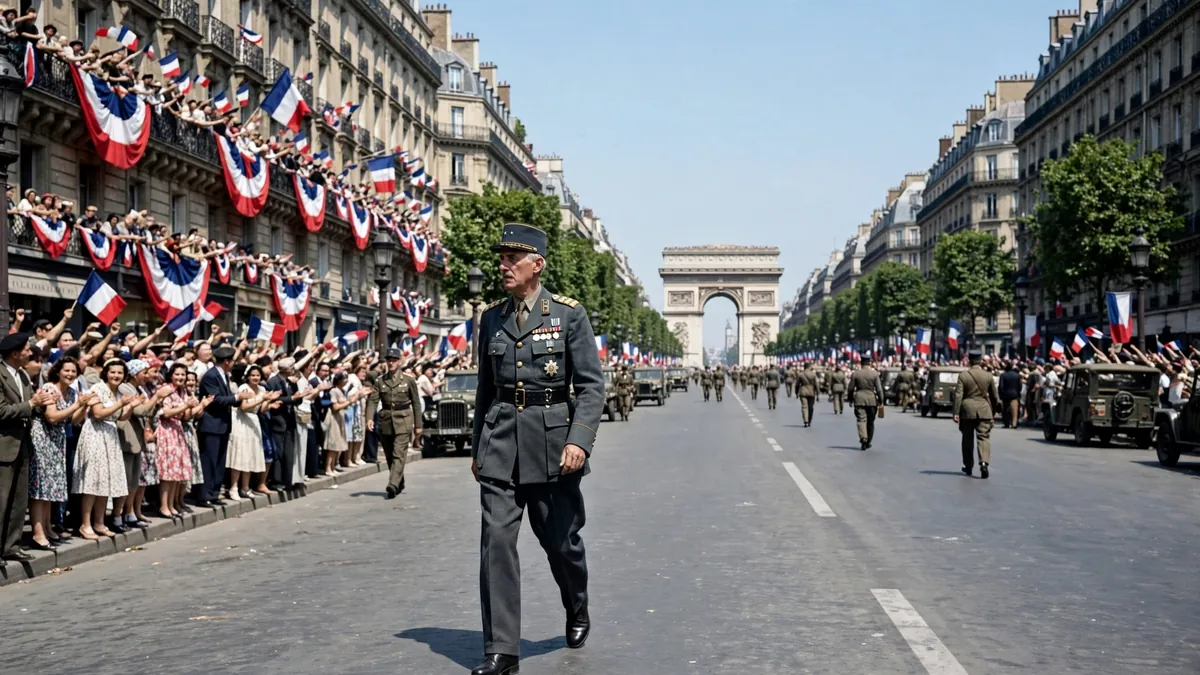
For the next four years he was the leader of Free France — a government-in-exile recognised, with difficulty, by Britain and, later, by the United States — and in August 1944 he walked down the Champs-Élysées in a liberated Paris.
He led the provisional government until January 1946, when he resigned in frustration with party politics, and he returned to power in 1958, in the crisis of the Algerian War, to found the Fifth Republic and to serve as its president until 1969.
De Gaulle’s place in the history of the Second World War is unique. He was the only French leader of 1940 who refused to accept defeat, and his stand preserved the idea that France was still in the war — an idea that mattered enormously to the Allies, to the French Resistance, and to France’s position after the war.
Without him, France would have been treated as a defeated country, like the other occupied nations; with him, France became one of the victorious powers, with a permanent seat on the United Nations Security Council and a zone of occupation in Germany. At the same time, de Gaulle was a difficult ally: Winston Churchill called him “a man of destiny” and also found him infuriating, and President Franklin D.
Roosevelt distrusted him deeply, preferring to deal with other Frenchmen. De Gaulle’s stubbornness, his sense of French honour and his conviction that he embodied France itself made him both indispensable and exasperating. Historians debate his wartime record — his relations with the Resistance, his treatment of rivals, his handling of the liberation — but none dispute that his refusal of June 1940 was one of the most consequential acts of the war.
2. Key Facts
| Born | 22 November 1890, Lille, France |
| Died | 9 November 1970 (aged 79), Colombey-les-Deux-Églises, France |
| Nationality | French |
| Role / Office | Leader of Free France (1940–1944); Head of the Provisional Government (1944–1946); President of the French Republic (1959–1969); founder of the Fifth Republic |
| Known for | The Appeal of 18 June 1940; leading Free France; the liberation of Paris (August 1944); founding the Fifth Republic (1958) |
| Spouse / Family | Yvonne Vendroux (married 1921, died 1979); children Philippe, Élisabeth and Anne (who had Down syndrome and died in 1948) |
| Military rank | Brigadier-General (1940); later General |
3. Early Life and Education
Charles André Joseph Marie de Gaulle was born on 22 November 1890 in Lille, in northern France, the third child of Henri de Gaulle, a teacher of history and literature at a Jesuit school in Paris, and Jeanne Maillot, the daughter of a wealthy industrial family from Lille.
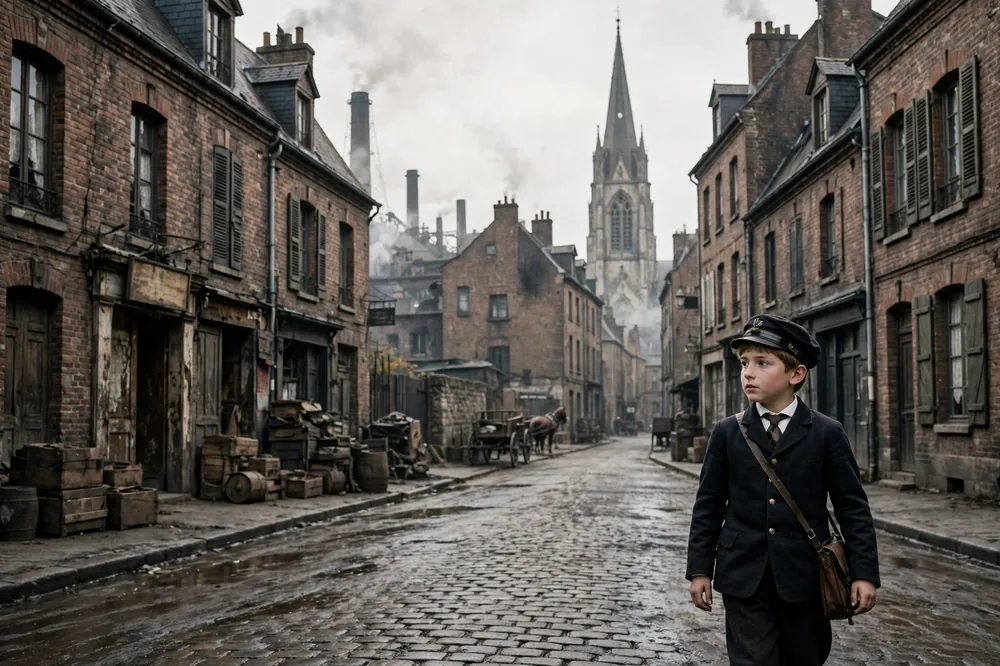
The family was deeply Catholic, monarchist in sympathy, and intensely patriotic: Henri de Gaulle taught his children that France had a special destiny, and that its history — from Joan of Arc to Napoleon — was a story of greatness and of duty.
The young Charles, who grew to be exceptionally tall — he was 1.96 metres (6 feet 5 inches) as an adult — was a serious and bookish boy, interested in history and literature, and he decided early that he wanted to be a soldier.
He entered the military academy of Saint-Cyr in 1909, graduating in 1912 near the top of his class, and he was commissioned into the 33rd Infantry Regiment at Arras, where his commanding officer was Colonel Philippe Pétain — the man who would later become his patron, his rival and his nemesis.
When the First World War broke out in 1914, de Gaulle fought at Dinant in Belgium, where he was wounded in August 1914, and then at Verdun in 1916, where he was wounded again and taken prisoner by the Germans at Fort Douaumont.
He spent the rest of the war in German prisoner-of-war camps, making five escape attempts — each of which failed — and reading widely, including the works of the German philosopher Nietzsche and the French historian Michelet. He was released in December 1918, after the Armistice, and he served in Poland in 1919–1920 as a military adviser during the Polish–Soviet War, an experience that deepened his interest in the politics of eastern Europe.
In the interwar years de Gaulle was a staff officer and a writer. He taught at Saint-Cyr, served on the staff of Marshal Pétain, and wrote a series of books on military theory, of which the most important was Vers l’armée de métier (Towards a Professional Army, 1934), in which he argued that France should build a professional, mechanised army of tanks and aircraft, rather than relying on the conscript army and the static defences of the Maginot Line.
The book was widely discussed but little acted on: the French high command, including Pétain, regarded de Gaulle as brilliant but difficult, and his ideas were too radical for an army committed to defence. He was promoted to colonel in 1937, and in 1939, on the outbreak of war, he was given command of a tank regiment.
In May 1940, during the German invasion of France, he commanded the 4th Armoured Division in a counter-attack at Montcornet and at Abbeville — one of the few French counter-attacks of the campaign — and he was promoted to brigadier-general on 25 May 1940. On 6 June he was appointed Under-Secretary of State for National Defence in the government of Paul Reynaud.
Ten days later, France was collapsing, and de Gaulle’s career as a soldier was about to become a career as a statesman.
4. Rise to Prominence
De Gaulle’s rise to prominence was sudden and dramatic: in the space of a few weeks in June 1940, he went from an obscure brigadier-general to the leader of Free France. The context was the collapse of France. The German invasion of 10 May 1940 broke through the Ardennes, encircled the Allied armies in Belgium, and drove them to Dunkirk; Paris fell on 14 June, and the French government fled to Bordeaux.
On 16 June, Prime Minister Paul Reynaud, who wanted to continue the fight from North Africa, resigned when his cabinet refused, and Marshal Pétain, the hero of Verdun and the most respected soldier in France, formed a government and asked Germany for an armistice.
De Gaulle, who had flown to London on 15 June to discuss the possibility of a Franco-British union with Churchill, returned to Bordeaux, found Reynaud gone, and flew back to London on 17 June with a hundred thousand francs in his pocket and almost no support. On 18 June 1940, the BBC broadcast his appeal: “France has lost a battle.
But France has not lost the war.” He called on French soldiers, sailors and airmen to join him, and he declared that the flame of French resistance must not and would not be extinguished.
The appeal was heard by few people at the time — the BBC’s French service had a small audience, and most Frenchmen were listening to Pétain — but it became the founding act of Free France. De Gaulle’s position in London was precarious: the British government recognised him, on 28 June, as the leader of the Free French, but it did so reluctantly, and Churchill’s support was conditional.
De Gaulle had no territory, no army of any size, and no money; he had only his name, his rank, and his conviction. He built Free France from nothing: he recruited among Frenchmen in Britain, among the crews of French warships in British ports, and among the French colonies, of which Chad, in French Equatorial Africa, was the first to rally to him in August 1940.
By the end of 1940 he controlled a substantial part of French Equatorial Africa, and he had a small but growing force of soldiers, sailors and airmen who fought alongside the British in the Middle East and in North Africa.
De Gaulle’s authority was contested from the start, both by the Vichy regime — which condemned him to death in absentia for treason — and by other Frenchmen who claimed to speak for France, above all General Henri Giraud, whom the Americans preferred. De Gaulle’s response was to insist, with absolute stubbornness, that he alone embodied the legitimacy of France, and that the Vichy regime was illegal.
It was a claim that many found arrogant, but it was also the claim that gave Free France its coherence: without a single leader who insisted on French sovereignty, the French effort would have fragmented into competing factions under British and American control.
By 1943, after the Allied landings in North Africa and the formation of the French Committee of National Liberation at Algiers, de Gaulle had outmanoeuvred Giraud and established himself as the undisputed leader of the French resistance, both inside France and abroad.
5. Charles de Gaulle’s Role in World War II
Free France
De Gaulle’s war was fought on three fronts: the military, the political and the symbolic. Militarily, the Free French forces grew from a few thousand men in 1940 to more than 400,000 by 1944, and they fought in every theatre of the war.
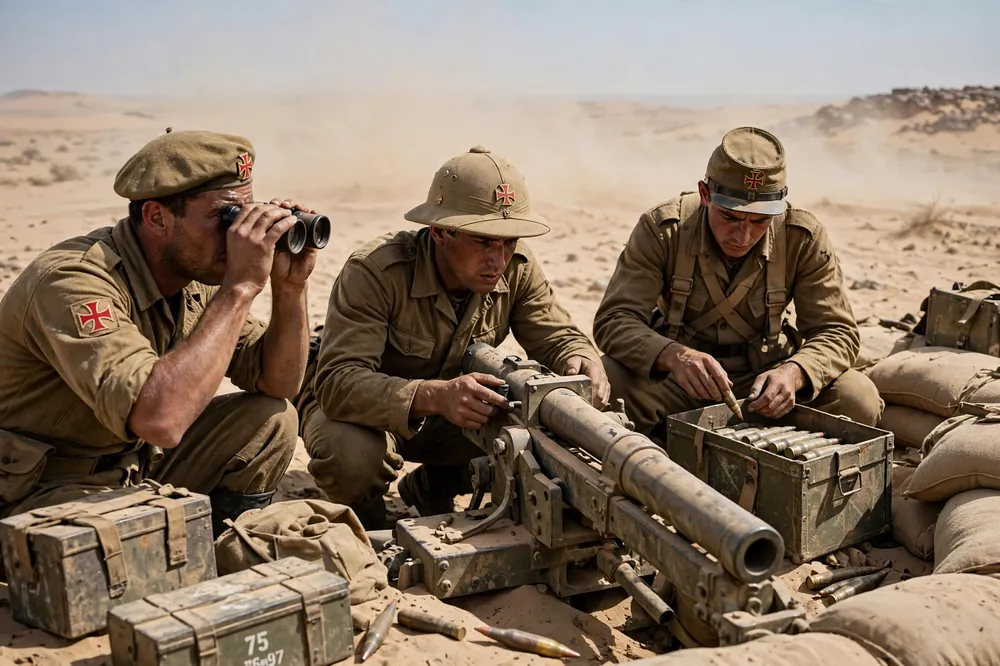
Free French troops fought at Bir Hakeim in Libya in May–June 1942, where General Kœnig’s brigade held off the Afrika Korps for two weeks and allowed the British Eighth Army to withdraw in order; they fought in the Italian campaign, where the French Expeditionary Corps under General Juin broke through the Gustav Line in May 1944; they fought in the liberation of France itself, where General Leclerc’s 2nd Armoured Division landed in Normandy in August 1944 and liberated Paris; and they fought in the Far East, where French forces returned to Indochina.
The Free French navy and air force — including the Normandie-Niemen fighter squadron, which fought on the Eastern Front with the Soviet air force — also served with distinction. De Gaulle himself was not a battlefield commander during the war; his role was to hold the movement together, to negotiate with the Allies, and to ensure that France’s contribution was recognised.
Politically, de Gaulle’s war was a struggle for recognition. Roosevelt distrusted him and, until 1944, refused to recognise the French Committee of National Liberation as the government of France; the American president preferred Giraud and, later, hoped to place France under an Allied military government after the liberation.
De Gaulle’s response was to build facts on the ground: in June 1944, after D-Day, he established a French civil administration in the liberated towns of Normandy, and in August 1944 he ensured that French troops, not American ones, liberated Paris.
The liberation of Paris on 25 August 1944 was a carefully staged political act: Leclerc’s division entered the city, de Gaulle arrived the same day, and on 26 August he walked down the Champs-Élysées from the Arc de Triomphe to Notre-Dame, in a procession that proclaimed to the world that France had liberated itself.
He refused to allow the Allies to treat France as a defeated country, and in the end he succeeded: France was given a zone of occupation in Germany, a seat on the Allied Control Council, and a permanent seat on the United Nations Security Council.
Symbolically, de Gaulle’s war was a war for the soul of France. He insisted that the France of Vichy — the regime of Marshal Pétain, which collaborated with Germany and deported French Jews to the death camps — was not France, and that the true France was the France of the Resistance and of Free France.
The symbol of Free France was the Cross of Lorraine, the double-barred cross of Joan of Arc, and its anthem was the Chant des Partisans. De Gaulle’s broadcasts from London — above all the Appeal of 18 June and his later broadcasts calling for the liberation — were heard by the Resistance, and they gave the Resistance a leader and a purpose.
His relationship with the internal Resistance was complicated: the Resistance movements, which were dominated by the left and by the Communists, distrusted de Gaulle’s authoritarian tendencies, and de Gaulle, in turn, distrusted the Communists’ ambitions. But in 1943 he succeeded in unifying the Resistance under the National Council of the Resistance, chaired by Jean Moulin, and Moulin’s arrest and death at the hands of the Gestapo in July 1943 made him a martyr of the unified movement.
The liberation and the provisional government
After the liberation of Paris, de Gaulle became the head of the provisional government of the French Republic, and he set about rebuilding France. He nationalised key industries, introduced social security, and granted women the vote — a reform that had been promised before the war but never delivered.
He also presided over the épuration, the purge of collaborators, in which thousands of people were executed in the chaotic weeks after the liberation and thousands more were tried by the courts. De Gaulle’s handling of the purge was pragmatic: he sought to limit the violence and to bring it under the control of the state, but the purge was, in many places, a settling of scores, and its excesses remain a subject of historical debate.
In January 1946, frustrated by the return of party politics and by the refusal of the parties to accept his proposals for a strong presidency, de Gaulle resigned. He retired to his house at Colombey-les-Deux-Églises, in the Champagne region, where he wrote his War Memoirs — a work of literature as much as of history, in which he presented his own version of the war and of France’s destiny.
6. Key Decisions
Refusing the armistice (June 1940). De Gaulle’s decision to fly to London and to broadcast the Appeal of 18 June was the founding act of his career. He had no authority to do it — he was a junior general with no political mandate — and he did it because he believed that France’s honour and its future depended on continuing the fight. It was a decision taken alone, and it defined him.
Insisting on French sovereignty. Throughout the war de Gaulle refused to accept that France should be treated as a minor ally or as a liberated territory under Allied administration. His insistence — on the Cross of Lorraine rather than the Tricolore alone, on French civil administration in liberated France, on a French zone in Germany — was often infuriating to the Allies, but it secured France’s position as a victor rather than a victim.
Unifying the Resistance (1943). De Gaulle’s decision to send Jean Moulin to unify the Resistance movements under his authority was a political masterstroke: it gave him a base inside France and prevented the Communists from claiming the Resistance for themselves. Moulin’s death made the unification permanent, and the National Council of the Resistance became the political foundation of post-war France.
Resigning in January 1946. De Gaulle’s resignation, in protest against the party system of the Fourth Republic, was a principled act that cost him twelve years in the political wilderness — and it also preserved his reputation. When he returned in 1958, he was able to present himself as the man above parties, and to impose the strong presidency he had wanted in 1946.
7. Controversies
De Gaulle’s controversies are those of a man who believed he embodied France, and who acted accordingly. The first concerns his treatment of rivals. He sidelined General Giraud with a ruthlessness that many found shocking, and he excluded from the post-war honours men who had fought for France in other ways — above all the French officers who had served in the Vichy army in North Africa and who had joined the Allies after the landings of November 1942.
His defenders argue that unity required a single leader, and that Giraud, who had no political vision, could not have provided it. His critics argue that de Gaulle’s insistence on his own legitimacy was a form of personal power-seeking, and that it distorted the history of the Resistance.
The second controversy concerns the épuration and the trial of Pétain. De Gaulle presided over a purge in which, by most estimates, some ten thousand people were executed without trial in the weeks after the liberation, and more than fifty thousand were tried by the courts.
He commuted Pétain’s death sentence to life imprisonment — an act of mercy that many resented, since Pétain was, in their eyes, a traitor — and he pardoned many collaborators in the years that followed. The controversy is not only about numbers but about memory: de Gaulle’s version of the war, in which almost all Frenchmen had resisted and only a few had collaborated, was a myth that served the purpose of national reconciliation, but it obscured the reality of Vichy collaboration, including the deportation of some 76,000 French Jews, of whom only a few thousand survived.
The third controversy concerns de Gaulle’s wartime relations with the Allies. Churchill and Roosevelt both found him impossible to work with, and Roosevelt, in particular, regarded him as an aspiring dictator. De Gaulle’s defenders reply that he was defending French sovereignty against allies who were prepared to sacrifice it, and that his stubbornness was the price of France’s independence.
His critics reply that his stubbornness damaged the Allied cause, notably in the dispute over the administration of liberated France in 1944, and that his refusal to cooperate with the Americans over the invasion of southern France — Operation Dragoon — was motivated by pride rather than strategy.
The debate reflects a larger question: whether de Gaulle’s greatness lay in his vision or in his vanity, and whether the two can be separated.
8. Later Life and Death
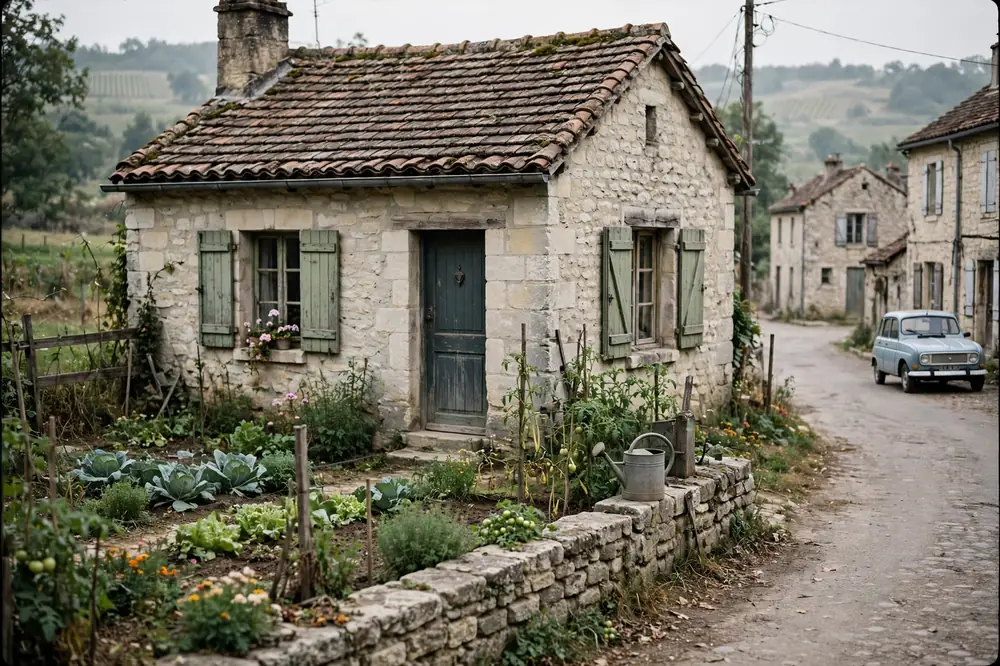
De Gaulle’s later life was his second act. After twelve years in retirement at Colombey-les-Deux-Églises, he was recalled to power in May 1958, during the crisis of the Algerian War, when the French army in Algeria rebelled and the Fourth Republic seemed on the verge of collapse.
He became prime minister, drafted a new constitution that created a strong presidency — the Fifth Republic — and was elected its first president in December 1958. As president he ended the Algerian War, granting Algeria independence in 1962 after a referendum, despite the opposition of the French settlers and of the army; he withdrew France from the integrated military command of NATO in 1966; he developed an independent French nuclear deterrent; and he pursued a foreign policy of independence from both the United States and the Soviet Union, recognising Communist China in 1964 and criticising the American war in Vietnam.
He was re-elected in 1965, but in May 1968 France was shaken by student protests and a general strike that brought the country to a standstill, and de Gaulle’s authority was badly damaged. In April 1969 he resigned after losing a referendum on regional reform, and he retired again to Colombey.
He died suddenly on 9 November 1970, of a ruptured aortic aneurysm, while playing patience — the card game — at his home. He was buried, at his own request, in the village churchyard at Colombey, in a simple grave, without a state funeral.
9. Legacy of Charles de Gaulle
De Gaulle’s legacy is the Fifth Republic itself. The constitution he drafted in 1958, with its strong presidency, has survived for more than sixty-five years — far longer than any previous French republic — and it has given France a stability that the Fourth Republic lacked. His foreign policy of independence — the nuclear deterrent, the withdrawal from NATO’s integrated command, the insistence that France should speak with its own voice — shaped French policy for a generation and still influences it today. His decision to grant Algeria independence ended a war that had divided France, though it also left a legacy of bitterness among the million French settlers who fled Algeria in 1962.
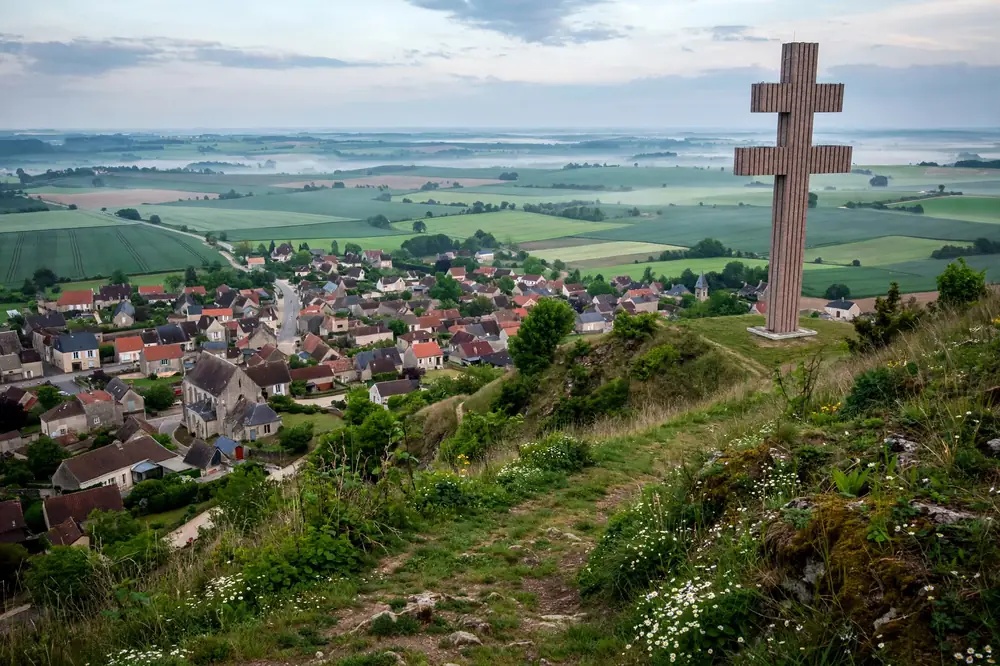
His wartime legacy is the idea of France as a country that never surrendered. The Appeal of 18 June is commemorated every year, the Cross of Lorraine remains a symbol of the Resistance, and de Gaulle’s War Memoirs are still read as a classic of French literature.
But his legacy is also contested: the myth of a France that almost unanimously resisted, which de Gaulle promoted, delayed for decades an honest reckoning with Vichy collaboration, and it was not until the 1990s that a French president — Jacques Chirac, in 1995 — formally acknowledged the French state’s responsibility for the deportation of the Jews.
De Gaulle’s France was a France of grandeur and of pride, and it was also a France that, for a long time, could not face its own past.
10. Assessment by Historians
Historians assess Charles de Gaulle as one of the great figures of the twentieth century, and the assessment has been remarkably stable: even his critics concede his stature. On the military side, his achievement in 1940 is judged as an act of moral and political genius rather than of military skill: he saw, when almost no one else did, that the war would be a world war, that Britain would fight on, and that France’s place in the post-war world depended on continuing the fight.
His War Memoirs have been compared, in their literary quality, to those of Caesar, and his prose — above all the opening line, “All my life I have had a certain idea of France” — is among the most famous in French literature.
On the political side, historians divide between those who see de Gaulle as a democrat who saved France from itself — from Vichy, from civil war, from the instability of the Fourth Republic — and those who see him as an authoritarian in democratic dress, a man who believed that he alone understood France and who used the institutions of the Republic to impose his will.
The most balanced assessments, including Jean Lacouture’s three-volume biography (1984–1986) and Julian Jackson’s De Gaulle (2018), present a man of extraordinary will and vision, whose stubbornness was both his greatest strength and his greatest weakness, and whose achievement was to give France back its sense of itself.
The verdict, in the end, is that de Gaulle was right about the essential thing: that France, in June 1940, had a choice between honour and dishonour, and that he chose honour.
Frequently Asked Questions
Who was Charles de Gaulle?
Charles de Gaulle (1890–1970) was the French general who refused to accept France’s defeat in 1940, led Free France from London, and returned to lead the liberation of Paris in 1944. He later founded the Fifth Republic and served as its president from 1959 to 1969.
What was the Appeal of 18 June 1940?
It was de Gaulle’s radio broadcast from London, on 18 June 1940, calling on the French to continue fighting Germany after the French government had sought an armistice. It became the founding act of Free France.
Why did Roosevelt distrust de Gaulle?
Roosevelt regarded de Gaulle as authoritarian and as a potential dictator, and he preferred to deal with General Giraud. He refused to recognise de Gaulle’s French Committee of National Liberation as the government of France until 1944, and he planned to place liberated France under Allied military government.
How was Paris liberated?
On 25 August 1944, General Leclerc’s 2nd Armoured Division, part of the Free French forces, entered Paris, supported by the French Resistance uprising that had begun on 19 August. De Gaulle arrived the same day and walked down the Champs-Élysées on 26 August.
What is the Fifth Republic?
It is the republican system founded by de Gaulle in 1958, with a strong presidency. It remains the system of government in France today, and it has lasted longer than any previous French republic.
Where is de Gaulle buried?
He is buried in the village churchyard at Colombey-les-Deux-Églises, in a simple grave, in accordance with his own wishes. He refused a state funeral.
Related articles
Sources
- Wikipedia, “Charles de Gaulle” — consolidated biography: birth 22 November 1890, death 9 November 1970, Appeal of 18 June 1940, liberation of Paris, Fifth Republic.
- Encyclopaedia Britannica, “Charles de Gaulle” (britannica.com) — biography, Free France, provisional government, presidency 1959–1969.
- Charles de Gaulle, War Memoirs, Volume I: The Call to Honour, 1940–1942 (Collins, 1955) — de Gaulle’s own account of the Appeal and the founding of Free France.
- Julian Jackson, De Gaulle (Belknap Press, 2018) — the standard modern biography in English.
- Jean Lacouture, De Gaulle, 3 volumes (Seuil, 1984–1986) — the standard French biography.
- Robert Gildea, Fighters in the Shadows: A New History of the French Resistance (Faber & Faber, 2015) — the Resistance, Moulin, and de Gaulle’s relations with it.
- François Kersaudy, Churchill and de Gaulle (Collins, 1981) — the wartime relationship between the two leaders.
Further reading
- Jonathan Fenby, The General: Charles de Gaulle and the France He Saved (Simon & Schuster, 2010).
- Eric Roussel, De Gaulle (Gallimard, 2002).