 WAR ATLAS MILITARY HISTORY MAGAZINE · WWI — WWII
Beutepanzer: Germany’s Captured Tanks of the Second World War
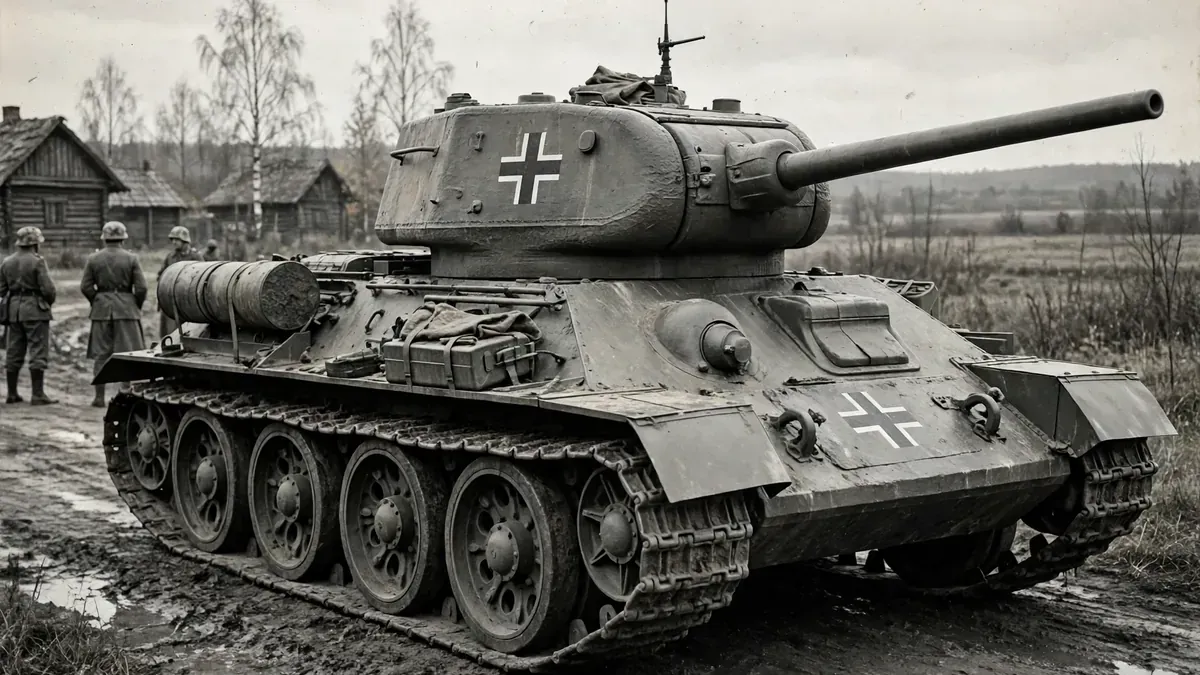
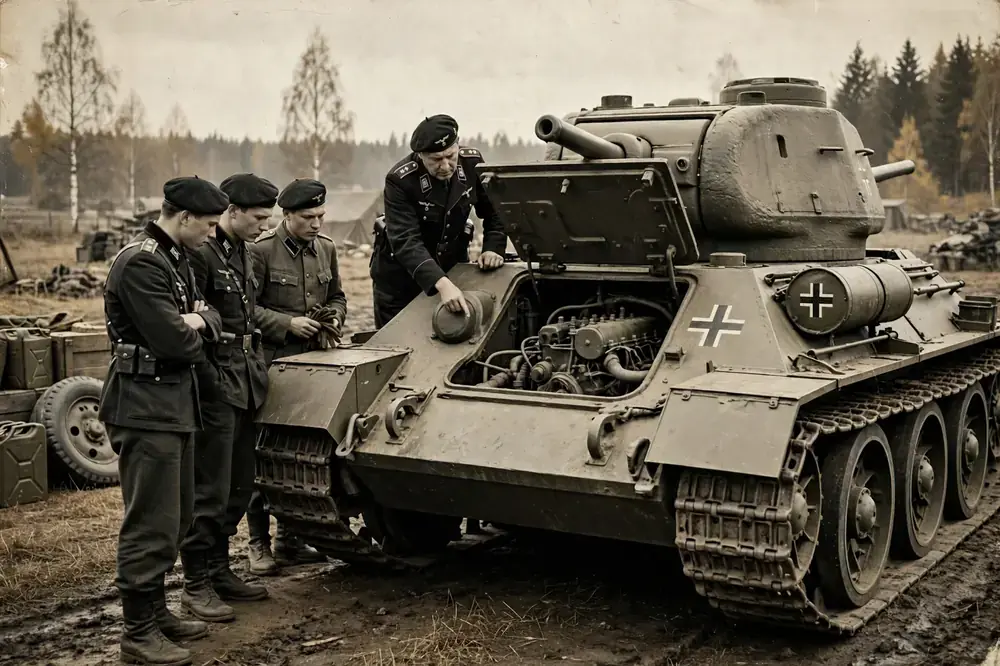
Beutepanzer, literally “booty tanks” or “captured tanks”, was the German term for enemy armoured vehicles seized on the battlefield and pressed into service with the Wehrmacht. It was not the name of a single tank model, but a practice — and a vast one. From the fall of France in 1940 to the last battles of 1945, German units operated thousands of captured tanks: French Char B1 bis and Somua S35s, British Matildas and Churchills, Soviet T-34s and KV heavy tanks, and later American Shermans and Stuarts. Some were used in their original form with German markings painted over the old ones; others were rebuilt as self-propelled guns, flamethrower tanks, artillery tractors or armoured trains. A few even served in famous units, such as the 21st Panzer Division in Normandy in 1944, whose ranks included large numbers of French-built vehicles.
The practice grew out of necessity. Germany entered the war with a tank industry that could never match the combined output of its enemies, and every campaign delivered windfalls of enemy armour. In France in 1940 the Germans captured more than 2,000 usable French tanks; in the Soviet Union in 1941 they overran depots and repair yards holding hundreds of Soviet vehicles. Reusing these machines was cheaper and faster than building new ones, and it kept second-line units, occupation forces and training schools equipped while new German tanks went to the front. But the Beutepanzer came with heavy costs: spare parts were scarce, ammunition for foreign guns had to be manufactured or captured, crews needed retraining, and friendly fire was a constant danger, since a T-34 in German service still looked like a T-34 to a German anti-tank gunner.
Beutepanzer are remembered today as a window into the German war economy and into the improvisational character of the Wehrmacht. They show a military machine that was resourceful but chronically short of equipment, and they complicate the familiar picture of German armour as an all-Panzer force. Museums preserve several examples, including a Char B1 bis converted to a flamethrower tank and Soviet vehicles recaptured and displayed in the West. For historians, the captured tank is a reminder that the Second World War was fought as much with the enemy’s weapons as with a nation’s own.
1. Key Facts
| Field | Value |
|---|---|
| Term | Beutepanzer — German for “captured tank” (plural) |
| Meaning | Enemy tanks seized and reused by the Wehrmacht, 1939–1945 |
| Main sources | France (1940), Soviet Union (1941–1943), North Africa, Italy |
| Principal types reused | T-34, KV-1, KV-2, Char B1 bis, Somua S35, Hotchkiss H39, Matilda II, Churchill, M4 Sherman, M3 Stuart, T-26, BT-7 |
| German designations | Panzerkampfwagen T-34 747(r), KW-1 753(r), Pz B2 740(f), Pz S35 739(f), Pz M4 748(a) |
| Estimated numbers | Hundreds of each major type; over 2,000 French tanks captured in 1940, of which a large share were reused |
| Main users | Second-line and occupation divisions, 21st Panzer Division, training schools, SS units, security forces |
| Markings | Large Balkenkreuz (German cross) and oversized crosses to reduce friendly fire; often German tactical numbers |
| Common conversions | Flamethrower tanks, self-propelled guns, artillery tractors, armoured recovery vehicles, command tanks |
| Service period | 1939–1945 |
| Key problems | Spare parts, ammunition supply, crew training, friendly fire, reliability of worn vehicles |
2. Background and Development
The Problem of Too Few Tanks
Germany began the Second World War with far fewer tanks than the scale of its ambitions required. German tank production in 1939–1940 was modest, and the Panzer divisions that overran Poland and France were equipped largely with light tanks — the Panzer I and Panzer II — that were already obsolescent. The campaigns of 1939 and 1940, however, delivered an unexpected solution: defeated enemies left behind enormous quantities of armoured vehicles. In Poland the haul was small, but in France in the summer of 1940 the Germans captured the bulk of the French Army’s tank park, including some of the best-protected tanks in the world at the time. The German Army’s ordnance office, the Heereswaffenamt, created a system for inspecting, repairing and classifying captured vehicles, assigning each type a German designation that recorded its origin: (f) for French, (r) for Russian, (e) for English, (a) for American, and so on.
The French Windfall of 1940
The French campaign produced the first great wave of Beutepanzer. French industry had built roughly 3,000 tanks by 1940, and after the armistice the Germans seized the depots, factories and repair yards that held them. Many vehicles were abandoned intact by their crews, and many more needed only minor repairs. The Char B1 bis, with its 75 mm hull gun and 47 mm turret gun and armour up to 60 mm thick, was better protected than any German tank then in service. The Somua S35 was fast and well armed for its time. The Germans took hundreds of these vehicles into service, using them to equip occupation divisions in France, training units, and second-line formations that would otherwise have had no armour at all. French tanks also served on the Eastern Front in the early years of the war against the Soviet Union, and in the Balkans and North Africa.
A System for Captured Vehicles
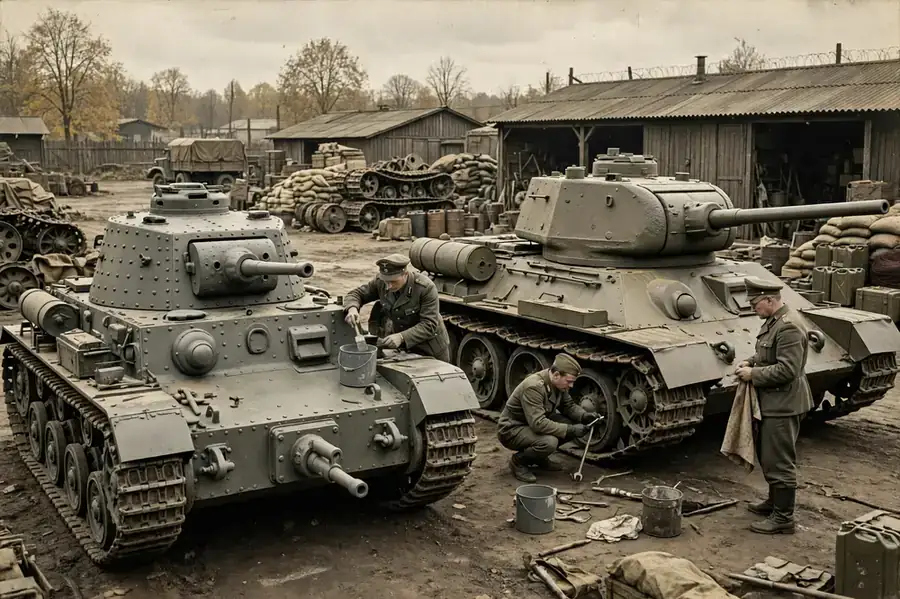
The German system for handling captured equipment was methodical. Vehicles were collected at depots, inspected by ordnance officers, and sorted into three groups: those fit for front-line service, those suitable for conversion to other roles, and those fit only for spare parts or scrap. Usable vehicles were repaired, often in the factories that had built them — the French Renault and Somua plants continued to repair and even build French-designed tanks under German control. German radios were fitted, German markings painted on, and crews trained on the new types. The system was efficient, but it depended on a supply of spare parts that grew scarcer as the war went on, and many Beutepanzer ended their careers as stationary pillboxes or as sources of parts for other vehicles.
3. Design
What the Germans Changed
A Beutepanzer was rarely used exactly as captured. The most universal change was the marking: large German Balkenkreuz crosses were painted on the hull and turret, often oversized, together with German tactical numbers, in an attempt to prevent friendly fire. Many vehicles received German radios, since the original French or Soviet sets were incompatible with German nets. Commander’s cupolas were sometimes added or modified, and hatches were changed to suit German practice. On Soviet tanks, the Germans often replaced the original gun sights and added a commander’s cupola to the T-34, a modification that improved the tank’s poor visibility and was later copied in Soviet practice. Some vehicles received German machine guns in place of the original weapons, and many were fitted with additional stowage for German equipment.
Conversions and Rebuilds
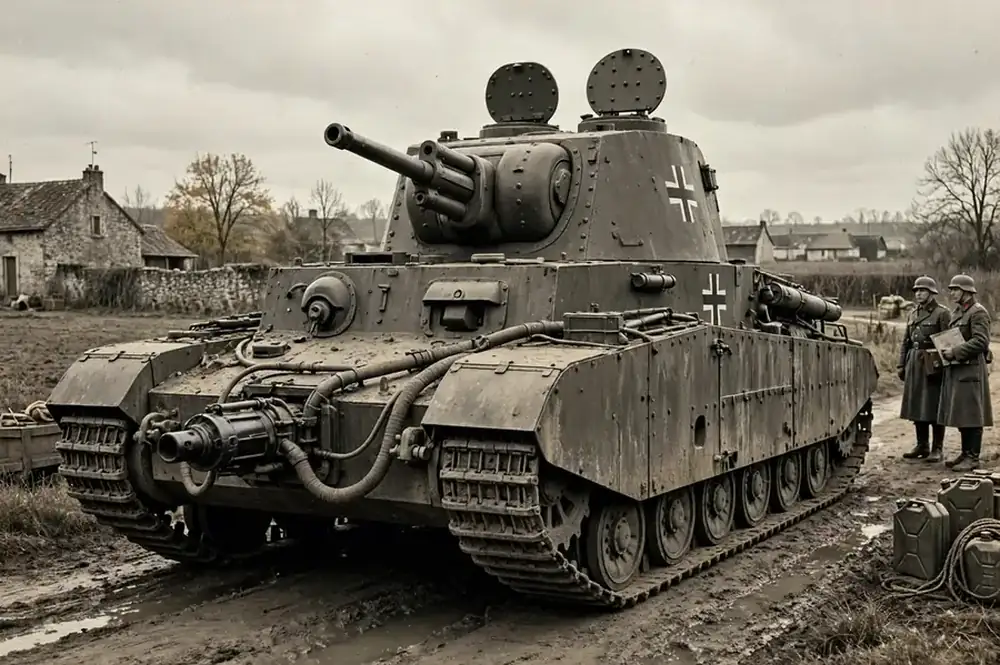
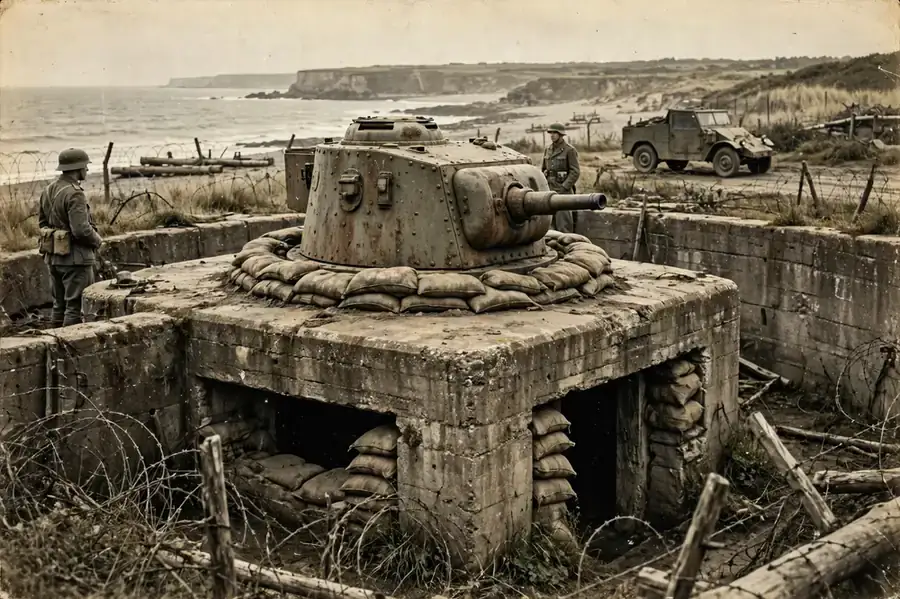
Many captured tanks were more valuable as the basis for conversions than in their original form. The Char B1 bis was converted into a flamethrower tank, the Flammwagen auf Panzerkampfwagen B2(f), with the hull 75 mm gun replaced by a flame projector; about sixty were built and used in France and on the Eastern Front. Other Char B1s became self-propelled artillery or driver-training vehicles. Soviet T-34 chassis were rebuilt as recovery vehicles, artillery tractors and, in at least one case, as an anti-aircraft gun carrier. French Lorraine carriers became the basis for the Marder I tank destroyer, one of the most successful German conversions of the war. Older captured tanks that were no longer fit for mobile service were dug in as pillboxes on the Atlantic Wall and other fortifications, their turrets removed and mounted in concrete emplacements.
The Friendly Fire Problem
The greatest danger to a Beutepanzer crew came from their own side. A T-34 with German markings still had the silhouette of a T-34, and German anti-tank gunners, infantrymen and aircraft were trained to shoot at that silhouette. German units operating captured tanks took elaborate precautions: oversized crosses, German flags draped over the engine deck, distinctive stowage arrangements, and strict orders to friendly units in the area. Even so, friendly fire incidents occurred throughout the war, and they were one reason why captured tanks were generally kept away from the most intense front-line fighting after 1942. The problem was worst with Soviet types, which were the most numerous Beutepanzer and the most familiar to German troops as enemy vehicles.
4. Variants
French Beutepanzer
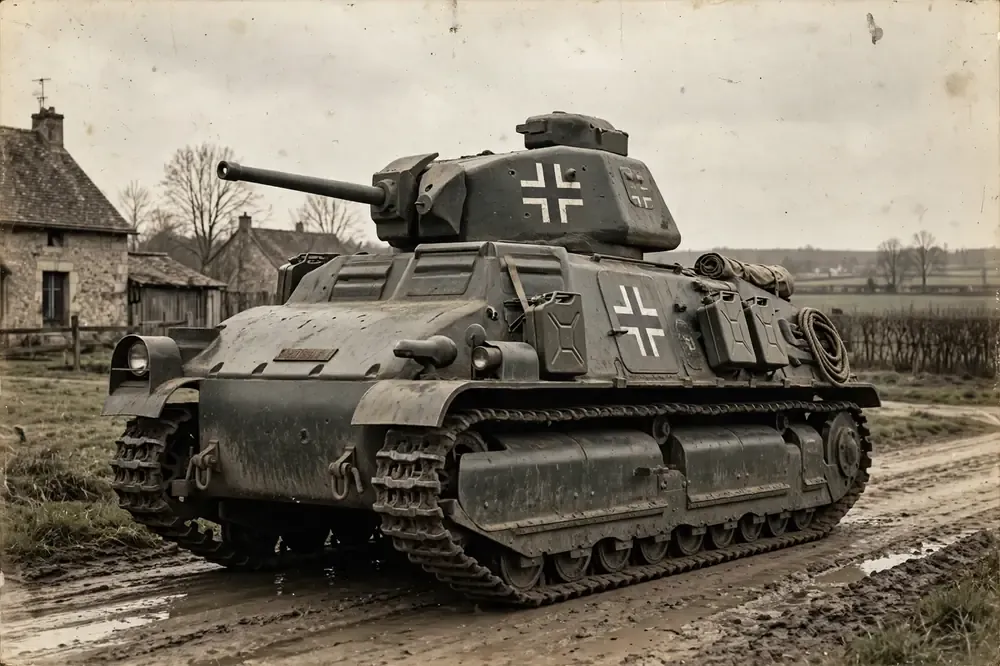
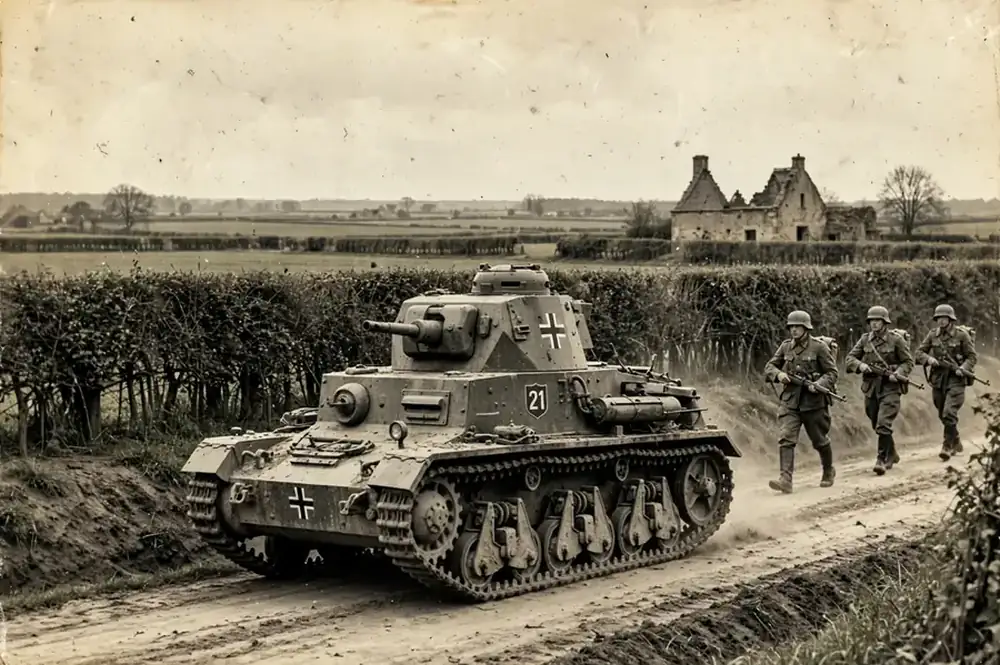
The French types were the most numerous Beutepanzer of the early war. The Char B1 bis, designated Panzerkampfwagen B2 740(f), served with occupation and second-line units, and about sixty were converted to flamethrower tanks. The Somua S35, designated Panzerkampfwagen S35 739(f), was used as a gun tank and as a command vehicle, and some were converted to self-propelled artillery. The Hotchkiss H35 and H39, designated Panzerkampfwagen 35H 734(f) and 38H 735(f), served widely as training and security vehicles and as the basis for self-propelled guns. The Renault R35, designated Panzerkampfwagen R35 731(f), was used as a security tank and as an artillery tractor. French tanks equipped the 21st Panzer Division in Normandy in 1944, a fact that surprised Allied troops who encountered Somuas and Hotchkiss tanks in German service four years after the fall of France.
Soviet Beutepanzer
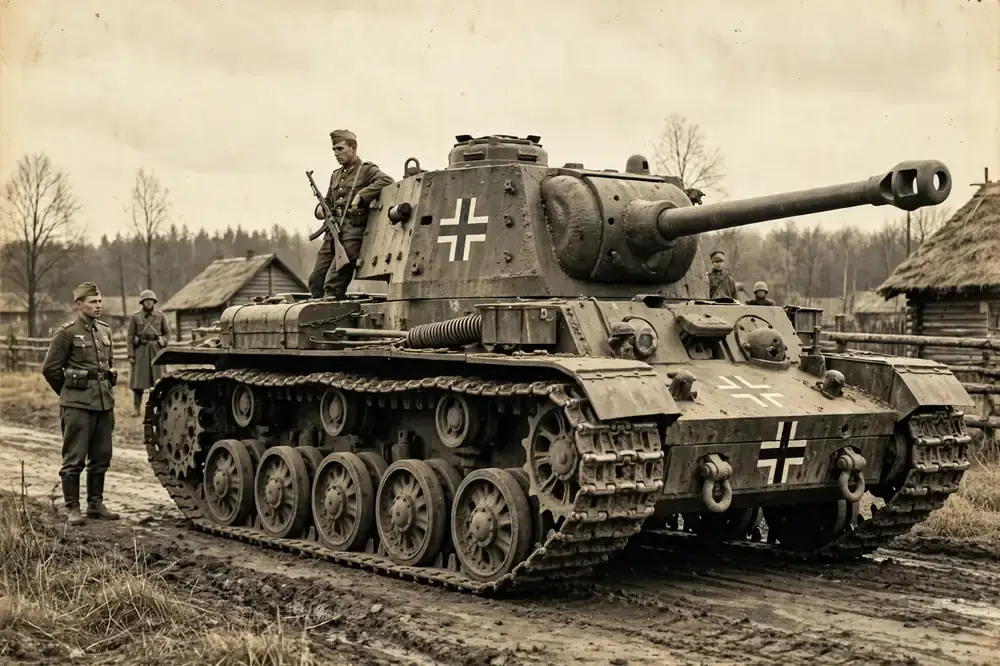
Soviet tanks were the most valuable captures of the war, because they were often technically superior to German types. The T-34, designated Panzerkampfwagen T-34 747(r), was pressed into service in large numbers after the invasion of the Soviet Union in June 1941; estimates of how many were reused run into the hundreds. German units valued the T-34’s mobility, its sloped armour and its powerful 76.2 mm gun, and some units — notably the 2nd SS Panzer Division Das Reich and the 1st SS Panzer Division Leibstandarte — operated captured T-34s alongside their German tanks. The KV-1 heavy tank, designated Panzerkampfwagen KW-1 753(r), and the KV-2, with its huge 152 mm howitzer, were also reused, though in smaller numbers. The light T-26 and BT-7 were used as security and training vehicles and as artillery tractors.
Western Allied Beutepanzer
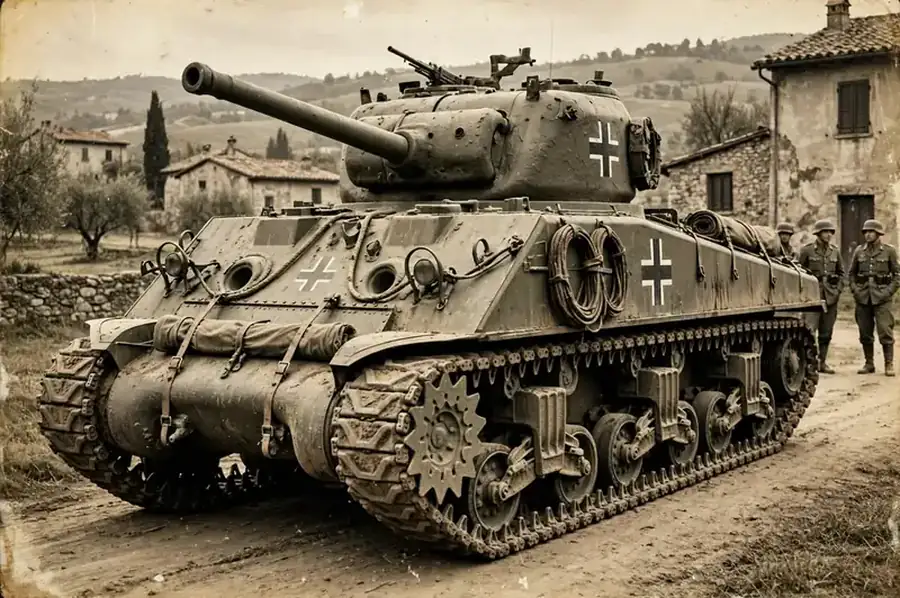
British and American tanks entered German service in smaller numbers, mainly in North Africa and after the Normandy landings. The Matilda II, captured in France in 1940 and in North Africa, was used as a gun tank and as an infantry support vehicle. The Churchill was captured in small numbers at Dieppe in 1942 and later in Italy. The M4 Sherman, designated Panzerkampfwagen M4 748(a), was captured in North Africa and later in France and Italy, and was used by German units that were short of tanks, including some SS formations. The M3 Stuart light tank was used for reconnaissance and security duties. The numbers were always small compared with the French and Soviet captures, because the Western Allies rarely lost large tank parks intact the way France and the Soviet Union had.
5. Operational History
France and the Early Campaigns
Beutepanzer first saw large-scale service in the aftermath of the French campaign. French tanks were issued to occupation divisions in France, where they provided armoured support for security duties, and to training schools, where they allowed new crews to learn their trade without consuming new German tanks. Some French vehicles were sent to the Balkans in 1941 and to North Africa, where they served with the Afrika Korps’ support units. In the invasion of the Soviet Union, French tanks equipped several German divisions in the second wave, and they fought in the advance on Moscow in the winter of 1941, where their thin armour and slow speed made them vulnerable but where any tank was better than none.
The Eastern Front
The Eastern Front was the great theatre of the Beutepanzer. In the summer of 1941 the Germans overran Soviet depots holding hundreds of tanks, many of them new or lightly damaged, and the capture continued through 1942 as Soviet units were encircled and destroyed. German panzer divisions pressed captured T-34s into service almost immediately, sometimes within days of capture, and the T-34 became a familiar sight in German units on the Eastern Front. The 2nd SS Panzer Division used captured T-34s at Kharkov in 1943, and other units used them at Kursk. By 1943, however, the flow of captures had slowed: Soviet crews were better trained and less likely to abandon usable vehicles, and the German advance had stalled. Captured Soviet tanks remained in service until the end of the war, but in diminishing numbers, as spare parts ran out and as German industry finally produced enough tanks of its own.
Normandy and the End of the War
The last great appearance of the Beutepanzer came in Normandy in June 1944. The 21st Panzer Division, the only German armoured division stationed near the invasion beaches, was equipped largely with French-built vehicles: Somua S35s, Hotchkiss tanks and Lorraine carriers converted to self-propelled guns, alongside a smaller number of German Panzer IVs. Allied troops were surprised to encounter French tanks in German service, and the division’s mixed equipment complicated its operations, since different types needed different parts and ammunition. As the war ended, captured tanks were used by ad hoc units, by the Volkssturm and by fortress garrisons, and many ended the war abandoned or destroyed in the ruins of German cities. The Beutepanzer faded from the battlefield not because the practice was abandoned, but because there were no more captures to make and no more fuel to run them.
6. Performance and Specifications
Strengths of the Practice
The Beutepanzer system delivered real military value. It put thousands of tanks into German service that German industry could not have built in the same time, and it did so at little cost beyond repair and conversion. Captured tanks equipped divisions that would otherwise have had no armour, freeing German-built tanks for the front line. Some captured types were genuinely good vehicles: the T-34 was better than any German medium tank until the Panther arrived, the Char B1 bis was better protected than any German tank of 1940, and the Somua S35 was a capable cavalry tank. For occupation and security duties, where the opposition was lightly armed, even obsolete captured tanks were adequate, and their use in those roles was efficient.
Weaknesses and Trade-offs
The weaknesses were structural and grew worse with time. Every captured type needed its own spare parts, its own ammunition, and its own trained mechanics, and the logistical burden multiplied with each new type. Captured vehicles were often worn, battle-damaged or poorly maintained, and their reliability was worse than that of new German tanks. Ammunition for foreign guns had to be manufactured in Germany or captured in quantity, and shortages frequently left Beutepanzer without shells. Crews needed retraining on each new type, and the risk of friendly fire never went away. Above all, the Beutepanzer were a symptom of German industrial weakness: a nation that had to fight with its enemies’ tanks was a nation that could not build enough of its own, and by 1944 the practice could no longer compensate for the gap between German production and Allied output.
How Captured Tanks Compared
Compared with the German tanks of the same period, the best Beutepanzer were competitive and the worst were liabilities. A captured T-34 in 1942 was a match for a Panzer III or early Panzer IV, and German crews respected it. A Char B1 bis in 1940 was better protected than any German tank, but its one-man turret and slow speed made it a poor fighting vehicle. A Somua S35 was fast and well armed but cramped and hard to maintain. The value of a Beutepanzer depended less on the vehicle itself than on the context: in 1941, any tank was valuable; by 1944, an obsolete French tank with no spare parts was a burden. The German practice of reusing captured tanks was therefore rational in its early years and increasingly desperate in its later ones.
7. Operators
The Wehrmacht and the Waffen-SS
The principal operators of Beutepanzer were the German Army and the Waffen-SS. Panzer divisions on the Eastern Front used captured T-34s and KVs as stopgaps, often at company strength. Occupation and security divisions in France, the Balkans and the Soviet rear areas were equipped almost entirely with captured vehicles. The 21st Panzer Division in Normandy was the most famous Beutepanzer formation, but it was not unique: the 7th Panzer Division, the 10th Panzer Division and several SS divisions all operated captured tanks at various times. Training schools used Beutepanzer extensively, since they allowed crews to train on real tanks without consuming new production. The Luftwaffe’s field divisions and the Kriegsmarine’s coastal defence units also received captured tanks for static defence.
Other Users and the End of Service
Captured tanks were also used by Germany’s allies and by puppet forces. The Romanian, Hungarian and Finnish armies received captured Soviet vehicles from German stocks, and the Vichy French forces in North Africa retained some of their own tanks under German supervision. The Croatian and Slovak forces received small numbers of captured vehicles. After the war, Beutepanzer that survived were mostly scrapped, although a few were taken as war prizes by the victorious Allies and preserved in museums. The Soviet Union recaptured many of its own tanks that had served with the Germans, and most were returned to service or scrapped without ceremony. The Beutepanzer thus passed from the battlefield into history with little fanfare, remembered mainly in photographs and in the records of the units that used them.
8. Legacy and Influence
A Mirror of the German War Economy
The legacy of the Beutepanzer is above all economic. The practice demonstrated both the resourcefulness and the limits of the German war economy: resourceful in that the Wehrmacht turned its enemies’ weapons against them with remarkable speed, limited in that it had to. Historians of the German war economy, notably in the work of Adam Tooze, have used the Beutepanzer as evidence that Germany was never the industrial juggernaut of Allied propaganda, but a medium-sized power fighting a war of improvisation. The captured tank also influenced German tank design: the shock of encountering the T-34 in 1941, including in German service, contributed to the development of the Panther, whose sloped armour and wide tracks were direct responses to the Soviet design.
Memory and the Museum
In popular memory, the Beutepanzer are less well known than the Tiger or the Panther, but they have a dedicated following among historians and modellers. Photographs of T-34s with German crosses and of Char B1 bis flamethrower tanks are among the most striking images of the war, and they have become symbols of the war’s improvisational character. The practice is also remembered in the wargaming and modelling communities, where Beutepanzer are popular subjects. The vehicles themselves survive in small numbers, and their preservation has helped to keep the story alive.
Lessons for Later Armies
Later armies learned from the German experience. The systematic reuse of captured equipment became standard practice in many armed forces, and the importance of designing vehicles that could be maintained with a limited parts supply became a lesson of the war. The Beutepanzer also demonstrated the value of standardisation: the German logistical burden would have been far lighter if the captured vehicles had shared parts and ammunition, and post-war armies moved decisively towards standardised fleets. The story of the captured tank is thus a story about logistics as much as about combat, and its lessons remain relevant to any military that expects to fight far from its industrial base.
9. Surviving Examples
Museums in Europe
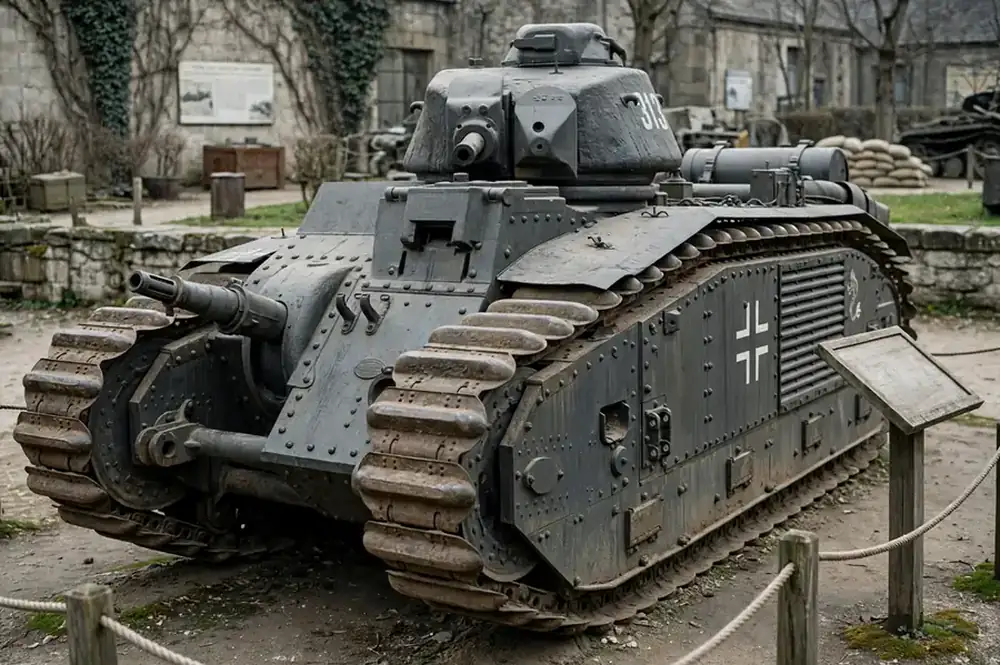
Surviving Beutepanzer are rare, because most were destroyed in combat or scrapped after the war. The Musee des Blindes at Saumur in France holds a Char B1 bis that served with the Germans as a flamethrower tank, one of the best-preserved examples of a Beutepanzer conversion. The Tank Museum at Bovington in Britain displays captured vehicles that were examined by British intelligence. The Kubinka Tank Museum in Russia holds Soviet vehicles that were recaptured from the Germans, including a T-34 that served in German hands. The German Tank Museum at Munster displays material relating to the Beutepanzer system, including markings and documentation.
Survivors Elsewhere and Running Examples
Other examples survive in museums in the United States, including the National Armor and Cavalry Museum, which holds vehicles examined by American intelligence after the war. A small number of captured tanks are in private collections, and at least one French-built vehicle that served with the Germans is maintained in running condition and appears at historical events. The survival rate is low, but the examples that remain are valuable: they show the German modifications — the oversized crosses, the added cupolas, the replaced radios — that turned an enemy tank into a Beutepanzer, and they allow visitors to see a side of the war that the famous German tanks do not show.
Frequently Asked Questions
What does Beutepanzer mean?
Beutepanzer is German for “captured tanks” or “booty tanks”. It was the general term for enemy armoured vehicles seized by the Wehrmacht and pressed into German service during the Second World War. It was not the name of a single tank model, but a description of a practice that covered hundreds of different vehicle types, from French Char B1 bis heavy tanks to Soviet T-34 mediums and American Shermans. The term reflects the scale of the practice: Germany reused its enemies’ armour throughout the war, and the captured tank became a familiar sight in German units on every front.
Which captured tanks did Germany use most?
The most numerous Beutepanzer were French tanks captured in 1940, especially the Char B1 bis, Somua S35 and Hotchkiss H39, and Soviet tanks captured from 1941 onwards, especially the T-34 and KV-1. Hundreds of each major type were reused, alongside smaller numbers of British and American vehicles such as the Matilda, Churchill and M4 Sherman. The French captures were the largest single haul, with more than 2,000 French tanks falling into German hands in 1940, while the Soviet captures were the most valuable, because the T-34 was technically superior to most German tanks of the time.
How did the Germans mark captured tanks?
Captured tanks received large German Balkenkreuz crosses, often oversized, together with German tactical numbers and unit markings. The oversized crosses were intended to reduce the risk of friendly fire, since a captured tank kept the silhouette of an enemy vehicle, and a T-34 with German markings still looked like a T-34 to a German anti-tank gunner. Some vehicles also carried German flags draped over the engine deck, and units operating captured tanks issued strict orders to friendly forces in the area. Even with these precautions, friendly fire incidents occurred throughout the war.
Why did Germany use captured tanks?
Germany’s tank industry could not produce enough tanks to meet the demands of a multi-front war, and each campaign delivered large numbers of enemy vehicles. Reusing them was faster and cheaper than building new tanks, and it equipped second-line, occupation and training units that would otherwise have had no armour at all. The practice also allowed the Germans to exploit the strengths of enemy designs, such as the T-34’s sloped armour and the Char B1 bis’s heavy protection. Captured tanks were a symptom of German industrial weakness, but they were also a rational response to it.
Did captured T-34s fight for Germany?
Yes. German units, including SS panzer divisions, operated captured T-34s on the Eastern Front from 1941 onwards, sometimes in company strength. German crews valued the T-34’s mobility and firepower, and the experience of operating the type influenced the design of the Panther medium tank, whose sloped armour and wide tracks were direct responses to the Soviet design. At Kharkov in 1943, the 2nd SS Panzer Division fielded captured T-34s, and other German units used them at Kursk. Captured T-34s remained in German service until the end of the war, though in diminishing numbers as spare parts ran out.
What happened to Beutepanzer after the war?
Most were destroyed in combat or scrapped after the war. A few survived as museum exhibits or war prizes, including a Char B1 bis flamethrower conversion at Saumur in France, and the practice itself ended with the war, but the systematic reuse of captured equipment became a standard feature of later military logistics. Many Soviet tanks that had served with the Germans were recaptured by the Red Army, and most went back into service or were scrapped without ceremony. The captured tanks thus slipped from the battlefield into history with little fanfare, remembered mainly in photographs and in the records of the units that used them.
Sources
- Chamberlain, Peter, and Doyle, Hilary, Encyclopedia of German Tanks of World War Two (Arms and Armour Press).
- Jentz, Thomas, Panzertruppen volumes (Schiffer Publishing).
- Perrett, Bryan, German Light Panzers 1932–42 and German Medium Panzers (Osprey Publishing).
- Zaloga, Steven, T-34-85 vs M26 Pershing and Armour of the Eastern Front (Osprey Publishing).
- Spielberger, Walter, Beutepanzer (German captured vehicle studies, Motorbuch Verlag).
-
The Tank Museum, Bovington, captured vehicle collection records.
-
Doyle, Hilary, and Jentz, Thomas, Panzer Tracts series on German armoured vehicles (Panzerwrecks).
- Zaloga, Steven, Panzer IV vs Char B1 bis: France 1940 (Osprey Publishing, Duel series).