 WAR ATLAS MILITARY HISTORY MAGAZINE · WWI — WWII
King George V-Class Battleship: Britain’s Wartime Battle Fleet
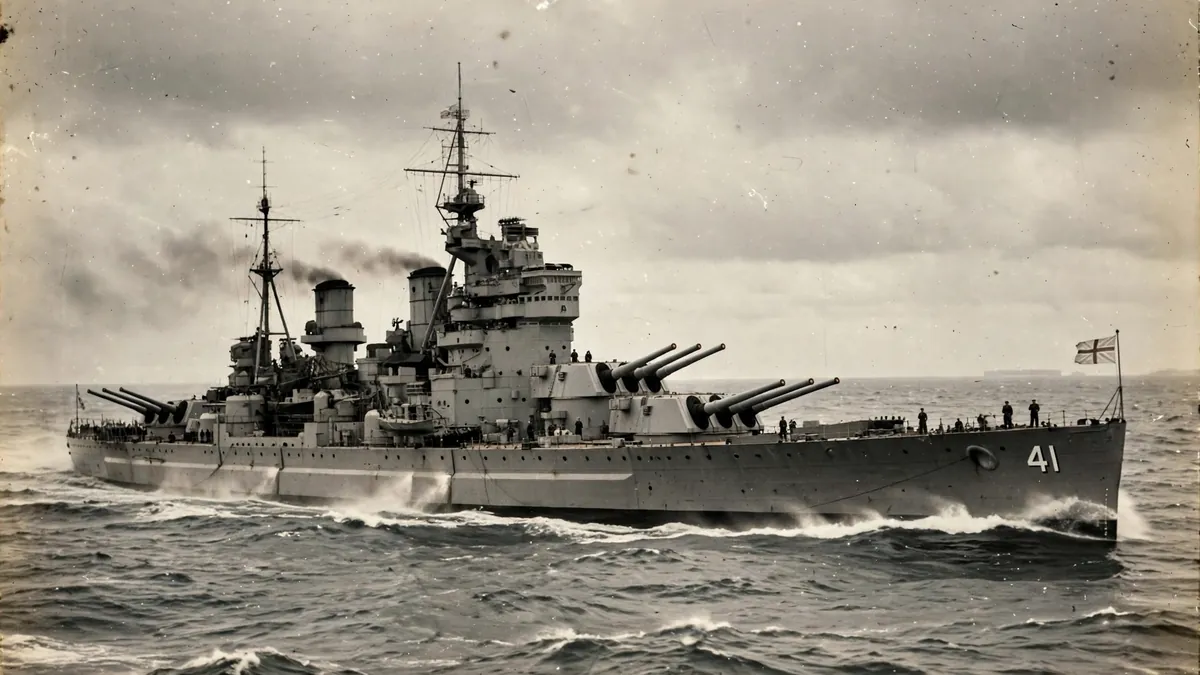
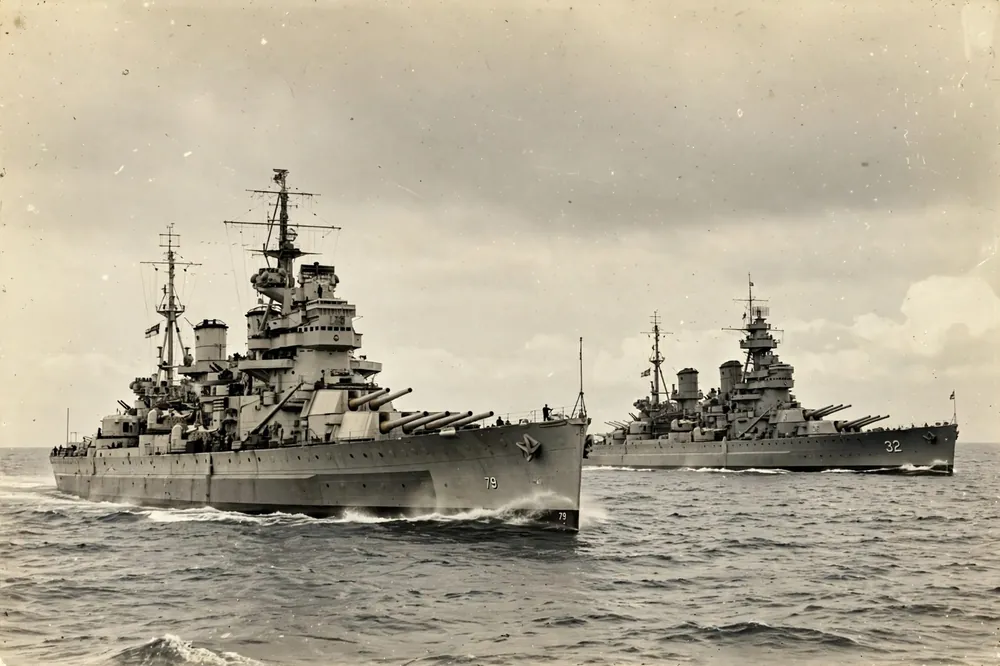
The King George V class consisted of five British battleships — King George V, Prince of Wales, Duke of York, Anson and Howe — built in the late 1930s under the limits of the Second London Naval Treaty, and the backbone of the Royal Navy’s battle fleet in the Second World War. They were the first British battleships built after the long construction holiday imposed by the Washington Naval Treaty, and they carried ten 14-inch guns, a calibre chosen to comply with the treaty, in a novel arrangement of two quadruple turrets and one twin turret. They were fast, well protected, and equipped with some of the best fire-control systems in the world, and they served in every theatre of the war, from the Atlantic to the Mediterranean to the Pacific.
The class is best remembered for two actions that bookend its career. In May 1941, Prince of Wales fought the German battleship Bismarck in the Denmark Strait, where her consort HMS Hood was sunk, and Prince of Wales herself was damaged and forced to withdraw. In December 1941, Prince of Wales was sunk by Japanese aircraft off Malaya, together with the battlecruiser Repulse, in the first sinking of a capital ship by air attack while under way at sea. At the other end of the war, Duke of York sank the German battlecruiser Scharnhorst at the Battle of the North Cape in December 1943, in a night action fought in Arctic darkness, and King George V and her sisters served in the Pacific, bombarding Japan in the final weeks of the war.
The King George V class is remembered as a compromise that worked: ships designed to a treaty limit, armed with guns smaller than those of their rivals, that nevertheless served with distinction in the hardest naval war in history. Their 14-inch guns were criticised, and their quadruple turrets gave trouble, but their protection, their fire control and their crews were among the best in the Royal Navy, and their wartime record — Bismarck, Scharnhorst, the Mediterranean, the Pacific — speaks for itself.
1. Key Facts
| Field | Value |
|---|---|
| Type | Fast battleship |
| Ships | King George V, Prince of Wales, Duke of York, Anson, Howe |
| Origin | United Kingdom |
| Designed | 1935–1937; laid down 1937–1939 |
| Commissioned | 1940–1942 |
| Built | 5 |
| Displacement | 35,000 tons standard (treaty limit); approximately 42,000–44,000 tons full load |
| Length | Approximately 227 m (745 ft) |
| Beam | Approximately 31.4 m (103 ft) |
| Draught | Approximately 10.4 m (34 ft) |
| Main armament | 10 × 14 in (356 mm) guns in two quadruple and one twin turrets |
| Secondary armament | 16 × 5.25 in (133 mm) dual-purpose guns |
| Anti-aircraft armament | Extensive; by 1945, up to 70 × 40 mm Bofors and 20 mm guns |
| Torpedo tubes | None |
| Aircraft | 4 Supermarine Walrus seaplanes (removed during the war) |
| Armour | Belt 374 mm (14.7 in), deck up to 152 mm, turrets up to 324 mm face |
| Propulsion | 4 Parsons steam turbines, 110,000 shp |
| Speed | Approximately 28 knots |
| Range | Approximately 15,000 nautical miles at 10 knots |
| Crew | Approximately 1,550–1,900 officers and men |
| Battle honours | Denmark Strait, Bismarck, North Cape, Mediterranean, Pacific |
| Fate | All scrapped 1957–1958; no survivor |
2. Background and Development
The Treaty Battleship
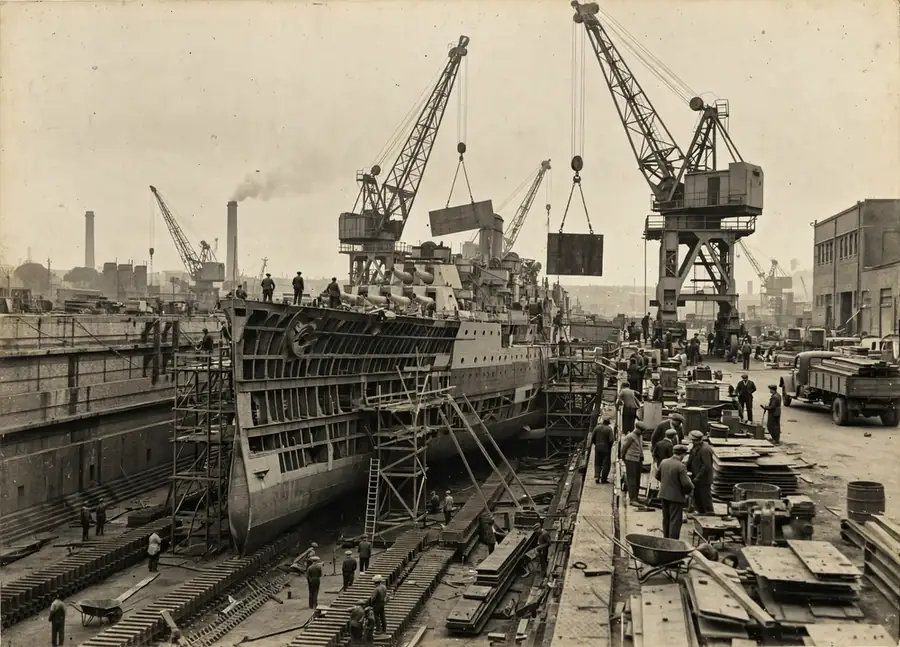
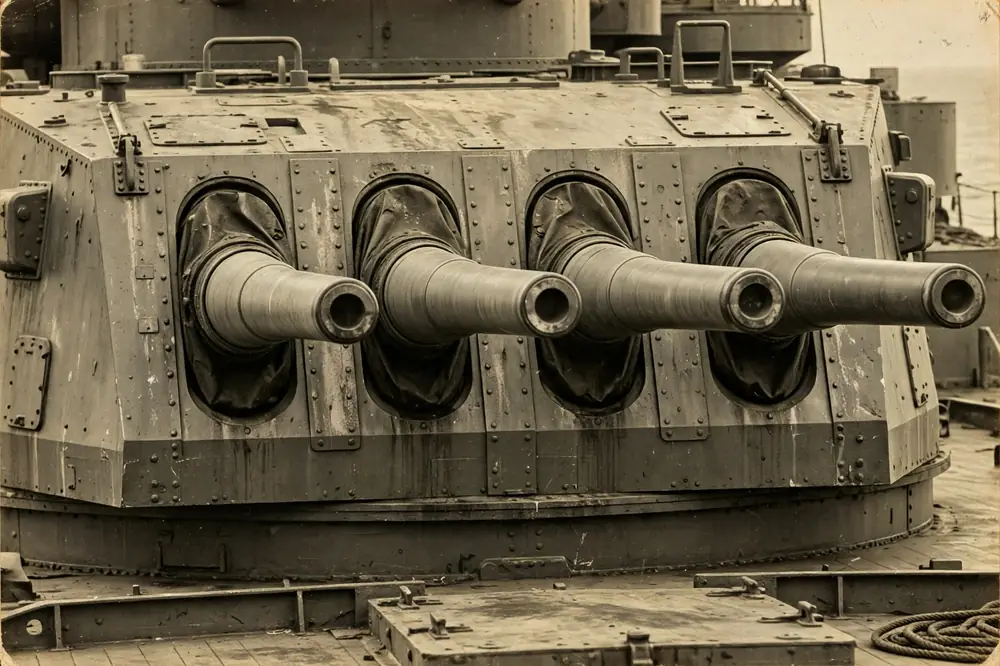
The King George V class was designed under the Second London Naval Treaty of 1936, which limited battleships to 35,000 tons and guns to 14 inches. The Royal Navy, which had hoped for a 16-inch gun, accepted the 14-inch limit in the belief that the other signatories would do the same, and designed a ship that mounted ten 14-inch guns in a novel arrangement: two quadruple turrets, one forward and one aft, and a twin turret forward, superfiring over the quadruple. The arrangement saved weight and allowed the ships to carry ten guns within the treaty displacement, but the quadruple turrets were complex and gave trouble in service. The ships were laid down between 1937 and 1939, and they entered service between 1940 and 1942, at a time when Britain was already at war.
Design Choices and Trade-offs
The design was a series of compromises. The 14-inch guns were smaller than the 15-inch guns of the older British battleships and the 16-inch guns of the American and Japanese ships, and they were criticised from the start. But the ships’ protection was excellent: a 14.7-inch belt, a deck of up to 6 inches, and a comprehensive torpedo protection system made them among the best-protected battleships in the world. The ships’ speed of 28 knots made them fast enough to operate with aircraft carriers, and their fire-control systems, with radar rangefinding added during the war, were among the best in the world. The design reflected the Royal Navy’s priorities: protection and fire control over gun calibre, and the belief that a well-protected ship with accurate guns was more valuable than a ship with larger guns and thinner armour.
Building in Wartime
King George V was laid down in January 1937 and commissioned in December 1940. Prince of Wales followed, commissioned in March 1941, just weeks before the Denmark Strait action. Duke of York was commissioned in November 1941, Anson in June 1942, and Howe in August 1942. The construction of the class was a major industrial effort, and it was carried out under wartime conditions, with bombing, material shortages and the pressure of war. The ships entered service before they were fully worked up — Prince of Wales sailed to the Denmark Strait with civilian workmen still aboard, finishing her turrets — and their early service was marred by teething troubles with the quadruple turrets. But the ships proved sound in combat, and their wartime record vindicated the design.
3. Design
Hull, Armour and Layout
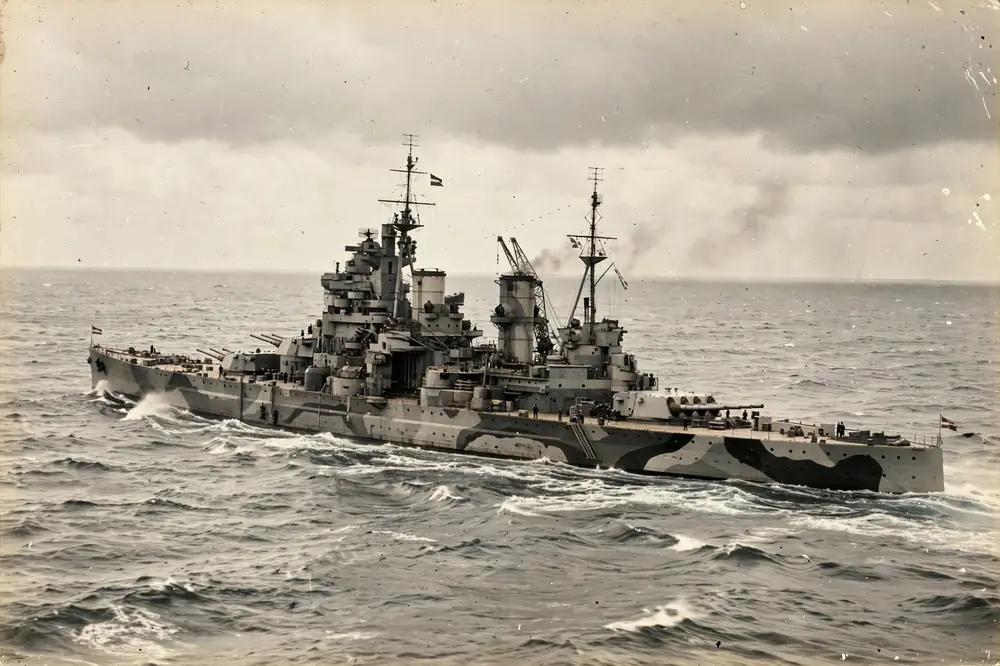
The King George V class had a long, flush-decked hull with a transom stern and a raked bow, designed for high speed. The armoured belt was 14.7 inches thick, inclined at 10 degrees, and protected the machinery and magazines. The armoured deck was up to 6 inches thick over the magazines, and the turrets were protected by up to 12.75 inches on their faces. The layout placed a quadruple turret forward, a twin turret superfiring over it, and a quadruple turret aft, with the secondary battery of sixteen 5.25-inch dual-purpose guns in eight twin mounts along the superstructure. The ships had a single funnel and a tall tower bridge that carried the fire-control directors, and their appearance — long, low and clean — made them among the most handsome battleships ever built.
Propulsion and Speed
The propulsion system was four Parsons geared steam turbines driving four shafts, producing 110,000 shaft horsepower and a designed speed of 28 knots. The machinery was divided into four boiler rooms and four engine rooms, an arrangement that improved survivability. The ships’ range was about 15,000 nautical miles at 10 knots, enough to operate across the Atlantic and the Pacific. The ships’ speed was adequate for their role, and their machinery was reliable. The King George V class was not the fastest battleship in the world, but it was fast enough to operate with the fleet’s carriers, and its speed was one of its most valuable assets.
Armament and Fire Control
The main battery of ten 14-inch/45-calibre guns fired a 1,590-pound shell to a range of about 38,000 yards, and the guns were controlled by the Admiralty Fire Control Table, one of the most advanced fire-control systems in the world, with radar rangefinding added during the war. The secondary battery of sixteen 5.25-inch dual-purpose guns was effective against both surface targets and aircraft, and it was controlled by four directors. The anti-aircraft battery grew enormously during the war: by 1945 the ships carried up to seventy 40 mm Bofors and 20 mm guns, a weight of fire that made them formidable escorts for aircraft carriers. The ships also carried four Supermarine Walrus seaplanes for spotting and reconnaissance, although the aircraft were removed during the war as the anti-aircraft battery grew.
4. Variants
The Five Ships
The five ships of the class were built to the same design but differed in detail. King George V, the lead ship, served as the flagship of the Home Fleet and fought against Bismarck. Prince of Wales, the second ship, fought at the Denmark Strait and was sunk off Malaya. Duke of York, the third ship, sank Scharnhorst at the North Cape and served in the Pacific. Anson, the fourth ship, served with the Home Fleet and in the Pacific. Howe, the fifth ship, served in the Mediterranean and the Pacific. The ships’ careers diverged because of the accidents of wartime deployment, but they were near-identical ships, and their differences were minor.
King George V and Prince of Wales
King George V and Prince of Wales were the two ships that fought Bismarck. King George V, commissioned in December 1940, served as the flagship of the Home Fleet, and she took part in the sinking of Bismarck on 27 May 1941, firing her 14-inch guns at the German battleship until it sank. Prince of Wales, commissioned in March 1941, fought Bismarck in the Denmark Strait on 24 May 1941, where she was damaged and forced to withdraw, and she carried Prime Minister Winston Churchill to the Atlantic Conference in August 1941. Prince of Wales was sunk by Japanese aircraft off Malaya on 10 December 1941, together with Repulse, in a disaster that shocked Britain and demonstrated the vulnerability of capital ships to air attack.
Duke of York, Anson and Howe
Duke of York, commissioned in November 1941, was the ship that sank Scharnhorst at the Battle of the North Cape on 26 December 1943, in a night action fought in Arctic darkness, and she served as the flagship of the British Pacific Fleet in 1945. Anson, commissioned in June 1942, served with the Home Fleet and in the Pacific, where she bombarded Japan in the final weeks of the war. Howe, commissioned in August 1942, served in the Mediterranean, where she covered the invasion of Sicily, and in the Pacific, where she also bombarded Japan. The three later ships had longer and less dramatic careers than their sisters, but they served with distinction in the war’s final campaigns.
5. Operational History
The Denmark Strait and the Sinking of Bismarck
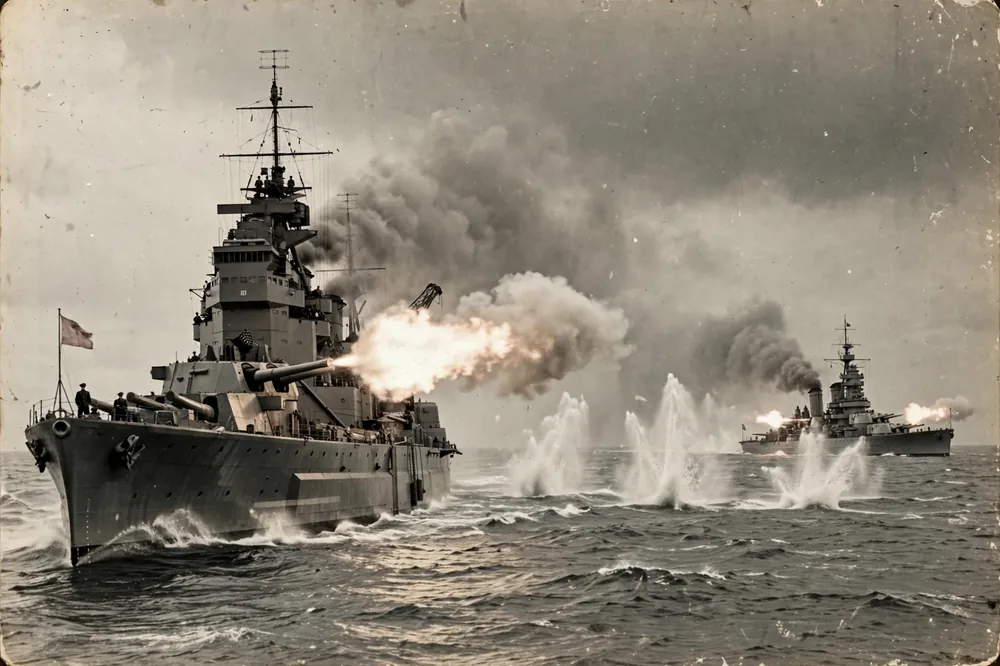
The class’s first action came on 24 May 1941, in the Denmark Strait, where Prince of Wales and the battlecruiser Hood intercepted the German battleship Bismarck and the cruiser Prinz Eugen. In the battle that followed, Hood was sunk by a shell that penetrated her magazines, and Prince of Wales was hit seven times and forced to withdraw. The action was a shock to Britain, but Prince of Wales’s hits on Bismarck — which damaged her fuel tanks and forced her to make for France — set in train the pursuit that ended in Bismarck’s sinking three days later. King George V took part in the final action on 27 May, firing her 14-inch guns at Bismarck until the German ship sank, and the class’s role in the destruction of Bismarck was a vindication of the design.
The Loss of Prince of Wales
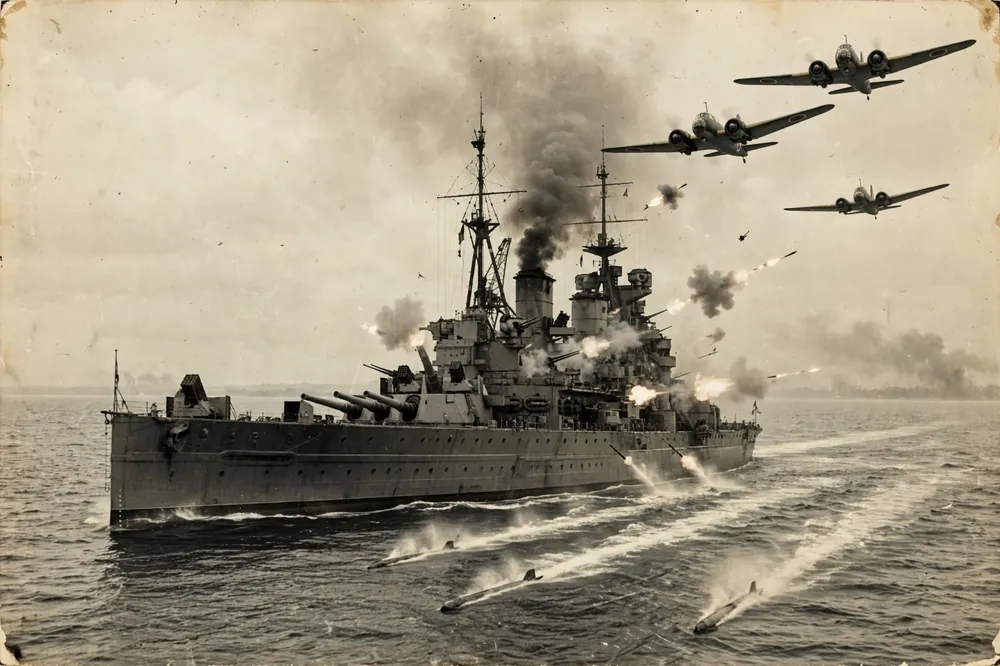
The class’s greatest disaster came on 10 December 1941, when Prince of Wales and Repulse were sunk by Japanese aircraft off Malaya. The two ships, known as Force Z, had sailed to intercept Japanese landings in Malaya, but they were caught without air cover and attacked by Japanese bombers and torpedo bombers. Prince of Wales was hit by torpedoes that disabled her steering and her power, and she sank with the loss of 327 men, including Admiral Sir Tom Phillips, the force commander. The sinking was the first time a capital ship under way at sea had been sunk by air attack alone, and it demonstrated that the battleship era was over. The loss of Prince of Wales was a shock to Britain, and it remains one of the most famous naval disasters of the war.
The North Cape and the Pacific
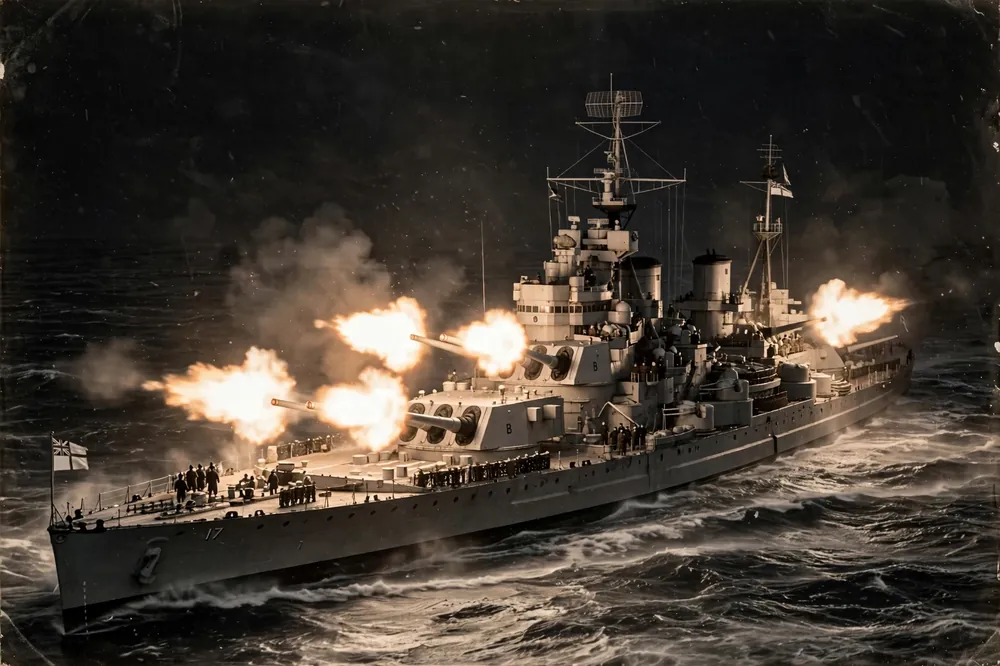
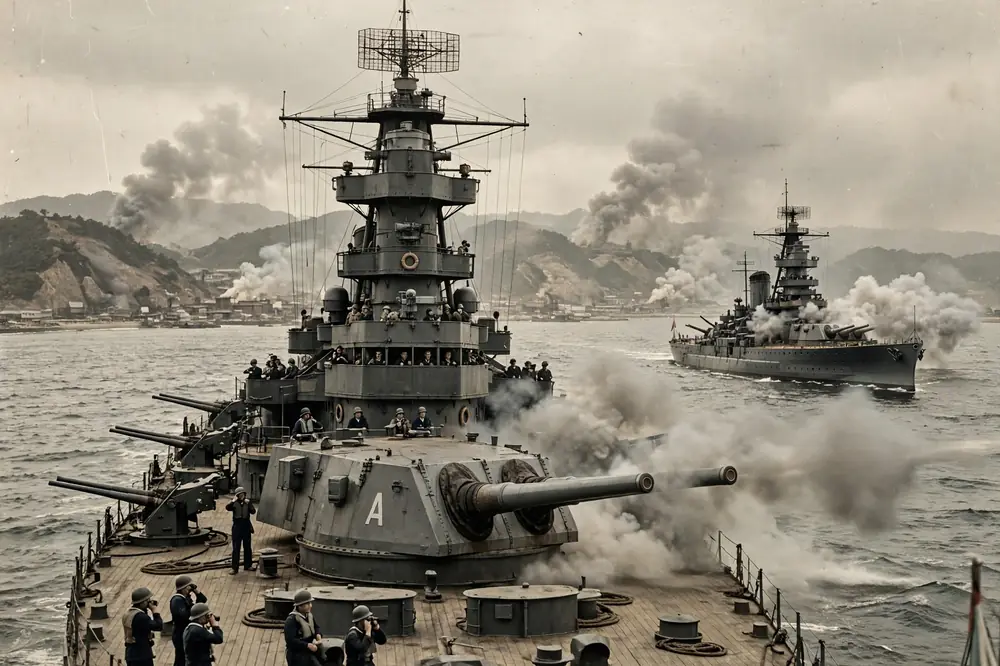
The class’s greatest victory came on 26 December 1943, at the Battle of the North Cape, where Duke of York, under Admiral Sir Bruce Fraser, intercepted the German battlecruiser Scharnhorst off the North Cape of Norway. In a night action fought in Arctic darkness, Duke of York’s radar-directed 14-inch guns hit Scharnhorst repeatedly, disabling her and slowing her, and British destroyers finished her with torpedoes. Scharnhorst sank with the loss of almost her entire crew. The battle was a triumph for radar-directed gunnery, and it was the last battleship-versus-battleship action in European waters. In 1945, King George V, Duke of York, Anson and Howe served in the Pacific, where they bombarded Japan and escorted the American carriers, and they were present in Tokyo Bay for the Japanese surrender. The class’s Pacific service was a fitting end to its wartime career.
6. Performance and Specifications
Strengths on the Battlefield
The King George V class was a successful design. Its protection was among the best in the world, its fire control was excellent, and its radar-directed gunnery proved decisive at the North Cape. The ships were fast enough to operate with carriers, and their anti-aircraft batteries made them formidable escorts. Their crews were among the best-trained in the Royal Navy, and their wartime record — Bismarck, Scharnhorst, the Mediterranean, the Pacific — speaks for itself. The class’s ships served in every theatre of the war, and they performed their many roles competently.
Weaknesses and Trade-offs
The weaknesses were those of the treaty compromise. The 14-inch guns were smaller than those of their rivals, and they were criticised for their lack of hitting power, although their performance at the North Cape showed that they could be effective. The quadruple turrets were complex and gave trouble in service, particularly in the early war, and their mechanical failures hampered the ships’ gunnery. The ships’ speed of 28 knots was adequate but not exceptional, and their range was limited. The class was also expensive to operate, with large crews and heavy fuel consumption. The weaknesses were real, but they did not prevent the ships from serving effectively in combat.
How the Class Compared with Rivals
Compared with the German Bismarck, the King George V class was better protected and had better fire control, but had smaller guns and was slower. Compared with the American North Carolina class, the British ships were better protected but had smaller guns and were slower. Compared with the Japanese Nagato class, the British ships were better protected and had better fire control, but had smaller guns. Compared with the later British Vanguard, the last battleship ever built, the King George V class was smaller and less well armed, but it was the class that fought the war. The King George V class was a compromise, but it was a compromise that worked.
7. Operators
The Royal Navy
The only operator of the King George V class was the Royal Navy. The five ships served with the Home Fleet, the Mediterranean Fleet, the Eastern Fleet and the British Pacific Fleet, and their crews were drawn from across Britain and the Commonwealth. The ships were commanded by officers who would later become senior figures in the Navy, including Admiral Sir Bruce Fraser, the victor of the North Cape. The class’s service was entirely British, and its history is a part of the history of the Royal Navy in the Second World War.
No Other Users
No other navy operated a King George V-class ship. After the war, the ships were decommissioned and scrapped between 1957 and 1958, a fate that was controversial at the time and remains so among naval historians. No King George V-class ship was preserved, and the class’s memory is carried by the museums that display their artefacts and by the memorials to their crews. The names of the class, however, have been reused: King George V, Duke of York and Prince of Wales are all names that have been given to later ships, most recently for the aircraft carrier HMS Prince of Wales, commissioned in 2019, which keeps the class’s memory alive in the Royal Navy.
8. Legacy and Influence
The Last British Battleships
The legacy of the King George V class is that it was the last class of battleships built in Britain, apart from the single ship Vanguard, which was completed after the war. The class represented the end of British battleship construction, and its ships were the last battleships to serve in the Royal Navy. The class’s career spans the transition from the battleship age to the carrier age, and its ships are among the last battleships that a navy built to fight other battleships. The class’s story is thus a part of the larger story of the decline of the battleship.
Memory and the North Cape
The class is remembered above all for the Battle of the North Cape, in which Duke of York sank Scharnhorst, and for the loss of Prince of Wales off Malaya. The North Cape is studied at naval war colleges as an example of radar-directed night gunnery, and the loss of Prince of Wales is studied as a lesson in the vulnerability of capital ships to air attack. The class’s ships are remembered in the Royal Navy’s history, and their names have been given to later ships: King George V, Duke of York and Prince of Wales are all names that have been reused in the Royal Navy, most recently for the aircraft carrier HMS Prince of Wales, commissioned in 2019.
The End of the Battleship Era
The King George V class also marks the end of the battleship era. The ships were designed for a fleet action that never happened, and their most valuable service was as carrier escorts and as bombardment ships — roles that acknowledged, in practice, that the aircraft carrier had replaced the battleship as the capital ship. The class’s service therefore bridges the battleship age and the carrier age, and its ships were among the last battleships built to fight other battleships.
9. Surviving Examples
No Ship Survives
No King George V-class battleship survives. All five ships were scrapped between 1957 and 1958, and their absence is a loss for naval heritage. The decision to scrap the ships was taken at a time when Britain was reducing its naval expenditure and when there was no programme for preserving historic ships, and it is now widely regretted. The class’s memory is carried by the museums that display their artefacts and by the memorials to their crews, and by the later ships that bear their names. The scrapping of the class, like that of the American battleship Washington, has become a cautionary tale for those who seek to preserve historic warships, and it helped to inspire the later preservation movement.
Artefacts and Memorials
Artefacts from the class survive in museums in Britain and around the world. The Imperial War Museum in London holds artefacts from the Denmark Strait and the North Cape, including items recovered from HMS Hood and from Scharnhorst. The National Museum of the Royal Navy at Portsmouth displays models and photographs of the class, and the ship’s bells and some of their fittings are preserved in naval collections. In Singapore, a memorial honours the men of Prince of Wales and Repulse, and in Norway, the site of the North Cape battle is marked by memorials to Scharnhorst’s crew. These artefacts and memorials keep the memory of the class alive in the absence of a surviving hull.
Frequently Asked Questions
What was the King George V class?
The King George V class consisted of five British fast battleships — King George V, Prince of Wales, Duke of York, Anson and Howe — built in the late 1930s under the Second London Naval Treaty. They carried ten 14-inch guns and served as the backbone of the Royal Navy’s battle fleet in the Second World War. The ships were the first British battleships built after the long construction holiday imposed by the Washington Naval Treaty, and they served in every theatre of the war, from the Atlantic to the Mediterranean to the Pacific. Their wartime record — Bismarck, Scharnhorst, the Mediterranean, the Pacific — speaks for itself.
Why did the King George V class have 14-inch guns?
The ships were designed under the Second London Naval Treaty of 1936, which limited battleship guns to 14 inches. The Royal Navy accepted the limit in the belief that other navies would do the same, and designed the ships to carry ten 14-inch guns in two quadruple and one twin turrets. This arrangement saved weight and let the ships carry ten guns within the treaty displacement, although the quadruple turrets were complex and troublesome in service. The 14-inch guns were criticised for their lack of hitting power, although their performance at the North Cape showed that they could be effective when directed by radar.
What happened to Prince of Wales?
Prince of Wales was sunk by Japanese aircraft off Malaya on 10 December 1941, together with the battlecruiser Repulse, in the first sinking of a capital ship under way at sea by air attack alone. She had earlier fought Bismarck in the Denmark Strait, where HMS Hood was sunk, and she had carried Prime Minister Winston Churchill to the Atlantic Conference in August 1941. Force Z, as the two ships were known, sailed to intercept Japanese landings in Malaya, but they were caught without air cover and attacked by Japanese bombers and torpedo bombers. Prince of Wales sank with the loss of 327 men, including Admiral Sir Tom Phillips.
Which King George V-class ship sank Scharnhorst?
Duke of York sank the German battlecruiser Scharnhorst at the Battle of the North Cape on 26 December 1943, in a night action fought in Arctic darkness. Duke of York’s radar-directed 14-inch guns disabled Scharnhorst, and British destroyers finished her with torpedoes. Scharnhorst sank with the loss of almost her entire crew, and the battle was a triumph for radar-directed gunnery. It was the last battleship-versus-battleship action in European waters, and it is studied at naval war colleges as an example of radar-directed night gunnery. Admiral Sir Bruce Fraser, the victor of the battle, commanded the British force from Duke of York.
How many King George V-class battleships were built?
Five: King George V, Prince of Wales, Duke of York, Anson and Howe. All five served in the Second World War, and all were scrapped between 1957 and 1958. No ship of the class survives, a fate that is now widely regretted. The ships were built between 1937 and 1942, and they entered service at a time when Britain was already at war. Prince of Wales sailed to the Denmark Strait with civilian workmen still aboard, finishing her turrets, a measure of the urgency with which the ships were needed. The decision to scrap the ships was taken when Britain was reducing its naval expenditure and had no programme for preserving historic ships.
Did the King George V class serve in the Pacific?
Yes. King George V, Duke of York, Anson and Howe served with the British Pacific Fleet in 1945, bombarding Japan and escorting American carriers, and they were present in Tokyo Bay for the Japanese surrender. The class’s Pacific service was a fitting end to its wartime career, and it showed that the ships, designed for the Atlantic, could operate effectively in the Pacific. Duke of York served as the flagship of the British Pacific Fleet, and the ships’ bombardment of Japan in the final weeks of the war was among the last battleship operations in history.
Sources
- Friedman, Norman, The British Battleship 1906–1946 (Seaforth Publishing).
- Garzke, William, and Dulin, Robert, British, Soviet, French, and Dutch Battleships of World War II (Naval Institute Press).
- Kennedy, Ludovic, Pursuit: The Sinking of the Bismarck (Collins).
- Konstam, Angus, British Battleships 1939–45 (Osprey Publishing).
- The Imperial War Museum, London, Denmark Strait and North Cape collection records.
-
The National Museum of the Royal Navy, Portsmouth, King George V-class collection records.
-
Raven, Alan, and Roberts, John, British Battleships of World War Two (Arms and Armour Press).
- Roskill, Stephen, The War at Sea 1939-1945, Volumes I-III (HMSO).