 WAR ATLAS MILITARY HISTORY MAGAZINE · WWI — WWII
China-Burma-India Theater
Lead
The China-Burma-India Theater, usually shortened to CBI, was the United States military designation during the Second World War for the war in China and in Southeast Asia, above all in Burma and India. It was officially established on 22 June 1942 and lasted until 1945. In practice, American forces in the China-Burma-India Theater were usually overseen by General Joseph Stilwell, but the name must not be misunderstood.
Unlike the European Theater of Operations, the China-Burma-India Theater was never a unified theater of operations and it never had a single overall operational commander. Operational command of Allied forces in the region was officially the responsibility of the Supreme Commanders for South East Asia and for China, and American, British, Chinese and Indian forces answered to different chains of command that overlapped, competed and sometimes contradicted each other.
That divided command is central to understanding the China-Burma-India Theater, because it shaped every campaign fought under its name, from the defence of India in 1942 to the reconquest of Burma in 1944 and 1945. The China-Burma-India Theater was also a war of supply. China had been fighting Japan since 1937, and after the fall of Burma in 1942 the last land supply route into China was cut.
The Allies kept China in the war by flying supplies over the Himalayas on the Hump airlift, by building the Ledo Road through the jungles of northern Burma, and by fighting a long land campaign to reopen the road to China.
At the same time, British and Indian forces in India and Burma fought the Japanese in some of the hardest jungle fighting of the war, including the battles of Imphal and Kohima in 1944, while American and Chinese forces under Stilwell fought their way through northern Burma towards Myitkyina.
The China-Burma-India Theater is often called the forgotten theater, because it received fewer men, ships and aircraft than Europe or the Pacific War, and because its campaigns were fought far from the headlines. Yet it kept China fighting, it tied down large Japanese forces, and it produced a supply line that, by early 1945, was finally carrying trucks and fuel overland into China.
Its story is one of difficult terrain, disease, divided command and remarkable endurance.
Key Facts
| Item | Detail |
|---|---|
| Dates | 22 June 1942 – 1945 (the United States designation; fighting in China began in 1937 and the Burma campaign ran from 1942 to 1945) |
| Theater/Location | China, Burma and India, including the Himalayas, the jungles of northern Burma, the Chindwin and Irrawaddy valleys, and the Indian frontier at Imphal and Kohima |
| Result | Allied victory; Burma was recaptured, the land route to China was reopened in early 1945, and China remained in the war until the Japanese surrender |
| Commanders | Allied: General Joseph Stilwell, Generalissimo Chiang Kai-shek, Admiral Lord Louis Mountbatten, General Sir Archibald Wavell, General Sir William Slim, Major General Claire Chennault, Lieutenant General Daniel Sultan, Major General Albert Wedemeyer. Japanese: Lieutenant General Shojiro Iida, Lieutenant General Renya Mutaguchi |
| Strength | Allied forces included British, Indian, Chinese, American and African troops, with numbers varying widely by campaign; estimates range from tens of thousands of American and Chinese troops in northern Burma to several hundred thousand British and Indian troops in India and Burma |
| Losses | Losses were very heavy on all sides and estimates vary widely. Chinese military and civilian losses were in the millions across the whole war in China. British and Indian losses in Burma ran into the tens of thousands killed and many more wounded or sick. Japanese losses in Burma in 1944–1945 are estimated in the tens of thousands killed. Disease, above all malaria and dysentery, caused very large numbers of casualties on both sides |
Background
China at War Since 1937
The China-Burma-India Theater cannot be understood without the war in China that began before the Second World War in Europe. Japan invaded China in July 1937, after the Marco Polo Bridge incident, and in the following years captured Beijing, Shanghai, Nanjing and Wuhan, and occupied the industrialised coastal regions.
The Chinese government under Generalissimo Chiang Kai-shek retreated to Chongqing in the interior, and Chinese armies, divided between Nationalist and Communist forces, continued to resist. By 1941 China had been fighting for four years, had lost much of its industry and many of its best-trained troops, and depended on foreign aid for weapons, vehicles, fuel and other supplies.
The main supply route into China was the Burma Road, which ran from the Burmese port of Rangoon through Lashio to Kunming in Yunnan province. When Japan attacked Pearl Harbor in December 1941 and then invaded Southeast Asia, the Burma Road became a target. Japan captured Rangoon in March 1942, occupied most of Burma by May 1942, and cut the Burma Road.
China was then almost completely isolated by land, and the only way to supply it was by air, over the Himalayas from India. That isolation is the starting point for the China-Burma-India Theater, because the whole American and British effort in the region was built around the problem of keeping China supplied and keeping China in the war.
The Fall of Burma and the Creation of CBI
The fall of Burma in the spring of 1942 was a disaster for the Allies. British, Indian and Chinese forces, outnumbered and outmanoeuvred, retreated through the jungle to India and to Yunnan, losing large amounts of equipment and suffering very heavy casualties from combat and disease. The Japanese advance threatened India itself, and British commanders feared an invasion of Assam and Bengal.
In that crisis the United States created the China-Burma-India Theater on 22 June 1942 as an administrative designation for American forces in the region, and appointed General Joseph Stilwell to command American forces and to serve as Chief of Staff to Chiang Kai-shek. Stilwell, known as Vinegar Joe for his sharp temper, was given a set of overlapping roles that reflected the divided nature of the theater.
He was commander of American forces in China, Burma and India, Chief of Staff to Chiang, and, in theory, commander of Chinese forces in Burma. In practice, he had to work with Chiang, who distrusted him and resisted his proposals to reform the Chinese army, with the British command in India under General Sir Archibald Wavell, and, from October 1943, with South East Asia Command under Admiral Lord Louis Mountbatten.
The China-Burma-India Theater was therefore a name for a set of American administrative arrangements, not a single command, and its history is the history of men trying to fight a war inside a command structure that was never fully unified.
Why China Mattered to the Allies
American and British leaders kept China in the war for strategic reasons, even though supplying China was expensive and difficult. As long as China fought, Japan had to keep large forces in China, forces that could not be used in the Pacific War against the United States or against the Soviet Union.
American planners also hoped to use air bases in China to bomb Japan, and, later in the war, to use China as a base for the final invasion of Japan, although that plan was overtaken by events. For Chiang Kai-shek, American aid was also a political matter: it strengthened his government against both Japan and the Chinese Communists, and it gave him leverage in negotiations with the Allies.
For Britain, the defence of India was the first priority, and Burma was important because it guarded the eastern frontier of India. Those different priorities never fully coincided, and they explain many of the arguments inside the China-Burma-India Theater, above all the long-running dispute between Stilwell, who wanted to reform the Chinese army and reconquer Burma by land, and Major General Claire Chennault, commander of the American air forces in China, who argued that air power alone, supplied over the Hump, could defeat Japan.
President Franklin Roosevelt backed Chennault for much of the war, which limited the supplies available for Stilwell’s land campaign, and the dispute was never fully resolved until Stilwell was recalled in October 1944.
Opposing Forces
The Allied Forces in China, Burma and India
The Allied forces in the China-Burma-India Theater were a coalition of many armies, and their diversity was both a strength and a weakness. The British Indian Army provided the largest land force in India and Burma, with British, Indian, Gurkha and African divisions, and it was commanded in Burma for much of the war by General Sir William Slim, one of the most respected British generals of the war.
The Chinese forces included the Chinese Expeditionary Force in Burma and the large Chinese armies in China proper, but they were poorly equipped, often poorly led, and divided by political rivalries between Nationalist and Communist forces and between different Nationalist generals.
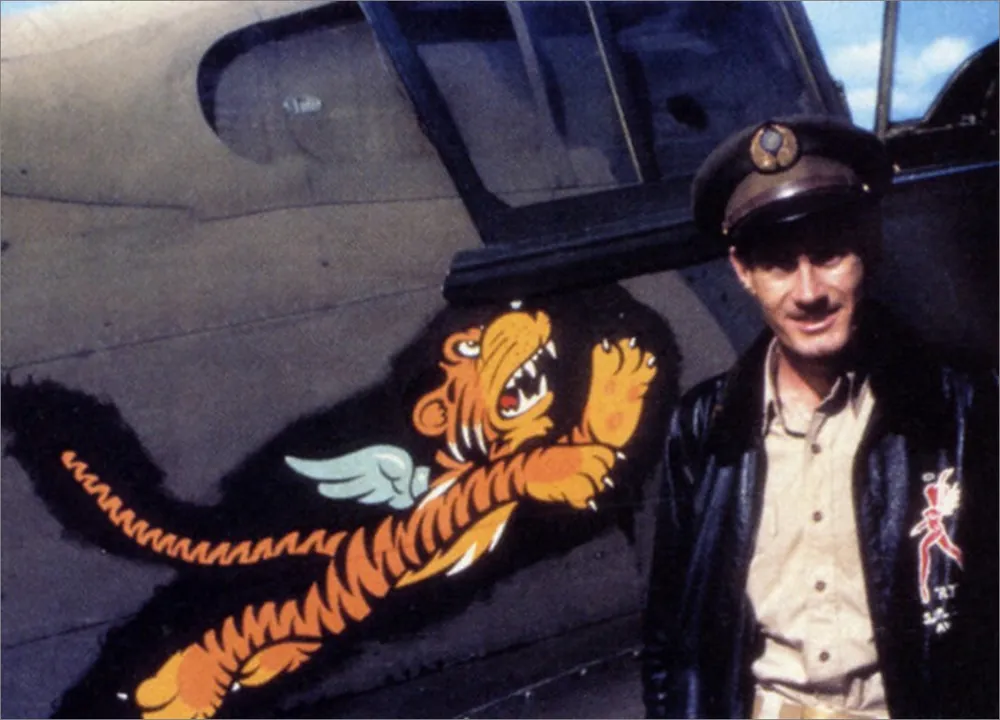
The American contribution was small in numbers but important in specialities: transport aircraft flying the Hump, engineers building the Ledo Road, the 5307th Composite Unit, known as Merrill’s Marauders, the 1st Air Commando Group, and the Tenth and Fourteenth Air Forces. The Flying Tigers, the American Volunteer Group under Chennault, fought in China and Burma in 1941 and 1942 before being absorbed into the United States Army Air Forces.
The Allied air forces, above all the transport aircraft of the India-China Division of Air Transport Command, were the lifeline of the theater, and without them China could not have been supplied at all. The Allied forces also included the Chindits, the long-range penetration groups under Major General Orde Wingate, who fought behind Japanese lines in Burma in 1943 and 1944 at very high cost.
The Japanese Forces in Burma and China
The Japanese forces in the China-Burma-India Theater were part of the Southern Expeditionary Army Group and, in Burma, the Burma Area Army under Lieutenant General Shojiro Iida and later Lieutenant General Heitaro Kimura. In China, large Japanese armies occupied the coastal regions and fought a long war of attrition against Chinese forces.
In Burma, Japanese divisions were well trained in jungle fighting, were lightly equipped and could move fast through terrain that Allied commanders thought impassable, and were supported by air forces that were strong in 1942 but weakened as the war went on.
The Japanese plan in 1944, the U-Go offensive under Lieutenant General Renya Mutaguchi, was to invade India through Imphal and Kohima, cut the Allied supply lines, and provoke an uprising against British rule. It was a bold plan, but it was based on the assumption that Japanese troops could live off captured supplies, and when that failed, the offensive collapsed with very heavy Japanese losses from combat, disease and starvation.
Japanese forces in the China-Burma-India Theater were therefore formidable in attack, especially in the jungle, but they were vulnerable when their supply lines were cut, and they suffered badly when the Allies, with better air supply and better medical services, learned to fight in the jungle on equal terms.
The Problem of Supply, Disease and Terrain
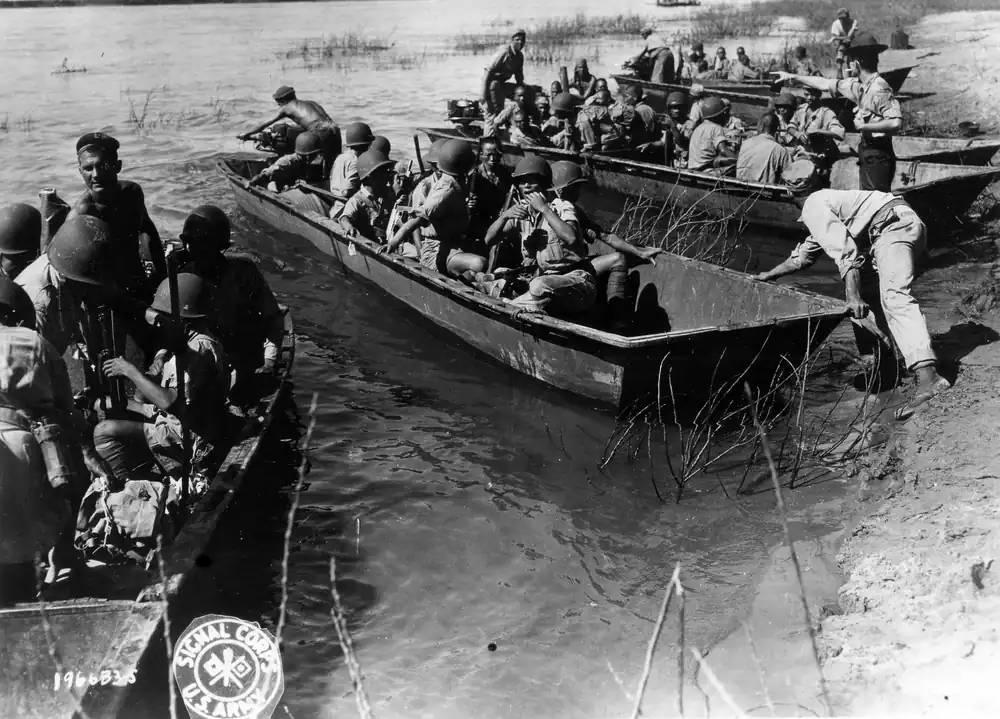
The China-Burma-India Theater was fought in some of the most difficult terrain of the Second World War. Northern Burma is covered in dense jungle, cut by rivers and mountains, with few roads and heavy monsoon rain for much of the year.
The Himalayas, crossed by the Hump airlift, are the highest mountains in the world, and the air route from Assam in India to Kunming in China crossed peaks of more than 15,000 feet, with violent weather, icing and strong winds. Disease was as dangerous as the enemy.
Malaria, dysentery, typhus, cholera and other diseases caused very large numbers of casualties on both sides, and at times more men were lost to sickness than to combat. Allied medical services, including the use of new drugs and the evacuation of the sick by air, improved over time, but disease remained a constant problem.
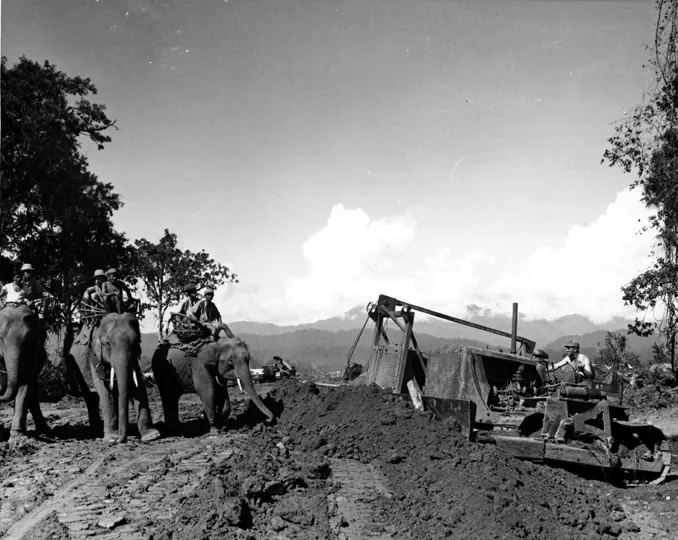
The terrain also shaped the fighting: roads were few, rivers were the main highways, and supply by air became essential. The Ledo Road, built by American engineers and Chinese and Indian labourers through the jungle from Ledo in Assam to link up with the old Burma Road, was one of the great engineering feats of the war, but it took two years to build and was not open to China until early 1945.
The China-Burma-India Theater was therefore a war in which logistics, engineering and medicine mattered as much as tactics.
The CBI Theater, 1942–1945
Flying the Hump, 1942–1943
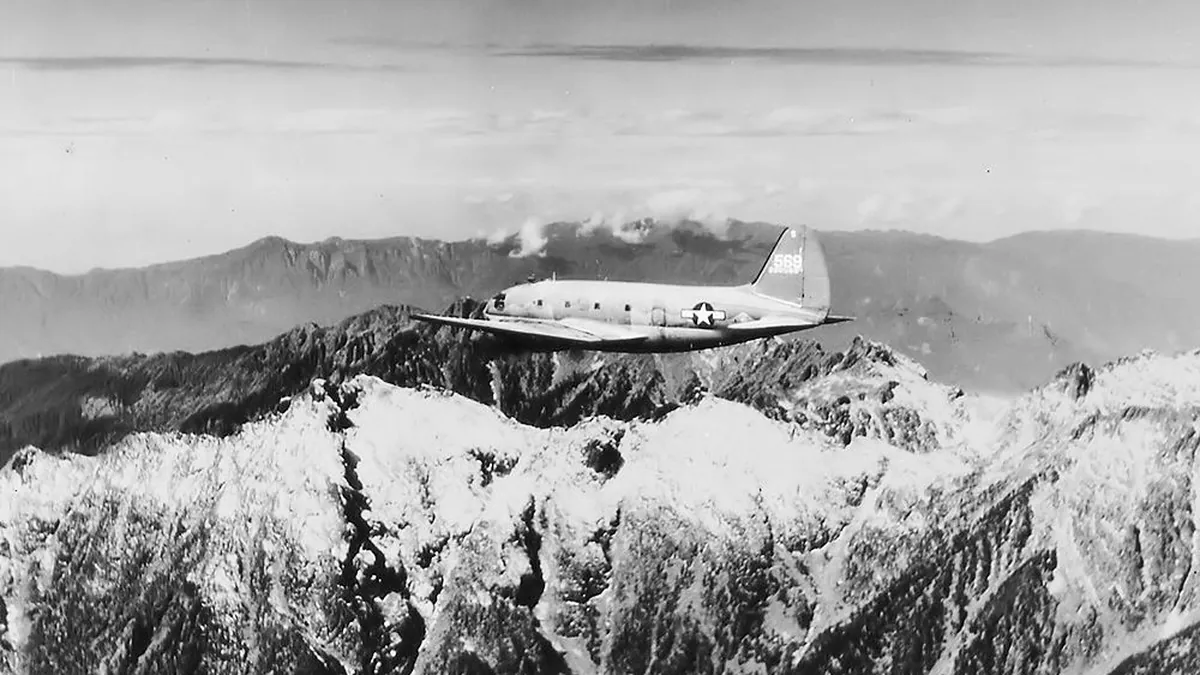
The Hump airlift was the first and, for a long time, the only way to supply China after the fall of Burma. Transport aircraft flew from airfields in Assam in north-eastern India, over the eastern Himalayas, to Kunming and other airfields in China, carrying fuel, weapons, ammunition, food and other supplies.
The route was about 500 miles long, but it crossed some of the highest terrain in the world, and the weather was often violent, with thunderstorms, icing and turbulence. In 1942 the airlift was small and inefficient, carrying only a few thousand tons a month, far less than China needed, and losses of aircraft and crews were high.
The transport aircraft were often old, the crews were inexperienced, and navigation aids were poor. Over time the airlift grew: more aircraft arrived, better aircraft were used, including the C-46 and the C-54, airfields were improved, and navigation and weather forecasting got better.
By 1944 the Hump was carrying tens of thousands of tons a month, and by 1945 it was carrying more than 70,000 tons a month, a remarkable achievement. The cost was high, with hundreds of aircraft lost and many airmen killed, and the wrecks of transport aircraft are still found in the Himalayas today.
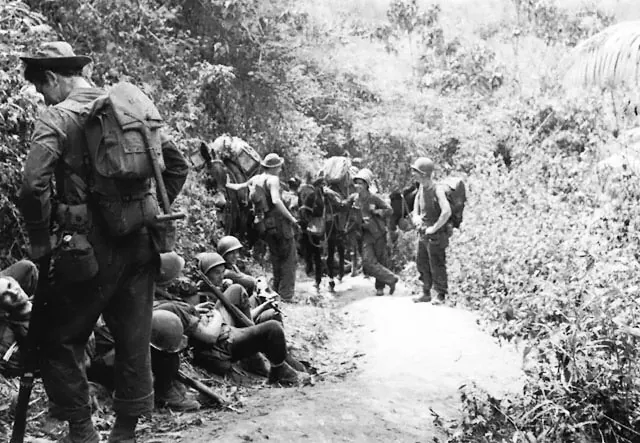
The Hump kept China in the war when no other supply route existed, and it made possible the American air offensive from China against Japan, even though the air offensive itself achieved less than its supporters had hoped.
The Northern Burma Campaign and the Ledo Road
While the Hump kept China supplied by air, Stilwell fought a land campaign in northern Burma to reopen the road to China. In late 1943 and 1944, Chinese divisions trained and equipped in India, under Stilwell’s command in the Northern Combat Area Command, advanced from Ledo through the Hukawng Valley towards Myitkyina, supported by Merrill’s Marauders, the Chindits, and American engineers building the Ledo Road behind them.
The fighting was slow, hard and costly, in dense jungle and monsoon rain, against Japanese forces who fought stubbornly for every ridge and river crossing. Myitkyina, with its airfield, was the key objective, and it was captured in August 1944 after a long siege, although the airfield had been taken earlier.
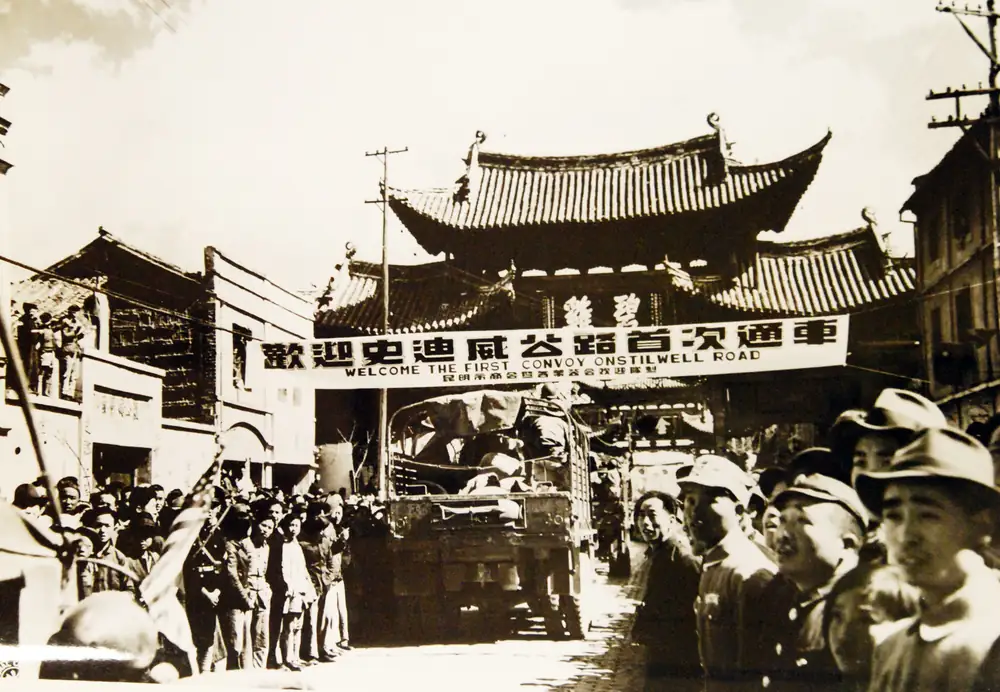
The capture of Myitkyina opened the way for the Ledo Road to advance, and in January 1945 the road was finally linked to the old Burma Road, and the first convoy of trucks drove overland from India to Kunming. The road was renamed the Stilwell Road in honour of the general who had insisted on building it, although Stilwell himself had been recalled three months earlier.
The northern Burma campaign achieved its objective, but at a high cost, and by the time the road was open, the Hump airlift was already carrying more supplies than the road could, and the war in the Pacific had moved on.
Historians still debate whether the cost of the campaign was justified, but for the men who fought it, and for the Chinese who received the supplies, the road was a symbol that China had not been abandoned.
Imphal and Kohima, 1944
The decisive land battle of the China-Burma-India Theater in 1944 was fought not in northern Burma but on the frontier of India, at Imphal and Kohima. In March 1944, Lieutenant General Renya Mutaguchi launched Operation U-Go, an invasion of India by the Japanese Fifteenth Army, with the aim of capturing Imphal and Kohima, cutting the Allied supply lines to northern Burma and China, and provoking an Indian uprising.
The Japanese advanced through the jungle and surrounded Imphal and Kohima, and for a time the situation looked desperate. The British and Indian forces under General Sir William Slim, however, had prepared for the attack, had stockpiled supplies, and were supplied by air when the road was cut.
At Kohima, a small British and Indian garrison held a ridge against repeated Japanese attacks in April 1944, in fighting that was among the closest and most desperate of the war. At Imphal, Slim’s forces held the plain and then counter-attacked when the Japanese, short of food and ammunition and weakened by disease, began to retreat.
The monsoon rains turned the Japanese retreat into a disaster, with thousands of men dying from starvation and disease on the road back to Burma. Japanese losses at Imphal and Kohima are estimated in the tens of thousands killed, with many more wounded or sick, and the Japanese Fifteenth Army was effectively destroyed as a fighting force.
Imphal and Kohima were the turning point of the war in Burma, and they are now regarded as among the greatest British and Indian victories of the Second World War, comparable in importance to the better-known battles of the Eastern Front (World War II) and the Western Front (World War II).
The Reconquest of Burma, 1944–1945
After Imphal and Kohima, Slim’s Fourteenth Army pursued the Japanese into Burma, advancing down the Chindwin and Irrawaddy valleys towards Mandalay and Rangoon. The advance was fast by the standards of jungle warfare, supported by air supply and by tanks and artillery, and it benefited from the fact that the Japanese were now weakened, short of supplies and unable to replace their losses.
Mandalay was captured in March 1945, and Rangoon was captured in May 1945, shortly before the monsoon broke. The reconquest of Burma was a major Allied victory, but it came late in the war, and it did not lead to an invasion of Malaya or Singapore, which were still in Japanese hands when Japan surrendered in August 1945.
In China, American forces under Major General Albert Wedemeyer, who had replaced Stilwell as Chief of Staff to Chiang, worked to train and equip Chinese divisions, and American air forces under Chennault’s Fourteenth Air Force fought Japanese air forces and supported Chinese ground forces.
In the spring of 1945, Japanese forces in China launched a final offensive, but it was stopped, and by the summer of 1945 Chinese forces were advancing. The war in the China-Burma-India Theater ended with the Japanese surrender in August 1945, after the atomic bombings of Hiroshima and Nagasaki and the Soviet invasion of Manchuria, rather than with a final land battle in China or Burma itself.
Turning Point
Imphal and Kohima and the Recall of Stilwell
The turning point of the China-Burma-India Theater came in the summer and autumn of 1944, with two events that were linked but distinct. The first was the Japanese defeat at Imphal and Kohima, which destroyed the Japanese offensive capacity in Burma and made the Allied reconquest of Burma possible. Before Imphal, the Japanese had been able to attack; after Imphal, they could only retreat.
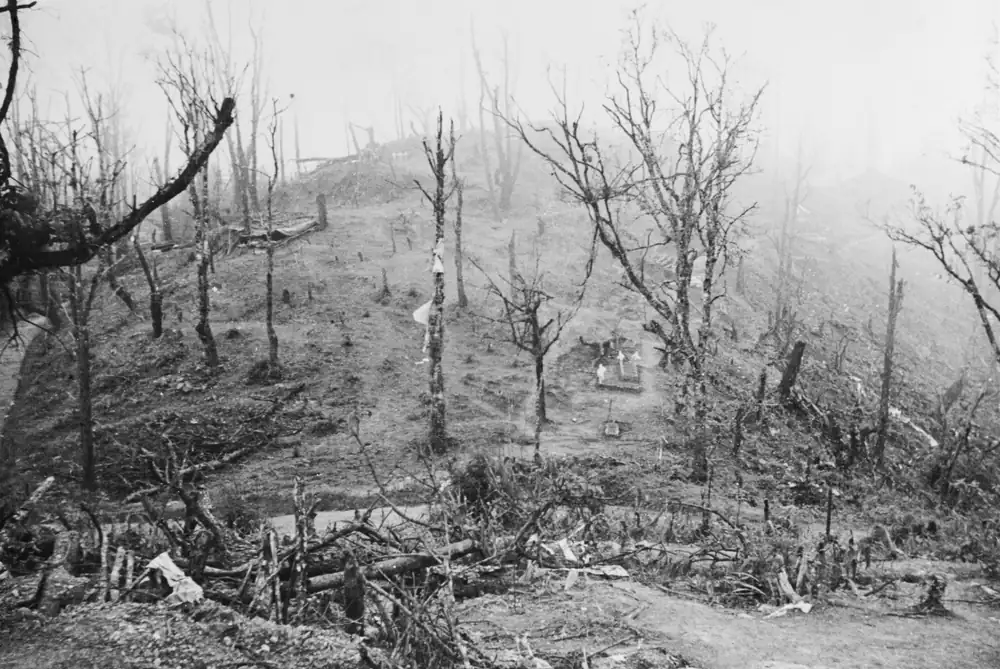
The second was the recall of Stilwell in October 1944, after a long and bitter dispute with Chiang Kai-shek. Chiang demanded Stilwell’s removal, and Roosevelt, unwilling to lose Chiang’s cooperation, agreed. Stilwell was replaced by three men: Lieutenant General Raymond Wheeler became Deputy Supreme Allied Commander South East Asia, Major General Albert Wedemeyer became Chief of Staff to Chiang and commander of American forces in China, and Lieutenant General Daniel Sultan became commander of American forces in India and Burma and commander of the Northern Combat Area Command.
The split clarified the chain of command, which had been one of the main problems of the China-Burma-India Theater, but it also marked the end of the attempt to run the theater as a single American command under one man.
After the autumn of 1944, the war in Burma was fought mainly by Slim’s Fourteenth Army under South East Asia Command, and the war in China was fought mainly by Wedemeyer and Chennault under Chiang, with the Hump and the Ledo Road as the links between them.
The turning point was therefore both military and political: a battlefield victory that changed the balance in Burma, and a command change that finally accepted that the China-Burma-India Theater was not, and had never been, a unified command.
Casualties and Losses
A War of Very Heavy and Uncertain Losses
Casualty figures for the China-Burma-India Theater are among the most uncertain of the Second World War, because the fighting was spread over a huge area, because Chinese losses were poorly recorded, and because disease caused as many casualties as combat.
Chinese military and civilian losses across the whole war in China, from 1937 to 1945, are estimated in the millions, with figures varying widely between sources, and it is not possible to give a single reliable total for the China-Burma-India Theater alone.
British and Indian losses in Burma were in the tens of thousands killed, with many more wounded or evacuated sick, and malaria alone caused very large numbers of casualties, with some divisions losing more men to sickness than to enemy action.
American losses in the theater were smaller in absolute terms, but they were still significant, above all among transport aircrews flying the Hump, where hundreds of aircraft were lost, and among Merrill’s Marauders, who suffered very heavy casualties from combat and disease in northern Burma.
Japanese losses in Burma in 1944 and 1945 were very heavy, above all at Imphal and Kohima, where estimates range from tens of thousands killed to much higher figures when deaths from disease and starvation on the retreat are included. The Japanese Fifteenth Army was effectively destroyed, and Japanese forces in Burma never recovered.
The uncertainty of the figures is itself part of the story of the China-Burma-India Theater: it was a war fought in remote places, with poor records, and with disease as a third enemy, and historians continue to revise the totals as new research appears.
Map and Geography
A Theater Defined by Mountains, Jungle and Distance
The geography of the China-Burma-India Theater defined everything that happened in it. The theater stretched from the Indian frontier in the west to the Chinese coast in the east, and from the Himalayas in the north to the Bay of Bengal in the south, a distance of thousands of miles. The Himalayas, the highest mountains in the world, separated India from China and had to be crossed by air.
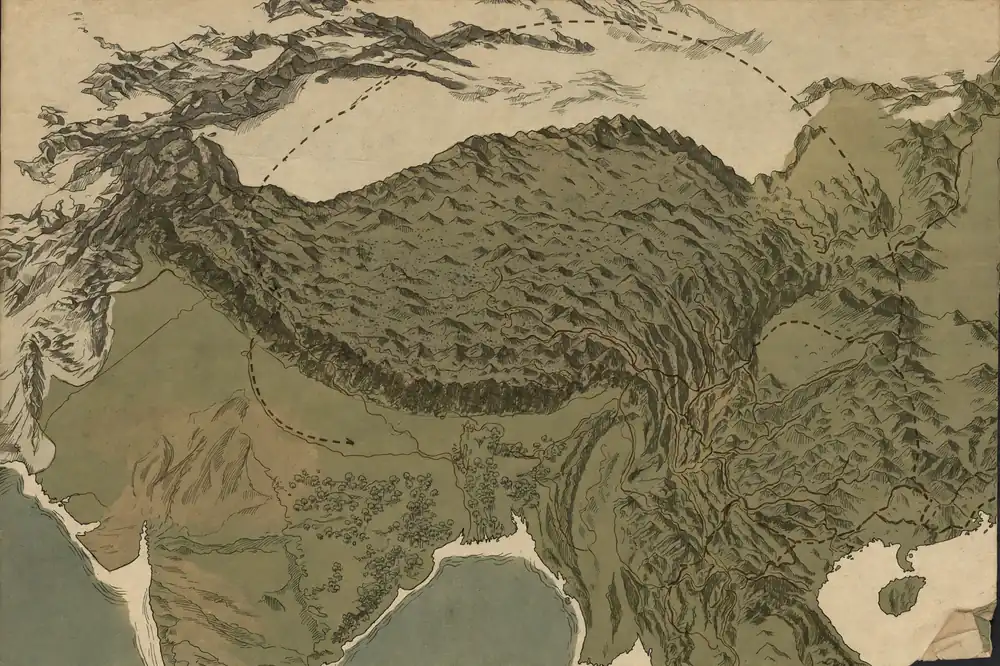
Northern Burma was covered in dense jungle, cut by the Chindwin, Irrawaddy and Salween rivers, with few roads and heavy monsoon rain. The Indian frontier at Imphal and Kohima was a region of steep hills and narrow valleys, where a small force could hold a ridge against a much larger one.
The Burma Road and the Ledo Road ran through mountain passes and jungle valleys that were difficult to build and difficult to defend. The ports of Rangoon and Calcutta were the main gateways to the theater, and the airfields of Assam were the starting point for the Hump.
The map of the China-Burma-India Theater is therefore a map of obstacles: mountains that had to be flown over, jungle that had to be fought through, rivers that had to be crossed, and distances that made supply the central problem of the war.
Any account of the theater that ignores that geography misses the reason why the war there was so slow, so costly and so dependent on air supply and engineering.
Outcome and Legacy of China-Burma-India Theater
What the Theater Achieved and What It Cost
The China-Burma-India Theater achieved its main strategic purpose: it kept China in the war until Japan was defeated, it tied down large Japanese forces in China and Burma, and it reopened the land route to China in early 1945. The Hump airlift and the Ledo Road, taken together, supplied China with the weapons, fuel and other materials it needed to keep fighting, and the American air forces in China attacked Japanese shipping and airfields.
The reconquest of Burma was a major Allied victory, and the victories at Imphal and Kohima are now recognised as among the most important British and Indian victories of the war. The legacy of the theater, however, is mixed. The war in China continued after 1945 as a civil war between Nationalists and Communists, and the Communist victory in 1949 changed the history of Asia.
The British left India in 1947, and Burma became independent in 1948. The American experience in the China-Burma-India Theater left a lasting distrust between American officers and Chiang Kai-shek, and it shaped American policy in Asia for years afterwards. The theater is still called the forgotten theater, and its veterans often felt that their service was overlooked in favour of Europe and the Pacific.
That neglect is now being corrected by historians, who recognise that the China-Burma-India Theater, with its divided command, its difficult terrain and its remarkable feats of supply, was one of the most distinctive campaigns of the Second World War.
Commanders
Joseph Stilwell and the American Command
General Joseph Stilwell was the central American figure in the China-Burma-India Theater. Appointed in 1942 as commander of American forces in the theater and Chief of Staff to Chiang Kai-shek, Stilwell was a tough, outspoken officer who believed that the Chinese army needed to be reformed, trained and properly equipped, and that Burma should be reconquered by land.
He quarrelled with Chiang, who resisted reform, with Chennault, who favoured air power, and with the British, who gave priority to the defence of India. Stilwell’s insistence on the Ledo Road and on the northern Burma campaign was vindicated when the road was opened in January 1945, but he was recalled in October 1944 before he could see it finished.
His successors, Wedemeyer in China and Sultan in India and Burma, divided his responsibilities and clarified the command structure. Stilwell remains a controversial figure, admired for his determination and his willingness to fight alongside his troops, criticised for his inability to work with his allies, and remembered as the man who gave the China-Burma-India Theater its American character.
Chiang Kai-shek, Mountbatten, Slim and Chennault
Generalissimo Chiang Kai-shek was the Supreme Allied Commander in China and the political leader of Nationalist China, and his decisions shaped the theater as much as any military commander. He controlled the Chinese armies, he controlled access to China, and he could, and did, demand the removal of American commanders who disagreed with him.
Admiral Lord Louis Mountbatten, appointed Supreme Allied Commander South East Asia in October 1943, commanded the British-led forces in Burma and India, and worked, often uneasily, with Stilwell, who was his deputy. General Sir William Slim, commander of the Fourteenth Army, was the most successful British field commander in Burma, winning the battles of Imphal and Kohima and reconquering Burma in 1944 and 1945.
Major General Claire Chennault, commander of the Flying Tigers and later the Fourteenth Air Force, argued for air power and won the support of Roosevelt, but his air offensive from China achieved less than he promised. Lieutenant General Daniel Sultan and Major General Albert Wedemeyer, who divided Stilwell’s command in late 1944, brought a more orderly command structure to the final year of the war.
On the Japanese side, Lieutenant General Renya Mutaguchi, who planned the invasion of India in 1944, is remembered for a bold plan that ended in disaster, and Lieutenant General Shojiro Iida, who commanded the invasion of Burma in 1942, is remembered for a rapid and successful campaign that cut China off from the sea.
Related articles
Frequently Asked Questions
What was the China-Burma-India Theater?
The China-Burma-India Theater, or CBI, was the United States designation for the war in China, Burma and India from 1942 to 1945. It covered the defence of India, the Burma campaign, the airlift over the Himalayas, and the supply of China.
Was the China-Burma-India Theater a unified command?
No. It was never a unified theater of operations and never had a single overall operational commander. American, British, Chinese and Indian forces answered to different commanders, including Chiang Kai-shek and Mountbatten.
Who was General Joseph Stilwell?
Joseph Stilwell was the American general who commanded United States forces in the China-Burma-India Theater from 1942 to 1944. He was also Chief of Staff to Chiang Kai-shek and commanded Chinese forces in northern Burma.
What was the Hump?
The Hump was the airlift over the Himalayas from India to China. Transport aircraft carried fuel, weapons and supplies to Kunming after Japan cut the Burma Road in 1942. Hundreds of aircraft were lost on the route.
What was the Ledo Road?
The Ledo Road, later called the Stilwell Road, was built through the jungle of northern Burma from Ledo in India to link with the Burma Road. It was opened in January 1945, restoring an overland supply route to China.
Why is it called the forgotten theater?
It received fewer men and supplies than Europe or the Pacific, and its campaigns were fought far from the headlines. Its veterans often felt overlooked, although historians now recognise its importance in keeping China in the war.
Sources
- China Burma India Theater. Wikipedia. China Burma India Theater