 WAR ATLAS MILITARY HISTORY MAGAZINE · WWI — WWII
Luxembourg American Cemetery and Memorial
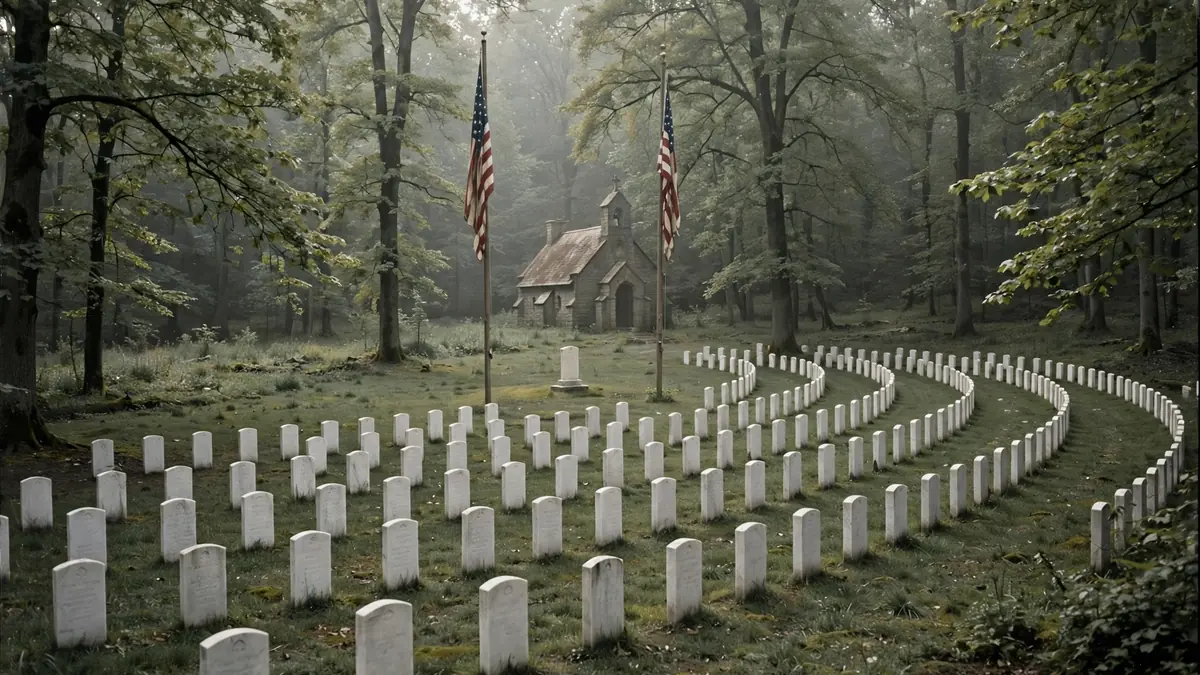
The Luxembourg American Cemetery and Memorial lies in a quiet glade at Hamm, on the eastern edge of Luxembourg City, in the smallest country to have been fought over in the Second World War. It is the final resting place of 5,076 American servicemen and women who died in the Second World War, most of them in the winter of 1944-45, in the Battle of the Bulge and in the fighting that liberated Luxembourg and drove towards the Rhine.
At the head of the graves, between two tall flagpoles and facing the ranks of white headstones, lies the grave of General George S. Patton Jr., the commander of the Third Army, who asked to be buried with his men. The cemetery is administered by the American Battle Monuments Commission, and it was dedicated on 4 July 1960, fifteen years after the war.
The cemetery is smaller than the great American cemetery in Normandy, and it is less visited, but it is in some ways more intimate: the graves are arranged in gentle curves on a hillside, the memorial chapel looks out over them, and the whole site, at 50.5 acres, feels like a park rather than a monument. This article tells the story of the battle that filled the cemetery, of the men and the one woman buried there, of Patton and his grave, and of the place the cemetery holds in the memory of Luxembourg, a country that has never forgotten the Americans who died to free it.
1. Key Facts
| What | American military cemetery and memorial of the Second World War, administered by the American Battle Monuments Commission |
| Where | Hamm, on the eastern edge of Luxembourg City, Luxembourg; 50.5 acres (about 20 hectares) |
| Buried here | 5,076 American servicemen and women, according to the American Battle Monuments Commission; a small number of sources cite 5,073 or 5,074 |
| Missing commemorated | 371 American soldiers and airmen with no known grave, named on two pylons |
| Established | 29 December 1944, as a temporary burial ground by the U.S. Third Army during the Battle of the Bulge |
| Dedicated | 4 July 1960 |
| Architects | Keally and Patterson of New York; landscape architect Alfred Geiffert Jr. |
| Most famous grave | General George S. Patton Jr., commander of the Third Army, buried 24 December 1945 |
| Today | Open daily, admission free; staffed by the American Battle Monuments Commission |
2. The Battle of the Bulge
The last German offensive
The men buried at Hamm died, for the most part, in the last great German offensive of the war in the west: the Ardennes offensive of December 1944, known to the Allies as the Battle of the Bulge. On 16 December 1944, German forces attacked through the Ardennes forest, across the borders of Belgium and Luxembourg, in a surprise offensive aimed at splitting the Allied armies, retaking Antwerp, and forcing a negotiated peace.
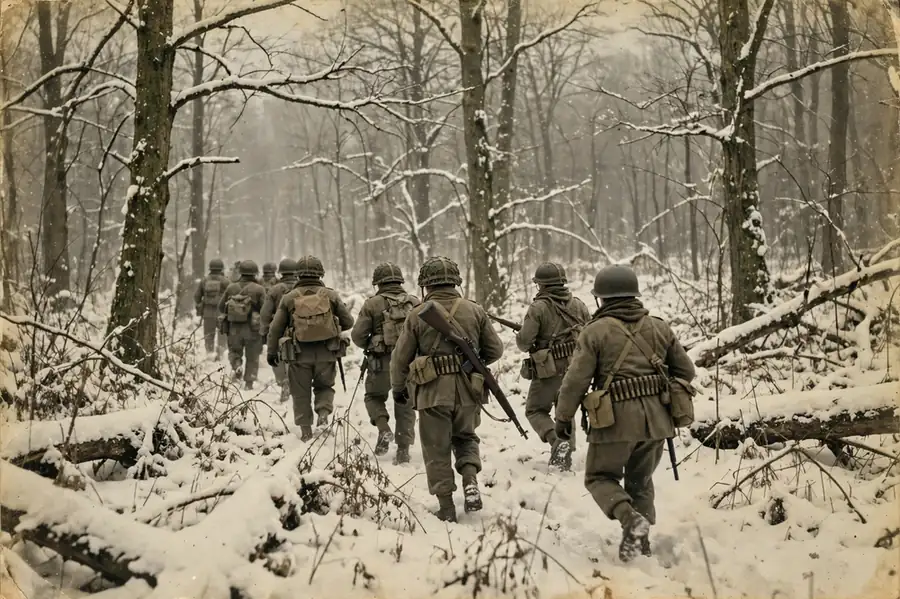
The attack caught the Allies by surprise: the Ardennes was considered a quiet sector, held by tired and inexperienced American divisions, and the Germans attacked in bad weather that grounded Allied aircraft. In the first days, the German advance was rapid, and a great bulge was driven into the Allied line — hence the battle’s name.
The fighting was bitter and confused, in snow and fog, and the casualties on both sides were heavy: the Americans suffered about 75,000 to 90,000 casualties in the battle, by the most commonly cited estimates, including about 19,000 killed, and the Germans suffered comparable losses.
Luxembourg in the battle
Luxembourg, a small country of fewer than 300,000 people, was at the centre of the battle. The German offensive crossed the north of Luxembourg, and the fighting in the Ardennes of Luxembourg and Belgium — around Bastogne, Echternach, Wiltz and Diekirch — was among the fiercest of the war. Luxembourg City itself was threatened, and the civilian population suffered heavily: villages were destroyed, civilians were killed, and thousands were displaced.
The American response was led by General Patton’s Third Army, which turned north from its positions in France, in one of the great feats of manoeuvre of the war, and relieved the encircled town of Bastogne on 26 December 1944.
By the end of January 1945, the Germans had been driven back, and Luxembourg was free, but the cost was visible everywhere: in the destroyed villages, in the damaged city, and in the new military cemetery at Hamm, where the dead of the Third Army were being buried in the frozen ground.
The cost of victory
The Battle of the Bulge was an American victory, but it was a costly one, and the cemetery at Hamm is its most visible record in Luxembourg. The dead buried there include men killed in the first days of the offensive, when the Germans overran the American positions; men killed in the fighting around Bastogne and in the counter-offensive that drove the Germans back; and men killed in the air operations over the region and in the fighting east of Luxembourg in the spring of 1945, as the Third Army advanced to the Rhine.
The battle is remembered in Luxembourg as the country’s second liberation — the first, in September 1944, had been followed by the German offensive — and the cemetery is the place where that liberation is given a human face: not a parade or a speech, but rows of headstones, each with a name, a rank, a unit and a date.
Every headstone is a reminder that liberation was not an event but a cost, paid by men who never saw the country they freed in peacetime.
3. The Founding of the Cemetery
A temporary burial ground
The cemetery at Hamm began, as so many war cemeteries did, as a temporary burial ground, dug in the middle of a battle. On 29 December 1944, the 609th Quartermaster Company of the Third Army established a burial ground at Hamm, on land just outside Luxembourg City, for the American dead of the Battle of the Bulge.
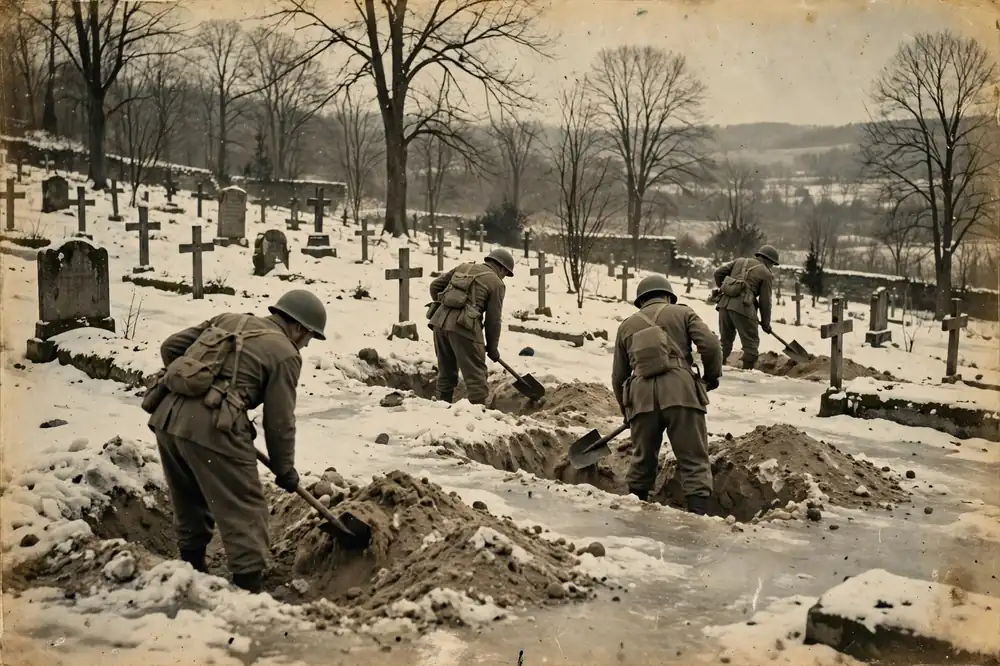
The ground was frozen, the fighting was still going on a few kilometres away, and the men who dug the graves did so in winter conditions, under fire, and with the knowledge that the cemetery would grow. By the end of the war, the temporary cemetery held thousands of graves, and it represented about 39 per cent of all the original American burials in the region — the rest were in other temporary cemeteries, or had been returned to the United States at the request of their families.
The decision to make Hamm a permanent cemetery was taken after the war, when the American Battle Monuments Commission selected it as one of the permanent Second World War cemeteries in Europe.
From temporary to permanent
The transformation of a temporary burial ground into a permanent cemetery was a long process, and it was carried out by the American Battle Monuments Commission with the cooperation of the government of Luxembourg. In 1951, the Grand Ducal government granted the United States the free use of the cemetery land as a permanent burial ground, in perpetuity, without charge or taxation — a gift that reflected the gratitude of Luxembourg for its liberation.
The permanent cemetery was designed by the New York architects Keally and Patterson, with the landscape architect Alfred Geiffert Jr., and the work of reinterment was completed in the spring of 1960: the 5,076 permanent burials were arranged in the curved rows that visitors see today, the headstones were set, and the memorial buildings were completed.
The cemetery was dedicated on 4 July 1960, American Independence Day, in a ceremony attended by Luxembourg’s Grand Duchess Charlotte, by American officials, and by the families of the dead. The choice of the date was deliberate: it linked the cemetery to the ideals for which the men buried there had died.
The design of the cemetery
The cemetery is set in a glade, surrounded by woods of spruce, beech and oak, and its design makes the most of the natural setting. The graves are arranged in nine plots, in gentle curves that follow the slope of the hillside, and the headstones are of white Italian marble, in the form of Latin crosses for Christians and Stars of David for Jews.
At the head of the graves, on a terrace, stands the memorial, with two tall pylons that bear the names of the 371 missing, and a chapel, built of pale sandstone, with stained-glass windows and a mosaic ceiling. The chapel looks out over the graves, and from its terrace the visitor can see the whole cemetery, the woods around it, and the city of Luxembourg in the distance.
The design is deliberately quiet: there are no statues, no heroic figures, and no rhetoric, only the graves, the chapel and the pylons. The effect is one of peace, and it is the more powerful for its restraint.
4. General Patton’s Grave
Patton’s death
The accident and the burial
General George S. Patton Jr. did not die in battle. On 9 December 1945, three months after the end of the war in Europe, he was involved in a car accident near Mannheim, in occupied Germany, when his staff car collided with an American army truck.
He suffered a broken neck and a spinal injury, and he died twelve days later, on 21 December 1945, in a military hospital in Heidelberg, at the age of sixty. Before he died, he made it known that his wish was to be buried with his soldiers at the Luxembourg American Cemetery, among the men of the Third Army who had died under his command.
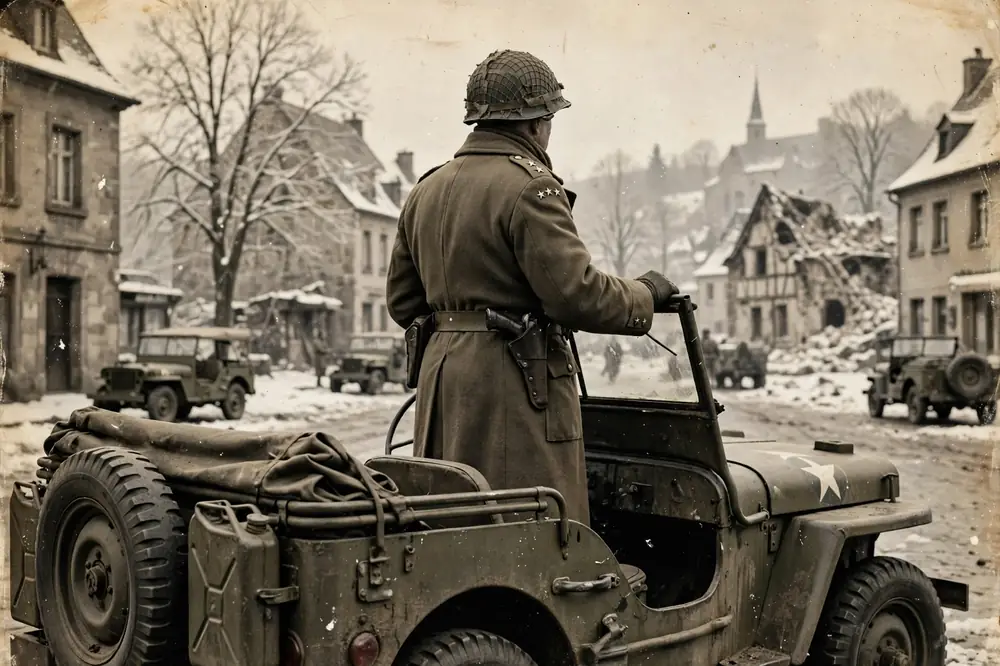
His body was brought to Luxembourg, and on 24 December 1945 — Christmas Eve — he was buried in the cemetery at Hamm, in a grave among his men, in the same plot as the soldiers he had commanded. The burial was simple and military, and it was attended by the officers of the Third Army and by representatives of the Luxembourg government.
The moving of the grave
Patton was first buried among his men, in the middle of one of the plots, as he had wished. But his grave soon became the most visited place in the cemetery, and visitors, in their thousands, walked across the graves of other men to reach it, damaging the lawns and disturbing the other burials.
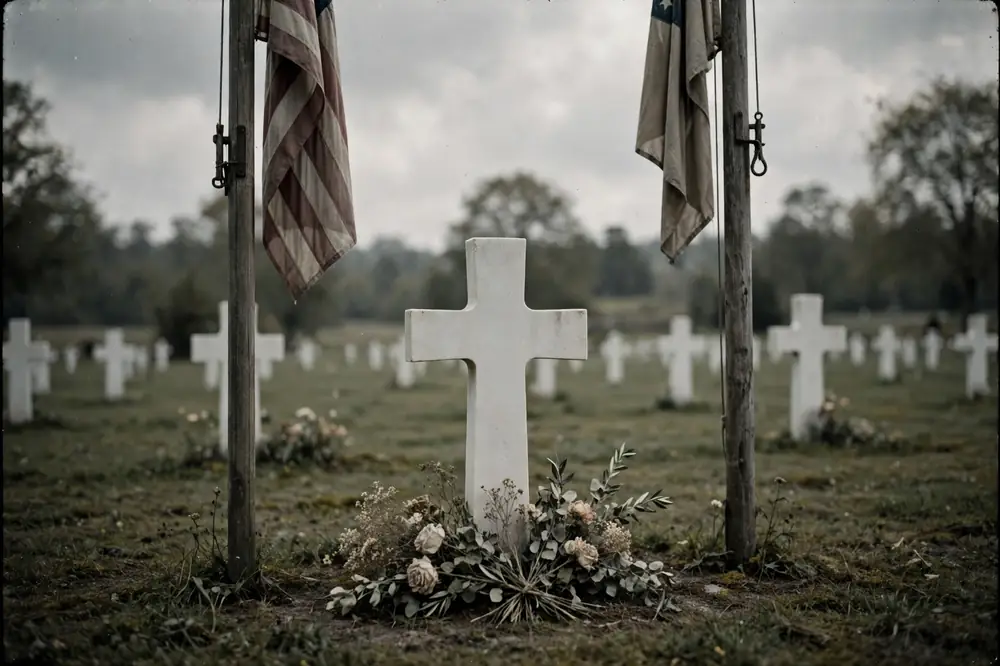
In 1947, the American Battle Monuments Commission moved Patton’s grave to its present position, at the head of the grave plots, between the two flagpoles and in front of the memorial, where it can be visited without walking across other graves. The move was made with the agreement of Patton’s family, and it is the only grave in the cemetery that stands apart from the others in this way.
Some have criticised the move, arguing that it contradicts Patton’s wish to lie among his men, but the Commission has defended it as a practical necessity, and as a recognition that Patton’s grave had become a place of pilgrimage in its own right.
The grave is marked by a simple white cross, like the others, but it is distinguished by its position, by the flowers that are always laid on it, and by the fact that it is the grave that most visitors come to see.
Patton the commander
George S. Patton Jr. was one of the most famous and most controversial American generals of the Second World War. He commanded the Third Army in France, Belgium, Luxembourg and Germany in 1944-45, and his rapid advances — across France in the summer of 1944, the relief of Bastogne in December 1944, and the drive to the Rhine in the spring of 1945 — made him a hero in America and a feared opponent in Germany.
He was also a difficult man: outspoken, profane, and impatient with caution, and he was twice relieved of command for slapping soldiers suffering from battle fatigue. His men admired him and feared him in equal measure, and his reputation has been debated ever since: some remember him as a great captain, others as a reckless commander who wasted lives.
The cemetery at Hamm is the place where that debate is given a physical form: Patton lies at the head of the men he commanded, and the visitor who stands at his grave is standing at the head of an army, and is invited to judge the commander by the men who followed him.
5. The Cemetery and the Memorial
The nine plots
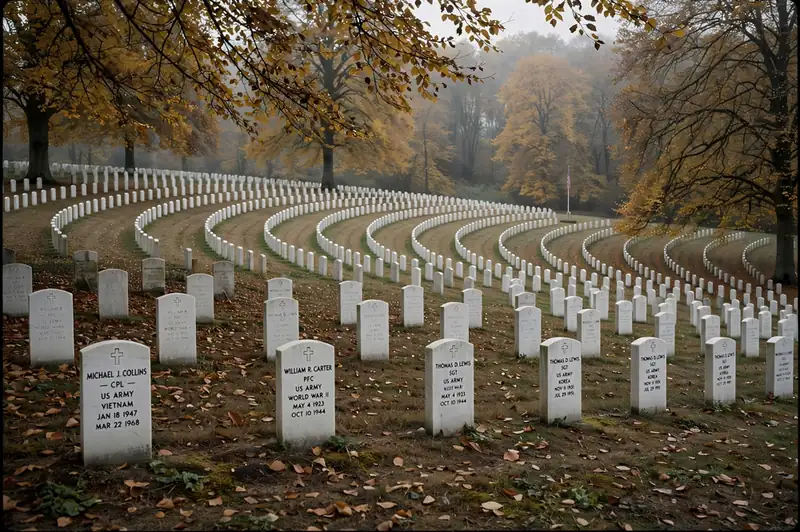
The 5,076 graves at Hamm are arranged in nine plots, in curved rows that follow the slope of the hillside, so that the cemetery reads from a distance as a series of white arcs, each with its own character. The headstones are of white Italian marble, and they are of two kinds: the Latin cross, for the great majority of the dead, and the Star of David, for the Jewish dead.
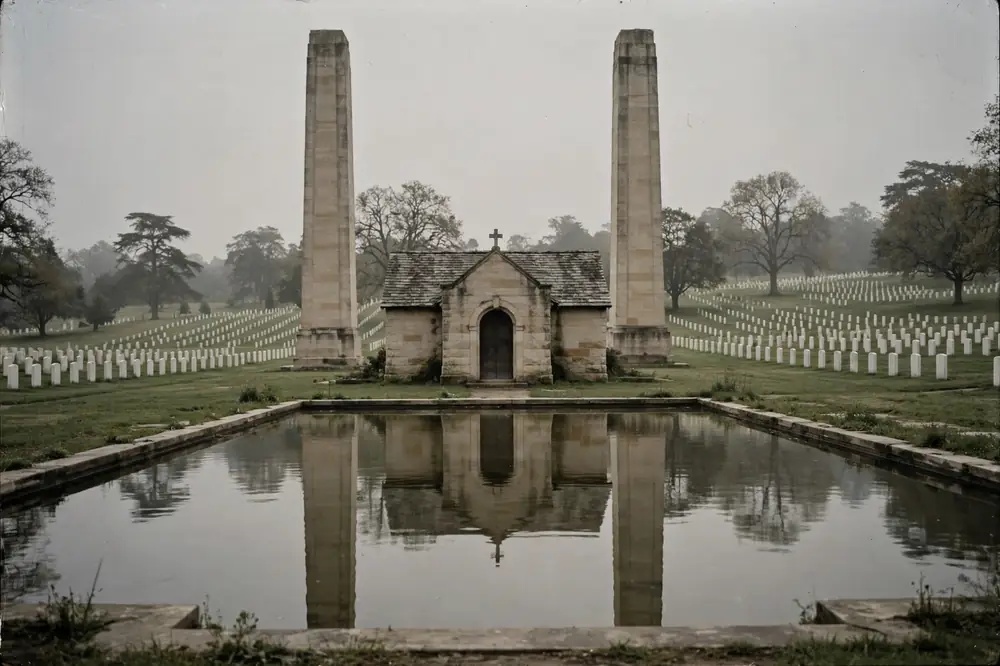
Each headstone bears the name, rank, unit, state and date of death of the man or woman buried beneath it, and the inscriptions are carved in the same style throughout the cemetery, so that no grave is grander than another — except for Patton’s, which is distinguished by its position alone.
The plots are separated by lawns and by paths, and the whole cemetery is planted with trees and flowers, so that it feels, in spring and summer, like a garden. The American Battle Monuments Commission maintains the cemetery to a high standard, and its gardeners, who are employed locally, keep the lawns, the hedges and the flower beds in the condition that visitors expect of an American military cemetery.
The chapel and the pylons
At the head of the graves, on a terrace, stand the two pylons and the chapel, which together form the memorial part of the cemetery. The two pylons, of pale sandstone, bear the names of the 371 American soldiers and airmen who died in the region and have no known grave, and they also carry the insignia of the American units that fought in the area.
Between the pylons is the Court of Honor, a paved terrace with a reflecting pool, from which the visitor looks out over the graves. The chapel, also of pale sandstone, stands at the end of the terrace, and its interior is decorated with stained-glass windows, a mosaic ceiling, and an altar of Italian marble.
The chapel’s windows depict the campaigns of the American forces in the region, and its walls carry the names of the battles in which the men buried at Hamm fought. The chapel is open to visitors, and it is used for services on Memorial Day and on other occasions, but it is not a parish church: it is a memorial chapel, a place for quiet reflection rather than for regular worship.
The Court of Honor
The Court of Honor is the ceremonial heart of the cemetery, and it is the place where the formal acts of remembrance take place. It is a paved terrace between the two pylons, with a long reflecting pool in its centre, and from it the visitor looks down over the nine plots of graves, with Patton’s grave at their head.
The Court is used for the Memorial Day service, held each year on the last Monday of May, and for the ceremonies on other anniversaries, and it is the place where wreaths are laid and speeches are made. The design of the Court is simple and formal, and it is intended to focus the visitor’s attention on the graves below: the pool reflects the sky, the pylons frame the view, and the graves are the subject of the whole composition.
The Court is also the place where the cemetery’s most famous feature is most visible: the contrast between the order of the graves and the wildness of the woods around them, between the geometry of remembrance and the nature that surrounds it.
6. Who Is Buried Here
The men of the Third Army
Most of the men buried at Hamm served in the Third Army, and most of them died in the Battle of the Bulge and in the fighting that followed it. They were infantrymen, tank crewmen, artillerymen, engineers and medics, from every state of the Union and from every walk of life, and their headstones record the variety of the army that fought in Luxembourg: the 4th Armored Division, which relieved Bastogne; the 80th and 26th Infantry Divisions, which fought in the Ardennes; the 101st Airborne Division, whose men held Bastogne; and the many other divisions, regiments and battalions that made up the Third Army.
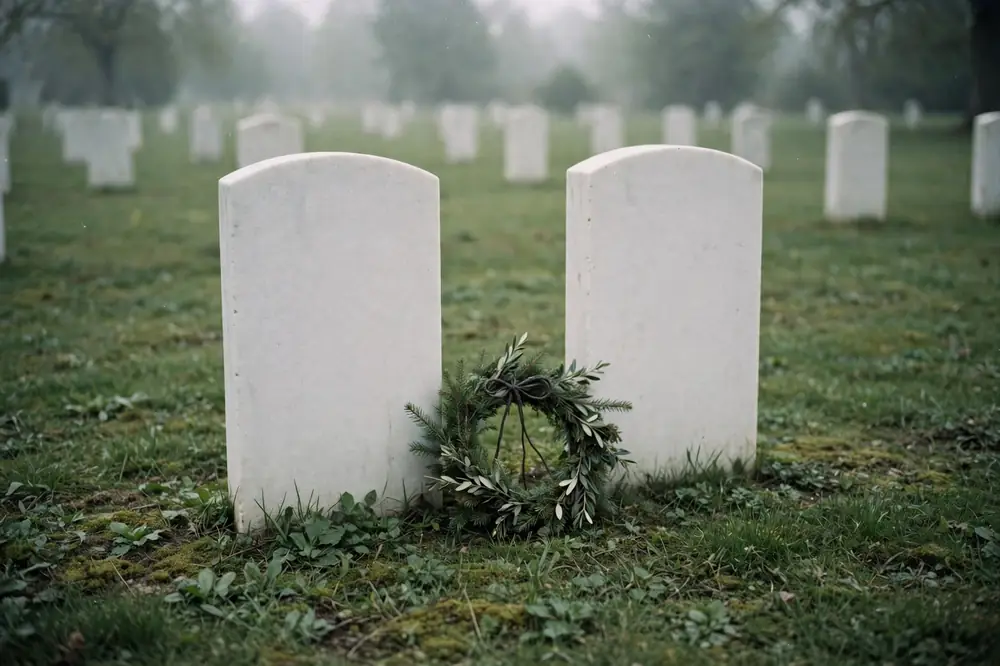
The dead include officers and enlisted men, the young and the old, and men who had been in the army for years and men who had arrived in Europe only weeks before they were killed. Their average age was in the early twenties, and their headstones, read one by one, tell the story of a generation: the dates cluster in December 1944 and January 1945, the months of the Bulge, and then spread through the spring of 1945, as the Third Army advanced to the Rhine and beyond.
Brothers, nurses and Medal of Honor recipients
Among the 5,076 burials are stories that visitors remember long after they leave. There are 22 pairs of brothers buried side by side, in adjacent graves, a reminder that the war took whole families: two brothers, killed in the same battle or in the same campaign, and buried together, as they had served together.
There is one woman buried at Hamm, a female Army nurse, whose grave is visited by many who come to remember the women who served in the war. There are two recipients of the Medal of Honor, the United States’ highest military decoration: Sergeant Day G. Turner and Private William D.
McGee, both of whom were killed in the fighting in Luxembourg and both of whom were awarded the medal for gallantry above and beyond the call of duty. And there are five men of E Company, 506th Parachute Infantry Regiment, 101st Airborne Division — the company made famous by the book and television series Band of Brothers — whose graves are visited by the many people who have read the book or seen the series, and who come to Hamm to stand where the men of Easy Company lie.
The missing
The two pylons at the head of the cemetery bear the names of 371 American soldiers and airmen who died in the region and whose bodies were never recovered, or were never identified. The names include airmen shot down over Luxembourg and Belgium, soldiers lost in the fighting in the Ardennes, and men whose graves were destroyed or lost in the confusion of the battle.
For their families, the pylons are the only memorial they have, and the act of finding a name on a pylon is, for many visitors, the purpose of the visit. The Commission maintains a record of the missing, and when a body is identified — as has happened, from time to time, when remains are found in the Ardennes — the name is removed from the pylons and a headstone is erected in the cemetery.
The pylons are therefore not only a memorial but a living record, and their list, like the list of the dead at Kranji, continues to change as the work of identification goes on.
7. Visiting the Cemetery
Getting there
Location and transport
The Luxembourg American Cemetery and Memorial stands at Hamm, at 50 Val du Scheid, on the eastern edge of Luxembourg City, about four miles from the city centre. It is reached by road, and by bus from the city centre, and there is a car park at the entrance. The cemetery is open daily, and admission is free.
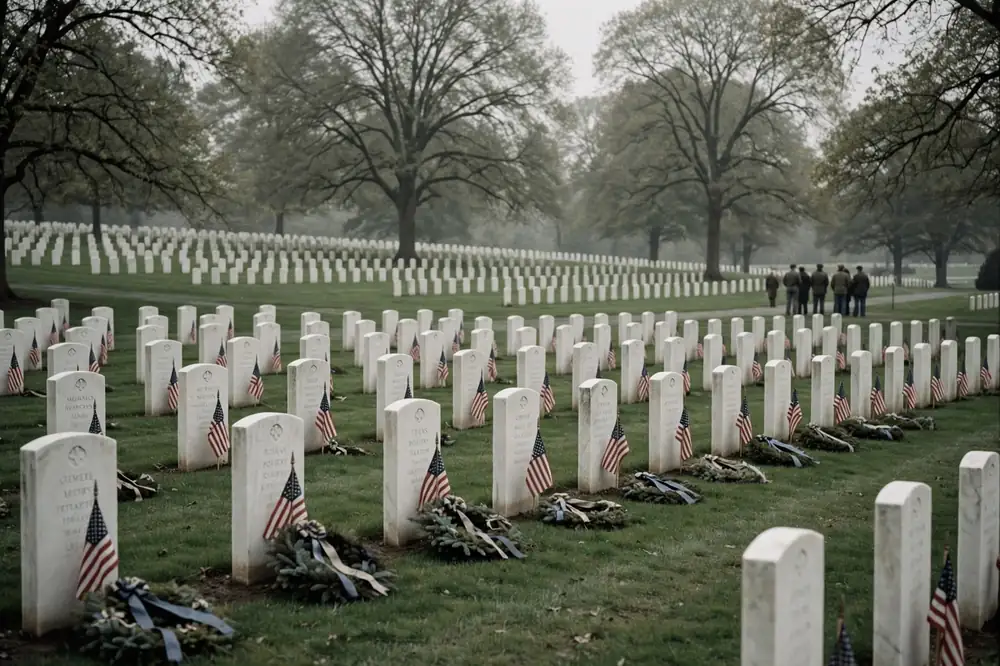
Visitors should allow at least an hour, and ideally two, to walk the plots, visit Patton’s grave, see the chapel and the pylons, and look out from the Court of Honor over the graves. The cemetery is staffed by the American Battle Monuments Commission, and its staff are available to help visitors find a particular grave, using the Commission’s records and the grave locator at the entrance.
The Commission’s website also allows visitors to search for a casualty before they arrive, so that they can find the plot and the row in which a grave stands.
The visitor experience
The experience of visiting Hamm is different from that of visiting the great cemetery in Normandy, and the difference is one of scale and of intimacy. At Hamm, the visitor walks among the graves, on paths that wind between the plots, and the cemetery feels like a place to be walked through rather than a place to be looked at from a distance.
The most visited place is Patton’s grave, at the head of the plots, where visitors lay flowers and take photographs, and where the Commission’s staff often answer questions about the general. The second most visited place is the chapel, where visitors sit in silence, and the third is the Court of Honor, where the view over the graves is at its finest.
The cemetery is at its most beautiful in spring, when the trees are in leaf and the flowers are out, and in autumn, when the beech woods around it turn to gold. In winter, when the ground is frozen and the trees are bare, the cemetery is at its most sombre, and the visitor understands, in a way that summer does not allow, what it was like to bury the dead in the winter of 1944-45.
Memorial Day and other ceremonies
The principal ceremony at Hamm is the Memorial Day service, held each year on the last Monday of May, when the American ambassador, the Luxembourg government, and the families of the dead gather at the Court of Honor to remember the men and women buried there.
The service follows the American pattern: the laying of wreaths, the playing of Taps, the reading of the names, and a flyover by aircraft when the weather allows. The ceremony is attended by hundreds of people, including American military personnel stationed in Europe, Luxembourgish schoolchildren, and the families of the dead, some of whom travel from the United States for the occasion.
Other ceremonies are held on the anniversary of the liberation of Luxembourg, on Veterans Day, and on the anniversary of Patton’s death, and the cemetery is also visited by the many American tourists who come to Luxembourg to see the place where Patton lies.
The ceremonies are simple and military, and they are the occasion on which the cemetery’s role as a place of diplomacy — a place where America and Luxembourg meet — is most visible.
The German cemetery nearby
About one and a half kilometres from the American cemetery, at Sandweiler, lies the German war cemetery, where 10,913 German servicemen from the Battle of the Bulge and the fighting of the winter of 1944-45 are buried. The German cemetery is maintained by the German War Graves Commission, and it is a very different place from the American cemetery: its headstones are dark, its crosses are of stone, and its atmosphere is sombre and enclosed, where the American cemetery is open and light.
Many visitors to Hamm also visit Sandweiler, and the two cemeteries together tell the story of the battle from both sides: the victors and the vanquished, buried a short distance apart, in the same Luxembourg soil. The proximity of the two cemeteries is a reminder that the Battle of the Bulge was a battle in which both sides suffered, and that remembrance, in Luxembourg, is not only for the victors but for all the dead of the war.
8. Commemoration in Luxembourg
Luxembourg’s gratitude
Luxembourg has never forgotten the Americans who died to free it, and the cemetery at Hamm is the centre of that gratitude. The government of Luxembourg gave the land for the cemetery free of charge and in perpetuity, and it has maintained its support for the cemetery ever since: the Grand Ducal family attends the Memorial Day service, the government provides the land and the access, and the people of Luxembourg visit the cemetery in large numbers.
The gratitude is not only official: Luxembourgish families have adopted the graves of American soldiers, tending them, laying flowers, and corresponding with the soldiers’ families in the United States, in a programme that has continued since the war. The adoption of graves is a tradition in several European countries, but it is particularly strong in Luxembourg, where the small size of the country and the scale of the battle have made the memory personal: many Luxembourgish families can name the American soldier whose grave they tend, and many American families have visited Luxembourg to meet the people who care for their son’s or brother’s grave.
The Battle of the Bulge in Luxembourg’s memory
The Battle of the Bulge is the central event of the Second World War in Luxembourg’s national memory, and it is remembered in the country’s museums, memorials and schoolbooks. The National Museum of Military History at Diekirch, the Battle of the Bulge Museum at Wiltz, and the many small memorials in the villages of the Ardennes all tell the story of the winter of 1944-45, and the cemetery at Hamm is the place where that story is given its most solemn form.
Luxembourgish schoolchildren visit the cemetery as part of their history education, and they are taught that the Americans who are buried there died for a country that was not their own, and that Luxembourg’s freedom was bought with American lives. The lesson is taught without resentment and without triumphalism: it is a lesson in gratitude, and in the obligations that gratitude creates.
The cemetery is therefore not only an American place in Luxembourg, but a Luxembourgish place as well, and its care is a shared responsibility of the two countries.
The American presence in Luxembourg
The cemetery is also a reminder of the American presence in Luxembourg that has continued since the war. Luxembourg was a founding member of NATO, and American forces have been stationed in Europe, and have visited Luxembourg, ever since. The cemetery is visited by American soldiers serving in Europe, who come to pay their respects to their predecessors, and by American officials, who lay wreaths there on every official visit.
The cemetery’s staff, who are employed by the American Battle Monuments Commission, are themselves a small American presence in Luxembourg, and they are known to the local community. The relationship between the cemetery and the city is a close one: the city provides the roads and the buses, the Commission provides the care, and the people of Hamm, who live beside the cemetery, regard it as part of their neighbourhood, a quiet place where they walk their dogs and where their children learn about the war.
9. Legacy
The legacy of the Luxembourg American Cemetery and Memorial is, first, a record: 5,076 burials and 371 names of the missing, preserved in stone and in the records of the American Battle Monuments Commission, so that the dead of the Battle of the Bulge are not forgotten.
Second, it is a lesson: the cemetery stands on the ground where the last German offensive of the war was stopped, and it reminds every visitor that freedom is not free, and that the liberation of a small country can cost the lives of thousands of men from a country an ocean away.
Third, it is a living bond between two countries: the United States and Luxembourg, whose relationship was forged in the winter of 1944-45 and has been maintained ever since, in the care of the cemetery, in the adoption of the graves, and in the ceremonies that bring the two countries together each year.
The cemetery’s quiet beauty — the curved rows of white headstones, the chapel, the pylons, the woods around them — is a fitting form for that legacy, and it is the reason the cemetery is visited, remembered and loved.
Patton’s last wish
Patton’s wish — to be buried with his men — is the most famous fact about the cemetery, and it is the fact that most visitors remember. The wish has been debated, and the moving of his grave has been criticised, but the wish itself is not in doubt: it is recorded in the accounts of those who were with him when he died, and it is honoured, in the Commission’s care of the cemetery, every day.
The wish matters because it says something about Patton, and something about the army he commanded: that a general who was famous for his ambition and his ego wanted, in the end, to lie among his soldiers, and that the soldiers, in their turn, are remembered not as a mass but as individuals, each with a name, a rank and a grave.
The visitor who stands at Patton’s grave and looks out over the 5,076 headstones is looking at the army that Patton commanded, and at the price that army paid, and the wish is the link between the two.
Why Hamm still matters
Hamm still matters because the questions it raises have not gone away. The Battle of the Bulge is still studied in military colleges as a case study in surprise, in the importance of logistics, and in the ability of an army to recover from a setback.
The cemetery is still visited by the families of the dead, who come to find a grave or a name, sometimes three generations after the war. And the bond between the United States and Luxembourg, which the cemetery embodies, is still a living relationship, renewed each year in the ceremonies at the Court of Honor.
As long as those questions matter, and as long as those families come, Hamm will matter, and the rows of white headstones in the glade at Hamm will continue to be visited, read and remembered, by Americans, by Luxembourgers, and by all those who come to stand where Patton lies.
The cemetery’s quiet is its strength: it asks nothing of the visitor except attention, and it repays that attention with an understanding that no book or film can give.
Frequently Asked Questions
How many Americans are buried at the Luxembourg American Cemetery?
According to the American Battle Monuments Commission, 5,076 American servicemen and women are buried there. A small number of sources cite 5,073 or 5,074, reflecting different counts over time.
Is General Patton buried there?
Yes. General George S. Patton Jr. is buried at the head of the grave plots, between two flagpoles, in front of the memorial. He died on 21 December 1945 and was buried on 24 December 1945.
When was the cemetery established?
The cemetery was established as a temporary burial ground on 29 December 1944, during the Battle of the Bulge. It was dedicated as a permanent cemetery on 4 July 1960.
How many names are on the pylons?
The two pylons bear the names of 371 American soldiers and airmen who died in the region and have no known grave.
Can I visit the cemetery?
Yes. The cemetery at Hamm, on the eastern edge of Luxembourg City, is open daily and admission is free. The nearest city buses run from Luxembourg City centre.
Is there a German cemetery nearby?
Yes. About 1.5 kilometres away at Sandweiler is the German war cemetery, where 10,913 German servicemen from the Battle of the Bulge are buried.
Related articles
Sources
- American Battle Monuments Commission, “Luxembourg American Cemetery” (abmc.gov) — 5,076 burials, 371 missing, the establishment on 29 December 1944, and the dedication on 4 July 1960.
- American Battle Monuments Commission, Luxembourg American Cemetery and Memorial (booklet) — the design, the architects Keally and Patterson, the chapel and the Court of Honor.
- Wikipedia, “Luxembourg American Cemetery and Memorial” — Patton’s burial on 24 December 1945, the moving of his grave in 1947, and the 22 pairs of brothers.
- Government of Luxembourg, “Battle of the Bulge” (luxembourg.public.lu) — the battle in Luxembourg and the cemetery at Hamm.
- Visit Luxembourg, “Luxembourg American Cemetery” (visitluxembourg.com) — visiting information and the history of the site.
- Charles Whiting, The Battle of the Bulge (Ballantine Books) — the Ardennes offensive and the Third Army’s relief of Bastogne.
- Carlo D’Este, Patton: A Genius for War (HarperCollins, 1995) — Patton’s command, his death in December 1945, and his burial at Hamm.