 WAR ATLAS MILITARY HISTORY MAGAZINE · WWI — WWII
Operation Bagration
1. Lead
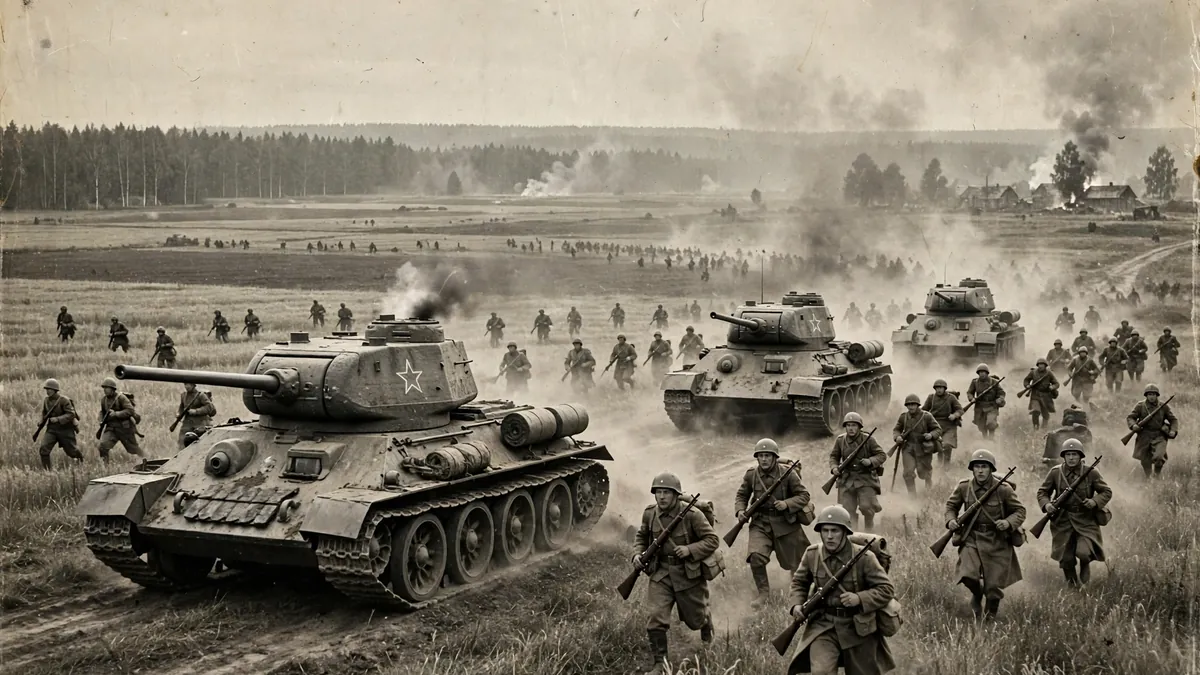
Operation Bagration was the great Soviet offensive of the summer of 1944, fought from 22 June to 19 August, and it was one of the largest and most destructive operations of the Second World War. In eight weeks, the Red Army destroyed the German Army Group Centre — the most powerful German army group on the Eastern Front — killed or captured some 400,000 German soldiers, liberated the whole of Belarus, and advanced some 600 kilometres to the gates of Warsaw and the border of East Prussia. The operation was named after Prince Pyotr Bagration, a Russian general who had died fighting Napoleon at Borodino in 1812, and it was launched on the third anniversary of the German invasion of the Soviet Union, 22 June 1941. The Germans, who had expected the main Soviet attack in the south, in Ukraine, were taken completely by surprise, and Army Group Centre, which had held the line in Belarus for three years, ceased to exist in a matter of weeks.
Bagration was the Soviet answer to D-Day, and it was fought at the same time, on the other side of Europe. While the Allies were landing in Normandy and fighting their way through the bocage, the Red Army was doing something the Western Allies could not do: destroying a whole German army group in a single operation. The scale of Bagration dwarfs the Normandy campaign: the Soviets committed more than 1.2 million men in the first phase, with more than 5,000 tanks and 5,000 aircraft, against a German force of about 800,000 men. The German losses were so severe that the German army never recovered: 28 divisions were destroyed, and the Eastern Front, which had held for three years, collapsed. Bagration was the greatest Soviet victory of the war, and it was the operation that made the defeat of Germany inevitable.
The operation was also a masterpiece of deception and of operational art. The Soviets concealed the scale of their preparations from the Germans, convincing them that the main attack would come in the south, and they concentrated their forces in secret, at night, under strict radio silence. When the attack came, it came everywhere at once: the German front was broken in several places, the Soviet tank armies poured through the gaps, and the German divisions were encircled and destroyed in a series of great pockets — at Vitebsk, at Bobruisk, at Minsk — in a pattern the Germans themselves had used in 1941, turned against them. Bagration was the revenge of 1941, and it was exacted in full.
2. Key Facts
| Date | 22 June – 19 August 1944 |
| Location | Belarus and eastern Poland |
| Result | Decisive Soviet victory; Army Group Centre destroyed; Belarus liberated |
| Soviet commanders | Marshal Georgy Zhukov (coordinator); Marshal Aleksandr Vasilevsky (coordinator); Gen. Konstantin Rokossovsky (1st Belorussian Front); Gen. Ivan Bagramyan (1st Baltic Front); Gen. Ivan Chernyakhovsky (3rd Belorussian Front) |
| German commander | Field Marshal Ernst Busch (Army Group Centre, until 28 June); Field Marshal Walter Model (from 28 June) |
| Soviet strength | About 1.2 million men in the first phase; about 2.3 million in total; more than 5,000 tanks, 5,000 aircraft |
| German strength | About 800,000 men; about 1,000 tanks; about 1,400 aircraft |
| Soviet losses | About 180,000 killed and missing; about 590,000 wounded and sick (see Casualties section) |
| German losses | About 400,000 killed, wounded and captured, including about 17,000–30,000 prisoners at Minsk; 28 divisions destroyed |
3. Background
Three Years on the Eastern Front
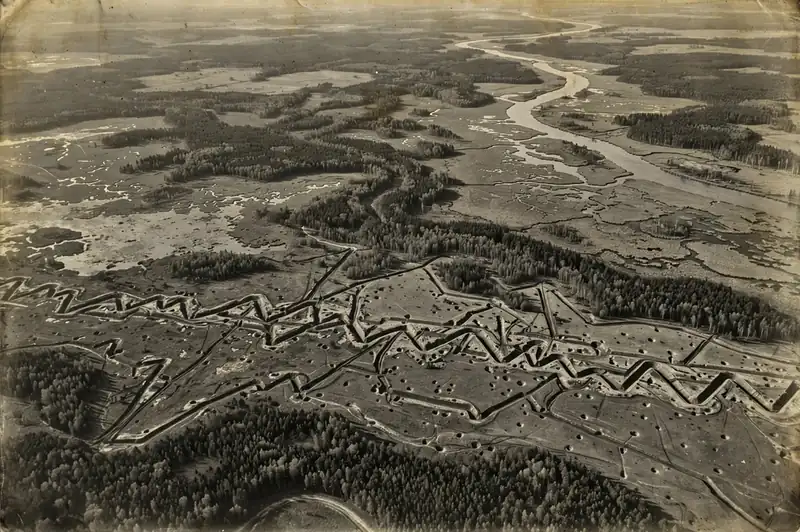
By the summer of 1944, the Eastern Front had been the main theatre of the Second World War for three years. The Germans had invaded the Soviet Union on 22 June 1941, had reached the gates of Moscow, Leningrad and Stalingrad, and had then been driven back, step by step, in the battles of Moscow, Stalingrad and Kursk. By 1944 the Red Army was the stronger force: it had more men, more tanks and more aircraft than the Germans, and it had learned, through bitter experience, how to conduct the great offensives that the Germans had once conducted against it. The German army in the east was still formidable, but it was stretched thin, its divisions were understrength, and it had no reserves. The front in Belarus, held by Army Group Centre, was the most stable part of the line: it had not moved much in two years, and the Germans had fortified it with trenches, bunkers and minefields. The Soviets called the German positions in Belarus the “Belorussian balcony”, because they jutted out towards Moscow, and they were determined to destroy it.
The Deception Plan
The Soviet deception plan for Bagration was one of the great achievements of the war, and it was the reason the operation succeeded. The Soviets wanted the Germans to believe that the main attack of the summer of 1944 would come in the south, in Ukraine, where the Red Army had been advancing all spring. To that end, they left strong forces in the south, they conducted visible preparations there, and they concealed the build-up in Belarus. The troops, tanks and guns for Bagration were moved at night, under strict radio silence, and the German reconnaissance aircraft, which flew over the front every day, saw nothing. The Germans, for their part, believed what they wanted to believe: their intelligence, which had been wrong about Soviet intentions before, told them the attack would come in the south, and their high command, which had stripped Army Group Centre of its tanks to reinforce the south, accepted the assessment. When the attack came in Belarus, on 22 June, the Germans were unprepared, and their front collapsed within days.
The German Position in Belarus
Army Group Centre, under Field Marshal Ernst Busch, was the most powerful German army group on the Eastern Front, and it was also the most exposed. Its four armies — the 3rd Panzer Army, the 4th Army, the 9th Army and the 2nd Army — held a front of about 1,000 kilometres, from Vitebsk in the north to the Pripet Marshes in the south. The armies were understrength: their divisions had fewer men and fewer tanks than they were supposed to have, and they had no mobile reserves. Hitler had ordered the front to be held at all costs, and he had designated several towns — Vitebsk, Orsha, Mogilev and Bobruisk — as “fortresses”, to be held to the last man. The fortress order was a disaster: it tied the German divisions to fixed positions, prevented them from withdrawing, and made them easy to encircle. When the Soviet attack came, the fortress towns became traps, and the divisions in them were destroyed where they stood.
Hitler’s Fortress Order
Hitler’s fortress order was the single most damaging German decision of the operation, and it is worth understanding why it was given. Hitler believed, from his experience of the First World War and of the early years of the Second, that a front could be held by ordering the troops to stand fast, and that a withdrawal was the beginning of a rout. He therefore forbade the commanders of Army Group Centre to withdraw, even when the Soviet attack had broken through, and he ordered the fortress towns to be held to the last man. The order was obeyed, and the result was catastrophe: the divisions in Vitebsk, Bobruisk and Minsk were encircled and destroyed, and the men who might have withdrawn to fight another day died where they stood. The fortress order was the German equivalent of Stalin’s “Not one step back” order of 1942, but where Stalin’s order had been given to an army that was learning to fight, Hitler’s was given to an army that was already losing.
4. Opposing Forces
The Red Army
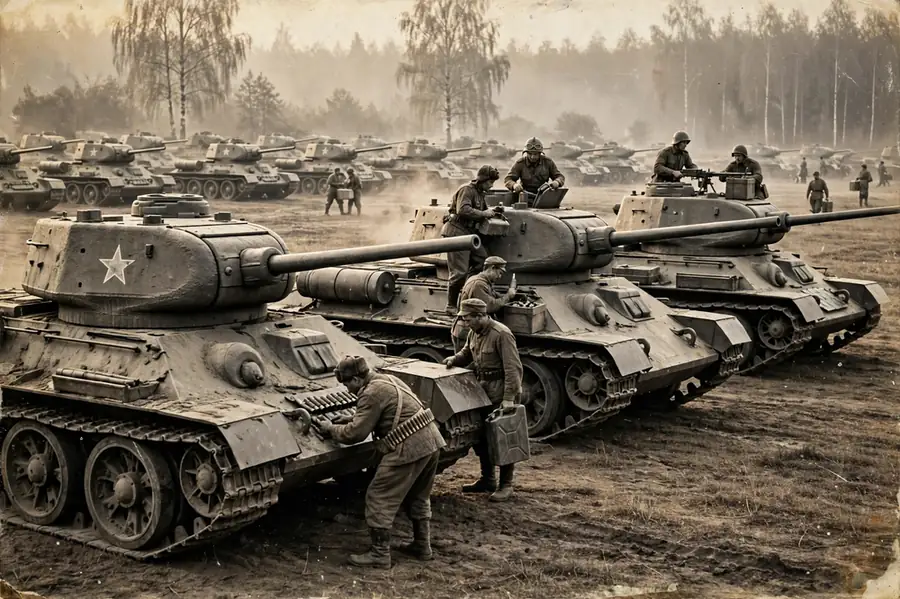
The Soviet forces for Bagration were organised into four fronts — the Soviet term for an army group — under the overall coordination of Marshals Georgy Zhukov and Aleksandr Vasilevsky, the two most senior Soviet commanders. The 1st Baltic Front, under General Ivan Bagramyan, attacked in the north, towards Vitebsk and Polotsk. The 3rd Belorussian Front, under General Ivan Chernyakhovsky, attacked in the centre, towards Orsha and Minsk. The 2nd Belorussian Front, under General Georgy Zakharov, attacked towards Mogilev. The 1st Belorussian Front, under General Konstantin Rokossovsky, attacked in the south, towards Bobruisk and then Minsk. The four fronts together numbered about 1.2 million men in the first phase, with more than 5,000 tanks and 5,000 aircraft, and they were supported by the partisans — the Soviet guerrillas who had been fighting behind the German lines in Belarus for three years, and who cut the German railways and roads on the night before the attack.
The Partisans
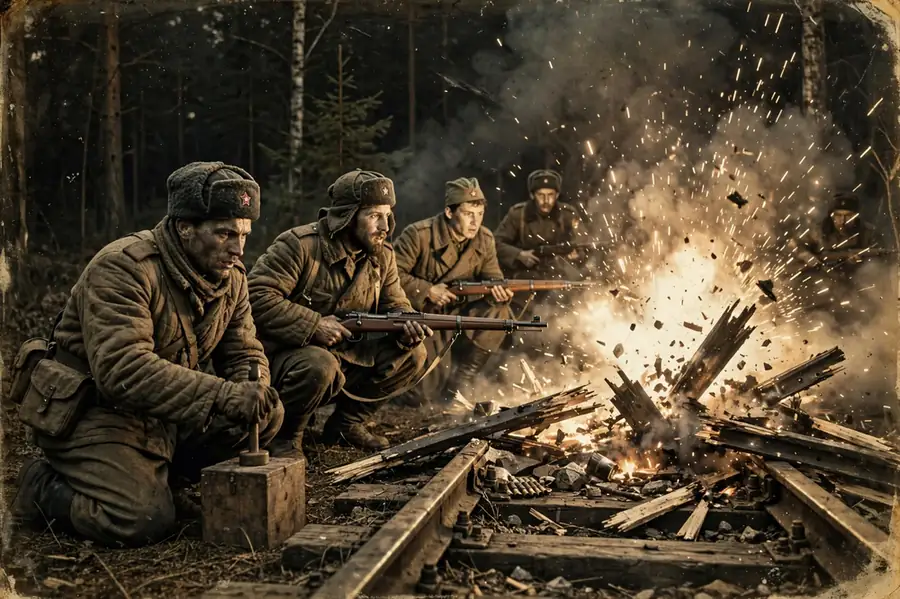
The partisans of Belarus were a crucial part of Bagration, and their contribution is often overlooked. By 1944 there were hundreds of thousands of Soviet partisans operating behind the German lines in Belarus, in the forests and the marshes, and they had been fighting the Germans for three years. On the night of 19–20 June 1944, two nights before the offensive, the partisans carried out a coordinated campaign of sabotage, blowing up railway lines, bridges and roads across the whole of Belarus, and cutting the German supply lines. The German armies, which depended on the railways for their supplies, were paralysed: their ammunition, their fuel and their reinforcements could not reach the front, and their divisions were left to fight with what they had. The partisan campaign was one of the largest sabotage operations of the war, and it was a decisive part of the victory. The partisans of Belorussia were the largest resistance movement in the occupied Soviet Union, and their campaign against the German railways was the greatest act of sabotage in the history of warfare.
Army Group Centre
The German forces in Belarus numbered about 800,000 men, organised into four armies under Field Marshal Ernst Busch. The 3rd Panzer Army, in the north, held Vitebsk. The 4th Army, in the centre, held Orsha and Mogilev. The 9th Army, in the south, held Bobruisk. The 2nd Army, further south, held the line towards the Pripet Marshes. The armies had about 1,000 tanks and about 1,400 aircraft, but their divisions were understrength, their equipment was worn out, and they had no reserves. The Luftwaffe, which had once dominated the skies over the Eastern Front, was now outnumbered and outmatched, and it could not protect the German armies from the Soviet air force. The German soldiers in Belarus were veterans, and they fought hard, but they were outnumbered, outgunned and outmanoeuvred, and they were fighting under orders that forbade them to withdraw.
Busch and Model
The German command in Belarus changed in the middle of the battle, and the change tells the story of the disaster. Field Marshal Ernst Busch, the commander of Army Group Centre, was a loyal but unimaginative officer who obeyed Hitler’s orders to hold fast, even when the front was collapsing. On 28 June, six days into the offensive, Hitler sacked Busch and replaced him with Field Marshal Walter Model, the most capable defensive commander Germany had, the man who had held the line at Rzhev and at Kursk. Model arrived to find a catastrophe: the front was broken, the armies were encircled, and the divisions were being destroyed. He did what he could — he organised a new line, he brought in reinforcements, and he stopped the Soviet advance at the gates of Warsaw — but he could not undo the destruction of Army Group Centre. The change of command was an admission that the battle was lost, and it came too late to save the army.
| Soviet Union | Germany | |
|---|---|---|
| Infantry | Four fronts: 1st Baltic, 3rd, 2nd and 1st Belorussian | Four armies: 3rd Panzer, 4th, 9th and 2nd |
| Tanks | More than 5,000 tanks, including T-34s | About 1,000 tanks |
| Artillery | More than 20,000 guns and mortars | About 10,000 guns and mortars |
| Air support | More than 5,000 aircraft | About 1,400 aircraft |
| Partisans | Hundreds of thousands in Belarus | — |
| Reserves | Large reserves behind the front | Almost none |
5. The Battle
The Breakthrough
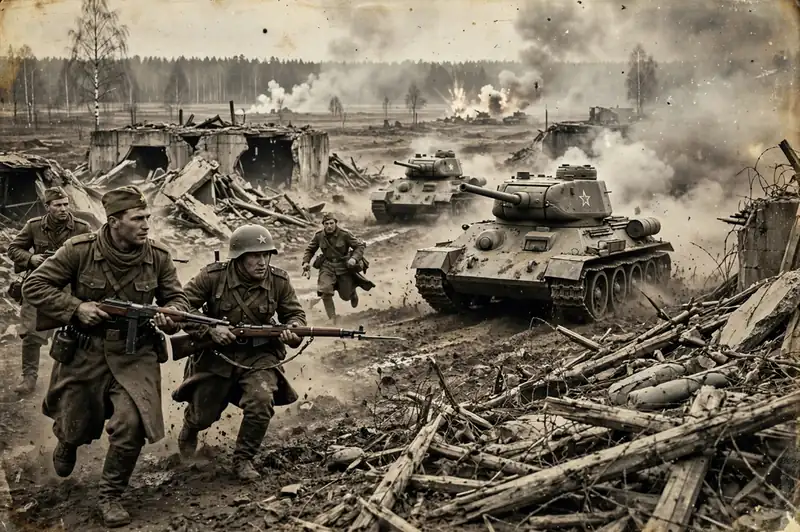
The offensive began on 22 June 1944, the third anniversary of the German invasion, with a massive artillery bombardment and air attacks along the whole front. The Soviet artillery fired for hours, and the infantry attacked behind it, breaking through the German defences in several places at once. The German front, which had been stable for two years, collapsed within days: the 3rd Panzer Army was broken at Vitebsk, the 4th Army was broken at Orsha and Mogilev, and the 9th Army was broken at Bobruisk. The Soviet tank armies — the 5th Guards Tank Army and the others — poured through the gaps, driving deep into the German rear, and the German divisions, which had been ordered to hold their positions, were cut off and encircled. The breakthrough was so complete that the Germans lost contact with their own armies, and the Soviet advance, which had been planned to take weeks, took days.
The Pockets at Vitebsk and Bobruisk
The first great encirclements came at Vitebsk and Bobruisk, and they set the pattern for the whole operation. At Vitebsk, in the north, the 3rd Panzer Army’s divisions were encircled in the fortress town, which Hitler had ordered to be held to the last man. The town fell on 26 June, and the divisions in it were destroyed: about 20,000 men were killed or captured, and the 3rd Panzer Army ceased to exist as a fighting force. At Bobruisk, in the south, the 9th Army was encircled in a pocket that the Soviets called the “Bobruisk cauldron”, and its divisions were destroyed in a few days of fighting: about 70,000 men were killed or captured, and the 9th Army was gone. The pockets were the result of Hitler’s fortress order, which had tied the German divisions to fixed positions and made them easy to encircle, and they were the reason the German army in Belarus was destroyed so quickly.
The Fall of Minsk
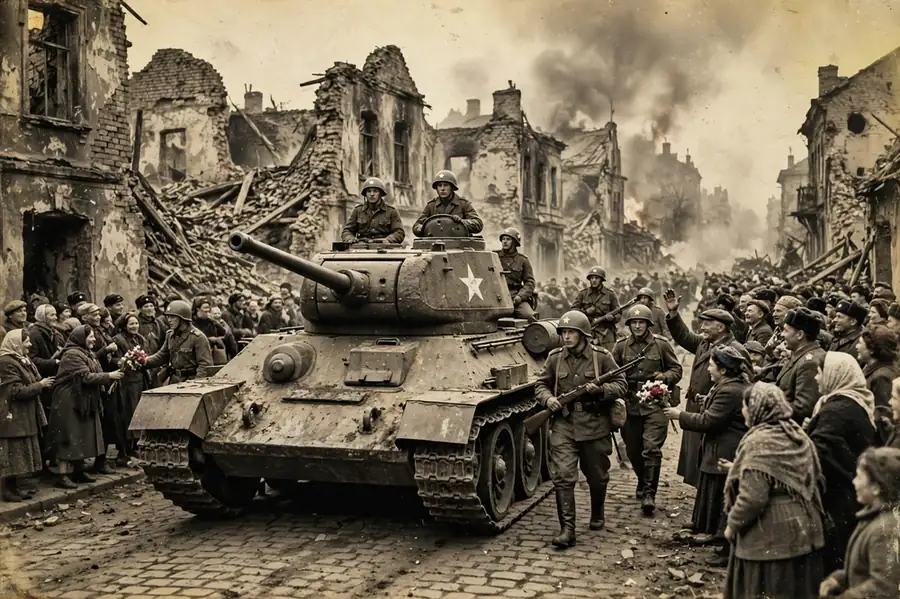
The fall of Minsk, the capital of Belarus, on 3 July 1944, was the climax of the operation. The Soviet tank armies, advancing from the north and the south, met east of Minsk and closed the ring around the German 4th Army, which was trapped in a pocket with about 100,000 men. The 4th Army, which had been ordered to hold its positions, tried to break out to the west, but it was cut off and destroyed in a week of fighting in the forests east of Minsk. About 70,000 men were killed, and about 17,000 to 30,000 were taken prisoner, in figures that vary between sources. The fall of Minsk was a political as well as a military event: the capital of Belarus was free, the Soviet flag flew over the city, and the German army in Belarus had ceased to exist. The road to Warsaw and to East Prussia was open, and the Soviets advanced on it with a speed that surprised even themselves.
The Minsk Pocket / Vòng vây Minsk
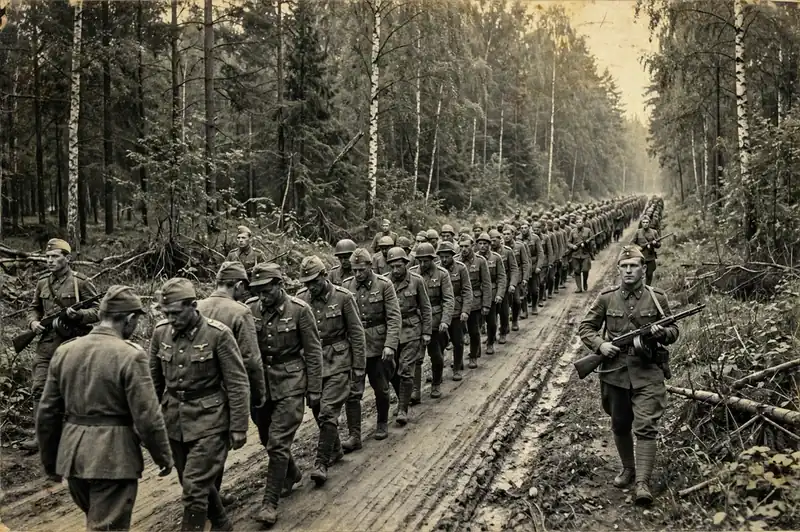
The Minsk pocket was the largest encirclement of the operation, and it was the one that destroyed the German 4th Army. The pocket was formed when the Soviet 3rd Belorussian Front, advancing from the north, and the 1st Belorussian Front, advancing from the south, met east of the city and closed the ring. The German 4th Army, with about 100,000 men, was trapped inside, and it tried to break out in a series of desperate attacks to the west. The attacks failed: the Soviet forces, with tanks and artillery, held the ring, and the German columns, moving through the forests, were cut to pieces by air attack and by artillery. The fighting in the pocket lasted for a week, and when it ended, the 4th Army was gone. The prisoners taken at Minsk and in the fighting that followed were marched through Moscow in a parade on 17 July 1944 — the famous “Parade of the Vanquished” — in which some 57,000 German prisoners were marched through the streets of the Soviet capital, a spectacle that told the Soviet people, and the world, that the German army had been destroyed.
The Advance to Warsaw
After Minsk, the Soviet advance did not stop. The tank armies drove west, liberating Vilnius on 13 July, Grodno on 16 July, and reaching the Vistula, opposite Warsaw, by the end of July. The advance covered some 600 kilometres in eight weeks, and it was the fastest advance of the war on the Eastern Front. The Germans, under Model, tried to organise a new line, and they brought in reinforcements from the west, including the Hermann Göring Panzer Division and the SS divisions that had been fighting in Normandy. The Soviet advance was stopped at the gates of Warsaw, in a battle of tanks east of the city, and the Red Army halted on the Vistula — the halt that would have such fateful consequences for the Warsaw Uprising, which began on 1 August, while the Russians watched from across the river. The operation ended on 19 August, with the Red Army on the Vistula and on the border of East Prussia, and with Army Group Centre destroyed.
The Halt on the Vistula
The halt on the Vistula, at the end of July 1944, is one of the most debated decisions of the war. The Soviet tank armies had advanced 600 kilometres in eight weeks, and they were exhausted: their tanks needed repair, their supplies had not kept up, and their men were tired. The Germans, reinforced and reorganised under Model, had built a new line, and a further advance would have been costly. The Soviet commanders therefore halted, to regroup and to prepare for the next offensive, which would come in January 1945. The halt was militarily defensible, but it had a political consequence that the Soviet commanders may or may not have intended: the Warsaw Uprising, which began on 1 August, was left to fight alone, and it was destroyed. The halt on the Vistula was the end of Bagration, and it was the beginning of the tragedy of Warsaw. The halt on the Vistula is still argued over by historians, and the argument will never be settled, because the evidence is incomplete and the motives of the men who made the decision died with them.
6. Turning Point
The Deception That Worked
The turning point of Bagration was not a battle but a deception: the Soviet success in convincing the Germans that the main attack would come in the south. The deception was the reason the Germans were unprepared in Belarus, and it was the reason the Soviet attack broke through so quickly. The Germans had stripped Army Group Centre of its tanks to reinforce the south, and they had positioned their reserves in the south, so that when the attack came in the centre, there was nothing to stop it. The deception was achieved by a combination of measures: the visible preparations in the south, the concealment of the build-up in Belarus, the radio silence, and the night movements. It was a masterpiece of maskirovka — the Soviet art of deception — and it was the single most important factor in the victory. Without the deception, the attack would still have succeeded, because the Soviets were stronger, but it would not have succeeded so quickly or so completely.
Maskirovka: The Soviet Art of Deception
Maskirovka — the Russian word for deception, camouflage and concealment — was a central part of Soviet military doctrine, and Bagration was its greatest triumph. The Soviets had practised maskirovka since the 1920s, and they had used it at Stalingrad and at Kursk, but Bagration was the operation in which it was applied on the largest scale and with the greatest success. The deception involved not only concealing the build-up in Belarus but actively misleading the Germans about the south: dummy tanks and guns were displayed, false radio traffic was generated, and the movements of troops were staged to suggest an attack in Ukraine. The Germans, whose intelligence was already weak, believed the deception, and their high command made its dispositions accordingly. The result was that Army Group Centre was left to face the greatest offensive of the war with no reserves, no tanks and no warning. Maskirovka was not a trick but a system, and it was the system that won Bagration: the Germans were deceived not by a single lie but by a campaign of lies, told consistently, for months, by an army that had learned to lie well.
The Destruction of Army Group Centre
The second turning point was the destruction itself: the moment, in the first week of July, when it became clear that Army Group Centre had ceased to exist. The destruction was not a single battle but a process: the breakthrough, the encirclements at Vitebsk and Bobruisk, the fall of Minsk, and the destruction of the 4th Army in the Minsk pocket. Each of these was a blow, and together they were fatal. The German army in the east lost 28 divisions in eight weeks, and it lost them in a way that could not be repaired: the divisions were not merely defeated, they were destroyed, their men killed or captured, their equipment lost, their officers gone. The German high command, which had spent three years building the Eastern Front, watched it collapse in a matter of weeks, and it had no reserves with which to rebuild it. The destruction of Army Group Centre was the turning point of the war in the east, and it was the moment the defeat of Germany became inevitable.
Twenty-Eight Divisions Gone
The figure of 28 divisions destroyed is the measure of the disaster, and it is worth pausing over. A German division numbered about 10,000 to 15,000 men, so 28 divisions represented some 300,000 to 400,000 men — the equivalent of a whole army group. The divisions were destroyed in the pockets, in the forests and on the roads, and their loss could not be made good: Germany, by 1944, had no more men to send, and the divisions that were raised to replace them were shadows of the formations they replaced. The loss of 28 divisions was the greatest single loss the German army suffered in the war, greater than Stalingrad, and it was the loss from which the German army never recovered. After Bagration, the Germans were fighting a defensive war with an army that was shrinking, and the Soviets were fighting an offensive war with an army that was growing.
7. Casualties and Losses
Soviet Losses
The Soviet losses in Bagration were heavy, even in victory. The Red Army lost about 180,000 men killed and missing, and about 590,000 wounded and sick, for a total of about 770,000 casualties, in figures that vary between sources. The losses were the price of the offensive: the Soviet infantry attacked in the open, under German fire, and the tank armies drove deep into the German rear, where they were exposed to counterattacks. The losses were also the price of the speed of the advance: the Soviets advanced 600 kilometres in eight weeks, and the advance was made by men who were tired, hungry and fighting in the summer heat. The Soviet losses in Bagration were among the heaviest of any Soviet offensive of the war, but they were losses that the Soviet Union could afford, and the Germans could not afford theirs.
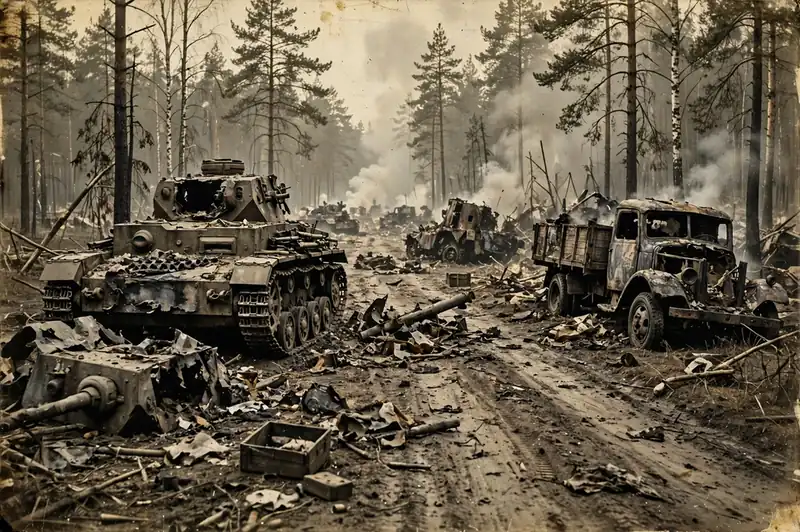
The Price of Victory
The Soviet casualty figures for Bagration are a reminder that the Red Army’s victories were bought with lives, and that the Soviet Union paid a price for the war that no other country paid. The 180,000 dead of Bagration were men who had survived Stalingrad and Kursk, and who died in the summer of 1944, within sight of victory. The wounded — some 590,000 men — were the men who would carry the scars of the war for the rest of their lives. The Soviet Union lost some 27 million people in the war, military and civilian, and the losses of Bagration were a part of that total. The victory was real, and it was decisive, but it was not cheap, and the Soviet people knew it. The victory parade in Moscow in 1945, and the “Parade of the Vanquished” in July 1944, were celebrations, but they were celebrations of a victory that had cost the Soviet Union more than any other country in the war.
German Losses
The German losses in Bagration were catastrophic: about 400,000 men killed, wounded and captured, including about 17,000 to 30,000 prisoners taken at Minsk alone, and 28 divisions destroyed. The losses were so severe that the German army in the east never recovered, and the Eastern Front, which had held for three years, collapsed. The German soldiers who died in Belarus died in the pockets, in the forests and on the roads, and many of them died because they had been ordered to hold positions that could not be held. The prisoners — some 57,000 of whom were marched through Moscow in the “Parade of the Vanquished” — were sent to camps in the Soviet Union, where many of them died. The German losses in Bagration were the greatest single loss of the war, and they were the loss that made the defeat of Germany inevitable.
The Parade of the Vanquished
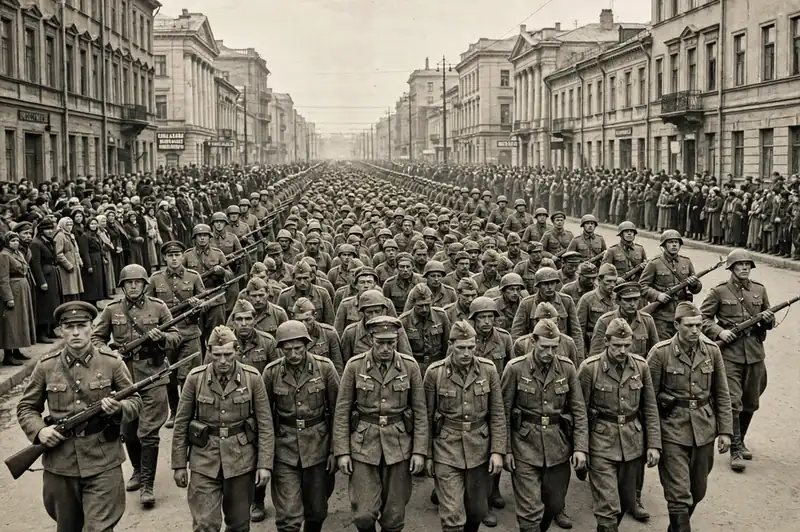
The “Parade of the Vanquished” on 17 July 1944 was one of the most famous spectacles of the war, and it was a deliberate piece of propaganda. Some 57,000 German prisoners, captured in the Minsk pocket and in the fighting that followed, were marched through the streets of Moscow, in columns, under guard, while the Soviet people watched. The parade was intended to show the Soviet people that the German army had been destroyed, and to show the world that the Red Army was winning the war. The prisoners, many of them wounded and exhausted, marched in silence, and the streets were washed after them — a gesture of contempt that the Soviet press reported with satisfaction. The parade was a humiliation for the German prisoners, and it was a triumph for the Soviet Union, and it was also a measure of the scale of the victory: 57,000 prisoners, marched through a capital, was a sight the world had not seen before, and would not see again.
| Soviet Union | Germany | |
|---|---|---|
| Killed and missing | About 180,000 | About 400,000 killed, wounded and captured in total |
| Wounded and sick | About 590,000 | Included in the total above |
| Total | About 770,000 | About 400,000 |
| Divisions destroyed | — | 28 divisions |
| Prisoners | — | About 57,000 marched through Moscow |
8. Map and Geography
Belarus: The Land Between
Belarus is a land of forests, marshes and rivers, and its geography shaped Bagration as much as any decision by the generals. The country lies between Russia and Poland, and it is crossed by great rivers — the Dnieper, the Berezina, the Neman — and by the vast Pripet Marshes in the south, one of the largest wetlands in Europe. The forests of Belarus, which cover a third of the country, were the home of the partisans, and the marshes were a barrier to movement, channelling the armies onto the few roads and railways that crossed them. The towns of Belarus — Vitebsk, Orsha, Mogilev, Bobruisk and Minsk — sit on the rivers and the roads, and they were the fortresses the Germans were ordered to hold and the objectives the Soviets were ordered to take. The map of Belarus is a map of rivers and forests, and the campaign was fought along the rivers and through the forests.
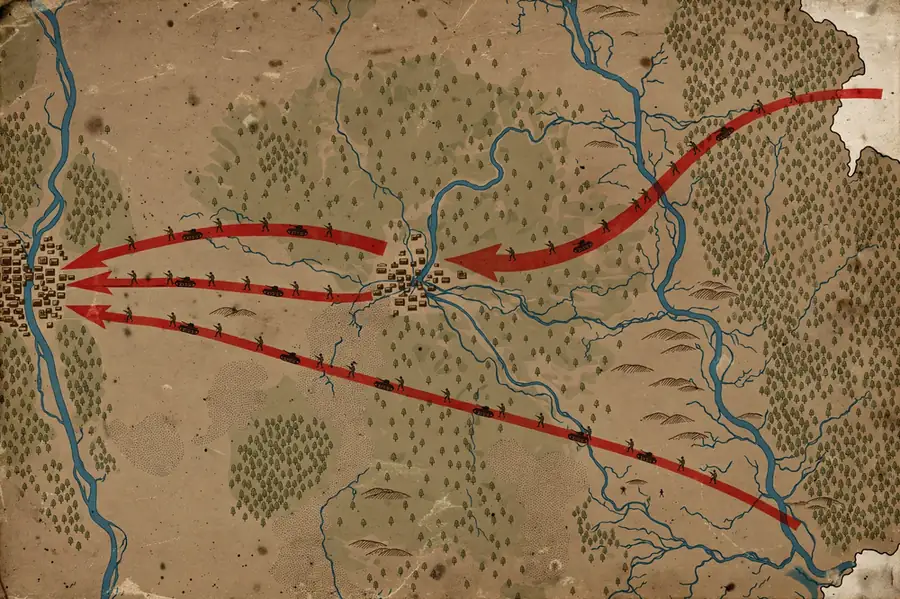
The Rivers and the Marshes
The rivers of Belarus were both obstacles and highways, and the campaign was fought for their crossings. The Dnieper, the great river that runs through Belarus from north to south, was the first obstacle the Soviets had to cross, and they crossed it in several places, using pontoon bridges and captured ferries. The Berezina, the river of Napoleon’s retreat in 1812, was crossed again, in the opposite direction, by the Soviet tank armies driving west. The Pripet Marshes, in the south, were a barrier that neither side could cross in force, and they divided the front into a northern and a southern sector, channelling the Soviet attack into the gap between the marshes and the Baltic. The rivers and the marshes were the geography of Bagration, and the Soviets, who had learned to fight in that geography, used it better than the Germans, who had never understood it. The Pripet Marshes, which the Germans had thought impassable, were crossed by Soviet troops on foot, on rafts and on roads built of logs, and the marshes that were supposed to protect Army Group Centre became the trap that destroyed it.
The Advance to the Vistula
The Soviet advance after Minsk covered some 600 kilometres in eight weeks, from the Dnieper to the Vistula, and it was the fastest advance of the war on the Eastern Front. The advance was made along the roads and the railways, through the forests and across the rivers, and it was made by tank armies that drove day and night, with the infantry following behind. The towns fell one by one: Vilnius on 13 July, Grodno on 16 July, Brest on 28 July, and then the Vistula, opposite Warsaw, at the end of July. The advance was so fast that the Soviet supply lines could not keep up, and the tank armies outran their fuel and their ammunition. The halt on the Vistula, at the end of July, was the result of that exhaustion, and it was the end of the operation. The map of the advance is a map of a straight line, from Minsk to Warsaw, and it is the line along which the German army in the east was destroyed.
Six Hundred Kilometres in Eight Weeks
The speed of the Soviet advance was unprecedented, and it was the result of the collapse of the German front. The German armies, destroyed in the pockets, could not form a new line, and the Soviet tank armies drove through the gap, meeting little resistance. The advance was made possible by the partisans, who had cut the German supply lines, and by the Soviet air force, which dominated the skies and attacked the German columns on the roads. The advance was also made possible by the sheer scale of the Soviet forces: the four fronts, with their tanks and their artillery, were too large for the Germans to stop, and the Germans, with no reserves, could only watch as the Soviets drove west. The 600 kilometres from Minsk to Warsaw were covered in eight weeks, and the advance ended only when the Soviets outran their supplies and the Germans, reinforced under Model, built a new line on the Vistula.
9. Outcome and Legacy of Operation Bagration
The Collapse of the Eastern Front
The destruction of Army Group Centre was the collapse of the Eastern Front, and it was the beginning of the end of the Third Reich. After Bagration, the Germans had no reserves with which to rebuild the front, and the Soviets, who had liberated Belarus and reached the Vistula, were in a position to invade Poland and East Prussia. The next Soviet offensive, in January 1945, would drive from the Vistula to the Oder, and then to Berlin, and it would do so against a German army that had never recovered from Bagration. The Eastern Front, which had held for three years, had collapsed in eight weeks, and the collapse was irreversible. Bagration was the operation that broke the German army, and it was the operation that made the Allied victory in the west possible: the Germans, who had to send divisions to the east to replace the ones destroyed in Belarus, could not reinforce Normandy, and the Allies broke out of the beachhead in late July, at the same time as the Soviets were reaching the Vistula.
The Race to Berlin
Bagration set the stage for the race to Berlin, and it set the terms on which the race would be run. The Soviets, who had destroyed Army Group Centre, were on the Vistula, 500 kilometres from Berlin, and the Western Allies, who had broken out of Normandy, were on the Seine, 800 kilometres from Berlin. The race would be won by the Soviets, who reached Berlin in April 1945, and the victory was made possible by Bagration: the destruction of the German army in Belarus meant that there was no German army left to stop the Soviets on the road to Berlin, and the divisions that might have defended the German capital had died in the pockets of Vitebsk, Bobruisk and Minsk. Bagration was the operation that opened the road to Berlin, and it was the operation that decided who would take the German capital. The race to Berlin was won by the Soviet Union, and it was won at Minsk, where the German armies that might have defended Berlin were destroyed, and where the road to the German capital was opened for good.
The Soviet Art of War
Bagration was the masterpiece of Soviet operational art, and it is studied in military academies to this day. The operation combined deception, concentration, breakthrough, encirclement and exploitation in a single, coherent design, and it was executed with a skill that the Germans, who had invented the blitzkrieg, could only admire. The Soviet generals who planned and executed Bagration — Zhukov, Vasilevsky, Rokossovsky, Bagramyan and Chernyakhovsky — were the finest commanders the Soviet Union produced, and their victory was the proof of their skill. Bagration showed that the Red Army, which had been a clumsy, brutal force in 1941, had become, by 1944, the most effective army in the world at the operational level, and that it could destroy a German army group in a single operation. The lesson was not lost on the Western Allies, who studied Bagration and applied its lessons in their own operations.
The Greatest Soviet Victory
Bagration was the greatest Soviet victory of the war, and it is remembered in Russia and in Belarus as the liberation. The operation freed Belarus from three years of German occupation — an occupation that had killed a quarter of the country’s population — and it freed the Soviet Union from the threat of a German army on its borders. The victory is commemorated in Minsk, where the Museum of the Great Patriotic War tells the story of the operation, and in the villages of Belarus, where the monuments to the partisans and to the soldiers stand in every square. Bagration was a victory that cost the Soviet Union 770,000 casualties, and it was a victory that the Soviet people paid for with the lives of their sons and daughters. It was the victory that made the defeat of Germany inevitable, and it is remembered as such. Bagration was the greatest Soviet victory of the war, and it was the victory that the Soviet people remember best, because it was the victory that liberated their country and that made the defeat of Germany certain.
10. Commanders
The Soviet Commanders
Marshal Georgy Zhukov (Soviet Union). The coordinator of Bagration, and the most famous Soviet commander of the war. Zhukov had defended Moscow, won at Stalingrad and Kursk, and he coordinated the four fronts of Bagration from the Stavka, the Soviet high command. He later commanded the Soviet forces in the Battle of Berlin, and he took the German surrender in May 1945. Zhukov is remembered as the general who won the war for the Soviet Union, and Bagration was his greatest victory.
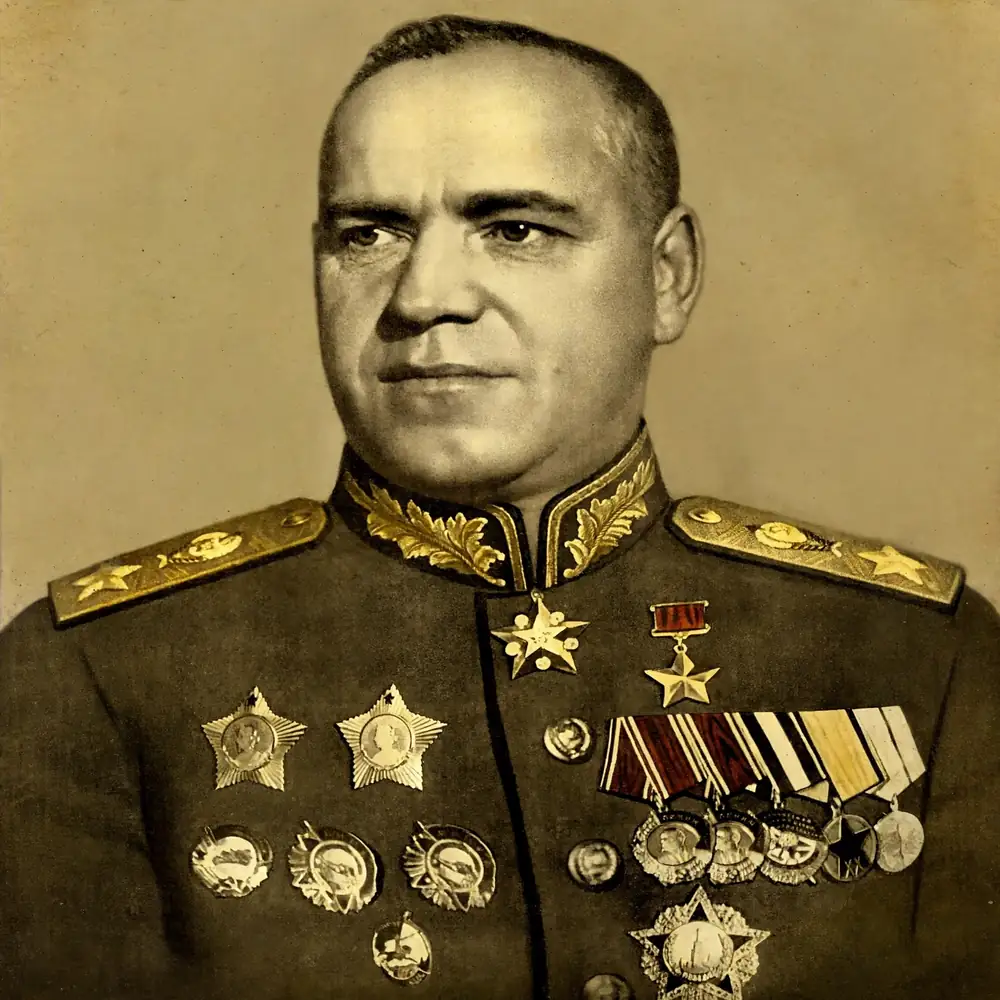
Marshal Aleksandr Vasilevsky (Soviet Union). The second coordinator of Bagration, and the Chief of the General Staff. Vasilevsky coordinated the 1st Baltic and 3rd Belorussian Fronts in the north, while Zhukov coordinated the 1st and 2nd Belorussian Fronts in the south. He later commanded the Soviet forces in the Far East, in the campaign against Japan in August 1945. Vasilevsky was the quiet, methodical planner behind the Soviet victories, and Bagration was his masterpiece.
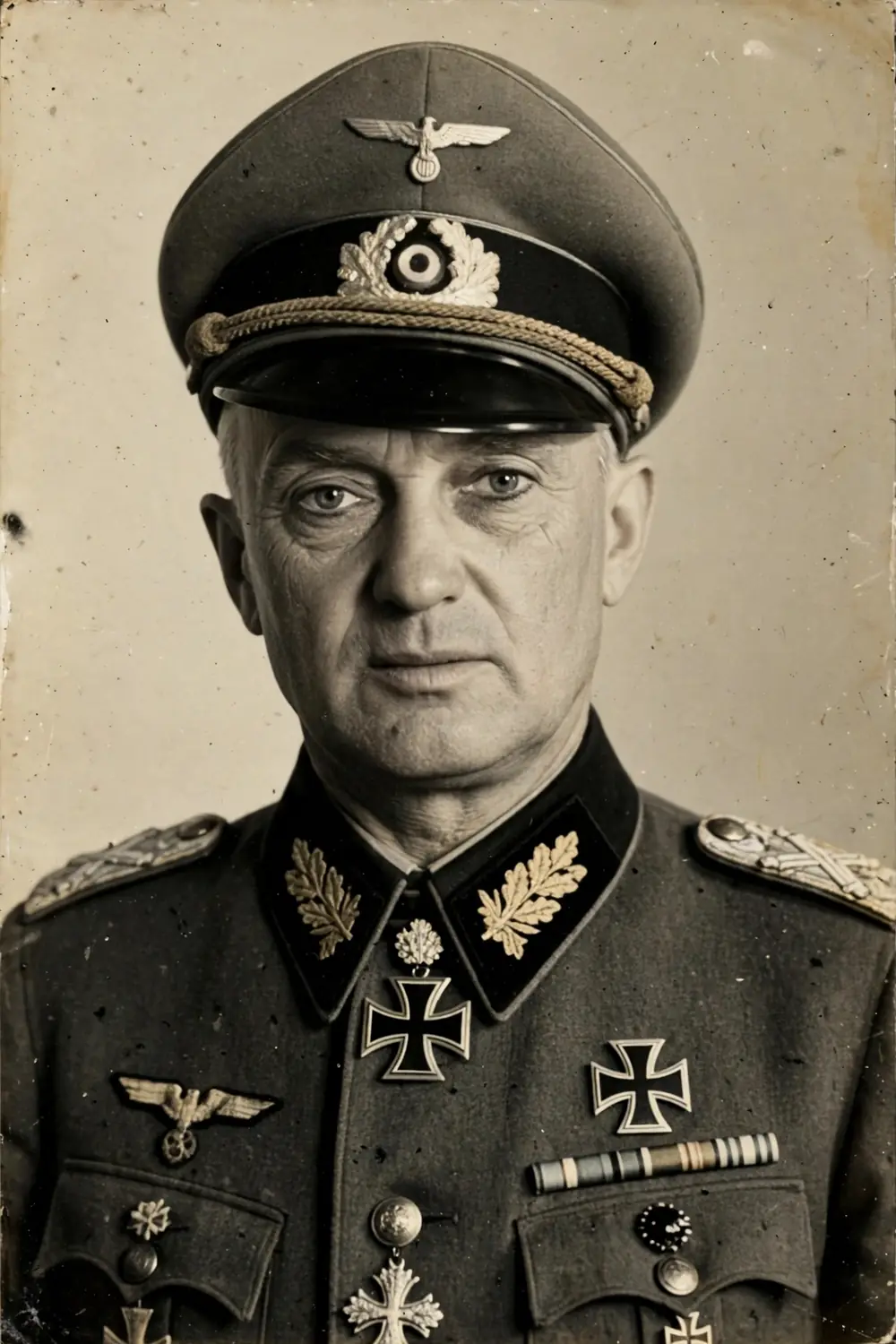
General Konstantin Rokossovsky (Soviet Union). Commander of the 1st Belorussian Front, the front that attacked in the south, towards Bobruisk and Minsk. Rokossovsky was a Pole by birth, a cavalryman by training, and one of the most capable Soviet commanders. His front destroyed the German 9th Army at Bobruisk and closed the Minsk pocket from the south. He later commanded the Soviet forces in Poland, and after the war he served as Poland’s minister of defence.
Chernyakhovsky: The Youngest Front Commander
General Ivan Chernyakhovsky (Soviet Union). Commander of the 3rd Belorussian Front, the front that attacked in the centre, towards Orsha and Minsk. Chernyakhovsky was the youngest front commander in the Red Army — he was 37 years old in 1944 — and he was regarded as one of the most talented Soviet generals. His front broke through the German defences at Orsha, closed the Minsk pocket from the north, and drove on to Vilnius and East Prussia. He was killed by German artillery fire in East Prussia in February 1945, at the age of 38, and his death was mourned across the Soviet Union. Chernyakhovsky’s command of the 3rd Belorussian Front in Bagration was the high point of a brilliant career cut short by the war. Chernyakhovsky was the youngest front commander in the Soviet army, and the most brilliant of his generation, and his death at thirty-eight, in the last months of the war, was mourned as the loss of a man who might have led the Soviet army in peace.
The German Commanders
Field Marshal Ernst Busch (Germany). Commander of Army Group Centre until 28 June 1944. Busch was a loyal officer who obeyed Hitler’s orders to hold fast, even when the front was collapsing. He was sacked on 28 June, six days into the offensive, and replaced by Model. Busch died in British captivity in July 1945, a broken man, and his name is associated with the greatest disaster the German army suffered in the east.
Field Marshal Walter Model (Germany). Commander of Army Group Centre from 28 June 1944, and the most capable defensive commander Germany had. Model arrived to find a catastrophe, organised a new line, brought in reinforcements, and stopped the Soviet advance at the Vistula. He later commanded the German forces in the west, in the Ardennes and in the Ruhr, and he shot himself in April 1945 rather than surrender. Model was, in the judgement of many historians, the best defensive general Germany had, and Bagration was the battle he could not win.
Field Marshal Erich von Manstein (Germany). Manstein was not a commander in Bagration — he had been sacked by Hitler in March 1944 — but his name belongs in any account of the operation, because the German army in the east was fighting with the doctrine he had helped to create, and because his dismissal, and the dismissal of other capable generals, had left the German high command in the hands of men who obeyed Hitler rather than arguing with him. The German defeat in Belarus was, in part, the result of a command system that had lost the ability to tell Hitler the truth.
Model: The Fireman of the Eastern Front
Model was known as the “Fireman” of the Eastern Front, because Hitler sent him wherever the front was collapsing, and he had a record of holding lines that others had given up. In Belarus, he arrived too late to save Army Group Centre, but he did save what was left: he organised a new line on the Vistula, he brought in reinforcements from the west, and he stopped the Soviet advance at the gates of Warsaw. His achievement was considerable — he prevented the complete destruction of the German position in the east — but it was an achievement that could not undo the loss of 28 divisions. Model’s career after Bagration was a series of defensive battles, fought with shrinking forces, and it ended in the Ruhr pocket in April 1945, where he shot himself rather than surrender. He was a brilliant defensive commander, and Bagration was the battle that showed the limits of even the best defence.
Frequently Asked Questions
When was Operation Bagration?
From 22 June to 19 August 1944 — eight weeks. It was launched on the third anniversary of the German invasion of the Soviet Union, and it ended with the Red Army on the Vistula, opposite Warsaw.
How many German soldiers were lost in Operation Bagration?
About 400,000 German soldiers were killed, wounded or captured, and 28 divisions were destroyed. The losses were the greatest single loss the German army suffered in the war, greater than Stalingrad.
Why was Operation Bagration a surprise?
Because the Soviets deceived the Germans into believing the main attack would come in the south, in Ukraine. The build-up in Belarus was concealed, the troops moved at night under radio silence, and the Germans had stripped Army Group Centre of its tanks to reinforce the south.
What was the Minsk pocket?
The encirclement of the German 4th Army east of Minsk in early July 1944, in which about 100,000 German soldiers were trapped. About 70,000 were killed and about 17,000 to 30,000 were taken prisoner. The prisoners were marched through Moscow on 17 July 1944 in the “Parade of the Vanquished”.
Why is Operation Bagration less well known in the West?
Because it was fought at the same time as the Normandy landings, which dominated the Western press, and because the Soviet Union did not publicise its victories in the West. In Russia and Belarus, Bagration is remembered as the greatest Soviet victory of the war.
Did Operation Bagration affect D-Day?
Yes. The destruction of Army Group Centre forced the Germans to send divisions east to replace the ones destroyed in Belarus, and they could not reinforce Normandy. The Allies broke out of the beachhead in late July, at the same time as the Soviets were reaching the Vistula.
Sources
- Wikipedia, “Operation Bagration” — dates, strength, casualty figures (about 180,000 Soviet killed and missing; about 400,000 German killed, wounded and captured; 28 divisions destroyed), commanders and the course of the operation.
- David M. Glantz and Jonathan House, When Titans Clashed: How the Red Army Stopped Hitler (University Press of Kansas, 1995) — the most detailed English history of the Eastern Front and of Bagration.
- Encyclopædia Britannica, “Operation Bagration” — background, the operation and its outcome.
- David M. Glantz, Belorussia 1944: The Soviet General Staff Study (Routledge, 2004) — the Soviet General Staff’s own study of the operation, its deception plan and its execution.
- Paul Adair, Hitler’s Greatest Defeat: The Collapse of Army Group Centre, June 1944 (Cassell, 1994) — the German side, the fortress order and the destruction of the army group.
- Chris Bellamy, Absolute War: Soviet Russia in the Second World War (Macmillan, 2007) — the Soviet war effort, the partisans and the scale of the losses.
Further reading
- David M. Glantz, Soviet Military Deception in the Second World War (Frank Cass, 1989).
- Robert Forczyk, Operation Bagration 1944 (Osprey, 2016).