 WAR ATLAS MILITARY HISTORY MAGAZINE · WWI — WWII
Trench Warfare
1. Trench Warfare — In Brief
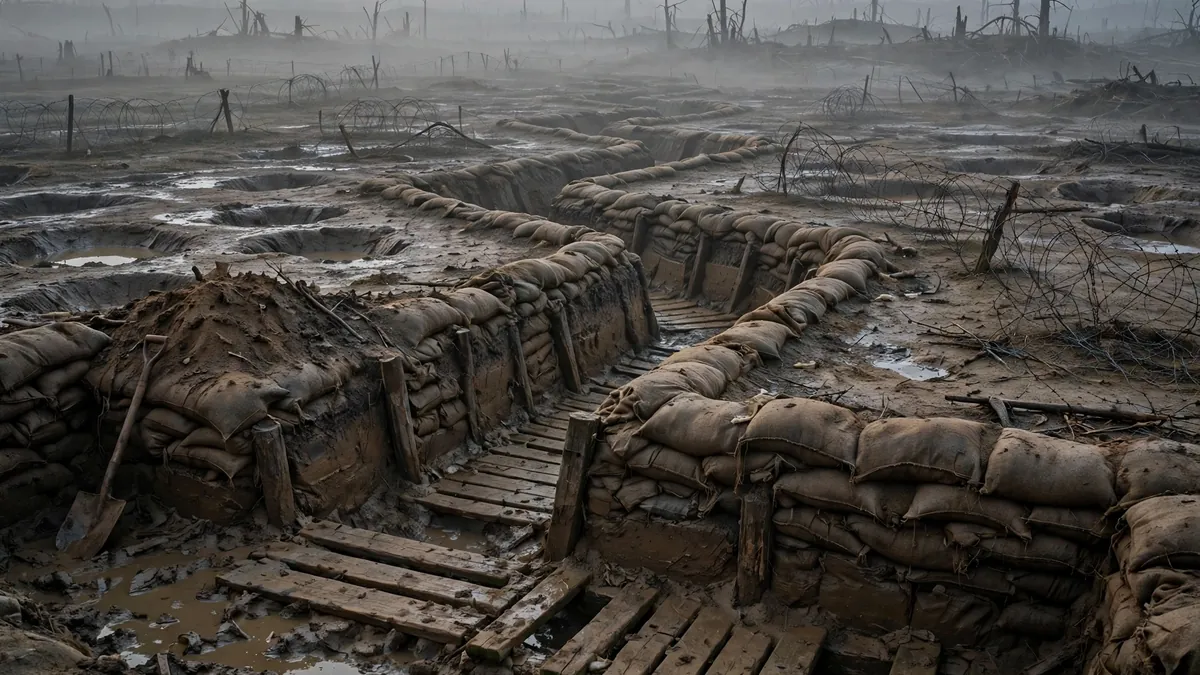
Trench Warfare is a form of land warfare in which opposing armies fight from deep, fortified ditches dug into the earth, separated by a strip of contested ground known as no man’s land. It became the defining tactic of the Western Front during World War I (1914–1918), when the firepower of machine guns and artillery made open attacks suicidal and both sides dug in to survive.
Trench Warfare was used by every major army of the war — German, French, British and their allies — and it turned what was expected to be a war of rapid movement into a four-year stalemate. Its importance lies in what it revealed: industrial firepower had outpaced tactics, and breaking a prepared defence would cost hundreds of thousands of lives for a few miles of mud.
Key Facts
| Definition | Warfare fought from opposing systems of fortified trenches, with attacks launched across no man’s land against prepared defences. |
| Origin | Entrenched fieldworks used in earlier sieges; became a continuous front-line system on the Western Front in autumn 1914, during the Race to the Sea. |
| Used by | Germany, France, Britain and the British Empire, Belgium, Austria-Hungary, Russia, the Ottoman Empire, Italy and the United States. |
| Used in | World War I (Western, Eastern and Italian Fronts); earlier at Sevastopol (1854–55), Petersburg (1864–65) and Port Arthur (1904–05); later in the Iran–Iraq War (1980–88) and in Ukraine from 2022. |
| Key examples | First Battle of Ypres (1914), Battle of Verdun (1916), Battle of the Somme (1916), Battle of Passchendaele (1917), Battle of Cambrai (1917). |
| Effectiveness | Extremely effective as a defence: a trench system could hold off attacks many times its own strength. As an offensive tactic it failed repeatedly, producing enormous casualties for minimal gains until tanks and combined-arms tactics appeared in 1917–18. |
Origins
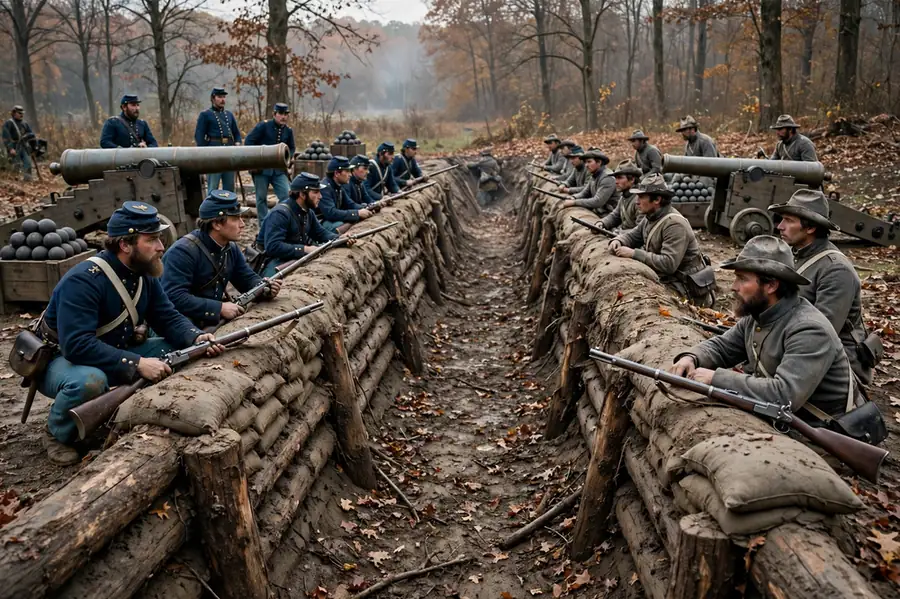
Trench Warfare did not begin in 1914. Soldiers had dug protective earthworks for centuries, and the nineteenth century offered clear warnings that firepower was changing war. During the Siege of Sevastopol in the Crimean War (1854–55), British, French and Russian troops spent months in trenches around the fortress. A decade later, in the American Civil War, the Siege of Petersburg (1864–65) saw Union and Confederate armies face each other from opposing trench lines for nearly ten months — a precedent for the Western Front. In the Russo-Japanese War, the Siege of Port Arthur (1904–05) again showed how entrenched defenders with machine guns and artillery could bleed an attacker dry.
European generals studied these campaigns and drew the wrong lesson. They concluded that the attacker had failed through poor leadership or insufficient courage, not because the defence had become overwhelmingly strong. When World War I began in August 1914, every army still planned for a short war of rapid movement. Germany’s Schlieffen Plan aimed to defeat France in six weeks; France’s Plan XVII aimed to attack straight into Germany. Neither plan survived contact with modern firepower.
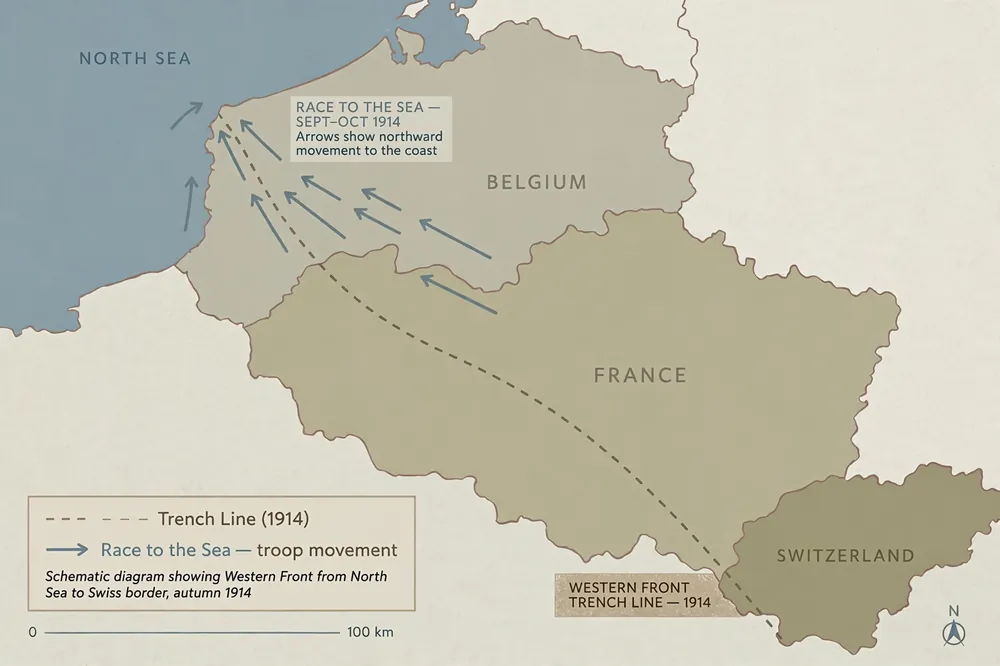
The German advance was halted at the First Battle of the Marne in September 1914. Both sides then tried to outflank each other in a series of moves northward known as the Race to the Sea. By November 1914, the flanking moves had run out of room: the front reached the English Channel coast near Nieuwpoort in Belgium. With nowhere left to turn, soldiers on both sides dug in. What began as shallow scrapes for shelter became, over the winter of 1914–15, a continuous system of trenches running roughly 440 miles (700 km) from the North Sea to the Swiss border.
How It Works
A mature trench system was not a single ditch but a layered defensive zone, usually built in three parallel lines. The front line, or fire trench, faced the enemy and held the riflemen and machine guns. Behind it, 100 to 200 metres back, lay the support trench, where reserves waited to reinforce the front or counter-attack. Further back still was the reserve trench, with dugouts, headquarters and supply dumps. The three lines were connected by communication trenches running at right angles, so men and supplies could move forward without being exposed to enemy fire. In front of the fire trench, engineers laid belts of barbed wire — sometimes 30 metres deep — to slow attackers and hold them under fire.
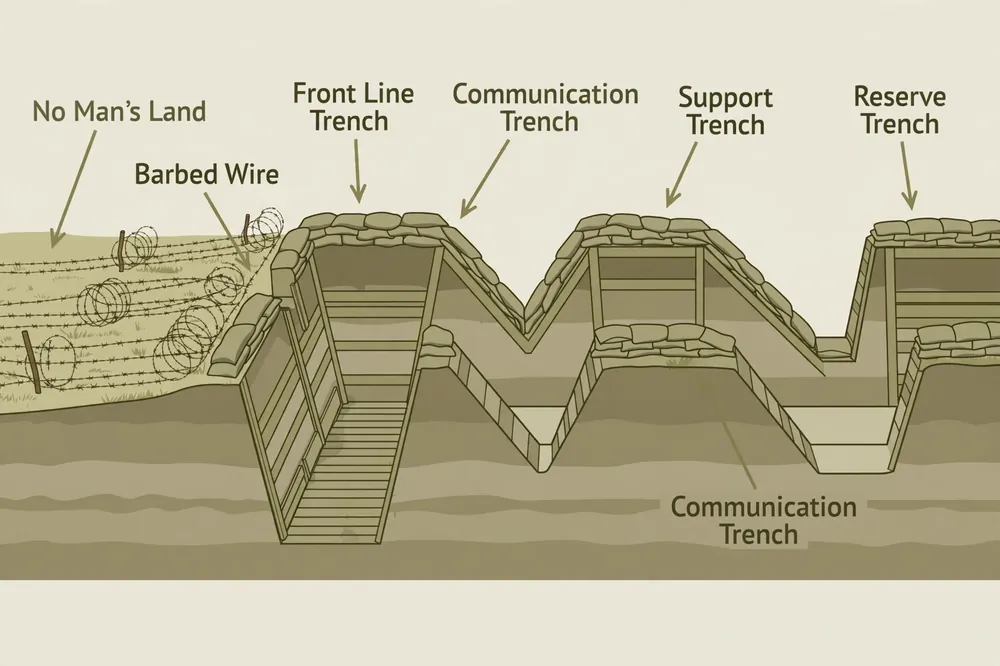
Between the two opposing front lines lay no man’s land, a strip of shattered ground that could be as narrow as 30 metres or as wide as a kilometre. It was churned by shellfire, littered with wreckage and the unburied dead, and swept by machine guns at night. Crossing it was the central problem of Trench Warfare, and for most of the war no army solved it.
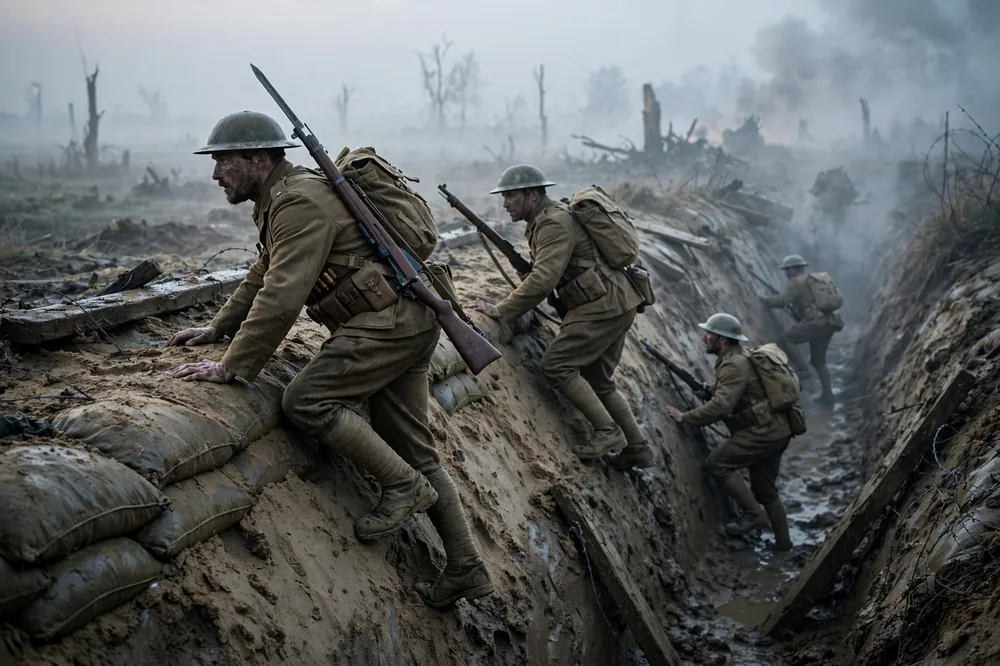
A standard attack followed a fixed sequence. First came the artillery bombardment, sometimes lasting days, intended to cut the wire, destroy the enemy trenches and kill the defenders. Then, at a fixed hour, the guns lifted their fire to targets further back, and the infantry went “over the top” — climbing out of their trenches and advancing across no man’s land in lines, often at walking pace, carrying up to 30 kg of equipment.
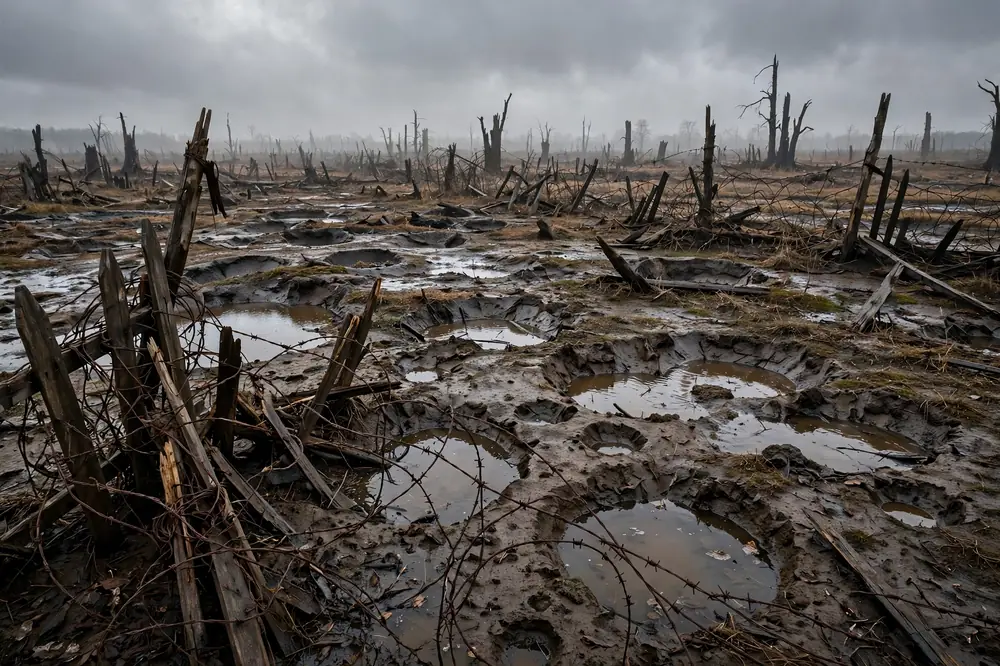
If the bombardment had failed to destroy the defenders’ deep dugouts and machine-gun posts, the attackers were cut down in the open. If they did reach the enemy trench, they then had to hold it against counter-attacks while their own artillery and supplies struggled to cross the same broken ground.
Life inside the trenches was its own form of warfare. Men lived in mud and water, often standing knee-deep for days. Trench foot — a painful rotting of the feet caused by constant damp and cold — disabled thousands. Rats fed on corpses and supplies; lice spread trench fever.
Artillery caused most of the casualties, and shell shock — what we now call post-traumatic stress — broke men who had survived the shells. Rotation systems tried to limit exposure: a British battalion typically spent a few days in the front line, then moved back to support and reserve, then to rest behind the lines.
Even so, the trenches consumed men steadily, day after day, whether or not a battle was being fought.
Daily life followed a routine that changed little from sector to sector. At dawn and dusk came “stand-to”, when every man stood ready on the fire step, weapons loaded, because attacks were most likely in the half-light. The rest of the day was filled with work: repairing parapets and duckboards, digging new saps and latrines, carrying rations and ammunition forward, and standing sentry in shifts through the night.
Food was usually stew, bread and tea, carried up in containers from field kitchens behind the lines, with a rum ration issued before an attack. Between the routines of work and the bursts of shelling, men in quiet sectors sometimes reached unspoken understandings with the enemy opposite — a pattern historians call “live and let live” — in which both sides avoided unnecessary firing.
It never stopped the war, but it shows that the trenches were inhabited by men trying to survive them, not only by armies trying to win.
Historical Examples
The Battle of the Somme (1 July – 18 November 1916) is the most widely cited example of Trench Warfare’s cost. The British commander, General Sir Douglas Haig, planned a great offensive to break through the German lines on the Somme river in northern France and relieve pressure on the French at Verdun. For seven days, British guns fired some 1.5 million shells at the German trenches. The bombardment failed: much of the shelling used shrapnel rather than high explosive, the wire was not cut, and German soldiers sheltered safely in deep dugouts.
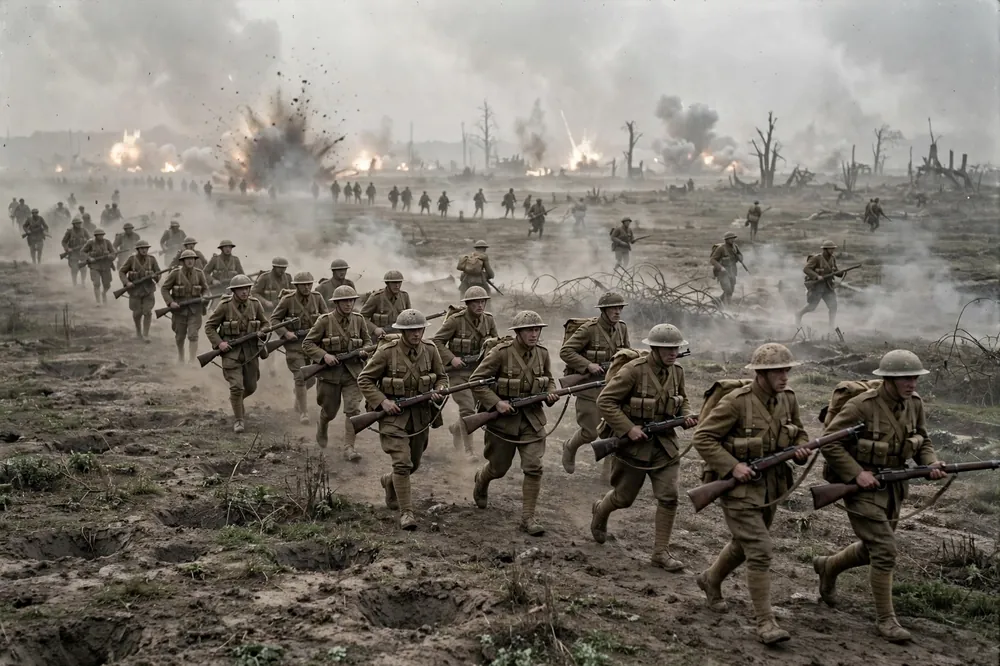
At 7:30 a.m. on 1 July 1916, British infantry went over the top. The result was the bloodiest day in British military history: 57,470 casualties, including 19,240 killed. The battle dragged on for more than four months. By its end, the British had suffered about 420,000 casualties, the French about 200,000, and the Germans at least 450,000 — over a million men in total — and the Allied line had advanced only about seven miles. The Somme proved that no bombardment yet devised could reliably destroy a deep trench system, and that courage alone could not cross no man’s land.
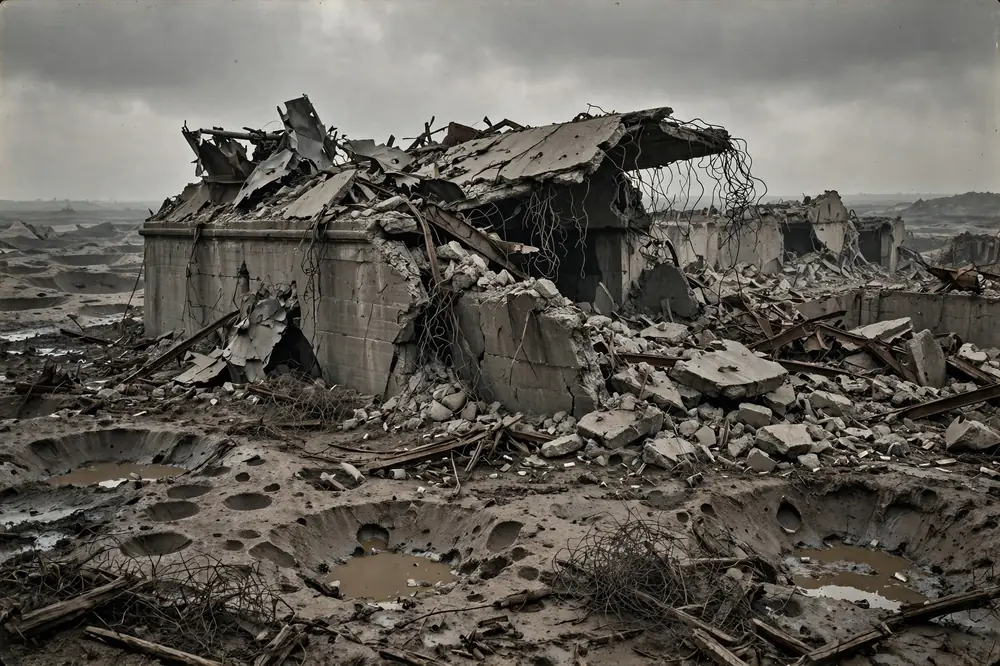
The Battle of Verdun (21 February – 18 December 1916) was fought as a deliberate battle of attrition — see our article on the War of Attrition. The German chief of staff, Erich von Falkenhayn, chose Verdun because it was a position of such symbolic and strategic importance that France would be compelled to defend it at any cost. His aim, according to his post-war account, was to “bleed France white” — to destroy the French army by forcing it to feed men into a battle where German artillery held the advantage.
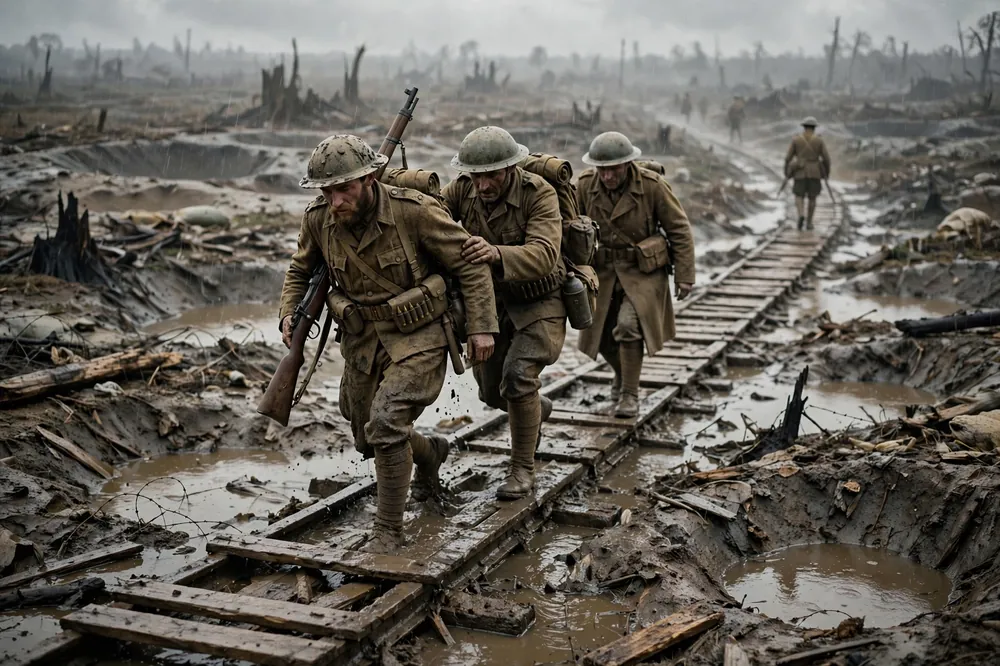
The battle lasted ten months and cost about 377,000 French casualties (including about 162,000 dead) and about 337,000 German casualties (including about 143,000 dead). Fort Douaumont, one of the great forts ringing Verdun, changed hands and became a symbol of the battle’s scale and cost. The French held, under General Philippe Pétain, whose rallying phrase “Ils ne passeront pas” — “They shall not pass” — became famous.
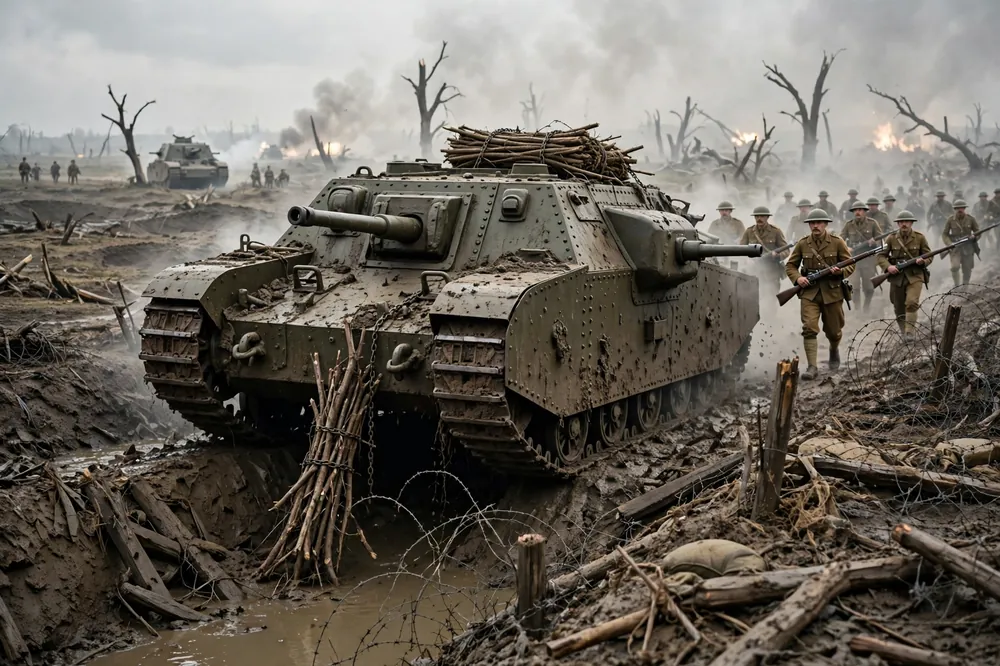
But Verdun showed the central paradox of Trench Warfare: even when the attacker chose the ground and the terms, the defence could still absorb the blow and bleed the attacker almost as badly. Historians also note that Falkenhayn’s famous memorandum setting out the attrition plan is disputed — no copy has ever been found, and the only account of it comes from Falkenhayn’s own post-war memoir — so his precise intentions remain a matter of debate.
The Third Battle of Ypres, known as Passchendaele (31 July – 10 November 1917), showed Trench Warfare at its worst. Haig launched the offensive to break out of the Ypres Salient in Flanders and reach the Belgian coast. A preliminary bombardment by more than 3,000 guns, firing some 4.25 million shells, destroyed the drainage systems of the low-lying Flanders plain. Then came weeks of unusually heavy rain. The battlefield dissolved into a sea of mud in which men and horses drowned in flooded shell craters, tanks sank, and the wounded could not be carried out.
After more than three months, Allied forces had advanced only a few miles. The armies under British command suffered about 275,000 casualties, according to Britannica, while German losses were about 220,000. Canadian troops finally captured the ruins of Passchendaele village on 6 November, at a cost of over 15,000 Canadian casualties, including about 4,000 killed. The name Passchendaele has often been described by historians as a symbol of the war’s futility: great sacrifice for a ruined village in a swamp.
The Battle of Messines (7 June 1917) showed what careful preparation could achieve against a trench system — and also its limits. For more than a year, British tunnellers had dug galleries under the German lines on the Messines Ridge in Flanders and packed them with explosives.
On the morning of 7 June, the British Second Army under General Herbert Plumer detonated 19 mines simultaneously, in one of the largest non-nuclear explosions in history. Contemporary accounts reported about 10,000 German soldiers killed in the blast, though the exact figure is disputed. The infantry then advanced behind a creeping barrage and took the ridge in a single day, with relatively light losses by Western Front standards.
Messines was a tactical success, but it changed little strategically: the ridge was a preliminary to the larger offensive at Passchendaele, where the same methods, applied on worse ground in worse weather, produced a very different result.
The Battle of Cambrai (20 November – 7 December 1917) offered the first glimpse of a way out. The British attacked without a long preliminary bombardment, using more than 400 tanks to crush the wire and cross the trenches, supported by a short, intense artillery barrage and infantry following behind.
On the first day they advanced up to five miles — an extraordinary gain by Western Front standards — and captured thousands of prisoners. But the success could not be exploited: there were too few reserves, the tanks broke down or ran out of fuel, and a German counter-attack using new infiltration tactics retook most of the lost ground.
Cambrai proved the tank’s potential, but also that a single new weapon, without the doctrine and logistics to support it, could not yet break the trench deadlock.
Strengths
Trench Warfare’s greatest strength was defensive. A well-built trench system multiplied the power of a small force: machine guns firing from protected positions, artillery registered on every approach, and deep dugouts that sheltered defenders from bombardment made a front line extraordinarily hard to take. A defending division could hold off several attacking divisions, which is why the Western Front barely moved for four years. Trenches also protected soldiers from the deadliest weapon of the war — artillery — far better than any open position could. A man in a deep dugout might survive a bombardment that would annihilate the same unit in the open.
Trenches were also cheap and quick to build compared with fortresses, and they could be dug almost anywhere. They allowed armies to hold long fronts with relatively few men, freeing reserves for other sectors. And they were adaptable: as the war went on, both sides added concrete pillboxes, deeper dugouts, secondary and tertiary lines, and elaborate wire obstacles, turning the front into a defensive zone kilometres deep rather than a single line.
That depth was itself a strength. An attacker who broke through the front line still faced the support line, then the reserve line, then artillery positions and counter-attack forces further back. Each layer cost time and lives, and each gave the defender a chance to bring up reserves and seal the breach.
The German defensive doctrine of 1917, built around a lightly held forward zone and a strong counter-attack force behind it, used this depth deliberately: the front line was meant to be given up, and the real fight took place further back, where the attacker’s artillery could not reach and the defender’s reserves were fresh.
It was this system, more than any single trench, that made the Western Front so hard to break.
Weaknesses and Countermeasures
The weaknesses of Trench Warfare were the mirror image of its strengths. A trench system was static: it could hold ground but not take it, and an army that dug in surrendered the initiative. Attacking across no man’s land meant crossing open ground against prepared machine guns and pre-registered artillery — the most dangerous movement in warfare. Communications broke down the moment an attack began: telephone lines were cut by shellfire, runners were killed, and commanders behind the lines often had no idea what was happening at the front for hours. Logistics were equally fragile — every shell, ration and stretcher had to cross the same broken ground as the infantry.
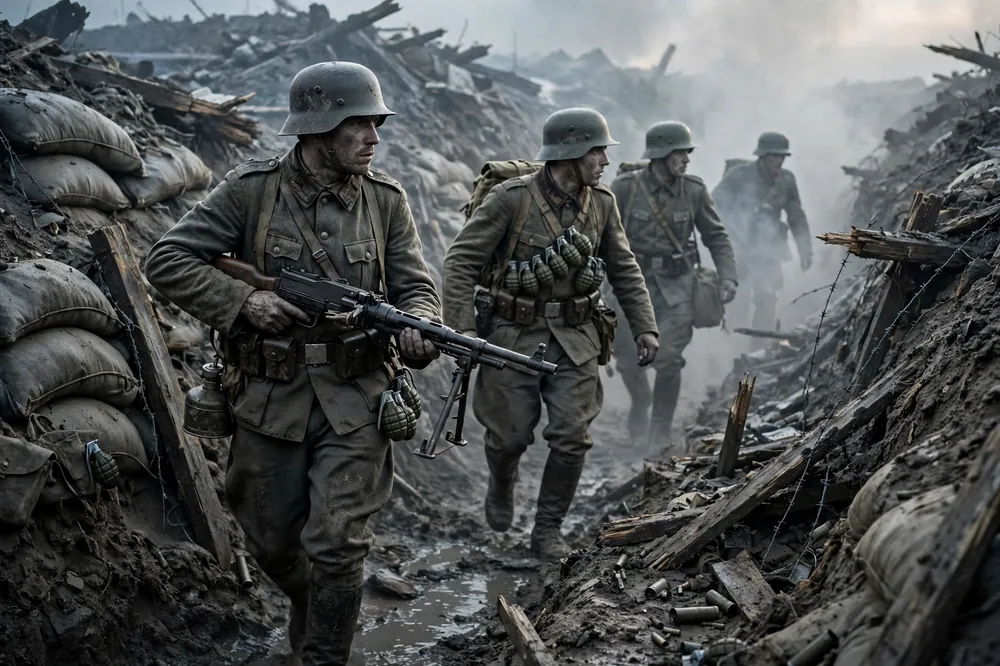
Both sides developed countermeasures. The Germans pioneered infiltration tactics — later called stormtrooper tactics — in which small, specially trained assault units bypassed strongpoints, slipped through gaps and attacked headquarters and artillery from behind, leaving the strongpoints to be mopped up later. These tactics were used with considerable effect in the German spring offensives of 1918.
The Allies developed the creeping barrage, in which artillery fire advanced in a moving wall just ahead of the infantry, and combined-arms attacks that coordinated tanks, aircraft, artillery and infantry. The British also used mining: at Messines in June 1917, they detonated 19 huge mines under the German lines, killing an estimated 10,000 German soldiers in one of the largest non-nuclear explosions in history — a figure reported by contemporary accounts and widely repeated since, though the exact death toll is disputed.
Other countermeasures were technological: poison gas, first used by Germany at Ypres in April 1915, was meant to clear trenches without an infantry assault, but wind, gas masks and retaliation in kind limited its effect. Aircraft were used for reconnaissance, artillery spotting and ground attack, but could not break the deadlock alone. The decisive answer, when it finally came in 1918, was not one weapon but a system: tanks, aircraft, artillery and infantry working together under flexible command, as the Allies demonstrated in the Hundred Days Offensive.
Evolution
Trench Warfare evolved rapidly during World War I. The shallow scrapes of 1914 became deep, engineered systems by 1916, with concrete shelters, electric lighting, narrow-gauge railways and elaborate drainage. The German Hindenburg Line, built in the winter of 1916–17, was the most advanced trench system of the war: a defensive zone up to 10 kilometres deep, with concrete pillboxes, deep dugouts, wide wire belts and carefully sited machine guns. When the Germans withdrew to it in early 1917 in Operation Alberich, they shortened their front by about 25 miles and freed up thirteen divisions — a demonstration that a well-built trench system could be a strategic asset, not just a shelter.
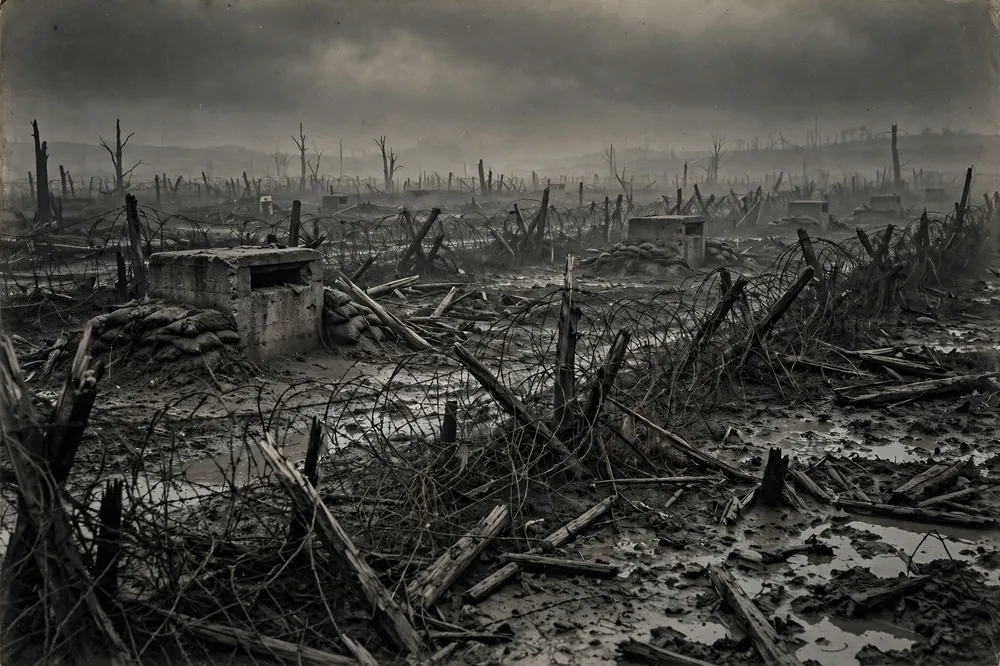
Tactics evolved alongside the trenches. The rigid, linear attacks of 1915–16 gave way to more flexible methods: the creeping barrage, tanks, infiltration by stormtroopers, and the use of aircraft to spot artillery and attack ground targets. By the autumn of 1918, the Allies had learned to combine these tools. In the Hundred Days Offensive (August–November 1918), British, French and American forces advanced steadily, breaking through the Hindenburg Line in late September 1918 and forcing Germany to seek an armistice on 11 November 1918. Trench Warfare had not been defeated by a single invention, but by the slow accumulation of combined-arms skill.
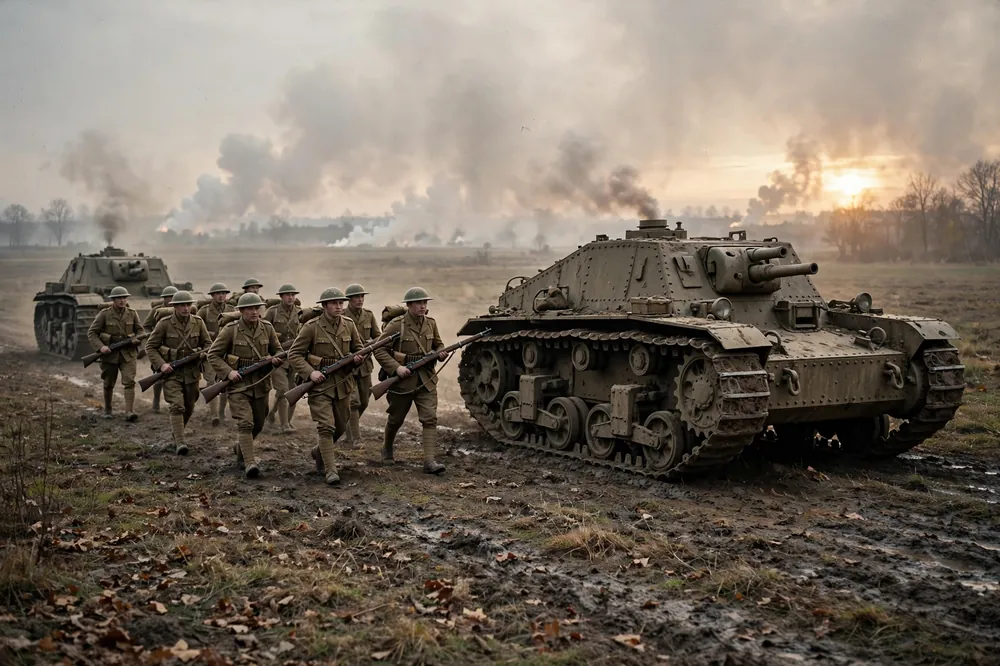
The German spring offensives of 1918 showed both how far tactics had come and how far they still had to go. In Operation Michael, launched on 21 March 1918, German stormtroopers broke through the British lines and advanced up to 40 miles in places — the largest advance on the Western Front since 1914.
But the advance outran its supplies, the troops were exhausted, and there were no reserves to exploit the breakthrough. By April the offensive had stalled, and the German army had suffered losses it could not replace. When the Allies counter-attacked in the summer, they used the same infiltration and combined-arms methods the Germans had pioneered, but with the tanks, aircraft and logistics to sustain the advance — and this time the breakthrough held.
After 1918, armies swore never to repeat the Western Front. Interwar doctrine in France, Britain and Germany all sought to restore movement: France built the Maginot Line but planned mobile counter-attacks behind it; Germany developed Blitzkrieg; Britain and the Soviet Union invested in tanks and mechanisation. Yet trenches never disappeared. They reappeared in the Iran–Iraq War of 1980–88, where both sides dug extensive trench systems along a static front and used poison gas against entrenched troops. And from 2022, trench warfare returned to Europe in the war in Ukraine, where artillery, drones and fortified lines once again made rapid advances rare and costly — proof that the conditions that created Trench Warfare in 1914 can recur whenever firepower outruns mobility.
Legacy and Modern Use
The legacy of Trench Warfare is written into modern military thinking. It taught armies that firepower without mobility produces stalemate, and that breaking a prepared defence requires the coordination of every arm — infantry, artillery, armour, engineers and air power — rather than a single decisive weapon. The combined-arms doctrine that every modern army uses today descends directly from the hard lessons of 1916–18. Trench systems themselves remain a standard part of military engineering: infantry still dig in when they must hold ground, and field fortifications are still taught in every army’s basic training.
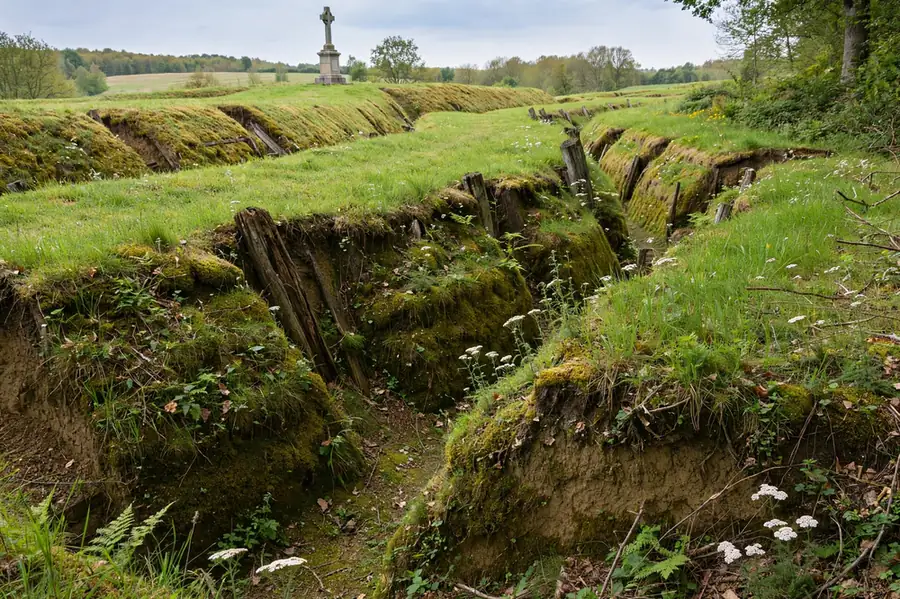
Trench Warfare also left a deep cultural legacy. The image of the mud-filled trench, the whistle, and the walk into machine-gun fire became the defining memory of World War I in Britain, France and Germany, shaping literature, poetry and film — from the poems of Wilfred Owen and Siegfried Sassoon to Erich Maria Remarque’s novel All Quiet on the Western Front (1929).
The preserved trenches at Verdun and the Somme, and the vast war cemeteries of northern France and Belgium, remain places of remembrance visited by millions. Modern use is visible in Ukraine, where both sides have built trench networks, and where drones have added a new dimension: trenches that once protected men from shells now must also hide them from cameras in the sky.
Assessment by Historians
Historians disagree sharply about Trench Warfare, and the debate has shaped how World War I itself is judged. An older generation of historians, writing in the decades after the war, often portrayed the Western Front as a futile slaughter directed by incompetent generals — the “lions led by donkeys” view popularised in Britain. In this reading, Trench Warfare was a failure of imagination: commanders kept ordering frontal attacks against machine guns long after it was clear they could not work.
More recent scholarship has pushed back. Historians such as Gary Sheffield and William Philpott argue that the generals faced a genuine tactical problem with no ready solution: given the firepower of 1914–16, there was no obvious way to break a prepared defence, and the learning process was real, if slow and bloody. On this view, the Somme was not a mindless repetition of failure but a necessary, painful step toward the combined-arms warfare that finally broke the deadlock in 1918. Other historians stress that Trench Warfare was not a British or French peculiarity but a structural condition of industrial war — the same stalemate appeared wherever industrial armies met, from the Eastern Front to Gallipoli.
What most historians now agree on is that Trench Warfare was neither a blunder nor a choice, but a consequence. When two industrial armies of roughly equal strength met with weapons that favoured the defence, the front froze — and it stayed frozen until tactics, technology and organisation caught up with firepower. The difficulty of the Western Front was not that generals failed to understand this, but that understanding it did not make the problem any easier to solve.
Frequently Asked Questions
What is Trench Warfare? Trench Warfare is fighting from opposing systems of fortified trenches, with attacks launched across the no man’s land between them. It dominated the Western Front in World War I from late 1914 to 1918.
Why did Trench Warfare develop in World War I? Machine guns and modern artillery made open attacks extremely costly, while neither side could outflank the other after the Race to the Sea reached the Channel coast in November 1914. Both armies dug in to survive, and the front froze.
How long were the trenches on the Western Front? The continuous trench system ran roughly 440 miles (700 km) from the North Sea coast in Belgium to the Swiss border.
What was life like in the trenches? Soldiers lived in mud and water, plagued by rats, lice and trench foot, under constant artillery fire. Units rotated between the front line, support trenches and rest areas, but the strain was continuous.
How was Trench Warfare finally overcome? By combined-arms warfare: tanks, aircraft, artillery (especially the creeping barrage), infiltration tactics and better communications, as demonstrated by the Allies in the Hundred Days Offensive of 1918.
Is Trench Warfare still used today? Yes. Extensive trench systems were used in the Iran–Iraq War (1980–88) and have reappeared in the war in Ukraine since 2022, where drones have added a new threat to entrenched troops.
Related articles
Sources
- Wikipedia, “Trench warfare” — overview, origins, trench systems and casualty figures, cross-checked against the sources below.
- Imperial War Museums (iwm.org.uk), “What Was the Battle of the Somme?” and “Life in the Trenches” — first-day casualties of 57,470, including 19,240 killed; total Somme casualties over one million.
- Encyclopaedia Britannica, “Battle of the Somme”, “Battle of Verdun” and “Battle of Passchendaele” — casualty figures and battle assessments.
- National Army Museum (nam.ac.uk), “Battle of the Somme” — British, French and German casualty totals for the Somme.
- History.com, “10 Things You May Not Know About the Battle of Verdun” — Verdun dates and casualties (French 377,231, of whom 162,440 dead; German 337,000, of whom 143,000 dead); Falkenhayn’s “bleed France white” plan.
- Commonwealth War Graves Commission (cwgc.org), “Cemeteries and Memorials of the Battle of the Somme” — first-day losses and total Commonwealth dead.
Further reading
- John Keegan, The First World War (Alfred A. Knopf, 1998).
- Alistair Horne, The Price of Glory: Verdun 1916 (Macmillan, 1962).
- Martin Gilbert, The Somme: Heroism and Horror in the First World War (Henry Holt, 2006).
- Gary Sheffield, Forgotten Victory: The First World War — Myths and Realities (Headline, 2001).