 WAR ATLAS MILITARY HISTORY MAGAZINE · WWI — WWII
War of Attrition

Lead
A War of Attrition is a conflict fought not to win a single decisive battle, but to wear the enemy down gradually — destroying its soldiers, equipment, supplies and will to fight until it can no longer continue. The term covers both a deliberate strategy, chosen when a quick victory is impossible, and a condition that emerges when two evenly matched forces cannot break each other.
It was the defining character of the Western Front in World War I, the stated American approach in Vietnam, and the reality of the Iran–Iraq War of 1980–88. Its importance is that it reverses the usual logic of war: the aim is not to take ground but to impose losses, and the side that can replace its losses longer usually wins — at a cost that often shocks the societies that pay it.
Key Facts
| Definition | A strategy of gradually eroding the enemy’s personnel, materiel and morale over time, rather than seeking a single decisive battle. |
| Origin | Theorised by the German historian Hans Delbrück (1848–1929) as Ermattungsstrategie, the “strategy of exhaustion”, drawing on a note by Carl von Clausewitz from 1827. |
| Used by | Germany and France at Verdun (1916); the United States in Vietnam (1965–68); Egypt and Israel (1967–70); Iraq and Iran (1980–88); and, in different forms, by most belligerents of World War I. |
| Used in | World War I (1914–18), the American Civil War’s Overland Campaign (1864), the War of Attrition on the Suez Canal (1967–70), the Vietnam War (1965–73), the Iran–Iraq War (1980–88). |
| Key examples | Verdun (1916), the Somme (1916), the Overland Campaign (1864), Vietnam (1965–68), Iran–Iraq (1980–88). |
| Effectiveness | Effective when one side has clearly greater resources and can sustain losses longer; often fails when the weaker side can replace losses, endure, or shift the political cost onto the attacker. |
Origins
The idea of attrition as a distinct form of strategy comes from the German military historian Hans Delbrück. Writing at the start of the twentieth century, Delbrück argued that all military strategy could be divided into two basic forms. The first was Niederwerfungsstrategie, the strategy of annihilation, which sought a decisive battle to destroy the enemy’s army — the approach associated with Napoleon.

The second, which Delbrück drew from a note Carl von Clausewitz had written in 1827, was Ermattungsstrategie, the strategy of exhaustion, sometimes translated into English as “attrition”. Where annihilation had one pole — the battle — exhaustion had several: occupying territory, destroying crops, blockading ports, and wearing the enemy down over an extended campaign until its political will or material capacity gave way.
Delbrück’s distinction was controversial, and the English translation has caused lasting confusion: as later scholars have noted, “exhaustion” and “attrition” are not the same thing, and Delbrück himself meant something broader than simply inflicting casualties — a long campaign that eroded the enemy’s resources, position and will. But the core insight survived: when a decisive battle is impossible — because the political aims are limited, or the military means are inadequate — a war can still be won by wearing the enemy down.
In practice, attrition is far older than Delbrück’s theory. Commanders have always understood that an enemy with no food, no ammunition and no reinforcements cannot fight, and sieges, blockades and scorched-earth campaigns are among the oldest forms of war. What changed in the industrial age was scale: mass armies, railways and factories meant that losses could be measured in hundreds of thousands, and that a war of attrition could consume entire generations. The American Civil War offered an early industrial example, and the First World War made attrition the default condition of modern war.
How It Works
A War of Attrition works by making the enemy’s losses exceed its ability to replace them. The attacker does not need to take ground or win a battle; it needs to keep the casualty exchange favourable over time. This can be done in several ways. The most direct is battle: repeated attacks that inflict more losses than they cost, even if they gain little territory. The second is economic: blockade, bombing of industry, and destruction of transport, which reduce the enemy’s capacity to produce weapons and move supplies. The third is political and psychological: prolonged fighting that erodes the enemy government’s support at home, or the morale of its soldiers at the front.
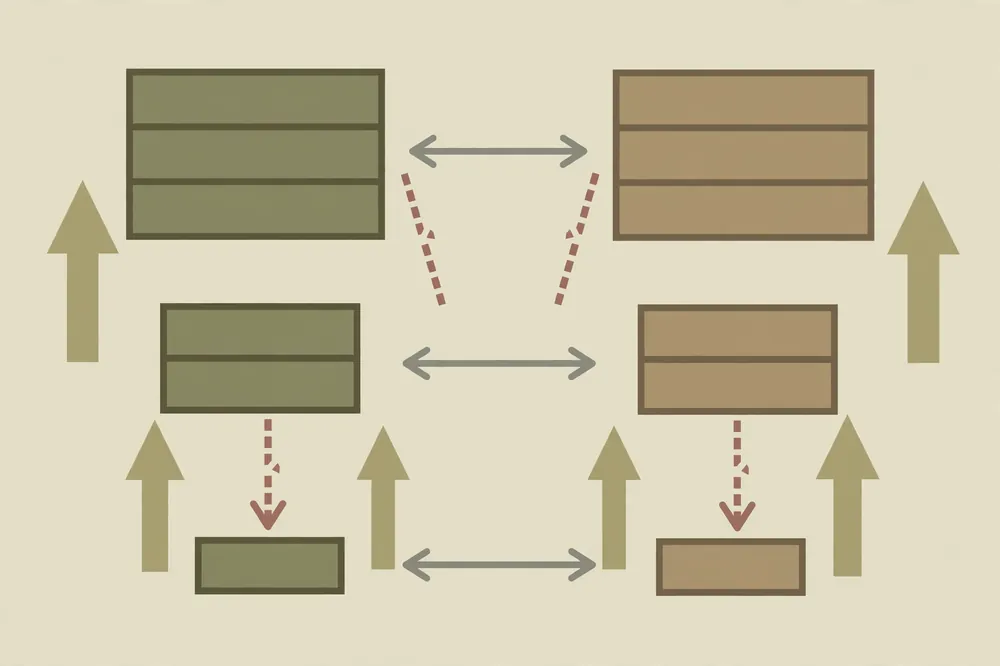
Three conditions decide whether attrition succeeds. First, the arithmetic must work: the attacker must inflict losses faster than the defender can replace them, taking account of population, industry and allies. Second, the attacker’s own society must tolerate the cost — a war of attrition is long, and the side that loses patience first usually loses the war. Third, the enemy must have no escape: if it can withdraw, find new allies, or change the nature of the war (for example, by switching to guerrilla warfare), the attrition arithmetic breaks down. These three conditions explain most of the famous successes and failures of attrition, from Verdun to Vietnam.
Attrition also differs from annihilation in what it demands of commanders. Annihilation rewards boldness and speed; attrition rewards patience, logistics and measurement. The attrition commander must track the exchange rate of losses, manage reserves, keep supply lines open, and sustain public support through months or years without a dramatic victory. It is, in practice, a test of institutions as much as of armies.
Historical Examples
The American Civil War provides one of the earliest industrial examples of attrition. In the spring of 1864, the Union general Ulysses S. Grant launched the Overland Campaign against the Confederate Army of Northern Virginia under Robert E. Lee. Grant did not seek a single decisive battle.
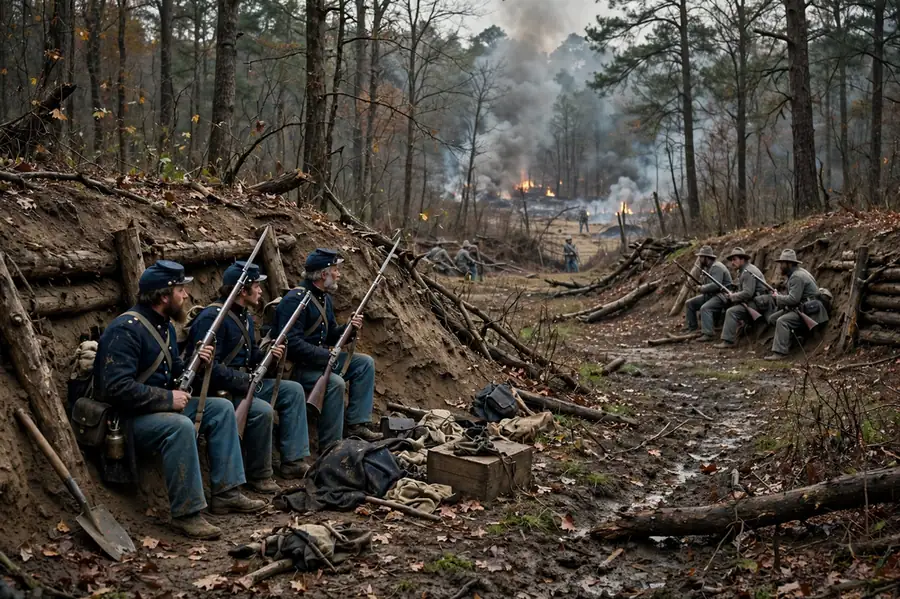
Instead, he used the Union’s larger manpower and industrial base to keep Lee’s army under continuous pressure — fighting at the Wilderness, Spotsylvania and Cold Harbor, then crossing the James River to besiege Petersburg. The campaign cost the Union an estimated 55,000 casualties and the Confederacy about 33,000, according to commonly cited figures — but the Union could replace its losses and the Confederacy could not.
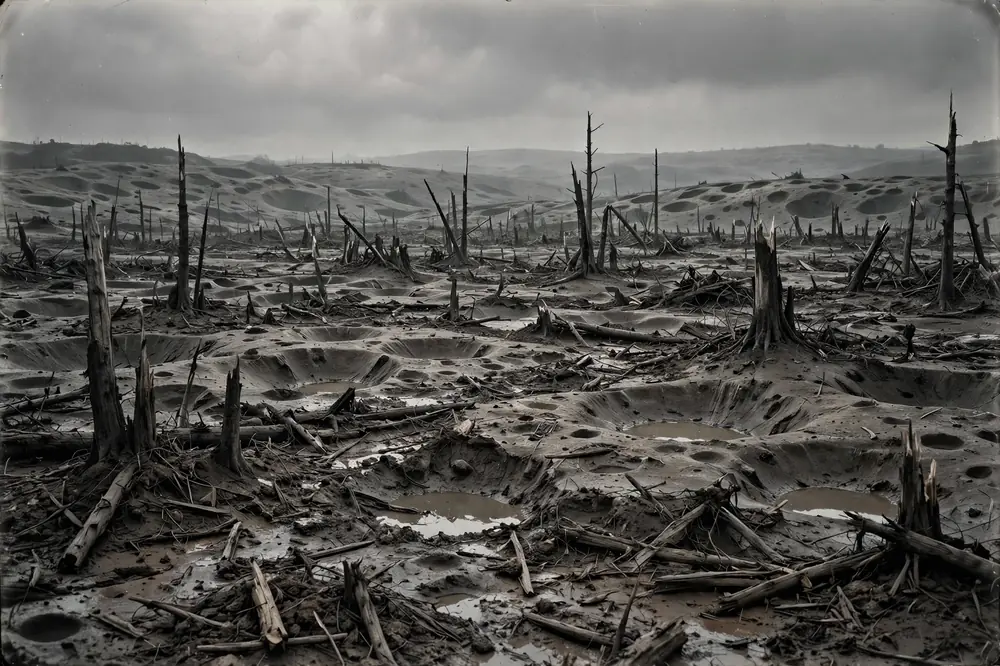
Lee’s army was steadily reduced until it was pinned at Petersburg and finally surrendered at Appomattox in April 1865. Grant’s approach was criticised at the time as unimaginative and costly, and later historians still debate whether the losses were necessary; but as a demonstration of attrition arithmetic — the larger, richer side grinding the smaller one down — it was decisive.
Verdun, 1916 / Verdun, 1916
The Battle of Verdun (21 February – 18 December 1916) is the most studied deliberate War of Attrition in history. The German chief of staff, Erich von Falkenhayn, chose the fortress city of Verdun on the Meuse because France, for reasons of strategy and national pride, would be compelled to defend it.
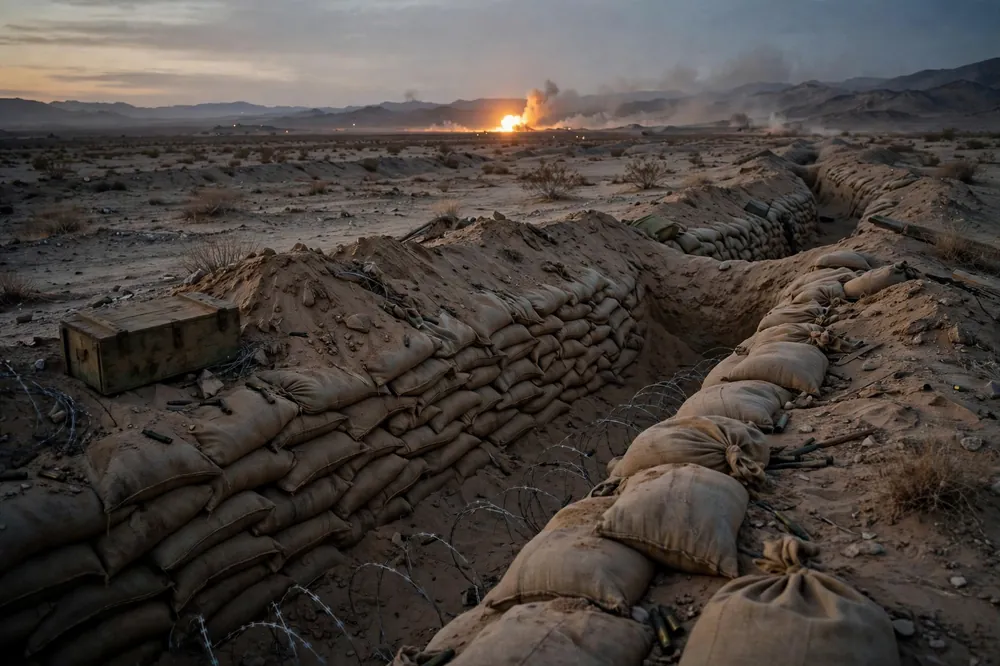
According to Falkenhayn’s post-war account, his aim was to “bleed France white” — to force the French army to throw division after division into a battle where German artillery held the advantage, until France could no longer fight. The battle lasted ten months and cost about 377,000 French casualties (about 162,000 dead) and about 337,000 German casualties (about 143,000 dead).
The arithmetic failed: the exchange rate was close to equal, not the two-to-one advantage Germany had hoped for, and the French army did not collapse. Falkenhayn was dismissed in August 1916. Historians also note that the documentary basis for the plan is disputed — no copy of Falkenhayn’s memorandum to the Kaiser has ever been found, and the only account of it comes from Falkenhayn’s own post-war memoir — so whether attrition was the plan from the start, or a justification invented afterwards, remains debated.
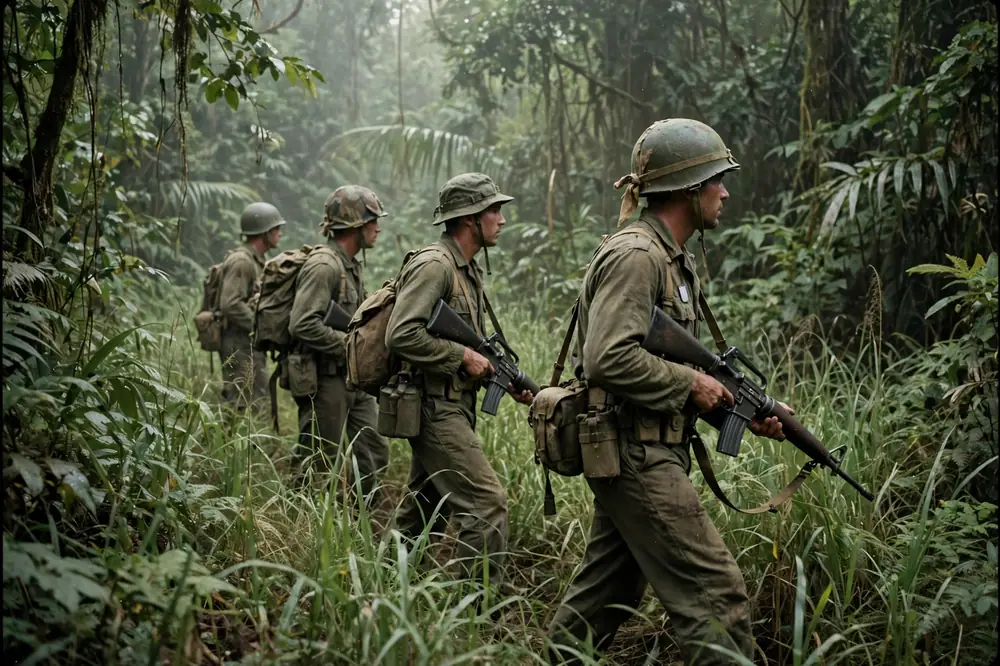
In Vietnam, the United States adopted attrition explicitly. The commander of American forces, General William Westmoreland, pursued a strategy of “search and destroy”: large units would find enemy forces, bring superior firepower to bear, and inflict losses measured by “body count” until the enemy could no longer sustain the war.
The approach produced very high enemy casualty figures — American estimates put North Vietnamese and Viet Cong losses far above American losses — but it did not produce victory. The reasons illustrate the limits of attrition: the North Vietnamese could replace losses through a large population and outside support; they could choose when and where to fight, and could withdraw into sanctuaries; and the political cost of the war fell increasingly on the United States, where public support declined as casualties mounted and no decisive victory appeared.
The Tet Offensive of January–February 1968 was a military defeat for the attacking forces, which suffered heavy losses, but it demonstrated that the enemy could still mount a country-wide offensive — and it shifted American public opinion decisively against the war. Westmoreland was replaced in mid-1968, and the United States moved towards a policy of withdrawing its forces.
The conflict that gave the term its name was fought between Egypt and Israel along the Suez Canal from 1967 to 1970. After Israel’s victory in the Six-Day War of June 1967, Egypt sought to wear down the Israeli forces holding the east bank of the canal through artillery bombardments, commando raids and, later, air attacks, without launching a full-scale invasion.
Israel replied with deep air strikes into Egypt, including attacks near Cairo, and with raids across the canal. The fighting, which lasted three years and ended with a ceasefire in August 1970, cost several thousand Egyptian soldiers’ lives and Israeli losses in the hundreds, according to commonly cited estimates.
Neither side achieved its political aims: Egypt did not recover the Sinai Peninsula, which remained in Israeli hands until 1982, and Israel did not force Egypt to accept the post-1967 borders. The war is studied as a case of attrition chosen deliberately by the weaker side — Egypt could not defeat Israel in a decisive battle, so it sought to impose a steady cost instead — and of its limits: the cost was borne mainly by Egypt itself.
The Iran–Iraq War is the most sustained War of Attrition of the late twentieth century. Iraq invaded Iran in September 1980 expecting a quick victory; instead, the war settled into eight years of static front lines, trench warfare, human-wave attacks, and attacks on shipping and cities. Neither side could achieve a breakthrough, and both relied on wearing the other down.
Total deaths are commonly estimated at around one million, though estimates vary widely, and the war ended in 1988 with a ceasefire and the border essentially where it had started. The war illustrates attrition in its purest form: two states of comparable size, neither able to defeat the other, inflicting enormous losses for almost no territorial gain — and both emerging weakened.
Strengths
The strength of a War of Attrition is that it does not require a decisive battle, and it plays to the strengths of the larger, richer side. A state with more men, more factories and more allies can afford to trade losses, and can keep trading them until the smaller side is exhausted. Attrition is also flexible: it can be pursued by land battle, by blockade, by bombing, or by a combination, and it does not depend on a single moment of success. For the side that chooses it deliberately, attrition can be a rational answer to a real problem — when the enemy is too strong to defeat quickly, wearing it down may be the only available path.
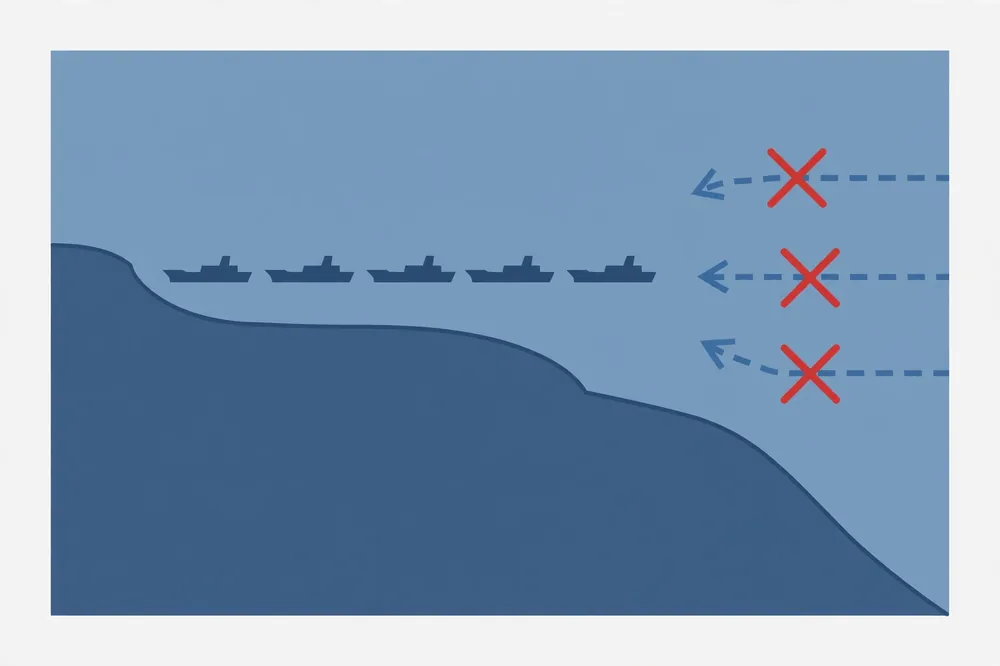
Attrition can also be effective as a defensive strategy. A weaker side that cannot win a battle may still be able to make the war so costly for the attacker that the attacker gives up — the logic of many guerrilla wars, and of the Soviet defence against Germany in 1941–43, where space, population and industry absorbed the German advance until the balance shifted. In this form, attrition is not about winning battles but about surviving longer than the enemy’s willingness to fight.
A related strength is that attrition does not require the attacker to be stronger in every respect — only to be able to sustain the exchange longer. A side with secure supply lines, a larger population, or outside support can accept unfavourable battles and still win the war, because it can replace what it loses. This is why attrition has so often been the strategy of coalitions: the Allies in both world wars could draw on the combined resources of several great powers, while their opponents, fighting alone or with weaker allies, could not match the rate of replacement.
Weaknesses and Countermeasures
The weaknesses of attrition are severe. First, it is enormously expensive: it consumes soldiers, equipment and money at a rate that can damage the attacker as much as the defender. Verdun cost Germany about 337,000 casualties for no territorial gain and no strategic result; the Somme cost the Allies over a million casualties for an advance of about seven miles. Second, it is slow, and slowness gives the enemy time to adapt — to find new allies, new weapons, or new tactics. Third, it depends on measurement, and measurement is easily distorted: in Vietnam, the reliance on body counts created pressure to report high figures, and the numbers told commanders little about whether the enemy was actually weakening.
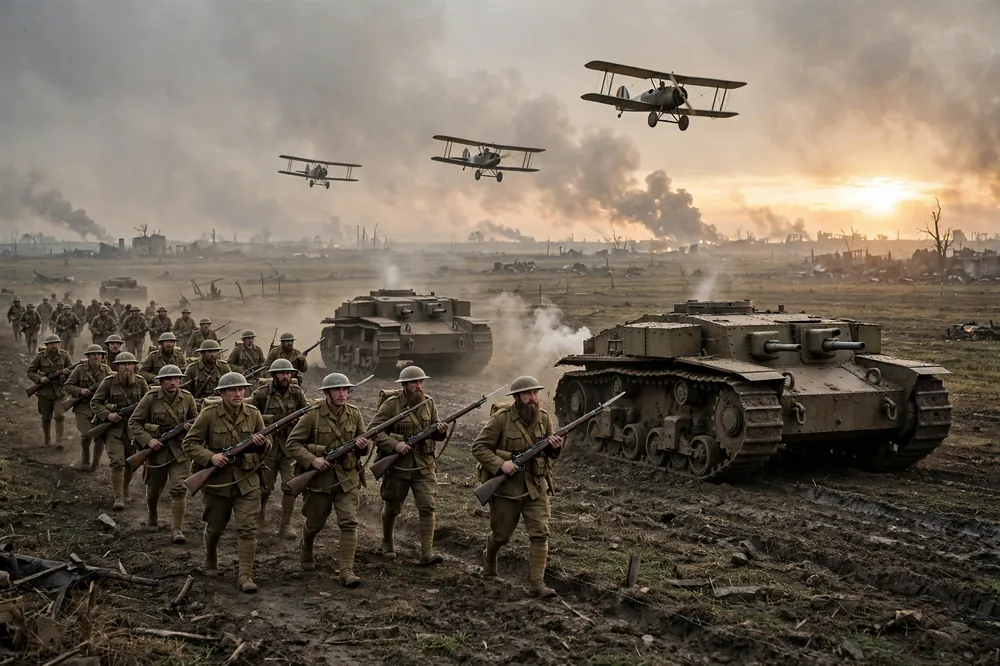
The countermeasures to attrition are to refuse the exchange. An enemy can avoid battle and switch to guerrilla warfare, as the Viet Cong did; it can seek outside support, as North Vietnam did; it can attack the attacker’s will at home through propaganda and by prolonging the war; or it can change the terms of the war entirely — for example, by threatening escalation, or by achieving a sudden manoeuvre success that makes the attrition arithmetic irrelevant. The most effective countermeasure of all is the one the Allies found in 1918: combined-arms manoeuvre warfare, which broke the trench deadlock and made the slow grinding of attrition unnecessary.
Evolution
Attrition has taken different forms in different eras. In the pre-industrial age, it meant sieges and blockades: starving a fortress or a country into surrender. In the industrial age, it meant the mass slaughter of the Western Front, where artillery and machine guns made the casualty exchange the central fact of war. In the second half of the twentieth century, it took new forms: strategic bombing campaigns intended to destroy the enemy’s industry (the Allied bombing of Germany, and the American bombing of North Vietnam), economic sanctions, and wars of national liberation in which the weaker side deliberately prolonged the conflict to exhaust the stronger side politically.
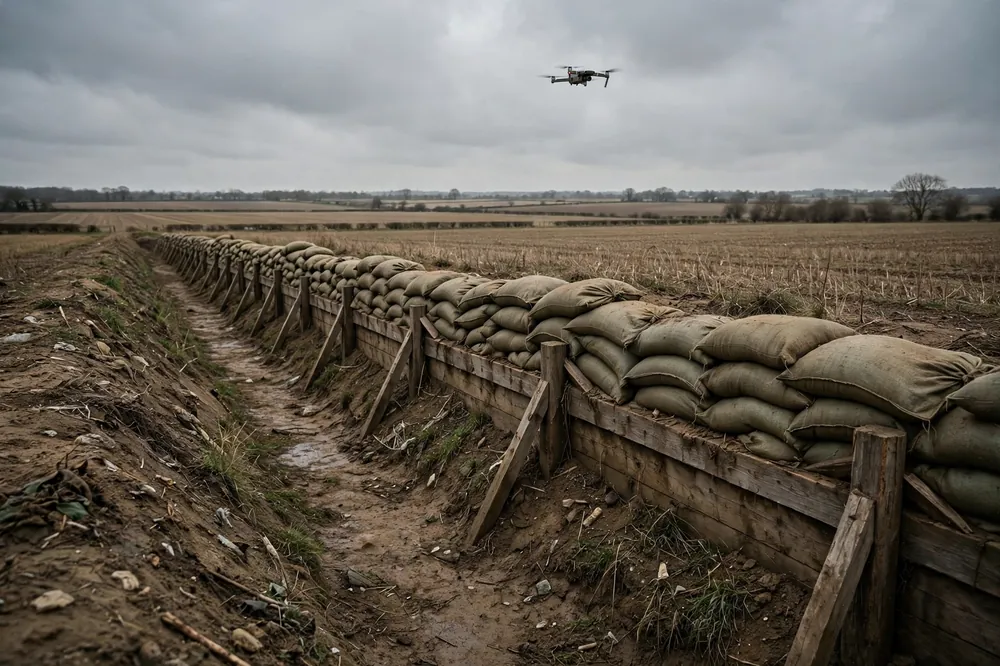
In the twenty-first century, attrition has reappeared in new forms. The war in Ukraine since 2022 has combined trench warfare, artillery duels and drone attacks into a prolonged contest in which both sides seek to exhaust the other’s men, equipment and ammunition stocks. Economic sanctions, information operations and attacks on energy infrastructure have become part of the attrition toolkit, alongside the battlefield.
Economic attrition deserves separate mention, because it has often mattered more than battlefield losses. In the First World War, the British naval blockade of Germany restricted food and raw materials for four years and contributed to severe shortages and hardship among German civilians — a factor that historians cite among the pressures that led to Germany’s collapse in 1918, though its precise weight relative to the military defeat is debated.
In the Second World War, the Allied bombing of German industry and the blockade of Japan played a similar role. The lesson is that attrition is not only about soldiers: it is about the whole capacity of a state to sustain war, and an enemy’s factories, farms and ports can be as important a target as its armies.
The lesson of this evolution is that attrition is not a relic: whenever two sides are evenly matched and neither can achieve a quick decision, war tends to become a war of attrition, whatever the technology.
Legacy and Modern Use
The legacy of the War of Attrition is written into modern military doctrine, mostly as a warning. Modern armies seek to avoid attrition: they emphasise manoeuvre, precision weapons, and rapid decision, precisely because the Western Front and Vietnam showed what attrition costs. The United States military’s post-Vietnam reforms, and the doctrine of manoeuvre warfare adopted by the Marine Corps in the 1980s, were explicit reactions against attrition. Yet the concept remains in the doctrine of every major army, usually under the label “attrition” as one of the recognised forms of strategy — and it remains the default outcome whenever manoeuvre fails.

Attrition also survives in the economic and political dimensions of war: sanctions, blockades and information campaigns are all forms of wearing an opponent down without a decisive battle. The term itself has entered general language — a “war of attrition” now describes any prolonged contest, in business, politics or sport, in which the winner is the side that can endure longest. Its military meaning, however, remains what Delbrück described: a war won not by a single blow, but by the slow accumulation of losses until one side can no longer continue.
Assessment by Historians
Historians assess the War of Attrition with a mixture of recognition and criticism. On one hand, most accept Delbrück’s basic point: attrition is a real form of strategy, not merely the absence of strategy, and it has decided wars — Grant’s campaign in 1864, and arguably the Allied victory in 1918, which was achieved in part by wearing Germany down. On the other hand, historians are sharply critical of how attrition was applied in practice. At Verdun, the arithmetic did not work and the battle consumed both armies almost equally. In Vietnam, the measurement system — body counts — distorted decision-making and told commanders little about the enemy’s real capacity.
A further point of debate concerns intention. In the case of Verdun, historians disagree about whether Falkenhayn planned a war of attrition from the start or whether the attrition explanation was constructed afterwards to justify a battle that had failed to achieve a breakthrough. As noted above, no copy of his memorandum has been found. Similarly, historians debate whether the Western Front as a whole was a deliberate war of attrition or a condition that neither side chose and neither could escape. The most widely held view today is that it was the latter: attrition was the consequence of industrial firepower, not a plan — and that is why it proved so hard to stop.
The concept has also entered formal military doctrine. The United States Department of Defense defines attrition as “the reduction of the effectiveness of a force caused by loss of personnel and materiel”, and lists it alongside annihilation and exhaustion as one of the recognised forms of strategy. That official recognition reflects Delbrück’s original point: attrition is not the absence of a plan, but a plan of a particular kind — one that accepts a long war and seeks victory through endurance rather than through a single decisive act.
Frequently Asked Questions
What is a War of Attrition? A War of Attrition is a conflict fought to wear the enemy down gradually — destroying its soldiers, equipment, supplies and will to fight — rather than winning a single decisive battle.
What is the difference between attrition and annihilation? Annihilation seeks a rapid, decisive victory by destroying the enemy’s army in battle. Attrition seeks a gradual victory by eroding the enemy’s strength over time. The distinction was drawn by the historian Hans Delbrück, building on Clausewitz.
Was Verdun a War of Attrition? Verdun is the most studied example. According to Falkenhayn’s post-war account, Germany deliberately sought to “bleed France white” there. However, the documentary basis is disputed — no copy of his memorandum survives — and the casualty exchange was close to equal, so the plan, if it existed, did not achieve its aim.
Why did attrition fail in Vietnam? The United States inflicted heavy losses, but North Vietnam could replace them through a large population and outside support, could choose when to fight, and could withdraw to sanctuaries. Meanwhile, the political cost of a long war without a decisive victory fell on the United States, where public support declined.
Is the war in Ukraine a War of Attrition? Many analysts describe it as such: since 2022, the fighting has combined trench warfare, artillery duels and drone attacks into a prolonged contest in which both sides seek to exhaust the other’s personnel, equipment and ammunition. This is an assessment by analysts, not a settled historical judgement.
Related articles
Sources
- Wikipedia, “War of attrition” — definition, Delbrück’s framework, and historical examples.
- Wikipedia, “Hans Delbrück” — Ermattungsstrategie and Niederwerfungsstrategie, and their relationship to Clausewitz’s 1827 note.
- Lawrence Freedman, Strategy: A History (Oxford University Press, 2013), Chapter 9, “Annihilation or Exhaustion” — Delbrück’s distinction and its application.
- History.com, “10 Things You May Not Know About the Battle of Verdun” — Verdun dates and casualties; Falkenhayn’s “bleed France white” plan and the disputed memorandum.
- Encyclopaedia Britannica, “Battle of Verdun” and “Vietnam War” — casualty figures and the attrition strategy in Vietnam.
- Wikipedia, “Iran–Iraq War” — duration, character and casualty estimates of the 1980–88 war.
Further reading
- Hans Delbrück, History of the Art of War, Volume IV (University of Nebraska Press, 1985, English translation).
- Alistair Horne, The Price of Glory: Verdun 1916 (Macmillan, 1962).
- Russell F. Weigley, The American Way of War (Indiana University Press, 1973).