 WAR ATLAS MILITARY HISTORY MAGAZINE · WWI — WWII
Wernher von Braun
1. Lead
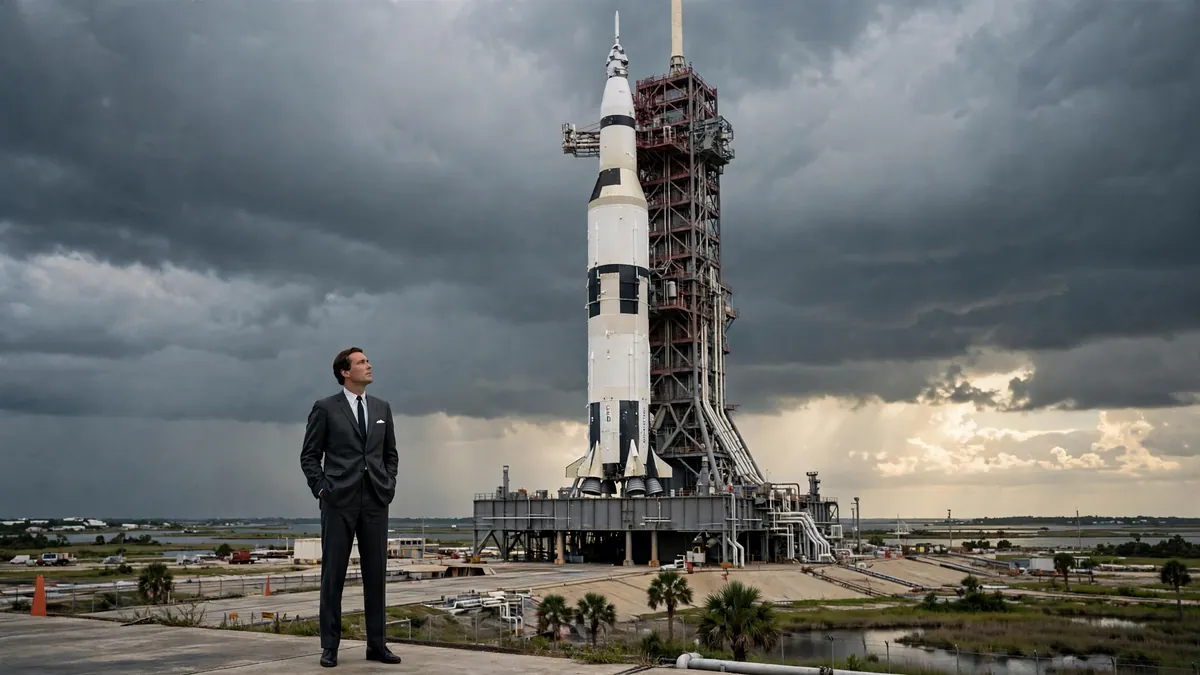
Wernher von Braun (23 March 1912 – 16 June 1977) was the German rocket engineer who built the world’s first long-range ballistic missile, the V-2, for Nazi Germany, and who then built the Saturn V rocket that carried the Apollo 11 astronauts to the Moon for the United States.
Born into an aristocratic Prussian family, he was a brilliant student of physics and a passionate amateur rocketeer in the 1920s, and by the age of twenty-five he was the technical director of the German Army’s rocket research centre at Peenemünde on the Baltic coast.
There, between 1937 and 1945, he led the development of the V-2, the first man-made object to reach space, a weapon that killed thousands of civilians in London, Antwerp and other cities in 1944–1945, and that was built by slave labourers in the underground factory at Mittelwerk, where tens of thousands of prisoners died.
At the end of the war von Braun surrendered to the Americans, was brought to the United States under Operation Paperclip, and became the central figure in the American space programme: he built the Redstone and Jupiter rockets, launched America’s first satellite, Explorer 1, in 1958, directed the Marshall Space Flight Center in Alabama, and designed the Saturn V, the most powerful rocket ever flown, which carried twelve astronauts to the Moon between 1969 and 1972.
Von Braun’s place in the history of the Second World War is inseparable from the moral question at the heart of his life. He was the man who made spaceflight possible, and he was also the man whose rockets were built by slave labour and used as a terror weapon against civilians.
He insisted throughout his life that he was a scientist interested only in space exploration, and that he had no knowledge of the crimes committed at the Mittelwerk factory; the historical record shows that he visited the factory, that he knew prisoners were dying there, and that he was a member of the SS.
At the same time, his contribution to the American space programme was immense: without von Braun, there would have been no Saturn V, and without the Saturn V, there would have been no Apollo 11. Historians debate whether he was a visionary who was used by two regimes, or an opportunist who served whoever would fund his rockets, and whether the achievements of Apollo can be separated from the crimes of Peenemünde.
The debate has never been settled, and it is unlikely to be.
2. Key Facts
| Born | 23 March 1912, Wirsitz, Province of Posen, German Empire (now Wyrzysk, Poland) |
| Died | 16 June 1977 (aged 65), Alexandria, Virginia, United States |
| Nationality | German-born; became a United States citizen in 1955 |
| Role / Office | Technical director, Peenemünde Army Research Center (1937–1945); director, NASA Marshall Space Flight Center (1960–1970); Deputy Associate Administrator for Planning, NASA (1970–1972) |
| Known for | The V-2 rocket (1942–1945); the Redstone and Jupiter rockets; the Saturn V rocket and the Apollo Moon landings (1969–1972) |
| Spouse / Family | Maria Luise von Quistorp (married 1947, died 1989); children Iris, Margrit and Peter; father Magnus von Braun, a Prussian minister |
| Military rank | SS-Sturmbannführer (Major) in the SS (1943–1945) |
3. Early Life and Education
Wernher Magnus Maximilian von Braun was born on 23 March 1912 in Wirsitz, in the Prussian province of Posen (now Wyrzysk in Poland), the second son of Baron Magnus von Braun, a Prussian civil servant and later a minister in the Weimar government, and Emmy von Quistorp, the daughter of a landowning family.
The von Brauns were an old aristocratic family, and Wernher grew up in a world of privilege: the family lived in Berlin, spent summers on their estate, and the boy was educated at the French Gymnasium in Berlin and then at the boarding school of Ettersburg near Weimar.
He was a gifted student, particularly in mathematics, though he was, by his own account, lazy at school until he discovered a passion for astronomy and for the idea of space travel. The turning point came when he read Hermann Oberth’s Die Rakete zu den Planetenräumen (The Rocket into Interplanetary Space, 1923), the founding text of modern rocketry, and the science-fiction novels of Jules Verne.
He became obsessed with the idea of reaching the Moon.
In 1930, at the age of eighteen, von Braun joined the Verein für Raumschiffahrt (Society for Space Travel), a group of amateur rocketeers in Berlin who were experimenting with liquid-fuelled rockets, and he began working with its leading figures, including Rudolf Nebel and Klaus Riedel, at a disused ammunition dump on the outskirts of Berlin that they called the Raketenflugplatz — the rocket airfield.
He also enrolled at the Technical University of Berlin to study mechanical engineering, and later at the University of Berlin, where he studied physics and wrote a doctoral thesis on the theory of liquid-propellant rocket engines. The German Army, which was forbidden by the Treaty of Versailles from developing heavy artillery, was interested in rockets as a way around the treaty’s restrictions, and in 1932 the army’s Ordnance Office recruited the twenty-year-old von Braun as a civilian researcher.
It was a fateful bargain: the army gave him the funding and the facilities to build rockets, and in return he gave the army a weapon.
Von Braun’s early work was carried out at Kummersdorf, the army’s testing ground south of Berlin, where he and his team developed the A-2 rocket, which flew successfully in December 1934. In 1937 the army moved the rocket programme to a new, secret research centre at Peenemünde, a fishing village on the island of Usedom on the Baltic coast, and von Braun, at twenty-five, became its technical director.
He was young, charming, energetic and ambitious, and he led a team of some of the best engineers in Germany. He was also, by 1937, a member of the Nazi Party — he joined in May 1937 — and in 1940 he joined the SS, in which he rose to the rank of Sturmbannführer (major) in 1943.
He later claimed that he joined the SS only at the insistence of Heinrich Himmler and that he wore the uniform rarely; the record shows that he joined voluntarily and that his SS membership was an important part of his career in the Third Reich.
4. Rise to Prominence
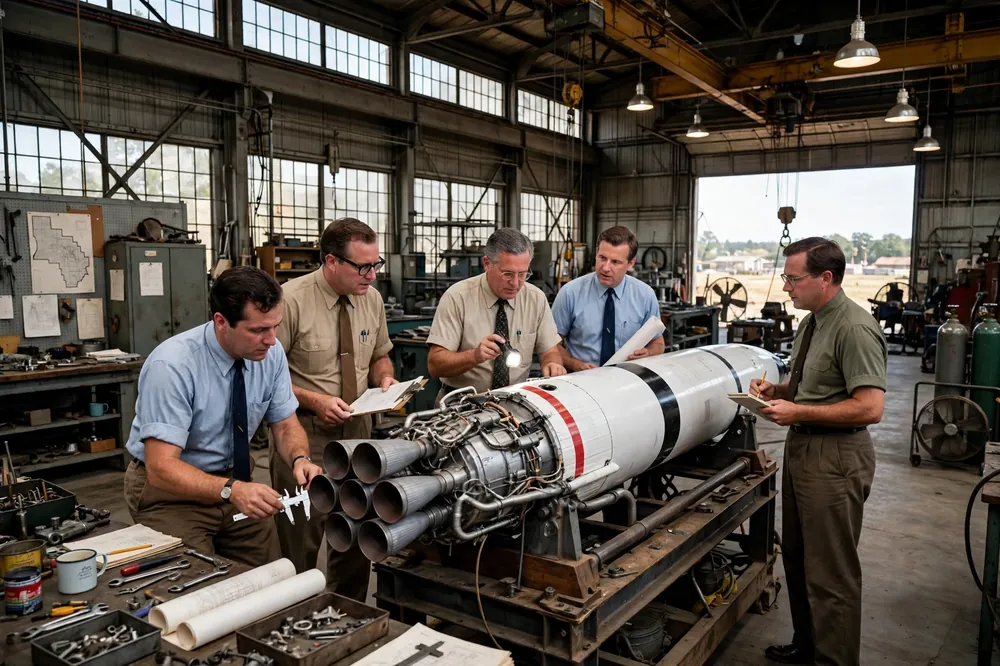
Von Braun’s rise was the rise of the rocket itself. At Peenemünde he led the development of the A-4 rocket — the weapon that became known as the V-2, for Vergeltungswaffe 2, “Vengeance Weapon 2”. It was a technical marvel: a liquid-fuelled rocket, 14 metres long, carrying a one-tonne warhead, with a range of about 320 kilometres, guided by gyroscopes and capable of reaching a speed of more than 5,000 kilometres per hour.
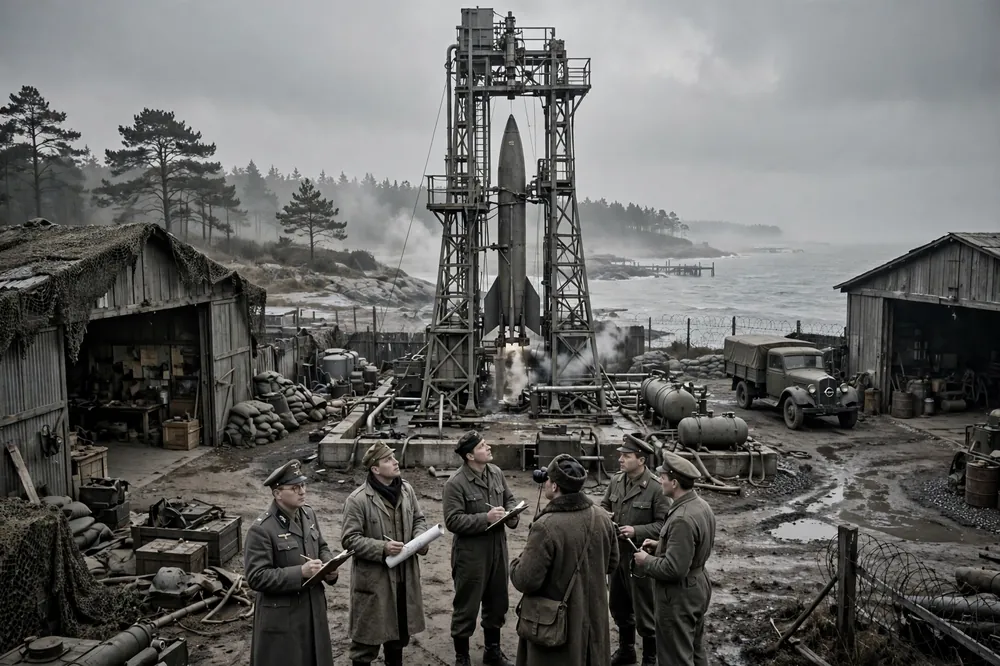
On 3 October 1942 the A-4 made its first successful flight, reaching an altitude of 84 kilometres — the first man-made object to reach the edge of space — and von Braun, who watched the launch, is said to have exclaimed that the rocket had worked perfectly, “except that it landed on the wrong planet”.
The success impressed Hitler, who had previously shown little interest in rockets, and in 1943 the V-2 programme was given the highest priority. The Peenemünde centre was bombed by the Royal Air Force in August 1943, in Operation Hydra, which killed several hundred people, including the chief engineer Walter Thiel, and the production of the V-2 was moved to an underground factory at Mittelwerk, near Nordhausen in the Harz Mountains, where concentration camp prisoners from the Dora camp built the rockets in appalling conditions.
Von Braun’s position at Peenemünde made him one of the most important technical figures in the Third Reich. He reported directly to the army’s Ordnance Office and, after 1943, to the SS, which controlled the Mittelwerk factory under General Hans Kammler.
He was decorated by Hitler, he was given a professorship at the Technical University of Berlin, and he was, by all accounts, a favourite of the regime’s leadership, who saw in the V-2 a weapon that could turn the war.
He was also, briefly, in danger: in March 1944 he was arrested by the Gestapo, on Himmler’s orders, and accused of defeatism — of caring more about space travel than about the war — and of having made remarks critical of the regime.
He was held for two weeks and released only after the intervention of Albert Speer, the Minister for Armaments, and of Walter Dornberger, the army general in charge of the rocket programme. The episode showed both his importance — the regime could not afford to lose him — and his vulnerability: he was, in the end, a servant of a regime that could arrest him at will.
By early 1945 the war was lost, and von Braun’s concern was the future of his team. He was determined that his rockets and his engineers should fall into American, not Soviet, hands, and in the spring of 1945 he led his team westward, away from the advancing Red Army, and on 2 May 1945 he surrendered to the Americans at Reutte in Austria.
It was a deliberate choice: von Braun believed that the United States was the country most likely to fund a space programme, and he was right. Under Operation Paperclip, the American programme to recruit German scientists, von Braun and more than a hundred of his colleagues were brought to the United States, first to Fort Bliss in Texas and then, in 1950, to the Redstone Arsenal in Huntsville, Alabama, where they built the American Army’s missile programme.
5. Wernher von Braun’s Role in World War II
The V-2
Von Braun’s wartime role was the V-2. Between September 1944 and March 1945, more than 3,000 V-2 rockets were fired at London, Antwerp and other Allied cities, and more than 1,300 struck London alone. The V-2 was a weapon of terror: it travelled faster than sound, so there was no warning before it struck, and it killed, by most estimates, around 9,000 civilians and military personnel in Britain, Belgium, France and the Netherlands, and injured many more.
Militarily, the V-2 was a failure: it was expensive, inaccurate, and it could not change the course of the war — the resources poured into it, including the labour of tens of thousands of prisoners, might have been better spent on conventional weapons, and the German historian Michael Neufeld has argued that the V-2 programme was, in strategic terms, a waste.
But technologically, it was a revolution: it was the first long-range ballistic missile, the ancestor of every ballistic missile and every space launcher that followed, and it demonstrated that a rocket could carry a payload beyond the atmosphere.
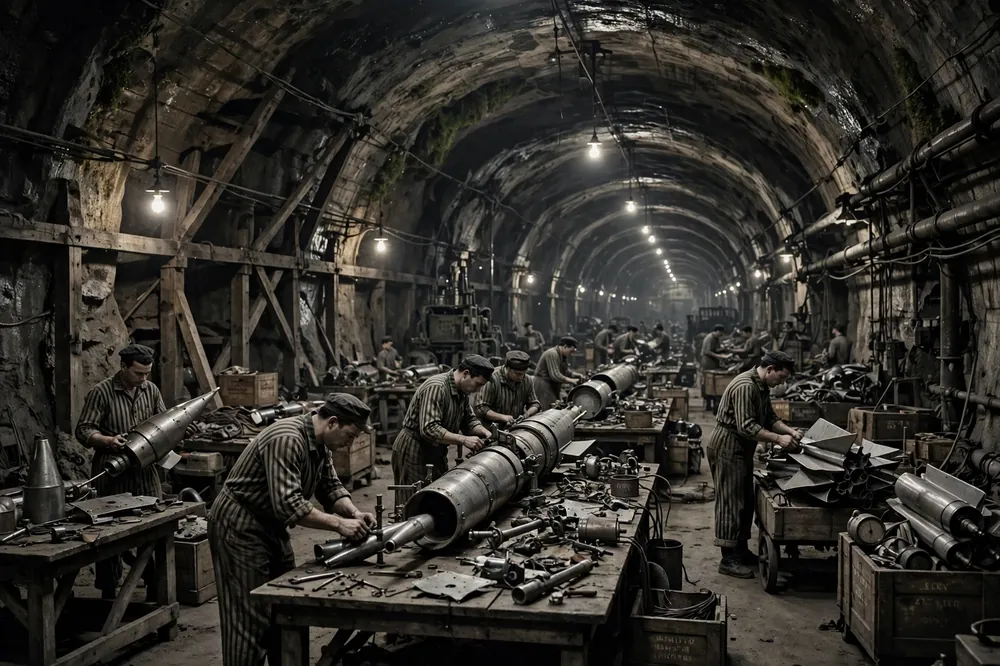
The V-2 was also a crime. The rockets were built at the Mittelwerk factory, an underground complex of tunnels in the Harz Mountains, by prisoners from the Dora concentration camp, who worked twelve-hour shifts in dust, cold and darkness, with inadequate food and no medical care.
The death toll at Dora-Mittelbau is estimated at around 20,000 people — more people died building the V-2 than were killed by it in Britain and Belgium combined, a fact that has become the central moral indictment of the programme. Von Braun visited Mittelwerk several times, and he was present when prisoners were hanged at the factory.
He later claimed that he had no authority over the camp and that he was horrified by what he saw, but he did not protest, he did not resign, and he continued to work on the programme. The question of what he knew, and what he could have done, is the question that defines his historical reputation.
Operation Paperclip and America
At the end of the war, von Braun’s team was the most valuable prize in the race for German technology. The Americans, the British and the Soviets all sought the Peenemünde engineers, and von Braun chose the Americans. Under Operation Paperclip, he and his colleagues were brought to the United States, where their Nazi pasts were, in many cases, glossed over or concealed by the American authorities, who were more interested in their expertise than in their history.
Von Braun himself was never tried for war crimes, and the American government, which needed his knowledge for the Cold War missile programme, ensured that his SS membership and his role at Mittelwerk were not held against him. It was a decision that later became controversial, and it remains one of the most debated aspects of the early Cold War: the United States, in the name of national security, gave a home and a career to a man who had built a weapon with slave labour.
6. Key Decisions
Joining the German Army’s rocket programme (1932). Von Braun’s decision, at twenty, to accept the army’s funding was the bargain that made his career possible and that tied him to the military. He later presented it as a choice between building rockets for the army or not building them at all; his critics argue that he could have waited, or that he could have refused, and that the choice was his.
Joining the Nazi Party and the SS (1937, 1940). Von Braun joined the Nazi Party in 1937 and the SS in 1940. He later claimed that both were formalities imposed on him; the evidence shows that he joined voluntarily and that his SS rank was a real part of his status. The decision tied him to the regime and made his post-war career in America possible only through the deliberate concealment of his past.
Surrendering to the Americans (May 1945). Von Braun’s decision to lead his team westward and to surrender to the Americans, rather than to the Soviets, was a calculated choice that shaped the space race. It gave the United States the German rocket team, and it gave von Braun the opportunity to build the rockets he had dreamed of since childhood.
Building the Saturn V (1961–1967). Von Braun’s decision, as director of the Marshall Space Flight Center, to champion the Saturn V — a rocket of unprecedented size and power, using the F-1 engines that were the largest ever built — was the technical gamble that made Apollo possible. He argued for a lunar-orbit rendezvous, and he delivered a rocket that never failed in flight.
7. Controversies
The controversy over von Braun is the controversy over the moral cost of the space age. The first charge is complicity in the crimes of Dora-Mittelbau. The evidence is clear that von Braun visited the Mittelwerk factory, that he saw prisoners working in appalling conditions, and that he was present at hangings.
His defenders argue that he had no authority over the camp, which was run by the SS, and that he could not have stopped the killings without being killed himself; his critics argue that he was a senior figure in the programme, that he requested more prisoners, and that his silence made him complicit.
The historian Michael Neufeld, in his biography Von Braun: Dreamer of Space, Engineer of War (2007), concludes that von Braun was not a sadist and did not order the killings, but that he was a willing participant in a criminal system and that his post-war claims of ignorance were false.
The second controversy concerns Operation Paperclip and the American decision to employ him. The United States, in the early Cold War, chose to overlook the pasts of German scientists in the interest of national security, and von Braun was the most prominent beneficiary. His defenders argue that the decision was justified by the results — the Saturn V and Apollo — and that von Braun’s expertise was indispensable. His critics argue that it was a moral compromise that corrupted the American space programme at its birth, and that it sent a message that technical skill could excuse complicity in atrocity.
The third controversy is about von Braun himself: was he a visionary or an opportunist? He presented himself as a dreamer of space, a man who wanted only to reach the stars, and who was used by the Nazis and then by the Americans. His critics see a man who served whoever would fund his rockets, who joined the Nazi Party and the SS without hesitation, and who, after the war, reinvented himself as an American hero without ever fully acknowledging his past. The truth, as Neufeld argues, is somewhere between: von Braun was a brilliant engineer with a genuine passion for spaceflight, and he was also a man who made moral compromises that he never fully faced.
8. Later Life and Death
After the war, von Braun’s American career was a triumph. In Huntsville, Alabama, he built the Redstone rocket, which in 1958 launched Explorer 1, America’s first satellite, and in 1961 carried Alan Shepard on the first American manned spaceflight. In 1960 he became the director of NASA’s new Marshall Space Flight Center, and he led the development of the Saturn family of rockets. When President John F.
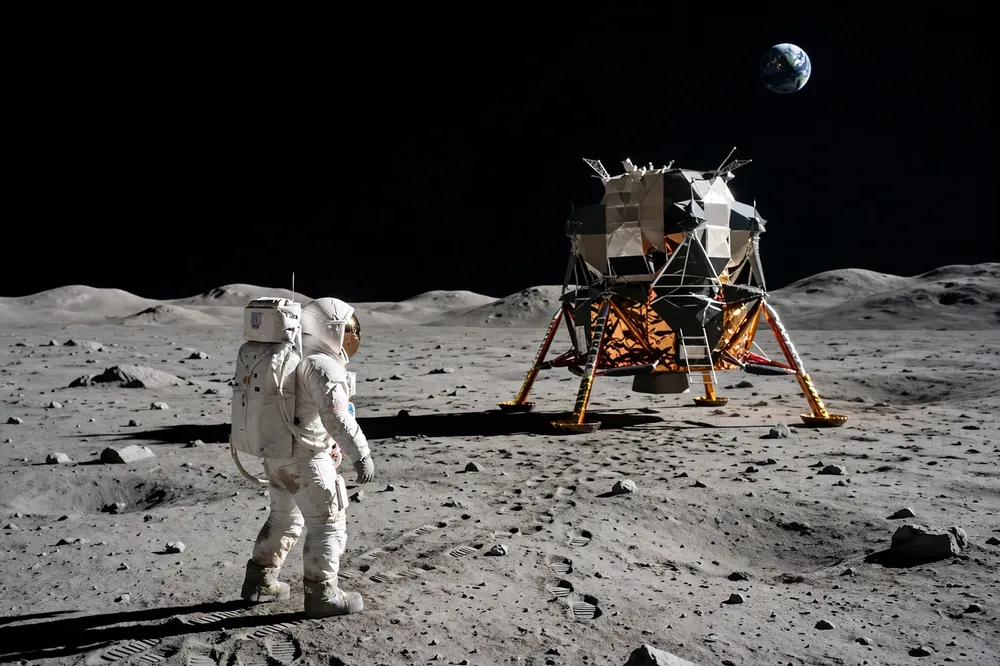
Kennedy committed the United States, in May 1961, to landing a man on the Moon before the end of the decade, von Braun’s Saturn V became the vehicle for that commitment. The Saturn V first flew in November 1967, and on 20 July 1969 Apollo 11 landed on the Moon.
Von Braun watched the launch from the Kennedy Space Center in Florida, and he was, by all accounts, deeply moved: the dream he had held since reading Oberth as a boy had come true, and he had built the rocket that made it possible.
In 1970 von Braun moved to NASA headquarters in Washington as Deputy Associate Administrator for Planning, but he was unhappy in the bureaucratic role, and in 1972 he left NASA to become a vice-president of the Fairchild Industries aerospace company.
He became a prominent public advocate for space exploration, appearing on television and writing popular books, and he was widely honoured in the United States: he received the National Medal of Science in 1975 and was celebrated as a hero of the space age. In 1977 he was diagnosed with cancer, and he died on 16 June 1977 in Alexandria, Virginia, aged sixty-five.
He was buried at Ivy Hill Cemetery in Alexandria. His reputation in the United States remained, for many years, that of a hero; it was only in the 1980s and 1990s, with the work of historians such as Neufeld and the declassification of documents about Dora-Mittelbau, that the full story of his wartime career became widely known.
9. Legacy of Wernher von Braun
Von Braun’s legacy is the space age itself. The V-2 was the ancestor of every ballistic missile and every space launcher: the Soviet R-7, the American Atlas and Titan, and the Saturn V all descended, directly or indirectly, from the work done at Peenemünde. The Saturn V remains the most powerful rocket ever flown, and the Apollo programme, which it made possible, remains the greatest technological achievement of the twentieth century. The von Braun crater on the Moon is named for him, and the Marshall Space Flight Center, which he built, remains one of NASA’s most important centres.
His legacy is also a moral warning. The story of the V-2 — a weapon built by slave labour, used against civilians, and then repurposed for the exploration of space — is the central parable of the relationship between science and power in the twentieth century. It raises the question of whether the ends can justify the means, and whether a scientist can separate his work from its uses.
Von Braun himself never fully answered that question, and the debate over his legacy — visionary or opportunist, hero or accomplice — continues. The Marshall Space Flight Center honours him, and the United States Holocaust Memorial Museum tells the story of Dora-Mittelbau; both are part of his legacy, and neither can be understood without the other.
10. Assessment by Historians
Historians assess Wernher von Braun as a figure of extraordinary technical genius and of profound moral ambiguity, and the assessment has shifted over time. In the 1950s and 1960s, the dominant image was that of the hero: the charming, visionary engineer who had brought America to the Moon, a figure celebrated in the Disney television programmes of the 1950s and in the popular press.
The work of historians in the 1980s and 1990s — above all Michael Neufeld’s Von Braun: Dreamer of Space, Engineer of War (2007) and the research of the United States Holocaust Memorial Museum — changed that image, documenting his SS membership, his visits to Mittelwerk, and his presence at the hangings of prisoners.
Neufeld’s verdict is that von Braun was “a Faustian figure”: a man who made a bargain with evil in order to pursue his dream, and who, in the end, got what he wanted — the Moon — at a price he was unwilling to acknowledge.
Other historians have been more sympathetic, arguing that von Braun’s choices were constrained by the regime he lived under, that he was a scientist rather than a politician, and that his contribution to the peaceful exploration of space outweighs his wartime complicity.
The consensus, if there is one, is that von Braun cannot be judged as either a hero or a villain, but as a man who embodied the central dilemma of twentieth-century science: that the same knowledge that takes us to the Moon can also build weapons, and that the scientist who pursues knowledge cannot escape responsibility for its uses.
His life remains the most important case study of that dilemma, and it is studied, in universities and in museums, as a warning as much as an inspiration.
Frequently Asked Questions
Who was Wernher von Braun?
Wernher von Braun (1912–1977) was the German rocket engineer who built the V-2 missile for Nazi Germany and, after the war, built the Saturn V rocket for NASA that carried the Apollo astronauts to the Moon.
What was the V-2?
The V-2 was the world’s first long-range ballistic missile, developed at Peenemünde under von Braun. More than 3,000 were fired at London, Antwerp and other cities in 1944–1945, killing around 9,000 people. It was the first man-made object to reach space.
Was von Braun a member of the SS?
Yes. He joined the SS in 1940 and rose to the rank of Sturmbannführer (major) in 1943. He later claimed he had joined only under pressure, but the historical record shows he joined voluntarily.
What was Operation Paperclip?
It was the American programme, at the end of the Second World War, to bring German scientists and engineers to the United States. Von Braun and more than a hundred of his colleagues were brought to America under the programme, first to Texas and then to Huntsville, Alabama.
Did von Braun know about the slave labour at Mittelwerk?
Yes. He visited the Mittelwerk factory several times and was present when prisoners were hanged. He later claimed he had no authority over the camp and was horrified by what he saw, but historians have shown that his claims of ignorance were false.
What did von Braun build for NASA?
As director of the Marshall Space Flight Center, he led the development of the Saturn family of rockets, above all the Saturn V, which carried twelve astronauts to the Moon between 1969 and 1972, including the Apollo 11 crew.
Related articles
Sources
- Wikipedia, “Wernher von Braun” — consolidated biography: birth 23 March 1912, death 16 June 1977, Peenemünde, V-2, Operation Paperclip, Saturn V, Apollo 11.
- Encyclopaedia Britannica, “Wernher von Braun” (britannica.com) — biography, V-2, NASA, Saturn V.
- Michael J. Neufeld, Von Braun: Dreamer of Space, Engineer of War (Alfred A. Knopf, 2007) — the standard scholarly biography; SS membership, Mittelwerk, Paperclip.
- United States Holocaust Memorial Museum, “Dora-Mittelbau” — the concentration camp and the V-2 factory; estimated death toll around 20,000.
- Frederick I. Ordway III and Mitchell R. Sharpe, The Rocket Team (Thomas Y. Crowell, 1979) — the Peenemünde team and its work in the United States.
- Walter Dornberger, V-2 (Viking, 1954) — the memoir of the army general in charge of the rocket programme.
- Bob Ward, Dr. Space: The Life of Wernher von Braun (Naval Institute Press, 2005) — popular biography; the American years and Apollo.
Further reading
- Dennis Piszkiewicz, The Nazi Rocketeers: Dreams of Space and Crimes of War (Praeger, 1995).
- Wayne Biddle, Dark Side of the Moon: Wernher von Braun, the Third Reich, and the Space Race (W. W. Norton, 2009).