 WAR ATLAS MILITARY HISTORY MAGAZINE · WWI — WWII
Akagi
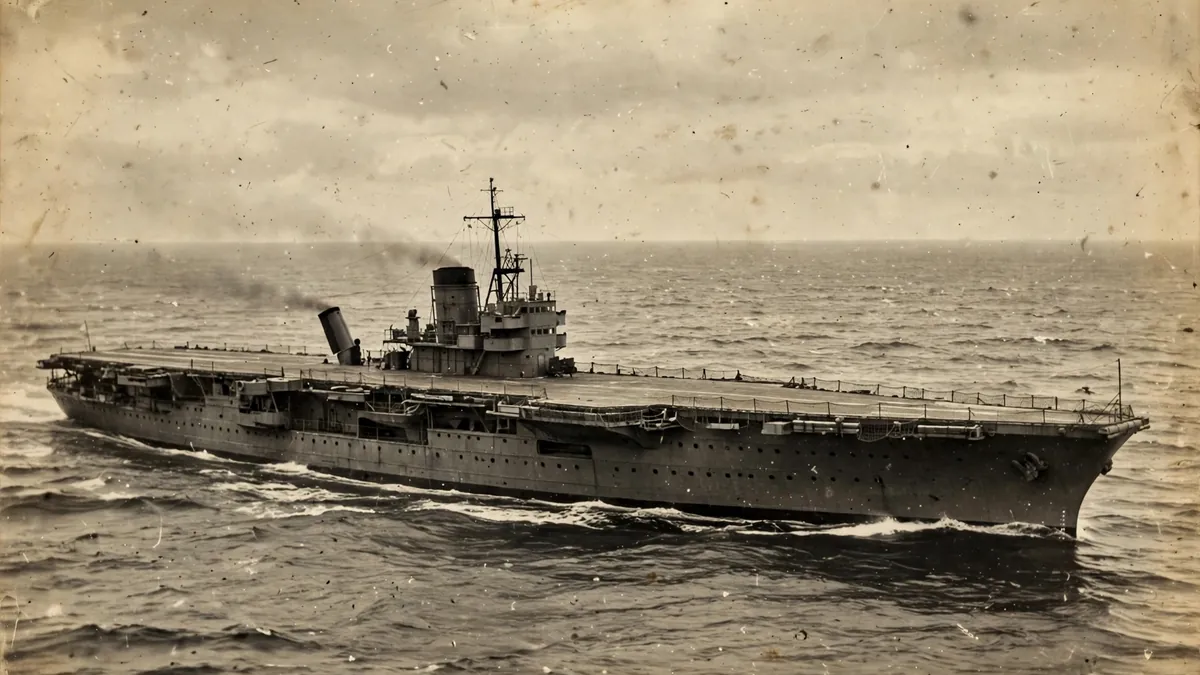
1. Akagi — At a Glance
The Japanese aircraft carrier Akagi was one of the most important warships of the Second World War, and the flagship of the force that attacked Pearl Harbor on 7 December 1941. Originally laid down as a battlecruiser, she was converted into an aircraft carrier under the terms of the Washington Naval Treaty, and when she entered service in 1927 she was one of the largest carriers in the world. Akagi served as the flagship of Vice Admiral Chuichi Nagumo’s First Air Fleet, the Kido Butai, and her aircraft took part in the attack on Pearl Harbor, the raid into the Indian Ocean, and the Battle of Midway. At Midway on 4 June 1942, American dive bombers from the USS Enterprise struck Akagi with a single bomb that started fires among the armed and fuelled aircraft on her hangar deck, and the ship burned out of control until she was scuttled by Japanese destroyers the next day. Her loss, together with the loss of the carriers Kaga, Soryu and Hiryu in the same battle, ended Japan’s dominance of the Pacific and changed the course of the war.
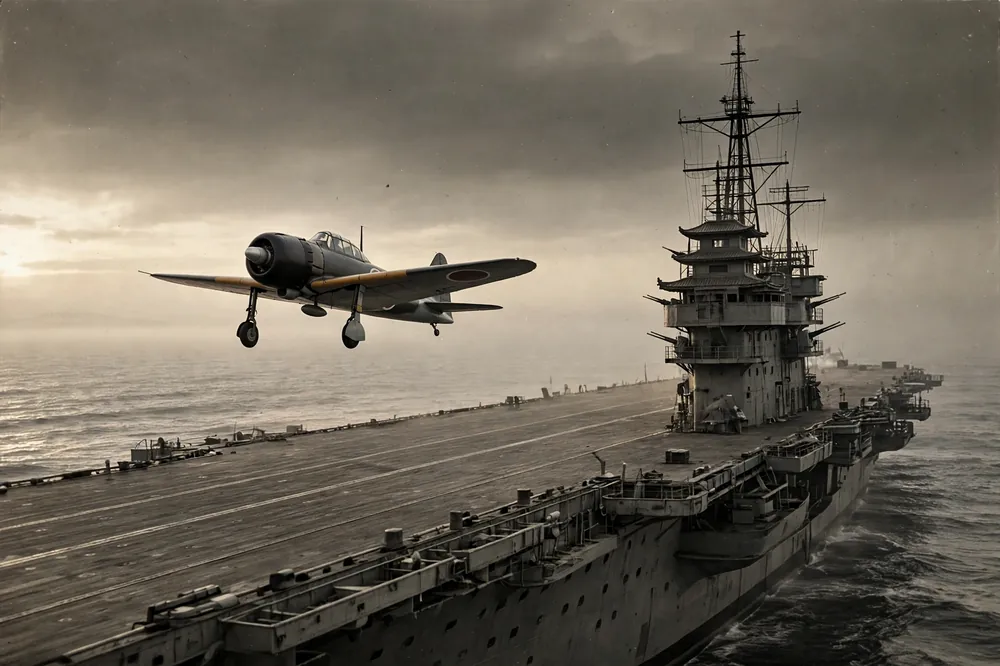
Akagi’s name means “Red Castle” in Japanese, after Mount Akagi in Gunma Prefecture, and she was the first Japanese carrier to bear the name of a mountain, following the practice of naming aircraft carriers after mountains and other natural features. For most of her career she operated alongside her sister ship Kaga, and the two ships formed the core of Japan’s carrier force throughout the 1930s. Akagi’s career was short in wartime — barely six months of combat operations — but in that time she became the symbol of Japanese naval air power at its peak, and her destruction at Midway became the symbol of its fall. Today she rests on the seabed of the Pacific, and her wreck was located in 2019 by a research vessel, lying upright in deep water near the site of the battle that destroyed her.
2. Key Facts
| Type | Aircraft carrier (converted battlecruiser) |
| Origin | Japan |
| Builder | Kure Naval Arsenal |
| Laid down | 6 December 1920 (as a battlecruiser) |
| Launched | 22 April 1925 |
| Commissioned | 25 March 1927 |
| Displacement | About 36,500 tons standard; about 41,300 tons full load (after modernisation) |
| Length | 260.7 m (855 ft) |
| Beam | 31.3 m (102 ft 8 in) |
| Draught | 8.7 m (28 ft 7 in) |
| Propulsion | Four shafts; geared steam turbines; 131,000 shp |
| Top speed | 31.5 knots (58 km/h) |
| Range | About 10,000 nautical miles at 16 knots |
| Complement | About 1,630 officers and men (about 2,000 in wartime) |
| Aircraft carried | 63 at Pearl Harbor (rated capacity about 66, up to 91 with spares) |
| Main armament | Ten 20 cm (8 in) guns in casemates; twelve 12 cm (4.7 in) anti-aircraft guns; later 28 × 25 mm AA guns |
| Armour | Belt 152 mm; deck 79 mm |
| Fate | Sunk at the Battle of Midway, 4–5 June 1942 |
3. Background and Development
Origins in the Eight-Eight Fleet
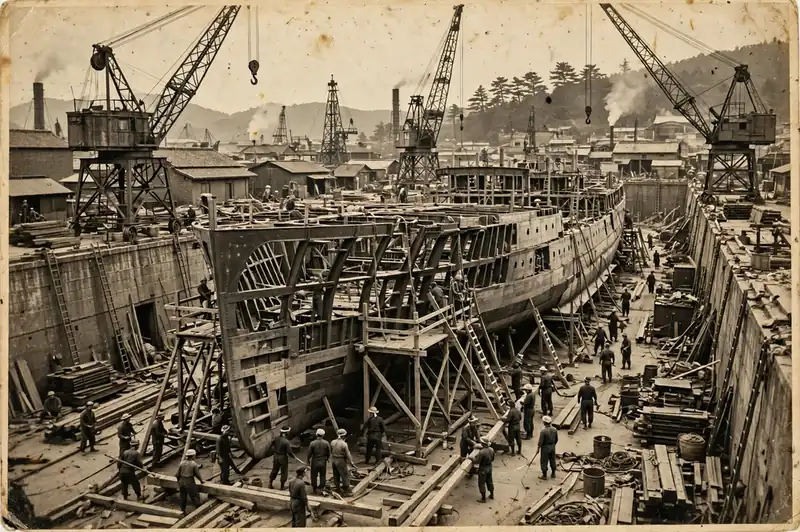
Akagi began her life as a battlecruiser of the Amagi class, one of the great warships planned by Japan under the “Eight-Eight Fleet” programme of 1920, which aimed to give the Imperial Japanese Navy eight battleships and eight battlecruisers. She was laid down at the Kure Naval Arsenal on 6 December 1920, and her construction was well advanced when the Washington Naval Treaty was signed in February 1922. The treaty limited the size of the great navies and banned the construction of new capital ships, and it ordered the scrapping of the ships already under construction — but it allowed two capital ships under construction in each navy to be converted into aircraft carriers. Japan chose the battlecruisers Akagi and Amagi for conversion, because they were the most advanced hulls available, and because their high speed made them suitable as carriers. Amagi was wrecked by the Great Kanto earthquake of 1923 before her conversion could begin, and she was replaced by the battleship Kaga, but Akagi survived and became Japan’s second large aircraft carrier, after the smaller Hosho.
Conversion under the Washington Treaty
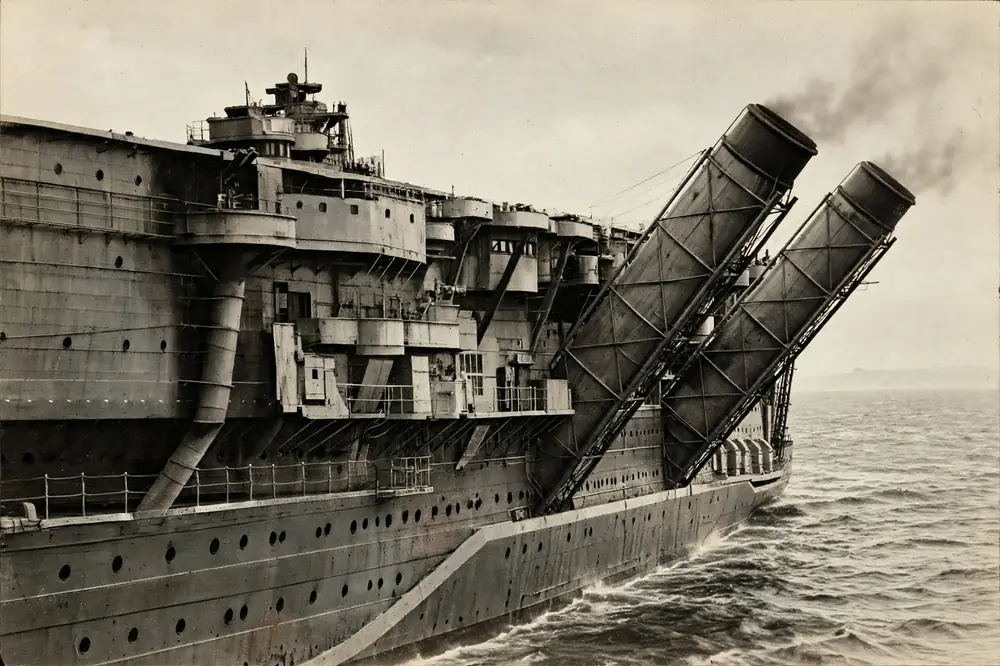
The conversion was a major undertaking. The battlecruiser’s hull was retained, but her main armament of ten 20 cm guns was reduced, her superstructure was removed, and a flight deck was built over the full length of the ship. In her original form, Akagi had a remarkable and unusual arrangement: three flight decks, one above the other, so that aircraft could take off from the lower decks while others landed on the upper deck. The idea was copied from the British carrier Furious, and it proved impractical in service, because the lower decks were too short and too turbulent for safe operations, and because the ship’s exhaust gases had to be ducted through funnels that discharged downwards and to the side. Akagi entered service on 25 March 1927 with this three-deck arrangement, and she served in that form for eight years, operating with the Combined Fleet and taking part in fleet exercises that taught the Japanese Navy how to use carriers in massed attacks.
The 1935–1938 Modernisation
Between October 1935 and August 1938, Akagi underwent a complete modernisation at the Sasebo Naval Arsenal. The three flight decks were replaced by a single full-length flight deck, 249 metres long, and a small island superstructure was built on the starboard side — Akagi had originally been built without an island, with her bridge mounted under the forward edge of the flight deck. Her funnels were rebuilt, her anti-aircraft armament was strengthened, and her aircraft capacity was increased to about 66 operational aircraft, with hangar space for more, and she sailed for Pearl Harbor with 63. The modernisation made Akagi a modern fleet carrier, comparable to the best carriers in the world, and when she returned to service in 1938 she became the flagship of the First Carrier Division, alongside Kaga. In 1941, as war with the United States approached, Akagi was fitted with the latest aircraft: the Mitsubishi A6M Zero fighter, the Aichi D3A Val dive bomber and the Nakajima B5N Kate torpedo bomber.
Carrier Doctrine and the Kido Butai
The Japanese Navy’s carrier doctrine, developed through the 1930s, was the most advanced in the world. While the British and American navies used carriers mainly to support the battleship fleet, the Japanese planned to mass their carriers together into a single striking force, the First Air Fleet or Kido Butai, and to use it to deliver a concentrated air attack at the outset of a war. Akagi, as the flagship of that force, was at the centre of this doctrine, and her captain in 1941, Captain Kiichi Hasegawa, and her air group commander, Commander Mitsuo Fuchida, were among the most experienced carrier officers in the Japanese Navy. When Japan decided to attack Pearl Harbor, it was from Akagi’s bridge that Vice Admiral Nagumo commanded the operation, and it was from Akagi’s flight deck that Fuchida led the first wave of aircraft against the American fleet. The doctrine worked brilliantly at Pearl Harbor, but it depended on keeping the carriers together and on striking first, and it left Japan with no answer when the American carriers survived and struck back.
4. Design
Hull and Propulsion
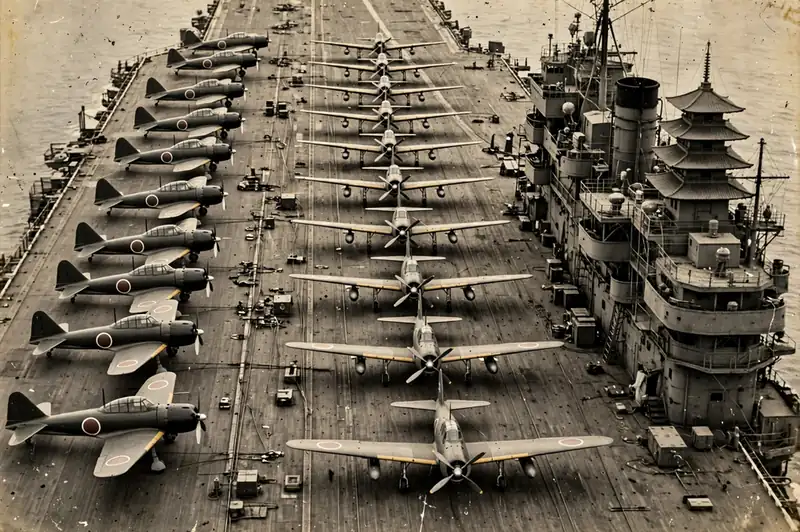
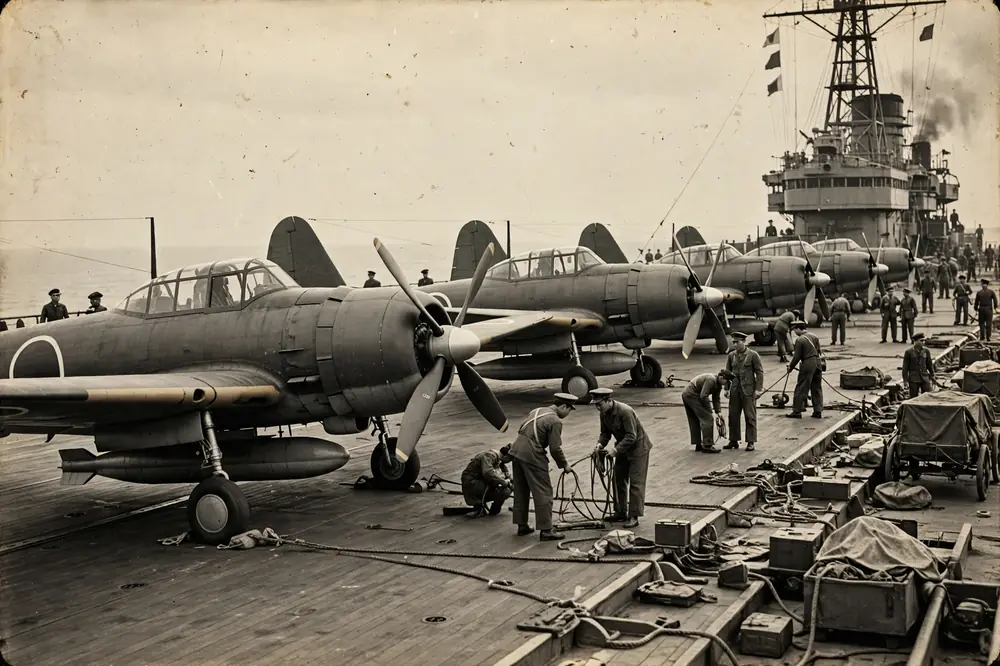
Akagi’s design was a compromise between her origins as a battlecruiser and her new role as a carrier, and the compromise showed in her size and her speed. Her hull was long and narrow, 260.7 metres in length, and her machinery — four sets of geared steam turbines driving four shafts, producing 131,000 shaft horsepower — gave her a top speed of 31.5 knots, which made her one of the fastest carriers in the world. That speed was essential for a carrier, because a carrier must turn into the wind to launch and recover aircraft, and a fast carrier can generate more wind over its deck. Her size also gave her a large flight deck and large hangars, and she could carry about 66 aircraft in normal service, with up to 91 if spare aircraft were carried on deck and in the hangars, and her air group at Pearl Harbor numbered 63. Her aircraft in December 1941 consisted of 18 Zero fighters, 18 Val dive bombers and 27 Kate torpedo bombers, a balanced air group that could fight other aircraft, bomb ships and land targets, and deliver torpedo attacks.
Protection and Armament
Akagi’s protection was that of a battlecruiser rather than that of a purpose-built carrier. She had an armour belt 152 mm thick over her machinery spaces and magazines, and an armoured deck 79 mm thick, which was more protection than most carriers of her generation carried. But her hangars were enclosed, and her aviation fuel and bomb storage were concentrated below the hangar deck, with fuel lines that ran through the ship — a design that made her vulnerable to fire if a bomb penetrated the flight deck. Her anti-aircraft armament was heavy for a carrier of her time: ten 20 cm guns in casemates, intended to defend her against surface ships, and twelve 12 cm anti-aircraft guns, later supplemented by 25 mm anti-aircraft guns. But like all Japanese carriers, she lacked effective radar-directed anti-aircraft fire control, and her defence against air attack depended on her fighter aircraft and on the manoeuvring of the ship. Her island was small, and her bridge was cramped, but it gave the admiral and his staff a good view of the flight deck and of the formation.
Flight Deck and Hangars
The most distinctive feature of Akagi’s design after her modernisation was her flight deck and her hangar arrangement. The single flight deck, 249 metres long and 31 metres wide at its widest, was fitted with arresting gear and with two large lifts that carried aircraft between the flight deck and the two hangar decks below. The hangars were long and high, and they could hold the whole air group, with aircraft stored with their wings folded. Aircraft were brought up on the lifts, spotted on the flight deck, and launched in a rapid sequence — a well-drilled Japanese carrier could launch its whole air group in about fifteen minutes. Akagi’s funnels, after the modernisation, discharged through a single large funnel on the starboard side, angled outwards and downwards to keep smoke clear of the flight deck. The ship’s appearance — long, low, with a small island and a single raked funnel — made her one of the most recognisable warships in the Japanese Navy.
Weaknesses
Akagi’s weaknesses were the weaknesses of all the great Japanese carriers of her generation. She had no radar when she entered the war — the first Japanese naval radar was fitted only in 1942, and Akagi was sunk before she received one — and her lookouts and her combat air patrol were her only warning of an incoming attack. Her damage control was weaker than that of American carriers: her hangar was enclosed, her aviation fuel system was vulnerable, and her crew were not trained to the same standard of firefighting as their American counterparts. At Midway, these weaknesses proved fatal. A single bomb, dropped by an American dive bomber, penetrated the flight deck and exploded among the aircraft on the hangar deck, which were armed and fuelled and waiting to take off, and the resulting fires spread through the ship until she was destroyed. Akagi’s design had made her a powerful offensive weapon, but it had not made her a ship that could survive a hit.
5. Variants
| Variant | Years | Key features | Notes |
|---|---|---|---|
| Akagi (three flight decks) | 1927–1935 | Three stacked flight decks; no island; bridge under the flight deck | Original configuration; lower decks little used |
| Akagi (modernised) | 1938–1942 | Single full-length flight deck; small island; strengthened AA armament | Configuration at Pearl Harbor and Midway |
| Amagi (cancelled) | — | Sister battlecruiser selected for conversion; wrecked in the 1923 earthquake | Replaced by Kaga as the second conversion |
| Kaga | 1928–1942 | Battleship hull converted to a carrier; slower, at 28 knots | Akagi’s running mate in the First Carrier Division |
The Original Three-Deck Design
As commissioned in 1927, Akagi was one of the most unusual warships in the world. Her three stacked flight decks were intended to let aircraft take off from the lower decks while others landed above, an idea borrowed from the British carrier Furious, but the arrangement never worked well in practice. The two lower decks were short, they were affected by turbulence from the ship’s funnels, and the pilots who used them found them dangerous, so in service almost all flying was done from the upper deck alone. The original ship also had no island: her bridge was mounted beneath the forward edge of the flight deck, which gave her officers a poor view and left the ship’s command arrangements cramped and awkward. Her exhaust was led through funnels that discharged downwards and to the side, and the smoke often drifted across the flight deck and interfered with landing aircraft. For eight years Akagi served in this form, and her crews learned to work around her faults, but by the mid-1930s the Japanese Navy had concluded that the ship needed a complete rebuild if she was to operate the larger aircraft then entering service.
The Modernised Carrier
The modernisation of 1935–1938 was so thorough that the ship that fought at Pearl Harbor and Midway was, in practical terms, a different ship from the one commissioned in 1927. The change from three flight decks to one was the most important part of the rebuild: it doubled the usable length of the landing deck, it simplified aircraft handling, and it allowed the ship to operate the larger and heavier aircraft of the late 1930s. The addition of the island gave the ship’s captain and the admiral a proper bridge, and the strengthening of the anti-aircraft armament reflected the growing recognition that carriers would have to defend themselves against air attack. The rebuilt Akagi could carry about 66 operational aircraft, with hangar space for more, and her speed of 31.5 knots made her one of the fastest carriers in the world. No further modernisation was possible after 1938, because the ship was in continuous service as the flagship of the carrier force, and she went to war in the form in which she had been rebuilt.
Sister Ships: Amagi and Kaga
No other ship of Akagi’s class was completed. Amagi, the sister battlecruiser selected for conversion alongside Akagi, was wrecked by the Great Kanto earthquake of 1923 before her conversion could begin, and her damaged hull was broken up. She was replaced in the conversion programme by the battleship Kaga, which had also been ordered for scrapping under the Washington Treaty, and Kaga entered service as a carrier in 1928. Though often grouped with Akagi, Kaga was a different design, built on a slower battleship hull with a top speed of about 28 knots, and she was heavier and less handy than Akagi. Together, Akagi and Kaga formed the First Carrier Division, the senior carrier division of the Japanese Navy, and they trained and fought together for the whole of their careers, from the fleet exercises of the 1930s to the attack on Pearl Harbor and the raid into the Indian Ocean, until both were sunk at Midway on the same morning, 4 June 1942.
6. Operational History
Peacetime service and China, 1927–1941
Akagi spent the 1930s as the flagship of Japan’s carrier force, taking part in the annual fleet manoeuvres that tested the new doctrine of massed carrier air attack. In 1932, during the Shanghai Incident, her aircraft flew in support of Japanese ground forces in China, and in 1937, after the outbreak of the Second Sino-Japanese War, she operated off the Chinese coast, her aircraft bombing Chinese targets and supporting the Japanese advance. These operations gave her aircrews combat experience, but they also showed the limitations of the carrier force: the aircraft of the 1930s were short-ranged and lightly armed, and the carrier’s strike was still a modest affair by the standards of 1941. After her modernisation, Akagi became the flagship of the First Air Fleet when it was formed in April 1941, and her air group was re-equipped with the new Zero, Val and Kate aircraft that would carry Japan’s opening blow against the United States.
Pearl Harbor, 7 December 1941
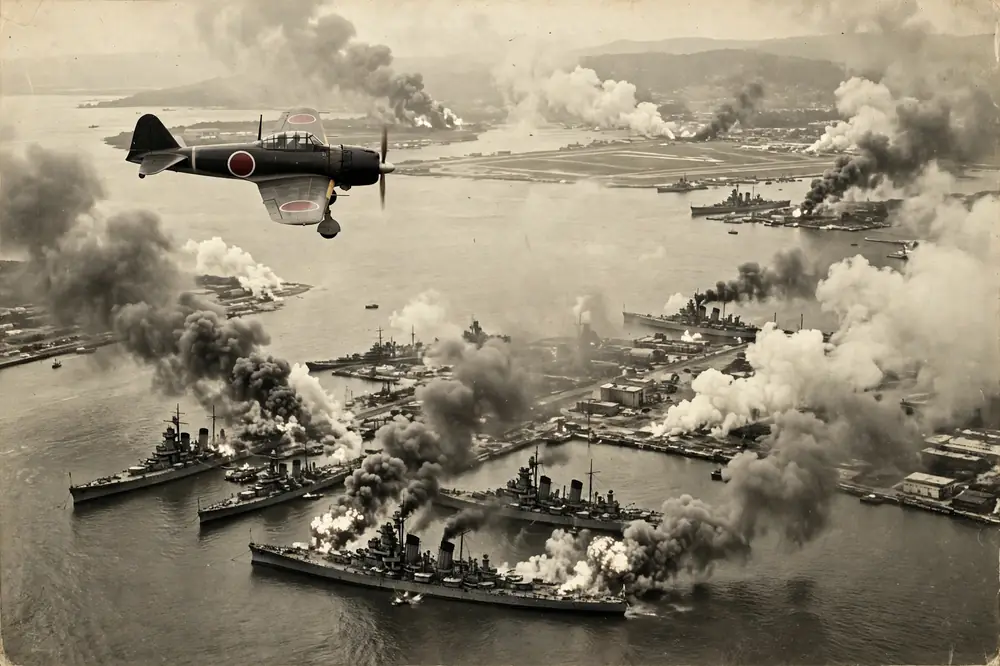
The attack on Pearl Harbor was the operation for which Akagi had been built, and she sailed for it as the flagship of the six-carrier striking force that left Hitokappu Bay in the Kurile Islands on 26 November 1941, keeping radio silence for eleven days as it crossed the northern Pacific. On the morning of 7 December, from a position about 230 nautical miles north of Oahu, Akagi launched the first wave of 183 aircraft, led by Commander Fuchida from her own flight deck, and his signal “Tora, Tora, Tora” told Nagumo that surprise had been achieved. Her torpedo bombers struck the battleships moored at Ford Island and scored hits on the Oklahoma and the West Virginia, while her dive bombers destroyed American aircraft on the airfields before they could take off. A second wave of 171 aircraft followed about an hour later, and by the end of the morning four American battleships were sunk and four more damaged, with more than 180 aircraft destroyed on the ground and over 2,400 Americans killed. Akagi’s own losses were light — one Zero and one Kate failed to return — but the victory was incomplete: Nagumo refused a third wave against the fuel tanks and repair yards, and the American carriers, the real target of the operation, were at sea and had escaped entirely.
The First Wave
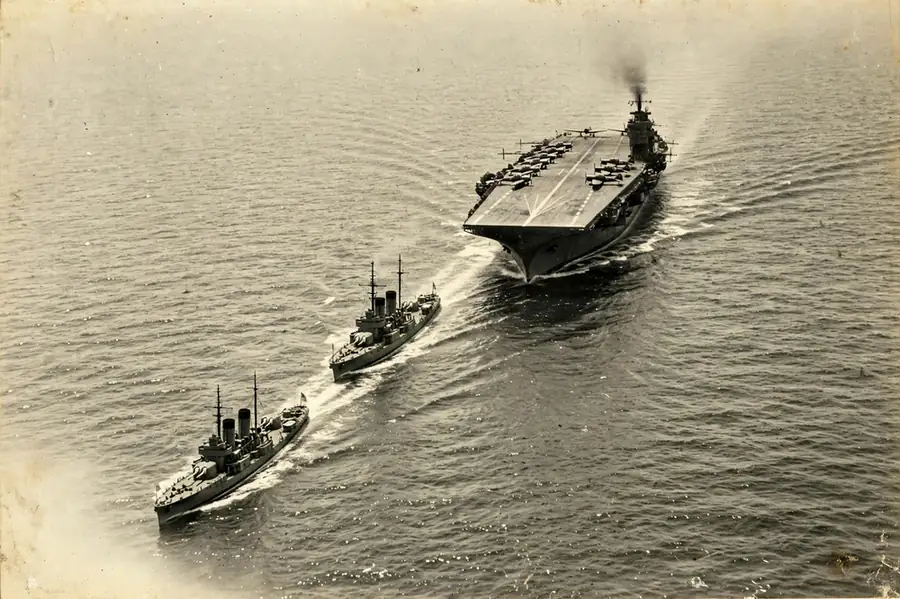
On 26 November 1941, Akagi sailed from Hitokappu Bay in the Kurile Islands as the flagship of the striking force of six carriers bound for Hawaii, and for eleven days the force kept radio silence as it crossed the northern Pacific. On the morning of 7 December, from a position about 230 nautical miles north of Oahu, she launched the first wave of the attack: 183 aircraft, led by Commander Fuchida from Akagi herself, with nine of her Zero fighters, fifteen of her Val dive bombers and twenty-seven of her Kate torpedo bombers among them. Fuchida’s aircraft found the American fleet at anchor and almost completely unprepared, and his famous signal “Tora, Tora, Tora” told Nagumo that surprise had been achieved. Akagi’s torpedo bombers attacked the battleships moored at Ford Island and scored hits on the battleships Oklahoma and West Virginia, while her dive bombers attacked the airfields on Oahu and destroyed American aircraft on the ground before they could take off.
The Second Wave and the Withdrawal
A second wave of 171 aircraft followed about an hour later, and by the end of the morning the American Pacific Fleet had lost four battleships sunk and four more damaged, with more than 180 aircraft destroyed on the ground and over 2,400 Americans killed. Akagi’s own losses were light — one Zero and one Kate from her air group failed to return — and her aircraft recovered aboard in good order. Fuchida and other officers urged Nagumo to launch a third wave against the fuel tanks and repair yards at Pearl Harbor, but Nagumo refused, judging that his force had achieved its objective and that the risk of an American counter-attack was growing. The striking force withdrew to Japan, having achieved a tactical victory that the Japanese Navy had planned for a decade, though the American carriers, which had been the real target of the operation, were at sea and had escaped the attack entirely.
The Indian Ocean raid, April 1942
In the spring of 1942, Akagi sailed with the First Air Fleet into the Indian Ocean, in an operation intended to destroy the British Eastern Fleet and to cover the Japanese invasion of Burma. On 5 April, her aircraft took part in the attack on Colombo, in Ceylon, and on 9 April they attacked Trincomalee, sinking the British carrier Hermes and the destroyer Vampire off the coast of Ceylon. The raid was a complete success: the British fleet withdrew to the east coast of Africa, and Japan’s control of the seas around South-East Asia seemed complete. But the raid also showed that the Japanese carrier force was being used as a raiding force, moving from one operation to the next, while the American carrier force was recovering from Pearl Harbor and preparing to strike back. Akagi returned to Japan in late April, and her aircrews were given a short rest before the next operation — the invasion of Midway Island, which the Japanese Navy hoped would draw the American carriers into a decisive battle and destroy them.
Midway and the sinking, 4–5 June 1942
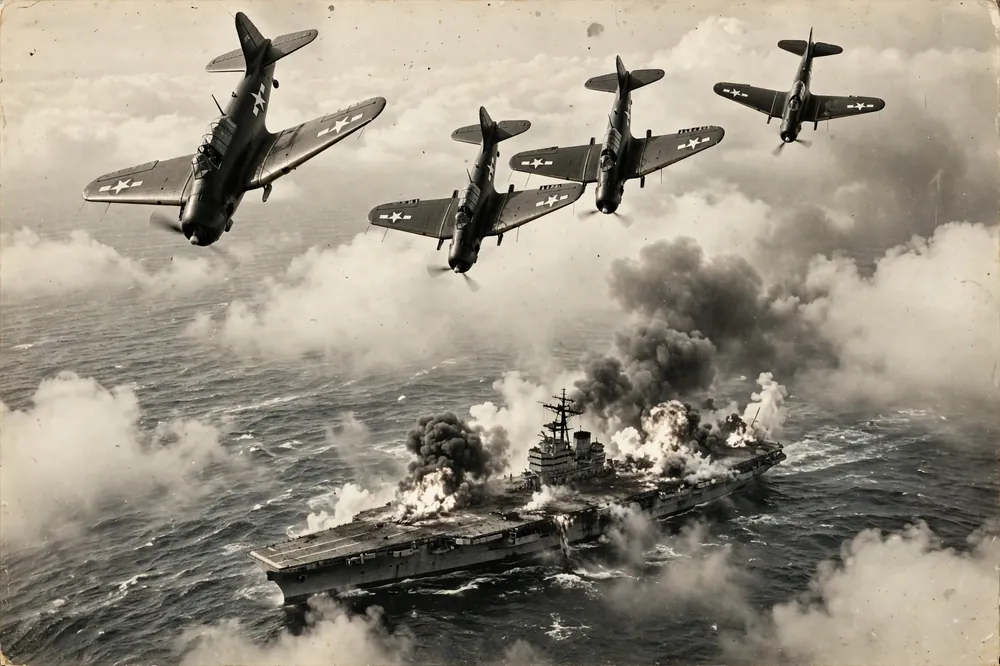
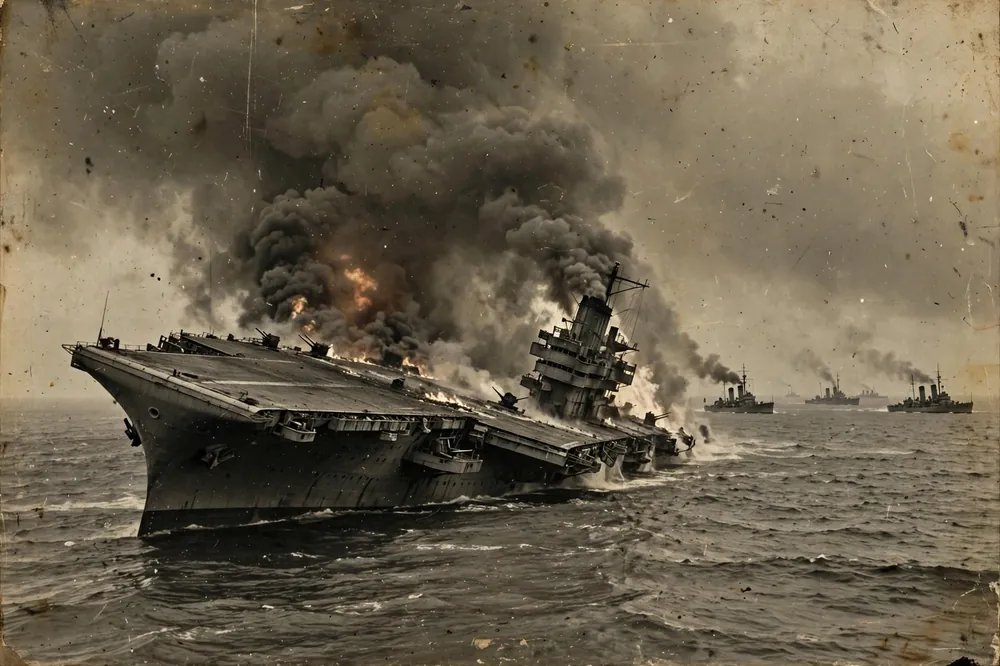
At Midway, Akagi was again the flagship of the striking force, under Vice Admiral Nagumo, with four carriers — Akagi, Kaga, Soryu and Hiryu — against the three American carriers that the Japanese believed were available. On the morning of 4 June, Akagi launched her aircraft against Midway Island, and her air group commander, Lieutenant Joichi Tomonaga, led the attack on the island’s airfield. Tomonaga radioed back that a second strike on the island was needed, and Nagumo ordered his reserve aircraft, which were armed with torpedoes for an attack on American ships, to be rearmed with bombs for a second strike on Midway. While the rearming was under way, a scout plane from the cruiser Tone reported American ships to the north-east, and Nagumo reversed his order, but it was too late: his hangar decks were crowded with aircraft, armed and fuelled, and with bombs and torpedoes stacked beside them, and the change of orders left the ship in the worst possible state when the American attack came. At 10:26, dive bombers from the USS Enterprise, led by Lieutenant Commander C. Wade McClusky and Lieutenant Richard Best, found Akagi and attacked her from out of the sun. Best’s 1,000-pound bomb struck the flight deck near the middle lift and penetrated to the hangar deck, where it exploded among the armed aircraft and set off a chain of fires and explosions that spread through the ship. Her steering was lost, her aircraft still on deck were destroyed where they stood, and her damage-control parties were killed by the fires before they could bring them under control. Nagumo transferred his flag to the cruiser Nagara, and Akagi burned through the afternoon and the night, her fires visible for miles across the Pacific. On the morning of 5 June, with the ship still burning and drifting, Japanese destroyers fired torpedoes into her, and she sank at about 05:20. Of her crew of about 1,630, some 267 men were killed, including many of her aircrews and her damage-control parties, and the loss of the ship and her aircraft ended Japan’s dominance of the Pacific in a single morning.
The Re-Arming Trap
At Midway, Akagi was again the flagship of the striking force, under Vice Admiral Nagumo, with four carriers — Akagi, Kaga, Soryu and Hiryu — against the three American carriers that the Japanese believed were available. On the morning of 4 June, Akagi launched her aircraft against Midway Island, and her air group commander, Lieutenant Joichi Tomonaga, led the attack on the island’s airfield. Tomonaga radioed back that a second strike on the island was needed, and Nagumo ordered his reserve aircraft, which were armed with torpedoes for an attack on American ships, to be rearmed with bombs for a second strike on Midway. While the rearming was under way, a scout plane from the cruiser Tone reported American ships to the north-east, and Nagumo reversed his order, but it was too late: his hangar decks were crowded with aircraft, armed and fuelled, and with bombs and torpedoes stacked beside them, and the change of orders left the ship in the worst possible state when the American attack came.
The Dive-Bomber Attack and the Scuttling
At 10:26, dive bombers from the USS Enterprise, led by Lieutenant Commander C. Wade McClusky and Lieutenant Richard Best, found Akagi and attacked her from out of the sun. Best’s 1,000-pound bomb struck the flight deck near the middle lift and penetrated to the hangar deck, where it exploded among the armed aircraft and set off a chain of fires and explosions that spread through the ship. Her steering was lost, her aircraft still on deck were destroyed where they stood, and her damage-control parties were killed by the fires before they could bring them under control. Nagumo transferred his flag to the cruiser Nagara, and Akagi burned through the afternoon and the night, her fires visible for miles across the Pacific. On the morning of 5 June, with the ship still burning and drifting, Japanese destroyers fired torpedoes into her, and she sank at about 05:20. Of her crew of about 1,630, some 267 men were killed, including many of her aircrews and her damage-control parties, and the loss of the ship and her aircraft ended Japan’s dominance of the Pacific in a single morning.
7. Performance and Specifications
Specifications in Detail
| Specification | Akagi (after 1938 modernisation) |
|---|---|
| Displacement | About 36,500 tons standard; about 41,300 tons full load |
| Length | 260.7 m |
| Beam | 31.3 m |
| Draught | 8.7 m |
| Propulsion | Geared steam turbines, four shafts, 131,000 shp |
| Top speed | 31.5 knots |
| Range | About 10,000 nautical miles at 16 knots |
| Flight deck | 249 m × 31 m (maximum) |
| Aircraft | About 66 operational; up to 91 with spares |
| Air group, Dec 1941 | 18 A6M Zero, 18 D3A Val, 27 B5N Kate |
| Main armament | Ten 20 cm guns; twelve 12 cm AA guns |
| Light AA (1942) | 28 × 25 mm guns |
| Armour | Belt 152 mm; deck 79 mm |
| Complement | About 1,630 (about 2,000 in wartime) |
The figures above show a ship built for speed and for offensive air power rather than for survival. Akagi’s 131,000 shaft horsepower drove her at 31.5 knots, which was fast enough to outrun most surface ships and to generate a strong wind over her flight deck, and her range of about 10,000 nautical miles at 16 knots let her operate across the whole Pacific without refuelling. Her flight deck, 249 metres long, was one of the longest in the world, and her two hangar decks could hold the whole air group with room for spares. But her armour, though heavier than that of most carriers, protected only her machinery and her magazines, and her flight deck and hangars were unarmoured, so a bomb that penetrated the deck could reach the aircraft, fuel and bombs stored below. Her crew of about 1,630 men rose to about 2,000 in wartime, when the air group and the staff of the admiral were embarked, and the ship carried enough fuel and ammunition for several days of intensive flying operations.
Comparison with Contemporaries
Compared with her contemporaries, Akagi was large and fast, but her air group was smaller than that of the later American carriers, and her protection against air attack was weaker. The American carrier Yorktown, which fought at Midway, carried about 90 aircraft and had a similar speed, but she had radar and better damage control, and she survived the battle long enough to be towed before she was sunk by a submarine. The British carrier Illustrious had an armoured flight deck that could resist a bomb hit, but she carried fewer aircraft. Akagi’s strength was her air group and her crew, who were the best trained carrier airmen in the world in 1941, and her speed and size made her an effective platform for offensive operations. Her weakness was that she could not survive a bomb hit on her hangar deck, and at Midway that weakness was exposed by a single bomb.
8. Operators
Service with the Imperial Japanese Navy
Akagi served only with the Imperial Japanese Navy, from her commissioning in 1927 until her sinking in 1942. She was never exported, and no other navy operated a ship of her class. Her service was entirely with the Combined Fleet, and for most of her career she was the flagship of the First Carrier Division and then of the First Air Fleet, the most prestigious seagoing commands in the Japanese Navy. Her air group was drawn from the Japanese Naval Air Service, and her pilots were among the elite of the Japanese Navy, selected from the best graduates of the naval air training schools and given years of carrier experience before the war began. To serve aboard Akagi was a mark of distinction for a Japanese naval officer or pilot, and the ship’s wardroom and ready rooms held some of the most experienced carrier men in the world. Her captains included officers who went on to command carrier divisions and fleets, and her air group commanders, Mitsuo Fuchida and later Joichi Tomonaga, were among the best-known naval aviators in Japan.
After the Loss: Successors and the Aircrews
After her loss, the Japanese Navy built new carriers — the Taiho, the Unryu class and the converted Shinano — but none of them could replace the experienced aircrews that were lost with Akagi and her sister ships at Midway, and the loss of the ship was compounded by the loss of the men who had made her effective. The pilots of the First Air Fleet were the product of years of training, and the Japanese training system produced too few replacements, too slowly, to make good the losses of 1942. The new carriers that entered service in 1943 and 1944 therefore sailed with air groups that were brave but inexperienced, and they were defeated in the great carrier battles of the Philippine Sea in June 1944 and Leyte Gulf in October 1944. Akagi’s story is thus not only the story of a ship, but the story of a navy that lost, in a single morning, the men on whom its power depended, and that never recovered from the loss.
9. Legacy and Influence
The Carrier as the New Capital Ship
Akagi’s legacy is the legacy of the carrier itself. She was one of the ships that proved that the aircraft carrier, and not the battleship, was the capital ship of the twentieth century, and her operations at Pearl Harbor and in the Indian Ocean showed what a massed carrier force could do. The attack on Pearl Harbor, launched from Akagi’s deck, demonstrated that aircraft could sink battleships in harbour, and it changed naval warfare for ever. But Akagi’s loss at Midway also demonstrated the vulnerability of the carrier, and the importance of intelligence, of radar and of damage control — the lessons that the American Navy learned and the Japanese Navy did not. The battle of Midway, in which Akagi was sunk, is often called the turning point of the Pacific War, and Akagi’s name is inseparable from that battle. Her wreck, found in 2019, has become a place of remembrance, and the story of her last day is told in museums and in histories of the Pacific War in Japan, in the United States and around the world.
Design Lessons
Akagi also influenced carrier design. Her conversion from a battlecruiser hull showed that a fast, large hull could make an effective carrier, and her modernisation — the replacement of three flight decks by one, and the addition of an island — set the pattern for the Japanese carriers that followed, including Soryu, Hiryu, Shokaku and Zuikaku. But her loss also showed the limits of that design: the enclosed hangar, the concentration of fuel and ammunition, and the lack of radar and of effective damage control were weaknesses that the Japanese Navy never fully corrected. The American carriers that won the Pacific War were built with open hangars, with better damage control and with radar, and they were operated by a navy that had learned from Midway. Akagi’s story is therefore both a story of innovation and a story of a navy that reached the peak of carrier warfare and then, in a single morning, lost the ships and the men on which its power depended.
10. Surviving Examples
The Wreck on the Seabed
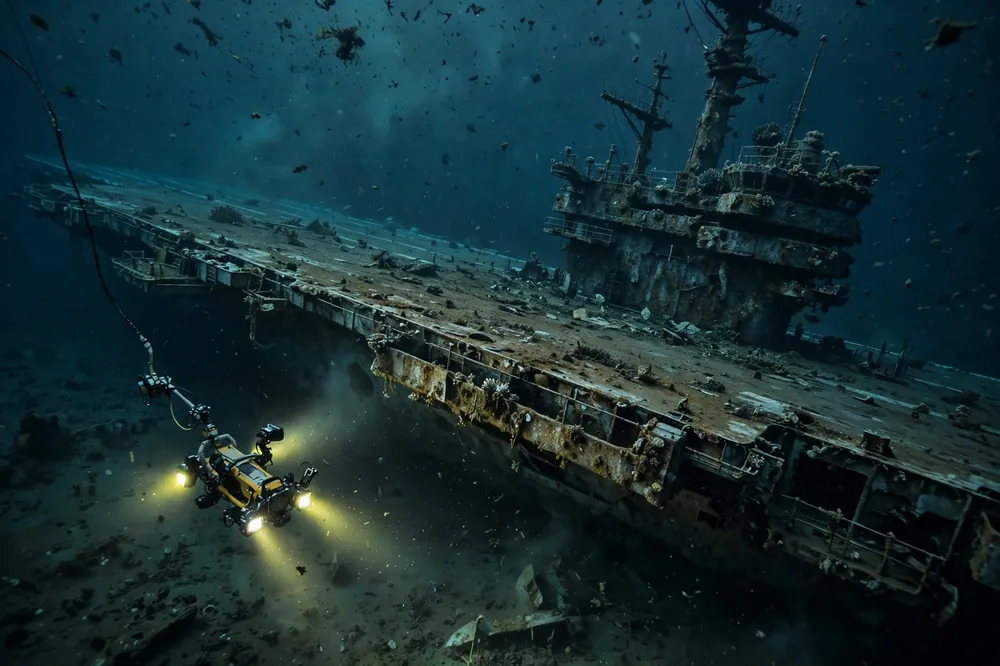
No part of Akagi survives above water. The ship was sunk in deep water, about 5,000 metres down, and her wreck was not located until October 2019, when the research vessel Petrel, funded by the estate of the Microsoft co-founder Paul Allen, found her lying upright on the seabed, about 1,300 nautical miles north-west of Midway Island. Photographs from the wreck show the flight deck and the island largely intact, and the ship’s name is still visible on her stern. The wreck is a war grave, and it is protected by international law and by the respect of the navies that fought the battle. There are no surviving aircraft from Akagi’s air group, and no large artefacts from the ship are held in museums, but models of Akagi are displayed in the Yushukan museum in Tokyo and in the Yamato Museum in Kure, and the story of the ship is told in the naval museums of Japan and the United States. For those who wish to remember her, the most fitting memorial is the sea itself, where she and her crew rest.
Remembrance
The discovery of the wreck in 2019, together with the discovery of the wreck of Kaga in the same expedition, gave historians and the families of the men who died a place to mourn. The photographs showed a ship that had been destroyed by fire, but that had settled on the seabed in a dignified state, her flight deck still recognisable after seventy-seven years in the deep. The expedition did not disturb the wreck, and it did not recover any artefacts, in accordance with the practice for war graves. In Japan, the loss of Akagi is remembered in the naval histories and in the memorials to the men of the First Air Fleet, and in the United States the battle of Midway is remembered as the victory that turned the Pacific War. The names of the men who died aboard her are recorded in the memorials at the Yasukuni Shrine in Tokyo and in the naval histories that remember the First Air Fleet. Akagi’s wreck, lying in the dark water of the Pacific, is a reminder of both.
Frequently Asked Questions
What was the Akagi?
Akagi was a Japanese aircraft carrier, converted from a battlecruiser hull, which served as the flagship of the First Air Fleet and of the Pearl Harbor striking force. She was sunk at the Battle of Midway in June 1942.
How many aircraft did Akagi carry?
Akagi carried 63 aircraft at Pearl Harbor, of a rated capacity of about 66 operational aircraft, with up to 91 if spare aircraft were included. At Pearl Harbor her air group consisted of 18 Zero fighters, 18 Val dive bombers and 27 Kate torpedo bombers.
What happened to Akagi at Midway?
On 4 June 1942, a bomb from an American dive bomber from the USS Enterprise penetrated Akagi’s flight deck and exploded among the armed and fuelled aircraft on her hangar deck. Fires spread through the ship, and she was scuttled by Japanese destroyers on the morning of 5 June.
Why was Akagi converted from a battlecruiser?
The Washington Naval Treaty of 1922 banned new capital ships but allowed two ships under construction in each navy to be converted into aircraft carriers. Japan chose the battlecruisers Akagi and Amagi, because their fast, large hulls were well suited to carrier operations.
Where is the wreck of Akagi today?
Akagi’s wreck lies in about 5,000 metres of water, north-west of Midway Island. It was located in October 2019 by the research vessel Petrel, and it is treated as a war grave.
How fast was Akagi?
Akagi’s top speed was 31.5 knots, about 58 kilometres per hour, which made her one of the fastest carriers of her generation and fast enough to generate ample wind over her flight deck for launching aircraft.
Sources
- Wikipedia, “Japanese aircraft carrier Akagi” — conversion from a battlecruiser, specifications, Pearl Harbor and Midway, the sinking on 4–5 June 1942.
- Jonathan Parshall and Anthony Tully, Shattered Sword: The Untold Story of the Battle of Midway (Potomac Books, 2005) — the Japanese carrier operations at Midway and the damage to Akagi.
- Mark Stille, Imperial Japanese Navy Aircraft Carriers 1921–45 (Osprey Publishing, 2005) — Akagi’s design, modernisation and air group.
- Paul S. Dull, A Battle History of the Imperial Japanese Navy (1941–1945) (Naval Institute Press, 1978) — the First Air Fleet and the Indian Ocean raid.
- Mitsuo Fuchida and Masatake Okumiya, Midway: The Battle That Doomed Japan (Naval Institute Press, 1955) — the Pearl Harbor attack from Akagi, by the air group commander.
- The research vessel Petrel expedition reports, 2019 — the discovery of Akagi’s wreck north-west of Midway.