 WAR ATLAS MILITARY HISTORY MAGAZINE · WWI — WWII
Messerschmitt Me 262
1. Lead
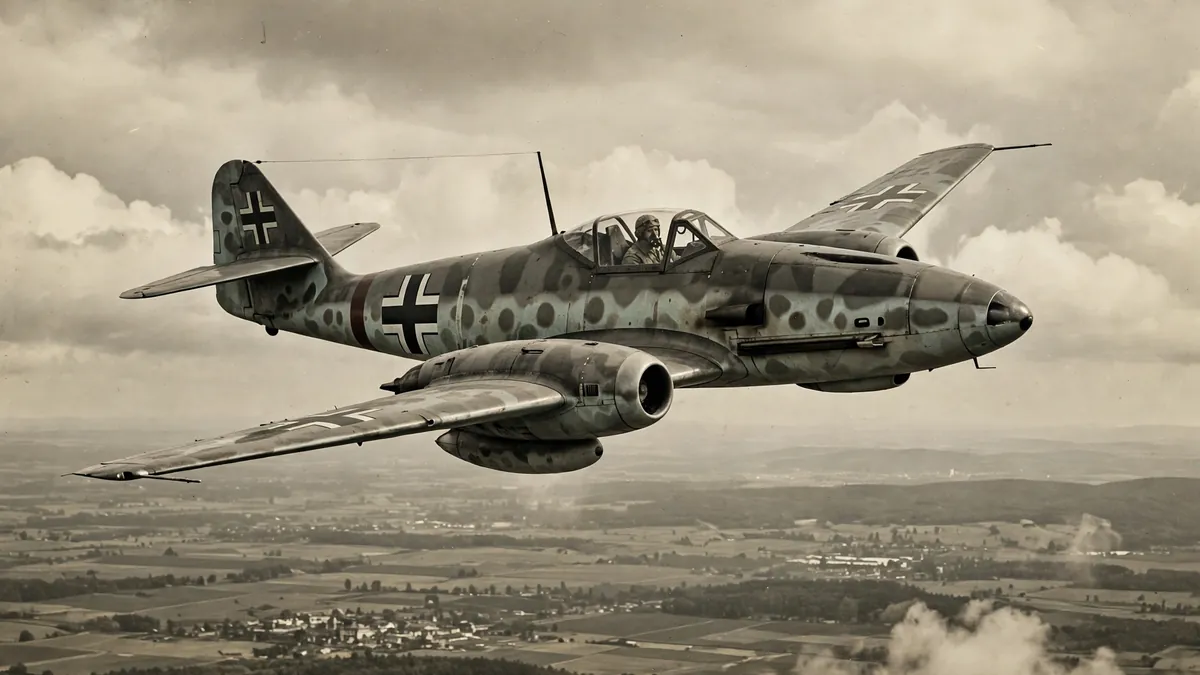
The Messerschmitt Me 262 was the world’s first operational jet fighter, and the fastest aircraft of the Second World War. A twin-engined jet, armed with four 30 mm cannon, it could fly at 870 kilometres per hour, more than 100 kilometres per hour faster than the best Allied fighters, and it was a weapon that, if it had arrived earlier and in larger numbers, might have changed the course of the air war over Germany. The Me 262 first flew under jet power in July 1942, and it entered service in the summer of 1944, and it fought in the last year of the war, when Germany was already losing, and when its pilots, who included the greatest German aces, flew it against the American bombers and their escorts, and shot down more than 500 Allied aircraft, according to German claims, at a cost of about 100 Me 262s lost in combat. The Me 262 was built in a run of about 1,430 aircraft, but only a few hundred ever flew in combat, because its engines were unreliable, because its fuel was in short supply, and because Hitler’s order to build it as a bomber delayed its entry into service as a fighter by months that Germany could not afford. The Me 262’s story is the story of a revolutionary aircraft that arrived too late, and of the men who flew it, and of the technology that changed aviation for ever.
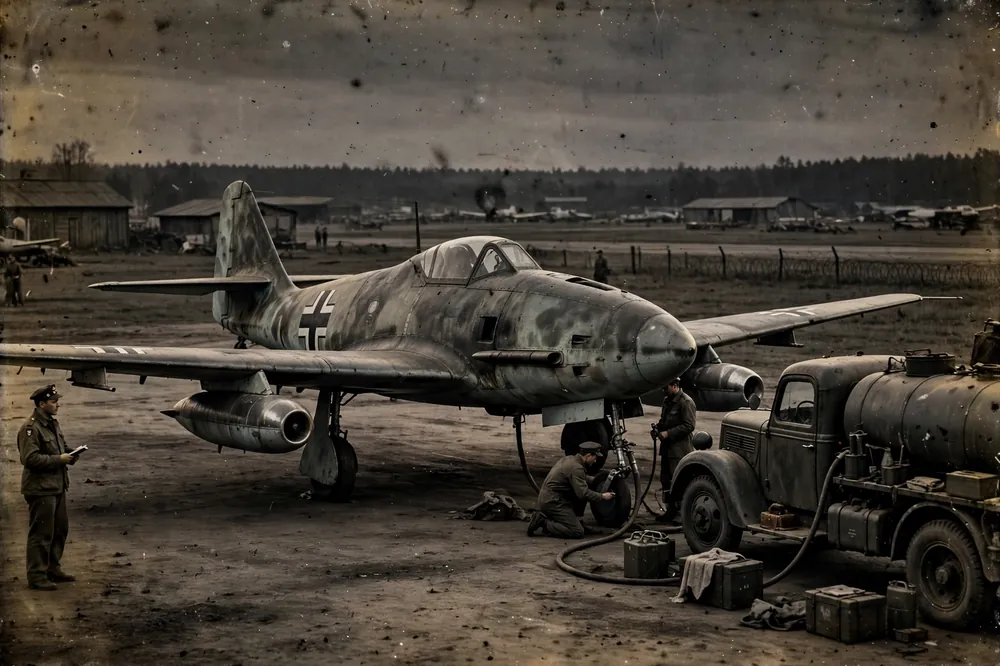
The Me 262 was a revolution in aviation, and it was the first aircraft to prove that the jet engine, which had been a laboratory curiosity in the 1930s, could power a fighter in combat, and that the jet fighter was faster, and more capable, than any piston-engined fighter. The Me 262’s speed was its greatest advantage: it could attack a bomber formation, fire its cannon, and escape before the escort fighters could react, and it was almost impossible for a piston-engined fighter to catch it in level flight. But the Me 262’s speed was also its weakness: it was difficult to aim its guns at such a speed, and its engines were unreliable, and they lasted only 10 to 25 hours before they had to be replaced, and its pilots had to learn to fly a new kind of aircraft, with new tactics, and with new problems. The Me 262’s story is therefore the story of a technology that was ahead of its time, and of the men who had to learn to use it in the middle of a war that they were losing, and of the aircraft that changed aviation, even though it could not change the outcome of the war.
2. Key Facts
| Type | Twin-engined jet fighter (later fighter-bomber) |
| Origin | Germany |
| Designer | Messerschmitt (Willy Messerschmitt; project led by Woldemar Voigt) |
| Manufacturer | Messerschmitt, Augsburg and Regensburg |
| First flight | 18 April 1941 (with piston engine); 18 July 1942 (jet-powered) |
| In service | July 1944–May 1945 (Luftwaffe) |
| Produced | 1942–1945; about 1,430 built |
| Crew | 1 |
| Length | 10.6 m (34 ft 9 in) |
| Wingspan | 12.5 m (41 ft) |
| Height | 3.8 m (12 ft 7 in) |
| Max speed | About 870 km/h (541 mph) |
| Range | About 1,050 km (652 miles) |
| Service ceiling | 11,450 m (37,565 ft) |
| Engines | Two Junkers Jumo 004B-1 turbojets, 8.8 kN (900 kgf) thrust each |
| Armament | Four 30 mm MK 108 cannon; 24 R4M rockets (later); 2 × 500 kg bombs (fighter-bomber) |
3. Background and Development
The Jet Engine and the Race to Fly
The Me 262 was born of the jet engine, and of the race between Germany and Britain to build the first jet aircraft. In Germany, Hans von Ohain built the first jet engine in 1937, and his engine powered the Heinkel He 178, the world’s first jet aircraft, which first flew on 27 August 1939, and in Britain, Frank Whittle built the first British jet engine, which powered the Gloster E.28/39, which first flew on 15 May 1941. The German Air Ministry, which had been impressed by the Heinkel’s flight, asked Messerschmitt to design a jet fighter, and the result was the Me 262, which was designed around two Junkers Jumo 004 turbojet engines, and which was the first jet fighter to be designed for combat. The Me 262 first flew on 18 April 1941, with a piston engine in its nose, because its jet engines were not ready, and it first flew under jet power on 18 July 1942, when it was flown by Fritz Wendel, and it was a success, and it was faster than any piston-engined fighter in the world.
Messerschmitt and the Design
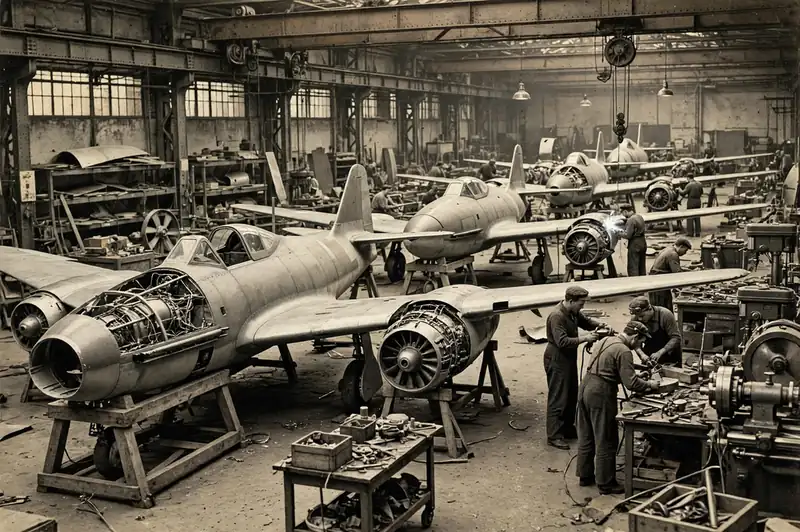
The Me 262 was designed by Messerschmitt, under Willy Messerschmitt and Woldemar Voigt, and it was a radical design: a low-wing monoplane, with two jet engines mounted under its wings, with a swept-back wing, with a tricycle undercarriage, and with four 30 mm cannon in its nose. The aircraft’s design was influenced by the need to fit the jet engines, which were large and heavy, and by the need to give the pilot a good view, and by the need to arm the aircraft with a weapon that could destroy a bomber with a single burst. The Me 262’s wing was swept back at 18.5 degrees, which was a new idea, and which was adopted because it improved the aircraft’s performance at high speed, and the aircraft’s tricycle undercarriage was also new, and it let the pilot see the runway when he took off and landed, which was important for a jet, whose engines were close to the ground. The Me 262’s design was a triumph, and it set the pattern for the jet fighters that followed it, and it is the design that every jet fighter since has followed.
Hitler’s Bomber Order and the Delay
The Me 262’s entry into service was delayed by Hitler’s order that it be built as a bomber, and the delay was one of the great mistakes of the war. In 1943, Hitler, who had been impressed by the Me 262’s speed, ordered that it be developed as a fast bomber, which could attack the Allied invasion fleet and the Allied armies, and that its production as a fighter be delayed, and the order was obeyed, and the Me 262 was fitted with bomb racks, and its development as a fighter was slowed by months. The delay was a disaster: the Me 262, which could have entered service as a fighter in late 1943, did not enter service until the summer of 1944, and by then the Allied bombing campaign had destroyed the German aircraft industry, and the Luftwaffe was short of fuel, of pilots and of airfields, and the Me 262 could not be built in the numbers that were needed, and it could not be flown by the pilots who were needed. Hitler’s order is remembered as one of the great blunders of the war, and it is the reason the Me 262 arrived too late to change the course of the air war.
4. Design
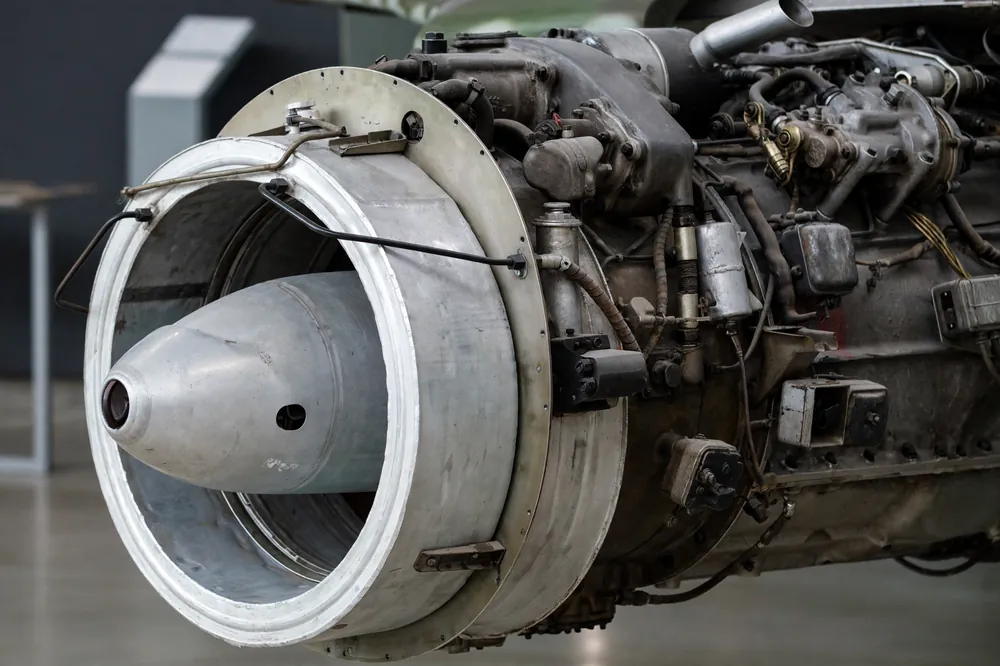
Two Jumo 004 Turbojets
The Me 262 was powered by two Junkers Jumo 004B-1 turbojet engines, each producing 8.8 kilonewtons (900 kilograms) of thrust, and mounted under the wings, and the engines were the first turbojets to enter mass production, and they were a triumph of German engineering, and a disaster of German production. The Jumo 004 was built from scarce materials, and it used a steel that could not withstand the heat of the engine, and it lasted only 10 to 25 hours before it had to be replaced, and it was prone to flameouts and to compressor stalls, and it had to be handled gently, with a slow throttle movement, or it would fail. The Me 262’s engines were its greatest weakness, and they were the reason the aircraft could not be flown in the numbers that were needed, and they were the reason the Me 262’s pilots had to be the best in the Luftwaffe, because only the best pilots could handle an aircraft whose engines might fail at any moment. The Jumo 004 was the ancestor of every jet engine since, and its design, with its axial compressor and its annular combustion chamber, set the pattern for the jet engines that followed it.
Four 30 mm Cannon and the R4M Rockets
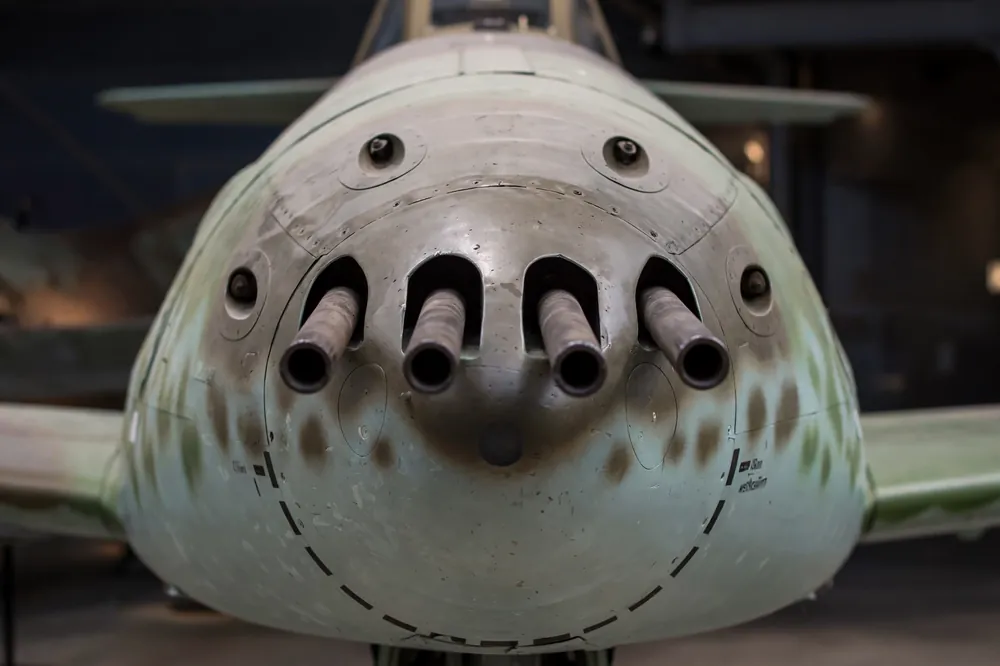
The Me 262 was armed with four 30 mm MK 108 cannon, mounted in its nose, and they fired a shell that could destroy a bomber with a single hit, and they were the most powerful guns ever fitted to a fighter. The MK 108 was a short-barrelled, low-velocity cannon, and it fired a large shell at a low speed, and it was designed to destroy a bomber, not to dogfight, and it was the reason the Me 262 could shoot down a B-17 with a single burst, and it was the reason the American bomber crews feared the Me 262 above all other German fighters. The Me 262 was later fitted with 24 R4M rockets, which were unguided rockets that were fired in a salvo at a bomber formation, and which could destroy a bomber with a single hit, and which were the ancestor of the air-to-air missiles that followed them. The Me 262’s armament was the heaviest of any fighter of the war, and it was the reason the fighter-bomber version was called the “Stormbird” (Sturmvogel) by its pilots, because it struck like a storm, and because it could destroy a bomber in a single pass.
Speed, Handling and the Swept Wing
The Me 262’s top speed was about 870 kilometres per hour, more than 100 kilometres per hour faster than the best Allied fighters, and it was the fastest aircraft of the war, and its speed was its greatest advantage. The aircraft’s handling was good for a jet, and its pilots praised its stability and its responsiveness, and its swept wing, which was swept back at 18.5 degrees, gave it a good performance at high speed, and it was the first swept-wing fighter to enter service. But the Me 262’s speed was also its weakness: it was difficult to aim its guns at such a speed, and the time that the pilot had to fire was short, and the aircraft’s acceleration was slow, and it was vulnerable on take-off and on landing, when it was slow and when its engines were at their most unreliable, and the Allied fighters learned to attack the Me 262 when it was taking off or landing, and to shoot it down when it could not defend itself. The Me 262’s speed was therefore a double-edged sword, and it was the reason the aircraft was both feared and vulnerable.
5. Variants
| Variant | Years | Key features | Production |
|---|---|---|---|
| Me 262A-1a Schwalbe | 1944–1945 | Fighter version; four 30 mm MK 108 cannon | About 1,430 (all wartime variants) |
| Me 262A-2a Sturmvogel | 1944–1945 | Fighter-bomber version; bomb racks for 2 × 500 kg bombs | Included in A-1 total |
| Me 262B-1a | 1944–1945 | Two-seat trainer; later converted to night fighter | 15 |
| Me 262A-1a/U1 | 1944–1945 | Six-gun version; two extra 20 mm cannon | Small numbers |
| Me 262A-1a/U4 | 1945 | 50 mm BK 5 cannon prototype | 2 prototypes |
| Avia S-92 | 1946–1949 | Czechoslovak-built Me 262; post-war production | 9 built |
Me 262A-1a Schwalbe
The Me 262A-1a Schwalbe (Swallow) was the fighter version of the Me 262, and it was the version that fought the air war over Germany in 1944 and 1945, and it was armed with four 30 mm MK 108 cannon in its nose, and it was powered by two Junkers Jumo 004B-1 turbojet engines, and it could fly at 870 kilometres per hour, more than 100 kilometres per hour faster than the best Allied fighters. The Schwalbe was the version that the great German aces flew, including Adolf Galland, who commanded JV44, the squadron of experts, and Gerhard Barkhorn, who was the second-highest-scoring ace in history, and it was the version that shot down more than 500 Allied aircraft, according to German claims, and that was feared by the American bomber crews above all other German fighters. The Schwalbe was built in a run of about 1,100 aircraft, but only a few hundred ever flew in combat, because its engines were unreliable, because its fuel was in short supply, and because the Allied bombing campaign had destroyed the German aircraft industry.
Me 262A-2a Sturmvogel
The Me 262A-2a Sturmvogel (Stormbird) was the fighter-bomber version of the Me 262, and it was the version that Hitler had ordered, when he demanded that the Me 262 be built as a bomber, and it was fitted with bomb racks for two 500-kilogram bombs, and it was used to attack the Allied invasion fleet and the Allied armies, and it was a failure as a bomber, because it was too fast to aim its bombs accurately, and because it was vulnerable when it was loaded with bombs, and because it was needed as a fighter, not as a bomber. The Sturmvogel was built in small numbers, and it was the version that delayed the Me 262’s entry into service as a fighter by months, and it is remembered as one of the great blunders of the war, and as the reason the Me 262 arrived too late to change the course of the air war. The Sturmvogel‘s story is a reminder that a weapon must be used for the purpose for which it was designed, and that a fighter that is forced to be a bomber is a fighter that is wasted.
Two-Seat and Reconnaissance Versions
The Me 262 was built in several other versions, of which the most important were the two-seat trainer, the Me 262B-1a, which was built in a run of 15 aircraft, and which was later converted to a night fighter, with radar in its nose, and which was used to defend Germany against the British night bombers, and the reconnaissance version, the Me 262A-1a/U3, which was fitted with cameras in place of its guns, and which was used to photograph the Allied armies and the Allied invasion fleet. The Me 262 was also built as a prototype with a 50 mm BK 5 cannon, the Me 262A-1a/U4, of which two were built, and as a six-gun version, the Me 262A-1a/U1, with two extra 20 mm cannon, and these versions were a measure of the Me 262’s versatility, and of the German Air Ministry’s attempts to adapt the aircraft to new roles, even as the war was being lost. The Me 262’s versions are a reminder that a revolutionary aircraft can be adapted to many roles, and that the Me 262 was more than a fighter, and that it was the ancestor of the jet aircraft that followed it.
6. Operational History
First Combat: Summer 1944
The Me 262 entered service in the summer of 1944, and its first combat came in July 1944, when the Me 262s of Erprobungskommando 262, the test unit, attacked the American bombers over Germany and shot down their first Allied aircraft: a Mosquito reconnaissance aircraft on 25 July 1944, and a B-17 bomber on 2 August 1944. The Me 262’s first kills were a shock to the Allies, who had not expected a jet fighter and had no aircraft that could catch it, and the American bomber crews, who had been told that the Me 262 was a myth, learned that it was real, and that it could destroy a bomber with a single burst of its 30 mm cannon. The Me 262’s pilots learned to hunt the American bombers, and developed tactics that used the aircraft’s speed to their advantage: the Me 262 attacked the bomber formation from above and behind, diving at high speed, firing its cannon in a single pass, and then climbing away before the escort fighters could react, a tactic that worked, that shot down many bombers, and that the American crews feared. The Me 262’s pilots included the greatest German aces, who had been transferred to the jet units because they were the best pilots in the Luftwaffe, and who flew the Me 262 with a skill the Allied pilots had not seen before, and who shot down more than 500 Allied aircraft, according to German claims, at a cost of about 100 Me 262s lost in combat. The Me 262’s first combat was a success, but it was a success that came too late: the Allies had already destroyed the German aircraft industry, and the Me 262 could not be built in the numbers that were needed, and its pilots were too few, and its fuel was too scarce.
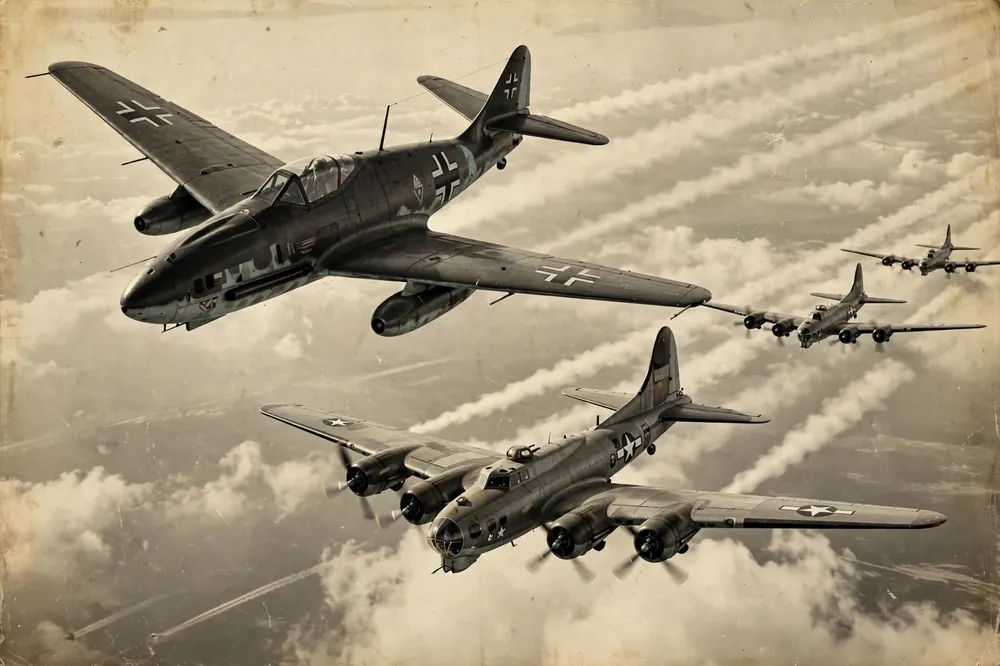
The First Kills
The Me 262 entered service in the summer of 1944, and its first combat came in July 1944, when the Me 262s of Erprobungskommando 262, the test unit, attacked the American bombers over Germany, and shot down their first Allied aircraft, a Mosquito reconnaissance aircraft, on 25 July 1944, and a B-17 bomber on 2 August 1944. The Me 262’s first kills were a shock to the Allies, who had not expected a jet fighter, and who had no aircraft that could catch it, and the American bomber crews, who had been told that the Me 262 was a myth, learned that it was real, and that it could destroy a bomber with a single burst of its 30 mm cannon. The Me 262’s first combat was a success, but it was a success that came too late: the Allies had already destroyed the German aircraft industry, and the Me 262 could not be built in the numbers that were needed, and its pilots were too few, and its fuel was too scarce, and the war was already lost.
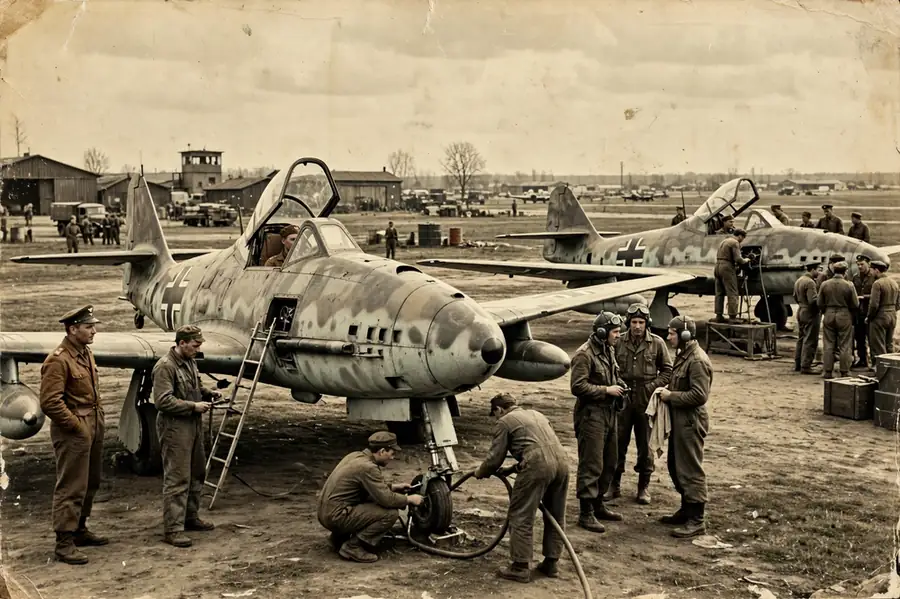
The Bomber Hunters
The Me 262’s pilots learned to hunt the American bombers, and they developed tactics that used the aircraft’s speed to their advantage. The Me 262 attacked the bomber formation from above and behind, diving at high speed, firing its cannon in a single pass, and then climbing away before the escort fighters could react, and it was a tactic that worked, and that shot down many bombers, and that the American crews feared. The Me 262’s pilots included the greatest German aces, who had been transferred to the jet units because they were the best pilots in the Luftwaffe, and who flew the Me 262 with a skill that the Allied pilots had not seen before, and who shot down more than 500 Allied aircraft, according to German claims, at a cost of about 100 Me 262s lost in combat. The Me 262’s bomber hunters were the best pilots in Germany, and they flew the best aircraft in the world, and they fought a losing war, and their story is one of the great tragedies of the air war.
JV44: Galland’s Squadron of Experts
The most famous Me 262 unit was JV44, the Jagdverband 44, which was commanded by Adolf Galland, the former General of Fighters, who had been dismissed by Göring, and who formed a squadron of experts, with the best pilots in the Luftwaffe, and who flew the Me 262 in the last months of the war. JV44’s pilots included Gerhard Barkhorn, who was the second-highest-scoring ace in history, with 301 victories, and Günther Lützow, and Johannes Steinhoff, and Heinz Bär, and they were the most experienced pilots in Germany, and they flew the Me 262 from Munich-Riem, and they protected the airfield with Fw 190s, because the Me 262 was vulnerable on take-off and on landing, and they fought the American bombers and their escorts, and they shot down many Allied aircraft, and they were the last of the Luftwaffe’s great aces. JV44’s story is the story of the Me 262 at its best, and of the men who flew it, and of the Luftwaffe’s last stand, and it is remembered as one of the great stories of the air war.
The Last Months
In the last months of the war, the Me 262 fought on, even as Germany collapsed around it. The Me 262 units flew from airfields that were under attack, with fuel that was in short supply, and with pilots who were too few, and they attacked the American bombers that flew over Germany every day, and they shot down bombers and fighters, and they were shot down in return, and they kept fighting until the end. The last Me 262s flew on 8 May 1945, the day the war ended, and they were the last German aircraft to fly in combat, and their pilots landed and surrendered, and their aircraft were captured by the Allies, and taken to Britain, to the United States and to the Soviet Union, where they were studied, and where they influenced the design of the jet fighters that followed them. The Me 262’s last months were a tragedy, and a triumph: a tragedy, because the aircraft arrived too late to save Germany, and a triumph, because it proved that the jet fighter was the future, and that aviation had changed for ever.
7. Performance and Specifications
| Specification | Me 262A-1a |
|---|---|
| Crew | 1 |
| Length | 10.6 m |
| Wingspan | 12.5 m |
| Height | 3.8 m |
| Empty weight | About 3,795 kg |
| Maximum take-off weight | About 6,962 kg |
| Engines | Two Junkers Jumo 004B-1 turbojets, 8.8 kN thrust each |
| Max speed | About 870 km/h |
| Range | About 1,050 km |
| Service ceiling | 11,450 m |
| Armament | Four 30 mm MK 108 cannon; 24 R4M rockets (later) |
| Bomb load | 2 × 500 kg bombs (fighter-bomber version) |
Jet Performance
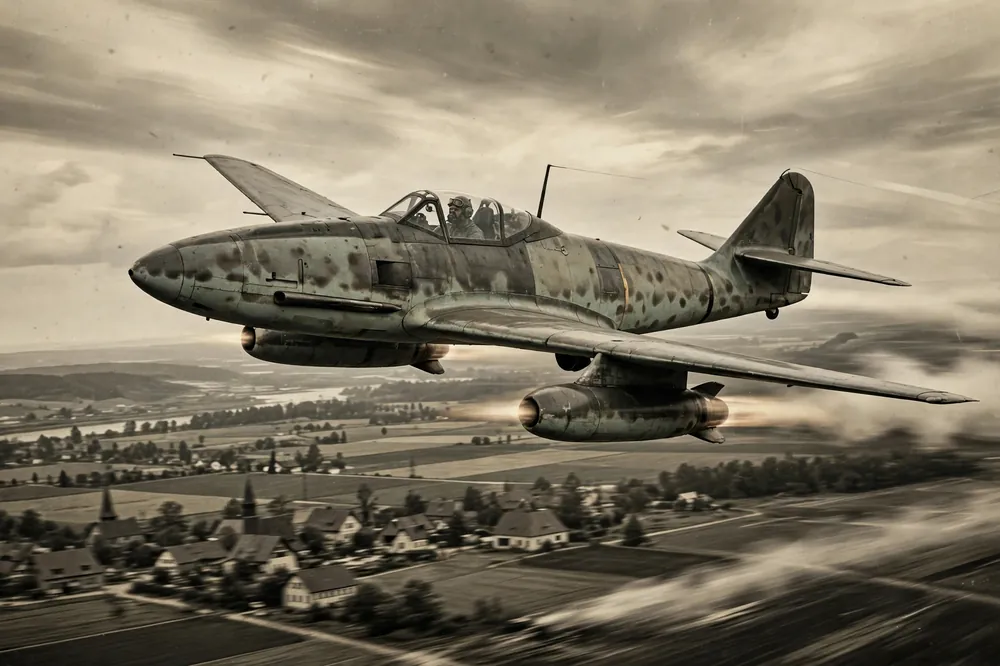
The Me 262’s jet performance was revolutionary, and it was the first aircraft to prove that the jet engine could power a fighter in combat. Its top speed of about 870 kilometres per hour was more than 100 kilometres per hour faster than the best Allied fighters, and its rate of climb was better, and its service ceiling of 11,450 metres was higher, and it could attack a bomber formation and escape before the escort fighters could react. But the Me 262’s jet performance was limited by its engines, which lasted only 10 to 25 hours, and which were prone to flameouts, and by its range, which was only about 1,050 kilometres, and which limited its time over the target, and by its acceleration, which was slow, and which made it vulnerable on take-off and on landing. The Me 262’s jet performance was therefore a revolution, but a revolution that was limited by the technology of its time, and by the materials that were available, and by the war that was being lost, and it is the performance that changed aviation, even though it could not change the outcome of the war.
Comparison with the Meteor and the P-80
Compared with the British Gloster Meteor, the Me 262 was faster, more heavily armed and more advanced, but the Meteor was more reliable, and its engines lasted longer, and it was built in larger numbers, and it served after the war, while the Me 262 was retired when the war ended. The Meteor, which entered service in July 1944, was the first Allied jet fighter, and it was used to shoot down V-1 flying bombs, and it never fought the Me 262 in combat, and the two aircraft never met in the air, and their comparison is a matter of speculation, not of combat. Compared with the American Lockheed P-80 Shooting Star, the Me 262 was faster and more heavily armed, but the P-80 was more reliable, and it served after the war, and it was the first American jet fighter to enter service, and it was the ancestor of the American jet fighters that followed it. The Me 262’s place in history is that of the first jet fighter, and it is remembered as the aircraft that proved the jet, and that changed aviation, and that arrived too late to change the war.
8. Operators
Germany
The Me 262 was used only by Germany during the war, and it served with the Luftwaffe, in the fighter units that defended Germany against the American bombers, and in the bomber units that attacked the Allied armies, and in the night fighter units that defended Germany against the British night bombers. The Me 262’s units included Erprobungskommando 262, the test unit, Kommando Nowotny, the first operational unit, JG 7, the first jet fighter wing, and JV44, the squadron of experts, and they were the units that flew the Me 262 in combat, and that shot down more than 500 Allied aircraft, according to German claims. The Me 262’s service with Germany ended with the war, and its pilots surrendered, and its aircraft were captured, and the Luftwaffe was disbanded, and the Me 262’s story is therefore a German story, and it is the story of an aircraft that was built for Germany, and that served Germany, and that is remembered in Germany.
Post-War: Czechoslovakia and the Allies
After the war, the Me 262 was built in Czechoslovakia, as the Avia S-92, and nine were built, and they served with the Czechoslovak Air Force, and they were the only Me 262s to serve after the war. The Allies captured Me 262s, and they took them to Britain, to the United States and to the Soviet Union, where they were studied, and where they influenced the design of the jet fighters that followed them, including the British Meteor, the American P-80 and the Soviet MiG-15, which was the first Soviet jet fighter to enter service, and which was influenced by the Me 262’s design. The Me 262’s post-war service was short, but its influence was long, and it is the influence that matters: the Me 262 taught the Allies how to build a jet fighter, and it set the pattern for the jet fighters that followed it, and it is the ancestor of every jet fighter in the world today.
9. Legacy and Influence
The First Jet Fighter
The Me 262’s legacy is that of the first jet fighter, and it is remembered as the aircraft that proved the jet engine, and that changed aviation for ever, and that opened the age of the jet. Before the Me 262, the jet engine was a laboratory curiosity, and the fighter was a piston-engined aircraft, and after the Me 262, the jet fighter was the standard fighter, and the piston-engined fighter was obsolete, and every air force in the world built jet fighters, and the Me 262’s design, with its swept wing, its twin engines and its heavy cannon armament, set the pattern for the jet fighters that followed it. The Me 262’s legacy is therefore the legacy of the jet itself, and it is the aircraft that is remembered as the first, and as the one that changed everything, and its story is told in every history of aviation, and in every museum that displays a jet fighter, and in the hearts of the people who remember the day when the jet arrived.
The Me 262 in Memory
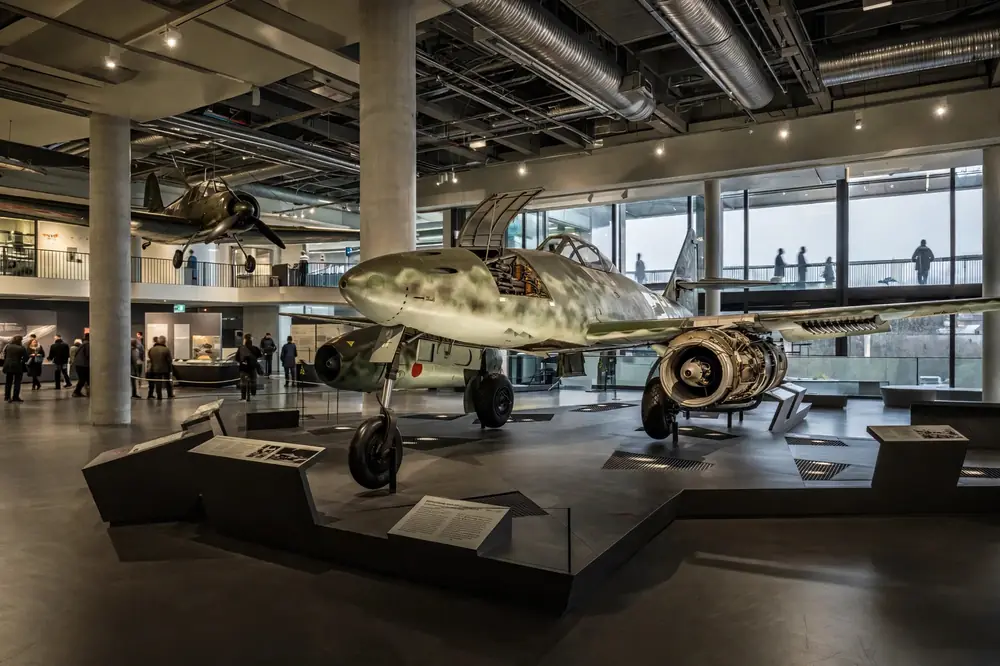
The Me 262 is remembered in the museums and the memorials that tell its story, and in the aircraft that survive, and in the replicas that fly, and in the books and the films that remember the air war over Germany. The Me 262’s memory lives on in the Deutsches Museum in Munich, which holds a Me 262, in the Smithsonian National Air and Space Museum in Washington, D.C., which holds a Me 262, and in the Royal Air Force Museum in London, which holds a Me 262, and in the hearts of the people who remember the Stormbird, and who remember the day when the jet fighter arrived, and when aviation changed for ever. The Me 262’s story is told in every history of the Second World War, and in every history of aviation, and it is a story that will be told as long as the jet flies, and as long as the Me 262 is remembered as the first, and as the aircraft that changed everything.
10. Surviving Examples
Surviving Aircraft
About ten Me 262s survive, and they are displayed in museums around the world, including the Deutsches Museum in Munich, which holds a Me 262A-1a, the Smithsonian National Air and Space Museum in Washington, D.C., which holds a Me 262A-1a, the Royal Air Force Museum in London, which holds a Me 262A-2a, the National Museum of the United States Air Force in Dayton, Ohio, which holds a Me 262A-1a, and the Australian War Memorial in Canberra, which holds a Me 262A-2a. The surviving Me 262s are among the rarest aircraft of the war, because only about 1,430 were built, and most were destroyed in the war or scrapped after it, and the survivors are a reminder of the first jet fighter, and of the men who flew it, and of the technology that changed aviation. For the visitor, the Me 262 is one of the most impressive aircraft in the museums that display it, and it is a reminder of the jet age, and of the aircraft that opened it.
Replicas That Fly
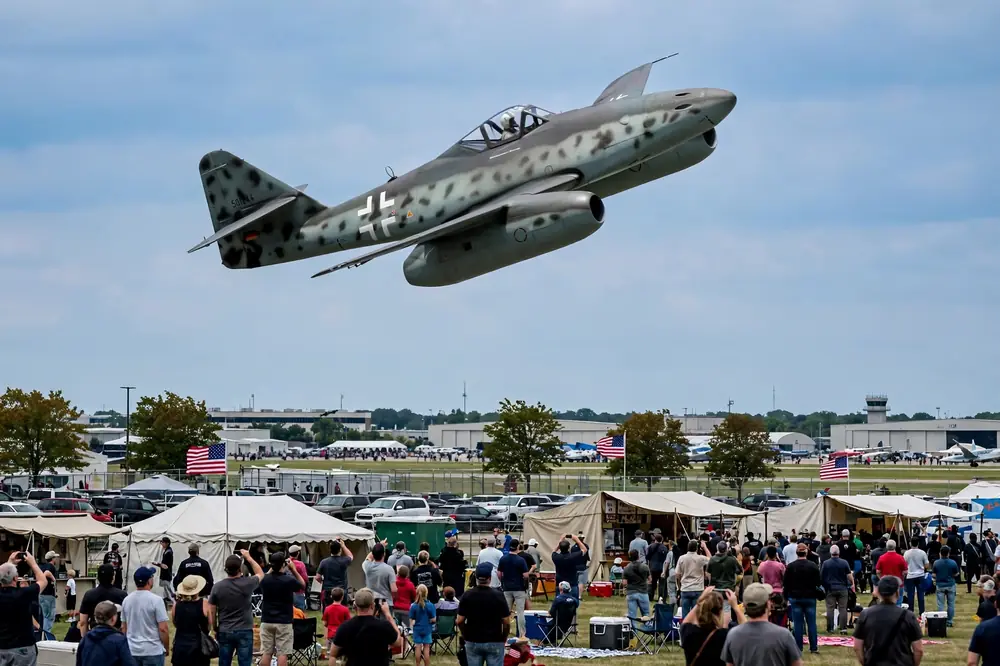
Five replicas of the Me 262 were built by the Me 262 Project in the United States, and they fly at air shows, and they are the only Me 262s that fly in the world, and they are powered by General Electric CJ610 jet engines, which are modern engines that are more reliable than the Jumo 004, and they are a tribute to the Me 262 and to the men who flew it. The replicas were built from the original Messerschmitt plans, and they are faithful copies of the Me 262A-1a, and they fly with the markings of JV44, the squadron of experts, and they are seen by millions of people every year at the air shows where they fly. The replicas’ story is a reminder that the Me 262 is not only a museum piece, but a living aircraft, and that its story will continue to be told in the air, as well as in the museums, and that the first jet fighter will fly again.
Frequently Asked Questions
What is the Messerschmitt Me 262?
The Messerschmitt Me 262 was the world’s first operational jet fighter, built by Germany. It entered service in 1944, flew at 870 kilometres per hour, and was armed with four 30 mm cannon. About 1,430 were built.
How fast was the Me 262?
The Me 262’s top speed was about 870 kilometres per hour (541 mph), more than 100 kilometres per hour faster than the best Allied fighters, with a range of about 1,050 kilometres and a service ceiling of 11,450 metres.
Why did the Me 262 arrive so late?
The Me 262 was delayed by Hitler’s order that it be built as a bomber, which slowed its development as a fighter by months, and by the unreliability of its Jumo 004 engines, which lasted only 10 to 25 hours, and by the Allied bombing campaign, which destroyed the German aircraft industry.
How many Allied aircraft did the Me 262 shoot down?
According to German claims, Me 262s shot down more than 500 Allied aircraft, at a cost of about 100 Me 262s lost in combat. The exact figures are disputed, because German claims were often exaggerated, and because many Me 262s were destroyed on the ground.
What guns did the Me 262 carry?
The Me 262 was armed with four 30 mm MK 108 cannon in its nose, and later versions carried 24 R4M rockets, which were fired in a salvo at a bomber formation.
Where can I see a Me 262 today?
Me 262s are displayed at the Deutsches Museum in Munich, the Smithsonian National Air and Space Museum in Washington, D.C., the Royal Air Force Museum in London, and the National Museum of the United States Air Force in Dayton, Ohio, and five replicas fly at air shows in the United States.
Sources
- Wikipedia, “Messerschmitt Me 262” — development, production of about 1,430, Jumo 004 engines, Hitler’s bomber order, JV44.
- Colin D. Heaton, The Me 262 Stormbird (Zenith Press, 2012) — the aircraft’s design and its combat record.
- Mano Ziegler, Rocket Fighter (Bantam Books, 1976) — a Me 163 pilot’s account, with context on the Me 262.
- John Weal, Messerschmitt Me 262 Aces of World War 2 (Osprey Publishing, 2011) — JV44 and the Me 262 aces.
- David Baker, Messerschmitt Me 262 (Crowood Press, 2001) — the aircraft’s development and its variants.
- The Smithsonian National Air and Space Museum, “Messerschmitt Me 262” — the aircraft’s specifications and surviving examples.