 WAR ATLAS MILITARY HISTORY MAGAZINE · WWI — WWII
Siege of Tobruk
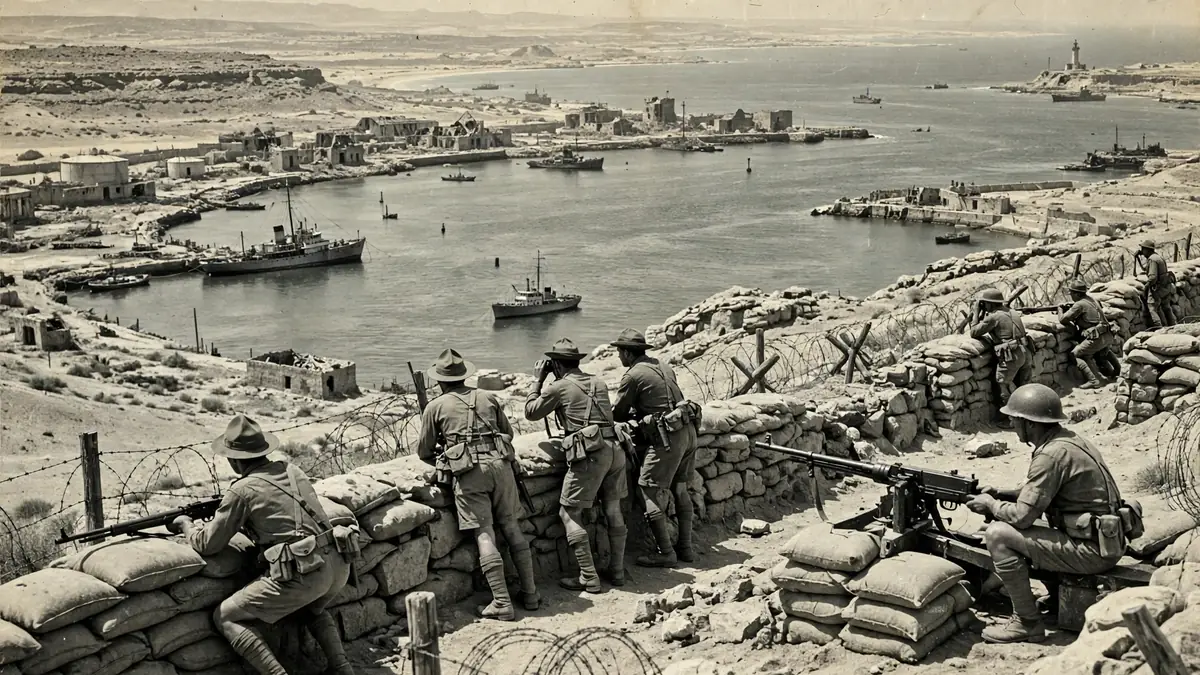
The Siege of Tobruk lasted 241 days, from 10 April to 27 November 1941, and it was one of the great defensive battles of the Second World War. In the spring of 1941, the German general Erwin Rommel — the “Desert Fox” — had swept across Libya in a surprise offensive, driving the British back hundreds of kilometres to the Egyptian border. But he could not take Tobruk, the deep-water port on the Libyan coast, because its garrison refused to surrender. The garrison was built around the Australian 9th Division under Major General Leslie Morshead, and it held the port’s defences — a ring of concrete posts, wire and anti-tank ditches about 50 kilometres around — against every attack Rommel threw at it. The Germans called the defenders the “Rats of Tobruk”, meaning it as an insult, and the Australians adopted the name with pride.
The siege was a battle of endurance, fought in a desert fortress that could only be supplied by sea. Every night, destroyers and small ships ran the gauntlet of German bombers to bring in food, ammunition and reinforcements, and to take out the wounded. Inside the perimeter, the garrison lived under constant shelling and bombing, in dugouts and trenches, in heat that reached 40 degrees Celsius and in dust that got into everything. Outside the perimeter, Rommel’s tanks and infantry attacked again and again — at Easter, in May, and through the summer — and each time they were thrown back. Two British offensives, Operation Brevity in May and Operation Battleaxe in June, failed to relieve the garrison, and it was not until Operation Crusader, in November 1941, that the Eighth Army finally broke through and lifted the siege.
Tobruk mattered because it was the first time Rommel had been stopped. The German advance that had seemed unstoppable in the spring of 1941 was halted at Tobruk, and the port that Rommel needed for his supplies stayed in Allied hands. The siege was also a propaganda victory: at a time when Britain had suffered defeat after defeat, the “Rats of Tobruk” became a symbol of resistance, and their stand was celebrated in newspapers and newsreels around the world. The cost was heavy — Allied losses in the siege are estimated at about 5,000 to 6,000 men killed, wounded and captured, and Axis losses at about 8,000 to 12,000 — but the garrison had held, and Rommel’s legend had been dented for the first time.
1. Key Facts
| Date | 10 April – 27 November 1941 (241 days) |
| Location | Tobruk, Libya (Cyrenaica coast) |
| Result | Allied victory; siege lifted by Operation Crusader |
| Allied commander | Maj. Gen. Leslie Morshead (9th Australian Division; fortress commander to October); Maj. Gen. Ronald Scobie (from October) |
| Axis commander | Gen. Erwin Rommel (Afrika Korps) |
| Allied strength | About 27,000–36,000 men in the garrison (Australian, British, Indian, Polish, Czechoslovak) |
| Axis strength | About 30,000–40,000 men (German Afrika Korps and Italian XX Corps) |
| Allied losses | About 5,000–6,000 killed, wounded and captured (estimates vary) |
| Axis losses | About 8,000–12,000 killed, wounded and captured (estimates vary) |
2. Background
Rommel’s Spring Offensive
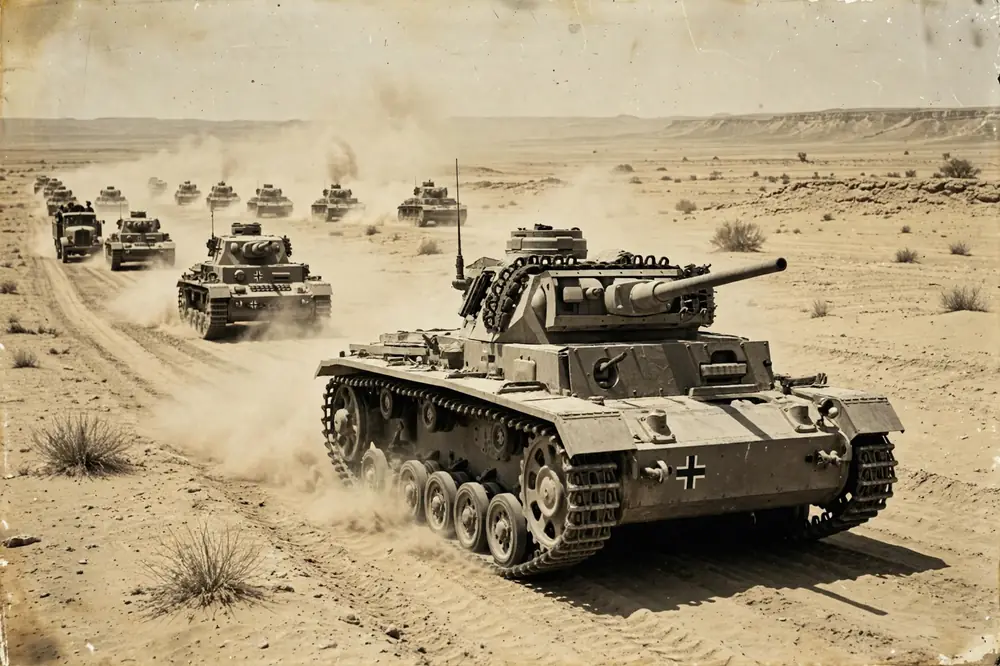
The Siege of Tobruk began with one of the most surprising offensives of the Second World War. In February 1941, Germany sent a small force — the Afrika Korps, under General Erwin Rommel — to Libya, to save the Italians, who had been routed by the British in Operation Compass. Rommel was supposed to hold the line at Tripoli and wait for reinforcements, but he had other ideas: on 31 March 1941, with only a few divisions, he attacked, and the British, who had sent their best troops to Greece, collapsed before him. In two weeks, Rommel’s tanks had advanced more than 500 kilometres, retaken Benghazi, and driven the British back to the Egyptian border at Sollum. The British retreat was so fast that it became known as the “Benghazi Handicap”, a race to the east in which whole units were lost. Only Tobruk, on the coast, held out.
The Retreat to Tobruk
The British retreat to Tobruk was a race against Rommel’s tanks, and it was won by the narrowest of margins. The Australian 9th Division, under Major General Leslie Morshead, had been moving up to the front when the German offensive began, and its battalions were scattered across Cyrenaica. Morshead gathered them at Tobruk, along with British, Indian and other Allied units, and prepared to defend the port. The decision to hold Tobruk was made by the British commander-in-chief, General Archibald Wavell, who understood that the port was the key to Cyrenaica: as long as Tobruk was held, Rommel could not use it for his supplies, and his advance to Egypt would be hampered by a supply line running hundreds of kilometres past a hostile fortress. The garrison was ordered to hold, and it did — for 241 days — and in holding, it changed the course of the desert war and gave Britain the victory it desperately needed in the spring of 1941.
Why Tobruk Mattered
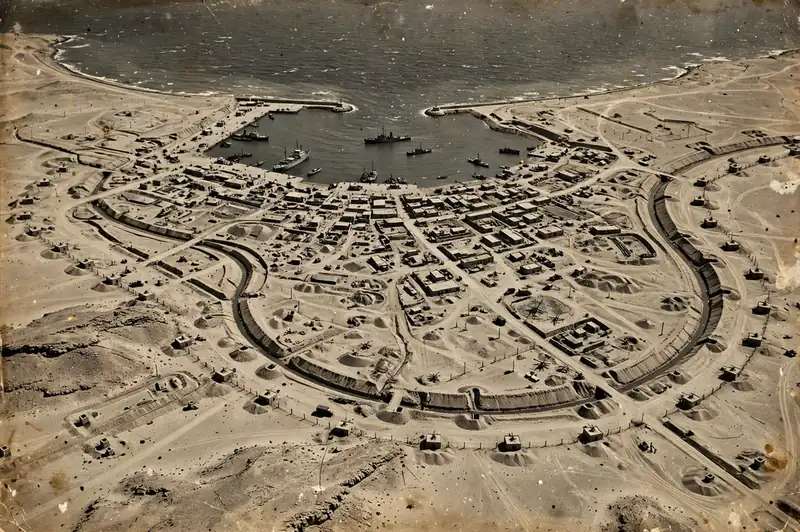
Tobruk mattered for one simple reason: it was the only deep-water port between Benghazi and Alexandria, and in the desert war, ports were everything. The desert war was a war of supply: the armies fought hundreds of kilometres from their bases, and everything they needed — fuel, ammunition, food, water — had to be brought up by truck over desert roads, or by sea to a port. Tobruk’s harbour could take large ships, and its capture would have given Rommel a supply base only 150 kilometres from the Egyptian border, instead of the 1,000 kilometres from Tripoli. Without Tobruk, Rommel’s supply line ran past the fortress, and his trucks were attacked by the garrison’s patrols and by the Royal Navy. The siege of Tobruk was therefore not a sideshow: it was the battle that decided whether Rommel could invade Egypt, and it was fought for a port.
The Fortress the Italians Built
Tobruk’s defences had been built by the Italians, who had held Libya since 1911, and they were formidable. The fortress was ringed by two lines of concrete posts — the Red Line, about 50 kilometres around, and the Blue Line, closer to the town — connected by barbed wire, anti-tank ditches and minefields, and supported by artillery positions and by the guns of the harbour. The Italians had also built a network of underground shelters, water tanks and supply dumps, and the port itself was protected by coastal guns. The defences had one weakness: they had been built to face an attack from the desert, and the Italians had never expected to have to defend them against a modern army with tanks and aircraft. The Australians, who took over the defences in April 1941, found them in good condition, and they improved them — digging deeper, laying more mines, and turning the concrete posts into strongpoints that could hold out even when surrounded.
3. Opposing Forces
The Garrison: Morshead’s Men
The garrison of Tobruk was built around the Australian 9th Division, under Major General Leslie Morshead, and it numbered about 27,000 to 36,000 men at its peak. The Australians — about 14,000 men of the 9th Division, including the 20th, 24th and 26th Brigades — were the backbone of the defence, but they were not alone: the garrison also included British artillery and tank units, Indian infantry, the Polish Carpathian Rifle Brigade, which arrived in August, and the Czechoslovak 11th Infantry Battalion. The garrison’s tanks were few — a handful of British Matildas and captured Italian tanks — and its artillery was a mixture of British, Australian and captured Italian guns. The garrison’s real strength was its infantry: tough, well-trained Australian soldiers, led by officers who had fought in the First World War, and commanded by Morshead, a man whose order was simple and absolute.
Morshead’s Order: No Surrender, No Retreat
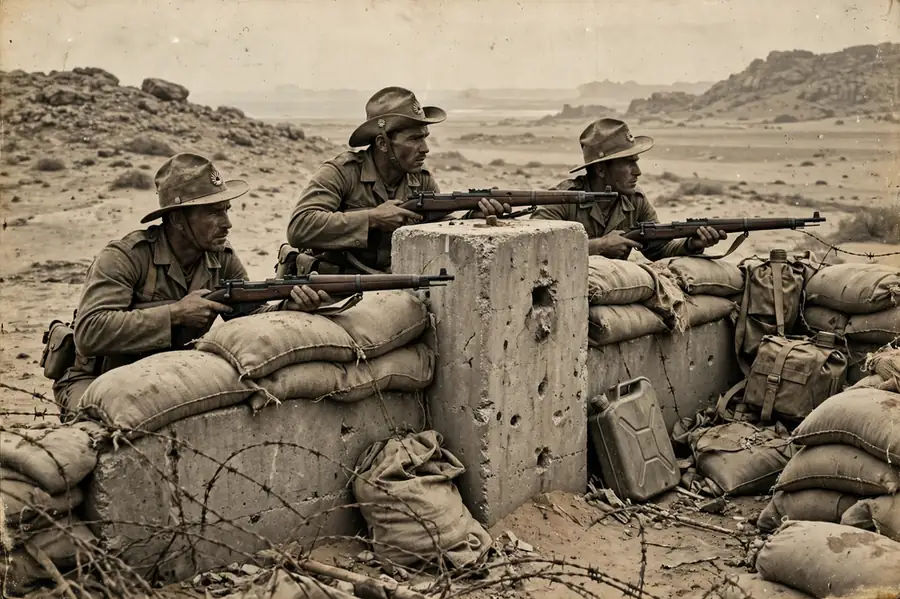
Morshead’s order to the garrison was famous, and it was obeyed to the letter: “There will be no Dunkirk here. There will be no surrender and no retreat.” Morshead was a veteran of Gallipoli and the Western Front, and he understood that the defence of Tobruk would be won not by the fortifications but by the men in them. He organised the garrison into a mobile defence: the infantry held the concrete posts, the artillery supported them, and the tanks were kept in reserve, to be thrown at any breakthrough. He also ordered aggressive patrolling: every night, Australian patrols went out into no man’s land, to raid the German positions, to capture prisoners, and to make the enemy afraid to move. Morshead’s motto was that no man’s land belonged to the Australians, and the patrols made it true. The Germans learned to fear the night, and the garrison learned that it could fight back.
Rommel’s Afrika Korps
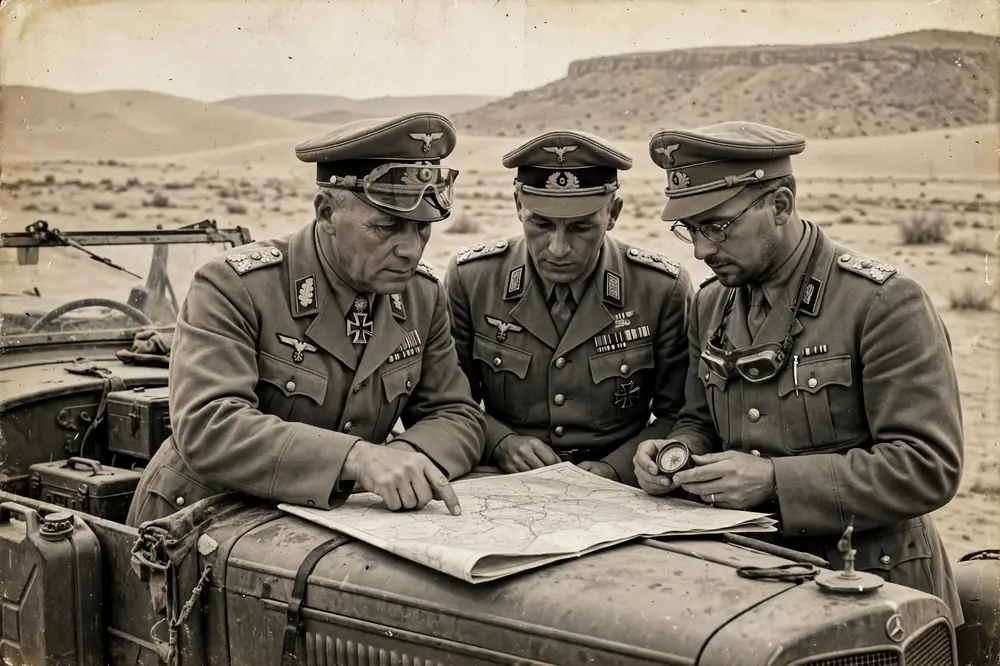
The Axis forces besieging Tobruk were commanded by General Erwin Rommel, and they numbered about 30,000 to 40,000 men. The core of the force was the German Afrika Korps — the 5th Light Division and the 15th Panzer Division, with about 200 tanks — supported by the Italian XX Corps, which included the Ariete armoured division and the Trieste, Bologna, Brescia and Pavia infantry divisions. Rommel’s army was the finest desert fighting force in the world in 1941: its tanks were fast, its officers were aggressive, and its commander was a genius of mobile warfare. But it had weaknesses: its supply line ran 1,000 kilometres from Tripoli, its Italian divisions were poorly equipped and poorly led, and its tanks — the Panzer III and IV — were outmatched by the British Matilda in armour, though they were faster and better handled.
The Italians Beside Rommel
The Italian divisions beside Rommel were the weak link in the Axis siege, and Rommel knew it. The Italian infantry divisions — Bologna, Brescia and Pavia — were brave enough, but they were poorly equipped, with obsolete artillery and few trucks, and their officers were often incompetent. The Ariete armoured division, with its M13/40 tanks, was the best of the Italian formations, but its tanks were thinly armoured and under-gunned, and they were no match for the British Matildas. Rommel used the Italians to hold the line around Tobruk, while his German divisions did the attacking, and the arrangement worked — after a fashion — but it meant that the siege was always short of the men and the tanks it needed. The Italians also suffered the most: in the attacks on Tobruk, it was often the Italian infantry that went in first, and that paid the price — a price measured in thousands of dead and wounded, and in divisions worn down to shadows of themselves by the end of the siege.
| Allies | Axis | |
|---|---|---|
| Infantry | Australian 9th Division; British, Indian, Polish, Czechoslovak units | |
| Tanks | Few Matildas and captured Italian tanks | |
| Artillery | British, Australian and captured Italian guns | |
| Air support | Limited RAF support from Egypt | |
| Supply | By sea at night — the “Tobruk ferry” | |
| Key commanders | Morshead, Scobie, Kopanski | Rommel, Crüwell, Navarini |
4. The Battle
The First Assaults: Easter 1941
The first German attack on Tobruk came on Good Friday, 11 April 1941, only a day after the siege began. Rommel, who believed the garrison was demoralised and ready to surrender, threw the 5th Light Division at the defences on the eastern side of the perimeter, near the El Adem road. The attack was repulsed: the Australian infantry, supported by artillery, held their posts, and the German tanks, which had outrun their infantry, were caught in the anti-tank ditch and destroyed. Rommel attacked again on 13–14 April, this time with the 15th Panzer Division, and again the attack failed: the Australian 24th Brigade, holding the Ras el Madauar sector, destroyed dozens of German tanks and took hundreds of prisoners. The Easter attacks cost the Germans heavily, and they taught Rommel a lesson: Tobruk would not fall to a hasty assault, and the garrison was not demoralised. It was, in fact, spoiling for a fight.
The Easter Battle and the Tanks in the Ditch
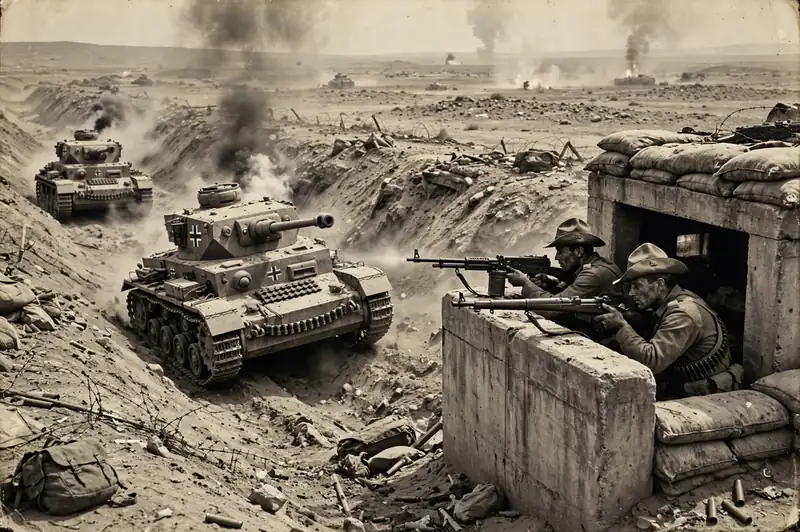
The Easter battle is remembered for a single image: German tanks stuck in the anti-tank ditch, their crews climbing out under fire, while Australian infantry fired at them from the concrete posts. The anti-tank ditch — a deep trench dug by the Italians around the perimeter — was the key to the defence: the German tanks could not cross it without bridging equipment, and their infantry could not cross it without being exposed to fire. The Australians had improved the ditch, deepening it and mining its approaches, and they had sited their artillery to cover it. The German attacks in April failed because they attacked the ditch without preparation, and without the infantry support their tanks needed. Rommel, who had won his victories by speed and surprise, found himself facing a fortress that could not be taken by speed, and he settled down to a siege — a siege that would last eight months and would cost him the campaign in Cyrenaica.
The Salient and the Summer Stalemate
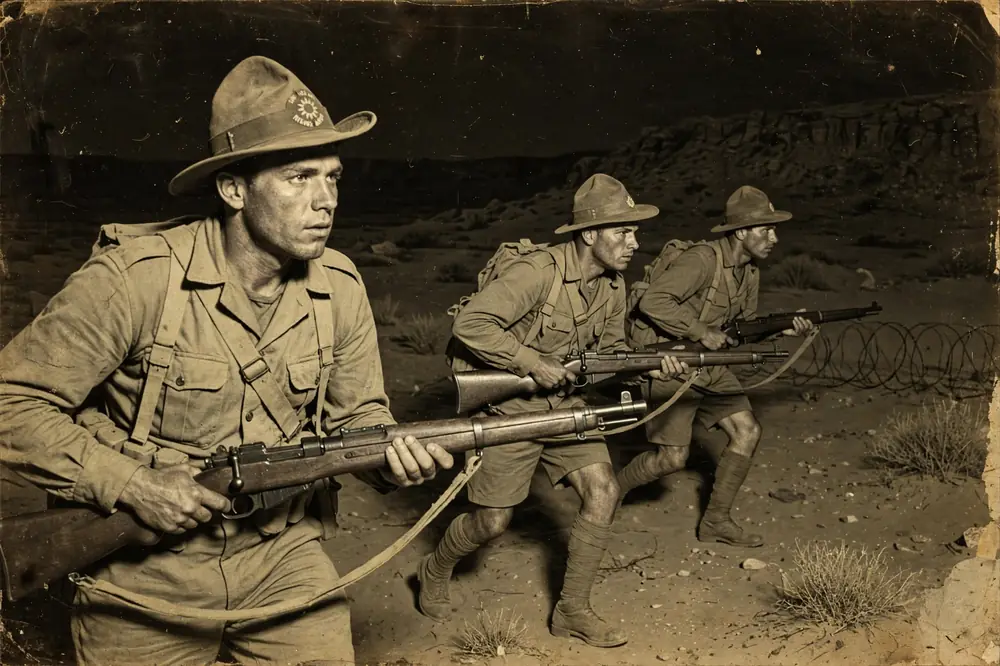
The most dangerous moment of the siege came on 30 April 1941, when Rommel launched a deliberate attack on the Ras el Madauar sector, on the south-western side of the perimeter. This time the Germans were prepared: they used artillery, engineers and infantry together, and they broke through the Australian line, driving a salient about 5 kilometres deep into the perimeter. The salient — a bulge in the line, held by German and Italian troops — became the focus of the siege for the next seven months: the Australians attacked it again and again, trying to drive the Germans out, and the Germans held it, using it as a base for further attacks. The fighting around the salient was bitter and close: the two sides were often less than 100 metres apart, and the ground was fought over trench by trench. Neither side could win the salient, and the siege settled into a stalemate.
Life Inside the Perimeter
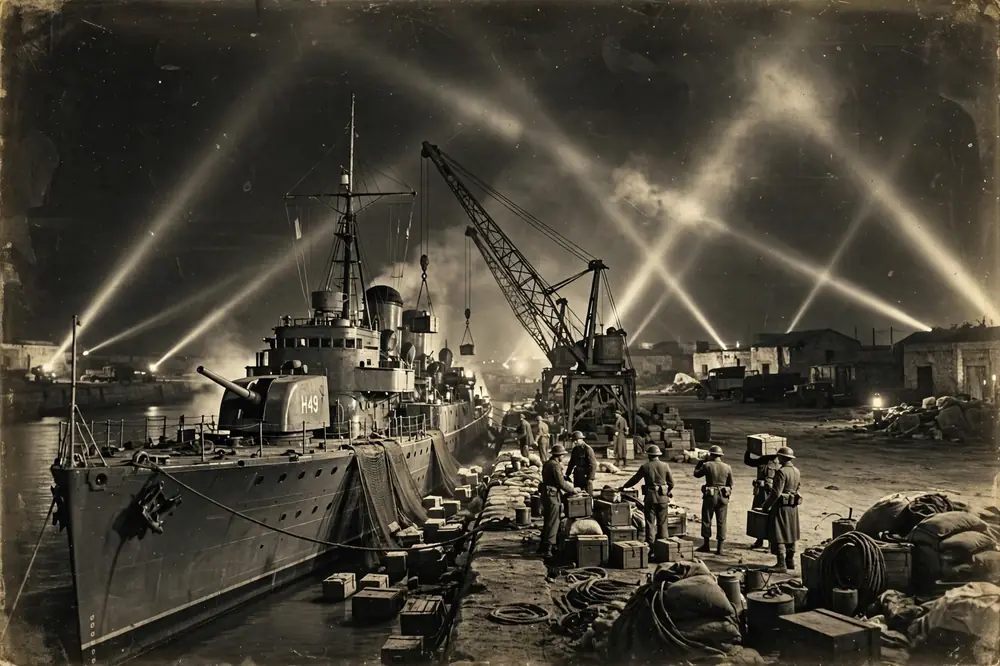
Life inside the Tobruk perimeter was a test of endurance, and the garrison passed it. The men lived in dugouts and trenches, under constant shelling and bombing, in heat that reached 40 degrees and in dust storms that turned day into night. Water was rationed — a gallon a man a day, for drinking, washing and cooking — and food was monotonous: bully beef, biscuits and tea, brought in by sea. The Luftwaffe bombed the harbour every night, and the Stukas dived on the town by day, but the garrison learned to live with it: the men dug deeper, they camouflaged their positions, and they kept up their spirits with humour, with sport, and with the knowledge that the whole world was watching them. The “Rats of Tobruk” were not rats: they were soldiers who had chosen to hold, and who held — and in holding, they proved that a determined garrison, well led and well supplied, could defy the finest army in the desert.
Crusader and the Relief
The siege was lifted by Operation Crusader, the great British offensive that began on 18 November 1941. The Eighth Army, under Lieutenant General Alan Cunningham — and, after Cunningham was relieved, under Major General Neil Ritchie — attacked the Axis forces on the Egyptian border, with the aim of destroying Rommel’s tanks and relieving Tobruk. The battle was confused and bloody: the British tanks were outmatched by the German anti-tank guns, and the fighting around Sidi Rezegh, south of Tobruk, swung back and forth for days. But the British kept coming, and on 27 November, the New Zealand 2nd Division, under Major General Bernard Freyberg, broke through the Axis lines and linked up with the Tobruk garrison at El Duda. The siege was over: after 241 days, Tobruk was relieved, and Rommel, his tanks worn down and his supply lines threatened, retreated west.
Sidi Rezegh and the Breakthrough
The battle of Sidi Rezegh, fought from 19 to 27 November 1941, was the decisive action of Operation Crusader, and it was one of the most confused battles of the desert war. The New Zealand Division fought its way through the Axis lines, taking Sidi Rezegh airfield and then losing it, and then taking it again, while Rommel’s tanks counter-attacked and the British armour was cut to pieces. The fighting was so confused that units lost contact with their headquarters, and commanders fought their own battles without knowing what was happening around them. But the New Zealanders kept going, and on 27 November they reached El Duda, where the Tobruk garrison — which had broken out of its own perimeter to meet them — was waiting. The link-up was the end of the siege, and it was the beginning of Rommel’s retreat to El Agheila. The “Rats of Tobruk” were free.
5. Turning Point
Morshead’s Aggressive Defence
The turning point of the Siege of Tobruk was not a single battle but a decision: Morshead’s decision to defend aggressively, by patrolling no man’s land and raiding the enemy every night. Most fortress commanders would have sat behind their walls and waited for relief, but Morshead understood that a passive defence would be worn down, and that the only way to hold Tobruk was to make the enemy afraid to attack. His patrols went out every night, in small groups, to ambush German patrols, to raid gun positions, and to capture prisoners for intelligence. The patrols were dangerous — the men who went out often did not come back — but they worked: the Germans, who had expected a passive garrison, found themselves under attack every night, and they learned to fear the dark. The aggressive defence also kept the garrison’s morale high: the men of Tobruk were not waiting to be rescued, they were fighting, and they knew it.
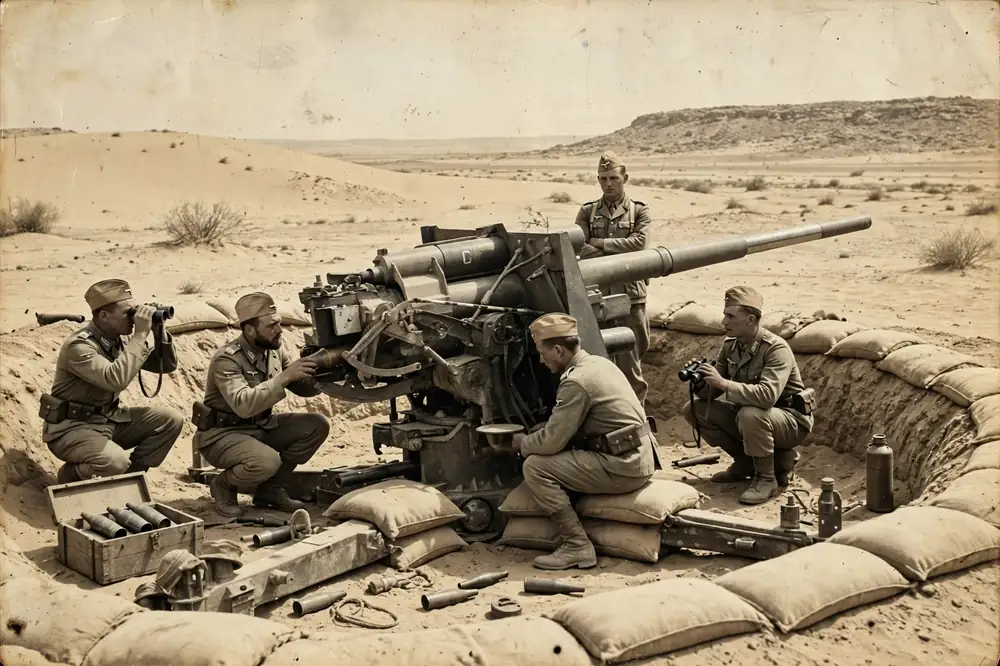
The Night Belonged to the Australians
The night patrols became the legend of Tobruk, and the legend was earned in blood. The Australian patrols — small groups of infantrymen, armed with rifles, grenades and bayonets, guided by men who knew the ground — moved silently through the desert, and struck without warning. They raided German machine-gun posts, they cut telephone wires, they captured prisoners, and they sowed mines on the roads the Germans used. The Germans, who were used to fighting in the day, were unnerved by the night war: their sentries were killed in their posts, their patrols were ambushed, and their sleep was broken by the sound of fighting in the dark. The Australians lost men in the patrols — the 2/13th Battalion alone lost dozens of men in night fighting — but the patrols made Tobruk a fortress that fought back, and they made the siege a battle the Germans could not win by waiting.
The Failure of Battleaxe
The second turning point was a failure: the failure of Operation Battleaxe, the British offensive of 15–17 June 1941, which was supposed to relieve Tobruk and failed completely. Battleaxe was launched with high hopes: the British had new tanks, new artillery, and a new commander, and they believed they could break through the German lines on the Egyptian border and reach Tobruk. Instead, the attack ran into Rommel’s anti-tank guns — the 88mm guns, used for the first time as anti-tank weapons in the desert — and the British tanks were destroyed in their dozens. The offensive was called off after three days, with the British having lost more than 90 tanks and gained nothing. The failure of Battleaxe was a turning point because it showed that Tobruk could not be relieved quickly, and that the garrison would have to hold on its own, for months, until a bigger and better-prepared offensive could be mounted.
The 88mm Gun and the British Tanks
The 88mm gun was the weapon that decided Battleaxe, and it was a weapon the British had not understood. The 88mm was designed as an anti-aircraft gun, but Rommel’s gunners had discovered that it could destroy any tank in the world at long range, and they used it as an anti-tank gun, dug in and camouflaged, on the approaches to Tobruk. The British tanks — Crusaders and Matildas — advanced into the killing ground, and the 88s destroyed them at ranges the British guns could not match. The British lost more than 90 tanks in three days, and their infantry, without tank support, could not break through. The 88mm gun became the most feared weapon in the desert war, and the British would spend the next year learning how to deal with it. Battleaxe failed because of the 88, and Tobruk’s garrison, watching from the perimeter, understood that their relief would not come soon.
6. Casualties and Losses
Allied Losses
Allied losses in the Siege of Tobruk are estimated at about 5,000 to 6,000 men killed, wounded and captured, with the Australian 9th Division bearing the heaviest burden. The Australian casualties from April to October 1941 numbered about 3,000 men, including more than 800 killed, and the losses fell hardest on the infantry battalions that held the perimeter and patrolled no man’s land. The British, Indian, Polish and Czechoslovak units in the garrison also suffered, and the Royal Navy lost ships and men in the nightly supply runs — the destroyer HMAS Waterhen was sunk by German bombers in June 1941, and other ships were damaged. The figures are estimates, and they do not include the men who died of disease and of the heat, or the wounded who were evacuated by sea and died later. The garrison’s losses were heavy, but they were the price of holding Tobruk, and the men who paid it did so willingly.
The Cost of the Night Patrols
The night patrols, which were the pride of the garrison, were also its most costly activity. The patrols went out every night, and every night men were killed or wounded, or did not come back at all. The 2/13th Battalion, which did more patrolling than any other unit in Tobruk, lost dozens of men in night fighting, and other battalions suffered the same. The patrols were a calculated risk: Morshead believed that the intelligence they brought back, and the fear they struck into the enemy, were worth the cost, and the men who went out believed it too. The patrols cost the garrison hundreds of men over the course of the siege, but they also saved the garrison: by keeping the enemy off balance, and by giving the Australians the initiative, they made Tobruk a fortress that could not be taken by surprise. The men who died on patrol died fighting, and their comrades remembered them for it.
Axis Losses
Axis losses in the Siege of Tobruk are estimated at about 8,000 to 12,000 men killed, wounded and captured, with the Italian divisions suffering the heaviest losses. The German losses were smaller — the Afrika Korps lost about 1,000 to 2,000 men in the attacks on Tobruk, including tank crews and infantrymen — but the Italian losses were much greater, because the Italian infantry was used in the first wave of the attacks and bore the brunt of the Australian fire. The Axis also lost tanks: dozens of German and Italian tanks were destroyed in the Easter attacks and in the fighting around the salient, and the Luftwaffe lost aircraft to the garrison’s anti-aircraft guns and to the RAF. The Axis losses, like the Allied losses, are estimates, and the figures vary widely between sources. What is certain is that the siege cost Rommel men and tanks he could not replace, and that the failure to take Tobruk weakened his army for the battles that followed.
The Italian Price
The Italian soldiers paid the highest price in the siege of Tobruk, and their sacrifice is often forgotten. The Italian infantry divisions — Bologna, Brescia, Pavia and Trieste — held the line around Tobruk for seven months, in the same heat and dust as the Australians, and they attacked the perimeter again and again, at Rommel’s orders, with inadequate equipment and without the tanks and artillery they needed. The Italian losses in the siege ran to thousands of men, and the Italian divisions were worn down by the fighting, by disease and by the desert. The Italian soldiers were brave, and they fought well when they were well led, but they were let down by their equipment, by their officers and by an ally who used them as expendable troops. The siege of Tobruk was a German failure, but it was an Italian tragedy, and the men who died in the desert around Tobruk deserve to be remembered.
| Allies | Axis | |
|---|---|---|
| Killed, wounded and captured | About 5,000–6,000 | About 8,000–12,000 |
| Australian 9th Division | About 3,000 casualties (April–October) | |
| Tanks lost | Small numbers | Dozens in the Easter attacks and the salient |
| Ships lost | HMAS Waterhen sunk, June 1941 | |
| Siege length | 241 days |
7. Map and Geography
The Harbour and the Perimeter
Tobruk sits on a peninsula on the Libyan coast, about 150 kilometres west of the Egyptian border, and its harbour is one of the best natural harbours in the Mediterranean. The town itself is small — a few thousand people before the war — but the harbour is deep, sheltered and large enough to take the biggest ships, and it was the harbour that made Tobruk worth fighting for. The defences ringed the harbour and the town in a rough circle about 50 kilometres around, following the escarpment that rises behind the town and the wadis — the dry riverbeds — that cut through the desert. The perimeter was marked by the Red Line, the outer ring of concrete posts, and the Blue Line, the inner ring, and between them lay the anti-tank ditch, the wire and the minefields. The geography of Tobruk was the geography of a fortress: a harbour, a ring of defences, and a desert around it.
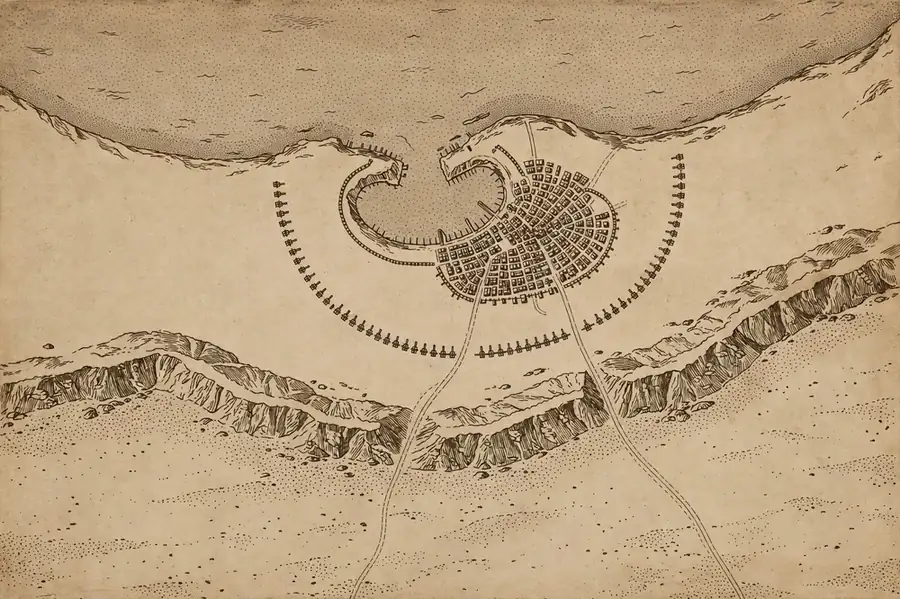
The Escarpment and the Wadis
The escarpment behind Tobruk — a steep ridge that rises about 150 metres above the coastal plain — was the key to the defence, and the fighting for it was the fighting for Tobruk. The escarpment gave the defenders observation over the desert, and its crest was lined with concrete posts and gun positions. The wadis that cut through the escarpment were the only ways through it, and they were the places where the Germans attacked: the El Adem road ran through a wadi, and the Ras el Madauar sector was built around a wadi. The wadis were also the places where the Australian patrols moved, using the dry riverbeds as covered approaches to the German lines. The geography of the escarpment and the wadis shaped the whole siege: the Germans had to attack through the wadis, and the Australians had to hold them, and the battle was fought, again and again, for the same few kilometres of ground.
The Desert Around Tobruk
The desert around Tobruk is a flat, stony plain, broken by wadis and by the escarpment, and it is one of the harshest battlefields in the world. In summer, the temperature reaches 40 degrees Celsius and more, and the dust — the fine, choking dust of the Libyan desert — gets into everything: into guns, into engines, into food and into lungs. In winter, the nights are cold, and the wind cuts through clothing. There is no water in the desert, except in the wells at Tobruk and at a few oases, and the armies lived on what they could bring up by truck or by sea. The desert war was a war of machines: tanks, trucks and aircraft, and the side that could keep its machines running won. The desert around Tobruk was also a war of distances: the nearest Axis base, at Benghazi, was 400 kilometres away, and the nearest Allied base, at Alexandria, was 500 kilometres away, and the armies fought at the end of supply lines that stretched across an empty land.
Supply Lines Across an Empty Land
The supply lines across the desert were the real battlefield of the siege, and they were fought over every day. Rommel’s supply line ran from Tripoli, 1,000 kilometres to the west, along a single coastal road, and it was attacked by the Royal Navy, by the RAF, and by the garrison’s patrols, which raided the road at night. The Allied supply line to Tobruk ran by sea, from Alexandria, and it was attacked by the Luftwaffe and by Italian submarines. Both sides lived on what they could bring in, and both sides were always short: short of fuel, short of ammunition, short of food and short of water. The siege of Tobruk was decided not only by the fighting on the perimeter but by the battle of supply, and in that battle, the Allies — with their command of the sea — had the advantage. Rommel’s army was starved of supplies, and the garrison of Tobruk, though it lived on rations, was never starved.
8. Outcome and Legacy of the Siege of Tobruk
A Victory of Endurance
The relief of Tobruk on 27 November 1941 was a victory of endurance, and it was celebrated as such around the world. The garrison had held for 241 days, against the best army Germany had in the desert, and it had done so at a time when Britain had little else to celebrate. The siege had cost the Axis men and tanks it could not replace, and it had cost Rommel the port he needed to invade Egypt. The relief also freed the garrison: the Australian 9th Division was withdrawn by sea in the months that followed, and replaced by the British 70th Division and the Polish Carpathian Brigade, who held Tobruk until the following year. The siege had proved that Rommel could be stopped, and that the desert war was not a matter of German genius against British incompetence, but a hard, grinding war in which supply, endurance and determination mattered more than brilliance.
The Rats Become a Legend
The “Rats of Tobruk” became a legend, and the legend outlived the siege. The name, invented by German propaganda to insult the defenders, was adopted by the Australians as a badge of honour, and after the war, the Rats of Tobruk Association was founded, with branches in Australia and in Britain. The men who had held Tobruk were proud of what they had done, and they were right to be: they had held a fortress that the Germans had said would fall in days, and they had held it for eight months. The legend of Tobruk also shaped the Australian memory of the war: the siege became, with Gallipoli, one of the two great Australian battles of the twentieth century, and the Rats became the symbol of the Australian soldier — tough, irreverent, and impossible to beat. The name that was meant as an insult became a title of honour, and it remains one today.
Tobruk in 1942 and After
The story of Tobruk did not end with the relief of November 1941. In June 1942, Rommel attacked again, and this time he took the port: on 21 June 1942, Tobruk fell to the Afrika Korps, and about 35,000 Allied soldiers — many of them South Africans — were taken prisoner. The fall of Tobruk was a disaster for the British, and it was a personal humiliation for Churchill, who heard the news while he was in Washington. But the Tobruk of 1942 was not the Tobruk of 1941: the defences had been neglected, the garrison was not the 9th Australian Division, and Rommel, who had learned from his failure, attacked with a plan that worked. The fall of Tobruk in 1942 does not diminish the achievement of 1941: the men who held Tobruk for 241 days did something that has never been equalled in the desert war, and their stand remains one of the great defensive battles of the Second World War.
The Fall of 1942 and the Recapture
Tobruk was recaptured by the British in November 1942, after the victory at El Alamein, and it remained in Allied hands for the rest of the war — a quiet ending to a story that had begun with one of the great defensive stands of the Second World War. The recapture was a quiet affair, compared with the siege: the Germans, retreating after Alamein, abandoned the port, and the British walked in. But the recapture mattered, because it restored the port to the Allies and it closed the circle that had begun in April 1941. The Tobruk of today is a Libyan port city, and the war is remembered there in the cemeteries — the Commonwealth war cemetery, the German cemetery, and the Italian memorial — and in the museum that tells the story of the siege. The men who fought at Tobruk are gone now, but the name remains: the Rats of Tobruk, the fortress that would not fall, and the 241 days that changed the desert war.
9. Commanders
The Allied Commanders
Major General Leslie Morshead (Australia). Commander of the Australian 9th Division and of the Tobruk fortress from April to October 1941. Morshead was a veteran of Gallipoli and the Western Front in the First World War, and he was the architect of the aggressive defence that held Tobruk. His order — “There will be no Dunkirk here. There will be no surrender and no retreat” — became the motto of the siege, and his leadership made him one of the most respected Australian generals of the war. After Tobruk, he commanded the 9th Division at El Alamein, and he ended the war as a lieutenant general, commanding the Australian forces in New Guinea.
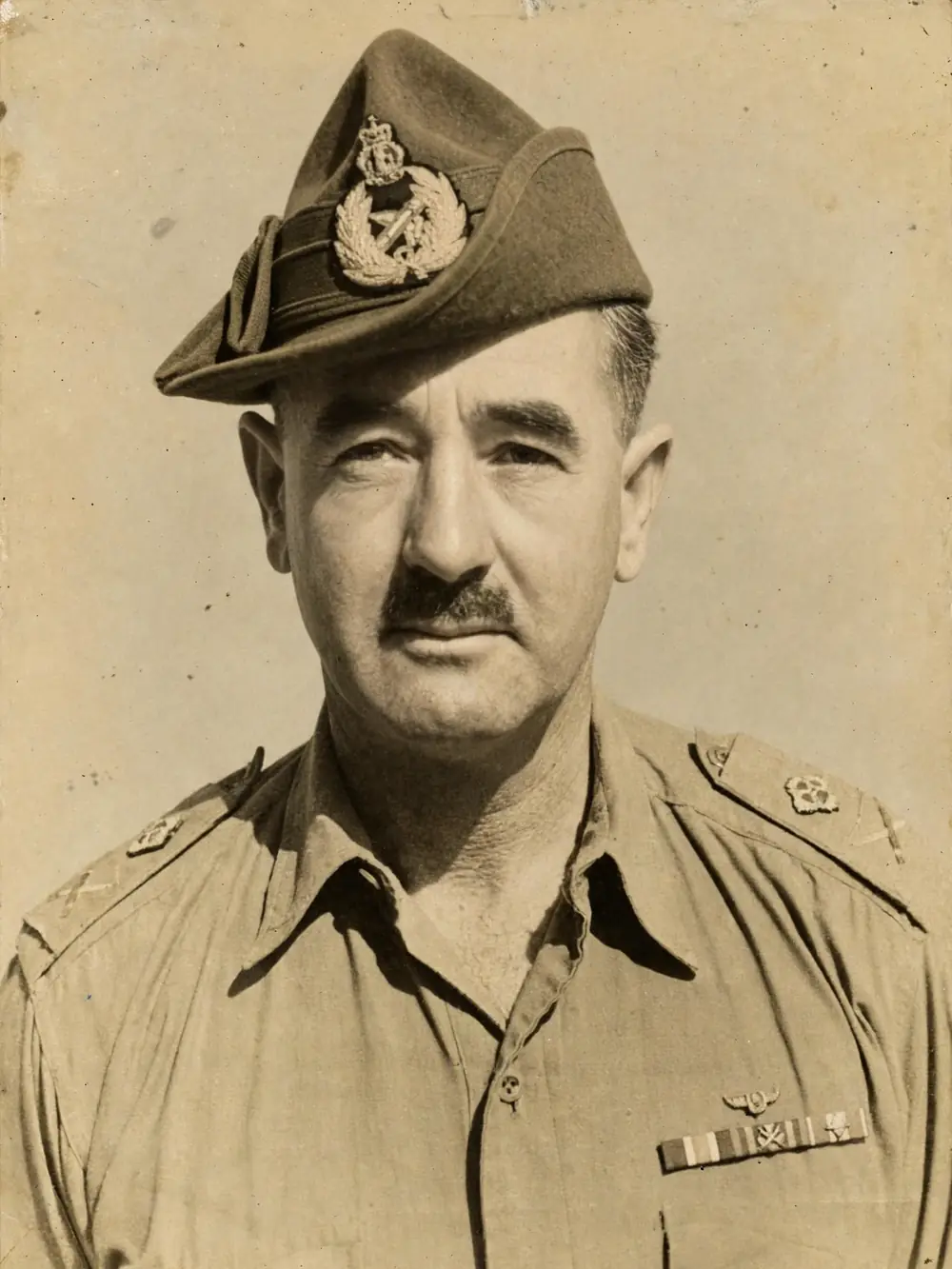
Major General Ronald Scobie (Britain). Commander of the British 70th Division and of the Tobruk fortress from October 1941, after Morshead’s Australians were withdrawn. Scobie commanded the garrison during the relief of November 1941, and he held Tobruk until it was handed over in 1942. He later commanded British forces in Greece, and he ended the war as a lieutenant general.
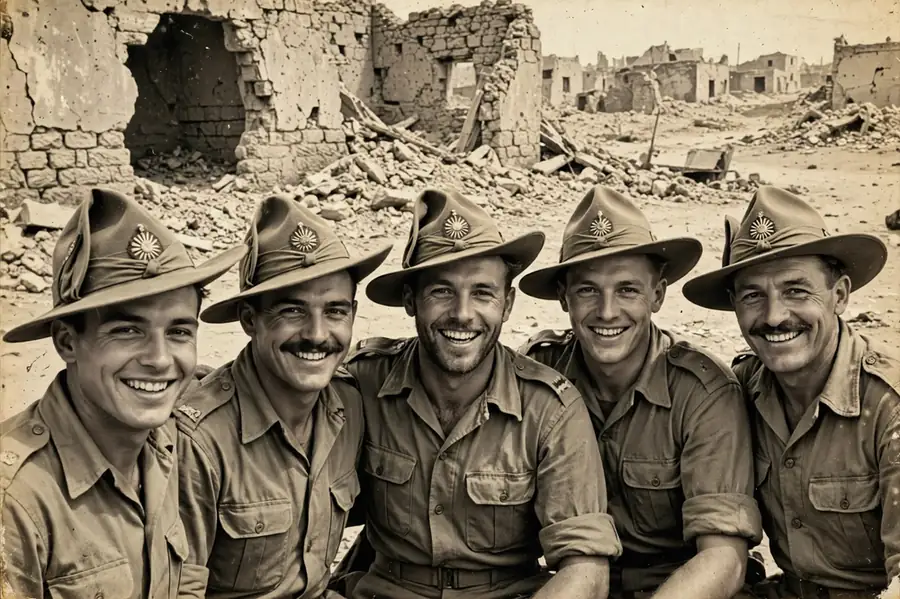
Major General Stanisław Kopański (Poland). Commander of the Polish Carpathian Rifle Brigade, which took over part of the Tobruk perimeter in August 1941 and held it until the relief. Kopański’s Poles were veterans of the defence of Poland in 1939 and of the fighting in Syria, and they fought with distinction at Tobruk. After the war, Kopański served as chief of staff of the Polish armed forces in exile.
Morshead: The Man Who Held Tobruk
Morshead was the man who made Tobruk, and the siege was his achievement as much as it was the garrison’s. He was not a brilliant tactician in the mould of Rommel, but he was something rarer: a commander who understood his men, who understood the ground, and who understood that a fortress is held by the spirit of its defenders. His aggressive defence — the night patrols, the raids, the refusal to sit behind the walls — was a gamble, and it paid off: it kept the enemy off balance, it kept the garrison’s morale high, and it made Tobruk a battle the Germans could not win. Morshead’s leadership at Tobruk was the foundation of his reputation, and it was the foundation of the Australian legend of the war. He was, in the words of one of his officers, “the right man in the right place at the right time”, and Tobruk was the right place.
The Axis Commanders
General Erwin Rommel (Germany). Commander of the Afrika Korps and the besieger of Tobruk. Rommel was the most famous German general of the desert war, a master of mobile warfare who had won his reputation in France in 1940 and in Libya in 1941. At Tobruk, he met his first failure: the fortress that he had expected to fall in days held for eight months, and the siege cost him the men, the tanks and the time he needed to invade Egypt. Rommel would go on to win great victories at Gazala and to take Tobruk in 1942, but he never forgot the siege of 1941, and he respected the men who had held it. He was forced to take his own life in October 1944, after being implicated in the plot against Hitler.
General Ludwig Crüwell (Germany). Commander of the Afrika Korps under Rommel during the siege, and the officer who directed many of the attacks on Tobruk. Crüwell was a capable corps commander, and he led the German forces in the fighting around the salient. He was captured by the British in May 1942, when his aircraft was shot down, and he spent the rest of the war as a prisoner.
Rommel: The Desert Fox Stopped
Rommel’s failure at Tobruk was the first crack in his legend, and it was a crack that mattered. Until Tobruk, Rommel had seemed invincible: he had driven the British across Libya, he had taken Benghazi, and he had reached the Egyptian border in a matter of weeks. Tobruk stopped him, and it stopped him because the fortress could not be taken by the methods that had won his other victories — by speed, by surprise and by the shock of the tanks. The siege forced Rommel to fight a battle he did not want to fight, a battle of attrition against a fortress that would not fall, and it cost him the initiative. Rommel learned from Tobruk — in 1942, he took the port with a plan that worked — but the lesson of 1941 remained: even the Desert Fox could be stopped, and the men who stopped him were the Rats of Tobruk.
Frequently Asked Questions
How long did the Siege of Tobruk last?
241 days, from 10 April to 27 November 1941. The siege was lifted when the New Zealand 2nd Division linked up with the garrison at El Duda during Operation Crusader.
Who were the “Rats of Tobruk”?
The Allied garrison of Tobruk, built around the Australian 9th Division. The name was invented by German propaganda as an insult, and the Australians adopted it with pride. It is still used with honour in Australia today.
Why was Tobruk so important?
It was the only deep-water port between Benghazi and Alexandria. Its capture would have given Rommel a supply base 150 kilometres from Egypt, instead of 1,000 kilometres from Tripoli. Holding it denied Rommel the port and hampered his advance.
How was the garrison supplied during the siege?
By sea, at night. Destroyers and small ships — the “Tobruk ferry” — ran from Alexandria to Tobruk, bringing food, ammunition and reinforcements and taking out the wounded, under attack from German bombers.
What was Operation Crusader?
The British offensive of 18 November 1941, by the Eighth Army, which broke through the Axis lines and relieved Tobruk on 27 November. The decisive fighting was around Sidi Rezegh, south of Tobruk.
Did Tobruk fall to Rommel later?
Yes. On 21 June 1942, Rommel captured Tobruk, taking about 35,000 Allied prisoners. The port was recaptured by the British in November 1942, after El Alamein.
Sources
- Wikipedia, “Siege of Tobruk” — dates, strength, casualty figures (Allied 5,000–6,000; Axis 8,000–12,000), commanders and the course of the siege.
- Peter FitzSimons, Tobruk (HarperCollins, 2006) — the Australian 9th Division, Morshead and the “Rats of Tobruk”.
- Encyclopædia Britannica, “Siege of Tobruk” — background, the siege and its outcome.
- Australian War Memorial, Canberra — the Tobruk collection, Morshead’s papers, and the casualty figures for the 9th Division.
- David Irving, The Trail of the Fox (Macmillan, 1977) — Rommel, the Afrika Korps and the desert war (used with care; Irving’s later work is controversial).
- Jon Latimer, Tobruk 1941: Rommel’s Opening Move (Osprey, 2004) — the Easter attacks, the salient and Operation Crusader.
Further reading
- Leslie Morshead, Tobruk: The Story of a Siege (various editions).
- John Bierman and Colin Smith, The Battle of Alamein: Turning Point, World War II (Viking, 2002).