 WAR ATLAS MILITARY HISTORY MAGAZINE · WWI — WWII
Gallipoli Campaign
1. Lead
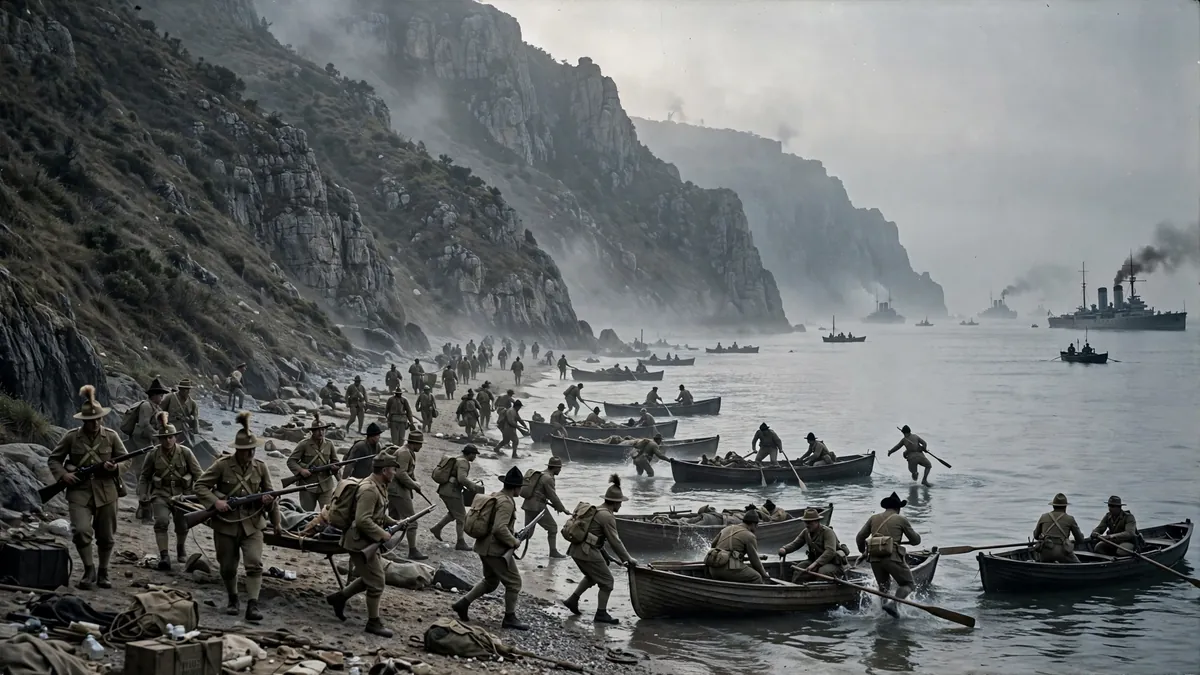
The Gallipoli Campaign was the Allied attempt, in 1915–1916, to force the Dardanelles strait, capture Constantinople (Istanbul), and knock the Ottoman Empire out of the First World War. It was one of the great failures of the war: the naval attack of March 1915 was repulsed with the loss of three battleships, the landings of 25 April 1915 were pinned down on the beaches, and the campaign dragged on for eight months, in the heat, the flies and the disease of a Turkish summer, before the Allies evacuated in December 1915 and January 1916.
About 500,000 men were killed or wounded on both sides, for no gain. The campaign’s enduring legacy was not military but national: for Australia and New Zealand, the landing at Anzac Cove on 25 April 1915 — Anzac Day, still the most important day in the Australian and New Zealand calendars — was the birth of a national identity, and the ANZAC legend, of courage and endurance in defeat, was born on the beaches of Gallipoli.
For Turkey, the campaign was the making of Mustafa Kemal, the officer who held the heights at Chunuk Bair and who would become Atatürk, the founder of the Turkish Republic.
2. Key Facts
| Date | 19 February 1915 – 9 January 1916 (landings 25 April 1915; evacuation December 1915 – January 1916) |
| Location | Gallipoli Peninsula, Dardanelles strait, Ottoman Empire (modern Turkey) |
| Result | Ottoman victory; Allied evacuation; the Dardanelles remain closed |
| Allied commanders | Adm. John de Robeck (naval); Gen. Sir Ian Hamilton (Mediterranean Expeditionary Force); Gen. Sir Charles Monro (evacuation) |
| Ottoman commanders | Gen. Otto Liman von Sanders (German adviser, 5th Army); Lt. Col. Mustafa Kemal (19th Division) |
| Allied strength | About 500,000 men in total during the campaign (British, French, Australian, New Zealand, Indian and Newfoundland troops); 18 battleships in the naval attack |
| Ottoman strength | About 500,000 men in total during the campaign (5th Army, plus reinforcements) |
| Allied losses | About 250,000 killed, wounded and missing (about 46,000 killed, including about 8,700 Australians and 2,700 New Zealanders) |
| Ottoman losses | About 250,000 killed, wounded and missing (about 86,000 killed) |
3. Background
Gallipoli was the idea of Winston Churchill, the First Lord of the Admiralty, and it was born of the deadlock on the Western Front. By the end of 1914, the war in France had settled into the trenches, and the British government was looking for a way to break the deadlock — a way to attack Germany through its weaker ally, the Ottoman Empire, and to open a supply route to Russia, Britain’s ally, which was cut off by the closure of the Dardanelles and the Bosphorus.
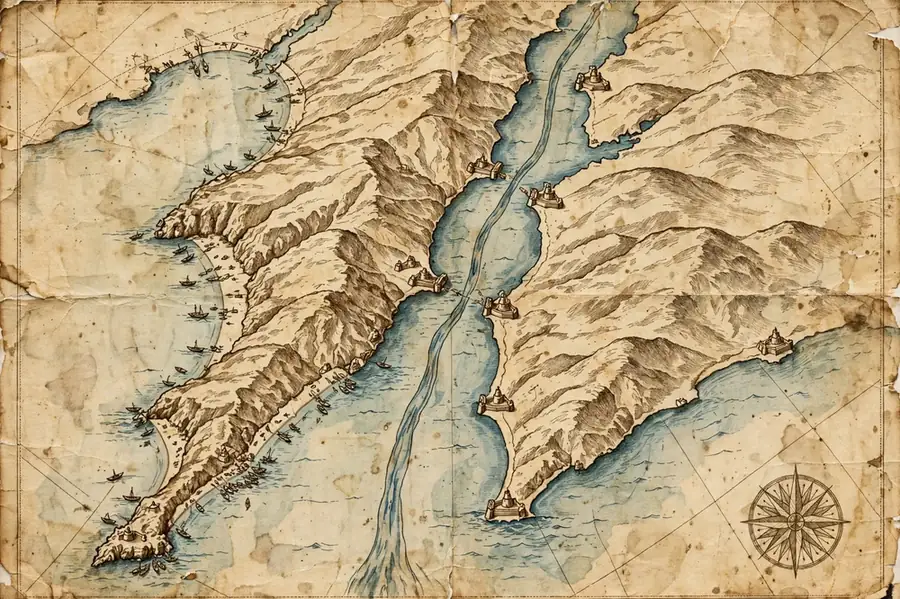
The plan was simple: the Royal Navy would force the Dardanelles, the narrow strait that connects the Aegean Sea to the Sea of Marmara, sail to Constantinople, and force the Ottoman Empire to make peace. The Ottoman capital would fall, the Dardanelles would open, and Russia would receive the supplies it needed.
The plan was approved by the British War Council in January 1915, and the naval attack began on 19 February.
The Dardanelles is a strait about 60 kilometres long and 1 to 7 kilometres wide, with strong currents, and it was defended by Ottoman forts on both shores, by minefields, and by mobile artillery. The strait’s narrowest point, at Çanakkale, was guarded by the forts of the Narrows, and the minefields — laid by the Ottoman minelayer Nusret — were the strait’s real defence.
The British and French fleet that attacked the Dardanelles was made up of 18 battleships, including the British Queen Elizabeth, the most powerful battleship in the world, and the French Bouvet, Suffren and Charlemagne, with cruisers, destroyers and minesweepers. The fleet’s commander was Admiral Sackville Carden, who was replaced, after he fell ill, by Admiral John de Robeck.
The Ottoman Empire, which had entered the war in November 1914 on the side of Germany, was defended by the 5th Army, under the German general Otto Liman von Sanders, who had been sent to reorganise the Ottoman Army. Liman von Sanders was a capable officer, and he understood the ground: he placed his divisions to defend the beaches and the heights, and he kept a mobile reserve — the 19th Division, under Lieutenant Colonel Mustafa Kemal — to counterattack wherever the Allies landed. Kemal, a 34-year-old officer who had fought in the Balkan Wars, was the man who would make the campaign, and who would make Turkey.
The Allied land force was the Mediterranean Expeditionary Force, under General Sir Ian Hamilton, a 62-year-old officer who had fought in the Boer War and who was a poet and a writer as well as a soldier. Hamilton’s force was made up of the British 29th Division, the Royal Naval Division, the Australian and New Zealand Army Corps (ANZAC), under Lieutenant General Sir William Birdwood, and the French Corps expéditionnaire d’Orient, under General Henri Gouraud.
The force was about 75,000 men at the landing, and it grew to about 500,000 during the campaign, as reinforcements were sent. The men were, in large part, volunteers: the Australians and New Zealanders, who had come to Egypt to train for the war in France, were sent to Gallipoli instead, and they landed on 25 April 1915, in a place that would become known as Anzac Cove.
4. Opposing Forces
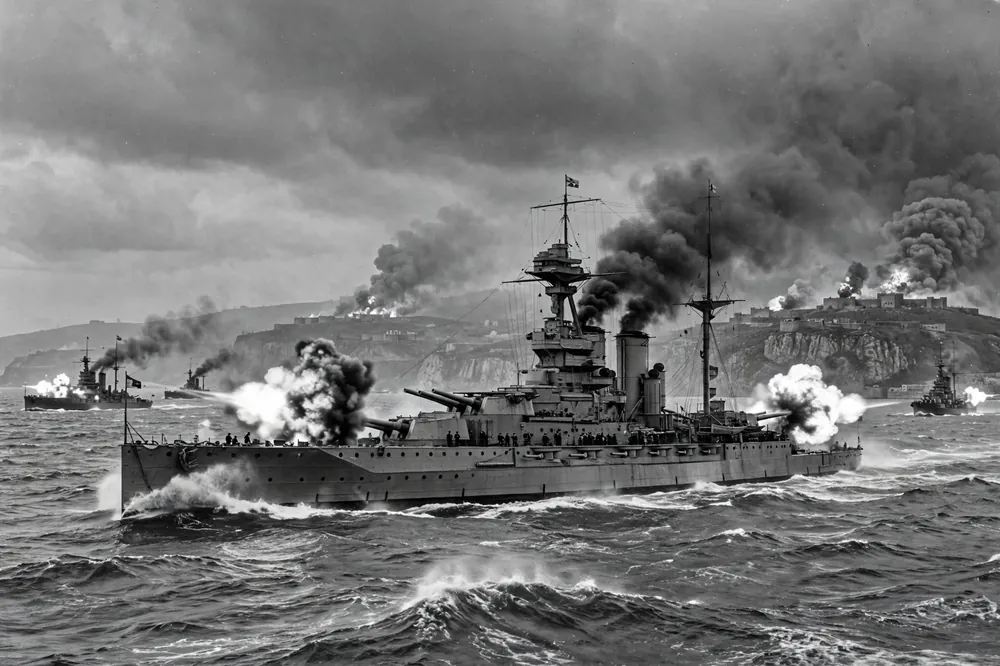
The Allied naval force that attacked the Dardanelles on 18 March 1915 was the largest fleet assembled for a single operation in the war to that point: 18 battleships, with cruisers, destroyers and minesweepers, under Admiral de Robeck. The land force, under General Hamilton, was about 75,000 men at the landing, growing to about 500,000 during the campaign. The Ottoman 5th Army, under Liman von Sanders, was about 60,000 men at the landing, growing to about 500,000 during the campaign, as reinforcements were sent from Constantinople and from other fronts.
| Allies | Ottoman Empire | |
|---|---|---|
| Naval force | 18 battleships (British and French), plus cruisers, destroyers and minesweepers | Coastal forts, minefields (laid by Nusret), mobile artillery |
| Land force at the landing | About 75,000 (British 29th Division, Royal Naval Division, ANZAC, French Corps) | About 60,000 (5th Army) |
| Total men during the campaign | About 500,000 | About 500,000 |
| Aircraft | Few; seaplanes from the carriers Ark Royal and others | Few |
| Artillery | Naval guns; field artillery landed with the troops | Coastal guns; field artillery, much of it German |
| Commanders | De Robeck (naval); Hamilton (land); Birdwood (ANZAC) | Liman von Sanders (5th Army); Mustafa Kemal (19th Division) |
The Ottoman Army of 1915 was not the weak force the Allies expected. It had been reorganised by Liman von Sanders and by German advisers, and its officers — above all Mustafa Kemal — were capable and determined. The Ottoman soldiers, the Mehmetçik, were tough, disciplined and fighting on their own soil, for their homes and their families.
They were well supplied with German rifles and artillery, and they held the high ground: the Gallipoli Peninsula is a rugged country of hills, gullies and cliffs, and the Ottomans held the ridges that overlooked the beaches. The Allies, landing on narrow beaches at the foot of steep hills, had to fight uphill, in the heat, against an enemy who could see them coming.
The ANZAC force — the Australians and New Zealanders — were the most famous of the Allied troops at Gallipoli, and they were the ones who suffered the most, in proportion to their numbers. The Australians, about 20,000 men at the landing, were volunteers, and they were young: the average age was about 21. The New Zealanders, about 5,000 men, were also volunteers.
The two forces were grouped into the Australian and New Zealand Army Corps — ANZAC — under Birdwood, and they landed at Anzac Cove on 25 April 1915, in a place that was not the beach they had been told to land on: the landing craft, carried by the current, landed them a mile north of the intended beach, at the foot of steep cliffs, in a cove that became known as Anzac Cove.
The mistake shaped the campaign: the ANZACs were pinned down in a small beachhead, under the guns of the heights, and they never got out.
5. The Battle
The naval attack, 18 March 1915
The naval attack on the Dardanelles, on 18 March 1915, was the first act of the campaign, and it was a disaster. The Allied fleet, under de Robeck, sailed into the strait to silence the forts and to clear the minefields, and it was met by a minefield that the Ottomans had laid the night before, in a line across the strait, in a place the Allies had swept the day before and believed to be clear.
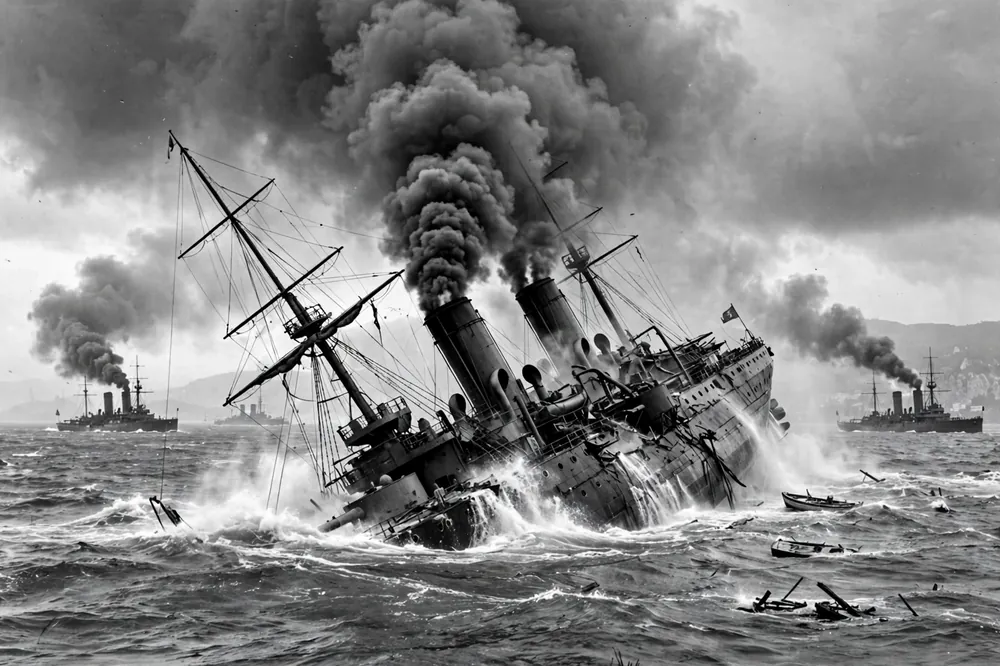
The French battleship Bouvet struck a mine and sank in two minutes, with the loss of about 640 men. The British battleships Irresistible and Ocean struck mines and sank, and the French battleship Gaulois and the British battlecruiser Inflexible were damaged. The fleet withdrew, having lost three battleships and about 700 men, and the naval attack was abandoned.
The Dardanelles could not be forced by ships alone, and the Allies decided to land an army to take the forts from the land.
The landings, 25 April 1915
The landings, on 25 April 1915, were made at two places: at Cape Helles, at the tip of the peninsula, by the British 29th Division, and at Anzac Cove, further north, by the ANZAC. The landings at Cape Helles were made at five beaches — V, W, X, Y and S — and they were a bloodbath: at V Beach, the men of the Dublin Fusiliers and the Munster Fusiliers were cut down as they came ashore from the converted collier River Clyde, and at W Beach, the Lancashire Fusiliers won six Victoria Crosses “before breakfast” — the famous “six VCs before breakfast” — for their courage in getting ashore.
The British took the beaches, but they were pinned down, and they never got further than a few kilometres inland.
The landings at Anzac Cove were a mistake, and a tragedy. The ANZACs, landed a mile north of the intended beach, came ashore at the foot of steep cliffs, in a narrow cove, and they were met by the Ottoman 19th Division, under Mustafa Kemal, who had marched his men to the heights and who gave the order that became the most famous of the campaign: “I do not order you to attack.
I order you to die. In the time it takes us to die, other troops and commanders will arrive to take our place.” The ANZACs fought their way up the cliffs, and they took the heights, but they could not hold them: Kemal’s counterattack drove them back, and they were pinned down in a beachhead about 2 kilometres wide and 1 kilometre deep.
The ANZACs never got out of Anzac Cove, and they fought there for eight months, in the heat, the flies and the disease, under the guns of the heights.
The August offensive and the evacuation
The campaign dragged on through the summer, in the heat and the disease. The Allies made one more great effort, in August 1915: the landing at Suvla Bay, further north, by the British IX Corps, and the attack on the heights at Chunuk Bair, by the New Zealanders and the Australians. The Suvla landing was a failure: the troops landed unopposed, but they did not advance, and the Ottomans reinforced the heights. The attack on Chunuk Bair, on 6–10 August, was the closest the Allies came to breaking out: the New Zealanders took the summit of Chunuk Bair, and held it for two days, before Kemal’s counterattack drove them off. The August offensive failed, and the campaign was lost.
The evacuation, in December 1915 and January 1916, was the campaign’s one success. General Sir Charles Monro, who had succeeded Hamilton in October, recommended evacuation, and the War Council, after much debate, agreed. The evacuation was carried out in secret, at night, with the men leaving the beaches in small groups, and with dummy rifles and self-firing rifles left behind to deceive the Ottomans. The last men left Anzac Cove and Suvla Bay on 19–20 December 1915, and the last men left Cape Helles on 8–9 January 1916. Not a single man was lost in the evacuation — a remarkable achievement, and the only part of the campaign that went according to plan.
6. Turning Point
The turning point of the Gallipoli Campaign was 18 March 1915 — the day the naval attack failed. The loss of three battleships to mines, and the withdrawal of the fleet, meant that the Dardanelles could not be forced by ships alone, and that the campaign would have to be a land campaign.
The land campaign, which began on 25 April, was a campaign the Allies had not planned for, and it was a campaign they were not prepared to fight: the troops were landed on narrow beaches, at the foot of steep hills, against an enemy who held the high ground, and they never got out.
The naval failure of 18 March was the campaign’s turning point, because it turned a naval operation into a land battle, and the land battle was lost from the start.
The second turning point was 25 April 1915 — the day of the landings. The ANZAC landing, a mile north of the intended beach, at the foot of steep cliffs, pinned the ANZACs down in a small beachhead from which they never escaped. The Cape Helles landings, though successful in taking the beaches, were pinned down too, and the Allies never advanced more than a few kilometres inland. The landings were a tactical success — the beaches were taken — and a strategic failure: the Allies were ashore, but they were trapped, and they would stay trapped for eight months.
The third turning point was the August offensive, and its failure. The landing at Suvla Bay and the attack on Chunuk Bair were the Allies’ last chance to break out, and they failed. After August, the campaign was lost, and the only question was when the Allies would evacuate. The evacuation, in December and January, was the campaign’s one success, and it was a success because it was the only part of the campaign that was planned carefully and carried out well.
7. Casualties and Losses
The casualties of the Gallipoli Campaign were about 500,000 in total, on both sides, and the figures are the commonly cited ones. The Allies lost about 250,000 killed, wounded and missing, including about 46,000 killed; the Ottomans lost about 250,000 killed, wounded and missing, including about 86,000 killed. The campaign’s losses were heavy, and they were heavy for no gain: the Allies took no ground, and the Dardanelles remained closed.
| Allies | Ottoman Empire | |
|---|---|---|
| Killed | About 46,000 (including about 8,700 Australians, 2,700 New Zealanders, 21,000 British, 10,000 French) | About 86,000 |
| Wounded and missing | About 200,000 | About 164,000 |
| Total | About 250,000 | About 250,000 |
| Disease | About 90,000 evacuated sick (dysentery, enteric fever, paratyphoid) | Unknown, but heavy |
| Ships | 3 battleships sunk on 18 March (Bouvet, Irresistible, Ocean); others damaged | Minelayer Nusret; forts damaged |
The disease losses at Gallipoli were as heavy as the battle losses. The summer heat, the flies, the lack of water and the poor sanitation meant that dysentery, enteric fever and paratyphoid swept through the Allied camps, and about 90,000 men were evacuated sick. The Ottoman losses to disease were also heavy, though the figures are not known. The campaign’s total losses — about 500,000 men — were for a campaign that achieved nothing, and the losses fell hardest on the countries that could least afford them: Australia lost about 8,700 men, New Zealand about 2,700, and the Ottoman Empire about 86,000 killed, in a campaign that, for Turkey, was a victory, but a victory bought at a terrible price.
The Australian and New Zealand losses — about 8,700 and 2,700 killed, respectively — were small in absolute terms, but they were large in proportion to the populations of the two countries, and they were the losses that made Anzac Day. The ANZAC legend — of courage, endurance, mateship and sacrifice — was born at Gallipoli, and it is still, in Australia and New Zealand, the most important legend of the two nations.
8. Map and Geography
The Gallipoli Peninsula is a long, narrow peninsula in north-western Turkey, about 60 kilometres long and 5 to 20 kilometres wide, between the Aegean Sea to the west and the Dardanelles strait to the east. The peninsula is a rugged country of hills, gullies and cliffs, with the highest point, the Sari Bair range, rising to about 300 metres.
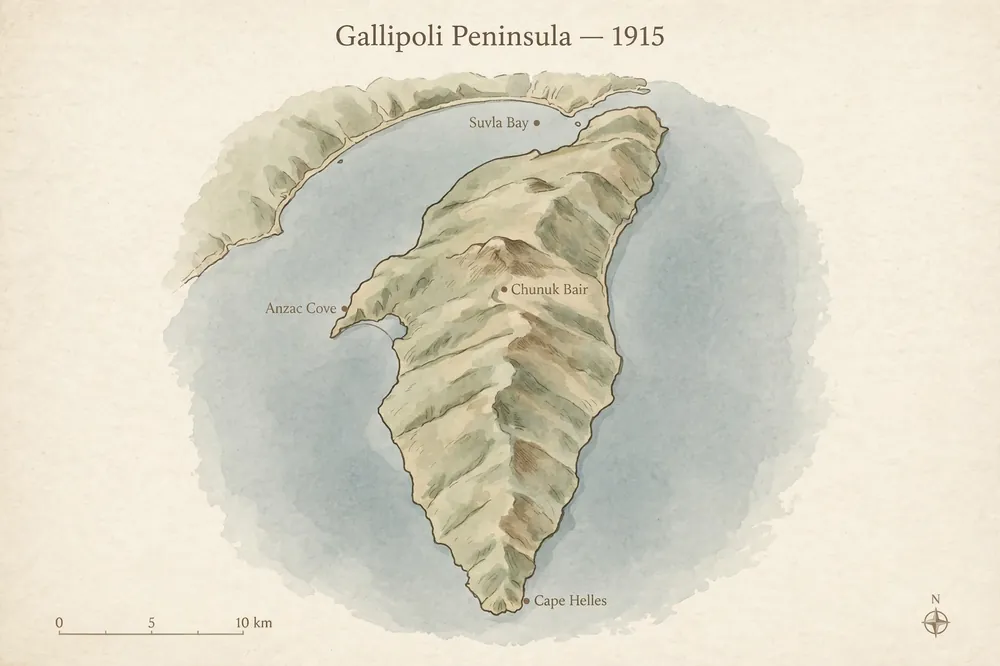
The Dardanelles, the strait that the Allies tried to force, is about 60 kilometres long and 1 to 7 kilometres wide, with strong currents, and it is guarded by forts on both shores. The peninsula’s beaches — Anzac Cove, Cape Helles, Suvla Bay — are narrow strips of sand at the foot of steep hills, and the hills overlook the beaches.
The geography of Gallipoli — a narrow peninsula, with steep hills overlooking narrow beaches — was the reason the campaign failed: the Allies landed at the foot of hills held by the enemy, and they could not get off the beaches.
The Dardanelles itself was the campaign’s objective: the strait connects the Aegean Sea to the Sea of Marmara, and through the Bosphorus, to the Black Sea and to Russia. The strait’s narrowest point, at Çanakkale, is about 1 kilometre wide, and it was guarded by the forts of the Narrows. The minefields, laid by the Nusret, were the strait’s real defence: they were laid in lines across the strait, in the places the Allies had swept and believed to be clear, and they sank three battleships on 18 March 1915. The geography of the Dardanelles — a narrow strait, with forts and minefields — was the reason the naval attack failed, and the reason the land campaign was necessary.
The peninsula’s climate was the campaign’s other enemy: the summer was hot, with temperatures of 40 degrees Celsius, and the flies, the lack of water and the poor sanitation meant that disease swept through the camps. The winter was cold and wet, and the men, in their summer uniforms, froze in the trenches. The geography and the climate of Gallipoli — a rugged peninsula, in a hot summer and a cold winter — were the reasons the campaign was a misery for the men who fought it, and the reasons it is remembered as one of the worst campaigns of the war.
9. Outcome and Legacy of the Gallipoli Campaign
The Gallipoli Campaign ended on 9 January 1916, with the evacuation of Cape Helles, and the Allies had achieved nothing: the Dardanelles remained closed, Constantinople remained in Ottoman hands, and Russia remained cut off. The campaign had cost about 500,000 casualties, on both sides, and it had cost the British government its credibility: Churchill, the author of the plan, was forced to resign as First Lord of the Admiralty, and the British government fell. The campaign was a failure, and it was a failure that was recognised as such at the time: the Dardanelles Commission, which investigated the campaign in 1917, blamed the government and the commanders for the failure, and the campaign became a byword for incompetence.
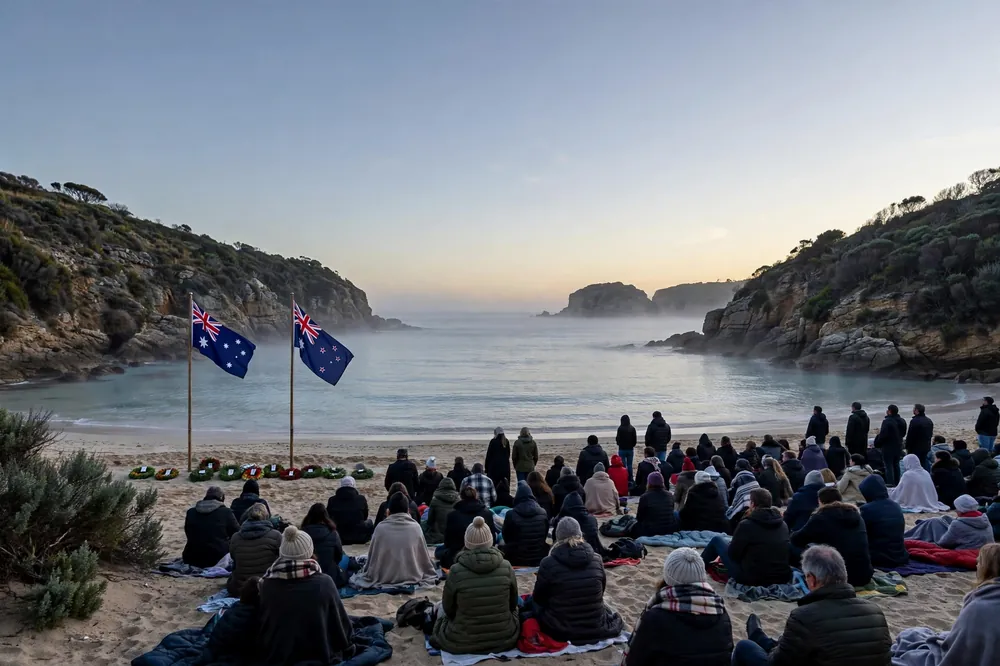
The campaign’s legacy, however, was not military but national. For Australia and New Zealand, Gallipoli was the birth of a national identity: the ANZACs, who had landed at Anzac Cove on 25 April 1915, became the symbol of the two nations, and Anzac Day, 25 April, is still the most important day in the Australian and New Zealand calendars.
The ANZAC legend — of courage, endurance, mateship and sacrifice in defeat — was born at Gallipoli, and it is still, in Australia and New Zealand, the defining legend of the two nations. The campaign’s losses — about 8,700 Australians and 2,700 New Zealanders killed — were the price of that legend, and they are remembered every Anzac Day, at dawn services across Australia, New Zealand and at Anzac Cove itself.
For Turkey, Gallipoli was the making of a nation. Mustafa Kemal, the officer who held the heights at Chunuk Bair and who gave the order “I order you to die”, became a national hero, and he went on to lead the Turkish War of Independence and to found the Turkish Republic in 1923, as Atatürk — “Father of the Turks”.
Gallipoli is, in Turkey, the defining battle of the nation’s history, and the campaign is remembered as the moment when Turkey proved that it could defend itself, and when the Ottoman Empire became the Turkish Republic. The Turkish memorials at Gallipoli — the Çanakkale Martyrs’ Memorial, and the memorial to the 57th Regiment, which was destroyed at Chunuk Bair — are the most visited battlefield memorials in Turkey.
Militarily, Gallipoli was a lesson in the difficulty of amphibious operations: the campaign showed that a landing on a hostile shore, against a determined enemy who held the high ground, was a formidable undertaking, and that it required careful planning, adequate forces and a clear objective — none of which Gallipoli had. The lessons of Gallipoli were applied at Normandy in 1944, and they shaped the amphibious operations of the Second World War. The campaign that failed in 1915 taught the Allies how to succeed in 1944.
10. Commanders
General Sir Ian Hamilton (Britain). Commander of the Mediterranean Expeditionary Force, which landed at Gallipoli. Hamilton, a 62-year-old officer who had fought in the Boer War, was a poet and a writer as well as a soldier, and he was the officer who planned the landings. He was dismissed in October 1915, after the failure of the August offensive, and he died in 1947.
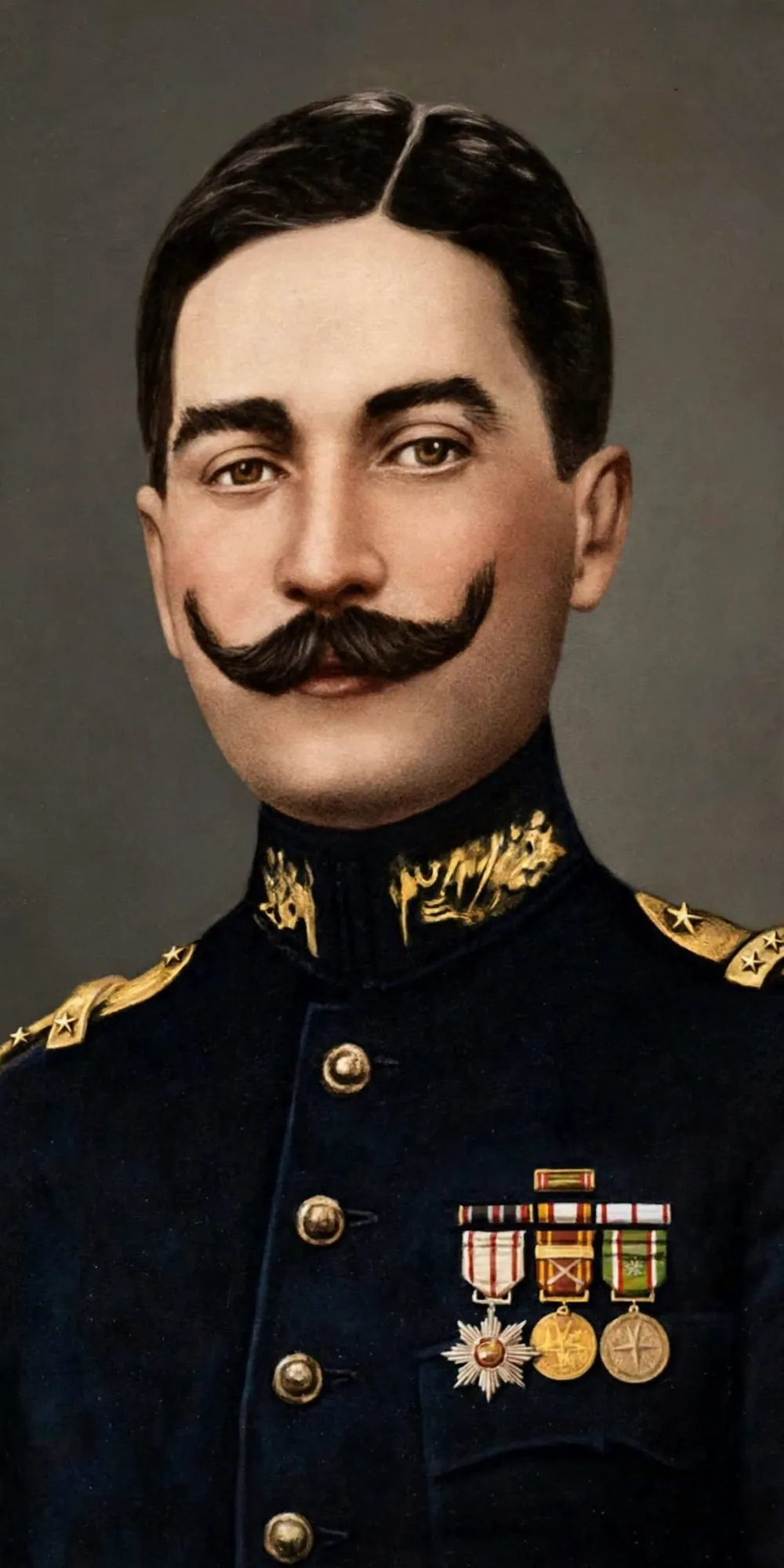
Admiral John de Robeck (Britain). Commander of the naval force that attacked the Dardanelles on 18 March 1915. De Robeck, who had succeeded Carden after Carden fell ill, ordered the withdrawal after the loss of three battleships, and he later commanded the naval force that supported the landings. He died in 1928.
Lieutenant General Sir William Birdwood (Britain). Commander of the Australian and New Zealand Army Corps (ANZAC), which landed at Anzac Cove on 25 April 1915. Birdwood commanded the ANZACs throughout the campaign, and he later commanded the British 5th Army in France. He died in 1951.
General Otto Liman von Sanders (Germany). Commander of the Ottoman 5th Army, which defended Gallipoli. Liman von Sanders, a German general sent to reorganise the Ottoman Army, placed his divisions to defend the beaches and the heights, and he kept the 19th Division as a mobile reserve. He survived the war and died in 1929.
Lieutenant Colonel Mustafa Kemal (Ottoman Empire). Commander of the 19th Division, which held the heights at Chunuk Bair and which counterattacked the ANZAC landing on 25 April 1915. Kemal’s order — “I do not order you to attack. I order you to die.” — became the most famous of the campaign. He went on to lead the Turkish War of Independence and to found the Turkish Republic in 1923, as Atatürk. He died in 1938.
Frequently Asked Questions
Related articles
Sources
- Wikipedia, “Gallipoli campaign” — dates, strength, casualty figures (about 500,000 total) and the course of the campaign.
- Encyclopædia Britannica, “Gallipoli Campaign” — background, the naval attack and the landings.
- Australian War Memorial, “Gallipoli” — the ANZAC landing, Anzac Day and the Australian losses (about 8,700 killed).
- Les Carlyon, Gallipoli (Macmillan, 2001) — the classic Australian history of the campaign.
- Robert Rhodes James, Gallipoli (Batsford, 1965) — the standard British history of the campaign.
- Edward J. Erickson, Gallipoli: The Ottoman Campaign (Pen & Sword, 2010) — the campaign from the Ottoman point of view, including Liman von Sanders and Mustafa Kemal.
- Peter Hart, Gallipoli (Profile Books, 2011).
- Tim Travers, Gallipoli 1915 (Tempus, 2001).