 WAR ATLAS MILITARY HISTORY MAGAZINE · WWI — WWII
Wespe: Germany’s 10.5 cm Self-Propelled Howitzer
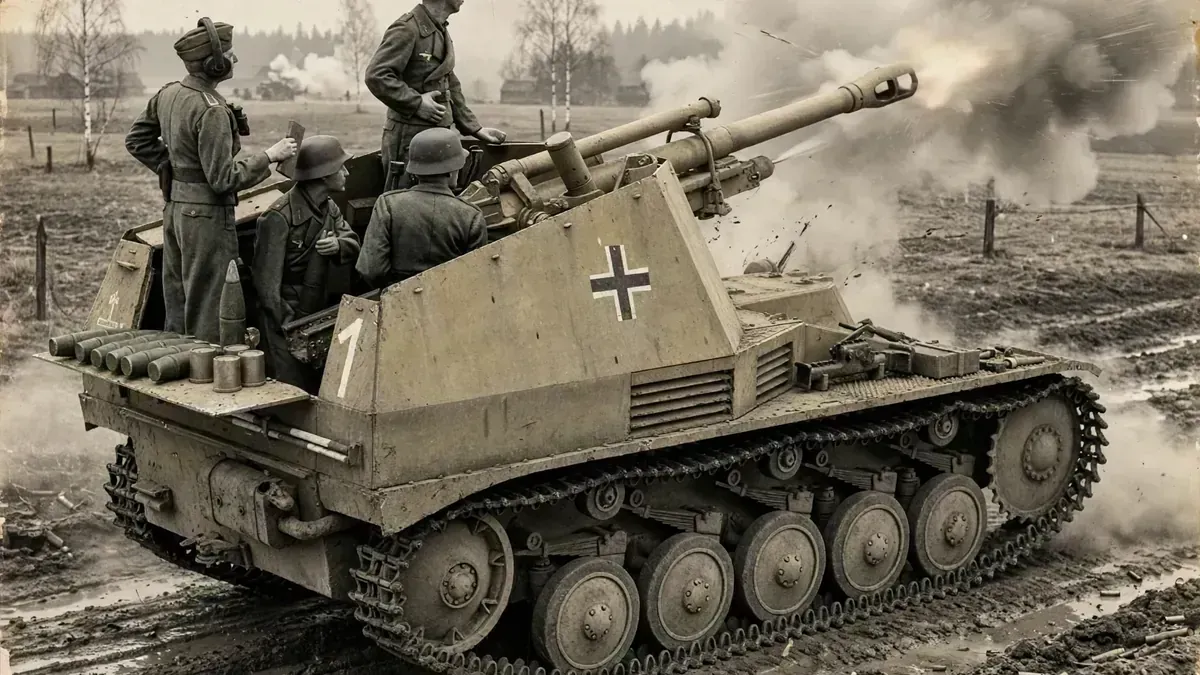
The Wespe, German for “wasp”, was one of the most successful self-propelled artillery vehicles of the Second World War: a 10.5 cm leFH 18 howitzer mounted on a modified Panzer II tank chassis, giving German panzer divisions a mobile, armoured artillery piece that could keep pace with the tanks it supported. Designed in 1942 and built between 1943 and 1944, the Wespe equipped the artillery regiments of the panzer divisions, and it fought on every front where German armour operated, from the Eastern Front to Normandy and Italy. Approximately 676 Wespes were built, and the type remained in service until the end of the war. The Wespe is remembered as a practical, reliable and effective weapon, a symbol of the German Army’s ability to produce useful vehicles from existing components.
The Wespe was developed in response to the German Army’s need for a self-propelled howitzer that could support the panzer divisions. The Panzer II, which had been the main German light tank in 1939 and 1940, was obsolete as a tank by 1942, but its chassis was still useful, and the German ordnance office ordered it to be adapted to carry the 10.5 cm leFH 18, the standard German divisional howitzer. The result was a vehicle that weighed about 11 tons, carried a crew of five, and could fire a 14.8-kilogram high-explosive shell to a range of more than 10 kilometres. The Wespe’s open-topped superstructure gave its crew good visibility and room to work, although it left them exposed to shell fragments and small-arms fire. The Wespe was not a tank, and it was not meant to fight other tanks, but it was a highly effective artillery piece, and its crews valued its mobility and its reliability.
The Wespe is remembered as one of the best self-propelled guns of the war, a vehicle that was well suited to its role and that served in large numbers. It appears in museums in Germany, Britain and the United States, and it is a popular subject for military historians and model makers. The Wespe’s distinctive silhouette, with its long 10.5 cm gun and its open-topped superstructure, remains one of the most recognisable images of German artillery in the Second World War.
1. Key Facts
| Field | Value |
|---|---|
| Type | Self-propelled howitzer |
| Origin | Germany |
| Designed | 1942 (Alkett, based on Panzer II chassis) |
| In service | 1943-1945 (German Army) |
| Produced | Approximately 676 (plus 159 ammunition carriers) |
| Manufacturers | Alkett, FAMO (Fahrzeug- und Motorenbau) |
| Crew | 5 (commander, gunner, loader, driver, radio operator) |
| Weight | Approximately 11 tons |
| Length | Approximately 4.81 m (15 ft 9 in) |
| Width | Approximately 2.28 m (7 ft 6 in) |
| Height | Approximately 2.30 m (7 ft 7 in) |
| Armour | Up to 30 mm (hull front); superstructure 10 mm |
| Main armament | 10.5 cm leFH 18/2 howitzer (32 rounds) |
| Secondary armament | 7.92 mm MG 34 machine gun |
| Engine | Maybach HL 62 TRM V-6 petrol engine, approximately 140 hp |
| Speed | Approximately 40 km/h (25 mph) maximum on roads |
| Range | Approximately 220 km (137 miles) on roads |
| Notable variants | Wespe (Sd.Kfz. 124); Munitions Wespe ammunition carrier (Sd.Kfz. 124) |
2. Background and Development
The Need for Mobile Artillery
The origins of the Wespe lay in the German Army’s experience on the Eastern Front in 1941 and 1942, when the panzer divisions found that their towed artillery could not keep pace with the tanks. The panzer divisions’ artillery regiments were equipped with the 10.5 cm leFH 18 howitzer, towed by half-tracks or trucks, but the towed guns were slow to deploy and vulnerable to counter-battery fire. The German Army needed a self-propelled howitzer that could move with the tanks, deploy quickly, and provide fire support in the advance. The solution was to mount the 10.5 cm howitzer on a tank chassis, and the Panzer II, which was obsolete as a tank, was the obvious choice. The Wespe was thus a product of the German Army’s need for mobile artillery, and of the availability of a suitable chassis.
Alkett and the Panzer II Chassis
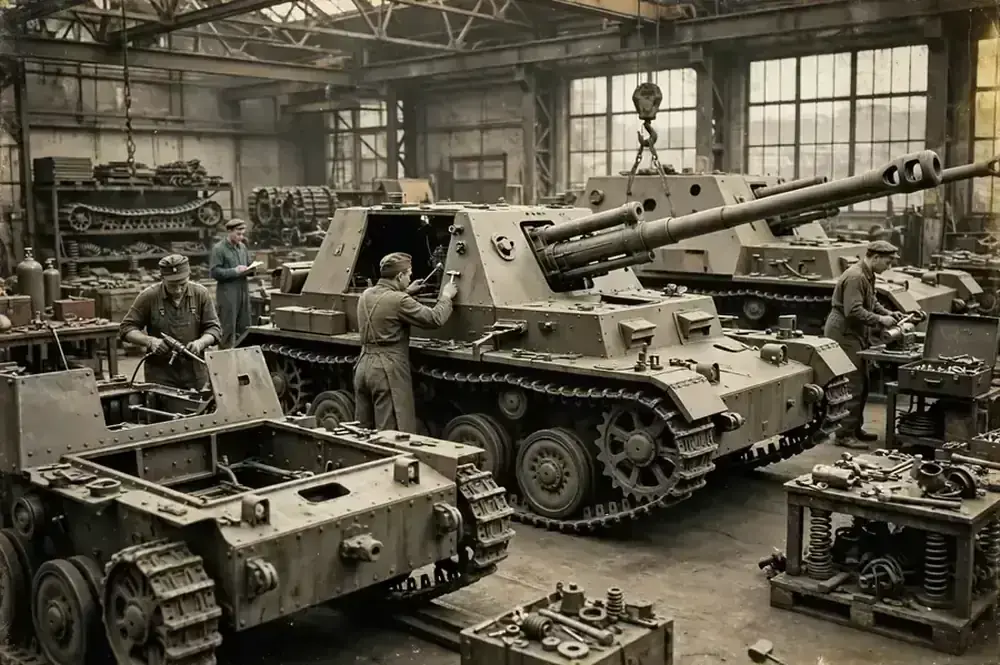
The Wespe was developed by Alkett, the Berlin firm that built many of Germany’s self-propelled guns, under the direction of the Heereswaffenamt, the German Army’s ordnance office. The project used the chassis of the Panzer II Ausf. F, with its engine moved to the front and its fighting compartment in the rear, and the 10.5 cm leFH 18 howitzer mounted in an open-topped superstructure. The first prototype was built in 1942, and it was tested at the Kummersdorf proving ground, where its mobility and its gun were praised, although its thin armour was criticised. The Wespe was accepted for service in early 1943, and production began at the FAMO plant in Breslau. The Wespe’s design was simple and practical, and it used components that were already in production, which made it easy to build in large numbers.
A Practical Solution
The Wespe was a practical solution to a real problem. It used the Panzer II chassis, which was already in production, and the 10.5 cm leFH 18 howitzer, which was the standard German divisional gun. The Wespe’s open-topped superstructure was simple to manufacture, and its crew of five could operate the gun efficiently. The Wespe was not a sophisticated vehicle, and it was not designed to fight other tanks, but it was a highly effective artillery piece, and its production was efficient: the FAMO plant built 676 Wespes in less than two years, a remarkable achievement for a self-propelled gun. The Wespe’s practicality is the key to its success, and it is a reminder that the best weapons are often the simplest ones.
3. Design
Hull, Chassis and Mobility
The Wespe used the chassis of the Panzer II Ausf. F, with its Maybach HL 62 engine moved to the front of the hull and its fighting compartment in the rear. The chassis was lengthened and widened to accommodate the 10.5 cm howitzer, and the suspension was strengthened to carry the additional weight. The Wespe weighed about 11 tons, and its Maybach engine produced about 140 horsepower, giving a top speed of about 40 kilometres per hour on roads. The Wespe’s mobility was good for a self-propelled gun, and it could keep pace with the Panzer III and Panzer IV tanks that it supported. The Wespe’s ground pressure was relatively low, which helped it in soft ground, and its reliability was good, although its engine and transmission required regular maintenance.
The 10.5 cm leFH 18 Howitzer
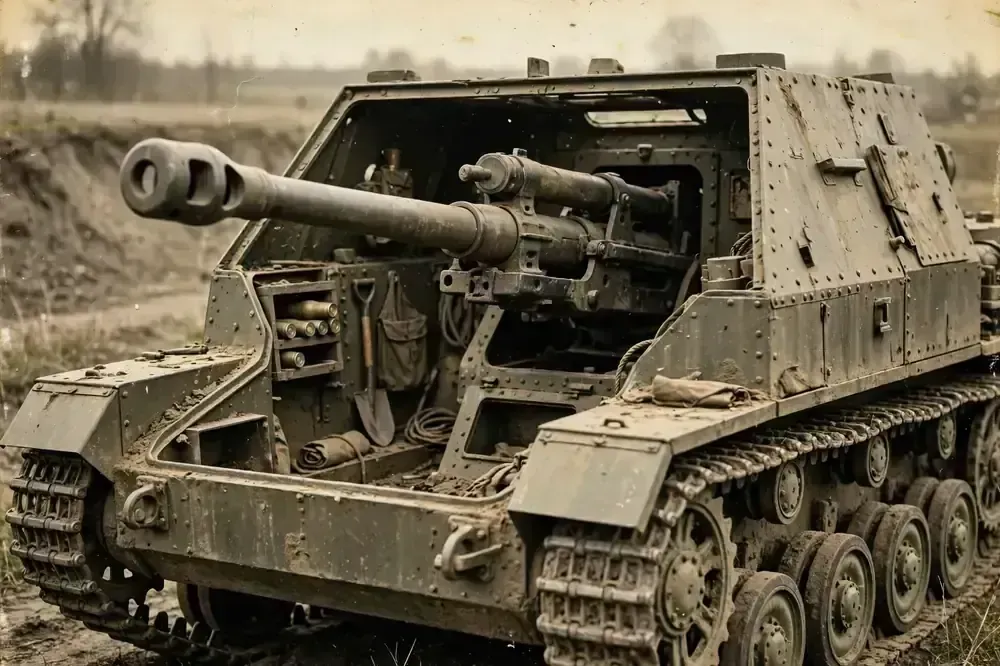
The heart of the Wespe was its 10.5 cm leFH 18/2 howitzer, a variant of the standard German divisional howitzer, adapted for use in a self-propelled mounting. The gun fired a high-explosive shell weighing 14.8 kilograms to a maximum range of about 10,675 metres, and it could also fire smoke and armour-piercing shells. The Wespe carried 32 rounds of ammunition, and its crew could fire about six rounds per minute at maximum rate. The gun’s traverse was limited, about 20 degrees to each side, and its elevation was from minus 5 degrees to plus 42 degrees, which gave it a good range of fire. The Wespe’s gun was its most important feature, and its crews valued its accuracy and its rate of fire. The Wespe’s open-topped superstructure gave the crew good visibility and room to work, although it left them exposed to enemy fire.
Armour, Crew and Ergonomics
The Wespe’s armour was thin: the hull front was protected by up to 30 mm of armour, and the superstructure by only 10 mm. The Wespe was not designed to fight other tanks, and its armour was intended only to protect the crew against small-arms fire and shell splinters. The Wespe carried a crew of five: a commander, a gunner, a loader, a driver and a radio operator. The driver sat in the front of the hull, while the commander, gunner and loader worked in the open-topped fighting compartment. The Wespe’s interior was spacious by the standards of a self-propelled gun, and the crew appreciated the room to work, although they complained about the exposure to the weather and to enemy fire. The Wespe’s communications were by wireless, and the vehicle carried a 7.92 mm MG 34 machine gun for self-defence.
4. Variants
The Wespe Self-Propelled Howitzer
The Wespe was built in a single production version, the Sd.Kfz. 124, and there were no major variants. The Wespe’s design was stable throughout its production run, and the only changes were minor improvements to the engine, the transmission and the gun mounting. The Wespe’s production run of 676 vehicles was shared between Alkett and FAMO, and the type was built from February 1943 to June 1944, when production was stopped to make way for the Hummel, a larger self-propelled howitzer based on the Panzer III and Panzer IV chassis. The Wespe’s single version is a sign of its sound design: it did not need to be changed, because it worked well from the start.
The Munitions Wespe
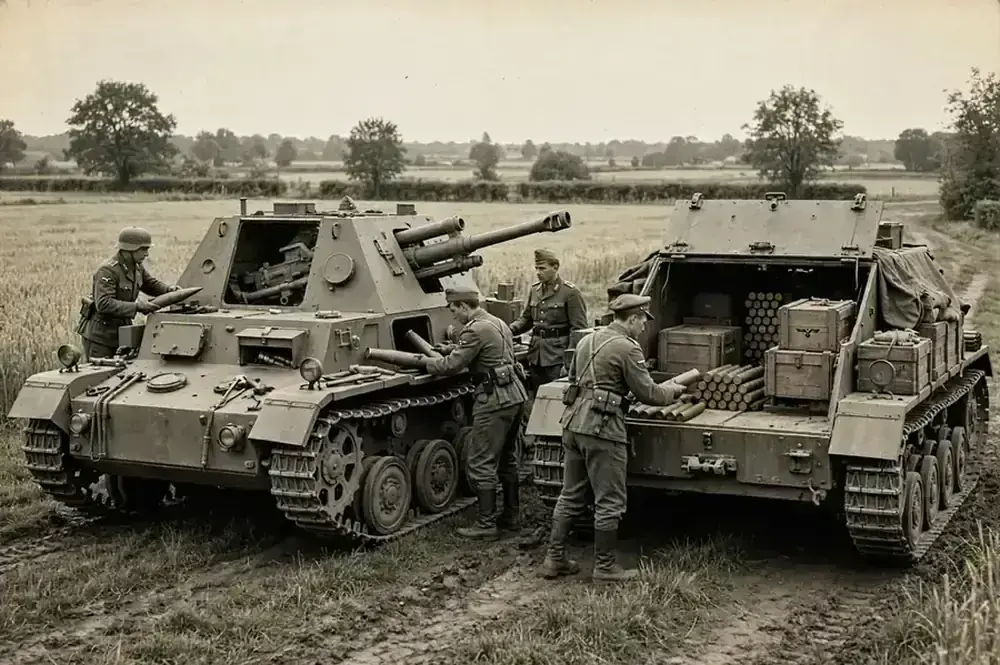
In addition to the gun version, 159 Wespe chassis were built as ammunition carriers, designated the Munitions Wespe, which carried 90 rounds of 10.5 cm ammunition and supplied the gun Wespes in the field. The Munitions Wespe was essentially a Wespe without a gun, with the fighting compartment used to carry ammunition, and it could be converted into a gun Wespe in the field by fitting a howitzer. The Munitions Wespe was an important part of the Wespe system, because the gun Wespe carried only 32 rounds, and it needed a constant supply of ammunition in combat. The Munitions Wespe’s design shows the German Army’s attention to logistics, and it is a reminder that a self-propelled gun is only as good as its ammunition supply.
The Hummel Successor
The Wespe was succeeded by the Hummel, a larger self-propelled howitzer based on the Panzer III and Panzer IV chassis, which mounted a 15 cm sFH 18 howitzer and was built from 1943 to 1945. The Hummel was a more powerful weapon than the Wespe, but it was also heavier and more expensive to build, and it was produced in smaller numbers. The Wespe and the Hummel served together in the panzer divisions’ artillery regiments, with the Wespe providing the light howitzer and the Hummel the heavy howitzer. The Wespe’s successor was thus a larger and more powerful vehicle, but the Wespe itself remained in service until the end of the war, and it was never fully replaced.
5. Operational History
The Eastern Front
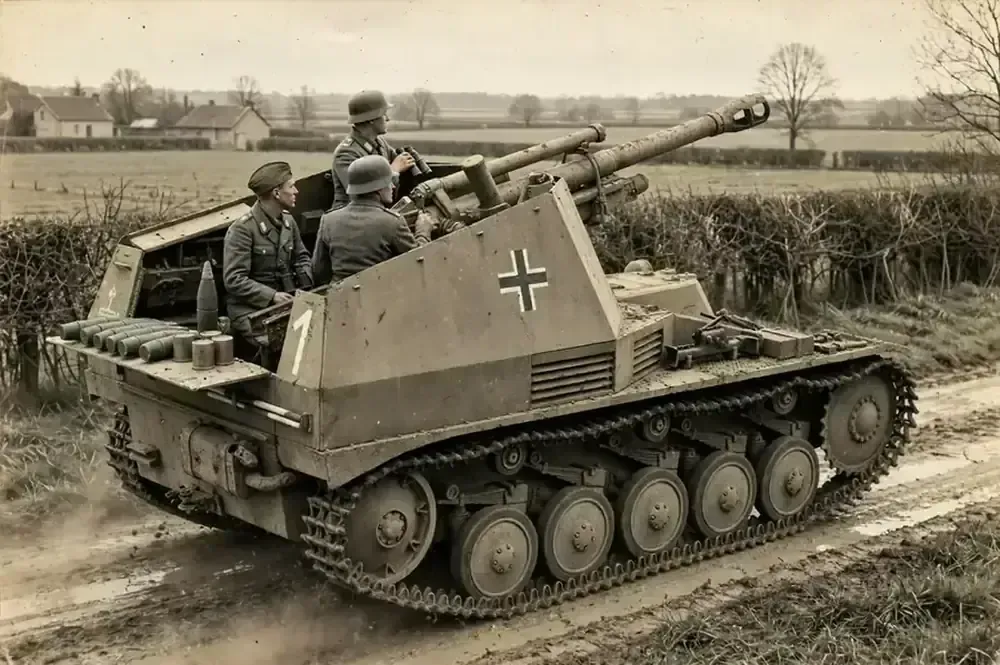
The Wespe entered service in 1943, and its first combat came on the Eastern Front, during the Battle of Kursk in July 1943. Wespes of the panzer divisions’ artillery regiments supported the German attack on the Kursk salient, providing fire support for the panzer divisions and engaging Soviet infantry and anti-tank guns. The Wespe’s mobility and its rate of fire were praised, and its crews found that it could keep pace with the tanks and deploy quickly. After Kursk, the Wespe fought in the defensive battles of 1943 and 1944, when the German Army retreated across the Ukraine and Belorussia. The Wespe’s service on the Eastern Front was its longest and most important, and it fought in every major battle from Kursk to Berlin.
Normandy and the Western Front
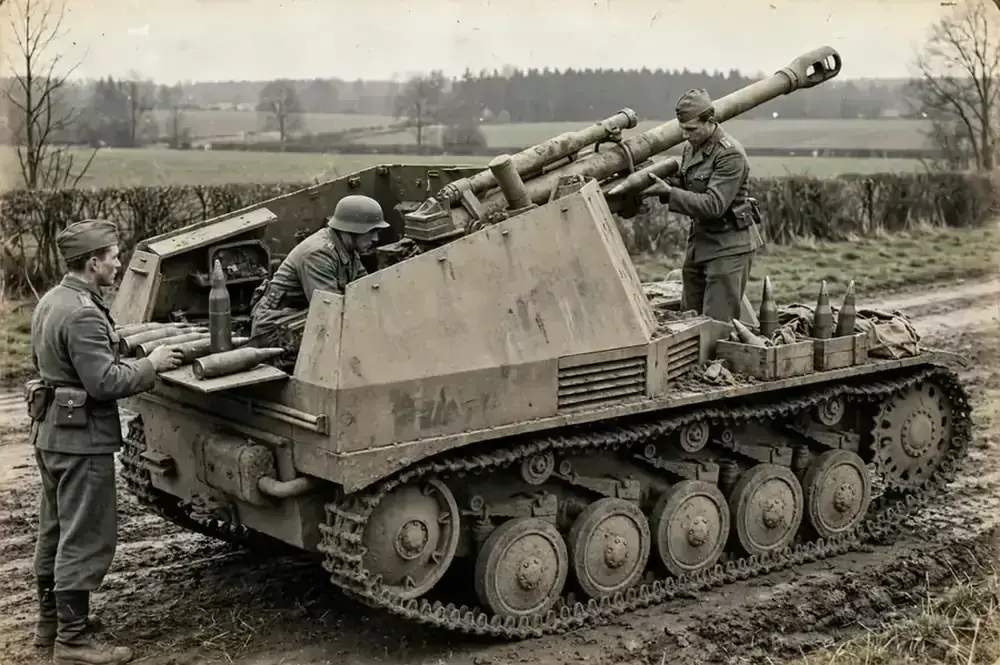
In the West, the Wespe fought in Normandy in June 1944, when the German panzer divisions, including the 21st Panzer Division and the 12th SS Panzer Division, used Wespes to support their counter-attacks against the Allied landings. The Wespe’s 10.5 cm gun was effective against Allied infantry and soft targets, although it was vulnerable to Allied air attack and to counter-battery fire. The Wespe also fought in the Ardennes offensive in December 1944, and in the final battles in Germany in 1945. The Wespe’s service in the West was shorter than its service on the Eastern Front, but it was no less important, and the Wespe’s crews in Normandy and the Ardennes earned a reputation for their skill and their courage.
Italy and the Final Battles
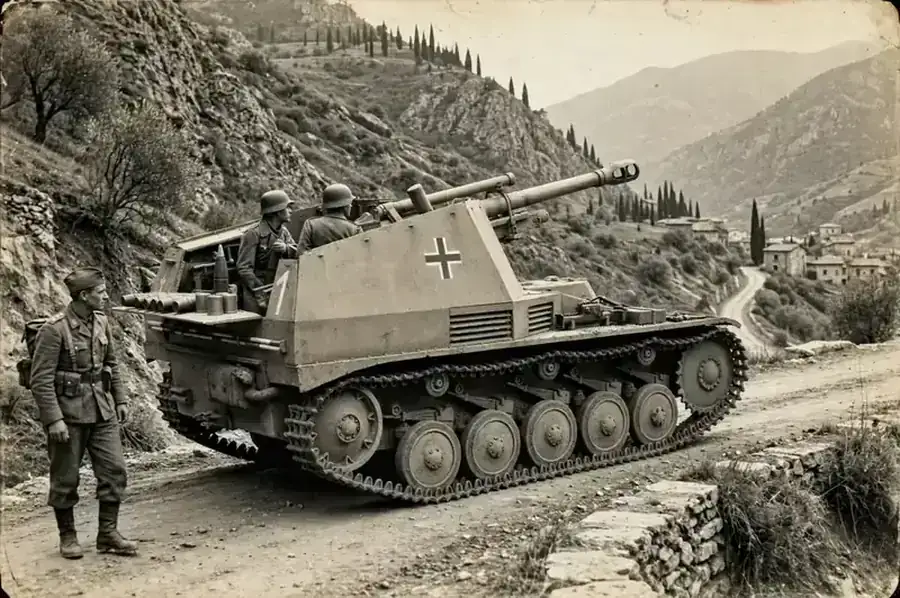
The Wespe also fought in Italy, where it supported the German divisions that defended the Gustav Line and the Gothic Line in 1943 and 1944. The Wespe’s mobility was valuable in the mountainous terrain of Italy, and its 10.5 cm gun was effective against Allied infantry and fortifications. The Wespe’s final battles came in Germany in 1945, when the panzer divisions’ artillery regiments, equipped with Wespes, fought in the defence of Berlin and in the last battles on the Eastern and Western Fronts. The Wespe remained in service until the end of the war, and it was one of the few German self-propelled guns to serve from 1943 to 1945 without being withdrawn.
The Wespe in the Panzer Divisions
The Wespe was issued to the artillery regiments of the panzer divisions, where it equipped one battalion of the regiment’s three battalions. Each Wespe battalion had 18 Wespes, organised in three batteries of six vehicles, and the battalion’s Wespes were supported by Munitions Wespes and by half-tracks. The Wespe’s organisation shows the German Army’s doctrine: the self-propelled howitzer was an integral part of the panzer division, and it was meant to move with the tanks and to provide fire support in the advance. The Wespe’s service in the panzer divisions was a significant part of the German Army’s armoured warfare, and it is remembered as one of the most effective self-propelled guns of the war.
6. Performance and Specifications
Strengths on the Battlefield
The Wespe’s greatest strength was its mobility. It could keep pace with the tanks it supported, deploy quickly, and provide fire support in the advance, which was exactly what the panzer divisions needed. Its 10.5 cm howitzer was accurate and had a good rate of fire, and its high-explosive shell was effective against infantry, soft targets and fortifications. The Wespe’s reliability was good, and its production was efficient, which meant that it was available in large numbers. The Wespe’s open-topped superstructure gave its crew good visibility and room to work, and its low silhouette made it difficult to spot. In the artillery support role, the Wespe was a highly effective weapon, and its performance in the battles of 1943 to 1945 showed that a self-propelled howitzer could be a decisive weapon when it was used correctly.
Weaknesses and Trade-offs
The weaknesses were clear. The Wespe’s armour was thin, and its open top left the crew exposed to shell fragments, small-arms fire and air attack. Its ammunition capacity of 32 rounds was low, and it needed a constant supply of ammunition from the Munitions Wespe. Its gun’s traverse was limited, and its elevation was restricted, which meant that it could not engage targets at very short range or at very long range. The Wespe was also vulnerable to enemy tanks, and it had to be protected by the panzer divisions’ tanks and anti-tank guns. The Wespe was a specialised weapon, and its designers accepted its limitations because they believed that its mobility and its firepower were worth the cost. The Wespe’s performance must be judged against its intended role: providing mobile artillery support for the panzer divisions, where it was among the best self-propelled guns of the war.
How the Wespe Compared with Rivals
Compared with the American M7 Priest, the Wespe had a smaller gun and thinner armour, but it was lighter and more mobile. Compared with the Soviet SU-122, the Wespe had a smaller gun but a better rate of fire and a more practical design. Compared with the British Bishop, the Wespe was superior in every respect, and it was a much more effective self-propelled gun. The Wespe’s combination of mobility, firepower and reliability made it one of the best self-propelled howitzers of the war, and it was the only German self-propelled gun to serve in large numbers from 1943 to 1945. The Wespe’s legacy is thus as a practical, effective weapon that did its job well.
7. Operators
Germany: The Sole Operator
The sole operator of the Wespe was the German Army, which used it in the artillery regiments of the panzer divisions. The Wespe was issued to the 1st, 2nd, 3rd, 4th, 5th, 6th, 7th, 8th, 9th, 10th, 11th, 12th, 13th, 14th, 16th, 17th, 19th, 20th, 21st, 23rd, 24th, 25th and 26th Panzer Divisions, and to the SS panzer divisions. The Wespe’s crews were drawn from the German Army’s artillery, and the Wespe battalions were regarded as elite formations. The Wespe’s service was short, but its crews’ accounts of the vehicle’s mobility and gun have become part of the history of the German Army in the Second World War. The Wespe was never exported, and it was never used by any other country in combat.
Captured Vehicles
The Allies captured a number of Wespes in 1944 and 1945, and used them for evaluation. The British captured Wespes in Normandy and in Germany, and the Americans captured Wespes in France and in Germany. The captured Wespes were tested at the British and American proving grounds, and they provided valuable information about German self-propelled gun design. The Soviet Union also captured Wespes on the Eastern Front, and used them for evaluation. The captured Wespes show how much the Allies respected the design, even though they never put it into production themselves.
8. Legacy and Influence
A Model Self-Propelled Gun
The Wespe’s legacy is that of a model self-propelled gun. It showed that a self-propelled howitzer could be built from existing components, that it could keep pace with tanks, and that it could provide effective fire support in the advance. The Wespe’s design influenced the development of later German self-propelled guns, notably the Hummel, and it influenced the design of post-war self-propelled howitzers in many countries. The Wespe’s legacy is thus not only its own combat record, but the concept of the self-propelled howitzer that it embodied, a concept that remains in use today in the armies of many nations.
Cultural Memory and Historical Assessment
The Wespe is one of the most famous German self-propelled guns of the war, and its nickname “wasp” has ensured its place in popular memory. Historians have assessed the Wespe as a sound and effective design, well suited to its role, and as one of the best self-propelled guns of the war. The Wespe’s reputation has been enhanced by its appearance in video games and popular culture, where its long gun and open-topped superstructure make it instantly recognisable. The Wespe is remembered as a symbol of German wartime improvisation and of the practical, effective weapons that the German Army produced in the final years of the war.
The Wespe in Popular Culture
The Wespe appears in many video games, books and models about the Second World War, and it is a popular subject for military historians and enthusiasts. Its distinctive silhouette, with its long 10.5 cm gun and its open top, makes it instantly recognisable, and it is often used as a symbol of German artillery in the war. The Wespe’s appearance in popular culture has ensured that it will be remembered long after the last surviving example has gone, and it is a reminder of the fascination that self-propelled guns hold for the public.
9. Surviving Examples
Museums in Germany and Britain
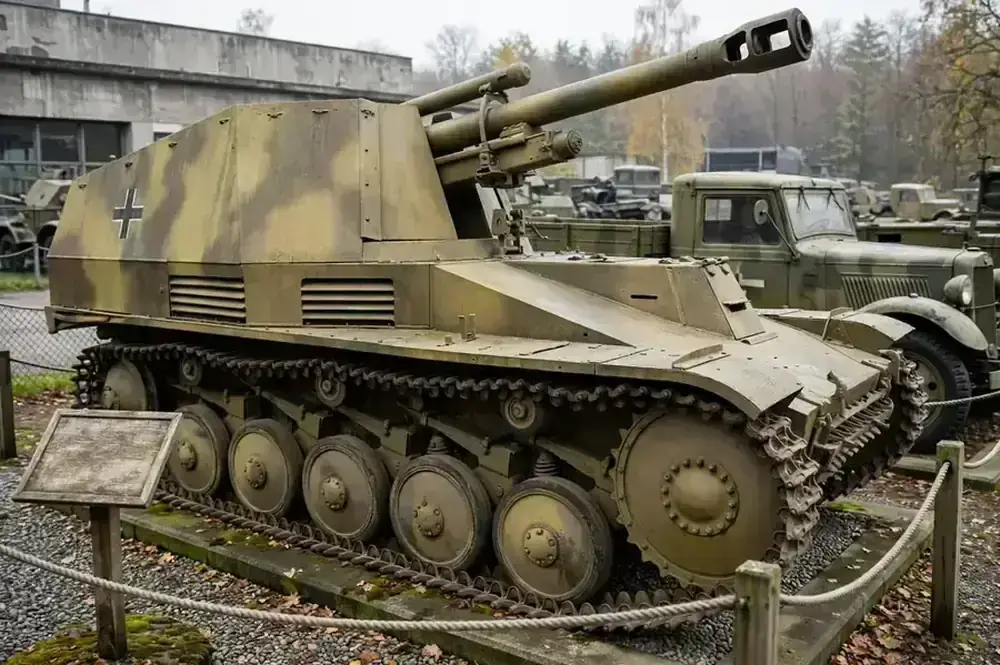
A small number of Wespes survive in museums. The German Tank Museum at Munster holds a Wespe, and the Tank Museum at Bovington in Britain holds an example. The Musee des Blindes at Saumur in France also holds a Wespe, and the Kubinka Tank Museum in Russia displays an example. The large number of surviving Wespes, relative to the production run, reflects the type’s fame and the care with which museums have preserved it. The surviving examples are mostly gun Wespes, although at least one Munitions Wespe survives in a museum collection.
Survivors Abroad and Running Examples
Other surviving Wespes include examples in the National Armor and Cavalry Museum at Fort Benning in the United States and in the Canadian War Museum in Ottawa. A small number of Wespes are maintained in running condition by museums and private collectors, and they appear at military vehicle shows and commemorative events. The running examples are particularly valuable, because they demonstrate the Wespe’s mobility and its distinctive engine note, which no photograph can convey, and which helps visitors understand why the Wespe’s crews described it as a weapon that could keep pace with the tanks.
Frequently Asked Questions
Was the Wespe a tank?
No. The Wespe was a self-propelled howitzer, not a tank. It was designed to provide artillery support for the panzer divisions, not to fight other tanks. Its armour was thin, its gun was a howitzer, and its role was to fire at long range, not to engage in close combat.
How many Wespes were built?
Approximately 676 Wespes were built between 1943 and 1944, plus 159 Munitions Wespes, which were ammunition carriers based on the same chassis. The Wespe was built by Alkett and FAMO, and it was produced in large numbers for a self-propelled gun.
What gun did the Wespe carry?
The Wespe carried a 10.5 cm leFH 18/2 howitzer, a variant of the standard German divisional howitzer. The gun fired a high-explosive shell weighing 14.8 kilograms to a maximum range of about 10,675 metres, and it could fire about six rounds per minute at maximum rate.
Did the Wespe fight at Kursk?
Yes. The Wespe entered service in 1943 and fought at Kursk in July 1943, where it supported the German panzer divisions in the attack on the Kursk salient. The Wespe’s mobility and rate of fire were praised, and its service at Kursk was the beginning of a combat career that lasted until the end of the war.
Why was the Wespe called “Wespe”?
The Wespe was named “Wespe”, German for “wasp”, because of its small size and its sting, the 10.5 cm howitzer. The name was given by the German Army, and it reflects the vehicle’s role as a small, mobile artillery piece that could deliver a powerful blow.
How long did the Wespe remain in service?
The Wespe remained in German service from 1943 to 1945, until the end of the war. It was never withdrawn from service, and it fought in every major battle from Kursk to Berlin. After the war, the Wespe was not used by any other country, and it was replaced by post-war self-propelled howitzers.
Sources
- Thomas L. Jentz and Hilary Doyle, Panzer Tracts No. 10: Artillerie Selbstfahrlafetten (Panzer Tracts).
- Walter J. Spielberger, Sturmgeschutz and Its Variants (Schiffer Publishing).
- Steven J. Zaloga, German Self-Propelled Artillery (Osprey Publishing).
- The German Tank Museum, Munster, Wespe collection records.
- The Tank Museum, Bovington, Wespe collection records.
- Chamberlain, Peter, and Doyle, Hilary, Encyclopedia of German Tanks of World War Two (Arms and Armour Press).