 WAR ATLAS MILITARY HISTORY MAGAZINE · WWI — WWII
Nagato-Class Battleship: Japan’s First 16-Inch-Gun Battleships
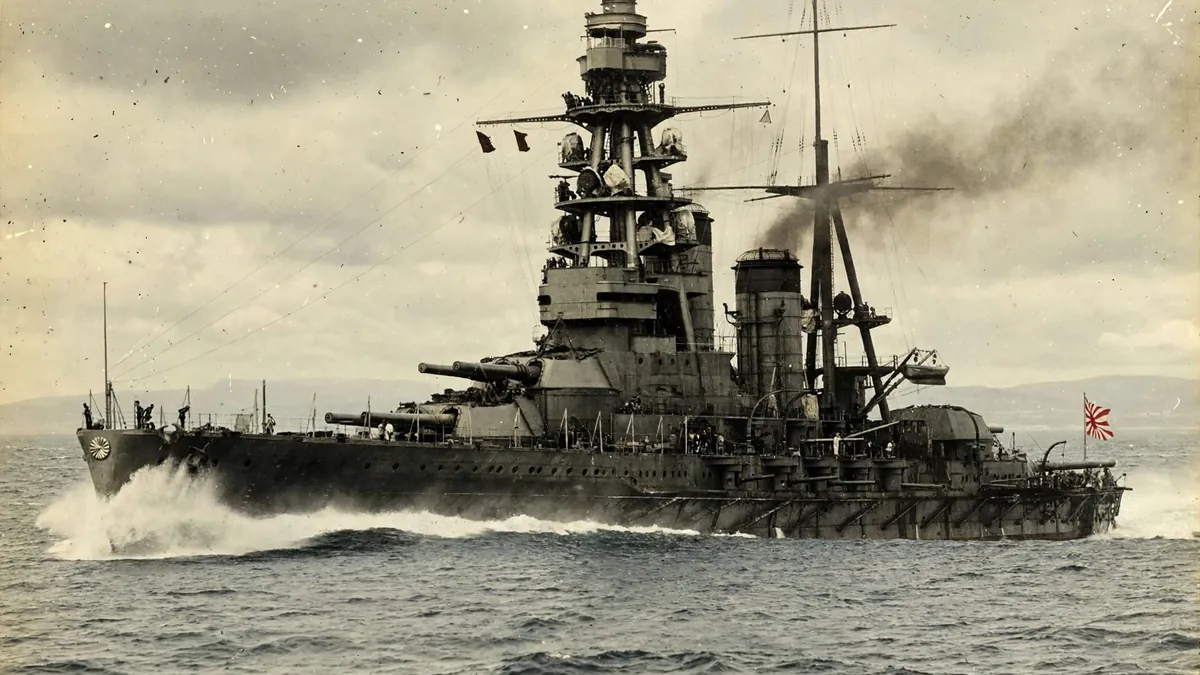
The Nagato class consisted of two Japanese battleships, Nagato and Mutsu, the first battleships in the world to mount 16-inch guns, and the most powerful capital ships in the world when they were completed in 1920–1921. They were the flagships of the Imperial Japanese Navy for two decades, and Nagato was the flagship of Admiral Isoroku Yamamoto, commander of the Combined Fleet, when Japan attacked Pearl Harbor in December 1941. The class represented Japan’s ambition to build a navy equal to those of Britain and the United States, and its ships were among the largest and most powerful battleships of their time.
Nagato and Mutsu had very different fates. Mutsu was destroyed in June 1943 by an internal explosion in her magazines while at anchor in Hiroshima Bay, with the loss of more than 1,100 men, in one of the greatest disasters in Japanese naval history. Nagato survived the war, despite being damaged by American aircraft and by a mine, and she was the only Japanese battleship to survive the conflict. She was used as a target ship in the atomic bomb tests at Bikini Atoll in 1946, where she survived two nuclear explosions before sinking from the damage, a final testament to her strength.
The Nagato class is remembered as a landmark in battleship design: the first 16-inch-gun battleships, the ships that set the standard for the capital ships of the 1920s, and the flagships of the navy that attacked Pearl Harbor. Their story spans the rise and fall of Japanese naval power, from the Washington Naval Treaty to the atomic bomb, and their ships are among the most famous battleships in history.
1. Key Facts
| Field | Value |
|---|---|
| Type | Battleship |
| Ships | Nagato, Mutsu |
| Origin | Japan |
| Designed | 1916–1917; laid down 1917–1918 |
| Commissioned | Nagato 1920; Mutsu 1921 |
| Built | 2 |
| Displacement | 32,720 tons standard (as built); approximately 39,000 tons full load after modernisation |
| Length | Approximately 221 m (725 ft) as built; 224.9 m after modernisation |
| Beam | Approximately 29 m (95 ft) as built; 34.6 m after modernisation |
| Draught | Approximately 9.1 m (30 ft) |
| Main armament | 8 × 41 cm (16.1 in) guns in four twin turrets |
| Secondary armament | 20 × 14 cm (5.5 in) guns (later reduced); 8 × 12.7 cm dual-purpose guns after modernisation |
| Anti-aircraft armament | Extensive after modernisation; up to 98 × 25 mm guns by 1944 |
| Torpedo tubes | 8 × 53.3 cm (as built; removed in modernisation) |
| Aircraft | 3 seaplanes |
| Armour | Belt 305 mm (12 in), deck up to 127 mm, turrets up to 356 mm face |
| Propulsion | 4 Kampon steam turbines, 80,000 shp (as built); 82,000 shp after modernisation |
| Speed | Approximately 26.5 knots as built; approximately 25 knots after modernisation |
| Range | Approximately 5,500 nautical miles at 16 knots |
| Crew | Approximately 1,330 officers and men (as built); approximately 1,750 in 1944 |
| Notable roles | Flagship of the Combined Fleet; Nagato was Yamamoto’s flagship at Pearl Harbor |
| Fate | Mutsu destroyed by magazine explosion June 1943; Nagato sunk as target at Bikini Atoll July 1946 |
2. Background and Development
The Eight-Eight Fleet
The Nagato class was designed as part of Japan’s “Eight-Eight Fleet” programme, which aimed to build a navy of eight battleships and eight battlecruisers, each of the most modern type. The programme was a response to the naval arms race of the early twentieth century, and to Japan’s ambition to be recognised as a great naval power. The Nagato class was the first product of the programme, and it was designed to be superior to any battleship then in service. The design was the work of the Japanese naval architect Yuzuru Hiraga, who had studied naval architecture in Britain and who brought British design principles to Japanese shipbuilding.
The 16-Inch Gun
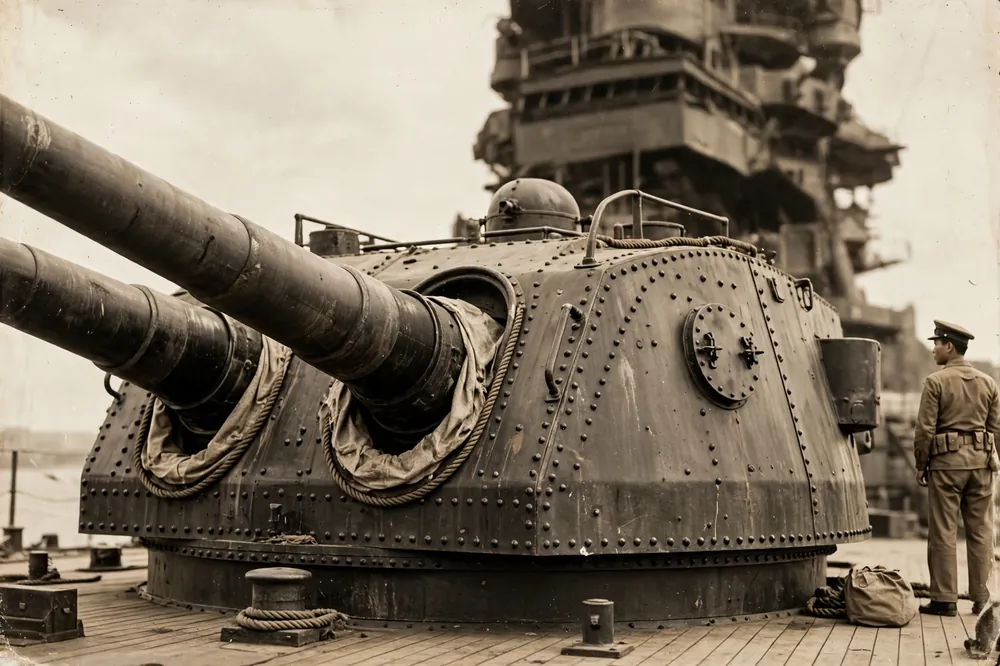
The most important feature of the Nagato class was its main battery of eight 41 cm (16.1-inch) guns, the largest naval guns in the world when the ships were designed. The guns fired a 1,020-kilogram shell to a range of about 38,000 metres, and they gave the Nagato class a firepower that no other battleship could match. The decision to mount 16-inch guns was a bold one: it required a larger hull, heavier turrets, and a more powerful propulsion system, and it set a standard that other navies would follow. The British Nelson class and the American Colorado class, both armed with 16-inch guns, were designed in response to the Nagato class, and the 16-inch gun became the standard for battleships in the 1920s and 1930s.
Building the Ships
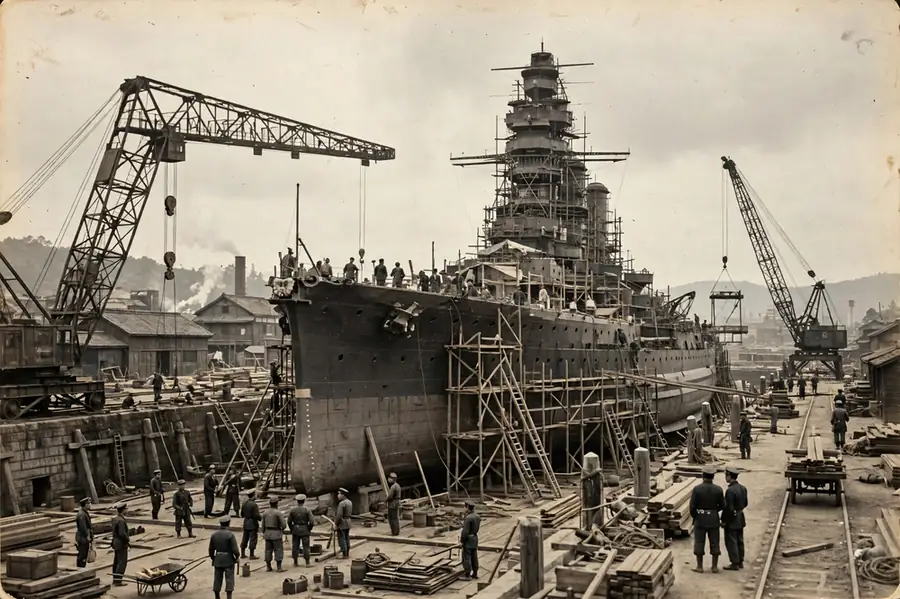
Nagato was laid down at Kure in August 1917, launched in November 1919, and commissioned in November 1920. Mutsu was laid down at Yokosuka in June 1918, launched in May 1920, and commissioned in October 1921. The two ships were the largest warships ever built in Japan, and their construction was a major industrial achievement. The ships were completed just as the Washington Naval Treaty of 1922 halted battleship construction, and they were among the few modern battleships that Japan was allowed to retain under the treaty. The treaty also limited Japan to a battleship tonnage smaller than those of Britain and the United States, a limitation that Japan resented and that shaped its naval policy in the interwar period.
3. Design
Hull, Armour and Layout
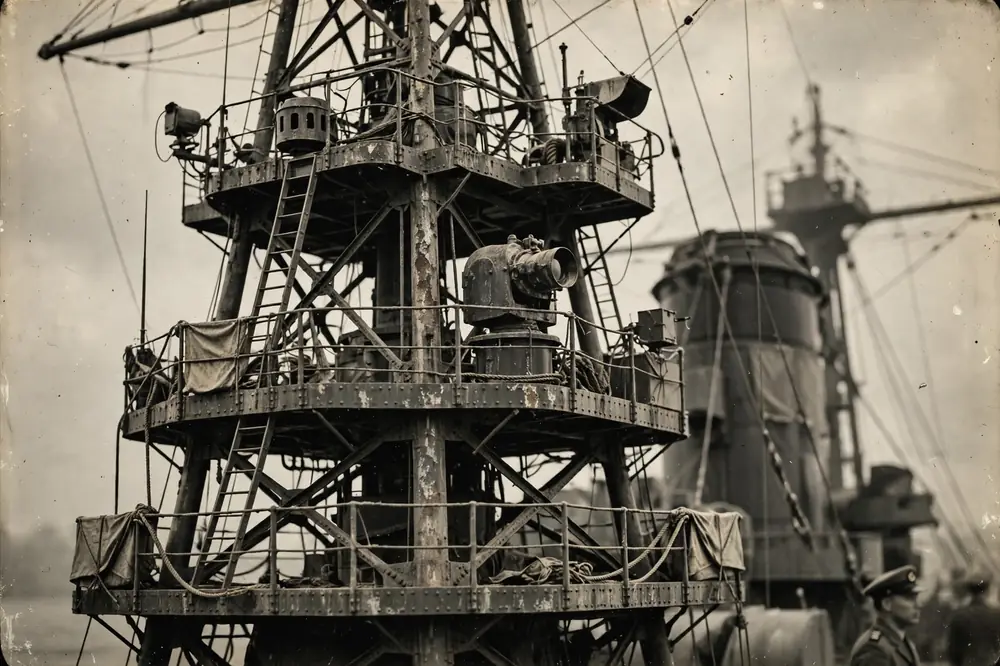
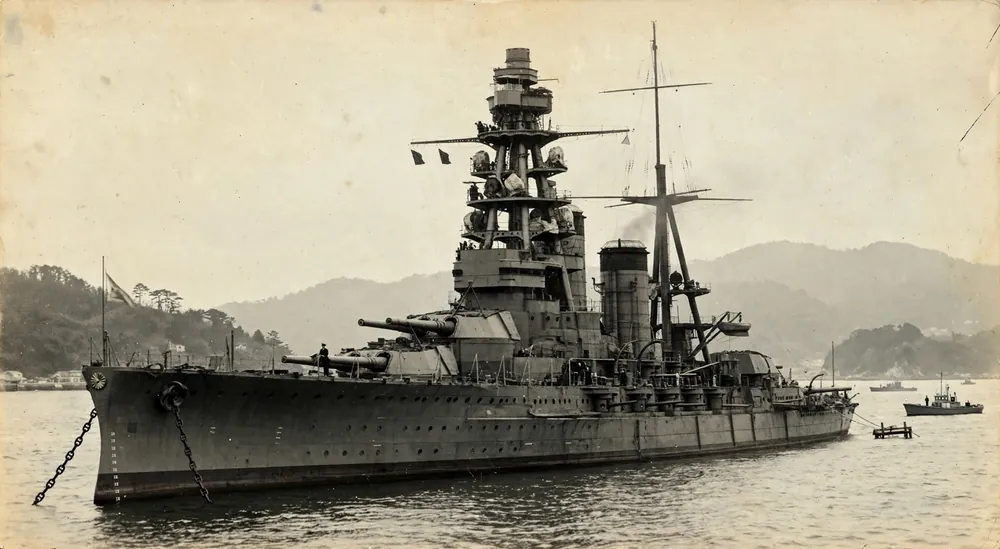
The Nagato class had a long, flush-decked hull with a clipper bow and a distinctive pagoda mast, a tall, heavily braced structure that carried the bridge and the fire-control directors. The armour belt was 12 inches thick, inclined at 15 degrees, and protected the machinery and magazines. The armoured deck was up to 5 inches thick over the magazines, and the turrets were protected by up to 14 inches on their faces. The layout placed two twin 41 cm turrets forward and two aft, with the secondary battery of twenty 14 cm guns in casemates along the superstructure. The ships’ appearance — long, low, with a tall pagoda mast — made them instantly recognisable, and the pagoda mast became a symbol of Japanese battleship design.
Propulsion and Speed
The propulsion system was four Kampon geared steam turbines driving four shafts, producing 80,000 shaft horsepower and a designed speed of 26.5 knots. The system was divided into four boiler rooms and four engine rooms, an arrangement that improved survivability. The ships’ range was about 5,500 nautical miles at 16 knots, which was adequate for operations in the Pacific but limited for operations further afield. The ships’ speed was good for their time, and it made them among the fastest battleships in the world when they were completed. After modernisation in the 1930s, the ships’ speed fell to about 25 knots, as their displacement increased and their hulls were widened with torpedo bulges.
Armament and Fire Control
The main battery of eight 41 cm/45-calibre guns fired a 1,020-kilogram shell to a range of about 38,000 metres, and the guns were controlled by a modern fire-control system with rangefinders in the pagoda mast. The secondary battery of twenty 14 cm guns provided defence against destroyers, and the anti-aircraft battery — originally small — grew enormously during the ships’ modernisation and during the war, until by 1944 Nagato carried nearly a hundred 25 mm guns. The ships also carried three seaplanes for spotting and reconnaissance, launched from a catapult on the quarterdeck. The fire-control system was good, but the Japanese Navy lacked radar until late in the war, and its gunnery was hampered by the absence of radar rangefinding.
4. Variants
The Two Ships
The two ships of the class were built to the same design but differed in detail. Nagato, the lead ship, was built at Kure, and Mutsu was built at Yokosuka. The ships were modernised in the 1930s, when their pagoda masts were enlarged, their anti-aircraft armament was increased, their torpedo bulges were added, and their machinery was overhauled. The modernisation increased their displacement to about 39,000 tons and reduced their speed to 25 knots, but it improved their protection and their habitability. The two ships’ careers diverged after modernisation: Nagato served as the flagship of the Combined Fleet, while Mutsu served in the battle fleet and in the escort of convoys.
Nagato, the Flagship
Nagato was the flagship of the Combined Fleet for much of the interwar period and during the early war, and she was Admiral Yamamoto’s flagship when Japan attacked Pearl Harbor. She was present at the Battle of Midway, although she did not engage, and she served in the Battle of Leyte Gulf in October 1944, where she was damaged by American aircraft. She survived the war, despite being damaged by a mine and by air attack, and she was the only Japanese battleship to survive the conflict. Her survival made her a symbol of the Imperial Japanese Navy, and her use as a target at Bikini Atoll was a final chapter in her long career.
Mutsu and the Magazine Explosion
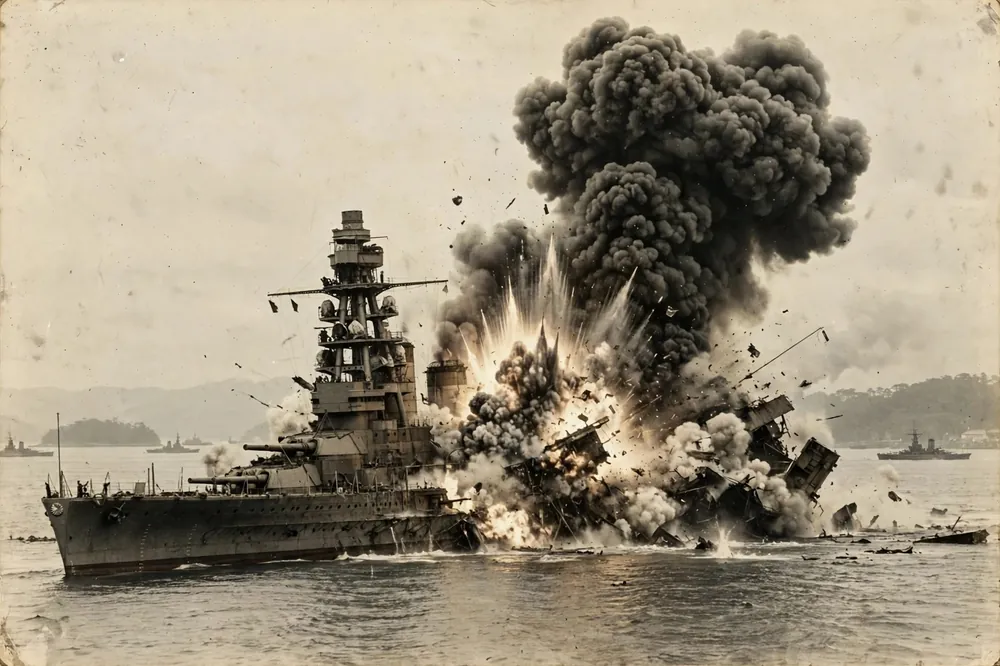
Mutsu served with the battle fleet and took part in the Battle of Midway and in the escort of convoys. On 8 June 1943, while at anchor in Hiroshima Bay, she was destroyed by an explosion in her No. 3 magazine, which broke the ship in two and sank her with the loss of 1,121 men, including her captain. The cause of the explosion was never definitively established: it may have been an accident, or sabotage, or the spontaneous combustion of unstable propellant. The loss was a major blow to the Japanese Navy, and it was kept secret from the public. Mutsu’s wreck was partly salvaged after the war, and her guns and artefacts are preserved in museums in Japan.
5. Operational History
The Interwar Years
Nagato and Mutsu served as the flagships of the Japanese battle fleet throughout the interwar period. Nagato was the flagship of the Combined Fleet, and she represented Japan at naval reviews and in diplomatic visits. The ships were modernised in the 1930s, when their pagoda masts were enlarged and their anti-aircraft armament was increased, and they remained the most powerful ships in the Japanese Navy until the completion of the Yamato class in 1941. The interwar years were a period of peace for the ships, but they were also a period of preparation: the Japanese Navy trained for a decisive battle against the United States, and the Nagato class was expected to play a central role in it.
Pearl Harbor and Midway
At Pearl Harbor, Nagato was Yamamoto’s flagship, and she was anchored at Hashirajima, from where Yamamoto directed the attack. She did not take part in the attack itself, but her role as the fleet flagship made her a symbol of the operation. At Midway in June 1942, Nagato served with the main body of the Japanese fleet, which was too far from the battle to intervene, and she returned to Japan without firing a shot. The battle was a disaster for Japan, and it marked the end of the battleship’s role as the decisive weapon. Nagato’s service at Midway was a measure of how quickly naval warfare had changed: the flagship of the fleet was a bystander at the battle that decided the war.
Leyte Gulf and the End of the War
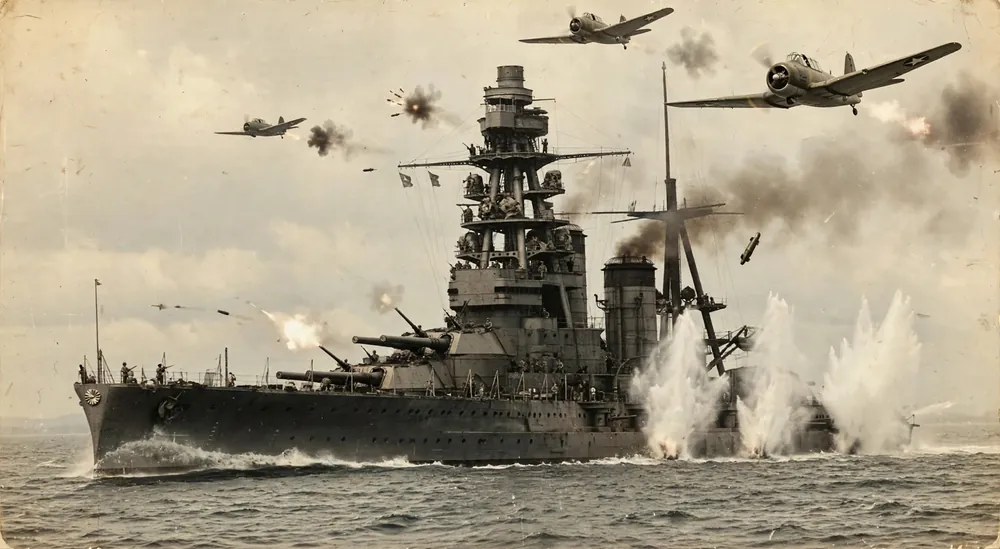
Nagato’s last action came at the Battle of Leyte Gulf in October 1944, where she served with Admiral Kurita’s Centre Force in the Battle off Samar. She was damaged by American aircraft, and she withdrew with the rest of the force. After Leyte, Nagato was damaged by a mine and by air attack, and she spent the last months of the war at Yokosuka, where she was used as a floating anti-aircraft battery. She survived the war, the only Japanese battleship to do so, and she was surrendered to the Allies in 1945. Her survival was a testament to her strength and to the luck that had kept her from the fate of her sisters.
6. Performance and Specifications
Strengths on the Battlefield
The Nagato class was a successful design. Its 41 cm guns were the largest in the world when the ships were completed, and they gave the class a firepower that no other battleship could match. The ships were fast for their time, well protected, and well built, and their modernisation in the 1930s improved their protection and their anti-aircraft armament. Nagato’s survival of the war, and her survival of two atomic bomb tests, was a testament to her strength. The class’s design set the standard for the battleships of the 1920s, and its influence was felt in the British Nelson class and the American Colorado class.
Weaknesses and Trade-offs
The weaknesses were those of the design’s age. By 1941 the Nagato class was twenty years old, and its protection, while good for its time, was inadequate against modern bombs and torpedoes. The ships lacked radar until late in the war, and their anti-aircraft armament, while extensive, was hampered by the poor quality of the Japanese 25 mm gun. The ships’ speed of 25 knots after modernisation was slow by the standards of the fast battleships that followed, and their fuel consumption was high. The Nagato class was a fine design for 1920, but by 1944 it was obsolescent, and its service in the war was limited by its age.
How the Class Compared with Rivals
Compared with the British Nelson class, the Nagato class was faster and had a similar main battery, but had thinner armour. Compared with the American Colorado class, the Japanese ships were faster and had a longer-ranged main battery, but had thinner deck armour. Compared with the later Yamato class, the Nagato class was smaller, slower and less heavily armed, but it was the class that set the standard for Japanese battleship design. Compared with the British King George V class, the Nagato class was older, slower and less well protected, but had larger guns. The Nagato class was a landmark design, but it was overtaken by the ships that followed it.
7. Operators
The Imperial Japanese Navy
The only operator of the Nagato class was the Imperial Japanese Navy. The two ships served with the Combined Fleet, and their crews were drawn from across Japan. Nagato served as the flagship of the Combined Fleet, and her officers included men who would later become senior figures in the Japanese Navy, including Admiral Yamamoto. The class’s service was entirely Japanese, and its history is a part of the history of the Imperial Japanese Navy in the Pacific War.
No Other Users
No other navy operated a Nagato-class ship. After the war, Nagato was used as a target ship in the atomic bomb tests at Bikini Atoll, and Mutsu’s wreck was partly salvaged. The ships’ names have not been reused by the Japanese Navy, and their memory is preserved in the museums and memorials of Japan. The Yamato Museum in Kure displays models and photographs of the Nagato class, and Mutsu’s guns, raised from the wreck after the war, are displayed at Etajima and at other locations. The absence of a foreign operator is a measure of the class’s status as a purely Japanese design, built for a navy that sought to match the great naval powers on its own terms.
8. Legacy and Influence
The First 16-Inch Battleships
The legacy of the Nagato class is that it was the first class of battleships to mount 16-inch guns, and it set the standard for the capital ships of the 1920s. The British Nelson class and the American Colorado class were designed in response to the Nagato class, and the 16-inch gun became the standard for battleships in the interwar period. The class’s design — the long hull, the pagoda mast, the powerful main battery — influenced Japanese battleship design for two decades, and its ships were the flagships of the navy that attacked Pearl Harbor.
Memory and Bikini Atoll
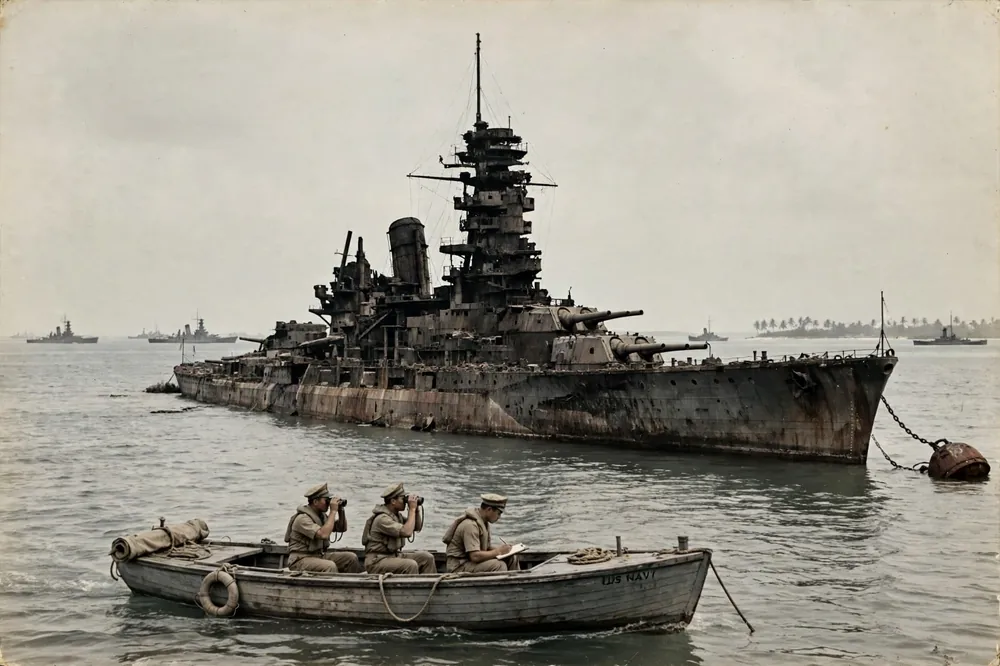
Nagato is remembered as the only Japanese battleship to survive the war, and as the ship that survived two atomic bomb tests at Bikini Atoll. Her sinking at Bikini, after surviving the Able and Baker tests, was a final testament to her strength, and it made her a symbol of the atomic age. Mutsu is remembered for the disaster of her magazine explosion, one of the greatest losses in Japanese naval history, and for the mystery of its cause. The class’s story spans the rise and fall of Japanese naval power, from the Washington Naval Treaty to the atomic bomb, and its ships are among the most famous battleships in history.
The End of the Battleship Era
The Nagato class also marks the end of the battleship era. The ships were designed for a decisive fleet action that never happened, and their most important service was as flagships, not as fighting ships. Nagato’s survival of the war and her sinking at Bikini marked the transition from the battleship age to the atomic age, and her story is a measure of how quickly naval warfare changed in the twentieth century. The battleship, which had been the capital ship for half a century, was replaced first by the aircraft carrier and then by the atomic bomb, and Nagato’s fate — surviving the war only to be sunk by a nuclear weapon — captures that transition in a single ship’s story.
9. Surviving Examples
No Ship Survives
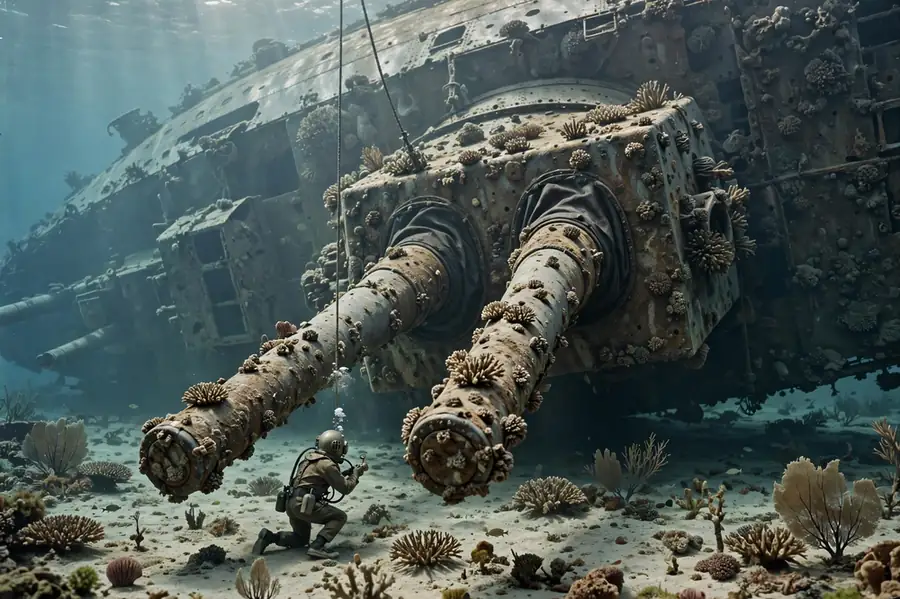
No Nagato-class battleship survives. Mutsu was destroyed by a magazine explosion in 1943, and her wreck was partly salvaged after the war. Nagato was sunk at Bikini Atoll in July 1946, after surviving two atomic bomb tests, and her wreck lies on the seabed of the lagoon, where it is a popular site for divers. The absence of a preserved ship is a loss for naval heritage, but the class is well represented in museums and in models.
Artefacts and Memorials
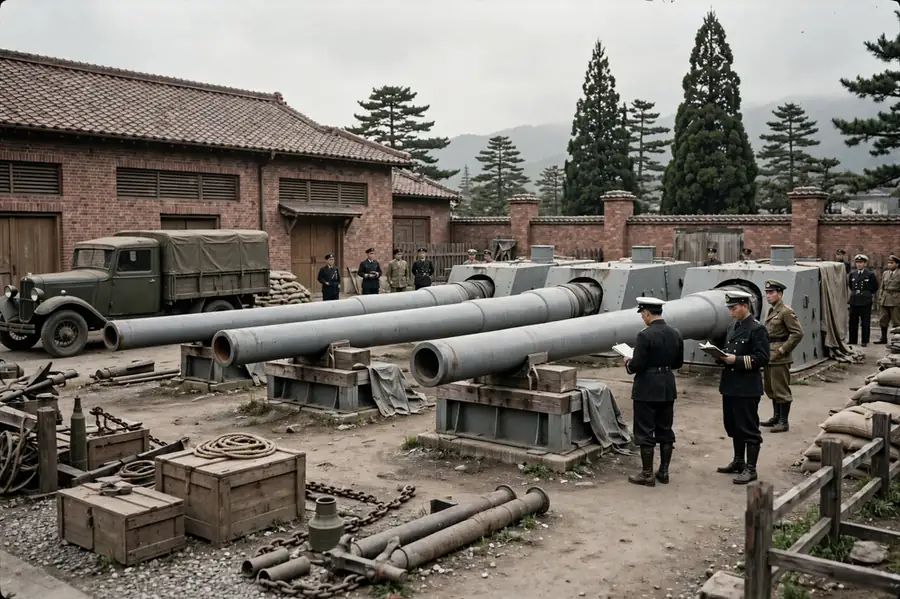
Artefacts from the class survive in museums in Japan and in the United States. The Yamato Museum in Kure displays models and photographs of the Nagato class, and the museum at Yokosuka holds material relating to Mutsu. Mutsu’s guns, raised from the wreck after the war, are displayed at the former naval academy at Etajima and at other locations in Japan. Nagato’s wreck at Bikini is a war grave and a dive site, and it is visited by divers from around the world. These artefacts and the wreck keep the memory of the class alive.
Frequently Asked Questions
What was the Nagato class?
The Nagato class consisted of two Japanese battleships, Nagato and Mutsu, commissioned in 1920–1921. They were the first battleships in the world to mount 16-inch guns, and they were the flagships of the Imperial Japanese Navy for two decades. The class was designed as part of Japan’s “Eight-Eight Fleet” programme, which aimed to build a navy of eight battleships and eight battlecruisers, and it was the work of the naval architect Yuzuru Hiraga. The ships were the largest warships ever built in Japan when they were completed, and their 41 cm guns were the largest naval guns in the world at the time.
What happened to Mutsu?
Mutsu was destroyed on 8 June 1943 by an explosion in her No. 3 magazine while at anchor in Hiroshima Bay, with the loss of 1,121 men. The cause was never definitively established: it may have been an accident, or sabotage, or the spontaneous combustion of unstable propellant. The explosion broke the ship in two, and she sank in the bay. The disaster was a major blow to the Japanese Navy, and the loss was kept secret from the public. Mutsu’s wreck was partly salvaged after the war, and her guns are displayed at the former naval academy at Etajima and at other locations in Japan, where they are a memorial to the men who died.
Did Nagato survive the war?
Yes. Nagato was the only Japanese battleship to survive the Second World War. She was used as a target ship in the atomic bomb tests at Bikini Atoll in 1946, survived two nuclear explosions, and sank from the damage a few days after the second test. Her survival of the war, despite being damaged by American aircraft and by a mine, was a testament to her strength, and her survival of the atomic tests made her a symbol of the atomic age. Nagato’s wreck lies on the seabed of Bikini Atoll lagoon, where it is a popular site for divers and a war grave.
Was Nagato Yamamoto’s flagship at Pearl Harbor?
Yes. Nagato was the flagship of Admiral Isoroku Yamamoto, commander of the Combined Fleet, when Japan attacked Pearl Harbor on 7 December 1941. Yamamoto directed the attack from Nagato, anchored at Hashirajima in Japan, and the ship’s role as the fleet flagship made her a symbol of the operation. Nagato had served as the flagship of the Combined Fleet for much of the interwar period, and her officers included men who would later become senior figures in the Japanese Navy. At Midway in June 1942, Nagato again served with the main body of the Japanese fleet, although she was too far from the battle to intervene.
How many 16-inch guns did the Nagato class carry?
Eight 41 cm (16.1-inch) guns in four twin turrets, two forward and two aft. The guns fired a 1,020-kilogram shell to a range of about 38,000 metres, and they were the largest naval guns in the world when the ships were designed. The decision to mount 16-inch guns set a standard that other navies followed: the British Nelson class and the American Colorado class, both armed with 16-inch guns, were designed in response to the Nagato class, and the 16-inch gun became the standard for battleships in the 1920s and 1930s. The guns were controlled by a fire-control system with rangefinders in the ships’ tall pagoda masts.
Where is Nagato’s wreck?
Nagato’s wreck lies on the seabed of Bikini Atoll lagoon, where she sank in July 1946 after the atomic bomb tests. The wreck is a popular dive site and a war grave, and it is visited by divers from around the world. Nagato survived the Able test, an airburst, and the Baker test, an underwater explosion, but the damage from the two tests, combined with the flooding that followed, caused her to sink a few days after the Baker test. The wreck is one of the most famous dive sites in the Pacific, and it is a reminder of the atomic age and of the end of the battleship era.
Sources
- Evans, David, and Peattie, Mark, Kaigun: Strategy, Tactics, and Technology in the Imperial Japanese Navy, 1887–1941 (Naval Institute Press).
- Jentschura, Hansgeorg, Jung, Dieter, and Mickel, Peter, Warships of the Imperial Japanese Navy, 1869–1945 (Naval Institute Press).
- Parshall, Jonathan, and Tully, Anthony, Shattered Sword (Potomac Books) — for Nagato at Midway.
- The Yamato Museum, Kure, Nagato-class collection records.
- The Naval History and Heritage Command, Washington, Bikini Atoll collection records.
-
The Etajima Naval Academy Museum, Mutsu artefacts.
-
Skulski, Janusz, The Battleship Yamato (Conway Maritime Press) — for context on Japanese battleship design.
- Rohwer, Jurgen, Chronology of the War at Sea 1939-1945 (Naval Institute Press).