 WAR ATLAS MILITARY HISTORY MAGAZINE · WWI — WWII
Alexander Pokryshkin
1. Lead
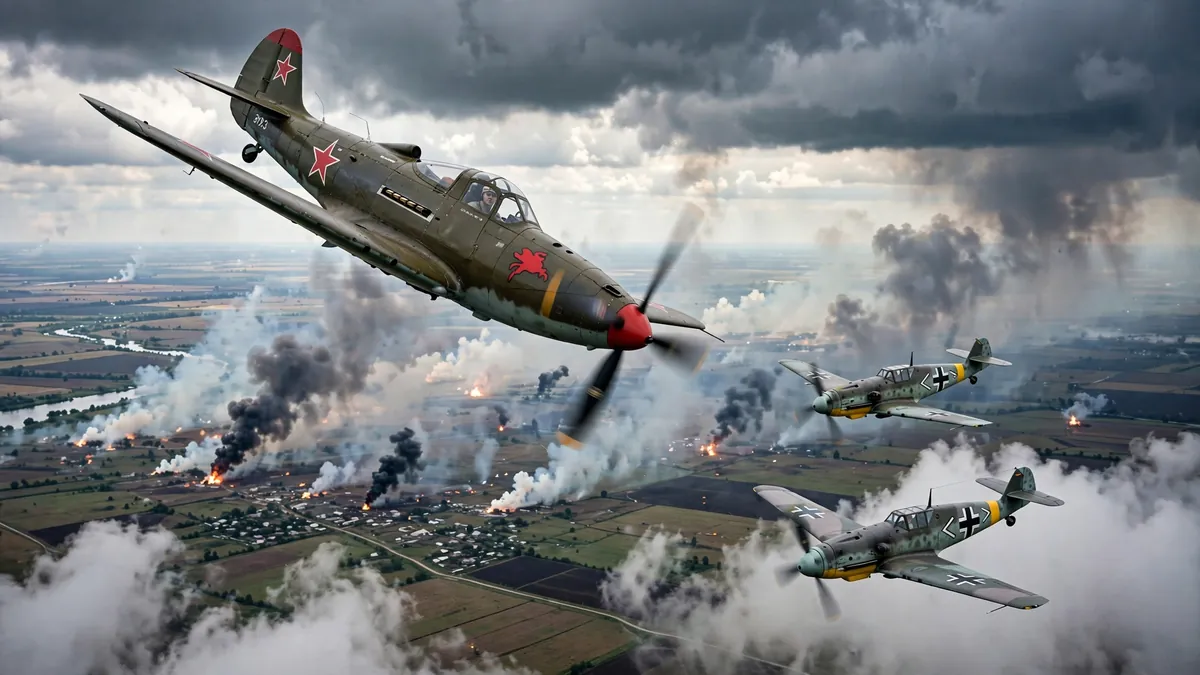
Alexander Ivanovich Pokryshkin (1913–1985) was the Soviet Union’s second-highest-scoring fighter ace of the Second World War and one of the most important figures in Soviet aviation history. Credited with 59 aerial victories, he was the only Soviet pilot to be awarded the title Hero of the Soviet Union three times during the war itself, and he rose from a mechanic to a Marshal of Aviation.
Pokryshkin was more than a great pilot: he was a tactician and a teacher, the author of new fighter tactics that transformed the Soviet air force, and the commander of the 9th Guards Fighter Division, one of the most successful fighter units of the war.
He fought from the first days of the German invasion in June 1941 to the last days of the war in 1945, flying the MiG-3, the Yak-1 and, most famously, the American-built Bell P-39 Airacobra, in which he scored the great majority of his victories.
2. Key Facts
| Born | 6 March 1913, Novonikolayevsk (Novosibirsk), Russian Empire |
| Died | 13 November 1985, Moscow, USSR (aged 72) |
| Service | Soviet Air Force, 1932–1972 |
| Commands | 16th Guards Fighter Regiment; 9th Guards Fighter Division |
| Aerial victories | 59 credited solo victories (plus 6 shared, according to some sources) |
| Combat missions | 650 sorties; 156 air battles |
| Highest award | Hero of the Soviet Union, three times (1943, 1943, 1944) |
| Final rank | Marshal of Aviation |
3. Early Life
From mechanic to pilot
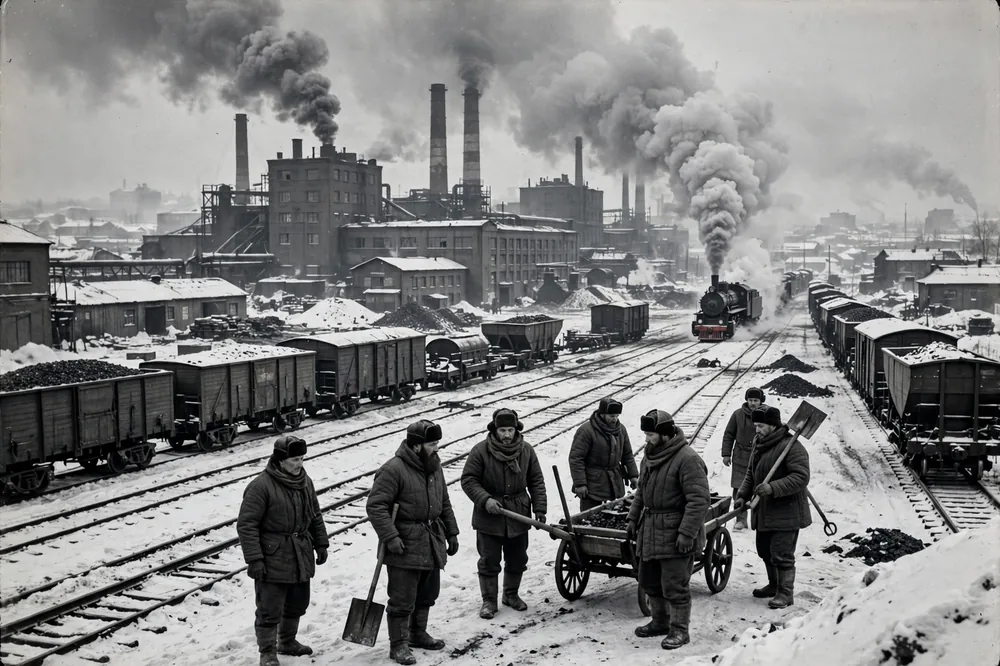
Alexander Pokryshkin was born on 6 March 1913 at Novonikolayevsk, the Siberian city now known as Novosibirsk, into a working-class family. His father was a factory worker, and the young Alexander grew up in the industrial Siberia of the early Soviet Union, a world of factories, railways and the great construction projects of the Five-Year Plans.
He left school at fourteen and trained as a metalworker, and in 1932, at the age of nineteen, he joined the Red Army. He was assigned to the air force as an aircraft mechanic, a job that gave him an intimate knowledge of the machines he would later fly: he learned how an engine worked, how an airframe was built, and how a fighter could be maintained in the field.
For six years he worked as a mechanic, and he studied flying in his spare time, taking lessons at a civilian flying club and petitioning, again and again, to be allowed to train as a pilot. His persistence paid off: in 1938 he was admitted to pilot training, and in 1939 he graduated as a fighter pilot.
Pokryshkin trained at the Kacha military flying school, near Sevastopol, one of the Soviet Union’s leading pilot training schools, and he graduated in 1939 as a fighter pilot. The Kacha school, like the other Soviet flying schools, trained its students in a demanding programme of flying, navigation, gunnery and tactics, and it produced many of the Soviet Union’s great aces, including Pokryshkin himself.
His years as a mechanic gave him an advantage over his fellow students: he understood the aircraft he flew, he knew how its engine worked, and he could diagnose a fault in the air that another pilot might miss. His instructors noted his calmness, his precision, and his willingness to study, and they marked him out as a pilot of promise.
When the war came, two years after his graduation, he was ready for it in a way that few Soviet pilots were.
The first days of war
When Germany invaded the Soviet Union on 22 June 1941, Pokryshkin was a lieutenant in a fighter regiment in Moldavia, on the south-western front, flying the MiG-3. The first days of the war were a catastrophe for the Soviet air force: hundreds of aircraft were destroyed on the ground, the German Luftwaffe dominated the skies, and the Soviet pilots, flying obsolete or unfamiliar aircraft, were shot down in large numbers.
Pokryshkin’s first air battle was a disaster: in the confusion of the first day, he shot down a Soviet Su-2 bomber, mistaking it for a German aircraft, an incident that haunted him for the rest of his life and that he wrote about honestly in his memoirs. But he learned from the disaster, and he learned fast.
Within weeks he was scoring victories against the Luftwaffe, and he was beginning to develop the ideas about fighter tactics that would make him famous.
4. The Tactician
New tactics for the Soviet air force
Pokryshkin’s greatest contribution to the Soviet war effort was not his personal score but his tactics. The Soviet fighter tactics of 1941 were rigid and outdated: pilots flew in tight formations of three, they were forbidden to break formation, and they were taught to attack from behind, in a straight line, which made them easy targets for the German fighters.
Pokryshkin, who had studied the German tactics and had learned from his own experience, argued for a complete change: fighters should fly in pairs, the famous “finger-four” formation, they should attack from above, using height and speed, and they should be free to manoeuvre, to break off, and to re-attack.
He wrote his ideas down in a notebook, and he taught them to his comrades, in the face of opposition from senior officers who regarded his ideas as undisciplined and dangerous. His ideas were, in the end, adopted by the Soviet air force, and they played a large part in the transformation of Soviet fighter aviation from the disasters of 1941 to the victories of 1943–45.
The Kuban air battles
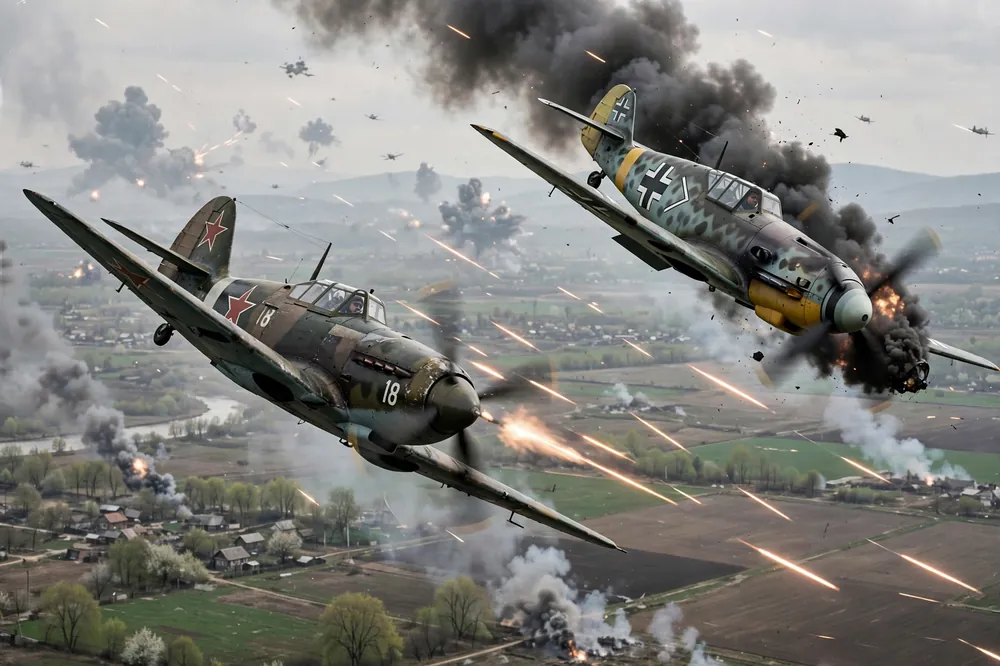
Pokryshkin’s tactics were put to the test in the great air battles over the Kuban, in the spring of 1943, when the Soviet and German air forces fought for control of the skies over the Taman Peninsula. The Kuban battles were among the largest air battles of the war, involving hundreds of aircraft on both sides, and they were a turning point: the Soviet air force, using Pokryshkin’s tactics and flying the new Yak and La fighters and the American P-39, fought the Luftwaffe to a standstill, and then to defeat.
Pokryshkin himself scored heavily in the Kuban, and his regiment, the 16th Guards Fighter Regiment, became one of the most famous units of the Soviet air force. The Germans, who had come to know his name, called him the “ace of the Kuban”, and they put a price on his head.
His first two Hero of the Soviet Union awards came in 1943, in recognition of his victories and his tactics in the Kuban.
5. The P-39 Airacobra
An American fighter
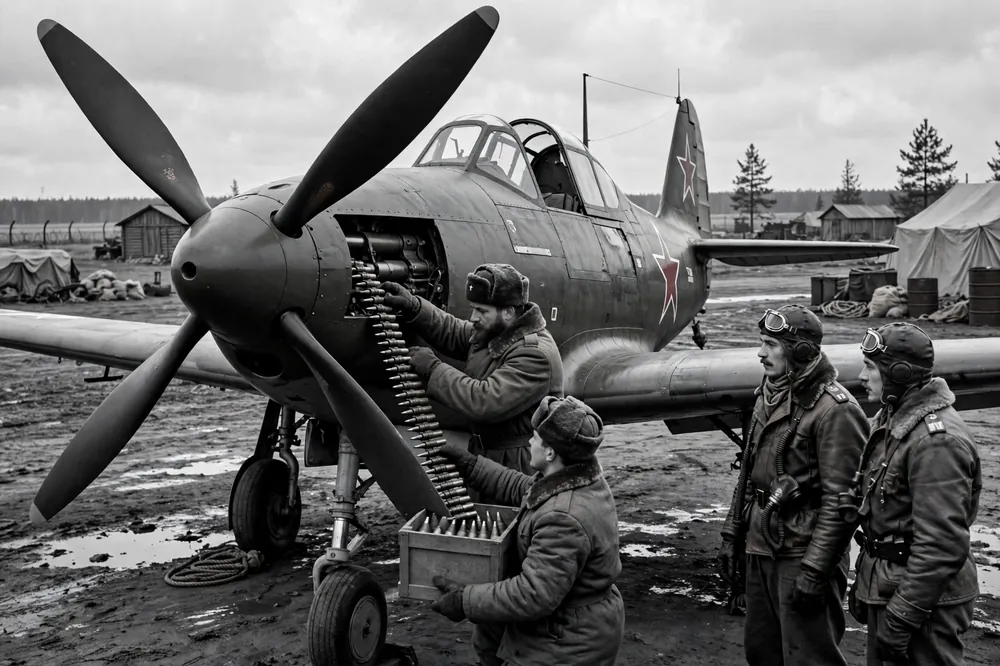
Pokryshkin scored the great majority of his 59 credited victories in the Bell P-39 Airacobra, an American fighter supplied to the Soviet Union under Lend-Lease. The P-39 was an unusual aircraft: its engine was mounted behind the pilot, it had a tricycle undercarriage, and it was armed with a 37 mm cannon firing through the propeller hub.
The Americans and the British had found the P-39 disappointing — it was poor at high altitude, and it was difficult to fly — but the Soviets, who fought their air war at low altitude, over the battlefield, found it excellent.
Pokryshkin, who understood the aircraft’s strengths and weaknesses, used it brilliantly: its heavy cannon could destroy a German bomber with a single hit, and its handling at low altitude was superb. He became the most famous P-39 pilot of the war, and his success in the aircraft is a reminder that a weapon’s value depends on how it is used, and on the tactics of the men who fly it.
59 credited victories
Pokryshkin’s official score was 59 solo victories credited, plus 6 shared victories according to some sources, from 650 sorties and 156 air battles. The figure of 59 is the one most commonly cited, and it is the figure recorded in his official service record and in his Hero of the Soviet Union citations.
Some popular sources give higher figures, but these are not supported by the official record, and historians today cite 59 as his credited total. His score made him the second-highest-scoring Soviet ace of the war, behind Ivan Kozhedub, who was credited with 62 victories, and it placed him among the great aces of the war.
But Pokryshkin himself was always careful to say that his score was less important than his tactics, and that the victories of his regiment and his division mattered more than his own.
Pokryshkin’s victories in the Kuban made him famous in the Soviet Union, and they made him a marked man in Germany, where the Luftwaffe put a price on his head and where German pilots were warned to watch for his aircraft.
The Germans, who had come to know his name, called him the ‘ace of the Kuban’, and they regarded him as one of the most dangerous Soviet pilots of the war. His first two Hero of the Soviet Union awards came in 1943, in recognition of his victories and his tactics in the Kuban, and they were awarded within three months of each other, a measure of how highly his service was regarded.
Pokryshkin himself, characteristically, regarded the awards as a recognition of his regiment and his division, rather than of himself, and he continued to fly, and to teach, as he had always done.
6. Command of the 9th Guards Division
A divisional commander
In 1944 Pokryshkin was given command of the 9th Guards Fighter Division, one of the most successful fighter divisions of the Soviet air force. As a divisional commander, he was responsible not only for his own flying but for the training, the tactics and the welfare of hundreds of pilots, and he applied the lessons he had learned as a regimental commander on a larger scale.
His division fought in the great offensives of 1944–45 — the liberation of Ukraine, the advance through Poland, and the final assault on Berlin — and it ended the war as one of the most decorated divisions in the Soviet air force.
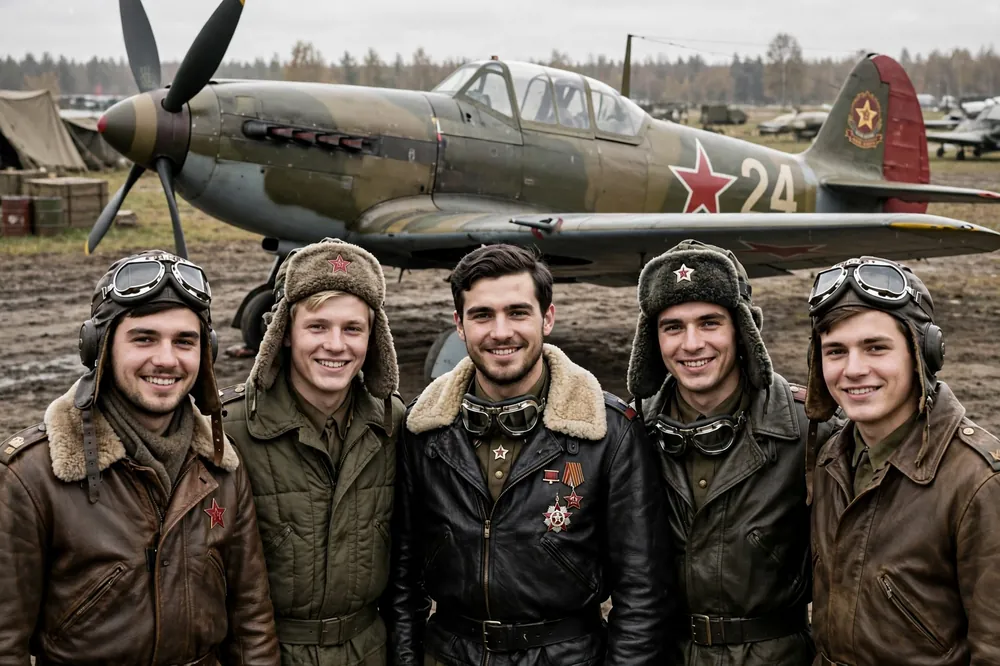
Pokryshkin himself continued to fly combat missions as a divisional commander, a practice that was unusual — most generals did not fly — and that earned him the respect of his pilots, who knew that their commander shared their dangers. His third Hero of the Soviet Union award came in August 1944, making him the first Soviet pilot to receive the title three times during the war.
The final battles
Pokryshkin’s last combat missions were flown over Germany itself, in the spring of 1945, as the Soviet armies closed in on Berlin. By then, the Luftwaffe was a shadow of its former self, short of fuel, pilots and aircraft, and the Soviet air force dominated the skies.
Pokryshkin’s division flew in support of the ground forces, attacking German positions and protecting the Soviet bombers, and it was present at the end of the war in Europe. Pokryshkin ended the war with 59 credited victories, 650 sorties, and 156 air battles, and with a reputation as one of the great fighter leaders of the war.
He had fought from the first day to the last, and he had done it as a pilot, a tactician, a teacher and a commander, in a career that had no parallel in Soviet aviation.
7. Post-War Career
Marshal of Aviation
After the war, Pokryshkin remained in the Soviet air force, rising through the ranks to become a Marshal of Aviation in 1972. He held a series of senior commands, including command of the air defence forces, and he was a deputy of the Supreme Soviet, the Soviet parliament.
He was also a prolific writer: his memoirs, The Sky of War, published in the 1960s, are among the best Soviet accounts of the air war, and they are notable for their honesty — Pokryshkin wrote about his mistakes, including the friendly-fire incident of 22 June 1941, and about the opposition he faced from senior officers who disliked his tactics.
His memoirs are still read today, in Russia and abroad, as a classic of aviation literature, and they are a primary source for the history of the Soviet air force.
Teacher and leader
Pokryshkin’s post-war career was, in many ways, a continuation of his wartime work as a teacher and a tactician. He was involved in the training of Soviet fighter pilots, and he argued, as he had during the war, for tactics based on initiative, flexibility and the free use of height and speed.
He was a respected figure in the Soviet military establishment, and he was consulted on matters of air doctrine until his retirement in 1972. He died in Moscow on 13 November 1985, aged seventy-two, and was buried with full military honours.
His death was widely mourned in the Soviet Union, where he was remembered as one of the great heroes of the Great Patriotic War, and as a man whose contribution to Soviet aviation went far beyond his personal score.
8. Pokryshkin and Kozhedub
The two great Soviet aces
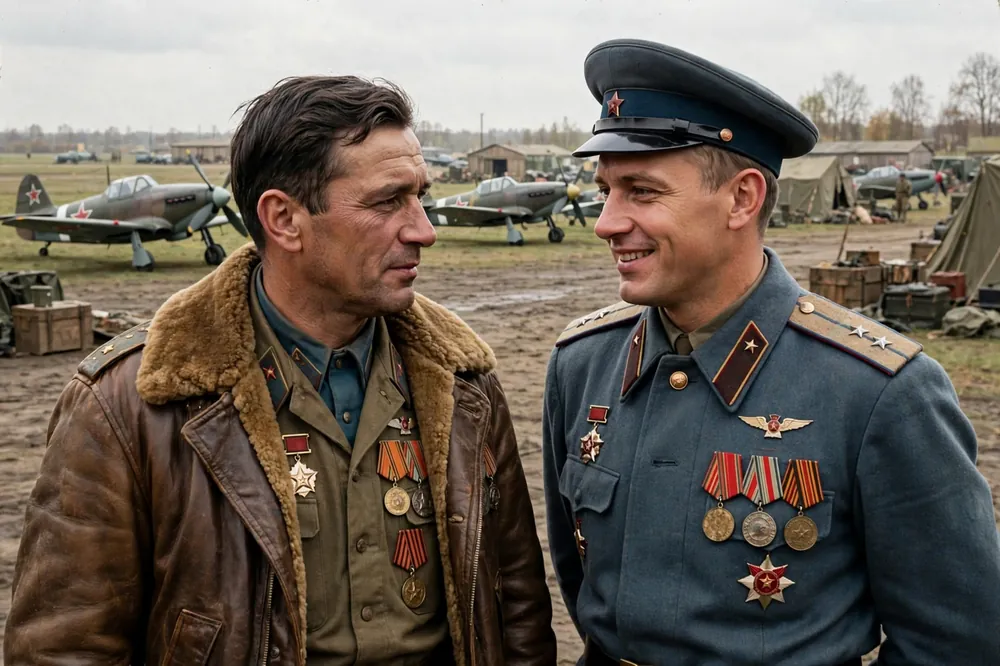
Pokryshkin and Ivan Kozhedub, the two highest-scoring Soviet aces, are often compared, and the comparison is instructive. Kozhedub, credited with 62 victories, scored more than Pokryshkin, and he flew the Soviet La-5 and La-7 fighters, while Pokryshkin flew the American P-39.
But Pokryshkin’s contribution to Soviet aviation was broader: he was a tactician and a teacher, the author of the tactics that transformed the Soviet air force, and a divisional commander, while Kozhedub was, above all, a great pilot. Both men were awarded the Hero of the Soviet Union three times — Kozhedub’s third award came in August 1945, after the war — and both are remembered as the greatest Soviet fighter pilots of the war.
Pokryshkin’s place in history is secure, not because he scored the most victories, but because he changed the way the Soviet air force fought.
The P-39 controversy
Pokryshkin’s use of the P-39 has sometimes been used to diminish his achievement, on the grounds that he flew an American aircraft while other Soviet aces flew Soviet ones. The argument is misguided: the P-39 was supplied to the Soviet Union under Lend-Lease, it was flown by many Soviet pilots, and Pokryshkin’s success in it was a result of his skill and his tactics, not of the aircraft alone.
The Soviet air force’s own assessment was that the P-39, in the hands of a skilled pilot, was an excellent low-altitude fighter, and Pokryshkin proved it. His record in the P-39 is, if anything, a testament to the international character of the Allied war effort: an American aircraft, flown by a Soviet pilot, using tactics he had developed himself, against a German enemy.
It is a story that belongs to the whole Alliance, not to one nation alone.
9. Legacy and Assessment
The tactician’s legacy
Pokryshkin’s legacy is, above all, a tactical one. His ideas — the finger-four formation, the attack from above, the freedom to manoeuvre — became the standard tactics of the Soviet air force, and they remained in use long after the war. He is remembered in Russia as the father of modern Soviet fighter tactics, and his name is given to streets, schools and air force units.
His memoirs are still in print, and his story is told in Russian schools as an example of a working-class boy who became a Marshal of Aviation through skill, study and courage. His 59 credited victories, his three Gold Stars, and his command of the 9th Guards Fighter Division are the outward signs of his achievement, but his real achievement was to change the way an air force fought, and to teach a generation of pilots to fight better.
How history remembers him
Historians today remember Pokryshkin as one of the great fighter leaders of the Second World War, and as a figure whose importance goes beyond his personal score. He is studied not only as an ace but as a military thinker, and his tactics are compared with those of the great German and Allied fighter leaders.
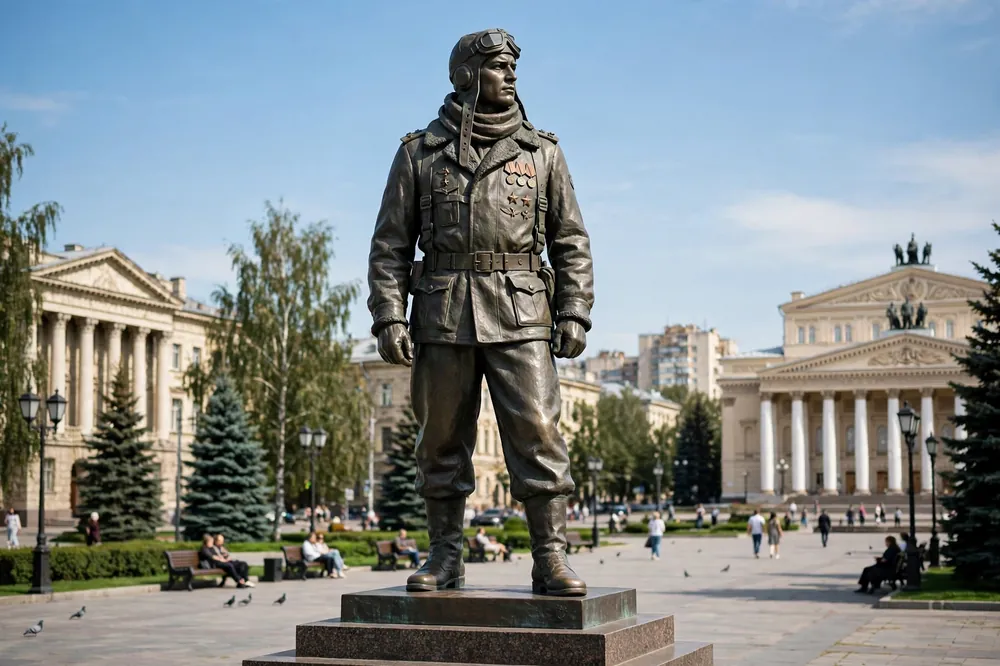
His life, from a Siberian mechanic to a Marshal of Aviation, is a classic Soviet story of social mobility through service, and it is told in Russia today as part of the national memory of the Great Patriotic War. His name is commemorated in Novosibirsk, his home city, where a street, a metro station and a monument bear his name, and his story continues to inspire new generations of Russian pilots.
10. The Soviet Air Force
From disaster to victory
Pokryshkin’s career is, in miniature, the story of the Soviet air force in the Second World War: from the disasters of 1941, when hundreds of aircraft were destroyed on the ground and the Luftwaffe dominated the skies, to the victories of 1943–45, when the Soviet air force, flying new aircraft and using new tactics, won control of the skies over the Eastern Front.
The transformation was the result of many factors — new aircraft, better training, Lend-Lease supplies, and the sheer scale of Soviet industrial production — but it was also the result of men like Pokryshkin, who thought about how to fight and taught others to fight better.
The Soviet air force’s victory in the air war was, in the end, a collective achievement, and Pokryshkin’s part in it, as a pilot, a tactician and a commander, was central.
The air war on the Eastern Front
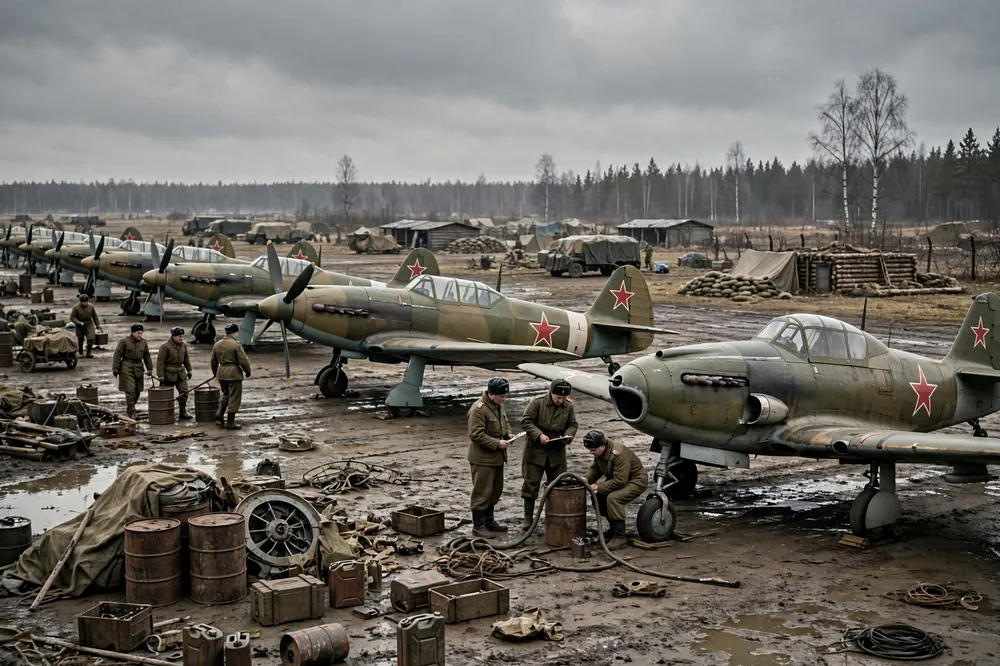
The air war on the Eastern Front was the largest air war in history, involving thousands of aircraft on both sides, and it was fought, for the most part, at low altitude, over the battlefield, in direct support of the ground forces.
Pokryshkin’s tactics — the attack from above, the freedom to manoeuvre, the emphasis on the pair and the flight rather than the rigid formation — were developed for this kind of war, and they were ideally suited to it. His story is a reminder that the air war was not only a matter of machines but of ideas, and that the side that thought most clearly about how to fight often won, even when its machines were inferior.
Pokryshkin thought clearly, and he taught others to do the same, and that is why his legacy endures.
11. Frequently Asked Questions
How many victories was Alexander Pokryshkin credited with?
Pokryshkin was credited with 59 solo aerial victories, plus 6 shared victories according to some sources, from 650 sorties and 156 air battles. He was the second-highest-scoring Soviet ace, behind Ivan Kozhedub with 62. He flew 650 sorties and fought 156 air battles, and he was the second-highest-scoring Soviet ace, behind Ivan Kozhedub, who was credited with 62 victories. His score made him one of the great aces of the war, but he always said that his tactics mattered more than his personal total.
Why was Pokryshkin awarded Hero of the Soviet Union three times?
He received the title in May 1943 and August 1943 for his victories and tactics in the Kuban air battles, and again in August 1944 as commander of the 9th Guards Fighter Division. He was the first Soviet pilot to receive the title three times during the war. He received the title in May 1943 and August 1943 for his victories and tactics in the Kuban air battles, and again in August 1944 as commander of the 9th Guards Fighter Division.
What aircraft did Pokryshkin fly?
He flew the MiG-3 and the Yak-1 early in the war, and the American-built Bell P-39 Airacobra for most of his career, in which he scored the great majority of his 59 credited victories. He flew the Yak-1 in the early months of the war, and he scored his first victories in it, before converting to the P-39 in 1943. The P-39 was an unusual aircraft, with its engine mounted behind the pilot and a 37 mm cannon firing through the propeller hub, and Pokryshkin used it brilliantly at low altitude, over the battlefield.
What were Pokryshkin’s tactics?
He advocated the finger-four formation, attacks from above using height and speed, and freedom for pilots to manoeuvre, break off and re-attack, replacing the rigid three-aircraft formations of 1941. His tactics were adopted by the Soviet air force and helped transform its fighter aviation. He advocated the finger-four formation, attacks from above using height and speed, and freedom for pilots to manoeuvre, break off and re-attack, replacing the rigid three-aircraft formations of 1941. His tactics were adopted by the Soviet air force and helped transform its fighter aviation from the disasters of 1941 to the victories of 1943–45.
Did Pokryshkin shoot down a Soviet aircraft?
Yes, on the first day of the war, 22 June 1941, he mistakenly shot down a Soviet Su-2 bomber in the confusion of the German invasion. He wrote about the incident honestly in his memoirs, and it haunted him for the rest of his life. He wrote about the incident honestly in his memoirs, and it haunted him for the rest of his life, as a reminder of the confusion of the first day of the war. The incident took place on 22 June 1941, the first day of the German invasion, when the Soviet air force was in chaos and hundreds of aircraft were being destroyed on the ground.
What was Pokryshkin’s final rank?
He rose to Marshal of Aviation in 1972, after a post-war career in senior command, including command of the air defence forces. He retired in 1972 and died in Moscow in 1985. He was a deputy of the Supreme Soviet, and he remained a respected figure in Soviet military life until his death in Moscow in 1985. He held a series of senior commands, including command of the air defence forces, and he was a deputy of the Supreme Soviet, the Soviet parliament.
12. Sources
- Wikipedia, “Alexander Pokryshkin” — birth and death dates, 59 credited victories, three Hero of the Soviet Union awards, command of the 9th Guards Fighter Division, Marshal of Aviation.
- Wikipedia, “Bell P-39 Airacobra” — the aircraft’s history and its service with the Soviet air force.
- Alexander Pokryshkin, The Sky of War (various editions) — his memoirs, including the friendly-fire incident of 22 June 1941 and his tactics.
- Von Hardesty, Red Phoenix: The Rise of Soviet Air Power, 1941–1945 (Smithsonian, 1982) — the Soviet air force and its transformation.
- Reina Pennington, Wings, Women, and War (University Press of Kansas, 2001) — context on Soviet aviation.
- Encyclopædia Britannica, “Alexander Pokryshkin” — biography and record.
- Hugh Morgan, Soviet Aces of World War 2 (Osprey, 1997).
- George Mellinger, Yakovlev Aces of World War 2 (Osprey, 2005).