 WAR ATLAS MILITARY HISTORY MAGAZINE · WWI — WWII
Dunkirk
1. Lead
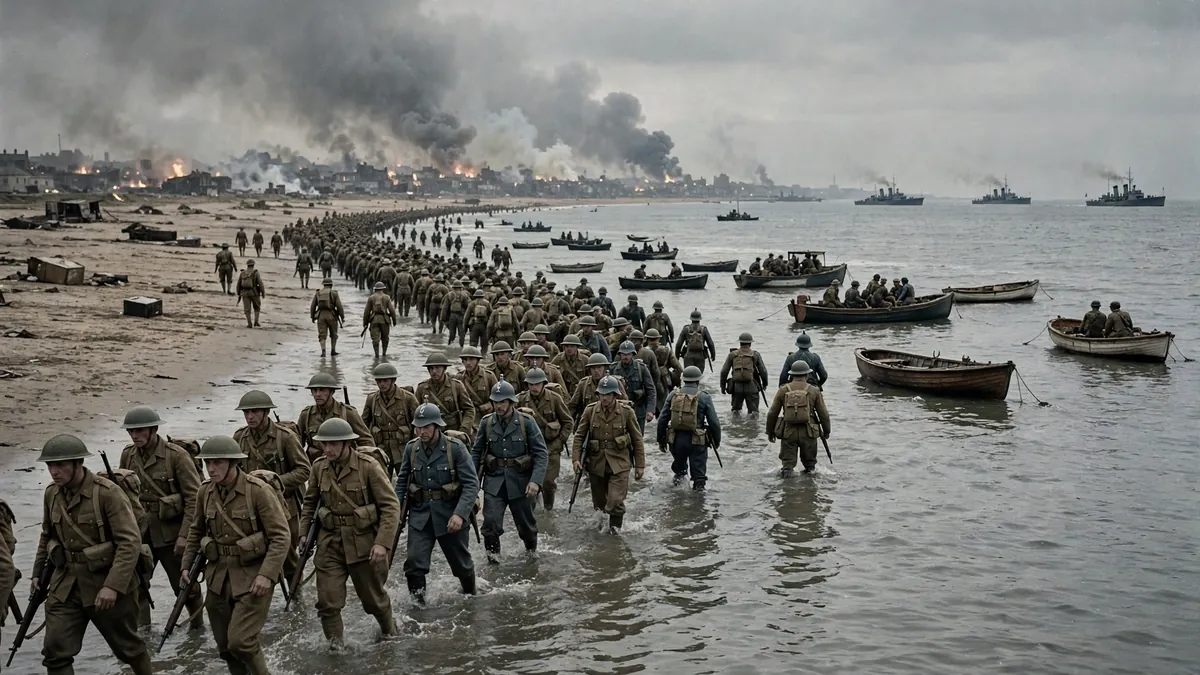
Dunkirk was the evacuation of the Allied armies from the beaches and harbour of Dunkirk, in northern France, between 26 May and 4 June 1940. Codenamed Operation Dynamo, it rescued 338,226 British, French and Belgian soldiers who had been cut off and surrounded by the German army during the Battle of France. Ramsay’s staff first estimated that about 45,000 men could be taken off over two days. The evacuation preserved the core of the British Army — its trained officers, NCOs and soldiers — who formed the basis of the army rebuilt in the years that followed. Churchill described the evacuation as “a miracle of deliverance”, while warning in the same speech that “wars are not won by evacuations”.
2. Key Facts
| Date | 26 May – 4 June 1940 (Operation Dynamo) |
| Location | Dunkirk and the beaches to De Panne, northern France, on the English Channel |
| Result | Successful Allied evacuation; 338,226 soldiers rescued |
| Allied commanders | General Lord Gort (British Expeditionary Force); Vice Admiral Bertram Ramsay (Operation Dynamo); Admiral Jean-Marie Abrial (French naval forces at Dunkirk) |
| German commanders | General Gerd von Rundstedt (Army Group A); General Fedor von Bock (Army Group B); General Ewald von Kleist (Panzer Group Kleist) |
| Allied strength | About 400,000 British, French and Belgian troops trapped in the Dunkirk pocket |
| German strength | Army Groups A and B, including ten panzer divisions |
| Allied losses | 338,226 evacuated; about 68,000 British casualties in the French campaign (killed, wounded or captured); 2,472 guns, 63,879 vehicles and 500,000 tons of stores abandoned; 6 destroyers and over 200 other ships sunk; 106 RAF aircraft lost during Dynamo |
| German losses | Estimated at about 20,000 killed and wounded around Dunkirk; 156 Luftwaffe aircraft lost during Dynamo |
3. Background
In September 1939 Britain and France declared war on Germany after the invasion of Poland, but for eight months almost nothing happened on the Western Front. The period became known as the Phoney War. Behind the Maginot Line, the French Army waited for a German attack that never came, while the British Expeditionary Force (BEF) took up positions along the Belgian border. Both sides expected Germany to repeat the plan of 1914 — a great sweep through Belgium. The Allied plan, the Dyle Plan, was to advance into Belgium and meet the Germans there.
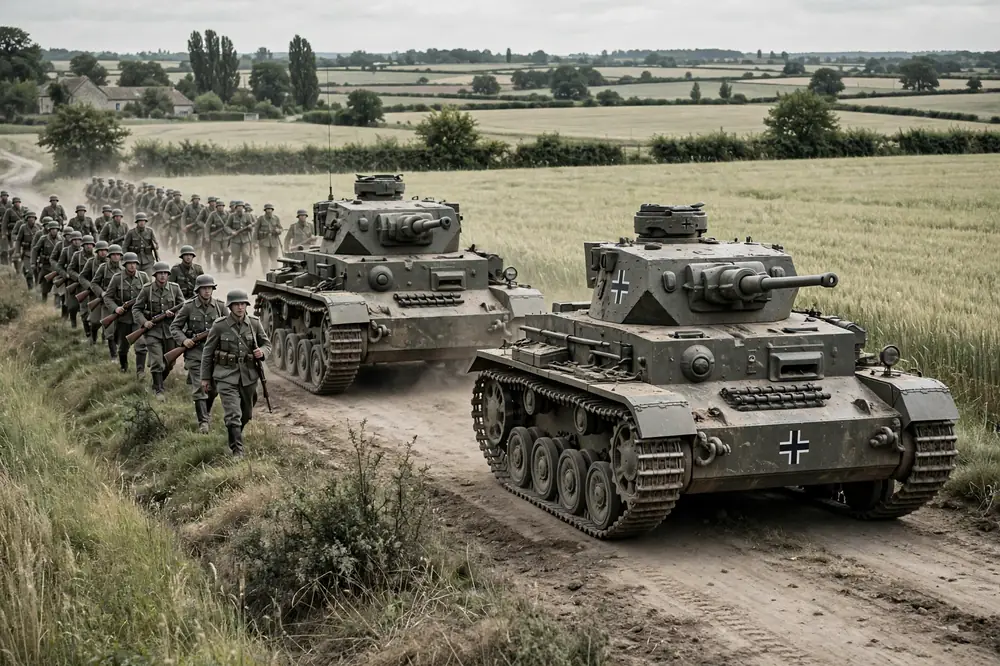
Germany attacked on 10 May 1940. The blow fell exactly where the Allies expected — through Belgium and the Netherlands — but that was only the feint. The main German thrust, under the Manstein Plan, drove through the Ardennes forest, which French generals had judged impassable to tanks, and crossed the River Meuse at Sedan on 13 May. Within days the German panzers were racing westward across open country. On 20 May they reached Abbeville on the Channel coast, cutting the Allied armies in Belgium in two. The BEF, the French First Army and the Belgian Army were trapped in the north; the bulk of the French Army was south of the German corridor.
The Allied plan had failed because it was built on the wrong assumption. The Dyle Plan assumed the main German attack would come through the Belgian plain, where the BEF, the French First Army and the French Seventh Army were sent to meet it.
The Ardennes sector, where the Germans actually struck, was held by Category B reserve divisions: the French Second Army under General Charles Huntziger and the Ninth Army under General André Corap, with reservists, few anti-tank guns and no mines to speak of. The Maginot Line, France’s chain of fortresses, ended at the Belgian border and did not cover the Ardennes at all.
When the panzers broke through at Sedan, there was nothing behind them but open country and the road to the sea.
The Allies tried to fight their way out. The French commander-in-chief, General Maurice Gamelin, was replaced by General Maxime Weygand on 19 May, and Weygand ordered a counter-attack to cut the German corridor — the so-called Weygand Plan. It required the trapped armies in the north and the French armies in the south to attack at the same time. Neither attack happened.
The Belgian Army was retreating, the French First Army was under heavy pressure, and the BEF was running out of room. On 25 May, Lord Gort, the BEF commander, decided to abandon the Weygand Plan: instead of attacking south as Weygand ordered, he would fight his way to the Channel coast and evacuate. The only port still in Allied hands that could take large ships was Dunkirk.
4. Opposing Forces
The forces around Dunkirk were uneven in almost every way. The Allies had more men in the pocket, but they were exhausted, short of ammunition, and cut off from their supplies. The Germans had the initiative, the air, and the armour — but their tanks were worn out after ten days of continuous advance, and their commanders disagreed about how to finish the battle.
| Allies | Germany | |
|---|---|---|
| Army command | BEF under General Lord Gort; French First Army under General Georges Blanchard; Belgian Army under King Leopold III | Army Group A under General Gerd von Rundstedt; Army Group B under General Fedor von Bock |
| Main formations | BEF: 10 divisions (I, II and III Corps); French First Army; Belgian Army (until its surrender on 28 May) | Panzer Group Kleist (5 panzer divisions); Panzer Group Hoth; infantry armies of Army Groups A and B |
| Men in the pocket | About 400,000 (British, French and Belgian) | Far larger forces outside the pocket, including ten panzer divisions in the campaign |
| Tanks | Most BEF tanks already lost or abandoned during the retreat | Panzer divisions of Army Group A (Panzer Group Kleist and XV Corps); the exact tank strength facing the pocket is not established in the sources consulted |
| Air power | RAF Fighter Command flying from bases in southern England; French air force largely spent | Luftwaffe, including the Stuka dive-bomber wings that had supported the advance |
| Naval forces | Royal Navy under Vice Admiral Bertram Ramsay at Dover; French Navy under Admiral Abrial | No significant naval force in the Channel; the threat came from the air (bombers, mines, E-boats and U-boats) |
| Condition | Exhausted, short of ammunition and food, with its back to the sea | Mechanically worn out after a 300 km advance, but fresh infantry closing in from all sides |
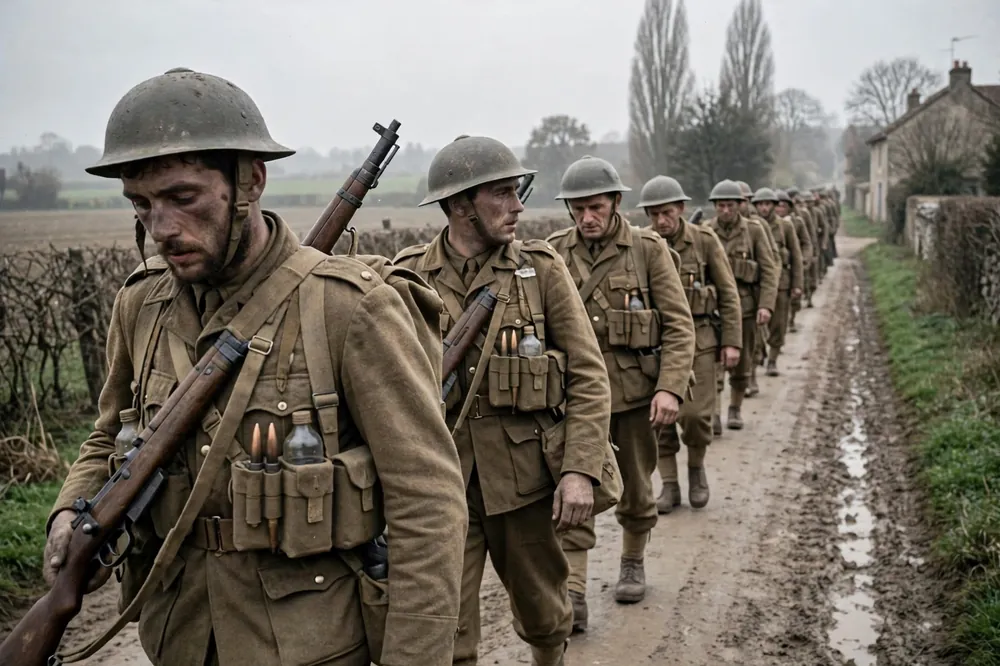
The BEF that reached Dunkirk was a shadow of the force that had crossed to France in 1939. It had fought a running battle for two weeks, losing men and equipment at every step. Its tanks were mostly gone. Its artillery was short of shells. The divisions held a shrinking perimeter around Dunkirk while the evacuation went on behind them. The French First Army, which had fought its way out of Belgium, held the southern part of the perimeter, and French troops held the town of Dunkirk itself to the end.
In the air, the balance was closer than the men on the beaches believed. The Luftwaffe had more aircraft in the theatre and could operate from airfields in Belgium and northern France, close to Dunkirk. The RAF’s fighters, by contrast, flew from Kent and Sussex, and a Spitfire or Hurricane could spend only about thirty minutes over the beaches before its fuel ran low.
Fighter Command’s commander, Air Chief Marshal Hugh Dowding, refused to commit his last reserves to France: he was already thinking of the battle for Britain that would follow. Even so, RAF squadrons flew hundreds of sorties over Dunkirk, and the fighting took place inland, where the soldiers on the beaches could not see it — which is why so many of them came home convinced the RAF had never been there at all.
5. The Battle
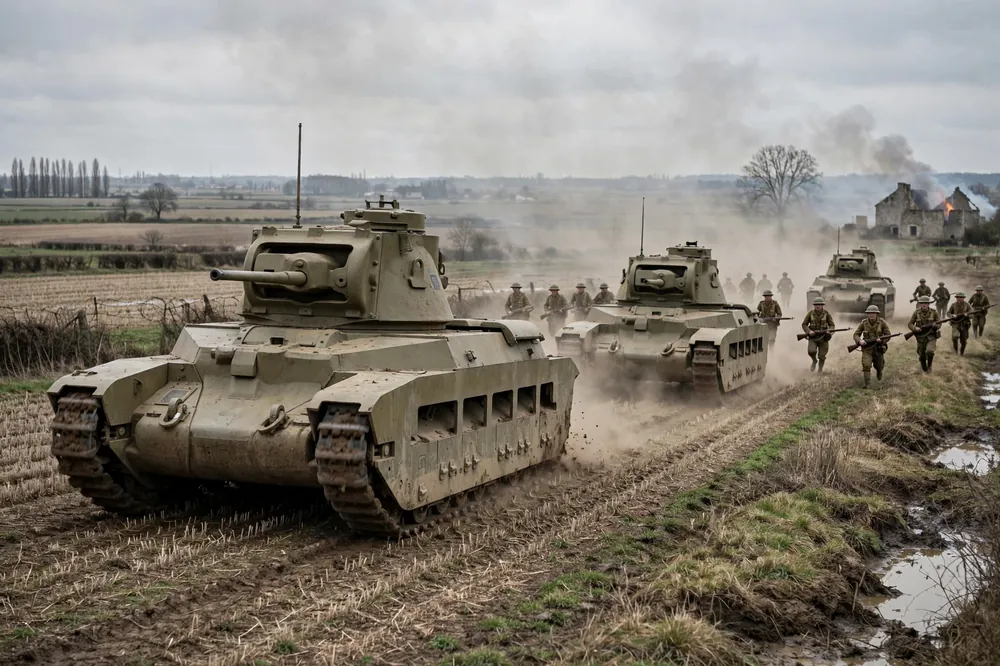
On 20 May, General Heinz Guderian’s panzers reached Abbeville, on the Channel coast west of Dunkirk. The Allied armies in Belgium were now cut off from France. The next day, the British counter-attacked south from Arras with two tank battalions and two infantry battalions — the Arras counter-attack of 21 May. It was a small force, but it caused concern in the German high command: for a few hours, the panzers’ flank seemed exposed, and General Ewald von Kleist halted his tanks to let the infantry catch up. The attack slowed the German advance, but it did not break the encirclement. By 23 May, the Germans had taken Boulogne, and Calais was under siege. The pocket was shrinking toward Dunkirk.
On 24 May, the German advance stopped. General Gerd von Rundstedt, commander of Army Group A, ordered his panzers to halt about 15 miles (24 km) short of Dunkirk. Hitler endorsed the order. The reasons are still debated by historians: the tanks were mechanically worn out after ten days of hard driving; the marshy ground around Dunkirk, cut by canals and drainage ditches, was poor tank country; Rundstedt wanted to preserve his armour for the drive on Paris; and Hermann Göring, commander of the Luftwaffe, promised that his bombers could destroy the trapped armies from the air.
Whatever the reason, the halt gave the Allies three days. On 26 May, Hitler rescinded the order, but the panzers were slow to restart, and by the time they moved again the Allies had a defensive line around Dunkirk.
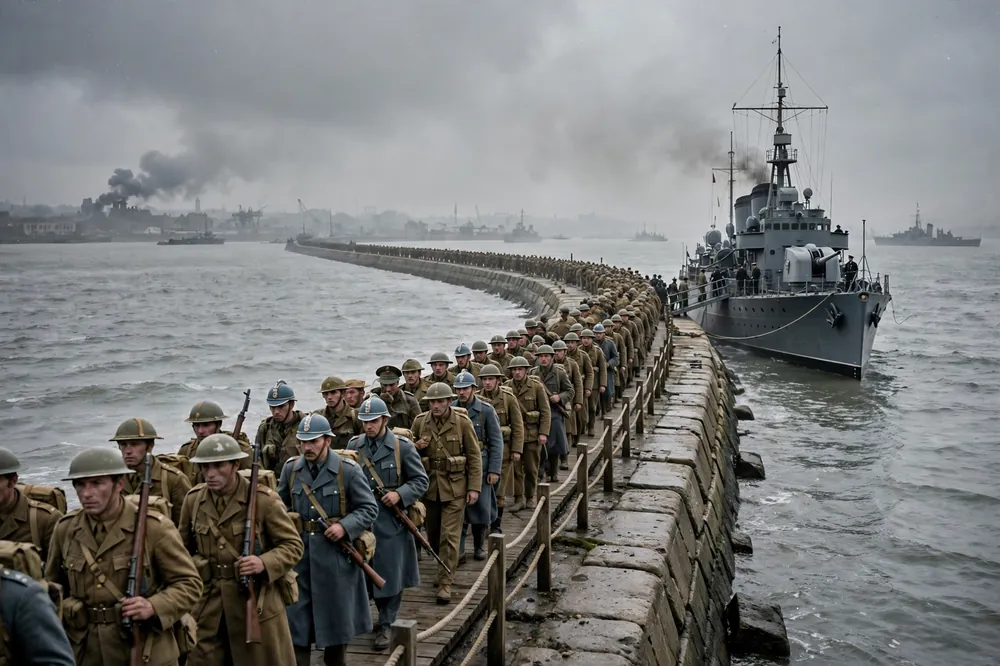
Meanwhile, on 25 May, Lord Gort decided to abandon the Weygand Plan and retreat to the coast. On 26 May, the British government ordered the evacuation. Vice Admiral Bertram Ramsay, commanding at Dover, was put in charge. The operation took its name from the dynamo room in the naval headquarters below Dover Castle, where Ramsay worked — Operation Dynamo. Ramsay’s staff first estimated that they might save 45,000 men over two days. In the end, the evacuation lasted nine days.
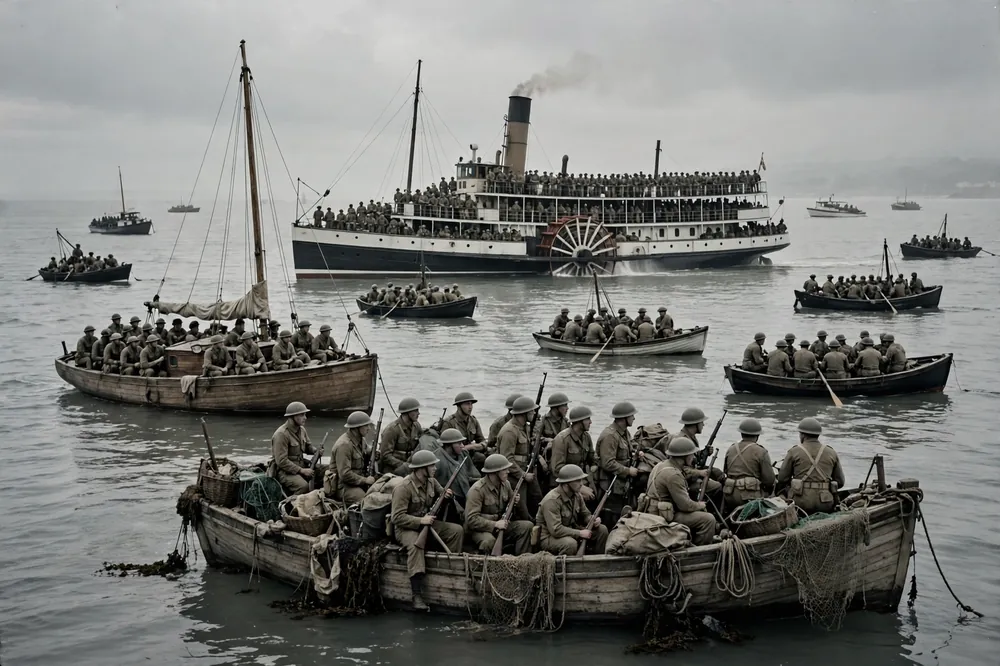
The evacuation began on the evening of 26 May, and the first full day, 27 May, brought only 7,669 men home. The beaches were the problem. Dunkirk’s harbour had been wrecked by bombing, and the shallow water off the beaches meant that large ships could not come close to shore. Men had to wade out to small boats, which ferried them to destroyers and transports waiting offshore.
Captain William Tennant, sent to organise the beaches, made use of the East Mole, a long stone breakwater at Dunkirk harbour with deep water alongside it. Large ships could tie up there and embark men directly. In the end, about 239,000 of the 338,226 men evacuated left from the harbour, and about 99,000 from the beaches.
On 28 May, Belgium surrendered. King Leopold III ordered his army to lay down its arms, opening a 20-mile gap in the Allied line east of Dunkirk. The BEF’s flank was suddenly exposed, and British divisions had to stretch themselves thin to plug the gap. The same day, the Luftwaffe attacked the beaches and the harbour in force, and the Royal Navy lost its first destroyers. The outcome of the evacuation was still uncertain.
By 29 May, the system was working. Destroyers ran a shuttle across the Channel, loading at the East Mole and at the beaches, while hundreds of small civilian craft — fishing boats, yachts, lifeboats, river ferries and pleasure steamers, later known as the “Little Ships of Dunkirk” — ferried men from the shallow beaches out to the big ships. About 700 private vessels took part. They were essential: without them, the men on the beaches could not have reached the ships at all. The Royal Navy carried the largest share of the men — 39 destroyers played a central role — but the small boats made the beaches work.
The scale of the effort grew day by day. On 27 May only 7,669 men were lifted; on 28 May the figure rose to 17,804; on 29 May to 47,310; on 30 May to 53,823; and on 31 May to 68,014 — the best single day of the operation.
The Admiralty’s appeal for small boats had gone out on 27 May, and boat owners from all along the south coast answered it, many sailing their own craft across the Channel. The paddle steamer Medway Queen alone is credited with rescuing about 7,000 men, and the tiny 15-foot fishing boat Tamzine was the smallest vessel to make the crossing.
The weather helped: the Channel stayed unusually calm for nine days, a stretch the men called the “Dunkirk calm”.
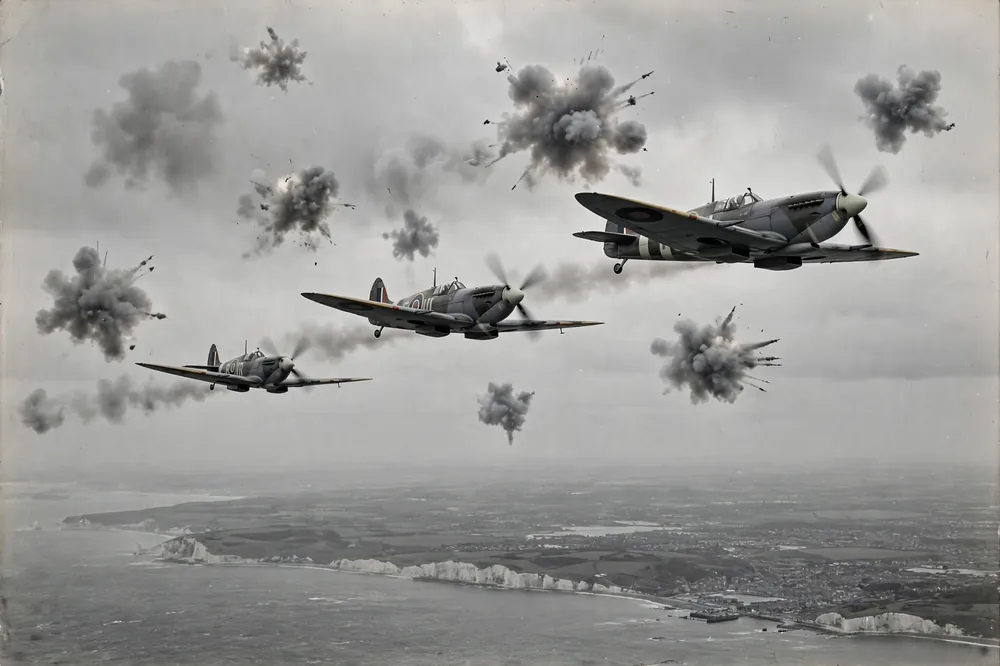
The RAF fought overhead, flying from bases in southern England. Its fighters could spend only about half an hour over Dunkirk before they had to turn for home, and the men on the beaches often could not see them — the fighting took place inland, out of sight. Many soldiers believed the RAF had abandoned them. In fact, the RAF lost 106 aircraft during Dynamo, and the Luftwaffe lost 156. On 29 May, the destroyer HMS Wakeful was torpedoed with the loss of about 600 soldiers. On 31 May and 1 June, the evacuation reached its peak: more than 60,000 men were taken off on each day.
Meanwhile, the perimeter was held by a rearguard. At Lille, about 40,000 French troops of the First Army fought on, surrounded, until 31 May, tying down seven German divisions that might otherwise have closed on Dunkirk. British divisions held the line of the canals around Dunkirk — the Bergues–Furnes canal and others — against German infantry attacks. Each hour the perimeter held allowed more men to embark.
By 1 June, most of the BEF was gone. The evacuation now belonged to the French. On the night of 3–4 June, 26,175 French troops were taken off from the harbour. The last ship to leave Dunkirk was the destroyer HMS Shikari, which sailed at 03:40 on 4 June with 383 troops aboard. At 10:30 that morning the small ships were dispersed, and Operation Dynamo officially ended at 14:23. Behind them, about 35,000 French troops who had held the perimeter to the end were left behind and taken prisoner. The town of Dunkirk itself fell to the Germans on 4 June.
6. Turning Point
The turning point of Dunkirk was not a battle. It was an order — the halt order of 24 May 1940. When General von Rundstedt stopped his panzers about 15 miles short of Dunkirk, and Hitler endorsed the decision, the German advance halted while the evacuation was being organised. The halt lasted only two days, and the panzers resumed their advance on 26 May, but by then the Allies had begun to dig in along the canals, and the evacuation had started.
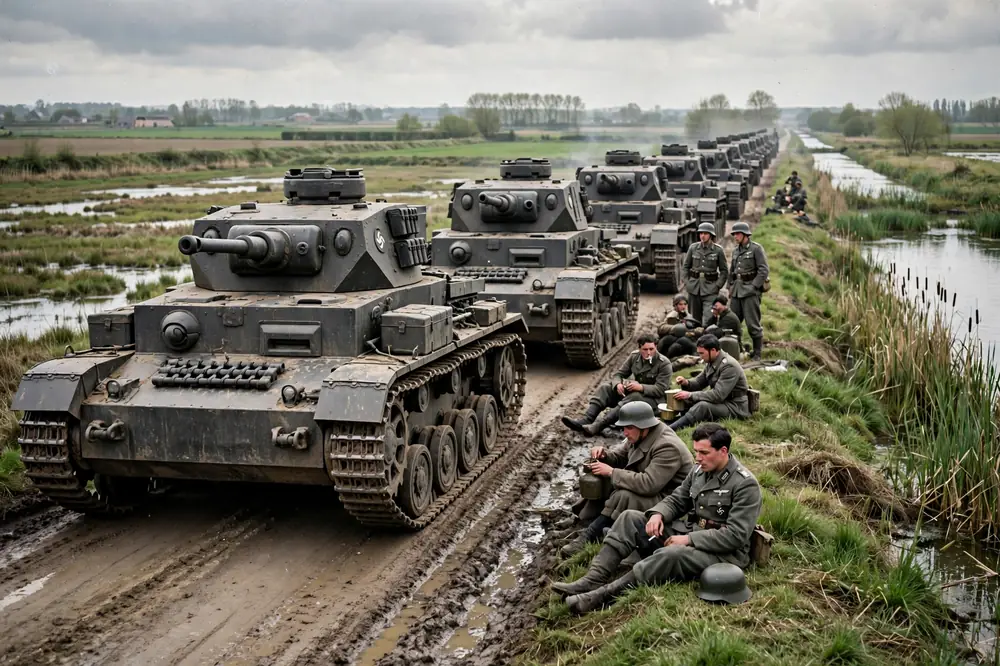
Historians still argue about why the order was given. Some historians attribute the decision mainly to Hitler, pointing to his reported hope of a negotiated peace with Britain. Others, notably the historian Karl-Heinz Frieser, argue that the decision was primarily military: the tanks were worn out, the ground was bad, and Rundstedt wanted to save his armour for the battle for the rest of France. Göring’s promise that the Luftwaffe could finish the job from the air also played its part — and proved false, as bad weather, smoke from burning oil tanks and the soft sand, which muffled bomb blasts, all worked against the bombers. Whatever the mix of reasons, the halt order had major consequences for the campaign.
The halt was not a single moment of hesitation. Rundstedt issued the order on the evening of 24 May, after Kleist’s panzers had already been stopped once, on 23 May, to let the infantry catch up. Hitler visited Rundstedt’s headquarters at Charleville on 24 May and approved the halt. The army commander-in-chief, General Walther von Brauchitsch, opposed it and tried to countermand it, but Hitler sided with Rundstedt.
The order was lifted on 26 May, yet the panzers did not attack in strength again until 27 May, and by then the British had fortified the canal line. German generals who wrote their memoirs after the war disagreed about who was responsible for the decision — Rundstedt and others pointed at Hitler, while others pointed at Rundstedt.
The result was three days in which the pocket held, the ships gathered, and the evacuation began.
7. Casualties and Losses
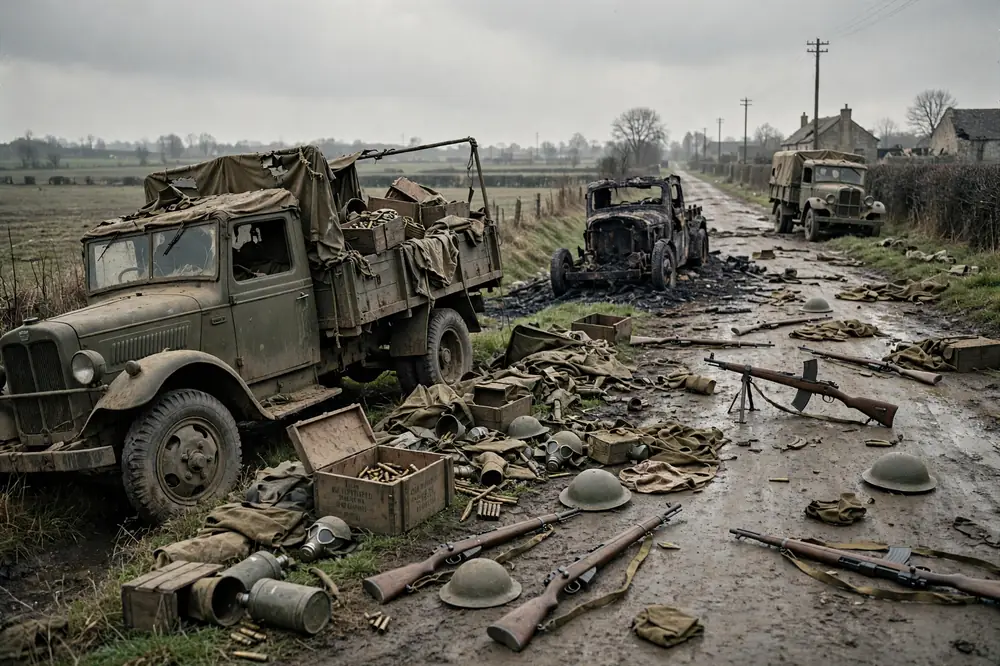
Dunkirk was an evacuation, not a victory. The men returned, but almost all their heavy equipment remained in France. The figures below cover the evacuation itself and, where stated, the wider French campaign.
| Allies | Germany | |
|---|---|---|
| Men evacuated | 338,226 (198,229 British and 139,997 French, including Belgian troops) | — |
| Killed, wounded or captured (French campaign) | BEF: 68,111; French and Belgian losses far higher; about 35,000 French rearguard troops captured at Dunkirk | Estimated at about 20,000 killed and wounded around Dunkirk |
| Killed during the evacuation voyages | About 2,000 troops killed at sea | — |
| Ships lost | 6 destroyers and over 200 other vessels sunk; 19 destroyers damaged | — |
| Aircraft lost (Dynamo, 26 May–4 June) | RAF: 106 aircraft | Luftwaffe: 156 aircraft |
| Equipment abandoned | 2,472 guns, 63,879 vehicles, 20,548 motorcycles, 500,000 tons of stores and ammunition | — |
Two sinkings show the scale of the losses at sea. The destroyer HMS Wakeful was torpedoed on 29 May, drowning about 600 soldiers. The Lancastria, a troopship sunk later, on 17 June, during the evacuation from St Nazaire, killed about 3,000 men — described as the worst single loss of life in British maritime history — but that sinking belongs to the evacuations that followed Dunkirk, not to Dynamo itself.
8. Map and Geography
Dunkirk sits on the flat Flemish coast of northern France, about 40 km (25 miles) from the Belgian border and about 70 km (43 miles) across the Channel from Dover. The coast here is a long, straight strip of sand, backed by dunes and a low, flat plain cut by canals, drainage ditches and small rivers. The ground is marshy, and in places it lies below sea level, protected by dykes. It is poor country for tanks, and it was the canals — the Bergues–Furnes canal, the Aa river and others — that gave the defenders their lines to hold.
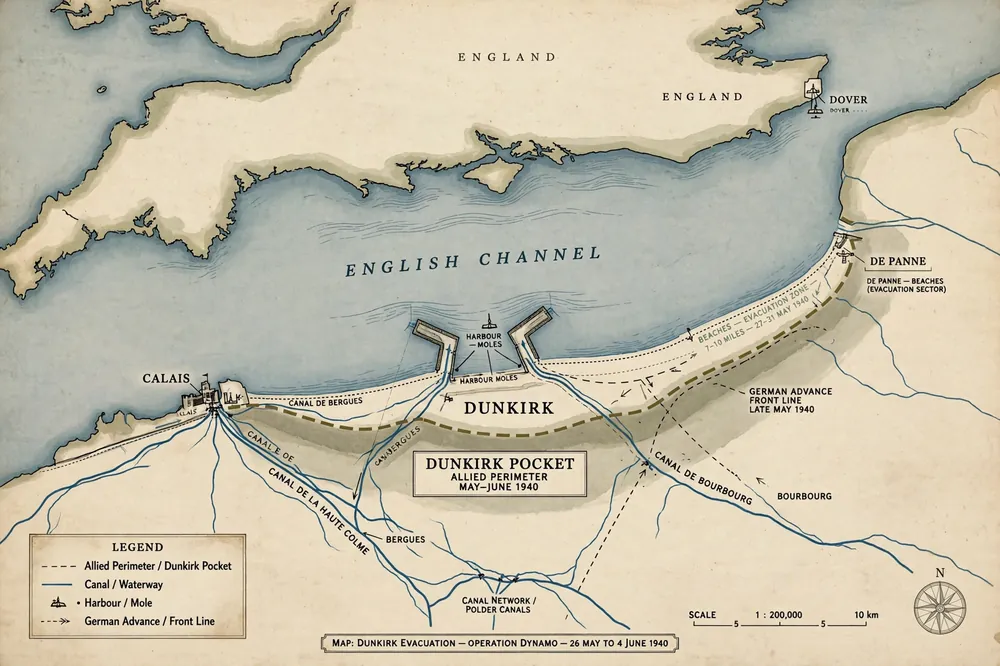
The geography shaped the evacuation in three ways. First, the beaches were wide and gently sloping, so the water stayed shallow far out from shore — large ships could not approach, and men had to be ferried out in small boats. Second, the harbour at Dunkirk had two long breakwaters, the East Mole and the West Mole; the East Mole became the main embarkation point, because ships could load alongside it in deep water. Third, the Channel crossing to Dover was short — about 40 nautical miles — so a destroyer could cross, load, and return in a matter of hours, and small civilian boats could make the trip in a day.
The pocket itself was small: at its smallest, the Allied perimeter was a strip of coast about 30 km long, from Dunkirk eastward to De Panne in Belgium, and only a few kilometres deep. Inside it were some 400,000 men, with almost no room to manoeuvre and no way out except by sea.
The beaches themselves stretched for miles in both directions from the town — broad, flat sands backed by dunes, where men queued in long lines that reached out into the water at low tide. The town of Dunkirk, a port of about 40,000 people before the war, was burning: German bombing had set fire to the oil tanks and warehouses, and the smoke hung over the beaches for days, at times obscuring them from the air.
The harbour, with its basins and moles, lay at the western end of the perimeter; the beaches of Malo-les-Bains and Bray-Dunes stretched eastward toward the Belgian border. Behind the beaches ran the line of canals that the rearguard held — and beyond the canals, the German infantry, closing in a few kilometres a day.
9. Outcome and Legacy
Militarily, Dunkirk was a defeat. The BEF lost nearly all its heavy equipment, France lost the battle for its northern armies, and within six weeks France had signed an armistice with Germany. Britain stood alone against Germany, with an army that had left its guns, tanks and vehicles on the beaches of France. It would take years to rebuild.
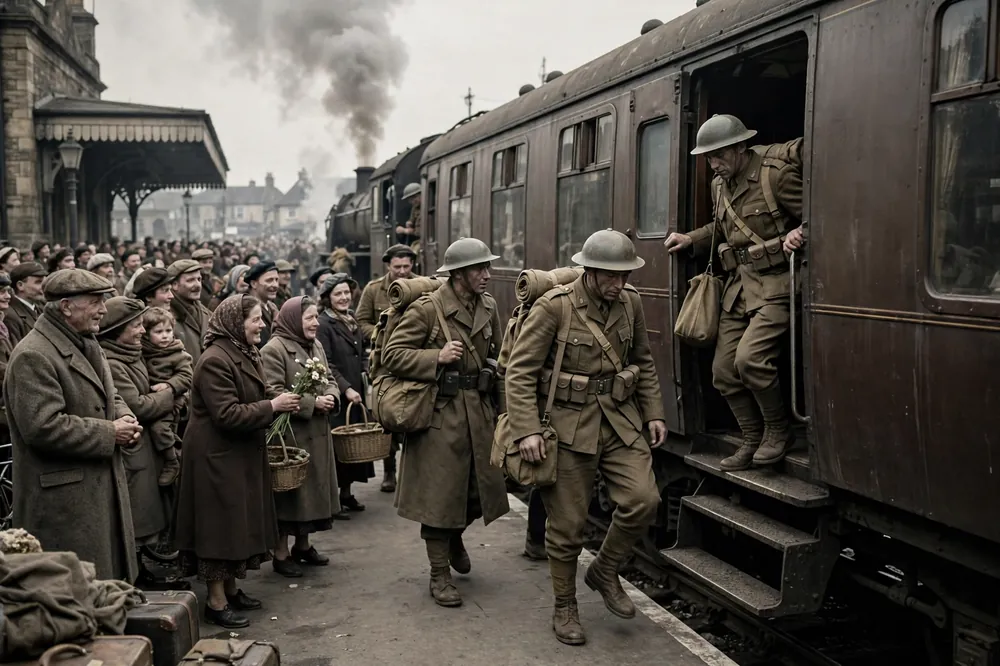
The evacuation preserved the core of the British Army. The 338,226 men who came home included its trained officers, NCOs and soldiers, who formed the basis of the army rebuilt over the following years. Had they been captured, Britain would have had almost no trained ground forces left. As Churchill told Parliament on 4 June 1940: “We shall fight on the beaches, we shall fight on the landing grounds, we shall fight in the fields and in the streets, we shall fight in the hills; we shall never surrender.”
Churchill was careful not to call it a victory. In the same speech he warned: “We must be very careful not to assign to this deliverance the attributes of a victory. Wars are not won by evacuations.” In British public memory, Dunkirk is remembered both for the evacuation and for the scale of the defeat in France in 1940.
The phrase “Dunkirk spirit” entered the language, referring to civilian participation in the evacuation. The Association of Dunkirk Little Ships still preserves the surviving civilian vessels, which take part in commemorative crossings every five years. The 2017 film Dunkirk, directed by Christopher Nolan, brought the story to a new generation, though historians note that it understates the French role: nearly 140,000 of the men evacuated were French, and French troops held the perimeter to the end.
Dunkirk also changed how Britain fought the war. The army that came home was re-equipped and re-trained, and the lesson of 1940 — that air power, armour and mobility had changed warfare — shaped British doctrine for the rest of the conflict. The Royal Navy’s organisation of the evacuation became a model for later operations, and the men evacuated at Dunkirk provided much of the trained manpower for the forces that returned to France on D-Day, four years later.
Nor was Dunkirk the end of the evacuations from France. In the weeks that followed, the Royal Navy lifted more troops from the Channel and Atlantic ports — from Le Havre, Cherbourg, St Malo, Brest and St Nazaire — in Operations Cycle, Aerial and others. In total, more than 550,000 Allied soldiers were evacuated from France in the summer of 1940, of whom the 338,226 from Dunkirk were the largest single part. The sinking of the Lancastria off St Nazaire on 17 June, with the loss of about 3,000 lives, showed that the danger did not end at Dunkirk. Dunkirk showed that an evacuation on that scale was possible.
10. Commanders
General Lord Gort (John Vereker, 6th Viscount Gort) commanded the British Expeditionary Force. A Victoria Cross winner from the First World War, Gort was criticised at the time for disobeying Weygand’s orders and retreating to Dunkirk. After Dunkirk he was sidelined, serving as Governor of Gibraltar and later of Malta, where he held the island through its siege in 1942.
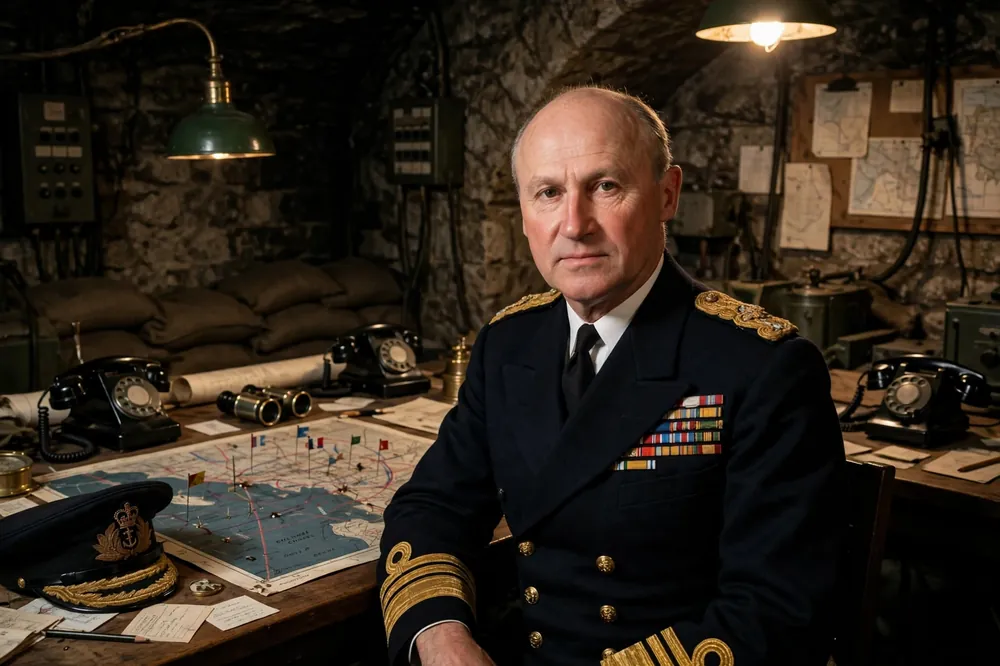
Vice Admiral Bertram Ramsay ran Operation Dynamo from Dover Castle. Ramsay had retired from the Navy in 1938 and was recalled at the outbreak of war. He organised the evacuation fleet — warships, transports and hundreds of civilian craft — and kept it running for nine days under air attack. He later planned the naval side of the D-Day landings in Normandy and died in an air crash in January 1945, five months before the war in Europe ended.
General Gerd von Rundstedt commanded German Army Group A, the force that drove through the Ardennes and reached the Channel. It was Rundstedt who issued the halt order of 24 May. He went on to command in the Soviet Union and in the West, and was dismissed and recalled several times by Hitler. He was the oldest senior German field commander of the war.
General Ewald von Kleist commanded Panzer Group Kleist, the armoured spearhead of Army Group A. His five panzer divisions made the breakthrough at Sedan and the race to the sea. Kleist was a professional soldier who later commanded Army Group A in the Soviet Union; he died in Soviet captivity in 1954.
Admiral Jean-Marie Abrial commanded the French naval forces at Dunkirk and organised the French side of the evacuation, including the embarkation of French troops and the defence of the town. He remained in France after the armistice and served in the Vichy government.
Air Chief Marshal Hugh Dowding commanded RAF Fighter Command during the evacuation. His fighters flew from bases in southern England and could spend only about half an hour over Dunkirk, but they flew hundreds of sorties against the Luftwaffe. Dowding refused to commit his last fighter reserves to France, judging that they would be needed for the defence of Britain in the weeks that followed. He commanded Fighter Command through the Battle of Britain later in 1940.
General Georges Blanchard commanded the French First Army, the force that fought its way out of Belgium and held the southern sector of the Dunkirk perimeter. His troops fought the rearguard action at Lille, where about 40,000 French soldiers held out until 31 May, tying down seven German divisions. Blanchard later commanded the French First Army Group during the fighting on the Somme in June 1940.
Frequently Asked Questions
How many soldiers were evacuated from Dunkirk? 338,226 Allied soldiers were evacuated between 26 May and 4 June 1940 — 198,229 British and 139,997 French (including Belgian troops). The figure comes from the Admiralty’s official count.
Was Dunkirk a victory or a defeat? Militarily it was a defeat — the Allies lost the battle for northern France and abandoned almost all their heavy equipment. It preserved the core of the British Army, allowing Britain to continue the war with trained ground forces. Churchill himself warned against calling it a victory.
What were the “Little Ships of Dunkirk”? About 700 privately owned small craft — fishing boats, yachts, lifeboats, river ferries and pleasure steamers — that crossed the Channel to ferry soldiers from the shallow beaches out to larger ships offshore. They were essential because big ships could not approach the beaches.
Why did the German tanks stop before Dunkirk? On 24 May 1940, General von Rundstedt ordered his panzers to halt about 15 miles short of Dunkirk, and Hitler endorsed the order. Historians still debate the reasons: worn-out tanks, marshy ground, a wish to preserve armour for the drive on Paris, and Göring’s promise that the Luftwaffe could destroy the pocket from the air. The halt gave the Allies three days.
How many ships were lost at Dunkirk? More than 200 vessels were sunk, including six Royal Navy destroyers, and 19 destroyers were damaged. The Royal Navy provided 39 destroyers for the operation, and they carried most of the men home.
What did Churchill say about Dunkirk? On 4 June 1940, Churchill told Parliament: “We shall fight on the beaches, we shall fight on the landing grounds, we shall fight in the fields and in the streets, we shall fight in the hills; we shall never surrender.” In the same speech he warned: “Wars are not won by evacuations.”
Related articles
Sources
- Wikipedia, “Dunkirk evacuation” — dates, the Admiralty total of 338,226 evacuated (198,229 British, 139,997 French), daily evacuation table (98,780 from beaches, 239,446 from harbour), equipment abandoned, RAF and Luftwaffe aircraft losses during Dynamo, cross-checked against the sources below.
- Encyclopaedia Britannica, “Dunkirk evacuation” / “The Miracle of Dunkirk” — overview, dates and the scale of the evacuation.
- Imperial War Museum (IWM), “What happened at Dunkirk in 1940?” and IWM collections on Operation Dynamo — the halt order, the Little Ships, Ramsay and the East Mole.
- The National Archives (UK), records of Operation Dynamo and the Admiralty evacuation reports — the official evacuation figures and ship losses.
- World History Encyclopedia, “Dunkirk Evacuation” — the Dunkirk pocket, the Little Ships (850–950 vessels), BEF losses of 68,111 men, and the French rearguard at Lille.
- History of War, “Operation Dynamo, the evacuation from Dunkirk, 27 May–4 June 1940” — the last ship HMS Shikari (03:40, 4 June), ship losses (243 sunk including six destroyers), RAF losses of 106 aircraft.
- Walter Lord, The Miracle of Dunkirk (Dawsons, 1982).
- Karl-Heinz Frieser, The Blitzkrieg Legend: The 1940 Campaign in the West (Naval Institute Press, 2005).
- Hugh Sebag-Montefiore, Dunkirk: Fight to the Last Man (Viking, 2006).
- Julian Thompson, Dunkirk: Retreat to Victory (Pan Macmillan, 2008).