 WAR ATLAS MILITARY HISTORY MAGAZINE · WWI — WWII
Bretton Woods Conference
1. Lead
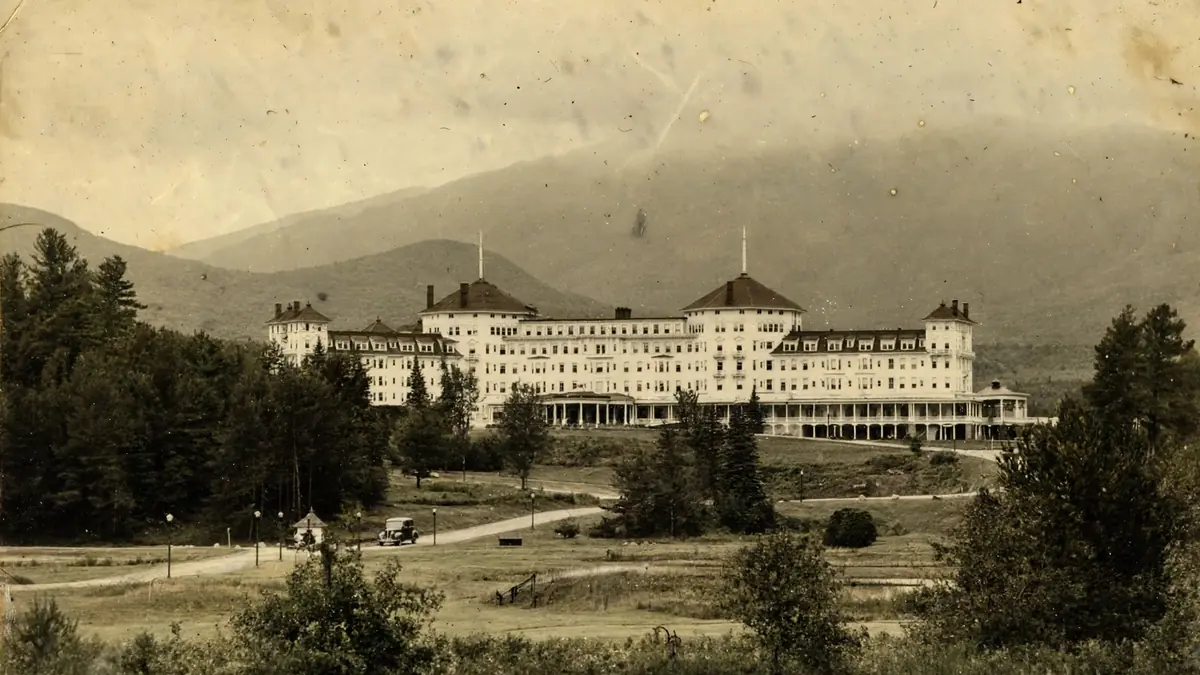
The Bretton Woods Conference — formally the United Nations Monetary and Financial Conference — was held from 1 to 22 July 1944 at the Mount Washington Hotel in Bretton Woods, New Hampshire, in the United States. Seven hundred and thirty delegates from forty-four Allied nations met there, while the Second World War was still raging, to design the monetary system of the post-war world.
The conference created two institutions that still exist today: the International Monetary Fund (IMF) and the International Bank for Reconstruction and Development (IBRD), better known as the World Bank. It established a system of fixed exchange rates, in which the currencies of the world were pegged to the United States dollar, and the dollar was pegged to gold at thirty-five dollars an ounce.
The system it created — the Bretton Woods system — governed the world economy for nearly thirty years, until its collapse in 1971, and its institutions have shaped the world economy ever since.
The conference was, in the words of one historian, “the most important international economic conference of the twentieth century”, and it was, in the words of another, “the moment when the United States took over the leadership of the world economy”.
The negotiations were dominated by two men: Harry Dexter White, of the United States Treasury, and John Maynard Keynes, the British economist, whose rival plans for the post-war monetary system were the subject of three weeks of hard bargaining. White’s plan, in the main, prevailed, and the conference was, in the view of many, the moment when the United States replaced Britain as the centre of the world economy.
This article tells the story of the conference: its origins, its participants, its negotiations, its decisions, and its legacy — the institutions it created, the system it built, and the world it made.
2. Key Facts
| Name / Tên | United Nations Monetary and Financial Conference (Bretton Woods Conference) |
| Dates | 1–22 July 1944 |
| Location | Mount Washington Hotel, Bretton Woods, New Hampshire, USA |
| Delegates | 730 delegates from 44 Allied nations |
| Key figures | Harry Dexter White (USA); John Maynard Keynes (UK) |
| Institutions created | International Monetary Fund (IMF); International Bank for Reconstruction and Development (World Bank) |
| Exchange system | Fixed exchange rates; currencies pegged to the US dollar; dollar convertible to gold at $35/oz |
| Agreements signed | 22 July 1944 |
| System in operation | 1945–1971 (collapsed with the Nixon Shock, 15 August 1971) |
| Legacy | IMF and World Bank still operating; US dollar as the world’s reserve currency |
3. Origins and Background
3.1. The Lessons of the 1930s
The Bretton Woods Conference was born, above all, out of the experience of the 1930s, and the experience was, in the words of the delegates, “a lesson that must not be repeated”. The Great Depression, which began in 1929, had destroyed the world economy, and the response of the great powers — competitive devaluations, in which each country devalued its currency to make its exports cheaper, and the raising of tariffs, in which each country shut out the goods of the others — had made the Depression worse, and had, in the view of many, contributed to the coming of the war.
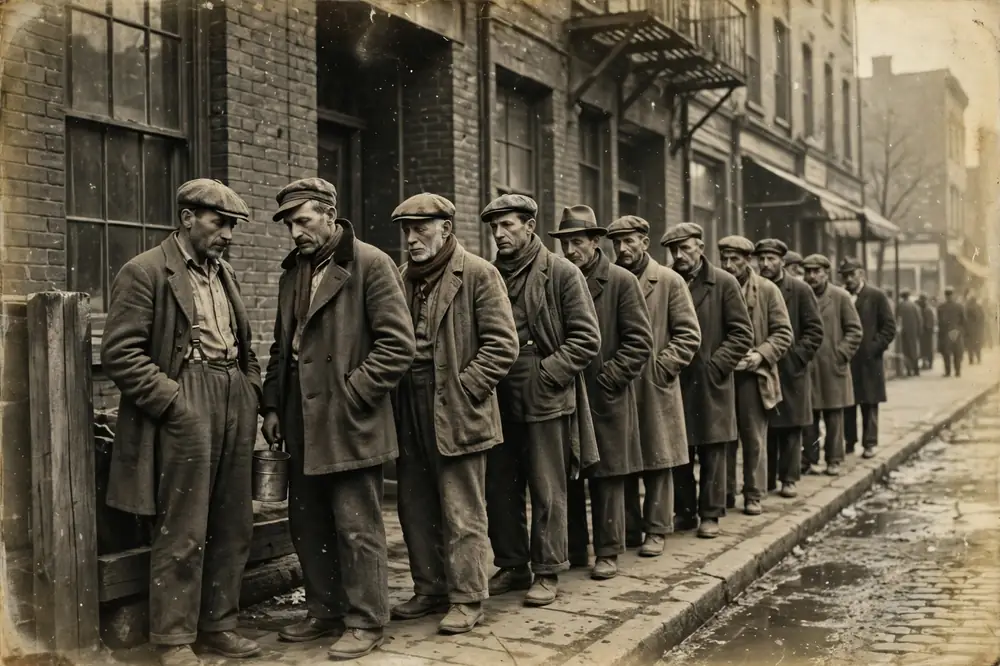
The gold standard, which had governed the world economy before 1914, had collapsed, and the world had, in the 1930s, no monetary system at all. The delegates at Bretton Woods were, in the main, men who had lived through the Depression, and who were determined that the post-war world should have a monetary system — a system of stable exchange rates, of international co-operation, and of institutions that would prevent the mistakes of the 1930s from being repeated.
The conference was, in the end, an attempt to learn from the past, and to build a better future.
3.2. Planning for Peace
The planning for Bretton Woods began long before the conference itself, and it began, in the main, in the United States Treasury, where Harry Dexter White had been working, since 1941, on a plan for the post-war monetary system. White’s plan was, in essence, a plan for an American-led world: it proposed an international fund, to lend money to countries in difficulty, and an international bank, to lend money for reconstruction, and it proposed that the dollar should be the centre of the system.
In Britain, John Maynard Keynes had been working, since 1941, on a rival plan, which proposed an international clearing union, with a new international currency — the “bancor” — and which was, in essence, a plan for a more equal world, in which the burden of adjustment would fall on the creditor nations as well as on the debtor nations.
The two plans were, in the words of one historian, “the two great plans of the war”, and the conference at Bretton Woods was, in the end, the place where they were, after three weeks of hard bargaining, reconciled — in White’s favour.
3.2.1. The Atlantic Charter
The Atlantic Charter, signed by President Franklin Roosevelt and Prime Minister Winston Churchill in August 1941, deserves a mention, because it was the first statement of the principles on which the post-war world would be built, and because it was, in the words of one historian, “the foundation of Bretton Woods”.
The Charter promised, among other things, that the Allies would seek “the fullest collaboration between all nations in the economic field, with the object of securing, for all, improved labor standards, economic advancement and social security”, and it was, in the view of the delegates at Bretton Woods, the promise that the conference was called to fulfil.
The Charter was, in the end, a statement of intent, and Bretton Woods was the attempt to give it substance: to build the institutions, and to write the rules, that would make the promise real. The Atlantic Charter is, for that reason, the starting point of the story of Bretton Woods, and it is the reason the conference is remembered, not only as an economic conference, but as a part of the larger story of the war and of the peace that followed it.
4. The Main Powers and Participants
4.1. The United States and White
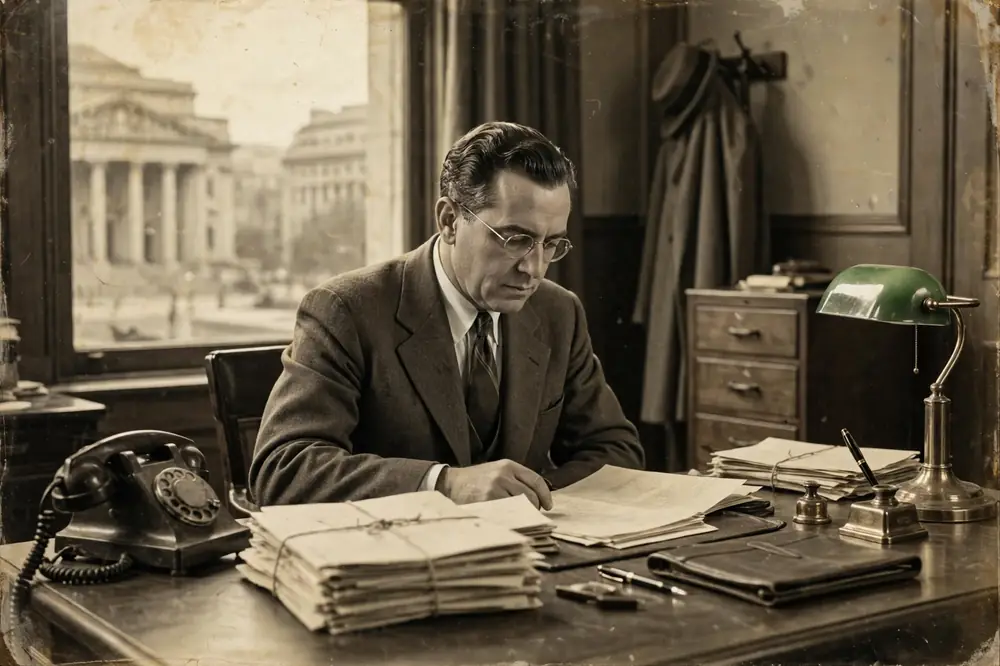
The United States was, by 1944, the dominant power in the world economy, and its delegation, led by the Secretary of the Treasury, Henry Morgenthau Jr., and by his deputy, Harry Dexter White, was the largest and the most powerful at the conference.
The United States held, by the end of the war, about two-thirds of the world’s gold, and it was, in the words of one historian, “the only country that could lend money on the scale that the post-war world would need”.
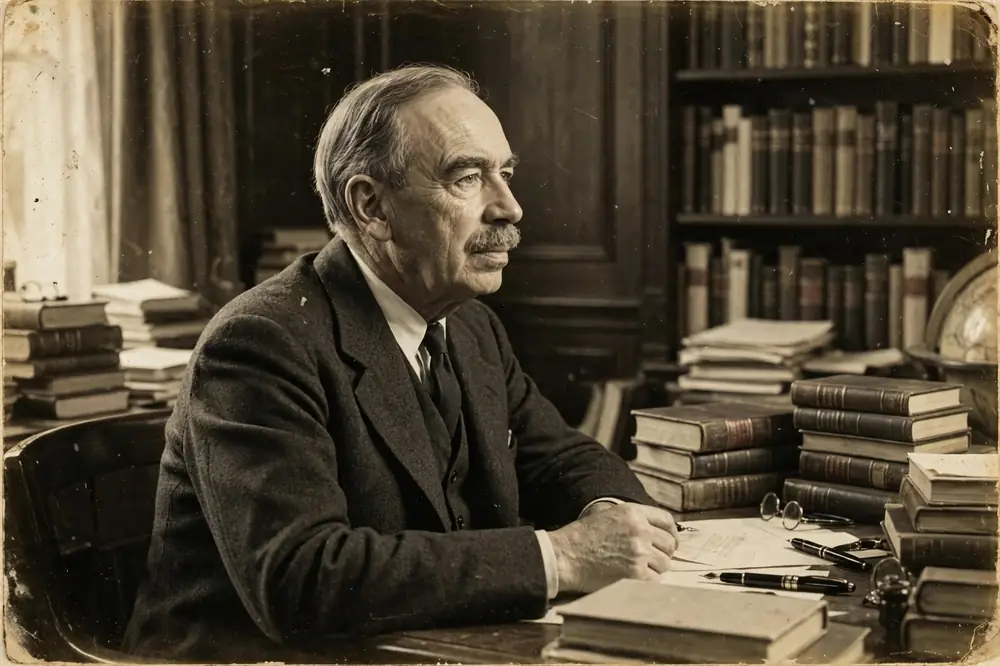
White’s plan was, in essence, a plan that reflected this reality: it proposed a fund and a bank that would be dominated by the United States, and a system in which the dollar would be the centre, and it was, in the view of its critics, a plan for American hegemony.
White himself was, by all accounts, a brilliant and a difficult man, a Treasury official who had, in the words of one colleague, “a mind like a steel trap”, and who was determined that the conference should produce the result that the United States wanted. He succeeded, in the main, and the conference was, in the end, his triumph.
4.2. Britain and Keynes
Britain was, by 1944, a debtor nation, and its delegation, led by John Maynard Keynes, was, in the words of one historian, “fighting a rearguard action”. Keynes was, by any measure, the most famous economist in the world, and his plan for the post-war monetary system — the International Clearing Union, with its new currency, the bancor — was, in the view of many, the more imaginative and the more just of the two plans.
It proposed that the burden of adjustment should fall, not only on the debtor nations, which would be forced to deflate, but on the creditor nations, which would be forced to lend or to spend. The plan was, however, unacceptable to the United States, which was, by 1944, the great creditor nation, and which had no intention of accepting a system that would penalise it for its success.
Keynes fought for his plan, in the three weeks of the conference, with all the brilliance and all the charm of which he was capable, and he lost, in the main, although he won, in the words of one historian, “the argument, if not the vote”. The conference was, for Keynes, a defeat, and he knew it: he died, in 1946, a disappointed man.
4.2.1. The Clearing Union
The International Clearing Union that Keynes proposed deserves a closer look, because it was, in the view of many economists, the great lost opportunity of Bretton Woods, and because it is, to this day, the subject of argument. The Clearing Union would have been, in essence, a central bank for the world: it would have issued a new international currency, the bancor, and it would have required the creditor nations — above all the United States — to lend their surpluses to the debtor nations, or to spend them, or to see them taxed away.
The plan was, in the view of its supporters, a plan for a more equal world, in which the burden of adjustment would be shared, and in which the mistakes of the 1930s — the deflation, the devaluations, the beggar-thy-neighbour policies — would not be repeated. It was, in the view of its opponents, a plan that was unworkable, and that would have penalised the United States for its success.
The plan was rejected, and the bancor was never issued, but the idea has never died: it has been revived, again and again, in the decades since, whenever the world economy has been in crisis, and it remains, to this day, the great “what if” of Bretton Woods.
5. The Conference
5.1. The Mount Washington Hotel
The conference was held at the Mount Washington Hotel, a grand, isolated hotel in the White Mountains of New Hampshire, and the choice of venue was, in itself, a part of the story. The hotel was, in the words of one delegate, “a place where the delegates could work without distraction”, and it was chosen, in part, because it was far from Washington, and far from the press, and because it was large enough to house 730 delegates and their staff.
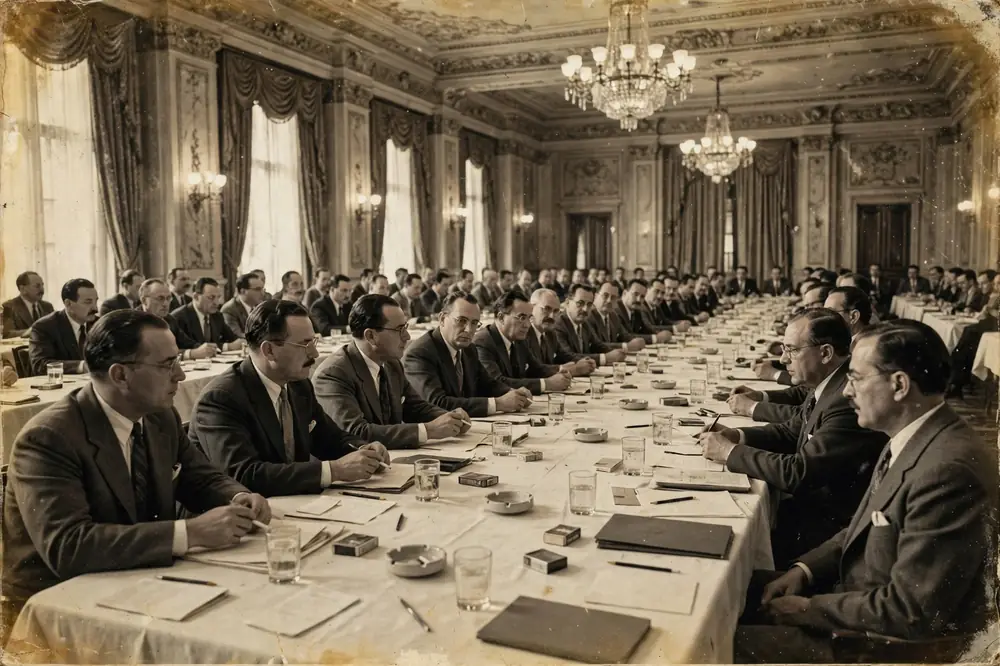
The delegates arrived on 1 July 1944, and they stayed for three weeks, in a hotel that was, by the standards of wartime America, a place of luxury: it had a dining room, a ballroom, and a golf course, and it was, in the words of one delegate, “a little world of its own”.
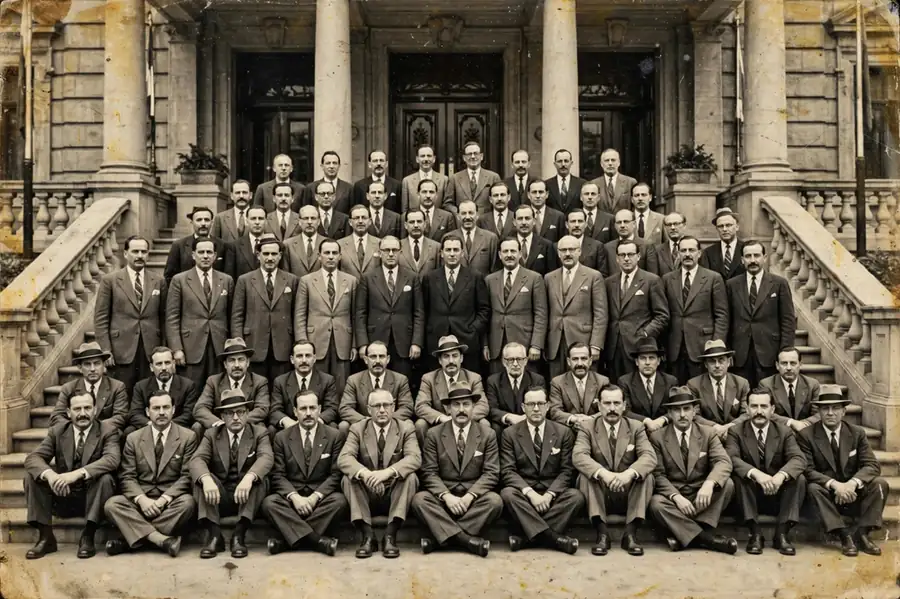
The conference was, in the end, a remarkable achievement of organisation: 730 delegates, from 44 nations, in a single hotel, for three weeks, in the middle of a war, and it produced, in those three weeks, the institutions that would govern the world economy for the next thirty years.
5.2. Three Weeks of Negotiation
The negotiations at Bretton Woods lasted for three weeks, and they were, in the words of one delegate, “hard, and sometimes bitter”. The delegates worked in committees, in sub-committees, and in informal meetings, and they argued, above all, about the two rival plans: White’s plan and Keynes’s plan.
The Americans, who held the gold and who would, in the end, provide the money, were determined that the system should be built around the dollar, and the British, who were, by 1944, a debtor nation, were determined that the system should not penalise the debtors.
The negotiations were, in the end, a compromise, but it was a compromise that favoured the Americans: White’s plan, in the main, prevailed, and Keynes’s plan, in the main, was rejected. The agreements were signed on 22 July 1944, and the delegates went home, in the words of one of them, “tired, but satisfied that they had done something that would last”.
5.2.1. The 730 Delegates
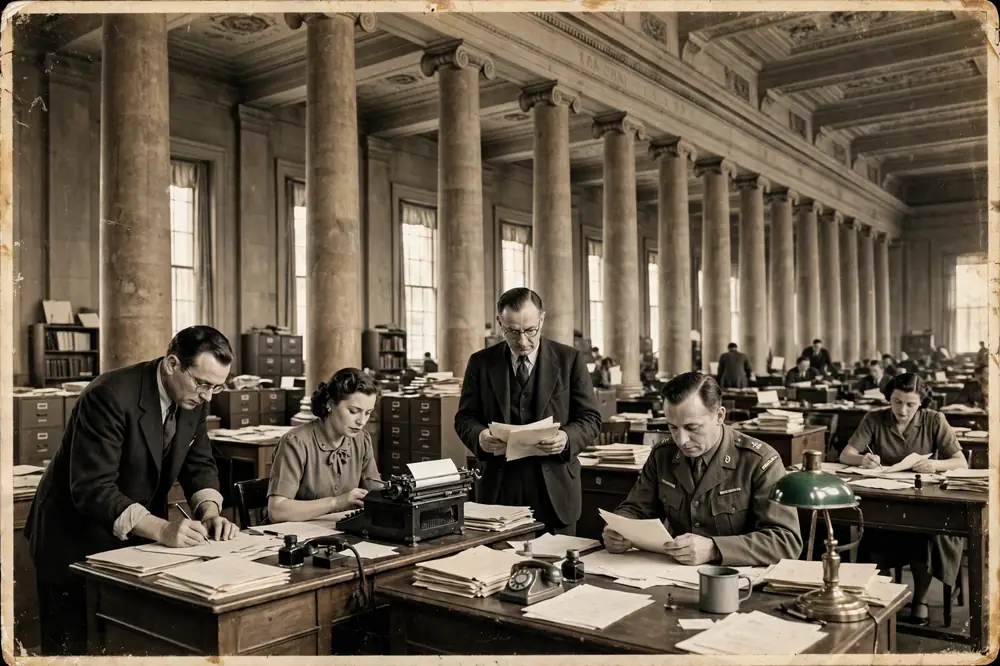
The 730 delegates who attended Bretton Woods deserve a mention, because they were, in themselves, a remarkable assembly, and because they represented, in the words of one historian, “the world as it was in 1944”. The delegates came from 44 Allied nations, from the great powers — the United States, Britain, the Soviet Union and China — and from the small nations, from Latin America, from the Middle East and from Asia.
The Soviet delegation, led by Mikhail Stepanov, was, in the words of one delegate, “silent and watchful”, and it signed the agreements but never ratified them, so that the Soviet Union never, in the end, joined the IMF or the World Bank. The Chinese delegation was, in the words of another delegate, “eager and hopeful”, and it was, in the end, one of the original members.
The 730 delegates were, in the end, the people who built the post-war world, and their names, for the most part, are forgotten, but their work — the IMF and the World Bank — endures.
6. Key Decisions
6.1. The International Monetary Fund
The first of the two institutions created at Bretton Woods was the International Monetary Fund, the IMF, and its purpose was, in the words of its Articles of Agreement, “to promote international monetary co-operation, to facilitate the expansion and balanced growth of international trade, and to promote exchange stability”.
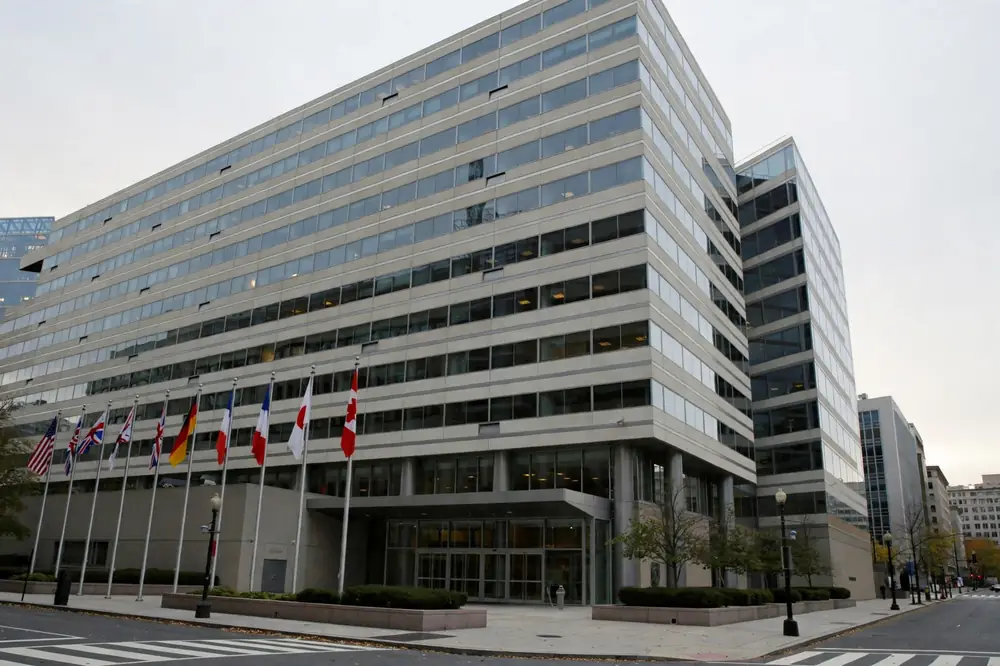
The IMF was, in essence, a fund to which the member nations contributed, in proportion to the size of their economies, and from which they could borrow, in times of difficulty, to support their currencies. The IMF was, in the view of its founders, the institution that would prevent the mistakes of the 1930s: it would prevent competitive devaluations, it would provide short-term loans to countries in difficulty, and it would, in the words of one delegate, “be the lender of last resort for the world”.
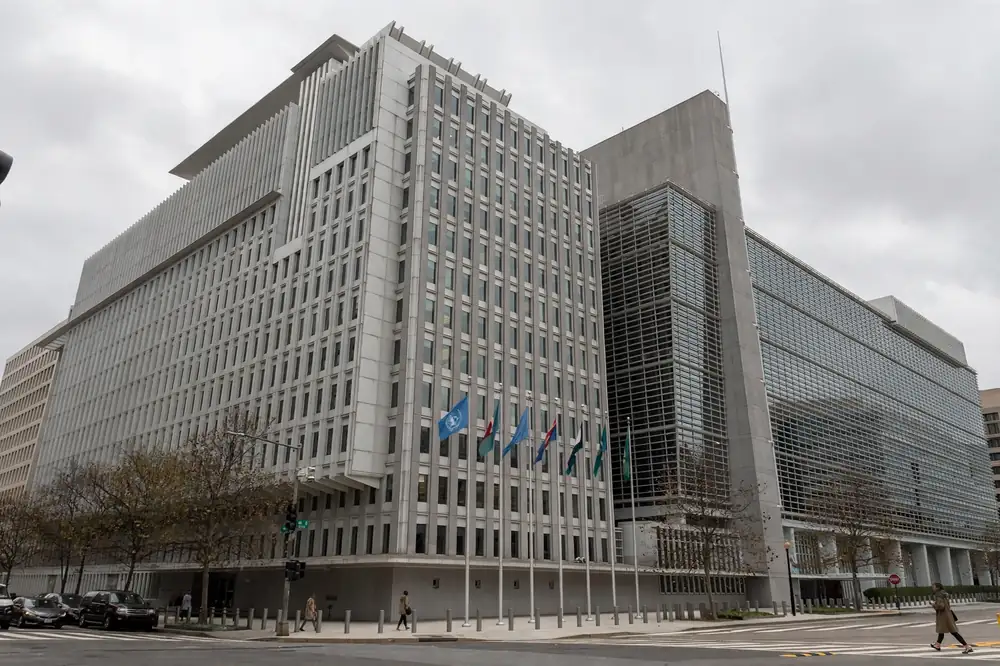
The IMF began its operations in 1947, and it has, since then, grown from 44 members to nearly 200, and it has, in the words of one historian, “become the most important institution in the world economy”.
6.2. The World Bank
The second of the two institutions created at Bretton Woods was the International Bank for Reconstruction and Development, the IBRD, better known as the World Bank, and its purpose was, in the words of its Articles of Agreement, “to assist in the reconstruction and development of territories of members by facilitating the investment of capital for productive purposes”.
The World Bank was, in essence, a bank that would lend money, on a long-term basis, for reconstruction and for development, and it was, in the first instance, intended to lend to the countries of Europe, which had been devastated by the war. The World Bank began its operations in 1946, and its first loan, of 250 million dollars, was made to France, in 1947, for reconstruction.
The World Bank has, since then, grown from a bank for the reconstruction of Europe into a bank for the development of the world, and it has, in the words of one historian, “become the most important source of finance for the developing world”.
6.2.1. The Dollar and Gold
The decision to peg the world’s currencies to the US dollar, and the dollar to gold at thirty-five dollars an ounce, deserves a closer look, because it was the central decision of Bretton Woods, and because it was the decision that made the dollar the centre of the world economy.
Under the Bretton Woods system, each member nation fixed the value of its currency in terms of gold or in terms of the dollar, and it undertook to maintain that value, within a narrow band, by buying and selling its currency on the foreign exchange market.
The United States, for its part, undertook to convert dollars into gold, at thirty-five dollars an ounce, on demand, for the central banks of other nations. The system was, in the view of its founders, a compromise between the gold standard, which had been too rigid, and the floating exchange rates of the 1930s, which had been too unstable.
It was, in the end, a system that worked, for nearly thirty years, and that made the dollar, in the words of one historian, “as good as gold”.
7. Outcomes and Institutions
7.1. Fixed Exchange Rates
The system of fixed exchange rates that Bretton Woods created was, in the words of one historian, “the most successful monetary system in history”, and it deserves a closer look. Under the system, the exchange rates of the world were fixed, and they could be changed only with the agreement of the IMF, and only in the case of a “fundamental disequilibrium” in a country’s balance of payments.
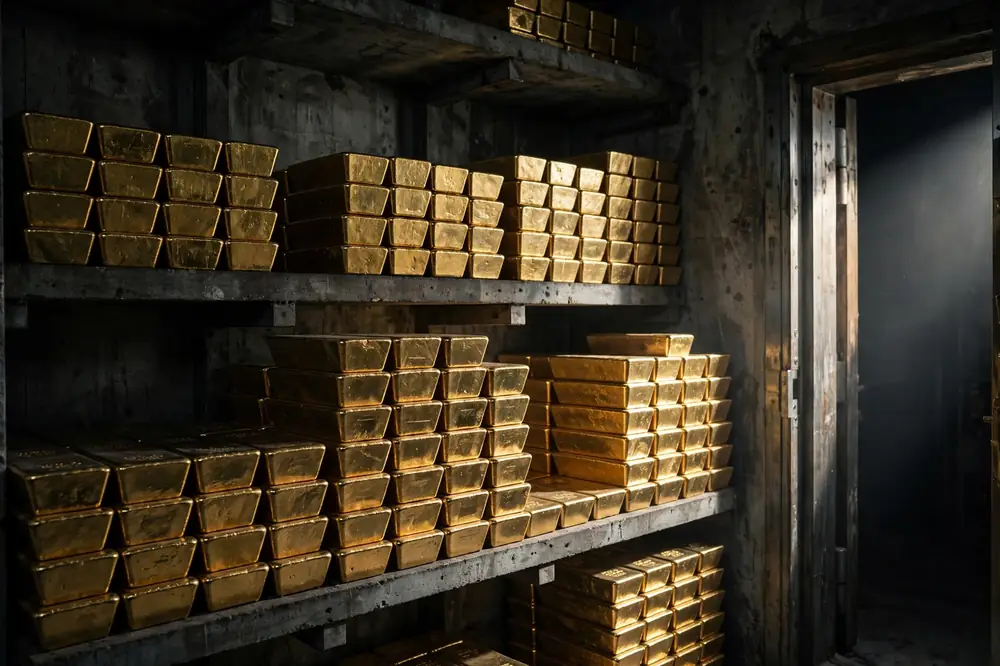
The system gave the world, for the first time in the twentieth century, a period of exchange-rate stability, and it was, in the view of its supporters, the reason for the great economic expansion of the 1950s and 1960s, the “golden age” of the post-war world.
The system was, however, not without its critics: it was, in the view of some economists, too rigid, and it placed, in the view of others, too much power in the hands of the United States, which was, in the end, the only country that could, in practice, change the system.
The system lasted, in the event, for nearly thirty years, and it collapsed, in 1971, when the United States could no longer honour its commitment to convert dollars into gold.
7.2. The Postwar Economic Order
The Bretton Woods Conference was, in the end, only the first of three conferences that built the post-war economic order, and it deserves to be seen in that context. The second was the conference at Dumbarton Oaks, in 1944, which created the United Nations, and the third was the conference at Havana, in 1947–48, which produced the Havana Charter for an International Trade Organization — a body that was never ratified and never came into being — while the General Agreement on Tariffs and Trade, the GATT, had been negotiated separately at Geneva in 1947 and became, in 1995, the World Trade Organization.
Together, the IMF, the World Bank, the United Nations and the GATT — and later the WTO — formed the post-war economic order, a system of institutions that was, in the words of one historian, “the most ambitious attempt in history to govern the world economy by rules rather than by power”.
The system was, in the end, a success, and it is, in the view of many, the reason the post-war world did not repeat the mistakes of the 1930s.
7.2.1. The GATT Connection
The connection between Bretton Woods and the GATT deserves a mention, because it is often forgotten, and because it is the reason the post-war economic order was, in the end, a complete system. The GATT, the General Agreement on Tariffs and Trade, was negotiated at Geneva and signed in 1947, and it was, in essence, the trade counterpart of Bretton Woods: just as Bretton Woods had created institutions to govern money, so the GATT created rules to govern trade, and the two, together, were intended to prevent the mistakes of the 1930s — the competitive devaluations and the tariff wars — from being repeated.
The GATT was, in the words of one historian, “the third leg of the Bretton Woods system”, and it became, in 1995, the World Trade Organization, the WTO. The GATT and the WTO are, in the end, the reason the post-war world economy was, in the words of one economist, “the most open and the most prosperous in history”, and they are, for that reason, a part of the legacy of Bretton Woods.
8. The System in Practice
8.1. The Golden Years
The Bretton Woods system worked, in the 1950s and 1960s, better than its founders had dared to hope, and the period is remembered, in the words of one historian, as “the golden age of capitalism”. The world economy grew, in those years, faster than it had ever grown before, and faster than it has grown since; international trade expanded, unemployment fell, and living standards rose, in Europe, in America and in Japan.
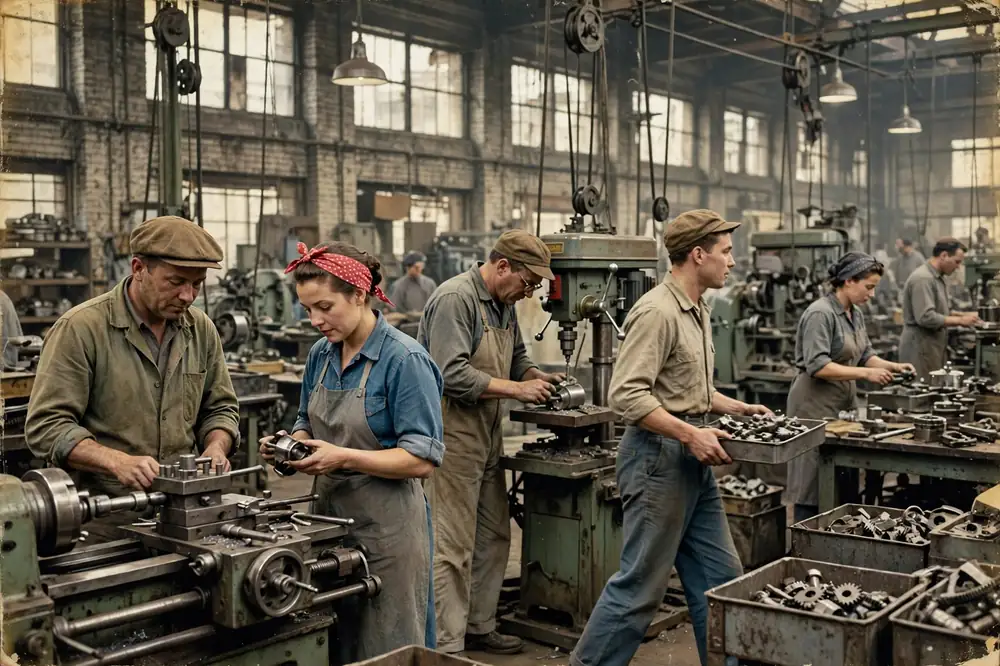
The fixed exchange rates gave businesses the confidence to invest and to trade, the IMF provided the loans that kept the system working, and the World Bank provided the finance for reconstruction and for development. The system was, in the view of its supporters, the reason for the prosperity, and it was, in the view of its critics, a system that worked because the conditions were favourable — because the United States was strong, because Europe was rebuilding, and because the world was, in the main, at peace.
The golden years were, in the end, the vindication of Bretton Woods, and they are the reason the conference is remembered as a success.
8.2. Strains and Collapse
The Bretton Woods system began, in the 1960s, to come under strain, and the strains were, in the end, fatal. The United States, which had, in the 1940s and 1950s, run a surplus, began, in the 1960s, to run a deficit, as it spent money on the Vietnam War and on the Great Society, and as it printed dollars to pay for them.
The dollars piled up in the central banks of Europe and of Japan, and the holders of those dollars began, in the late 1960s, to ask for gold, at thirty-five dollars an ounce, as the United States had promised. The United States did not have enough gold to honour its promise, and on 15 August 1971 President Richard Nixon announced that the United States would no longer convert dollars into gold — the “Nixon Shock” — and the Bretton Woods system, in the words of one historian, “died on that day”.
The fixed exchange rates were abandoned, in 1973, in favour of floating rates, and the system that Bretton Woods had created was, in the end, replaced by the system that we live with today.
8.2.1. The Nixon Shock
The Nixon Shock of 15 August 1971 deserves a closer look, because it was the moment when the Bretton Woods system ended, and because it was, in the words of one historian, “the most important economic decision of the twentieth century”.
President Nixon announced, on television, that the United States would “temporarily” suspend the convertibility of the dollar into gold, and that it would impose a ten per cent surcharge on imports, and that it would freeze wages and prices. The announcement was, in the words of one observer, “a shock”, because it was made without warning, and because it ended, in a single evening, the system that had governed the world economy for nearly thirty years.
The “temporary” suspension was, in the end, permanent: the United States never resumed the convertibility of the dollar into gold, and the fixed exchange rates were, in 1973, abandoned. The Nixon Shock is, in the end, the reason the Bretton Woods system is remembered, not only as a success, but as a system that, in the words of one historian, “contained the seeds of its own destruction”.
9. Legacy
9.1. The IMF and World Bank Today
The IMF and the World Bank, the two institutions created at Bretton Woods, are still with us, and they are, in the words of one historian, “the most enduring legacy of the conference”. The IMF has, since 1947, grown from 44 members to nearly 200, and it has, in the words of its own history, “become the central institution of the international monetary system”.

The World Bank has, since 1946, grown from a bank for the reconstruction of Europe into a bank for the development of the world, and it has, in the words of its own history, “lent more than a trillion dollars for development”.
The two institutions have been, in the view of their supporters, a force for good: they have provided the finance that has kept the world economy working, and they have provided the advice that has helped countries to develop. They have been, in the view of their critics, a force for American hegemony, and a source of the “conditionality” — the conditions attached to their loans — that has, in the view of many in the developing world, done more harm than good.
The argument continues, and it is, in the view of many, the most important argument about the legacy of Bretton Woods.
9.2. The Dollar’s Role
The dollar’s role as the world’s reserve currency is, in the words of one historian, “the most important legacy of Bretton Woods”, and it deserves a closer look. The dollar became, at Bretton Woods, the centre of the world economy, and it has remained the centre ever since: it is, in the 2020s, the currency in which most of the world’s trade is invoiced, in which most of the world’s reserves are held, and in which most of the world’s debts are denominated.
The dollar’s role has been, in the view of the United States, a source of great advantage: it has allowed the United States to borrow cheaply, to run deficits, and to impose sanctions on its enemies. It has been, in the view of others, a source of instability: it has meant that the world economy depends on the policies of a single country, and that a crisis in the United States becomes, in the words of one economist, “a crisis for the world”.
The dollar’s role is, in the end, the reason Bretton Woods is still studied, and the reason its legacy is still argued over, eighty years after the conference.
9.2.1. Bretton Woods II? / Bretton Woods II?
The idea of a “Bretton Woods II” — a new conference, to redesign the world monetary system, as Bretton Woods did in 1944 — deserves a mention, because it has been proposed, again and again, in the decades since 1971, and because it is, to this day, a subject of argument.
The idea was proposed, after the financial crisis of 2008, by the leaders of France and of China, and it was proposed, again, after the crisis of the 2020s, by economists who argued that the world economy needed, in the words of one of them, “a new Bretton Woods”.
The idea has, in the end, never been realised: the world has, in the words of one historian, “no appetite for a new Bretton Woods”, and the system that we live with today — floating exchange rates, a dollar-centred system, and the IMF and the World Bank — is, in the words of another, “the system that Bretton Woods left behind”.
The idea of a Bretton Woods II remains, however, a reminder that the conference of 1944 is still, in the minds of economists and of policymakers, the model for how the world economy should be governed.
10. Assessment
10.1. Successes
The successes of Bretton Woods are, in the view of most historians, considerable, and they deserve to be stated plainly. The conference created two institutions — the IMF and the World Bank — that have endured for eighty years, and that have, in the words of one historian, “done more for the world economy than any other institutions in history”.
It created a system of fixed exchange rates that gave the world, for nearly thirty years, a period of stability and of prosperity, and it created, in the words of another historian, “the framework within which the greatest economic expansion in history took place”.
The conference was, in the end, a success, and it was a success because it learned from the mistakes of the 1930s, and because it built, in the words of one delegate, “institutions that would last”. The successes of Bretton Woods are, for that reason, the reason the conference is remembered, and the reason it is studied, as a model of international co-operation.
10.2. Criticisms
The criticisms of Bretton Woods are, in the view of many, as considerable as its successes, and they deserve to be stated plainly. The conference was, in the view of its critics, a conference that favoured the United States, and that created a system in which the dollar was the centre and the United States was the hegemon.
It was, in the view of others, a conference that ignored the developing world, and that created institutions — the IMF and the World Bank — in which the votes were weighted by the size of the economy, and in which the developing world had, in the words of one critic, “no voice”.
It was, in the view of still others, a conference that created a system that was, in the end, unsustainable, because it depended on the United States honouring its commitment to convert dollars into gold, and because the United States, in the end, could not honour it.
The criticisms are, in the end, a part of the legacy of Bretton Woods, and they are the reason the conference is still argued over, eighty years after it was held.
10.2.1. The Voice of the Developing World
The criticism that Bretton Woods ignored the developing world deserves a closer look, because it is the criticism that has, in the decades since, been the most persistent, and because it is the criticism that has, in the view of many, the most force.
The IMF and the World Bank were, at Bretton Woods, designed by the great powers, and their governance was, in the words of one historian, “designed by the rich, for the rich”. The votes in the IMF and in the World Bank are weighted by the size of the economy, which means that the United States, with about 16 per cent of the votes, has a veto, and that the developing world, with the great majority of the world’s population, has, in the words of one critic, “a minority of the votes”.
The criticism has led, in the decades since, to calls for reform, and to the creation of new institutions — among them the New Development Bank, created by the BRICS nations in 2014 — that are, in the words of their founders, “an alternative to Bretton Woods”.
The criticism remains, to this day, unresolved, and it is the reason the legacy of Bretton Woods is still, in the view of many, incomplete.
11. Frequently Asked Questions
What was the Bretton Woods Conference?
The United Nations Monetary and Financial Conference, held from 1 to 22 July 1944 at the Mount Washington Hotel in Bretton Woods, New Hampshire, where 730 delegates from 44 Allied nations created the IMF and the World Bank and established the post-war system of fixed exchange rates.
What institutions did Bretton Woods create?
Two: the International Monetary Fund (IMF), to promote monetary co-operation and to lend to countries in difficulty, and the International Bank for Reconstruction and Development (IBRD), the World Bank, to lend for reconstruction and development. Both still exist today, with nearly 200 members.
Who were White and Keynes?
Harry Dexter White, of the United States Treasury, and John Maynard Keynes, the British economist, were the two men whose rival plans for the post-war monetary system dominated the conference. White’s plan, in the main, prevailed, and the system was built around the US dollar.
What was the Bretton Woods system?
A system of fixed exchange rates, in which the currencies of the world were pegged to the US dollar, and the dollar was pegged to gold at $35 an ounce. It governed the world economy from 1945 until its collapse in 1971, when President Nixon ended the convertibility of the dollar into gold.
Why did the Bretton Woods system collapse?
Because the United States, in the 1960s, ran large deficits, printed dollars to pay for the Vietnam War and the Great Society, and no longer had enough gold to honour its promise to convert dollars into gold at $35 an ounce. On 15 August 1971 President Nixon suspended convertibility — the “Nixon Shock” — and fixed exchange rates were abandoned in 1973.
What is the legacy of Bretton Woods?
The IMF and the World Bank, which still operate today, and the role of the US dollar as the world’s reserve currency. The conference is remembered as the most important international economic conference of the twentieth century, and as the moment when the United States took over the leadership of the world economy.
12. Sources
- Wikipedia, “Bretton Woods Conference” and “Bretton Woods system” — dates, delegates, institutions and the collapse.
- Encyclopædia Britannica, “Bretton Woods Conference” — the conference and its legacy.
- Benn Steil, The Battle of Bretton Woods: John Maynard Keynes, Harry Dexter White, and the Making of a New World Order (Princeton University Press, 2013) — the standard history of the conference.
- Barry Eichengreen, Globalizing Capital: A History of the International Monetary System (Princeton University Press, 2008) — the monetary system and its collapse.
- International Monetary Fund, “The IMF at a Glance” and “Bretton Woods” — the institutions and their history.
- World Bank, “History” — the IBRD and its first loans.
- Robert Skidelsky, John Maynard Keynes: Fighting for Freedom, 1937–1946 (Macmillan, 2000) — Keynes and the Clearing Union.