 WAR ATLAS MILITARY HISTORY MAGAZINE · WWI — WWII
Balkan Wars
1. Lead
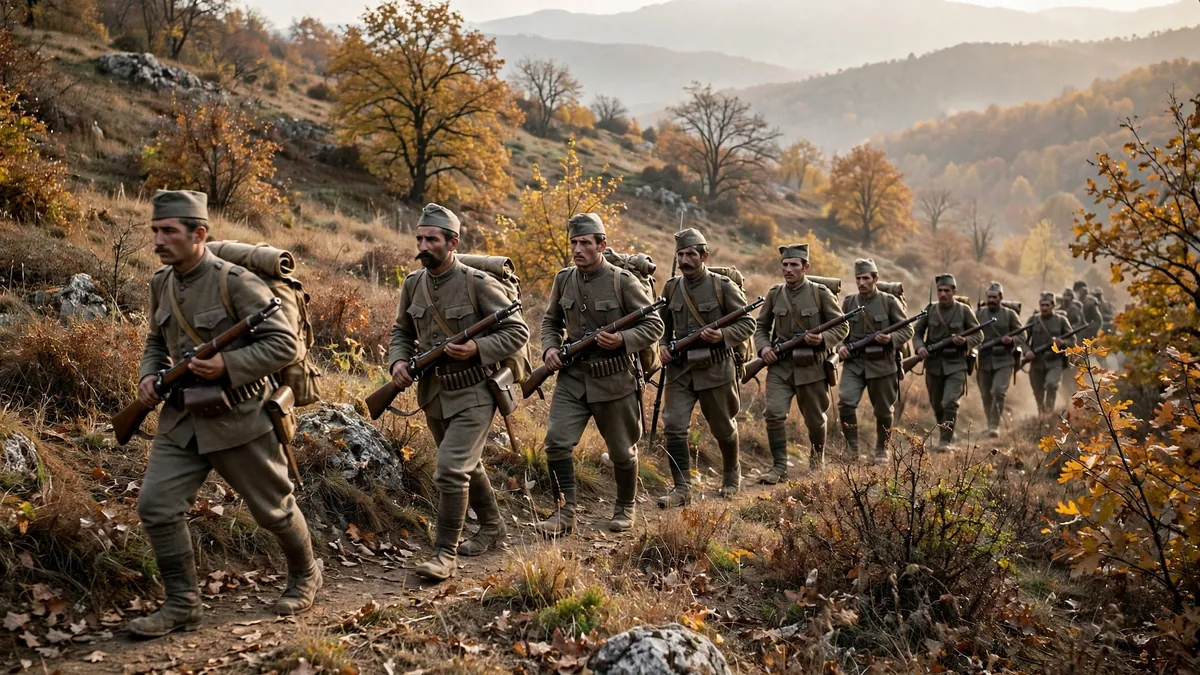
The Balkan Wars were two short, brutal wars fought in south-eastern Europe in 1912 and 1913, which drove the Ottoman Empire almost entirely out of Europe, redrew the map of the Balkans, and created the rivalries that led, a year later, to the First World War.
In the First Balkan War (8 October 1912 – 30 May 1913), the four states of the Balkan League — Serbia, Bulgaria, Greece and Montenegro — attacked the Ottoman Empire together, and in seven months won a victory that surprised the whole of Europe: the Ottoman armies were driven back to the walls of Constantinople, and the empire lost nearly all of its European territory.
In the Second Balkan War (29 June – 10 August 1913), the victors fell out among themselves over the spoils — above all over Macedonia — and Bulgaria, which had done most of the fighting, was attacked by its former allies Serbia and Greece, joined by Romania and by the Ottoman Empire, and was defeated in a month.
The wars cost, by most estimates, hundreds of thousands of lives, military and civilian, and they were marked by atrocities against civilians on all sides. They settled nothing: the borders they drew were resented by the losers, the national questions they raised were left unanswered, and the great powers — above all Austria-Hungary and Russia — were left more hostile to each other than before.
A year after the Second Balkan War ended, a Bosnian Serb nationalist assassinated the heir to the Austro-Hungarian throne at Sarajevo, and the Balkans — the “powder keg of Europe” — exploded into the First World War.
The Balkan Wars are often treated as a prelude to the First World War, and they were — but they were also wars in their own right, with their own logic, their own armies and their own victims. They were the wars in which the Balkan states, freed from Ottoman rule in the nineteenth century, tried to complete their national unifications by conquering the Ottoman provinces that still held their fellow nationals: the Serbs of Kosovo and Macedonia, the Bulgarians of Macedonia and Thrace, the Greeks of Macedonia, Epirus and Crete.
They were the wars in which the Ottoman Empire, the “sick man of Europe”, lost its last European provinces and was reduced to Anatolia and a small strip of Thrace around Constantinople. And they were the wars in which the great powers discovered that they could not control the Balkans: Austria-Hungary, which had tried to contain Serbia, saw Serbia double in size; Russia, which had sponsored the Balkan League, saw its clients turn on each other; and the settlement imposed by the great powers at London and Bucharest in 1913 satisfied no one and stored up the grievances that would return in 1914.
2. Key Facts
| First Balkan War | 8 October 1912 – 30 May 1913; ended by the Treaty of London |
| Second Balkan War | 29 June – 10 August 1913; ended by the Treaty of Bucharest |
| Balkan League | Serbia, Bulgaria, Greece, Montenegro (formed 1912, sponsored by Russia) |
| Opponent | Ottoman Empire (in the First War); Bulgaria (in the Second War, attacked by Serbia, Greece, Romania and the Ottoman Empire) |
| Key battles (First War) | Kirk Kilisse (22–24 October 1912), Lule Burgas (28 October–2 November 1912), Kumanovo (23–24 October 1912), Monastir (16–19 November 1912), Adrianople (siege, October 1912–March 1913), Scutari (siege, 1912–13), Salonika (captured 8 November 1912) |
| Territorial result | Ottoman Empire lost nearly all its European territory except Constantinople and a small part of eastern Thrace; Albania became independent; Serbia, Bulgaria and Greece all expanded |
| Macedonia divided | After the Second War: Serbia took Vardar Macedonia, Greece took Aegean Macedonia (including Salonika), Bulgaria kept only Pirin Macedonia |
| Casualties | Estimates vary widely; commonly cited totals are in the range of 100,000–200,000 military deaths for both wars combined, plus large numbers of civilian deaths from fighting, massacre, disease and expulsion |
| Great-power response | London Conference of Ambassadors (1912–13); Treaty of London (30 May 1913); Treaty of Bucharest (10 August 1913); Treaty of Constantinople (29 September 1913) |
3. Background: The Ottoman Decline and the Balkan States
The Balkan Wars were the end of a process that had been under way for a century: the retreat of the Ottoman Empire from Europe. In 1800, the Ottoman Empire had ruled the whole of the Balkan peninsula, from the Adriatic to the Black Sea. By 1912, it ruled only a strip of territory in the south: Albania, Macedonia, Thrace and the Aegean coast, with Constantinople as its capital.
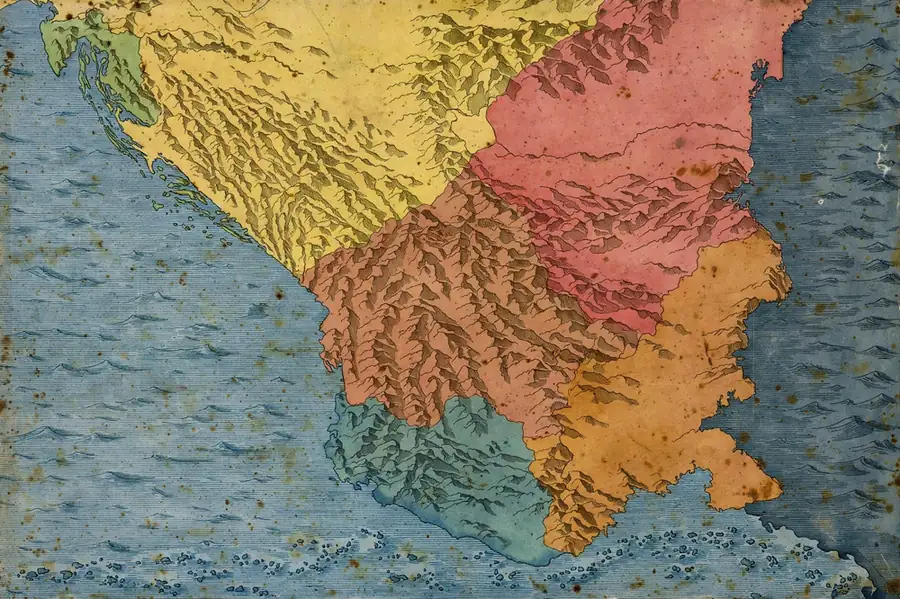
Greece had won its independence in the 1820s; Serbia, Romania and Montenegro had won theirs in the 1870s; Bulgaria had won its autonomy in 1878 and its full independence in 1908. Each of these states had been created by war against the Ottomans, and each of them claimed territories still under Ottoman rule, inhabited by its fellow nationals: the Greeks claimed Macedonia, Epirus and Crete; the Serbs claimed Kosovo, the Sanjak of Novi Pazar and Macedonia; the Bulgarians claimed Macedonia and Thrace; the Montenegrins claimed the Sanjak and northern Albania.
The Ottoman provinces of Macedonia, in particular, were claimed by all three — Serbs, Bulgarians and Greeks — and the competing claims were the cause of a decade of guerrilla warfare between Serbian, Bulgarian and Greek bands in Macedonia before 1912.
The Ottoman Empire in 1912 was weak, and it knew it. The Young Turk revolution of 1908 had overthrown the Sultan Abdul Hamid II and promised reform, but the reforms had not come, and the empire had been shaken by the Italo-Turkish War of 1911–12, in which Italy had seized Libya and the Dodecanese islands, and by revolts in Albania and Yemen.
The Ottoman army was poorly equipped, poorly led and divided by politics: the Young Turk officers and the old officers distrusted each other, and the army’s mobilisation in October 1912 was chaotic. The Balkan states, by contrast, had spent the previous decade building modern armies with French, German and Russian help, and they had the advantage of fighting close to their own bases, against an enemy that had to defend a long and exposed frontier.
The great powers knew the war was coming, and they tried to prevent it; but they could not, because the Balkan states had decided that the time had come, and because Russia — which had sponsored the Balkan League — had decided that a Balkan war against the Ottomans would serve Russian interests by weakening the Ottoman Empire and by giving Russia’s clients a victory that would increase Russian influence in the region.
The Balkan League itself was a remarkable achievement. Serbia and Bulgaria, who had fought each other in 1885 and who both claimed Macedonia, signed an alliance in March 1912, agreeing to divide Macedonia between them — with the division to be arbitrated by the Russian Tsar if they could not agree — and to support each other against the Ottomans and against Austria-Hungary.
Greece joined in May 1912, and Montenegro in September. The League was sponsored by Russia, which saw it as a weapon against Austria-Hungary as well as against the Ottomans: the Serbo-Bulgarian alliance contained a secret clause directed against Austria-Hungary, and Russia hoped that a victorious Balkan League would be a barrier to Austro-Hungarian expansion in the Balkans.
The League’s members, however, had their own aims, and they did not include serving Russia. They wanted the Ottoman provinces, and they wanted them now.
4. The First Balkan War: The Ottoman Collapse
The First Balkan War began on 8 October 1912, when Montenegro declared war on the Ottoman Empire, followed by Serbia, Bulgaria and Greece on 17–18 October. The Ottoman armies were defeated everywhere, and with a speed that astonished Europe. In Thrace, the Bulgarian army — the largest and best-trained of the Balkan armies — won the battles of Kirk Kilisse (22–24 October) and Lule Burgas (28 October–2 November), the largest battle of the war, and advanced to the Chatalja lines, the last defences of Constantinople, within 40 kilometres of the capital.
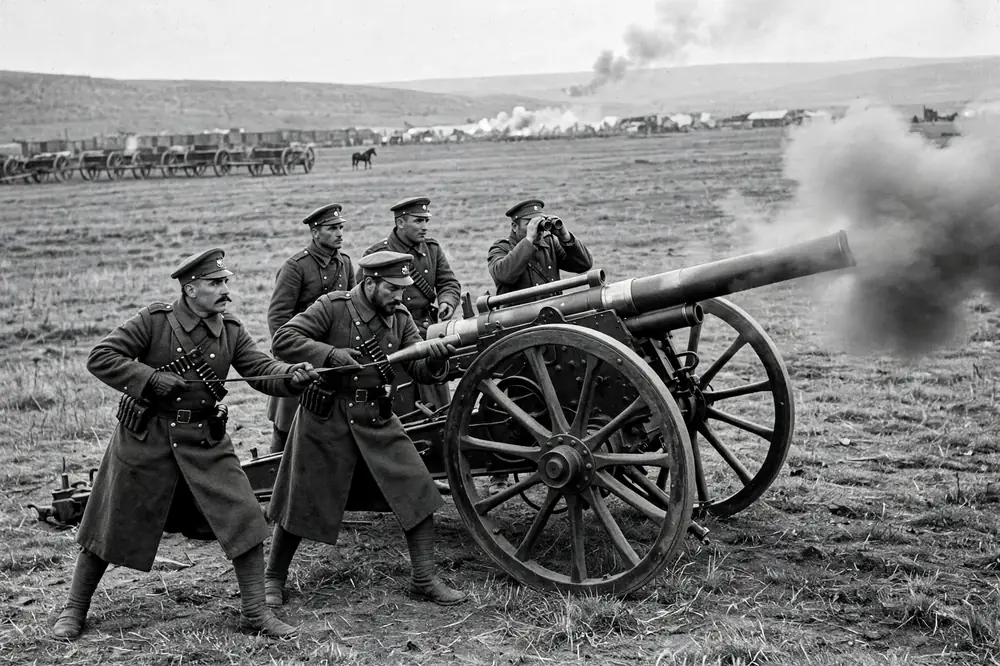
In Macedonia, the Serbian army won the battles of Kumanovo (23–24 October) and Monastir (16–19 November), and occupied Skopje, Kosovo and most of Vardar Macedonia. The Greek army, under Crown Prince Constantine, advanced from Thessaly, captured the great port of Salonika on 8 November — hours before a Bulgarian detachment arrived to claim it — and occupied Epirus and southern Macedonia. The Montenegrin army besieged Scutari, in northern Albania.
The Ottoman fortress of Adrianople (Edirne), in Thrace, held out under siege from October 1912 until March 1913, when it was stormed by Bulgarian and Serbian troops.
By December 1912, the Ottoman Empire had lost almost everything in Europe. An armistice was signed on 3 December, and the great powers convened a conference of ambassadors in London to settle the peace. The negotiations dragged on for months, complicated by the great powers’ own rivalries: Austria-Hungary, which wanted to prevent Serbia from gaining a port on the Adriatic, insisted on the creation of an independent Albania, which would block Serbia’s access to the sea; Russia supported Serbia; Britain and France tried to mediate.
The conference produced the Treaty of London, signed on 30 May 1913, which drew a line — the Enos–Midia line, from the Aegean to the Black Sea — west of which all Ottoman territory in Europe, except Albania, was ceded to the Balkan allies. The treaty left the division of Macedonia to the allies themselves, and it created Albania as an independent state.
It was the division of Macedonia that destroyed the peace.
The First Balkan War was also marked by large-scale violence against civilians. The Balkan armies, advancing into territories inhabited by Muslims, Albanians, Turks and other peoples, committed massacres, expulsions and the burning of villages, and the Ottoman forces, retreating, did the same to Christian populations.
The Carnegie Endowment for International Peace, which sent a commission to investigate the wars in 1913–14, documented atrocities by all sides — Serbian, Bulgarian, Greek, Montenegrin and Ottoman — and concluded that the wars had been accompanied by “the burning of villages, the massacre of the inhabitants, and the expulsion of the survivors” on a scale that shocked European opinion.
The commission’s report, published in 1914, is still the most important contemporary source for the civilian cost of the wars. The exact numbers of civilian dead are not known, and estimates vary widely; what is certain is that hundreds of thousands of people — Muslims fleeing the advancing Balkan armies, Christians fleeing the retreating Ottomans — were driven from their homes, and that many tens of thousands died.
5. The Second Balkan War: Allies Turn on Each Other
The Second Balkan War was fought over Macedonia, and it was fought because the Serbo-Bulgarian alliance of March 1912 had left the division of Macedonia unresolved. The alliance had agreed that Bulgaria would receive most of Macedonia, but Serbia — which had been denied a port on the Adriatic by the creation of Albania, and which had conquered Kosovo and Vardar Macedonia in the First War — refused to give up the Macedonian territory its armies held.
Bulgaria, which had done most of the fighting against the Ottomans in Thrace and which had lost the most men, insisted on the original agreement, and demanded that the Russian Tsar arbitrate, as the alliance provided. Serbia refused arbitration, and instead signed a new alliance with Greece in June 1913, by which the two states agreed to divide Macedonia between them and to defend the division against Bulgaria.
The Bulgarian government, under King Ferdinand and Prime Minister Stoyan Danev, decided to settle the question by force: on the night of 29–30 June 1913, without a declaration of war, Bulgarian troops attacked the Serbian and Greek positions in Macedonia. It was a catastrophic miscalculation.
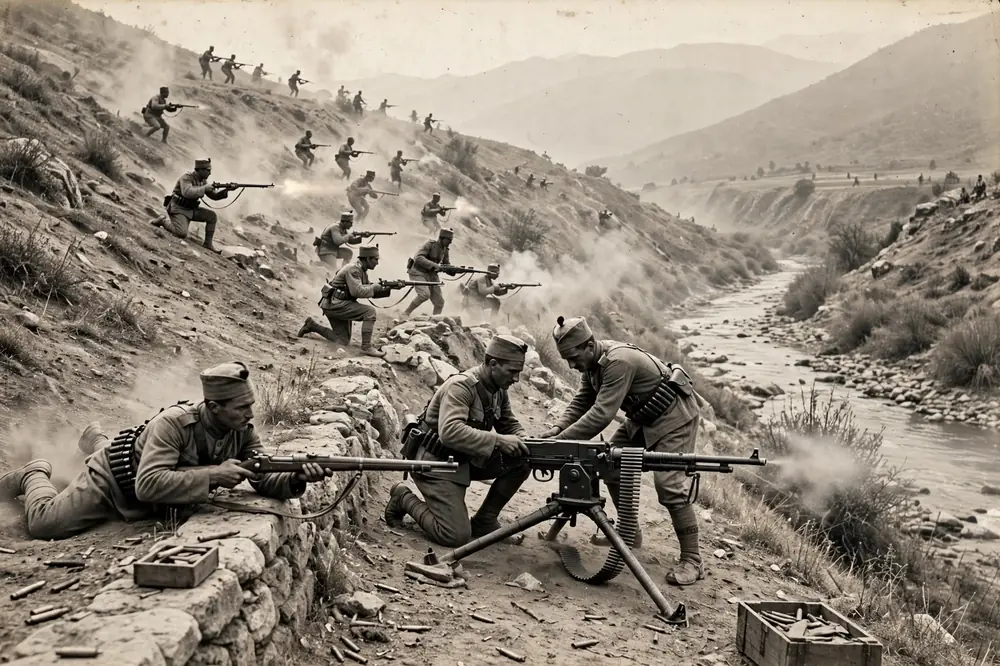
The Bulgarian attack failed. The Serbian army, under Crown Prince Alexander and General Radomir Putnik, held its positions and counter-attacked, winning the Battle of Bregalnica (30 June–9 July 1913), the largest battle of the Second War. The Greek army, under King Constantine, won the Battle of Kilkis-Lahanas (19–21 June 1913 — fought, confusingly, just before the formal outbreak of the war, as part of the escalating confrontation) and advanced into Bulgarian-held Macedonia.
Then Bulgaria’s enemies multiplied: on 10 July, Romania — which had stayed neutral in the First War and which claimed southern Dobruja from Bulgaria — declared war and invaded from the north, meeting no resistance, since the Bulgarian army was fully engaged in the south.
On 13 July, the Ottoman Empire — which had lost Thrace in the First War — declared war and reoccupied Adrianople, which the Bulgarians had taken at such cost in March. Bulgaria, attacked on four sides, was defeated within a month.
On 10 August 1913, the Treaty of Bucharest was signed: Bulgaria lost most of Macedonia to Serbia and Greece, lost southern Dobruja to Romania, and kept only a small strip of Macedonia — Pirin Macedonia — and a narrow corridor to the Aegean at Dedeagach. The Ottoman Empire recovered Adrianople and eastern Thrace under the separate Treaty of Constantinople (29 September 1913).
The Second Balkan War was shorter than the First, but it was no less brutal. The Carnegie Commission documented atrocities by all sides, and the war’s most lasting consequence was not territorial but political: Bulgaria, which had been the strongest of the Balkan states and the one that had done most to defeat the Ottomans, was humiliated, embittered and determined on revenge.
The Bulgarian sense of betrayal — that its allies had stolen the victory it had won — became the central fact of Bulgarian politics, and it explains Bulgaria’s decisions in the First World War, when it joined the Central Powers in 1915 to recover Macedonia, and in the Second World War, when it again sought to recover Macedonia.
The Second Balkan War also left Serbia doubled in size and confident, Greece enlarged and satisfied, and Romania — which had gained territory without fighting a battle — confirmed as the strongest power in the Balkans. And it left the great powers alarmed: Austria-Hungary, which had watched Serbia double in size and gain a common border with Montenegro, was more determined than ever to contain Serbia — and Serbia, emboldened by its victories, was more determined than ever to pursue the unification of the South Slavs, including the Serbs of Bosnia-Herzegovina, who lived under Austro-Hungarian rule.
6. The Great Powers and the Settlement
The great powers watched the Balkan Wars with alarm, and they intervened repeatedly — but they could not control them. The London Conference of Ambassadors, convened in December 1912, was the great powers’ attempt to manage the settlement: it produced the Treaty of London, created Albania, and drew the Enos–Midia line. But the conference could not settle Macedonia, and it could not prevent the Second Balkan War. The Treaty of Bucharest, which ended the Second War, was negotiated by the Balkan states themselves, without the great powers — a fact that alarmed Vienna and St Petersburg in equal measure, since it showed that the Balkan states could make war and peace without permission.
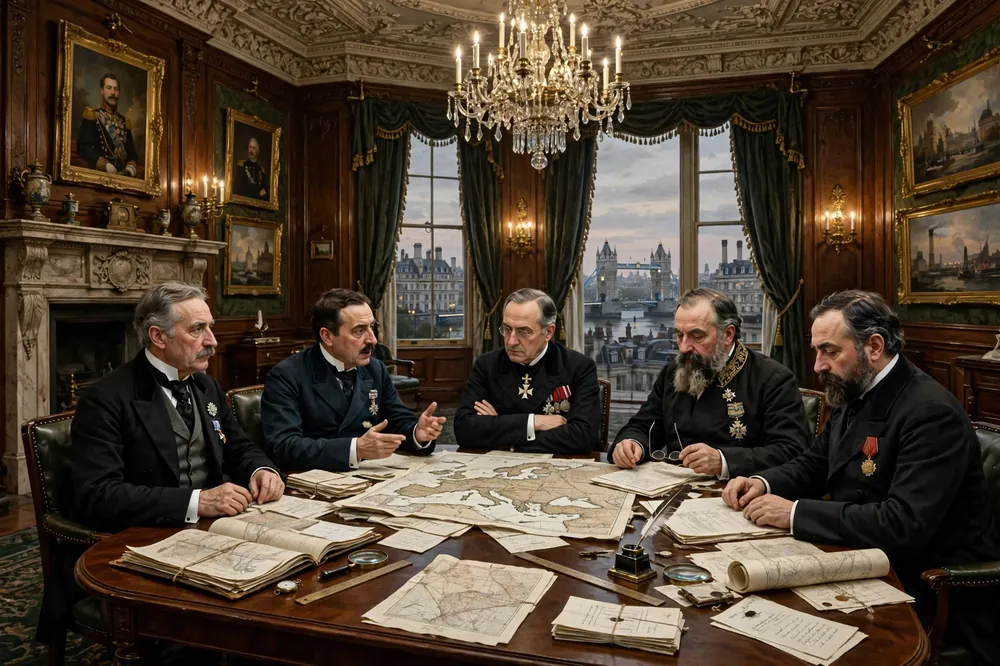
Austria-Hungary was the great power most affected by the wars, and the most alarmed. Vienna’s policy in the Balkans had two aims: to prevent Serbia from gaining a port on the Adriatic, and to prevent the creation of a large South Slav state that would attract the Serbs, Croats and Slovenes of the Monarchy.
The wars defeated the first aim only in part — Serbia was denied the Adriatic by the creation of Albania, but it gained a common border with Montenegro, and with it the possibility of a union — and they defeated the second aim entirely: Serbia doubled in size, from about 48,000 to about 87,000 square kilometres, and its population grew from about 2.9 million to about 4.4 million, and it emerged from the wars as the champion of South Slav nationalism.
Austria-Hungary’s response was to prepare for war: in October 1913, Vienna delivered an ultimatum to Serbia, demanding that Serbian troops withdraw from Albania, and Serbia complied — but the ultimatum showed that Austria-Hungary was willing to use force to contain Serbia, and it set the pattern for the ultimatum of July 1914.
Russia was the other great power most affected, and its experience was one of frustration. Russia had sponsored the Balkan League, had arbitrated the Serbo-Bulgarian alliance, and had expected to be the arbiter of the Balkans. Instead, it watched its clients quarrel, watched Bulgaria — its traditional client — turn against Serbia, and watched the settlement made without it.
Russia’s response was to draw closer to Serbia and to France: the Franco-Russian alliance was strengthened, and Russia’s commitment to Serbia — the commitment that would bring Russia into the war in July 1914 — was hardened by the experience of the Balkan Wars.
The wars also taught Russia a lesson about the limits of its influence: it could encourage its clients to go to war, but it could not control what they did once the war began.
7. The Road to Sarajevo
The Balkan Wars did not cause the First World War — the assassination at Sarajevo did — but they created the conditions in which the assassination became a war. The wars doubled Serbia’s size and confidence, and they created a generation of Serbian officers and nationalists who believed that the unification of the South Slavs was within reach.
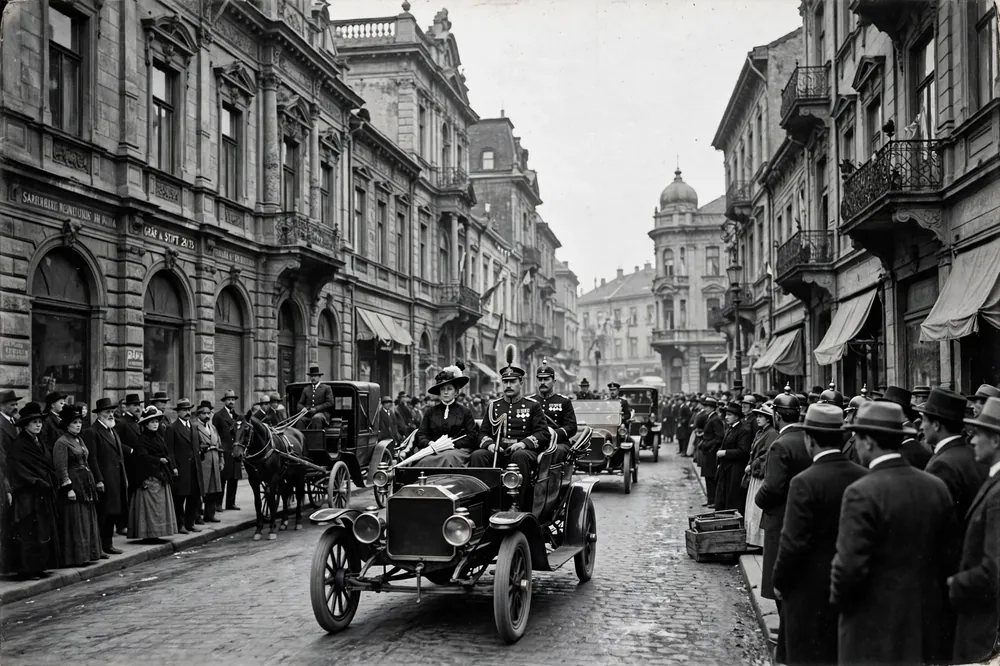
The most important of these was the secret society known as the Black Hand — formally, Unification or Death — founded in 1911 by Serbian officers, including Colonel Dragutin Dimitrijević, known as Apis. The Black Hand’s aim was the unification of all Serbs, including the Serbs of Bosnia-Herzegovina, into a Greater Serbia, and its method was terrorism: it organised the assassination of King Alexander of Serbia in 1903, and it would organise the assassination of the Archduke Franz Ferdinand at Sarajevo on 28 June 1914.
The wars also created the conditions in Austria-Hungary. Vienna’s fear of Serbia — the fear that had driven its Balkan policy for a decade — was now greater than ever, and the Monarchy’s military leaders, above all the chief of staff Conrad von Hötzendorf, argued that the Monarchy must crush Serbia before Serbia became too strong to crush.
Conrad had urged war against Serbia dozens of times before 1914; after the Balkan Wars, his arguments found a more receptive audience, because Serbia’s victories had shown what it could do. When the Archduke was assassinated, the Austro-Hungarian government did not ask whether Serbia was responsible — it decided that the assassination was the pretext it had been waiting for, and it issued the ultimatum of 23 July 1914, designed to be rejected, and declared war on 28 July.
The Balkan Wars had not made the war inevitable, but they had made it possible: they had created a Serbia strong enough to defy Austria-Hungary, and an Austria-Hungary frightened enough to destroy Serbia.
The wars also left a territorial legacy that shaped the First World War and the peace that followed. The division of Macedonia — Vardar Macedonia to Serbia, Aegean Macedonia to Greece, Pirin Macedonia to Bulgaria — became the basis of the modern map of the region, and the Macedonian question — whether the Macedonians were Serbs, Bulgarians, Greeks or a separate people — remained unresolved, and remains contested to this day.
Albania, created by the great powers in 1913, survived as an independent state, but its borders — drawn by the London Conference — left large Albanian populations in Serbia, Montenegro and Greece, and the Albanian question has troubled the Balkans ever since.
And the Ottoman loss of its European provinces, completed in the Balkan Wars, was the end of five centuries of Ottoman rule in Europe — and the beginning of the Turkish Republic, which would emerge from the ruins of the empire after the First World War.
8. Assessment: The Wars That Made the War
Were the Balkan Wars the cause of the First World War? The answer, as with most questions about the origins of the war, is both yes and no. No, in the sense that the Balkan Wars did not make the war inevitable: the assassination at Sarajevo could have been managed, as earlier Balkan crises had been managed, and the great powers could have chosen not to go to war in July 1914.
The war was a choice — a series of choices, made by governments that believed war was necessary, or unavoidable, or preferable to the alternatives. Yes, in the sense that the Balkan Wars changed the conditions in which those choices were made: they made Serbia stronger and more confident, Austria-Hungary more frightened, Russia more committed to Serbia, and the great powers more aware that the Balkans could not be controlled.
Without the Balkan Wars, there would still have been a Balkan crisis in 1914; but without the Balkan Wars, it is hard to see how that crisis would have become a world war.
The Balkan Wars also deserve to be remembered in their own right, not only as a prelude. They were the wars in which the Balkan peoples completed their national liberations, in which the Ottoman Empire lost Europe, and in which the map of south-eastern Europe was drawn in the form it still has today.
They were also wars of great brutality, in which civilians were killed, expelled and terrorised on a scale that foreshadowed the wars of the twentieth century — the wars of ethnic cleansing and population transfer that would return to the Balkans in the 1940s and again in the 1990s.
The Carnegie Commission, reporting on the wars in 1914, warned that the wars had “sown the seeds of future wars” by the hatreds they had created. The commission was right. The Balkan Wars ended in August 1913. Eleven months later, Europe was at war.
9. Legacy: The Balkans after 1913
The legacy of the Balkan Wars is still visible in the map of south-eastern Europe. The borders drawn at Bucharest in 1913 — with only minor changes — are the borders of the region today: the border between Greece and Bulgaria, between Serbia (now North Macedonia) and Greece, between Bulgaria and Turkey, and between Albania and its neighbours.
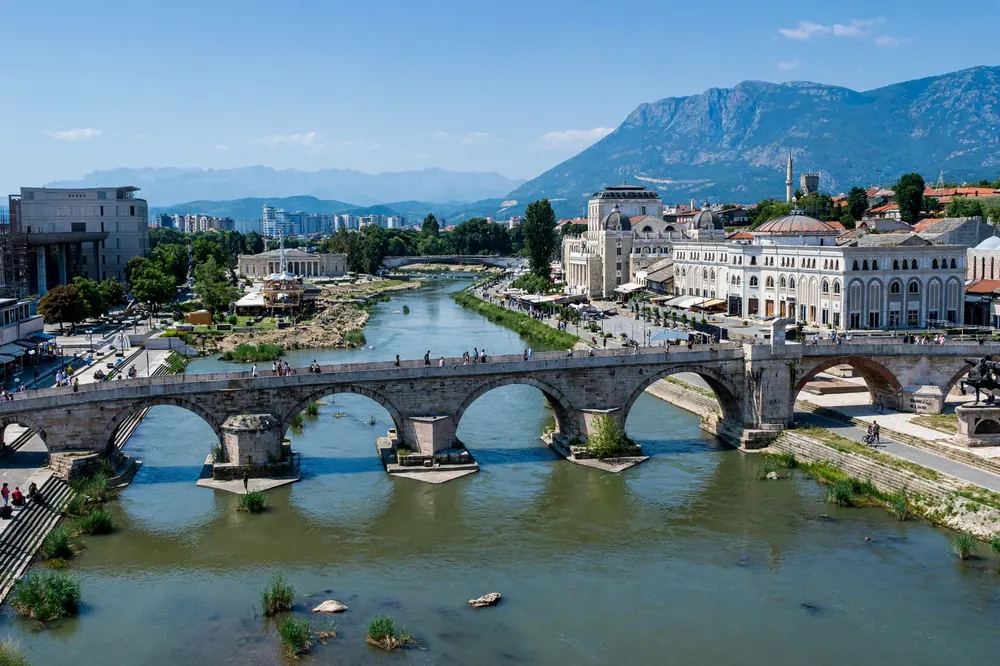
The division of Macedonia, which the wars created, became the basis of the modern states of North Macedonia (the former Vardar Macedonia, part of Yugoslavia until 1991), Greece (Aegean Macedonia) and Bulgaria (Pirin Macedonia). The name of North Macedonia itself was the subject of a dispute between Greece and the former Yugoslav republic that lasted until 2019, when the Prespa Agreement settled it — a dispute whose roots go back to the division of Macedonia in 1913.
The wars also left a legacy of population movement and of memory. The Balkan Wars drove hundreds of thousands of Muslims from the Balkans into Anatolia, and hundreds of thousands of Christians from Ottoman territory into the Balkan states. The population exchanges that followed — above all the Greek-Turkish exchange of 1923, in which some 1.5 million people were moved — were the direct descendants of the expulsions of 1912–13.
And the wars left a legacy of national memory: in Serbia, the Balkan Wars are remembered as the wars of liberation, the wars in which Kosovo — the “Serbian Jerusalem”, the site of the Battle of Kosovo in 1389 — was recovered; in Bulgaria, they are remembered as the wars of betrayal, in which the victory won on the battlefield was stolen at the negotiating table; in Greece, they are remembered as the wars in which Salonika and the Aegean coast were won; in Turkey, they are remembered as the catastrophe — the Balkan Harbi — in which the empire lost Europe.
Each memory is true, and each is incomplete, and the four memories together are the reason the Balkan Wars still matter.
The Balkan Wars also left a military legacy. They were the first wars in which the aeroplane was used for reconnaissance and bombing — the Bulgarian, Greek, Serbian and Ottoman air forces all flew in 1912–13, and the first air-dropped bomb of the war was dropped by a Bulgarian aircraft on Adrianople.
They were wars in which the machine gun, the quick-firing field gun and the modern rifle were used on a large scale for the first time in Europe, and in which the lessons — about the power of the defensive, about the importance of logistics, about the vulnerability of an army that outran its supplies — were noted by the military attachés of the great powers, and then largely ignored when the First World War began a year later.
The Balkan Wars were a rehearsal for the First World War, in weapons, in tactics and in brutality. Europe watched them, and learned nothing.
10. Key Figures
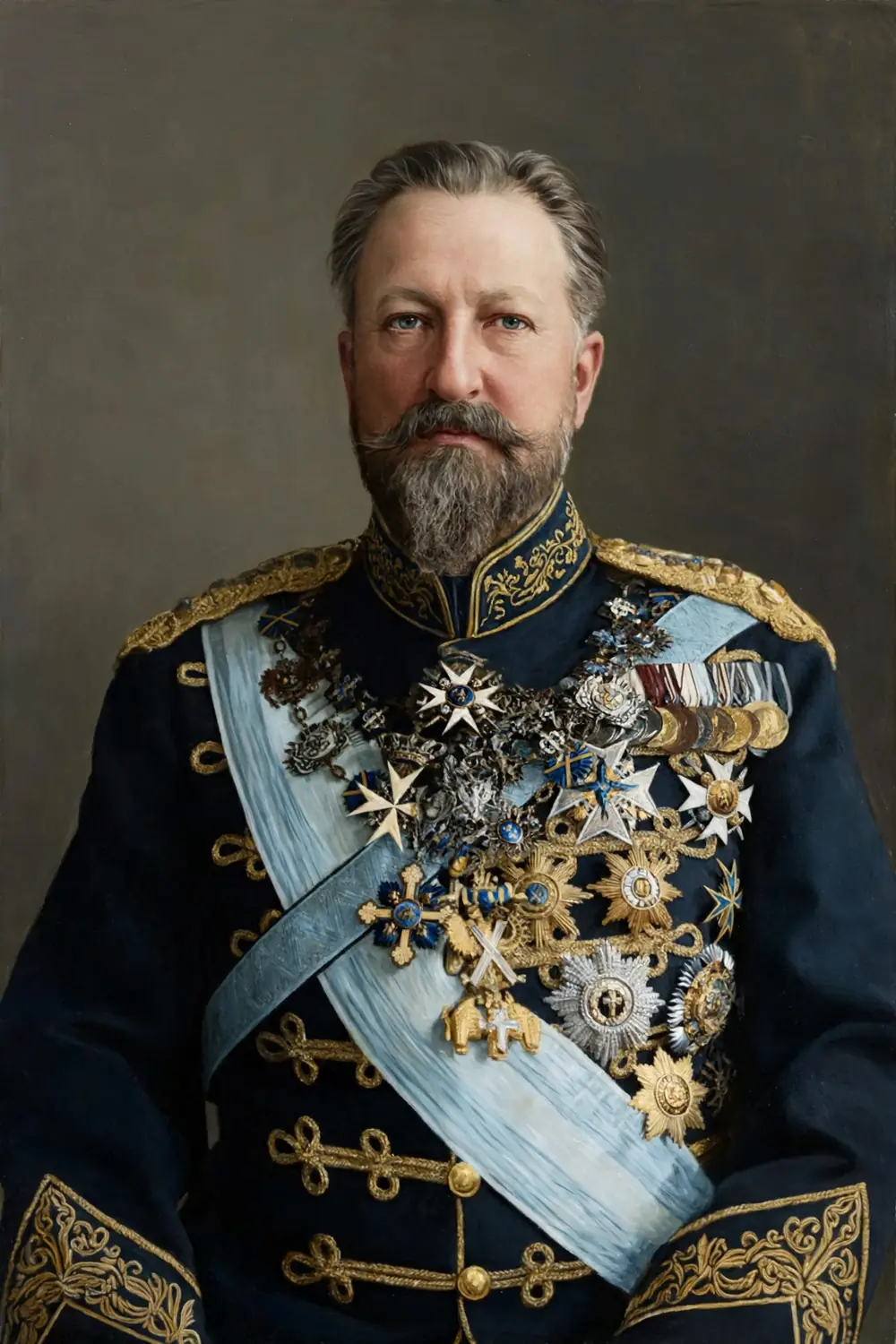
Ferdinand I (Bulgaria). King (later Tsar) of Bulgaria from 1887 to 1918. Ferdinand brought Bulgaria into the Balkan League, led it to victory in the First Balkan War, and then — against the advice of his generals — ordered the attack on Serbia and Greece that began the Second Balkan War. His miscalculation cost Bulgaria Macedonia and southern Dobruja, and it set Bulgaria on the road to the First World War on the side of the Central Powers.
Radomir Putnik (Serbia). Chief of the Serbian general staff and the victor of Kumanovo and Bregalnica. Putnik, an elderly and ailing man who had to be carried on a stretcher, directed the Serbian army’s victories in both Balkan Wars and in the first year of the First World War. He died in 1917, in exile in France.
Crown Prince Constantine (Greece). Commander of the Greek army in the Balkan Wars and King of Greece from 1913 to 1917 and again from 1920 to 1922. Constantine captured Salonika in 1912 and won the Battle of Kilkis in 1913. His rivalry with the prime minister Eleftherios Venizelos, which began during the Balkan Wars, would divide Greece in the First World War.
Enver Pasha (Ottoman Empire). The Young Turk leader who, in January 1913, led the coup that overthrew the Ottoman government and, in July 1913, reconquered Adrianople from Bulgaria. Enver’s success at Adrianople made him the dominant figure of the Ottoman government, and he would lead the empire into the First World War in 1914.
Nikola Pašić (Serbia). Prime minister of Serbia during the Balkan Wars and the First World War. Pašić, the leader of the Radical Party, directed Serbian policy through the wars and through the July Crisis of 1914, and he led the Serbian government-in-exile during the war.
Eleftherios Venizelos (Greece). Prime minister of Greece during the Balkan Wars. Venizelos, the architect of the Balkan League from the Greek side, doubled Greece’s territory in the wars and made Greece a major Balkan power. His policies would dominate Greek politics for the next two decades.
Frequently Asked Questions
Related articles
Sources
- Encyclopædia Britannica, “Balkan Wars” — overview of both wars, their causes and their settlements.
- Wikipedia, “Balkan Wars” — dates, battles, the treaties of London and Bucharest, and casualty estimates.
- Richard C. Hall, The Balkan Wars 1912–1913: Prelude to the First World War (Routledge, 2000) — the standard English-language history of the wars.
- Carnegie Endowment for International Peace, Report of the International Commission to Inquire into the Causes and Conduct of the Balkan Wars (1914) — the contemporary investigation of the wars and of the atrocities committed by all sides.
- M. Edith Durham, The Struggle for Scutari (Edward Arnold, 1914) — a contemporary account of the siege of Scutari and of the Albanian question.
- Jacob Gould Schurman, The Balkan Wars, 1912–1913 (Princeton University Press, 1914) — a contemporary American account of the wars and the London Conference.
- Christopher Clark, The Sleepwalkers: How Europe Went to War in 1914 (Harper, 2012) — the Balkan Wars and the road to Sarajevo.
- Margaret MacMillan, The War That Ended Peace: The Road to 1914 (Random House, 2013).
- Mark Mazower, The Balkans: A Short History (Modern Library, 2002).